← Second in Command: The Chief Behind the Chief with Cameron Herold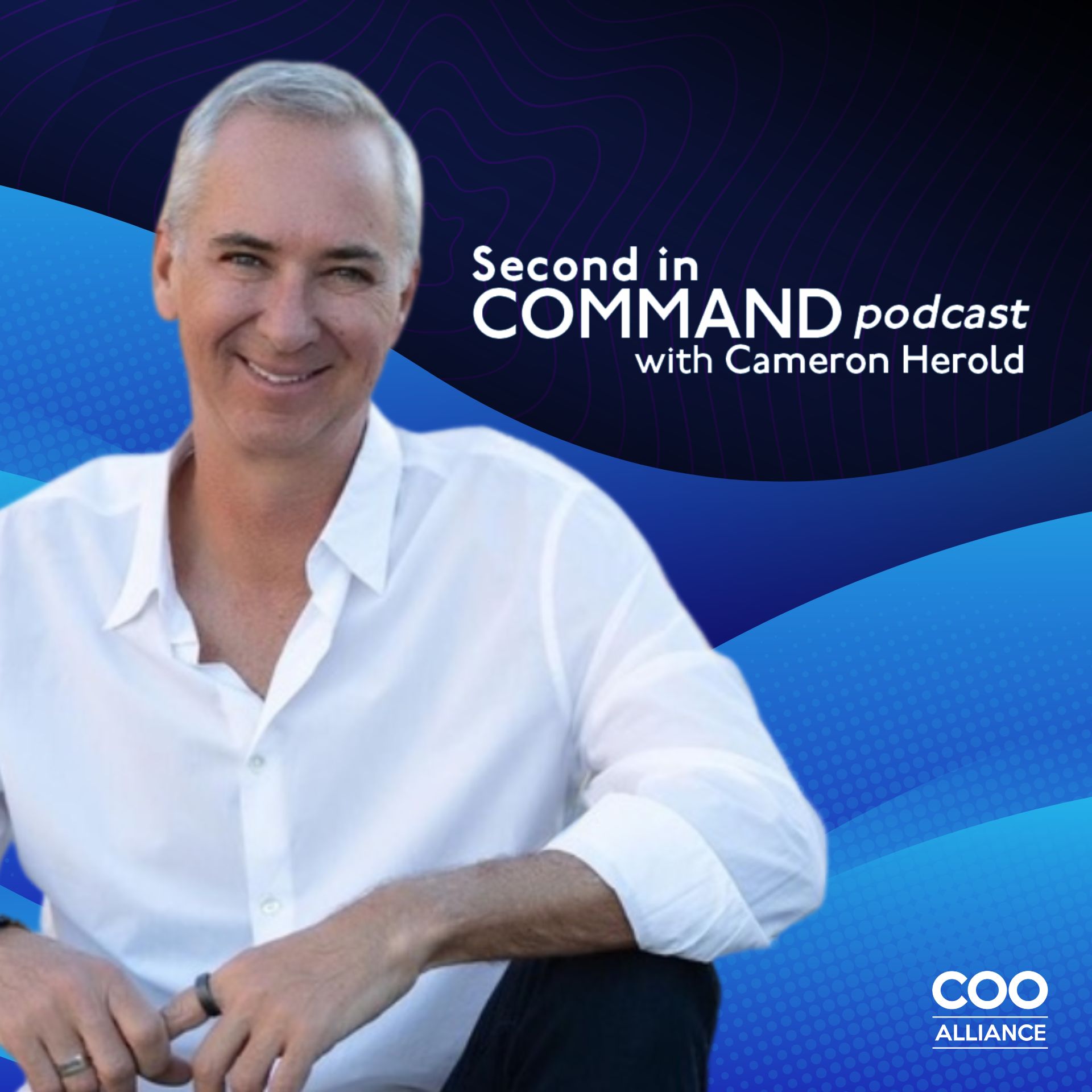
Second in Command: The Chief Behind the Chief with Cameron Herold
Ep. 562 - Freshpet COO Nicki Baty - Why Bold Change Is a COO’s Superpower (Now, Not Later)
00:47:14
Loading summary
Transcript52 lines
- [00:00]
Nikki Beatty
The piece, I think with a coo, the one piece that's guaranteed is change because ultimately you're responsible for the execution. And if the execution doesn't come in as you expect, you've got to adapt and be agile to change. But it's. Is it of course correction or is it plotting a whole new map of where you're going? And I think you have to be very, very clear on which one you're trying to do, because where it is just a simple course correction. You want to make sure that the team understand that that North Star, that map is still very much in place. There's just a slightly different way of getting there. If that North Star changes, there needs to be a much bigger communication on what that North Star really is. And again, making sure that it's very, very clear what the priorities are to get there.
- [00:58]
Podcast Announcer
Welcome Second In Command podcast, produced by the COO alliance and brought to you by its founder, Cameron Herold. In the second in command podcast, we talk to top COOs who share the insights, strategies and tactics that made them the chief behind the chief. And now here's your co host, former COO of a multi eight figure remote company and alumni member of the COO Alliance, Savannah Brewer.
- [01:27]
Johanna
Today's guest is Nikki Beatty, the Chief Operating Officer of Freshpet, where she's pioneering a brand new COO role in shaping the next era of growth for this fast rising company. Redefining Pet Nutrition. Before Joining Freshpet in 2024, Nikki spent nearly two decades at Colgate Palm Olive, most recently serving as President and General Manager of Hill's Pet Nutrition US where she led a multi billion dollar business through a powerful phase of scaling and transformation. Her global leadership journey has taken her from the UK to Europe, Asia and Latin America, often with her family coming along, bringing both professional and personal lessons in adaptability, trust building and courage. In this episode, we talk about what it's like to craft a CEO position from the ground up, how Nikki builds deep trust and alignment across teams, and the difference between missionaries and mercenaries. And why that philosophy has made Fresh Pets culture so unique. Let's dive in. We are live with Nikki. Welcome to the show.
- [02:35]
Nikki Beatty
Thanks, Johanna. Great to meet you.
- [02:37]
Johanna
Absolutely. And so happy to be having this conversation today. We've been jamming a little bit about some of your journey. It sounds like you've moved to a lot of different places. You've had some really amazing things in your career as well that have led you to Fresh Pet. So let's start with Fresh Pet. Give us a little overview. What do you guys do and who are you serving?
- [02:59]
Nikki Beatty
Yeah. Great. I'm happy to share that. So we are a fresh pet food company. I believe we're a true category innovator. The business was founded back in 2006 and we still have two co founders in the company to date as well. Very much based on a completely new ideology on there has to be a better way to feed our beloved cats and dogs. And that ideology is all around they deserve the best food and they deserve the most human food. And that really is about feeding fresh rather than sort of any processed kibble cans, other offerings that are in the market. So for me, that was super attractive to kind of join a company that really is on a mission to change the way that we feed out animals. And I've been there now for the last year.
- [03:53]
Johanna
What is it about the company that stood out to you that had you interested in making a move from your last company?
- [03:59]
Nikki Beatty
Yeah, so everyone I've met at Freshpet, everyone's more like a missionary rather than a mercenary. Maybe that's the first way to start. So there's a true belief that runs through the company in what we're here to do. Everyone is an animal lover, multiple cats and dogs in everyone's household. And I think that a lot of people joined and have come from big consumer packaged goods background looking for a very different company and a very different way to approach the things that we do. So the mission runs and purpose of the company, I think, runs really strong throughout. So you have a lot of people that sign up to their own kind of personal food ideology is translated into the pet food that we offer. So that could be everything from sort of clean label, the way that we source our products, the farmers that we work with, the lengths we go to on the quality of the product, that are a lot of things that a lot of our employees really subscribe to. Every employee in our company is an owner as well. So everyone, whether you're working in one of our kitchens, whether you're working in the quality team, you have a stake in the company. So there's a really strong sense of partnership that runs through. And when the business started, it was really hard to get going. I mean, if you've ever been in like a Walmart or a Target store, you're walking down the aisle, you're seeing a lot of packaged goods, you're not seeing a cold supply chain. So even getting trial of fresh pet food meant also putting refrigerated services, so coolers into a lot of stores across the U.S. so we kind of have a company within a company. We've got a consumer goods company and then we've also got a chiller company and we have 38,000 chillers across the US as well. So I think that's a great example of how everyone is just very, very mission driven to do whatever it takes to make available fresh pet food to every pet parent that subscribes to that healthy, fresh ideology.
- [06:13]
Johanna
What was your journey before going to Frostpet? What did you do in your career?
- [06:18]
Nikki Beatty
Yeah, so great question. So I studied law when I was at university and much to the disappointment, I think, of my parents at the time, I made a big decision not to go into law as a career and I joined Unilever, joined Unilever's graduate scheme back in the UK back in 2000 and then moved to another big consumer packaged goods company, Colgate Palm Oils, back in sort of the mid 2000s. As you can hear by my accent, all of this was in the uk. And then managed to get myself on the international track and did a number of assignments in some, I think, pretty sexy locations. We were in Geneva, Amsterdam, running the Dutch business, then in the Nordics and Copenhagen. And then I got a phone call. This is about six, six years ago, just before COVID to come over and join the Hills Pet Nutrition organization. And that was a subsidiary of Colgate Palmolive. So coming out of the sort of, you know, typically the toothpaste, the toiletries products into then pet food. And at the time I said, okay, that sounds really interesting. I don't know a lot about pet food. So this is six years ago, where's the location? And they said, oh, it's in the U.S. i'm like, great. I'm thinking maybe it's New York or maybe it's on the West Coast. And it was Kansas City. So quickly looked up on a map not being American, exactly where Kansas City was, and then took the plunge with my family to relocate over to Kansas and then had five great years leading our US business for Hill's Pet Nutrition before I was approached about 18 months ago to come into Freshpet and take on this new role and this newly created role as a COO for Freshpet.
- [08:09]
Johanna
That's a pretty wild journey. And you said you moved with your family?
- [08:14]
Nikki Beatty
Yeah, so yeah, I had, what I had my son in, in Switzerland. So I did the whole sort of maternity leave, everything in a foreign country as well. So now I've got a son and a daughter. They early, early years, they were pretty portable, able to sort of Move quite easily through different countries. Now they're reaching sort of that middle school age. It's definitely a little bit more stability is, is appreciated for the family. We've been in New Jersey now for the last year. Just over a year was when we moved to New Jersey, which is great.
- [08:45]
Johanna
And when you say Kansas, you're like the state of Kansas or Kansas City, Missouri.
- [08:51]
Nikki Beatty
Yeah, Lawrence. So we're actually Kansas ku. So I mean the great was there was two super bowl wins when we were in.
- [09:01]
Johanna
So I was born and raised in Springfield, Missouri. I almost went to school at ku, so I visited there a couple times. And then my whole family's big Chiefs fans. So I can understand maybe the energy that you were in over there. Yeah, they're big fans. Were you COO of both of those prior companies?
- [09:23]
Nikki Beatty
I was president for Hills Pet Nutrition in the US So really sort of running that as a standalone unit for Colgate, which was great. That was a great experience and it, I think it brought out my passion also for pets. So at the time we did a lot of fostering, so helping out our local community with shelter partners that were taking in temporarily taking in a lot of dogs definitely whilst sort of pet parents were finding new homes or relocating. So we did a lot of crisis. Pet retention was the program that we helped out with. So over those years my kids had a steady stream of different dogs coming into the house. Everything from Chihuahuas to Pitbull Terriers to Rottweilers. We had a whole different collection of animals at different points in time. So that I think brought about sort of more of a passion. And it's a really emotional industry when you dig into, you know, really what it feels like to be a pet parent. A lot of people are choosing to have pets rather than kids now. And there is, I think, a real bond, you know, human animal bond that I already saw firsthand. So that was sort of our experience at the time was doing a lot of foster care programs. And when we moved to New Jersey, my daughter asked for two Siamese kittens. So we have now cats in the household. So we're definitely a big sort of pet loving family.
- [10:51]
Johanna
What were some of the key learnings from the different jumps, location wise, that you made that maybe transferred to business that other people, unless they're traveling the way that you did, maybe wouldn't have picked up on?
- [11:04]
Nikki Beatty
That's a great question. I think it's probably one of the most humbling experiences for me was when I came out of the uk. You're doing really well in like a market, you know, with a culture that you know really well how to navigate in and then you move to. It was my first European role based in Switzerland, and I spent a lot of time traveling to different markets. And you have this view that everything is done a certain way. And it's really humbling when the same approach and style that you use doesn't get you the same results. And you also, I think, very quickly realize that there's more than one way to get there. And you start to, I think, really embrace sort of where you can have impact, which is potentially a little bit more setting, context, giving clarity of direction, but you can give a lot more freedom to people to find their own way there. So I think my international experiences were really good at helping me provide a lot more clarity, especially where English wasn't the first language. So really simplifying, making the words that I used much more powerful and then also giving a lot more license to people to find their own ways to get there. The UK was a pretty sophisticated market. It was large teams. A lot of the businesses that I went into were much smaller businesses in smaller countries. So learning how to be a bit more scrappy, learning how to be just more entrepreneurial and getting things done and letting go of there has to be. This is the only way of doing things, I think was really good for me in all of those assignments. And when you're out of your homeland, I think as well, it also, I think, encourages you to just be a lot more open to building your own networks and your own communities, because you don't have that established, tight community that you've grown up with that knows you really well.
- [13:07]
Johanna
Yes, we probably have an amazing network all over.
- [13:12]
Nikki Beatty
I'm really fortunate. I mean, I have to say, whenever we. We travel different countries, there's always someone that I can reach out to, to come and meet for dinner, grab a coffee with. And even now traveling around the US I find a lot of my, you know, European colleagues and friends have ended up in different parts of the US as well.
- [13:31]
Johanna
So it's.
- [13:32]
Nikki Beatty
It's great. I think that that's one of the richest things, is being able to have those international experiences early on was really, really beneficial for me. And I think I wouldn't probably find myself here now if I hadn't have taken probably at the time what felt like quite a brave jump to come out of my home market.
- [13:50]
Johanna
Well, I love hearing just the journey with also having a family and all of the transition. Sounds like a lot of transition. What have you done for yourself and your family through transitions. Because we have a lot of CEOs that are listening, a lot of parents that are busy and transitioning through kids in different seasons. What did you do to be able to run such amazing big companies while also taking care of your family, taking care of your health and all of your pets? Yeah.
- [14:21]
Nikki Beatty
So, I mean, look, everyone's balance is in a different place. I learned this as well over the years, even my balance has been in a different place depending on the age of the kids and what their different needs may look like. You do need an incredible support network around you. You can't try and do this alone at all. And especially when you're in foreign countries, you need to make sure that you've got a really good community of people that you help out, that are also able to help out you and also give, you know, a different outlet for your kids to have mentors, other adults in their life that are looking out for them as well. So every country we've been in, we've made a really conscious effort to build that network out and prioritize that. Certainly in the first six months where we've. Wherever we've gone, hopefully this one we're staying per for a long period of time. But that was a really big priority is to build that support network out. I'm fortunate to have an incredible husband who also, he has his own business. He's much more flexible with how he's able to do things. But I think keeping open communications about how things change with the age of the children, with what your needs are, your partner's needs are all of that is super important because it doesn't stay in like a linear line. It really does move around a lot. I mean, I'm smiling because I'm reflecting on the fact that this morning, my daughter. It's Halloween when we're recording this, and I was on a call very early this morning. It's Friday. It's a day that I sometimes work from home. And my daughter came bounding in as a golden fairy. So I'm on a call, she's off her fairy outfit. She's 11. And I'm looking at it thinking this is probably going to be one of the last years where getting dressed up is. It's for her and my son, conversely, you know, entering now teenage years, he's gone from being a preteen and a green pickle last year to now being maverick and trying to look really cool as he heads into school. I think it's knowing that your kids needs are going to change. Always just keeping really close to knowing the role that you need to play as a parent whilst that's really happening. So you can't do it alone. I think it's my key message there.
- [16:33]
Johanna
Definitely not. I don't even have kids yet, but I certainly without kids and I don't even have pets. But I can't do it alone. I don't think any of us should. So developing the connections and the support is so important kind of. Now that we've covered a little bit of the story and thank you for sharing all of that. Taking us to the last year with Freshpet. You've been there for a little over a year now. What was the first 90 days like when you onboarded into this new position?
- [17:03]
Nikki Beatty
Yeah, so I think the new position, I think is probably the most. The most dark thing about that sentence because it was freshpad's first COO role and we have a CEO and we have two co founders still in the business as well. So I think finding and placing my voice, perhaps that's the best way to describe it, was really important to me in those first few months. I did have an advantage coming from the pet industry. I did know certainly one of the founders very well when I came into the business. So I felt I had a credibility in the industry that I was moving within. But I'd come from a very big company infrastructure now moving a little bit more into a much public company but a much smaller company and then finding the infrastructure around me was very different. So things that you took for granted that were done in corporate functions obviously needed to be done now by my team versus it sort of being handed off and systems and things all in place. So I spent a lot of time in that 90 days building relationships. The one thing I think Freshpet has done incredibly well is build amazing partnerships in everything that's done. So with the founder in particular, I spent a lot of time getting out externally understanding who our key partners were that are really important to the business. And I think I mentioned we, for example, have a fridge company and finding who our partners are and often their family businesses that we've worked with now over decades, really being introduced and understanding their business and how we play a mutual role together was really important. So I spent a lot of time listening, building relationships, getting really around the organization. I think the privilege that comes from a CRO role is you really are right in the heart of the business. There's a lot of responsibility and accountability because you have the lion's share of resources. That really sit under you. But when you're coming into learning business, it's a lot easier because you have got all of the different functional areas under you to start to connect the dots quite quickly with what's really going on. So a lot of my first 90 days was spent really with the teams, both internally and partners externally, really getting a lay of where we're at now and then to try to form a plan of what we might need to do to start to scale the business differently, which I probably should say it was. The main reason, I think, for Freshpet, my resume was exciting to them was just the fact that I've been in businesses that I've scaled, and that's the point of where we're at in our journey today.
- [19:54]
Johanna
How did you go through that process of planning what needed to happen next?
- [19:59]
Nikki Beatty
So I think a lot of that is getting the confidence of the CEO in sharing my observations, sharing the things that I think that we do very, very well as a company, and then identifying where the next biggest opportunities are. And that really, for me, has fallen in kind of two buckets. One is kind of the growth opportunities that we have as a business, and then the other one is potentially what some of the efficiency or operational areas are for the business that we then need to support with sort of how we serve the new growth areas. And the business has been on an incredible growth trajectory now for a number of years. So coming in and wanting to make sure that we continue to grow and realize our potential. But at the same time, as we've grown so fast, not everything has robust systems, processes, ways of working around it. And there's a delicate balance between making sure that we spend our time still driving all of that growth, but we do it in a way that's really sustainable for the company for the future. So I spent a lot of time really with CEO and founder, walking through where I felt the biggest areas of opportunity are. And really, over the last year, we've been putting in place, I think, kind of a lot of the foundations for us to take that next step on our journey.
- [21:25]
Johanna
When you came in and you're stepping into a role that hasn't been created yet, how did you build trust with the CEO like you mentioned, and also know what things you actually needed to build confidence in, because there's no real clear idea of what you're even supposed to be doing yet, potentially.
- [21:47]
Nikki Beatty
Yeah. So there was a lot of handoff between the founder and myself of a number of areas. So it wasn't that no one had been overseeing those areas. It was just we changed structure. So a number of things came under my remit from his role. A number of things came under my remit from other functional leaders in the business. So it was really bringing these areas together allowed us to break down some silos and move quicker on some of the changes that we wanted to make. Whereas I think when we had a structure whereby there was sort of a lot of functional experts in there, but no one really overseeing or connecting the dots across the whole, that was, I think, really for. For us. So that the big, you know, the big shift that we're now starting to make and maybe I bring it to life with, with an example. Sylvana. So we've done over the last year a huge amount of deep dive work on the consumer. So who is that pet parent that we really believe is a fresh pet parent and we call them out MVPs, our most valuable pet parents. When we've looked really deeply at who they are, we've really started to sort of uncover a lot of their motivations, their own human food ideology. So they're often really clean living people. They're the kind of, you know, pet parents themselves that they eat great fresh human food. They would prioritize spending money on that, but they also really prioritize that relationship with their dog. They come home of an evening after work and they're going to have the deepest, most meaningful conversations with their dog that they would have versus any other, you know, friend or partner in their life. And they want their dog in particular to be coming on holiday. They plan their holidays around them. So everything about that pet parent is really centered in this way. Now that led us to really look back at wall. Where does that pet want to shop? And are we even showing up in the places where they want to shop? Where are they consuming their media? They want to know transparently about our sourcing. Are we talking about, do we have a sourcing procurement strategy that really reflects what this pet parent is really looking for and really needing? They want different configurations of packs and how does that impact the operational area of the business? So really trying to pour through. If our strategy as a company is to super serve these most valuable pet parents, what are the implications that that has on every functional area of our business? So that's been a large kind of part of the work over the last year that I really started to pull together and then having influence across all of those functions, many of which come under my remit, I think allows us to move much quicker in that direction. Going Forwards.
- [24:50]
Cameron Herold
Hey, it's Cameron Herold, your COO whisperer and guide to scaling businesses. Check out my YouTube channel at YouTube.com amronherald and that's H E R O L D where I share tons of raw tips and insider secrets to have you level up as a leader and grow your company. From leadership hacks to growth strategies. It's all there. No fluff. Subscribe now. Hit that bell for notifications and comment on a few of the hundred videos that I've uploaded so far. And let's build your empire together. Let's go.
- [25:26]
Johanna
Use that example. How did you translate that way of thinking, the things that you were finding throughout the whole company?
- [25:35]
Nikki Beatty
I mean, everyone's a pet parent in our company. So I think you have to start with putting yourselves in, you know, the voice or the shoes of that pet parent. And a lot of the examples we give. Everyone's nodding, oh yeah, I read the back of pack. Oh yeah. I listen to that podcast where it's on biohacking. I mean, we've got a lot of people that really do sign up to this ideology themselves. So I think you start with, you know, every employee being able to relate to this, this consumer, this pet parent, and then from that. Once you can relate to it, I think it's really about outlining what needs to shift. It's almost the from and then the to. I think if you can make it a really clear vision of we're here today and we need to get to there tomorrow and really being very clear on what their tomorrow looks like and what KPIs, we're going to be driving for the there tomorrow, but then almost putting out money where our mouth is and saying we're going to resource those things tomorrow I think does create much more clarity on where, where we're trying to go as a company and much more belief in getting there. And there's so many things, and I kind of call it roots and wings because there's so many things in the company that are incredible and roots that you want to keep, you need to keep. They're the things that sort of nurture you and fuel you for the future. But there's also new wings and new muscles that we need to develop as well. So I think for us at this stage, there's so much to build from. The Greek news is I'm coming into a company environment that's been doing really well and been very successful. You want to build from that platform. You're not trying to take away or restructure that Platform, you're really building from it to kind of take it into what I call the next phase of our maturity.
- [27:35]
Johanna
What was something that you noticed was incredible when you came into the company, or maybe it wasn't as strong in previous companies that you're in so you could really notice it and you're like, wow, freshpet does this amazingly. Is that a word? Amazingly so amazing.
- [27:53]
Nikki Beatty
So people are missionaries. Yeah. So they're not mercenaries. So that's kind of one of the first things. So I think that I really did notice. The other bit is this pioneering spirit, I think to create something that no one else has created, whether it is the, the recipes for a fresh pet food product that look and need to fulfill the needs of a dog and not a human. And that is different. There's different vitamins, minerals, health benefits that are needed for a dog to what you would have as a human. So completely creating recipes that no one else had done in the fresh food space, developing manufacturing technology at scale that no one else had. Everyone had these, these things called extruders, which is for dry pet food, which creates the little kibble bits that come in the bags. There was no technology, no manufacturing capability that existed. So creating a manufacturing operation at scale that would be able to produce those food was completely different. When you're talking to a customer, putting having to not just a sales team sell in a product range, sell in the fridge, then maintain the fridge, execute the fridge was just. Everything was new. And I think there is this true pioneering spirit that nothing is impossible that exists. So every time there is a challenge that is faced, everyone rolls up their sleeves, gets stuck in and finds a solution. It is an incredibly solution orientated organization. So that's something that I think is very, very hard to create in a big legacy company as much as sort of big companies create venture teams or smaller innovation teams. And they're often given freedom to operate in the context of a big company. Our culture, our DNA is built on that entrepreneurial spirit, which does mean that we can pivot really fast. Now that does come with some challenges at times as well, but I think it's something incredibly powerful that sets us apart from other companies in this space.
- [30:14]
Johanna
The pioneering and the solution oriented mindset is so important to instill in your team. For anyone that's listening, they're hearing that and they're like, man, I wish I could get my team to do that. But they're just not motivated. I don't see them looking for ways to innovate or do things differently in Their role. What advice would you give to that coo?
- [30:37]
Nikki Beatty
I think you need to know where the handcuffs are, what is handcuffing them today. And you need to have a very honest conversation about what's holding you back. And I think you need to ask a lot of questions. That's what I would do. I would ask a lot of questions further down on, okay, well why is that not working? Why is that holding you back? Why can't you work around that? And I think the more you pull back, kind of all the handcuffs that are on, I think it then starts to become clear what needs to change. So we, for example, have kept a very collective approach to our bonus. So we bonus everyone on the company results. We don't have individual components and that's been amazing I think is we pivot and become more agile in how we change our priorities. That's amazing because then everyone is buying into what the company is trying to achieve because everyone is incentivized in exactly the same way. So, so things like that do really matter. If you set objectives at the start of the year and you don't really adjust those objectives, but then you're asking someone to do something very different as you go through the year, they lose trust and a little bit of faith in why should I be spending my time over here if ultimately my objectives are here. If we talk about the from and to, but the two and the vision for tomorrow, looking out in new areas but we don't resource those areas, we lose trust again and credibility with the team. So for me it starts with understanding those handcuffs, but then it also starts with, well, what would. If you are going to then commit to changing it, you have to follow through in the actions that you're taking. It's more than words. The actions and behavior has to mirror against that.
- [32:28]
Johanna
Great advice. What would you say for you in terms of handcuffs or we'll use the word challenges. What are some of the challenges that you're facing right now as a coo or even just the hardest parts of your role?
- [32:43]
Nikki Beatty
Yeah, so I think one of those challenges, and I'm sure it's true for many as well, is juggling the prioritization of KPIs within the P and L so we are still a younger company and getting that right balance between driving top line revenue but also delivering sustainable margins and profit and how fast the profit and margins need to grow versus how quickly we can scale the business. That's one of the juggles that we continually have is making sure that we really get the right balance between KPIs and the environment. The macro environment we're operating in at the moment is much more volatile. What worked a year ago and two years ago is very different with consumer sentiment now to what we saw then. So there's a much more experimental nature, I think, of what we're learning and what we're doing because of that. So I would say that's one of the potential handcuffs is a lack of clarity on those KPIs and making sure that there's really strong alignment as a leadership team on what you're prioritizing and why you're prioritizing it. And if agility is needed to just really be. Be very open in communicating that. So that's probably one of my biggest learnings is around that. And then the other piece is when you're growing as fast as we're growing, the solution orientation can sometimes be a band aid rather than addressing the root cause. So it can mean not having ways of working in place that allow for that open communication cross functionally, as everyone's running very fast and forgets to tell the other person exactly what they're doing. It can mean not having invested maybe in some of the systems for a more mature company and a scaled business. So that I think that there's still a really big opportunity in that area. And as you bring more and more new people in, making sure that they really understand the DNA of the company. But you also allow room in the boat for them to bring in and show the capabilities as to why you've recruited them in the first place. So we call it kind of like making room in the boat so that everyone can start to paddle in the same direction.
- [35:05]
Johanna
There's so many things I want to dive into in this one little piece. But one thing first that I'll share is just I was talking to someone about this yesterday around, maybe it was even on a podcast we were recording around the band aids, like you were mentioning. When you're growing so quickly, everyone's just patching all of these things. And then eventually you hit this point where you're like, whoa, this is so inefficient. I can't believe we're doing it this way. And now the cost of change can sometimes be really big because you've grown so fast and there's so many more people or clients. And so one of the things that has been really helpful for me is learning, always thinking in terms of monumental shifts versus incremental. It's like, yeah, if we want to hit, I Mean, it's kind of the. There's the book. I think it's Dan Kennedy, the 10x is better than 2x, which is like, what is the one big thing that instead of trying to get from 1 million to 2 million and all these little ideas, we're like, oh, we could do this and then we could do this. What if we just tried to think, what if we went from 1 million to 10 million? And so many of those fluffy small ideas, the little patches, you don't have room for it anymore. You just start thinking on the one big thing. But like you mentioned earlier, you gotta make sure that the silos aren't happening and people are communicating and people are also clear on where you're going and that those monumental decisions and the autonomy you're giving people, they can make them in alignment with that. So kind of going to. We'll start with you in terms of your priorities. When all of these different things are going on, when you come into the week, how do you know what things to focus on?
- [36:44]
Nikki Beatty
I think that's a really great question, because I think the piece, I think with a coo, the one piece that's guaranteed is change. Because ultimately you're responsible for the execution. And if the execution doesn't come in as you expect, you've got to adapt and be agile to change. But is it of course correction or is it plotting a whole new map of where you're going? And I think you have to be very, very clear on which one you're trying to do, because where it is just a simple course correction. You want to make sure that the team understand that that North Star, that map is still very much in place. There's just a slightly different way of getting there. If that North Star changes, there needs to be a much bigger communication on what that North Star really is. And again, making sure that it's very, very clear what the priorities are to get there. So I look at it a little bit as there's a big difference for me between what are strategic priorities for a business and then what are tactics that continue to sort of move around at executional level. And I think the job is to make sure that your senior managers, directors, whatever layer that you have, are very, very clear on what those strategic priorities are and have the freedom to move in the tactics. Where I see things becoming adrift is when the tactics become the strategy. And everyone's then losing sight of what the bigger prize, what the bigger picture is, and too much resources is going into those band aids or those tactics really at the bottom. So I think that for me is one of the biggest learnings is making sure that communication is really clear on what's a tactic, but what's really a strategic priority of where we're going. And I love your 2x to 10x thinking around that. And one of the pieces I've personally been grappling with is how do you know that it's a 10x idea? How do you, like, learn your way into that? And it's a conversation I was having with one of my team recently and we were talking about almost setting up like part of our media fund, for example, would be for what we call experimentation, but it would be with some really clear guardrails around that as to what are you trying to measure, what does success look like and if it hits that, how does it come out of that experimental fund really fast and how does it then get properly funded and embedded in the business? But you want to do it in a really intentional way so that the areas you're experimenting in are things you genuinely believe are going to be big and scalable, but you still want to learn your way in rather than. It takes something very, very brave to say over there. That is a 10x idea and I'm backing that with all the resources that I've got. So it's really relevant to a conversation I was just having this week.
- [39:52]
Johanna
That's perfect. And double clicking on what you were saying about the North Star. Cameron has a book called Vivid Vision. So if anyone is listening and you're wanting to create more clarity for your executive team and the rest of your team to know where you're headed and what ideas are actually going to be in alignment with that. You can check that out. I want to go back to something you said about giving the team making, making room in the boat for the team to kind of have autonomy, going in alignment with the vision. How do you give people autonomy but then make sure that they are doing the right things in alignment with the North Star?
- [40:30]
Nikki Beatty
Yeah, it's really hard and I think it starts also. And for me, this is one of the hardest pieces. When I first came over from having worked with a team for the time, it was like four or five years the same team. You know, when you work with a team for a long time, you inherently know where the strengths are and you inherently know where different individuals need more support or are there opportunities to build around you. Build a team whereby everyone sort of has their role and can compensate for one another or amplify one another. That sits in that and when you don't know your team and you're still accountable for the area, you definitely. I found myself kind of diving in deeper than maybe I needed to dive. And what I've now consciously been doing over the last number of months is, is pulling back, back, back as you build the trust, you know how someone thinks, one of the team thinks about something, you know the judgment calls they're going to make. So trust for me is the very foundation of that. And then the other part that I realized again, and it comes from this organization, Freshpet moves so fast at times is where I can add the most impact and value is by giving a lot of context. So I now spend a lot of time with certainly my Direct report team giving a ton of context so that I help connect the dots across all the different areas of the business and why things are happening in the way that they're happening. And that then allows, I think better empowerment because that context has been shared. And then I think the team feels that they can and I trust their judgment because we've worked together long enough now to kind of build that trust and know how someone's going to approach something. And then I think it just becomes a place of all right, how do you then set, depending on what it is, the right kind of milestones for check ins, sitting around it. But it's a muscle I continue to work at. I don't think I'm always perfect in that area. It can be much easier to just roll up your sleeves and get stuck in and sometimes do it yourself. But I also know that as the business scales and grows, that's not where we want to be. We need to be in a place whereby we're able to let go and spend more time on strategically driving where I think kind of the future is for Fresh Tap.
- [43:01]
Johanna
That's a perfect transition. The future. What are you most excited about in the future? Specifically in the next six months? Both I like to ask personally and
- [43:12]
Nikki Beatty
professionally, what am I most excited about? Oh, maybe I'll start with personal. So I'm a really kind of curious learner in human food trends. Everything. I'm the kind of person you can send me anything on Apple, news about longevity, aging, everything, how to get better with my sleep, the role, the power of nutrition. I'm the first person that wears kind of a glucose monitor and checking and I'm biohacking, whatever I can do at this stage. So I am super fascinated by all the trends in the human health and food space. And I think that we're Just on the cusp of seeing that start to come through into the pet space too. So I'm really excited to think about how as we've been a pioneer in nutrition, a new healthy way of feeding, how we can really maximize the opportunities. I think of that trend coming through. So that for me is super exciting. As I think about the future. I also love working for a growth company. I mean I feel like we are still really early on in the journey. We're in 14 and a half million households so maybe some would say that we're in a decent number of pet owning households today. But I think we can be at least three times bigger as a company when I look at it and I look at what we stand for and where we go. So there is a huge amount connecting what I'm passionate about personally and interested in with how that then like balances or layers into my working life too. And we've only just started to scratch the surface I think of building out what I would call digital ecom AI capabilities as an organization. And I think the there is a lot of richness to kind of how we're going to do better I think in this space as well. So those would be the areas I think that I'm really excited about. And then also from a personal standpoint, as I said, I've got a preteen and a just teen. Helping them develop their passions, I think over these years is going to be really key. Spending time with my daughter in arts, my son maybe a little bit more in sports. I want to make sure that I raise two kids that find their passions and find the things that are really important in that they can pursue in their life as well. So that's what I'm really excited about for the next six months.
- [45:35]
Johanna
Oh amazing. I love that. And the longevity biohacking piece is super fascinating to me also. I don't know if you follow Brian Johnson's work. Yeah, yeah. But I know that they just raised 60 million in funding so it'll be really cool to see what they do next. And then my, my roommate has a YouTube channel called Wellness Daddy. So every week we constantly are getting just like random boxes at our door of like the most world class rebounders. Like we're still only a few months into living here, I guess maybe four or five months now. But instead of having a couch, we have two rebounders in our living room.
- [46:13]
Nikki Beatty
I love it.
- [46:14]
Johanna
So you would probably, if you're ever in Austin, come through and I'll give you this setup. We've got saunas and the best pots. If you want to cook food. It's I feel very lucky.
- [46:25]
Nikki Beatty
Oh, that's super cool. I love it. Yeah.
- [46:28]
Johanna
Well, Nikki, thank you so much for your time. This was amazing and super valuable and I'm excited to stay connected. Great.
- [46:34]
Nikki Beatty
Thanks, Joanna.
- [46:38]
Podcast Announcer
You've been listening to Second In Command, brought to you by COO alliance founder Cameron Herold. If you enjoyed this episode, please be sure to like, share and subscribe to us on Apple Podcasts, Spotify and our other podcast streaming platforms. For more best practices from industry leading COOs, visit COOAlliance.com.