← Second in Command: The Chief Behind the Chief with Cameron Herold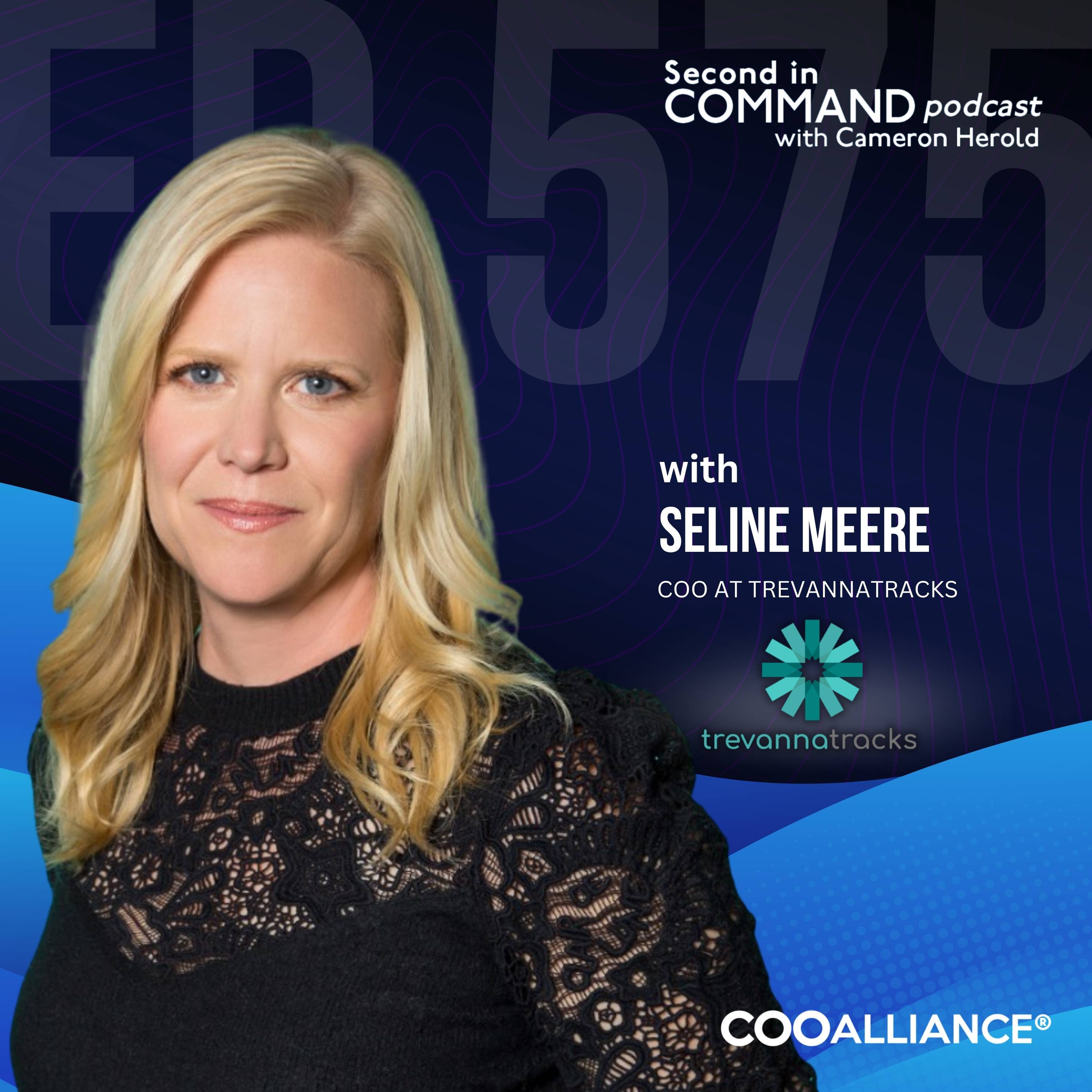
Second in Command: The Chief Behind the Chief with Cameron Herold
Ep. 575 - Trevanna Tracks COO Selina Meere - How to Energize Culture and Deliver Reliable Results
00:44:56
Loading summary
Transcript54 lines
- [00:00]
A
That everyone understands that I'm paying close attention even if I'm not in a meeting. I hear enough about what happened in it and I take the time to really try and grasp like, okay, what was happening, what's been happening, what's the through line from all of these comments that have been dropped like what do we need to address? And you know, doing it in a way where everyone, or at least, you know, key people feel heard and you know, trust is, is not easy. Like I said, especially in a team where everyone is very, very, very good at what they do. Welcome to the Second in Command podcast produced by the COO alliance and brought to you by its founder, Cameron Herold. In the second in command podcast we talk to top COOs who share the insights, strategies and tactics that made them the chief behind the chief. And now here's your co host, former COO of a multi eight figure remote company and alumni member of the COO all Savannah Brewer.
- [01:09]
B
Today's guest is Selena Meir, the Chief operating officer of Trivana Tracks where she spent the last four years helping scale a founder led company with clarity, discipline and momentum. Selena brings over 20 years of experience across technology, media, fintech and entertainment, leading operations, marketing and business development and building enterprise partnerships with some of the world's most recognized brands. What makes Selena exceptional as a second in command is her ability to zoom out to the big picture while simultaneously solving for the details that actually move the business forward. In this conversation we get into why gaining true context is essential for making high stakes decisions, how to build trust with your CEO and your team so you can confidently take big swings and what it really takes to work with a team of rock stars while keeping the organization lean, focused and high performing. If you're a COO or operator who wants to lead with judgment, build trust at the highest levels and do more with less, this episode is for you. Let's dive in. We are live with Selena. Welcome to the show.
- [02:16]
A
Thank you.
- [02:17]
B
This is going to be really fun. For one, we were just talking about the industry that you're in and you've had such a vast career. I love the way that you talk about your founder as well that you work with. Sounds like you guys have a great relationship and a lot of respect for each other and create creating something that is very needed and also not something I've really thought too much about. So let's give our audience a little bit of the, the fill in of the gaps that I'm mentioning. Tell us a little bit about Trivana Tracks. What do you do? And who do you serve?
- [02:51]
A
Oh, great question. So Tramada Tracks is has created a category where there wasn't one before. So even within the industry we find ourselves having to educate on what we are. So everyone has that they've heard in a movie or an ad that just drew an emotional reaction, right? Running up that hill from Stranger Things a few years ago was probably one of the biggest, right? Everyone can relate to that. Everyone can relate to Whitney Houston singing I will always love you and the Bodyguard. So those moments are created by really incredible team of people led by a music supervisor who's on every project, every film, every ad. There's somebody involved in not only deciding what music is going to create that emotional connection, make the scene scarier, funnier, whatever it is, that really amps up what you're experiencing as a consumer. But not only are these music supervisors deciding on the creative side, they then have to go through that whole compliance side to make sure that they can actually use the songs. And probably the listeners, maybe some of them know this, maybe they don't. The average number of rights holders used to be around, you know, three or four. Like if you think of Beatles songs, there were two writers in the room making it happen and then there was the recording. That's three different rights holders. Now you're looking at something like an average of six. And you have to get all the parties to agree on the fee, on the rights, on the use usage, on the, you know, whatever it is. And so it's not only that creative side, but then it becomes like a very, very big paperwork heavy job. So it's very cool. You've got to know the music industry, you've got to know, understand rights and clearances and you have to be very, very, very detail oriented and organized to do this job well. So Jennifer Fried, who's the founder and owner of Trivana Tracks, started as a production accountant and she Trivana Post and it was from her experience there actually paying out these licenses. So you've got six right rights holders on a song and their splits are very unique. There's very few round numbers. There's a lot of like 17.962% to this guy and you know, blah, blah, blah till you get to 100. Paying out those music rights was very complicated and taking an outsized amount of energy from her accountants to figure out how to make sure the musicians and writers were properly paid. So she thought there's gotta be a better way. So she invented this space and came up with a very specific workflow. Rights management and then ultimately kind of data analysis product so that studios, production companies, ad agencies, anyone dealing with music at scale can now manage this whole process not for just one song, but for all the songs in a whole show, in a whole season, in a whole company and then all the marketing assets around that. So the volume of music at our clients, who are all the biggest media companies in the globe, the volume of music that they're looking at and ultimately clearing is very high. And they can't do that at scale without a product, you know, at scale and Excel and email is just not gonna do it. So it's really genius.
- [06:36]
B
It is really genius. And it kind of reminds me in the similar way, similar but different with what Cameron did because we were talking before the show about how there's really nothing for coos and so he was really able to create something that was so needed. People looking for resources and support and help, but there was really no one doing it. And so how cool that Jennifer was able to find that and then create the systems and the process and the team ultimately to create that as a deliverable for so many huge. I mean I was looking on your website and I think I saw Apple is one of your clients and what's I say, Warner even.
- [07:14]
A
Yep, a division of Warner.
- [07:16]
B
Amazing.
- [07:17]
A
Yeah, and many, many more. There's a lot of news stories about a lot of our clients right now.
- [07:23]
B
How did you get involved? Because you were in the book industry before, so how did you get to know Jennifer? Did you apply through a hiring portal or what was that process?
- [07:33]
A
Yeah, so I'm a New Yorker east Coast girl and my. We moved here for my husband's job about eight years ago to la. I live in LA now and yeah, I had been in book publishing for quite some time. I started out doing PR at a division of Random House and then ultimately built out the in house agency at an independently owned publisher that is also very well known and I loved it and I really thought I was going to be there forever. And then life took us here to LA and so I had to really reinvent myself and my network and find my path here because there isn't a lot of book publishing. There's a couple, but really it's not an industry that is rooted in Los Angeles. So I ended up actually joining this women's executive organization called Chief, which probably some of your listeners will have heard of. And I met Jennifer through a networking event for people in the entertainment industry there and we really hit it off at a great moment and I was fortunate enough to find her because I have very strong feelings about this. You know, you have to fit into a box to be right at a job and need specific industry experience to be good at a job. And you and I both know that a COO has to be a figure it out kind of gal. So, you know, there's no playbook for what I do. So I was lucky to meet somebody that wasn't stuck in, you know, oh, it has to check these boxes on a piece of paper of the type of experience and you know, she saw in me the strength that, you know, she wanted in order to bring the company to the next level. And that wasn't a background in film production. And in fact, on our journey to grow Tramana, that is one of the things that I've been really focused on because Jennifer's background is film production and mine is not. I was able to come in and say, oh wait, hang on, like this is relevant in advertising. This is relevant and experiential, you know, and where else could it work? There's a lot of brands that rely on music. And so now we've been able to, you know, get outside of film a little bit more and not be as reliant on it. And you know, hopefully there's, there's more to come. So you know, but of course in that directive for growth and seeing that, okay, here's a, here's an area we can build, we can build new markets so that we have a larger addressable market. But then there becomes the challenge of getting known in this space where in the film industry she's very well known. The Trivana brand is well known because of her other company. But in advertising it's a blank slate and so you have to really completely build there. So that's, that's one of the challenges for sure.
- [10:32]
B
We'll go into the challenges a little bit more in a second. But I want to clarify, what are you doing kind of day to day currently? Because it sounds like you're wearing a lot of different hats and like you said, you're constantly figuring out new things.
- [10:47]
A
Holiday cards.
- [10:48]
B
Are there any things that are routine or stay consistent?
- [10:53]
A
Well, I, I find that the people operations is so important and I do spend a lot of of time on that. And whether that means actual one on one meetings that I have either weekly or bi weekly or just very fully listening in the all hands to what everybody's saying and trying to read between the lines and making sure that I've got all the different perspectives on a topic that we're grappling with so that everyone feels heard, the right decisions are made so that, that is definitely a constant because our clients are so influential and important. Client relations is a very big part of the day to day. I am not talking to as many CL every day as our head of client successes. He's like nonstop but he's constantly updating me on what's going on and so funneling their, their challenges or something that they want done differently in the platform or something they'd like to do better. That does become a pretty consistent task. But I mean it really, really depends. There is, like I said before, there is no playbook. You know, my role is, is evolves in the day, the year, the moment, the client life cycle, the like what do we need to focus on now? You know, I spent the past year, well I guess a little more than that actually transforming our DevOps from outsourced to in house and from waterfall to agile. And that was. If you had asked me five years ago what any of that meant, I would not have known. But you know, it's so, you know, you're. I go deep into the topic that needs to be really worked through in order to make sure that we're growing and building where we have to. And so the main directive when I came in was growth, right? And so what does that look like? And that everything has to fall back to how is this going to grow the company and what that means too. As you know, a CEO is going to look at either growth or transformation or what needs to be built. And if the main thing is growth, then what within the organization needs to be harvested, what needs to be created and built, what needs transformation? And I looked at it and I said okay, in order to have a more fixed overhead and get the, that main cost of development into a more predictable amount of money that is more stable, especially for a sole proprietor. You know, let's bring that in and in order to be able to have very nimble reactions to these big clients, let's go agile. And having that all in house and agile has been really fantastic. So we're at the tail end of our first year of that big transformation. So now that that's done, it's like my day to day is shifting more towards the sales side of growth. And you know, where are we going to bring in some new clients and how are we going to get our name out there more than it is?
- [14:13]
B
Yeah, it sounds like you really just go where you're needed, but the kind of constant is people staying Close to the team and what they need and close with the clients. And I read that you guys are. You view yourselves as a white glove service and you have a small team. So I'm sure there's a lot of different requests and things coming in. I'm curious, with the bring the engineering team inside the company, what are maybe one or two lessons or takeaways or things that you would share to anyone who might be thinking about doing something like that, making the decision, should we just keep it outside and not have to worry about that, or does it actually make sense to bring that in house? And that could be with a lot of different types of agency decisions. What would be some of your lessons or feedback to the audience on that?
- [15:05]
A
Yeah, so we are a tech company first, but we really are also very rooted in the service company type of mentality. And so, yeah, we're very close to our clients. So I would say in any big transformation like that, there's always going to be that moment where there's only a few people that know you want to make a big transformation that are doing that early research, but also when it comes time to share with the rest of the team, make sure there's a space for them to share how they feel about it and that they know how they're going to be impacted, that they feel safe in the transformation. That was obviously, obviously very important to us, that everyone understood this is. We've made this decision that we're doing this. But you as the engineers and the product team, know how to execute it day to day. And so now the responsibility is shifting to you to execute, you know, and really make it happen. And, you know, we've been working through the processes and changing a lot of the processes and, you know, we've had some exciting personnel changes and, you know, we have things in house like QA that we didn't have in house before. And so, you know, it's just, it has to be constant communication and, and letting everybody have the floor. And so we do have a small team. What is often really overlooked is how incredibly talented people on a small team like ours, our, you know, are like, Google is known meta. Like, you know, you drop those names and everyone's like, oh, you must be a genius to work there. And of course they are. But, like, there's no room for slack at a company our size. And so everyone is extraordinary. You know, our engineers are above average. Our head of product has pretty much designed, had the vision for this almost on her own. You know, of course, with other input but you know, she's really built the product as it looks today and functions today. A lot of people wake up or graduate from college wanting to work from the clients we service every single day. Our head of client success is on the phone and text with these companies all day, every day. Very exciting. So you have to be at the top of your game. And when you're at the top of your game, you have a lot of opinions, you want things done a certain way. And so there's a lot of big, strong, really solid personalities. And so you have to kind of make sure that everybody is, is getting heard and grabbing piece of the pie that they should and collaborating together. And so it's communication at the right time. But also the fact is there's going to be a very few number of people who know about a decision before it's brought to the rest of the team. And there's always challenges with that.
- [18:03]
B
How do you manage the priorities when everyone's got different opinions and you've got a white glove service where I'm sure there's many clients bringing in different requests. What's your process for that?
- [18:16]
A
Yeah, well, that's, that's probably, that's another every day. Right. Like, how are we gonna, our process is like, okay, is, is there data integrity? Rarely. The answer is yes. But if there is, obviously that has to take priority. Is this, is there a viable workaround? Is this just, you know, kind of annoying? Is this a change they're asking for would be good for the platform? Or is this like a very unique, you know, them only situation? And so we're constantly having that prioritization conversation and you think you have something all set and this is what these two weeks are going to look like and something comes up from a big client that's like, we, we just can't wait a month for this. You have to be careful. You know, you can't have that happen every two weeks. Right. You got to pick your battles. But, you know, we really try to have only, you know, one big thing happening at a time. And then, okay, what are the smaller things that can fit in and what are the small things that are going to have a really big impact? Let's put them to the top while we work through our epics. Yeah, it's, it's the constant conversation and sometimes it ends up just being like we're on the front lines of a situation that we have to, to address and that's gotta take priority.
- [19:45]
B
Speaking of battles and the hard things, what are some of, for you personally in your role, what are some of those hard parts of being a coo?
- [19:55]
A
Well, I think it's initiating these, these big swings that I see. Maybe I'm the only one who sees it, maybe not. And, and, you know, making sure that I'm introducing it first to the CEO at the right time and in the right way and with the right information to back up my idea and really having an awareness on how this is going to, you know, they're going to. These decisions are going to impact everybody else. And I think, though, really the hardest part is that, like, every day is different journey. That's probably really the most exciting part to me. I love that. But it can be challenging, you know, because it's like, okay, what am I a subject matter expert on? Like, I'm a subject matter expert in figuring it out. Yeah, I've worked directly for founders for a very long time, and they are undoubtedly some of the most incredible, smartest, you know, most passionate people you will ever meet, you know, but it's their thing, like, what they've put into the company that I'm working for, I haven't experienced. And I'm a great number two in the fact that I love to see. I'm not like the idea I'm in a person. I'm the like, oh, wow, this is fantastic. I want everyone to know about it. I'm going to amp this up. I'm going to find the right messaging. You know, I'm going find whatever it is that we need to make sure that everybody who should know about this incredible idea knows. You know, it's like when you're in book publishing pr, the authors, no matter what, are never going to think that you care as much about their book as they do. And of course, any good employee person is going to care just as much. It's a very different kind of care. I'm not going to argue that the way the impact, the emotion is not the same, but it's still, you know, my reputation, my work, my, you know, everything on the line. And so it's very similar with the founder in that, like, I have so much passion and I care and, you know, I put as, like, I try to put the most attention and really wrap my head around everything and do it exactly how they she would want it to be executed and communicate to her if I have an idea that's going a different direction. But ultimately, you know, this is an investment that she's made that I could never match. And so just making sure that she understands, like, how much I Have her back and support her and empathize with what she's done to get us where we are without having been in that role. And that's hard because when you care the way that I do about my work and about our clients and the product and what I'm representing, you know, it's, it's not easy to make sure that everyone around me knows the degree. So yeah, I mean, but it's so exciting. You know Jennifer Fried, who founded my company, and also Trivana Post, She's a woman, a sole proprietor in the entertainment industry. She has two very successful companies, one of which is a tech company. The other is accounting finance. I mean like, like, who wouldn't want to jump out of bed and work for somebody like that? I, it's like I'm very fortunate and I learn so much from her every day. So yeah, it's, but you know, there's always that like, you know, back and forth with each other.
- [23:51]
B
Okay, a quick note before we continue. Today's episode is sponsored by our trusted partner, Next Level Growth. They work with CEOs and COOs who are growing fast but starting to feel the strain, seeing some priorities slipping, execution slowing, and even leadership being stretched thin. Next Level Growth guides leadership teams to get aligned, establish real operating rhythms and execute better without burning their people out. This is practical operator level work, not theory. Check them out. Proactive always wins over reactive. Details are@cooalliance.com that's cooalliance.com partners and go check out Next Level Growth.
- [24:41]
A
The other challenge is that she and I see things differently, which is good, right? And that's why I'm here. I'm much more. The first time I hear of an idea, I'm like, okay, what's the strategy? What's the potential outcome? What's it? And she's like, wait, what are the steps? How are we going to get there? What's, you know, it's a very like, you know, detail versus big picture. And so when we're talking about a big decision we have to make or debating a new idea or even the small ones, it's like making sure that the other person doesn't feel challenged when sometimes it can feel challenging if I'm coming at it from a different perspective than she is. And it's not that I'm challenging what she wants to talk about. So you have to kind of get back and remind everybody, like, wait, we have the same intention. We're on the same team. Team. We're on the same path. We're Just coming at it from our two different brains and like let's, let's get to the same conclusion with both of our input. And that that can be hard because you don't want to come across as argumentative when really you're just. Your mind is in a different place than theirs is.
- [25:47]
B
Yeah.
- [25:47]
A
All to the same journey.
- [25:49]
B
Definitely. I mean, I think back to when I first joined the COO alliance. Kind of there was two parts in some of the shares that you mentioned was just around the challenge of having to figure everything out and sometimes in ways that you have not been an expert in that industry or that problem and now all of a sudden you need to be an expert in it very quickly. And then also the, the founder and the CEO kind of dynamic or the COO CEO dynamic. When I joined the CEO alliance, the benefit of that was being able to be around people who, who had already gone through those steps on whatever that subject was like. For me, I was trying to build a better internal hiring process with like personality assessments and understanding learning that for the first time. And there's so many different ways that you can do it in different tests. And I'm like, where do I even begin? And being able to be in a community where people can be like, hey, we've already figured this out, just replicate what we've got. And being able to shorten those gaps is super helpful. And then on the, the, the founder or the CEO and CEO dynamic, what was interesting about what you mentioned is it kind of sounds like your guys's role might be a little bit different than what like I would see in a standard CEO coo because usually like the founder is super big vision excited, like more on the strategy and idea of what that is and then the CEO is the one figuring out the steps. So it sounds like you guys are a little bit more like flip flopped on that. Would you say it's true?
- [27:22]
A
Yeah, I think it's more about when an idea is generated, like her mind goes to limp. How are we going to get there? You know, But I mean she has, you know, great vision as well. And yes, I am like executing on, you know, on the steps ultimately. But it's, it's, it's interesting. I mean there's just like so many examples where you know, all heads. And she's like, but how, how is that gonna happen? And I'm like, I don't know yet.
- [27:51]
B
My actually Jen Hoodie. Jen Hoodie who is kind of partnered with Cameron on to do some vivid vision partnership together. He has a book called Vivid Vision. I did some fractional COO work for her, and one of the things that she says that I love is hold the vision, not the circumstance, and focus on the what, not the how. Because when you start focusing on the how, it can deflate the energy and the, the momentum that you're starting to feel. And if you can focused on this is where we're going. We don't need to know how everything's going to work yet, but at least having those, the kind of the, the points on the map of where we're heading, then you can start working backwards. But being able to keep the excitement and the momentum with the team while you're going through the strategy is so important.
- [28:36]
A
Yeah, I agree. I agree.
- [28:39]
B
One of the things that you mentioned earlier was on taking big swings. How do you build the trust, trust in yourself enough, or where do you think that comes from? Especially maybe for you've been working with founders for 20 years. Plus, I believe for someone that may not have, maybe they haven't had as much experience yet to build up that trust, what's the advice that you would have on being able to take big swings? How do you know when you should take them? How do you think through if it's something that's worth doing? What's your process for that?
- [29:11]
A
I ask a lot of questions of a lot of people, and I, you know, go. I'm very comfortable going outside my circle and saying, you know, how would you handle this? Or finding people that are maybe an expert in something that I need to figure out, you know, so I usually come into a scenario where I'm suggesting something, having asked as much as I believe I can before I'm presenting an idea. I ask a lot of questions internally, too, which helps me get to uncover, you know, where there are gaps in proposals or an idea or where do we need to, like, push a conversation a little further to kind of figure out what the, you know, ultimate outcome is going to be. And also, just so I can understand something that I don't, I ask a lot of questions, and I am so happy talking to people. And I'm. I do a lot of research. So in terms of, like, trusting yourself, I would say you've got to be really, really, really, really curious in this kind of role in order to build that confidence in yourself with others trusting me, I, you know, that is like you. You have to listen to be a really good listener. And also, you know, it comes down to understanding context clues. And I'm really good at that. I'm Very good at the context clues, the reading between the lines. I can understand what's happening. I can digest them. I can pull together context clues from a range of conversations to kind of figure out, you know, what's going on around me. And so I like to think that everyone understands that I'm paying close attention. Even if I'm not in a meeting. I hear enough about what happened in it, and I take the time to really try and grasp, like, okay, what was happening, what's been happening? What's the through line from all of these comments that have been dropped, like, what do we need to address? And, you know, doing it in a way where everyone, or at least, you know, key people feel heard. And, you know, trust is. Is not easy. Like I said, especially in a team where everyone is very, very, very good at what they do. And I do try and give everybody their, you know, space to execute on. On their area. It's like, I might ask a lot of questions about what they're doing to understand it, but it's not to question their path. You know, it's really, really just so that I can really understand the. The process that we're taking or, you know, why we came to this decision or, you know, why we're gonna roll out this epic the way that we are, why we can't do these two things at the same time. You know, it's not. And I think ultimately saying, like, okay, like, I get it now, as long as, you know, what you said to me makes total sense. So I think that's part of it.
- [32:11]
B
Yeah. What has been your experience with asking a players and being so curious and needing to gather all these context clues, does that ever lead them to being defensive or wondering, like, why is she asked so many questions?
- [32:26]
A
Absolutely. You know, questions, when not delivered the right way, can. Can come across as questioning. Right. And put people on the defense. And it's, I think, my role, again, to be that, like, ultimate connector to just, you know, keep asking them and. And, you know, keep reminding everybody, like, these questions are coming from a place of, like, ultimate, like, collaboration and, you know, just, again, making sure we're all aligned and leading down the same path and. And that there aren't. People misunderstand. Like, you know, misunderstandings are very easy. Right. Especially in the age of zoom. And, you know, with a lot of big opinions, you know, some people will go in with their perception box and not really hear what's actually happening. And that's something else that I try to, like, watch for that so I can be like, hang on. I think person A is hearing situation A and person B is hearing situation B. Person with the floor, please, like, guide us in what, which of these is actually what you're saying and that that happens a lot. So I hope, I just, I hope that everybody sees what I'm doing. Yeah, it's a pretty solid ship, so I think that they should.
- [33:49]
B
I've experienced that happening, though, where I really wasn't at all thinking that this person wasn't doing their job. But like you said, when you're not able to be in all the meetings and especially as you're scaling and the team is growing and you're not able to be as close anymore, but you're still trying to have a pulse on everything, you got to ask a lot more questions. And so I think pre framing and building the trust and giving your team an understanding of why you're doing what you're doing is so important. Instead of just going in and interrogating people without giving them the context and why you need the context.
- [34:24]
A
Context, yeah, exactly.
- [34:26]
B
How do you go about finding those A players in industry that I'm. I'm sure there's, like you said, a lot of people wanting to work with companies like this. What's your process for attracting that level of talent and then actually sifting through and hiring, especially with your. I think you said that your opinion is that it makes a lot of sense to hire outside of the industry sometimes. So what is your hiring process? Process.
- [34:52]
A
So we have a pretty small team or a tight team and we don't have much churn. So hiring isn't a big part of my role. But when we brought in some more engineering, you know, we also engaged more heavily with our CTO and made sure that he was, you know, really involved in the assessments that, that we wanted to have happen in order to know is this person going to be able to carry the, you know, this ship further? And, you know, and so really more it's not so much about hiring for me as it is about what are these people really good at and what do I see them really great at that I, that we need to massage and bring out and also seeing how everyone needs to be managed. I'm a big believer in managing people differently if that's what is required. I don't think that there's one particular way everyone should work. And, you know, some of our employees don't ask as many questions or for help as we'd like them to, so. And when I see that happening, I can swoop in and say, okay, you two, you need to get it, have a meeting. And this is the topic of the meeting and have fun. And everyone is always receptive to that. Right. And just understanding, like, okay, there's a knowledge gap here. This person is driven, but not in the way that they're going to ask the questions that they need to. So let's set up a scenario where they can be given the information that they're looking for. And then this person over here is like very asynchronous and going to just like, go, go, go, and like make sure they have the space to, you know, do that and perform. And so for me, it's more about finding the talent within each of our incredible people rather than having out and hire. And you know, it is a complicated system. It's a big system. It takes a while to get to know. And so we don't want churn. And so it is, you know, I really want to make sure that everybody feels they're getting every, the resources they need to be awesome.
- [37:12]
B
What are some of the ways that you provide additional resources? Like do you guys buy outside training or give stipends for them to go learn things or what do you guys do to retain that talent?
- [37:23]
A
Yeah, I mean, if someone comes to us and says, you know, there's this conference I want to attend or, you know, I want, you know, when we were bringing in an agile, some people were like, I want to get certified. Great, like, yes, of course, absolutely. You know, take that time. I think it's, it's, and it's also like, okay, I think we need to pull back on what's happening in this sprint so that there's hours for the engineers to actually dig in more and learn and research or, you know, maybe make, make research part of the sprint or, you know, whatever it is. So it's, it's, it's for us, it becomes like, you know, freeing up the space so that everybody can have the information that they like, really, really, really, really need. And you know, we're small and we're nimble and so a lot of it is finding resources that aren't going to cost us a lot of money. You know, when the head of client success maybe is a little bit more involved in sales. And it's like, okay, we're going to like deep dive into some of these tactics that you and I got to get better at. And you know, here are a bunch of resources that I found and that I think, you know, that are vetted and they've been recommended to me. And we're going to take ourselves through, you know, these courses and we're going to get better at at these three things, you know, in the sales process. And so, you know, you gotta be scrappy.
- [38:45]
B
That's true. Yeah, I have. When. When I was in my co position. I'm sure you've seen content from Layla and Alex Hermosi on YouTube.
- [38:53]
A
Yes. Yeah.
- [38:55]
B
So I met Layla like 10 years ago and I had been following her. And so when I found myself in the CEO position, she was someone that I just really looked up to. And I mean, I was following her, her when she first started putting out content. And I have a spreadsheet, a Google sheet because, like, likewise, like we're scrappy. We wanted to save money where we could. And her content was so good that I just started watching every video and then I would write my takeaways, like who I thought on the team could benefit from it the most and for what situation. And I did that for about a year. And I have this giant spreadsheet of all of these videos from her and being able to share those within the team, team create common language, it's really important. And Cameron, also, for anyone that's listening, if you're wanting to uplevel your team, especially like Selena, when you've got a small team and you're growing fast and you don't have time to be hiring all the time, or maybe the resources, like how can you level up that person as the company levels up so you don't just have to let them go and rehire and let them go and rehire. But Cameron has a course called Invest in your leaders, which is amazing about a lot of the fundamentals of what's required for. For people stepping into leadership. So anyways, I. This has been so amazing. Selena, thank you so much for coming and sharing your time. I always love to wrap up with asking, what are you most excited about? We are, at least at the time of this recording, we are exactly seven days from Christmas. So I'm curious, maybe there's something there, but maybe outside of that too, in business and both personally, what are you excited about?
- [40:26]
A
I mean, this is always the most exciting time of the year, right? When you think about like, oh, what's next? What's next next year? And you know, we are toying with a very new market expansion and I'm very excited about being able to talk about that if we go down that path. And I think next year has really great possibilities for the company. I'm very, very, very Excited. You know, we have some really, really big features coming out that everyone's been asking for for a while, and. And once that's done, I think we'll be able to take a big, deep breath and say, you know, oh, wow. Okay. Like, we're in such a good place. And then, yeah, I mean, I do have two kids, and they're teenagers, but they love Christmas. There's nothing better than this time of year in terms of, like, how happy the family is and how excited we all are and looking forward to a new year. It's always. This is always my favorite time to be excited about what's next.
- [41:30]
B
Yeah, there's just, like, that. The sparkle and everybody's energy, and this is the first time in a while that I've had both sets of my grandparents. I'm so lucky I have both sets of my grandparents still around. And I was telling you before the show, my parents lost their home in the hurricane last year, so they just bought this place, which is why if you're on YouTube, you can see I'm in what I think Selena said. It looks like I'm in a gym. This is just like my dad's man cave, where, like, boxes and all the things are that being sort of. But being able to just, like, hear everybody laughing. And even though there's, like, a small amount of space for 12 people or however many people we have here, it. It's really fun, and it brings just, like, a lot. It's just refreshing. And I'm so excited for next year as well. It's gonna. I feel like I heard next year is the year of the horse, and I was. I was the horse gate girl growing up. Like, there were horse socks, and I showed horses. So I'm like, this is. This is gonna be my year for sure.
- [42:29]
A
Yeah, it is. Oh, my God. So I have a question for you. My favorite way to end any interviewer panel is to ask what your favorite sync moment is, whether it's an ad or a movie or a TV show.
- [42:43]
B
So favorite song from the movie Grease would be Summer Nights. I was a huge Grease fan. I had, like, for Christmas, my mom bought me the collectible dolls. Like, had the Sandy doll. And I have actually, when I moved my first, like, house by myself, I was, like, living on my own. Actually, you remind me of her, which is interesting. Her name's Taylor Victoria. She's an incredible artist. But I commissioned a piece from her, and then she became one of my best friends. But she painted me a huge painting of Sandy and, like, what's the word. Like a pop art. Pop art. So super colorful. And it's over my couch in my living room and I love it. So that's so cool. To answer your question, summer Nights from Greece. Love it.
- [43:26]
A
Oh, that's a good one.
- [43:28]
B
What is yours?
- [43:29]
A
The song Sweetness closes out this movie called Buffalo 66. And it is a song that was on a playlist my husband made me on an ipod that he gave me before when we were first dating and I was on a run and the song came on, I was like, the song is amazing. And then when we got married, I was like, I want that to be our wedding song. And. And it closes out. Yeah, it's the closing credits of this film. And it's by the band. Yes. And it is really beautiful. For anybody who doesn't know Sweetness, check out Sweetness. And the movie is really good. It's a really powerful close.
- [44:04]
B
Oh, amazing. Okay, I wrote it down. I will be sure to check it out. And yeah, in honor of the yes that you just mentioned, thank you for saying yes to this and coming on and sharing with everybody.
- [44:15]
A
Oh, it was fabulous. I'm so happy to have met you.
- [44:18]
B
You too. Thanks so much. Thank you.
- [44:20]
A
You've been listening to Second In Command, brought to you by COO alliance founder Cameron Herold. If you enjoyed this episode, please be sure to, like, share and subscribe to us on Apple Podcasts, Spotify and our other podcast streaming platforms. For more best practices from industry leading COOs, visit COOAlliance.com.
- [44:45]
B
Sam.