← Second in Command: The Chief Behind the Chief with Cameron Herold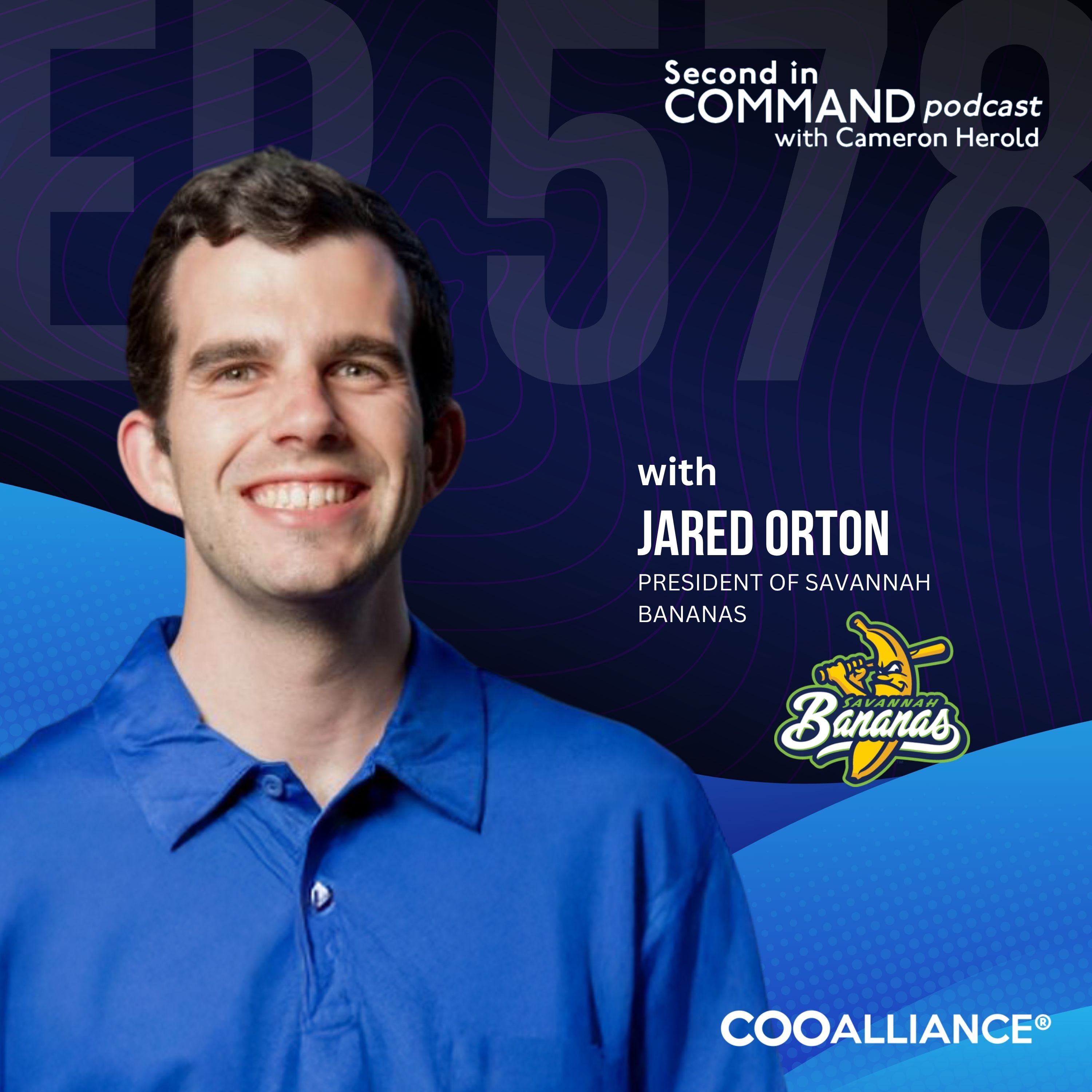
Second in Command: The Chief Behind the Chief with Cameron Herold
Ep. 578 - Savannah Bananas President Jared Orton – How Fun Became the Ultimate Competitive Advantage
00:50:58
Loading summary
Transcript18 lines
- [30:26]
A
Haunted houses and kickball leagues. And we just thought, we're the geniuses at all this stuff. Obviously, if we sell anything, people will buy it. And they didn't. They did not. It was. And it burnt people out. It burnt our staff out, it burnt our fans that we were sending emails, you know, new event, new this, new that. Buy tickets, coming soon. You know, boom, boom, boom, boom. And they didn't. They didn't all dramatically fail, which I kind of wish they would have, because we would have learned much quicker, like, stop doing that. They were all average, which is probably the worst, because you're like, all right, they can be a little bit better next year. You know, if we just put a little bit more effort into it, they'll be a little bit better. And I remember a lady coming to one of the average events that we hosted, and she. Her comment was, so, when does the season start? When's the banana? When are the bananas back? And it clicked in my mind, like, oh, yeah, the thing that we're the best at, the thing that we're supposed to be doing for these people, like, we have to get. We need to get back to that. That's our thing. And so we just. We. We killed all the events in 2019. Obviously, they got killed in 2020. We wouldn't have had anything to stand on. And so, you know, we tried a bunch of that in 17, 18, 19. Because that's the thing you're supposed to do. You're just. You have a venue, you're supposed to create more events. And we just realized that was. That was not what we were supposed to be doing. So we abandoned that. We had talked about, yeah, adding teams, buying a second team, a third team, creating more teams in the league, but we still always felt like if we do that, the bananas are always going to kind of be number one. Jesse. Jesse had also had some. Some history in doing that. Like, we. When I first met Jesse and Emily, we had the Gastonia team in North Carolina, but he also operated with a partner, a team like actually two other teams in North Carolina and Virginia. And those teams never got the love that they were supposed to have. There was always kind of a favorite and all that stuff. We just felt like we've been down that path and that just kind of leads to tier 2, tier 3, tier 4. And so we were experimenting with all of that and then felt like, okay, how do we bring the bananas? The Savannah Bananas? That's our thing. How do we bring that to more people? And that's when the Mobile Alabama Games opened up. That was a test. And then we said, okay, this kind of worked. We can tweak this. You know, a sellout is successful to us. If we sell out two games, we're like, okay, that's, you know, going back to that Jim Collins. Like, there's the rifle. Rifle shot, single shot, focus. Fine tune it. And then when you know you've got it tuned in, there's the cannonball. And so that CannonBall happened in 2023 when we ripped the band aid off and said, 2023, 33 city world tour bananas are going to play in front of half a million people. Like, we're. We're going all in on this.
- [33:31]
B
I'm curious how you did the whole rationalization around the fact that the team will lose once in a while. I would think that most or many people, they were going to do this. You know, the Harlem Globetrotter style ideas is. Was kind of what's in my mind. And hopefully that analogy is okay, even though you guys are doing it different and better and less scripted. But the fans want to see the harmful goat trotters win. Like, that's the. You're, You're. They don't expect to go and see them lose. And, And. But you guys are okay with that is. But you're not even playing normal baseball. You're creating this new thing. So you've. You've kind of created this fun, crazy game, and you're still okay with losing the game even though you guys are the star. How is that. How do you rationalize that?
- [34:14]
A
We realize that humans are smart and they. They want to believe that something is real. And I remember hearing some people describe, like, the Pixar creative strategy. And, you know, the question was way back in the day, talking about Toy Story and, you know, the, the plastic soldiers, right, or Mr. Potato Head or, you know, the slinky dog or whatever. And we all know that a slinky dog can't talk. And we all know that the army men can't actually march. But what if they did? How would it work? What would they talk like? And what jokes would they say? And what would they not understand? What's the human element versus the toy element? And like, we believe it now as humans were like, yeah, that makes sense. Obviously, if Mr. Potato had, you know, talked like that, that. That totally makes sense to me. And then that would be his personality and that would be his feelings. And, you know, there's the dinosaur that has anxiety. Like, we begin to believe these things in the story works itself into Us saying, that's real. That makes sense to me. I now laugh. I see the storyline come to fruition in sports. We've been conditioned to say there's a winner and a loser, and it matters. And every moment that I see in this performance matters. And if we break that, we break that trust and break that story, all of a sudden it doesn't matter. And all of a sudden it's, I get it now. Now the veil has been pulled away, and it's just a gimmick, and it's just a performance. And we all know what's going to happen at the end. We don't want people to know what's going to. We don't even know what we want to happen at the end. We want people to keep following the story because that becomes real. And we want the party animals players to feel the weight of, like, we could win. And we want people to know it could come down to the last minute, literally the last minute of the game, and it's real to them. And when that guy does or. Or girl does a backflip catch, we want people to understand he or she made that decision on their own to perform that for you tonight, and we had nothing to do with it. And so the human mind and element of, like, working with people to know that you should care, it should matter, you should cheer, you should be invested in this thing. And it also gives us the opportunity to not just rely on the Savannah Bananas forever and ever and ever and ever.
- [36:57]
B
That's interesting, too, right? There's a long game involved. So it's interesting, though. When I went to the. The Harlem Globetrotters as a child, like, you know, six, seven years old, I didn't care that it was scripted because I didn't know anything of it other than that. But when I, once I became a teenager and an adult, I didn't want to go anymore because I already knew what was going to happen. It was so ob. I get it now, what you're doing. It makes a lot. I'd rather go see you guys because there's still the intrigue of it playing. How the heck do you explain all the rules to the fans when, like, it's literally like explaining hockey to somebody who lives in, you know, Tennessee.
- [37:30]
A
We try to. We try to keep it pretty simple. You know, our team gets out there and they announce the rules to everybody, and it's. It's fun to. You know, I enjoy walking around the stadium and have my ears kind of turned on extra high frequency. And, you know, sometimes if I'm just standing there looking like I'm, you know, doing nothing really. I'm just trying to, you know, turn this year to this conversation. Turn this year to this conversation. Just listen a little bit. And it's fun hearing people explain it to someone else who has not been there for the first time or who, who is there for the first time and explain like, okay, you know, they can't step out and you know, if there's a walk, they're going to throw it around and run around the bases and they got to get it to all the players and, and. But most of the rules are generally simple. You know, there's a time limit there. You know, if a fan catches foul ball for an hour, there's no bunting, there's no round business. There's none of that. The scoring is a little intricate for people. You know, basically every inning counts. So, you know, whoever scores the most runs in that particular inning, they win one point. And so it's just one kind of like match play golf if you.
- [38:36]
B
So it's easy enough to explain it.
- [38:39]
A
It is, it is. And it all works to, you know, hopefully there's walk offs and there's celebrations every single inning and then ultimately it works to hopefully a final game that or a final inning that's really close and a true walk off could happen. And we didn't get the game theory to nerd out with you for a minute. We didn't get the game theory right. I mean, it took us a few years. Like we would get to a certain scenario in the game. Just like you build a board game or a video game or something like that and like, like the computer would break, right? It's like we can't move further. You know, the scoring would be messed up or we encounter a scenario that we had not encountered before. And so we've had to work the game theory through a little bit to make sure that the fans again, it's got to be believable, it's got to be real, it's got to matter. The stakes have to be there. And that's what we're trying to create for people.
- [39:28]
B
Awesome. I love it. All right, so at the end of the day, there's a business to run and you know, you're deep in the operations running this company. Does it ever get stressful or frustrating that you know, we're talking about fun but like we got to get this X out and we got these projects done. And how do you work around that internally in the, in the day to
- [39:46]
A
day with it all every day, I mean that, that's my personality is gotta be done right. It's gotta be done well. And anything less than that, I feel like is a personal attack on my, you know, entire psyche. Right. And so we still want to move fast, right? We still want to make, make quick decisions. You know, we're not beholden to investors or, or you know, a bank or outside capital. Like, we just, we own the whole thing outright inside and outside. And so we don't have a board, you know, we don't have red tape, we don't have a corporate office. And so we've always prided ourselves on like, move fast, move fast, move fast, move fast. You know, speedboat. Now that this thing has gotten so large and sometimes the decisions have so much impact, it can be frustrating in a sense of like, yeah, we just want to move fast. We just want to go like, make the decision. But sometimes and, and you guys know this as good as, as I do, it's like we can make one decision here, but like the ramp up to get that thing done is going to cause a lot of hurt and pain and issues if it's the wrong decision. And so we have to be meticulous about it and we've got to research and we got to understand where we're going in 12 months. And you know, we gotta understand like what the current situation is now and potentially if we have to walk this thing back, what it's going to cost us. And so we made, we've made plenty of costly mistakes and we, we try not to let them hold us back from future decision making. But we have had to slow down in the thinking and planning and analysis phase to ensure that like this decision that we're about to make, here's what it means, here's the impact that it's going to cause. Are we sure this is the right way to go? And, and that's not fun for people sometimes because it's like, yeah, we used to just see something and buy it or you know, we used to just say, hey, fun idea, let's go take it on, or hey, new idea, let's go chase after that thing. And we still have the spirit of that, but we have to have the real methodical analysis of it to ensure that like, okay, this is going to be the right thing for us, for our business, for our people, for our fans, and we won't have to walk it back.
- [42:02]
B
Have you found any markets at all that culturally it doesn't work for? Like, are there any parts in The US where it's just like, yeah, they don't embrace this, or are people people, and the markets are big enough that you can still pull off a 30,000.
- [42:14]
A
We haven't gone. We haven't gone international yet. We're a little scared right now because we haven't. We haven't gotten the demand. You know, it's not. It's not like. Like, we haven't launched, you know, media out there and marketing and language barrier and things like that. And so we're very curious about how that might play, you know, if we were go. If we were to go to Mexico or the Dominican or Venezuela. We've not gone to Canada yet, and we don't know if Canada will make sense. Not yet. We generally think that the. The language of fun transcends most barriers so far. But, no, we haven't found anything yet that's been like, okay, they just don't get this. We are bringing new brands to different markets, which is a learning curve. You know, the bananas are one brand. We've got the party animals, We've got the firefighters. And so as we introduce new experiences to our fans, they are taking. It is taking time for them to learn, like, okay, what are the traditions and tricks and bits and script and skits and who are the players and, you know, what am I supposed to do here and am I a fan and should I wear the merchandise? Things like that are taking time.
- [43:25]
B
Anyway, I love this. This is really cool. How about you and Jesse? I mean, I'm sure that in 12 years, it's just been smooth sailing, easy. Every day's been fun, and no fights, no arguments. How do you get. How do you get through the inevitable tough stuff where the CEO and COO are, you know, visionary and integrator? How do you work through those tough discussions and tough decisions and things that have to happen when there is a clash?
- [43:46]
A
Yep. The visionary integrator has been super helpful for us. And, you know, early on, we were all doing it together, right? It was like we were all in the same room talking about the same things, making the same decisions, you know, experiencing the same things, working on the games together. And as it's grown and as we've hired more people and the businesses has grown and we've got to be more specialized and focused on certain things. What we've realized is he thrives on the creativity and the show and the entertainment and where this thing is going and how we entertain more fans and reach more fans and go to new markets and, like, really put so much Effort and energy into, like, how do we entertain our fans? I need to make sure I align with him on that. Doesn't always work. And then have to go into our different business units and say, okay, this is how we pull it all together to ensure that what we're actually chasing after is the right thing and it's the only thing, and it's the main thing. And teaching our team that we have to say no to a bunch of good ideas that probably don't fit into what we are actually chasing after. And so I get to be the person that says no to everybody and no to him sometimes and really be the person that says, jesse, you said this yesterday. Now you're saying this other thing today. Which one do you want? Because I'll go after either of them. But I got to know what you want, because yesterday that was number one priority. Today you're telling me the next number one priority. And I can't have 54 number one priorities. And I can't communicate, you know, 54 number one priorities to our entire team. So which one are we actually going to be working on and reminding him that, you know, hey, we made a promise to our fans or we, hey, we made a promise to our team about this thing. Are we going to go through with it? As we've grown, you know, he and I have both realized that our word has a lot of weight. And it's. It used to have a lot of weight as well, but now it has a lot of weight to a lot more people. And so saying things with conviction is fantastic. Remembering that sometimes they come across as gospel can be potentially detrimental to people because they hang on to it and they say, okay, they said this two weeks ago. This must be the end all, be all. This is what we're doing. This is where we're going. And reminding people sometimes that. And reminding ourselves to maybe speak with the same conviction, but reminding people that this is something we're working on, we're working towards something. We were exploring it. We haven't gotten to the actual decision yet. We're on a path to get there. And that has helped people a little bit as well. But we. We certainly have come out hot and heavy very many times, and we've said, this is what we're doing. This is where we're going. We believe in it. And then we have to change because everything changes, and that can be rocky for people.
- [46:59]
B
Well, I. I love the communication around it. I spent a lot of time in my newest book, the Second in Command, where I talked about the role of the COO being the brakes to the entrepreneur's gas or where the leash to their dragon. And, and it's always staying on that same page and you guys are doing a great job job with it. Final question. I want to go back to the 21 or 22 year old Jared Orton and give him some advice. What advice would you give to the younger you that you know to be true today, but you wish you'd know when you're just starting out in your career?
- [47:24]
A
Oh man, it's the people and leading the people and leading them humbly and with intentionality and with character that people just don't tell you, they don't tell you these things that you're going to have to have hard conversations with folks. And you know, here's how we're supposed to communicate, you know, as you go from 2 to 4 to 10 to 20 to 50, whatever, to not be so serious and specific about these, these things that only go wrong, you know, celebrate people and recognize people and have fun with them and remind them they're doing a great job. And you know, the, the people leadership is, you know, everyone wants to be a leader, right? Cool role, cool title. You got people looking up to you, all this stuff, but it's, it's not the title, it's not the role, it's not the position. It's, it's being humble in front of the entire team and, and certainly saying this is where we're going, like, come on. But hopefully looking behind you and seeing a team of smiling folks who are like, we believe in this. I tell our, some of our, our leaders from time to time. The, the role for me is to get the biggest machete out as I possibly can and make sure you don't cut people's limbs off. We're out there cutting through the Amazon rainforest though. You gotta blaze the trail, clear the path and get all the wild animals out of the way, get all the traps out of the way, get all the bomb and you gotta clear the whole thing. Then you got to look behind you and say, come on team, it's safe, we're ready to go. I've eliminated everything that could possibly, you know, potentially go wrong. There are things that are going to come at us from different sides. We gotta be ready for that. But that's our role to get out there, just clear the path for these folks so they can safely move forward and accomplish the things that, you know, they all want to do it. But we got to get out there and clear the mess because the things that we're doing are, you know, they're brand new. You know, we, there's things that we've none of us have ever done before and we're figuring it out along the way and being with a team of people who believe in that and want to be alongside of you. If people can learn that early on, man, it'll make such a dramatic impact on the, on the people they work with.
- [49:49]
B
Well, Jared Orton, as the president of the Savannah Bananas, you and Jesse, the founder, I guess, CEO, are doing an amazing job with scaling the organization, creating some raving fans, changing sport in the US Bringing fun back into the business world. So thank you so much for sharing with us. This has been an amazing 400th episode of the Second Command podcast. In the same week, we just signed our 500th member for the CO Alliance. So it's going to be a great one. We're going to get to share with everybody. Thanks for sharing with us. Really appreciate your time.
- [50:18]
A
Absolutely. Glad to do it. You've been listening to Second in Command, brought to you by COO alliance founder Cameron Herald. If you enjoyed this episode, please be sure to like, share and subscribe to us on Apple Podcasts, Spotify and our other podcast streaming platforms. For more best practices from industry leading COOs, visit COOAlliance.com.
- [50:50]
B
Sat.