← Second in Command: The Chief Behind the Chief with Cameron Herold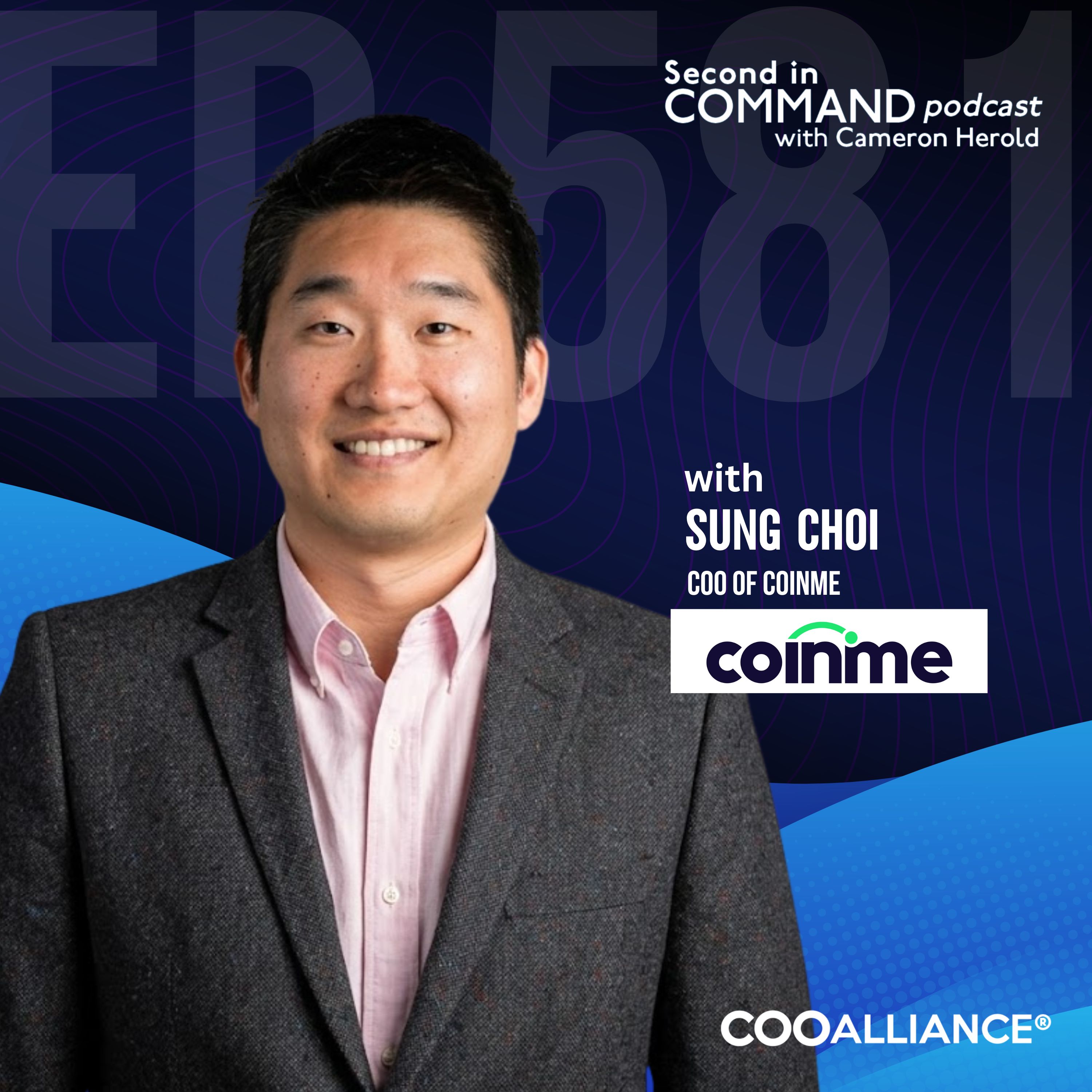
Second in Command: The Chief Behind the Chief with Cameron Herold
Ep. 581 - CoinMe COO Sung Choi - Life After Acquisition: Surprising Wins and Brutal Costs
00:41:44
Loading summary
Transcript62 lines
- [00:00]
Sung Choi
We have to be very thoughtful about who we hire, but then we can invest more into those people and make sure that we find the best fits for those roles, both from a management perspective but also a performance perspective. So I think it just really tightened our hiring criteria to let us find the right people that fit exactly what we need. And I think being mission oriented also kind of helps some of this as well, where if people really care about what they're doing, they're less likely to go off and do a bunch of other things as well. And I think having time, tight interview processes helps find the right people who will remain focused. So I think it's a little bit on the hiring, it's a little bit on the management ultimately, just finding the right candidates.
- [00:42]
Narrator
Welcome to the Second in Command Podcast, produced by the COO alliance and brought to you by its founder, Cameron Herold. In the second in command podcast, we talk to top COOs who share the insights, strategies and tactics that made them the Chief behind the Chief. And now here's your host, Cameron Herald.
- [01:07]
Cameron Herold
Sun Choi is today's COO guest on the Second in Command podcast and his story sits right at the intersection of compliance, partnerships and scalable operations. He's a true chief behind the chief in every sense. During the 2022 crypto downturn, he helped stabilize and reposition CoinMe, wearing multiple hats across business development, marketing and operations, which he still does to this day. And under his leadership, CoinMe evolved from its B2B Bitcoin ATM roots into a B2B crypto service, kind of a CASS structure or an infrastructure platform powering access for leading fintechs and retailers. In this interview, he's going to share how to build culture and process in a fast changing, highly regulated space, including being virtual. He's also going to talk about the COO mindset being essential for bridging innovation and compliance at scale, particularly during turbulent economic conditions and other macroeconomic challenges. Super articulate, very humble and candid. He's a great operator and he has lessons that will apply to every industry. You'll love this episode and this is also one that you can watch on our Second in Command podcast YouTube channel. We'll see you on the inside. So Sung, welcome to the Second in Command Podcast.
- [02:21]
Sung Choi
Thanks for having me, Cameron.
- [02:22]
Cameron Herold
Yeah, looking forward to this. I've been involved in the crypto space for a long time. I mean, one of my very first posts About Bitcoin was 2014 back on Facebook. My posts are still up and active and alive and well and but everybody laughed at Me, back in those days, you know, it was pretty early stage. And then when the dot com era, or not the dot com era, but the crypto era kind of really took off, it seemed like everybody was getting into the game. You've been in it for a while now. Why don't you tell us kind of your story, how you got into the space and also tell us a little bit about CoinMe and where you guys fit in the space.
- [02:53]
Sung Choi
So I guess I joined CoinMe in 2017. About three years before that, the CEO of CoinMe, Neil in, invited me to the opening event for the organization. And I remember thinking to myself, this is a terrible idea. Who's using this digital asset and marrying it with the physical location and how do these things go together, you know? And three years later I ended up joining the company. So clearly I was wrong in many respects. In terms of what CoinMe does, we're a licensed and regulated provider of stablecoin and crypto payments. It's a platform that allows you to via APIs. Our partners can either do stablecoin and crypto payments orchestrations or also integrate a native crypto product onto their like, within their own app, on their own UI ux. So really we provide the backend regulatory infrastructure, we provide the crypto and stablecoin platform, and our customer is able to take that and make it into a product themselves. And whether that's paying out in stablecoins or whether that's enabling crypto trading within their platform, we can really provide all of the above. And then a bit about myself. I'm the COO at coinmen and I've been in this position for a handful of years now.
- [04:04]
Cameron Herold
Okay, so it kind of makes sense why it was confusing to you on how you're going to marry the offline world with the digital world. It was hard enough for people to wrap their minds around the digital space on its own. I remember I got my first bitcoin handed to me at the TED conference, I think 2012. And it was like a business card and there was a wallet address written down. And I'm like, this is the dumbest thing I've ever heard. And somebody said, oh, it's worth about 100 bucks. I'm like, it's not even worth my time to figure out what to do with this piece of paper. So of course I threw that one out. Kind of makes sense why you kind of couldn't wrap your head around it. What did click for you? What was it that finally clicked that you were able to wrap your Head around it.
- [04:42]
Sung Choi
And before I answer that, so you throw away $100,000, give or take 25,000, basically. No, that's great. In terms of what clicked in my head, I finally understood that for some people it was going to take a longer journey to be able to connect this digital asset to something that was much more tangible. And the way coin approached it back in 2017 was to provide a physical kiosk where you could go perform a transaction of turning dollars into crypto. And at the time, especially in 2014, this was much more difficult. Now you have Coinbase, you have all these great exchanges, you have wallets where you have on ramps. But back then, to be able to buy bitcoin, the stories I've heard are you send envelopes full of cash to someone in a far away jurisdiction, Canada, Europe, Eastern Europe, wherever it might be, and you hope that they would then send you bitcoin or you might meet them in person, they give you a USB stick. I mean, there's all these stories about how difficult it was actually to acquire Bitcoin or other cryptocurrencies for that matter at the time. So to provide a physical location where you could do it just made a ton of sense at the time. And I started understanding that people were also using this as an alternative means of transacting, for example, like if you can't get a bank account, there were people that literally used Those old Bitcoin ATMs that we used to offer, which discontinued in 2019 if I remember correctly. And people use those as savings devices. And fortunately for them, Bitcoin mostly went up over a long enough period of time, where it was also a very great investment mechanism for them as well. But it really served the purpose of being an alternative banking system.
- [06:19]
Cameron Herold
Interesting. Yeah. I was curious if you were still doing the, the physical actual. The terminals or the, the kind of. They were almost like an ATM mach machine, weren't they? And why did you stop doing those? What was the reason for stop? Was it because the banking sector was getting more, you know, ubiquitous, it was easier for people to use? Or what was the reason for getting
- [06:36]
Sung Choi
out of it from a selfish perspective? I was put in charge of running the physical infrastructure. So we had about 75 locations at one point. And you know, it's in the name hardware is really hard to maintain physical infrastructure across the United States. It just became really, really difficult. The other part of this was we also understood there was great infrastructure out there already. And so our thinking was, well, why don't we power partners rather than providing our own infrastructure. So our first partner where we're able to do this was with Coinstar and Coinstar being essentially a utility in the United States with tens of thousands of locations across the country and every major grocery store. We said, well, that would be a great partner to go live with. Unfortunately for us, they're located in the Seattle area. At that time, COIMI was also located in the Seattle area. There's still some of us here, but we're fully remote now and we're able to make that connection and roll out an amazing partnership where the product grew extremely quickly. You know, being able to provide access to Americans all across the country ended up being just a really great product for us and for our users.
- [07:44]
Cameron Herold
I love it. Now in this kind of early stage of the company. When did the company start and when did you join? The reason I'm asking is just in terms of the funding, how did you fund the startup and fund the growth?
- [07:55]
Sung Choi
So in 2014, Neil Berquist and Michael Smyers founded Coinme and they self bootstrapped the whole thing initially. And they slowly started launching Bitcoin ATMs and they did their own cash logistics, they did their own maintenance, they did pretty much everything. And it was all in the Seattle area. Right around 2017 is when they first took in a million dollars in venture funds. And they started growing much quicker after that. I joined a few months after the initial investment, external investment I should say. Then from there we've raised a series of rounds from, you know, major VCs like Pantera and DCG and others as well.
- [08:32]
Cameron Herold
You're still privately held company?
- [08:34]
Sung Choi
We are, although we just recently announced an acquisition by Polygon Labs. So the deal is in the process of closing. But we're, I guess have some different leadership, I guess, in the way that we're going forward.
- [08:46]
Cameron Herold
How did that acquisition work? What was it like from your side and what were some of the lessons? Being mindful of the fact that you gotta be nice to both sides at this point because you're still fresh. But what were some of the lessons in that acquisition that you can impart for others that are listening?
- [08:59]
Sung Choi
I think I didn't fully understand how much arduous the process would be. You know, from kicking off a potential M and A process to, you know, people describe when founders are trying to find other co founders, it's founder dating. I think an M and A process is largely similar. You're dating just in a more polyamorous way, I guess, where there's a lot more people Involved a lot more people having conversations. I mean, Initially it's the CEOs, it's the, you know, the investment banks along with the CEOs. But, you know, by the time I became involved and we started having conversations with different groups, you really start to understand how different companies operate, what their culture's like, and pretty much everything that is behind running a company and being able to get on the same page. And it was really amazing to find a group like Polygon where their leadership and the way they saw the future of money movement and how our combined businesses could grow and the cultural lens as to how we viewed everything and how we saw managing teams and managing people to the level of transparency that we believe in as an organization externally and internally. All of that was really well aligned. And so it was really exciting to be able to get into this relationship, so to speak, and then to be able to then start executing together as two teams, coming together as one. And in fact, there was a third team involved called Sequence as a part of the process as well. But all of that was so well aligned that it's a really amazing process to be a part of so far.
- [10:28]
Cameron Herold
It's funny you used the dating analogy and funnier that you used the polyamorous dating analogy, but that's kind of fun for the adults, but the kids in the room are the ones who are feeling the whiplash. And it's really the management and leadership team that's doing so much of the work and the diligence process, but it seems like all the fun's being had by the founders. How much work was the diligence process and you guys having to prepare everything and provide everything? And were there any lessons there that were you able to drag your feet on some, or did you just plow through it and just keep giving them everything that the acquiring companies seem to ask for when half of it seems nonsensical?
- [11:02]
Sung Choi
Yeah, you know, a lot of it's CYA from a legal perspective. Right. A lot of it's just information that different people find valuable to help them understand how, you know, different companies can merge together and operate more efficiently, you know, more than the sum of its parts, I guess. And from our side, it was, hey, let's put our heads down, let's plow through everything that's being asked for. Let's be good partners. Right. Because ultimately, the more we can disclose up front, we knew that would be much more helpful going down the road of they already have this information, they already have the context to which what they need And I think that's come to fruition in a good way, where everyone started off with much better context than, you know, to be perfectly honest, what we expected when we first started integrating and coming together as a group. So I think that part was extremely helpful.
- [11:47]
Cameron Herold
Was there anything that happened in the process in terms of when you decided to start letting employees know? How long do you keep your cards close to your chest? And did it leak out, you know, earlier than you were hoping it would?
- [11:59]
Sung Choi
Just try to remember. It's only been three months, four months, and so much has happened. I'm trying to remember everything that occurred. So I think there's a lot of reasons why, on one hand, a lot of employees do want to know in advance, but on the other hand, it's not always the best idea because there's so much uncertainty and ambiguity through this kind of a process that, you know, there's a lot of acquisition conversations. Like, you know, we've seen, you know, in the crypto industry and some of our competitors, some of our other companies in the space where you're seeing talks that become very public and then the transactions don't go through, and it's very impactful to the employees. And I think there's a lot of reasons to avoid that, because sometimes these are just conversations. And ultimately, if it doesn't impact the end outcome for an employee, then it really doesn't make sense for people to know because, you know, it's kind of like every deal that we talk about with the potential customer, and, like, we don't disclose that to the company because that's with more information than people generally need. So, you know, internally, we kind of thought with ourselves, like, when should our employees know? And that deadline was really, like, when there was a lot of certainty or, you know, enough certainty that this was going to go forward that we should disclose to the team. And we also need to be very prepared internally to be able to answer questions, because, again, like, ambiguity is the absolutely worst thing that someone could deal with with something like this, because people really need to know how their lives will change and be impacted. And we wanted to make sure that we had answers for everything, or as much as possible, I guess is the best way to put it.
- [13:27]
Cameron Herold
Yeah, I remember we were going through an acquisition process back in 2000. Crazy. It was 25 to 26 years ago now. But our CFO came back from a ski trip on a Monday morning and asked how the weekend was. And we said, good. We sold the company. He was like, you what? And we're like, yeah, we sold the company, we signed, signed a binding letter of intent with Shop now, and we've agreed to be acquired. He's like, holy shit, that was a busy weekend. How do you get to know the other companies? What do you think the proper steps are for each company to get to know each other so that you can kind of know, like, and trust each other in that integration stage that you're moving into now or that you're in now?
- [14:01]
Sung Choi
That's a good question. I've only been through this one, so I'm not going to say that I know the right steps. But from what we went through, it was really important to go through that diligence process where there was Q and A, but Q and A for both sides. Right. More of the answers are coming from our side, more of the questions are coming from the other side. But ultimately it's having that open dialogue for people to be able to ask questions and also for different departments to become involved and ask and answer questions. There was a lot of cross collaboration in terms of being able to answer and help the other side understand the choices that we had made over the last few years and, you know, the kind of business that we ran and the reasons why we structured things a certain way. And I think that helped the other side understand things quite a bit. And really, like, you know, some of these conversations, they morph into personal conversations as well. Right. Like, you spend enough time with a group and, you know, I know we're not like, all in person these days, and we're not meeting in person a lot, but these virtual conversations over Zoom or Google Hangouts or whatever it might be, they do really help people get to know each other. So I think the management teams being able to speak to each other candidly, extremely helpful for us.
- [15:11]
Cameron Herold
How do you keep people calm, you know, that are in the management team? I'd imagine it's more management and senior management. They get a little bit nervous in an acquisition where they're wondering, geez, does the marketing department stay or do we get vended in, or do we just get replaced, or what happens to the finance group? How do you answer some of those questions and concerns with people?
- [15:32]
Sung Choi
Yeah, so we really believe in transparency as a group, and so we want people to understand as much as possible what we understand. And fortunately for us, this was two companies really complemented each other well, where the capabilities that we had and the capabilities that Polygon had, there wasn't very much of an overlap. Us being a regulated entity in the United States and having all the infrastructure on that. And then Polygon being this major organization in the crypto space that has an amazing product, an engineering team and a sales team, business development team, those two things just came together so well that we didn't have to worry too much about some of the overlap and some of the concerns. But to go back, I think we do need to help people in the organization understand that one, if there are no overlaps, great. Like, this is the way we, you know, not too much concern, but where there are, you know, concerns or overlaps, we were very transparent with the team and said, hey, like, we want to make sure that you have a landing spot. Like, here are some ideas on the way we could, you know, integrate you into the new vision of the organization. And, you know, for some people, that was great. And for others, they, you know, they wanted to pursue something differently. So ultimately we wanted to give people that decision, let them make decisions themselves.
- [16:46]
Cameron Herold
That's great. The crypto space is down in over the last six months. I mean, I've got fairly heavy position in bitcoin. How do you navigate that when the space that you're in is under so much pressure? And how do you let it not, or does it even affect you?
- [17:02]
Sung Choi
From a macro perspective, obviously very impactful. You know, how the industry is doing is largely pegged on, at least from an external viewpoint, how well the crypto markets are doing, especially when we're out fundraising. Over the last almost seven or eight years that I've been with the organization, there was. The cycles really mattered quite a bit. From an internal organizational perspective, though we try not to pay too much attention to the markets. Personally, I kind of divorced myself from, like, looking at prices on a daily basis or, you know, like, trying to get too wrapped up in that. Ultimately, as an organization, we're very mission oriented and it hasn't really changed from when I joined the organization, which is to make crypto ubiquitous and have it easily be accessible for everyone in the US and around the world. And really the vision has started to expand to include some of the more stablecoin focused type, you know, like infrastructure and being able to facilitate that because, you know, as a business, we have to float to where adoption is occurring. And in the last 24 months, we've really seen stablecoins become an everyday tool for a lot of enterprises around the world, and that become really, really important for money movement for businesses. So, you know, from an organizational perspective, that's where we've really honed in on. That's a huge part of what Deal with Money stack is that, you know, the Polygon's vision of where money is going in the future. And so we've shifted to support that vision and fulfill that piece of, you know, that original Satoshi's, you know, digital currency vision that was laid out. But ultimately from our side, we're trying to support and sell the picks and shovels to the gold rush and not necessarily try to pick winners. So we try to divorce ourselves from rapidly fluctuating price action, I guess, as much as possible.
- [18:53]
Cameron Herold
This might be a bit of a sidebar question, but I'm curious. We built a private currency company 27 years ago and it was called, it's now called iTex. In the day it was called ubarter.com, but it was basically a barter company where we issued a private currency. We had 30,000 companies buying and selling within that closed loop economy. Has anyone in the crypto space ever looked at acquiring or rolling up a bunch of these barter companies and then using a, you know, their own coin instead of the way that the barter companies are run? Or have you had any exposure to that at all?
- [19:24]
Sung Choi
I personally haven't had any exposure. Conceptually it sounds like it would be a great fit though. Yeah, I. But I've just never, never looked into this myself.
- [19:33]
Cameron Herold
We met with Goldman Sachs back in 1998 and prior to selling the company and they were kind of blown away by what we were doing. And I'm just surprised that no one has gotten into the space. It's a huge, huge. But it's a very kind of a niche business. It's run in almost every major city. But I'm surprised no one's done a roll up of that. Talk to me about working with the virtual teams. And you guys have been virtual the entire time or have you got. Did you go virtual?
- [19:55]
Sung Choi
Kind of during COVID During COVID And I was one of those people that went kicking and screaming. You know, I thought, hey, like, there's no way this could work. People can't be productive. I had this mindset of people need to be in person to work. And then about, you know, two or three months in, I told myself, wow, I never want to go back to going into the office ever again. I think ultimately you just need to change the way that you manage and the change the way. Adjust people's expectations as to how work gets done and how things get delivered. And I think as long as people are willing to adjust to that work from home and, you know, virtual work, whatever you want to call it. It can work really well and it's really cool within the crypto space that how prevalent it is that people are able to work virtually.
- [20:48]
Cameron Herold
Okay, a quick note before we continue. Today's episode is sponsored by our trusted partner, Next Level Growth. They work with CEOs and COOs who are growing fast, but starting to feel the strain, seeing some priorities slipping, execution slowing, and even leadership being stretched thin. Next Level Growth guides leadership teams to get aligned, establish real operating rhythms and execute better without burning their people out. This is practical operator level work, not theory. Check them out. Proactive always wins over reactive. Details are at cooalliance.com forward/partners. That's cooalliance.com forward slash partners. And go check out Next Level Growth.
- [21:38]
Sung Choi
I will say though that I think it works better when the core of the technology is more or less mature. Like in crypto, there's the pace of innovation isn't necessarily tied to technical innovation in the sense of new things being invented. I think it's things that are being optimized or improved in a marginal way. But we're not getting breakthrough cryptography that's changing the face of cryptocurrencies. Whereas I do think it makes much more sense for industries like AI, where everything is changing so rapidly that you either A, want to be next to the people having these conversations so that you can kind of change your work in real time to kind of fit the rapidly evolving technical landscape. And then b, I think the other really important part is just to be around like minded thinkers so that, you know, you can go to the meetups and you can go to, you know, go have those conversations and you know, find other people that you need to speak to learn a little bit more so that you can develop something even more spectacular than what was in your mind. So I do think that proximity starts to matter a lot more for something very rapidly evolving. But you know, crypto as an industry, there's innovation, but it's more of like an adoption issue rather than like a technical issue.
- [22:59]
Cameron Herold
Yeah, for the last bunch of years it has been for sure curious on the kind of going back to office trend that we're hearing about now. It feels like a lot of companies are starting to say, you know, hey, if you want to get promoted, you've got to start coming to the office or we've got to come into the office at least a few days a week. Are you guys still believers that work can be done from anywhere? And then how do you not monitor it? But how do you ensure that you're getting a solid week's work for a solid week's pay.
- [23:24]
Sung Choi
We love the work return to work mandates because we get amazing talent of people that do not wish to go back to the office. It's actually one of the primary reasons I think we're getting some of the best workers that we get for our teams. So by all means we encourage more companies to do it. It's amazing. So, you know, this is a question that comes a lot. Why or how do you ensure productivity? And it's something that, to be honest, we initially struggled with while we learned how to manage more effectively. And it's not perfect, but neither is managing folks in person. I mean, you know, there's a lot of people that go to a lot of meetings and they appear productive but ultimately produce little to no productivity at the end of the day. And those are hard to spot within organizations, especially the really personable ones. And you know, I think we run into some of that as well from work, from home. But I do think that. So as long as you have a good project management structure and you have managers that are invested and you're understanding the output of what someone is doing and again like depending on what your role is, that might be a little bit easier. Like for engineering, you know, you're looking at burn down charts and number of tickets and the manager can kind of have a good sense of, you know, like whether those tickets that they're closing are like high impact and you know, all those different things. I think with cloud code and things like that, there's a lot of, lot more things that become measurable in terms of, and within like you know, GitLab and stuff like that. There's a lot of productivity measures but, and then, you know, certain departments, it becomes a little bit more, a little more difficult to see how well someone's doing. But ultimately I think as long as you empower the managers to better understand their team and then give them tools of measurement that you over time get to implement a little bit better. I think there's, you can always, you can always do better. You can get to something that's as good or even better than what people were doing in person.
- [25:12]
Cameron Herold
That makes sense. I was in Austria doing a speaking event last month and I bumped into somebody who's, and I hated this business, but his entire business was to help people job stack. They were helping people literally work three or four jobs full time jobs. Do you have any? I know you probably are not a fan of that, but do you worry about that? At all with the remote people or is it again just based on what you just kind of covered that when you have a good lens onto what people are doing and what their output is, you probably don't need to worry.
- [25:41]
Sung Choi
Yeah, initially we did worry about it quite a bit. And I do believe there are a couple folks that fit the description of having multiple jobs. And sometimes it's not even like a role with two or three companies. Sometimes when you're at home, you know, you think about opportunities to monetize something else or you know, maybe you're like renting out homes, you know, or you know, rental properties or whatever it might be, or maybe other it's other side hustles. And those things become much more doable. Right. When you're working from home rather than at someone else's office and without the, you know, the eyes that are all around the office. I do think that with good management and empowered management, people are able to understand those things. But, but I do think you really have to invest in your workforce and make sure that you are hiring good people. And I do think that the cuts both ways but like initially, because we said, hey, like we're getting rid of our, you know, 30, $40,000 a month office, like that lets us hire X number of additional people and. Right. And so we're just like hiring people kind of as quickly as possible to fill the positions. And then, and then we quickly realized that this isn't the better way to go. Like we have to be very thoughtful about who we hire, but then we can invest more into those people and make sure that we find the best fits for those roles, both from a management perspective, but also from a performance perspective. So I think it just really tightened our hiring criteria to let us find the right people that fit exactly what we need. And I think being mission oriented also kind of helps some of this as well, where if people really care about what they're doing, they're less likely to go off and do a bunch of other things as well. And I think having tight interview processes helps find the right people who will remain focused. So I think it's a little bit on the hiring, it's a little bit on the management ultimately just finding the right candidates.
- [27:27]
Cameron Herold
I agree with that. That makes sense. Talk to me about how your teams are using AI day to day and what are you using AI for in your role. I know you mentioned a little bit
- [27:35]
Sung Choi
about Claude code, but so we, we're a cloud shop, although you know, if someone wants to use something else where we're open to letting them. Like marketing uses a lot of Gemini for, you know, asset creation and things like that. But I think where we're trying to get to and we're not quite there yet as an organization, but we want AI to be basically the operating engine for everything that we do. And so any project that I have, you know, like, let's say I'm trying to spin up a new part of the organization and let's call it, you know, customer success. Like the genesis of this entire exercise would be creating strategy with AI and it'll be a cloud project. Right. I'm conversing with AI to make sure that I'm creating the right requirements, right strategy, you know, right documentation and then and expand upon there like job descriptions and, you know, interview criteria. Every bit of the interviews that I do I bring to the AI to help me analyze. Okay, like I got this vibe during this interview, but what was the actual text? What was the meat of what was answered? Did it answer my questions? How well did it answer my questions? You know, anything from there to like, if I'm trying to create diagrams then, then you know, like, like maybe like some new infrastructure, like from product or engineering perspective, we're doing the design initially, we might, you know, do some napkin scratching of a design, put that up in cloud and say, hey, all right, let's start creating the funds flows, let's start creating the infrastructure. Let's try to understand which vendors are the best fit for what we need to do. I mean really it's a decision engine, you know, it's the design partner, it's everything you can imagine. Like that's where you want to start. Because from our side, like it's basically it empowered us with data analysis like we've never had before. It empowered us with a research team like we've never had before. And then it's empowered us with agents that can perform tasks that, you know, are simpler in nature and repetitive like we've never had before. So, you know, whether it's mitigating and fighting chargebacks and you know, from a risk perspective to, you know, simple front end design and you know, coding, like pretty much everything starts with AI Today I know that was long winded, but also.
- [29:42]
Cameron Herold
No, no, no, that's great. That's what is what I was looking for. Curious on a couple things. One is, you know, back in the day it was really hard for an employee to produce too much output. That was drivel because they didn't have time to spend on it all. You know, the Only dribble we ever got was the really long email that could have been too bullet points. I feel like I'm getting these reports sent to me now from a couple marketing agencies that I'm just like, I don't need a 14 slide deck that says what a 1 pager could have told me. And I know that it's being produced by AI and nobody's reading it. How do you push back against that, you know, occasional giant hairball that AI can also produce so that we don't get, you know, a granola output for a meeting or daily reminders. Like it feels like it can be creating more work than it is even needed, if that makes sense.
- [30:32]
Sung Choi
Definitely does. I do think that people are drowning in AI documents and very verbose long winded documents. And I kind of equate it to, you give an undergrad a writing assignment and they're going to put out some interesting output that is much longer than it needs to be to describe something pretty simple.
- [30:54]
Cameron Herold
Yeah.
- [30:54]
Sung Choi
And, and I think having some internal policies and guidelines around what are you outputting is extremely important. And so as a company that's something that we've worked and we're continuing to refine. But ultimately, you know, we need to tell the staff, hey, like we only have so many hours in the day. You can put together, you know, you can have Claude put together a 20 page document, but what is the TLDR? Right? Put that up front. Try to help us understand in bullet points exactly what is happening, what you need out of this situation. Because the more you give me, the less I'm able to give back because I have to spend all the time trying to consume all the information and then after a while the fatigue makes it so I'm not even going to review the information. I might skim it or I might just put it in AI and say, give me points of what I need to understand out of this document and so save me that work and let's save some trees and let's not run AI so much and have it give us something, something really concise.
- [31:52]
Cameron Herold
It's like that modern day version of the Benjamin Franklin quote, you know, I'm sure this, sorry, this memo was so short it would have been shorter if I'd had more time, you know, a little bit more brief. I'm not pushing back against AI as a Luddite either. I'm generally excited about it. I'm just more curious how you're operating around that. How did you learn it? I mean, you've obviously been in the kind of tech, kind of coding side of the business, I would, I'm guessing. But how did you learn and how are you learning the different AI tools to work with? How's your org learning it?
- [32:22]
Sung Choi
There's personally I just started experimenting it with it as everyone started talking about it and you know, I feel like it's one of those things where the more you use it, the more you want to use it. And I remember in college, since back in the early 2000s where I there was a class where they taught you like it wasn't the entire class but like huge part of it was like how to research better on Google. And then that was a whole thing. Right. And it's today the equivalent of it is like you know, how to ask better questions to Claude or ChatGPT. Right. So like it's, it's kind of like that all over again where I like I kept thinking to myself like how do I get the content that I want? And I think it helps that I've managed people because I think of AI as an analyst and as a junior analyst that's really, really good at researching and as extremely thorough but very junior. So I have to describe, give it very great descriptions as to exactly what I'm looking for. Otherwise I'm going to get subpar output. And that's helped me kind of understand how I want to ask questions and how I want to do it. And then you know, between, you know, online research and like newsletters I'll subscribe to about AI and things like that. Like I keep getting like little tidbits of like better ways I can contextualize, you know, like what AI is giving me and then how to get it to answer a little bit more efficiently or you know, things along those lines. And I think over time and over a lot of iterations I started understanding, wow, here's all the amazing things that it can do for me. But I just need to make sure that I answer, I ask things in a very specific way.
- [33:53]
Cameron Herold
Makes sense. I love that, love that. Your class was how to, to do proper research with Google and mine was how to make sure that the book that I needed in the library was still there when I went to draw to take it out to type it up on my typewriter. Talk about a different era of schooling. I didn't realize I was that much older. That's hilarious.
- [34:11]
Sung Choi
Was that like Microsoft Office suite, like Excel and PowerPoint?
- [34:15]
Cameron Herold
I had a typewriter in fourth year university. I graduated in 88. So your day to day focus as coo what's your day to day focus now? How do you again not get absorbed into all of the minutiae that you could be involved in and the details?
- [34:29]
Sung Choi
Yeah, to answer the latter question, I've been fortunate to have some amazing people on my team that can help protect my time a bit. So I've been really fortunate with that in terms of all the things that I'm involved in. You know, it's anything from marketing to customer support to customer success. I run payments risk, vendor management and then business development is the other part that takes a bunch of my time. And so I am pulled in a lot of different directions. But again like I've been able to have have an amazing team that is able to really focus what they need my time for, which has been great. And I think I try to split my time and I don't know if it's like I feel more useful when I have like individual contribution type work versus like if I'm just managing. Sometimes I feel like I'm not getting anything done at and so I try to save maybe 25 to 50% of my time like actually creating output that what I believe to be critical to the operation of the organization. And then I think that really helps me keep me a bit more in touch with what's happening in the org. But also you know like some of the work is like helping create strategy or helping create direction or you know like creating like real meaningful documentation that the team can then utilize. So that's like a huge piece of I think what helps me really keep me a little focused and then to then work with the teams to either you know, like pass on the document and then like make sure there's an alignment to what's happening. And that helps me also kind of weed out like what's important, what's not depending on like how well aligned all that is. And as an organization we have okrs and that's the other part is like some of this documentation I'm creating is just like another layer on top of the OKRs that we have because we have very clear direction on where we want the team to go and then to be able to then further deep down a little dive in a little bit more so that each of my teams understand exactly how they should be implementing things. Those processes seem to really help me focus on exactly what's needed but also helps my team stay focused as well. I like it.
- [36:28]
Cameron Herold
Got two final questions before we wrap. I started an organization nine years ago called the COO Alliance. Since a large network of second in commands from all over the world to help grow the COO skills and connections and confidence. Curious where you go to grow your skills and your connections and what skills have you been working on most over the last couple of years?
- [36:49]
Sung Choi
Great question. I've been fortunate to have, I guess, a lot of people around me that have been supportive in my journey, you know, in terms of mentorship and things like that recently, you know, some of the things that I've been working on, I think I can always be a better manager. I can always try to better understand where people are coming from and then be able to then really empathize and try to help work with them to improve their skill set and help them grow. I take a lot of pride in, you know, both people that become, you know, be able to occupy larger roles and within our organization, but for all the people that you know, then able to go on and go to a different org as well, and meaningful contributions elsewhere as well. You know, like, ultimately we're a small organization. There's only so many different positions that someone can occupy. But, you know, there's a lot of people with immense upside, with great talent that just ultimately need to go somewhere else to be able to continue to grow. And so, you know, it's me being able to manage those individuals and manage them out if necessary. And so really that's where I. I feel like I could spend the most of my time. The other part that I'm trying to get much better at is better documentation, which AI is serving as both like a positive and a negative because, like, on one hand I can document a lot more. And between all the different projects that I have in Claude, I have great documentation. But on the other hand is to make all that concise so that it's consumable. And so I think, like, that's the push and pull that I have right now in terms of, like, how do I communicate all these different initiatives to a wider audience? So those are some of the things I'm struggling with, like being able to provide concise documentation so that more people than just me can really understand why I'm thinking the way I'm thinking. That's something that I'm really working hard on right now.
- [38:29]
Cameron Herold
It makes sense. All right, last question. If you were to go back to the 21 or 22 year old, I guess, kind of in the early 2000s, graduating from college, getting ready to go off in your career, what advice would you give the younger you that you know to be true today, but you wish you'd known when you were a
- [38:42]
Sung Choi
little younger, I guess, buy Bitcoin as soon as you hear about it. That's. That's one. I think a lot of people, you know, around in their early 20s, they're very concerned about kind of some of the vanity metrics and, you know, how much money you're making or what you have in your life or, you know, how other people see your position. And really, I think some of it was my time, especially in the early. My early days in crypto, where, like, a lot of people had a lot of questions and there's a lot of distrust as to why I was doing what I was doing or why I was working in the industry. And I think it really helped me understand that, like, it doesn't really matter what other people think about what you're doing, so as long as you're excited about your job and what you're doing. And so as much as it kind of pains me to say this, but, like, really go find something that you enjoy doing. And I'm not one of those people that's going to say, like, I'm going to do this for the rest of my life, you know, like, really? I tell my wife, like, you don't have to love your job, right? But you should at least enjoy what you're doing and have an interest. Like, if you don't have curiosity as to what you're doing, the minute you don't have that, like, you should leave. Leave. Right? You should go somewhere or at least look to go somewhere else. Because if you're not curious anymore, then you're going to be miserable, right, A short amount of time. So I think, you know, find something that makes you curious, find something that makes you, you know, excited to. To learn more. And I think that everything else kind of takes care of themselves or takes care of itself, you know, that'd be my big thing.
- [40:11]
Cameron Herold
I love that. I'm going to give you one thing to find this week, if you haven't found it already. It's over in West Seattle where you live. Go find Pecos Pit barbecue and have you been.
- [40:20]
Sung Choi
I'm sorry to report that it's closed. No, it closed down last. Last fall or winter, I can't remember now.
- [40:27]
Cameron Herold
Has the original one down near the Starbucks head office? Is that still open or have they closed both of them?
- [40:32]
Sung Choi
I think the one near Starbucks is still open. The one in West Seattle is closed.
- [40:38]
Cameron Herold
Wow. I wonder if they're retired now, too, because the couple, I first went there in 93 and she'd be a little older, they might be retired, but great.
- [40:46]
Sung Choi
I love going there and I live pretty close to it, so I was really sad to see that close.
- [40:51]
Cameron Herold
So I'm sorry to know. That's fine. I took, I took my son there a couple of years ago, so I'm glad he got to see that one. My favorite was the one down near the Starbucks, but I'm glad you got to experience it too. Sung Choi, CEO for CoinMe thanks very much for sharing with us on the Second Command podcast.
- [41:05]
Sung Choi
Thank you Cameron.
- [41:06]
Cameron Herold
Appreciate the time.
- [41:07]
Narrator
Today you've been listening to Second in Command, brought to you by COO alliance founder Cameron Herald. If you enjoyed this episode, please be sure to like, share and subscribe to us on Apple Podcasts, Spotify and our other podcast streaming platforms. For more best practices from industry leading COOs, visit COOAlliance.com.