← Second in Command: The Chief Behind the Chief with Cameron Herold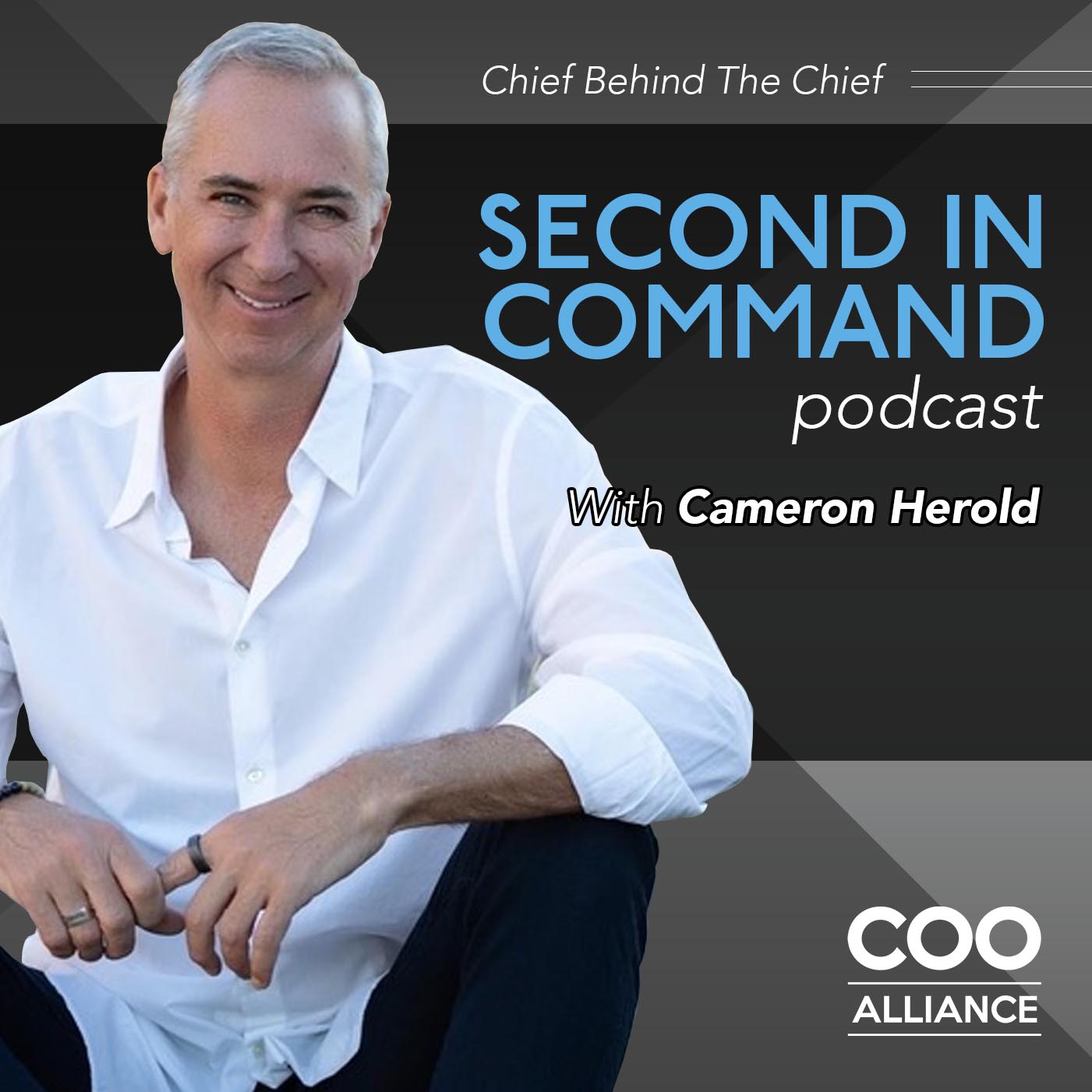
Second in Command: The Chief Behind the Chief with Cameron Herold
Ep.517- FAN FAVORITE | Harley Finkelstein – Inside the $100B Growth Strategy That Built Shopify
00:46:10
Loading summary
Transcript44 lines
- [00:00]
Cameron Herold
Hey there. Just a quick note before we dive in. This is actually one of our older episodes, but we're bringing it back because it's one of the most downloaded ones we've ever released. Clearly it struck a chord with a lot of listeners and I know there's so much value packed inside.
- [00:14]
Interviewer/Host
So whether you're hearing it for the.
- [00:15]
Cameron Herold
First time or revisiting it, enjoy this fan favorite.
- [00:18]
Harley Finkelstein
Every year my job completely changes. So whether that's, hey, I got to get really good at fundraising, or I got really good at building a sales award, or I get really good at hiring the most talented people and coaching them from the biggest companies on the planet, or in 2015, I had to get really good at taking a company public.
- [00:39]
Podcast Announcer
Welcome to the Second in Command Podcast, produced by the COO alliance and brought to you by its founder, Cameron Herold. In the second in command podcast, we talk to top COOs who share the insights, strategies and tactics that made them the Chief behind the Chief. And now, here's your host, Cameron Herald.
- [01:03]
Cameron Herold
Today we're talking with Harley Finkelstein. Harley is a Canadian businessman, entrepreneur and public speaker. He's also the best known as the Chief Operating Officer for Shopify. He's on the board of the C100 and an advisor to both Omers Ventures and Felicious Ventures. He's also a Dragon on CBC Dragon's Den, which is the Canadian version of Shark Tank. In his early life, Harley was born and raised in Montreal, Canada, and at 17 he founded a T shirt company while attending McGill University, later transferred to Concordia University and received his Bachelor's degree in Economics. He then attended the University of Ottawa where he founded the Law MBA Society and also the Canadian MBA Oath while working towards his law degree and his mba. After completing both his law degree and his mba, Harley worked at a law firm in Toronto for a year and then in 2009 he met Tobias, who is the CEO of Shopify, and they started talking about opportunities for the company. Harley was then hired soon after that and was named the Chief Platform officer and in 2014, Harley was appointed as a member of the C100 board. The C100 is an organization that supports Canadian technology companies as a bridge between Canada and the Silicon Valley. In 2016, Harley was named the COO of Shopify. That same year he was inducted into the Order of Ottawa by Mayor Jim Watson. Harley, welcome to the show.
- [02:32]
Harley Finkelstein
Great, thanks for having me. Really glad to be here.
- [02:34]
Interviewer/Host
Yeah, appreciate it. Really looking forward to learning from you today. So just to kind of start us off how did you grow in your COO role when you, I guess, left law? Were you in law or your MBA when you met Tobias?
- [02:47]
Harley Finkelstein
So I was born in Montreal and lived there until I was about 12 years old. And then when I was 12, my family moved to South Florida to a place called Boca Raton, which is a great place if you're retired, not a great place if you're. If you're a young man and want to have some fun. And so after high school, I ended up moving back to Canada to go to McGill University. Decided my first year of McGill to start a business. Mostly out of necessity, I had to start supporting myself. So I built a little T shirt business, and we started making teachers for universities across Canada and built a really nice little company when I finished undergrad. I had a bunch of really great mentors in my life at that point, and most of them convinced me that that T shirt business that I had really had no competitive advantage. There was no. There was no moat around the business. And so even if I was selling, you know, quite a few T shirts, you know, tens of thousands of T shirts to all these universities, it was very easy to disrupt me in the same way that I disrupted other incumbents. One mentor in particular convinced me that to become a better entrepreneur, I may want to consider going to law school. And he happened to be teaching law at the University of Ottawa in 2005. And so he's like, why don't you apply to the University of Ottawa and go to law school there? And at that point, again, I like business. I loved entrepreneurship. I knew I was going to be entrepreneur the rest of my life, but I wasn't sure where I was going to go with entrepreneurship. And so the ability to learn more about the law around negotiation, around some very complex corporate finance understanding and philosophies that I would get in law school, that was very appealing to me. And so 2005, I moved from Montreal to Ottawa and started law school. Although I really enjoyed my first couple weeks of school, when I got here, I didn't know anyone here. I had no friends, I had no family in Ottawa. I just had this one mentor who was teaching law. And when I began to ask around where all the entrepreneurs hung out, I was pointed into a particular direction. And just an aside on that. One of the things that I've done throughout my life, whether it was living in Montreal or then moving to Florida, moving back to Montreal, moving to Ottawa, I always found that entrepreneurs in any city were typically where I'd find my tribe. Like Minded people who I can develop real, really good relationships with. So moved to Ottawa, asked where the entrepreneurs hung out, and I was directed to a coffee shop in the Glebe, which is a small little area, small, really nice area of Ottawa. And I was told that every Friday night a group of really smart entrepreneurs hung out there. And so without giving it any more thought, I showed up one Friday night to that coffee shop and I met five or six entrepreneurs. And it was some people that you know and some of your listeners may know. It was Sam Zaid, who at the time was just building Getaround. He's recently obviously moved to San Francisco to build Getaround Out. It was Paul Lam who built Spartan Bioscience. It was Luke Levesque who built Travelpod, who's now a senior leader at Facebook.
- [05:50]
Interviewer/Host
Wow.
- [05:50]
Harley Finkelstein
And it was. And it was Toby. And the interesting part about Toby was clearly, I mean, you know, both of us, we are. We are polar opposites. He's cerebral, he's, you know, somewhat introverted. I am, I speak too much, and I'm far more extroverted than he is. But Toby and I really connected at these sort of weekly coffee meetups. And Toby at that point was just transitioning out of selling snowboards online to the software company. As you probably know, he built. He wrote this piece of software to sell these snowboards because he couldn't find any great software on the market and very quickly realized that selling snowboards may be a good idea, but selling the software behind the snowboard shop may be a great idea in that he can help entrepreneurs from all over the world build their own businesses. And when I met him and he just transitioned away from snowboards into software, I was looking for a way to continue selling T shirts. But while concurrently going to class in undergrad, I was able to skip class and to show up for the exams. But in law school, using the Socratic method, which is basically them yelling out your name randomly and you haven't answered the question, it didn't work nearly as well. And so I needed a business that would run virtually. And I ended up becoming one of Shopify's first customers. I built a T shirt, an online T shirt shop called Smoofer with my best buddy in law school, and ran it concurrently with class and my course curriculum all throughout law school and then throughout business school. I did my MBA after. So that was about 2008. At that point in 2008, I decided that I wanted to get called to the bar. I wasn't sure that I wanted to be a Lawyer. To be honest with you, law school for me was, was actually finishing school as an entrepreneur. It was, it was like etiquette school to be an entrepreneur, which was, which was really exciting to me. It really had very little to do with the law itself. It had to do with a way of thinking, a way of arguing, a way of negotiating. It taught me how to read 4000 pages but pick out the one line that mattered most. It taught me some, taught me how to be a bit more articulate in how I express myself. And so I loved law school, but I knew I didn't want to practice, but I didn't want to get called to the bar because I felt that was kind of the last step in the process. And so in 2008, just nine, I moved out to Toronto and I worked for a pretty large law firm and I articled for 10 months and I absolutely hated it. It was the worst 10 months of my life. Unlike entrepreneurship, which I felt was all about. It was really a meritocracy. I felt that the legal profession, not too dissimilar from things like the accounting profession. A lot of it was about legacy. It mattered how long you've been there, it mattered who you knew. And it just didn't feel right to me. And so I think I stayed 10 months in one day longer, which was exactly the amount of time I needed. 3 Get called to the Ontario bar. And then I called Toby and I said, I love Shopify, I love the product. At that point it was really, it was Toby and Daniel and Cody who were really the three kind of co founders of the company. And they were all brilliant engineers and designers. And I had known them for a couple of years because I was an early merchant and early customer of Shopify's and these were three of the smartest people I'd ever met. And what was really cool was that they had a really great product, they were beginning to find product market fit. But none of them really self identified necessarily as someone who was focused on the business side of a company. They were really on the technical and the product side. And so I called Toby in 2009 and said, I'd like to move to Ottawa and help you, Cody and Daniel, build out Shopify. And I'd like to sort of take on the business responsibilities for the company. And that was it. And my girlfriend at the time, who's now my wife and the mother of my child, we moved to Ottawa in early 2010. And I think my initial job, I remember asking Toby, I said, so what do you need me to do. And he basically said, whatever you can. And I remember sort of thinking that my job was finding the things that they either didn't want to do or didn't know how to do, and also making sure that this amazing product that they had built, which I felt was by far the best product on the market, that we were able to properly commercialize it, sell it, market it, retain customers, really build a business. And I would say my first year or two at Shopify was mostly just being a Swiss army knife. We raised our first round of financing in mid-2010 and we had no CFO, we had no GC. And so I helped raise the round. I figured out what a cap table needed to look like. And along with Toby, we went ahead and raised $7 million. And that was led by Bessemer. But that really was sort of my first introduction to being in a sort of chief operating officer role or a second in command role, which was that my job isn't necessarily one, you know, this one thing and do only that one thing. It was basically figure out what are the gaps of the company that were going to prevent us from getting to the next step or the next level that the others, the other three were not. We're not tackling. And really the first couple of years it was mostly around building a business, around Shopify, building a partnerships team, building a business development team, figuring out what sales should look like. We didn't have a CMO at that time, so we're very closely trying to build that a marketing team. But really that was the first couple years here. It was really just about being a Swiss army knife and helping really Toby, however I could.
- [11:17]
Interviewer/Host
It's interesting. I've talked a lot about the. In the early days, you need to get the true jack of all trades, master of none, the people that can pick up anything that needs to get done and run with it. And sounds like that's what you were. But you identified something partway through when you were talking there that was really intriguing. And it was that Toby was the inward facing, more cerebral, product focused engineer and you were very much the outward facing culture. You didn't say marketing PR guy, but you were almost the face of the company in a lot of ways. How did that. And Harvard actually wrote an article about 10 or 15 years ago called the misunderstood role of the COO. And there were seven distinct types of COOs in that article and you were one of those types, whereas another one is more inward facing. When the CEO is the outward part of the brand. How Does Toby deal with the fact that you have such a strong personality around the brand? How does he, how does he get around that when so many entrepreneurs and CEOs can't let go of that?
- [12:13]
Harley Finkelstein
So in actuality, he enabled it. He, you know, he. What he's really great at is he's really great at seeing in people what they may not see in themselves. Because I was, I was, I've naturally always been extroverted because I sort of organically always have been pretty loud and pretty, pretty out there. I think that he sort of was able to take that, take those raw materials that I had and really enable me to be in many ways the face of the company. And that was important for a couple of reasons. For the first reason is there probably is no better product visionary on the planet, in my opinion, than Toby. He just thinks about product in a way that is just, is unlike anything I've ever seen. And so at least in the early days, in particular in the early days, his biggest value add to the business was really around making sure we had unequivocally the best product in the world and whatever I could do and whatever we can do as a team to allow him the time and the focus to do that, that was going to make Shopify so much better. But he also quickly identified that one of my strengths may be talking with the company, whether that's in the context of media and priority, or whether that's in the context of things like building the Build a business competition, which has become one of the largest competitions of its kind on the planet, and having to get people like Richard Branson and Tony Robbins and Damon John and Tim Ferriss, Marie Forley, all these incredible superhero entrepreneurs to get involved with Shopify. And so in many ways he sort of enabled me to do those sort of things and get out there. And I think what you said is interesting because I think historically the CEO has always been the outward facing, sort of, you know, extroverted kind of business sales marketing type person. And I think one of the things that has changed in the last couple of years and certainly probably a lot had to do with the relationship that Mark and Cheryl have at Facebook, where you actually have founders that remain in the CEO role and very technical, very product focused founders. And so I think that in many ways this sort of new role, this new CEO role is very much a reflection of this new type of CEO role, which is highly technical, absolutely brilliant founders who should be the CEO of these, of these companies. And I absolutely believe that someone like Mark should be running Facebook and someone like Toby should be running and should be the CEO of Shopify. I think that is the right role for them. When you talk about highly technical companies.
- [14:47]
Interviewer/Host
Like ours, well, and it's what Jim Collins talked about in Good to Great when he talked about level five leadership, that personal humility and that real drive to succeed. And when they're humble enough to not let their ego get in the way and need to be the face of the company and they can allow someone who's better at it to do it and the company really does grow. Thanks. I remember meeting you back in around 2010 when I came in with to an event we were hosting there. I think I actually spoke at your offices that you guys hosted an event I was speaking at, but it was with the guys from Canvas Pop. And I actually thought you were the CEO at the time. And then I remember leaving, going, wow, that's amazing. Like, I don't even know if I met the CEO, but it doesn't matter because this guy Harley's really running the place. It was cool to really see that part of the relationship. So how do you and Toby work on the kind of the marriage. I always talk about the yin and yang relationship between the CEO and the CEO and it's in my mind it's almost like a marriage where you've got to have, you know, date nights and systems in place to make sure that relationship stays strong. What do you guys do to keep your relationship strong and growing and to.
- [15:47]
Cameron Herold
Keep the trust high?
- [15:49]
Harley Finkelstein
Yeah, it's a really good question. And actually I get a lot of calls and emails from companies all over the world asking about my dynamic with Toby and certainly the obvious. We talk a lot about the yin and the yang. And I think that's unfortunately, I think that's a little bit of a cop out and it doesn't actually tell. Doesn't provide much insight in terms of that dynamic. A couple of things that I think have been really important for us. First of all, Toby and I are, I mean, he's my boss, he's also my mentor, and he's also one of my closest friends. We spend a lot of time together, we spend our weekends in cases together. So our relationship extends well beyond just the office. But in terms of making sure our dynamic is as effective as possible, the onus is on me, I believe, as the CEO to check in with him to make sure that he is getting everything that he needs from me. And I checked in with that fairly often, in some cases almost on a quarterly basis to Say, look, here are the different areas of the business that I'm really focused on right now. Are there any things that I'm not currently doing that you think I should be doing, or are there things that you're currently doing that you do not. That you do not want to be doing that I can pick up for you? And I think a lot of the problems that I hear from the CEO, CEO relationships often stem from either a misalignment in terms of expectation or the data or the. The perspective that they're. That they're working through is actually dated. Things have actually changed. So, for example, I was basically the general Counsel up until 2014 or so. I wasn't a very good general counsel, but I was. I was the only lawyer here, and so I played that role. But we, Toby and I always knew that that was not going to be the thing I was going to focus on. We just needed to hire a great general counsel, and we only really needed it as we began to think about our IPO, which happened 2015. So it was easy for me to take that off my plate because that wasn't something that I felt that I was world class at. It was not. It was not something that I really enjoyed doing, and it was not something that I believe that I could do better than anybody else. And so it was obvious to move that off by the same sort of thing with 2011, we hired Russ, who's our CFO. I understood the corporate finance side of running a business. I understood how to raise money because of my business background and going to business school. But I was not a very good sort of quasi cfo. So I think that ensuring that there is realignment almost on a quarterly basis, maybe it's a different cadence for others. Maybe it's a monthly basis. And just saying, this is what I'm focused on, because I think I can be world class at this. This is how I think I can have the biggest impact. And this is actually something I really enjoy doing. Using those three vectors, I think you end up with a really good dynamic between the CEO and the coo, especially if you continuously check in to make sure that those things haven't changed. As a story I've told a couple times. A couple years ago, Toby walked into my office and said, we got to build an enterprise product. We have to sort of think about how we help much larger. What had happened was the background. Here was some merchants that started on Shopify when they were very, very small at their mom's kitchen table. Even a lot of them grew to be like $100 million a year businesses. And they weren't shopify, they weren't, they weren't graduating off our platform, which is fairly unique in the SMB software market. And so he came in and said, look, we got to build this. And it was obvious that we needed, was we needed a sales team, but that wasn't something that I was especially good at. I had no experience building out a massive sales Org. And so I, it was very clear that I needed to sort of create some scaffolding. I had to create a foundation to make sure we did have some product market fit, to make sure that we did test some assumptions and that there was some, there was some momentum there. But the second that we were able to check those boxes, yes, we have product market fitness momentum and yes, we're scaffolding. I then went ahead and brought in Laura Lauren Paddleford, who's our VP of sales and plus, to run this operation and really scale it. And so the reason I bring up that example was Toby wanted me to get that started because that's really what I'm good at. But at a certain point, my ability to scale that has diminishing marginal return, then it was time to bring in someone else. And I think if the COO and the CEO are not conn on a regular basis to just align and ensure that we both have an understanding of what the most impactful things that I should be doing are. I think that's when you create. There's tension and confusion and all this bad stuff comes from that. So Toby and I meet every single week for a one on one. It's my one on one. So I bring to him the questions, the insight, the information that I require from him in order to better do my job. And, and again, whether it's every month or every quarter, I'll, I'll use that one on one. I'll use that one hour, one on one to ask him. All right, well, here's where I'm focused. Are there any things that I'm not focused on that you think I should be, or is there something on your plate that, that you think I should take off your plate? And just by being really candidate and transparent and, and, and honest with each other, we've been able to cultivate what I think is as one of the best, best relationships I've ever had. And I think he would say the same.
- [20:50]
Interviewer/Host
Yeah, I've always found that the one on one meetings are critical. Do you hold them with your direct reports as well?
- [20:56]
Harley Finkelstein
I absolutely do. Yeah. So one on ones at Shopify are fairly sacred. We, we don't care if you have big group meetings or you have massive team wide summits. Those are really great and we encourage that. But one on ones are fairly sacred here. And I think the important part of the one on one is that the manager should know that it's not their one on one, it's their reports one on one. And I think where managers create problems is when they start treating one on one as if it's their own. My one on one with Toby is my one on one and it's my opportunity to get what I need from him to better have a bigger impact and better do my job. So that's what we look at it. But back to your long answer to your short question, back to your original question. In terms of that dynamic, that dynamic has been cultivated over a very, very long period of time and I think that it actually has gotten a lot better over time because I think both of us are sort of self improvement junkies. We're both really introspective. We both. You know, one of the things I've been working on the last couple years is having a much higher degree of self awareness and I think as him and I both mature individually, I think that our relationship and our dynamic has also matured in a really great way.
- [22:03]
Interviewer/Host
Very cool. So you talked about, about the fact that you're both self improvement junkies. What are you focusing on in terms of working on on your skill set then today?
- [22:17]
Cameron Herold
Hey, it's Cameron. I hope you're loving today's episode. Quick question for you. Does your company have a strong leadership training program in place to grow the skills of everyone who manages people? If you want to help yourself and your company grow, get everyone who manages people learning from my invest in your leaders online training program. There are 12 core leadership skills that I cover online and they're all going to really grow. CEOs pay me $78,000 a year to coach them one on one and now you can all benefit for 1% of what they pay me. These are the same leadership skills that I created and certified everyone in at 1, 800 got junk when I was there as COO. Go to investinyourleaders.com today and use promo code podcast10 before the end of the month to get 10% off each manager you sign up. Now back to the show.
- [23:14]
Harley Finkelstein
So this will not be surprising for someone like you, but I've seen a coach since 2011 or so I see. In fact, coaching has been such A huge part of my life, my professional life, that we ended up hiring all our coaches and bringing them in house. And so Shopify now has about 12 fold coaches on staff. They're incredible. And most of our leaders, most people that manage, you know, that manage more than two or three people see a coach here at Shopify. And I would say that over, over time the stuff that I work on sort of, sort of changes. So for example, I mean, it's kind of the same reason that, you know, there's a good chance that I may be at Shopify for the rest of my life. And the cool part about a company like ours is that the requirements on me, the task that is given to me constantly changes. I mean, I brought up in the early days raising money and I brought up how to do some legal stuff and building out a business team and a business group. But prior to going public, we decided to go public in early 2015. Ended up ringing the bell at the New York stock exchange in May 2015. But that was not, I'd never done that before. I'd never taken a company public, frankly, I'd never built a company of any size over a small T shirt business. So what was interesting about the opportunity that I've always felt I've had here is that every year my job completely changes. So whether that's, hey, I got to get really good at fundraising or I get really good at building a sales org, or I get really good at hiring the most talented people and coaching them from the biggest companies on the planet, or in 2015, I had to get really good at taking a company public. And I don't just mean the, you know, the roadshow and the investor pitch, but even in terms of how do you make sure the company is excited by it, how do you make sure that the stock price has not become something that, that people overly focus on because it's, in the long run, the stock price does reflect by the company, but in the short run, there's a lot of volatility. So what I love most about my role here is, is the versatility of the task in front of me. And I've been very clear in Canada with Toby that that's one of the things I, I, I value most here is that my job is always quite different. And it's a reflection on, it's a reflection of what the company needs most from me. And that I think is just, I mean, if you have that, you could find that in your career. I think you got it made it a shame.
- [25:34]
Interviewer/Host
How do you protect your confidence along the way then. So I know the skill set side we talked about. How do you work on your confidence or are you just naturally confident?
- [25:42]
Harley Finkelstein
I'm not really sure I'm naturally confident, although I think I always sort of spoke with a lot of conviction, which I think maybe tricks people to thinking that I'm more confident. I actually am. I've been able to. Because I've been an entrepreneur for so long, I just got really good at dealing with ambiguity. I've been able to get really, really comfortable with being uncomfortable. In fact, I've almost taught myself that to the extent that now I seek out being uncomfortable. So when things are going a little bit too good and things are a little bit too smooth, that's typically when I worry most. When I find a problem, it actually is a great opportunity because I now know I have a problem, now I can go and fix it. So I think that part of it is that I have people like Toby around me that believe in me and are constantly pushing me into this next level of, of understanding, in this next level of operationalizing this company and running the business. But I also have what I consider to be one of the most incredible groups of mentors. And I know the term mentor is kind of loaded for a lot of your listeners. I think most people confuse the term. But I have five mentors in my life at any one given time. These are five people who come from all different backgrounds. One of them is, you know, one of the largest real estate developers in Canada. Another one is, you know, is someone who owns one of the largest fashion companies on the planet. These are people that have committed to giving me one hour a month of their time, often in person, but sometimes on a. On a Google hangout or a Skype call, and I rotate that. So, for example, prior to becoming a dad, having to having our daughter, I knew nothing obviously about parenthood. And so I spent a lot more time with people that I really thought were exceptional parents, and they were my mentors. And now that I don't think I've got the hang of being a dad yet, but I feel like I know the basics of being a dad now. That is obviously a little bit less important. Whereas for me, Shopify now has more than 3,000 people. We're going to be at 5,000 people, I'm sure, the next couple years. I now am looking to talk to great leaders around the world who are running companies with thousands of people, because this is a new thing for me. And I think that by surrounding myself with People that are better and smarter and more experienced. It's not only humbling, but it also provides me the confidence that none of them actually knew what they were doing when they got started and yet they figured it out. So that provides me with a little bit of an understanding or a little bit of confidence that I can do this myself too.
- [28:08]
Cameron Herold
That's cool.
- [28:09]
Interviewer/Host
Do you have a typical day that you follow currently? I know that would change as your role changes over time, but do you have a typical day that you follow at all or any routines that help you?
- [28:18]
Harley Finkelstein
Yeah, well, a little bit. I mean, years ago I read Paul Graham's post Managers versus Maker Schedules. I haven't read that article in probably eight years, so I assume it's still online somewhere. But effectively what Paul Graham talked about in that is he was dividing his time between a maker schedule, which is basically four hour chunks of time, versus a manager schedule, which is half hour, one hour chunks of time. And I really do, I do subscribe to that. I think that works really well. And so most of my one on ones are on Tuesdays and Thursdays and Monday, Wednesdays and Fridays are typically longer chunks of time where I can either do strategy or I can do much deeper dive whiteboarding sessions with different teams or I can just spend a lot more time being proactive and figuring out where we're going as opposed to simply answering a bunch of questions that are coming up in a bit of reactive sense. So I have found dividing my week into those sort of chunks of time, different days have different, different chunks has been really, really helpful. You know that that's been something that's been pretty consistent. Beyond that, I kind of go in, I kind of go in different rhythms. I try to get to the gym most, most days after work around 6 o'. Clock. This way I'm home for dinner with my wife and daughter at 7 o'. Clock. And I do that less about staying in shape. I do that because I just find it's a great way for me to clear my head before I go home. And I'm able to sort of leave and leave a lot of the, a lot of the work stuff in the gym and go home with a bit of a clear mind. And probably the thing that's most cliche today, but it's been something that's been helpful to me is I try to do a 10 minute meditation or mindfulness practice every day. I usually use something like an insight timer. I used to use Headspace and I try to do that first thing when I get into the office in one of the small phone booths. I'll just go in there for 10 minutes and just do some breathing exercises. That stuff I find really helps. I do some other stuff that's been really helpful to me. So a couple of things that Toby and I had sort of tried to do from day one is, number one, always be home for dinner with our wives and now our kids. We try never to travel on weekends whenever possible. That's been really helpful. So even during the IPO roadshow where I think we did 93 meetings all over the world, we made sure that we were home Friday evening or Friday night so we can spend Saturday with our families and then get back on the road Sunday evening and fly out to New York, Memphis or wherever we're going or San Francisco that day to continue the roadshow. So that's also been something that has been really, really helpful. And I also, I also know what my, what my rip cords are, you know, if in order for me to be truly focused and present on a Monday morning in the summertime, I need to be at the cottage or on the boat in the wintertime, I need to be on the ski hill during, during the weekends. It just, I now know what I need, you know, in order for me to be really focused on a Monday morning, Friday night is probably spent with my wife at an amazing restaurant, drinking a great bottle of wine. My wife's a food blogger. She has a radio show in Canada where she talks about all the best restaurants. And so I've just, over time and with some practice and some reflection, I've just spent a lot of my time trying to, trying to figure out what are the things that I require in order to be fully present, fully focused on Monday morning. And it's certainly not anything that's been easy. But over time I've been able to cultivate a really good sort of dynamic there.
- [31:35]
Interviewer/Host
That's really cool. I'm a big foodie as well. So what's your wife's food blog?
- [31:40]
Harley Finkelstein
So most of it's done through Instagram, so it's modernhostess. But she's on CFRA every Thursday with Evan Solomon at 4:00 in Ottawa and it's indicated elsewhere. And actually what's pretty cool is she's now a first time entrepreneur. She just opened up an ice cream shop in Ottawa called Sunday School Sun Dae School. And so she just opened up Sunday School last summer and it's the most adorable little ice cream shop you've ever seen. It's really cool. And so helping her with her first entrepreneurial venture has been a real thrill for me.
- [32:10]
Interviewer/Host
Nice. Where's her ice cream shop? I've got some friends and family in Ottawa. I'll get them to go check it out.
- [32:14]
Harley Finkelstein
Yeah, it's on. It's on Beechwood. It's in the new Edinburgh area, which, which is where we live. So it's on Beechwood. And. Yeah, that's really cool.
- [32:22]
Interviewer/Host
So one of my early mentors and I actually went to school in Ottawa. I did my undergraduate degree in law. I was similar to you. I was actually sit a plane one day reading a. A French franchise agreement. So it was written in French. It was following French civil code. And I'm reading this franchise agreement on a plane going, what the hell am I doing? I'm not a lawyer. I don't speak French very well. There's no way I should be reading this darn thing. But it just brought back some fond memories to Ottawa. But one of my very first mentors was a built a company called College Pro Painters. And he told me that he was the founder and CEO of College Pro. And he said that true leadership is saying no more often than we. Then we say yes. I'm curious how you guys say no at the size you're getting to, you know, with all the pressures and demands on your time.
- [33:05]
Harley Finkelstein
Yeah, it's actually gotten a lot easier, not more difficult, believe it or not. Mostly because we have a. We have a pretty focused view of who we want to be and what are the things we want to do and what we don't want to do. So, you know, the fact that our merchants got really big, they sort of pulled us up market. We haven't, we haven't shifted up market where our focus still on entrepreneurs and SMBs that are getting started. But our merchants on their own sort of pulled us up market because some of them got. Got so big. And so we realized that that was an opportunity for us. But there was, there was the right time for us to introduce Shopify plus to the world. And there would be a. There would be a long time. Often we're getting, you know, people always ask us if we're going to, you know, we're going to go help restaurants, for example, and help restaurants. It just. That would be a distraction to us. Fundamentally what we want to do is we want to focus on. On. On entrepreneurs and people that sell physical products. And that may change eventually, but by, by really well articulating who we are, what we want to be and where we want to go. It means that every one of the 3,000 people that work at Shopify has their own litmus test or has their own set of vectors that they can go ahead and figure out. How do I make a decision? How do I decide what I want to do and what I should do, what I shouldn't do? And you know, when someone misses it, we make sure that we, you know, we explain why that was the wrong area to go into and we remind the entire company once again, again, this is what we, this is what we value. This is where we want to go. Actually, it's gotten easier with time, not more difficult, even though we have a lot more people. And I think part of it is that we as a company have grown up, but also we as leaders of the company have grown up. And so I think in the early days, at least for me, I didn't really, I would kind of say yes to everything because I didn't really know where we were going. I really wasn't sure what was going to work, what wasn't going to work, and we were throwing a lot of stuff at the wall and seeing what stuck. And now we kind of know what works and what doesn't. And so I think by articulating a very clear vis to the company of this is who we are and who we want to be, it makes it easier for people on their own without even asking, hey, is this something we want to do? And that's, that's been great.
- [35:08]
Interviewer/Host
That's really cool. I know we talked a little bit about the one on one meetings that you have and how critical they are and sounds like you've got great systems for those. One of my recent books was called Meetings Suck. I'm curious as to. And I wrote it because I wanted people to not complain about meetings. I wanted them to understand how to run effective meetings and how to attend meetings and what meetings to have. Tell me what you know, a couple of tips that you guys use internally related to meetings that are working well for you.
- [35:33]
Harley Finkelstein
I'm not sure this is, this may be really common sense and pretty obvious, but, you know, if there's more than five or six people in a meeting, it's not a meeting, it's a presentation and it shouldn't. And there's no way to have a great discussion with that many people. So we tend to avoid what I would call room meets random people that are just kind of there because I don't think it's a good use of time. I remember years ago someone used to bring in the stopwatch to a meeting and calculate how much the meeting was costing and you'd see sort of the dollars go up and up. I didn't think that was effective. That was kind of a cute thing to do. But I think now generally we've just explained and reiterate over and over again that good meetings are kind of obvious. There's a clear objective of what you want to accomplish. There's a clear view of who should be there. And beyond that, we kind of let people, you know, we want people to act like adults and make user use their best judgments. That being said, when we see a meeting that we feel is just not productive, it's not effective. There's way too many people there. We will call it out. In fact, what we've done is we've sort of put the onus on everyone that works here to sort of police these meetings on their own. And so the onus is on every single person in every single meeting to say, is this really meaning that should be happening? Are the right people in the room? Is there a clear objective? I've been in meetings where without even saying a word, the meeting was sort of, you know, halted after a couple of minutes because it was clear that the wrong people were. The wrong people were in the room. And there was no clear objective what we wanted to do. It could have easily been settled with an email or a slack conversation. So we are not, there's no, there's no rules of engagement in terms of meetings at Shopify. There is necessarily, there's no, you know, commandments of how many should run. But, you know, we hire people that are highly intelligent, incredibly ambitious. Most people at Shopify would self identify as entrepreneurs. And by giving them both the freedom, but also the onus to ensure our meetings are effective, I think we've been able to cut down on superfluous meetings, which frankly I just, I hate. I mean, I hate meetings. That just doesn't have to happen. And I've read your book and I think you make a lot of great points there in terms of, I think for a lot of people, they consider meetings to be doing the work. And I don't believe that the meetings can set context. Meetings could help get the work done in a more efficient or effective manner. But having a meeting itself should not be a checkbox next to a to do list that I think is ineffective.
- [37:58]
Interviewer/Host
Agreed.
- [37:58]
Harley Finkelstein
Agreed.
- [37:59]
Interviewer/Host
You may have already answered my next question here, but you guys at Shopify have really become, I would say, the culture company in all of Canada to work for and certainly rank amongst the best of the best in the world. But. But I talk to companies that are based in Toronto and based in Ottawa and I'll tell you, virtually every company in Toronto is scared of Shopify right now in terms of the war on talent and getting good people. And I don't think it's the perks and I don't think it's necessarily your office space. What is it that you're doing that has turned Shopify into this magnet for great talent?
- [38:30]
Harley Finkelstein
Yeah, I agree. It's absolute perks. It's funny how often people confuse perks with culture. We have some really cool perks here. We have full time chefs in every office that cook really delicious healthy food. Every person at Shopify gets maid service at their home that we pay it for. So we send cleaning staff to their homes to clean their houses twice a month. All that stuff is really great, but it's just there to make their lives a little bit better. That is absolutely not a reason to work here. Those are just sort of things that we think make our team's lives a bit better. I think the culture here has sort of been organically developed over time. I think for the most part, most people at Shopify can have their own companies. They can be the CEOs of their own companies. But we believe that we sort of come together. It's kind of like the Avengers. We're kind of unstoppable. And so we've created a place where founder types and founders, entrepreneurs and people that are self starters and that typically would be doing their own thing, that they can not only come to this place, but they can thrive in this place. And I think that's one area that is really important. We sort of have a policy here which is default to open. So even during the IPO process, there were some things that we couldn't disclose the whole company that was really difficult for us. Most other companies, that would be no problem. But just for securities regulation laws, there were some things that we had to sort of keep to a much smaller group of stakeholders. And that was tough for us because frankly, we are absolutely default open culture. Once a week or some cases, once every two weeks we do an AMA and ask me anything where anyone from the company can ask the exec team or the leaders of the company any question they want, they can do so anonymously or they can add their name to it. And I think that ability to put ourselves in a vulnerable situation where people can ask anything they want but also get an answer that they feel they're Being treated like a sophisticated adult, I think makes this a really great place to be. And I think probably lastly, I think most people at Shopify are here doing their life's work. That is really unique. For most of us, it's not a job. This is what we want to do. This is how we want to spend our time with the people that we want to spend our time with. I think a lot of the companies that maybe you're talking about, they potentially are looking for a shortcut to how to cultivate culture. And if you put a gunsman and say, hey, what is culture? I would say that culture is probably what people do when no one is looking. What happens when no one's around and people are left to their own devices? What do they do? And if they do the right things, and you probably have a really great culture, and if they do the wrong things, you don't really have a great culture. And no matter how great your hoodies are or how great your chefs are, none of that actually matters. So I just heard a story last week that over Christmas time, a physical retailer in Toronto, their Shopify point of sale system, their card swiper had broke. They put it in their pocket and they had Saturn in it, and they crushed their card swiper. And they just simply put in a tweet and said, hey, Shopify, we'd love to get a new card swiper. We're about to have a massive Boxing Day sale. And like an hour later, that person sent me a note saying, I don't know if you know this, but someone from Shopify during the holidays got on their bicycle and biked over to my store to give me a new card reader. That is what culture is. Culture is what happens when no one tells you what to do and people just kind of do the right thing. And I think we've made it easier here to do the right thing.
- [41:52]
Interviewer/Host
That's really cool. Last question I'll leave you with. And this I'd like you to address directly to the second in commands. So anyone who's listening, who is a COO or vp, ops, General manager, Director of ops, whatever your title is, but you're the second in command to the CEO. What would you give them as the top three tips for them to excel in their role and also for them to help the company grow?
- [42:13]
Harley Finkelstein
Yeah, I mean, I talk number one about recalibration. So, you know, as the coo, make sure that you continuously recalibrate your role, your responsibilities, your area of focus with your CEO. Just because a Year and a half ago, you know, your CEO told you, hey, here's what you should do. Doesn't mean he or she hasn't changed their mind. And CEOs are really busy. And so the onus is on you as a COO to recalibrate and reconfirm. Hey, is this still the most impactful thing I can be doing? That's probably the first. The second thing, and this is probably the most important one of all, is that when I first started to look into the CEO role, I read that Harvard Business, the Harvard Business Review article. You talked about the different types. I also read the book. I think it's. It's Riding Shotgun, which is a book about cos and how that works. But I also asked my board of directors for a list of their top coos that they've ever encountered. And without saying specific names, I mean, it's the CEOs of all the major technology companies that were. That were listed. And I got a chance to talk to most of them. And I asked some very simple questions. What is your role? How has it changed? What do you like most about it? What are some things you wish you would have known when you first took on the role that you now know, having spent years in the role? And my one major takeaway from that process of talking to some of those iconics chief operating officers on the planet was that none of them have the same job. Every single one of them has a very different job. And so I think that the Harvard Business Review article was interesting because it showed that there are six different archetypes of what a chief operating officer is. But where I think it missed the mark is that there's not six, there's probably 600. And a lot of it has to do with, you know, you're almost like a mirror image of your CEO. And the onus, again, is on you as CEO to figure out what is your CEO the best at? Where is his or her time best spent? And then figure out a way to get everything else off their plate and make things easier for them. I think that's a great, great place to be. And so, again, don't follow one rubric. And just because, excuse me, you know, Harley at Shopify, CEO role looks like this, and you after these groups doesn't mean you should, because again, it all depends on what that dynamic is with your CEO. And I would say probably the last one is know when to get out of the way again. You know, I was able to help raise our first round of financing. I was able to do a lot of our contract negotiation in the early days, I was able to at least put the initial scaffolding around our sales organization. But our sales org now has, you know, it's a, it's a large sales org. It has its own office in Waterloo, in Waterloo, just out of Toronto. There is no way that I could be running it, running that sales org at that, at this, at that level. Sophisticated. And so getting really good at knowing when to get out of the way versus when to really sort of put your head down, really dive deep. That is really, really important. So I would say those are probably three things that have been quite, quite helpful and valuable to me.
- [45:08]
Interviewer/Host
So, Harley, thank you very much. I mean, what you've done with Shopify, what you're doing with, with the C100 and part of the maple syrup mafia, building all these great companies up here in Canada, you guys are literally building a bleeding edge company worldwide right now. And it's really fun to watch you do it. But thank you so much for sharing everything you do with us today.
- [45:24]
Cameron Herold
I appreciate it.
- [45:26]
Harley Finkelstein
Thanks so much. I feel like the luckiest guy in the world, so I'm very fortunate I get to do this. And thanks so much for having me. On your podcast.
- [45:34]
Podcast Announcer
You've been listening to Second in Command, brought to you by COO alliance founder Cameron Herold. If you enjoyed this episode, please be sure to like, share and subscribe to to us on Apple Podcasts, Spotify and our other podcast streaming platforms. For more best practices from industry leading COOs, visit COOAlliance.com.