Podcast
Security Clearance Careers Podcast
Hosted by ClearanceJobs · EN
ClearanceJobs is the largest career networking site for individuals with active federal clearances. Get security clearance, intelligence community, espionage, national security and defense contracting updates in our exclusive interviews with IC and government leaders.
Hosted on Acast. See acast.com/privacy for more information.
38episodes
Episodes
Newest firstAll episodes
Certainty in Uncertain Times: CIA Leadership Lessons That Actually Work
Apr 800:22:50Tap to summarizeWhat makes a great boss—and why do so many get it wrong?In this episode, Lindy sits down with former CIA Chief of HR Mike Mears to unpack the real driver behind employee engagement, retention, and performance: certainty at the local level.Drawing on decades of experience inside the intelligence community—and insights from his book Certainty—Mears explains why employees don’t leave missions, they leave managers. He breaks down how the brain responds to uncertainty, why psychological safety is critical in high-stakes environments, and how small leadership habits can dramatically improve team performance.From fixing broken clearance processes to building trust in ambiguous environments, this conversation offers practical tools for leaders across government and industry.Plus: what cleared professionals should know about insider risk, disengagement, and why “soft skills” may be the most critical national security asset.If you lead people—or want to—this is a must-listen.Purchase Certainty: www.certaintyleadershipbook.com Hosted on Acast. See acast.com/privacy for more information.
Transcribe →
Cartels, Drones, and Intelligence Blind Spots: Why OSINT May Be the U.S.’s Missing Edge
Apr 600:27:51Tap to summarizeThe modern battlefield isn’t confined to war zones overseas, it’s evolving rapidly along the U.S. border. Criminal organizations like the Juarez and Sinaloa cartels are leveraging commercial technology, decentralized networks, and real-time adaptability in ways that challenge traditional intelligence models. At the center of this shift is a growing gap between how threats evolve and how intelligence systems respond.Former military intelligence specialist, Stefano Ritondale, and current the Chief Intelligence Officer at Artorias joins the podcast to provide insights on UAV threats, OSINT, and strategic implications for the U.S. from a national security perspective. Hosted on Acast. See acast.com/privacy for more information.
Transcribe →Job Hopping, Gig Work and Your Clearance
Mar 3100:07:56Tap to summarizeFor decades, the cleared workforce followed a fairly predictable path: long tenures, stable programs, and careers built within a single agency or contractor. But today, cleared professionals are moving faster between roles, contracts, and even employment models. Some are chasing better pay, others are seeking flexibility, and many are responding to the realities of contract-driven work.To help unpack what this shift means for both employees and employers, I’m joined by John Berry, security clearance attorney with Berry & Berry and someone who has had a front-row seat to cleared hiring trends for years.In this conversation, we’ll talk about why job hopping has become more common, how the idea of “gig work” is showing up even in highly regulated cleared environments, and what recruiters, hiring managers, and cleared professionals should be thinking about as career mobility accelerates. Hosted on Acast. See acast.com/privacy for more information.
Transcribe →
Life After the Mission: Navigating Identity, Transition, and Purpose
Mar 2500:20:45Tap to summarizeWhat happens when the uniform comes off—or your federal service ends—and the identity that once defined you suddenly shifts?In this episode of Security Clearance and Security, host Lindy Kyzer sits down with Lisa Parmeter, Executive Director of Merging Vets and Players (MVP), to explore the often-overlooked challenges of transition for veterans, active duty service members, and former professional athletes.From the loss of identity and purpose to the need for intensity, structure, and community, this conversation dives into what it really takes to rebuild after high-performance careers. Parmeter shares how MVP helps individuals rediscover meaning through peer support, whole-health approaches, and mission-driven community.The discussion also tackles mental health stigma, the importance of vulnerability in leadership, and the real risks of isolation—along with practical ways to navigate change, build resilience, and find your next chapter.Plus, in the second segment, security clearance attorney John Berry joins Lindy to break down one of the most common clearance pitfalls: misuse of IT systems. From downloading unauthorized software to AI-related risks and repeat violations, they unpack what can jeopardize your clearance—and how to avoid it.Whether you’re transitioning careers, supporting someone who is, or navigating the evolving clearance landscape, this episode offers critical insights you won’t want to miss. Hosted on Acast. See acast.com/privacy for more information.
Transcribe →
Transition Is More Than a Career Move — It’s a Family Journey
Mar 2200:32:36Tap to summarizeTransitioning out of the military is often framed as a career decision — finding the next job, updating a resume, or navigating the cleared workforce. But for many service members and their families, it’s much more than that. It’s an identity shift, a lifestyle change, and a redefining of purpose.In this episode of the Security Clearance Careers Podcast, we had the opportunity to sit down with Herb and Corrie Thompson for a candid and deeply insightful conversation about what transition really looks like. Hosted on Acast. See acast.com/privacy for more information.
Transcribe →
How to Get Sponsored for Security Clearance
Mar 1600:30:00Tap to summarizeOne of the most common questions we hear from job seekers is: How do you get your first security clearance if you don’t already have one? It can feel like the ultimate catch-22. Many roles require a clearance, but you need an employer to sponsor you before you can get one.So today we’re digging into exactly how that works and how candidates can actually convince a company to take that step.Joining Katie Helbling is Jillian Hamilton, Content Director at ClearanceJobs and someone who has spent years covering the defense workforce and helping candidates navigate the cleared job market. She’s also written extensively about companies willing to sponsor security clearances and what job seekers should know before applying. Hosted on Acast. See acast.com/privacy for more information.
Transcribe →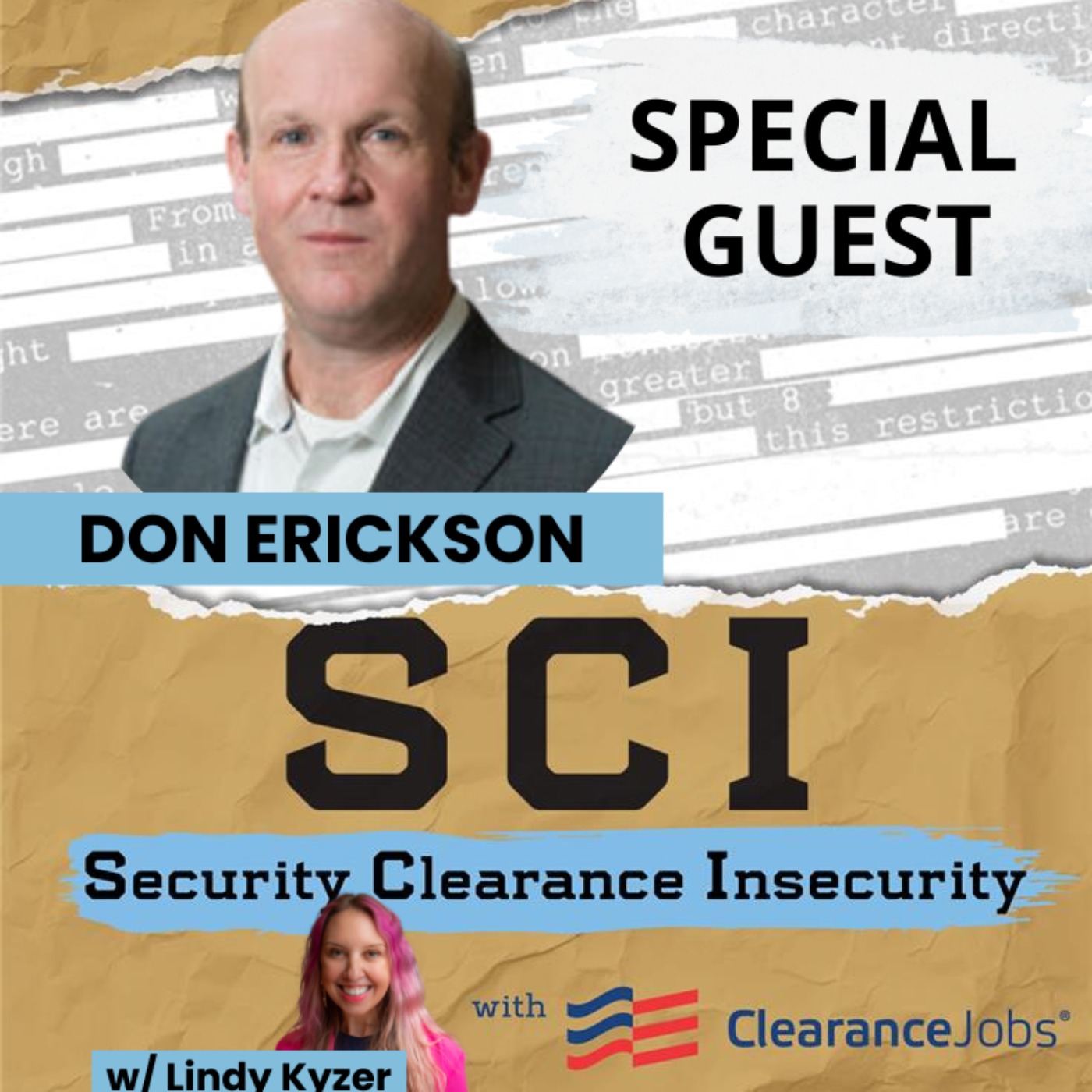
How AI and Technology Are Reshaping the Security Industry
Mar 1100:19:19Tap to summarizeThe security industry is evolving rapidly — and it’s no longer just about guards, gates, and access badges.In this episode, Lindy Kyzer speaks with Don Erickson, CEO of the Security Industry Association (SIA), about how emerging technologies, federal policy, and workforce development are transforming the modern security ecosystem. Representing more than 1,700 companies across the global security industry, SIA sits at the intersection of innovation, physical security, cybersecurity, and government policy. Erickson shares insights into how technologies like AI-enabled surveillance, cybersecurity integration, and advanced access control systems are changing how organizations protect people, assets, and critical infrastructure.The conversation also explores the growing demand for talent across the security sector. From engineers and cyber analysts to project managers and security technicians, Erickson explains why the industry offers a wide range of career opportunities — including for veterans, government professionals, and those transitioning into security roles.Kyzer and Erickson also discuss responsible AI use, the challenges of evolving regulatory frameworks, and how collaboration between government and industry is shaping the future of security.For professionals interested in national security, emerging technology, or security careers, this episode offers valuable insight into where the industry is heading next. Hosted on Acast. See acast.com/privacy for more information.
Transcribe →Here are the Jobs that Won’t be Replaced by AI
Sep 18, 2023Tap to summarize“The great thing about AI is that it is not human.” -Michael GibbsCustomer facing roles. Architects. Engineers who have irreplaceable communication. Sales reps. Business development leaders. Cloud security professionals. The goal is to evaluate your current job and truly recognize if AI could do it – or if it requires that human touch.The Security Clearance Careers Podcast hosts Cloud Computing and IT Security Expert Michael Gibbs, who is the CEO of Go Cloud Careers. In 2013, after a successful career with Cisco Systems, he founded Go Cloud Careers, an educational organization focused on helping individuals achieve their dream technology career. Hosted on Acast. See acast.com/privacy for more information.
Transcribe →