← Self-Conscious with Chrissy Teigen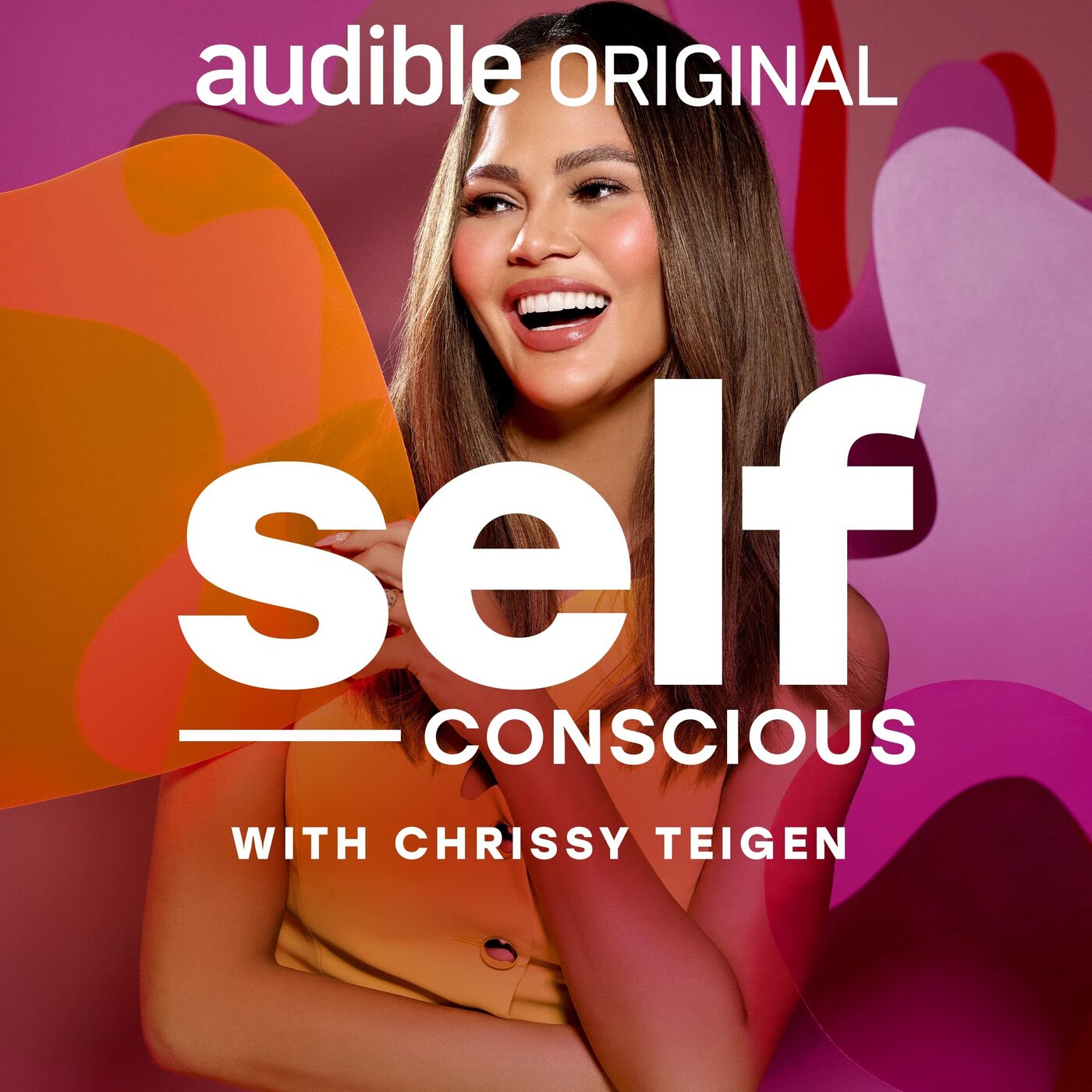
Loading summary
Transcript55 lines
- [00:03]
Chrissy Teigen
You're listening to Self Conscious with Chrissy Teigen, an Audible original podcast. Join me as we explore the cutting edge of health, wellness, and personal growth with the world's leading experts and thinkers. From inspiring stories to actionable insights, our conversations aim to help you lead a healthier, happier, and more productive life. Today, we're exploring the idea of productivity In a world designed to keep us perpetually distracted, it's become impossible to focus on any one thing for more than a few minutes before we're bombarded with emails, texts, social media posts, and endless push notifications from our smartphones. It's a miracle that we manage to get anything done at all in this constant state of distraction. The concept of meditation might seem like a luxury reserved for monks or wellness influencers, but as my guest today, Chris Bailey, argues, it's actually one of the most powerful tools we have to regain control over our attention and consequently, our productivity. In his in his Audible Original series, How to Train youn Mind, Bailey treats meditation as a practical tool to enhance productivity. He guides listeners through key strategies to help the brain detox from our constant stimuli, training it to crave distractions less and focus more deeply. Bailey believes that meditation, much like sleep, exercise, and healthy eating, is vital for productivity. In this episode, Bailey will teach us how to use meditation to sharpen our focus, reduce distractions, and increase efficiency. In the end, meditation teaches us that true productivity isn't about working harder, but about working smarter, allowing us to focus our energy on what truly matters and spending more time doing the things that we love the most. Chris Bailey welcome to Self Conscious. Can you define productivity and what it means to you?
- [01:58]
Chris Bailey
I feel productivity is one of these words that this imagery comes to mind that's really cold and corporate and all about efficiency and boiling our lives down to this spreadsheet of being a robot. But it's something that can make us more human. And so it's really about intentionality. We're perfectly productive when we accomplish the things that we set out to do in the first place. And so that's true regardless of what you want your day to look like. If you want to have a relaxing day and order Uber eats and watch TV and have some wine and then you do. I would argue that you're perfectly productive because that was. That was your original intention. But the same is true if your intention is to write 500 words and film this, do that, and then you accomplish that. I would argue you're perfectly productive there too. But it's really all about that intentionality. It's about that deliberateness behind what we do. It's not like doing more, more, more, faster, faster, faster. It's about centering. It's about focusing. It's about being present with what you're doing or whomever it is that you're with and then getting stuff done.
- [03:11]
Chrissy Teigen
Are we born with the same level of drive and passion and focus? And then some people go off into being really stimulated by things that aren't helpful in their lives. Like me and my ADHD crew. A little bit off. And then some people like John have seemed to be good at it their entire lives, through school, through everything. Whereas I've. I feel I've just kind of always been opposite.
- [03:36]
Chris Bailey
Yeah, that's such an interesting question. I'll get nerdy for a sec. Research shows that there are 10 of these fundamental human values that all of our behavior is connected to. And they range depending on whether they're individualistic or collectivistic, where we're either looking at ourselves or others, or making things better or wanting them to stay the same. And so you see that these values conflict come up in a lot of different places. You look at the clash between values that are traditional versus values where people value making progress more in the world and in their own lives. And stimulation is one of those values where we get pleasure out of novelty, in essence. And so some people are genuinely, fundamentally more connected to stimulation when that's something that they value higher. So the 10 things like self direction, which is going our own way, there are things like benevolence and universalism, which is loving people and nature. And so it really comes down to what we value.
- [04:48]
Chrissy Teigen
You treat meditation as a tool for productivity. What inspired you to make this connection?
- [04:53]
Chris Bailey
I've always been obsessed with this idea of becoming more productive. We only have so much time every day, so why not make better use out of what limited time we have? And my meditation interest has been there alongside that productivity interest. I found it difficult along the 10 or 15 years that both of these interests were snowballing in tandem with one another to rectify the two. Because if productivity is about accomplishment as it's traditionally seen, accomplishing the things that we intend to do, meditation, it looks like we're accomplishing nothing. We're just sitting there. So I stopped meditating entirely. I noticed that I was working on autopilot mode. I was just doing things in response to what came my way. I'd get an email. I'd deal with the email. This would come in, I'd deal with that. And I didn't feel like I was going my own way with things. So I did another experiment to meditate for 35 hours in a week. And my focus was never as deep as during that week. And so that made me step back and think, wait a second here, maybe there's something fundamental at play with meditation and productivity that led me to explore the research on the topic. The golden rule that I think we should be measuring productivity advice against is for every minute we spend on something, what do we make back? Because the best tactics, they have to pay for themselves. Right? Or else what the hell are we doing with our time investing in this productivity stuff. And not everything falls into that bucket. A lot of productivity advice doesn't actually, but meditation does. And that was the surprising thing is, wait, these two interests, they're not disconnected from one another. They're very much. They can be intertwined with one another. Meditation can aid us in becoming more productive, more intentional, more focused, less distracted.
- [06:55]
Chrissy Teigen
What does your meditation look like? Is it. Are you playing something? You have like something, a harp or something, listening to something? Rather.
- [07:03]
Chris Bailey
Yeah, well, it's really just sitting there. You know, I have a little cushion full of buckwheat and so it feels kind of cool to.
- [07:13]
Chrissy Teigen
Cross legged.
- [07:14]
Chris Bailey
Yeah, cross legged. Eyes closed, usually. Unless I'm tired, in which case I'll keep my eyes open and I'll just look at my breath and watch it go in and out. And that's it. Meditation. I feel people build up a lot of thinking around it, but it's really just looking at your breath because you don't spiral.
- [07:33]
Chrissy Teigen
You don't fixate on something that you have to do or something that you haven't done yet. Oh yeah, I get really anxious during meditation.
- [07:40]
Chris Bailey
Absolutely. I spiral. You know, I'm anxious as a default kind of disposition.
- [07:46]
Chrissy Teigen
Yes.
- [07:46]
Chris Bailey
It's genetic for me. And so the thoughts, they do spiral. You go into fantasy over here and then you go into, oh, why did I say this cringe worthy thing 10.
- [07:57]
Chrissy Teigen
Years ago that I was doing it wrong? Because I had those thoughts. And so it was. I was really hard on myself. I couldn't just clear my head and do it. So I was like, it's not for me.
- [08:06]
Chris Bailey
That's something you can overcome with meditation. The very thought that you have that you're doing something wrong is a thought in itself that is interrupting your focus on your breath. No matter what happens in your head. A fantasy, a thought. Oh, what time is it? How much time do I have left? This is uncomfortable. I'm restless. I don't Want to be here? How long? Do it. What if I do five minutes instead of ten? All of that is thinking. And that was a big lesson that I learned with meditation is thinking kind of encroaches in, in these subtle ways sometimes, you know, it's kind of impulsive. How long is left on the meditation timer? But it's all just preventing you from focusing on your breath.
- [08:51]
Chrissy Teigen
How long does it typically take for someone to start noticing the productivity benefits of regular meditation?
- [08:57]
Chris Bailey
Ooh, I would say that there's a buildup in a way where, you know, you notice a little bit at the start. There's a bit of an increase in how focused you are, and then the odd random time, you'll think, wait a sec, before I would have fallen victim to that distraction. So when we're distracted completely, it usually takes us 26, 27 minutes to get back on track. But then you notice all these little moments where you don't fall victim to distraction. You stay focused on what you're intending to do. You're focusing more deeply. You reach a flow state more often, and you experience these as you kind of go up that curve, and you get to kind of the top of the curve after about eight weeks of regular practice, but you're kind of riding that journey up to that high point the entire way through.
- [09:55]
Chrissy Teigen
All right, everybody, keep your journey going and growing with all the experts on this podcast. From our guest bestsellers and newest releases to their podcasts and Audible originals, hear more from today's leading voices and well being. For a limited time, new customers can go to audible.com chrissyonaudible to get your first three months for only 99 cents a month. How does meditation influence creativity and problem solving skills over time?
- [10:21]
Chris Bailey
Ooh, that's an interesting question. So there's the productivity benefits, and there's also the creativity benefits. And so there's the. You know, we've talked a lot about mind wandering in this conversation. The mind is built to wander. It wanders constantly when you're trying to meditate. That's when you really notice that it does. But it wanders all. Both of our minds have wandered when we've been chatting for this interview. It's just the way the mind works. And random sampling studies, they show that if you sample people randomly throughout the day, their mind is wandering for 47% of the time. So that's, you know, that's a lot of time to kind of just, you know, evaporate like that into something that isn't experience. But the mind wandering mode can also be this really powerful mechanism of the mind where, you know, if you think back to when your best, most brilliant ideas have, I don't know why my foot raised like that.
- [11:23]
Chrissy Teigen
Excitement.
- [11:23]
Chris Bailey
It's that brilliant. When you think back to when your best ideas strike you, you're probably not focused on anything. Right. You're taking a shower, and then your mind connects a lot of the ideas that are swirling around inside of it. We bounce between the past to the present to the future when our mind wanders. And so when we're doing something like taking a shower, we bounce between all three places and we come up with these creative ideas. Our mind actually wanders to the future so much that researchers call this our mind's prospective bias. And so we think about our goals 14 times as often when our mind is wandering. This is why showers are so creative and productive. So first of all, you focus for a greater percentage of the day. You're not just focused for 53% of the time. Over time, as you kind of rise up that benefits curve, that rises to 63, 73. You get more experience from your day. It's nice. You enjoy things more, you're more productive, you're more focused, you reach a flow state easier. But what happens to the mind wandering time at the same time is we actually think about the future more the more we meditate. And so we come up with more plans, we come up with more intentions, which is what productivity, creativity, is all about. Intentionality. We naturally become more creative because we bounce between the past to the present to the future, mostly in the future. So we think about creative solutions to problems that we will have to deal with down the line. And so it's this remarkable thing that happens. We get more focus, we get more productive mind wandering, which makes us more creative. At the same time, it's this remarkable thing. And it's because. Should I get nerdy?
- [13:24]
Chrissy Teigen
Yep, go for it.
- [13:25]
Chris Bailey
Okay. It's because there's a capacity of the mind called our working memory capacity, which is just our temporary short term scratch pad. It's essentially like if our desk is a workspace. It's what's on the table at one time. Meditation. It increases the surface area of that table by as much as 40 to 50%. And so we actually have a greater mental capacity to focus in the moment because we can handle more information on the fly.
- [14:08]
Chrissy Teigen
And now the toolkit. Today, Chris Bailey will take us through a series of exercises meant to help us focus and defeat distraction. Can you walk us through a simple meditation technique that our Listeners can start using today to improve their focus and their productivity.
- [14:25]
Chris Bailey
You wanna do it?
- [14:26]
Chrissy Teigen
Yeah.
- [14:27]
Chris Bailey
All right. You don't have to sit a certain way or anything. So you can close your eyes and just kind of settle into your seat. Don't drive or anything while you listen to this. Pull off on the side of the road if. Yeah, yeah, yeah. Close your eyes and settle into where you're sitting right now. You can do this lying down if you want, but sitting keeps you upright, keeps you focused. Now bring your attention to your breath. There's a lot that you can notice with the breath. You can notice where it's flowing. You can notice the speed at which it's flowing. Just let it be. Let it flow naturally. Notice its temperature. Notice where it's going in and out in your nose or in your mouth. And focus on it. Don't grasp it too tightly though. Just focus on it. As you do, you'll struggle. Your mind will just. It'll constantly wander off. It'll think about fantasies that you have. It'll think about random things that happen. It'll think about what you are going to do after you listen to this. When you notice that it has use a little bit of curiosity. Where did it go just now? And then return to the breath once again as you meditate. You're gonna have to do this just constantly. This is what meditation is. Every time you bring your focus back to the breath after you notice that it's wandered off, which might take a while, and that's normal and fine. Just bring it back. Do one repetition. Every time you bring your attention back to your breath, that's one repetition. Think of it as a muscle that you're building. This is building how much control you have over your own mind. It's building the awareness of just what's happening in your mind, where your mind is wandering off to what weird, funny, random, worrisome everything things. Whenever you can, just bring it back and you can open your eyes.
- [17:31]
Chrissy Teigen
My breath is shaky when I do it. I'm breathing. This is how you breathe?
- [17:35]
Chris Bailey
Yeah. In and out. Yeah, it's wild. Like the things that you notice during meditation. I feel like if somebody's just starting out, one random tip is approach it with a genuine curiosity of where your mind is going to go. Because I feel like it's the negative self talk, right? We beat ourselves up. Stupid mind. Why can't you focus on the breath? That's just another thought that you're adding into the equation, right? That your mind is stupid, that you can't focus that, this way, that way, it's all just getting in the way of focusing on the breath. And the breath is so boring, right? If you can focus on the breath, you can focus on anything. So the next thing that we're doing, the next tactical thing, is called the rule of three. Three is this magical number that there's a lot of research behind. We talked previously about how our working memory capacity is quite limited in our mind. And the best research shows that we can hold three things in our mind at one time. We used to think the number was seven, eight things long. But the latest research shows that the common denominator that we all share is around 3. And you can see that examples of this abound when you look around. We have sayings like, good things come in threes. Third time's the charm.
- [19:02]
Chrissy Teigen
People die in threes.
- [19:03]
Chris Bailey
People die in threes. Good, the bad, the ugly. Blood, sweat and tears. The Olympics. The Olympics, right? Three medals, gold, silver, bronze. Even a story which is really thousands of things that happen in sequence. We divide into three parts. The beginning, the middle, and the end. This productivity tactic, it fits with how we think, because when we prioritize our day, we want to remember the things that we're intending to accomplish. And so this tactic, the rule of three, it goes like this. At the start of the day, you fast forward to the end of the day in your head, and you ask.
- [19:43]
Chrissy Teigen
Yourself, every day I do that, what.
- [19:46]
Chris Bailey
Are the three things you'll want to have accomplished by the day's end? So it's a little fast forwarding exercise, and you step into the shoes of your future self, and you can only pick three. And that's the beauty of this rule is you have to choose what three things are the most important, but you also have to choose what isn't important. You have to choose what you want to kind of drop and not prioritize on a given day. Now, obviously, we do more than three things. We wouldn't have a job after much of a period of time if we only did three. But these three things become the essential things that we strive for on a given day. And so it's this act of prioritization that is lightweight. It gets us to focus on what's important and what isn't. And the best part is we can set these across different time frames as well. So what are the three things you'll want to have accomplished by the end of this week? What about this month? What about this year? And so, in this way, like rain, our priorities can filter down from the Yearly goals that we have to the monthly to the weekly to the daily. It's lightweight, it doesn't take much time. We remember them because they fit with the way we think we can set them for our teams in addition to us if we're in positions where we lead others. And it's just this wonderful prioritization strategy that we make the time back for.
- [21:22]
Chrissy Teigen
Is it like getting work done, answering emails, or is it like picking up my son from football camp?
- [21:29]
Chris Bailey
Yeah, well, it helps to get specific with things that are aversive. And so if we're really, if we find ourselves.
- [21:36]
Chrissy Teigen
Take care of my kids, Take care of kids.
- [21:38]
Chris Bailey
Yeah, that can be pretty simple. What I do find helpful with this rule and with a lot of different people who've tried it, they find it helpful is have three priorities for work and have three priorities for home. Because then you can kind of relate to these different contexts a bit differently. So, you know, work and home are sometimes fluid with one another. You know, often that's the case, but it's helpful to kind of segment them off in that way. So specific when it's ugly and you don't want to do it, but general is fine when it's just kind of typical.
- [22:13]
Chrissy Teigen
Okay, cool, I can do that. Okay.
- [22:16]
Chris Bailey
So the next tactic that I have for you, I like to affectionately refer to this as scatter focus. And so we chatted a little bit about where our best ideas come from. They rarely come from when we're focused on something. When we're focused on something, that's for making progress. But then we have the times where we wish to consider how we even want to make progress in the first place. And this is where scatter focus comes in. So there are these two modes that we oscillate between over the course of the day. There's the focus mode, where we're getting stuff done, and then there's the mind wandering mode where we're kind of daydreaming a little bit about things. We're going to the future, we're going to the past, we're going to the present. We're bouncing between all three and this mind wandering mode. It's annoying when we want to focus on something, when we want to get something done. But then we have the times where we want to become more creative. We want to think about a different approach to the problems that we're solving. We want to generate more ideas, we want to generate more plans for the future. And if you think to when your best ideas hit you, your mind is usually in this mode, you're taking a shower, you're going for a run, you're lifting weights at the gym, you're taking a walk somewhere with just listening to music or something and you find these ideas hit you. My challenge for you, for the listener, for the viewer, is to think about when your best ideas hit you and carve out more time for those activities. And so they're usually simple, they're usually habitual things that we don't have to focus on with 100% of our attention. And what that does is that anchors usually into this mode, into this scatter focus mode. And so our mind can wander as we do something that is simple and habitual. So where does this happen for you?
- [24:23]
Chrissy Teigen
My first thought would be the shower for sure. The shower is where I, I mean, nothing changes my entire day like a good old fashioned shower. But I do blaze through it. I, I'm not a big fan of the water. I hate water on my face. So I mean, I'm talking like five to eight minute shower. So I'm getting these great ideas and then limiting my, a four or five minute period of time.
- [24:46]
Chris Bailey
Yeah.
- [24:46]
Chrissy Teigen
Oh, no one's, everyone's gonna think I'm dirty now. I use a wash rag and I get everything. I just am quick about it. Yeah, but yeah, you're right. If I just even extended that into the time that John takes a shower for like 20 minutes, I can't imagine being able to compact that. And I mean basically getting three, four days worth of ideas in my one shower, that would change a lot.
- [25:07]
Chris Bailey
And, and they make, I forget what they're called. Waterproof notepads. So they stick to your shower. They come with a waterproof pencil. And so you can capture all these ideas too. That's the thing with intentionality, with focus, with generating ideas is we usually just need a little container of time where we're doing something habitual and there's no kind of other obligations but to do that habitual thing that anchors us to this mind wandering mode. That focus is great. Focusing is incredible. We make progress when we focus on things. But focusing on stuff all day long is truthfully one of the worst things that we can do for our productivity and our creativity. You know, we think about the future goals that we have 14 times as often when our mind is wandering versus when we're focused. We think about the future just period more often when our mind is wandering. So it's this very powerful mode that I'd encourage people to enter into. So we did a short little meditation and now, we are going to do a different meditation, but with an apple.
- [26:17]
Chrissy Teigen
Okay, perfect.
- [26:20]
Chris Bailey
So this is a tactic that you can use whenever you just want to slow down a little bit and connect with the present moment. And so there's a lot of different objects of meditation that exist. The breath is an example of one. Other people meditate with candles and that sort of thing. But you can also practice mindfulness, just being with an experience in the moment, and when your mind wanders from that experience, bringing it back to what it is that you're experiencing in the moment. So your mind will wander when you do this activity with this piece of fruit, but just bring it back whenever it does. You can take the stem off if you want. So if you're listening to this, I'd encourage you to grab an apple or, you know, fruit ought to do, and we will get started. Hold the apple in your hands. Feel the weight of the apple in your hands. In your hands. Right now, you're holding a piece of fruit, but you're also holding so much more than just this one piece of fruit. You're holding the sun that shined down on an apple tree that made it grow and bear fruit. You're holding the water that rained down on this tree as well, watered it so that it could grow. You're holding the soil and the nutrients that were in that soil that worked with the water and the sun to produce this piece of fruit. Take a bite of the apple. That's a good sound for the podcast people. Oh, yes, yes, yes.
- [28:20]
Chrissy Teigen
Good apple.
- [28:22]
Chris Bailey
So take a bite of the apple. And what you're tasting now, you know, notice all the different flavors of the apple. The sugar, the fiber, the mouthfeel. Notice kind of what you can about this present moment. This apple is a result as much as it is just something that you can rush by in your day. It's a result of somebody picking the apple that was created by the sun and the rain and the soil. It's the result of somebody bringing that apple to the store and picking it up and bringing it home. Maybe you. It's the result of so much, and it's this interconnected nature of things. How this apple tree that bared this fruit can be resting in our hand, something that we can enjoy and derive these nutrients from. Noticing this interconnected nature of things is one of the goals of meditation. It's noticing the thoughts that the different things in our life that are occurring lead to. It's noticing the origins, the true origins of things. So I hope you enjoy the rest of the apple and that is the apple meditation.
- [29:54]
Chrissy Teigen
Wait, I'm gonna cry. That's so awesome. That's actually right up my alley.
- [29:59]
Chris Bailey
Oh yeah.
- [29:59]
Chrissy Teigen
I could pick a different object or any, especially like a obviously a nature grown object or something and find that beauty in it because I love to cook and I find that beauty in food all day long. To connect it to meditation is so beautiful like that. I understand so much better than being able to close my eyes and think of nothing but being grateful for something as simple and yet as complex as this is really awesome. I think it gives you a bit of gratitude too, right? Oh my God, you're right. Like this. To get this color, to get this shape, to get that crunch, to get this flavor, so many factors had to line up perfectly and we have this.
- [30:41]
Chris Bailey
To arrive at this object and this point in space and time in your hand, it really is quite beautiful. Yeah. The humble apple.
- [30:50]
Chrissy Teigen
Chris Bailey, I want to thank you so much for joining me today on Self Conscious.
- [30:54]
Chris Bailey
Thank you for having me.
- [31:00]
Chrissy Teigen
Chris Bailey's Audible original How to Train youn Mind is available on Audible. Until then, tune in, turn on and feel better. This is Chrissy Teigen and you've been listening to Self Conscious, an Audible original podcast. This has been an Audible original produced by Audible and Huntley Productions, hosted by Chrissy Teigen, Executive Producer for Huntley Productions. Chrissy Teigen, Executive Producer for Audible Stacy Creamer Recorded and engineered by Alex Sky Mixed and mastered by Jeremiah Zimmerman Edited by Lisa Orkin Head of Creative Development at Audible Kate Navin, Chief Content Officer Rachel Giazza Copyright 2024 by Audible Originals, LLC. Sound Recording Copyright 2024 by Audible Originals, LLC.