← Self-Conscious with Chrissy Teigen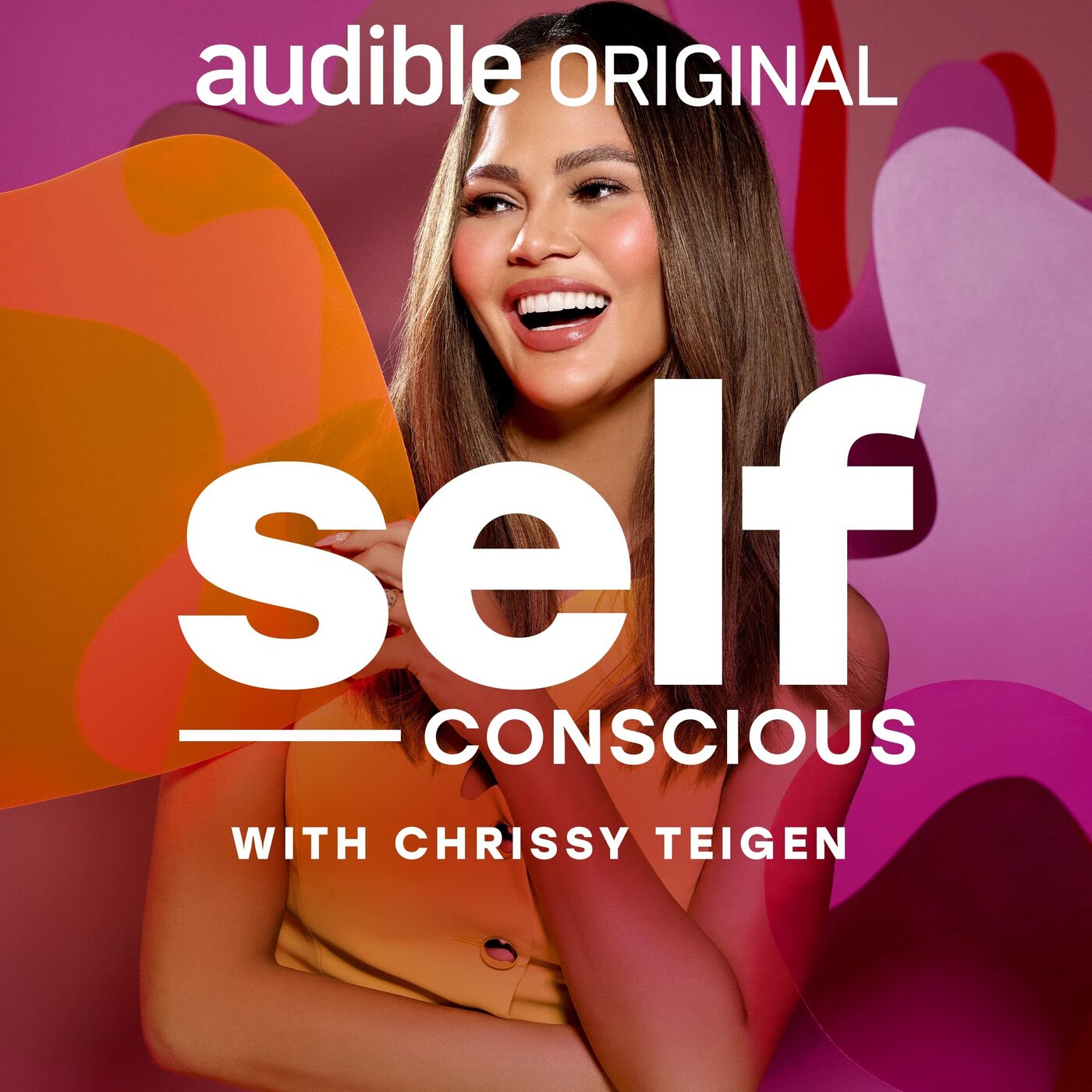
Loading summary
Transcript53 lines
- [00:03]
Chrissy Teigen
You're listening to Self Conscious with Chrissy Teigen, an Audible original podcast. Join me as we explore the cutting edge of health, wellness and personal growth with the world's leading experts and thinkers. From inspiring stories to actionable insights, our conversations aim to help you lead a healthier, happier and more productive life. Do you struggle with sleep? Does your mind race when your head hits the pillow? Do you wake up at 4am unable to to fall back asleep? Or perhaps you feel exhausted no matter how many hours you spend in bed? For many of us, poor sleep has become the new normal. We've become a nation of insomniacs, with our sleep habits only worsening during and after the pandemic. My guest today is Dr. Matthew Walker, Director of the center for Human Sleep Science at the University of California, Berkeley. Keith has a critical message for us. Our chronic lack of sleep is doing more than just making us tired. It's killing us. In his New York Times best selling book, why We Sleep, Walker links sleep deprivation to a multitude of serious health issues including Alzheimer's disease, cancer, heart disease, obesity, strokes and depression. Walker emphasizes that sleep is not just a passive state of rest, but an essential component of our physical and mental well being. His research shows that adequate sleep enhances memory, improves mood, helps maintain a healthy weight, and significantly reduces the risk of chronic illnesses. Today, Walker joins us not only to preach the gospel of good sleep, but to answer critical questions and dispel common myths about why and how we sleep. Dr. Matthew Walker, welcome to Self Conscious. Chrissy, welcome. So describe to me what good sleep is.
- [01:49]
Dr. Matthew Walker
Yeah. For me there are four macros of good sleep. So we all have heard of three macros of food, kind of protein, carbohydrate, fat. For me there are four macros and it's based on evidence, not just some hand waving sort of cockamamie idea. You can remember it by the acronym qqrt qqrt and it stands for quantity, quality, regularity and timing. And I'll just briefly go through them. For the average adult, somewhere between about seven to nine hours is the sweet spot. That's quantity. Quality, it turns out, is almost, if not more important than quantity. What do I mean by quality? I mean nice continuous sleep. What I don't want to hear is that your sleep is just littered with all of these awakenings that I'm up, I'm down, I'm up and I'm down, or I'm awake for long stretches at night. That means that the efficiency of sleep, meaning how much of the time that you're in bed is time of sleep and if a small proportion of that time in bed is time of sleep, that's not very efficient sleep. So we like to see you with about an 85% sleep efficiency, which just means that let's say you give yourself eight hours of opportunity in bed. I want about 85% of that to be asleep. That's quantity and quality. The third is QQR for regularity. Trying to go to bed at the same time and wake up at the same time. If there is one piece of advice that usually just gets you into set and starts sleeping you better it's going to bed and waking up at about the same time. So quantity, quality, regularity. The final one is timing. QQRT timing is about your chronotype. Am I a morning type, evening type or somewhere in between? You don't get to decide.
- [03:45]
Chrissy Teigen
So biologically what is happening to the body and mind during a good night's sleep? What is being repaired, reboosted?
- [03:52]
Dr. Matthew Walker
Yeah, it's absolutely fascinating. We think that sleep is just this passive state where my body lies still and my brain is kind of dormant. It is so dramatically different. Firstly, downstairs in your body you get an immense hit of growth hormone during sleep, which is about tissue repair, things like, you know, collagen repair for joints, even for skin. The second thing is your immune system. The first thing that sleep will do is restock the weaponry in your immune arsenal. So you wake up with so many more immune factors circulating in your body. The third thing is hormone rebalancing. Perhaps two that I could mention are appetite regulating hormones. What we know and certainly I know and you can see it study after study. Most people listening to this will say, gosh, you know, when I just had a bad night of sleep or I'm tired of not being getting enough sleep, I tend to be more hungry. And sleep will regulate two appetite hormones called leptin and ghrelin. And sleep will boost leptin, which after you've eaten says to your body you're full, you're satisfied, you don't want to eat more and it will downregulate something called ghrelin, which is the hunger hormone. But when you're not well slept, those two things go in opposite directions. So you lose the signal when you're eating food to say you're full. And that's why a lack of sleep is so related to increased body mass and also obesity. So there's this regulation of our hormones, also sex related hormones, testosterone in men, luteinizing hormone, estrogen, follicle stimulating hormone. In women, all of these hormonal profiles are rebooted by way of sleep. Cardiovascular system. This is I think, a very impressive one too. Think of deep sleep, dreamless sleep, deep non REM sleep, almost as a form of blood pressure.
- [05:53]
Chrissy Teigen
Deep sleep is dreamless.
- [05:55]
Dr. Matthew Walker
So deep sleep. Yeah. So we have two main types of sleep, non REM and REM sleep. And non REM sleep is typically broken down into light non REM sleep and deep non REM sleep. And deep non REM sleep is where you get this incredible form of blood pressure medication. Your heart rate drops, your blood pressure just lowers. You shift over from the fight or flight branch of the nervous system over into just this quiescent sort of restful branch of your nervous system. So deep sleep, fantastic for your cardiovascular system. REM sleep on the other hand, or rapid eye movement sleep, that's the stage in which we dream. And there, there are lots of benefits that we can speak about. Emot and mental health.
- [06:39]
Chrissy Teigen
What are some common myths about sleep that people should be aware of?
- [06:42]
Dr. Matthew Walker
Oh gosh, there's so many great myths. I think one is that people can survive on less than five hours of sleep.
- [06:51]
Chrissy Teigen
Yeah, I was gonna ask, like, there's a ton of billionaires out there that'll talk about their regimen and what they do. And some of them, they wake up at three in the morning, four in the morning, they're only getting a few hours of sleep and that's just their thing.
- [07:02]
Dr. Matthew Walker
It's an interesting notion, but think of it this way. It took mother nature about 3.6 million years to put this essentiality of a 7 to 9 hour sleep need in us Homo sapiens. And then we think we can come along and within the space of 20, 30 years now we can train ourselves magically to undo Mother Nature's millions of years of evolution. That's probably hubristic, number one. And number two, if you take that mentality, the elastic band of a lack of sleep will stretch only so far before it snaps. Take the examples of Margaret Thatcher, the former Prime Minister of the United Kingdom, or Ronald Reagan. Both of them were very proud chess beaters of saying I just need four hours of sleep, as if they were just invincible.
- [07:53]
Chrissy Teigen
And it does make them sound like better people than us too.
- [07:55]
Dr. Matthew Walker
It makes them sound virtuous, it makes them sound superhuman. Knowing what we know about now, the critical relationship between sleep and Alzheimer's disease, I don't think it's coincidental that both of them ended up succumbing in later life to the disease. Of Alzheimer's. The second one is probably this notion that we can make up sleep at the weekend. This belief that sleep is like the bank almost, that we can accumulate this debt and then we can sort of hope to pay it off at some later point in time at the weekend. And sleep just doesn't work like that. So let's say that you take me and you deprive me of sleep for an entire night. So I've lost, let's say, eight hours. And then you give me all of the recovery sleep that I want on a second night and a third night. Do I sleep longer? Absolutely. I sleep longer cause I'm sleep deprived. But I will only get back about 50% of what I've lost. In other words, I will always, for the rest of time, in that sense, carry a debt of a 50% loss. Now imagine that in a more diluted version, where we are short sleeping during the working week, but then we try to sort of binge at the weekend. It's this real binge purge, this cycle of what we call social jet lag. So I think that's the other myth.
- [09:18]
Chrissy Teigen
How does the timing of meals affect sleep quality?
- [09:22]
Dr. Matthew Walker
Yeah, this is another one of those partial myths actually that we used to say cut yourself off three hours, two hours before sleep. If you look at the data, people can actually eat almost as close to an hour before bed and it doesn't seem to necessarily disrupt their sleep. And I think when we were talking off camera, you're quite like me, where I don't have much of an appetite in the morning, probably not too much during the afternoon. When I seem to have an appetite is in the evening. And including pretty close to bed. That's when I just have a predilection for food. And it doesn't seem to throw off my sleep. If I look at all these sleep gadgets and things that I wore. Seems fine. Nevertheless, though, I would say that's a very different question than saying, okay, if you ate as close as an hour before bed, does it harm your sleep? No, it doesn't. But if you were to have stopped three hours before bed, would that have helped your sleep? Those are two very different questions. One is about not damaging it, the other is about improving and optimizing it. So I think this one is very unique, depending on A, your chronotype and B, your appetite preference across what we call the circadian profile, which is just the 24 hour clock. So I would follow for the most part what your body is telling you to do.
- [10:50]
Chrissy Teigen
So for the past 10 years I have been a nighttime eater and it was always kind of a running joke that John would make me my night sandwich. I would have a sandwich put next to my bed, just ham and cheese or a couple hard boiled eggs or just anything that would fill me up quickly. And around 2 2:30am I devour it very quickly. But this has been happening so consistently that now I just feel like my body is trained to get up at this time. I don't even know if I'm really hungry at this point.
- [11:26]
Dr. Matthew Walker
So first, quick sort of caveat, asterisk. I think it is desperately romantic that John will make you a sandwich. But I mean, you know, if there is a sign that your significant other adores you, it's the fact that they will personally make you a sleep sandwich every night. I think that's brilliant. So round of applause. But it's not a trivial issue either because this is causing you what we would describe as sleep fragmentation. In other words, you're waking up and we spoke about that quality of sleep. I want to see nice continuous sleep. I'm just, you just need a little bit of an outside nudge sometimes. So I would say the first thing to do is you can either go cold turkey where you just definitively take away all food from the bedroom and you make sure that you say I.
- [12:15]
Chrissy Teigen
Should give them a tour of my drawers. It's so embarrassing.
- [12:20]
Dr. Matthew Walker
So you can either do that and you've just got to commit. And what's surprising is that after about three or four nights you will go to bed and you'll think, I've got to. Did I make sure that? No, there's no food. And then unlike the other three nights where you woke up again, night four or night five, the next thing you remember is your alarm clock going off because now for the first time, you've slept all the way through. Now it's not to say that you won't go back and there will be nights where you wake up, it will still happen like that. But after about two or three weeks you will start to actually have now reassociated your bed with not eating. And the expectation that is there, that little red flag that goes up at 2 to 2:30 no longer pops up anymore and you start to sleep better. So that's one way you can do it. The other is you can taper. So you can say, I'm just going to give myself a very small amount of food. I'm just going to have, let's say a wee piece of chocolate or I'm Just going to have half a boiled egg and just a little bit of water. And then gradually you start to kind of thin slice it and you bring yourself down. The other thing you can do is just have some kind of a drink that seems to be a little bit of hot chocolate, whatever it is, just to satiate that sensation of an appetite, to trick your brain into thinking, ah, I've had my food and I can go back. And gradually you wean yourself off that way. So you can do it one of two ways, but you can do it. You are biologically programmed.
- [13:54]
Chrissy Teigen
I'm jazz now. I want to try it tonight. If I. If I do three nights in a row, that is completely different from most of my life, that'd be incredible. All right, everybody, keep your journey going and growing with all the experts on this podcast. From our guest bestsellers and newest releases to their podcasts and Audible originals, hear more from today's leading voices and well being. Go to audible.com Chrissy on audible. Audible. So what are your thoughts on THC?
- [14:23]
Dr. Matthew Walker
I think for THC right now, the science is very clear that we don't advocate for it in sleep science. Now, will THC make you fall asleep faster when you are initially using it? When you are a naive user? Yes, it absolutely will. The problem then becomes that you build up a tolerance to that thc, so you start to need more to get the same benefit, which is to say that you develop a dependency. The second problem with THC is that it will block your dream sleep, your REM sleep, and anyone who smokes a bunch or who just uses gummies, you know, five ways till Tuesday, you're sitting.
- [15:05]
Chrissy Teigen
Right on them, buddies.
- [15:06]
Dr. Matthew Walker
You know, I am not.
- [15:07]
Chrissy Teigen
I don't take them, though, because imagine the amount of samples.
- [15:10]
Dr. Matthew Walker
Yeah. Some people right now are thinking, la, la, la. No, no, no, no, that's fine. But one of the problems with THC is that it blocks your dream sleep. And if you speak to people who, you know, really smoke a lot and then they stop smoking, they will say, once I stopped, I got these crazy dreams. Why is that happening? It's happening because THC has been in your system for so long that it's been blocking dream sleep, REM sleep, and you've built up this massive pressure, this debt. Now, again, you won't get back all that you've lost, but when it's out of your system, your brain thinks, oh, my God, finally the roadblock to dream sleep has been removed and you start to binge on it. It's called a REM Sleep rebound effect. And I hear it all of the time from people who've tried to stop. The main problem though with THC and sleep is that because of that dependency, if you do stop, you have something called rebound insomnia where your sleep not only goes back to being just as bad as it used to be, it's even worse. And if you look at the number one reason why people fail in their attempted abstinence of weed, of smoking cannabis or of gummies, it's because they can't deal with the sleep problems that they've created by way of the dependency. So I would say for thc, I know some people will think it can help, it's a short term fix, but you're kicking the can down the road for a long term, really difficult problem. The problem with THC is that it's not regulated by the fda. So you've got no idea what you're buying, what the concentration is. There's no QRI code typically on these labels where you could scan it like a vitamin supplement and it will give you a third party independent laboratory test. Now, some are doing that, which is good. But you may say I'm getting 50 milligrams, but in fact you're only getting 10 milligrams.
- [17:05]
Chrissy Teigen
I heard the same thing about melatonin gummies and things.
- [17:07]
Dr. Matthew Walker
Yeah, melatonin is exactly the same way. It's a fascinating study. And they looked at over 20 different brands of melatonin off the shelf from your supermarket, which you think is perfectly regulated. And they found that based on what it said on the bottle versus what was in the capsule, it ranged from about 83% less than what it said to 478% more than what it said. Which is stunning to There are people.
- [17:35]
Chrissy Teigen
Complaining about it, the dreams that they.
- [17:36]
Dr. Matthew Walker
Have on it, and most people are taking far too much anyway. Your body would normally never take on board 10 milligrams or 20 milligrams.
- [17:46]
Chrissy Teigen
One time I had 60 in the night because I didn't have my sandwich upstairs. And I only knew it because I was like, was this bottle sealed? And I ate a whole bottle.
- [17:57]
Dr. Matthew Walker
So firstly, thankfully, you're safe. I would say that there was a report, I think that came out recently and it showed that overdose admissions to the emergency room for melatonin overdose have increased by 503% over the past 10 years.
- [18:15]
Chrissy Teigen
I've lived a life of quick fixes. I want the quickest answer to everything. When I was younger, I took Lunesta. As I got older, the Lunesta stopped working. I moved on to Ambien. And I would take Xanax if I was flying. What are your thoughts on Ambien, Lunesta, Xanax, those sleep aids that, I mean, I can kind of predict what you're gonna say.
- [18:41]
Dr. Matthew Walker
I would say that right now. Typical sleep medicine doesn't necessarily advocate for the Ambiens, the Lunestas. The Xanax as the first line treatment for sleep problems we typically think of as cognitive behavioral therapy for insomnia is the best. We've spoke about those big, deep, powerful brainwaves of deep dreamless sleep. And it's the slowest of all of those slow, deep brain waves that transact many of the benefits that we've discussed. If you look at Ambien, it seems to almost take a big bite out of the slowest of those deep, lush, powerful brainwaves. But again, the concern is that one always develops a dependency on them. And then it's sort of when I get back then, well, I was so guaranteed by that sleep and that medication, I'll take it tonight as well. Tonight turns into tomorrow and so on and so forth.
- [19:32]
Chrissy Teigen
So how do sleep patterns change with age? And tell me some adjustments we can make as we get older.
- [19:37]
Dr. Matthew Walker
I mean, we all think of getting older as cognitive decline, that our mental abilities begin to fade and decline. And they do, and that's just normal. What we tend to forget is that one of the most physiologically demonstrable changes as we age is that our sleep gets worse. And it's not just any type of sleep. It's particularly that deep non REM sleep that we were discussing where your brain is cleansing itself of those Alzheimer's toxic proteins. And that's the ironic component of it. So, yes, as we get older, our sleep does get worse in total, but it's also particularly that deep sleep. So we will often feel less restored by our sleep the next day. We can find ourselves trying to compensate by daytime napping. It can be somewhat common in older adults. The naps, by the way, in young, healthy adults, we've done lots of studies, they can be wonderful. They can gift you all sorts of brain and body benefits. As we see people getting older, though I would say, though, that so yeah, thumbs up you get as long as the only downside of naps if you are young, that I would say don't nap. Or the scenario is if you are struggling with sleep at night, do not nap during the day. Cause once again, you are taking away some of that healthy sleepiness that builds up across the day that weighs you down so that you fall asleep quickly and then stay asleep soundly. But if you're not struggling with sleep at night, naps can be just fine. Keep them to less than 20 minutes. Why? Because if you sleep longer, you go deeper. And when you wake up, you have something called a sleep hangover. It's called sleep inertia, where you feel almost worse than you did before the nap.
- [21:36]
Chrissy Teigen
And now for the toolkit. Each episode, our guests distill their expertise into practical and actionable insights. Today, Dr. Matthew Walker unpacks his personal sleep routine to get you to bed faster. Plus tips for overcoming jet lag. What do you do to get ready for a good night's sleep? I mean, you're the expert. I would want to copy absolutely anything you do. What does your night look like?
- [21:59]
Dr. Matthew Walker
First thing I know my chronotype. I'm an 11 to 7:30 kind of guy and I'll really try to maintain that as best I can, within reason. The last hour before bed. Digital detox. If I could give people one piece of advice, it would be if you know that your devices and your mind is activated by your phone, just try it. I know people say this is known kind of new news to me. I know that I shouldn't do it but so often we don't try it. And I have found that I either get so excited by psych, I want to read more science or I'm seeing new data coming in from my lawyer. You know, my postdocs are sending me sort of.
- [22:46]
Chrissy Teigen
At least you're learning. I'm on Instagram and TikTok and learning nothing.
- [22:50]
Dr. Matthew Walker
No, but I think that too is, you know, that is your profession too. You actually are learning something. You know, I think it's very, it's very sweet of you to sort of try to dismiss that but I think that that's wonderful too celebrate that that's part of who you are and look at the influence that you're having. It's just about the dose and the timing make the poison. And for me, I just know that I have to cut myself off and I'll either read a book, listen to a podcast, I'll watch some kind of mindless television. Nothing too. Activating a wind down routine for me has been probably the most effective. The other thing that I've started to try to advocate and I do myself in the last hour before bed, dim down half if not all of the lights in your home. And it is stunning how sleepy. So where I live up in Northern California, every Now and again we'll have a blackout, take some trees. During a storm, electricity goes out and it's just complete darkness. And I used to think then I'm kind of like an 11pm kind of guy. The lights go out at 9 and all of a sudden I'm starting to feel sleepy. At 10pm I'm thinking what's going? What's wrong with me? There's nothing wrong with me. It's simply that I'm not being violated by junk light at night. We are a dark deprived society in this modern era. So for me it is digital detox an hour before, have a wind down routine. Whatever works for you. It doesn't have to be what I do. Have a warm bath or a shower that actually turns out to have some great science behind it as well. You know, listen to a podcast, meditate.
- [24:34]
Chrissy Teigen
It's so weird that digital is so much bigger and so much brighter and invasive than even going to bed, watching the office.
- [24:43]
Dr. Matthew Walker
And that's fine too. A television at a distance. All we would say is try not to watch television necessarily in bed, get sleepy outside of bed, and then only try to bond that association that my bed is the place where I'm either asleep or intimacy.
- [24:59]
Chrissy Teigen
Oh, you're gonna hate how I sleep. Oh my goodness. It's just all the 10,000 wrong things on top of each other.
- [25:06]
Dr. Matthew Walker
I have no credentials in. But the sleep pod. Yep. So for me that's what I would do. And then I make my room like a cave. It is dark, it is quiet and it is cold. So I will keep my room at about 67 degrees.
- [25:23]
Chrissy Teigen
Wait, that's interesting. I always thought like warm would put you in a nice deeper sleep.
- [25:27]
Dr. Matthew Walker
No, it's actually the opposite that you need to create that cool environment because your body needs to drop its core temperature by about 2 to 3 degrees Fahrenheit to fall asleep and stay in asleep.
- [25:39]
Chrissy Teigen
There is not one thing I'm doing right like everything I'm doing.
- [25:43]
Dr. Matthew Walker
We're going to. This is, this is great. And this is like a Chrissy intervention right here. Now you will have heard me say warm baths and showers. How does that work? Wait a second. That seems to be completely conflicting with what I just told you. It works in the same way. Number one, you have always found it easier to fall asleep in a room that's too cold than too hot. If the room is too hot, it is just miserable to try to sleep if it's too cold. Not great either. But you will still fall asleep faster in a room that's too cold. Why? Because it's moving your body in the right temperature direction for good sleep. But the warm bath and the shower, it's so reliable. We call it the warm bath effect. In sleep science. When you get in to the bath or the shower, all of the blood races to the surface of the skin. So I'll sort of get these pink rosy cheeks. And then when I get out of the bath, what's happened is that that warm water has almost like a snake charmer, it's charmed all of the hot blood that was trapped at the core of my body out to the surface. I get out of the bath and I radiate heat and my core body temperature plummets again. It's about getting your body cold so you can warm up to cool down, to fall asleep. And then you need to stay cool to stay asleep. So I will always keep my room cool. Dark. Absolutely. I do use sometimes earplugs, eye mask, depending if I'm traveling, I'm the person who, like probably everyone else, you know, you're pulling those coat hangers out of the hotel closet with the clips for your pants and I'm going into the.
- [27:22]
Chrissy Teigen
Curtains, clipping all the curtains, clipping all the curtains. So it's really a conscious decision you have to make though if you want to make good changes, you have to do big things.
- [27:30]
Dr. Matthew Walker
And I just know that I am not, not the right person. I'm just not the best version of myself when I am underslept. And I'm not trying to be a poster child for good sleep. It is simply that if you knew everything I do about sleep and its benefits for brain and body. It's completely selfish on my behalf. As I said, I don't want to die any sooner than I have to and I don't want to live with disease for any longer than I have to. That's called a poor health span, not just a shorter lifespan. And therefore I am pretty protective. Now, it's not to say that I don't fall off the wagon every now and again. You know, if friends are over or we're out and we're having a wonderful life is to be lived. I really want to emphasize that, that again, I'm not trying to be puritanical about sleep. No one wants to be the healthiest person in the graveyard. I don't, you know, joie de vivre. I want to live life a little bit, but within reason, I will always try to prioritize my sleep.
- [28:34]
Chrissy Teigen
What do you recommend for jet lag?
- [28:37]
Dr. Matthew Walker
I don't think there are any cures for jet lag. There are certain things that you can do to try to lessen the burden and they are things to do during the flight and things to do upon arrival during the flight. The best first piece of advice, set all of your clock faces to the time in the new time zone. And I think, well, I've still got three or four hours before I need to sleep. I'm wrong because I'm getting on the plane and it's already 4am where I'm going. So I know instantaneously I can work on the mental time of the new time zone. And it tells me when I should be awake and when I should be asleep. I have my meal and I try to sleep as early and quickly as I can and then I force myself to wake up. Number two, they're served liberally. Alcohol and caffeine. Best to be avoided. They're not your friends. They will slow down the speed with which your fingers can pop out the dial on your biological 24 hour clock and reset it. Without alcohol and caffeine, you can reset a little bit quicker. Finally, when you arrive daylight in the first hour, when you wake up, 20 minutes, if you can exercise, eat meals at the same time everyone else is eating meals because food and the timing of food is just as powerful as daylight in terms of acting again like a set of fingers to change that dial and speed things up. Do not nap late in the afternoon, even if you are so, so tired. Resist. Because what's going to happen is you're building up all of this healthy sleepiness during that first day and you need it because you're already going to have to go to bed at a time when you normally would not. At that point you can think about strategic melatonin use, but I would say no more than 5 milligrams. Take it about 45 minutes before you want to go to sleep. The final thing I would probably note is expectation. For every one day you are in a new time zone, you can adjust by about one hour.
- [30:45]
Chrissy Teigen
Dr. Matthew Walker, thank you so much. This is so fascinating and people don't talk about it enough and it's such a huge part of our lives that we think we have no control over. And you've shown me I can have some control over it. So thank you so much for being here.
- [30:59]
Dr. Matthew Walker
You can, and also you deserve to. But more importantly, or as importantly, thank you for giving sleep a voice and having me on the show.
- [31:10]
Chrissy Teigen
Dr. Matthew Walker, I want to thank you for joining me on Self Conscious why We Sleep Unlocking the Power of Sleep and Dreams is available on Audible. Until then, tune in, turn on and feel better. This is Chrissy Teigen and you've been listening to Self Conscious, an Audible Original podcast. This has been an Audible original produced by Audible and Huntley Productions. Hosted by Chrissy Teigen, Executive Producer for Huntley Productions Chrissy Teigen, Executive Producer for Audible Stacy Creamer Recorded and engineered by Alex Guy Mixed and mastered by Jeremiah Zimmerman Edited by Lisa Orkin Head of Creative Development at Audible Kate Navin, Chief Content Officer Rachel Giazza Copyright 2024 by Audible Originals, LLC Sound Recording Copyright 2024 by Audible Original.