← Self-Conscious with Chrissy Teigen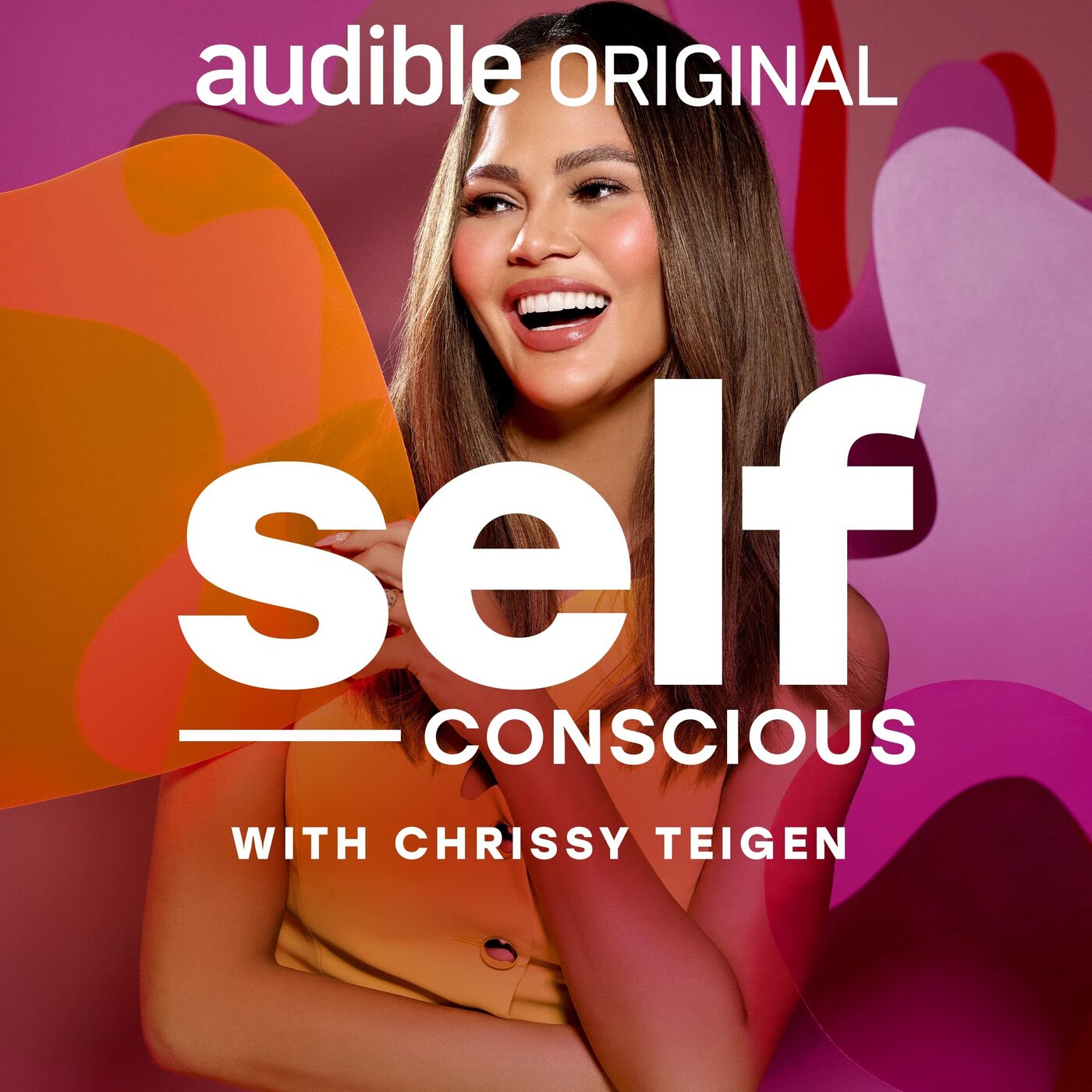
Loading summary
Transcript99 lines
- [00:03]
A
You're listening to Self Conscious with Chrissy Teigen, an Audible original podcast. Join me as we explore the cutting edge of health, wellness, and personal growth with the world's leading experts and thinkers. From inspiring stories to actionable insights, our conversations aim to help you lead a healthier, happier, and more productive life. We all breathe, but how often do we think about the way we breathe? Whether you're dealing with stress, looking to boost your mental clarity, or just wanting to feel more connected to yourself and the world around you, conscious breathing can literally change your life. To help us explore the intricacies, we're joined today by Eddie Stern, a renowned yoga instructor and founder of the influential Ashtanga Yoga New York and Broome Street Ganesha Temple. In his Audible original Healing through four Lessons for Lasting Health and Happiness, Stern offers listeners a clear, accessible guide to harnessing the power of breath for improved health and wellbeing. On today's episode, Stern will explain how conscious breathing can transform our lives, guiding us through practical exercises that help manage stress, improve mental clarity, and foster emotional balance. Eddie Stern, welcome to Self Conscious. It's really nice to meet you.
- [01:21]
B
First of all. Nice to meet you too, Chrissy.
- [01:22]
A
Thanks for coming to Los Angeles.
- [01:23]
B
My pleasure.
- [01:25]
A
I do yoga just once a week and I love it. Firm believer in it. The silence of it scares me a bit. It's very quiet. I'm used to having so much happening at once. The house is chaotic. My television always on, never off. Even when I'm showering, I have the TV going or a podcast going in my shower. I don't live life very thoughtfully when it comes to really getting in tune with my body and what I'm feeling, because then I feel like I stress out a lot. So reading and learning from you has been really beautiful and amazing because teaching us to, like, really take a step back and even the little things that you say, like really watch your stomach go out and in and. Cause I realized I, I don't breathe like I, I, I must because I'm alive.
- [02:20]
B
So you breathe? Yeah, definitely.
- [02:21]
A
Yeah, I'm alive, so I breathe. But in massages, in meditation, in yoga, I'm very silent and I don't make any noise. I try to be as small as possible all the time. So I think when people hear things like that, it really does change them. You don't really go about life thinking about breathing the same way. And it should be intentional. And I think it's really nice that you're putting this thought into people's head to really be intentional about it and thoughtful about it.
- [02:48]
B
People have been talking about breathing for thousands of years for a bunch of different reasons. Number one, it's the main thing that keeps us alive, as we all know. And number two, that our breath is related to almost every function of our body. It's related to our heart rate, it's related to our blood pressure, it's related to our digestion, it's related to our sleep, it's related to emotions, to our thoughts, to our feelings, to the way we interact with each other. Our breath is fundamental to every aspect of our existence.
- [03:20]
A
How do you define conscious breathing?
- [03:23]
B
Conscious breathing is basically paying attention to your breath or being aware of your breath. So, for example, right now we're breathing, we're talking and we're breathing, we're sitting and we're breathing, but we're not aware of the fact that we're breathing. So simply to shift our awareness to the breath for a moment is to begin consciously breathing.
- [03:40]
A
Let's talk about your audible original healing through breathing. What will listeners learn?
- [03:45]
B
I go through four different practices that span from very physiologically oriented things to spiritually oriented things, because not all healing is going to be mechanical. Some things are mechanical, some things are a little bit invisible. We don't quite know where they are or where they originated from, but we know they're real because we feel them. So the first practice that we do is a simple practice called rose breathing, where we begin to learn how to lengthen the breath in the nostrils and have the stimulation of the olfactory nerves, the hippocampus, the memory centers and the amygdala, the fear centers, which all kind of work together. The second breathing practice, this is an abdominal breathing practice, where you also state intentions along with the breathing. So you have this idea of stating an intention of how you want to heal or how you want to calm or quiet the body, along with slow abdominal breathing. The abdominal breathing is very important because we have a nervous system in the abdomen called the enteric nervous system, in the lining of the intestines, 100 million nerves. And as you breathe slowly in and out and let the belly come in and out, because you're controlling your breathing, you're sending messages of safety, evenness, equilibrium, calm, control through the enteric nervous system up to your brain. Your brain responds to that and says everything's okay, and sends those messages back down to the body. And your body responds in a calm fashion. So this is the second practice.
- [05:13]
A
I mean, you can't even help but do it while you're talking about it.
- [05:15]
B
The third practice is called resonance frequency, and this is called breathing in the cardio cardiac cycle. How our respiration, our heart rate, our blood pressure all stay in the same wavelength at the same time. We breathe out of phase with the cardiac cycle all through the day. But when we breathe in phase with the cardiac cycle, we strengthen the innate ability of our body to restore balance, which is called homeostasis. So this is the third breathing practice. We do it with some sounds in the audio that my friend Moby made for me.
- [05:49]
A
Your friend Moby?
- [05:50]
B
My friend Moby.
- [05:51]
A
That's so cool.
- [05:53]
B
Who I stayed with last night. Moby and I have been friends actually for 39 years. We figured out.
- [05:59]
A
That's incredible.
- [05:59]
B
Yeah, that's so wonderful.
- [06:01]
A
What a great artist.
- [06:02]
B
He's amazing. Yeah, he is.
- [06:04]
A
And person.
- [06:04]
B
I'm sure he's very wonderful person. Moby made the sounds in the breathing app, and it's very simple. You inhale along with one sound. You exhale for another. And that also does something called brainwave entrainment, where you begin to move your brain waves into the same synodial wave that your breath is going with. And this creates a very calming, focused effect from the breathing. And then the final one is a humming bee breath. In Sanskrit, this is called brahmari, which means a female bee, where you exhale and you hum. And what this does is it gives the sound waves travel through your brain and give a sort of a coherent firing of the signals of the brain. Because it is a non logical sound. It's an expressive emotive sound, like when kids walk around and they're joyful humming to themselves, or when you eat something delicious and you go, mmm. It's just the yummy noise extended for a long period of time. So it's a spontaneous expression of joy that you vocalize, and then you deliberately do that. And it has this effect of creating joy and harmony within you. So that's the fourth practice.
- [07:12]
A
A big takeaway from your audible original is the concept of breathing slow to live slow. How do you connect living slowly with meeting our goals and aspirations in a world where we are all constantly on the go?
- [07:23]
B
I know that it sounds a little bit at odds with the culture of performance and the culture of accomplishment or supercharging ourselves, tremendous productivity and all those types of things. We all have stress. And for example, when we're stressed out, we always feel like there's not enough time in the day. We can't get through the things on our to do list. We can't stay organized. We can't get the things done that we need to get done because there's just too much piling up. And so what happens is we feel like with this, there's not enough time, things move faster. If there is enough time, then of course things are moving slowly. But if there's not enough time, things are moving too fast. And all this is is a perception. So what we begin to do is we begin to shift our perception of stress through slow breathing by going, okay, now I have a little more space. I can manage this thing which is in front of me. Now you've changed your stress perception. And the stress you're experiencing is not something that you can't manage, it's something you can manage. And now you've shifted into the eustress branch of your nervous system. This is going to help me grow. This is going to give me a sense of sovereignty within my own self of my capabilities, of the things I can get done. So this speed equals the stress of the mind is a very foundational thing in the yogic texts. So to slow down your mind is to slow down. The speed of the mind is to slow down stress and to bring you back in the driver's seat of how you're perceiving the world. The easiest way to do this is through slowing your breath, because the mind and the breath are related to each other. When you're anxious, your breath speeds up. So our breath is a response and an expression of our physiological state as well as our mental and emotional states. And so we can shift those states through the way that we breathe. Breathe slow. To live slow means to breathe slowly, to change our stress perception, to shift how we're responding to the things in the world that we can't necessarily control. And some of the things that we can control and slow ourselves down mentally and physiologically.
- [09:31]
A
You actually put it in a much better way. You said something, and it was so simple and so great that when you do things quickly, they are over with quickly. And that really is such a good metaphor for what life is. Talk to me about this idea that breath is life. And if we do it slower, you are prolonging your life.
- [09:48]
B
Your life is not measured by years. Your life is measured by your breath. So we are allotted. We breathe 15 to 18 times per minute, 21,600 times a day. And if we slow those breaths down, then we have some breath in our bank account. And then they say that extends your life. And if it doesn't physically extend your life, it extends your experience of the life that you do have, because you're present for it.
- [10:14]
A
For someone who is new to all of this, what's the key to getting started?
- [10:18]
B
You say to yourself, I want to prioritize this, and I'm going to commit myself to doing this for five minutes a day. This is the first step. And then pick a time of day when you know you can do it every day, or at least say five days a week. Let's not go for seven days. Let's say five days a week. And let's say you can miss one day out of those five, but you can't miss two in a row. So you set your schedule and you say, I'm going to breathe slowly and consciously five minutes every day when no one's going to bother me. You figure out your place and the time and try to keep roughly the same time and roughly the same place every day.
- [10:58]
A
So what separates that from meditation then? Could you also say, this is a form of meditation?
- [11:02]
B
You could do that for meditation, too. But some people say I've tried meditating and I can't because I think all the time when I'm doing it or I get agitated. Well, the good news is everyone who meditates thinks. And it's a matter of how are you going to engage or not engage with those thoughts. If you think to yourself, thinking is the job of the mind. It can think. I don't have to worry about it. I'm still going to pay attention to my breathing. Then eventually your thoughts are not going to be as intrusive, but we'll stick with breathing for a moment. So you have your intention, your time and your place, and then you simply start doing it and you think about achievable goals. What is the simplest thing that I can do that I know I can do every day? And when I'm done, I'll feel good about myself because I did it even within five minutes. Choose a breathing practice that you like, that's not complicated. Try to do it at the same time and set your intention. And. And when you finish every day, congratulate yourself a little, say, excellent, another day has gone by. I've done what I said I was going to commit to doing. And then you leave it and you wait till the next day. So that's what I would suggest. And it works pretty well.
- [12:12]
A
I hope I can do it because that would be such a wonderful feeling.
- [12:15]
B
You can 100% do it. You can 100% totally do it. You're going to be calmer, you're going to handle stress in your life conflicts little or big in different ways because your baseline responsivity is going to shift. And this is what happens from slow conscious breathing.
- [12:35]
A
Hey, it's Chrissy feeling today's conversation. Dig deeper with today's guest and hear more from all our groundbreaking guests on Audible. From bestsellers and new releases to podcasts and Audible originals, discover the next step on your journey. For a limited time, new customers can go to audible.com chrissy on audible to get your first three months for only 99 cents a month. So how can listeners effectively integrate these strategies into their everyday lives? And what advice do you have for overcoming common obstacles they might encounter?
- [13:07]
B
So everyone is going to have obstacles at one time or another. Obstacles are part of life, and the management of our obstacles is part of spiritual practice and part of living practice. So the first thing that we can do is we can expect some obstacles are going to arise. Now when we do that, we can begin to problem solve them immediately. What am I going to do if I miss a day? I'm not going to miss a second day. What am I going to do if I sleep late? I'll do it later in the day. What am I going to do if I get interrupted because there's a work emergency? I'm not going to get upset about it and I'll find time to do it at another time or I'll do quiet breathing while I solve the problem. So expect obstacles. Imagine what they are problem solve them in your mind so that when they come your way, you know how to deal with them and you're not surprised or upset or thrown off. I read an interesting study a bunch of years ago about positive thinking and how they found that people who only did positive thinking had less energy for achieving their goals, basically because they imagined in their mind through positive thinking that they had already achieved them. So they didn't apply all the necessary frameworks to actually do what they needed to do. But they had another group of people who they would have them positive think and imagine what sort of setbacks they might encounter and then figure out mentally how they were going to get past those setbacks, how they were going to overcome them. And those folks had a lot more energy for their goals and achieve them at a much higher level than the people who were only doing positive thinking. So I like this. I've remembered the study for a long time and I share this with people that this is a good strategy for success. Success meaning that you're able to accomplish the things that you set out to do because you want to do them. And then another thing which is important is to remember that all these things that we do, the disciplines we have, the practices that we do, we're doing them because we choose to do them, because we want to do them. So we should do them with care, with love, with appreciation, with a sense of joy, even if they're hard, some enjoyment, whatever level of enjoyment we can find in them. And make sure that these are things that don't become rote, they don't become burdensome, they don't become mature. It is something which is essential to our being, and it's essential to our appreciation of being alive and being present in our lives the best we can. And we can be more present when we love the things that we do, and we know there's a purpose behind the things we do. So, number one, imagine that obstacles will come up, and mentally figure out how you're going to deal with them. Number two, make sure that the things that you do that you choose to do, you do them because you want to, because you know that they're working for you, and you do them with a sense of joy or love or appreciation.
- [16:17]
A
And now for the toolkit. Each episode, our guests distill their expertise into practical and actionable insights. Today, Eddie Stern guides us through key breathwork exercises.
- [16:27]
B
The first thing in the toolkit is to learn how to breathe in our nose without creating tension in the chest, because this is where we develop more anxiety. So what we're going to do is something called rose breathing, because we're going to imagine the smell of a rose. If you don't like roses, lavender is okay. Or your favorite food cooking doesn't matter. Sage. Bacon.
- [16:48]
A
I won't do bacon. You're here. I'll do peonies.
- [16:50]
B
Okay. Amazing. Okay, so sit comfortably in your chair. And you can close the eyes or keep them open. And you can keep your hands resting exactly as they are. And just take a moment to feel your breath flowing in and out of your nostrils. Okay, Excellent. Now, when you started paying attention to your breath flowing in and out of the nostrils, did you notice a little change in your breathing? Did it get a little longer, deeper?
- [17:21]
A
It felt a little tense and shaky up in the upper chest.
- [17:24]
B
Okay.
- [17:24]
A
Yeah, because I'd never do it.
- [17:26]
B
Exactly. So this is normal. And when you start paying attention to your breath, you automatically shift how you're breathing. This happens to everyone. So what we're going to do is we're going to move that away from your chest, and we're going to try and Experiment. You're going to tell me how it works. Close the eyes again. Put your awareness in your nostrils and don't try to breathe deeply or anything like that. Just imagine you're smelling peonies and notice where the smell is going to occur within your nostrils when you breathe out, your breathing is just relaxed. You're not worrying about the exhale.
- [18:08]
A
I'm worried. I'm always worried.
- [18:10]
B
You're worried about smelling peonies.
- [18:12]
A
I'm just a worried person.
- [18:13]
B
Okay, well, let your worry be there. That's okay. And say, I'm okay with being worried. And put your awareness back in the nose and think about peonies. And even if you don't really smell them, just imagine you're smelling them. The main thing is to notice in your nose where you would be smelling the peonies. And then begin to very lightly lengthen your breath at that point so you notice a place where the sense of smell happens. And very gently lengthen the breath at that place. You can also imagine that as you savor your breath at that part of the nose, you could savor your breath like you savor your favorite food or your favorite song or your favorite piece of art.
- [19:13]
A
I find myself breathing faster now that.
- [19:15]
B
I'm thinking about thinking about your breath. Yeah. Okay, let's move back to the. Just the smell of the peonies and savor the smell of the peonies where you would imagine it in your nose. And we'll just do this for one more breath. Just savor the smell in the nose. Okay. And let's relax the breathing and go ahead and open your eyes. Now, my question for you was, when you started to lengthen the breath in your nose, did the tension leave your chest? Yes. Amazing. That was the goal of the first practice. Mission accomplished.
- [20:02]
A
We did it.
- [20:02]
B
We did it. All right. How do you feel about that?
- [20:04]
A
I feel great.
- [20:05]
B
Okay. Amazing.
- [20:06]
A
Positive. Now, I didn't think it was possible, so.
- [20:09]
B
Well, you did it. And now that you've learned to breathe through the nose comfortably without engaging your upper chest, we're going to do something called resonance frequency breathing. We spoke about that earlier. And this is breathing at a cycle of somewhere between five and seven breaths per minute. So we're going to slow the breathing down a little bit. And don't be scared. It's going to be fine. So what we'll do is we're going to inhale for four seconds through the nose, and then we're going to exhale, and you're going to blow out your lips like you're breathing out through a straw.
- [20:39]
A
Okay.
- [20:39]
B
For a count of six.
- [20:40]
A
Okay.
- [20:41]
B
So sit comfortably. You can lean back in the chair. If you want to rest your hands on your belly, you can do so and inhale through the nose for a count of four. And feel your hands moving. And now blow out through the lips like a straw. And really make it like a straw you're blowing through. There you go. And now inhale through your nose for four, through the lips for six. And let's do that one more time. Great. And so what we're gonna do is we're gonna do that for about a minute or so, and I'm gonna play some sounds. So let's listen to the sounds for a moment. This is an exhale sound. And if at any moment during the practice you feel it's making you a little tense or a little anxious, just pause and listen to the sounds and come back to the breathing. But I think you'll be fine. Sometimes the nervous system resists a little. A new pattern that we're placing on top of it because the nervous system likes to dictate things. And now we're saying, hey, I'm going to change your pattern. And it resists a little sometimes, not always. But if you feel a little bit of tension, that's all that's happening. Okay? No big deal. So sit quietly for a moment. And now this next sound here. Inhale through the lips. Exhale nose. Inhale into the belly. Mouth. Exhale like you're blowing through a straw. There you go. Feel the hands moving as you inhale. Exhale. Good. Gently, gently, gently, gently. Inhale. Excellent. Steady. Exhale. Very good. Inhale, calm. Exhale even. Inhale, calm. Exhale slow. Inhale on your own. Great. Let the breathing relax. Let your hands relax into the lap. Let your breath fall into any natural pattern just for one breath.
- [23:36]
A
My lips are a little numb.
- [23:38]
B
Okay.
- [23:39]
A
And a little shaky at the end. It's just so new to me. I can't even tell you the last time I did anything like that.
- [23:49]
B
Okay, so that's good feedback. You know, it's important to say that made me feel a little bit shaky or a little bit strange. In terms of your mind, does the mind feel calm?
- [24:01]
A
Calm and happy.
- [24:02]
B
Okay, excellent. You know, we did that for about a minute and a half. You can also start with one minute. For any of the listeners out there, they can do this for a shorter period of time. You don't have to do it for two minutes. When you do your five minutes of breathing tomorrow, you're Going to mainly focus on nasal breathing. But a lot of the research which has been done on resonance frequency is inhaling through the nose and exhaling through the mouth. It's simpler for people to do when they're not used to nasal breathing. But if you can switch over to nasal breathing, of course it's going to be better in the long run. Sensation comes up. Just know that that happens often because it's something new. You know, anything new feels weird. So that's all.
- [24:44]
A
Always so.
- [24:45]
B
That's what John tells me. So this one, you lean back in your chair. This one, you lean back and put your hands right on the abdomen. You can stretch your legs out, no problem. And we'll rest the hands on the abdomen. And just for a moment. Feel for a moment. When you breathe in, your abdomen rises. And when you exhale, the belly comes back in. Can you sense that? Okay.
- [25:06]
A
Yeah.
- [25:07]
B
So let's inhale. And now just pause for two seconds. And now exhale. And pause for two seconds. Inhale. Pause for two seconds. Exhale. Pause for two seconds. Now you continue that pattern on your own. And now say mentally to yourself, my body is still. And at the end of the exhale, my body is quiet. Inhale. Pause. My body is still. Exhale. My body is quiet. Inhale. My body is still. Exhale. My body is quiet. Try it one time on your own. Good. Now relax the breathing. And just notice how you feel in your body, how you feel in the breath, the state of your nervous system. Okay. When you're ready, you can come back up to sit.
- [26:41]
A
I want to cry. I don't know if it's like the breath combined with you speaking, but it's just so. Yeah, I'm just not that thoughtful about my body, I guess. So when someone else is thinking about it and witnessing it, it feels emotional.
- [26:59]
B
Yeah. You feel a stillness within. Wonderful. So this is a beautiful practice. And one of the nice things about it is you can do this anytime during the day. No one will know you're doing it. And so you don't do anything with your fingers. You're not exactly. Exactly wonderful.
- [27:17]
A
I like that a lot, actually. Sorry. Yeah, it's.
- [27:21]
B
It's a really profound and beautiful practice.
- [27:23]
A
It really is.
- [27:24]
B
I'm glad you like it.
- [27:25]
A
It's so quick.
- [27:26]
B
Yeah.
- [27:26]
A
Actually, my arms, I get. I hold a lot of tension in my arms, and when I get really anxious, they go totally numb. And I felt like my arms release a lot.
- [27:34]
B
Amazing.
- [27:34]
A
Yeah. Okay. So one thing I really wanted to ask you is, can you teach me the Humming breath.
- [27:40]
B
So one of the ways that I teach people to do the humming breath is I say to them, what sound do you make when you eat something absolutely delicious? And so now take. Now inhale and make that sound again, but make it go longer.
- [27:58]
A
You know what's so weird? Sorry, I ruined everything. I think what is. There's something to be said about it too, is that it's just something that takes you. It's something that takes yourself out of your own head. Because I walk around very conscious of how I look, how I sound, what I say, and when I do things like dance or hum or sing, that's putting yourself, for me at least, in kind of a vulnerable position. So for me to even hum in front of you sounds like a. It's different. It's a really unique experience because I just don't do it. And so maybe there's like something to be said for taking yourself out of your own head for a minute and doing something really nice too.
- [28:42]
B
Yeah. And this is what sound does to us, especially enjoyable sounds. So wait, let's do it again together then. So go ahead and inhale.
- [28:50]
A
I want to hear you. Because I feel like I'm doing it wrong.
- [28:53]
B
There's absolutely. There's absolutely no possible way that you can hum wrong.
- [28:58]
A
Okay.
- [28:58]
B
If there's like one thing you can't do wrong in your life, you cannot hum wrong. So there you go. Are you ready?
- [29:03]
A
Okay.
- [29:04]
B
Inhale.
- [29:17]
A
I tried to match your pitch.
- [29:18]
B
You did it perfectly. That was wonderful. So here's two other cool things about humming. Number one, we have something called the vagus nerve. The vagus nerve is 80% of the parasympathetic nervous system. It controls levels of inflammation in the body. Body. There's something associated with the vagus nerve which is slowing the heart rate down as we exhale. It is related to how we communicate with people. You can read my facial expressions and hear my tone of voice because of the activity of your vagus nerve. And I can express things through my facial expressions and through my tone of voice because of the activity of my vagus nerve. So we copy, we co regulate each other and inter regulate each other through the activity of the vagus nerve, through communication, vocal expression and facial expression. The vagus nerve controls all of this as well as things related to our heart rate, to activity of our lungs, things happening in the liver, in the spleen, in the pancreas and in the intestines, as well as our vocal cords. The vagus nerve goes right next to the. The vagus nerves Go right close to the vocal cords, to the baroreceptors that monitor blood. Press. And there are vagal nerves that are in the back of our tongue, associated with taste, and the very roof of the mouth as well, and coming to the corners of the lips and corners of the eyes and in our ears. So this is one of the most widespread of the cranial nerves, and it's organizing information, organizing the inflow of sensory input in a very, very interesting and very complicated way. So when we hum, we are stimulating the vagal nerves in the throat, we're stimulating the vagal nerves on the palate, we're stimulating the vagal nerves in the ears. And also, if you were to, say, cover your eyes and gently close your ears while you hum, you would have even a more intensified experience of the humming. Give it a try.
- [31:14]
A
Oh, I like that. Wow, that's nice.
- [31:25]
B
Yeah. And when you take everything off, the world is a brighter place. It is because you haven't been losing energy through your sense organs just for a moment. Of course, if you have a lot of piercings in here, it gets harder to. You put your thumb in the middle or something.
- [31:37]
A
Yeah, I can just close this little part. That's really nice, though.
- [31:39]
B
Yeah, it's amazing.
- [31:41]
A
I'm starting to understand more and more why John is so carefree and happy. I don't know if you've ever done another podcast before, but when you have the headphones on and you're hearing yourself back, it's kind of soothing to hear yourself back. It kind of reminds me of that feeling of hearing yourself from the inside, if that makes sense.
- [31:57]
B
100%. That's exactly what it is. And the sound sort of magnifies how it goes through the brain, and it's harmonizing. So this is basically a harmonizing breath.
- [32:07]
A
Eddie Stern, I want to thank you for joining me on Self Conscious. Eddie Stern's Healing Through Breathing. Four Lessons for Lasting Health and Happiness is available on Audible. Until then, tune in, turn on, and feel better. This is Chrissy Teigen, and you've been listening to Self Conscious, an Audible original podcast. This has been an Audible original produced by Audible and Huntley Productions, hosted by Chrissy Teigen, executive Producer for Huntley Productions. Chrissy Teigen, Executive Producer for Audible, Stacey Creamer Recorded and engineered by Alex Guy Mixed and mastered by Jeremiah Zimmerman Edited by Lisa Orkin, Head of Creative Development at Audible, Kate Navin, Chief Content Officer Rachel Giazza Copyright 2024 by Audible Originals, LLC Sound Recording Copyright 2024 by Audible Original.