← Self-Conscious with Chrissy Teigen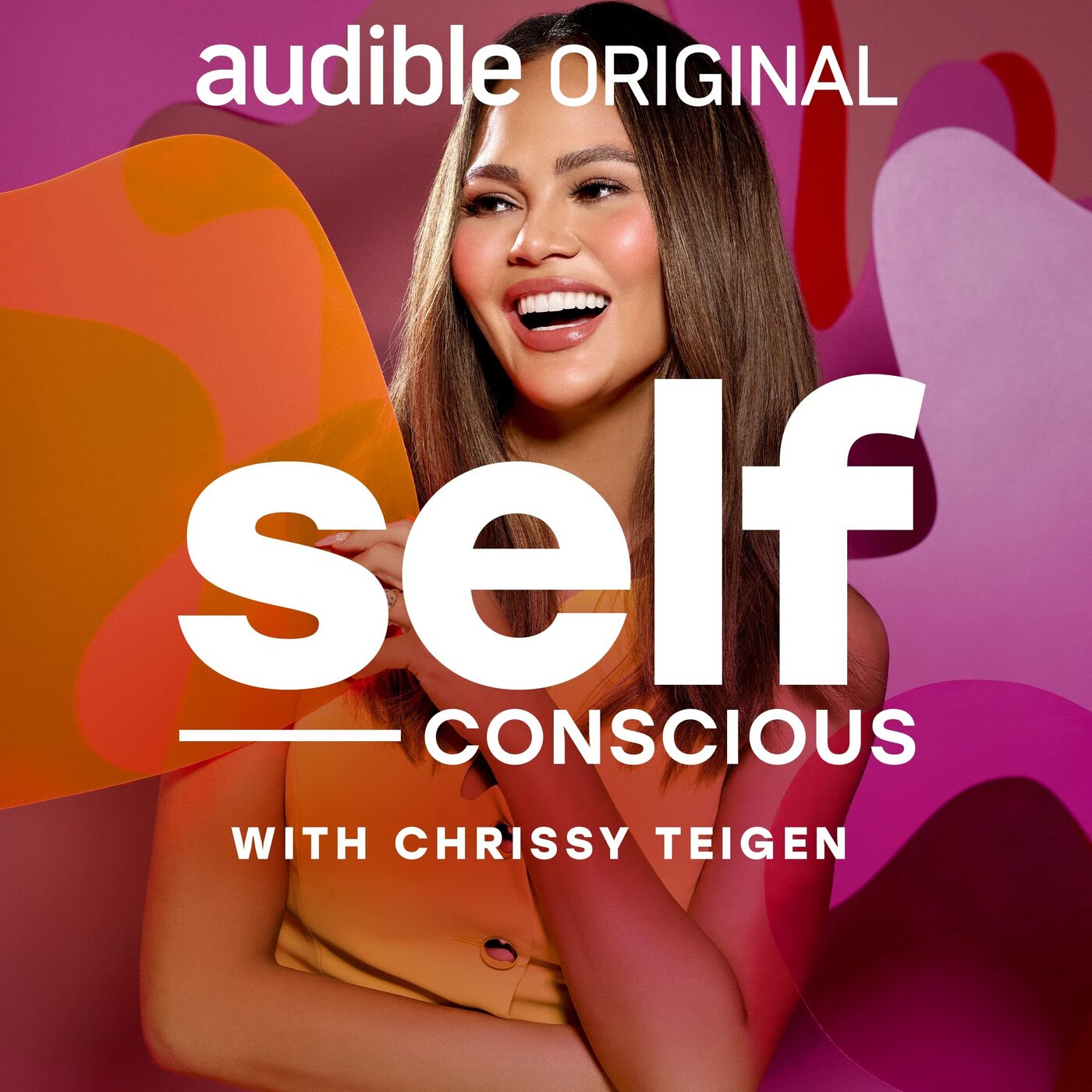
Loading summary
Transcript128 lines
- [00:03]
Chrissy Teigen
You're listening to Self Conscious with Chrissy Teigen, an Audible original podcast. Join me as we explore the cutting edge of health, wellness, and personal growth with the world's leading experts and thinkers. From inspiring stories to actionable insights, our conversations aim to help you lead a healthier, happier, and more productive life. Before we get into today's episode, I just want to be real with you for a second. This one's about the complications that can arise with pregnancy. The scary stuff, the painful stuff, the stuff no one really warns you about. And look, I don't care how many books you've read or how many apps you've got, how organized your birth plan is, nothing prepares you for that awful silence in the doctor's office or the look on the doctor's face when they're about to tell you news no one should ever have to hear. There's this weird kind of loneliness that comes with it, because while everyone else is posting their bump pics and throwing baby showers, you're sitting there juggling risk factors, medical charts, and heartbreak. And maybe no one around you even knows. My guest today is Emily Oster, a parenting data expert and economist whose latest work the Unexpected Navigating Pregnancy during and After Complications is all about the parts of pregnancy that we prefer to keep quiet. Miscarriage, stillbirth, preeclampsia, postpartum mental health. She joins us to talk about what happens when pregnancy doesn't go as planned and how to move forward, not just with more information, but with more power, more clarity, and a little more compassion for ourselves along the way. Emily Oster welcome to Self Conscious.
- [01:48]
Where do we begin with this?
- [01:49]
Emily Oster
Where should we start? It's not like an easy.
- [01:52]
Chrissy Teigen
It really isn't. This topic is just so heavy, obviously, but I was really excited to have.
- [02:00]
You here to be able to talk.
- [02:01]
About it because when I am out and about my pregnancy journey and IVF journey and Pregnancy Loss Journey is what I get approached about the most. More than pasta sauces or more than John's music or anything else I've done. People really love to feel seen in this space.
- [02:28]
So thank you for being here.
- [02:31]
Emily Oster
Thank you for having me.
- [02:32]
Chrissy Teigen
So what did make you want to write about these hardest parts of pregnancy?
- [02:37]
Emily Oster
So my first book is about uncomplicated pregnancy. It's called Expecting Better and I wrote it when I was pregnant the first time and I then spent a decade talking about that book with people and many of them would come and say, your book was so great. I loved it. During my first pregnancy I read it, but Then this happened, or then I had a miscarriage, then I had hyperemesis, then I had postpartum depression. And I need more answers. I want to know. And the first question everyone always is just, is it gonna happen again? You know, now we're thinking about another kid, is this gonna happen again? And I did not have answers for them. And so this book is really unlike most of the other stuff I write, which kind of comes out of the things that I experienced as a pregnant person or as a parent. This really comes out of a desire to answer the questions that I get from others and to try to help people both answer the question, is this going to happen again? What does the data say? But also help them with this question of like, how do I interact with the medical system? The other thing I will say is I don't think that we talk about this enough. People talk more about first trimester miscarriage than they once did. I think that's more acknowledged. But the range of complications of pregnancy are very large and they are still not something that is public enough. And that's something we should talk about.
- [04:17]
Chrissy Teigen
Well, first of all, I'll say for anybody that doesn't know, I had a placental abruption with our baby, Jack, we had named him in the 21st week of pregnancy. So I was bleeding terribly for weeks, honestly, but it started to get really bad. And I think the weird thing for me was there was no pain with it. I was just bleeding and there was no cramping and I didn't really know what was happening. But I do recall a doctor named Dr. Steve Rad who came into the picture around the time of my abruption. And I just thought he was another doctor that I could see if my other doctor was busy or something. And then it wasn't until like a year after that I learned he was a high risk doctor. Like I had no idea. I thought he was just my other doctor. And at the time the pandemic was happening so I couldn't really go into the doctor's office myself. So they would bring the machines to the home and we're just monitoring things closely. And then that's why for me this book is so important, is because I personally having incredible, wonderful doctors, I didn't know what was happening to me. And even after I not sure that I have a ton of clarity about what happened still.
- [05:52]
Emily Oster
Yeah, I mean that part of the story, the sort of I didn't know was happening at the time and then I never even learned about it later. I hear that so often. And I think part of.
- [06:04]
Chrissy Teigen
I'm like having to Google myself.
- [06:07]
Emily Oster
And you don't have your medical. So it's not even clear you could get the answer from Google even if you tried. And this sort of feeling that people have that I just would like to understand what happened, and yet we're kind of. Sometimes in the medical system is trying to protect you and trying to present the best case scenario or present, you know. Well, we're just monitoring. We're just going to watch. But I think for women in this situation, often you do want what is going to happen. What are the options? What are some things that might happen? Like, let's be prepared. And this book is really about.
- [06:39]
Chrissy Teigen
Yeah, I didn't have a list of, like, the right questions to ask.
- [06:43]
Emily Oster
And that conversation with your doctor is so challenging because you're not a doctor. You know, I'm not a doctor. No, we're not doctors. And so you're coming into that conversation already without a set of knowledge that they have, and then also coming in afraid and sometimes confused and sometimes in pain. And there is a need to know how to have a conversation that will get to some answers. But how do we know how to have that conversation?
- [07:11]
Chrissy Teigen
Even the day of the procedure? The only reason I know that what I had was called an abortion was because John and I were talking one day about Roe v. Wade and how it was so terrible that people are going to not have that option. And I was talking about it in terms of like, that's so bad for them. I can't believe that they have to go through that. And John was like, well, you went through it. And I was like, what? And he was like, you had an abortion? I was like, what?
- [07:39]
Emily Oster
I did.
- [07:40]
Chrissy Teigen
That's what. Is that what it was? So, yeah, it didn't even occur to me that I had done that and that's what was done. And then I'm like, I feel so stupid because obviously he was alive and I was bleeding a lot. And I remember having so many questions after, because I remember getting blood transfusions for a day. And I just remember being like, well, why can't I just live at the hospital and get blood transfusions till this baby can come out and then we can both be safe? It was just so wild to me that I had an induced abortion. And then there were, like, so many things that I would have changed about the whole process that I have big regrets about. Just if I had known more, like what. I was so clueless as to what was gonna happen. I literally Was filming funny videos. I was talking about it like, yeah, I'm bleeding a little bit and getting my nails done and just watching TV and making fun of shows and stuff. And then to look back on that now I can truly see how ignorant I was to everything that was about to happen because it just happened so quickly. I wouldn't have changed the procedure or obviously choosing to save my life, but I wish I would have held him longer or sat in that moment more because I actually was scared to, like, look at his face. Cause I thought it would, like, be in my nightmares. But now the mystery face is in my nightmares. And I don't know if that's better or worse or what. So it's kind of like a jarring. You don't even know what this thing looks like. But yeah, he was so teeny tiny. And I remember looking at his feet, but I didn't look at his face. And I have big regrets about that. And then I didn't know it was an option, really, that I just thought, okay, you can see him, and then you're supposed to just get rid of it and get it out. And I still don't know. Would they let you hold him for five hours if he wanted to? And yeah, probably, yeah.
- [09:46]
Emily Oster
We are so bad as a society about death and grief. And I think that comes up in these pregnancy spaces, law spaces all the time. And it comes up at end of life care, too. You know, people die, and then they're just gonna take them away. It's actually like, sometimes sitting with someone, even when they're gone, is a thing people need. And so this book is co authored with a maternal fetal medicine specialist named Nate Fox. And so one of the things he talks a lot about is the idea of radical acceptance, of kind of holding that this terrible thing happened. And then trying to figure out, how can you have love or joy or whatever after grief? And how do we sort of hold those things at the same time? And I think it is very, very hard in that moment. And I can hear you giving yourself a hard while. I should have done it differently. I should have done like. But how can you possibly.
- [10:47]
Chrissy Teigen
I know.
- [10:48]
Emily Oster
How can you possibly hold yourself to that after? Nobody knows how we're gonna react in that moment.
- [10:54]
Chrissy Teigen
Absolutely. Yeah. It's so interesting because even though it is done and passed, I still have so many questions. I try not to think about, obviously, because it's so dark, But I don't feel like I still have any clarity on a lot of things.
- [11:10]
Emily Oster
So, like, can I ask when you Got pregnant again. Did you have these conversations about, you know, would this happen again? And what?
- [11:19]
Chrissy Teigen
No. Wow. Yeah, I really didn't.
- [11:22]
Yeah.
- [11:22]
When I got pregnant with sd, we had a surrogate at the same time. I was trying to have a baby at the same time as her so they could be like twins, basically. But my doctor would not let me because I did ivf. So I could have put two embryos in, but they were not feeling that exactly. So. And you know what's so crazy to me is that I actually just went and did my, like, annual checkup thing, and my doctor is very. John's. John has high cholesterol, high blood pressure, and I just found out that I have high blood pressure. And then right before you arrived today, I was looking up, like, causes of placental abruption, because I'm still researching my own case. And it said high blood pressure and preeclampsia. And I'm like, oh, yeah, I had those things and I still have high blood pressure. And I don't know if my high blood pressure was regulated with ST or if I was supposed to be doing things in a different way. Like, thank God it all worked out. But.
- [12:19]
Emily Oster
So placental abruption is usually. Is almost always just a random occurrence that just happens and doesn't particularly happen. I mean, it can happen. If you are in an accident, it's the reason they tell you not to go skiing during pregnancy. You fall down, you can. That kind of thing can be a source or car accident, but most of the time it's just a thing that happens at random. And not because of high blood pressure, actually not because of preeclampsia, which is a separate complication. Not because of something else you did or something you ate or some kind of. Any of these things.
- [12:54]
Chrissy Teigen
Are they ever viable?
- [12:55]
Emily Oster
Like, if you have a placental abruption late enough in pregnancy and the baby is delivered fast enough, it can be fine. And a very mild placental abruption could, in principle, push for several more weeks. But most of the time, a placental abruption before viability would result in a second trimester miscarriage.
- [13:15]
Chrissy Teigen
Okay.
- [13:17]
Emily Oster
Yeah.
- [13:17]
Chrissy Teigen
Yeah. See, I still have questions so many years later. I remember hearing so much about people's crazy childbirth stories. Yeah, like, everyone's always like, oh, the heartbeat. We couldn't find it. We couldn't do this. It was always like. And the story is always so big and crazy. And then. Yeah, you don't really hear about the loss part as much, obviously, because it's like some people are, like, ashamed or just try to Distance themselves from it so much. But, yeah, everybody's so willing to talk about their crazy childbirth story, knowing that their baby is healthy now and wonderful and everything's great. But I never once. I'm like, maybe I did, and I'm blocking this out, too. But I never. When I made a decision to get pregnant again, I would have just told myself, honestly, there's no way this could happen again. And then reading some of your book, I'm like, oh, my God, the odds are there that it could happen again.
- [14:16]
Emily Oster
It could happen again. Yeah. And with almost any pregnancy complication, there is, you know, an elevated risk of it happening again in a later pregnancy, although it varies a lot. So actually, in your case, you know, the risk of a repeat placental abruption is higher. The risk is higher than it would be if you hadn't had one. But it is not very elevated. Whereas for some things, like gestational diabetes, if you had gestational diabetes in a first pregnancy, it's extremely likely you will have it in a second one. And there's a number of other complications like that, which you should expect them to recur. And if we don't tell people that, then they're not prepared. You know, I think one of the stories I think all the time about is hyperemesis. So, like, extreme nausea and vomiting in pregnancy, which can be debilitating to the point of people just being sort of unable to more or less do anything other than lay in bed without vomiting. And there were so many people who told me, this happened to me in the first pregnancy, but then when I. When I was gonna get pregnant again, we didn't think about the possibility that would. And then it did. And now, you know, you have a toddler and you can't go to work, and you take it. And they sort of said, like, we should have thought about it, you know, not that we wouldn't have had another kid, but that I would have prepared. We would have talked about it in advance. We talked about what kind of help we needed. Like, it's not that there's nothing to do. And I think it's. What happens is people want so much for it to be different. You want so much to say, well, this isn't gonna happen again. It is gonna be easier. I won't have another loss. That we fail to think about that possibility, and then that makes us have much less of an opportunity to prepare or make it less likely to happen.
- [15:57]
Chrissy Teigen
I remember looking at John and just being like, I wanna be pregnant again. That can't be how my story ends. I would be laying on my deathbed so regretful that I didn't try again. And then, honestly, I was prepared for maybe losing a baby again, where I'm like, I just did that. I went through it. How bad could it be if it happened again? Honestly, like, I've already. I survived that somehow. So, like, if it does happen, okay, we can get through it. We just did. But on the bright side, like, we could have this beautiful little baby after. But, yeah, I guess that was, like, just going into it blindly. I didn't have any fear, really. So maybe that. That blind faith, it was good that, like, served me well. I would have another kid again and I wouldn't think about it, and I still wouldn't ask. I don't know if I'd even ask the questions then.
- [16:46]
Emily Oster
I think that's a very interesting difference across people. I think there are certainly people who would say, like, I wanna know every single thing. Let's go line by line through my medical record so you can tell me, like, what happened here. What happened here, that's not me. And I think there are people who would say, you know what? I don't really wanna know. Like, it's really important to me to have another kid, and I wanna do that and I wanna move forward. But I still think even in that case, there is in at least opening to say, I'm really confident that this is what we want to do. This is really important to me. But if there is something we should be doing differently because of my past history, let's talk about that now. There's something about asking, is there something I should know?
- [17:33]
Chrissy Teigen
Yeah, absolutely. I do wish everything wasn't like, this little doctor's secret that they all knew about and, like, talked about and had feelings about without telling me. Yeah, I would have just like, you can. They can tell me. You guys can tell me anything. Like, keep me updated on my body, please.
- [17:49]
Emily Oster
I think when we interact with our doctors, it's almost like that's the first conversation you want to have, is what's the communication I want? Like, am I a person who wants to know every single number and go through this? Am I a person who wants to know when something's wrong? Am I a person who only wants to know what you're going to do and I don't actually want to know how worried you are? Like, we all are interested in interacting in different ways, and I think that it's hard for doctors to know what kind of patient they're facing.
- [18:16]
Chrissy Teigen
Yeah. And I've always been that kind of person, though, that would just let the experts do their thing that they're good at.
- [18:21]
Emily Oster
And it's like the opposite of me. I'm always the person who's like, you're an ex. Well, let me see. I'm gonna look into that.
- [18:27]
Chrissy Teigen
I wanna look into that.
- [18:28]
Emily Oster
Super interesting.
- [18:30]
Chrissy Teigen
Of anybody, honestly, really. I just trust that they know what's best. And we've said it before on this podcast. I think it comes from never thinking my body was my own. Anyway. I've always been very detached from my. Like, other people used it or took pictures of it or, like, abused it. And so, like, I've just detached from, like, really being, like, an advocate for myself because it's like, it doesn't feel like it's mine, really. So, like, I never really was the type to have the confidence to feel like I deserved that knowledge, honestly. I know, I know, I know. And I could look at any of my friends and know that they deserve to advocate for themselves and it's your body. But I also like when it comes to me, like, I didn't want to be, like, a annoying, like, bother. I don't like to, like, bother people. And I always felt like if I nitpicked everything or needed to know information on every little thing, that I would be seen as a bother.
- [19:34]
Emily Oster
No. People are very afraid of bothering their doctors. Yes. No. That's, like, one of people's core fears.
- [19:39]
Chrissy Teigen
I think I might have had a whole C section just because I didn't want to. Like, I wanted to make it easier for the doctor.
- [19:46]
Emily Oster
Did you have a C section with.
- [19:47]
Chrissy Teigen
No, just with sd. Probably be easier on her if she knew the date and time that we were gonna have this baby. I just, like, that's why I'm stupid.
- [19:56]
Emily Oster
I'm an idiot. One of the ways I read what you're saying is that sort of coming in and saying, like, you're the expert and I'm gonna trust that you are doing the best thing is the thing that gives. It makes you feel, like, relaxed. And for me, it is the stress. It's the opposite. Yeah. Like, I want to know exactly what is happening and understanding. You know, I spent a lot of time in the medical space. Like, I know a fair amount of the jargon. It is understanding the jargon that, like, allows me to relax. Relax.
- [20:25]
Chrissy Teigen
Yeah.
- [20:26]
Emily Oster
But I think it's useful for people to know where in that spectrum they fall, because in order to make those conversations with your provider work the best, you do need to be able to Tell them, like, this is the thing that's going to work for me.
- [20:39]
Chrissy Teigen
I didn't take breathing classes and I didn't even really know I knew about the tearing and stuff, but I was pushing so hard. I got all my babies out so quickly. I remember with Luna, I had broken every capillary in my face because I was pushing so hard from my face and couldn't feel what I was actually doing. They all came out so quick. I mean, the labor was long, but like, once I started pushing very quickly and I. Oh my God, I tore like left, right, center, everywhere because I was pushing so hard so fast. Didn't really, like, nobody told me to, like, maybe just like I thought the goal was to just get the baby out, but oh my God, if I didn't experience, I would have had a way better. If I had known that maybe. Obviously physics is gonna say that, like, if you're just like inching this little baby out, you're not gonna tear so badly. But I will say, like, recovery wise for every pregnancy was really fucking hard because of the tearing. And so, like, that's another change I would make. I would take my time with the process of the pushing.
- [21:53]
Emily Oster
Almost everybody has some tearing, but it's right that there are.
- [21:57]
Chrissy Teigen
What's that like with powdery epidural?
- [22:01]
Emily Oster
I think pretty simple. I think at that. Yeah, it's all at the end there. It's all really a lot. I'm not sure you can really super distinguish the different pieces of it.
- [22:13]
Chrissy Teigen
I remember them putting a black trash bag at the end of my feet and just scooping water and fluid and blood.
- [22:23]
Emily Oster
All I remember about that was these chucks. Do you have these waterproof, the weep pads, the blue ones, the blue wedges. My husband was like, these are amazing. And then he just like went on Amazon.
- [22:32]
Chrissy Teigen
He was like, I'm ordering these.
- [22:33]
Emily Oster
We need these for the house. I don't know. And then we, for like years and years we had these wee wee pads around everywhere.
- [22:39]
Chrissy Teigen
I remember like, oh, my God, I was so grateful for that Frida bottle. Oh, my God, that little one with like the little spout that turns. I peed for months with this bottle. Like, the tearing, the stitches.
- [22:50]
Emily Oster
I feel like this is another thing we do not prepare people enough for. I mean, I had a couple of friends before who had, you know, kids before who. So that this is not something where you go and we tell people, you know, here are the things that might happen. Here's the degrees of this. Here is what the recovery might look like. We tell People, you know, you're gonna have the baby and we'll fix it up nice, and then six weeks later, you can have sex.
- [23:11]
Chrissy Teigen
Yes.
- [23:12]
Emily Oster
And, like, there is a wide range of how much recovery people need and how things feel afterwards. And it's. It is not the same.
- [23:21]
Chrissy Teigen
Oh, yeah.
- [23:22]
The post care. And then that's not even factoring in the postpartum depression that can happen. That I knew was a word, but I also heavily associated it with wanting to kill your baby. I thought that since I felt all this love for my baby and didn't have Susan Smith thoughts of, like, harming them, that I didn't have it. Cause I grew up with those horror stories of those women with terrible postpartum depression that harmed their kids. And I never was able to associate that with myself. Cause I loved my little babies so much. And so it was shocking to me, like, even being diagnosed with it. I didn't even bring it up. I had to go to my doctor. And he took, like, one look in my eyes, and he just said, how are you? And then I remember being.
- [24:10]
The baby's so good, and he's like, how are you?
- [24:11]
And I just went. And I just, like, lost it. That's all it took was for someone else to, like, see my eyes, the look in my eyes. And I wish people knew about just the wide spectrum that can go into.
- [24:26]
Emily Oster
20% of people have postpartum depression. And this sort of postpartum, effectively postpartum psychosis, which really is what we're talking about with sort of Susan Smith. That's much rarer. I mean, that's like. That's really, really uncommon. But postpartum depression and postpartum anxiety are incredibly common.
- [24:43]
Chrissy Teigen
I mean, I just listened to a.
- [24:44]
Podcast on Susan Smith, and they didn't even say. They didn't say psychosis. They still was describing that kind of stuff as. That's what depression is.
- [24:51]
Emily Oster
Yeah. And then I think people would think just because I'm not enjoying my life and I feel terrible all the time. Well, but I love my bab, as you say, like, that's not. I mean, there. This is why it is so valuable to have some kind of. To have screening. But a lot of people don't get screening.
- [25:05]
Chrissy Teigen
Yeah.
- [25:05]
Emily Oster
So I think we need a little bit more of a normalization of every adult. I think basically everyone adult. Every adult in the house should do a depression screen, like, every two weeks.
- [25:15]
Chrissy Teigen
I will tell you right now, I.
- [25:16]
Didn'T even know that there was one.
- [25:17]
Emily Oster
I didn't know you can get it on The Internet, you get like just, there's a bunch of questions, you get a score. And this isn't how we diagnose depression. Eventually you need to see a doctor. But there's a sort of simple way to just have everybody answer a bunch of questions, add up their score and be like, okay, how are we doing? And I would have, in my perfect world, I would have everybody's partners do it too. Because postpartum depression in a different way can happen for dads and non birthing partners as well. And he's almost never diagnosed.
- [25:48]
Chrissy Teigen
I do think I was given that by my gyno after I feel like it. That's so interesting. I really, like, I just kind of assumed that if you felt like you had it, you had it and that's all you needed. But like I do those score things often because I do a lot of ketamine therapy with IV and every session you have to fill out this very long questionnaire. And one is like the anxiety scale.
- [26:15]
Emily Oster
Yeah.
- [26:16]
Chrissy Teigen
And then one is depression basically. But yeah, I didn't remember. I don't remember there ever being like a specific postpartum one.
- [26:24]
Emily Oster
There's a specific postpartum one who is giving that. So it is common for it to be given at an OB checkup at like 6 weeks, although a lot of people don't end up having those. People have started giving them more at pediatricians visits because we know that people are showing up at the pediatrician with their baby. So it's an opportunity. But this isn't a complicated form. It's like it's in both of, it's in like more than one of my books has a copy of this form in it. Like you just. It's just a very simple set of questions. And I think partly the value of having people do it at home is, you know, when you go out to the pediatric again, there's this sort of experience with the doctor. Like I don't want to bother them, you know, like, you know what the answers are. It's just not a sneaky form. It's like a Cosmo quiz, you know, it's like, how are you feeling? You know that the answer like, no, I always feel happy. Like, you know, I'm always doing my Kegels for sex, whatever it is, like, you know the answers that they're, that they're looking for. And so I think when people are in a situation in which they're doing this with a doctor, my guess is this is underdiagnosed relative. If we said, you know, do this honestly, in your house, when you are not feeling pressure from someone else to perform in some way, what do you hope this changes?
- [27:32]
Chrissy Teigen
Not just for parents, but for doctors, systems, and the broader conversation around pregnancy.
- [27:38]
Emily Oster
The first thing is I hope that it changes how much people feel they can talk if they want about what has happened and how much awareness there is. Not to scare people, not to say, here are all the terrible things that could happen when you're pregnant, but to put people in a situation to be prepared for those possibilities and to feel like they can advocate if they happen. I also feel I wrote this book together with a doctor, and a lot of the book is about communication, and it's about how to make those conversations that you're having where there's not that much time and the stakes are potentially very high, how do you make those conversations productive? And I think that is a message that could be heard by both patients, but also by their doctors. I hear a lot of people who don't feel listened to and a lot of doctors who feel like their patients are questioning them in a bad way, but just that they're sort of up against something where they're trying to explain something and people are not understanding it and they are trying to do the best. But it's a complicated medical situation. If we can improve the understanding on both sides and the sense of how to have those conversations, that would be one of our significant goals.
- [28:53]
Chrissy Teigen
Yeah.
- [28:54]
And this is all assuming you have a doctor that you feel comfortable enough talking to or bringing these things up.
- [28:59]
Emily Oster
And one of the things we do talk about in the book is how do you decide if you should get a different doctor?
- [29:03]
Chrissy Teigen
Yeah. Yeah.
- [29:04]
Emily Oster
Actually, because I. I think that, you know, your doctor needs to fit you.
- [29:07]
Chrissy Teigen
Yeah.
- [29:07]
Emily Oster
And there can be amazing doctors who are not the amazing doctor for you. And we are very reluctant to quit our doctors because people feel bad. It's like telling your doctor you're a sucky doctor, like you're a bad doctor. But that's not what it's saying. Someone could be a great doctor and not great for you. And so, really, particularly in these situations in which you're coming out of one of a complicated pregnancy and thinking about another one, it's a good time to ask, do I have the care team that is the right care team for me? I will say I think it's worth people asking that even if the first pregnancy was good, I moved between my two pregnancies and switched providers just because I was in a different city.
- [29:49]
Chrissy Teigen
What are some things that pop up some Red flags that happen that'll tell you you need to switch caretakers.
- [29:58]
Emily Oster
The number one is not feeling listened to. So when you leave the office, you feel like I didn't get my questions answered. And sometimes the reason you didn't get your questions answered is because you kind of blanked on your questions. And that's. There are other solutions to that, like writing down in advance what you want to talk about. But often people can feel quite dismissed in their concerns, and you need to find a provider who does not make you feel dismissed. So I think being listened to is probably the core. Honestly, that is. That's the main thing I would tell people to think about. If you're not feeling listened to, it's time to think about whether there's another or feeling rushed.
- [30:40]
Chrissy Teigen
I think a lot of times with the different doctors in my life, you just get the vibe that they got 600 more people to see this day. So I always, like. I never felt like I really had a ton of time.
- [30:52]
Emily Oster
Yeah. And there's a balance because, of course, you don't have that much time. And it is a joint responsibility to use the time effectively. But if you feel like I had significant issues.
- [31:02]
Chrissy Teigen
No, like, marker for, like, how long you're allowed to talk to your doctor for. Right.
- [31:05]
Emily Oster
Yes. There's a marker for how long they can bill for, but I think it is, you know, you need to feel that like you are. Are getting the care that you need, particularly when things are complicated. But not only when they're. When they're complicated.
- [31:17]
Chrissy Teigen
Oh, wow.
- [31:18]
Yeah.
- [31:19]
I remember with my IVF doctor who I love, he just, like, there would be so many patients in the hallways waiting for him. Like, this whole. Not just for him, but for his whole reproductive health clinic. But I always felt like, Dr. Wang, you're amazing. He's amazing. He's the best. Just, like, so seen and listened to. And I often felt like the. The specialists. Even though I had to see a lot of freaking specialists and different people for different things all the time, it felt like the specialists always took their time and, like, very appreciative of that. Yeah.
- [31:52]
Emily Oster
The other thing I will tell people is if you are interviewing new doctors, make sure that you bring your true self to that interview. So, you know, if you're gonna choose a new doctor, you might as well talk to a few different options. And the temptation in those conversations is to bring whatever is your kind of most normal, typical high. Like to bring your. Your highest kind of self.
- [32:15]
Chrissy Teigen
Yeah.
- [32:15]
Emily Oster
And not bring all your crazy. I will tell people like Bring your crazy. Yeah. Because you're crazy. They're gonna get your crazy later. And you better find someone who's gonna deal correctly with your particular brand of crazy. So, you know, you're raising my standards. Yeah.
- [32:29]
Chrissy Teigen
Cause I really like when I'm looking for a doctor. I like a pretty office. And they gotta be funny.
- [32:38]
Emily Oster
Maybe that's your thing. You gotta be funny. I'm trying to think. I don't. I don't think I have any funny doctors. You don't have funny doctors? I don't think I have funny doctors.
- [32:44]
Chrissy Teigen
I know I just like. Or I need them to give me shit. Or like, just.
- [32:48]
Emily Oster
My primary care doctor is like the mom of one of my daughter's friends. And I think I always make her late because we end up in our. While she's like, doing my pap smear. We're like, what do you think of the math teacher?
- [33:00]
Chrissy Teigen
I would love that. I would love that.
- [33:03]
Emily Oster
That's good. That's a good. That's a good relationship. And she knows all the ways in which I'm crazy. She's always like, you know, I understand you run too much, but here are the things you need to change.
- [33:13]
Chrissy Teigen
If somebody is out there listening right now and they're in the middle of a complicated pregnancy or fresh out of a loss, what's the first thing you want them to know?
- [33:25]
Emily Oster
First thing I would say to them is, I'm so sorry that you're going through this. And then I think the second thing I would say is, to the extent that you can, knowledge is power in both understanding what's going on now or understanding what's gone on in the past. And if you can, even though it is hard, understanding more about your situation may help you move forward in an easier way. And maybe that means asking a friend to understand more about the situation. Asking your partner. But don't be afraid of information, because it can help.
- [34:01]
Chrissy Teigen
Before we end, there's something that I feel like is so under talked about too. And that is what it looks like to lose a baby and to still have your body in that state of pause. And every time you look at that body, you are reminded of the loss. You're like, now I'm big with no baby. And it's something that was like that for me was really, really hard. Cause it's like, number one, like a constant reminder. But also, it changed my body for me. No diets ever worked the same again. It put my body in this, like, state of pause that I fucking hated so much. And actually, we Spoke to somebody on the podcast about GLP1s and how everyone loved to shame people for it. And I will say that was the only thing that like brought me back to feeling like myself because I was stuck. I could not lose the weight and I just couldn't look at myself anymore. This like non working body that was ferociously paused at 20 weeks pregnant for a year, like couldn't do anything about. Felt like such a dumb thing to talk about because after everything you've been through, you care about like that. But no one ever talked to me about it. Or like, how can we get healthy again for the next one? Like, what can I start doing before I get pregnant? And what would have happened? I don't know. Like, what if I got pregnant with that weight on that pause of the 20 weeks? Would that I'd be starting at a totally different number now for how much I'm supposed to gain.
- [35:51]
Emily Oster
Oh, wait a minute. Okay.
- [35:52]
Chrissy Teigen
I gain a lot during pregnancy. I gain like a lot.
- [35:56]
Emily Oster
There's like many things in there, but there's this sort of piece of the grief of a loss at a later stage where depending on how far along people will lactate. You know, there's kind of you come home people. I mean stillbirth, 1 in 160 pregnancies ends in a stillbirth. And in those situations, people often, you know, be recovering as if from a full term pregnancy and lactating. And as you say, then it's all of the terrible features and not the baby. And I think that there's like, there's almost nothing to say there other than that makes it even worse. And there's a few things that people can do to lower some of those symptoms. But at the end of the day, it's just the same kind of recovery. And I think that we do exactly as you say, make it seem like caring about how you look is somehow a. Like how could that be the thing that you were worried about? But we look at ourselves in the mirror every day and that is part of the identity that we carry. And if the identity that you carry is reminding you all the time of a loss, then that's not good. And to say that somehow wanting to go back to where when we look in the mirror we are not reminded of that whatever is the method for getting there. I think that we have to give people grace.
- [37:32]
Chrissy Teigen
And now for the toolkit. Each episode, our guests distill their expertise into practical and actionable insights. Today, Emily shares practices aimed at helping anyone who has difficulty communicating with their doctor.
- [37:45]
Emily Oster
All right, Chrissy. So this first exercise I'll call four questions. And it is really intended for people who are coming out of a complicated pregnancy and want to talk with their doctor about the possibility of another pregnancy. I think it also applies in other medical situations if you are coming out of something and want to understand how to move forward. So it's really about structuring conversation through four questions. So the first question is what happened? And imagine in this question that you want to get to not just what was the name of what happened, but really what exactly were the circumstances that happened? Can you walk through these events with me? Even though that's sometimes very hard, I can't tell you.
- [38:27]
Chrissy Teigen
Like that is so meaningful because I didn't do it and many years later haven't asked, there's still a chance, so.
- [38:37]
Emily Oster
To say sort of what exactly happened? When did it happen? Let me understand everything about the situation. And the second question is, why did it happen to me? And that is a question I think almost anyone has asked in the frame of why was I punished like this? Why did this happen to me? But here I want you to reframe that question, as were there any circumstances about my medical history that made this more likely to happen to me? So not why did this happen to me? What did I do wrong? But just can we understand if there was something about my situation that made this more likely for me? And that's another way to just understand what happened. And sometimes the answer will be no, this was just random. And sometimes we will say, well, you know, here is a risk factor that you had that might explain why you were more likely to have this than someone else. So the third question is, is this going to happen again? And in the pregnancy case, that's the hardest question to answer, but it's also the one I think is most helpful for moving forward. And there are a lot of different things that are going to go into is something likely to happen again, and some complications are going to be more likely to happen again and are almost certain and some are going to be very unlikely. And when Nate and I talk about this in the book and when you think about it, I think it can be very helpful for people to sort of understand the risks in kind of three buckets. So thinking about one possibility is it's very likely this will happen again, say more than 50%, I should expect this to happen again. A second would be I have an elevated risk, but it's not certain. And then there's a third bucket, which is it's really unlikely this will happen again because it's just an unusual circumstance and not likely to recur. And so trying to put your risk probability in one of those three buckets, which then can help you figure out how to move forward sometimes if you want to move forward. But even if you do know that you want to move forward with another pregnancy, to understand what should we expect to happen? And then the fourth question is, what can we do to make this less likely? And once you have thought about what really happened, why did it happen to me? What's the likelihood it happens again? Then we're in a much better position to ask, okay, what can we do to make this less likely? Or what can we do differently? And sometimes the answer to that will be, here's a treatment that can lower the risk. So when we talk about something like preeclampsia, there are treatments that can lower the risk of recurrence, and we want to make sure people get those. But sometimes it's really about being prepared for what we're going to do to treat the symptoms if it does happen again. So in something like postpartum depression, there's a really high likelihood of recurrence. If you've had it with one pregnancy, you're very likely to have it with another. But we know that if we get ahead of that on treatment, if we give people access to medications during pregnancy or we're really aware to make sure to start using medications right after pregnancy, that can make it much less likely. So, again, there's so much in each of these pieces. But if you come into what you know will be a complicated conversation and you want to make sure you hit these four things that can really help you structure how you're talking about things.
- [42:05]
Chrissy Teigen
I will carry that forever. I definitely, absolutely feel so much more empowered to be able to ask these tough questions.
- [42:14]
Emily Oster
That's amazing.
- [42:15]
Chrissy Teigen
So thank you.
- [42:16]
Emily Oster
Thank you for having me. It's just such a pleasure.
- [42:17]
Chrissy Teigen
I really appreciate it. Tell John that I can only test out this ability if I get pregnant again.
- [42:22]
Emily Oster
Right? I will totally mention it.
- [42:23]
Chrissy Teigen
Yes.
- [42:24]
Emily Oster
If I see him, I will.
- [42:28]
Chrissy Teigen
Thank you so much.
- [42:28]
Emily Oster
Thank you.
- [42:29]
Chrissy Teigen
Thank you.
- [42:37]
Emily, I want to thank you for joining me today on Self Conscious. Emily Oster's the Navigating Pregnancy during and After Complications is available on Audible. Until then, tune in, turn on, and feel better. This is Chrissy Teigen, and you've been listening to Self Conscious and Audible Original podcast. This has been an Audible Original produced by Audible Q Code and Huntley Productions, hosted by Chrissy Teigen, written and executive produced by Jimmy Jelinek Executive producers for Q Code Shen Yun Hu and Alexa Gabrielle Ramirez Executive producer for Huntley Productions Chrissy Teigen Executive producer for Audible Stacey Creamer Recorded and engineered by Ben Milchev Filmed by Bridger Clements Production coordinator Brian Coulter Edited Miller Mixed and mastered by Ben Milchev Head of creative development at Audible Kate Navin Chief Content Officer Rachel Giazza Copyright 2024 by Audible Originals, LLC. Sound Recording Copyright 2025 by Audible Original.