Loading summary
Transcript53 lines
- [00:03]
Chrissy Teigen
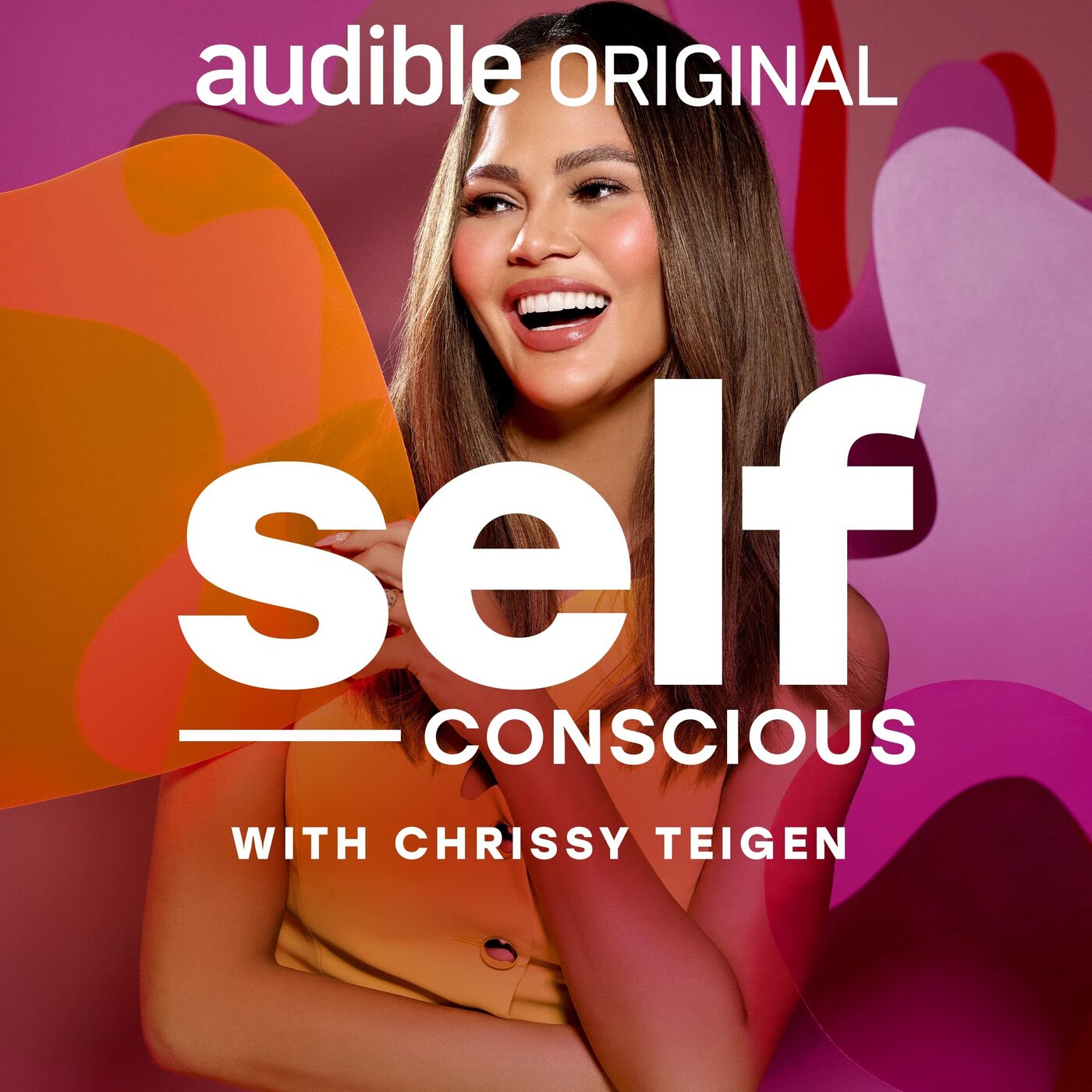
You're listening to Self Conscious with Chrissy Teigen, an Audible original podcast. Join me as we explore the cutting edge of health, wellness, and personal growth with the world's leading experts and thinkers. From inspiring stories to actionable insights, our conversations aim to help you lead a healthier, happier, and more productive life. We all strive to be good, good mothers, good daughters, good partners, and good. But where is the line between doing good for others and losing oneself in our quest to please the world? As women, we are taught to be quiet, be small, to suppress our unhappiness and be grateful for what we have. The result almost always is withering discontent as we define ourselves by the roles that we play. My next guest, Glennon Doyle, spent most of her adult life struggling to live up to other people's expectations of who she should be until she decided to burn it all down and reclaim herself. Doyle's 2020 memoir, Untamed, chronicles that journey as she fell deeply in love with Olympic gold medalist Abby Wambach and finally started living. Untamed teaches us to trust ourselves, set boundaries, make peace with our bodies, honor our anger and heartbreak, and unleash our wildest instincts so we can finally say, there she is. Since its debut five years ago, Untamed has become a cultural touchstone for millions of women who face the same issues as Doyle or feel their own voices being muted and their lives SL away. She emphasizes that real transformation requires a process of destruction and rebirth, dismantling old beliefs, relationships, and ways of living that no longer serve us to make space for new, authentic growth. Glennon Doyle, welcome to Self Conscious. All right, so in Untamed, you emphasize the need to evolve and become. What do you think are some of the most significant changes that you've observed in yourself since the book's publication?
- [02:07]
Glennon Doyle
Five years ago, I wrote and published Untamed, which is a book about being free from oppressive ideas. And I was severely anorexic while I was but I didn't know I was anorexic at all. I just thought I was really disciplined. I was really in control when it came to food. And so I actually had an eating disorder relapse a year after Untamed came out and finally really went deep into all the, like, backwards family work and family of origin stuff. I think for the first time my entire world and life has changed as a result of this last round of recovery. So everything has changed. And I feel a little bit embarrassed because I look at my pictures of me and I'm like, that's so embarrassing that you Were out there preaching this message, and you were so clearly struggling, you know, But I didn't know.
- [03:09]
Chrissy Teigen
I think that's okay because, like the chapters in your book, we have chapters of our lives, right? And the chapters of our lives, every chapter is gonna be incredibly different.
- [03:17]
Glennon Doyle
I think one thing that's been kind of cool for me in this last realm of eating disorder recovery is this. It used to annoy me so much in the beginning of therapy because I didn't know what the hell they were talking about. But it was this constant reminder to be embodied, which took me a year and a half to figure out what the hell they were talking about. But I find myself living, I think, in a more embodied way, which just means that I'm in touch with the way that my body feels. Okay? Which means that I'm not constantly overriding or not listening to my body by just telling myself, you're lazy, you gotta hustle, you gotta get another deal. I'm actually listening to my body, which means that I can tell when I'm sad. I can tell when I'm tired. I can tell. I used to not know Chrissy. Like, I really didn't know. So.
- [04:14]
Chrissy Teigen
So being in tune with your body, you got that through sobriety, mostly.
- [04:18]
Glennon Doyle
No, I was freaking sober and still a mess about that. I was so in my head, I lived by lists, I lived by calendars. I lived outside of myself. So never would I be like, what do I want today? What does my body feel? What do I need today? I wasn't looking in. I was only, like, waking up. Where's my list? Where's my calendar? Where's my. Everything was outward. And through lots and lots of practice, I think I slowly started to figure out what it means to actually be so in your body that you are listening to all the signals it's giving you. It's time to rest. It's time to move. You're really sad, you need to cry. You are lonely, you need a friend. I would not have known those things before. I actually live from the inside out instead of the outside in. And it does make me a little less productive and a little less outwardly successful, I think. But I kind of know who I am and what I want and what I need. This is going to sound so insane to anyone who is actually in touch with themselves. But I can be like, I feel like I think I need some meat for lunch, or, like, I think I want some berries. These are things I would never. I can feel cravings in my body. I can feel. I can Feel nos and yeses very clearly. I can feel not that person energy. Like, I don't. I don't. I'm not friends with anybody I don't like anymore, which I didn't know we could do.
- [06:00]
Chrissy Teigen
Also learning that later in life myself. Yeah, I know. You don't have to work with people that you hate and continue a cycle of toxicity. No, we don't have to be like that. Isn't it crazy?
- [06:14]
Glennon Doyle
Yeah.
- [06:15]
Chrissy Teigen
Well, I think you give a lot of people permission to. I love that you said that you're less productive now, and you're still so happy, and you're happier because you are. Because that it personally just to me, made me feel like I have permission to feel that way as well. So you often share deeply personal stories and emotions with your followers. How do you navigate the boundaries between your public Persona and private self, especially with all the vulnerability that you display?
- [06:39]
Glennon Doyle
Mm. I've been through such a journey with that. So a tenant of my sobriety has been. No secrets. Right. That's why I just write all my memoirs and just say everything. I can't live with the idea that somebody might find some shit out about me that I haven't talked about myself. Right. But I have some regrets. I think that sometimes when you are a person who's always storytelling, that there's a way you kind of steal from your family. I feel like I got myself in a situation where it would be fair for the people around me to think of themselves as my content. I always did it in the most loving, beautiful way. But I'm not sure that matters if the people you're with are still thinking, well, this is gonna be on whatever, or this is gonna be part of her next story, or. I think there's a moment when you give stuff away, you don't get to keep it. Or if you don't have sacred spots where you know that place isn't gonna touch. Is everybody even being their full selves? That scares the shit out of me. Like, when you think about the physics idea that anything that is observed will change because it know. Knows it's being observed, that scares the shit out of me. Because for people who live in any level of being observed, does that mean we're actually changing who we are in our real lives? Just because we like and does take into in extreme, does that mean we're never who we would have been without the fishbowl effect? All of that to say is, over the last few years, I'm keeping much tighter boundaries on what I want to keep for myself and what I want my kids like, I don't. I just want them to know that however they are, whenever they are, is going to be a sacred thing. And negotiating all of that very carefully.
- [08:43]
Chrissy Teigen
No, I love that. I mean, my son took his first five steps today and I just stared at him the whole time rather than getting out my phone and missing all those moments. And then I thought about it after. I was like, I didn't even get it on camera. And then it's frustrating for me. It's so. The best word I have is pathetic. Like, it's a really icky feeling to be in this world and that's your way of thinking. But I love that. I love some things are just for me. Okay, so you have a sticky note that reads, feel it all. How do you balance this principle with the need for self protection in times of high anxiety or stress?
- [09:23]
Glennon Doyle
I think that's the only way to protect yourself is to feel it all. When I think about what anxiety is, for me, it's when I don't do that. When I rush through and I don't stop and allow myself to feel what I'm feeling, I always end up projecting it. For example, if somebody going back to the example I gave earlier, if I am slowing it down. And I know that's best for me, and I know it's not best for me to say yes to everything. And I know going to all the things makes me feel, like, relevant in a way, but not going and staying on my couch makes me feel happier and better. But then I still feel upset later when I see the pictures of everyone, like my therapist and I. What I say most often is I just go back and forth between leave me alone and I feel left out constantly. Yes. But if. If I don't, when I have FOMO or I have jealousy or I have fear of irrelevance or whatever it is, if I can notice it in my body, sit with it, say, okay, that's what that is. You made this decision. And just because you made the decision not to go or not to do the thing, doesn't mean you're not going to feel scared or worried afterwards. Like, this is just part of it and we're going to make it through this. Then what I end up doing is something ridiculous like deciding that somebody at the party that I see, I don't like them anyway. Like, oh, that girl. Oh, she has to go to everything. She has to be relevant. Like, I will find a way to project that feeling in an unhealthy Repeat forever for every other feeling. Right. So there's something about feeling it all, noticing it being so kind and gentle to myself during it, and waiting for it to go and transform, which it always does, that does protect me and everyone else in a way that nothing else does besides the slowness and the feeling. I think most of our problems come from when we don't feel it. And we just act out of intention, out of integrity. We end up hurting each other. So I think it might be my best strategy for being a decent human being.
- [11:56]
Chrissy Teigen
You wrote that we are born free and then lose that sense of freedom around age 10. Can you elaborate what we believe causes this loss of freedom in childhood?
- [12:05]
Glennon Doyle
Yeah, I mean, I think it circles back to what we talked about in the beginning. I think we lose embodiment. Like, I think when we're really little, we just know when we're hungry and we know when we're sad and we have tantrums and we are in our bodies looking out at the world, right? That's it. Responding, feeling, desiring, loving. But then there's this moment where we realize, like, our gaze changes, right? We start to look at ourselves through the world's eyes and that, you know, the 10, it's not just, I didn't make that up. It's. It's a phenomenon. It's when we start to. I mean, I think it's actually starting a lot earlier now because of probably social media, but we really start to. Instead of, you know, it's that moment where you're like, oh, I don't know what I want anymore, but I'm starting to know how to be wanted. I don't know what I desire, but I know how to be desired. I don't know what I like to look at, but I know what I like to look like. It's like we lose all the subjectivity of our life and we just become an object. And that allows everything in man. Like, once you don't know what you want and like or reject or love or once you lose touch with that, anybody can control you in any way, that's it. You're lost. You're lost to whatever. You're lost to whatever machine you get plugged into, whether that's a religion, whether that's a political ideation, whether that's hustle culture. You're just so vulnerable. So I don't think the embodiment thing, getting back to ourselves is a little thing. I don't think it's a woo woo thing. I think it's like a way of living intentionally, and it's an act of resistance. It's the only way to reject all the bad ideas and stay in your own idea is to return to your body. And I think we leave our bodies at 10, basically.
- [14:05]
Chrissy Teigen
All right, everybody, keep your journey going and growing with all the experts on this podcast. From our guest best sellers and newest releases to their podcasts and Audible originals, hear more from today's leading voices and well being. For a limited time, new customers can go to audible.com chrissy on audible to get your first three months for only 99 cents a month. You describe your relationship with Abby Wambach as a forever conversation. How has this relationship influenced your understanding of love and partnership?
- [14:35]
Glennon Doyle
I didn't have any idea how to do love and partnership before Abby. I think that Craig would be the first one to agree with that.
- [14:43]
Chrissy Teigen
How old were you when you got married?
- [14:44]
Glennon Doyle
I was 20.
- [14:46]
Chrissy Teigen
Wow.
- [14:47]
Glennon Doyle
Four. And I was.
- [14:49]
Chrissy Teigen
Oh my gosh.
- [14:50]
Glennon Doyle
Had no idea how to be vulnerable in a marriage. I was queer as hell and just thought I didn't know how to, like, I wasn't doing sex right or. I just, I didn't know that there. I. I didn't know what real desire or, like, romance felt like. I just. So when I first, I was so grateful. Like, I was so in love with Abby, but also I just was so grateful for myself because I really thought I was missing. I thought I was broken. I thought I was missing this romantic love capability. You know, it was like not being able to see color or something and then suddenly seeing color and feeling like, I'm so grateful to be in love, but I'm just so grateful that my body works, that my heart works. You know, having said all that, besides the romance and the desire, I think that Abby. So, like, in therapy talk, Abby is anxious attached, and I'm avoidant attached. Okay, so this is like all attachment theory stuff. And Abby is the most sincere, vulnerable, kind person I have ever met. And she just is slowly breaking down all of my walls to the point where it's a little bit like, I've never had a relationship where I wasn't cheated on before. Like, from junior high until my marriage, just every time. And so when I, when Abby and I first got together, I was positive that she was gonna cheat on me. I just knew it. And so one night she came out of the shower and this is when we're still in our honeymoon period. And she caught me going through her phone, which was so humiliating. And I just remember, like, freezing. And she looked at me and she goes, oh, sweetie, what else do you need? Like, do you want my email? Do you want my email passwords? Like, what. What do you need, babe? And I was like, I don't know. She has a way. I think we can, like, in relationships, we can, like, know each other's traumas, but kind of use them against each other instead of just, like, holding them really close until they go away.
- [17:04]
Chrissy Teigen
How do you define the knowing that you discuss in Untamed? And what role does it play in reclaiming our true selves?
- [17:10]
Glennon Doyle
I think this is such a hard one. The knowing, I guess, would be what people call gut feelings or instinct or. And it's so hard, though. It sounds so good. It sounds so simple and easy. We just were on that family vacation I was telling you about, and we were on this hike, and one of my kids got really scared on the hike because of bears, okay? Which is a legit freaking reason to be scared. And she wanted to turn around. Other kid wants to go. So you're in one of those parenting situations where you're like, whose instincts do we listen to? What the hell? Ugh. And she said, I just. She said, mom, I just don't know. I feel like I always think a bad thing's gonna happen, and I don't know when to, like, ignore it and be brave or when to listen to it and be wise. And I was like, well, that's the problem of the world. It's that meme that's being brave is being scared and doing it anyway. But so is being stupid. And that's why life is so hard. Like, how do you know whether you're being brave or being stupid? And I guess what I think. I think the most honest way I can respond to that is I do feel like when I have a decision to make or, like, I'm thinking about whether to connect with someone or not, or, like, do a thing or not, if I'm really in my head about it. If there's a lot of language around the decision, which I can do, I can talk myself into circles and try to. It's. There's words involved, a lot of words involved. But if I'm listening to, like, my body, I usually can't put any words to it, But I do know whether it's a yes or no. It's, like, how it feels. Like, does it feel warm? Does it feel cold? Does it feel restrictive? Or does it feel wide? Does it feel calm and peaceful? Or does it feel stressful? Like, I think I do best. And I think the Knowing might be in our bodies and not in our minds. And so if it has no language, it's usually truer for me. And if I'm babbling and babbling and asking everybody whether I should do it and justifying and justifying it, then that's fear. I guess what I think. I think the most honest way I can respond to that is I do feel like when I have a decision to make or I'm thinking about whether to connect with someone or not, or, like, do a thing or not, if I'm really in my head about it, if there's a lot of language around the decision, which I can do, I can talk myself into circles and try to. There's words involved, a lot of words involved. But if I'm listening to, like, my body, I usually can't put any words to it. But I do know whether it's a yes or no.
- [19:58]
Chrissy Teigen
What are some common societal cages that you believe most women face, and how can they begin to identify them in their own lives?
- [20:05]
Glennon Doyle
Whenever you have a should moment that is next to what you actually want to do, then that's probably a sign that it's conditioning, right? Circling back to what we were talking about before, I should get online and do some work. I should say yes to that. I should not have had that carbohydrate. I should not want to make out with a girl. I should not have these different ideas that my religion and taught me. I should not, you know, have big ambition and desire because I'm a girl. Like, whatever this should is, is usually a super helpful arrow towards somebody else. Taught me this shit, right? That's not embodied. I want, I need. Nobody can tell me that everybody else. There's nobody that can't tell me what I should do. Everybody has an idea of what I should do. I'm the only person who can do that for myself. I don't know if you have to be almost 50 to figure this out. Like, oh, my God, no one's coming to figure this out for me. Like, no one's coming to save me. No one's coming to help me live the life that I was meant to live down on this earth. The shoulds will eat us up. They'll keep us busy till the day we die, right? So I am, I want, I need.
- [21:21]
Chrissy Teigen
Maybe I feel I'm writing this down because I have so much trouble saying any of those. I am, I want. I don't think I've ever said any of these out loud or in my own head. I really haven't that's so crazy.
- [21:39]
Glennon Doyle
I mean, wouldn't it be fun if this is how we talk to our kids, too? Like, I wish I.
- [21:44]
Chrissy Teigen
Like, for example, if I'm cold, I'll say, do you guys think it's cold in here?
- [21:49]
Glennon Doyle
Yes.
- [21:50]
Chrissy Teigen
And then John goes, if you're cold, it's cold. And I go, I don't think I'm cold. Do you guys think it's cold? And then it ends up being this big circle, sicular, dumb conversation. And I'm like, why can't I just say I'm cold? Can you make it warmer? Incapable. Can't do it. It goes from, like, really little dumb things like that onto much bigger things. But it's those little things that really add up.
- [22:12]
Glennon Doyle
It used to drive her crazy because I used to say to Abby, do I look comfortable?
- [22:20]
Chrissy Teigen
And she'd say, please, are you comfortable?
- [22:22]
Glennon Doyle
Are you? I'm like, I don't know. Do I look. It doesn't matter if I am comfortable. What I need, just make sure I look comfortable. She's like, I don't even know how to have the scent. I don't know how to have this conversation.
- [22:32]
Chrissy Teigen
That's not a question I can answer. And now for the toolkit. Each episode, our guests distill their expertise into practical and actionable insights. Today, Glennon Doyle teaches us how to let go of what we can't control.
- [22:59]
Glennon Doyle
Okay, so now we're gonna do the control and trust exercise. We can either love things in people or we can control things in people, but we actually can't do both because love implies trust, and we only control things we don't trust. Right. I think it's a beautiful exercise to make lists of what we're trying to control and what we actually trust. So I actually have these little lists. I think I might make an actual box. And then each morning when I start to get overwhelmed, I just start writing all of the things that I can't control. And it is the most freeing thing for my mind because I realize I usually spend all day in my mind trying to mentally control things like my kids, music career, my other kids, soccer career, my kid in college, my wife's this, my sister, my ex husband, my career, politics. Like Chrissy. A year ago, I would have had America on my list. It is the most beautiful, freeing thing in the world to decide once and for all what you cannot control and put it on the other side. Do you have things that you know right now you can't control, but you still spend all day trying to control?
- [24:37]
Chrissy Teigen
I Actually give so much up to other people, to the point where I feel very babied and I don't have control in many things. So oddly enough, it's kind of the opposite for me. And then what I think I can control is insane, which is other people's perception of me. If I'm liked, if I'm loved, if I'm doing things right, if I made people happy, if I did something wrong, did I say a wrong thing to somebody? Did I make a faux pas? The other day, that person I met in the airport, did they feel like I was a bitch? That's what scrambles through my mind all day. I really give up so much to other people, to the point where I don't make a lot of decisions for myself. I grew up really wanting to please everybody and really wanting to make everybody happy. I hate confrontation, I hate fights. I'm getting so much better. But I still am that little kid that's really used to being paraded around and performing for people. Not like in the way like. Not like magic or dance or anything, but just putting on a big smile and doing what my parents said or doing what my mom said.
- [25:48]
Glennon Doyle
So you're not thinking about how to release control of what the world thinks of you? No.
- [25:56]
Chrissy Teigen
No. Because the whole thing is still so painful and raw and weird and hard to confront. I find the only time I do do it is in my ketamine therapy sessions. So that, to me, was life changing. I did it after I. I lost my baby, and I did it then in a really foggy haze. I barely recall it. But I do remember waking up one day from it. Or no, not from it, but waking up one day after a session, a few days after, and blinking and like you said, like, everything was in color again and everything was different. But I find myself confronting it in those treatments, and it does a little something on the back end. But there's nothing that I can do with a sober mind that I'm not ready to do or willing to do. It's like. It's just so painful. It's really hard.
- [26:57]
Glennon Doyle
So, Chrissy, what we're gonna talk about right now is this idea that we all have strategies to make ourselves feel better. And some of those strategies are shit and make us feel worse, and some of those strategies are actually good and do make us feel better. I don't know if you'll remember this, but there used to be these staples, commercials, and a bunch of people would be in an office and things would get stressful in the office and Then this red button would come out and it was called the easy button. And somebody would hit the easy button and the whole office would be, like, transformed to this magical stress free place. So I started thinking of all of my shitty strategies to feel better as easy buttons. I thought things would get stressful. I would start to feel icky, I would start to feel my anxiety or my restlessness or whatever, and I would hit a button and let me. I mean, the buttons I have had are low. So many. Like alcohol, drugs, overeating, undereating, unkindness, snarkiness. Scrolling, scrolling, scrolling. Online shopping.
- [28:00]
Chrissy Teigen
This is my keyboard. All of it.
- [28:03]
Glennon Doyle
Oh, my God. I mean, me and. Me and a shopping cart. Like, I don't even have to buy it.
- [28:07]
Chrissy Teigen
Okay.
- [28:09]
Glennon Doyle
It's true.
- [28:11]
Chrissy Teigen
You can forget about it overnight and it's like, you got it. I know. No.
- [28:14]
Glennon Doyle
Or I used to just buy a bunch of shit and return it. My dad used to call it bulimic shopping because I would go to like fucking HomeGoods or Target and just buy a bunch of shit and bring it home and then take it back. And it didn't matter. It still made me feel better. So do you have an. Are these are all yours? These are all your.
- [28:33]
Chrissy Teigen
Absolutely, yes.
- [28:35]
Glennon Doyle
Okay. So I don't have this anymore, but I used to actually have a piece of paper on the side of my office that said easy buttons and reset buttons. Okay. Because I actually figured out that there were some things that I could do, buttons I could push when I started to feel like shit, that instead of making me abandon myself more and make me worse off than I started, actually would kind of bring me back to myself. The first list was things that really did make me abandon myself. Just like goneness. And the reason I kept a list, Chrissy, is because what I figured out was by the time I felt like shit, it was too late to think creatively. I couldn't remember the good strategies, so I would just go to the pantry or the online or the Instagram or the whatever. And the cool thing that I figured out that are. I'm interested to hear from you. Everything that's on my reset list are the simplest things. They are, again, things that don't cost any money, that nobody has to teach me. They're like, walk to the corner with your dog. Literally. Like, sit with your daughter and talk to her directly for 10 minutes. Go get a hug from Abby. For some reason, that's very hard for me. It's very hard for me to be vulnerable enough to be like, I need a Hug, like, and something about it. I mean, I don't know. I always say it's the oxytocin. Abby's like, what if it's love?
- [30:13]
Chrissy Teigen
What if it's the love?
- [30:15]
Glennon Doyle
What are your things? Like, what are the things that you can do when you're overwhelmed or sad or feeling the ways you just described that actually help you bring your back to yourself?
- [30:30]
Chrissy Teigen
Getting out and being amongst real people is a big thing. Whether it's the grocery store just going up and down every single aisle and really realizing that there is. There are actual humans out there and not just like, what I'm seeing online. I'm so in the online world and that's kind of all I hear about all the time. And it consumes me. So getting out there and seeing that there's real people out there that have, like, really nice, kind things to say. And even when I travel and get to be at an airport, for me, it's so much about, like, real human interaction. I love bedtime with my kids because I feel like that's when we have the most meaningful conversations. I am a Girl Scout troop leader. I lead the art class at my dad's assisted living place. I love doing fun, big moments for people that will really make a difference in their lives because it really helps me as well. Yeah, there's moments that I love that make me feel full of life and really happy. And for me, it's just about doing them because what it brings to my soul for months after is, you know, irreplaceable, that there's no feeling like it. It's just I don't give myself that goodness enough and I'm hitting that easy button as much as possible.
- [31:46]
Glennon Doyle
There's nobody I've talked to about this whose list doesn't include the simplest things they often have to do with service. You just mentioned Brownie. The brownies, the art classes. It's weird how often teeny little, not big service things, not. I'm starting a nonprofit. No. It's like I go to a place and I help actual people and I talk to actual people. It's amazing because all of these solutions to life's problems are just very accessible and simple and beautiful and free. It's just always little beautiful things that have to do with the people in our lives. It's like coming back down to the ground.
- [32:25]
Chrissy Teigen
Glenn and Doyle, I want to thank you for joining me today on Self Consciousness Untamed, Glennon Doyle's best selling memoirs, available on Audible. Until then, tune in, turn on and feel better. This is Chrissy Teigen and you've been listening to Self Conscious, an Audible original podcast. This has been an Audible original produced by Audible and Huntley Productions Hosting Directed by Chrissy Teigen, Executive Producer for Huntley Productions Chrissy Teigen, Executive producer for Audible Stacy Creamer Recorded and engineered by Alex Sky Mixed and mastered by Jeremiah Zimmerman Edited by Lisa Orkin Head of Creative Development at Audible Kate Navin Chief Content Officer Rachel Giazza Copyright 2024 by Audible Originals, LLC Sound Record Supporting Copyright 2024 by Audible Originals LL.