← Self-Conscious with Chrissy Teigen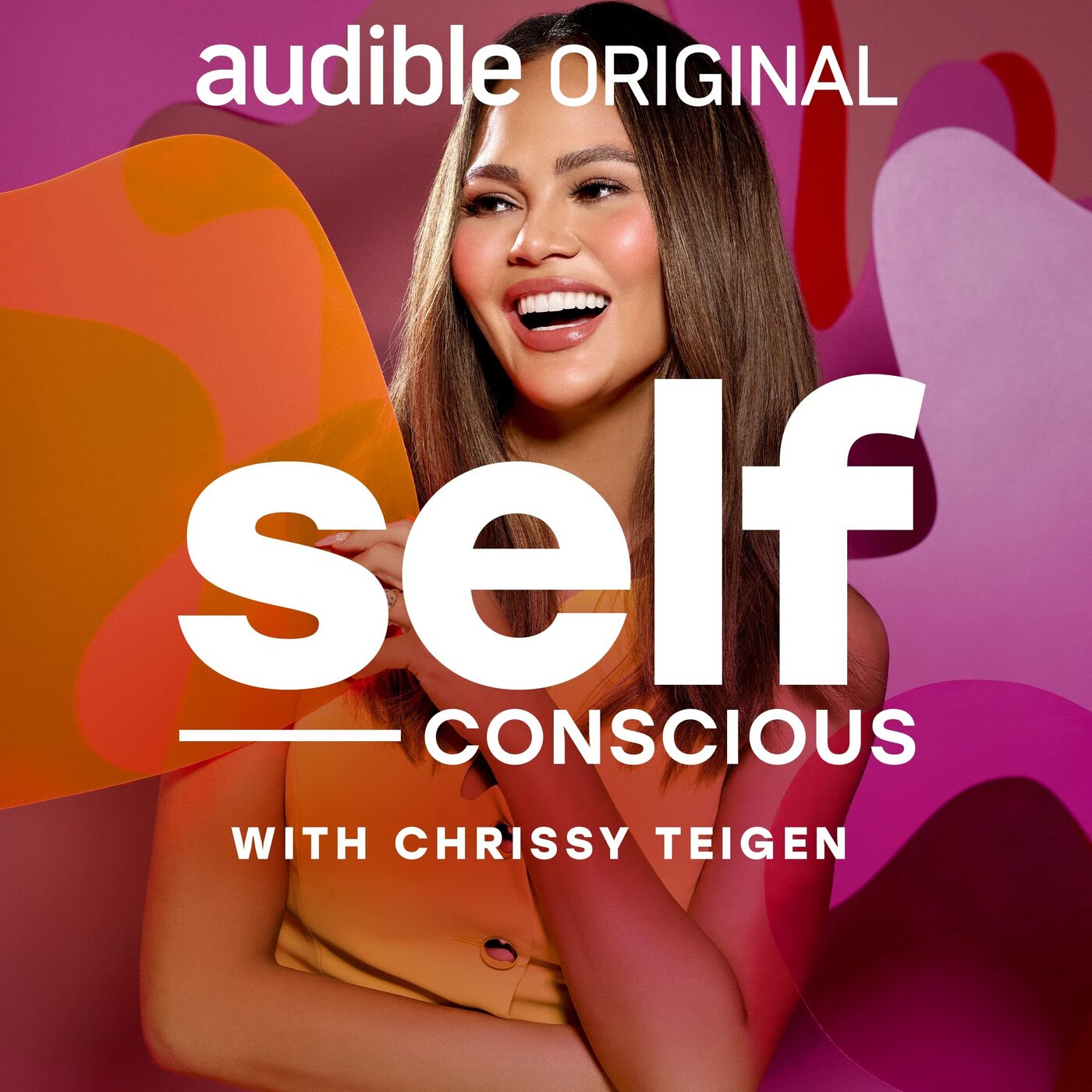
Loading summary
Transcript99 lines
- [00:01]
A
Chrissy here. Want to hear more from today's guest? Go to audible.com chrissyonaudible that's audible.com Chrissy C H R I S S Y on Audible. You're listening to Self Conscious with Chrissy Teigen, an Audible original podcast. Join me as we explore the cutting edge of health, wellness and personal growth with the world's leading experts and thinkers. From inspiring stories to actionable insights, our conversations aim to help you lead a healthier, happier and more productive life. I've never been someone who loves to work out. I do it when I have to, but I don't jump out of bed for a Pilates class. What I do love is food. I love cooking it, eating it, thinking about it. I literally have a food business. And honestly, I eat everything from hot pot to hot wings to hot dogs all day, every day. Food is how I celebrate, how I mourn. I eat when I'm stressed, when I'm happy, when I'm sad. I have a drawer next to my bed filled with candy. And every night, every single night, John makes me a little sleep sandwich that I wake up and eat at 2am like some kind of snacky zombie. For me, it's comforting, it's safety, it's joy. Food gives me things I don't always get anywhere else in life. But my body. It's never really felt like it belonged to me. It's been looked at, judged, praised, criticized. It got me jobs, it got me famous. But it didn't make me happy. And even when it looked perfect, I never felt okay inside of it. And now, with these new weight loss drugs, it feels like we've unleashed a genie in a bottle that's granting everyone the exact same wish. And I'm not here to judge. I've done it. Most of my friends are on it. But do we really understand it? What's it doing to us? What's it all really for? I'm not so sure. That's why I wanted to talk to Johann Hari. His audiobook, the Magic Pill, is not just about the drugs. It's about everything underneath them. What are we? Medic? What are we avoiding? What kind of world makes hunger a problem to be solved? This isn't about shame or sides. It's about being honest. About food, about our bodies, about how we got here, and maybe where we go next. Johann Hari welcome to Self Conscious. You are an open book, like me. Have you always been that way? You just can't keep it in.
- [02:35]
B
I'm a compulsive oversharer. It's a problem. Yeah.
- [02:38]
A
Like, even when you go get coffee or something and they're like, do you want this? And you're like, no, I can't. My stomach hurts right now.
- [02:42]
B
Exactly. I'm having a miscarriage. You know, in my case, that would be a bit of a weird confession, but I'm so sorry, you know?
- [02:49]
A
I know. No, no, I can't.
- [02:50]
B
My boyfriend, I can't cope. Please help me. Yes, same.
- [02:53]
A
Which is why I actually don't go out very much, is because I talk so much. So when I do come home and get to relax and sit in my bed, I. I'm like, I said too much, I did too much. I spent hours freaking out about oversharing, what I talked about.
- [03:08]
B
So I have a lot of questions about your sex life with John Legend. So this is gonna be perfect.
- [03:12]
A
Honestly, I really am a total open book and nobody ever wants to go anywhere. I feel like I haven't been asked a different question in 10 years.
- [03:20]
B
Oh, that's so interesting.
- [03:21]
A
Yeah. So if you have any.
- [03:22]
B
Why do you think that is?
- [03:24]
A
I don't know. I think maybe a lot of people think that I've shared everything, so there's like nothing else to get into. But if someone were to ever get specific, I happily doubt.
- [03:35]
B
Interesting. Okay, I might exploit that later in this conversation.
- [03:40]
A
Yohan Hari, thank you so much for being here.
- [03:42]
B
Hooray. I'm so happy to be here.
- [03:43]
A
I love you already. So tell us, what made you wanna write the magic pill?
- [03:48]
B
I remember when I first learned about the existence of Ozempic, it was here in la. I'll never forget that day. It was the end of the pandemic and I got invited to a party for the first time in like a year and a half. There'd been no parties. Right. And this party was. I'll tell you off camera who it was, but it was the home of an Oscar winning actor. I'm not saying that's name drop, it's relevant. And I was in the Uber on the way there and I suddenly felt really self conscious. Cause I was quite fat at the start of the pandemic and I gained a shitload of weight during the pandemic and I suddenly thought, oh God, this is a bit awkward. And I arrived. And you remember that moment here in la, I was walking around the party and I'd walked in and I suddenly thought, oh, this is actually gonna be really interesting because everyone gained weight during the pandemic. So actually I'm gonna see these celebs with a Bit of flab on them. This is gonna be super fascinating. And I walked in and everyone was like, gaunt, right? Everyone was like, markedly thinner than they had been before. And I was walking around and a bit dazed, and I bumped into a friend of mine on the dance floor and I said to her, wow, it looks like everyone really did take up Pilates during lockdown. And she just laughed at me. And she pulled up an Ozempic pen on her phone. And I remember when I learned, you know, there's been this staggering scientific breakthrough. We still hear people say this is a craze. This is, you know, I'm to be the leading scientists on this for Magic Pill. It's really important for people to understand this is not a craze. There has been an extraordinary scientific breakthrough. As one of the scientists put it to me, we have cracked the code of what controls human appetite. And this will have enormous implications for our bodies, our culture, how we feel about ourselves. Some really positive, some negative. And I remember when I learned about it, the first thing I thought was, shit, this could save my life. Because I had just turned 44, which is the age that my grandfather was when he died of a heart attack.
- [05:34]
A
Wow.
- [05:34]
B
Loads of the men in my family, that's so young, yeah, get fat, die young. And I knew that obesity, on average, harms health. I knew I'd been obese for a long time. I thought, wow, if there's a drug that can reverse obesity, this could be huge. But I also thought, wait a minute, this sounds way too good to be true. How can this be the case? What's really happening here? Which is why I went on this big journey all over the world, you know, from Iceland to Minneapolis to Japan, to interview the leading experts. And what I learned is a huge number of things. Barclays bank commissioned this very sober minded financial analyst to go away, look at these drugs, to figure out what are the implications going to be for our investment decisions. She came back and said, if you want a comparison point for what these drugs will mean, you've got to look at the invention of the smartphone. And if we had been sitting here in 2010, when you and me probably first got smartphones, we would not have been able to picture TikTok and all these huge changes that are going to happen to our lives, right, Or Uber or whatever it would be. These drugs are, are gonna profoundly change our lives in some ways that are really good and in some ways that are bad for some people. So I think we really need to take a beat and think about what they mean how we got here, what it's like to take them. All sorts of complicated things that are gonna play out from here.
- [06:47]
A
Ozempic, Mounjaro, Wegovy. What do they actually do?
- [06:51]
B
So I interviewed the leading experts in the world on this, and it's so disconcerting. There's a lot we don't know, but the heart of it we do know. If you ate something now, doesn't matter what it is, your pancreas would produce a hormone called Gl. And it's basically your system going, hey, Chrissy, you've had enough. Stop eating now. Right, it's the breaks. But natural GLP1 only stays in your system for a couple of minutes and then it's washed away. So you can quite easily overpower it. What these drugs do is they inject, you say Ozempic and Wegovy inject you with an artificial copy of GLP1 that, instead of staying in your system for a few minutes, stays in your system for a whole week. So when you start to eat, the brakes are already on.
- [07:31]
A
Does it last for a week for people? Cause it didn't last for a week even when I first started it.
- [07:36]
B
Really?
- [07:38]
A
To me, it lasted maybe three days.
- [07:40]
B
Yeah, but were you on quite a low dose when you started?
- [07:42]
A
I started at 0.5 and I worked my way up to 15 really quickly, though. Probably within three months. Yeah.
- [07:48]
B
Wow.
- [07:49]
A
Yeah.
- [07:49]
B
But even then, you were still towards the end of the week.
- [07:52]
A
You love food, man. I fucking.
- [07:54]
B
You're like, you can power through the fucking smz.
- [07:57]
A
I really did. I fought it. So what's it actually doing? How does it work?
- [08:04]
B
So when these drugs were first discovered, initially they thought they worked mainly on your gut. You make GLP1 in your gut, they thought, okay, it slows down, maybe gastric emptying. But now the science has moved on, and to the leading scientists on this, it's increasingly clear there is definitely an effect on your gut, but these drugs are mostly affecting your brain. Right? You've got GLP1 receptors in your gut, in your mouth and in your brain. They're changing how your brain works. So obviously, I went to these leading neuroscientists. I was like, so I'm taking Ozempic. What's it doing to my brain? And they would go, we don't really know. And it was kind of sobering. I remember one of them, Clemence Blouet, is an expert at Cambridge University, saying, the brain is, by some measures, the most complex object in the whole universe. Don't be Surprised? We don't know how it works, but we don't really know what it's doing to your brain at the moment. We do know it obviously massively reduces your desire to eat. The most important thing I learned. I think I'm really embarrassed to say this, actually. The thing that most shocked me is something I thought I'd known all my life and I thought had been drilled into me like it was drilled into you, which is just how bad for your health, obesity and being overweight actually are. If you're overweight, you are dramatically more likely to get cancer. You are dramatically more likely to develop dementia, you are dramatically more likely to have a stroke. I did know that you were more likely to have a heart attack.
- [09:24]
A
And.
- [09:25]
B
But even things like, think about diabetes, right? Obviously I knew if you're obese, you're more likely to become diabetic. In fact, if you're obese when you're 18, you have a 70% chance of becoming diabetic in your life. Type 2 diabetes. But I think I thought, okay, that's not good. As long as you get insulin, you get good medical care, you're basically like everyone else. That's not true at all. Even if you get medical care, even if you get insulin treatment with type 2 diabetes, you live years and years less than other people. And I interviewed a brilliant British expert who treats diabetics, Dr. Max Pemberton. And he says something to me incredibly shocking. When you first hear it, you think, well, what the hell is he talking about? And then you look at the evidence. He said to me, if you gave me a choice between getting type 2 diabetes or becoming HIV positive, I would choose to become HIV positive. Because if you're HIV positive and you get medical treatment, you live as long as everyone else, you have the same life. Pretty much. That is absolutely not true of people with type 2 diabetes. And diabetes is just one of over 200 conditions and complications that are either caused or made worse by. By obesity. The risk of obesity is very abstract. When you're young and then you get to your mid-40s, I was older than my granddad ever got to be. And I looked at the evidence and more evidence has now emerged. But we know if you are overweight or obese and you take these drugs, firstly you lose a shitload of weight. You lose between 15 and 20% of your body weight.
- [10:48]
A
Yeah, I think I had lost it. Just peeled off. It was like, overnight. Two pounds more. Two pounds. Two, Two. Another two, another two. And I was, like, looking back on the photos, Actually, I think you go into like this Ozempic blindness and I think a lot of people do it when they start it. You end up losing such an incredible amount of weight that you are just so excited and proud or whatever that feeling is that you don't realize that you've lost too much even.
- [11:12]
B
Yeah, my boyfriend keeps saying this to me, no, stop. Cut back the dose, cut back the dose. He's like constantly lecturing me. He thinks I've basically turned into Joan Rivers or something. Like I'm dysmorph. I was learning that. And you know, if you take these drugs, if you were overweight or obese at the start, within a year your risk of heart attack or stroke goes down by 20%. And there's loads of other amazing benefits. And people keep looking at loads of huge benefits that are emerging from taking these drugs. And some people are like, oh, wow, this drug has all these hundreds of effects. Actually, I think it's more likely just that it has one big effect, which is it reverses obesity. And obesity is really bad for you now. It doesn't license anyone to bully or be cruel to people who are overweight or obese, as I was for a lot of my life. Absolutely not. We all need to resist that. But I was really sobered by A, the evidence about obesity and B, the evidence about, wow, these drugs, by reversing obesity, massively improve health. Then I learned about lots of other complications and other things, but that was the first thing that really kind of struck me. And I'll never forget. Even just the feeling of taking them is so odd. I remember, never forget the second day after I started taking Ozempic. I'm curious if he has an experience like this. I woke up and I was lying in bed. I was like, oh, I feel something weird. What is it? And I couldn't figure out what it was. And then I realized I had woken up and I wasn't hungry.
- [12:34]
A
Oh, you're gonna say you shit your pants?
- [12:39]
B
No, I would, I would have given a different build up to that.
- [12:42]
A
I would have been like, I would.
- [12:43]
B
Have been more shame faced. No, I had not shit myself. That. I've actually never shit myself on Ozempic. Oh no. I'm so proud.
- [12:49]
A
Good job.
- [12:50]
B
I know. But just like that, I'm like. And I suddenly thought, oh shit. Most mornings what would get me out of bed was being hungry. And I went to this diner up the street from where I live in London and I went in and I said my standard order. I used to have a Huge chicken roll with loads of mayo in it, loads of chicken and mayo. And normally I would inhale that like Homer Simpson and still want some potato chips or something. And I had like two mouthfuls, three mouthfuls, and I was just full. I didn't want anymore. I couldn't eat anymore. I remember the woman who runs the store, like, shouting off to me, are you okay? Cause she'd never seen me leave food before. And from then on, that's how it felt. It was a really psychologically odd sensation. Did you find it that way?
- [13:31]
A
I did. And it was frustrating for me because I know that logically you need food to have energy. And a bit of it for me felt like force feeding sometimes just so I could go about my day and go about my job. And that for me is almost tortur, not being hungry at all and consuming food. I fucking hate that. I love being hungry. I love craving food, I love desiring food. I get so excited to make it, to try it, to taste every part of it. So I found it to be a bit. Until you get the right dosage. Until I got that right dosage. It took a while before I would even get feelings of hunger. I would take the shot. It would be three days of pushing myself to eat food, and then it would wear off a bit, and then I could have a few bites, maybe day four, day five, more food, day six, more food, and then the shot again. So then another three days of not being hungry at all. I felt bad about it because it's not bad to be hungry, though. So for me, the way I reconciled my time taking it was that, my God, I was on such a bad path in the way that I thought about good food. Five years ago, I wouldn't have a piece of rice with sushi. I grew up on Atkins diet, right? And so my dad always thought he could have 10 pounds of bacon and 50 eggs, but couldn't have a piece of pineapple or couldn't have a salad with dressing on it because you were so anti carb, but super, super high fat. So that just got drilled into my mind that like you could have super high fat diet, but that one grain of rice was gonna ruin you. Carrots had sugar, so I. Oh God, no. So I can't have carrots. The rules I made up for myself that I thought was right were insane. And only because of the miracle drugs that they say the miracle drugs, sorry, quotes that came out after my pregnancies did I ever feel released from that captivity of negative thought.
- [15:37]
B
What do you mean? I Do it.
- [15:38]
A
I had two babies and then I lost a baby a little over 20 weeks. And then my body was just completely stuck. It was like in shock almost. It was like, you're not carrying a baby anymore. I have all this weight on me because as I said, I gained so much pregnant. I gained 70 pounds. I really let myself indulge when I was pregnant. So when I had lost that baby at 20 weeks, I had probably gained extra 40 pounds that I wasn't comfortable with. And so I remember way before people were even talking Ozempic, before it was like a celebrity thing or talked about. I had tried it for maybe like a year or so, noticed no results for three, four months.
- [16:20]
B
Oh, wow.
- [16:20]
A
Zero. Not a pound lost. And then all of a sudden was finally able to lose the weight that was so reminding me of the baby that I had lost. So I felt mentally better because I wasn't constantly like, in this deep depression of seeing this pregnant belly with no baby in it. I also felt released from the prison of thinking about food in bad ways, good food in bad ways. I would think of an avocado as bad. I mean, it's insane what it did for not only, like, me physically, but mentally. And I don't think anyone ever talks about it in the way of disordered thinking or disordered eating. So I feel better about that now. But man, the dosing and dosage wise, my dad is type 2. He recently went on Ozempic, maybe like six months ago. He's swimming in his clothes now. It's so different. And this is a man that has been overweight my entire life. Couldn't go to Disneyland with us. The only thing we did growing up was road trips or seeing movies. And he is in his mid-80s now, finally able to walk a distance, any bit of distance, and really not have to be consumed by food.
- [17:32]
B
And what makes me so angry about that, right? When I think about this, of all the things I learned, there's loads of things in what you said that we should unpack and we should come back to the psychological effects of taking the drugs. But what happened to your dad? What happened to some of my family? What happened to me? It's really interesting to think about someone did that to your dad and to me and to loads of us. Right? If people want to understand this, I would just say pause this podcast for a sec and just Google an image for me. Google an image of the beach nearest to where you live in the year you were born. So I was born in 1979. I was just In Santa Monica Beach. And I googled an image of Santa Monica beach in 1979. Look at that image for a moment. They don't look like us. You look at those images of beaches, everyone looks to be what we would call skinny or pretty jacked, right? And you can go, this is weird. Was it like a skinny person convention that day in 1979 in Santa Monica? No. That's what people look like in 1979, the year I was born, right? So the year I was born, fewer than 10% of Americans were obese. It's now way more than 40%. And you think that's weird? Human beings existed for 300,000 years in our current form, and obesity was unbelievably rare, right? It happened occasionally, but it was very rare. And then in my lifetime, it blew up. It exploded. What happened? What explains the difference between that beach on the day I was born and the beaches we go to now? And the answer is actually pretty clear.
- [18:56]
A
Is it processed foods?
- [18:58]
B
How did you guess? This change happens everywhere. That makes one change. It's where the society moves from people mostly being able to eat fresh, whole foods that are prepared on the day to mostly eating processed and ultra processed foods, which means foods that are constructed in factories out of chemicals in a process that isn't even called cooking. It's called manufacturing food. And it turns out this new kind of food affects our bodies. There's an amazing experiment that I think just absolutely nails what's happened to us. It was carried out by a guy called Professor Paul Kenney at Mount Sinai in New York. It's very simple. He got a load of rats and he raised them in a cage, and all they had to eat was the kind of natural whole foods that rats evolved to eat over thousands of years. When that's all they had, the rats would eat when they were hungry and would stop when they were full. So they had some kind of natural nutritional wisdom that said, guys, you've had enough now. Then Professor Kenny introduced the rats to the American diet. He fried up some bacon. He bought a load of Snickers bars. He bought a load of cheesecake, and he put it in the cage alongside the healthy food. And the rats went crazy for the American diet. They ignored the healthy food, and they would literally dive into the cheesecake and eat their way out, just totally slicked with cheesecake, right? And they ate and ate and ate and ate. And this natural nutritional wisdom that they had with the kind of food they evolved for just disappeared. And they all became severely obese. Then Professor Kenny tweaked this experiment again in a way that feels a bit cruel to me as a former KFC addict. He took away the American diet and left them with nothing but the healthy food. And he was sure he knew what would happen. He thought they would eat more of the healthy food than they had before. And this would prove that exposure to that kind of food increases the number of calories you eat. That is not what happened, Chrissy. What happened is much weirder. Once they'd had the American diet and it was taken away, they refused to eat any of the healthy food. It was like they no longer recognized it as food. It was only when they were starving that they went back in it. I called this experiment Cheesecake Park. I would argue we are all living in a version of Cheesecake Park. Your dad, why was he like that? There were no people like your dad. Almost literally none a hundred years ago, Right? Why did this happen to us? Think about the shame that it sounds like your dad felt. Certainly the shame that I felt for being overweight. But we didn't design this food environment. More three year old children in this country know what the McDonald's M means and know their own last name. Before I could even think clearly, before I even knew my own name, I was being pumped with this shit. That same undermines your ability to feel full. The key thing about this is that this food undermines your ability to feel full and know when to stop.
- [21:35]
A
And they've engineered it to be that way. Right? And they say that they're engineering food and snacks to overpower the weight loss drugs. Is that true? Are they trying to find a way to get around that?
- [21:46]
B
The food industry has been finding ways to undermine our feelings that we're full and should stop. For a very long time. They've been consciously and deliberately fattening us. And it's really interesting if you look at farm animals in kind of industrial agriculture, they obviously want the animals to get as fat as possible as quickly as possible so they can kill them as quickly as possible. It's a horrible thing. But obviously they want to do that because it costs money to store them and keep them alive. When they want to deliberately make animals as obese as possible, what do they do? They feed them really sugary foods that undermine their sense of being full. So big agriculture, when they want to deliberately make animals fat does exactly what the food industry has done to us and our children for the last 50 years. And it's worked. So the key thing to say, if you want to understand there's an amazing man called Professor Michael Lowe in Philly who said to me, these drugs are an artificial solution to an artificial problem. The food industry undermined our ability to feel full. And now we need drugs to give us that sense back. Now, for people like me, the way I think about it is it's like I was raised in a trap and this is the first trap door I've been offered. Now, it's not a perfect trap door. There's lots of drawbacks to these drugs as well, I'm sure. But I have chosen to go through that trap door because the alternative was staying in the trap and very likely getting sick. But we don't have to tolerate allowing our kids to be raised in this fucking trap. Right? We can regulate the food industry. I went to loads of countries that have done it. I went to the one country in the world that got rich without getting fat, Japan. They did not tolerate this. They didn't allow it to be done to their children. We can do. The long term solution is not for everyone in the United states or the 70% of us who are overweight or obese to just drug ourselves. The long term solution is to deal with the factors that have driven up obesity.
- [23:30]
A
So you've said that some people use food not to feel good, but to stop feeling completely.
- [23:38]
B
I grew up in a family where there was a lot of addiction and craziness. You don't have a lot of control as a kid in that environment. But one thing I could do was stuff myself right. I could overeat. And I realized how much I got a sense of comfort. I was never someone who loved food and overate because I loved it. And it was amazing. For me, food was about that sense of being stuffed, of eating beyond the point of fullness. That calmed me down. It reassured me. And I realized on these drugs I couldn't do that. And actually what I was missing was this sense of comfort and reassurance. There's scientific evidence for five reasons why we eat. Only one of them is the obvious one, to get nutrition for your body. All the others are psychological. They're factors in our minds. And what these drugs do, like Ozempic, is profoundly disrupt your eating patterns. Now, obviously if you're overweight or obese, that's a good thing. That's why you lose weight. But that has a profound psychological effect. I think that's why some people are becoming depressed and anxious now.
- [24:35]
A
You're not getting that full belly comfort anymore.
- [24:38]
B
Exactly, exactly. And now obviously, in the long term, there's a Better solution to me feeling sad than Colonel Sanders. Right. But that's a painful adjustment period. And there's lots of things I hope I write back that I think people should know before they start taking the drugs. I wish I had known that. These drugs have profound psychological effects. Many of them good, but some of them quite acutely bad for some people. And that was a really big thing for me. But one of the other factors is we use food to reenact our childhood patterns. And if you grew up in a family like yours where food is a sort of talked about, almost like a kind of threat or a dangerous temptation, it sounds almost like kryptonite or something in your family that's gonna inform your relationship with food as an adult in really complicated ways. What came up for you when you were taking the Ozempic? What kind of psycholog? Obviously had a lot of other things going on as well.
- [25:25]
A
You've put this together for me for the first time ever. I never really realized that I was missing that comfort. I'm realizing now that I was fired as a babysitter from Jobs because I would completely clean out their freezer. Like, I'm not kidding, like I would never get to see these people again. I would eat Hot Pockets. I would eat everything in their freezer. Freezer food for me is still my kryptonite. But it's true. It was taken away from me for that time. But it was almost like the weight loss and getting to feel like I was in my own body again. It outweighed it. That to me was more important. I just loved the feeling of feeling really full. And my parents fought a lot growing up. They had a bit of a chaotic household. But I do remember that eating was never a normal thing. It wasn't like we would all sit at the dinner table together and enjoy a meal and talk about things. Eating was something you did while you were watching tv. So you were never really aware of what you were consuming either. And now I still live that way as well. I'm not really mindful about what I'm eating unless I'm out at a restaurant, which I don't do so much these days anymore.
- [26:23]
B
But that's fascinating. I had a very similar thing cause with my family. My dad was from Switzerland. The Swiss mountains, which had the healthiest food culture in the whole world. My grandparents never ate one mouthful of processed food. And my mother was from working class Scotland, which has the shittiest diet like you can imagine. Right. And I was raised mostly by my Scottish grandmother. Cause my Mother was ill. And there was this conflict within my family where my dad was, like, disgusted by the food that my mother and my grandmother would give us. It would always be, like pure junk food.
- [26:54]
A
What were fresh food prices, though, in comparison to processed food there?
- [26:58]
B
They were high. I mean, we weren't poor. We were like middle class. But by then, my parents had grown up pretty poor. But by then we could afford fresh food. It wasn't that. It was more. That was how my mother and my grandmother had eaten. And it was essentially cause my dad had this insight that was, right, this is really bad for you. But my dad had no way of communicating that in a way that was sane. He was just like, what the fuck is wrong with you? Oh, my God, this is fucking. You eat fucking shit. You're not even a second hour. My whole body turns up. And he would literally. And I would be like, what the fuck's he talking about? Or you'd turn on the TV and they'd be like, you know, ads for. What does he mean? This is obviously the kind of food I'm meant to have. So we had this constant fight where I would refuse to eat unless he took me to the KFC up the road. And this war we had where he would. And sometimes he would literally try to pin me down to force me to eat fresh food. Which was.
- [27:42]
A
Turned out we had such an opposite fucking childhood. Oh, my God. Like, look at that basket right there.
- [27:48]
B
Of all the.
- [27:49]
A
That's fruit by the foot. Cheetos. You can see it.
- [27:53]
B
All right. I mean, that is the pure shit that I ate. So he would be there as this kind of. He wasn't there that much, but when he was there, he'd be trying to force fresh food on me. So I interpreted fresh food as like, an assault. And my mother and grandmother would smuggle me shitty food as, like, an act of love. So I associated freshness with, like, horror and shitty food with love.
- [28:11]
A
That's so true.
- [28:12]
B
Did you have that as well?
- [28:13]
A
Yeah. The sneaky good food. It was a treat. We used to take my dad to the airport twice a week, and I would get in that car so I could go get a McDonald's sausage McMuffin with egg and hash brown. Every Friday and every Monday, I got in that car totally asleep because I knew that I would get that sandwich because it was my treat.
- [28:29]
B
And that's interesting. So I think psychologically, one of the things that may have happened to you, that I know happened to me, is when that food is taken away from you unconsciously. You experience that as a deprivation of love, right? If the way you were given love was this shitty food, when it's gone, you're like, wait, where's my love gone? Right? And I think that's what.
- [28:46]
A
I was such a love seeker. I was the kind of person that really needed to feel it. And yeah. Oh, my God. So much of the magic pill is about shame. The shame before, during, even honestly after weight loss. This is why celebrities or anybody in the public eye, they're so hesitant to talk about it, is because of the amount of shit that you get for doing it the easy way. And that's, to me, a form of shame. Telling people that they weren't doing it the right way, the harder way. Obviously, it does have a cost to it, which is so unfair to so many people. How would you reconcile shame in this industry of now having something that is so beneficial and so helpful to people's weight loss journeys?
- [29:39]
B
So weird, because I remember I feel this so acutely in myself. When I started taking the drugs, I felt really guilty. When I was on Ozempic, we started taking Ozempic.
- [29:50]
A
Same.
- [29:51]
B
Like, how did it occur in your head? What kind of things did you think?
- [29:54]
A
I sell food to people. I sell indulgent food to people. I sell cookbooks, right? I. I eat food that I want. And I'm not being truthful, that was like a really big thing. And then also that I could actually afford this. At the time that I had started it, it was very big that there was a shortage of it for people that really needed it. So you really couldn't fucking talk about it without looking like the biggest asshole on the fucking planet. And in the same way that I'm hesitant to sometimes talk about my ketamine therapy, it's not accessible for everybody. And so it felt like something I had that they couldn't have.
- [30:42]
B
That's so interesting. For me, it was. I actually found it quite hard to articulate. I mean, I keep thinking I feel really guilty. And I remember one day I went for lunch with one of my best friends who takes statins. It's for cholesterol. Controls your cholesterol. And. And I've never looked at him and gone, fuck you. Taking statins, right? You're cheating. Why are you getting ahead of me on the cholesterol race? If I said that to you, you'd think I'd lost my mind, right? I said, this is weird. Why do I feel so ashamed? And rightly he doesn't. What's going on here? So I looked a lot at the history of how we think about obesity and how we think about fatness, right? And it's really deep in our culture, the idea that being fat is a sin. If you go back to, like, the sixth century, Pope Gregory I creates the seven deadly sins. One of them is gluttony. Always depicted with someone, food drooling their mouths is hugely fat. And that is very deep in our consciousness still. The idea that obesity is a sin that deserves punishment. Think about that horrible show, the World's Biggest Loser, if you don't know it, you get very overweight people and you get them to engage in, like, torturous forms of starvation and extreme forms of exercise that are actually really bad for them because they're so extreme. And the biggest loser of weight is the winner. We admire them, right, okay, you sinned, but we've seen you suffer and now we'll forgive you. So we've got that pattern of the sinner who has to be punished in order to be redeemed. But if that's your prototype, then of course, a zempic looks like a get out of jail free card. It's like, well, you sinned, but you don't even suffer. You just get a little prick in your leg. Or think about another way we think about it, which is as a race, right? So for a lot of people, and I don't want to mansplain this to you because, you know, it's much better than me, particularly women. A lot of people in our culture are, because women are judged so much more harshly for their bodies. A lot of people in our culture are making really harsh sacrifices to not be overweight. We live in an environment that pushes us to be overweight. So they're denying themselves food, painfully. They're doing a lot of exercise, and so they think we're in a race with each other. And this person's thinness is in competition with this other person's thinness. We're all fighting to be the thinner person and making sacrifices, and I agree to them. When I'm looking at me taking Ozempic, I must look like Lance Armstrong. It's like, what year, you fucker? I do all this work to be thin, and you just get it with no cost. But I would argue these two frames, that it's a sin or that we're in a race against each other are not serving us well. They're not making us happy. They're not true. It's not a sin and it's not a race. We are living in an environment or if there is a race, it's all of us pitched against these powerful forces in the food industry that have screwed us over and made it very hard to not be obese. If there's a race, the way we should think of it is we are. Look, obesity has exploded. It's exploded in every country that makes this change to ultra processed and processed food. None of us chose that. Right. You didn't design processed food. I didn't invent the Big Mac and Snickers. We didn't create that. So if there's a race, it can be all of us uniting to be healthier against these forces of ill health. That to me, is a much more psychologically healing and safe and truthful way of thinking about this problem. I'm really curious about how everything we're talking about would have played out when you were a model, though.
- [33:58]
A
I mean, I'd say I still ate shit food and I threw it up. There's really no other way to say it. I lived in a model apartment in Miami at the Flamingo. It was two huge towers in Miami and modeling agencies would put you up and you'd maybe be living with five, six other girls. I was just doing like regular catalog jobs, whatever their swim Runway shows were, fucking still loved food so much, loved junk food, loved going to dinner. And then I basically discovered that if I ate the way that I ate when I was little, the food that I wanted, that really processed frozen food, like I wasn't. I didn't change my diet. A few drug fueled nights a week would help for sure. But as a whole, this is wild, by the way. I didn't consider it bulimia because I was actually just eating so much that I would get sick. I wasn't just eating a normal meal and then like putting fingers down my throat to throw up. I was still really obsessed with food. So my way of doing it was if I eat so much that I actually feel physically sick and I throw up, that's not me forcing myself to throw up. So that's the way I lived probably for like four years. And that just became very normal.
- [35:14]
B
Just thinking about what you were saying about the bulimia. Because of all the worries I have about these drugs, the one that I'm most worried about by far is the effect on young girls with eating disorders. This is a catastrophe that is unfolding all around us. I spoke to a lot of eating disorders experts about this and they are seeing this problem. So anyone you know, if you think about the situation you were in or particularly Even more with anorexia. Anyone who's got an eating disorder, there's a conflict within them, right? There's the part of them that wants to eat because they want to live, the biological part of them that's driving them to eat. And then there's a psychological part of them that sometimes for pragmatic reasons, like I'm a model, or sometimes for deep, complicated psychological reasons or a mixture is trying to stop themselves from eating, right? And that conflict is going on. What these drugs can do if you take them at a high enough dose is just amputate your appetite, right? Like you experience, you just don't want to eat. When young girls, I mean, obviously anyone can get an eating disorder, but it is mostly young girls and young women. When you've got an eating disorder and you start taking these drugs, you can literally kill yourself. And lots of the experts I spoke to said, we have got to urgently act on this and there's something very simple that we can do. So I can see, looking at you, you are not eligible for these drugs unless you had diabetes, right? You're not eligible for these drugs. You should not be giving them. It is not within the guidelines to give them to you. I guarantee you. We could go on Zoom now and within 20 minutes get a tele appointment and get you those drugs, right? You don't have to lie, you would just be giving them right at the moment. The threshold for getting these drugs is very low. What all the eating disorders experts are saying is urgently to avoid a kind of repetition of something like the opioid crisis. What we need to do is introduce rules that you can only get these drugs from an in person appointment with a doctor. They have to see you, they have to check your BMI. If you have a BMI lower than 27, unless you've got type 1 diabetes, you should not be given these drugs and they should be trained in eating disorders and spotting eating disorders.
- [37:12]
A
So are doctors really seeing a burgeoning eating disorder crisis happening then?
- [37:18]
B
Absolutely. I spoke to one of the leading doctors treating eating disorders in Chicago and she's like, I am seeing this. In fact, the phrase she used was these drugs are rocket fuel for eating disorders.
- [37:28]
A
You don't think that it quiets the mind in a way? I think maybe it worked for me because my passion for food was so, so high. And I also felt like a bit of a FR for being so quiet about how much I think about food negatively as well as positively. So in my mind I benefited because it allowed me to be so much kinder to myself in my mind. And it's hopefully doing that for other people out there too.
- [38:00]
B
It's so interesting. I think there's a huge range of effects of this drug. It's one of the things that's really interesting is how differently it's affecting different people. In their minds, they're being used for great good. You know, that probably saving my life in the long term, they're also being used for great harm. So a lot of people describe what you're describing, that it just lowers their thinking about food or changes their thinking about food in a really positive way. But I think for some other people, actually they're at war with their own body.
- [38:27]
A
I'm sure we have some people listening out there that have maybe just gotten out of the shower. They're standing in front of a mirror struggling with their body, their appetite. Maybe they have a lot of shame and they're wondering if they'll ever feel good about themselves. What would you say to them? And not just as a journalist, but as someone who's actually been there.
- [38:47]
B
You know, it's funny, you might notice I've been sitting a bit awkwardly. Cause I've gained a little bit of weight since I had to stop taking the Ozempic for a week. And even now it's so close to the surface, that capacity for shame, it can rise up. Actually, in practice, it's very unlikely that a week off Ozempic has actually made me gain weight. But it has reactivated in me this quite deep sense of, there's something wrong with you. This is really embarrassing. So if they're feeling that, I would say, first thing I say is, I know exactly how you feel. Being overweight is not a failure. In fact, we are all products of our environment and we live in an environment that has created this overweight and obesity crisis. And that's not your fault and you shouldn't carry any shame from. What we can now do is think about the underlying factors that are causing it, which you didn't create and I didn't create. And we have this new tool, these new weight loss drugs, which I would urge people who are overweight or obese to consider and think about. Because sadly, being overweight or obese is really bad for your health, on average. And it's better to not continue in that state if you can avoid it. So if you can afford the drugs and you're willing to try them, I would recommend that people give them a go. And I hope if they read Magic Pill or listen to my audiobook at magic pill that they'll get a sense of how it feels, the complexity of science. They can make a decision for themselves, prepare themselves for how it'll affect their minds and psychologically. But I think in a way, we're a much more optimistic moment than we would be if we were having this conversation 10 years ago. If we were talking 10 years ago, it'd be a pretty depressing subject. This is going up and up. Obesity and overweight. The food is getting more addictive, more effective at overpowering our sense of feeling, ever feeling full. Now at least we have something to answer back with, and we can build a movement to deal with those bigger causes. But the shame is not truthful. That's not a true voice in your mind. It's not. There's something wrong with you.
- [40:45]
A
The deck is stacked against you.
- [40:46]
B
Exactly. And it's not a truthful voice. It's not a voice that. And in some ways, it's not an authentic voice. Someone has put that in your head. You didn't invent that. That also comes from the culture, from these very old ideas that obesity is a sin, that you're a cheat. These are very old. Ide and I didn't create, but we can together take them apart and go, oh, where does that come from? Why do I think that? Who told me that? Where did I pick that up? Because it's not your authentic voice that rationally assessed the evidence and thought, huh? Turns out you're a pig and a loser, right? That's not what happened here. You were poisoned by the food system and your mind was poisoned with ideas of shame and cruelty. And we, we can get those poisons out of our environment and out of our heads if we want to.
- [41:50]
A
And now for the toolkit. Each episode, our guests distill their expertise into practical and actionable instance. Today, Johan takes us through two practices aimed at developing a more positive body image.
- [42:03]
B
So there's so many things that have come up in our conversation that are so interesting. There's something a few practices I think might help you to think about. There's one that I learned from an amazing guy called Professor Viren Swami. He's a professor in Britain of social psychology. So many of us have this really conflictual relationship with our bodies. We don't like them a lot of the time. We're constantly focused on our imperfections. And he taught me this thing that really helped me. He said it's called a body functionality appreciation. There's research on it showing. And you actually alluded to it yourself earlier. This Insight. So what I want you to do is close your eyes for a second, think about something your body can do that you're really grateful for. What came into your mind.
- [42:48]
A
Have babies.
- [42:49]
B
Okay, give me another one.
- [42:51]
A
My feet. My feet work so hard. My feet work overtime in the kitchen. And.
- [42:55]
B
Interesting. Give me one more.
- [42:57]
A
My hands. My hands can do incredible things. I'm happy with them just always knowing what to do.
- [43:05]
B
Okay, you can open your eyes. Next time you look at your body and you feel critical because our culture is constantly particularly getting women to feel like their bodies are not good enough, I want you to remember those three things. Have them written on your phone as a body appreciation go. Okay? And be made to think, my body isn't good enough. My body gave me my children. My feet make it possible for me to do all my work. My hands make it possible to do all this work. You can't live in the state of gratitude all the time. But when you bring that into it and go, God, really, I'm slagging off my body that can do all that for me, that took me to all these amazing places in the world I know and means I can hear and see all the great things I get to hear and see in my life. So that practice really helps me. There's one other practice that might help you. I learned this from my friend Rachel Schubert. It's a really fascinating process. So we are constantly primed in our culture to feel envy and anger towards other people and to feel we're in a race and we're competing. And she taught me this practice, which she didn't invent, called loving kindness meditation. Have you ever heard of it?
- [44:06]
A
Yes. Yes.
- [44:07]
B
So should we try some? Okay. So close your eyes. The first bit is super easy. Close your eyes. I want you to think about someone you love. Someone you really, really love. You don't have to tell me who. And I want you to imagine something really great happening for them. Okay? How do you feel?
- [44:20]
A
Great.
- [44:21]
B
Easy. Now I want you to picture someone you don't know very well. I picture in the street I live. There's a guy at the shop in the corner of the street. I don't know his name, but I see him fairly often. Okay, so you don't know this person very well. You don't particularly dislike or like them. They're just a person. Okay, I want you now to picture something amazing happening for them. Them getting exactly what they want in life, Right? And I want you to try to feel really happy for them. Try to imagine being them. And the joy they'd feel. Okay, can you do that? Can you feel a bit of it? Okay, this is the harder bit. I want you to picture someone you don't like, someone who's been mean to you or someone who for other reasons you dislike. Okay? Now imagine something really great happening to them, them. Them getting what they want, and imagine how good they feel inside. I want you to try, this is very hard at first to try to feel genuinely happy for the fact that they are another human being with a mind and consciousness like yours who's happy. Okay. If you do that every day at the start of the day, what you're doing is you're setting a disposition for yourself where you're saying, I'm going to go through the world not being envious. I'm not looking to tear other people down. I'm going through the world trying to be happy for other people's happiness. Because you're surrounded by other people who are happy some of the time, right? And if you can feel kind of vicarious pleasure at their happiness, it's like suddenly being rich.
- [45:51]
A
Yohan, thank you so much for joining me today on Self Conscious. The Magic Pill by Johann Hari is available on Audible. Until then, tune in, turn on and feel better. This is Chrissy Teigen and you've been listening to Self Consc, an Audible original podcast. This has been an Audible original produced by Audible, Q Code and Huntley Productions, hosted by Chrissy Teigen, written and executive produced by Jimmy Jelinek, Executive producers for Q Code, Shen Yun Hu and Alexa Gabrielle Ramirez, executive producer for Huntley Productions Chrissy Teigen, executive producer for Audible, Stacy Creamer. Recorded and engineered by Ben Milchester Filmed by Bridger Clements Production coordinator Brian Coulter Edited, mixed and mastered by Ben Milchev Head of Creative development at Audible, Kate Navin Chief Content Officer Rachel Giazza Copyright 2024 by Audible Originals, LLC. Sound Recording Copyright 2025 by Audible Original.