← Self-Conscious with Chrissy Teigen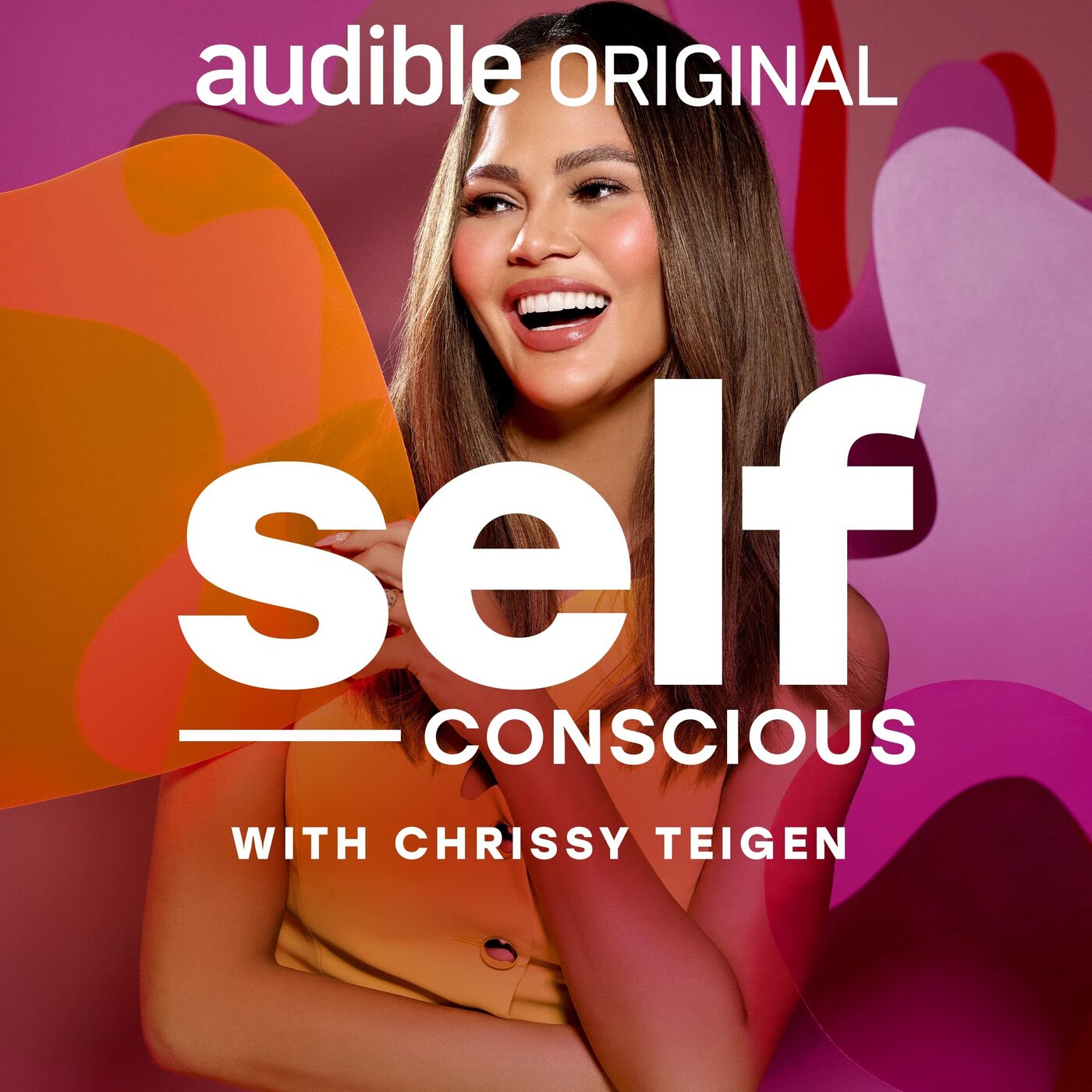
Loading summary
Transcript99 lines
- [00:03]
Chrissy Teigen
You're listening to Self Conscious with Chrissy.
- [00:05]
Joseph Nguyen
Teigen, an Audible original podcast. Join me as we explore the cutting edge of health, wellness and personal growth with the world's leading experts and thinkers. From inspiring stories to actionable insights, our conversations aim to help you lead a healthier, happier and more productive life.
- [00:27]
Chrissy Teigen
From an early age, we are conditioned to believe that suffering is inevitable, shaping our strengths and resilience. But what if the source of our suffering lies not in the external challenges we face, but in the very thoughts we hold? What if the path to true happiness and peace doesn't require altering our circumstances, but instead rethinking or quieting our minds? My guest today, Joseph Nguyen, explores these questions in don't believe everything you think. Drawing from both Buddhist philosophy and modern psychology, Nguyen invites us to rethink how our minds work and how we can take control of our well being by mastering our thoughts. Nguyen argues that much of our suffering is isn't caused by what happens to us, but by how we interpret those events. Our thoughts create our reality, and while pain is a natural part of life, suffering is often something we create through negative thought patterns. Nguyen's radical perspective is that instead of trying to think more positively, we should focus on slowing down our thoughts and letting them flow naturally without getting caught.
- [01:25]
Joseph Nguyen
Up in endless loops of judgment and interpretation.
- [01:28]
Chrissy Teigen
Today we'll dive into this idea, exploring.
- [01:30]
Joseph Nguyen
How our brains, which evolved to overthink.
- [01:32]
Chrissy Teigen
As a survival mechanism, causes us unnecessary suffering. Nguyen shares practical tips on how to break free from these destructive thought patterns and move towards a more peaceful, fulfilling life. Joseph Nguyen, thank you and welcome to Self Conscious.
- [01:53]
Joseph Nguyen
How would you say you define suffering?
- [01:56]
This comes from a lot of different philosophies, but mainly it's a Buddhist philosophy and Zen concept where there is a difference between pain and suffering and pain is more of a physical sensation of something. An emotion might cause pain initially, but then the suffering we do is different and that is more psychological. Suffering is essentially judgment of a circumstance that we went through and this is what causes guilt, shame, sadness and just the self criticism that we go through. Although we go through events, those events don't necessarily cause us suffering until we begin thinking about it in that way, saying that this is who I am or this is. For example, we might go through an event and we might say I'm not good enough or I'm a failure or I'll never be good enough or be able to accomplish anything. That is what suffering to me comes from. It comes from the inner dialogue that we have that is separate from the circumstance that we go through and the.
- [03:01]
Constant punishment of yourself all the time. We're terrible to ourselves. Yeah.
- [03:06]
Yeah. Suffering is psychological, for sure.
- [03:08]
Yeah. You say that we create our reality by thinking. Can you unpack this concept for us?
- [03:14]
There's a difference between an objective circumstance that we go through. For example, losing a job. But then what we say about that circumstance, the meaning that we put behind it, the judgment that we have about the event that is suffering. So let's say we lose a job that is actually a neutral event, a circumstance. But then we'll say, I knew it. I'm a failure. Or they found out that I'm a fraud and that I didn't know what I was doing. That's why I lost it. Or I never. I don't deserve to be happy. These are stories that we tell ourselves. This is negative judgment. That to me, is what thinking is. So I distinguish two things. Thought versus thinking.
- [03:54]
I love this part.
- [03:55]
Chrissy Teigen
Yeah.
- [03:56]
Joseph Nguyen
And thoughts are neutral observations about the world. That is the objective circumstance. That is I lost my job. That. That physically happened in this world. But then all the inner dialogue, the criticism that we give ourselves, the judgment, that is thinking about the thought. Very different. And in the book, I propose that thinking is the root cause of our suffering. It's not necessarily the events. And I say that our emotions do not come from events, but from our own. Thinking about the events and thinking.
- [04:28]
Not overthinking, but just the general thinking.
- [04:30]
As in negative judgment.
- [04:31]
Yeah.
- [04:32]
Yep. Just the judgment of it.
- [04:33]
Do we label that overthinking now? I guess.
- [04:35]
Well, overthinking is the kind of Goliath form of thinking. But we can have a quick judgment of something and it might sting us a little bit. For example, if we judge someone else, it stings us a little bit too. That might be a quick example of when we begin thinking about a thought or judging a thought. Then overthinking is when we really sit and ruminate on it and let it kind of fester and grow. Like you were saying. That's the overthinking that happens. And then if that keeps going, then we can slip into things like depression. That is when we do so much thinking that our bodies shut down, our nervous system shut down, and we just go numb. We dissociate. That's what happens when we have a very hyperactive mind.
- [05:17]
You're telling me you argue that the key to ending our own suffering is letting go of our thinking. How so?
- [05:27]
So an example I love to give about this. Or you can help answer this. Question too. I love to ask questions to kind of explore. So whenever we are really stressed, how much thinking are you doing in that moment?
- [05:43]
Really stressed. I'm very good at blocking things and turning everything off, but it's. I bombard myself with sound and screens and everything to. So I try to think very little when I'm that stressed out, but I can't say it ever goes away. I'm deep in stress. It's just that things are a little bit louder than it on a physical level. So.
- [06:07]
Yeah. You just try to crank up the volume of everything else to kind of drown out the noise of the thing.
- [06:11]
Yes.
- [06:12]
But it is a lot of thinking that causes you to do that.
- [06:14]
Yes. The conversations that all my different people in my head have are just exhausting. In peak stress time, I've just really trained myself to be able to pass out, fall asleep, to shut everything off, or just lose myself in sound.
- [06:30]
Yeah. And that's what happens when. I mean, that's a. That's a way that we try to preserve ourselves. Right. We try to find different coping mechanisms, but that's what happens when the thinking just spirals and it gets out of control. Now, on the other hand, though, how much, let's say if we flip the equation or the question and I ask when you are, what emotion do you feel when you're not thinking?
- [06:55]
I don't know what that's like. I swear to God. I actually have this conversation with my therapist right. In this area. I don't know what it's like to have my brain fully at peace or just I have to really be immersed in something that I enjoy. But I can't say it ever shuts off. And I do wonder if this is unusual to me or if everyone goes through this, but. Yeah, I can't. There is nothing that I'm not fighting with myself about all the time.
- [07:25]
Yeah. Well, let's take that example of. Let's say you're really immersed in something or when you had.
- [07:30]
Yeah.
- [07:31]
Chrissy Teigen
Like if I'm with my kids, I'm.
- [07:32]
Joseph Nguyen
At the zoo or doing something that I enjoy or having like a big moment, I always have big moments with them where we're all going to go.
- [07:38]
Chrissy Teigen
You know, we have four kids, so.
- [07:40]
Joseph Nguyen
When we go somewhere, whether it's Disneyland or the zoo or something, I am fully in it to try to stop thinking.
- [07:47]
Yeah. And what happens, let's say like a peak moment of joy, if you can bring that to mind.
- [07:52]
Yeah.
- [07:53]
How much thinking is going on when you're experiencing that in that moment?
- [07:57]
None.
- [07:59]
And that's what I mean.
- [08:00]
Yeah.
- [08:01]
So when we are fully present in the moment, there isn't much thinking, or if any thinking at all.
- [08:09]
Even if I were to probably think in that moment, it might not seem as bad as. Yeah, yeah.
- [08:15]
And it's because you're purely present and that's where peace is. Peace is in the present. And usually when we have a lot of anxiety, we're ruminating about the past and we're projecting a fear onto the future.
- [08:28]
Peace is in the present. Oh, my gosh.
- [08:30]
That is the only time it exists.
- [08:32]
Yeah.
- [08:33]
Everything else is. It doesn't exist. It's an illusion because the past is gone and the future is not here. But nowadays it hasn't evolved to catch up with us. Yeah. We're living with primitive minds and we're trying to. I mean, the world has evolved so fast that most of us luckily are generally safe. Right. Physically. And we're not going out and we're just constantly hunting mammoths. Yeah, yeah.
- [08:59]
Were we around for mammoth time?
- [09:01]
I think so, yeah. Yeah. Saber tooth tigers, all that stuff.
- [09:04]
Yeah.
- [09:05]
So in those cases it was really useful. But even then, a lot of the indigenous people understand that, yes, there's times where we will feel a lot of fear, but we don't have to let that consume us. And then they come back and have a lot of their rituals where they're able to be at peace, even though they are quite literally living meal to meal, not even paycheck to paycheck, meal to meal.
- [09:26]
Yeah.
- [09:26]
And they're still able to find peace. And it's because they're able to cleanse and let go and understand that. Understand how to be present fully and not worry about other people or other things. And that the thesis for the book, which is if we learn to let go of our thinking, that chatter, then we can find peace.
- [09:47]
How do you address the common fear that letting go of thoughts means losing control or becoming passive in life?
- [09:54]
That's a great question. The truth is you are going to lose control, but you're going to gain something far more valuable, which is peace. And so that's a choice we have to make. Do we want to attempt to control all of the external circumstances in our lives, all the people in our lives, all the situations which we all know is virtually impossible. And so it's a war that we already lost and so we can't escape that there's no end in sight when we choose to try to control everything. But when we let go of all that of needing to control and saying that it's possible to be at peace no matter what we go through, no matter what anyone says about us, no matter anything, or no matter what emotion we're feeling, we can come back to peace. And so that's the choice. But it also is scary to stay within the cycle of suffering, of constantly overthinking, because it's not like we're not scared. So. And most people think, oh, if I'd rather just suffer than to go into the unknown, but we're already suffering anyway. What is most important to you? And if you deem that it is peace, then you can start taking incremental steps to experiencing that.
- [11:10]
I guess you have to really decide that you deserve peace too.
- [11:13]
Yeah, a lot of people don't think that they. They deserve it for whatever reason, and it's because probably someone told them that they don't deserve it. The majority of the negative thoughts that we have in our minds aren't even ours. They're from other people that told us. Friends, family, co workers, anything. All of it is not us. But if we let go of that, then we actually find who we are.
- [11:39]
You argue that our brains are wired to overthink as a survival mechanism. How do you think that this evolutionary trait, which did serve us at some point, now contributes to unnecessary suffering in modern life?
- [11:53]
That's our reptilian brain trying to preserve us. It's constantly taking in data and experiences so that in case we encounter something dangerous in the future, we can protect ourselves from it. If you go out in public, then you're constantly scanning the environment for potential threats, anything that can happen, all of that. And even when we're sitting alone, we do the same thing, but we're just in our minds. And if we don't have an immediate threat, our minds are so conditioned and wired for survival that we'll start thinking, what about tomorrow? What if everything just vanishes? What if my career is over? And so it doesn't stop? And that served us really well in the wild, because if someone ate a poisonous berry and died, we want to remember that, so we don't also eat the berries. But how many circumstances do we encounter in life that are literally life and death like that? It's not very often anymore. And so we treat every situation that we encounter now as life or death. And we catalog it and we start replaying it as if it will kill us or has the potential to. But if anything, it robs us of our own happiness more than anything else. And so then we have to ask ourselves, is this the way we want to keep living. And most of the time, unfortunately, we have to suffer enough until we feel it. And we're like, I don't want to feel this anymore until it gets bad enough. That's what happened to me. And that's what I call rock bottom, where we say enough is enough. I do not want to live like this. This is not who I am. I don't want to live in fear anymore. And I don't want to be so judgmental and so negative. And so until we hit that point, we're not willing to change. And it isn't until the fear of letting go of all that is greater than the fear of the unknown. That's when we start to step into it and to experience a little bit more peace for ourselves.
- [13:47]
You're life changing. You really are.
- [13:52]
Chrissy Teigen
All right, everybody, keep your journey going and growing with all the experts on this podcast. From our guest bestsellers and newest releases to their podcasts and Audible originals, hear more from today's leading voices and well being. Go to audible.com chrissyonaudible.
- [14:10]
Joseph Nguyen
So how do we differentiate between productive thinking and then the kind of thinking that leads to unnecessary suffering?
- [14:17]
Great question. So this is where I distinguish thoughts versus thinking. Thoughts, like I said, are neutral observations. It's things like, that is a table. This is rain. And then thinking, on the other hand, is this rain completely ruined my day. This always happens to me. I'm so unlucky. The thinking is extremely unnecessary and counterproductive thoughts. There is another kind of section of thoughts or types of thoughts which are intuitive thoughts or creative thoughts. Those are not judgmental. And that is where creativity comes from. And so when we're accessing something like our intuition, that is pure thought, where it's oh, I want to start a business or maybe I should call up this person because I haven't talked to them in a while. Or another thought is, I just saw my friend and they said they're fine, but I see that they're not and it's prompting me to reach out. Those are thoughts and that comes from intuition. And we use thoughts all the time to create anything in art. Even just with conversing me and you right now, this is pure thought for me. But then it can easily turn into judgment. Where it's am I saying the right thing? Does this sound. That's probably sound unintelligent right now. So that's thinking about it. But thought is something that really, when you tap into it, it goes through you. That is when we feel our Best, that is flow. And that is when you're with your kids or when you're doing something creative, fun, something you really enjoy. But you can also just be in thought, sitting here by yourself too, just observing it. And so it doesn't always require doing something that you love necessarily. It could just be a state of presence. We can sit outside and. And watch nature and just be there and allow thoughts to come and go and then feel at peace because of that. That's the difference between thoughts and thinking. And for productivity, for example, is more so using questions than trying to analyze our way through things. That's where most of our creativity comes from, is when we're really open and curious about things. And then we allow thoughts to come in and say, oh, what if we tried it this way? Or oh, I haven't thought of it that way. Maybe we should do this. And so that's how we can access thoughts and kind of put them together. But that is when we can avoid judgments. And that's how you can really use it to be productive.
- [16:44]
Tell us, what is the human experience equation, and how can we use it to understand how our thinking changes our experiences?
- [16:51]
Yeah. So the human experience equation is something that is, that breaks down everything we're talking to into one simple equation, one simple formula, and that is event plus thinking equals the human experience. A lot of times in life we go through an event, it already passed, but we have the same feeling attached to it. Maybe it is sadness or anxiety. And so that event with the same thinking that we have will create the same experience, even if we're not going through it right now. But that's how we feel. But what happens is if we take that same event and have new thinking attached to that event, a new meaning, a new way of looking at it, then we have a new experience of it. And I'm sure you've had a lot of those experiences where you been through it, and it might have been traumatic, but now it's different when you look at it. It doesn't cause a lot of the same emotions anymore, and you're able to maybe even appreciate it. Right. And so that's what happens. What happened, the event did not change. Right. But how we feel about it did. How is that possible? What changes our thinking? And so when we go in life, we're never really experiencing reality. We're experiencing a perception of reality that comes from our thinking. And so if we go and dissect the formula or equation a little bit more, we find out that, you know, it's Good to change the thinking. But there's a step above that, which is to let go of the thinking about it. Instead of needing to create a new meaning, create a new story, or all of that, we can actually drop it entirely. And so it becomes the equation becomes event equals experience. And so that's actually reality. Event equals reality. That's when we start to experience things as they are.
- [18:52]
And now for the toolkit. Each episode, our guests distill their expertise into practical and actionable insights. Today, Joseph Wynn shares strategies for escaping negative thought patterns.
- [19:04]
So this exercise is called the Pause framework. No, the first letter in the acronym is P, so that that means pause, which means to create space. So pause and take a few deep breaths. And mostly because if we're really in that heightened state, we're having really shallow breathing, and that makes the anxiety worse. And so when we take deep breaths, it grounds us into our bodies, brings us immediately back there. Step one is to bring it back to the physical body. And that's why a lot of times when we are depressed or highly anxious, it's really recommended to move. Because when we're stagnant, we feel frozen. And so we don't like that feeling of feeling contained and trapped, and it's not going to cure it.
- [19:46]
Right.
- [19:46]
And that's not the point yet, but it's to move us in the direction to feel a little bit better. And so that's the first step, to pause and take deep breaths. And then the next one is a, which is ask. Ask yourself. Is this thinking making me feel the way that I want? So if we have thinking of, is there danger? Does this person like me? I'm not good enough. Like, all of that. Like, is that thinking actually useful? And is it making me feel the way that I want? And if not, then we can choose to let it go. But if we don't even ask ourselves that question, we'll just keep thinking. And I love questions so much because an object in motion will stay in motion unless acted upon by an external force. Questions act as that external force within our minds to break that vicious cycle of negative thinking and create space. And within that space between that negative thinking is peace. Then it's PA and then U. U is for understand. Understand that we have the choice, the choice to let go, the choice to stop thinking. Many of us continue this cycle of negative thinking because we think we don't have a choice, that we have to do it, otherwise we're going to die or something bad's gonna happen. But we always have the choice to let go. And it takes courage because it's scary. But it's also scary to stay where we are. And so if peace is the highest priority, then we have to make that leap and say, okay, it's scary, but I'm still going to do it so I can experience the feelings that I want and become the person that I want to be, the person that I truly am, without all of this negative conditioning. So that's you, which is understand. Then next one is S& it's say. So S is say the mantra. Thinking is the root cause of suffering. And within that mantra contains the peace that we're looking for. Because it's saying that thinking or negative judgment specifically, that is what causes us to spiral. And if we repeat that mantra within our minds, mantras are so powerful. Well, one, because of what it means, words are extremely powerful. And you know this too. If someone says something about us, it stings, it hurts. But if someone says something loving about us, we feel that through emotion, words are extremely powerful. At the same time, mantras, they focus our attention onto the sentence itself. And when we are focused on one mantra, we can't think about anything else. So when we're saying to ourselves, thinking is the root cause of suffering, thinking is the root cause of suffering. There is no room to think about anything else. And that's when it starts to dissipate and eventually leave. Because one, we're focusing on it, but then two, we realize that we don't want to think about that thing anymore. We don't want to continue that cycle any longer. And so we release it. And if we say to ourselves, oh, I started thinking again, that's okay, and I come back to center, then things are okay again. And that's what we are trying to do throughout the whole entire day. So E, the last letter in the acronym is experience. Experience your emotions fully without resistance. And so a lot of people think that when I say just stop thinking, it means that we're suppressing our emotions or that we're bypassing them. That's not true. It's like I was saying before, it's holding space. And most of the time we don't experience our emotions fully. We're actually fighting it. I don't want to feel this anxiety, I don't want to feel this depression. And so we're trying to brute force it. And the issue with that is, like we said before, is that it builds, it pressurizes everything, and eventually it blows up. And so what happens when we hold a space of non judgment is that it can flow through us and so experience our emotions fully. And when we start doing deep breathing and breathing in and breathing out and allowing our emotions to kind of do the same, it leaves. And it's only when we judge it that it persists. What we resist persists. What we let be will inevitably leave. That is so, so true for thoughts. And so it's just like for every force, there's an equal opposite force, right? So if there's an emotion and we're resisting it, it will keep perpetuating that until we let go. That's when it flows. So the whole acronym is pause. P stands for pause. Pause and take deep breaths to ground ourselves into our bodies. A is ask. Ask ourselves. Is this thinking making me feel the way that I want? Do I want to keep suffering? So then you, you is understand. Understand that you have the choice to let go of the thinking that we're doing. Then S. S is say and repeat the mantra. S. Thinking is the root cause of suffering. Thinking is the root cause of suffering. And continue doing that until it passes. Then E, finally, is experience your emotions fully. Allow yourself to just immerse yourself in it without judgment, without doing anything with it, Just observing and allowing it to be there, and you'll quickly realize that it will pass. And when we hold space for it, there's no longer resistance. So this exercise is creating momentum for your day. And essentially it's creating an activation ritual for yourself. Most spiritual masters, sages, any mystic, or anything like that, they all tend to have some sort of morning routine that helps ground them for the entire day. And, and like I said before, it's not like having a ritual is bad or meditating in the morning is bad. It's just when we aren't able to continue that. That state throughout the whole entire day, then we lose the whole point of it. The whole point of a morning routine is not for you to just not have to do anything the rest of the day. It's actually to help start you on the right, on the right foot. That way it's easier to keep the momentum going. So this practice is pretty simple. It's just figuring out what you personally would like to do in the morning. It doesn't take long. Five, 10 minutes, 30 minutes, whatever time you can do and what seems manageable. I would rather it be a little bit shorter and easier rather than something that's an hour and a half long where it's. It's a big project to have to do. So what's something for you that you can do within the first 10, 15 minutes of your day. That would really help let go of the thinking or help stop you from overthinking. Yeah. Something or you would like to do.
- [26:42]
I would love to pop out of bed, run downstairs and make breakfast for my kids and not have John be that person. Because John's the morning person. He works out, he makes them pancakes. He's just kind of known as being the morning guy. And I've kind of resigned myself to him being that guy. But I would love. I would love that as a way to start my day.
- [27:04]
And you might even be able to do it with him too. It's not like a one or the other type of thing. What would that do for you? What would that make you feel?
- [27:11]
Oh, my kids are the funniest and the cutest first thing in the morning. So I would. There's this time, there's this hour long period during the day that I'm missing out on. And it's one that I love when I get to do it. If I'm up and I have to work or something and I'm downstairs and researching or doing something. I love those days and they just don't happen often enough. And that's my own doing.
- [27:36]
Yeah. What happens? Let's say you said you do that sometimes. Right. So how does the rest of your day generally go when you're able to do that?
- [27:43]
Great. Because honestly, I'm proud of myself for having gotten up early and gotten to spend time with them. Driving them to school is great. It's fun because they're funny and crazy right now and there's a lot of them. I always have a better day because it's just a beautiful way to start it. And it's what my whole life revolves around. And honestly, like the little bit that small part of feeling pride with it really keeps me going all day too because I'm not so hard on myself throughout the day about other things because I knew that I did this thing that was great and great for me and great for them and then it makes me want to do more.
- [28:24]
Yeah. So that's beautiful. And the best way is for you to create it. And so that might work for you, but it may not work for someone else and it might not work for me, but it doesn't matter. What matters is that it works for you. And I think it's a beautiful practice that you can do. And so if you did that more often or if you just made the commitment like that's all you need to do. And how would that change things?
- [28:43]
I mean, even talking about it is like, God, something that I want so bad. I didn't even know I wanted it that bad until I said it.
- [28:49]
But that's exactly what awareness is does.
- [28:51]
Yeah. Yeah. It would change the whole trajectory of my day to start out with something so positive.
- [28:57]
Yeah.
- [28:57]
Because at one point in time it was workouts or, you know, doing something for myself or with my friends. I don't get the kind of joy from that that I do cooking and, and being with my kids. So those two things at once is like an explosion of happiness for me that I'm like depriving myself of.
- [29:16]
Yeah.
- [29:16]
And I understand that now saying it.
- [29:18]
And it's not something that's a crazy, crazy big project that you need to commit to and it's, it's something very small and that you can do every single day and that you would love to do. Yeah, every single day. And you already saw how the, how it affects the rest of your day, which is it gives you that momentum. You're able to stay more positive. You're not as hard on yourself because you already had the success that you want. And what you're doing is you're prioritizing what's most important to you in the morning. Because if you wake up and then immediately go to the phone or laptop or whatever it is, you're saying that's my priority over my family, my kids, all my peace. And it's only when we deprive ourselves of what matters most to us, that's when we suffer. And so that's why I love using negative emotions as an indicator of what am I missing? How have I abandoned a part of myself that I really want? And so, yeah, begin doing that and make the commitment to yourself.
- [30:15]
I will. It really is only a positive experience for me. I love it every time fully.
- [30:20]
That's the point. That's why I say anything can become a non thinking practice. Literally anything. And so now that you're starting your day off with cooking and being with them, you're training yourself on thinking less, on being more at peace, on bringing more love and joy, on being more of yourself. Because the more that you're with them, you're probably going to be much more of yourself. So it's important to create that space for yourself and it will bleed throughout the day. So that's why I love making it so personalized to you and whatever you love most. And so now throughout your day, you can use that as an anchor.
- [30:56]
Yeah.
- [30:57]
So whenever you're beginning to experience stress or anxiety. Like, what's the anchor that you can go back to to let go of your thinking? You know what would be. You can use the mantra of thinking is the root cause of suffering. But is there another mantra that you would like to use that's more personalized?
- [31:14]
Some grace.
- [31:15]
Yeah.
- [31:16]
Like the way I give it to other people. Extend myself the same grace that I extend to other people.
- [31:22]
Beautiful. So it's give yourself some grace. And so when you say. When you're saying to yourself throughout the day, give yourself some grace, that's permission for yourself to let go.
- [31:32]
Hmm.
- [31:33]
And so between the morning with being able to go downstairs and cook and being with your kids, plus saying give yourself some grace throughout the day whenever you're experiencing negative emotions, I think. I mean, you tell me, like, how that would feel.
- [31:47]
Yeah. Incredible. Three days in a row of that. I think I would be like a different human.
- [31:53]
Yeah. So just try. The thing I love saying is just try it for seven days. That is the most. This is literally the most important thing you can do for the next seven days. And if you make that commitment, you'll see some pretty drastic results. And if you want to continue, awesome. If you fall off, that's okay. But now you'll have that experience that you'll know and can always go back to, and you won't ever want to go back to how it was before.
- [32:18]
Chrissy Teigen
Joseph Nguyen, I want to thank you for joining me on Self Conscious. Joseph Wynn's don't believe everything you think is available on Audible. Until then, tune in, turn on, and feel better. This is Chrissy Teigen and you've been listening to Self Conscious, an Audible original podcast. This has been an Audible original produced by Audible and Huntley Productions, hosted by Chrissy Teigen, executive producer for Huntley Productions. Chrissy Teigen, Executive producer for Audible, Stacy Creamer. Recorded and engineered by Alex Guy Mixed and mastered by Jeremiah Zimmerman Edited by Lisa Orkin Head of Creative Development at Audible Kate Navin Chief Content Officer Rachel Giazza Copyright 2024 by Audible Originals, LLC Sound Recording Copyright 20 by Audible Originals LLC.