Podcast
SEO in 2026
Hosted by Majestic.com · EN
SEO is continuing to change at an alarming pace. And yet, in some sense, the principles of good SEO remain the same.
Hello, and welcome to SEO in 2026 – a significant repository of current thinking from many of the world’s leading SEOs.
We're pleased to be able to welcome you to the fifth book and fifth series in this podcast, now well and truly an annual tradition, brought to you by Majestic.
“How people search has seen a bigger shift in the last 12 months than the last 12 years, and this makes SEOin2026 a must-read for anyone working in the industry. Majestic has brought together 117 of the SEO industry's brightest minds to share their insights into what matters, and what doesn't, to continue to drive growth with organic search during a period of massive uncertainty, and the book should be seen as a valuable reference point to keep your strategy on the right track.”
JAMES BROCKBANK
Managing Director and Founder, Digitaloft
“I highly recommend that every SEO professional set aside a couple of days for SEOin2026. You'll thank me for helping you plan your year effectively. I'm extremely grateful to have the opportunity to work alongside some of the world's leading SEO champions.”
NITIN MANCHANDA
Founder & Chief SEO Consultant, Botpresso
“This collection of wisdom from many of the best minds in SEO today is a great line in the sand of where we as an industry are, what problems we face, and how we tackle them. Anyone in SEO or marketing should be dipping into this on a regular basis.”
SIMON COX
Technical SEO Consultant, Cox and Co. Creative
“This series continues to be the industry’s leading source of the most timely advice a marketer could ever want. The most forward-thinking SEO experts in the world come together once a year to create this invaluable collection of new knowledge that should never be passed up on!”
PAM AUNGST CRONIN
President and Founder, Pam Ann Marketing and Stealth Search and Analytics
“2025 has been a sprint for the SEO industry, with AI reshaping how we understand visibility, relevance, and authority. SEOin2026 is not just another trends book; it’s a roadmap for what’s actually coming. I loved being part of it and seeing how experts around the world approach the same challenges from different angles.”
RAMONA JOITA
SEO Consultant and Founder
“David is good at drawing out the substance of a conversation. He will explore the topic and challenge assumptions, steer the conversation into an unexpected direction, and build on your ideas – making you think a bit deeper and sharper. Our recent conversation flew by as always, and as always – I’ve come out energised about the topic with more to think about.”
SUKHJINDER SINGH
Freelance SEO Consultant
110episodes
Episodes
Newest firstAll episodes

See the bigger picture through BigQuery – with Priya Verma
Jun 1100:17:07Tap to summarizeThere’s one tool that Priya Verma finds particularly useful at combining data from various sources and conducting analysis – BigQuery.Priya says: “Gear up your SEO analysis through Google BigQuery.”Why BigQuery in particular?“SEO analysis in BigQuery is powerful because it lets you move beyond the existing tools like Google Search Console, Ahrefs, etc., and their limitations. It allows you to see the full picture at scale.By analysing millions of queries alongside other data, you uncover deeper patterns, user behaviour insights, and real opportunities to grow your traffic. We are focussing on BigQuery because of a subtle limitation of the most widely used tool for SEO, Search Console: you can only look at the top 1,000 keywords.For big businesses, that doesn't give a full picture. That's where tools like BigQuery come in. There are alternatives like Google Sheets plugins, where you can import 25,000 rows. However, if you are in an industry with thousands of keywords, that is still a huge limitation.That's where bulk export comes in. By connecting your Search Console to BigQuery, through the BigQuery API and the BigQuery Storage API, you can capture and store all your data at scale, without hitting those raw limits.This is where it really gets interesting, because the retention policy in Google Search Console is 16 months. After 16 months, the data is lost. In BigQuery, you can keep it for as long as you want.Then, when you take those insights and combine them with your analytics data – in GA4, for example – suddenly you're not just looking at what people are searching for, but how they behave when they land on your site. You can connect the dots between search demands, journeys, and conversions, and it makes the game more interesting.Not enough SEOs are aware of this. They just think of BigQuery as a database where you kind of store your data, which is true, but when you talk about the analysis of your historical data set, that's where it all changes.When you go to legal, they will ask you questions about retention and what you are storing. You need to spread that knowledge around to say that this is something that could be changed in BigQuery, and not just for SEO, but for things like analytics as well.”
Transcribe →
How to write the best listicles & find the best media to push them to be cited by GPT: Leo Poitevin
Jun 1000:19:42Tap to summarizeLeo Poitevin shares how to write the best listicles & find the best media to push them to be cited by GPT. Talking points include: How do you define listicles? How have listicles changed? How do you structure a listicle for success in 2026? You say that GPT uses Google to find solutions via fan-out - what do you mean by that? You say that you should find the media that'll rank according to topic and competition - why, and how do you do that? How do you monitor success?
Transcribe →
Combine the powers of SEO and Google Ads – with Krzysztof Marzec
Jun 900:20:31Tap to summarizeKrzysztof Marzec emphasises the alignment between organic search and paid search – and the useful additional data that one can provide the other.Krzysztof says: “Use your data from Google Ads to improve SEO, and use data from SEO to improve your Google Ads campaigns.Also, mix it and blend it with AI, because now we have AI to improve it all.”If you're not actively using Google Ads, is it worthwhile having a small campaign up and running simply to use as data to power your SEO?“Yes. If you are not using Google Ads, you are losing a lot of data, and you are also losing clients. When you are generating organic traffic to your website, you should fight for a conversion rate. Using remarketing in Google or Meta Ads can improve your conversion rate because you simply have more attention from your users after they leave your website.We also see that, in long-term projects, when you are fighting for keywords in organic, you are losing the potential of getting new clients when you could use Google Ads to run for the same keywords and the same targets, and then gather some data.When you run a Google Ad campaign, you can check the Quality Score, the CTR, and whether it's a good ad, and you can check your landing page. You can learn whether your SEO campaign might fail, or it might be much harder to gain traction, visibility, and a high position in SERPs because there's something off with one of these parameters.With Google Ads, you can test your ideas. In SEO, you only have one landing page. It's extremely hard to do A/B testing on the same website because you want to use everything for the user base, and you don't want to risk anything. In Google Ads, it's very simple.
Transcribe →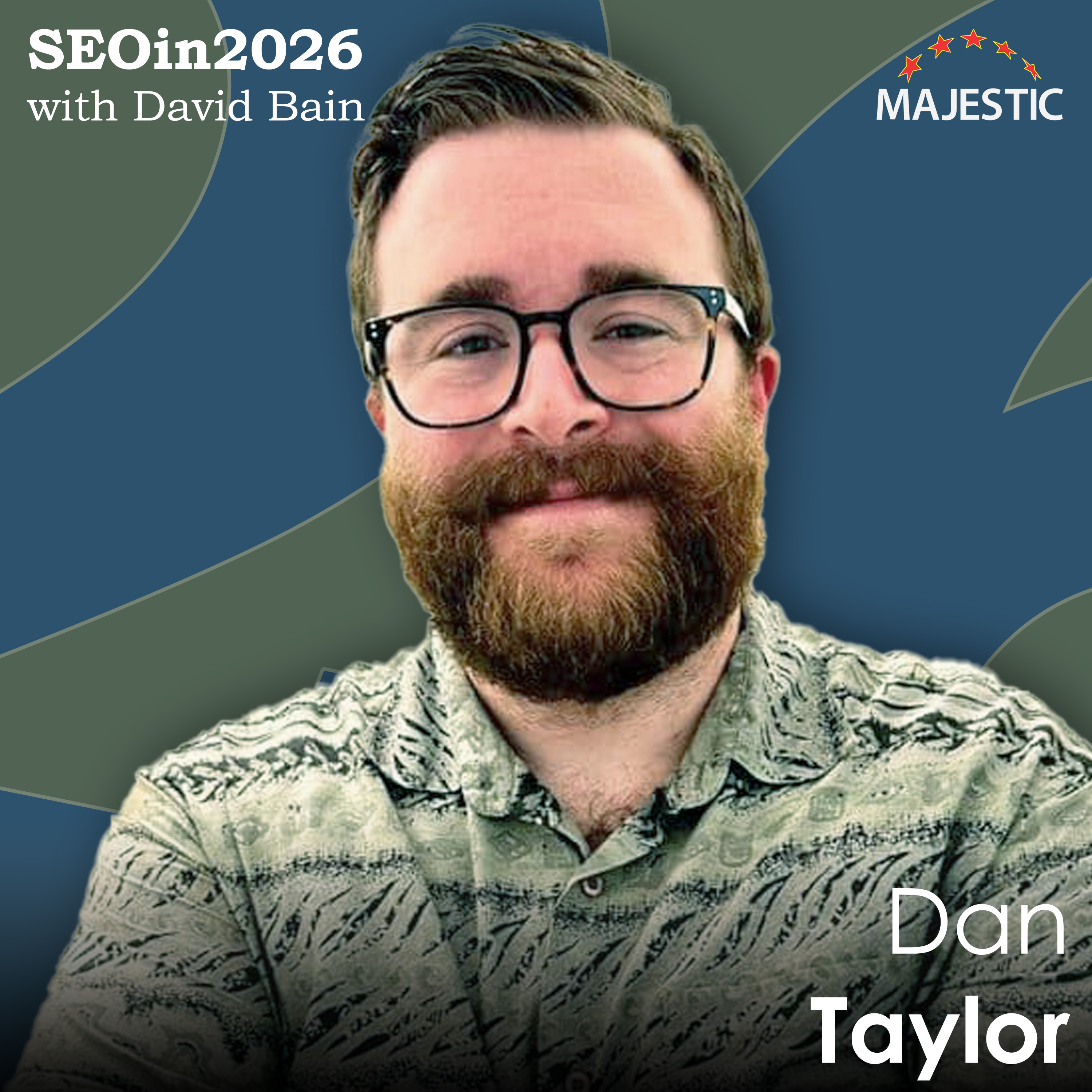
Leverage your analytics platforms more effectively – with Dan Taylor
Jun 800:16:34Tap to summarizeDan Taylor feels that SEOs aren’t taking full advantage of the data that they already have.Dan says: “Start understanding your analytics platforms a lot better, and start leveraging them – not just for attribution and ROI, but to look at your organic strategies and the second-order effects of what those strategies are bringing to the business.”Have SEOs focussed less on analytics since the release of GA4?“We didn’t put our heads in the sand, but it is a very different model. We'd grown accustomed to something. We'd grown used to reporting, and then bringing in user events and other event types really mixed that up.A lot of opportunity was lost in terms of what could be set up with the analytics models itself, and it gave us greater scope. We probably did want to divert attention to data analysts and away from SEO in the actual setup of it, because it was like relearning a completely new skill.Realistically, you don't always get paid for analytics; it's seen as a given in terms of using those platforms, reporting, and understanding the data. It's a heavy investment into a skill set that you don't necessarily get a direct return on.”
Transcribe →
Find more data elsewhere – with Marco Giordano
Jun 500:17:57Tap to summarizeMarco Giordano highlights that the most successful SEOs will take data from multiple sources – not just traditional SEO platforms.Marco says: “Use multiple data sources, not just SEO data, to make decisions.”What's the difference between the alternative data sources and the typical data sources for SEO?“Most of the time, people use Search Console, which is our default option for several reasons. For one, it's the only first-party tool that contains Google queries, which is the dominant search engine. People also rely on crawl data from tools like Screaming Frog and Sitebulb, or they scrape websites themselves. There are other third-party tools as well, like Majestic, Semrush, Ahrefs, etc. That’s the traditional suite.Some people have a decent knowledge of GA4, which is used for other data and tracking conversions, events, and what happens inside the website – which is not strictly SEO, of course.However, there are data sources other than GA4 that are also super important and can help you. For example, in your CMS (Content Management System), you can get metadata about your articles and pages that can be useful. For example, the classification of a page or even the tags or categories you assign to a given page.Also, your CRM. If you're doing B2B, you can’t exactly connect your SEO data, like queries, but it gives you the opportunity to better understand how your website contributes to your leads, because there are connections with Salesforce and HubSpot, if you're using GA4.”
Transcribe →
Stop reacting; start predicting – with Folashade Uba
Jun 400:15:56Tap to summarizeOf course, what happened in the past isn’t necessarily an indication of what might be likely to happen in the future. Folashade Uba shares that we should stop reacting and start predicting.Folashade says: “The best and most successful strategy will be to shift from reactive SEO to proactive SEO.”What would be an example of reactive SEO compared to proactive SEO?“Reactive SEO is when you're reacting to trends, reacting to your competitors' moves, reacting to keyword spikes, and reacting to every Google algorithm change.Proactive SEO is when you're intentionally shaping what the search could be, what the feature could be, and using predictive analysis and behavioural forecasting.”
Transcribe →
Don’t focus solely on the new shiny thing - the fundamentals will always matter most: Sophie Brannon
Jun 300:16:54Tap to summarizeSophie Brannon shares the importance of not focusing solely on the new shiny thing and that the fundamentals will always matter most. Talking points include: How do you know what should be fundamental? How often should you revisit this? What is holistic marketing? Why is this key to SEO? How do you measure success? How would you summarise the fundamentals of SEO in 2026? How often should you review what the fundamentals are?
Transcribe →
Amidst all the changes, stay focussed on your numbers – with Kyle Rushton McGregor
Jun 200:16:01Tap to summarizeKyle Rushton McGregor provides us with a timely reminder to know your numbers, while all the changes happen around us. Kyle says: “SEO is changing, and you need to know your numbers more than ever.”How is it changing, and how do you go about knowing your numbers?“SEO is changing in a variety of different ways, but most importantly, we've got the rise of AI and large language models, and the traffic that's coming from that. Consent is much more pertinent than it used to be (quite rightly so), and we also have Apple’s much more stringent tracking preventions.That all means that you need to understand your numbers: where your traffic is coming from, and what that means in terms of actions and insights. You need to know that to a greater degree than ever before, and you need to take your reporting away from talking about sessions and users and start talking about the things that matter: leads, e-commerce numbers, and all the things that a typical boss would be concerned about.All these different changes mean that you need to be a lot more focussed on the numbers that are occurring and how you can use those numbers to drive actions and make a difference for your clients and your business.”
Transcribe →
Monitor, test, and adjust – with Julia-Carolin Zeng
Jun 100:18:44Tap to summarizeJulia-Carolin Zeng shares some of the key areas that you should be continually monitoring in order to know what to adjust.Julia says: “Monitoring, testing, and adjusting.The search landscape will keep on changing. What we've seen so far in 2025 is nothing yet.”How is the search landscape continuing to change?“Right now, the buzzword in SEO is the ‘great decoupling’, where we see impressions going up and clicks going down. I see it more as a democratisation of the search landscape, with new players in the field now.Google is suddenly getting a lot of competition because people don’t just perform their searches on Google or Bing anymore, as they did historically. There are now all these LLMs out there like ChatGPT, Perplexity, Claude, etc. Google has expanded the AI overviews. They've rolled out AI Mode. I've also suddenly seen quite a significant amount of traffic from Yahoo for some of my clients. We don't yet know where that's coming from. Then there's still DuckDuckGo and Ecosia out there.However, ChatGPT seems to have become the big competitor to Google, even though the actions and searches that are performed in those places aren't exactly equivalent. We've seen a democratisation there, because Google is not the default for everything related to search anymore.”
Transcribe →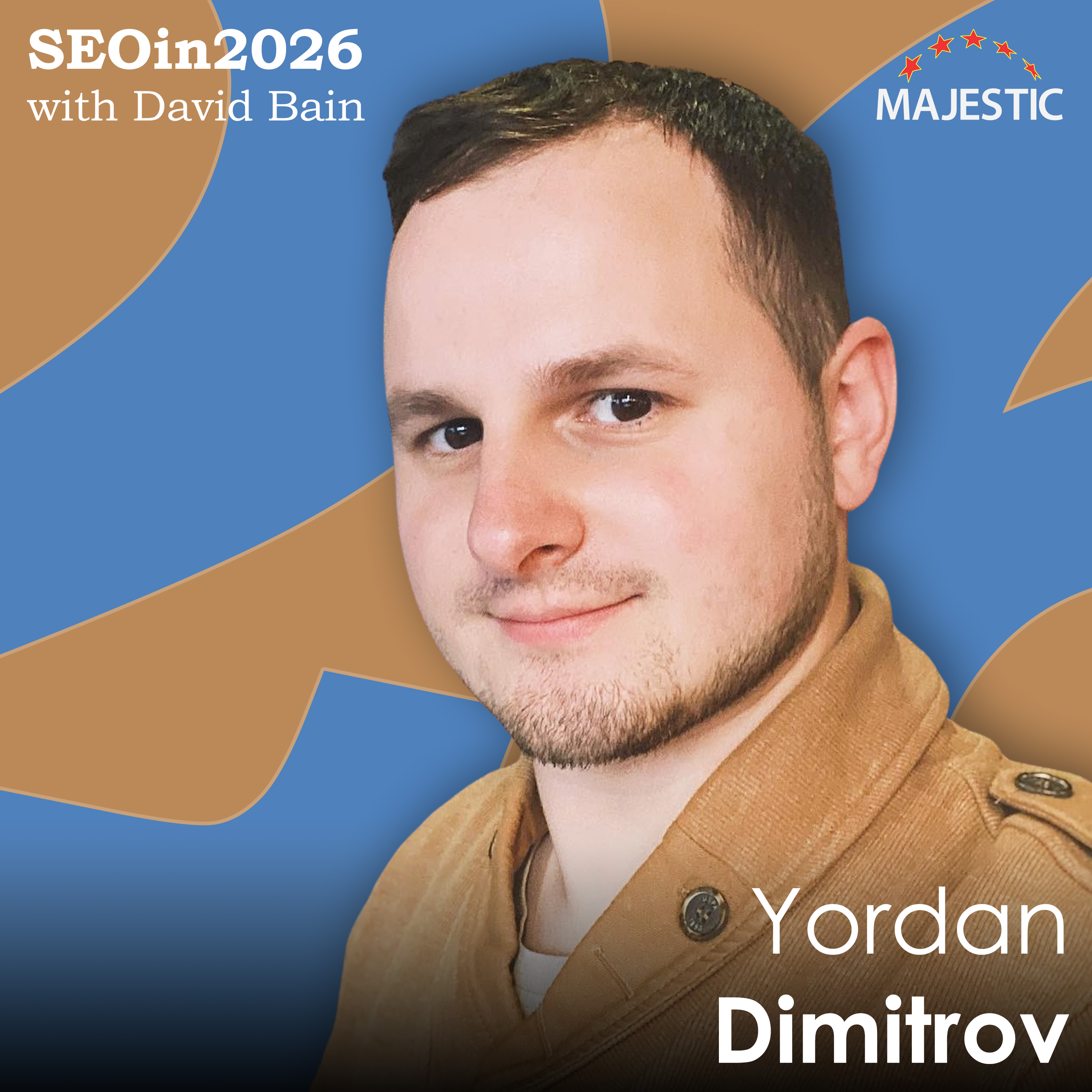
Embrace change and test relentlessly – with Yordan Dimitrov
May 2900:14:56Tap to summarizeYordan Dimitrov shares that you need to accept constant change in the world of SEO. Just because something works well today doesn’t mean that you shouldn’t be trying to improve it for tomorrow.Yordan says: “Embrace change and test relentlessly.”Is there any type of change that we're most likely to have to embrace?“In the last 12 months, there has been so much change within the SEO industry, from AI Mode to AI overviews, dramatically changing how people discover content and brands. We've moved way past the 10 blue links, and people are shifting towards AI-driven answers, zero-click results, and new discovery platforms.To succeed, you need to put yourself into the customer's shoes and explore ways of accessing the tools that are coming up in order to do better testing.It also means putting yourself into your customer’s journey and thinking, ‘Does my brand appear in those AI-powered results? Is my content being cited? How does the format change, and what do I need to do to make sure that I remain visible?’”
Transcribe →