← SEQUESTERED Podcast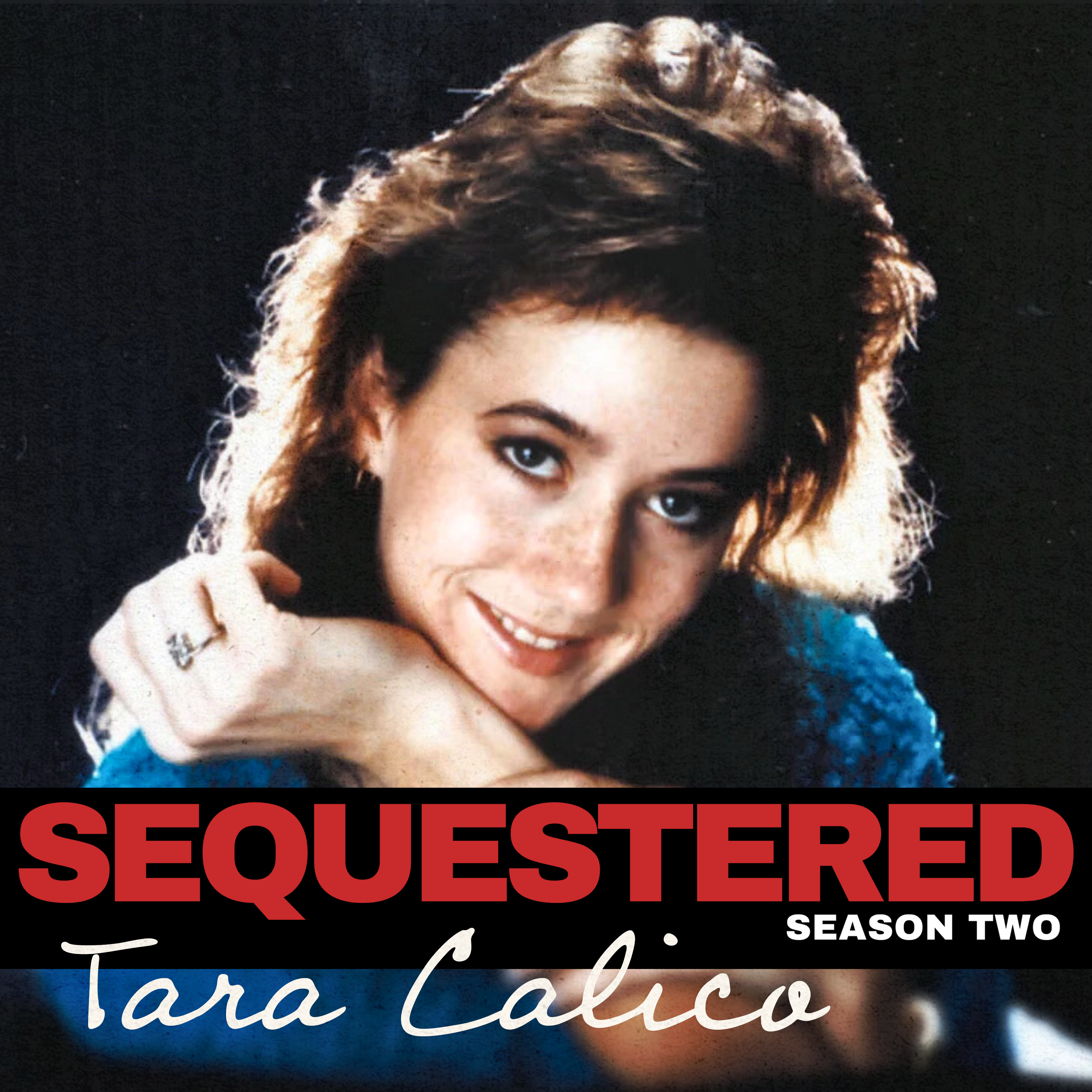
SEQUESTERED Podcast
Tara Calico: Disappeared in 1988 (Belen, NM) | Part One
00:30:03
EPISODE 04: THE DISAPPEARANCE OF TARA CALICO On a bright September morning in 1988, 19-year-old Tara Calico left her home in Rio Communities, New Mexico, for her usual bike ride—and never came back. Hours later, fragments of her Walkman and a...
Loading summary
Transcript42 lines
- [00:00]
Advertisement Voice
This episode is brought to you by Progressive Insurance. Do you ever think about switching insurance companies to see if you could save some cash? Progressive makes it easy to see if you could save when you bundle your home and auto policies. Try it@progressive.com Progressive Casualty Insurance Company and affiliates. Potential savings will vary. Not available in all states.
- [00:28]
Sarah Reed
It's a Tuesday, September 20, 1988. A high desert morning in Boulen, New Mexico. The sun is already warming the pavement when Tara pulls her ponytail tight, slips on her headphones and presses play on her yellow Sony Walkman. Boston. She steps onto the petals of the bright pink Huffy she borrowed from her mom, the one with the squeaky brakes and the yellow cables. It's not her favorite, but it'll do for today. This road is her rhythm. She's ridden it for years. She knows every curve, every mile marker, every shift in the wind. What she doesn't know is that someone else would be out on that road with her today. In just a few hours, her Walkman would be broken, her Boston cassette laying in the dirt, and Tara Calico, just 19 years old, will be gone. No 911 call. No bloody scene. Just a girl on a bike and a mystery that still haunts New Mexico. My name is Sarah Reed and this is sequestered. Season 2 Case 3 the Disappearance of Tara Calico, Part 1 On February 28, 1969, Tara Lee Calico was born in New Mexico to David and Patty Calico. Patty would later marry John Dole, a kind and steady man who became Tara's devoted stepfather. Tara wasn't just another kid on the block. She was magnetic, vibrant, quick witted, and fiercely adventurous. She had an easy laugh, a fearless streak, and a deep bond with her family. From the start, she seemed destined to make an impression on the world around her. After her parents divorce, Tara and her mom moved to a quiet neighborhood just outside of Boleyn, a small residential community known as Rio Communities. It was the kind of place where everyone knew everyone, where bikes littered front yards and desert winds brushed through the cottonwoods. It felt safe, familiar. It was a good place to grow up, but even the quietest towns can keep dark secrets, and even the safest places can betray you. Belen, New Mexico, just 30 miles south of Albuquerque, was often described as the embodiment of small town America. Life moved at a slower, steadier pace there, especially in the 80s. The name Belen comes from the Spanish word for Bethlehem, which is a nod to the town's deep Catholic roots and strong community values. With its economy tied to ranching, farming, and the rail lines that crisscross the region. Berlin was surrounded by wide desert skies and dusty roads that seemed to stretch endlessly in every direction. It was the perfect backdrop for a girl like Tara Calico, who was coming up in the world, curious, driven and full of energy. By the time she reached her late teens, Tara had already begun carving out a path of her own. She was sharp, athletic, and known for being remarkably organized, always balancing academics, sports, and time with friends. After graduating high school, she enrolled at the University of New Mexico's Valencia campus to study psychology, already thinking about a future in helping others. She loved the outdoors, especially tennis and long bike rides through the Rio community's neighborhood. It was her rhythm, her reset. Tara was also dating a former high school classmate, Jack Cole. Their relationship was easy, full of laughs and built on shared adventures. Simply put, Jack matched her energy, which was a rare quality in anyone who tried to keep up with Tara Calico. But soon, even the open roads she loved so much would turn against her. The morning of September 20, 1988, was calm and fair, typical for early fall in the high desert. By 9am the temperature had crept into the upper 50s, eventually rising into a mild, breezy 78. By late afternoon, the skies were mostly clear, with a few scattered clouds. No sign of rain. The air was dry and a light wind drifted down from the north. It was the kind of morning made for a bike ride, her favorite route, the brightening sky. Everything felt perfectly normal, but ordinary mornings have a way of splitting wide open. Tara woke early that day, her usual self, sharp, focused, methodical. She was the kind of person who always seemed to have a plan. Nothing was ever last minute with her. Her clothes were laid out, her textbooks were stacked in a neat pile, ready for class. There was a rhythm to how she moved through her mornings. Her plans that day were simple but full. She'd go on her morning bike ride to clear her head. She had a tennis match with her boyfriend, Jack, at 12:30, and then an afternoon psychology class at UNM Valencia at 3:30. Before heading out, she said something to her mom, Patty, a phrase that had become almost routine. Bye, Mom.
- [06:59]
Tara Calico
If I'm not back by noon, come look for me.
- [07:02]
Sarah Reed
Patty nodded. It was something Tara often said before her rides, but this time it would mean everything. Around 9:30, Tara left the house, riding her mother's bike. Her own bike had a flat tire, something she'd already made a mental note to fix. Patty's bike was a neon pink huffy 10 speed with loud yellow cables and bright sidewalls it wasn't Tara's favorite. The seats out a little too high. The brakes felt a little slow, stiff, but it would do. She was determined not to miss her ride this morning. That bike, bright, bold, impossible to overlook, would soon become one of the most unforgettable images in New Mexico criminal history. Tara set out on her usual route down New Mexico State Road 47 toward Highway 60 and back. It was a long, familiar ride, 34 miles round trip through the open desert. She knew every turn, every mile marker. Highway 47 stretched quietly between vast plains and low swells of sagebrush, where the wind carried dust across the asphalt and cars passed infrequently. The full ride usually took her about two hours, and Tara had ridden it hundreds of times, often with her mom. But lately she was riding alone. According to multiple interviews, including one with 48 hours, Patty had stopped joining Tara on her morning bike rides. She'd started feeling uneasy, like someone had been following them. She couldn't shake it. Tara, determined and independent, kept on riding. Patty urged her to carry Mace, but Tara didn't take it. At around 11:30am two ranch hands spotted Tara on the pink Huffy pedaling northbound on Highway 47. She looked focused, steady. Just 15 minutes later, at 11:45am Three hunters driving south on the same road noticed something different. Tara was still on her bike, but this time she wasn't alone. Trailing just a few feet behind her was an older, light colored pickup truck creeping along the shoulder like it was pacing her. The men in the southbound vehicle noticed it right away. It was too close, uncomfortably close. The kind of distance that makes your gut tighten. As the hunter's vehicle passed by, they could see that Tara was wearing headphones and seemed totally locked into her ride, completely unaware of the truck creeping behind her. Her yellow Sony Walkman was clipped to her waist, the wire running up to her ears, and a familiar song was likely blasting through the foamy headphones. She kept pedaling, steady and smooth, her posture upright, her gaze fixed on the road ahead. She didn't look back. She didn't even flinch. Whatever was happening behind her, she couldn't hear it. She obviously didn't see it. And that detail, the proximity, the silence, the isolation would linger. Not long after, another driver heading south on Highway 47 saw spotted the same scene. Tara on her neon pink Huffy and the white pickup just feet behind her. But this time he noticed something else. There wasn't just one person in the cab. There were at least two, maybe more. He couldn't make out the faces but the mood was off. Tense. Like something was happening that shouldn't be. The truck wasn't just following her. It was hovering. Watching. Closing in. As that driver passed, he looked in his rearview mirror and the image he saw burned in permanently. A girl on a bike. A pickup truck trailing way too close. And a feeling that something wasn't right. This is the moment. The one that haunts people. The moment where you want to scream, stop. Turn around, say something. But they didn't. And maybe they didn't know what they were seeing. Maybe they told themselves it was nothing. We may never know. Because that. That was the last time anyone ever saw Tara Calico. Here's a clip from kob.
- [12:08]
Melinda Esquibel
This is where it started. Down a quiet highway on the outskirts of Belen, 19 year old Tara Calico was on a routine bike ride not far from her home when she vanished in 1988.
- [12:20]
Sarah Reed
I was terrified. I mean, I think most of us were. Because it was so shocking that she would go out for a bike ride and not come home.
- [12:27]
Melinda Esquibel
Melinda Esquibel was a classmate and friend, just 18 when her sense of community changed. It's a mystery that led to her relentless search for answers. One that took her back all those years ago.
- [12:40]
Patty Calico
What happened to Tara Calico?
- [12:42]
Sarah Reed
Today is the fifth day. Family and friends are without Tara Calico. It's 12:05pm Patty glanced at the kitchen clock. Tara had said it clearly that morning, like she always did. If I'm not back by noon, come look for me. It was only five minutes past. But for Patty, those five minutes opened up a space just wide enough for fear to slip through. She grabbed her keys, slid into the driver's seat, and headed north on Highway 47. The road was familiar. Flat sun warmed asphalt skimming the desert edge. She'd ridden it with Tara countless times, but today it felt different. Today it felt hollow. Patti drove slowly, deliberately, her eyes sweeping from the horizon to the roadside, scanning every ditch, every culvert, every shadow. There was no sign of her daughter. No flash of her pink bike. No sound except the hum of her car's tires and the building of her own heartbeat. Patty returned home and began making calls, starting with the local emergency room. Nothing. She called Tara's friends. Nothing. No one had seen her. No one had heard from her. The silence was growing louder. And then Patty called the sheriff. Valencia county deputies arrived within the hour. They took a brief statement and told Patty they'd begin searching at first light. At first light, Patty was not waiting for the morning. She needed movement now. She needed answers. So that night, as the sun slipped behind the mesa, Patty gathered friends, neighbors, Tara's boyfriend, Jack. And they searched. They searched in silence. With flashlights cutting through the dark and gravel crunching beneath their feet, they searched until the desert swallowed their voices. And still they found nothing. As promised, at sunrise on September 21, official search crews returned to Tara's route along New Mexico State Road 47. And this time, something was there. According to the Charlie project, roughly 19 miles east of Highway 47 near the John F. Kennedy campground, searchers spotted something that made the air shift. Bicycle tire marks veering sharply off the edge of the asphalt and digging into the sandy shoulder. It was as if the rider had swerved suddenly or been forced off the road. A few feet beyond the tire marks, fresh oil dotted the earth, still wet enough to darken the ground. Then deep, aggressive tread patterns, like heavy truck tires that seemed recently imprinted. And footprints scattered, uneven, circling, like someone had moved quickly, maybe struggled, maybe tried to run. The scene felt erratic, confused. And then someone spots something small, almost easy to miss. It was a cracked plastic window from Tara's yellow Sony Walkman. And nearby, resting in the dirt, a Boston cassette tape, half buried in the dust. To some, these items might have looked like trash, random, insignificant. But not to Patty. She believed it was deliberate. And when you look at everything together, the tire tracks, the footprints, the sudden veer off the road, and the obvious scuttle, she knew Tara was sending a message, a trail her daughter was fighting to be found. Here's a clip from Investigation Discovery's the miss.
- [17:10]
Advertisement Voice
The searchers find signs of Tara.
- [17:13]
Ed Pierce
Two and a half miles south of Rio communities are some tire tracks that look spun out on the side of the road.
- [17:19]
Jack Cole
It looked like there was a scuffle, but you could clearly see the bike marks and the tire marks from the vehicle.
- [17:25]
Ed Pierce
There's a broken piece of a yellow walk bin, which she was reported to have had a Walkman when she went.
- [17:30]
Jack Cole
On her bike ride to find the exact cassette player that she had. It was bright yellow. It was very distinctive. It felt like Tara was smart enough to leave a trail of things.
- [17:41]
Advertisement Voice
The search also turns up a cassette tape.
- [17:44]
Ed Pierce
The tape itself was also found along Highway 47 within three miles of Rio communities. Tara's mom stated that it belonged to her daughter.
- [17:56]
Sarah Reed
Tara was smart, strategic. She paid attention. And if something had gone wrong, she would have known what to do. She would have left clues behind, like breadcrumbs. And that's exactly what her mother believed. Here's Tara's mother, Patty. If someone picked her Up. I know she would have the presence.
- [18:19]
Jack Cole
Of mine to try to leave something that I would recognize as hers.
- [18:26]
Sarah Reed
A little further down the search path, a scattering of Old Milwaukee beer bottle caps were found on the ground. Random to some, ominous to others. It's not enough to say exactly what happened there, but it was clear enough that someone had been there. But there was no bike, no body, and no clear sign of where Tara had gone. Only fragments. Signs of a possible struggle and a long open road that no longer felt safe. Search teams followed these clues through the night and into the next day. They combed the Mesa above Highway 47, scanned the dry brush with searchlights, and scoured the banks of nearby Rio Grande. They knocked on camper doors, interviewed hikers, and questioned locals who'd been anywhere near the area that day. They were looking for anything, anything that could explain what happened. But for investigators, it was a riddle. Signs of a struggle, evidence of force, but no victim. And no bike. Here's a clip from KOB4 News covering the early search for Tara.
- [19:44]
Melinda Esquibel
At the time of her disappearance. Law enforcement, FBI, friends and family fanned out, searching in and around the mesa off Highway 47, where witnesses say they last saw her.
- [19:55]
Lawrence Romero Sr.
It really drew the community together in a way that I had not seen before.
- [20:02]
Melinda Esquibel
Ed Pierce was a local freelance reporter who broke the story.
- [20:06]
Lawrence Romero Sr.
She was a sister, a classmate, an athlete. She worked at the bank part time. She was a college student. She was a neighbor. It just. When you live in a small community like that, it's hard not to care about one of your own.
- [20:30]
Sarah Reed
In the days following Tara Calico's disappearance, investigators turned to a controversial tool. Hypnotic recall. Hoping to unlock memories buried by fear or time, the four witnesses who claim to have seen Tara riding her bike alongside a suspicious pickup truck on Highway 47 reported were placed under hypnosis. The goal was to sharpen any hazy recollections, ideally to pull out license plate digits, facial features, or anything that might help ID the men inside that truck. Some remembered more details about the vehicle, glimpses of the driver. But others, nothing. Just static. The results were inconsistent and unreliable. Even in the late 80s, forensic hypnosis was under fire. Experts warned it could plant false memories, shaping what a person thinks they saw rather than what they actually witnessed. And so, while investigators took note of what came out of those sessions, they handled it with care, proceeding with caution and skepticism. Because despite their best efforts, no one could remember anything more. At least not clearly enough. Day after day, the search grid widened, stretching further into the desert, deeper into the unknown. And as each hour passed, hope began to thin. In less than a week, Belen, New Mexico, had changed. It was no longer just a quiet ranch town. It had become a command post overwhelmed with news crews, volunteers, patrol cars and unanswered questions. Everywhere you looked, Tara Calico's face stared back from flyers on every telephone pole, every storefront window missing. Here's a clip of Tara's sister describing the search from Investigation Discoveries. Them missing.
- [22:41]
Jack Cole
It was cold. It was getting dark. There's a storm coming in. Tar became like a myth. Like, don't go out there or, you know, same thing will happen to you that happened to Tar Calico. One day turned into two days. Two days turned into a week. A week turned into a month. I just can't believe it's been been over 30 years.
- [23:08]
Sarah Reed
In the first days after Tara vanished, every detail mattered. Every bottle cap, every broken twig, every whisper on the wind. Not long after Tara disappeared, a group of men was seen drinking beer near the highway, riding in the back of a pickup truck. They look suspicious, but when deputies tracked them down, the connections fell apart quickly. The men had been drinking Budweiser. The caps found at the scene were Old Milwaukee. There were no matches, no arrests. Just another dead end. Then on October 25, 1988, more than a month after Tara disappeared, Valencia County Sheriff Lawrence Romero Sr. Stood before cameras and gave the public something they'd been waiting for. A suspect.
- [24:04]
Patty Calico
Good afternoon, folks. Thank you for being here. We're asking for the public's help in locating a suspect believed to be connected to the disappearance of Tara Calico. The individual is described as a white male, approximately 35 to 45 years of age. He has red hair, stands between 5 foot 9 and 6ft tall, and has a stocky build estimated around 200 pounds. Witnesses also noted distinct wrinkles around his eyes and temples. He was last seen driving a 1953 Ford pickup, dirty white or gray in color, with a white homemade camper shell and chrome hubcaps. One unusual detail that may help identify the vehicle. The red 4D emblem on the front grille appeared to be made from smashed glass. We also have a partial license plate. It began with the letter W, possibly WBZ, and ended in the number 6. If you've seen a vehicle matching this description or know someone who fits it, please contact the sheriff's office. Immediately.
- [25:11]
Sarah Reed
Tips came flooding in. Drivers, ranchers, strangers passing through. The truck was seen. The man was seen, but his name or the off white Ford never surfaced. The leads went quiet, the evidence dried up, and the case already Slipping began to go cold. So who was he? That man? Or maybe men in the pickup? Was he the one Patty had sensed before? That presence she couldn't shake on those rides? How long had he been watching her? Days? Weeks? Was he a stranger? A neighbor? Someone who knew her route? And why didn't anyone come forward? And how, in a town that small, with roads that quiet, does a man like that just disappear? Here's what we know. Tara Calico left her home in Rio communities on the morning of September 20, 1988, riding her mother's bright pink Huffy bike. She was last seen on Highway 47, focused, riding steady and listening to music. Multiple witnesses reported a suspicious white or gray pickup truck following closely behind her. Some said there were two men inside. Bicycle tracks were later found veering off the highway. Nearby, searchers discovered pieces of Tara's Walkman and a Boston cassette tape, items her mother believed she dropped intentionally to leave a trail. There were no signs of Tara, no bike, no suspects ever arrested. And the truck was, along with whoever was inside, was never seen again. Despite a detailed suspect description, despite dozens of eyewitnesses and hundreds of tips, no one was ever brought in. The white pickup vanished. The names faded, and so did the hope of finding Tara. By the end of 1988, the case that had once gripped a small New Mexico town was losing momentum. The search was scaled back, the headlines stopped. And just like that, Tara Calico became another missing person in America's long shadow of unsolved disappearances. But nearly a year later, nearly 2,000 miles away, a Polaroid surfaced in a convenience store parking lot in Port St. Joe, Florida. Inside the white frame of the Polaroid is a still image of a teenage girl and a young boy lying side by side in what appears to be the back of a van or camper. They're laying on pillows and blankets, their hands bound behind their backs, their mouths sealed with strips of duct tape, and both of them are staring straight into the lens with wide, unblinking eyes. Tara's mother, Patty Dole, who knew every line of her daughter's face, believed without question that the girl in that photo was Tara. If you have any information about the disappearance of Tara Calico, please contact the Valencia County Sheriff's office at 505-866-2400, or the FBI at 1-800- call FBI or you can go online to tips.FBI.gov in part two of this case, we follow the photo and the leads. We examine the suspects, explore the theories, and ask the question that has haunted Tara's family for decades. What happened during her final bike r.
- [30:22]
Ed Pierce
Hi, Zoe Saldana. Welcome to T Mobile. Here's your new iPhone 16 Pro on us.
- [30:26]
Tara Calico
Thanks. And here's my old phone to trade in.
- [30:28]
Ed Pierce
You don't need to trade in. When you when you switch to T Mobile, we'll give you a new iPhone 16 Pro. Plus we'll help you pay off your old phone. Up to 800 bucks and you still get to keep it.
- [30:37]
Tara Calico
There's always a trade in.
- [30:38]
Ed Pierce
Not right now. @ T Mobile.
- [30:40]
Tara Calico
I feel like I have to give you something in return for karma.
- [30:42]
Ed Pierce
That's okay.
- [30:43]
Tara Calico
I don't really have much in my purse. Oh, let's see. Hand sanitizer. It's lavender.
- [30:48]
Ed Pierce
I'm good.
- [30:48]
Sarah Reed
Seriously?
- [30:49]
Tara Calico
Hmm. Let me check this pocket. Oh, mints.
- [30:52]
Ed Pierce
Really, I'm fine.
- [30:53]
Tara Calico
Oh, I have raisins. I'm a mom. Wait, wait one sec. I've got cupcakes in the car.
- [30:57]
Patty Calico
It's our best iPhone offer ever. Switch to T Mobile. Get a new iPhone 16 Pro with Apple intelligence on us, no trade in needed. We'll even pay off your phone up to 800 bucks with 24 monthly bill credits. New line 100 plus a month on experience beyond Finance Agreement 999.99 and qualifying forwarded for well qualified plus tax and $10 connection charge. Pay out via virtual prepaid card. Allow 15 days credits and imbalance due if you pay off early or cancel see T mobile dot com.