Loading summary
Transcript65 lines
- [00:00]
NPR Sponsor Announcer
This message comes from Capital One Commercial Bank. Access comprehensive solutions from a top commercial bank that prioritizes your needs today and goals for tomorrow. Learn more at Capital One Commercial. Member fdic hey, short waivers.
- [00:16]
Regina Barber
Regina Barber here. Maybe you've listened to us because we were in your daily drive and you were a casual acquaintance. Sadly, the daily drive is gone. So to keep this friendship going, we need you to be proactive and click to follow Short Wave in your podcast. Appreciate that way you'll never miss the show, which is starting right now. You're listening to Short Wave from npr. Today we're talking about peptides. They're all the rage among fitness influencers and people seeking new options for other conditions like chronic pain. But lots of scientists have big concerns about their safety. So we're getting into it with health reporter Sarah Bowden, who's covered this topic for npr. Hey, Sarah.
- [00:59]
Sarah Bowden
Hey. Thanks for having me.
- [01:00]
Regina Barber
Yeah, I'm excited that you're here because I keep hearing about peptides. What is the deal?
- [01:06]
Sarah Bowden
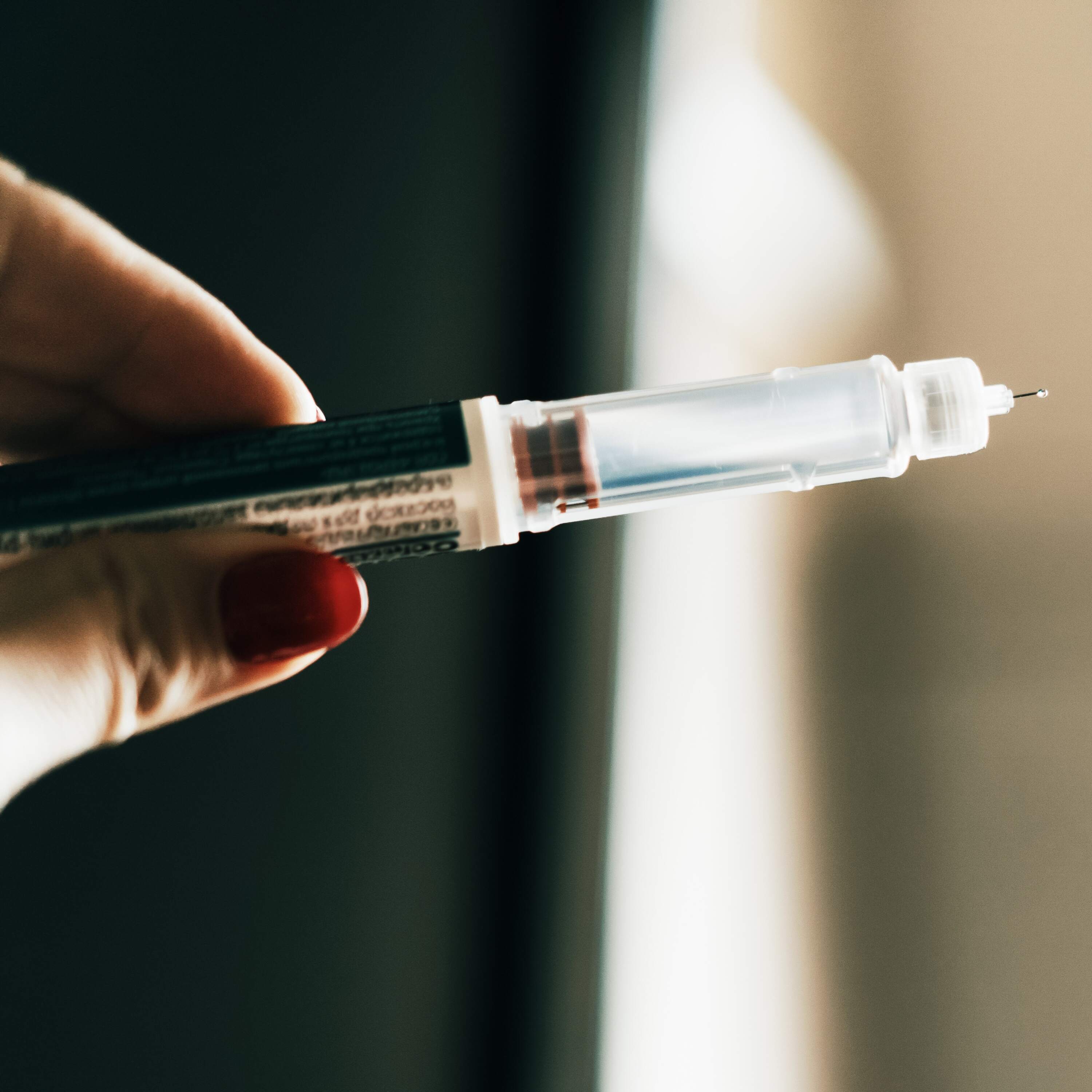
So a peptide is a string of amino acids that's smaller than a protein. And your body probably has millions of different peptides. And these peptides do different things like regulate immune function or grow certain cells control hormones. For example, most people have heard of insulin. That's a peptide. The hormone oxytocin is also a peptide. And some of these peptides are getting even more time in the limelight this week because seven commonly used peptides are up for consideration by the FDA's Compounding Pharmacy Board. They're holding a two day meeting later this week.
- [01:46]
Regina Barber
Okay, so peptides, they're definitely not a new thing?
- [01:49]
Sarah Bowden
No, no. Definitely not. But what is new is that a lot of fitness influencers and tech bros and celebrities are really exc about synthetic peptides, which sources I spoke with would consider a type of medication. And anecdotally, people report various peptides have helped them with muscle recovery and immune function. Some people say different combinations of peptides can slow aging.
- [02:16]
Regina Barber
Today on the show, the Peptide Promise. Are peptides all they're cracked up to be? And is what you get from an influencer online the same as getting it from your doctor? And you're listening to Short Wave, the science podcast from npr.
- [02:39]
NPR Sponsor Announcer
This message comes from Schwab. With the new Schwab Teen Investor account, teens can gain hands on investing experience. It's co owned by you and your teen so you can monitor the account while your teen learns how to invest and manage money. Learn more@schwab.com this message comes from NPR sponsor NetSuite don't want your business to fall behind because you're late to AI? Netsuite Next can help. Netsuite Next aims to be the next huge leap in how business gets done because AI is built into everything you do. Try NetSuite next for free. If your revenues are at least in the seven figures, go to NetSuite AI shortwave built for every industry, ready for every boardroom. This message comes from NPR sponsor Carvana. Carvana believes selling your car should be easy. Get a real offer down to the penny picked up from your driveway. You may keep waiting for a catch. There isn't one. Sell today@carvana.com Pickup fees may apply.
- [03:39]
Regina Barber
Okay, Sarah, let's get into it. What does data say about peptides? Is there proof to this idea that peptides can help people with muscle recovery and immune function, even slow down aging? I'm asking for a friend.
- [03:54]
Sarah Bowden
Totally. I mean, it depends on which peptide we're talking about because there are so many different peptides. For example, GLP1 weight loss drugs. The active ingredient in those is a peptide. And these medications have been studied for safety and efficacy. But with a lot of the more popular peptides, like maybe you've heard of BPC157. Some people use it for muscle recovery from sports injuries. We just. Okay, well, we don't know a lot about that peptide. And this is something I talked about with Paul Knopfler. He's a cell and molecular biologist at the University of California, Davis. And he told me that most of the peptide research has been in animals or like cells in petri dishes.
- [04:37]
Paul Knopfler / FDA or Expert Commentator
You know, we might predict, you know, substance X, Y, Z is going to be really safe. Can be totally wrong. You know, like it might be fine in rats and mice, but it's toxic in people.
- [04:47]
Regina Barber
So what does Paul mean by toxic in this case?
- [04:50]
Sarah Bowden
Well, for example, something he's really worried about is angiogenesis.
- [04:53]
Regina Barber
I don't know what that is.
- [04:55]
Sarah Bowden
It's the physiological process that creates new blood vessels. And growing new blood vessels is great if you're trying to get over a sports injury like a torn ligament. But with angiogenesis, it's hard to monitor where else blood vessels are growing in your body.
- [05:11]
Paul Knopfler / FDA or Expert Commentator
Probably most of us are walking around with cells that are partway down the road to becoming cancerous. And so that's one of my worries with these peptides, is that they'll kind of encourage moving along the pathway towards an actual cancer.
- [05:23]
Regina Barber
So we just don't have the data for this.
- [05:26]
Sarah Bowden
Exactly. Good, bad. Otherwise we don't know.
- [05:30]
Regina Barber
So, Sarah, it feels like the obvious answer here is more research. Like so much of our science stories. And like you said, peptides are already, like, available to us in, in our bodies. So since they're so popular, is there going to be more research focused on peptides?
- [05:45]
Sarah Bowden
Well, it's hard because you can't get a patent for these molecules unless they're reformulated in some novel way. And pharmaceutical companies don't want to spend millions of dollars on drug trials unless they own the intellectual property.
- [05:58]
Scott Bruner
Right.
- [05:59]
Regina Barber
So if drug companies aren't doing a ton of R and D to make cells, then how are people getting these peptides? I mean, one of our producers told me that there was somebody selling them in her Pilates class the other week.
- [06:09]
Sarah Bowden
Like, how is that happening?
- [06:11]
Regina Barber
Literally, a paper lunch bag full of syringes.
- [06:15]
Sarah Bowden
Okay. So people should know that in the US that for a lot of the more popular peptides, you cannot purchase medical grade quality. They are not approved by the Food and Drug Administration. So as a workaround, and maybe this is what the Pilates person was doing, people will go to the Internet and get peptides from overseas vendors. But what they're getting are research grade. So these are peptides for studies like in mice or petri dishes. These are not peptides. For people, quality control could be a really big issue. And I'm told that these substances might include solutions or contaminants that are toxic.
- [06:57]
Regina Barber
This reminds me of recreational drugs a little bit like people just diying longevity medicine and also just not knowing what's in them.
- [07:05]
NPR Sponsor Announcer
Yeah.
- [07:05]
Sarah Bowden
I mean, people aren't getting medical advice on how much of the peptide they should use or for how long they should take it, the way you would talk to a doctor or a pharmacist who would advise you on how to use a certain medication. And now, you know, there are some physicians who prescribe peptides for things like inflammation. Their patients will get peptides from compounding pharmacies. But depending on the peptide, these compounding pharmacies may be providing unregulated drugs. And I mean, with peptides, there are just so many layers of people doing things that are unsafe or maybe not legal, which is why there are calls for the Food and Drug Administration to get involved and create some guardrails.
- [07:45]
Regina Barber
Okay.
- [07:46]
Sarah Bowden
Recently, FDA scientists recommended that these peptides should not be made available to the general public because of a lack of evidence. Basically, they have the same concerns that Paul does, that biologists I mentioned earlier. And the problem is when you have a moratorium on something that A lot of people want. They're going to do it anyways and likely go to the black or gray market where products are of lower quality.
- [08:12]
Regina Barber
Ooh, okay.
- [08:13]
Sarah Bowden
So gray market peptides, by the way, are peptides that are explicitly labeled for research or non human consumption, but people are using them as medication, where black market peptides are counterfeit or illegal in some other way.
- [08:27]
Regina Barber
This happened in the 1920s during Prohibition, right?
- [08:30]
Sarah Bowden
Yeah. So some experts argue it just makes sense to be pragmatic and find ways to mitigate the danger.
- [08:36]
Regina Barber
Like harm reduction.
- [08:37]
Sarah Bowden
Yeah, exactly. You know, condoms, for example, can be considered harm reduction. Wearing a helmet when you ride a motorcycle, giving sterile needles to people who use illicit drugs, that's obviously harm reduction.
- [08:49]
Regina Barber
So how would harm reduction work for peptides?
- [08:52]
Sarah Bowden
So I talked with Scott Bruner about this. He's the CEO of the alliance for Pharmacy Compounding. And Scott suggests that the FDA could make it so that peptides are only sold by registered, registered wholesalers or require some sort of enhanced disclosure to make sure people know these drugs are not well studied.
- [09:10]
Paul Knopfler / FDA or Expert Commentator
We are talking about peptide drugs that you would only be able to get with a prescription from a licensed legitimate provider and that would be filled by legitimate state licensed pharmacies.
- [09:23]
Regina Barber
So this way it's not necessarily like all or nothing.
- [09:26]
Sarah Bowden
Right. You know, Scott acknowledges there isn't rigorous safety data on peptides, but he argues that the regulations give people access is sterile peptides, which are better than what you'd get on the illicit market.
- [09:39]
Paul Knopfler / FDA or Expert Commentator
Within that framework, FDA can collect data while ensuring that patients have a regulated pathway for getting these drugs rather than this rampant black market and gray market that we have right now.
- [09:55]
Regina Barber
So do you think that the Compounding Pharmacy Advisory Board will go for this argument, this kind of not all or nothing thing?
- [10:02]
Sarah Bowden
Scott Bruner seemed optimistic. There are people on the advisory board who are from the compounding pharmacy industry. As NPR previously reported. Some say that because these board members would benefit financially from changes to peptide regulations, there's a conflict of interest. But remember, the board is advisory. They don't make the final decision.
- [10:25]
Regina Barber
Right. That's ultimately the FDA's call. So who is the FDA going to listen to, the advisory board or the scientists if they disagree?
- [10:34]
Sarah Bowden
I don't know. Historically, the FDA has given a lot of discretion to scientists, but like other federal agencies, it's gone through major changes during the second Trump administration.
- [10:47]
Regina Barber
Yeah, I know that a lot of career professionals have left the fda.
- [10:51]
Sarah Bowden
I also recently spoke with Howard Sclamberg about this. He's a partner at the Law firm Arnold and Porter and a former FDA deputy commissioner. And when it comes to big decisions like what's happening with peptides, Howard says that stakeholders from across the agency will weigh in. This includes lawyers who work really hard to keep the FDA from getting sued.
- [11:13]
Regina Barber
So what does Howard think about the harm reduction argument?
- [11:16]
Sarah Bowden
He doesn't think it's compelling.
- [11:17]
Paul Knopfler / FDA or Expert Commentator
If you accept that argument in its extreme version, you just basically have to wave your hand at anything that's anything that ends up being popular.
- [11:29]
Sarah Bowden
Because, like, if that's the case, heroin or cocaine or really a lot of different drugs would be legal.
- [11:35]
Paul Knopfler / FDA or Expert Commentator
FDA's always pulled between a public health impulse and a more libertarian impulse to let people decide what they want to do. But when something blows up, they get criticized in either direction.
- [11:49]
Sarah Bowden
Also, he says that harm reduction argument could backfire. If peptides get the FDA's stamp of approval, it might cause more people to think peptides are safe when again, we know we don't know if they're safe and this might encourage even more people to use them. And again, these are experimental drugs. We don't know a lot about them.
- [12:09]
Regina Barber
So do you know when we might have a decision from the fda?
- [12:12]
Sarah Bowden
So Howard says that if the FDA decides to open the door to peptides, the proposed rule could come by the end of the year. Of course, there will be a public comment period. So that means the, the final rule would be sometime next year. And even if this regulatory stuff goes really smoothly, Scott Bruner says supply chains will need some time to get up and running.
- [12:34]
Regina Barber
Okay, so let's say all of that happens eventually. Will I be able to walk into my corner, like, drugstore and pick out a peptide stack the way I would buy ibuprofen or cough drops?
- [12:45]
Sarah Bowden
No, if it. No, no. I mean, if it works the way Scratch got envisions, you would need a prescription. And because peptides are experimental, it's unlikely that insurance will pay for your peptides. So it probably won't be cheap, but
- [13:00]
Regina Barber
it would be safer in, in that you at least know that you're getting the peptides you want and not some other stuff mixed in.
- [13:08]
Sarah Bowden
So I want to like, emphasize this is all like, hypothetical. Nobody knows what's going to happen. But if the only people who can buy peptides from a compounding pharmacy are the people who can pay out of pocket for specialized medical, it's conceivable that there will still be demand for gray market peptides.
- [13:26]
Regina Barber
Yeah, I think you might be right. Sarah, thank you for this really thorough rundown of all things peptides and this impending FDA decision about them.
- [13:37]
Sarah Bowden
I had a great time. Thanks for having me.
- [13:40]
Regina Barber
If you like this episode, check out our episodes on Fiber, Maxine and Red Light Therapy. We'll link them in our show. Notes this episode was pretty produced by Rachel Carlson, edited by our showrunner Rebecca Ramirez, and fact checked by Tyler Jones. Jimmy Keeley was the audio engineer. I'm Regina Barber. Thank you for listening to Short Wave from npr.
- [14:07]
Scott Bruner
This message comes from Mint Mobile. If you're tired of spending hundreds on big wireless bills, bogus fees and free perks, Mint Mobile is for you. Shop plans@mintmobile.com Switch taxes and fees extra. See Mint Mobile for details. This message comes from Jerry. Are you tired of your car insurance rate going up even with a clean driving record? That's why there's Jerry, your proactive insurance assistant. Jerry compares rates side by side from over 50 top insurers and helps you switch with ease. Jerry even tracks market rates and alerts you when it's best to shop. No spam calls, no hidden fees. Drivers who save with Jerry could save over $1,300 a year. Switch with confidence. Download the Jerry app or visit Jerry AI, NPR Today.