← Sibling Revelry with Kate Hudson and Oliver Hudson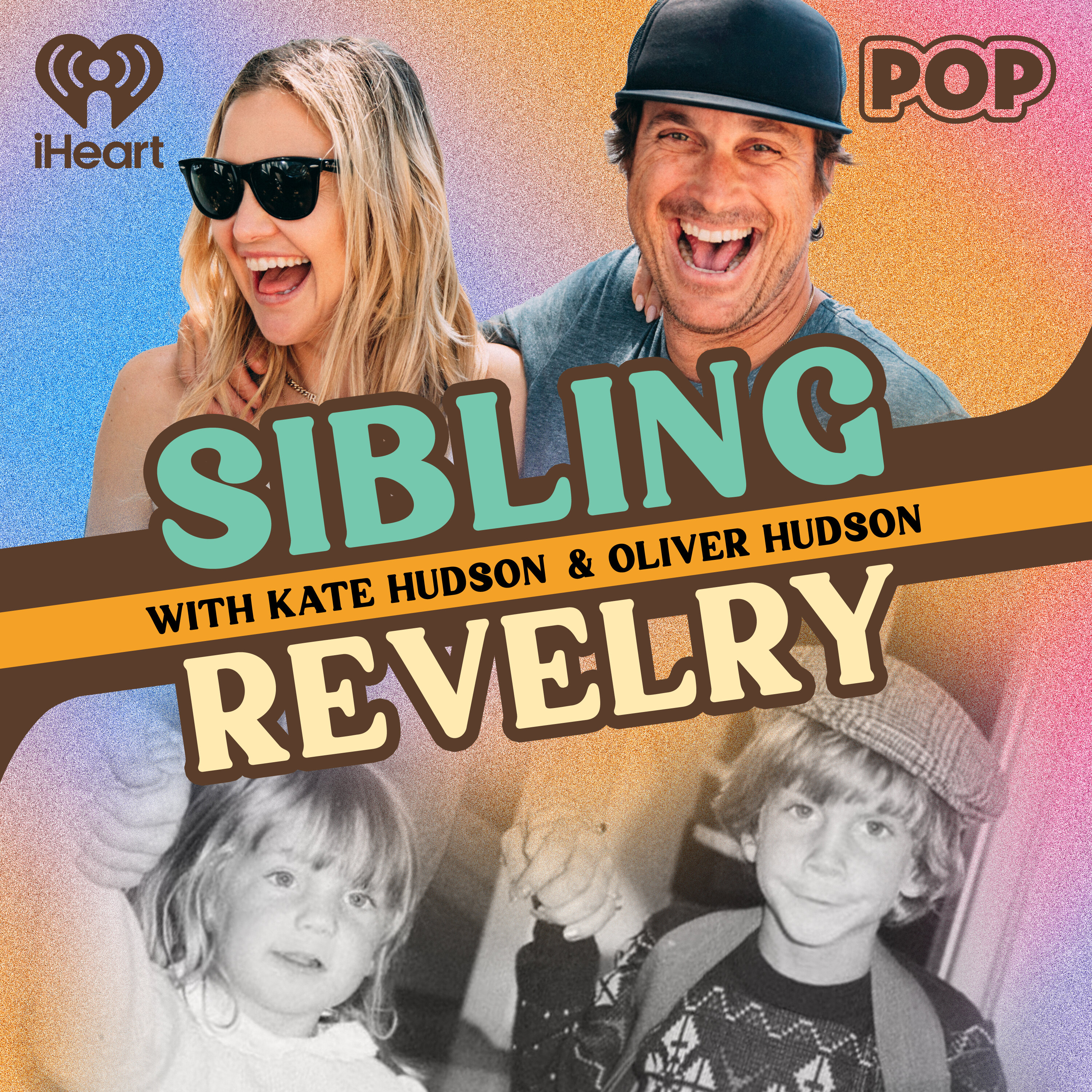
Loading summary
Transcript441 lines
- [00:00]
Kate Hudson
This is an iHeart podcast.
- [00:02]
Oliver Hudson
Guaranteed Human Fall is such a great.
- [00:05]
Kate Hudson (Ad Read)
Season to travel with my family so we've been talking about a trip to Switzerland because I actually have never been to Switzerland. Hiking in the Alps, taking those scenic trains, tasting all the chocolate. So when we travel I love staying in an Airbnb. If you're heading out this fall, consider hosting your home on Airbnb with a co host network. You you can have someone local take care of everything while you're gone. Find a co host@airbnb.com host.
- [00:34]
PayPal Ad Voice
Get your mother loving ears on because your big time radio DJs got news. PayPal lets you choose how you want to pay for all the stuff with paypal I can pay in store, pay online or pay overtime.
- [00:47]
Paul Feig
What's that?
- [00:48]
PayPal Ad Voice
You want this translated into song? I hope you're sitting down. You can pay your own way. You keep those ears on, you hear. Don't just pay baby. PayPal.
- [01:00]
Tommy Bahama Ad Voice
Learn more@paypal.com you know that feeling when you're on an island vacation? Sun on your face, cocktail in hand, no deadlines or demands? That's Tommy Bahama. Seriously, Tommy Bahama knows how to take.
- [01:13]
Kate Hudson
You to your happy place.
- [01:14]
Tommy Bahama Ad Voice
Their styles are effortless, flattering and not just for women. Their menswear has the same feel, good, fit and next level comfort. And Tommy Bahama restaurants and bars don't.
- [01:23]
Kate Hudson
Even get me started.
- [01:24]
Tommy Bahama Ad Voice
Mai Tai's Coconut Shrimp Good vibes serve daily. So if you're into craftsmanship, quality and escaping the everyday, visit tommybahama.com that's tommybahama.com.
- [01:36]
Sophie Cunningham
This is Sophie Cunningham from Show Me Something. Do you know the symptoms of moderate to severe obstructive sleep apnea, or OSA in adults with obesity? They may be happening to you without you knowing. If anyone has ever said you snored loudly or if you spend your days fighting off excessive tiredness, irritability and concentration issues, it may be due to osa. OSA is a serious condition where your airway partially or completely collapses during sleep, which may cause breathing interruptions and oxygen deprivation. Learn more at. Don't sleep on osa.com this information is provided by Lily, a medicine company.
- [02:15]
Trainer Games Announcer
10 athletes will face the toughest job interview in fitness that will push past physical and mental breaking points.
- [02:26]
You are the fittest of the fit. Only one of you will leave here with an IFIT contract worth $250,000.
- [02:34]
Paul Feig
This is where mindset comes in.
- [02:36]
Trainer Games Announcer
Someone will be eliminated.
- [02:38]
Kate Hudson
Pressure is coming down.
- [02:41]
Trainer Games Announcer
This is Trainer Games.
- [02:43]
Kate Hudson
Watch it on prime video starting January 8th.
- [02:50]
Kate Hudson (Ad Read)
Hi, I'm Kate Hudson, and my name is Oliver Hudson.
- [02:53]
Kate Hudson
We wanted to do something that highlighted.
- [02:56]
Oliver Hudson
Our relationship and what it's like to be sibling.
- [03:04]
Paul Feig
We are. A sibling rivalry.
- [03:07]
Kate Hudson
No, no Sibling rivalry. Don't do that with your mouth.
- [03:14]
Oliver Hudson
Sibling revelry.
- [03:18]
Paul Feig
That's good.
- [03:24]
Kate Hudson
It's so gorgeous in. In that I got out here. I. So nice.
- [03:28]
Sophie Cunningham
So happy.
- [03:28]
Oliver Hudson
First trip out.
- [03:31]
Kate Hudson
First trip to the des.
- [03:32]
Oliver Hudson
First trip to the des. I'm jealous. The boys are trying to come down there. Yeah.
- [03:36]
Kate Hudson
Wilder's coming.
- [03:39]
Paul Feig
Yeah.
- [03:39]
Oliver Hudson
I was like, call Auntie K. Call Mom.
- [03:41]
Paul Feig
I don't know.
- [03:41]
Kate Hudson
He's like, he writes me these long, like, manipulative text messages. I'm like, stop. Just say you want to come. Stay. He's like, I, I, my friend. It's like, okay, I haven't gotten a hold of go. I'm like, wilder, just call me. Just call me.
- [03:56]
Oliver Hudson
And.
- [03:58]
He'S like, March13. The moon was high.
- [04:04]
Kate Hudson
Well, I'm excited.
- [04:05]
Paul Feig
Yeah.
- [04:05]
Oliver Hudson
Paul Feig is in our waiting room. He's done some amazing things. His life is very interesting. Only Child.
- [04:15]
He wrote Freaks and Freaks and Geeks. I didn't know that.
- [04:19]
Kate Hudson
Yeah. Oh, yeah.
- [04:20]
Oliver Hudson
No, that's where he set him on his path. And then he's promoting this new movie with Sydney Sweeney. That is a departure.
- [04:27]
Sophie Cunningham
I know.
- [04:28]
Paul Feig
Yeah.
- [04:28]
Oliver Hudson
It's interesting.
- [04:29]
Kate Hudson
I know. I'm excited. I, I, I think he's. Honestly, he's wonderful. And obviously, he produced and co wrote Snatched, which Mom was in.
- [04:38]
Oliver Hudson
Yes.
- [04:39]
Kate Hudson
Yeah.
- [04:39]
Oliver Hudson
This is true.
- [04:41]
Kate Hudson
And, I mean, he's done. I mean, we could go on and on, but this is fun, and I love talking shop. So let's talk shop.
- [04:50]
Sophie Cunningham
Yeah.
- [04:53]
Paul Feig
Hello there. My goodness. So good to see you.
- [04:56]
Kate Hudson
Nice to see you.
- [04:57]
Oliver Hudson
Look at how dapper you are.
- [04:59]
Kate Hudson
Me?
- [04:59]
Paul Feig
You know, this, this old thing. This old.
- [05:02]
Kate Hudson
Welcome to our podcast. I'm excited because these are always my favorite ones. Talking. I said to all you, Talking shop.
- [05:09]
Paul Feig
Yeah. You're here. I love it. No, it's really, it's great to meet you. And, Kate, I go way back having watched you, because my. One of my closest friends is Betsy beers, who produced 200 cigarettes.
- [05:24]
Kate Hudson
Oh, my God, Betsy.
- [05:26]
Paul Feig
And when I saw. When she showed me the first time, I was like, who was that woman? That's the funniest woman I've ever seen in my life. And it was you.
- [05:34]
So you were just so great.
- [05:35]
Kate Hudson
I was just talking about that movie with my. With my middle son, because he's turning into quite the cinephile. Wants to watch everything, and I was like, 200 cigarettes. Don't sleep on that movie. It's such a great, fun movie.
- [05:49]
Paul Feig
And it really was.
- [05:51]
Kate Hudson
It holds up. There's so many people.
- [05:53]
Oliver Hudson
Yeah. Who's the cast? I mean, wasn't Chappelle in that as well?
- [05:56]
Paul Feig
Paul Rudd.
- [05:57]
Oliver Hudson
Paul Rudd, right.
- [05:58]
Paul Feig
And Courtney. Courtney Love.
- [06:00]
Kate Hudson
Courtney Love. Ben Affleck. Casey Affleck.
- [06:03]
Paul Feig
Right.
- [06:04]
Kate Hudson
Elvis Costello.
- [06:06]
Paul Feig
I was gonna say cameo by Elvis Costello, who said, gangway, mate or something. He walked past camera.
- [06:11]
Kate Hudson
Gabby Christina Ricci. Like it was. It was a crazy cast.
- [06:15]
Paul Feig
Yeah. Who's. Who? Directed by Risa Garcia. Raymond Garcia. Yeah. Casting director at the time, you know.
- [06:22]
Oliver Hudson
So she wasn't so funny because my son Wilder, who's 18 now, he wants to be an actor and he took her class because Reese is now teaching.
- [06:33]
Paul Feig
Oh, really? That's cool.
- [06:35]
Oliver Hudson
So he took Reese's class.
- [06:36]
Kate Hudson
She's great. I was. I was asked this at a Women in Film.
- [06:42]
At luncheon just the other day. They were like, who's been the most influential women in this industry for you? And I said, you know what? It's the casting directors. Like, the women along the journey for me that were my biggest cheerleaders were, you know, Mary Verneau, Gail Levin, like all of these great female casting directors that were really, like, in your corner. They were there. I mean, they're sort of not spoken about enough.
- [07:10]
Paul Feig
Oh, 100%. Well, do you know Allison Jones? She's my. Yeah, Elton's. Elton's my person.
- [07:16]
Oliver Hudson
She's the best. I mean. Yeah, Wyatt knows her. Well, Allison's cast Wyatt in a couple things. Yeah, she's cast me in a coup. Yeah, she's the greatest.
- [07:25]
Paul Feig
I call her the mother of modern comedy. She's discovered everyone.
- [07:28]
Oliver Hudson
She has. I mean, didn't she cast Freaks and Geeks?
- [07:31]
Paul Feig
Yeah, she won the first casting Emmy for casting Freaks and Geeks.
- [07:35]
Oliver Hudson
Yes, that's right.
- [07:37]
Kate Hudson
Freaks and Geeks is the best.
- [07:40]
Well, Paul, let's start from the. Let's start from the beginning. Like, where were you raised?
- [07:46]
Paul Feig
Right outside Detroit, in Michigan. Mount Clemens. Michigan, it was called. Yes. And, you know, very blue collar. My dad owned an army surplus store, so there you go.
- [07:57]
Oliver Hudson
Wow. Only. Only child, right?
- [07:59]
Paul Feig
Only child. Yes. That's how this happens. Exactly.
- [08:05]
Kate Hudson
And your mom?
- [08:07]
Paul Feig
My mom was. She was a working woman until she met my dad. And then when they had me, she. She just became a full time mom until I got to my early, early teens and then she went back to work for my father, working in. At the store, in the back office, so. But she always loved working women. Her working Women were her heroes and she, she, I think she always kind of, you know, not resented, but regretted that she gave up her career to, you know, but she didn't really, I mean, she, she worked for the phone company in, in Canada because she was Canadian. So. So I am a half Canadian. Officially half Canadian.
- [08:44]
Kate Hudson
Oh, guys, you have two passports here. You're one of, you're one of the lucky that my son is English. So he's got two passports and he's about to get his third because he's also Irish.
- [08:54]
Oliver Hudson
Oh, gosh.
- [08:55]
Paul Feig
So you can get three.
- [08:56]
Kate Hudson
Yeah, he's going to get three. Which I'm like, we need to try.
- [08:59]
Oliver Hudson
To get ours in the works.
- [09:01]
Kate Hudson
It's with the consulate.
- [09:03]
Paul Feig
Yeah, there you go.
- [09:04]
Kate Hudson
We're trying to get our Italian citizenship.
- [09:06]
Paul Feig
Oh, that'd be the best. Yeah, yeah, yeah. I think there's, there's towns where they pay you to come and live there.
- [09:12]
Oliver Hudson
I know, exactly.
- [09:14]
Kate Hudson
We'll give you €1 to buy this.
- [09:16]
Paul Feig
That's right.
- [09:16]
Kate Hudson
This dilapidated building.
- [09:18]
Paul Feig
Yeah.
- [09:19]
Oliver Hudson
But it's funny because then there are these stipulations. Well, if you do, you have to invest X amount of dollars into the economy. I think there are these little.
- [09:26]
Paul Feig
Yeah.
- [09:26]
Oliver Hudson
Loopholes.
- [09:27]
Whim Sound Ad Voice
You know.
- [09:28]
Paul Feig
Another simple favor we shot in Italy and the cautionary tale is don't work where you normally vacation. Oh, really? Well, I mean, it's great, but it's also still like, you know.
- [09:41]
Oliver Hudson
Yeah, yeah. No, it's true.
- [09:43]
Kate Hudson
Italians like to chill out.
- [09:45]
Paul Feig
Yeah, no, very much so.
- [09:47]
Kate Hudson
It's a thing like I, I think like culturally there's certain, there's different areas that are just the way they work. Like now that I've worked all over the world, like the, the, the craziest place for me, for crew that like worked hard and played hard both was Australia. Like, to me they're like, they work crazy hard and then they're just like wasted by like 10:30pm Exactly.
- [10:14]
Paul Feig
Which is not a bad, not a bad way to work.
- [10:17]
Kate Hudson
Oh yeah, they're just, they were like, they were like, you know, it's. They, they have that, that mentality, that power through mentality. Whereas Italians are like, I'll take a two hour break.
- [10:27]
Oliver Hudson
Right. Like, what is it?
- [10:29]
Paul Feig
Well, what we found in Italy, is it four no's, equally anything you, anything you ask for? No, we can't possibly. Well, why not? Well, because it's not done there. Well, why not? Then finally. Okay, so my producing partner, Laura Fisher.
- [10:45]
Learning the lesson the hard way is it's like suddenly realized, no, we can get anything we need if we just.
- [10:49]
Oliver Hudson
Where did you, where did you shoot in Italy?
- [10:52]
Paul Feig
In Roman Capri.
- [10:53]
Oliver Hudson
Oh, gosh.
- [10:54]
Paul Feig
Yeah. It's my favorite place in the world. Yeah, that was where it's like, oh, shoot. Why am I working here? Because my brain thinks I'm on vacation. Yeah. And now everybody hates me too, because we're blocking the road right.
- [11:09]
Whim Sound Ad Voice
Now.
- [11:09]
Kate Hudson
You go back, they're like, no, you need to leave.
- [11:13]
Paul Feig
No, now they like, they like me again because they like the movies, unfortunately.
- [11:17]
Kate Hudson
Well, so, so, so Detroit, like, growing up, what was it like in Detroit? Were you still in sort of the working class heyday of Detroit before?
- [11:27]
PayPal Ad Voice
Yeah, yeah.
- [11:27]
Paul Feig
I mean, it was, it was the. You know, I was born in 62, so I kind of grew up through the late 60s and early 70s, 70s, all the 70s there. And it was very. I mean, that was when the auto industry was completely collapsing. And so there's a lot of depression and my father owning an R and B surplus store kind of catered to people that had no money. So ironically, his store did really well selling. Selling cheap goods. But it was an interesting time, you know, and, and show business was just like a. Another planet, you know, when I, when my dad and my dad's friends who thought I was going to take over his store, like, heard I was going to go to California to try to be in showbiz, it was just like, why are you running off to the circus? You have this wonderful business here. You know, they just thought it was a pipe dream. Like I was craz crazy. Yeah.
- [12:16]
Kate Hudson
Couldn't have been more different.
- [12:18]
Oliver Hudson
How old were you when you made this decision?
- [12:22]
Paul Feig
Well, I mean, I. I wanted to do it since I was like 5 years old. But then when I was 17, that's when I, I kind of said, I'm gonna go. So I called Universal Studios. I called all the studios. A friend of my dad's was out in Hollywood and he sent us a copy of Variety. And so I went through the production list and called all the main numbers of the studios asking if they needed actors. And, and of course, no, they did not. To Universal last and they said, well, we need tour guides and if you can get here in two days, we're doing auditions for, for the tour guide. And so jump put my next door neighbor in the car and we drove out and.
- [12:57]
Oliver Hudson
Wow.
- [12:58]
Kate Hudson
So you drove, you drove to California to become a Universal Studios tour guide?
- [13:04]
Paul Feig
Yes, I did, I did.
- [13:05]
Kate Hudson
And did you get the job?
- [13:06]
Paul Feig
I did, I did. They. I got, I got put into the training program for two weeks and then. But Then you, it still wasn't guaranteed you were going to get the job. But they, they gave me the job and they said, okay, we're going to hire you, but you have to sit out in the sun because my acne was so terrible. You've got to get some color and get rid of that acne. So, yeah, there you go.
- [13:30]
Not really. I just got burned and that was broken out.
- [13:35]
Kate Hudson
Now what made you want to be an actor? Like, what was it that was the thing that drew you to it?
- [13:41]
Paul Feig
I just always wanted to. When I was five years old, I was the lead elf in a Christmas pageant and my father dressed me in kind of army surplus clothes to look like an elf. It was a ridiculous costume. And the minute I walked on stage, the whole place went crazy laughing. And they're laughing at me. But all I heard, all I heard was, wow, I just made all these people laugh. I want to do this for the rest of my life. And honestly, it never left me. That's, that was the, wow. The first shot of heroin, if you will, just going like, I gotta get in and do this thing.
- [14:12]
Kate Hudson
Was there any history in your family of like anyone that was in the arts or.
- [14:17]
Paul Feig
No, it was my, My parents were both wannabes. My dad was obsessed with like jokes, but like, you know, old time jokes that take five minutes to tell, you know, which I can't do. But he was like a rack on tour. He could just tell an old joke and keep a whole table kind of like wrapped until he got to the, you know, punchline. It was funny the whole way through. And then my mom just liked silly stuff. Like, she was really, I know she, she, oh. Her claim to fame was she played Charlie Chaplin at some party once. And that was. You imitated him. So she just thought that was the greatest thing ever. So she liked really goofy dumb humor. And then my dad, like really smart, kind of wordsmithery. And so I think that's why I'm kind of, I'm sort of high and low with my comedy.
- [15:04]
Oliver Hudson
But it's, but, but it's really unbelievable because you obviously just explained your comedy. You know, I mean, because someone is in the street, but at the same time there is that smart intellectual that goes on with that.
- [15:19]
Paul Feig
There you go.
- [15:20]
Kate Hudson (Ad Read)
You.
- [15:20]
Paul Feig
Yeah, that's what I love. You know, I, I, it's, you know, when I did Freaks and Geeks, there was kind of this feeling of like, oh, I was sort of classier than I am. It's like, guys, there's like a fart joke in every episode. So, you know.
- [15:33]
But I just like things to be real, you know, I find, you know, life is funny because it's serious and then it's hilarious and then it's serious again. And.
- [15:41]
Oliver Hudson
Yeah, I was reading and you said something interesting, which I totally believe, which is, you know, of course there's punchline comedy, but it comes from empathy. Yeah, yeah. Which makes total sense. You know, it's that. It's that relatability.
- [15:56]
Kate Hudson (Ad Read)
It's that.
- [15:56]
Oliver Hudson
Oh, my God, I. I feel you. I feel that.
- [16:00]
Paul Feig
Yeah. Because, I mean, I love clever humor, you know, and words. Wordsmithery and all that. But I think especially now because of YouTube and the fact that we're watching so much like real life stuff, you know, people getting hit in the balls and. But yeah, things that guys captured on film. And it's. It's so human to us that I think when it. If something feel too kind of overwritten, I think people can appreciate it, but they don't necessarily go like, wow, I really relate to that.
- [16:29]
Kate Hudson
Yeah. Yeah. It's also like, I feel like the. The. At least the comedians that I know, a lot of them, not all of them, but a lot of them are there. They are actually like. Well, now that I'm thinking about it, there are some that aren't very empathetic.
- [16:47]
I'm like, wait a minute.
- [16:49]
Paul Feig
Comedians are there. There are kind of two types of.
- [16:51]
Oliver Hudson
Yeah, yeah.
- [16:52]
Kate Hudson
I'm like, there's some that have no empathy.
- [16:54]
Kate Hudson (Ad Read)
Yeah.
- [16:54]
Kate Hudson
And some that are so empathic. They're such empaths. That's the only way out for them is to find humor in it.
- [17:00]
Paul Feig
Oh, 100. Well, it's like, you know, I just was at a women in film event last night, and Kristen Wiig was there, who I hadn't seen in a little while, and it was just so nice to catch up with her. But she is. She's so empathetic. But her comedy comes from the fact that she's just, like, dying inside, you know, trying to do the right thing and try not to upset anybody. And it's so.
- [17:19]
Kate Hudson
I love her so much. I realized the other day, my mom. I went with my mom on a deep dive with all of her characters because my mom had never really seen them. And she. It was like, what is this? I'm like, mom, you've got. You can't believe you haven't really done a deep dive on Kristen. Like, she's hilarious. And I got her character where she did it as now, where she was like, don't make me sing.
- [17:44]
Paul Feig
Don't make me sing.
- [17:46]
Kate Hudson
Oh, it's my favorite.
- [17:48]
Oliver Hudson
No, but that's interesting about Kristen. And there is, there's, there's like tragedy there. So all where there's like something like yearning or, you know, it's like, there's, it's, it's so, it's, it's amazing.
- [18:00]
Paul Feig
Yeah. Just characters that are barely holding themselves, you know, and that's really fun. We, we. Our heart bleeds for them and yet we like to laugh with them.
- [18:15]
Oliver Hudson
It's so wild that the holidays are almost here.
- [18:19]
Kate Hudson
It is pretty wild. I'm actually already currently right now because actually because of the fires, I had to throw away all of my Christmas decorations.
- [18:28]
Paul Feig
Oh.
- [18:29]
Kate Hudson
So I am literally right now on the Wayfare site looking at all Christmas decorations. Wreaths, garlands, holiday pillows. Because I had to do a full refresh. And let me tell you something. It's the way to go.
- [18:44]
Oliver Hudson
No, I know. And by the way, timing is right because their Black Friday sale is happening now. So you can score huge deals in all things home. Up to 70% off and Wayfair items arrive so fast. Free shipping too.
- [18:57]
Kate Hudson
I love it. Whether it's modern, farmhouse, something in between, you can find your style. You know what else I love about Wayfair? You can do things that are super, super affordable and then they also have really like luxurious items on there. So it kind of is the full spectrum of whatever it is that you could ever possibly need. So do not miss out on early Black Friday deals.
- [19:17]
Oliver Hudson
So starting October 30th, you can shop Wayfair's can't miss Black Friday deals all month long. Plus you can join Wayfair's new loyalty program and get 5% back on every purchase. Members only sales and free shipping on everything.
- [19:29]
Kate Hudson
Don't miss out on early Black Friday deals.
- [19:32]
Oliver Hudson
Head to Wayfair.com now to shop Wayfair's Black Friday deals for up to 70 off.
- [19:36]
Kate Hudson
That's Wayfair.com W-A-Y-F-A-I R.com sale ends December 7th.
- [19:46]
PayPal Ad Voice
Get your mother loving ears on because your big time radio DJs got news. PayPal lets you choose how you want to pay for all the stuff. With PayPal, I can pay in store, pay online, or pay overtime.
- [19:58]
Paul Feig
What's that?
- [19:59]
PayPal Ad Voice
You want this translated into song? I hope you're sitting down. You can pay your own way. You keep those ears off, you hear? Don't just pay, baby. PayPal.
- [20:12]
Oliver Hudson
Learn more@paypal.com October is one of my.
- [20:14]
Kate Hudson (Ad Read)
Favorite times to travel with my family. You know, it's not too hot, it's not too cold, and the crowds are lighter. So this year we've been talking about heading to Switzerland because I know the kids would love hiking in the Alps, riding those mountain trains, and of course, trying every kind of chocolate they can find. When we do trips like this, I love need to stay in an Airbnb. You get that local vibe. It feels like you actually live there.
- [20:39]
Oliver Hudson
For a little while, which makes the.
- [20:40]
Kate Hudson (Ad Read)
Memories that much richer. So if you're traveling this fall, it's also a perfect time to think about hosting your own home on Airbnb. And the best part, you don't have to do it all by yourself. With Airbnb's co host network, you can hire a local co host to manage everything from your listing, guest communications, and even making sure the place looks amazing. Find a co host@airbnb.com host.
- [21:03]
Kate Hudson
You know that feeling when you're on.
- [21:04]
Tommy Bahama Ad Voice
An island vacation, sun on your face, cocktail in hand, no deadlines or demands. That's Tommy Bahama. Seriously, Tommy Bahama knows how to take.
- [21:13]
Kate Hudson
You to your happy place.
- [21:14]
Tommy Bahama Ad Voice
Their styles are effortless, flattering, and not just for women. Their menswear has the same feel. Good fit and next level comfort. And Tommy Bahama restaurants and bars don't.
- [21:24]
Kate Hudson
Even get me started.
- [21:25]
Tommy Bahama Ad Voice
Mai Tai's, Coconut shrimp, Good vibes serve daily. So if you're into craftsmanship, quality, and escaping the everyday, visit tommybahama.com that's Tommy.
- [21:35]
Trainer Games Announcer
Bahama.com 10 athletes will face the toughest job interview in fitness that will push past physical and mental breaking points.
- [21:47]
You are the fittest of the fit. Only one of you will leave here with an IFIT contract for $250,000.
- [21:56]
Paul Feig
This is where mindset comes in.
- [21:58]
Trainer Games Announcer
Someone will be alone, eliminated.
- [22:00]
Kate Hudson
Pressure is coming down.
- [22:03]
Trainer Games Announcer
This is trainer games.
- [22:05]
Kate Hudson
Watch it on prime video starting January 8th.
- [22:11]
I'm a little biased about this, and maybe it's a projection of just my own, like, thing of loving to do comedy and then feeling like it's very underappreciated in terms of, like, being a serious actor.
- [22:23]
Paul Feig
Yeah.
- [22:24]
Kate Hudson
And, and I actually find that the, the people who, who can be comedic are usually my favorite overall actors, whether they're dramatic or comedy, like they can hit there. There's a different kind of connection to timing and understanding of like, humanity for some reason in comedic actors that make their dramatic work so wonderful. When you see it, you know, I.
- [22:51]
Paul Feig
Mean, okay, let's, let's talk about this because this is the, the, you know what upsets me about the industry, and yet I don't care ultimately, you know, that the, The. The funny people get so written off as just being. Well, they're just funny, you know, I mean, my example I always bring up this is Steve Carell never won an Emmy for the. For the office.
- [23:14]
Oliver Hudson
That's insane.
- [23:15]
Paul Feig
Never won an Emmy for it. And I would talk to voters about that, go, why? And they go like, well, he just. He shows up and he's crazy.
- [23:20]
Kate Hudson (Ad Read)
I'm like, yeah.
- [23:21]
Paul Feig
Are you out of your mind?
- [23:23]
Kate Hudson
Yeah. You have no idea how hard that is.
- [23:25]
Whim Sound Ad Voice
Y.
- [23:26]
Paul Feig
How much that is not Steve Carell is not Michael Scott at all in.
- [23:31]
Kate Hudson
Real life or the intelligence that it takes to actually be able to create a character like that.
- [23:36]
Paul Feig
Exactly. But the reason it. You don't win awards is it looks easy. If you do it right, it looks easy, and so then you get no credit for it. And as we know, it's really. It's one of the hardest things in the world.
- [23:46]
Kate Hudson
I feel like that with women, and when women are charming, like, there's certain women who have this innate, this charm that somehow people just go like, oh, well, that's just an easy. Yeah, that's. And you're. And you're. And. And you. I. I know a lot of them. And you're like, it's so underappreciated that it's actually. It's actually a part of the craft. Yeah.
- [24:09]
Oliver Hudson
Going back to the Steve Carell thing, I would love to get the nominees together and say, okay, you do the office now, Steve. You do this show and see. See who's. Who's. What's the most difficult. And I can guarantee you no one could do. Do what Steve did. I know Steve could probably do what some of these other people totally.
- [24:28]
Paul Feig
You know, Steve lost almost every time to Alec Baldwin. It's like, look, Baldwin was really funny on 30 Rock, but it was just more of a, like an obvious kind of yes.
- [24:37]
Oliver Hudson
You know, yes.
- [24:37]
Paul Feig
You know, no, no, no. Shade to Alex. No, of course, Alec. But. But at the same time, because I'm. I'm.
- [24:43]
Kate Hudson
I'm Team Steve, so those things do become, like. It can be trivial when you're inside of it. Sometimes the whole, you know, experience of, like, you know, whether it be critical or like the cr. You know, it. It. And I think from the. Or the creative place, you just. It's so hard to get anything made, let alone anything good like, you know.
- [25:09]
Paul Feig
Yeah.
- [25:09]
Kate Hudson
So it's kind of, It's. And then, and then sometimes you wonder why kind of like fine art. You wonder why something becomes so big, big and so popular. Or somebody does.
- [25:23]
Paul Feig
Yeah.
- [25:23]
Kate Hudson
When you're looking around and you're seeing.
- [25:25]
Oliver Hudson
So much talent, there's a lot of luck there too.
- [25:29]
Kate Hudson
Yeah. It's very interesting business to, like, hang your hat.
- [25:33]
Paul Feig
Well, I find the business a little annoying in that way because it's kind of like throughout the year you go, okay, it's these 10 things have been anointed or these six things have been anointed for award season. And so we're just going to hear about those the whole time, you know, and, And I always, I always feel like I waste my, my academy votes, but at the same time, I vote for the movies that I, I really like, that I know aren't gonna get votes just because, you know, I, I like those movies. And they, they do what they're supposed to have done. They entertained an audience.
- [26:05]
Kate Hudson
Yeah.
- [26:06]
Paul Feig
You know, and that's so kind of discounted as being like, okay, well, you're just pandering. It's like, I'm not. I'm making the movies. The reason that the studio wants me to make these movies is to entertain people, and that's why I want to do it.
- [26:16]
Kate Hudson
That's. I, I agree. I feel like. And as I, I really think that one of the things that sometimes we lose sight of is what it is to make a movie that makes you feel something and that people want to see meaning. Like that it can have everything. It can be funny, it can be sad, it can be inspiring, it can be big and epic. And that, that is, if you look at the best pictures of the year, that it should also incorporate in a sense of, like, what is moving people as a. As a. As a whole, not just a sort of internal understanding of, you know, whether it be. And by the way, there's. I think there's a place for all of it. But there has been a huge shift. Like when you start to see in the sort of 2010, the shift of.
- [27:10]
Oliver Hudson
Best Picture, well, then they, they. Well now. Now best pictures are 7, 000 of them. It's like every, every film that was made that.
- [27:21]
Kate Hudson
There's a lot of them. But. But it, it did shift a little bit, you know, because we sort of somewhere along the line felt like that the bigger movies weren't necessarily the best crafted films, when in fact, like, making a big movie that people want to go see is so hard, you know, And I think maybe the Marvel world kind of shifted that a little bit for everybody.
- [27:42]
Paul Feig
But, yeah, I mean, people start to resent, you know, movies that make a lot of money. And then look, and I get that awards are great for kind of supporting smaller films at the same. But look, you know, like a movie this year, like Sinners, Giant movie, and it's going to win a ton of awards and it so deserves it because it worked on every single level, you know, and that's what I really admire. And if it was up to me, also Weapons would be up for best picture.
- [28:02]
Oliver Hudson
Yeah, I just watched that.
- [28:03]
Kate Hudson
Well, I hope you watch our movie.
- [28:05]
Paul Feig
Yeah.
- [28:05]
Kate Hudson
Wait, watch me and Hughes movie too.
- [28:08]
Paul Feig
Okay, done. I'm in.
- [28:10]
Oliver Hudson
Yeah, Weapons was great, but the. The ending was abrupt for me. I. Whoa. I mean, I wasn't expecting that, you.
- [28:17]
Paul Feig
Know, but it was funny. Oh, my God.
- [28:19]
Oliver Hudson
Oh, it was so funny. Oh, my God, it.
- [28:22]
Paul Feig
So great.
- [28:22]
Kate Hudson
Oh, I saw Sinners.
- [28:25]
Sophie Cunningham
I loved it.
- [28:26]
Oliver Hudson
What's his name? Craigs. Right? He.
- [28:28]
Whim Sound Ad Voice
He.
- [28:28]
Paul Feig
Zack Greger.
- [28:29]
Oliver Hudson
Yeah, yeah, he. He's. That last sequence when she's, you know, the kids are chasing her, it was hysterical. It was like almost. It turned into like a French farce or something.
- [28:39]
Paul Feig
The sound design is the funniest part.
- [28:42]
Oliver Hudson
I was watching with my daughter, which is another story, who's 12, but she loves horror and she loves scary.
- [28:48]
Paul Feig
Nice.
- [28:48]
Oliver Hudson
And when, you know, you know, when he did his job, when she just starts cracking up.
- [28:55]
Paul Feig
Exactly.
- [28:56]
Oliver Hudson
I mean, she was laughing her ass off. And she.
- [28:59]
Paul Feig
Horror is the new comedy, you know, it really is. That's why all of us, all those comedy guys are going into thrillers and horrors and all horror movies. Just because it's a. It's a second way to get a reaction out of an audience.
- [29:10]
Kate Hudson
That's what Oliver was saying. Like, we, we love this departure for you. You know, it's like not what you would expect as we know your work. But before. Before we get into that, I'm curious what started, like your desire, you know, you came to. To act. But then where did the sort of writing and, you know, the itch to. To write and produce and create?
- [29:37]
Paul Feig
Well, it was all kind of part and parcel because I, you know, I. When I was a kid, I remember reading about Woody Allen and then like, he. It's like, wait, he stars and he writes and he directs, like he does it all. I mean, was like, how do you do that then? Albert Brooks, you know, and all these people. So I was kind of like, well, I want to do that. I want to kind of do it all. So it was always part and parcel with it all. And so I went to film school still as an actor kind of thinking, I'm going to be able to direct myself and make movies of myself. And then also thought, I'll be better on set because I'll understand how movies made and stuff like that. And then it just kind of, you know, acting kind of chased me out of it because, you know, I was doing really well for a character actor. For 15 years. I was a regular on, like, five different TVs, network TV series, you know, but they all got canceled after the first. First season and. And then finally when I was on Sabrina the Teenage Witch and it was finally a hit, and, you know, I did one season on that, and then they wrote me out. And it's like I was like, I. Maybe the writing's on the wall. Like, I got to get out of this. My wife had been saying to me for, you know, a few years, like, maybe you should start thinking about, you know, going behind the camera. It's always nice to hear your wife say that.
- [30:46]
But she was right. She was right. I was like. I was very limited in what I could do. You know, I was. I was. I was funny, but I was funny. Either being a total goofball or being the sarcastic, underplayed guy, and that was kind of it. So, you know, so I'm very happy that I got up.
- [31:01]
Kate Hudson
And what kind of work that you saw when you were younger kind of defined, like, who you wanted to be as an artist. Not that it doesn't shift and change, but, like, for instance, for me, and I think for Ali, too, like Parenthood when we were kids, like, that kind of.
- [31:17]
Paul Feig
Right.
- [31:18]
Kate Hudson
Jim Brooks, like that. That kind of tone was all. Oliver and I is like, that's what we want to do. You know, we want to make movies like that. Or Oliver loved also, like, you know.
- [31:30]
Oliver Hudson
Evil Dead and Evil Dead too.
- [31:34]
Paul Feig
Yeah, Evil Dead, the greatest comedies of all time.
- [31:36]
Oliver Hudson
It was incredible comedy. It's amazing.
- [31:39]
Paul Feig
I mean, for me, it was a weird road because when I was an actor, you know, in coming up as a kid in Michigan, movies to me weren't something you made. They were. Were examples of what you wanted to be. So, like, when I saw Close Encounters of Third Kind, I was like, Oh, I want UFOs to come and take me away. You know, so it was kind of a weird in that way. And then I was also just way into, like, the Marx Brothers and, you know, you know, Inspector Clouseau, those, you know, Pink Panther movies and all that. So I think I just wanted to be kind of like a. A clown, but like a realistic clown. You know, that's why when Steve Martin. Martin hit the scene, he was just my be all and end all. I wanted to be Steve Martin. Jerk.
- [32:21]
Oliver Hudson
The jerk, right.
- [32:22]
Paul Feig
Seminal. Seminal movie for me. Yeah. Like, that was probably what I wanted to do more than anything is my version of that.
- [32:28]
Oliver Hudson
Do you ever put yourself in your movies?
- [32:30]
Paul Feig
Yeah, I, I, I occasionally.
- [32:34]
I'll do a thing or two like you. Like, if you see the movie Spy, there's a God drunk guy who walks into the wall and falls down. That's me. You know, I played a doctor in the Heat, but.
- [32:44]
Oliver Hudson
Right.
- [32:44]
Paul Feig
The problem, Oliver, is that as a director, you've got so much power, you know, and then the minute you step in front of the camera, all your power goes away. And then all the people you're telling what to do on screen suddenly see that you're not that good. And it's kind of like they're like, this guy's giving me directions. You barely say his lines for you. Yeah, so I've kind of pulled back, but I will pop up here in the here and there.
- [33:08]
Oliver Hudson
So did you write Freaks and Geeks? Was that your first thing, or was it just a. You wrote and.
- [33:15]
Paul Feig
Yeah, yeah, exactly. I wrote it as a spec. I was out on the road trying to promote this low, low budget independent film that I wrote, direct, and starred in that never got released and was just out on this college tour with it and thought I got to write something. I was always writing. I mean, I've been constantly writing scripts. And yeah, I've always. I always wanted to do something about my high school experience and wrote it as a spec and sent it to Judd, who was an old friend. And, yeah, he. They picked it up. So, I mean, it was crazy. So I created this show thinking it was probably the one. I thought that wasn't gonna go like, all the other things I wrote and I was so, you know, into because they were all these movie scripts. And this was the first time I went like, maybe I'll write like an hour TV show. Because my friend Matt Reeves had just done Felicity with JJ and he sent that to me. I go the hour format. That's kind of like a movie. So I'll write it for that. And then suddenly had a show on the here.
- [34:07]
Kate Hudson
Wow, how cool. And you are close. Like, you've been close with Judd for a long time.
- [34:12]
Paul Feig
Yeah, I've known him. God, we. We were all standups together. So I've known him since he was like, 16 or 17 years old.
- [34:18]
Kate Hudson
I love that whole crew like you every I, I love that when you find these sort of clusters of, of. Of like drive, talent. Com. Especially comedy, you know, working with Ike right now, Baron Holz and we love I and Mindy and, and, and like, like, you know, you sort of lean on each other and all these things and everybody has their kind of role, you know, and like their, their.
- [34:46]
Tommy Bahama Ad Voice
Strong.
- [34:46]
Kate Hudson
Suit and when you get everybody together, especially in like a writing room or on set or whatever, it's just. There's nothing more fun.
- [34:54]
Paul Feig
Yeah, well, comed comedic actors are great because they're team players, because you have to be because you can't do it by yourself. It's not like stand up sometimes aren't great, you know, just because there's so much about being in control of themselves and getting the laugh and there are ones that can be really good. But I find in general, as more people come from the improv world are tend to be the best and tend to be the best actors too.
- [35:17]
Oliver Hudson
Yeah.
- [35:18]
Kate Hudson
Oh my God. I'm working with Drew Tarver, who's like a great, like, he does that. What's it called? Ssb. Ssbc, Is it?
- [35:29]
Paul Feig
Yeah.
- [35:29]
Kate Hudson
He's so great. He's so like, working with him is one of the great joys of my working life so far because he just can make any, literally something out of anything.
- [35:42]
Paul Feig
Yeah, those are people I like to hire, like, especially in, in, you know, small roles that are nothing roles because I know they're going to show up and make it into a something role. You know, it's gonna. Even if it's one moment, it's a moment, memorable moment that's not wasted of just somebody going like, yeah, they're over there, you know. Yeah, it becomes something.
- [35:58]
Oliver Hudson
Yes.
- [35:59]
Kate Hudson
Yeah, it's. It's been great. When you started working on the Office, how did that come about?
- [36:05]
Paul Feig
I. It was, well, the backstory and that was actually after, you know, Ricky Gervase's show, you know, had been done. They were trying to get everybody to do it and they came to me to, to develop it for television. I was like, forget it. I'm not touching that. That show is so classic and great. Like who, who. What Mad Person would go that. And of course Greg Daniels comes in and makes it. Brilliant. No, that was. I was just directing a lot of television at the time and doing Arrested Development and things like that. And yeah, got. They contacted me about doing an episode in that. In the, in the first full season because they did those six one offs and I was involved in that. But the, the irony was I was Doing a pilot at, at the same time as they were doing the pilot for the Office. This. And where they were editing is where we were shooting some. A scene. And Greg Daniels came over to me and it was Rodney Rothman and Jonathan Groff and said, like, come in here. I need your advice on something. And he was trying to figure out what the opening music for the, the show was going to be. And so he played us a couple of songs, and then with the one that they end up using, we're all like, oh, that's the one. That's really cool. So it was like this big team effort of all of us going like, that's it. So every time I hear it, it's like, wow, we kind of. Yeah. Into that decision. That's kind of cool. That's cool.
- [37:21]
Oliver Hudson
Now. You're so right. That's what's so great about comedy is just the, the how collaborative it all is, you know, and those egos, obviously, you know, there's competition. You hear all these SNL stories about, you know, people competing, but at the end of the day, you can, you only make each other better, you know, and if you can let go of those. Eat that ego.
- [37:40]
Paul Feig
Yeah. I think SNL gets hardcore because they're, they're fighting to get what they wrote on the air. I think once it's, you know, with a movie or a television show, it's all set. So now people are just showing up to make it the best it can be. And that's. Then, then it tends to be pretty, you know, everybody going in the same direction. Yeah.
- [37:59]
Oliver Hudson
Are you big on improv and letting everyone just go off the rails?
- [38:03]
Paul Feig
Well, yeah, I mean, we do a lot of that, but at the same time, it's, it's controlled chaos. You know, Know, the script's very tight. The, the scene structure is very tight, and then it's within the scene where we go, we can play with that punchline, we play with that joke, play with that, that connective tissue there. And so that's where we would play around a lot. Yeah. Yeah.
- [38:23]
Kate Hudson
Paul, do you only direct the things you write or do you direct things?
- [38:27]
Paul Feig
No, I, I, I'm, I, I, I. That was my goal. And then I just realized if I'm just going to sit around and, and write, I'm not going to get enough movies made because the ideas don't come to me that fast and I get more.
- [38:41]
That is a great idea or is kind of great, but needs, needs work. That's when I get excited because I find my way in and then I can kind of make it my own and do a lot of rewriting on stuff. But no, I, I, you know, I was very driven by, I, I read that Felini's last words, or one of his last words on his deathbed were, I wish I made more movies. And I really understand that because if you sit around waiting for the perfect thing all the time, time, you know, it's just fun to be working. You're not, obviously, not making things you don't think are good.
- [39:12]
Kate Hudson
Yeah.
- [39:13]
Paul Feig
But if you can find your way into something and make it your own and then, then it becomes a passion for you, that's exciting.
- [39:18]
Kate Hudson
It also feels like it's just such a muscle, like you have to be working it all the time. That's like anything, you know, it's like, yeah, I, you know, I, I, I find that about acting. It's like when you get on a set and you haven't been acting for a while, you're like, oh, yeah.
- [39:34]
Paul Feig
You know, that's a weird thing about when you make a movie because, you know, there's so much time for prep, and then you got your, you know, two, three, four months of production, and then it's another year of, of post. So every time you get back to a set, you're like, wow, it's been a year since I was here, even though I do it all the time, so. But that's what I love about being a TV director. When I was doing it, it's just, you're just going from set to set to set. Genre, genre. And you learn so much because one day you're doing, doing a medical drama, the next day you're doing a mockumentary, the next day you're doing like a show about a drug dealer. You know, and it's, Yeah, I learned a lot. I learned how to be very versatile by doing that.
- [40:09]
Oliver Hudson
Are you doing any tv?
- [40:11]
Paul Feig
We have a tv, our TV division, and we're developing a lot of television. There's a bunch of pilots I'm supposed to direct, but yeah, movies are my bread and butter. Yeah, I love the most.
- [40:19]
Oliver Hudson
Let me ask you a quick question, just about comedy in general. From when you started until now. I mean, where have you seen the evolution of it? I mean, is it where it was?
- [40:30]
Paul Feig
No, comedy is so evolving, you know, it was, it's kind of gone from being very broad to being very behavioral. And I, even though I love broad comedies as a kid, they aren't what I want to make. So, like, the 90s were very broad and naked.
- [40:49]
Oliver Hudson
Gun.
- [40:50]
Paul Feig
Yeah, like the Jim Carrey stuff, which was very, you know, it's very funny. It's just, that's kind of not what I wanted to do. I wanted a little more not grounded, but I wanted a little more authenticity, I think, out of the characters. And I really credit again, going back to what I was saying about YouTube, I think the rise of that kind of like, you know, seeing videos of things that actually happened or very raw kind of people just talking to the camera kind of stuff made people like behavioral more than they like overproduced kind of comedy. So it's a, for me, it's a kind of a nice time. But look, it'll shift again. It always does. And suddenly the broadest of broad comedies will suddenly be popular.
- [41:36]
Kate Hudson
I have this thing because when we're doing our show, like I, I'm not a broad comedian. Like, I, everything I do has to feel like it's coming from somewhere real, you know, just because it makes more sense to me. But then I have so much respect for people who can just be broad. Like.
- [41:54]
Paul Feig
Yeah.
- [41:55]
Kate Hudson
You know, because it takes like this insane amount of like, it's almost insane.
- [42:00]
Oliver Hudson
Like commitment, I mean, commitment and.
- [42:03]
Kate Hudson
Oh, it's, it's just.
- [42:06]
Whim Sound Ad Voice
You have to.
- [42:07]
Paul Feig
Be a smart performer to be brought. It's, it's almost like, you know, you have to be a great singer to sing badly. You know, they always say, say because you could if you, you know, how many times have we seen over the, over the decades, like certain celebrities will host SNL and they're just trying so hard to be funny and you're just like, oh man, please dial it back. Please dial it back. So then you really appreciate people who can just go for it and be big and be hilarious.
- [42:31]
Kate Hudson
Yeah, it's, it's definitely like my, my favorite, like when I see someone able to do that, it's.
- [42:37]
Paul Feig
Yeah.
- [42:38]
Oliver Hudson
The stand up comedian is having a moment right now, just in general, you know, with the podcasts, of course, promotional, but also these specials, you know, because, you know, I have a production company myself and you know, I'm trying to get some of these guys into these shows, but it's not monetarily advantageous to be on a television show only going to take money away from them now.
- [43:01]
Paul Feig
100%. I mean, you know, I was a stand up for five years, you know, back in the 80s and loved it and I'm just glad to see that it's doing well, you know, right now because it's, I think it's kind of the purest art form in a weird way because, because it's a microphone and a person, you know, and doing a, ostensibly a one person show and you know, that is a real craft to, to do that and be great at it. And it's really. I, I love watching great stand up comedians. I, I don't miss doing it at all. Literally. You'd have put a gun to my head to go do it again.
- [43:38]
Oliver Hudson
No, I know. It's funny though, because you have these huge comedians who've become huge stars, but they'll always go back to what they love. I mean, Handler's a very good friend of our families and he actually bought my childhood home. But the guy is just epic and iconic. But he'll go from doing this movie to then get winning an Academy award and doing a crazy comedy and then he has dates. He's been on the road for the last three months. It's like, dude, are you serious? It's crazy. You can't stop.
- [44:17]
PayPal Ad Voice
Get your mother loving ears on because your big time radio DJs got news. PayPal lets you choose how you want to pay for all the stuff. With PayPal, I can pay in store, pay online, or pay over time.
- [44:30]
Paul Feig
What's that?
- [44:31]
PayPal Ad Voice
You want this translated into song? I hope you're sitting down. You can pay your own way. You can keep those ears on, you hear? Don't just pay, baby. PayPal.
- [44:43]
Oliver Hudson
Learn more@paypal.com October is one of my.
- [44:46]
Kate Hudson (Ad Read)
Favorite times to travel with my family. You know, it's not too hot, it's not too cold, and the crowds are lighter. So this year we've been talking about heading to Switzerland because I know the kids would love hiking in the Alps, riding those mountain trains, and of course, trying every kind of chocolate they can find. When we do trips like this, I love need to stay in an Airbnb. You get that local vibe. It feels like you actually live there.
- [45:10]
Oliver Hudson
For a little while, which makes the.
- [45:11]
Kate Hudson (Ad Read)
Memories that much richer. So if you're traveling this fall, it's also a perfect time to think about hosting your own home on Airbnb. And the best part, you don't have to do it all by yourself. With Airbnb's co host network, you can hire a local co host to manage everything from your listing, guest communications, and even making sure the place looks amazing. Find a co host@airbnb.com you know that.
- [45:35]
Tommy Bahama Ad Voice
Feeling when you're on an island vacation, sun on your face, cocktail in hand, no deadlines or demands. That's Tommy Bahama. Seriously, Tommy Bahama knows How to take.
- [45:45]
Kate Hudson
You to your happy place.
- [45:46]
Tommy Bahama Ad Voice
Their styles are effortless, flattering, and not just for women. Their menswear has the same feel, good fit and next level comfort. And Tommy Bahama restaurants and bars don't.
- [45:55]
Kate Hudson
Even get me started.
- [45:56]
Tommy Bahama Ad Voice
Mai Tai's Coconut shrimp.
- [45:58]
Kate Hudson
Good vibes.
- [45:59]
Tommy Bahama Ad Voice
Vibes serve daily. So if you're into craftsmanship, quality and escaping the everyday, visit tommybahama.com that's Tommy.
- [46:07]
Trainer Games Announcer
Bahama.com 10 athletes will face the toughest job interview in fitness that will push past physical and mental breaking points.
- [46:19]
You are the fittest of the fit. Only one of you will leave here with an IFIT contract for $250,000.
- [46:28]
Paul Feig
This is where mindset comes in.
- [46:29]
Trainer Games Announcer
Someone will be eliminated.
- [46:32]
Kate Hudson
Pressure is coming down.
- [46:34]
Trainer Games Announcer
This is trainer games.
- [46:36]
Kate Hudson
Watch it on prime video starting January 8th. Then the space hamster flew his hot air balloon all the way to the bottom of the ocean.
- [46:46]
Miko Mini Plus Ad Voice
Where did that story come from? Book dream? Nope. It came from a conversation. Meet Miko Mini plus, the AI companion that co creates personalized story adventures with your child in real time.
- [46:59]
Kate Hudson
What color was the hamster's cape? And what did he pack for lunch?
- [47:03]
Miko Mini Plus Ad Voice
Unlock your child's imagination. Discover Miko Mini plus and the magic of AI exclusively at Costco.
- [47:14]
Kate Hudson
I want to get to the housemaid.
- [47:17]
Paul Feig
Yes, please.
- [47:19]
Kate Hudson
This is your first psychological thriller.
- [47:21]
Paul Feig
Yeah, yeah, yeah. I mean, it's a simple favor a little bit, but this is much more in that direction.
- [47:27]
Kate Hudson
And it was a. It was a book.
- [47:29]
Paul Feig
Yeah, yeah, the house made it. It's. It's still on the bestseller list. It's like it's been on this New York Times for like two years.
- [47:35]
Oliver Hudson
It's crazy.
- [47:36]
Kate Hudson
So how did this come on your debt? Like, how is this something that you were drawn to do?
- [47:40]
Paul Feig
It was. I was doing another simple favor for Lions Gate, who I did the first one with, and it was going really well, and they're really happy with how it's going. And then unbeknownst to me, my. My business partner, Laura Fisher had been kind of chasing this project that they had over there because she knows I love thrillers. I mean, that's all I kind of watch. I don't watch much comedy. I really just watch thrillers and horror movies and. And it just seemed like the perfect fit. So they, they, you know, sent it to me and Sydney was already attached. Sydney Sweeney, who I'd been wanting to work with a lot. And yeah, I read it and just like, I know how to do this. I see this very clear clearly.
- [48:17]
Kate Hudson
It's so much Fun. It's very Hitchcock. And I guess, like, when you go into something like this, like, I know.
- [48:26]
Casting, like, did you. Did you clearly got who you wanted? I mean, Sydney was already attached to it. And then Amanda. How did Amanda come on board?
- [48:35]
Paul Feig
Well, Amanda, I. I'd had a. A meeting. We actually had, like, who I love, by the way. She's the greatest.
- [48:41]
Kate Hudson
We just spent a night together and had had so much fun.
- [48:45]
Paul Feig
Oh, she's the best. No, no. We'd had like, coffee like 10 years prior of kind of a general meeting and just really hit it off. And it was like, we got to do something and just could never find the right thing. And then just the nature of this story, it seemed like the kind of physical similarities and size between Sydney and Amanda would really work really well. And. And also knowing just how brilliant Amanda is as an actor, it was just kind of like, let's go for Amanda for this. And then with Brandon Sklenar, he'd. It ends with us with. With my buddy Blake Lively. And when we were shooting Another Civil Favor, she just kept saying, like, I'm working with this guy. He's so amazing. His name is Brandon, and he's like, funny and handsome and blah, blah. And so I was like, okay. And then met with him and the minute he walked into the Tower bar for us to have lunch, I was just like, oh, hired. Like, I mean, just this big physical presence and. And funny and. And everything. And. Yeah, so I really kind of got my dream cast. And then Michaela Moroney was in another simple favor with me, who I cast out of Italy. And it just like, literally, like the part was written for him, so brought him.
- [49:50]
Oliver Hudson
Is there. Is there comedy infused into this? Is it. Is it got a quirk?
- [49:55]
Paul Feig
Yeah, well, you know, it. This. This one is. I would never call it a comedy, although I always say that all my movies are comedies. Ultimately, they're just. Some just are very, very dark. And this is the. It's the. Let's say comedy. It's the great reaction from an audience of enormous release, let's just say. So it's kind of. With kind of in. In the way the weapons did. You know, you're kind of terrified for. For the first, you know, two thirds, and then you're like, oh, I'm just going to relish what's happening now. And so we got a. We got a big response out. The audience is very interactive with this.
- [50:32]
Kate Hudson
Great.
- [50:32]
Paul Feig
Especially, like the third act.
- [50:34]
Oliver Hudson
Yeah, I'm sure you've seen it. But. But what about. You've seen Happiness, Todd Salons.
- [50:38]
Paul Feig
Oh, my God. Yeah. Yeah, totally.
- [50:39]
Oliver Hudson
I mean, that movie was incredible to me. Kurt and I were in the theater watching that, and we were laughing our asses off.
- [50:47]
Kate Hudson (Ad Read)
And.
- [50:48]
Oliver Hudson
And they were. The theater goers were, like, not happy with us because it was such dark subject matter, but it was unbelievable.
- [50:56]
Paul Feig
But, you know, that's what he's going.
- [50:57]
Oliver Hudson
For, you know, of course, that was.
- [50:59]
Paul Feig
Like, welcome to the Dollhouse. Someone was seeing that and just going like, oh, my God. But that happened. I was in Palm Springs at a theater with only a few other couples watching Weapons, and I'm laughing my ass off in the third act, and people are turning around like, hey, this is very serious. Like, you guys, you don't. You don't know what this filmmaker was doing in the editing room. They were laughing their asses off too. I guarantee you.
- [51:17]
Kate Hudson
It's. It's so. It's is. That sense of humor is such an interesting thing, isn't it? Cuz, like, it's like it so it's such an. Like.
- [51:29]
How you identify with your sense of humor. Humor just says everything about the rest of your life and all the people that you end up.
- [51:36]
Oliver Hudson
It's huge.
- [51:36]
Paul Feig
Yeah, but that's why it's so hard to make a successful comedy, because everybody's got a different sense of humor. Everybody can agree what's scary, what's sad, what's, you know, thrilling, but nobody can agree on what's funny.
- [51:47]
Kate Hudson
It's true.
- [51:47]
Oliver Hudson
It's true.
- [51:48]
Kate Hudson
What did Gene Hackman says? The only thing you can't lie at is how to make someone laugh. Like, you either make them laugh or you don't, you know?
- [51:55]
Paul Feig
Yeah, yeah. You can't manipulate it, can't fake laugh. If you can, you're really good.
- [52:00]
Oliver Hudson
Since you're such a horror buff. I grew up on horror, love horror, and my kids are obsessed with horror and thriller. But here's the interesting thing. They're so desensitized to the old school movies. Like, back I was like, let me show you Nightmare on Elm Street. You know, Let me show you Last House on the Left. Let me show you Spit on My Grave. Let me show you all of these. And they're like, dad, like, this is lame. Like, you know, like lame. Even Texas Chainsaw, which is a cl. It's like, okay, you know, it's so funny.
- [52:31]
Paul Feig
They.
- [52:31]
Kate Hudson (Ad Read)
They don't.
- [52:32]
Oliver Hudson
Look at that.
- [52:32]
Kate Hudson
Those should show them more psychological thrillers.
- [52:37]
Paul Feig
Horror. Horror. Not a terror. Terrorizer 3, right, exactly. But those movies are too much for me, and I really Admire those guys.
- [52:46]
Oliver Hudson
Do you have like a, do you have some favorites, like horror, like just iconic horror films for you and the.
- [52:51]
Paul Feig
I mean, look, I'm, I'm a fan of the old James Whale movies. I mean, Bride of Frankenstein.
- [52:57]
Sophie Cunningham
House.
- [52:58]
Paul Feig
Oh my God. You're kidding. Kate.
- [52:59]
Kate Hudson
Yeah, I'm, I live in the go. I live in the real house.
- [53:03]
Paul Feig
Oh my God. Wait, I, Please invite me over. I'll just walk around and just soak in the vibes.
- [53:08]
Kate Hudson
He is there.
- [53:09]
Paul Feig
Wow. How cool.
- [53:10]
Kate Hudson
I, I, I, or either that or his lover. I don't know. But, but, but there's definitely an energy in that house that remains great.
- [53:18]
Oliver Hudson
I love, we grew up in too, as kids.
- [53:20]
Kate Hudson
I bought it back. Yeah, I bought it back from.
- [53:22]
Paul Feig
Yeah, that's incredible. I did not, I did not know that.
- [53:25]
Kate Hudson
Yeah, he built it. It was in the 30s and I was about to tear it down and then the fires happened and I was like, no, I'm can't, I can't. I'm going to restore it. So I'm going restore history in there. So much history.
- [53:35]
Paul Feig
Do you ever find like, you know, Frankenstein props in the walls or anything?
- [53:39]
Kate Hudson
No, but I'm about to get into the walls. We're about to like, I have to. I can't wait because I, I feel like there's things I'm going to end up seeing.
- [53:47]
Paul Feig
I would hope so. I would hope. Okay.
- [53:48]
Kate Hudson
Housemade book has a sequel. Sequel. Are, is it already, like, Are you already thinking about making a sequel or is this something you're gonna have to wait for?
- [53:57]
Paul Feig
Well, the hope would be if the movie does really well, we could slam into a sequel. Just because I, I really had a lot of fun doing this and you know, and Frida's books are really great and the second book is really fun. So. Yeah, fingers crossed. We'll see. It's up to the audience. December 19th, show up on Mass and it's only in theaters. The great, great only is what we need.
- [54:18]
Kate Hudson
This is so exciting. I know. I'm really like, really? It's, it's kind of nerve wracking, isn't it? Because you really want people to go see it. Because we want to be the collective experience is everything.
- [54:30]
Paul Feig
It totally is, you know, and that's all my movies have been up until the last three, because it's starting with the Pandemic. I did three, you know, streamers, which has been fantastic for me because I got to keep making movies and God bless them for letting me do it. But I'm so happy back in theaters because, you know, because we. When I'm doing my streaming, streaming, my hit my mic as I doing my streaming movies, we test them the same way we go into theaters, you know, recruit audiences of 250, 300 people. And so we engineered for that. And then we have a premiere and it goes. Everybody goes crazy for it. And then it just goes on tv. And you're like, you don't get that. You don't get experience of like driving around opening weekend. Like, let's go into the back of the theaters.
- [55:11]
Kate Hudson
About Glass Onion. Because we only had a week in the theater and it was such a. It's such knives out. It's such a theater going experience.
- [55:21]
Paul Feig
Yeah. It's interactive, you know, that's how.
- [55:22]
Kate Hudson
And it was huge. So we were like, oh my God, how did this not end up in the theater?
- [55:28]
Paul Feig
You know, I know just. You get stuck. You get stuck in the business model and you can't. They can't break out of it. So, you know, and I understand it and I, you know, I'm not slamming about it. It's just, it's just like. It just feels better to be in theater.
- [55:39]
Kate Hudson
It's exciting. Well, thanks for coming on, Paul, and I appreciate you. Everybody go out and see Housemade December 19th.
- [55:46]
Paul Feig
Yes. And tell your mom I said hi. I love her dearly.
- [55:51]
Kate Hudson
You did snatch your mom. And you also did one of my favorites, Bridesmaids.
- [55:58]
Paul Feig
Oh, thank you.
- [55:59]
Kate Hudson
Which was a great. It was an amazing thing for women. I tried to do that with Bride.
- [56:03]
Paul Feig
Wars, my first successful movie. Okay. Third, third, third. Actual, actual movie.
- [56:10]
Kate Hudson
When, when we went into cell Bride wars, we. We had a rated R comedy about women fighting over this wedding. And it just got, it just got slowly, like, it has to be PG 13. No, it has to be PG. And I was like, women are. We can, we can laugh at ourselves. We can be rated R. And I would try to say, like, look at like all of the comedies in the 80s with comedies, they were rated R comedies. Like we, you know, and, and, and when you guys came out and were able to do it, it did so much for women. And so it was, it was a big deal.
- [56:46]
Paul Feig
It was, it was quite a team effort to very, it was. I was very lucky to, to be, to be involved.
- [56:51]
Kate Hudson
It was awesome. But thanks, Paul, and we'll see you around.
- [56:54]
Paul Feig
Appreciate it. Thanks, Oliver. All right, thanks, guys. Talk to you soon.
- [56:57]
Kate Hudson
Cheers.
- [56:57]
Sophie Cunningham
See you later.
- [56:59]
Oliver Hudson
What a dapper man.
- [57:00]
Kate Hudson
He's so great.
- [57:01]
Oliver Hudson
I know. His voice is so great too. He didn't talk like this. He could be like a radio guy.
- [57:06]
Kate Hudson
He's like, yeah.
- [57:06]
Oliver Hudson
Casey K.
- [57:10]
Paul Feig
I love it.
- [57:10]
Kate Hudson
I love talking movies so much because I love making them and I love doing it and it's so fun and it's like we're so lucky and, and, and, and, and anybody more of a theater guy, so.
- [57:26]
Oh, that was so great. And I love the girls in it. I've been spending actually time with them, so I've been spending time, time. I've seen Sydney quite a bit and I've seen Amanda and they're both so great and so sweet and everybody should go see these movies, their movies. There's a couple of them coming out, but this one looks really fun, so.
- [57:46]
Oliver Hudson
All right, great. Love you.
- [57:48]
Kate Hudson
Love you.
- [57:56]
PayPal Ad Voice
Get your mother loving ears on because you're big to radio. DJs got news. PayPal lets you choose how you want to pay for all the stuff. With PayPal, I can pay in store, pay online, or pay overtime.
- [58:09]
Paul Feig
What's that?
- [58:09]
PayPal Ad Voice
You want this translated into song? I hope you're sitting down. You can pay your own way. You keep those ears on, you hear? Don't just pay, baby. PayPal.
- [58:22]
Tommy Bahama Ad Voice
Learn more@paypal.com you know that feeling when you're on an island baking vacation, sun on your face, cocktail in hand, no deadlines or demands. That's Tommy Bahama. Seriously, Tommy Bahama knows how to take.
- [58:34]
Kate Hudson
You to your happy place.
- [58:35]
Tommy Bahama Ad Voice
Their styles are effortless, flattering, and not just for women. Their menswear has the same feel, Good fit and next level comfort. And Tommy Bahama restaurants and bars don't.
- [58:44]
Kate Hudson
Even get me started.
- [58:46]
Tommy Bahama Ad Voice
Mai Tai's Coconut shrimp. Good vibes serve daily. So if you're into craftsmanship, quality and escaping the everyday, visit tommybahama.com that's Tommy.
- [58:56]
Trainer Games Announcer
Bahama.com 10 athletes will face the toughest job interview in fitness that will push past physical and mental breaking points.
- [59:08]
You are the fittest of the fit. Only one of you will leave here with an IFIT contract for $250,000.
- [59:17]
Paul Feig
This is where mindset comes in.
- [59:19]
Trainer Games Announcer
Someone will be a eliminated pressure is coming down. This is Trainer Games.
- [59:25]
Kate Hudson
Watch it on prime video starting January 8th.
- [59:29]
Paul Feig
Shh.
- [59:30]
Kate Hudson
You won't believe what my new friend just told me about dinosaurs.
- [59:35]
Miko Mini Plus Ad Voice
Is your child having conversations you never imagined? Are they learning without realizing it? It's not a tablet. It's not a toy. It's Meco Mini plus, the AI powered companion that turns curiosity into endless learning. Hear the future of playtime. Meet the extraordinary Meco Mini Plus. Only at Costco.
- [59:58]
Whim Sound Ad Voice
Bring incredible sound into every corner of your home this holiday with the new Whim Sound Smart Speaker. Get high resolution Audio with a 1.8-inch touchscreen, smart control and modern design in one powerful speaker for just 299. From Quiet Mornings to lively holiday gatherings, Windsound makes every moment sound better and feel better too. Get the gift of the season for the music enthusiast in your life or for yourself. Whim Sound Beautifully designed, effortlessly connected. Shop now at Amazon and search Whimsound. That's Wiimsound.
- [60:28]
Kate Hudson
This is an iHeart podcast. Guaranteed Human.