← Simon Dixon Hard Talk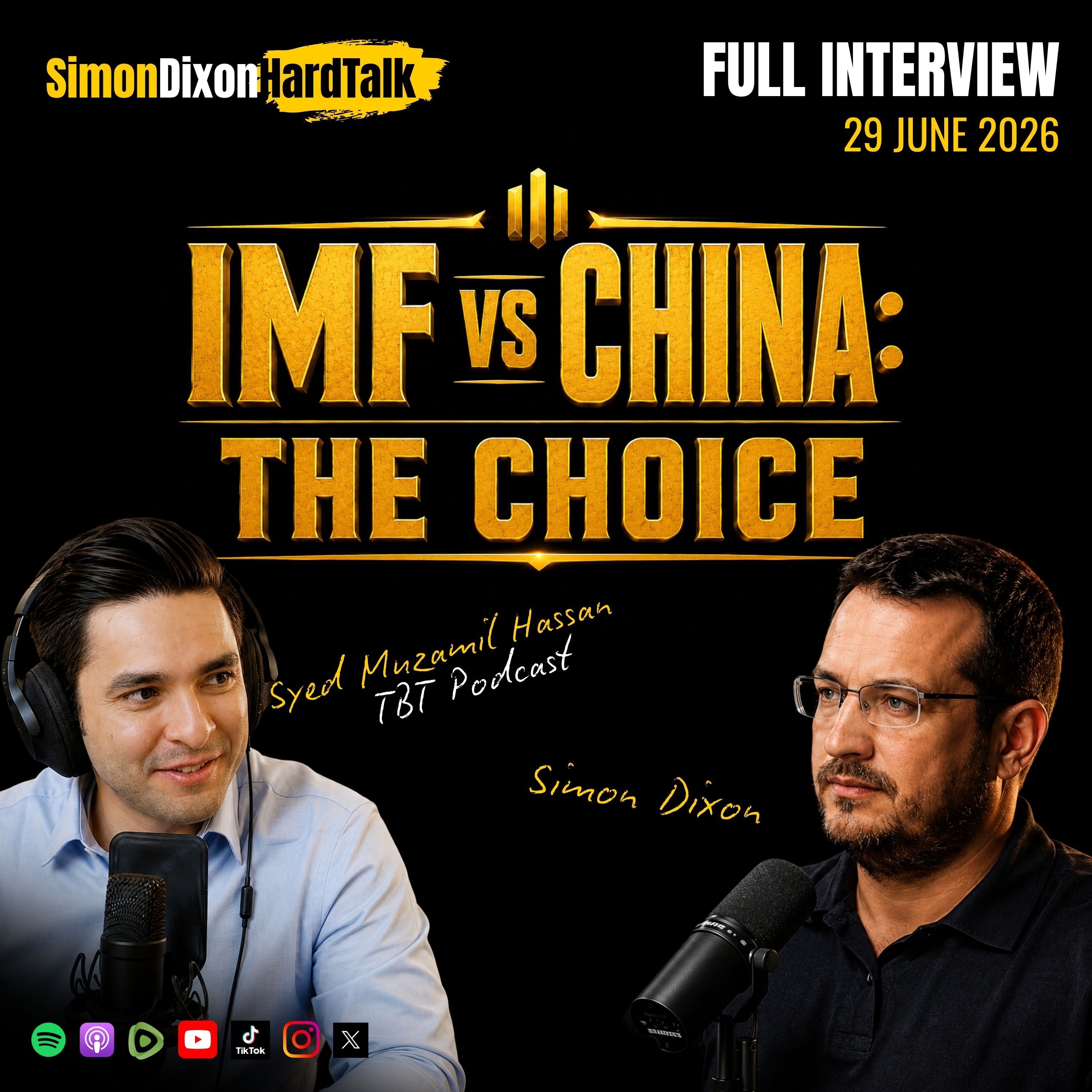
Simon Dixon Hard Talk
Dismantling the US Empire: Capital Flows, Multipolarity, and Pakistan’s Role in West Asia
01:58:14
Loading summary
Transcript27 lines
- [00:00]
A
This is 5D chess, and it's not Trump that's playing it. Trump has one job. Get rich while dismantling the US Empire. And then the fic will tell him what to do next. Which is why he's an erratic, crazy man. Not because he's crazy, because he works for his lobbies. And his lobbies are MCVIC and tick. He was $250 million funded by Elon Musk, $150 million funded by the banking dynasty of the Mellon family. But what sat all above that, above all of that $5 billion of funding, not just lobby funding, but a fund that profits from regional stability in the Middle east managed by his son in law, Jared Kushner, that has relationships with Israel in order to pay off whoever needs to be paid off there. While you create a narrative that de radicalizes this Zionist evangelical Christian front narrative that justified these forever wars. And you deliver us the set of circumstances where you can have a Trump Tower in uae, in Saudi, in, in Qatar. He created a company called world Liberty Financial, 50% owned by UAE. And so Trump is bought by the Gulf in a complete. While everyone's saying Israel owns America, Trump is bought by the Gulf, funded by the tick, then the fic. And Mick last, he's not a neocon and he's not paying 5D chess, and he's not in charge.
- [01:59]
B
For a lot of young people, what's really going on, the things that we understood, the things that we imagined, seemingly, things are not panning out that way. The guest with us today is Simon Dixon, who has a fascinating, fascinating thesis about what's really going on in the world. I will let him explain a little bit about himself as well, and then we'll jump straight into it. Simon, first of all, thank you so much for taking the time out and joining us on the show.
- [02:30]
A
Okay, Assalamualaikum. And thank you very much for having me.
- [02:34]
B
And I do apologize for the Urdu. At the start. I wanted to sort of loop everybody in and tell them we're going to be doing this in English, but thank you for being gracious and letting that pass.
- [02:42]
A
Absolutely, absolutely. Yes. So I look things slightly differently to your average geopolitical analyst, and it's based upon 25 years experience in finance and investment banking. And I see the world in terms of capital flows. And once you can read the capital flows and read financial statements of a company country, you often get a very different story to what's being reported in the media. And so often I see media as a series of narratives based upon the financing source of that media outlet. And so whether that be at the governmental lobby level, whether that be foreign interest or whether that be as simple as sponsorship and certain messages that are in line with whatever's financing that media outlet. And so whenever I hear media, I don't look at media as truth. I look at it as who wants us to believe that? That's kind of like how I, how I see media. And so whenever I look at the world today, I see a very overarching transition to two major trends. One is that this whole AI, robotics, energy and all the components behind these data centers is almost like a global technocratic state that the world is transitioning to. And I see that predominantly led by two factions of power. One of those power structures is what I call the technical industrial complex, which are the large magnificent, seven companies that are now going to be magnificent, 11 companies that are hosted on the US stock market, their private corporate interest, and they're multi trillion dollar companies, whether it be from Nvidia at the top all the way through to SpaceX and everything in between. Now most of these companies, when you look at their background, they were groomed and created from Pentagon budgets and CIA financing or DARPA financing. And so these large technology companies, they were given access to military grade technology through a private public partnership that eventually allowed them to monetize that, privatize that and create technologies like Palland here that are war machine technologies from the military industrial complex that receive government contracts and rely upon Pentagon budgets. And so now we've covered two factions of power, the technological industrial complex and the military industrial complex that consists of companies like Lockheed Martin, General Dynamic, Raytheon, Boeing and everything in between. They, they work as a complex because they profit from war and rebuild cycles. And so you either have, there's a couple of models, you have a forever war where the war just continues for as long as possible to create as much destruction. And then you enter into a new phase where another one of those complexes that I call the financial industrial complex comes in, and that is that they provide the military with a lot of the funding and they profit from it. They provide a lot of the technology with a lot of the funding and they profit from it. But there is a phase by which the war has higher returns by extracting resources, rebuilding regime, changing a country, installing a dictator, and engaging in covert operations to try and draw that to a new regional order within that country. And so this combination of a financial industrial complex, technical industrial complex and military industrial complex that are hosted in the previous empires, which are the British and the changing empire could at one stage dominate. And you know, when you had the fall of the the Soviet Union in 91 and then prior to that in World War II, the fall of the British Empire, we were left with this uni party power called America. And when it left the gold standard in 71, it became dominated by its ability to roll over its debt and inflict its debt upon countries. Now one of those countries was Pakistan. And so through organizations like the imf, the International Monetary Fund, you're able to turn a country into a debt dependent country. And if you can lend it dollars through, you know, this dollar dominant world, then eventually that country has to repay its debt in dollars. Now with the America, they can engage in several other types of warfare. One of them is currency warfare. And so by using its ability to manipulate currencies, it can destroy the value of a local currency and require that country to repay its loan back in dollars. And so Pakistan is a classic example of such an operation. Once the country starts to run out of dollar reserves, it only has one choice, and that choice is to either source a new type of financing or it can print its own currency. And by printing its own currency while trying to repay dollars, you end up destroying the value and accentuating the value of your currency. And you have a couple of choices from there. You either become very subordinate to the IMF and the American empire or you're able to resist against it. And most people are only to resist against it if they can find an alternative source of financing source. So in the case of Pakistan, they look towards China as China rose as an empire. And so now when you have choice between IMF debt or Chinese debt. And there was another source of financing which was local, regional Gulf sovereign wealth funds. And so some of the countries across the Middle east went in two different factions. One was Iran, which continued to resist and then had sanctions, was isolated further, had regime change operations, had a revolution, and various other things across Iran's history. The other type of country figured out a way of negotiating with this financial industrial complex, either through taking dollar loans or in the case of Saudi Arabia in 1971, you integrated yourself into what formed after America left the gold standard in 71, which was the petrodollar. And so by Saudi Arabia pricing its oil in dollars, and by agreeing to take those dollars when it sold oil and lend it back to the US Government by purchasing its bonds, Saudi got itself integrated into the Federal Reserve System, which is the base of this financial industrial complex. Now, once you've got Dollars, America sets terms. And so those terms are that the yield on you receive on those dollars, the yield that you get as a return must be reinvested into our companies. And so it was reinvested into military companies. And that money gets spent in America and props up the American stock market, props up the American bond market, props up the currency. And in return with that money, you get a base built in your country. And so Saudi had US Bases, Qatar had US Bases. You know, various countries, one by one, ended up with these U.S. bases. And those U.S. bases serve a dual purpose. One is to preserve the petrodollar and the, and the American empire and American dominance. And so those were the choices that people were faced with. So if I look across the world, you had Iran that made one choice, which was to resist and to build out its resistance network and fight the empire via its proxy, Israel. Saudi decided to diplomatically negotiate, prop up the petrodollar and build its own sovereign wealth reserves. And once it had its own sovereign wealth reserves, it became a very wealthy country. And it was able to use its financial influence in order to change the world. In the case of Pakistan, it took dollar loans subordinated to the imf, and then it had allegiances with its neighbors, but it became more subordinate to the IMF because of its dollar reserves and currency warfare over time, which means more regime change, which means more interference, which means that you can then have a military resistance against that, and you can use your own internal military industrial complex in order to try and build an asset, and that asset can then allow you to leverage in your negotiations. So Iran did the same thing. It built its own military industrial complex within Iran. Pakistan did the same thing. And then obviously, we know eventually Pakistan became a nuclear power as well, and all the controversy around that. And so what we're witnessing right now is that around about, with Trump administration, one, the order completely changed. And we'll, we'll pause right here. And then it relates back to what's happening in the region. The order changed because America no longer needed Middle Eastern energy to the degree that it once needed it. So it didn't need oil from the Middle east to the degree it once needed it. It didn't need LNG because it had a technological innovation called fracking. And it also had its partnerships with its main importers, which is Canada and Mexico. And so Canada, America and Mexico had all the energy and resources that it needed to not need the Middle East. Now, that also came with problems that the petrodollar was no longer needed because America's not purchasing this oil from Saudi Qatar or their energy exporters. So where was Saudi, Qatar and all the Gulf countries getting their money from to build their sovereign wealth funds? Well, it was the rise of China. And so China now had a very cheap manufacturing base. We had globalization. America hollowed out its manufacturing base. American private corporate interest relied upon China more and more and more. And who relied upon China? Well, the military industrial complex and the technical industrial complex. Apple set up its factories in China. Elon Musk and EVs need rare earth minerals from China. You know, so the American military cannot produce a weapon without China. And so this dynamic kind of really changed the status. And so now we enter into a world where, if you look at America, most people think of America as a country. I think of it as a fully subordinated financialized and securitized collateralized debt obligation. That's a big mouthful of words. But America is $70 trillion owned by private financial powerhouses and public, you know, all of their companies are public. And so America is not a private nationalistic country. It is the host of the financial industrial complex, technical industrial complex and military industrial complex. And if any of those countries want to control the political process, every politician in America is for rent. You can just rent them. There's a whole lobby process. And so politicians work for private power, but most people still think they work for the people. And so they think in terms of left and right politics. But both the left and the right in America work for the same parties and the same unipower. And this unipower is global in nature. And so these complexes, they need China. This military industrial complex needs China. This technical industrial complex needs China. And so what is the most important force is the financial industrial complex, the one that creates the currency, the one that can manipulate the currencies globally, the one that allocates most of the world's assets, the one that controls the bond market, the stock market, the currency markets, all companies are subordinate to this financial power. And it's global in nature. And so whenever a country is negotiating with America, they're not negotiating with America. The private the country, they're negotiating with transnational capital. And transnational capital, the financial industrial complex, works with sovereign wealth funds. And so the Gulf sovereign wealth funds, the Norwegian sovereign wealth funds, those countries that kept their energy and were able to have negotiation leverage. And the biggest sovereign wealth fund in the world is China's. And so transnational capital is global in nature and it supersedes nationalistic interests. And in fact, if transnational capital wants to Rent out the US Military and say, go get me some oil from Venezuela. Then transnational capital can do that. And all Trump needs to do is create a BS story about how this helps the average American or the American national interest. And so what you're noticing is I don't think in terms of countries. I think in terms of who's sovereign, who's slightly sovereign, and who has negotiation leverage over transnational capital. And then that framework sets how I analyze geopolitics. And what you often find is that you're able to look at capital flows, and you can see very clearly right now that the world order is changing. We're moving to a world of multipolarity, which people talk about often. But what that means is regional blocks. And America, being the global hegemon, needed its moment to demonstrate to the world that it is no longer the global hegemon. And that was represented by the closure of the Strait of Hormuz, the unenforceability of force over IRGC and Iran. And it needs to have a narrative that it is strong while it is retreating to be in a regional hegemon controlled by private corporate power that is global in nature. And so this is the unwinding of America and the nation state and the asset stripping of the country partnered with transnational capital. And the most vital part of the world right now is the area between America and the Western Hemisphere. The previous empire, the British Empire, the Dutch Empire, the American Empire, the remnants of the previous empires, the rise of a new power, you know, empire, but all the energy and shipping routes in between, which represents what is now called the Middle east, but now I call it West Asia because it's becoming what it originally was West Asia. It is aligned eastwards, and new regional packs are being set up. And that's the transition that we're witnessing today. We've been witnessing for the last five years, and we'll be witnessing for probably the next 10 to 15, 20 years. It's the most radical change we will ever experience of our lifetime. And Pakistan has a new role. It used to be very vassalized into its dollar debt dependency, but at Covid, it ran out of dollars. Then it restructured its debt with the Gulf countries, with uae, Qatar and Saudi Arabia, and then it joined the Belt and Road initiative. So now it is between three different powers. It also built its own bitcoin mining strategy, which is a bit of sovereign power as well. But it's got the remnants of these different powers and a key asset which is the most important military power in the Region that's now going to be West Asia, that used to be called the Middle East. And also a military that when combined with other countries in a regional order, can actually set a sovereign regional framework in this new world order we are experiencing right now in multipolarity. So it's a very interesting part of the piece of the puzzle.
- [21:24]
B
Makes sense before we go into the transition. And I know that's really the, the meat of the conversation, but I want to go back a little bit in history. Let's say 100 years ago. You're from the UK originally, and obviously we understand for Pakistan, obviously we very closely understand we were part of that history. But before the US Empire, there was a British Empire. Right. And if you, the way that I see it really is that that British Empire was still a transnational, capital controlled sort of, you know, it wasn't as sovereign as, you know, the crown wasn't as sovereign. It was driven by these, these bankers and, you know, people who held the capital. And what happened in my understanding in the, in the 30s and the 40s was that they extracted Europe as much as they could. They gave debt to all these countries, they made them fight each other, they took out that money, they transferred it to the US There's a ton of immigration that happened, there's a ton of movement of capital that happened. And as soon as Europe was completely sort of stripped off of again, its assets and its power, 1947 was when sort of the new World order emerged with the UN and the IMF and the World banks of the world and the Bretton woods agreement coming in later as well. And that's interestingly also went out of the, the subcontinent was broken up, Pakistan was formed, India was formed. And so my understanding is when I look at history and when I look at, as a Pakistani and when I look at particularly at Pakistan, we never really got independent in 1947. We just sort of, it changed hands, right? So the us, The British gave the power over to the us The US was now in direct contact with the, with Pakistan. And Pakistan seemingly became sort of a satellite or a vassal of the US in the region. India going towards Soviet Union, India being a huge power, someone had to keep that in check as well. And since that, that time, it has been a constant state of conflict within Pakistan. Every time the empire had wanted to do something in the region, you would see some sort of a breakdown of order, martial law, or a military government coming in. Again, that was true for, you know, in the 60s when they were aggressively fighting the Soviets. They had to become friends with the Chinese. Pakistan enabled that. You had a military regime that allowed that in the 80s when you had to fight the Soviet Union in Afghanistan, again, you had a military regime that came in power. The entire Afghan war went through Pakistan. And you know, that was enabled again during war on terror. You had a military regime coming in and suddenly there was a shift and a war on terror and Iran war and so on and so forth. And so in 2022 again, something similar happened where the democratically elected government was overthrown. A military regime sort of came in, a hybrid of sorts. And for people it was a lot of confusion as to what's going to happen. And then suddenly we see the whole Iran war prop up. That would just randomly happen. Right. But if I'm a data analyst, I can see a lot of correlation every time something like this happens. And it increasingly feels like, because you mentioned the military industrial complex in the US it increasingly feels like whenever the military industrial complex has a decade long plan of something major coming up, they move a lot of their pawns across the chessboard, one of them being Pakistan. And so I'm curious as to A, the background that I've built, would you adhere to that? And B, how would you, how would you connect then that sort of. If we don't look at nation states as nation states, if we look at them as power groups that extend beyond these nation states that actually extend all over the world, how do countries like let's say Egypt or Pakistan participate in the overall larger structure and have participated over the last. In the larger structure over the last hundred years?
- [25:38]
A
Yeah. So if you look at the history, so you know, you had this European, different, different factions in Europe that were, you know, powerful and we all, the Europeans were all fighting each other. We entered into this colonial business model and there was a kind of European, let's call it mission, to try and extract the resources that were needed in Europe. And we kind of hit upon the winning empire was the Dutch Empire. Because the Dutch Empire created this concept of transnational capital. And so originally the Dutch Gilter, which was the strongest currency backed by gold, it created the Amsterdam Central bank, it created the Dutch East India Company and it created the concept of the private corporate limited liability company. Now what the model was, it was to create effectively a Ponzi scheme through the central bank. And the Ponzi scheme was that whenever a bank issues a loan, it creates new money. And that new money, every time it issues a loan has interest to be repaid, but the interest on that Money doesn't exist. And so by nature you have to keep rolling over the debt. So it innovated, okay, why don't we dump the debt on the, on the Dutch government? And so it created the bond market. And then it said, why don't we innovate a way of raising significant capital and having a private company that can issue those bonds as well. So it created the Dutch East India Company. And then we have a way of guaranteeing the system in case the debt gets too over leveraged, which was the Amsterdam Central bank or the Dutch Central Bank. And those were the constructs that were created. And so what did the Dutch Empire do? Well, it built one of the largest naval fleets at the time and said, let's go steal as much resources as we can. And so it created a company where you could fund the company. And the idea was that the debt is dumped onto the government, the profits are privatized through the company. And if anything goes wrong, we socialize the losses onto the government and the people and privatize the gains onto the Dutch East India Company. And then this model made, the model that we know today, that informed transnational capital. So then what happened is the Dutch Empire with the strongest currency, went about destroying as many foreign currencies, inflating away their value and then going and invading regime, changing, destroying and taking their resources and signing an agreement with that country that your resources are ours. As they grew richer and richer and richer, they started to look for cheap labor to build bigger, more and more naval ships. And they went to Britain, which was the cheap labor at the time. And so Britain then built the ships for the Dutch Empire and then learned how to build this large naval fleet. But it needed significant funding, so it created the British East India Company. And it also created the bank of England, a private bank that was issuing loans to the British government to fight against the French in the Battle of Waterloo. And so this game was transferred, as you know, from the Dutch Empire to the British Empire. Now what is the job? The job is to socialize the losses and privatize the gains. So all of the profits went into the British East India Company and all of the debt went to the British government. And then eventually you hit a stage where you can't roll over the debt anymore. And that's when you change the empire again. And so they set about creating the Federal Reserve in 1913. Then we had World War I in 1914. Then in 1917, the Rothschild family managed to get the British government to declare Palestine to the Israelis. And you had The Balfour Declaration. Then you had the funding of the Bolsheviks within Russia in order to overthrow the Tsar and replace it with Communism, which was a Western ideology. People think it's like in Eastern, you know, communism, capitalism, all these ideologies, they came from the West. And so the Soviet Union was funded by Wall street as a Bolshevik revolution to install communism in Russia and overthrow the Tsar. Use, you know, use the Zionist in order to destabilize the Middle east, also bring the, the Americans into the war as well. And so this was a transfer change because they wanted to build a manufacturing base. And that manufacturing base became the military industrial complex. But in order to build it out, you needed World War I. And so the same Wall street that created the Federal Reserve and funded the Bolsheviks also funded a fascist uprising and manufactured an economic circumstance that led to the rise of Hitler in Germany. And that was because they were playing the Russians against the Germans and the British were playing them off. And then they bankrupted the British government and they wanted to transfer all the assets over to the Federal Reserve System. And so they wanted Russia's gold, they wanted Germany's gold, they wanted the British gold, they wanted all the European gold. And they ended up after World War II, effectively getting 75% of the world's gold in America. Now, in order to steal all the gold from the American people, they engineered a stock market bubble. In 1929, they crashed it. In the 30s, they created a depression. And in 1933, FDR confiscated all the gold off the American people they create. Then we had World War II. And in World War II was the radical change, right? The British was just. The government could no longer handle the debt. More and more gold was being transferred over to America. The same central bankers you had between World War I and World War II, you had the creation of the bank for International Settlements. What did the BIS do? It negotiated reparations for Germany after World War I. And what did it say? You have to repay all your debt in gold. So how did Germany repay its debt in gold? It printed and created a hyperinflationary cycle that then created the Weimar Republic. The Volmar Republic created the set of circumstances that needed a nationalist uprising called National Socialism, AKA Nazism. And that National Socialism was a monetary reformer that was taking on the bank for International Settlements via the German Central bank, which was connected to bis, which was connected to the bank of England and, and connected to the Federal Reserve. So if you look at what Hitler did, every time he invaded a country, he contacted the bank for International Settlements via the Reichsbank the central bank in Germany and said the gold that you have in the bank of England and the Federal Reserve that belongs to Czechoslovakia is now ours. And the bank for International Settlements would say yeah okay, that's yours. And so literally the bank for International Settlements was contacting the bank of England and saying this gold is now Germany's even though it's stored in England. And your government is funding the fighting against the Hitler regime and America is going to provide the military weapons. But through this mechanism we'll fund all sides and you can put Europe in a state of destruction and America won't get bombed. And then we'll change this military industrial complex. Then what we need to do is after the war we need to rebuild everything and make everyone debt dependent. So they created two organizations, the IMF and the World Bank. The World bank was to issue the loans to any country that would subordinate itself to the American empire. And if you take that loan in dollars, then you must do and you must spend your dollars in line with our empire on these companies, on these services and you must become aligned with us. Then what did the IMF.com the IMF said I'll tell you what, everybody that wants to take an IMF loan, a World bank loan, here's one of the conditions. You must come off the gold standard. But what you will do is we'll create an organization called the IMF and you will be able to convert your currency into US dollars on one promise. That those US dollars, whenever you exchange your currency for dollars, you can exchange it for gold. And that was the promise. And so anyone could take their currency, exchange it for Federal Reserve notes and the Fed would guarantee a set amount of gold. It was about $20 and then later $32. This was the agreement. So American persuaded the world to float their currencies and come off the gold standard and enter onto a dollar standard backed by gold. Those were all the tools that we needed to set the new empire. And so what did we do? We entered into a Cold war, we entered into a Korean War. The British Empire tried to have its Suez Canal moment. There was a nationalistic uprising in Egypt, you know, a pan Arab nationalist movement. The Brits lost it over the Suez Canal. We had decolonization. And then America was, you know, bankrupted at that time because it went to war with Vietnam and started, you know, had you had the China side and all that stuff. And so that was when it decided that we would default on our debt. Nobody from 1971 the Nixon Shock no one's allowed to convert their Federal Reserve notes into gold. And then we had, then we had a covert club that was set up by the Bush family, which were oil tycoons in the Middle east called Safari Club. Safari Club was a CIA operation that connected all the intelligence operations of this covert network and assassinated King Faisal of Saudi Arabia and groomed someone called Osama bin Laden that later went to the operation in order to justify all the wars that led to 9, 11 and everything that happened. And so that was a regime change operation in Saudi Arabia. In the case of Pakistan, the strategy was always as the British Empire has always done, and the American empire did it in a more covert way through these financial transactions. Divide and conquer. And so you take India and you create Bangladesh, you create Pakistan. You get them fighting each other. You leave out a holdout place like Kashmir, you make sure that there's massive division all across the Middle East. Religious tensions, racial tensions. And you just keep balkanizing and balkanizing and balkanizing. And the longer you can get them fighting each other, then you start to rage wars, which is very profitable. And in the rebuild contracts, you subordinate them. You load them up with IMF debt and then you fund militia groups, whether it's isis, Al Qaeda, whatever you want. You fund these groups in order to pretend it's a religious battle. But all you're doing is you're creating carnage so that you can regime change subordinate. And this was always the strategy. It was to do everything through deception. And so what did the Brits give to America? Well, they gave them Israel. And Israel was a node for creating carnage in the region, you know, for deception. It had a religious narrative. It had the ability to groom these different gangs. It could recruit an army through weaponizing, you know, anti Semitism and all that type of stuff. It could then blame it on the Muslims, despite the fact that Muslims and Jews had lived in peace and the Jews were fighting the Christians for how they were persecuted in Europe. And they just rewrote history and they just made it out like the Jews and the Muslims were at battle. Then they funded alternative groups and Pakistan got very subordinated into this structure because it was hook, line and sinkered into the divide and conquer operation. And so it ended up really serving the IMF interests, loaded up with debt and just served the military interests of these covert operations. And but you know that that's kind of like a lot of the history makes sense. And it's always been the strategy. The strategy is divide and conquer. Now what? And I'll open it up to you Here. But what's changing now is that the jig is up and everyone's starting to realize that if we can just form certain allegiances. The American European empire, the remnants of transnational capital had something that it couldn't penetrate, which is, and I'll get into a little bit more which is the Chinese nationalized all the banking system and they created their own independent central banking system called pboc, the People's Blank of China. And the west couldn't penetrate it. They tried to, they did it through Shanghai, initially the Opium Wars, Hong Kong. But eventually the Chinese just said no. They created a communistic uprising. We had Maoism and the nationalization of all the assets. And then eventually they built enough strength under that model. You know, lot I'm not, I'm not talking about whether I endorse communism or capitalism. You know, that's a different debate. But the fact of the matter is they managed to expel the banks from China and they built the PBoC. And that PBoC was a multi decade strategy while every other central bank became a member of the bank for International Settlements. And it was through these. Now we have the bank for International Settlements which has a resistance which is PBoC. And now the world order is changing again because America's loaded up with debt.125 debt to GD percent debt to GDP. People are not borrowing and lending to the US government to the extent that they used to. There's extreme polarization in the country. Suicide rates are the highest. They've been drug addiction, the homelessness, wealth inequality, inflation, wealth extraction, degeneracy, all of these things. It looks like the Valmar Republic of Germany, which is what you do when you're trying to asset strip a country, transfer all of its assets and reset the order.
- [42:25]
B
Makes sense. So now if I sort of jump into the transition with the historical context in mind and I think I'm glad that you mentioned because my next thought was going to be if I look at let's say transnational capital, it's sort of like a leech, right? So it goes in, it went from Dutch to the British. It leached all of its on its resources. The moment it could not leach anymore it sort of switched and the British had to deal with it and the US basically became the center base. Now if I look at the us they've sort of leeched off of it. The people, the average Joe in the US is the one who's gotten under debt. Like it's the people of the US who are under all of this debt that fed the military industrial complex and the financial industrial complex. But like you said, the jig is up and so you can't leech any longer and therefore you're going to be looking for a new host. Now, logically, or if I look at history, that new host should be a country that is, well, industrialized, that has a huge consumer base. China seemingly is the best option, ideally as the next host to run the next hundred years. But like you mentioned, China seemingly understands this and they have built great walls around themselves to ensure. And I think that's where the conflict is as well, between east and west, where it's not that they're not friendly with the US it's that they're not friendly with the financial industrial complex and ensure like multiple times in the last 10 years with the property boom and bust, with the stock market just being flatlined, they don't allow for the sort of manipulation that happens in the West. And therefore, seemingly, that's my understanding, China is not that great a host. And so the first question for me would be, who in your opinion then is the new host where they can then land for the next hundred years, where there is a population that can be a potential consumer of whatever they create, of whatever growth that, that they gather, they can take a majority portion of it. And so who that host is for that legacy financial industrial complex, and then how does that fare with these sort of a multipolar two different power groups? Now, because that hasn't historically happened, right? Historically it has been largely, I mean, you can say, oh, Soviet Union and US but in terms of power groups, it was largely this one extremely powerful financial industrial complex that worked with the military industrial complex. Now when we look at this transition today, how does that fare? Because not going to be as smooth if it was just one particular power group with, let's say, China coming in as an alternative or being in conflict with it. Run me through the transition that's happening right now vis a vis the potentially new leech or the host for the leech.
- [45:34]
A
Yeah, that makes me so when I think about it in terms of capital, what we're witnessing right now is so they'll extract from America for as long as they can. And what does that look like? It means you increase the debt, the national debt, as long as you can, for as long as you can find a buyer, because it's a Ponzi scheme. So you always have to pay off debt with more debt. So you keep doing that for as long as you can. And that means that as long as the banks will accept U.S. treasuries as collateral, that jig will carry on. But what's already happened is foreign central banks have said no more. They've said we're selling and we're buying gold. And so you had a big boost in gold, right? So now you've got the debt being dumped internally. So it's all upon America. So what do they do? They look at their nodes around the world and says, who do we still have power over? And so they said, well we got Japan. We set that Ponzi scheme up where you can borrow at 0% from Japan, get them to hedge out their currency and then buy U.S. treasuries. And so Japan is the largest foreign lender to the U.S. government today, $1.8 trillion. But then you looked around, you said, well what about China? Well, China's been reducing its US debt from 1.4 trillion to approximately 650 billion. So it doesn't want to crash America. This is not something they're trying to do, but they are trying to offload their U.S. debt in a very managed way. Then you have the petrodollar. And so what they, you know, and there's the three constructs, basically the euro dollar, the Japan carry trade and the petrodollar. Now what does America, what does the FIC want? The Financial industrial complex, I call it fico, Military and technical tick. So simplicity now. Well, the FIC wants to asset strip as much as it can from America. Not create carnage, not create a crash, just a slow, a slow wealth extraction for as long as it can. And then it wants to manage capital outflows into other countries where it can leverage its assets and try and penetrate as many countries as it can into a multipolar world. And so if you think about it, the, the, the biggest change in the world right now. If you look at investors, 50% of investments are done via ETFs, exchange traded funds. And so when you're investing in somewhere you say can I invest in the Saudi ETF or can I invest in the Indian ETF or the Pakistani ETF or the S&P 500 ETF, that's now 50% of all investments. Those investments are managed by BlackRock, State street and Vanguard 2, three of the important nodes in the FIC in terms of the asset manager side and what else is happening? Treasury Departments, central banks, pension funds, endowment funds, insurance companies, they're all using BlackRock's AI technology called Aladdin to manage scenario planning and allocate capital. So for example, they now manage $25 trillion of assets, uses BlackRock's Aladdin technology to plan how they're going to allocate their capital. And so if you, for example, as an asset manager of a sovereign wealth fund, said, I think the Strait of Hormuz is going to be closed and I think that foreign central banks are going to start selling gold, how do I scenario plan a capital allocation accordingly? And BlackRock Aladdin's technology scenario plans this makes capital flows very coordinated at the artificial intelligence and a lot of it's programmatic now as well as well as controlling the largest pools of capital to match the flows. And so you can use ETFs now as a mechanism for determining which countries get access to the most amount of capital. And that's exactly what BlackRock did. 50% of the ETFs are now foreign countries. And foreign stock markets outperform the S and P in and so did many foreign currencies. And the countries that did the best were the ones that had sovereign wealth, funds and energy and managed to keep their resources. And so what I'm, what I'm all this to say is that there's no clear handover here. You could think of the European and American empires as, as one block for the last 500 years, but now there's no clear handover. And so what I think the two things they're building is a global technocratic surveillance state that consists of the Tick and China, and they're in partnership. They all were in Beijing meeting Xi Jinping a couple of months back. It was the executives of the Tick, the executives of the fic, Xi Jinping and the China and the CPC or ccp, depending on what you call it. They were all meeting. They were, in my estimation, Tim Pool, who was there, Tim Cook, rather, from Apple, was saying Xi Jinping, please, are we going to be able to continue building our cheap labor factories so that we can continue offering iPhones at this price? Also, we're going to have to put our price up soon. We really don't want anything happening to Taiwan because it's going to take us about another five years till we can become chip independent and Huawei is building its chip independence. You know, we'll carry on building our chips, TSMC from Taiwan, they'll build their factories in America. You build the Huawei structure and we'll get the right mix and blend in order to make sure that we're managing this. Let's negotiate. Elon Musk came along and said, hey, if we don't get access to our batteries and our components that are needed for these electric vehicles. What have we got to do? Xi Jinping, in order to make sure that this flow is stable, Visa and MasterCard came and said, look, we know that you've built the SIP system. We know that UAE now has a network of central bank digital currencies that connects Saudi Arabia, uae, Thailand, China, Hong Kong. And that all works without swift. We know that. But can we do an integration between our system and your system? And charge fees? I know you're not going to let us in, but can we at least charge fees? Can you open up a little bit of that to us? And so on and so on. The military companies said, hey, Xi Jinping, we know that we kind of need to pretend that we're going to go to war with each other, and we know that we can't even manufacture a weapon without you, but it makes us a lot of money pretending that we're going to go to war with each other. And so, all right, what have we got to do? And Xi Jinping said, well, cancel your orders to Taiwan. And so Trump canceled a $13 billion order of military equipment to Taiwan. And then Trump and then Xi Jinping probably said, also Trump, Taiwan is red limit is off limits. Make sure that they know that. And so Trump immediately went on the media and said, taiwan is off limits. And that was announced. Ever since then, a bunch of shipments came out through the Strait of Hormuz and a memorandum of understanding was signed. And we started moving towards this transition to multipolarity. And so all of this to say is that the technical industrial complex is partnering with China and the financial industrial complex is partnering with China. And where is most of the capital coming from to fund the technical industrial complex? Who's the largest investor in Xai in anthropic, in OpenAI, in Nvidia? It's the Gulf sovereign wealth funds. And the Gulf sovereign wealth funds suddenly said, you know what? We'll allow you to have 2% of Saudi Aramco and we'll do an IPO. But we want our board on black. We want a. The CEO of Saudi Aramco has got to be a board member on BlackRock. And so they said, fine, you can have a board member. So the shareholders remember the structure. Shareholders rule, they import, they employ board members. And the executives like Elon Musk and Tim Cook, they work for the board. So that's the power structure. Shareholders, board executives. The executives look like they're in charge, but they answer to the board. The board answers to the shareholders. The shareholders is transnational capital. That's the power structure, that's the power dynamics. And that requires cooperation between all of the sovereign wealth funds and China so China can engineer the game. Now, what does China have? China has three very important tools and anyone in finance knows this. They control the stock market in America. How? If China wanted to blow up the AI bubble, which by the way, the entire stock market and growth of America right now is building data centers and AI and all the ancillary energy, service and manufacturing that comes from it, America would be at 0% growth if it wasn't for building data centers and AI right now. So the only thing between an American stock market crash is the belief that they need to build out all of this AI data centers. And, and we already know from Deep Seat that China already has the whole infrastructure, open source at 1/10 of the cost with 90%, if not better than the efficiency. So if China wanted to rug pull the AI bubble, it could do it with a couple of press releases when it wants to, and that would crash the US stock market. It could also get Japan, because Japan has now been saying, we're no longer giving you free money. We're going to increase our interest rates. And so if China, Japan and Europe, if they wanted to all start, the largest bondholders are Japan and uk. If they wanted to start selling off their bonds, they could crash the US bond market. Yields would go through the roof. Once yields go, you know, once the price of the bonds crashes, the yield goes through the roof. As the yield goes up, the cost of American national debt increases. The only thing that can stop that is the Federal Reserve buying those bonds. Quantitative easing. And so if China wants to put America into a QE cycle, it can do it if it wanted to, at the flick and break the bond market. And then the Fed controls the future of America in the bond market. What else? The commodity market, the entire Western system was built upon a derivative market where there's not enough of the actual underlying asset to match the derivative contracts. Shanghai has most of the gold now, all of that gold. If you audited the Fed, you'd realize both the Fed and the treasury claim that gold. And the Fed is owned by the banks, and the banks used it as collateral. And the gold is leveraged many times over. And so if you want to break like they did with silver, you know, you can create a squeeze where everyone needs their gold and needs their silver. Now the only way to stop that is to get a loan from a central bank that actually has the Gold and has the silver, and the Western financial system doesn't have it. And so there is a Ponzi scheme in the currency market, a leveraged trade in the derivatives market, an AI bubble in the stock market, and a debt cycle that is 100% dependent upon the Federal Reserve in the bond market. So Transnational capital knows this. So what do they do? They say, let's manage using all of the leverage and assets of America. What are the biggest assets of America? Well, they rent out the military, say, we'll get you your oil, we'll go to Venezuela, we'll do this. We'll reset the world order, go to war with Iran, we'll allow you to have Syria. And the Gulf countries can have Syria. We want our western hemisphere. So we'll try and dollarize around the western hemisphere. Russia, you get Ukraine, we'll extract as much as we can and then you get the rest. China, you have Taiwan. But we need to look strong while we're doing this. We need to have narrative. We need to have people believe that the American empire is trying to protect the dollar and is trying to take over the world. But we need to manage this transition. And so who are the next people? Well, they said, how can we penetrate the regional blocks? And so they looked at brics and said, India, we could probably penetrate India as much as we can. So you, Pakistan and India, you have a little tit for tat. We'll try and create a war there. Oops, that didn't work. What about uae? What did UAE then do? So UAE in the gcc, UAE ended up basically removing the petrodollar. They left opec. Remember, OPEC is the other side of the petrodollar. The other side of that is they ended up getting an FX swap line. They can now create dollars using their currency as collateral. That means they don't need to borrow them. That means that they can effectively take on the role of the FED within the uae. That change, that breaks the petrodollar, then Japan breaks the Japan carry trade and then we get the euro dollar as well, which is the relationship between the hollowing out of Europe so that it just becomes a vassal of the fic. And so they're destroying Europe through Russia, which is why they wanted the Russian war. The CIA wanted the Russian war so that they could rage and turn Europe into a vassal state. And when you look across this region, what is transnational capital doing? What is setting up multiple centers of mcfic and tick in as many countries as it can. And so it's saying, we'll build your data centers. You can have some Nvidia chips, you get access to our technology. We'll sell you some defense contracts in the military. We'll try and get as much, you know, as much leverage as we can. And you know what? We'll end the forever war in the Middle East. We'll go control Israel, we'll go, they'll go get as much land as they can and we'll negotiate a regional order and will replace the military forever war with rebuild contracts. And the Gulf countries kind of went along and said, okay, Iran, let's pretend we're at war with each other. Now remember, China normalized between Saudi Arabia and Iran. UAE and Saudi Arabia were normalized via GCC corridors. And so one by one they said about let's solve our issues. And so the Houthis signed an agreement in UAE with Saudi Arabia. We entered into October 7th and the destruction in Gaza. And Egypt said, we're not going to ethnically cleanse the Palestinians. I know the IMF said they pay off our debt and they'd give us $18 billion to put the Palestinians in the Sinai desert. But no, we're not doing it. The UAE and Saudi played good cop, bad cop and settled their issues. Iran and the GCC settled their issues. But they said, Iran, you need to blow up all the US bases. And America said, well, we need to make it where the GCC is going to rebuild Iran with a $300 billion fund. So we'll blow up a lot of the infrastructure. Iran, you blow up a lot of the US infrastructure. And then at the end of it, we'll take the military of Pakistan, the military industrial complex in Egypt, the manufacturing base in Turkey, and will partner with the financial capital of Saudi Arabia, all backed up by China. And so brics and GCC all aligned, co opted the financial industrial complex, who then negotiated with the military and said, we'll give you a final war and then we're going to dump Israel. And everyone, I believe did this kind of theatrical war. Because now what did Iran agree to? I think Iran agreed to we'll give up the resistance in exchange for regional stability and the expulsion of us from the region. That's the deal. How do you do that without creating civil unrest where everybody needs to keep their narratives? And that's what I think the war is that we're witnessing. This is the most changing time in history will ever be. The Middle east will have its own regional defense pact. It will have a relationship between the GCC and brics. BRICS will have its SCO agreement, Shanghai Cooperation Organization aligned with asean. Now what do we need to do? We need to take all the strategic ports that were dominated by the previous empire, turn that model upside down, let's charge a toll on the Strait of Hormuz and then that will have an impact on all the different. What about all the Muslim countries? Indonesia, Malaysia, Pakistan, Yemen, Iran, uae, the Horn of Africa, North Africa. Wow. These are all the strategic ports that are needed between the two models of the, of the world, the Petrodollar and the Petro Yuan. And so you can see through transnational capital, they're building multipolar MCFICs and ticks in recognition that they can no longer do dominance because their only choice is to negotiate with China. And China has all the leverage. They can destroy the McTick and FIC by restricting access to rare earths, destroying the bond market, destroying the stock market and destroying the commodity market. Everybody knows that. Who, whoever's at these higher level of conversations. So there will be no World War iii. What we are witnessing right now is the transition to a multipolar world in as an alternative to World War iii. And that changes everything. And how do you end these divide and conquer operations? Well, if you end the need for resistance and you end the strategic tension between Iran and Israel, then the justification for Israel no longer exists. And so why don't we privatize Israel, make as many companies public as possible, destroy the reputation of Israel, make it a prior state. And India started buying Israeli ports, India started buying Israeli assets, UAE started buying Israeli assets, their asset stripping Israel into the Gulf countries. And Saudis said, we will not normalize with Israel until there is a Palestinian state. So Saudi, Iran, Turkey, Pakistan, Egypt, they were playing the 5D chess. Now us as the plebs, we're just fed all the narratives and we're used to the old world. And we're like, israel rules the world and World War three is coming. That's all the theatrics of the media. This is the shrinking of the US empire. And Pakistan has a choice. It has belt and road, it has IMF and it has golf. What did Pakistan do? It ran out of dollars. And UAE said, we'll call back our loan. And Saudi said, we'll refinance it with Qatar. And Saudi then said, host the Islamabad negotiations and you be a front for what China wants. And China will be pulling all the levers. And then after that we'll announce our regional, our regional defense pack. So this is 5D chess and it's not Trump that's playing it. Trump has one job. Get rich while dismantling the US Empire. And then the fic will tell him what to do next. Which is why he's an erratic crazy man. Not because he's crazy, because he works for his lobbies. And his lobbies are McVic and tickets. He was $250 million funded by Elon Musk, $150 million funded by the banking dynasty of the Mellon family. Fic tick fic. And then Mariam Adelson represents Israel, which is the mic, the military industrial complex mic. But what sat all above that, above all of that $5 billion of funding, not just lobby funding, but a fund that profits from regional stability in the Middle east managed by his son in law, Jared Kushner, that has relationships with Israel in order to pay off whoever needs to be paid off there. While you create a narrative that de radicalizes this Zionist evangelical Christian front narrative that justified these forever wars. And you deliver us the set of circumstances where you can have a Trump Tower in uae, in Saudi, in Qatar. He created a company called world Liberty Financial, 50% owned by UAE. And so Trump is bought by the Gulf in a complete. While everyone's saying Israel owns America, Trump is bought by the Gulf, funded by the tick, then the fic. And Mick last, he's not a neocon and he's not paying 5D chess and he's not in charge. He's delivering what he needs to deliver in a multipolar world. So he destroyed the American empire and exposed it for what it is on purpose, by design, so that the fit can extract all the assets and he can get rich. And everyone thinks he's an idiot. He's not an idiot. He's just part of the wealth extraction crew. And his wealth is connected to regional stability in the Gulf regions, which requires normalization with Iran, which is China's condition. And they set the terms for not blowing up the American markets.
- [71:26]
B
Hmm. If I were to, and I can obviously dive deeper into this, a lot of this, but we're running short of time as well. I would love to get a sense of, let's say the near term or the longer term. And it's not. I'm not going to call these predictions, I'm going to call these projections. Right. So based on the data that we have available, we can predict, potentially create an image of what might happen for the sake of the viewers. Because obviously you've now, at this point in time, have said a lot of fairly radical things that would challenge the regular individual's worldviews, considering they've been fed whatever the media has fed them. Right. And for me, I think over the last couple of years, what has been really confusing, and I would argue since COVID it almost feels like we've started to leave the matrix and the world just doesn't make sense anymore. But last couple of years has just gone on steroids where the criticism on Israel in the US has been unprecedented. It doesn't make any sense. If they were so powerful, why is it not controlled anymore? Tucker Carlson is one of the leading figures anti Israel figures in the US his son is the press secretary for JD Vance. So it's not like he's this rogue individual who is just randomly doing xyz. JD Vance was part of the tick, essentially because Peter Thiel brought him in. So there are those connections. You can very clearly see the idea that the Iran Israel war would happen. The idea even for Pakistan. We had this small skirmish with India, and before that it was all India. The entire narrative was India is the leading sort of counterweight to China. You had this sort of quad block that was propping up, and then suddenly there was a small war that happened in a matter of minutes. A bunch of planes went down, and suddenly everything's flipped since then. And Pakistan, which is like this pariah state, is suddenly center stage all of a sudden. So obviously people, particularly in Pakistan, are very, very confused as to what's going on. I'm curious though, because you mentioned that the FIQH tried to get into India. And what I can see in India over the last 10, 15 years is that I would say it's controlled radicalization that has happened ever since Modi has come in and their media has been bought out since, since 2014. Since then, the stock market is going crazy. There's a lot of that sort of manipulation that you normally see. But they started fighting the US at, at, you know, in the trade wars and this and that. And that was, in my opinion, sort of when I started to see India being strangulated in many ways vis a vis Pakistan as well. Now, for Pakistanis, I think the curiosity is, where does this all lead to? Because for them, they're thinking, okay, we're right now center stage. We're given a lot of praise. Obviously, Trump goes about mentioning the field marshal and the Prime Minister many times a week, which again is very confusing for Pakistanis because we're not used to that. They're thinking, okay, maybe if, if it's. All of this is to. To. To use Pakistan as a way to actually conquer India, Because India is the big market, India is the price. India is what was 30% of the global GDP 5, 400 years ago, and that's like 1.4 billion consumers, a huge base for if you can't go to China, India is a great alternative as a potential leech, as a potential host for the leech. Right. Are, are they now, are they basically trying to prep India to come to their terms so they can enter that market and take over? Have they let go of India altogether and decided, okay, maybe, you know, you have a huge youth population across the Muslim world, so you basically let Middle east be the next host and potentially create an alternative bloc as a counterweight to China in the future. Is where does the Iran Israel war lead to? Are we going to. Because again, Pakistan and I, I'm constantly talking in the context of Pakistan for the audience for Pakistan. We've been the center stage country in the middle of a lot of this conflict, right. Soviet Union, China, this and that. And therefore a lot of that has trickled down to Pakistan where we, we do believe, a lot of it is internally. We believe, oh, you know, we have religious tensions and we had a lot of these nationalist tensions. But in reality, in my opinion, a lot of these tensions have been propped up by a more regional issue which if you're saying, is now coming to a resolution where the FIC wants stability, rebuilding, growth so that they can participate and extract from that growth. Where does that leave Pakistan? Where does that leave India? Where does that leave u Overall, the wider region minus China for a moment. Right. So, and, and, and if I were to sort of visualize this, I saw a few changes. For example, Middle east is now called West Asia. Pakistan was taken out of South Asia by the World bank and added to the Middle East. You know, there's, these are, they might sound simple, but there's, there's structural changes of, of a dynamic of what it's going to look like the next 50 years. And so I'm curious, in your understanding, what would the next 10, 15 years look like once this transition sort of is over and we do end up getting that stability that you think is coming.
- [77:22]
A
Yeah. So FIC does what it does, right? So FIC has the derivatives market. It can launch covert operations. It can, can profit from both sides when its operations go wrong via mic. And so it hedges its bets and its job is to vassalize and then also continually maintain as much extraction in US as it can while ushering in the multipolar world. So it's not resisting against multipolarity. It's trying to vassalize to get as much control in a country as it can while it builds multiple financial centers that will then if you give, will use its ETF flows to try and get capital so that it can then invest and get as much many assets as possible. That is fixed job. Some countries it will be successful, some it will fail. And it is kind of a fluid environment in terms of its operations. So in terms of. Let's take a look around the map. So I think there's about another trillion dollars for them to make out of the Russia Ukraine war. So they'll just carry on with that to weaken Europe maybe another three years, print another trillion dollars, try and get the, the sanction money from Russia and just destroy Europe. You know, always push out the European military industrial complex, make it energy dependent upon America, just vassalize it into, you know, the fic. So that, that's on, on that side now with Pakistan and India. I do agree with you that they did try to monetize and weaponize that tit for tat that happened between Pakistan and India. And I think that was really China and America testing belt and road initiative versus IMF and both sitting out while they could see this very public display from Pakistan of strength. And it was, it did end pretty quick. And there may have been a covert operation to try and escalate that, but for whatever reason it looked like that didn't escalate. India is playing every side, but I think it knows that it needs to lean eastwards because at the end of the day it knows that while it has this rivalry with China and it has this, you know, this, this competition, I think it knows that the, the writings on the wall, it will play the sides for as long as it can, but it will go in the direction which is obvious, which is eastwards. Now Pakistan, the people see and this is very. You can't taught Pakistan or Iranian politics without being hated by everyone. A lot of what I, a lot of what I say is not what I want to happen. And people get that confused. I'm not advocating for anything. I just think this is what is happening. Okay? And if I'm just having a conversation around humanitarian issues, the Palestinian cause, my conversation will be very different. I'll speak like a human when I'm analyzing. I'm just saying it doesn't matter what I want. This is what I think is happening. Right? And so I think Pakistan, While there is a massive allegiance to Imran Khan, there was a reason why this needed to be military dominated in this moment. And I think it is because the number one asset of Pakistan in negotiating this transition is a recognition that its military and its nuclear power is the most important asset that it has right now because its debt is, is what it is, its dollar reserves are what they are. It's stuck between imf, Belt and Road initiative and Gulf investment. And so its number one asset is its military. So I think it needed to be in this moment that it is in right now. And it's somewhat of a corridor from so much vassalization, which I know is very offensive, but it's really, really interesting because I do think there is going to be a defense pact with Turkey, Pakistan, Egypt and funded by Saudi and that's going to be with Iran as well. And so Pakistan needs to find its sovereign negotiation within, within this whole framework. And I think military was what the asset that it could leverage the best, which I think is a right call. So in terms of some predictions, I believe forget the theatrics of what you're seeing of Lebanon was the holdout clause and the more land that Israel can get, it will be negotiated back would be a prediction because Lebanon, Israel is trying to add value to FIC where it used to be a MC node. It knows that its role has changed. It's like it's going to be regime changed. While you'll think that its next leader is a radical Zionist because that's all there is in Israel. The next leadership I think will be GCC aligned. And GCC aligned means that there will be a Palestinian state and the rebuilding of both Lebanon and Gaza will be done by the GCC with GCC capital and that will be its holdout leverage clause. So the crimes against humanity that are happening in Lebanon right now are probably to inspire reaction from Hezbollah so that Israel and Hezbollah can go at it and Iran won't intervene unless it's been told that it can destroy Israel further. And if it destroys Israel further, it's not because the deal is going to break down. I think this deal is going to hold. It's because more assets need to be acquired in Israel in order to manage this transition. And if any more further action happens by us in Iran, it's because those assets need to be destroyed in order for the 300 billion rebuild contract which will be by the Gulf is my prediction, in order to tie them all together in this new regional section. So Gulf isn't going to be investing in America anymore. The Gulf is going to rebuild Gaza, rebuild Lebanon, facilitate investment contracts in Iran and also rebuild the infrastructure that was destroyed to expel us from the region. But the deal is going to hold and there is going to be regional stability and Israel does not rule the world. It's been strategically weakened into a prior state and it was always a node of the US military. So Israel, I think India and UAE will be the mechanism for acquiring many assets of Israel. And eventually in the next five years, I'm not sure what's going to happen with west bank, but we may end up with a one state solution or an Arab majority in Israel over the next five years. And all the people that are radical Zionists, that are wealthy, they've already left, they're in Cyprus, they're in Argentina, they're in Thailand. And many people are complaining about, you know, many of the people in, in those regions that have come from Israel. And so I do believe that we will get a resolution of that over the next five years. Palestine won't be a completely free state. It will be, as with Lebanon and the rest of the Levon, in a regional structure based upon GCC investment. And it will have the opportunity to build itself out of that like Singapore did you know that that thing, it won't be justice, but it will be better than what it has been. And so I think, you know, the Palestinian side will be GCC rebuilt and Israel will be weakened is my prediction. And Pakistan will be essential to regional defense agreements and regional stability and it will have the opportunity to, you know, negotiate its way out of its IMF debts if it becomes more important to China. But it's stuck between these regional powers and it will have to pick one. And I think it was most likely going to be China, as will in the end be with India and. Yeah, I mean, what else, what other parts of the region do you want?
- [87:06]
B
No, so my curiosity here would be, and this is driven by the fact that that's my opinion as well, that US is in a retreat. Right. So as much as they try to claim that, you know, we're trying to exert power, you know, there's a Iran and Israel war and US is trying to do xyz, a lot of people are now calling that the Suez Canal moment for the U.S. i think it was already defined in their national security documents when they said, oh, you know, we're going back to the Monroe's Doctrine or Donrose Doctrine, which essentially said that we're now going to be exerting our influence on the Western hemisphere. So in my understanding, what the US had already decided Was we're going to make the MC happy by increasing their budget. We're going to let them exert their influence on our hemisphere. So talk about Greenland, talk about Canada, talk about Venezuela, Cuba, so on and so forth. We can't control the world. At least we can control our side of the world, ensure that we have energy, security, whatever the essentials that we need while we go through this sort of AI and robotics transition. And so if we have to sort of retreat from Asia, you need a narrative for that. It doesn't make sense to just randomly stop, like clean up your bases. So, you know, Iran war provided the ultimate opportunity to destroy all these bases and let other regional players, Turkey, Pakistan, Egypt, sort of take over those bases. Because let's. Middle east doesn't have a, you know, they, they're reliant on either the US if not the US then someone else has to come in and sort of put. Provide the security services. And so I think that transition makes a lot of sense. It's very logical. And I think it was already defined in the national security document. Now a lot of the regional conflicts, again historically have been because of, let's say, the MC wanting to exert its influence. Now if we're saying MIC is retreating, the. Does that mean that a lot of those regional conflicts will begin to die down? And so then the curiosity comes in, what happens to Syria, what happens to Afghanistan, what happens to a lot of these sort of seemingly breakaway regions like Balochistan for Pakistan or so on and so forth. Are we looking towards. Okay, because sometimes what happens is when the region, like the global hegemon leaves or the, you know, the bully of the region leaves, the second in command start fighting each other. Right. So would it make more sense for the US to actually leave and leave a spark for, you know, Asia to. One theory is that the US would actually be interested in a World War 3 this time happening in Asia, because they can actually get Asia to get bogged down by a war, by a big huge war, while US can re. Industrialize and rebuild themselves with AI and robotics and enter 20 years from now again as a, as a major power.
- [90:08]
A
Yeah.
- [90:09]
B
Do you see regional conflicts increasing then without the US being there now or without the MIC being there now?
- [90:19]
A
Yeah. So in the case of the Middle East, I think that countries will resolve themselves one by one. And it is. So if you think about it, what are the proxy wars that happen? You've got us that at one stage used Pakistan in order to build militia groups that could then destabilize Region, parts of the region. You had us use Afghanistan, Taliban, various other groups that were originally a resistance against the drugs and then suddenly became a supporting part of the infrastructure. So you've got all of these different historical too much to go into. But if you really try and simplify it down, what created the strategic tension where the military was able to profit from trillions and trillions of dollars of defense. Well, attack budget, let's call, was Israel being an agitator. And with its America's partnership with Saudi Arabia, it created these, you know, kind of offshoots of Wahhabi, isis, Al Qaeda, bin Laden type of people that were often funded by Western intelligence in order to destabilize so that you could divide and conquer. Then you had the resistance against that, which is Iran, and Iran had Hezbollah, Hamas, Houthis, Iraq militia, various other groups. And then you had the covert operations with Israel, which was kind of like media narrative, right? When you combine all of that together, what is the thing that justified all the war in the forever war? It was creating strategic tension between them all and intelligence operatives for different interests, whether it be Saudi interest, Iran interest, American interests, European interest, Russian interests, funding those different groups in order to win these proxy wars, divide and conquer, resource extraction and keep the model going. I believe that all of those, or we're moving towards most of those, being settled. If you look at the current state of affairs, I think the first thing to understand is these militia groups are not. Now, while the soldiers might be ideological and not really know who they're being paid for or who they work for, at the highest level of infiltration, they're serving an intelligence geopolitical agenda. And they are only empowered by state financing and state sponsorship as well as weapons trafficking operations in order to get them the power that they need. When that goes away, it reverts back to state power. And so if you look at, say the Houthis, if the Houthis is no longer going to be resisting, it then defaults back to its national position within Yemen and it starts to engage in integration with national army and integration with national politics. And it uses its leverage in its assets in order to be integrated into the Yemeni structure. Or it gets eliminated by greater forces which America tried and it couldn't do. So each of those regions will go through that journey of leveraging its new position, but they will know that we're no longer state sponsored, we're no longer sponsored by Iran because Iran is negotiating its own sanction relief. And it is, without telling everybody,
- [94:29]
B
it
- [94:29]
A
is internally regime Changing itself to what it needs to happen in order to be on board with this regional plan. And within Israel, America and Iran, there are people that will never do it for ideological reasons. They're radical Zionists or they have vested interest in Iran, in irgc, or they're evangelical Christians that are funded by blackmail, operation, whatever it may be. Right. All of those forces need to be de radicalized because they just talk about that with irgc. But there needs to be regime change in Israel, regime change in America and de radicalization in America and Israel. You know, let's use the same words because it's, they're all, if we want to use the word, sponsors of terrorism. The largest state sponsor of terrorism in the world is America and Britain and France, let's face it. And so they all have regimes and they are negotiating their positions and there's personal interest as well as state interest and there's factions of power that benefit from war and don't. So that's the process we're going through. So one by one, I personally believe the state armies, state political process and the end of proxy wars that lead to some kind of agreement. Just like you're seeing with Iran, just like you saw with Gaza border peace. You know, whatever you think about it makes me want to puke personally. But it's still based upon the power dynamics and the current situation. I think that will happen in Yemen, I think that will happen across the region and I think it's going to be probably Lebanon will be lost, then it will lead back into Gaza and then we'll have the same with Lydia and Sabah, Sudan and North Africa. But what we're ending is the end of state sponsored proxy wars in exchange for a settlement based upon the two great powers, which is FIC and China, exerting their influence over their respective power dynamics and networks. And that's the future of the Middle East. I think it's state, state armies, lack of less and less proxy wars and in regional, regional agreements that make up a collective sovereign because no one's got the ability to be sovereign on their own. And so there's a collective sovereignty here. And that changes everything. Like I think it's, you look at, you'll look over the next five years and this is exactly what the British Empire, the Dutch Empire, the American Empire never could ever have happen. A bunch of Muslim countries unified around their resources with collective sovereignty backed up by the largest military, I'm sorry, the largest manufacturing base, China, with regional partnerships. And that's why America and Europe need to retreat and the tools of colonization, the COVID wars, the regime change, the manufactured civil unrest, they're coming home. And so you'll have domestic terrorism in order to justify an internal police and surveillance state to prop up the internal privatized prison sector in America and you know, pre crime arrests powered by Palantir across Europe and uk all those tactics that they beta tested around the world to prop up the empire. They now recognize the west knows actually the enemy is our internal populations. And so now they're, they're creating a police and surveillance state and, and it is internal domestic enemies that are coming back home.
- [98:49]
B
That makes sense. I think, I think that's an entirely new thread on the surveillance state as well as the digitization of, of, I would say argue life, because that includes the digitization of currency, that includes, you know, digitization of every aspect of life and therefore by proxy of that essentially surveillance and suffocation in many ways. Because right now what's happening is again mind boggling with even denaturalization of many citizens. That's happening. I saw in Kuwait recently, a huge chunk of their population they denaturalized and they said, you know, your great, great great grandfather came from Saudi. Go back to Saudi. Because a lot of these, you know, you're going towards a more authoritarian world. And obviously that in itself is backed by a lot of this data layer that's now tracking and identifying everyone. And I'd love to do a round two with you maybe in a few weeks to sort of unpack that. But I want to wrap up today's conversation just with one small insight on, on, let's say the financial markets in the US not in terms of where the stock prices are going, but rather I heard this very interesting conversation on Diary of the Diary of the CEO a few days ago with this sort of billionaire investor who spoke about SpaceX and Tesla and the US stock market and said, you know, SpaceX for him was one of the biggest Ponzi's he's ever seen. The valuation just absolutely makes no sense. And it just almost feels like you're really at the end of that Ponzi scheme where, you know, at a certain point it just starts to go absolutely mind numbingly crazy, right? And any rational actor would look at it and be like this makes no sense. And yet it keeps on getting propped up. And it's very interesting how the SpaceX sort of IPO and the monetization and all of that go hand in hand with the narrative coming from the White House vis a vis the Iran War. Right. So it seems like it's also very well managed. The stock market seems so very well managed. But increasingly now you're hearing from people that there is a crash coming and it might look much worse than what we saw in 08. It might actually look increasingly similar to what we saw in 29, 1929. Considering you've got the stock market bubble, you've got a private credit market that's overly leveraged, you've got the Japanese yen carry trade. It's a crisis all across coming in. And I think for a lot of people the biggest question is, is there a way out? Is there a soft landing in all of this? Is there a way out for you? Or are we looking at a lot of these transitions happening as soon as possible, managed to the point where a lot of these threads get unraveled and as soon as they do, we do end up getting a crash. And that crash is the beginning of effectively what you'd call a multipolar world, where, you know, the west then falls into a crisis and the east then begins to stabilize themselves and the transition possibly of a lot of these leeches then happens during that time. Or are they building that alternative in the east so that when that sort of crash happens, they can then transition themselves out, if that makes sense. How are you seeing the overall economy and market dynamics that is right now propped up, as you've mentioned, multiple times as well, by a lot of these Ponzi schemes?
- [102:23]
A
Yeah, it's very difficult. So the currency is a Ponzi scheme where the debt has to roll over. The bond market is the mechanism for rolling over the debt. And then we're in what's called fiscal dominance, where the government has to increasingly spend more money in order to push it into the stock market, while foreign central banks are selling their bonds and buying gold. And so we're in that fiscal dominance stage where the answer to that question is whatever the Fed bank for International Settlements and PBOC want to do, they can do. If they want to engineer a crash, they can engineer a crash. If they want to keep the Ponzi going, then there's more wealth extraction and a K shaped economy. And those are the two options. You either have more and more wealth concentration upwards for as long as you can go, or you rug pull the whole thing and then you do what happened in the 20s and 30s, which means that everybody loses their value and the FIC purchase all the assets anyway. So it's kind of the same thing either way, because they'll socialize the losses Privatize the gains. And as long as they can roll over the debt in America, they'll just use it to extract wealth and concentrate wealth upwards. And so you're talking about a centralized decision. If the Fed want to decrease rates, then they've got a narrative. They regime change the Fed. You've got Kevin Walsh here, he can decrease rates and he can inflate away the national debt, sacrifice the dollar as world reserve currency and concentrate all value into the stock market. That's one strategy. That's what Trump wants Kevin Walsh to do. He could also do what Volcker did. He could increase rates and he could manufacture a Great Depression and a stock market crash and concentrate wealth. That would require a bailout. You have to remember crisis is built into the fixed program. Every time there's a crisis, they can bail themself out, socialize losses and privatize the gains and concentrate wealth up. That's what happened during 2008. That's what happened during Long term Capital Management. That's what happened during.com boom and bust. That's what happened during COVID That's what happened during Russia, Ukraine, war. And that's what they can do with the AI cycle. They've got the narrative in order to manufacture a bailout. They can just say China will win the war and we're in an arms race so we need to print $10 trillion and bail out the companies. And so that is a. It is the million dollar question. How do you play that? Because you're talking about the decision makers of centralized players. And there is no doubt that all this money that's being invested into AI right now is the CapEx is at ridiculous valuations and they have to reinvest it again in three years because all these chips and structures going to be worth significantly less than what they've invested in right now. So this is continued, this needs continual. I mean it's almost like the only way to end this is to just keep pumping the stock market. Manufacture a narrative that justifies the money printing. Print $10 trillion in order to prop it up because the only thing keeping it up is access to passive inflows. The Federal Reserve money printing and media narrative, it's got nothing to do with anything. And then they're selling like 10 years revenue forward so that future investors are like there's nothing there, you know, and it's just a function of money printing. So how you're going to call this. But I do personally believe there will be at some stage a massive correction and I will still change the world. But the people that invested in this wave will be rug pulled and the people that invest in the next wave will end up owning all the infrastructure. And I'm guessing that as these lock in periods come to an end
- [107:12]
B
in
- [107:12]
A
SpaceX and then we've got anthropic and OpenAI coming, the VCs are going to be selling and so they need a retail narrative. Drop it all on retail and they'll be buying back afterwards and they'll end up owning the whole infrastructure. And whoever owns that infrastructure rules the future of the police and surveillance state that's being built globally with China. And you've got no choice but to own those assets. But the difficulty of today is you don't want to be the bag holder. And so to me they could pump this bubble like crazy, but at some point they can burst it. And I believe it will be the second wave of owners that are going to be the only ones that are going to beat their system. And so how you play that is difficult, Very, very difficult. And I don't think anyone truly knows the timing on that. And that's the problem.
- [108:13]
B
One last question and I want to dive deeper into this maybe again in a potential round too, but I know you've been a bitcoin maximalist for a while. I think what a lot of people are now confused about with Bitcoin as well. I think recently the US spoke about how they went in and took Iran's bitcoins. They Iran was probably one of the first few countries to genuinely showcase how Bitcoin can be used as a sovereign currency or something that can bypass the current world order. But increasingly now people are now questioning whether Bitcoin itself was this sort of sovereign, you know, stick it to the big man currency, or was it a CIA operation all along as an alternative narrative? Because a lot of people are also saying the way that they're going to reset the system is by trashing the dollar and creating a new digital dollar backed by, let's say, bitcoin or gold or whatever. And so where does then that the whole concept of Bitcoin come in? Or whether you still adhere to the idea that Bitcoin is this sort of sovereign currency that you can utilize as a way to be independent of the forever of the surveillance state, if that makes sense. Because I understand that you. That's one of your major thesis and narratives as well. Right. In terms of being independent, how do you view Bitcoin now as it, as it stands today?
- [110:01]
A
Yeah. So a quick correction, Scott. Besant doesn't have Iran's bitcoin. Scott percent has Iran's stablecoins and Iran's crypto because they're able to call up tether and push a freeze function and do it, which is what bitcoin doesn't is not designed for. So Iran still has this bitcoin. You have to physically find whoever the signature structure of whoever owns the key and get them to voluntarily give it to you or involuntarily give it to you by putting a gun to their head. But if you kill the person that has the private key, then you still don't have the bitcoin because you need the key. And so there is a sovereign structure for owning bitcoin that rely the only way where you could get it is ransom, effectively wrench, attack and force someone to give you the keys. And there can be more than one key holder. So you know that attack vector. And again that's not the whole of bitcoin network, that's just the person's bitcoin. Okay, so it's like having cash and throughout history you can go and invade a country, steal their gold and still and take some of their cash just like. But it's more difficult to get multiple people's key in a structure and if you kill them, you lose the key and the bitcoin's gone forever. Okay, so I'll, we'll leave it where we can cover a lot of the other things on another episode because you'll open up a whole new can of worms. But the point is that the pro, the surveillance and police state use crypto and stablecoins because they can control them. You know, they're proof of stake networks or their programmable money or they've got foundations and CEOs and centralized companies and they were funded by Silicon Valley. So separate bitcoin and the crypto market. All the crypto market is pump and dump, scam, Silicon Valley, proof of stake money, printing, fiat currency, shitcoins, surveillance state stuff. So then you got bitcoin. So what they tried to do is separate Bitcoin into two Bitcoin where you own it in self custody and Bitcoin where they own it for you in custody. If they can persuade you to give your bitcoin to them, then there's an institution and they can steal your bitcoin, confiscate your bitcoin, get you to borrow against your bitcoin margin, call the bitcoin, give you a share instead of bitcoin, persuade you to invest in microstrategy and Michael Saylor, rather than Bitcoin, give you tax incentive to own it via your pension, via BlackRock ETF, so they can issue you a share and then hold it in Coinbase. That's not Bitcoin. All of that is paper Bitcoin. A Bitcoin iou, a promise to give you your Bitcoin. That's not Bitcoin. The promise of Bitcoin is money you can own in self custody with no bank, money you can spend with no government permission by running a node. And money that the monetary policy will never change, enforced by maths and code. And the largest network of miners that no central bank and no country can control. That version of Bitcoin still exists. And 75% of Bitcoin is still held in self custody. 25% is held in custody in Wall street, in ETFs by companies and that are public companies and various other things. So if you hold your Bitcoin in custody and you give up the key, then you are just subordinate and you're contributing to giving that financial institution more power. And so Wall street set about trying to get as much Bitcoin as possible from you and try to persuade you not to hold your keys so that they could do exactly what they did to Iran. Confiscate anything in custody and freeze anything that's not Bitcoin, that's a stablecoin instead. And that's what they want you to have. And so Bitcoin in self custody, where you're running your own node is still backed up by open source code. The largest network are supercomputers in countries that hate each other and 25,000 people running nodes so that there's no central authority that can stop it. Bitcoin does exactly what it was designed to do. And all you need to do is use Bitcoin as it was originally designed, rather than how they want you to use it right now so that you're subordinate to them.
- [114:59]
B
Makes sense. Simon, I'm going to wrap this up here again. This opens up a huge can of worms and I'd love to do that again on another episode, but thank you so much for taking the time out. I know we originally wanted 60 minutes, but I just didn't want to cut off midway. Thank you for extending it to two hours. This, this was absolutely incredible. I do want to give a CTA and I'd love for you, for you to sort of build on that. My understanding is that you have a community where you educate people on a lot of these things about the Changing financial system that's coming about sovereignty as well. I do want to also mention that you're not charging anything, you're not making any money out of it. This is not, there is no financial aspect to it. Just to confirm because I know a lot of times when people hear communities, it's sometimes especially finance, it's more often than not buy my course do xyz. So for people who want to educate more along the lines of what you're saying, what are some of the areas that they can interact with free of cost? What do you do? Give me. Give, give the audience a cta.
- [116:06]
A
Yeah, sure. So I give real time updates on X. My X is at SimonDixon Twit. And whenever news comes out, I try and give real time analysis rather than just breaking news or reporting. I try and analyze and follow the money on top of the news. I also, as a discipline, I want to make sure I stay up to date with all the financial markets, macro, geopolitics, bitcoin and tech. And so I make a commitment every Friday where I just for about two to four hours cover everything that happened that week and retranslate it from the perspective of power dynamics and, and following monetary flows and make some predictions and analyze the things I got wrong. And so you're welcome to join me every Friday. That's on my YouTube channel, Simon Dixon 21. And that makes me do it. But I'm also aware that a lot of what I cover is controversial. So I've created a hub@simondixon.com where I kind of take that two to four hours, feed it into AI and I'm building out like it creates five to 10 minute videos of it that summarizes it and 30 minute videos and a blog in any format so that people that don't have time, they can benefit from that on SimonDixon.com and if any of the networks like take me out or ban me or anything like that, then at least I've got, as you said, a membership site that's no sponsorship, no upsell, no monetization on anything. You know, this is more as a discipline for me. So I share it and you can create a login and then I'll email you each week on my analysis. And that's my commitment because I'm at a stage in life where there's no agenda there. I sold my business and I try to live what I'm teaching people to do in terms of building sovereign communities. So you're welcome to join me on SimonDixon.com it makes a lot of sense.
- [118:11]
B
Thank you so much for coming in and sharing all that insight.
- [118:13]
A
Thank you.