← Simple Farmhouse Life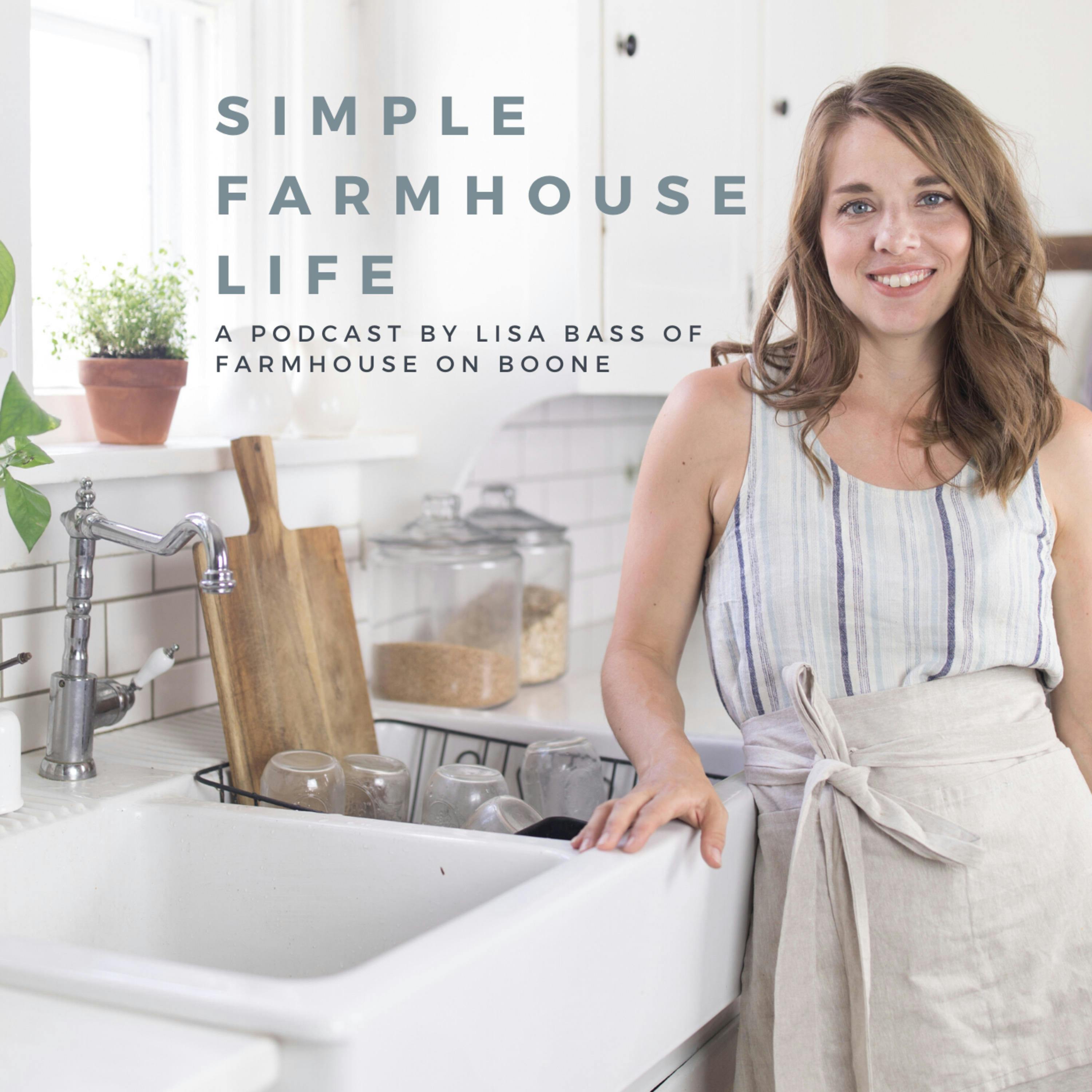
Simple Farmhouse Life
275. Your Messy Home + God’s Grace: Release the Shame and Finally Make Progress | Dana K. White of A Slob Comes Clean
00:49:15
Loading summary
Transcript85 lines
- [00:00]
Happy Mammoth Representative
If you're going through menopause, perimenopause, and you just can't seem to find comfort in your body anymore, or if you're done with menopause but you're still feeling like a wet sock on a busy highway, then you have to try Hormone Harmony. Hormone Harmony is not just a supplement for women going through perimenopause, menopause or post menopause. It's become a phenomenon. Women cannot stop talking about it on social media. A bottle of Hormone Harmony is sold every 24 seconds. Happy Mammoth, the company that created Hormone Harmony, is dedicated to making women's lives easier. And that means using only science backed ingredients that have been proven to work for women. They make no compromises when it comes to quality and it shows. Looking through the ingredients that are in Hormone Harmony, there are so many things.
- [00:41]
Lisa
In there that I have personally used.
- [00:43]
Happy Mammoth Representative
To balance my hormones that have been very effective. Hormone Harmony contains science backed herbal extracts called Adaptogens. Now here's the beauty about adaptogens. They help the body adapt to any stressors like chaotic hormonal changes that happen naturally throughout a woman's life. So Hormone Harmony isn't just for menopause. Any woman with symptoms of hormonal imbalances can take it. But it's perfect for those horrible menopause symptoms that put a woman's life on hold. Hot flashes and night sweats, racing thoughts and low moods. Poor sleep and feeling tired all the time, occasional bloating and gas. Hormone Harmony can help with all of those things. And the biggest benefit? Feeling like myself again. That's what women mention over and over in their reviews. And There are over 30,000 reviews for hormone Harmony. A limited time you can get 15% off on your entire first order at happy mammoth.com with the code farmhouse. At checkout, that's happy mammoth.com with the code Farmhouse.
- [01:35]
Dana K. White
There is a lot of assumption that a messy house is the result of laziness. Which I am here to say that is not the case. Not that that can't be the case. But for the majority of people who truly struggle in this area, it is not for lack of trying. It is not for lack of working on their home. It's because like me, I didn't know which things were the essential ones and which things would actually change my home. I would work and work and work and then feel like I had nothing to show for it. That disconnect is very disheartening.
- [02:07]
Lisa
My name is Lisa, mother of eight and creator of the blog and YouTube channel Farmhouse on Boom. On this podcast I like to talk about simplifying your life so you can live out your priorities. I help you learn how to cook from scratch and decorate on a budget through this podcast and my courses Simple Sourdough and the Simple Sewing Series. I also help people reach their goals from home through my business courses, create your blog dream and YouTube success academy. I will leave links to these resources in the show notes and description box below. Now let's get into the show. Welcome back to the Simple Farmhouse Life Podcast. You all know that one of my favorite topics when it comes to simplifying your home and being able to prioritize your family or baking from scratch, learning sourdough cooking, whatever it is. I brought up all like food stuff because that's what I enjoy doing. Gardening, sewing, whatever it is that you want to learn in your home. But there just doesn't seem to be enough time. I think that decluttering and simplifying and making your home more manageable is the thing that helped the most for me to be able to focus on some of the other things that I really wanted in our simple life. And so that's why I like to talk about it a ton. And today I'm bringing on Dana K. White from A Slob Comes Clean. If you've been on the Internet and you've hung out in the the space of decluttering and minimizing and simplifying your most likely you have come across Dana because she has so much motivational content, very practical advice, things that you think, okay, I can actually act on that. This isn't really abstract. Like I don't really even know where to turn next. She really has some great points that can help you move the needle in your home if you feel like it's just out of control. So without further ado, let's jump into this interview. Dana, I'm so excited to have you on. I've been wanting to have you on for a while. I've had on a lot of the different people that you work with on the Internet when it comes to teaching women and inspiring them about decluttering. And I've yet to have you on. And from my understanding you have a new book. So tell everyone about yourself and your mission online and then also your new book.
- [04:13]
Dana K. White
Yeah. So I'm Dana K. White. You got to put the K in there because there is a man out there named Dana White that some people all know who he is and then.
- [04:23]
Lisa
Others, well, it's just so funny because my husband asked who I was having on today. He's like, dana White.
- [04:28]
Dana K. White
I know, I know. I have disappointed quite a few people. It's funny. I'm. I went on a brand trip in New York, and the guy, the driver called, and he was like, okay, I'm here. And I answered, and he was like. You could tell he was so disappointed.
- [04:44]
Lisa
Oh, my goodness.
- [04:45]
Dana K. White
I'm like, you thought I was the other Dana White, right? He's like, yeah, no, no, I guess you did.
- [04:51]
Lisa
Oh, it's just so funny because, like, I. We. I never knew anything about UFC at all. But then later, Luke's watched it a little bit, and so lately I've actually known a little bit. And so it's just kind of funny timing because I was like, who? Oh, I actually know who you're talking about. Anyways, go ahead.
- [05:07]
Dana K. White
Yeah, so that's not me. I am Dana K. White, and I write about decluttering. I write it from the perspective of someone. Me. Who. This stuff does not come naturally to me. Like, this is the complete opposite of what my natural tendencies are. So I started writing online because I wanted to be a writer, but this was my practice blog. It was a. A compromise that I made with myself because my house was a disaster. And I was like, I wanted to start writing, but I felt like I needed to get my house under control first. And so this was my way to start writing. But in the beginning, it was anonymous because this was my deep, dark secret, and I wasn't teaching anyone how to do anything. I was literally just trying to journal and figure out and stay focused. What in the world have I been doing wrong all these years? How do I do this differently? So that was 16 years ago almost now. So several years in, about two and a half years in, I finally gave in to the people who were saying, teach us what to do. And I was like, why would you want to learn from me? So I started teaching. Not, I will never teach anybody how to have a perfect house, but I can tell you how to go from completely overwhelmed and bewildered to, oh, I get it, and I know what to do now. So. So, yeah, the latest book is called Jesus doesn't care about your messy house. I have other books about getting your house under control, and they do not have spiritual content in them on purpose, because God had showed me this is not a spiritual failure. Like, this is not. And so many times when you mix those things together, it can layer on spiritual guilt to what is already a struggle. And so it was really important to me to not put spiritual content in Those first ones. But I do want to tackle this issue because especially for Christian women, it can really become an identity crisis issue when the thing that you feel like, wait, I'm supposed to be good at this. We're going to talk about that in the book. Right. But, you know, this idea that I'm supposed to be good at this, and if I'm not good at it, then is there something wrong with me or whatever? So I just want to tackle that head on and, and take away that guilt and shame so that people can move forward.
- [07:14]
Lisa
Yeah. And your Internet presence here called A Slob Comes Clean. So that implies that maybe this doesn't come naturally to you. I think that's probably why people want to ask you so many questions about it and see what you're doing. Because sometimes we get these, like, picture perfect people with no children, or maybe, you know, just like, lives that just don't appear, like maybe they ever were messy. And we think, okay, well, that's not applicable for us. That's not realistic. So that's probably the very reason why. And you're on YouTube, correct? As a Slob Comes Clean. Or is that just your blog?
- [07:49]
Dana K. White
I mean, I'm Dana K. White. Yeah. Yeah.
- [07:52]
Lisa
Yes. Yes. So why or how has your struggle to keep your home under control helped you understand God more? What is the, the spiritual implications that you talk about throughout the book?
- [08:03]
Dana K. White
Yeah, So I, I had prayed that God would cure me of this messiness issue, and I felt like he had not answered my prayer. I didn't know that his plan all along was for me to be so desperate to wr. That I would write about that and that this would turn into the, the way that he has for me to be able to help people. Right. Like, this is how he designed me. But, you know, as I started, I did call it A Slob Comes Clean. I didn't want to use that word. I don't like the word slob. And yet that was the title that God had given me. And I was like, well, that's actually kind of catchy. Right. So I, I started writing. And in the beginning, I didn't tell anybody what it was, what I was doing. I was anonymous, you know, but people did start to read it. And the people who. I. I assumed that the first people who read it would be like, what is wrong with you? Get off the Internet. This is horrible, you know, because I was ashamed and embarrassed of this thing. But instead people were saying, these are my thoughts. These are my struggles. This is exactly how I think. And back in the day, you know, in 2009, when somebody would leave a comment on your blog, you clicked on their name and you found out what you could about them. They had these little Google profiles, right? And I saw that the people who were saying they related to my struggles were highly creative, very successful, intelligent women. And I saw that this creative side of me that I was always very thankful that God had made me creative was directly related to my struggles with physical stuff, right? And so calling myself a slob set me on this path of complete honesty, which connected me with my people, which helped me to see this is how my brain works, right? Like, that's why regular traditional organizing advice didn't ever make sense to me, because the people writing it are organized. Like, that's the reality about most organizing advice. Organized people write it because that's what they like. And there are things that I needed to know before any of that could ever be useful to me, right? And there are things that naturally organized people don't know. Some of us need to be taught, right? And so accepting that this is how my brain works and that God created me this way on purpose, it was not a mistake. I wasn't defective, made me, gave me the freedom to then say, okay, I'm not a failure, because the normal advice doesn't work for me. Instead, I just have to figure out what does work for me. And that took away the shame. And I hear that from women all the time. Like, the vast majority of the emails that I get from women will say, the thing that was my turning point was realizing I wasn't alone and that I wasn't broken, right? Like, that there's nothing wrong with me. And so knowing that God made me this way then makes me almost thankful for my struggle, you know, Like, I'm thankful for how he made me. Like this was on purpose. It was not some sort of a mistake or an accident, that this is how my brain operates.
- [11:08]
Lisa
So what are some of the things that you think organized people don't know? That people who are maybe more creative, a little bit more. I don't even know what all the. I'm with you. I am not a naturally organized person at all. And I haven't produced any children that are because neither is my husband. So it's a thing, like, to constantly battle. What are some of the things you think organized people just take for granted that maybe you and I think a little bit differently about that we have to work on so that our houses aren't crazy.
- [11:37]
Dana K. White
Yeah. So I. One of the most transformational Concepts for me was what I now call the container concept, right? And I probably would not have written about it or talked about it or taught it so much, except that. Because in the beginning, I was just figuring things out and writing what I was figuring out. It's so basic that it was transformational for me. I wrote about it on the blog, and people started saying what? I never knew this either. And I call that the container. Container concept. Okay, so the container concept is that I thought containers were for putting things in. Like, I knew that organized people loved containers, right? And so they would, like, go to Dollar Tree and do videos of. You know, of course, that was back before all that, but, you know, like, they would go to Dollar Tree and they would gather all the containers, and, like, that was the solution. And so I would look at my friend's house, and I would be like, okay, my craft space and her craft space are completely different, you know, and hers looks great, and mine is like a door that I, like, open, and then I shove things in and close it really fast because everything's gonna fall tumbling out, you know? Right? And so I was like, what is the difference? Well, she has a red bucket, and I don't have a red bucket. That must be the difference. And so I would go buy a red bucket, and I would go put my crayons for my kids in the red bucket. And I was like, okay, well, the red bucket is full, and I've still got 700 crayons left over. So I would go and buy two more red buckets, right? And then the buckets wouldn't fit on the shelf. And I'd be like, okay, why is this so hard for me? And it's so easy for her. I gotta buy more shelves. And then at some point, I was like, well, you know, I don't have any room for more shelves. I need a new house. We can't afford a new house. I guess I'm doomed to be disorganized, right? All this time not realizing that the container, the purpose of a container is actually to contain. Like, it's not to hold things. It's to serve as a limit, right? And so that's the difference between her using the red bucket and me using a red bucket is I was not using it to contain and serve as a boundary. And so when I realized, oh, a container is meant to contain, it's in the name, you know, I was like, okay, all right. So I put my favorite crayons in first. And when the red bucket is full, something in my brain Goes, I guess I don't actually need a thousand crayons. Oh, okay. But before I was looking at each individual crayon, right? And I was like, because I'm creative. I was like, does this crayon have value? Of course it does. Like, you can create. You can color with a nub of a crayon. Right. You can melt them into something and put them in these little forms and, you know, create Valentine's and, you know, all the different. Like, I could come up with a reason if I was asking myself about individual items, is this thing valuable? Of course. But when I use the container to contain it as the limit, then I would look at the container and say, okay, this is how many I can keep. And it let me blame the container. And it changed everything, because I started to realize not just the red buckets, types of things. Buckets and baskets and bins were containers and limits, but every shelf in my home was a container. So the size of the shelf determines how many red buckets I can have. Right. And the size of the room determines how many shelves I can have. And so just carrying it out that way, that container concept is something that naturally organized. People just see things that way, you know, and so when they're like, well, you can't have that many. And I'm like, what? Like, I just don't see limits, which is a wonderful quality. Right. Except when it was keeping my house to at the point where I couldn't keep it under control. And so that communication is, you know, breakdown is a big part of the problem when someone who doesn't know that some of us don't see limits and don't. It never crosses our mind that there's any reason to not keep a perfectly good crayon. You know, like, that's the way I'm seeing things. And they're seeing things as the actual space. And so I needed to. I needed to understand that. And that's one of the many things that I teach, because I consider myself kind of a translator of basic, you know, organizing concepts. Yeah. I mean, that's just one of many examples.
- [15:59]
Lisa
But yeah, yeah, yeah. When my daughter. When she was born, I started saving every, like, box and oatmeal container. This was before Amazon. So now it's like, are you serious? Like, you were worried you weren't gonna have enough boxes? But I was like, oh, well, these will all be craft supplies. When she gets older, I'll want to do crafts with her. I had a whole basement shelf full of that kind of stuff. And eventually I was like, what am I doing? Like, I have to now organize oatmeal containers. But maybe, yeah, I saw the potential in all of those items and that's where. Absolutely, yeah, we can go a bit wrong.
- [16:34]
Dana K. White
Well, and I think sometimes too, when you have a conversation with somebody who sees that that is not maintainable. Right. And then somebody who doesn't understand that the real issue is that you don't understand limits and you don't understand space and all that is that they are thinking, okay, well, we need to have a conversation about the oatmeal container and why you wouldn't need it and what you know. And I'm like, oh, I can come up with a reason to keep all the things. Like, I can think of all the reasons and all the possibilities for that item. So then to have that conversation is a big waste of time. When instead it's like, you can keep oatmeal containers, but you can't keep oatmeal containers and everything else. And it's standard control because there's a limit to how much space you have. Right?
- [17:20]
Lisa
Yeah. And so being able to justify the reason for each item.
- [17:24]
Dana K. White
Yes.
- [17:24]
Lisa
Isn't going to be enough to keep your home organized. You have to then.
- [17:28]
Dana K. White
Yeah, right.
- [17:29]
Lisa
Fit it within the container and know what you can manage.
- [17:31]
Dana K. White
Right, right. Exactly.
- [17:33]
Lisa
Yeah.
- [17:34]
Happy Mammoth Representative
Here's a fact that may not surprise you. 66% of men are investing in the stock market compared to just 48% of women. I started investing many years ago, actually, when I was a teenager. I learned the very basics of investing and started putting some of my pennies in there. Investing can sometimes feel overwhelming with all the fancy jargon that makes it seem more complicated than it really is. Acorns believes that anyone can be an investor. That's why they make it easy to stick to basic time tested principles that give your money a chance to grow. Today's episode is sponsored by Acorns. Acorns is a financial wellness app that makes it easy to start saving and investing for your future. You don't need to be an expert. Acorns will recommend a diversified portfolio that matches you and your money goals. You don't need to be rich. Acorns lets you get started with the spare money you've got right now. Even if all you've got is spare change, you don't need a ton of time. You can create your Acorns account and start investing in just five minutes. Basically, Acorns does the hard part so you can give your money a chance to grow. I do sometimes think that there are so many options. Especially today with the Internet, we see differing opinions. It can make it feel like why do anything? Because it is all so confusing. But that attitude will not serve you well in the future. I think it's really important to start where you can right now. Sign up now and join over 13 million all time customers who have already saved and invested over $22 billion with Acorns. Head to acorns.com farmhouse or download the Acorns app to get started. Paid non client endorsement compensation provides incentive to positively promote Acorns tier one compensation provided investing involves risk. Acorns Advisors LLC and SEC registered investment advisor you important disclosures@acorns.com farmhouse there are so many things in life we just never get around to taking up that hobby. Cleaning out the garage. You know, little things that don't really make huge differences in our lives.
- [19:27]
Lisa
Yet.
- [19:28]
Happy Mammoth Representative
There's one thing most of us have probably been neglecting that can have a huge impact on your family's future. It's life insurance. And with Select Quote getting covered with the right policy for you is easier and more affordable than you may think. Sometime around our fourth child, I think I was pregnant with our fourth child, we decided to get life insurance because we realized how neither of us would do very well without the other financially. Selectquote is one of America's leading insurance brokers with nearly 40 years of experience helping over 2 million customers find over $700 billion in coverage since 1985. Other life insurance brokers offer impersonal one size fits all policies that may cost you more and cover you less, while Select Quotes licensed insurance agents work for you to tailor a life insurance policy for your individual needs in as little as 15 minutes. And have you ever worried about getting coverage with a pre existing health condition? Select Quote partners with carriers that provide policies for a variety of health conditions. If you have high blood pressure, no problem. If you have diabetes, that's fine too. Even if you have heart disease, Select Quote partners with carriers that can cover those conditions and others. Or if you don't have any major health issues, they work with carriers that can get you same day coverage with no medical exam required. Get the right life insurance for you for less@selectquote.com farmhouse go to selectquote.com farmhousetoday to get started. That's selectquote.com farmhouse so what made this.
- [20:54]
Lisa
The right time to share the spiritual side of your I like this word. Deslobification journey.
- [21:02]
Dana K. White
Yeah, so like I said, I've been doing this for 15 years I have, I mean, I've always been very open about my faith. So the people who follow me, they know that about me. But like I said, it was so important to keep those separate because I, I know how dangerous and how hard it can be. I don't think it's the intention of the people who've written about this stuff. So I don't, I don't ever want to place any blame on that. I'm just saying when you're looking at things through a filter of shame like I was, it's very easy to get it mixed up and start to feel like this is somehow a spiritual failure, right? And so I've been doing this for, for 15 years and I've written the books about decluttering. I've written the books, I know, I've shared the, the strategies and all that. And I'm like, I, this is the one thing that matters eternally, right. You know, so I, I, I have all these, you know how it is on the Internet, right? Like close personal friends who I've never met, right? Like all these people who are very, very important to me. And I care and I'm like, I need to share this piece of things because this is ultimately a book that gives an example of what grace looks like, right? Like, what does grace looks look like? Even about the things that feel completely unconquerable to you, that just feel unchangeable, like, how does grace actually play out? And so I'm like, I have this opportunity to share this and also it is a need for a lot of people who have taken this on as a spiritual shame and I want to take that away or help to take that away. Obviously, I'm not the one who can take it away, but you know what I mean.
- [22:40]
Lisa
Yes, I know what you mean. Yeah. Well, we hear a lot about the Proverbs 31 woman, and I think we all get these ideas in our head about who that is and who she was without probably taking, without not taking it out of context a lot of times. Why do you think people assume that the Proverbs 31 woman had a perfectly clean and clutter free home?
- [23:02]
Dana K. White
Well, I think it's, I mean, honestly, I know a lot of women that just won't even read that chapter because they feel like it's only going to make them feel bad about themselves, right? Like, because she is, she's thought of as the perfect woman. You know, she gets up early and she sews her clothes and she, you know, does all the things and the reality is it is never mentioned in there clutter, cleanliness, anything about her home. Like, it's just never, it's not even part of it. But I think that the assumption is that her house is perfect. Because isn't that what a perfect woman's house is supposed to be? Right. Like is her house would be perfect and it is very clear that she is not lazy. And there is a lot of assumption out there that a messy house is the result of laziness. Right. Which I am here to say that is not the case. Right. Like, not that that can't be the case. But for the majority of people who truly struggle in this area, it is not for lack of trying, it is not for lack of working on their home. It's because, like me, I didn't know which things were the essential ones and which things would actually change my home as opposed to, you know, I would work and work and work and then feel like I had nothing to show for it. And so that disconnect, what is, is very disheartening. Right? And so, so that assumption is that, well, it's perfect because she's not lazy. And I'm like, well, I'm here to tell you that the women who I know who struggle with these issues remind me so much of the Proverbs 31 Women, because they are very selfless, they are very busy and active and doing things for their family and for other people. They're very entrepreneurial, very high intelligence. And yet this issue is one that is a struggle for them. And so, you know that I think it's really important to just so, I mean, in the book, I just go through that whole chapter verse by verse, and I'm like, yeah, let's talk about what this actually means.
- [25:06]
Lisa
Yeah. And of course, this is mostly a new problem. I doubt that the Proverbs 31 woman had to deal with excess and maintaining excess. Right. Like it. My husband and I were talking about that today because almost you have to get to the root of what's going on in this modern day to even get to the point where you're okay with understanding that we aren't where we were mentally just a hundred years ago because of the way that we can make goods in such a rapid way. And you know, you can come across kids items, kids, clothes given to you. I mean, all these things, like the amount of excess, it's. It seems like such a silly problem. Like, oh, come on, like how is that your problem? But it actually is a real problem. And back in the Bible it wasn't a problem that we had the Industrial Revolution and we had Amazon and we had thrift shops and just stuff everywhere.
- [26:03]
Happy Mammoth Representative
Right.
- [26:03]
Lisa
Like, that's a whole new thing.
- [26:05]
Dana K. White
Yes. I think it for sure is made so much more difficult by all of those things that you said. I do think there is an innate for. For those of us who really struggle. You know, I mean, I've traveled worldwide in all different, you know, types of, you know, cultures, and it also. Even just doing what I do, I'm. I. It always boggles my mind when I have someone who, you know, I mean, one of my books is, you know, published in Japan, and I'm like. Like, do they need that in Japan? You know what I mean? Because I'm thinking, no, no, no. You know, and it's this idea, and this is a. This is across cultures. Like, there are those of us who struggle, even, no matter what the situation that we're in, that struggle with this issue. And so it's. It's not always. Yes, it definitely is made so much harder by the ease of bringing things into our home. But. But I think that the mentality of having, like, you know, because most of the people that struggle with this, or many of the people that struggle with this, I'll say it's not that they've brought stuff in because they want the stuff. So many times the things that have come into their home and to the. Gotten to the point where they're completely overwhelmed by them have come in out of very good intentions. Right. Like things that they collected because they thought of a teacher that might want to do a, you know, project or something like that. They saw some project with toilet paper rolls, right. And so, okay, I'm gonna collect those. And then they collect them, and then they collect this and they collect that, and they collect that for other people and out of a good heart. But then it gets out of control because their brain works differently because God made them, you know, to work differently. And so it's like. And then they're not able to do the thing they wanted to do because they're overwhelmed by all the stuff. But then, anyway, so I think it's right.
- [27:58]
Lisa
Yes.
- [27:58]
Dana K. White
Yeah. Yeah.
- [27:59]
Lisa
Oh, I see what you're saying. When I was a kid, my grandparents, they saved everything. Like, in the garage, there was a whole trash can full of the little. I think I'm remembering this right. There was definitely all kinds of stuff, but I'm pretty sure they had the little honey jars, like the little plastic bears. They. I don't know how many Years those were being collected, but there was just like trash cans full of like various categorized things that they weren't even things that, you know, maybe they went and bought, like excess clothes or decor. It was just stuff that, you know, they used.
- [28:34]
Dana K. White
Yes.
- [28:35]
Lisa
Yeah, exactly. And then they figured, I don't know what they were thinking they might do with it. So that wasn't even. That was. You know, they're my grandparents. They were born in the 1918 and 1919, like way long ago. So they weren't even like going to thrift shops and collecting all this stuff. It was literally just.
- [28:52]
Dana K. White
Right.
- [28:53]
Lisa
The things that they use, they then washed out and save. So I see what you're saying. I do think that we definitely have more of an opportunity to become excessive because stuff is cheaper too. Like, you can get clothes off, you know, on some of the online cheap places, for like seven bucks you can get a new dress. Right. So it's tempting to over consume as well.
- [29:16]
Dana K. White
Yeah. And frugality and clutter tend to go together. Right. Like, I was born frugal as well. Like, I am. I. It's like, goes against everything in me to spend excessively. But because of that, then anything that came across my path that was free or that was super cheap because I didn't see limits and because I didn't understand that my house was out of control because I had more stuff than I could possibly have places for, I would bring things in. And it was logical and smart to me to be like, well, this is something that my kid may need in five years. And right now, if I go ahead and get it, right now it's only $1.50, where I might have to pay $30 if I was to wait. So it's like, I might as well bring it into my house. But then that was keeping us from actually being able to live our lives to the fullest in the moment because I had all this stuff for the future and for possibilities and things. So, yeah, the frugality is a real. Those two things go together.
- [30:25]
Lisa
Yeah. I think it's ultimately counterproductive because I've learned this so many times in my life. Like, my frugality has caused me to keep so much stuff that I can't find what I need when I need it. And then therefore, it literally costs more to be that way. But I. I understand the point behind it, and I personally, yeah, it's. It's been a journey for me too, to, you know, let go of things.
- [30:48]
Dana K. White
Well, and the good news too is that it's not all or nothing. Like, it is not a matter of, okay, well, then you can't buy anything on sale anymore. Because that is the kind of thing that would make me rebel and go, you just don't understand. And I got it. You know, this is so important to me. But it's. It's like, you know, I always tell people, like, you can keep anything, but you can't keep everything, right? And so it's a matter of what is more important. Like, if this thing is a great deal, and so therefore, it is actually worthy of coming in my house that needs to have a space. And if it needs to have a space, that may mean that I have to get rid of something else. And then I can look at two things and go, okay, this coat that they'll wear in five years, does it deserve space more than the coat that they're actually wearing this year? You know, like. And so I. That allows me to make those decisions not based on what I totally can come up with as a reason why I should keep this, but instead, like, based on the space which is outside of me, which then takes the emotions out of it.
- [31:48]
Lisa
What do you think is the balance between messiness not being a spiritual issue and everything being a spiritual issue?
- [31:55]
Dana K. White
Yeah. So. So the title of the book is, jesus doesn't care about your messy house. He cares about your heart. And it comes down to your heart, like, what is your intention? Like, what is the. The heart behind what you do? So, like in First Corinthians, you know, Paul is addressing situation after situation after situation that are, like, very specific situations, right? And he's saying, okay, well, you know, consider this, Consider this. But it comes down to your heart. Like, it comes down to your heart. Are you considering the other person and considering your impact on them and the opportunity that you have for them to see God, you know, through how you interact with them, right? And so. So it always comes down to the heart. Like, I was talking before about, you know, like, yes, of course, greed is a sin, but a lot of us have ended up in these situations not out of greed, but out of great intentions. So let's, you know, let's clarify that. That it's just the fact that the clutter exists is not a sin, right? How that causes you to act with other people. That's where the sin can come in, right? Like, so. So the sin might be, you know, my. Ha. My dining room table is completely piled high with 3ft. 3.3ft high with stuff, right? And I'm embarrassed of that. And somebody knocks on the door. You know, a friend needs to come over, their kids, potty training and they need to go to the bathroom, you know, and they're in my neighborhood and so they stop at the door and I pretend I'm not home because I'm embarrassed of my clutter. Well, then that's a hard issue. Right? Like I'm putting my own pride above serving them and helping this other person. Right. Versus I can also go, you know what? They shouldn't judge me. And I know that they're not going to have anywhere to sit, but I'm not going to worry about it because they shouldn't judge me. Well, again, now I'm being selfish and that's my pride, you know, and I'm not serving the other person. And so, so it always comes down to what is your heart toward God and toward others in this situation. And so we just can't make the blanket statement that your messy house is, you know, a reflection of, of your clutter, of your selfishness and pride. You know, it's like, no, no, let's examine it and let's get down to the heart of what is it that we're actually, you know, giving up to Jesus.
- [34:27]
Lisa
Yeah. In all of your years of experience with helping women overcome this kind of stuff, how do you help them have like the biggest breakthroughs? And maybe it's more of a very incremental slow process, but where does it typically start?
- [34:40]
Dana K. White
Yeah, so it is a slow process, except that, you know, my. So I have the no mess decluttering process. It's a five step process that I developed as I worked on my own home. My main reason why I would put off decluttering was that I thought, well, I don't have time because every time I end up trying to declutter, I create a bigger mess than I had before. It gets worse before it gets better. And last time I tried that, then like the whole hall and living room was destroyed for three months, you know, because I got distracted or gave up or got overwhelmed or whatever. And so the no mess decluttering process prevents that from happening because we go one item at a time, final decision by final decision, acting on that final decision so that I don't have any keep piles, I don't have any keep boxes of things to put away later, which means I can stop at any time. And I've only made progress. And knowing that lets me get started at any time, not knowing how much time I'm going to have. And that actually is what changed my home. So the most Transformational thing is when people can understand that instead of having the goal of my house being perfect, my goal needs to be for my house to be better. Right. Because as long as I was picturing the Pinterest pictures or the magazine pictures and thinking that's what I'm trying to work toward, I was so overwhelmed. And I. There was such a distance between where I was and that that I never made any progress. Right. But when I said, you know what, I'm just going to make this space better, I can literally throw away three. Three pieces of trash and get distracted or get overwhelmed, whatever, and stop, and this space is better.
- [36:14]
Lisa
It's still better.
- [36:14]
Dana K. White
And I have. Yeah, I've been successful, like, and you can't fail at better if you do even one thing. And so changing my goal to be better instead of being done is actually the thing that got me to the point where my house was where I wanted it to be, where just looking at this point where I wanted my house to be from back here never got me there. But little by little by little, by making my goal better, that is what changed things. So when people can make that mindset shift, it really does change how they see their home, and that's when real progress starts to happen.
- [36:50]
Lisa
Yeah, that seems really important because, like, you said, so many things that we don't start doing, it's just because we see the entire thing is too overwhelming and we can't get the entire thing done this weekend, you know, in a couple days, and so then we don't even start. So I think that's a really important point to start just making it a little bit better with each day gives you somewhere to actually begin and start tackling it. Because, yeah, it seems like a massive task depending on, you know, where you are in your home now for you, you've been at this for 15 years, 16 years. It's never done. So what are you still doing on a daily, weekly basis? I don't know if you still have any kids at home or, you know, what that situation's like for you, but how are you maintaining it?
- [37:37]
Dana K. White
Yeah, so it's funny because maintaining is actually the thing that changed my home. So in the very, very, very beginning, like, when I first started this blog and I was like, I don't know what to do. Nothing's ever worked for me. I thought, I'm going to start as small as I possibly can. I'm just going to try to keep my dishes done. And that's it. Like, I was like, I'm just going to do that. And that is something I had always thought of as a maintenance task. And so therefore, because my house was always out of control, I would always think, I need to get my house under control, and then it will make sense to do maintenance things. Right. Like, I need to. Like, why would I worry about maintaining this when it was a disaster? So instead I just said, I'm gonna start doing the dishes every day. I don't know. But I know every time I think I need to clean my house, I spend five hours catching up in the kitchen, and then my energy's all gone and I never get to the rest of the house. Right. And so I was like, I'm just gonna do this. And that changed my home. Right. Like. Like, it was shocking, the power that that had and how much it freed up so much time. Because I thought, what, it would take me five hours to do the dishes if I hadn't done them in five days? I thought logically, that means that if I was to do the dishes every day, it would take me at least an hour. I don't have an hour every day. So. Yeah. So therefore it doesn't make sense to do them now. I'm going to put them off. Well, that's not how dishes math works. Right? Dishes math is that if I will do them every day, it takes 15 minutes or even.
- [39:10]
Lisa
Every time you eat, it takes even less.
- [39:13]
Dana K. White
Yeah. And so if I. But if I put them off one day, it doesn't take double that. It goes from 15 minutes to an hour. Because now I'm having to shift things. It doesn't all fit in the sink, whatever. And then if I wait three days, it takes hours. And so that daily doing of the dishes and starting to really understand that and go, you know what? If I will do this every day and not get behind it freed me. Freed up so much time for me to work on my house and declutter. The other task that I encourage people to do is your five minute pickup. And for me, that was like, I know people whose houses are under control do pickups all the time. Right. And yet, because my house was in such bad shape, I was like, thinking that I needed to get everything done before it made sense to do five minute pickups. And I was like, no, I'm just going to go ahead and start doing them. And literally five minutes was the least amount of time that I could justify. Right. And so I started doing that before the house was under control. And it was so shocking. The impact of five focused minutes of picking things up and putting them away, because I'm the type to lay things down in random places. But the five minute pickup combats that. Right. Like, I don't have to just go, I need to stop doing that, because I'm never going to stop doing that. That. But I'm going to do a five minute pickup. And then that means that the things that have randomly been placed, you know, in all these weird places, then at some point during the day get put up. And so those two things will start you getting your house under control, but they also are the two things that will maintain any progress that you've made. The five minute pickup is a great gauge for whether or not you're under your clutter threshold, which is the amount of stuff that you can easily keep under control. And it's unique to each person. So you know that if it's taking me longer than five minutes to get my house under control, with everybody in the family all, you know, picking stuff up and putting it away, which is like 25 minutes of work. Right? If you have five people. Right?
- [41:09]
Lisa
Yeah.
- [41:09]
Dana K. White
But if five minutes is not enough time, then I know I have more stuff than we can handle. We need to declutter some more. And that's like a nice gauge to kind of get me to that point where my house is under control.
- [41:21]
Lisa
Wow. Five minutes. I feel like I'm there for sure. In our bedroom, maybe. There's certain rooms throughout the house. I guess if we have everybody going at once, that's probably doable. We used to have a lot of little kids, too, so I'm picturing, like, all the Legos and the Nerf bullets and, like, if we don't have to count those, then maybe we can get the whole place tidy in five minutes. Right?
- [41:45]
Dana K. White
Yeah. Well. And it's your house and you do what? Somebody at one of my. My live today was like, can it be 10 minutes? I was like, it can be whatever you want. Do you have time? Like, it's your house. But for me, I was like, I want it to be five minutes. And it's, you know, and it's never fun in the beginning with kids, especially because they're going to be like, I don't know where anything goes, Even though, you know, they know, Right?
- [42:06]
Lisa
Yeah.
- [42:07]
Dana K. White
That's how kids are.
- [42:08]
Lisa
Right. So.
- [42:08]
Dana K. White
But it's so worth it. I mean, my kids are adults now, but, you know, when everybody's home and somebody's coming over, I'm like, guys, I need five. I need you all to pick up the house and they'll Have a business routine.
- [42:21]
Lisa
Yeah.
- [42:21]
Dana K. White
They'll go set the timer. And I'm like, it doesn't matter if we get it done in five minutes or not. I need that. And they're like, the timer helps, like just setting the kitchen. You know, the. The timer on the kitchen oven is just incredibly helpful in somehow just motivating to stay focused for those five minutes. Because you know they're going to be up, right. And five minutes is not a trick to say we're going to do five minutes. But you really mean an hour? No, I mean like in the beginning, especially with kids, like teaching them that we really do mean five minutes. We're just going to spend five focused minutes. Yeah, yeah.
- [42:53]
Lisa
Now, when your kids were little, did you save clothes, like, between kids? I get this question a lot from a lot of listeners, and I think this just depends on what kind of storage space you have, how easy it is for you, how organized you are. Like, are you going to be able to find the thing again from a person who's naturally messy? What was your solution for that?
- [43:14]
Dana K. White
Yeah, so in the beginning, so My kids were 3, 5 and 7 when I started this, I over complicated everything and it was still out of control. Right. So the key for me was to declutter down to the point where I could easily, without any fancy systems, have a tub on the top of their. Each of their, you know, closets. You know, my. My boy showed a room, but like tubs up there, and then that was the limit. That was the container to how many. Now for anybody else, like wherever it is that you would look for the clothes for the next, you know, stage up for your kids, then whatever that space is, which some people may have no space for that, other people may have tons of space for that, but whatever that space is, you go to that space and you acknowledge the reality of that space. Like, if I have a shelving unit and I've got eight kids and this shelving unit will only fit four tubs, well, then, okay, each, you know, each age gets half a tub or whatever. You know, I mean, obviously the youngest one's going to age out, but you know what I mean? Like. Like I have to do that. And I have to say, this is the space. If I have eight kids and I only have one tub, then that's the space you have is the space you have. But it's incredibly freeing, right? Like it. It's rarely about filling something up and then agonizing over all the things you can't put in there. Just knowing that the Space is limited. And then going through things and saying, is this container worthy or not? You know, like, does this deserve space in this limited storage space that I have makes everything look different. And rarely does it actually become agonizing. It usually is like, oh, actually, no. Like, oh, yeah, this. Yep. No. And it makes it so much easier to sort out what should stay and what should go when you know that it's a defined space that's going to have to go in.
- [45:08]
Lisa
Yeah. So back to your container method. Always just fitting it in the container, which depends on the space that the container can fit in. I think that's a really simple method. I think for a lot of people, getting to the point where that's all done is, you know, obviously the challenge. But you can start working slowly. Do you have a room or a space that you recommend somebody starts tackling first?
- [45:31]
Dana K. White
Yeah. I recommend that you follow what I call the visibility rule. I. Every space in my home was a disaster, so I had to find a way to prioritize. So I decided to prioritize according to visibility. So starting in the space that guests would see when they come in my home. So the weird thing that happens is when you're like, okay, I've listened to this lady talk about decluttering. I'm ready to declutter. For some reason, it's very normal to, like, go tackle the top shelf of your closet. Right. Like some obscure space.
- [46:02]
Lisa
The opposite of what you're saying.
- [46:03]
Dana K. White
Right. Like, that's the normal thing is to go. Want to do that. And I think it's because you're like, well, this. Nobody uses this space. So I declutter this. Maybe it'll actually stay decluttered. Yeah, exactly.
- [46:13]
Lisa
Or that.
- [46:14]
Dana K. White
Yeah, yeah, it'll stay this way. But the problem is you spend all your effort and your energy there, and then you have nothing to show for it to anyone else and to yourself. And so, you know, you. You know, your kids say, what have you been doing? And you're like, well, I've been decluttering. And they're like, what? Like, I don't see. You know, that's very defeating. Right. But if you declutter in a visible space every time you walk by it, even though before you didn't notice that it was messy, now you do notice that it's neat and clean and decluttered, and it perpetuates your decluttering energy because you're like, that looks so nice. And it inspires you to declutter again sooner. And then following that visibility rule is a Way to stay on track and really make the whole house, you know, get to the point where you get through the entire house and build that momentum that we're all so desperate for. Right, Right.
- [47:04]
Lisa
Yes. I think that's a really great tip. I don't know if I've ever heard someone give that one. But when we can get small wins where we can actually see and walk by it and appreciate the difference, I think that is what is going to motivate us. I think that's a really, really good point. Well, you've brought up so many good points. Lots of motivation. Tell the listeners where they can get your book, where they can find you, and follow along with your other, you know, all of your content, where you teach all of this stuff and motivate.
- [47:34]
Dana K. White
Yeah. So I have several books out. If you want to find me. Just always put the K in there. Dana K. White. If you don't, you won't find me. Which is kind of fun because then, like, people in my real life are like, what do you do? And they Google it. They're like, I didn't find you. And I'm like, yeah. Oh, well, sorry.
- [47:50]
Lisa
Yeah, that's awesome.
- [47:51]
Dana K. White
Yeah. But if you put the K in there, you'll find me on Amazon. Everywhere books are sold. You know, I have a YouTube channel, a podcast that comes out every week, so. So, yeah, the. Just look for Dana K. White and you'll find all my.
- [48:05]
Lisa
You'll find you everywhere.
- [48:06]
Dana K. White
Y. Y. I'm everywhere.
- [48:08]
Lisa
Well, thank you so much, Dana. I really appreciate it.
- [48:11]
Dana K. White
Thank you. It was so fun.
- [48:14]
Lisa
Thanks, as always, for listening to the Simple Farmhouse Life podcast. My husband, Luke and I and our eight kids work together side by side on our little homestead and use our blog, podcast and YouTube channel to reach other homemakers, home cooks and homesteaders with practical recipes and daily family life. For everyday sourdough recipes, make sure to check out our blog, farmhouse on Boone.com and to dig deeper, we do also offer a course called Simple Sourdough over at Bitvit Ly Forward slash farmhousesourdo course. That's all one word. Bit Lee Forward slash Farmhouse sourdough Course. If you're looking to learn how we earn an income online, check out my free blog Success Masterclass at Bit Ly Farmhouse Blogging school and my YouTube course at bit ly farmhouseyoutubecourse. All one word.