Podcast
Simplifying Cross-Border Trade
Hosted by PWIP · EN
PWIP is a platform revolutionizing the rice trade industry. We provide a one-stop solution for all your rice trade needs and connect the rice trade ecosystem. Our services include Trade Contacts, Daily Ex-mill Rice Prices, export tutorials, and End-to-End Rice Export shipments. Our team of experts tailors services to meet your specific needs. Whether you're a start-up or a multinational, we support your rice trade goals with expert support and innovative solutions. Join us to grow and succeed in the world of the rice trade.
Talk to us: +91-8317749274
Website: www.pwip.co
8episodes
Episodes
Newest firstAll episodes
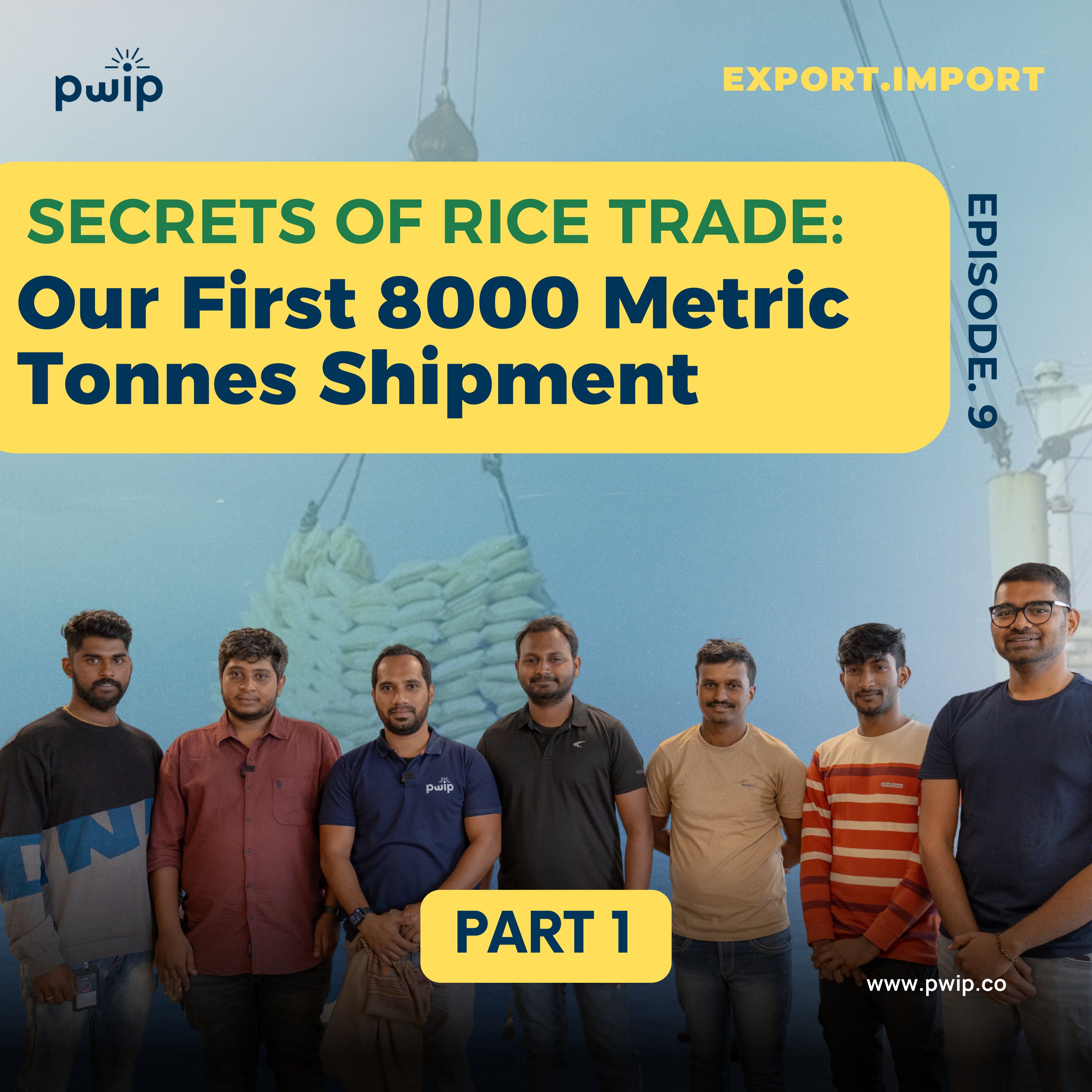
Secret of Rice Trade : Our First 8000 Metric Tons Shipment | EP.9
Jun 26, 202300:27:14Tap to summarizeThe podcast discusses the process of rice trade from shipping to delivery. The team reminisces about their first 8000 metric tonne shipment, highlighting the challenges involved in such a shipment such as costings, bagging, routing, and aligning cargo with each compartment of the cargo train. Dhanraj discusses the logistics of loading rice onto ships, the importance of load rates, and the role of vessel and cargo agents. The team also explain the process of chartering a vessel, lay days, and the challenges of coordinating loading operations. The process of loading rice from barges to trucks and the speed at which it is done is also discussed. Overall, the podcast provides insights into the complexity of the rice trade and the logistics involved in transporting such large quantities of rice.
Transcribe →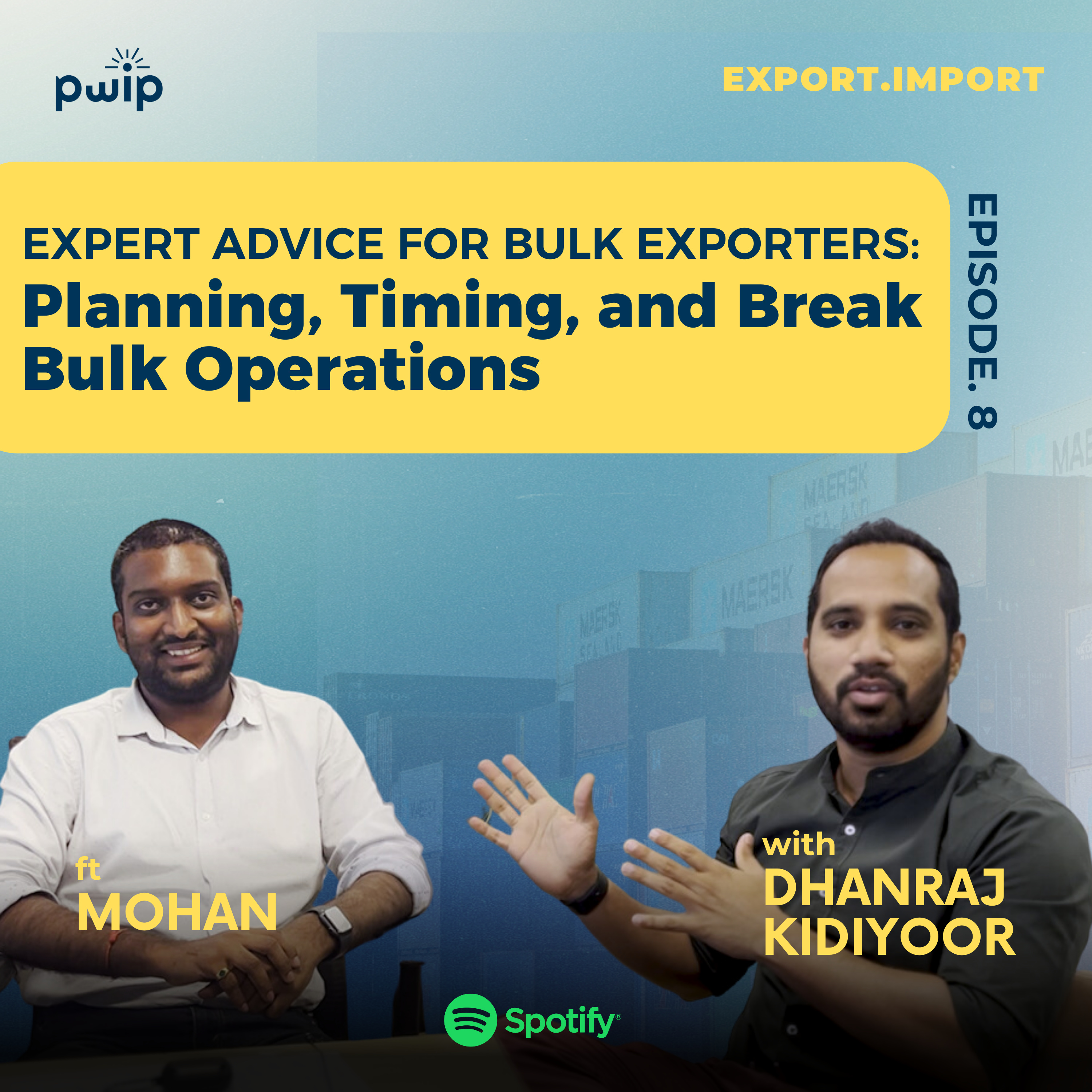
Expert Advice for Bulk Exporters: Planning, Timing, and Break Bulk Operations | EP.8
May 13, 202300:07:38Tap to summarizeThis podcast episode features a discussion between Dhanraj and Mohan from RH Enterprises, a business that specializes in exporting large quantities of rice. The two talk about the advantages and disadvantages of bulk shipments versus container shipping, as well as the value of cautious planning and scheduling when it comes to bulk exports. They explore the benefits of break bulk operations as well. Later on in the chat, Dhanraj asks Mohan about his experience working with PWIP. Mohan replies that he is happy with the cooperation, noting PWIP as one of the top clients in the industry and expressing his desire to develop a long-term partnership. Listen to find out more about how to succeed in this market and in the bulk export of rice.
Transcribe →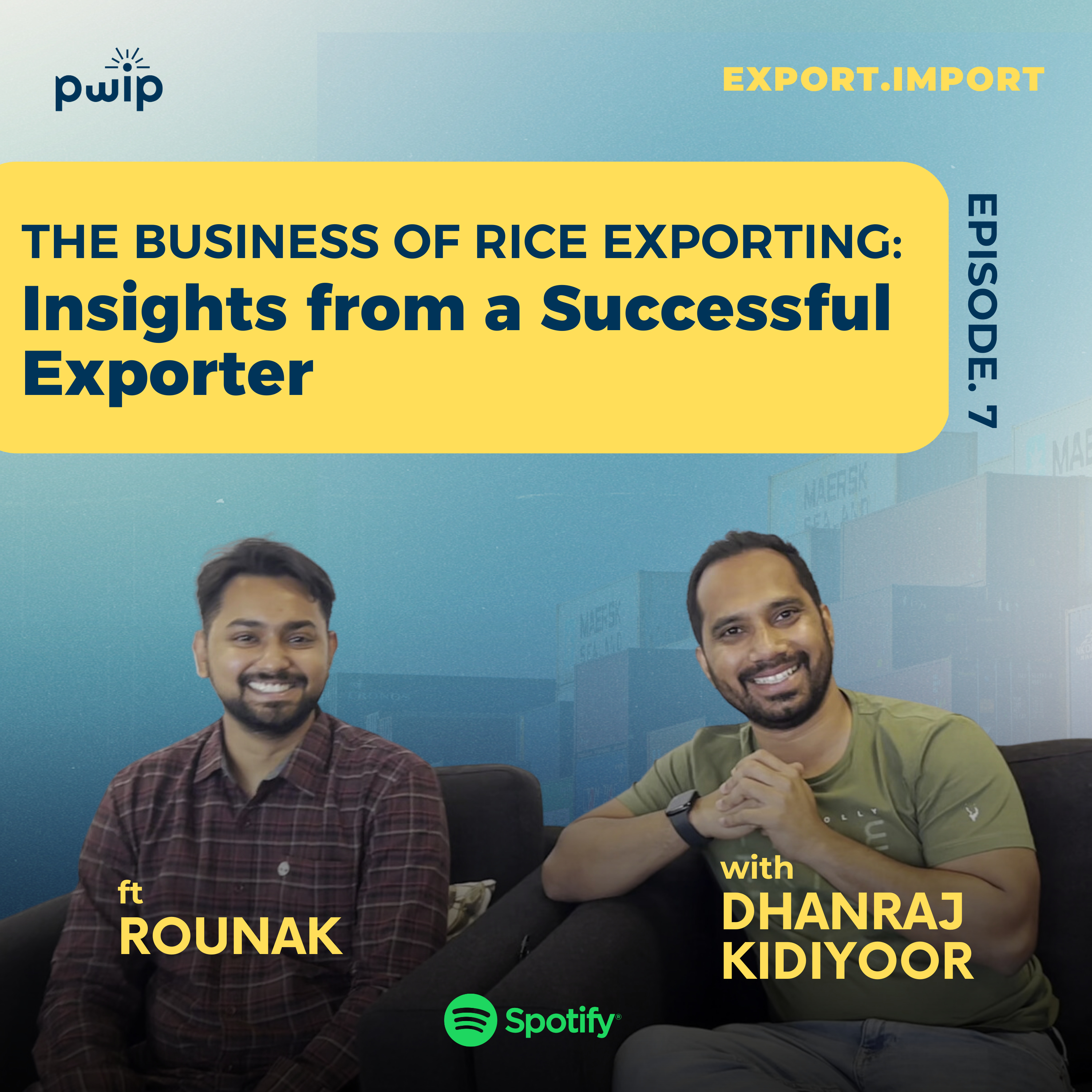
The Business of Rice Exporting: Insights from a Successful Exporter | Ep:7
Apr 21, 202300:19:35Tap to summarizeIn this podcast episode, we learn about the world of rice exporting from a successful exporter Mr. Rounak from SliverArk Exim, who talks about their experience and difficulties in the business. The conversation revolves around their business partnership with PWIP. We also gain insight into why the exporter's choice to invest in PWIP was so smart, and the value of open communication within the team. The episode discusses the team's strategies for dealing with the present challenging market condition. The benefits of rice exporting are also discussed, along with advice for aspiring exporters. For professional success, the speaker recommends not starting from scratch but rather joining a platform like PWIP. Listen in to hear an insightful discussion of the difficulties that arise from the rice exporting business.
Transcribe →
Minimizing Export Risks: Dealing with Payment Default in International Trade | Ep:4
Mar 4, 202300:17:22Tap to summarizeIn this podcast, Dhanraj, our expert in export businesses, shares his knowledge on payment defaults and risk management. He discusses how payment default can occur despite safety measures, such as getting paid before surrendering the bill of lading, and explains different scenarios where the buyer may not respond or make balance payments. Dhanraj suggests utilizing advance payments or selling the container to another buyer in the same country to manage the situation. He advises against taking payment later and credit transactions, which can lead to significant losses. He emphasizes the importance of researching and selecting buyers carefully to reduce risks. He also highlights the impact of COVID-19 on international trade and recommends using insurance to mitigate risks, even though it comes with a premium cost. He shares his personal experience with payment defaults and offers his services in rice exports. Overall, this podcast provides valuable insights for exporters on how to manage payment defaults and reduce risks in their business operations. Talk to us: +91-8317749274 Email: Info@pwip.co
Transcribe →
Minimizing Export Risks: How to Prevent Delayed Shipments. | Ep:3
Feb 25, 202300:24:35Tap to summarizeIn this episode, Dhanraj Kidiyoor dwells deeper into the consequences of shipment delays in exports, building upon the personal mistakes he shared in the previous episode. One major consequence of shipment delays is the impact it can have on delivery schedules for the buyer, ultimately affecting their own customers. Another consequence is the potential for payment delays for the exporter, as buyers may take longer to process payments after delayed shipments. This can create a ripple effect, with delayed incoming funds impacting the exporter's ability to pay their own suppliers. To mitigate these consequences, the speaker shares a valuable trick for expediting the shipment process. Don't miss out on this informative discussion on navigating the complexities of exports.
Transcribe →
6 Years of Export Experience: My Personal Mistakes and Lessons Learned | Ep.2
Feb 18, 202300:20:46Tap to summarizeIn this episode, our expert shares tips on avoiding common export mistakes from his 6 years of export experience. Have all necessary documentation and licenses in place before taking orders. Check and audit products to avoid quality issues. Establish clear payment terms and protect yourself from fraud or non-payment. Avoiding these mistakes leads to successful exporting. Stay tuned for our upcoming episode where we delve deeper into the lessons learned.
Transcribe →
Effective tips for Export Business from Experts | Ep. 1
Jan 28, 202300:14:50Tap to summarizeIn this episode, we are joined by Jayesh Chellani, Director of Ditcon Pvt Ltd. He shares his entrepreneurial journey and explains how he started his export business in India and tells us about the challenges of running an export business. He also shares how PWIP helped with all aspects of the process from buying to payment to delivering goods. Finally, he outlines some ways that aspiring exporters can get involved in the ecosystem. We hope this inspires you as much as it did us.
Transcribe →
Who We Are
Jan 27, 202300:01:23Tap to summarizeWe are PWIP - the one-stop networking platform for rice millers, traders, wholesalers, and all individuals involved in the rice ecosystem. With a staggering Rs 70,000 crore worth of rice exported out of India last year, PWIP is addressing the lack of transparency and connections that traders face in both the Indian and global markets. Founded by Dhanraj Kidiyoor, a rice exporter himself, PWIP was born out of a personal need to keep track of the latest rice prices and connect with international customers. Our platform allows for direct communication between millers and buyers, cutting out the middlemen and saving time and money for all stakeholders. PWIP partners with indigenous producers and provides end-to-end service for understanding the procuring and trading process, giving traders the opportunity to reach out to potential buyers and sellers globally. Currently, an importer would have to go through multiple middlemen to reach an exporter or miller, which can be time-consuming and result in lost customers. PWIP eliminates this problem by allowing millers to reach out directly to customers like importers and exporters all over the world. Exporters can also find both millers and importers for making the trade happen, giving them the best source of buyers. Importers can choose carefully which rice miller they want to procure rice from and find the lowest prices and cheaper cost of a trade. Overall, PWIP is a win-win situation for all stakeholders as they can save time and money.
Transcribe →