Loading summary
Transcript124 lines
- [00:01]
Kim Atkinstore
With the five dollar meal deal at McDonald's, you pick a McDouble, or a McChicken, then get a small fry, a small drink and a four piece McNuggets. That's a lot of McDonald's for not.
- [00:11]
Barb McQuaid
A lot of money.
- [00:12]
Joyce Vance
Price and participation may vary for a limited time only.
- [00:16]
Jill Wine Banks
Oh, hear that?
- [00:18]
Listener
Ah. Okay. Thank you.
- [00:20]
Advertiser
Etsy knows these aren't the sounds of holiday gifting.
- [00:23]
Host
Hmm.
- [00:25]
Advertiser
Well, not the ones you're hoping for. You want squeals of delight? Happy Te.
- [00:33]
Host
How did you.
- [00:33]
Barb McQuaid
How did you know?
- [00:35]
Advertiser
And spontaneously written songs of joy.
- [00:37]
Listener
I so happy.
- [00:39]
Barb McQuaid
Oh yeah. Oh yeah.
- [00:42]
Advertiser
Hmm. Okay, this song needs a bit of work. But anyway to get those reactions, make sure everyone on your list feels heard with handmade, hand picked and designed gifts from small shops on Etsy. Gifts like personalized jewelry, custom artwork, cozy style items, vintage pieces, and home decor to celebrate all of your favorite people and their specific kind of special. For original gifts that say I get you, Etsy has it.
- [01:10]
Kim Atkinstore
Black Friday is coming. And for the adults in your life who love the coolest toys, well, there's something for them this year too. Bartisian is the premier craft cocktail maker that automatically makes more than 60 seasonal and classic cocktails each in under 30 seconds at Push of a button. And right now, Bartesian is having a huge site wide sale. You can get $100 off any cocktail maker or cocktail maker bundle when you spend $400 or more. So if the cocktail lover in your life has been good this year or the right kind of bad, get them Bartesian at the push of a button. Make bar quality cosmopolitans, martinis, Manhattans and more all in just 30 seconds. All for 100 off Amazing toys aren't just for kids. Get 100 off a cocktail maker when you spend 400 through Cyber Monday. Visit bartesian.com cocktail that's B A R T E S I A N dot.
- [02:08]
Joyce Vance
Com cocktail if you're a maintenance supervisor for a commercial property, you've had to deal with everything from leaky faucets to flickering light bulbs. But nothing's worse than that ancient boiler that's lived in the building since the day it was built 50 years ago. It's enough to make anyone lose their cool. That's where Grainger comes in. With industrial grade products and dependable, fast delivery, Grainger can help with any challenge from worn out components to everyday necessities. Call clickgrainger.com or just stop by Grainger for the ones who get it done.
- [02:51]
Host
Welcome back to SistersinLaw with Joyce Vance. Jill Wine Banks, Barb McQuaid and me, Kim Atkinstore. To start, we want to remind you that in less than a week, SistersinLaw will be live at the 2nd Street Y in New York City. That's Friday, September 20th, and there are just a handful of tickets left, so you really need to hurry. You're not going to want to miss it. Go to politicon.com tour and get your tickets to today, and we'll see you there. And in other news, the new T shirt is at the Merch store. I think you'll love the color. It's been really, really popular. So just go to politicon.commerch to find that. You can find all of these links in the show notes. And we have a great show for you today where we will be talking about the great debate, the presidential debate. We'll also be talking about the terrorgram risk. ANNE we'll talk a little more about Project 2025 and what the plan holds for the Department of Labor. It's pretty scary stuff. But before we get to the show, I want to talk a little bit about autumn rituals because, you know, the leaves are starting to fall even here in warm D.C. and the temperatures are cooling a bit. And there are certain things that, that makes me want to do right, and it usually involves food. So one thing I'm doing, probably, as you listen to this, dear listeners, I am probably throwing some veggies and chicken and broth and all kind of good stuff into the slow cooker so that I can have my famous chicken soup on hand in little individual servings in the freezer to be ready for flu season, which I know is coming. What are some of the things you guys do when the temperatures start falling?
- [04:42]
Barb McQuaid
BARB well, I'm all about football. This is when I think of fall, I think of football. And, uh, you know, Michigan football is in full swing. The Detroit Lions are back and better than ever. In fact, I've got a. I've got a double header this weekend, Kim. I'm going to the Michigan game on Saturday and the Lions game on Sunday, so. Oh, that's really fun. Nothing could be better. And, you know, I always wear the jersey of my favorite team just in case, you know, somebody goes down and they look in the crowd and they say, I need somebody to come in at quarterback. I'm ready.
- [05:08]
Listener
McQueen, get out of here.
- [05:09]
Jill Wine Banks
I'm ready.
- [05:10]
Barb McQuaid
I'm always ready.
- [05:10]
Advertiser
Yeah.
- [05:12]
Host
What about you, Jill?
- [05:14]
Listener
So you mentioned flu, and I, instead of cooking soup, went for a flu shot. And the new COVID vaccine and I recommend that everyone listening. The new COVID vaccine is out now. Go get it. It's still around and it's not a big deal to get all the drugstores have it. So go on and get your vaccines.
- [05:37]
Host
I'm literally getting both of mine the minute I get done putting the soup on. What about you, Joyce?
- [05:43]
Jill Wine Banks
You know, it's so crazy that the new fall ritual is get a flu shot in a Covid vacc. Here we are in 2024. Sadly, it will not be fall in Alabama for several more weeks, but I am always a big fan of trying to push it. Fall is one of my favorite seasons, so I've asked my husband to deliver a huge pot of his famous chili this weekend. He makes really, really good chili full of beans and sort of spicy and I think there's a little bit of chocolate powder in there, sort of like a little bit of mole. Whatever he does, it really says fall to me. So I'm looking forward to that.
- [06:19]
Host
I will look forward to the sample that I'm sure I'm going to get on.
- [06:22]
Jill Wine Banks
Girl, come on down. Bob will have y'all. You know Bob was given Barb a hard time about should I even say this football last weekend. I think it's time for the sisters in law to gang up on my husband.
- [06:35]
Barb McQuaid
I'm in. I'm ready. I'm down.
- [06:37]
Listener
Not if he'll make me some chili. I would be on his side.
- [06:42]
Barb McQuaid
Hey.
- [06:53]
Kim Atkinstore
Black Friday is coming. And for the adults in your life who love the coolest toys, well, there's something for them this year too. Bartisian is the premier craft cocktail maker that automatically makes more than 60 seasonal and classic cocktails each in under 30 seconds at the push of a button. And right now Bartisian is having a huge site wide sale. You can get $100 off any cocktail maker or cocktail maker bundle when you spend $400 or more. So if the cocktail lover in your life has been good this year or the right kind of bad, get them Bartesian at the push of a button make bar quality Cosmopolitans, martinis, Manhattans and more all in just 30 seconds. All for 100 off Amazing toys aren't just for kids. Get a hundred off a cocktail maker when you spend 400 through Cyber Monday. Visit bartesian.com cocktail that's B A R T E S I A N dot.
- [07:51]
Advertiser
Com cocktail what makes a great pair of glasses? At Warby Parker, it's all the invisible extras without the extra cost. Their designer quality frames start at $95 including prescription lenses plus scratch resistant, smudge resistant and anti reflective coatings and UV protection and free adjustments for life. To find your next pair of glasses, sunglasses or contact lenses, or to find the Warby Parker store nearest you, head over to warbyparker.com that's warbyparker.com.
- [08:32]
Jill Wine Banks
So the debate, what looks like possibly the only debate between Donald Trump and Kamala Harris is over. And I suspect that if you're like me, you were holding your breath a little bit for those first few moments just to make sure that all would go well. And all did go well. I think that was pretty much the wide take on the debate, that Kamala Harris just had an outstanding performance that evening. But I haven't had a chance to talk to my sisters yet and I'm curious to hear what your reactions to the debate were. Kim, what did you think?
- [09:06]
Host
I thought that the vice president did an outstanding job. I went into it knowing that the bar was set very differently for her than it was set for Donald Trump, which is annoying and angering in so many ways that she had to basically pole vault across her bar at where it was set. And Donald Trump could essentially, you know, all he had to do was step over his and not trip, which I don't think he did. But she completely soared. She had to introduce herself. She had to talk policy, but she also had to connect with Americans who don't know much about her. She had to deal with Donald Trump over talking her and saying crazy things, but also, you know, prod him a little bit, do a little rope a dope to get him to show his true self. And I think she really did an outstanding job of all of those things.
- [09:59]
Barb McQuaid
And I was born in Israelis.
- [10:03]
Host
They were leaving early. I mean, you just knew. You just knew. You just knew. But what's gratifying for me is I've had a couple of strangers stop me on the street to talk about her performance in the debate and how it went. And I think that's exactly what that shows, proof of a job well done and a winning performance.
- [10:25]
Jill Wine Banks
Yeah, I think that's a good point. I mean, it's easy to forget for people who've been Harris watchers for a long time. And I mean, you know, I think we're all hardwired to appreciate the talents of people who look like us. She's a former prosecutor, so of course prosecutors and women lawyers are going to get what's going on there and be appreciative of her. I too have been amazed by so many people who felt the need to stop me and express surprise that she did so well, because, frankly, that was sort of, I think, the expectation among women lawyers. Jill, what did you make of the debate?
- [11:00]
Listener
I was at a watch party and was after the party, I led a discussion and of course you would not be surprised that people who came to a watch party where I was going to be discussing something would have been fans of the Vice president. And they were, they were nervous. They weren't surprised by her doing so well, but they were so relieved that it had gone perfectly. I mean, everyone had a zinger that they thought was the favorite or a gaffe that he had that really made them go. That really shows who he is. And I think she really was pitch perfect. She walked the line between being overly aggressive for a woman and as you know, Kim mentioned that the bar is different for her than it was for him. And the same is true. A man can be much more aggressive in his attack. A woman has to be careful not to be overly aggressive and therefore to offend people in the audience. And she really was perfect. She was exactly presidential and strong. She showed she could stand up to bullies and to foreign dictators like all the ones that Donald Trump loves. And I thought she was just absolutely perfect.
- [12:28]
Jill Wine Banks
Yeah, I mean, I think that that was the assessment. And I heard people say that this was the best debate performance by a candidate, you know, in more than 50 years. And that seems to be fair, what really struck me about it. So I did this unusual thing. Y'all know I have a substack. And we did chat, a live chat, during the debate. And it made me reflect upon this because as you might expect, that chat was full of thousands of people who were hardcore Democrats, hardcore supporters of the vice presidents and on in the media, what we usually see is, you know, like at best, Trump supporters or moderate Republicans weighing in on the Democrat. We're not ever treated to this notion of just an entire room full of committed Democrats talking about the strengths of our candidates. And that's actually the exposure I had during the debate. And it was really uplifting and interesting and a wonderful break from having to listen to all of the MAGA crazy. So I highly recommend to our listeners that you take advantage of opportunities to surround yourself with like minded people just to give yourself a little bit of a break from the pressure that's all around us from the pro Trump forces. I think we all sort of deserve that, and I was grateful that the Vice President gave us that. So, Barb, what was your takeaway from.
- [13:48]
Barb McQuaid
The debate well, one, I was on your sub stack and it was really fun. I know you were. It was fun, you know, like, you'd share a comment, you'd see other people's reaction to it. So kudos to you for hosting that because, you know, people were able to sort of share in real time their reaction to some of the things they were hearing. So I thought that was a really interesting exercise in civil discourse. So I thought that was great. First, may I just say, as the tall one of the groups of the sisters in law. Love it to see Kamala Harris walk out like a boss in her navy blue suit, Right. I mean, prosecutors. That's the uniform, right?
- [14:23]
Jill Wine Banks
It is.
- [14:24]
Barb McQuaid
You walk out in the navy blue suit, and she walks over to Trump, who shows no interest in shaking her hand. So she's got to go not only past her own podium, not only past the middle of the stage, all the way over to his podium, and fearlessly sticks out her hand in a friendly, not hostile way they've never met before, right? And she says, kamala Harris, she introduced it. And you know what, grudgingly takes her hand. But I thought she really owned that moment. And may I add all five foot four of her. She's five foot four. What a boss. She's taller with her high heels. Yeah. But she is small but mighty. So I loved it. He's 6 3, and she fearlessly approached him. And, you know, I really thought it was just a great, A great moment. So that I loved. You know, I always am looking and hearing and listening for disinformation that is, you know, become my. My singular focus.
- [15:15]
Host
You must be exhausted.
- [15:17]
Barb McQuaid
Yeah, yeah, it was exhausting. But, you know, we've already made a comment about, you know, eating of pets, and I really do want to talk about some of the disinformation. And the other about her earrings were a listening device with someone feeding her the answers. Even when Trump said crime is up. Absolutely not true. He used so many of the classic tools of disinformation used by authoritarians throughout history. I mean, this dog eating thing, this is not harmless. This is not funny. It's made up. It's baseless. But why does he do it? He does it because he wants to portray Haitian immigrants as other, scary, not like us, barbaric. That is a trope that people have used about Jewish people, about minorities and others. It's a scare tactic, and that's why he leaned into it. It doesn't even matter if it's not true because it just reminds people of this danger of Immigrants, which is part of his narrative. So false. And of course, we learned in recent days, extremely dangerous, extremely harmful, because that city got threats to its city hall. They had to close down their schools. It's a terrible thing that they're engaging in this thing about her earrings are a listening device. You know, Again, do people believe it's true? Probably some do. Probably some know it's a joke. But they're, They're. They're trafficking in this because it suggests that she's not smart enough. Whether it's because she's a woman or she's a minority, she's not smart enough to say all of these smart things that she said. No, she said these things because she was prepared. She cares enough about the dignity of this office and the seriousness of this moment that she spent a lot of time and it was clear, preparing for those questions to give the best answer that she could. And I thought that the other thing that was so offensive was when asked whether he regretted his answer about raising her race, that she recently turned black, he kind of doubles down on it and he reminds people that she is a minority and that she's a woman, because once again, I don't care if she's black, black, black, black. And the way he says it, too, he says it with such disdain. Right? She's black. And then he also throws in right in the middle of that. And she put out. Yep, there, I'll say it. What is that all about? Right? So degrading her. It's sexism, it's misogyny, it's racism, but it's all out there just to remind people of all of those things that she's not one of us. She's not the kind of strong male leader that we've always had as a president here. And so that also is a tactic of disinformation. So I just wanted to share those observations.
- [18:01]
Host
Can I just add, I just want to say to that point, Barb, and on that put out notice, I had a lot of people push back on me, saying, well, I'm not sure that that's what he meant. I think he said that she put out something about being. I'm like, first of all, she never put out anything about being black. She just lived her life. So the fact that he said she put out, and then he said, all right, I'll say it like, it's like he punctured. That's exactly what he means.
- [18:24]
Barb McQuaid
So let's.
- [18:25]
Host
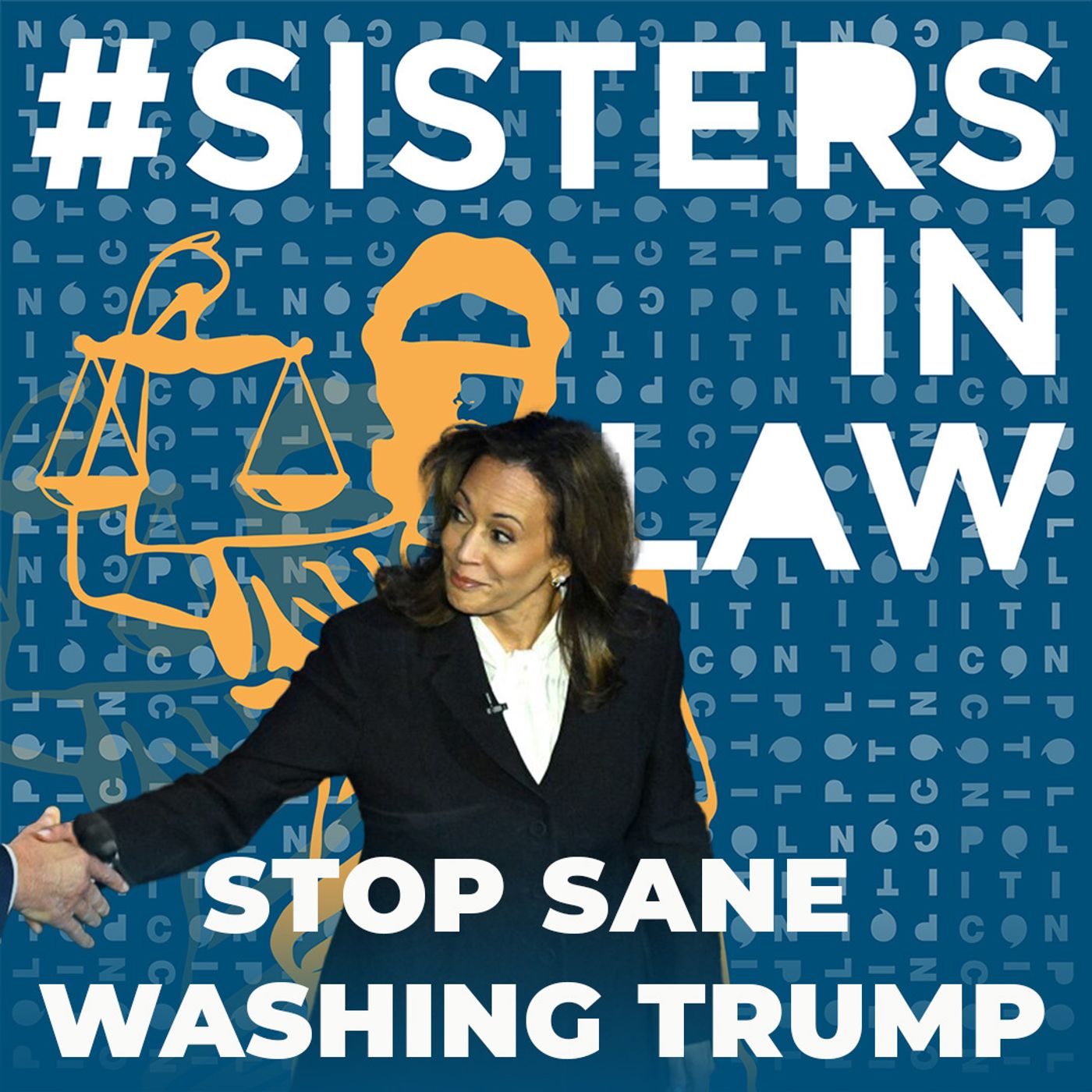
One part of the important thing about disinformation, let's stop. Stop Sane washing. It's this idea to say, oh, well, maybe he met. No, Donald Trump has never had nuance. Donald Trump says exactly what he means as bluntly as possible, using the fewest and simplest words that he can. Believe him. Believe him. No sandwashing.
- [18:46]
Listener
I want to point out two other really horrible things he did. You're right, Barb, about the earrings. And I don't know how many of you follow fashion, but Tiffany's sells those earrings. And if you look at the Tiffany earrings, they are exactly what she was wearing. Period, End of sentence. And secondly, when you don't have a.
- [19:05]
Barb McQuaid
Transmitter in your earrings, Jill.
- [19:07]
Listener
Of course I do.
- [19:08]
Barb McQuaid
How do you think I know what to say? So a smart man is in the next room transmitting all the answers.
- [19:14]
Listener
Exactly. Of course, behind every smart woman, there has to be a man manipulating her. But the other thing was his shocking statement about. I don't know. I think she had those questions because she seemed to really be prepared for those questions. Well, honey, anybody who was preparing for an debate, who wanted to be the president, would have thought, gee, I think I'll be asked a question about immigration. Gee, I think I'll be asking. Of course she was prepared for those questions because they were the obvious questions that any candidate would be asked. Why was he not?
- [19:44]
Barb McQuaid
Who could have seen that coming? A question on the economy.
- [19:47]
Host
He was asked about a health care plan. Who would expect to have a healthcare plan at a presidential debate?
- [19:53]
Listener
Yeah.
- [19:54]
Jill Wine Banks
You know, Kim, to your point about sane washing, I think not only does the media do that all too often for Trump, and that's this new term, if you haven't heard it yet, that's come into vogue about Trump to say, oh, well, even though the words that came out of grandpa's mouth made no sense, here's what he really meant to say, and that's become shorthand for that practice that Trump supporters have done really since the beginning that the media does, but what worries me the most is when I see people in the public or in the community doing it, even people who don't like Trump who say, oh, well, no one could have ever meant what he actually said, so he must have meant X. And I think we need to quit doing that. The whole point is Trump gets away with lying. He gets away with the disinformation because we let him. And I think this is a zero tolerance moment where every time he does it, he needs to be called out. Maybe that's by the media, but maybe that's by me tonight over drinks with my girlfriends.
- [20:51]
Barb McQuaid
Hey, that sounds Like a concept of a plan?
- [20:54]
Jill Wine Banks
It could be the concept of a plan, absolutely. But here's the difference between Donald Trump and Kamala Harris. She has ideas, she turns them into actual plans, and then she puts them into motion. And people benefit because it's Kamala Harris for the people. And that's what we saw at the debate. Okay, well, look, obviously this is a topic that gets us all, or at least it gets me a little bit angry, because I have had enough of listening to people try to make sanity out of Donald Trump's insane notions. But I do want to belabor the point about the debate just a little bit, because I think you guys each have interesting perspective. And, Kim, I'm curious, you know, did you see it differently as a journalist than you did just as a person, as a lawyer, as a woman? Does your journalistic assessment give you any different sorts of insight into how Harris did?
- [21:44]
Host
Well, it gave me insight both in how she did, but also how the debate was carried out. I was really gratified to see at least some level of fact checking, at least in the first half of the debate. It started waning toward the end where the moderators did a really good job of just stating, as a matter of fact, things that Trump said that were absolutely wrong. I think that's important. And I was aware as a journalist that this was an event that a lot of people were watching, watching with their own eyes in real time. And so having some. And it is a journalistic endeavor. That's why it's hosted by members of the press. So I think the fact that we. We had, you know, some controls in there. Donald Trump kind of stepped over the mic off rule, which, you know, at the end of the day, fine. I think America should hear what he has to say and what he's saying under his breath to the vice president. So I wasn't that unhappy with that rule sort of going out of the window, but it did feel like a journalistic event and not just a platform for Donald Trump just to spew whatever he wants without any limitation. So in that sense, yes, I thought it was good.
- [22:45]
Listener
You know, the last time in the debate, there was a lot of defensiveness about, well, journalists can't be part of the debate, so we can't do the fact checking. And I think this time they did a brilliant job of just picking out some of the most egregious things and confronting him with them. And then he has these stupid answers like, well, I saw it on television, so it must be true. That was in defense of Saying that in Springfield, they're eating your pets. And I thought they did a really good job. It was a highlight for me to, to see the journalists doing it in a really good way.
- [23:22]
Jill Wine Banks
Hey, Jill, I have a question about how you viewed another aspect of the debate. You know, you're our tireless advocate for the era, and I'm interested in how you reacted to the weird criticisms. You know, there were people talking about how she looked, her hair, her facial expressions, how do you, how do you react to that?
- [23:40]
Listener
So, I mean, you know, I would answer all those comments as she was perfect. She looked presidential, and that's what we should be talking about, not what she was wearing. Her hair looked great, but it looked presidential. That's what's important. I, of course, am extremely sensitive to this kind of thing as the victim in the early days of practicing being the only woman. And news coverage always starting with what I wore before it, talked about what I said in court. So I'm, I'm particularly sensitive to the sexism that, that portrays. And, you know, ERA isn't going to change it. Only a culture shift is going to change that. And we need to, you know, be aware of that so that we stop talking about those sort of things. Although, in fairness, we do talk about the extra long red tie. And we saw pictures of these two twins. I don't know if you saw David Kennerly, who was the White House photographer, oh, gosh, 40 years ago, posted a thing with two twins from the Shining looking evil and horrible, standing next to Trump and Vance in their identical blue suits and long red ties. So there is some comment. And we talked about Waltz wearing his lumberjack shirts. So maybe there's some, you know, equalization. But, you know, we talked about Obama's beige suit, which was a whole new thing about talking about how men dress. And let's grow up, guys, and let's talk about what people are saying, because as good as her performance was, as good as she was in how she spoke and how she got under his skin without really being offensive, she also talked about policy. She also talked about what she's going to do to move us forward, and that's what we should be talking about.
- [25:43]
Jill Wine Banks
Yeah, I think that's an important point because the policy position she took largely got lost in a lot of the other conversation. And Barb, you wrote a really interesting piece about the stakes for the election, given the Supreme Court's broad grant of immunity to presidents in the last term. What's your take on the sort of meaning and focus that that should bring to this entire higher process.
- [26:06]
Barb McQuaid
Yeah, I thought one of the most significant points Kamala Harris made during the debate was to explain that, you know, sometimes you hear people say, look, he's been president before and the world didn't end. Although, certainly, I think some of us have extreme concerns about what did happen in the first Trump administration. So you shouldn't be worried about a second Trump administration. Kamala Harris raises a really important point. She said, following the Supreme Court's immunity decision, a second Trump administration would mean a president with no guardrails. And so it's. It's going to be a very different presidency than we've had before. We've already seen that the Senate is incapable of convicting a president because you need 60 votes, and there are too many members of their own party who will not convict members of their own party. In the past, we at least had the risk, the deterrence, the specter of criminal prosecution to check a president from abusing his power. We don't have that anymore when it comes to a president engaging in official acts. So when Donald Trump promises to prosecute his rivals and be your revenge, when he says he's going to be a dictator for a day, when he says all of these cases against him are going to be thrown out, there is no recourse. A second Trump administration would be one that is untethered from the law. And as she said, we now know that this court will not stop him. It's up to the American people to stop him. I thought that was maybe the most profound statement of the night.
- [27:48]
Jill Wine Banks
Well, look, we are all obviously fans of the vice president's performance, but do y'all think that the debate moved the needle with voters? And I hate to say voters that matter, because I deeply believe all voters matter, but we know that the outcome of presidential elections is decided by relatively a small number of voters in a few states. What do you think, Barb? Did the needle get moved in this at all?
- [28:13]
Barb McQuaid
You know, I don't know. I. You know, like, who are these undecided voters? How can you possibly still be undecided? How can you not know who these people are after all of this time? So it's hard for me to get into their heads. But I would like to think that for people who did not know much about Kamala Harris or believed some of the false claims they'd heard about her had to have been impressed with her, right? I mean, she. She used all the tools a good prosecutor uses. She was. It was as if she was doing cross Examination and closing argument. She had facts, she had evidence, she had arguments. And so I hope that she was able to draw a contrast between herself and Donald Trump. But it's hard to know. You know, there are elections these days because of the Electoral College come down to a handful of swing states and even within those states to a handful of people who I think, you know, often view an election as how it's going to affect their lives. And for people who are hurting financially, I don't know which of these presentations is most persuadable to them, but I guess we'll see. But I think one of the things I've read post debate is that Kamala Harris believes that this election will be what's referred to in baseball as a game of inches. You know, a fair ball is a foul ball. Home run is an out by a matter of inches in a close game. And so that she's not taking anything for granted and is going to work. And, you know, in retrospect, I'm sure Hillary Clinton worked as hard as she thought she needed to do. But here in the swing states and, you know, the blue wall of Michigan, Wisconsin, Pennsylvania, voter turnout was not high. And there was some thought after the fact that perhaps she did not campaign as vigorously here as she could have. I've been seeing Harris and Walls here all the time. And so one hopes that they'll be here to try to convince some of those swing and undecided voters that. That they have their best interests at heart.
- [30:05]
Jill Wine Banks
Yeah, I mean, I think that's a big deal. Right. I note with interest that the campaign seems to be spending a little bit of time in Georgia, in North Carolina, in Florida. Florida is always the great white whale for Democratic voters in the South. I mean, often thought to be in play, only rarely has been. But I think it's great that the campaign is clearly trying to talk, and I think in particular to moderate women voters in those areas. Kim, what was your takeaway? Did the debate move the needle at all? Is that maybe why the campaign has made some of those moves?
- [30:37]
Host
I don't know. I'm out of the game of predicting what people will do based on anything. But one thing that I can say is that I hope for like you were talking about people in the margins and, you know, who does Harris need to try to persuade? Folks like, you know, young people who are disaffected and might stay home rather than voting for anyone, or like conservatives in the vein of, you know, Bush conservatives and Reagan conservatives who care about the United States standing in the world and how clear she was, for example, on her answer about Ukraine, which was so great and commonsensical. Juxtapose Donald Trump's refusal to say that, you know, he wanted Ukraine to win the war that Russia initiated and things like that, that would get people to say, you know what? I may not, I'm not a liberal. I may not like all of Kamala Harris's policies, but she speaks like somebody who can lead a nation and keep it from absolute chaos. And so for this election, I can make that one vote. I can be like Liz Cheney or Dick Cheney and just for this one election, save our country so that we can rebuild it.
- [31:52]
Jill Wine Banks
Yeah, I think that's a smart point. Jill, did you see any shift, any possible signs of optimism following the debate?
- [32:01]
Listener
You know, the group I was with is, I said, was clearly in her corner anyway, but they were very reluctant to say that she won because she didn't have a knockout, they said. And I questioned them on that because, one, I don't think she needed a knockout. She needed to introduce herself to that handful of people in the six states that matter in this election. And I thought she introduced herself in a way that said, I am presidential timber. I will take care of you. I have the plans and the policies to do it. And that she showed him to be the incompetent, awful person that he is. I was disappointed that she didn't say one thing, which was when he kept saying, well, you've been vice president for three and a half years. If these are such great things, you're going to do them, why didn't you do them? And I wanted to ask, why didn't you do them? You were president for four years and you didn't do any of the things you promised to. But other than that, I had no criticism of anything she did. And I also said something about making sure that we campaign for women to support her because there has been a history of women not supporting them. And I've had conversations with women who say, well, can't vote for her because she's not strong enough to stand up to dictators. And I need a bully who will be a bully for me. And even though you say, well, he is a bully, but he's not going to be a bully for you, he's going to be a bully for his own interests, I think that we. I was surprised I got pushback saying, women have saved democracy in the past and they'll do it again. So I hope that's true and that women are going to be very supportive of her in ways that they weren't of Hillary and that it can make the difference in who's going to win this election.
- [34:07]
Kim Atkinstore
Black Friday is coming. And for the adults in your life who love the coolest toys, well, there's something for them this year too. Baptizian is the premier craft cocktail maker that automatically makes more than 60 seasons and classic cocktails each in under 30 seconds at the push of a button. And right now Bartisian is having a huge site wide sale. You can get $100 off any cocktail maker or cocktail maker bundle when you spend $400 or more. So if the cocktail lover in your life has been good this year or the right kind of bad, get them Bartesian at the push of a button. Make bar quality Cosmopolitan martinis, Manhattans and more all in just 30 seconds. All for a hundred off. Amazing toys aren't just for kids. Get 100 off a cocktail maker when you spend 400 through Cyber Monday. Visit bartesian.com cocktail that's B A R T E S I A N dot.
- [35:05]
Advertiser
Com cocktail every idea starts with a problem. Warby Parker's was simple. Glasses are too expensive. So they set out to change that. By designing glasses in house and selling directly to customers, they're able to offer prescription eyewear that's expertly crafted and unexpectedly affordable. Warby Parker glasses are made from premium materials like impact resistant polycarbonate and custom acetate, and they start at just $95, including prescription lenses. Get glasses made from the good stuff. Stop by a Warby Parker store near you.
- [35:45]
Barb McQuaid
This week brought a federal indictment against two American men with conspiring to promote a white supremacist terrorist network that calls itself the Terror Gram Collective. The men allegedly used Telegram, the encrypted app, to communicate with others all over the world. The indictment alleges that they conspired to recruit, radicalize and equip others to carry out attacks on federal officials and critical infrastructure to incite and accelerate a race war against black, immigrant, LGBT and Jewish people. The indictment alleges that the two men won from California and one from Idaho were also responsible for soliciting an actual shooting in Slovakia and a stabbing in Turkey. Joyce, I want to start with you because you wrote about this in your substack. Can you tell us more about your views of this indictment and in particular help us understand this concept of acceleration?
- [36:50]
Jill Wine Banks
Yeah, I think that's the right place to focus on this case because acceleration is what makes the indictment and the whole situation so concerning or should make it concerning for all of us, the goal here that this group had was to accelerate the downfall of American democracy by taking actions like attacks on leaders that were designed to break our society apart. So accelerationism is actually a formal ideology, and it's centered on the belief that the white race is superior, that society is irreparably corrupt and cannot be saved by political action, and that violence and terrorism are necessary to ignite a race war and accelerate the collapse of government and the rise of a white ethnostate. And if that sounds familiar to you, if maybe you grew up on the west coast and are about my age, someplace in your early 60s or later, this might sound eerily reminiscent of Charles Manson and the Manson cult, because it's that same sort of notion that race war and the promotion of race war is the goal. So, look, we are already a fragile democracy, and it's not difficult to understand how a few acts of violence could set off the powder keg. That's why it's so important that DOJ brought this indictment. They indicted two people. A California man named Dallas Humber, an Idaho man named Matthew Allison. It's a 15 count indictment. They're charged with being the leaders of a transnational terrorist group, and they are charged with civil rights violations, including soliciting others to engage in hate crimes. They wrote very deliberate manuals for how to commit those crimes. Charged with soliciting others to engage in terrorist attacks against black people, immigrants, LGBTQ people, and Jewish people. And they were using social media platforms like Telegram to achieve their goals. I'll just point out one of the worst things that I read about in the indictment, and it really is a list of horribles, if you read through it. But one of the acts that they're charged with is creating something called the list, which is just what it sounds like. It's a hit list. And on that hit list, they named individuals who they wanted their followers to target for violence, often because of their race, religion, national origin, sexual orientation or gender identity. And it included federal officials, including a United States senator, a United States District court judge, and a former United States attorney. They didn't identify any of them by name, but those people, plus state officials, municipal officials and leaders of private companies and non government organizations. And that's the sort of nexus of terror and criminal conduct here.
- [39:29]
Barb McQuaid
Yeah, thanks for breaking that down. You think that if the U.S. attorneys were either of us, they would have told us, right?
- [39:35]
Jill Wine Banks
I'm hoping, yeah. I mean, like, I immediately I wondered who it was.
- [39:39]
Barb McQuaid
Yeah, I'm hoping that we're just not that big a deal. So I hope it's not us. Yeah. This idea of acceleration, I think, is super interesting. And I think it is something that has been present in these anti government groups and these white supremacy groups for. For decades and people who are not familiar with it, to them it sounds kind of kooky. You know, when we were investigating and prosecuting militia groups, for example, in Michigan, we bring these cases where, you know, this group of guys who were, you know, shooting things in the woods and building bombs wanted to do this. They wanted to participate in this, you know, acceleration, this idea of a civil war, start a war with the federal government in hopes that they would, you know, retaliate excessively and it would set off this whole race war to an ordinary citizen. That really sounds kind of kooky. And so sometimes it's a real uphill battle to get judges and juries to understand that just because they might not succeed in what they're planning to do does not make them less dangerous. In fact, if anything, the fact that they're so irrational might make them even more dangerous than you might assume. So let me move on to you, Jill. One of the things I found interesting about this indictment is something that we have not really seen much before. It was a joint announcement from the National Security Division, which ordinarily handles terrorism cases, and the Civil Rights Division, which ordinarily handles hate crimes cases. They were both together in this case, which seems to be sort of a cross between traditional terrorism hate crimes cases. Should we be thinking of terrorism and hate crimes separately, or is this signaling kind of a new era of thinking about them together, or should we have been thinking about them together all along?
- [41:17]
Listener
I think we probably should have all along, although they are, I want to point out, both separate crimes. And you can commit an act of terrorism without it being a hate crime. 9 11, which we just had the anniversary of, was definitely terrorism, but it wasn't aimed at a particular group. It was aimed at Americans and democracy, but it wasn't a hate crime. And not all hate crimes are terrorism. Some of them are just hate crimes against an individual. But in this case, they were doing both at the same time. And so it made sense to have an indictment that includes both of those things as indictable offenses and to make sure that the defendants were arrested before it was announced, because obviously there was some fear that they would do some damage or flee. And so that's why they were arrested. And this kept secret until after the arrest.
- [42:16]
Barb McQuaid
Yeah, I think it's really interesting. I Remember, Joyce, do you remember this? When there was. I think it was the shooting in Charleston, South Carolina, by.
- [42:27]
Jill Wine Banks
@ mother Emanuel Church.
- [42:28]
Listener
Yeah.
- [42:29]
Barb McQuaid
When. You know, I won't name his name, but the shooter came in and shot up and killed a number of people at that church, and he was charged with hate crimes. There was not, you know, there was no terrorism charge for mass shootings, which I think is a gap in the law. And I remember Loretta lynch, who was at the time the Attorney General, was speaking about this case, and people were pushing her and saying, why didn't you charge this case with terrorism? Why didn't you charge terrorism? Look, there's not a terrorism statute for a mass shooting in a church. But let me say this. I think hate crimes are the original terrorism charge. Right. It is designed to provoke terror and fear in particular communities, to intimidate, to prevent them from engaging in all of the rights and privileges in society. So I really think that these two concepts are really very, very similar. Well, Kim, let me ask you. Whenever you start engaging in criminal intervention, when people are expressing some sort of viewpoint about the world, sometimes there is attention with First Amendment rights of free speech and First Amendment rights of free association. And I'll also note, this indictment comes at a time when the founder of Telegram, which was the social media platform that the Terrorgram group was using, the founder of Telegram has been arrested in France for permitting the platform to be used to facilitate crimes. And some people have argued that his arrest is a violation of free speech. You know, I don't know that that could happen in the United States, but it's happened in France. Do you have any concerns about this indictment and its tension with free expression or free association?
- [44:15]
Host
No. I mean, because even under. I mean, I know this is France under the principles of the First Amendment here, which, you know, is very, very strong protections even then, the First Amendment does not protect against elements of a crime. And there are so many crimes, including hate crimes, that have an aspect that requires communication, requires planning. That's why you can. If people speak in coordination to committing a crime, that's conspiracy. That's part of the conspiracy. There is speech that is not fully protected when being done to serve a criminal purpose. And in this case, it's a national security threat to. Boom. We. We certainly didn't care about the ability of, you know, Osama bin Laden to talk to other terrorists in his network. So I would equate it to something like that. So I'm a strong proponent of freedom of speech, but this ain't it.
- [45:17]
Barb McQuaid
Yeah, totally. Agree. Right. There's a difference between speech and conduct, and this case is all about conduct. Let me just turn briefly to one other event involving the Department of Justice this week. You may have seen that Merrick Garland gave a big speech in what's called DOJ's Great Hall. It's in the Robert F. Kennedy Main Justice Building, huge hall. It was also streamed live to the rest of DOJ's 115,000 employees, to whom Garland expressed his thanks. Joyce, what did you think was the purpose of this speech kind of coming on election season? Why do you suppose Merrick Garland was giving the speech now?
- [45:58]
Jill Wine Banks
Yeah, I sort of doubt it had much to do with the election. I think it had more to do with the fact that all of the United States attorneys were in town for their yearly conference. So the Attorney General used it as an opportunity to address the entire workforce. And that's not unusual. Right. Attorneys, Attorneys general might do that once a year or maybe once every other year. They might do it when something really critical happens. But to me, this sort of sounded like the kind of speech you give when you're about to be out, you know, when you're about to drop the microphone. Yeah. And although they're important for morale. Right. Attorneys generals do this from time to time. This speech capped a month of really hard hitting, impressive indictments. And they came after. DOJ has taken a lot of criticism, particularly for hanging back when it came to Trump in January 6th. So I think the attorney General felt entitled to tout the good job DOJ was doing and to sort of tell folks in the field and in Washington that they were doing a great job and that he was proud of them. But I really do think this is a prelude to his departure. And maybe he'll only be a one term Attorney general.
- [47:07]
Barb McQuaid
Yeah. You know, it's funny you should say that because I was think the word that came to my mind was valedictory. You know, the sort of the farewell carry on. Thank you. Let's review what we've accomplished together. I kind of did, too. He also, you know, talked about he was very disgusted by the threats that have befallen Justice Department prosecutors and wanted to say, you know, it's, you should not have to endure this, but thank you, you know, for the work, the work that you do. Kim, I want to ask you this question, and that is, you know, Merrick Garland has been accused of weaponizing the Department of Justice by Donald Trump and Jim Jordan and some others who are critics of the current administration. Did it sound defensive? Like, do you think he was there to, you know, he talked a lot about the integrity and the independence of the department, about how, you know, decisions are made. He talked about the principles of federal prosecution, how important it is to not use politics as decision points. Did you think he was being in any way defensive of that sort of criticism?
- [48:15]
Host
I think that the job of the attorney general is to defend his department and the people in it. So I thought he was doing exactly what he ought to have been doing and in the process, giving the Americans a civics lesson in what the DOJ is supposed to do and not supposed to do, and certainly defending his department. I personally wish he had done a lot more of this along the way and not in the interest of keeping with how things are institutionally done. Wait until we get to a point of absolute crazy where Donald Trump and his associates are spreading all kinds of unfounded lies and really misinforming, disinforming the nation about the role of the doj. I wish he had done more of this earlier.
- [49:05]
Barb McQuaid
Yeah, you know, he, he has periodically. He talked about this when he first day one, when he was introducing himself to the country. I think one year after January 6th, he gave a speech like this. And, you know, he's, he's gone to Congress and said some of these kinds of things. But of course, the parts, the clips that make the news are the clips where, you know, senators are accusing him of violating the First Amendment rights of parents and other kinds of things. So I think, you know, Merrick Garland certainly is one who has worked pretty hard to tout the independence and the integrity of the department, maybe to a fault. And, Jill, I want to, I want to come around to that side because certainly there are critics who have accused Merrick Garland of moving too slowly to jarge, to charge Donald Trump with a crime. And now we find ourselves on the eve of another election, and Trump has not yet gone to trial in either of the federal cases. Do you think he was being a little defensive there? Like, hey, look, you know, if you want to be independent and have integrity and follow the principles, this is the price you might have to pay. Do you think he sounded defensive about that?
- [50:14]
Listener
So let me say I lived through this once before because Watergate, there was an Attorney General, Edward Levy, who deliberately set out to restore the credibility of the department and took care to act slowly. Let me just say that if Merrick Garland intended this to be a defense of the slow action, it was too subtle and too nuanced to be effective. So it failed to be a defense Even though I think a lot of people would like a defense. And it's not a defense to say, well, we have these rules and therefore we can't, because you look at how fast they've acted on other things, including Iran attacking Donald Trump, and they're going right away after that. So, yeah, I don't think it was effective. It may have been intended as a defense, but I was not impressed.
- [51:13]
Barb McQuaid
Yeah, I have read some very scathing criticisms of Merrick Garland, along the lines that you are suggesting that he had one big case, and whether it's fair or not fair, he failed to bring that case to trial during the time in the four years he served as Attorney General. I will, however, defend him because I think the most important thing a leader can defend is the mission of their organization. And the mission of this organization is to do justice, not to go after political enemies. And the job of the Department of Justice is not to prevent people from being on the ballot or to prevent people from voting from them. It is to hold people accountable. I know many people, and there's been reporting on this, say that they kind of sat around for the first year and focused only on the physical attackers on the Capitol and not on Donald Trump. But they're the official line on that has been, yes, they did. They were going after cell phones and they were litigating privilege issues because Trump and his minions have fought every step of the way, tooth and nail, and it takes time. I prosecuted a big case. I oversaw the prosecution of a big case during the time I was U.S. attorney of the former mayor of Detroit. Now, luckily, I got to serve two terms, so I had a chance to see it through to fruition, but it had already been ongoing for years. When I became US Attorney in 2010, we got it indicted. It was tried and sentenced by 2013. It took a long time to bring that case, and there were a lot of criticism. Why haven't you charged this case? Why hasn't this case been charged yet? The January 6th committee had those hearings. But putting on one side of a case without any cross examination, without lawyers, on the other side, without having to rely on the rules of evidence, with being able to use hearsay is one thing, and proving a case beyond a reasonable doubt by a jury unanimously is quite another. And so to the extent Merrick Garland's job was to uphold and restore independence and public trust in the Department of Justice, I think he's done his job.
- [53:14]
Listener
I have to just add that I don't agree completely, because in Watergate, it took us 18 months from our appointment to a jury verdict that included a tapes hearing. It included going to the Supreme Court. We could have gone on for years. There was so much more to be revealed. But at some point you have to say, I have some crimes here and it's time to hold someone accountable. And I'm stopping. And I think that's the mistake.
- [53:51]
Kim Atkinstore
Black Friday is coming. And for the adults in your life who love the coolest toys, well, there's something for them this year too. Bartisian is the premier craft cocktail maker that automatically makes more than 60 seasonal and classic cocktails each in under 30 seconds at the push of a button. And right now Bartisian is having a huge site wide sale. You can get $100 off any cocktail maker or cocktail maker bundle when you spend $400 or more. So if the cocktail lover in your life has been good this year or the right kind of bad, get them Bartesian at the push of a button. Make bar quality Cosmopolitans, martinis, Manhattans and more all in just 30 seconds. All for a hundred off. Amazing toys aren't just for kids. Get 100 off a cocktail maker when you spend 400 through Cyber Monday, visit bartesian.com cocktail that's-a r t e s I a n dot com cocktail every.
- [54:51]
Advertiser
Idea starts with a problem. Warby Parker's was simple. Glasses are too expensive. So they set out to change that. By designing glasses in house and selling directly to customers, they're able to offer prescription eyewear that's expertly crafted and unexpectedly affordable. Warby Parker glasses are made from premium materials like impact resistant polycarbonate and custom acetate, and they start at just $95 including prescription lenses. Get glasses made from the good stuff. Stop by a Warby Parker store near you.
- [55:29]
Listener
Another episode of Project 2025 and this week we're going to look at Chapter 18, which is really more like Project 1924 than 2025 because it's it removes protections we've long counted on from the Department of Labor and its related agencies like the EEOC and the nlrb. And rather than strengthening the American worker, the proposals in this document would eradicate long standing reforms that ensure the workplaces are fair and promote equal opportunities for all. The reforms often sound reasonable until you think about what they really mean. They take away the powers that Congress gave to these agencies to prevent exactly what Project 2025 wants to do now. They are so draconian and there are so many of them that we may need more than one episode to talk about this chapter. So I'm going to ask each of you to start by telling me which of the dozens of possibilities that I listed for you you want to talk about. Which do you think is the most significant, terrible thing and why? Kim, why don't you start?
- [56:39]
Host
Well, I think one concern that I have which is similar to that of other provisions throughout Project 2025 is this idea of focusing on the traditional family and what the traditional family means. So to me, what that means is as part of instituting, purging these agencies and filling them with acolytes to the maga. Miss what's going to happen is you're going to see a reduction in certain benefits, the ability of folks that they could get things like childcare allotment. We've already heard people like J.D. vance say no. Childcare is either, you know, the mother staying at home and caring for their children or getting grandma or someone else to care for them. I am very much afraid for that and that we won't protect childcare. We won't prioritize family leave, which is crucial for not just our families but for our economy, for people to be able to do these jobs. We have already seen provisions within Project 2025 that would take away benefits to federal workers themselves. So if they're going to take cut out overtime payments, if they're going to cut out paid leave, if they're going to make it more difficult to get a promotion, if you're working in the federal government, what do you think that the Department of Labor is going to do to regulations covering other workers? They're already signaling out lo that they don't prioritize the need to care for children in a way that is necessary for working people, regardless of their gender. You guys, everybody should have protections that allow you to care for your kids, especially when they're newly born. So I really fear for all of those types of benefits. And I already know people who work, who have worked in agencies, including the Department of Labor, who have already left just out of the potential that Donald Trump could return and Project 2025 can get a hold of these agencies.
- [58:40]
Listener
Yeah, it's really strange that the mission statement says they want to restore the family as the centerpiece of American life. What does that have to do with the Department of Labor's role? But okay, Joyce, what's your most horrible thing that you want to talk about?
- [58:55]
Jill Wine Banks
Yeah, I'm not sure if I have one most horrible, but I'll tell you one that weighs heavily on my mind these days is the way that Project 2025 would widen the systemic inequities in the workplace because it calls for gutting all of the diversity, equity and inclusion programs in the workplace. And it really. I don't know how DEI became such a buzzword for conservatives, but it has become that. And they insist that the next conservative administration has to eliminate all of these projects. They claim that they're ideological and that they're burdensome. And Project 2025 also proposes an amendment to Title 7 of the Civil Rights act, the big statute that's used to push back against discrimination in the workplace. And that amendment would prohibit collecting EE01 data. It's data like race that's collected. That's the benchmark that lets workplaces know how they're doing. So by ending collecting demographic data and prohibiting any sort of DEI programming. The only thing that's going to happen is that our workplaces are going to become more and more discriminatory for people who want to trend that way. In other words, it will enable people's worst impulses. And that, I think, is really undercut the entire reason we have a Department of labor. But it's consistent with really the hostility to this federal level agency that just permeates this plan.
- [60:23]
Listener
And Barb, do you have one that you want to point out?
- [60:27]
Barb McQuaid
So many to choose from, Jill. Designating the Sabbath, for example. Who's Sabbath? But I digress. You know, I just want to talk about one in particular. You may recall that the Supreme Court, in an opinion opinion authored by Justice Neil Gorsuch, one of the conservatives, a case called Bostic vs Clayton county, held that equal non discrimination provisions in title 7 protected sex discrimination included sexual orientation and transgender rights. Because you can't fire somebody on the basis of sex. And you know, in his own inimitable way, Justice Gorsuch talked about, you know, if, if a woman introduces her husband Bob at a party, you know, that's perfectly acceptable. And then if a man introduces his husband Bob at a work party and gets fired as a result of that, that is an adverse employment decision on the basis of race. So it should include sexual orientation and transgender rights. Project 2025 would make it clear, change the law to make it clear that sex discrimination does not protect sexual orientation or transgender status in the context of hiring or firing. So people could be fired for those things going forward.
- [61:45]
Listener
Well, that's three of the many, many possible topics we could have chosen. And I, for one, I'm going to say we should do another episode on Chapter 18.
- [62:08]
Kim Atkinstore
Black Friday is Coming. And for the adults in your life who love the coolest toys. Well, there's something for them this year too. Bartisian is the premier craft cocktail maker that automatically makes more than 60 seasonal and classic cocktails each in under 30 seconds at the push of a button. And right now Bartisian is having a huge site wide sale. You can get $100 off any cocktail maker or cocktail maker bundle when you spend $400 or more. So if the cocktail lover in your life has been good this year or the right kind of bad, get them Bartesian at the push of a button. Make bar quality Cosmopolitans, Martinis, Manhattans and more all in just 30 seconds. All for 100 off. Amazing toys aren't just for kids. Get a hundred off a cocktail maker when you spend 400 through Cyber Monday. Visit bartesian.com cocktail that's B A R T E S I A N dot.
- [63:05]
Joyce Vance
Com cocktail water damage is no Joke. Did you know that water damage makes up more than 25% of all home insurance claims and the average claim costs over $13,000? Don't let a small leak turn into a big expense. Learn more@go.pemco.com no joke Pemco Mutual Insurance Co. Seattle, WA we have now reached.
- [63:24]
Host
What is truly, truly our favorite part of the show, and that is answering your questions. If you have a question for us, email us at sisters in law politicon.com or tag us on social media. Use hashtag Sisters In Law. And if we don't get to your question during the show, keep an eye on your socials and we'll answer as many there as we can up front. We have a question for Barbara. From Barbara, the question is, I was taught that the import of lex talionis, an eye for an eye, et cetera, was that even retributive justice should be proportional. Is that correct and is it a legal principle that informs our laws? Good question.
- [64:04]
Barb McQuaid
It is. You know, you may recall last week we talked about retribution as a basis for sentencing, and it is one of the recognized purposes of sentencing, along with deterrence, rehabilitation, and public safety through incapacitation. But this question of proportionality is true. So the Supreme Court has said, ordinarily, we're going to defer to the legislature to decide what a punishment ought to be. You know, if it's 10 years for certain gun crimes, if it's 20 years for a bank fraud, you know, ordinarily we're going to let the legislature say that what that will be. But to the extent that a sentence is grossly disproportionate to the crime. We are going to say that's a violation of the Eighth Amendment's prohibition against cruel and unusual punishment. So it's been rare, but they have said things like, for example, it is grossly disproportionate to sentence someone for death for the crime of rape. Only murder is appropriate. I guess there can be other things, too. Treason is up there.
- [65:09]
Jill Wine Banks
There.
- [65:11]
Barb McQuaid
The death penalty for children, death penalty for people who are mentally infirm. So there is this idea of proportionality, but it tends to be only a backstop when the sentence is grossly disproportionate to the crime.
- [65:28]
Host
Up next, we have a question from Don, who asks, should Biden test the SCOTUS immunity ruling before his term ends to gain clarity? And what that might. What might that look like, Joyce? We got to see dark Brandon, like, just being immune up in the White.
- [65:45]
Jill Wine Banks
House, you know, Look, I think it's endlessly fun to speculate at dinner parties about what Joe Biden might do, but in reality, it's a super serious topic. The Supreme Court has abdicated its responsibility in this area. You do not have to be a Supreme Court justice to know that a president should not have the ability to use Seal Team 6 to take out a political opponent. And yet that's what this Supreme Court seemed to put, you know, it's. It's little John Hancock on. I think Joe Biden, the most dark Biden, the most dark Brandon thing that he can do here is to take a stand for the rule of law and to strictly refuse to do anything that we all know a president should not do. I think that we will see him do that, sure. There is a small part of me that would find it deeply satisfying to see him engage in some sort of informal exercise of power. That would be satisfying if inappropriate. But I think we're in this moment where the future of the country rests on how this transfer of power is handled. And Joe Biden, I feel sure, who is an institutionalist in all the good meanings of that word, will do everything he can to presume to preserve the important institutions.
- [67:06]
Host
All right. No opening up the treasury and giving all student loan buyers borrowers a bunch of cash. I guess that's not.
- [67:11]
Jill Wine Banks
He's trying, Kim. He's tried, what, three times?
- [67:14]
Host
I mean, literally going to the treasury and like, handing out this of money to do.
- [67:19]
Jill Wine Banks
You have four kids with student loans, and it's like, go, Joe.
- [67:23]
Barb McQuaid
Go, Joe.
- [67:24]
Host
But we're denied by my power as president. Here's some cash. Okay? And our last question is from 2,200 Coles. I hope I'm saying it right. You can defame a person, but can you defame a community? Haitian immigrants are facing gross attacks that could incite violence. That is very true. Jill, what do you think?
- [67:47]
Listener
Well, the answer is yes, at least in certain states like Illinois. You can defame a person, of course, and you have to show a certain harm. The same would be true if you're bringing a suit on behalf of a community. You have to prove that the community has suffered a harm. And I think that hopefully there won't be any physical violence. There won't be any harm to the innocent Haitian immigrants who are not eating pets but.
- [68:17]
Host
And who are here legally.
- [68:19]
Listener
Who are here legally.
- [68:20]
Host
Underscore that. Enough.
- [68:21]
Listener
I said immigrants. They are not undocumented. They are here and they are legal. That is good point, Kim. Thank you. And the attacks are gross. That they are being accused of something that they didn't do and don't do because Donald Trump lies and I'm not sane washing what he says. I'm saying what he did. He lied. He made it up. He said, well, I saw it on television. That's not an excuse. So yes, you can. And maybe someone should bring a suit.
- [68:52]
Host
And I just want to say I did not mean to say that it's okay to do this for people who are not in the country illegally. It's not okay to dehumanize anybody, but it's just doing it to people who have the right to be here is especially odious. Well, that's all for this episode of Sisters in Law with Joyce fans, Joanna Banks, Barb McQueen and me, Kimberly Atkins store. But before we go, remember, there's less than a week left until our hashtag Sisters in Law live show at the 92nd Street Y in New York City. That's on Friday, September 20th. So go get your tickets right now. Politicon.com tour and please show some love for this week's sponsors. Hello, Fresh Blue Land, Thrive Cosmetics, OC in Malibu and Olive in June. Their links are in our show notes. Support them because they really make it possible for us to bring this podcast to you and follow Sisters in Law on Apple Podcasts or wherever you get your pods. And don't forget to give us five stars in the review because that helps people. Yes, you'd be shocked to know there are people who don't yet follow us, but that helps them find our show. See you next week with another episode, sisters in Law.
- [70:08]
Barb McQuaid
Yeah, we, you know, Jill and I were walking around campus today. We got stopped everywhere we went. But is that Jill White Banks on our campus we had a student shaking her hand. We had a biker turn around and come back BWOC Jill Wine Banks when.
- [70:26]
Listener
You think about businesses that are selling through the roof, Albers or Skims. Sure you think about a great product, a cool brand and brilliant marketing. But an often overlooked secret is actually the businesses behind the business making, selling and for the shoppers buying. Simple. For millions of businesses, that business is Shopify. Nobody does selling better than Shopify, home of the number one checkout on the planet. And the not so secret secret with Shop Pay that boosts conversions up to 50%, meaning way less carts going abandoned and way more sales going. So if you're into growing your business, your commerce platform better be ready to sell wherever your customers are scrolling or scrolling on the web, in your store, in their feed, and everywhere in between. Businesses that sell more sell on Shopify. Upgrade your business and get the same checkout Skims uses. Sign up for your $1 per month trial period at shopify.com audiobook boom. All lowercase. Go to shopify.com audioboom to upgrade your selling today. Shopify.com audioboom.
- [71:38]
Kim Atkinstore
Black Friday is coming. And for the adults in your life who love the coolest toys, well, there's something for them this year too. Bartisian is the premier craft cocktail maker that automatically makes more than 60 seasonal and classic cocktails each in under 30 seconds at the push of a button. And right now Bartisian is having a huge site wide sale. You can get $100 off any cocktail maker or cocktail maker bundle when you spend $400 or more. So if the cocktail lover in your life has been good this year or the right kind of bad, get them Bartesian at the push of a button. Make bar quality Cosmopolitans, Martinis, Manhattans and more all in just 30 seconds. All for 100 off. Amazing toys aren't just for kids. Get a hundred off a cocktail maker when you spend 400 through Cyber Monday. Visit bartesian.com cocktail that's B A R T E S I A N dot com cocktail.