← Skin Anarchy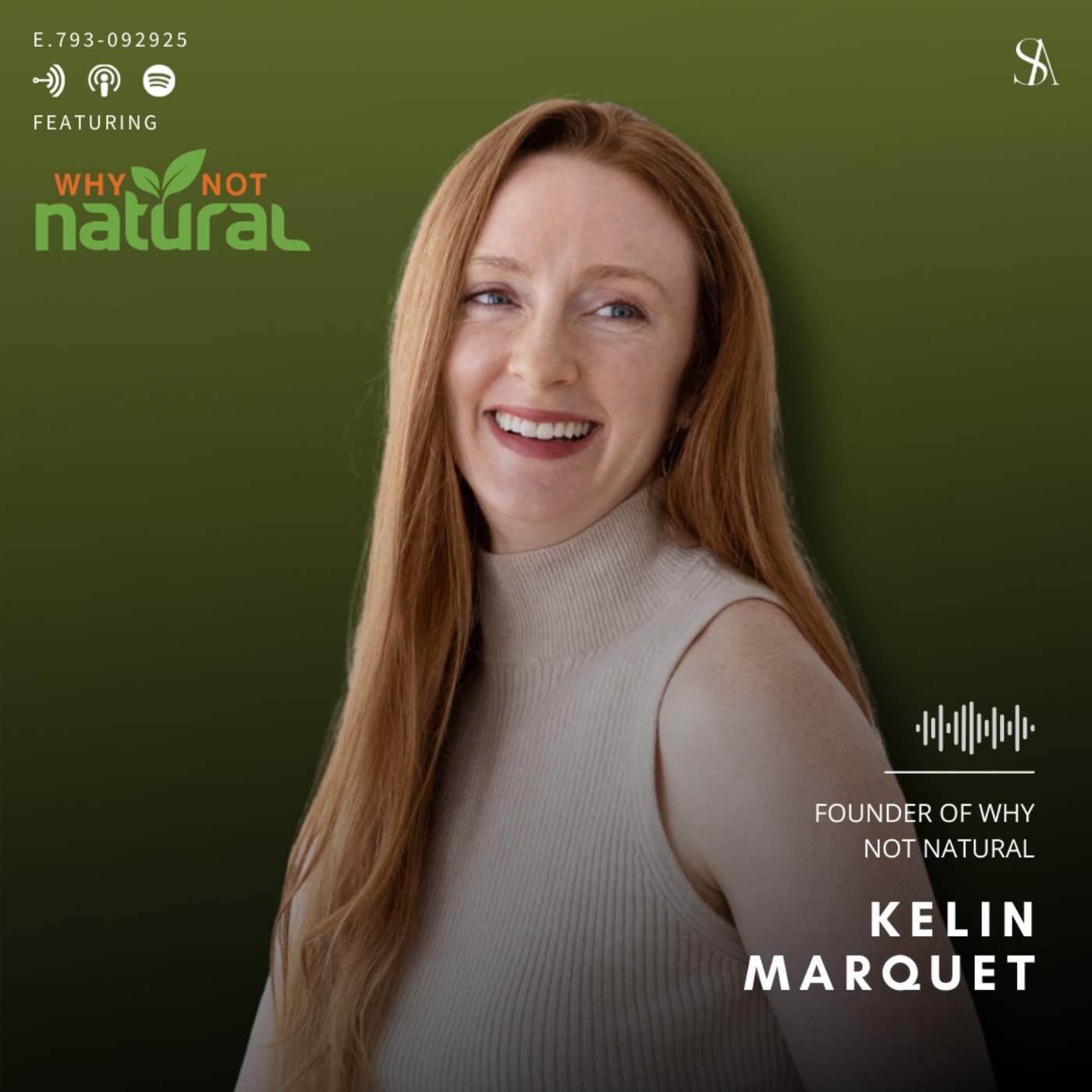
Loading summary
Transcript51 lines
- [00:03]
A
Guys, welcome back to Skin Anarchy. Today's episode is very special because I rarely get the opportunity to discuss supplements with you guys and learn with you guys about, you know, this specific niche in the beauty and wellness industry. I think there's so much, like, noise and gray areas in this, you know, whole thing. And I think when it comes to the experts, it's very rare when we get that, you know, that insight. So without further ado, I want to introduce you guys to someone who is truly, you know, a professional in this area. She is a mom of three. She's an obsessive label reader, and also a chemical engineer turned entrepreneur. She built her brand, why Not Natural? From the ground up, and I'm so excited to welcome her. So please welcome Keland Marquette. Welcome, Keelan. I'm so excited.
- [00:47]
B
Thank you for the warm introduction. Dr. Actor. I'm so excited to be here.
- [00:51]
A
I'm excited to really learn from you today. You know, like I said, like, your background is very impressive, and I. I love your brand, by the way. I just want to get that out of the way for everyone listening. I really love the brand, and the supplements are so wonderful, and I. I can feel that I'm actually taking something that's working my body and my chemistry, and so I can't wait to dive into that. But I really want to learn about you if you can kind of walk us down memory lane, especially your engineering background. Like, what got you into the space? Like, when did you decide that you wanted to start your own brand?
- [01:19]
B
Sure. Yeah. I. I mean, to be honest with you, it was always in the back of my mind. I've always liked, you know, since I even started my study in chemical engineering, I had always been really interested in health and wellness, how what's the ideal diet and nutrients for the optimal functioning of the human body. It's something that I always was really passionate about. And when I started my career in engineering, I was actually working in oil rigs in the middle of the North Sea, and it really wasn't very, like, aligned with my interests and my personality. It was an adventure. But. But I always kind of knew that I wanted to do something, like. And I kind of took a. A roundabout path to get here, but. But I. This actually wasn't my first time I dipped my toes into entrepreneurship. I was actually doing. I had an art supply company before, but this is much more. You know, this is. I feel like it's almost like it's not work. It's something I'm so passionate about. So, yeah, it's much.
- [02:17]
A
That's what they say, right? It's like when you do something you love, it doesn't ever. It doesn't feel like work anymore.
- [02:22]
B
Exactly. Yeah, yeah.
- [02:24]
A
No, that's really cool. I love that. And I like that you. You had your roundabout way of, you know, landing in this area. I think supplements. No, it's interesting because supplements is that niche, you know, in the wellness space that I really feel like you need to love it to understand how to create this stuff. You know what I mean? And I feel like a lot of times I see this a lot where companies have like a brand and they maybe they're doing topical solutions or like something, but then they'll create a supplement and it's just kind of like, why is that an afterthought for you guys? You know what I mean?
- [02:54]
B
Right? Yeah, exactly.
- [02:55]
A
Yeah, yeah, yeah. I want to ask you, you know, you've said most natural supplements either have low bioavailability or they hide behind these vague labelings. What is the science that gets lost in the marketing according to what you've seen?
- [03:10]
B
Sure. So one thing that is so important to know is that one nutrient can go by so many different names. There's so many different forms of each nutrient.
- [03:17]
A
So.
- [03:18]
B
So a really good example of that is zinc. So very often when you have a liquid zinc, for example, you're going to have a zinc sulfate because it's really easy to dissolve in water. You also see it listed as ionic zinc. And there are other zinc salts that you often see in a liquid zinc. My chemist lovingly calls this garbage zinc because just not very bioavailable. So a lot of the time supplements will be marketed as having the same benefits as a different form. Like a different form has been studied. And that's especially true with minerals like zinc. If you're not absorbing it well, you're not going to be getting those benefits. You're probably also not going to feel great taking it if that's the case. So with any vitamin or mineral, it's really important to look at the form and look at the dose. Don't just look at the marketing. Look at, you know, how much of it you're getting. And is this form actually the form that has been studied or a form that's any good for you?
- [04:11]
A
Yeah, no, that's really fascinating because, you know, I think even in, like on the pharmaceutical side. Right. Like for. I always use this example with vitamin D because I think we're all chronically lacking vitamin D at this point. It's my personal Opinion. I've seen it so much with patients that everybody seems to be low. And I even on the pharmacy side, like, you give like 10,000 international units of vitamin D a week, right? And it doesn't do anything. 50,000 units doesn't do anything. And it just makes you wonder, you know, at one point it's like, where are we going wrong, right, when it comes to creating supplements that are actually going to get absorbed in the body. So I'd love to learn about what were some of the internal parameters that you set for yourself, you know, because I know that you have your own set of, like, criteria and your own benchmark that you've made right for the brand. So what were some of those for yourself that. That really kind of guided you when you were creating all of the, you know, the products in line?
- [05:05]
B
So we have our why not Natural standards. First thing is that we always need to be testing it to make sure that actually has what it says on the label. There have been a lot of these studies that have come out where they test a bunch of different supplements on Amazon, and what they're finding is that, like 87% of them don't have what they say they have on the label. So that's really important to me is the testing. And also we have our why not Natural standards for the other ingredients that we're never going to include things like in our capsules, we're never going to have fillers, we're never going to have flow agents, dyes, sugars, basically anything that isn't going to improve the usefulness of the supplement. And then also the active ingredient is really important too. So we're. We're going to be looking at the research and comparing it, making sure that we're selecting the best form for the intended purpose. And, you know, if we can't make. If we can't make that happen, then we're just not going to make the supplement right now.
- [06:00]
A
That makes a lot of sense, though. I want to actually ask you what are some, like, flows or like, these fillers that you're speaking of? Just to give our audience kind of an understanding. You know what, when we're reading ingredient labels, you know, it can become very daunting. So, like, what are some things we can look for that would be like red flags in a supplement?
- [06:16]
B
Red flags specific to fillers. You very often see ingredients like magnesium stearate, silicone dioxide, titanium dioxide. You know, for some people, you may not even want to have, like, rice flour is a pretty common, like, more food based Filler, but it is still a filler. It doesn't have, you know, much other function in it. Those are a few examples. Don't take zinc sulfate if you actually like. I think that for topical uses, it could be a great ingredient. But for in a supplement, the bioavailability, I think, is somewhere around, like, 4%. It's pretty low. But in terms of additives, I mean, the most common is magnesium stearate. And a lot of times you see that especially in magnesiums, because people may think that it's just another form of magnesium. But silicone dioxide, titanium dioxide, those are the most. Those are the most common ones that you. That you see. But I mean, when I'm walking down the supplement aisle, there's things that I just can't really believe that anybody's using that in supplements anymore. Like, you still see dyes in the supplements and. Yeah, like, why? What's the point of this?
- [07:15]
A
Right. No, that's. Absolutely. It's right on. And, you know, it's interesting because you brought up magnesium. I'm so glad that you did, because right now we're seeing this surge in, like, the mocktail era, you know, where everybody's like, I need a more a relaxing option in my day, and magnesium is the front runner. And I get a little worried because, you know, when you look at it from a physiological perspective, magnesium, although it has very amazing benefits, right? It stabilizes membranes. It, you know, it's really great for cardiac membranes, especially in acute situations. But magnesium also worries me because magnesium works so, you know, closely with potassium flux, and it works so closely. Like, the physiology of what happens with the divalent cation is extraordinary. You know, when you think about it, see all these consumers that are taking it right every single day, and it makes you wonder. It's like, you know, how much magnesium do you need? You know, where's the dosing, where's the. Whereas that kind of, I guess, regulatory aspect of all of this. I mean, what are. What is your take on that?
- [08:12]
B
You know, very, very common. That people don't get enough magnesium in the diet. But at the same time, yeah, you need to. You need to actually make sure that you are indeed low in magnesium. Chelation is huge. All of our minerals are chelated forms. I cannot say enough good things about. About chelated minerals. Very often it's not just from the absorption perspective, because chelated minerals do tend to be better absorbed, but a lot of the side effects that we typically associate with minerals. For example, a lot of people, you know, constipation from iron or diarrhea from magnesium or zinc. They have. They experience nausea, those side effects. You tend to have fewer side effects when you take chelated minerals in. In addition to the increased absorption. So, uh, yeah, chelated minerals. I don't. I can't see where we would ever have a mineral that's not chelated.
- [09:08]
A
Makes sense. Yeah. And just so our listeners can understand, like, what exactly is the science of chelation that's important here to understand?
- [09:16]
B
Basically, chelation is just when you have that element, the. So the actual zinc itself, the magnesium itself, and it is basically bound to one or two molecules of a. An amino acid. And because the amino acids are so readily absorbed by your system, it just really increases the bioavailability of the minerals. So a lot of people don't realize that no supplement is going to give you pure magnesium, pure zinc. It's always going to be in some type of form. And that form just refers to what it's bound to. So if you're having like a cheaper form, then it's down to something like, like a chlorine atom. But the. These ones are more like complex molecules that it's bound to that are absorbable by the system.
- [10:02]
A
Interesting. Yeah, that's really interesting. I like that. And, you know, I think that that's very important as well for us to understand as consumers, because sometimes we're just buying, like, you know, I've seen this a lot, and I. Kind of irks me is that a lot of brands are like, you know, for example, going back to magnesium, they're.
- [10:17]
C
Like, okay, well, we have like five.
- [10:19]
A
Different types of magnesium. You know, like, this is the ultimate blend. You know, you got to have this. And it just makes me go like, why are we doing that from a marketing perspective? You know what I mean? Because I think we don't need to get people into that, I feel like. Because once you go down that tunnel, it starts getting very murky. You know, the waters get murky, and it just. It gets to the point of like. And not everybody has a degree in physiology, you know, and not everybody's understanding this stuff and chemistry. So, like, you're. You're then not only confusing consumers, but then you're also then just marketing stuff that isn't necessary for the human body, you know, like, that's where I think it becomes very frustrating. You know what I mean? And so, and I think you have to understand, like, what is actual. What are the actual, like, mechanistic, you know, variables that are going to enhance my supplement, you know, Versus just marketing fluff. Like, I think that's the big, you know, white space in this whole industry is like, if a brand can show that to consumers, like, listen, this is what we do. That helps you. And this is all the stuff we don't like, not even. Not the don't do, but just show, like, this is what we don't need to do because it's not relevant. You know, that kind of. Yeah, I just think we need that, you know, as a guiding light at this point.
- [11:31]
B
Yeah, absolutely.
- [11:32]
A
Yeah. No, I want to talk to you about collagen. I mean, collagen has been in the news. Everybody's kind of buzzing. I don't know. Warning went out, or. I don't know if it's a warning, but people are, you know, basically saying there's no efficacy data around collagen supplements. And, you know, just. What are your thoughts on that whole. Whole thing, you know?
- [11:51]
B
Yeah, I have a lot of thoughts about this, so. Well, the first thing is that I would say collagen shouldn't be where you start or the core of your routine. Consuming collagen is not everything, as I'm sure you know, over 25, our collagen production starts going downhill. But it's important to look at what are we doing to support collagen. So, you know, look at your diet. Are you getting enough vitamin C? Are you getting enough zinc? Are you getting enough vitamin D as many of us are not? You need to be thinking about what you're doing to support your body's own production of collagen. And are you getting enough Omega 3s? Are you getting enough polyphenols and antioxidants in your diet if anti aging is your concern. At the same time, I had heard that collagen was not, you know, it just gets broken down by the body, and then it's. It's not any different from taking any other protein. But then I kind of changed my mind about that when I saw the made analysis showing that people did see tangible differences to their skin hydration and elasticity. So I. I do take collagen as well, but the. I wouldn't say it's the core component of the way I'm approaching aging.
- [13:00]
A
Right. No, it makes a lot of sense because I think, you know, collagen is such a glaring example of how marketing has gone so wrong in the supplement industry. Like, I look at it and, you know, it kind of sucks because I feel like we've demonized collagen now, you know, but it's not that I think it's more of like, again, like consumer knowledge. Right. It's like education has to be forefront and center and I feel like a lot of these studies also, like, mind you, like, I, I noticed, I don't know if you, if you felt the same, but like, I noticed that a lot of studies are looking at strictly like full formed collagen, you know, which, which is granted that's not going to work, you know, for the body. It's just not. You're going to literally just get rid of it, excrete it out of your system because that's not how proteins work at all. You know, you're looking at something like a complex protein tertiary structure that's working for like structural benefits in your skin, like collagen, elastin, you know, all of this stuff. Think consumers need to realize, like these are amino acid sequences that need to go into the body and then they will fold under certain physiological conditions and then once they fold in that environment, they will serve their role, you know. And so what can we do right, from the supplements perspective of like providing people with actual efficacious products that aren't going to like, you know, keep adding to this fear mongering crap? You know, that's my, that's my take on it is like I just feel like it becomes fear mongering, you know, at one point.
- [14:25]
B
Yeah, absolutely.
- [14:26]
A
More than productive, you know, for the overall benefits. But yeah, it's an interesting case actually with collagen.
- [14:32]
B
Yeah.
- [14:32]
A
Yeah. So I, you know, just curious if someone listening is standing in the supplement aisle right now, you know, what are three big things that they should immediately spot on the label or try to avoid, you know, according to what you've seen with your research?
- [14:47]
B
Yeah, I definitely have three good ones for you. So the first thing is I would steer clear of proprietary blends. Things like it has seven different magnesium forms, but it doesn't tell. It tells you the total amount of magnesium, but it doesn't tell you a breakdown of how much you're getting of each. So of course, like what are they going to do? They're going to give you primarily the one that's the cheapest, I would imagine. Who's to know? Because they don't give us breakdown. So I would steer clear of anything where they don't tell you exactly what's in it. Even if you're like, oh, magnesium is magnesium. Well, not really. It might be 90% magnesium oxide. So that's the first thing is, yeah, no proprietary blends. And the second thing, and this takes a little bit work, a little more digging, and I know it's not easy to do when you're standing in the supplement aisle, but look at the active ingredient. So all active ingredients are not created equal. So, for example, you could do a quick Google search if you're looking for a B12 and look at the difference between methylcobalamin versus cyanocobalamin and decide, is that the active ingredient that you want and is it gonna meet? Is it actually fit for purpose, whatever the purpose is that you're looking for? So, yeah, even a quick Google search is better than just blindly trusting whatever the label says. And then a lot of people don't. Look below the supplement facts panel and look at the other ingredients. And you need to ask yourself, am I comfortable taking these other ingredients? If they could be 80%, maybe more of what's in this supplement times however many supplements I take in a day, is that something that I'm okay with? Yeah, of course that. That comes down to personal choice and opinion. But, yeah, look beyond the supplement facts when you look at the label.
- [16:25]
A
Makes sense. That makes a lot of sense. It's very helpful. And, you know, I think that a lot of us can be very overwhelmed. I know I've been in that boat many times, you know, like, and it's like, when you find out, especially, like, if you go to the doctor or something, and you find out like, oh, I'm really low in this, right? Like, your initial take is like, I need to go fix this, you know, for my body, and I need it for my health. And so I think a lot of us get stuck in that cycle of, like, you are standing in the aisle, you know, and you're like, I don't know, I'm just gonna buy four options, you know what I mean, and see what works or whatever, it becomes daunting. You know, it's like, it's a really scary experience like that. So I think. I don't know, I just feel like consumers need so much more transparency than what we have right now. You know, it's absolutely. You know, for a regulatory standpoint, though, I'd love to get your take on this is like, what in your mind would be, like, the ideal regulatory framework that we could look for in evaluating supplements, understanding them, making sure that they're meeting, like, you know, that benchmark criteria that we should always have.
- [17:24]
B
My ideal regulatory framework would be, you know, I wouldn't ask for much because there really isn't a lot going on right now. I would love to see that if you want to be able to sell in the US Market, you have to test your products. You have to test them for safety or that the label actually matches what is in the bottle. And it sounds like you would think that that would already be the case, that that would be a requirement. But people can sell in the U.S. market that the products are not bottled in the U.S. they're not being tested in the U.S. maybe they're not being tested at all. So I would love to see just the most basic thing that we have to test the supplements. And I would also love to see there be some sort of transparency on the supplements and dosages like I was mentioning with the proprietary blends. I would love to see that you have to say what's in your supplement, you know, break it down for people.
- [18:17]
A
You know, I learned recently, and I don't know if this applies to supplements, but I recently learned this, that for ingredient lists for, like, topical products, brands don't have to publish the full list. Like, they can literally hide stuff for topical products. Like, they can hide. Yeah, I didn't know that. I was, like, blown away when I learned because I was like, wait a minute. So, like, when you're reading Inkey list for these topical creams and you know, everything, like, you don't know, like, maybe 10 of the ingredients in there because they. And they do it because they're like, I don't want someone to steal my formula. But it's like, well, then what the hell? Like, you could be putting something in there. I have no idea what you're putting in. Like, yeah, I mean, isn't that crazy? Like, I. I was blown away when I heard that. But I don't know how it is for supplements. You know, we were talking about regulatory. So I was like, let me bring this up, because I don't know how things are with supplements. I know in the past I've bought supplements, and I. I did notice this about your brand. You guys are very transparent. I love that about your company, is that you're very transparent. When you read the bottle, you know what you're getting. You can look and, you know, just literally go on to, like, AI or Google, you know, you can find. Exactly. And it's just wonderful to have that. So thank you first of all, for doing that. Yeah, but, like, I've had supplements in the past where it's like, literally nothing on the back. Right. Like, they'll list, like, three things. Like, oh, we have passion flower in here. And, like, you know, this. Or it's just like, well, what else? I know you just mix passion flower. You know what I mean?
- [19:41]
B
Right? Yeah, yeah, yeah.
- [19:43]
A
That's very, very interesting. You know, I. I guess, you know, my big thing is, like, with. With why not natural? I noticed, like, you do have a lot of wide variety of offerings. I mean, what are some of. I guess the. The key products that are, you know, you've gotten a lot of great feedback from your customers on, like, what are some of the. The Hallmark products.
- [20:03]
B
So I would say that there are some things that are, you know, more of the core. More of the essential things, kind of more of our legacy products are the, the B12, B complex, D3 K2 magnesium is. It wasn't one of our original ones, but that. It took us a lot longer to develop the magnesium. But I would say the core range is probably still our most popular. We have had some products go very unexpectedly viral. We have the. Our mockup blend. Didn't really see that coming. Went viral on TikTok. So funny enough, that's probably our bestseller still. But, yeah, most of. Most of our customers who, you know, keep coming back are taking those. Those core products like the. The B12 Biz, Inc. Or the B complex magnesium complex and the D3 K2, I would say, and maybe the vitamin.
- [20:49]
A
C. Yeah, no, I love the magnesium one, by the way. I was. I'm taking that myself. Oh, great.
- [20:55]
B
Thank you.
- [20:56]
A
Yeah, I really like it. I also like your ashwagandha. I think you have a really good ashwagandha supplement. Yeah.
- [21:01]
B
Oh, yeah. KSM66 is such an interesting extract, and it has so much science behind it. Yeah, I love that one.
- [21:10]
A
Yeah. Like, I pair those together and it's. It's been really great for me. I have really bad anxiety. And like. Like, for me personally, like, my whole life, like, I've been avoiding pharmaceuticals, you know what I mean, for anxiety care. Because nothing out there, you know, it's like benzos or sri. And I've tried to manage it myself, but I found that when I started taking the magnesium especially, it just hits differently. Like, it's a different mellow. I get very, like. It's like it lasts. You know what I mean? It's not like those. A lot of supplements, I think with magnesium especially, I've noticed this because, you know, I've experimented in that specific one where, like, you'll feel good for about like an hour or two, but then you kind of stop feeling it and it doesn't really do much for you. But I feel like your supplement is really good. Because it's, it's working like for the long term for my body, you know, that's what it feels like. And so I really enjoy it.
- [21:58]
B
Oh, I'm so glad to hear that. That makes me very happy. Yeah, the, the magnesium was. It was a tough one because. Well, speaking of what you were saying about the not having to list everything, one thing that you don't have to list is say you have a magnesium glycinate, still has magnesium oxide. Could be any amount of magnesium oxide. They don't have to say that it has magnesium oxide in it. And so a lot of the time your. Even your chelated minerals are not fully chelated or not fully reacted. Could explain why, you know, why they sometimes don't give you the results for as long or don't give you as one supplement may give. You may have the same dosage, may have the same ingredients listed, and it doesn't give you the same results because not all chelated minerals are actually chelated.
- [22:42]
A
But thank you so much. This has been so wonderful and I've learned so much from you. I really enjoyed the interview. Thank you so much.
- [22:48]
B
I had such a great time talking to you. Thank you for these awesome questions. I really. Yeah, I really enjoy talking to you too.
- [22:53]
A
Thanks so much. Hey, guys.
- [22:56]
C
So I hope you love that episode. Please make sure to hit subscribe if you're tuning in to us on any podcast platform. We are available on so many different platforms, so wherever it is that you're tuning in, just go hit subscribe. You'll be immediately notified when we publish new episodes. This way, you're able to tune in to amazing insights from experts, brand founders, industry leaders, authors, all the wonderful people that we host. And that's very important for me because I love to hear from you guys and really understand what you love and what you want to hear more of. Also make sure to give us a follow on all of our social media outlets. We're available on Instagram, TikTok X, you.
- [23:34]
A
Name it, we're there.
- [23:35]
C
We also have a blog on Medium, so if you're a reader and you love Medium blogs, check us out on Medium. We publish some really great articles on there that do deeper dives than just what's available on the podcast. And it's really a great place for all of you science geeks out there that want to learn a little bit more. We go above and beyond with our research and making sure we're bringing you information that you usually probably won't hear about in other outlets. So check us out leave us a comment, leave us a review, and we'll be back next time with another episode.
- [24:03]
A
Thank you.