Loading summary
Transcript32 lines
- [00:00]
Verizon Representative
Now at Verizon, we have some big news for your peace of mind. For all our customers, existing and new, we're locking in low prices for three years guaranteed on MyPlan and MyHome. That's future youe peace of mind and everyone can save on a brand new phone on MyPlan. When you trade in any phone from one of our top brands, that's new phone peace of mind. Because at Verizon, whether you're already a customer or you're just joining us, we got you. Visit Verizon today. Price guarantee applies to then current base monthly rate. Additional terms and conditions apply for all offers.
- [00:30]
Warby Parker Representative
Every idea starts with a problem. Warby Parker's was glasses are too expensive. So they set out to change that. By designing glasses in house and selling directly to customers, they're able to offer prescription eyewear that's expertly crafted and unexpectedly affordable. Warby Parker glasses are made from premium materials like impact resistant polycarbonate and custom acetate. And they start at just $95, including prescription lenses. Get glasses made from the good stuff. Stop by a Warby Parker store near you this summer. Instacart is bringing back your favorites from 1999 with prices from 1999. That means 90s prices on juice pouches that ought to be respected, 90s prices on box Mac and cheese and 90s prices on ham, cheese and cracker lunches. Enjoy all those throwbacks and more at throwback prices only through Instacart. $4.72 maximum discount per $10 of eligible IT limit 3 offers per order expire September 5th while supplies last discount based on CPI comparison.
- [01:41]
Podcast Host
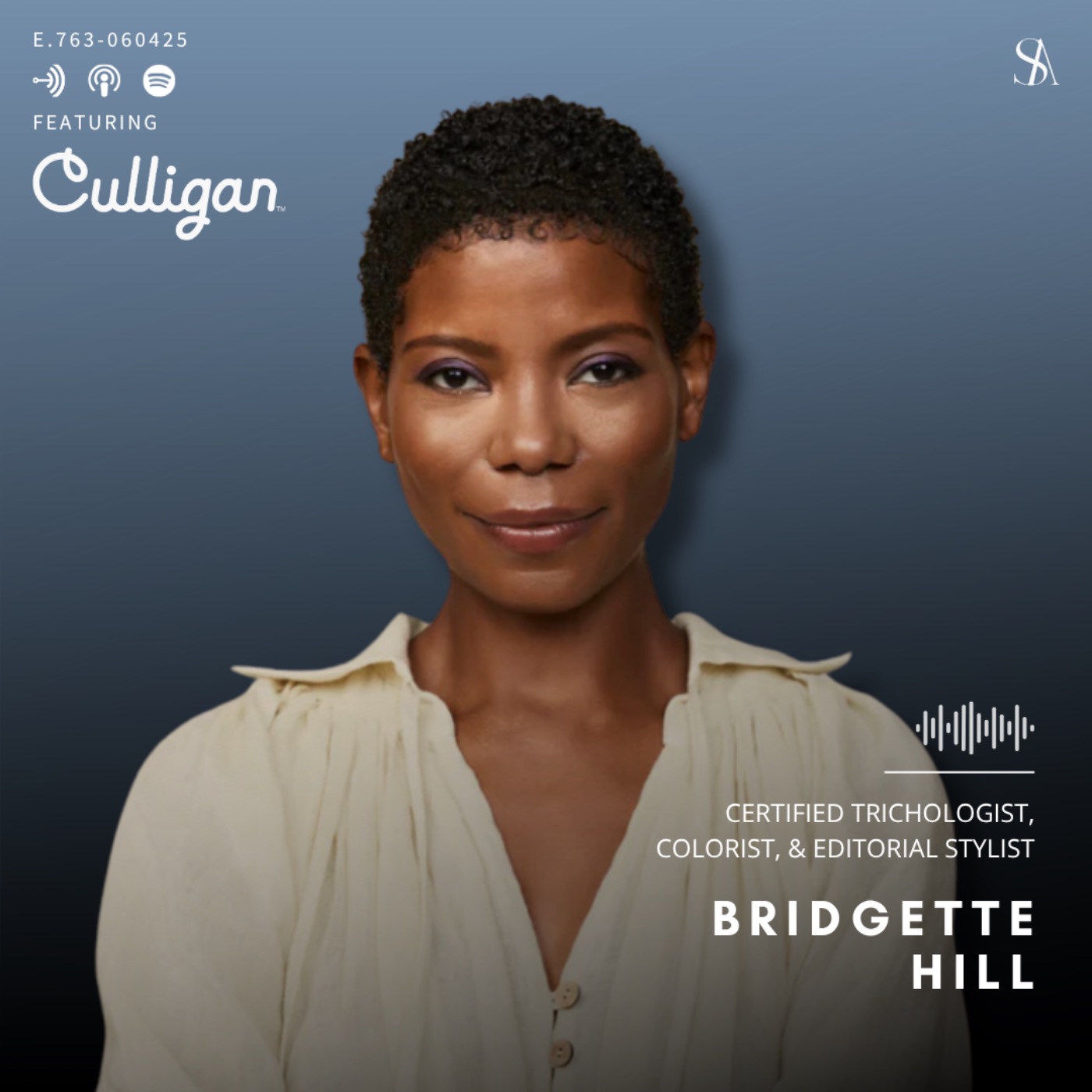
Hey guys, welcome back to Skin Anarchy. Today's a really special episode because we're going to be talking about everything related to scalp health and just the journey that we all take with our hair health. Especially right now with, you know, how many things are kind of blossoming. I feel like, you know, whether it's products or education or, everyone seems to be buzzing about wanting to understand the hair and the health around the scalp and the hair better. So with that said, I'd love to introduce you guys to our guest today who is truly an expert in the area. She is a renowned trichologist, Bridget Hill. Welcome, Bridget. I'm so excited to host you.
- [02:18]
Bridget Hill
Thank you. Thank you for having me.
- [02:20]
Podcast Host
So I'm really excited, Bridget, to dive into your background. You have quite an impressive career. I'd love to learn more about what got you trichology and if you could share that with us and walk us down memory lane.
- [02:31]
Bridget Hill
Yeah, absolutely. So in my career, beginning as an editorial colorist, I dealt with a lot of models who had to transition between different just hair colors for different brands or different projects they were on. And you know, 20 years ago, just the science of color technology was nothing where it is now. So a lot of the chemicals were really harsh. You weren't really incorporating oil based aspects into developers and peroxides the way that technology has expanded over the years. So maintaining the quality of the hair fiber was something really important for me. And so in my process of making a lot of transitions from just an aesthetic standpoint with color, again, protecting hair fibers in different ways. So that started my understanding with just hair fiber is a total different conversation than what's happening up scalp. The scalp situation became more obvious to me in doing high process colors for sure, with high lift bleach. Just seeing some of the results of the discomfort that clients would experience. Redness, flakiness, and clients sometimes really being allergic to those ingredients and not really understanding or having a way to explain to them what they're experiencing. That allowed me to look into brands that dealt with more holistic approach to scalp, which introduced me to Renee Frer. And in that time I began to understand the importance of the hair follicle, followed by my own personal experience of being diagnosed with a genetic scalp condition that contributed to hair loss.
- [04:04]
Podcast Host
Oh, wow. Yeah, I know. It's really interesting though that, you know, there's so much disconnect because for so long we've been focusing on the, like the actual strand, you know, like the strand of hair. And I remember when I was growing up, that's all anybody ever marketed, it's all we heard about in the media, you know, was how to get shinier hair, you know, like that kind of thing. Never about, like, let's really talk about the health and what, what your health means for your scalp, your hair, like everything, right? This holistic approach. So I want to kind of dive into that with you because I think it's important to break it down. Can you tell us a little bit about what your take is on truly what scalp health means?
- [04:44]
Bridget Hill
Right. So the first thing is there is no such thing as hair health. That's an oxymoron. Hair fiber is literally a fabric. It's not a living organism. So there' nothing in about a hair that can be healthy. I think just approaching that conversation of making that distinguish that hair is literally a fabric. It's no different than the clothes, the shoes, the things that we, our furniture, we need to look at it more from a dry cleaning fabric maintaining hair fiber quality health is about the scalp and health with hair is about that hair follicle. So the hair follicle which produces the beautiful fabric of our hair is housed in the scalp. And the first thing to remember is that, you know, the scalp was never studied. It was so understudied for so many years because it's not a vital organ and not necessary from a body and cellular level for our bodies and our vital organs to thrive. Over time, I believe what has happened is that as life has changed, as we begin to manipulate and start to play around with products for our hair fiber, you know, think about blow drying, air drying, heat styling, all of these things, the deterioration of the hair fiber is going to actually impact just how our scalps are going to function from a just external. Again, I'm going back to that idea of why scalp right? No one, we, no one talked about it. No one understood it because there was really no real value from a marketing standpoint because the hair is just known, it covers the scalp, right? So it's that, that's the protection. And really the hair follicle people really, it was just confusing because we have 100,000 of them. Each one of them can have their own DNA, rna. And science really wasn't putting the thought behind scalp health from a genuine just curiosity. And the beauty industry definitely was not thinking about that. As I said, I think the advancement in how we begin to manipulate the hair fiber with extensions, heat coloring, just getting so creative with ways to express hair through the hair fiber, through art and performance, it is going to negatively impact the scalp. And those are the things that we I believe were happening and we were seeing. And then it became how do we solve this is another need, another issue to solve. And once had the. I think what really brought things to the forefront, ironically was the pandemic. And the pandemic forced all of us this to change our lifestyle and routines with how we managed our hair fibers. Some of us lacked some back of not doing as much heat styling. We definitely weren't going to salons and getting blow dries and maintaining our color. And as that was happening, the hair fiber was getting a break. The introduction to this pandemic and this global virus that was really changing our DNA and our cellular structure where people were experiencing extreme hair loss. It was just so obvious and it was such a global phenomenon that the conversation and people were open to beginning to understand and dive deep into the science. Most people don't like science when it comes to Beauty. Right. We want defecation. And unfortunately, it is not that simplistic. And I'm excited because I think we have the bandwidth to go deeper to understand scalp as a structure that holds the organ, that hair follicle. So it allows for us to have that deeper conversation. Science and pharma have jumped in. There's so much research and so much money that's going into understanding the connection between just overall scalp health and overall body wellness.
- [08:16]
Podcast Host
Right. No, I really resonate with everything you said. I think it's so on point because very, very rarely, even now do you hear people talking about how the hair is actually dead. You know, like, all the styling and whatever we're doing, it's done. That's why you get damage, is because it's not renewing itself. You know, so, like, I mean, it's a really interesting conversation because I think it's become so complicated over. Complic. Over the years, right? Because. Because of the marketing, because of, you know, people need to sell products and they need to, you know, all these things. So now it feels like, okay, everyone's discussing scalp health, and this is so novel, but really, if you look at, you know, civilizations in the. In historical. In the historical context, I mean, people have always known that the scalp is where you need to be concentrated. You know, it's just a matter of bringing that to the limelight in a way that, like, you. I mean, you said it beautifully, that people don't care about the science because they want inst.
- [09:14]
Bridget Hill
Results.
- [09:14]
Podcast Host
Well, those are instant results, you know, when you focus on your scalp, in my opinion, you know, like, I mean, how many people do you know that suffer from things like dandruff, but then you see their hair and it's like, always nice, you know, like, they've always styled and, you know, so it's kind of crazy, you know, to think of it like that. Now, I would love to. I'd love to, you know, talk to you a little bit about this whole thing about the things that impact our actual scalp health or health overall, and what contributes to, you know, the pathologies that we do. Commonly seen. I want to discuss hard water with you, for sure. It's a big topic, but what are some of the things you've noticed is like, the big, big things that have really impacted or do impact people on an everyday level when it comes to just, you know, having a healthier scalp.
- [10:02]
Bridget Hill
So the things that's such a great, just way to approach it, it is. It's multifactorial. So I'm going to focus on the things that we know we can control. Right. There are so many uncontrollable things that impact scalp health. Genetics, any type of illness or any type of inflammation in the body is going to impact scalp health. There is a direct connection between gut and scalp. There is a direct connection between medications and scalp. There's a direct connection to anything that goes into your body and scalp. And that does get confusing and overwhelming because people like, oh, that's everything. Yeah, it is. And however the science is there to help guide us on those things that we can control. So the hard water is one of those things that we talk about because water is the basis almost every beauty product that we, that we use. And so we think about those products that are being made. Well, when you're formulating any type of product, the water quality in that product is controlled. Anytime there's clinical studies that are done with any product that we purchase, those water qualities are controlled in their environments as they're doing their testing. And so when we talk about just not to making a connection of what are we doing putting in ourselves internally, externally, water is the source of all those things. Whenever we're talking about any type of beauty and then just any internal wellness, it's something that goes overlooked and not really talked about because we take those things for granted. Even though we take showers on a daily basis and we may see buildup in our, in our bathrooms, we see buildup on some of our shower heads and we have these impurities and all of these unwanted substances that pollute our, our water stream. So when we focus in on those things that we can control, like the water, and we recognize that any product that we purchase has had a controlled water source that has been measured by ph, you know, the alkalinity of the water, all those things are so essential. And then has allows us to go into recognize what can we control from consumer point of view that's not DNA related, that's not genetic related to help us recognize what some of those multifactorial causes will be that aren't necessarily health or internal related. And I do believe the overuse and underuse of products, the improper mixing of certain ingredients and products that disrupt the skin barrier on the scalp. So much of those things are in the products that we use. And we probably have more allergic reactions and don't have the defenses on our microbiome of our scalp in the way that the body is designed to do because our lifestyles are just so different. And again with beauty products, the formulation of those Things are not necessarily always taken into consideration, the scalp microbiome. They're taken into consideration of the performance of the aesthetic of the hair fiber.
- [13:06]
Podcast Host
Absolutely. No, I think that it's very interesting what, you know, you've brought up here, which is the ingredients of the products themselves and the water inside of those products. That's something that's never discussed. I mean, that's a very, very unique perspective. And I, you know, I think that there's a lot of validity there because, you know, we don't ever think about that. We don't think about. We. I mean, we focus on ingredients. Yeah. With products, you know, people love tearing ingredient lists apart and saying, you know, no parabens, no phthalates, no blah, blah, blah. But it's just. It's so much more than that. And I think that, you know, the whole industry, the whole hair care, hair health industry, whatever it is, you know, it needs to be more transparent. Right. About, like, what do ingredients really do? What purpose do they serve? Like, I mean, when I'm looking at something like a shampoo, I understand that a shampoo is supposed to, you know, allow for the cleansing of that scalp. Right. That's the main purpose that it serves, is. Is going to help me rinse, you know, away the impurities that have built up, you know, over time. And that's the whole idea. But then you have about 30 other ingredients in there, which is maybe related to texture or, like, you know, whatever it might be. There's a hyper focus on ingredients, like skin care. I talk a lot about skin care, and with skincare ingredients, everyone's like, yeah, well, what's this? And what's this? You know, but no one does that with hair. And I just always wonder why. I mean, there was a. When I first started this podcast, I think I had an interview, and at the time I was speaking to a dermatologist, and I brought this up. I was like, you know, why doesn't any dermatologist educate about, you know, how hair care products are causing acne breakouts and how they're causing scalp breakouts? That's another thing. People actually break out on their scalp and no one talks about it, you know, and so it all links back to these products and what we're putting on our hair and what we're exposing it to?
- [15:00]
Bridget Hill
No, for sure. And I think one of the exciting parts with, you know, collaborating with a brand like Culligan is, again, going to trichology. It is full body, right? Every single aspect of our lives, emotionally, physically, genetically, cell, blood, Tissue have some form of water in it. You know, our bodies are majority water. So when you get to have a true water conversation and make a connection of how much water is integrated into not only in your physical being, but then externally of everything we do with cleansing and taking care of nurturing, ritualistic aspects, all have to do with some type of water. So the quality of water, even if you have high ingredients, if you're using and rinsing with water that is contaminated or full of leads or has, you know, chlorine, magnesium, all of these buildups, you're counteracting the effectiveness of your product. So your product isn't even getting the actives or getting the benefits because we're then re kind of contaminating that and contaminating the surface of your fiber or your scalp, which again, the scalp has a very low. Has a very low skin barrier in comparison to our skin on our face. So it's highly susceptible to being disrupted with unwanted bacteria with buildup from water sources. So when you can control that through a softener program with all the waters that you use, not only for cooking and cleaning, but also incorporating that into how you brush your teeth, shampoo your hair, you know, condition, rinse, all of those things make a huge difference over time. And I think as we continue to do more clinicals and more data and research is collected, as they are discovering and truly putting the science and the money behind clinicals, the water source is going to be, is a true contributing factor. Just as a hair colorist, you know, sometimes people want to highlight or color their hair, but the calcium buildup, the magnesium buildup that is on their hair fiber can create a barrier for getting really pretty hair color. The dryness of someone's hair is the same way. So it's not just. Just even the health aspect. It's also the performative, aesthetic aspect. You see an improvement across the board when there are systems in play in the overall approach to what your water sources are.
- [17:27]
Podcast Host
Yeah, no, that's a really good point. I think, especially for, you know, when we're talking like, on. In the scope of, like, international level. Like, I know a lot of people love to travel. I mean, we're always moving around. I think that's just human nature and we don't really think about, especially if you're, you know, you're traveling to another country, like, what's coming out that shower head, you know, like, the water quality is so, so crucial. It's. It's very central to a lot of different things. Hair is one of Them but then also with skin it's the same way. I guess. You know, one of my biggest questions for you is like what are some ways that we can really have like a preventative approach to this? Because I think that's really key to be able to like kind of equip ourselves with the tools we need to make sure that we, we're not being exposed to things that can be avoided.
- [18:14]
Bridget Hill
Right. So the first again that water source water softeners, adding tre true water softener like a Culligan treatment system into a higher home is going to make. It's going to take away one of those factors that you don't have to think about because again scalp and hair and I'm going to be so repetitive on this is it is a multi, multifactorial. There is not just one thing. And so that can be frustrating and people want to be like well this is just how am I just something else to worry about. And it's like well let's remove that and aligning just the sources of things that run into our home that supply both our nutrition and our exposure, external cleansing and hygienic habits. If we can make that a non issue, you're going to see an immediate difference in the way that your shampoos lather. You're going to feel an immediate difference on just your overall skin and body. Even your food qualities. Those things are reality. There are nine in 10 people that have always seen an improvement of just any of all the water sources when they have come into and used installing water softeners into their home. And you know when after also instilling water softeners you seem to install and see a difference in just the hair fiber performance. I think that's something that people don't think about. We're always looking for a product to solve that and sometimes it is just removing. It's more removing and getting the right sources of things to make the difference. Not so much just a product. So I think part of the conversation needs to be going in a direction of before we think about solving a problem. What are some contributing factors again that are those controllable as aspects. The other thing that I don't think we think about sometimes is a lot of the processes from like the, a lot of the processes that people use or that the states or our cities use and just purifying the water are, are so drying and harsh. So the skin is always in a fight syndrome. You know, it's always trying to just heal itself. And we always think of water as A nourishing aspect. So that psychology of trying to get the purest cleansing water source is going to be beneficial to every aspect of skin, scalp, hair, fiber and hair performance and product performance as well.
- [20:27]
Podcast Host
Yeah, makes sense. No, that makes a lot of sense. Now in terms of products like is there something we can be using that can help mitigate some of these undesired outcomes from being exposed to hard water or. I know you mentioned the, the softener, but like have you seen any, you know, any specific cases where someone, you know, bought a certain type of product that helped them kind of get rid of the buildup on their, their strands or their scalp? Like anything that they were able to actually purchase?
- [20:54]
Bridget Hill
Absolutely. So the first thing to understand is what type of scalp condition are you managing? I think one of the things is when we immediately see flakes, people think it's dandruff. And that's not all the way true. It could just be dehydrated or dry scalp. So it's identifying what's dandruff versus dry scalp and dehydrated scalp. And then the other aspect of that is if you are using a product because you see flakes for dandruff, but it's dry scalp, you're completely disrupting your microbiome because dandruff is an overproduction of yeast and malassezia and fungus on the scalp, which also is exacerbated by hard water. So when we are looking for identifying the source of what you're trying to resolve. Right. So there are many rinses that there's scalp serums. They are scalp pre treatment scalp exfoliators that I love, oil and cream based ones that help to restore the balance of the microbiome without stripping or disrupting it. It also allows for cellular turnover. We are so saturated with so many things on the market, but they are great tools when aligned with the right condition. So it is getting with the professional just to identify first what that right condition is. I think that is an issue that goes overlooked is integrating the wrong product to treat a scalp or hair condition that's that you don't even have. So first is identifying what scalp condition you're treating. If you feel like you just are looking for general scalp improvement there also a lot of just they're like, I like, I like to call them as like vitamin boosters. Right. Sometimes they'll, they'll be promoted as hair growth or hair loss. Think of them as vitamins for the scalp. Even if you have no extreme condition where you're excessively losing hair. Scalp serums are just that added boost. Again, the scalp is understudied, the scalp gets underlooked. So we're able to integrate just some of those scalp serums that are formulated to maintain the scalp microbiome. Those are going to be game changers in the preservation of the hair follicle and leading to a higher quality of hair fiber production.
- [23:05]
Podcast Host
That makes sense. Yeah. No, I think that, you know, we really do need to systematically think about this stuff because at the end of the day, you know, as many products as we can like buy, most of them we don't need. And I love what you said about dandruff. I think that is such an important, important piece because we do think every type of flaking is dandruff. I mean, I, I don't know anybody that's ever said like, oh yeah, you know, I have flakes. This, this is something else. This is not dandruff. I've never seen that, you know, so it's like, I think our minds just always go to like, well, this is what we've seen and so this is what we expect. And you know that. But it's not the case. Everyone's different. And I think that's really case in point. Right, because it shows you how under educated we are as consumers about what are the different things that can happen to our scalp? You know, what are the different ways this, something like dehydration can manifest for different people. I mean, people who have oily scalps, is it going to look the same for them as it is for somebody who's kind of on the drier side? No, it's going to be totally different. So I think these are all conversations that need to be had and also the education needs to be there. I think, you know, and I really do put that responsibility on the hair care industry because I think it's important for us to get behind products and brands that are wanting to educate about this stuff. You know what I mean? Like, they want to pour their resources into educating the public and their consumers about this is what you need to know. And, you know, that's. That kind of leads me to my next question for you. Is this idea of like, you know, holistic health is on the rise right now. I, I see it all the time, you know, even in my own work, you know, translational medicine, holistic medicine. And you know, when I think about scalp care and everything we've talked about here, it really makes me think about all the different people that can be involved, whether that's dermatologists, whether that's trichologists like yourself, hair dressers and hairstylists. What is your opinion about having this more collaborative approach to education around this topic?
- [24:58]
Bridget Hill
It's exactly why I am, why I'm a trichologist. Because trichologist relies on. It's a paramedical science. It's designed to work along alongside dermatologists, cosmetologists, endocrinologists, doctors. It is when the medical environment is going to open up to have a, have respect for the trichologist and the cosmetologists to see there's so much synergy in how we are going to help solve people's concerns because there are scalp conditions that are medical and medically induced that as a trichologist, don't have the wherewithal or the medical advice to guide them. But as a trichologist who comes from a salon background with trichology theory, I, we are the first line of defense. You see, you know, we see for blow dries where the shampoo bowl for coloring services, the exposure to the scalp. That's the other thing is doctors, dermatologists, hair and scalp is not their primary window. Even those that go to specialize in it. That has been something they've discovered over the course of their careers. Right. It's not something that people initially go. It's not something that's just thought about when you think about dermatology. So it is so essential, as we are going into this 21st century, how I see it, it is going to allow us to bring the cosmeceutical side, which is the performance of the hair fibers. What immediately gets anyone going to a doctor is it's not that their scalp is looking a certain way for the most part, it's that my hair is being impacted. It's typically my hair is falling out or my hair is brittle or my hair is dry. So reframing the conversation to that holistic approach with hair is just a byproduct of your overall health. That is the bottom line. And with that, we can't ignore how the relationship between understanding what's happening to you internally on your body, your medical, your lifestyle, and then the external aspect of just the daily maintenance of your hair and your weekly routines of your hair care with your hair stylist, with complying with your doctor, if you have any other, you know, deeper illnesses like managing for God forsake, you know, like cancer or thyroid issues or any type of hormonal concerns, all of those things need to be communicated so that as Practitioners, we're able to align the client with, with the right medical need if needed, along with the right cosmetology approach to maintain and mitigate. The goal is to maintain a healthy microbiome, to have healthy hair growth function which leads to beautiful, gorgeous hair. It's the hair growth function that we have to have the conversation about. And it does require all of us to work together collaboratively.
- [27:45]
Podcast Host
No, I, I love that, I love that you said that. I'm, I'm glad that you said that. I think that there's a lot on the shoulders of dermatologists. Think people expect them to be encyclopedias of everything. I mean they know a lot, don't get me wrong. They're brilliant, brilliant professionals. But at the same time the, it's very difficult to be, you know, like a true expert in every field of dermatology. That's almost, that's where I think that you're absolutely right. I've, I'm a huge advocate for having access to true like experts in the sub disciplines of dermatology at hand, you know, in dermatological practices. You know, I really do advocate for that because, you know, at the end of the day I would love to be able to go to a derm and then know that, okay, I'm going in for scalp health, a trichologist is going to see me first, you know what I mean? They're going to sit down with me, talk to me, I can share my opinions with them. And then the derm can also come in with that more like overview, you know, understanding. And I think that would be a really cool way to run a practice to have that available for patients. I definitely think this would be helpful. And you know, also like when we're going and getting certain treatments, like having some guidance there, like I can't tell you how many times I was like, it was like fear mongering. So whenever I used to want to dye my hair, somebody would scare me out of it. And I used to think and like, you know, I would think to myself, I'm like, God, I wish I would just have an expert that could tell me. Because at that time, you know, when I was younger, like we didn't have, like I said, scalp health was never discussed, you know, it was never like a topic of conversation. So that lack of knowledge, I don't think it's because people don't know clearly. I mean, you and I are sitting here talking and discussing this topic in depth. Knowledge is there. It's just a matter of positioning people in the Right. Places where it is a more like collaborative approach.
- [29:27]
Bridget Hill
And I think it's now we're opening up to that. I think we're all we recognizing that you can't deny science, you can't deny research and the studies and the clinicals that are coming out and the brands that are financing and putting, you know, putting the money behind not just to sell a product, but to get true data and to get true awareness to out to the public is what is so exciting. You know, think about like again going back to just the basics of water wellness. We really weren't even discussing water wellness in relation to beauty and products until this, you know, until recently and because we just didn't know. Granted, yes, we always would test from an internal the way that we would internally use water. But we never think about those things from an external point of view because it's like, oh, it's not that big of a deal, it doesn't matter. And it's so great to see that yes, it really does matter. We want to talk about like we were using flakes as the example. Sometimes your flakes could just be build up as a result of the hardness from chlorine and minerals on the scalp. Right. So there's so many aspects of. Some of the symptoms don't always have to be something deeper. They can be something as simple as hard water. And that's true as well. So everything such an extreme case a lot of times, especially with the in the US market for sure and the clients that I deal with who still manage a lot of unwanted scalp conditions. Sometimes it really is just the source of simple things or the overusing of things or the underusing of things that are creating some of those issues. And that doesn't require you to have to go that deep to a dermatologist or a medical doctor. It really is something as again your source of your product is having giving an allergic reaction the source of you have you're allergic to chlorine. You know, there's so many things that you don't think of and as a trichologist being that inspector gadget to access more information and to have the time to access that information, which is another thing that is different as we're exposing this, exploring this 21st century world of beauty is that a lot of it is having proper consultation and asking clients the right questions to be able to guide them to what those solutions are. It's not a one size fit fits all. So the more we can create continuity and consistency. For me as a trichologist, if Someone was to say, oh, I have a soft water filter, I have soft water system in my home. It helps me eliminate that as something that may be an issue or may be caustic to one of their concerns. So again, it's always going to go back to the uniqueness of each individual but also being able to eliminate the obvious. And water for me is just one of those obvious conversations that I don't have to go into deep diving. Could that be a source of some of the discomfort or the concerns that are being experienced by the consumer?
- [32:21]
Podcast Host
Absolutely. I love everything you're saying and you know, I kind of want to circle back because you had brought up Culligan earlier and I want everyone to really take a note about this. So can you tell us a little bit about Culligan a little bit more and why this approach is smarter for people to invest in for long term beauty?
- [32:37]
Bridget Hill
Yeah, absolutely. So one of the best things I do love about Culligan is that they do offer, they offer complimentary in home water testing. And that is something that's okay if you don't believe me, like check it out and see what happens. And I think for a brand to be committed to making awareness of hard water from a beauty standpoint because that is, you know, that is what we look at our skin, we look at our hair, we want to feel great, we want to have beautiful hair, we want to have beautiful skin. For a brand that is not necessarily a beauty product to be just looking at the source and putting science and bringing science into that. You know, they have so much data. Nine in 10 people had an improvement in hair before they had a water softener. They realized that they're the lathering, their shampoos and soaps are lasting longer as a result of water softening the skin. Just the healthiness of the skin, the glow of the skin and the actual the non disturbance of the microbiome. If I can't say anything more. Anytime you put water in the water on the hair or any type of mechanism on the scalp that has any type of mineral that is and that's is disruptive to the microbiome and the microbiome has to go into this effect of working hard to protect the hair follicles. We want to make the microbiome not have to work. We wanted to restore it and to retain it and water again. Every time we shower we are using a water source. So the more we can be more mindful of are we establishing and respecting our microbiomes or are we doing things for Our microbiomes to have to fight and protect. That is something that I think Culligan approach is exciting from a beauty standpoint because we want to eliminate need as many things as possible that we can topically control that impact the microbiome negatively. And the water softeners are just a great way to immediately just minimize that as a thought or as a factor that we have to consider in dealing with how our scalps and hair is performing.
- [34:43]
Podcast Host
Absolutely. Yeah. I think that is such an important topic, especially because, you know, when you think about hard water, you're thinking about a lot of minerals like you mentioned, and that is going to directly impact something like scalp physical. And scalp ph is extremely central to, you know, not only maintaining your microbiome, but then also maintaining the overall health of the follicles. So that's. And you know, scalp ph is very different than the skin ph. So it's really, really crucial that we understand that I think as, as consumers and try to approach it as, as strictly as we do with our skin care for our facial skin. You know, it's, it. People are so kind of keyed in right now, right, with facial skin care where they're like, yeah, you know, I know it's an acidic ph. I need my products to be in this, you know, range. But then when you look at the scalp, no one's having that conversation. So I think this is very relevant for that. You brought up the microbiome and I, you know, I couldn't help but think directly about ph because I was like, that's, that's where I feel like it's the most obvious thing that happens right. When you are constantly being exposed to hard water is this, this complete disassembly of your ph gradient that should be there on the scalp. So yeah, I think that it's a very interesting topic and I really urge everyone listening to kind of take a, you know, harder look at what you're doing and in your, you know, health journey with your, with your scalp and your hair health. Because I think it's something that, you know, it really is about long term beauty. You know, we want this quick fix with all of our beauty products. But really I think we're turning that corner now as, you know, as a culture where we're realizing that health is first first, you know, and health takes time and it takes the right kind of investments. Like you have to really position yourself in a place where you're being preventative, you know, rather than reactionary with your health. And so, you know, I think it's very, very crucial.
- [36:33]
Bridget Hill
The preventative word. I remember in the late 90s, like no one, they thought, no one wants to be preventative. You know, I think, and I believe that not the they who, the they that the mysterious they of the marketers of as we're making products we do need, tools we do need and products that are going to help the body, which is a magnificent machine. I think that's the other thing. By design, any concern that we experience externally is just a result of the body trying to heal something else internally. Right. So we really have value. The magic of the cell of the body. It's pretty fascinating. And now that I think what's happening when you discuss the holistic approaches, we are now kind of expanding and slowing down as a result to recognize everything is interconnected, whether we want to admit it or not. And so it allows us as consumers to make decisions on, okay, what things am I going to be connected to for my overall holistic well being. And the hair is just a byproduct again of the overall health of the body and it is going to require, you know, and the hair growth function is such a laborious, this process for the body. It takes more energy to grow a hair fiber than to regenerate any of our vital organs or to heal any of our vital organs. And so again with those things said by stepping back to recognize any condition that you experience on your scalp is a sign that something else is happening in your body.
- [38:01]
Podcast Host
I agree. It's like what is it trying to protect itself against? That's so, so important. Yeah, I love that, that I, I think that's, we don't ever, we never think of it like this. Right. It's, it's hard. I think we have this like mindset so embedded into us that it's just like we don't think about our body as this incredibly intelligent machine, you know, that knows exactly what to do to protect itself and we have to keep providing it the tools it needs because it does know what to do. It's just a matter of you need to get out of its way, you know, and if something is kind of like, like hurting it, what, you know, provide it the tools that it needs. So I think when it comes to like hard water, that's definitely one of those big, you know, red flags that if we can prevent, you know, ourselves from being exposed to it, we definitely should. So yeah, I, I, I love this conversation though, so much. Thank you so much for educating us. This has been so lovely to just chat with you and learn from you.
- [38:55]
Bridget Hill
Yeah, and you're so brilliant and all your knowledge. So I appreciate you giving value to this topic because it is professionals like you that are going to help us make this collaborative conversation have more validity and be able to empower our consumers so that we can have solutions.
- [39:11]
Podcast Host
Thank you so much. And for everyone listening, I will be linking everything you know that's relevant in the show notes. Make sure you check that out and chime in with your opinions because I'd love to hear from you guys. Thank you so much.
- [39:25]
Verizon Representative
Hi, I'm Adam Grant, host of the podcast Work Life. For over 20 years, Paylocity has been simplifying work with innovative solutions that teams love like On Demand Payment which offers employees access to wages prior to payday, flexible time tracking features which enable staff to clock in and out through their mobile device and numerous other cutting edge solutions that simplify collaboration across hr, finance and it. Learn more about how Paylocity can help streamline work and enhance business outcomes for your organization@paylocity.com Simplify this episode is brought to you by Progressive Insurance. Do you ever think about switching insurance companies to see if you could save some cash? Progressive makes it easy to see if you could save when you bundle your home and auto policies. Try it@progressive.com Progressive Casualty Insurance Company and affiliates. Potential savings will vary. Not available in all states Aging is.
- [40:19]
Warby Parker Representative
A natural process, as we all know, and I for one don't mind embracing it. But I will tell you one part of aging that I don't care for. It's the symptoms that stem from changing hormones, especially as you get older to perimenopause and menopause. That's why we want to tell you about Happy Mammoth's Hormone Harmony. Happy Mammoth, the company that created Hormone Harmony, is dedicated to making women's lives easier. And that means using only science backed ingredients that have been proven to work for women. They make no compromise when it comes to quality and it shows for a limited time. You can get 15% off on your entire first order@happy mammoth.com just use the code Happy Me at checkout.
- [40:55]
Podcast Host
Hey guys. So I hope you love that episode. Please make sure to hit subscribe if you're tuning in to us on any podcast platform. We are available on so many different platforms, so wherever it is that you're tuning in, just go hit subscribe. You'll be immediately notified when we publish new episodes. This way you're able to tune in to amazing insights from experts, brand founders, industry leaders, authors, all the wonderful people that we host and that's very important for me because I love to hear from you guys and really understand what you love and what you want to hear more of. Also make sure to give us a follow on all of our social media outlets. We're available on Instagram, TikTok X, you name it, we're there. We also have a blog on Medium so if you're a reader and you love Medium blogs, check us out on Medium. We publish some really great articles on there that do deeper dive than just what's available on the podcast and it's really a great place for all of you science geeks out there that want to learn a little bit more. We go above and beyond with our research and making sure we're bringing you information that you usually probably won't hear about in other outlets. So check us out, leave us a comment, leave us a review and we'll be back next time with another episode. Thank you.