Loading summary
Transcript53 lines
- [00:02]
A
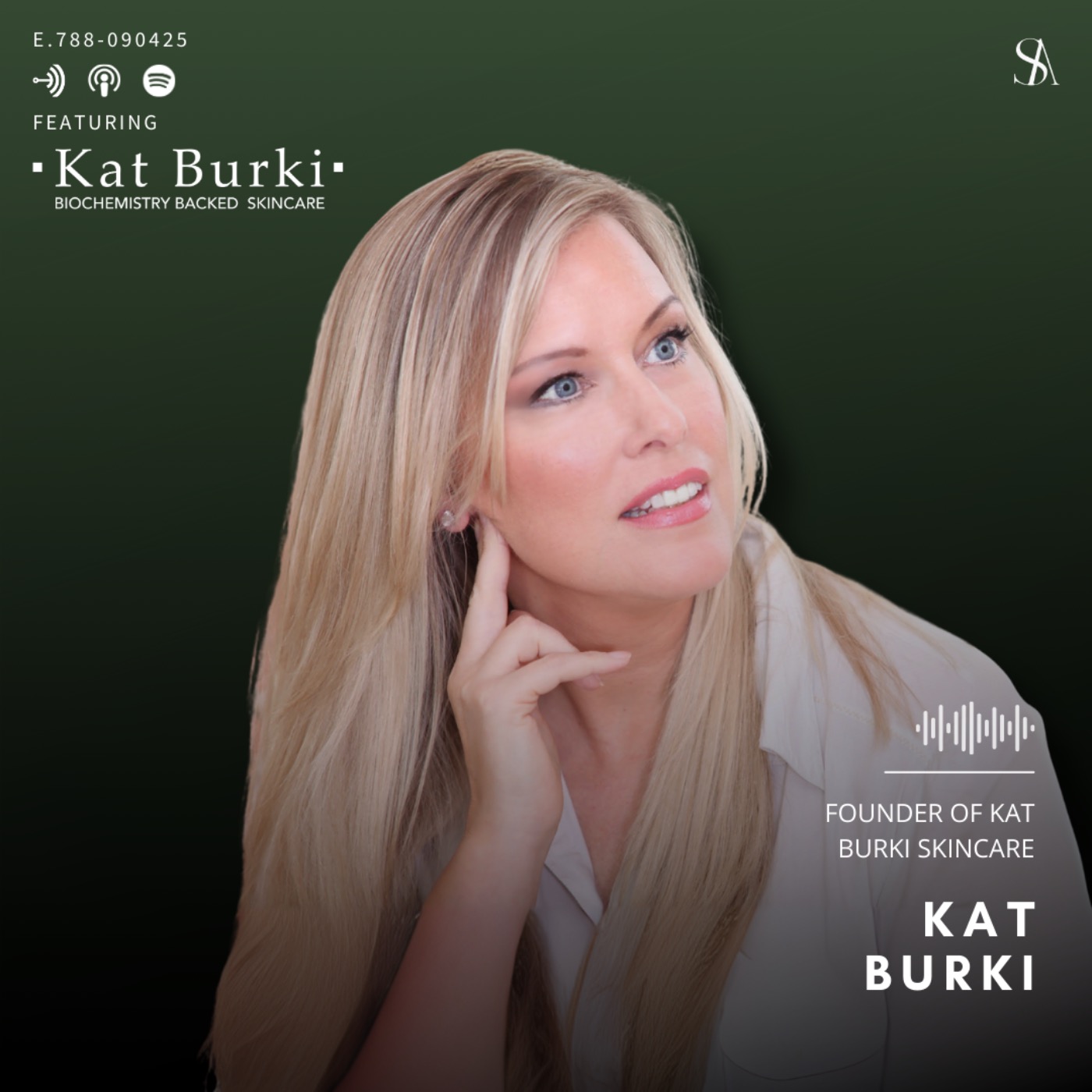
Hey, guys. Welcome back to Skin Anarchy. This is your host, Echo. I'm really excited to have a guest today because her brand is blending nutritional science with skin care. And we're going to be talking a lot about things like the gut skin access and understanding what your gut physiology and the pathologies that take place can do for your skin and how that can reflect on your skin and why skin care is a viable way of kind of, you know, having this maintenance therapy in your day to day. So without further ado, please welcome Kat Berkey. Welcome, Cat.
- [00:33]
B
Thank you for having me.
- [00:35]
A
Yeah, I'm excited to host you. I'm excited to learn from you today and, and dive into the brand. It's a beautiful brand, by the way. I've been really enjoying it, been testing it myself, so it's been really lovely.
- [00:45]
B
Nice to hear that.
- [00:46]
A
Yeah. I'd love to learn about your background, though, if you could walk us down memory lane. Tell us about your background and what got you into, you know, wanting to create a brand and, you know, bring it into the skincare space. Tell us a little bit more about that.
- [01:00]
B
Yeah. So as you mentioned, my, my undergrad was nutrition, so it was really what my foundation was. And I think where I took that was more in understanding and the biology of how we uptake nutrients, how our body works with them. And then my future career went into health care law and then epidemiology, and then I worked in disease management within disease management, really looking at all of these disease states, the top five, from my perspective had an element of. Of course they do. But what I was interested in was the element of nutrition within these disease groups. So from that also I learned over time really how important the gut health is. Gut is just even now being developed and understanding how it plays a part in Alzheimer's or whatever. It happens to be definitely our mood and, and how it plays a part in health in general. And then the conversation that wasn't being had is that interesting gut skin connection, which is an organ. And I don't think in particular skin care in the industry was particularly looking at it as an organ. It was pretty much like a piece of cardboard that we. We kind of based ingredient stories around maybe or a marketing story or even like in the day it was more. Listen, our, our. Our food industry is the same way. So, yeah, I mean, there's a lot of things that aren't really looking into this as this is how this organ on the outside actually, which is an incredible organ that is regenerating all, all the time. And it heals all the time. And that's what its role is. So it, our opportunity to make something that has incredible results is actually easier to do through skin care than through even our nutrition.
- [02:58]
A
Yeah, no, it's a really fascinating point you bring up actually, you know, because I think nutrition gets lumped up into this big word and it. Nobody wants to break it down and talk about, you know, what is it that actually is good nutrition. Right. When it comes to feeding your organs, like when it comes to feeding the gut, skin, brain axis, what is the gut, skin, brain access? Right. So I come from a very deep biomedical, molecular biology background. And so when I look at this from my lens, I understand that there's a lot of marketing hype right now in the industry. And it's very irritating for me as a scientist because. Yeah, because when you really study cell cultures and then you look at actual tissue organoid models of this stuff, Right. It's not an axis that you're talking about. This is stuff that is it. It has to do with the actual processing of foods and then what induces things like leaky gut, you know, what actually causes that. So that's where I want you to, I want you to focus on some and teach us a little bit here, you know, because I think nutritional biochemistry hasn't had its day yet. And I would love for kind of talk to us about that. What, what in your mind is truly like good nutritional biochemistry? How should we be thinking about it?
- [04:17]
B
Well, it's, it's beyond just ingredients. So everyone can go around and say, well, I have, let's say, you know, B3, right. I have this great ingredient. Well, that's really great. But you also have high levels of alcohol. That basically that ingredient is devoid of any value and skincare in particular. But our food, we know, does the same thing. But how do you. One of the things from even vitamins or in pharmacy is how do you combine ingredients to make them more potent? And one of the reasons why they're more potent, they're more vital, but also they get delivered to where they need to go. So these ingredient stories aren't taking into account of the biochemistry of how our body uptakes these nutrients. And then even the level of the biome, the biome is that top level and just it being off kilter, how that influences future, sometimes we'll go through. Acne is a really good example. Your microbiome is, you know, higher levels of bad bacteria rather than the good microbes. And your outbreak, you're not able to probably not able to even retain or bring in nutrients that your skin needs when it's dealing with this biome diversity that's off. And how do. And then oftentimes a doctor will give them antibiotics. So then, then there. And it's going to influence. So just looking at everything from like anything in biochemistry is almost that domino effect of how these, all of these things work together. It's not one dimensional, but it's also. But there are interestingly synergies between how we uptake nutrients internally and how our skin uptakes nutrients, which is, it's this living, breathing organism that actually brings in nutrients. So it's its own digestion almost. And, and skin care in the most part is not looking at that. It's not looking at how do I make this available and how do I ingredient combine so that they're optimized for delivery and also for performance. And even things like silicones, dimethicones that are actually blocking or things like high levels of alcohol that are irritating and, and degrading the value of your other nutrients. So it's really looking at it from this holistic lens, and that's how our body operates. Our body's actually extremely sturdy. But on the other hand, if it's off kilter or anything's not in its, its realm of homeostasis, it's going to have some kind of ill effect.
- [07:02]
A
Yeah, absolutely. I think that's a good point. You know, I think also it's more so like the skin. I don't know if the skin's like soaking it up, but the skin's version of those molecules that are being utilized. Right. Like, it's a very different version of the, of them. So when you speak from like the biochemistry standpoint, I think that's important to understand as consumers is that like, just because you feel like you're eating the right stuff doesn't mean that your skin is going to process it, you know, it doesn't mean that your kidneys are going to utilize it, doesn't mean that your extracellular matrices are going to incorporate it into collagen production. Right. There's like a giant misconnect, I feel like in the world, nutrition and as we're bringing it into skin care, where people are thinking, like, if I eat this, then I'm gonna get better collagen production, you know, or like, I'm gonna get better antioxidant load in the tissues. I wanted like the skin. And that's just, it's just not true, you know, that's just not how biology works. So that's where I get very interested in the topical administration. Right. Yeah, like that. That's the real cool stuff.
- [08:06]
B
Yeah. When I first started to realize skin care, the opportunity that you have to heal this organ from the outside is so much more exactly what you just said. So when you digest, who knows where it's going? And first of all, it's going to go all different places. So it's not like this direct connection of that bee that you happen to have and or fortification from in your cereal is going to actually whatever affect your skin. So it is the most direct way of healing the skin is through skin care, which is pretty powerful.
- [08:37]
A
Yeah, it's very powerful. You know, also another thing so I want to talk about because you're. You have wonderful products actually in your range. I think they're very to the point. I really appreciate that about your brand. That is very to the point. It's not like it's not 50 SKUs, right. That we have to like sift through and figure out what do I need, you know, for my actual health of my skin. And I want you to speak on this a little bit because you've created some, I think almost like multitasking products when it comes to the skin's microbiome. When it comes to this idea of like we're trying to like nourish the skin right. Above all else. What was your approach to that from the formulation side? What were the unique things that you did in the formulation side? I guess I should ask.
- [09:17]
B
Yeah, so it was actually difficult. I mean it was difficult, but really important. It's really important to have an element of vitamin therapy. I believe in any skincare product because just like what we eat, you need vitamin therapy to not only help you have the bioavailability of the other ingredients, some of them are healing in of themselves, but also that protective element to the skin. So that's a huge part of every single formula. Synergistic ingredient, combining. Obviously I'm looking for things that are going to be anything that has an element of even hydrogenation or something where you're man made taking one molecule, moving it to another. I avoid, I'm looking for things that are going to allow what we call as our nutrient delivery system the best way to get the most potent. Whatever your factor, every, every product has a different effect or a different goal in mind and result in mind. Whatever that formula is for that, how do I get that delivered to where it needs to go is a huge part of it. Because if it's just sitting on top or that ingredient isn't vital anymore, then it's not really of any use to you.
- [10:28]
A
Yeah. So I guess my question is more so like you're talking from this nutritional standpoint, right. So like that's the whole, that's the whole stance you're taking. So where did you incorporate that into the topical side of it?
- [10:42]
B
Yeah, so everything. So it's more the, the how our body uptakes nutrients and looking at how that health of that biome is in order to take up the nutrients that it needs to take. So it's really that more of a less. I mean nutrition is a part of it but it's more the biochemistry, nutritional biochemistry element to it of. How do I get the most comprehensive ingredient Doc? With the ingredients we know through relationships and we've already studied and researched how different ingredients work well together. How do I deliver it to where it needs to go is really the point of difference in every product. And, and, but we do have some biome specific products. So if it's a biome specific product, we don't have to worry about where it's going to go. Because biomes that top, top level. So then the science is a little bit different. It's really looking at that biodiversity. How do I give it the antimicrobials to, to drive down the bad microbes? How do I give it prebiotics to drive up great microbes and how do I give it the vitamin therapy so that it can this, this beautiful organ heals all the time. It's in this healing mode. We get cut and it goes to. Into motion to, to get it back to where. How do you give the target those ingredients that will help it deliver whatever that result is is really how we're using that science makes sense.
- [12:08]
A
Yeah, it makes sense. And I think with vitamins also, I think the idea of like true like synergy and what allows vitamins to be absorbed comes up a lot as well. Right. So it's like that's a component that I think no one really discusses is that like you know, you can have vitamin therapy but then like if you like you said like if the biochemistry doesn't make sense, you know those vitamins aren't really going to synerg logistically be absorbed, you know to where they're anywhere.
- [12:34]
B
Or, or have any strength. Yeah. Or I mean I'm always surprised people will say well how do you read ingredient Doc? Well, there's like a couple things just to see if like if the brand is actually thinking about healing. I mean ultimately this is all about healing. And if it doesn't have vitamins in it for the most part, I just find that unusual because me, that's how we, we keep free radical damage from having. Which is super, super important on the skin. It's also how we deliver other nutrients. If you're not just delivering vitamins. So I just think it's not. And then hopefully the next level, if they do have vitamins in there, how thoughtful is it and is there a reason for that and how does it work with the other ingredients for whatever you're trying to achieve?
- [13:21]
A
Right. No, absolutely. I think the biggest thing about vitamins that I, I wish we would see a lot more of in terms of education was is like the idea of them being co factors. And I, and I think like that's where like all of this really comes together in such a beautiful way in the body is that, you know, like the body has. Utilizes co factors and everything and no one wants to discuss this. Like it's crazy to me. And especially now when we're seeing so much biotech. Right? I mean the world is, the skin care world especially right now is flooded with biotech. I feel like. And everyone's like, well, you know, I'm a huge fan of for example, encapsulation. I think encapsulation was brilliant. I think it gets things deeper. But I, at the same time there's a lot of biotech fluff out there too. So we're still, you know what I mean? Like it's, we're still like circling the drain is my point, you know?
- [14:12]
B
Yeah. I mean it's not about the one thing or the one peptide group of peptides or whatever it is that happened because they can have this beautiful group of peptides. Let's say they are something fantastic. Yeah, it needs to be with. Delivered within an envelope of co factors or whatever is going to actually deliver it deeper or, or actually encourage the vitality of that particular. For instance, B vitamins and peptides work really well together because they're kind of operating from helping the amino acids go into gear. And then you have the peptides that kind of keep the nice meshing in place. But it's not thought that way. You'll. It'll be within an ingredient doc that it doesn't mean anything. So yes, it might be, they might have invented something great, but it still needs a lot more to back up and the body in some ways is more grateful for more simplistic things sometimes, you know, if it just needs to get to this baseline of healing and baseline of healthy nutrients and healthy biome levels, then you can really. I think that's a super important threshold. And then you start thinking about how do I go in and, and reverse pigment, you know, or reverse fine lines and wrinkles or whatever, or give it the call, help the collagen reproduce and all of that.
- [15:32]
A
I'm just curious, how does your peptide complex differ from like, what you've seen as conventional ways of people doing peptides?
- [15:39]
B
I mean, I, I really do enjoy peptides. I think they're great. So sometimes when I make that example, I just think it's, it's. I was more so talking about what you were saying with. There's a lot of hype in biotech and it's like if you really start drilling it down of what they're talking about, you kind of like, if you look at the ingredient deck, you're like, okay, that really makes sense to me. But I like to use copper peptides. I love to use them with B vitamins for exactly what I said. I think B vitamins are one of the most important vitamins and I believe in a B vitamin complex because they all kind of have their own roles to really reproduce proteins. So they're super, super important in skincare and I know a lot use them, but again, it's, it's how it's used. And what are, what are the team players within that formula and what state is the skin in to begin with? I mean, I talk to people often and I feel horrible. They're just mortified of their skin. And it really could be something so simple that they could really get their skin back to like a baseline and then you can start working on it. But they'll be using acids and then they go and they use something strong because they're upset and, and, and they don't know what to believe on top of it, which is kind of where people are in, in even diets, going back to the beginning of our conversation, really, in this day and age, not knowing quite what do I believe or what should I believe? And I'm told this message and that message and that message. So, yeah, I think, I think peptides are great. I just think they need to be in a legitimate. I just think, Mark, there shouldn't be so much marketing hype around any of it because it's too important to people.
- [17:20]
A
Yeah, no, I know. And I really like, you know, the word peptide. Honestly, Cat, at this point I'm just kind of like, God, stop using that word. You Know like, I swear to God. Yeah. Like, I, I mean it. Just before we were obsessed with collagen and now we're obsessed with peptides. And I'm like, I mean, what are peptides, right? Like, it's like, you gotta, like, people gotta have to understand. Like, I think. And you know, I get frustrated because of the consumers. You know, I get frustrated on behalf of the consumer community and all of us and we, we buy into this stuff, right? Because it's like, okay, peptides, cool. Amino acids linked together. Well, that doesn't mean shit. Sorry to say it, but it doesn't mean. Yeah, and then what? And like, you know, where does the peptide go? Does it actually trigger like a receptor, you know, conformational change? Does it go and bind to something and cause metabolic cascades? Like, what are we doing here with the peptides? And so I think that's where the, you really. To separate out as a consumer, you know what I mean? Where it's like, wait a minute, why am I spending $300 on some cream that's just telling me it's a peptide cream? I need to think about what does my skin need? Where can I help it from? Like, what angle do I need to. So, yeah, it's, it's a very complex, I think, area.
- [18:38]
B
I think I, I really. And I feel the same way as you do. I mean, I hear all. And I sometimes I even hear people saying some of the things that we say. Like recently someone was talking about, you know, precise delivery of the ingredients. And I'm like, okay, that's interesting because that's been part of who our DNA is from the beginning. But then that particular product that they were saying that about was like a quarter way through the ingredient deck. Silicones and dimethicones. I'm like, okay, well, you're not getting anything anywhere. So I just think people just hop on these, you know, phrases and just hope, hope it sticks. And unfortunately it does stick for a lot of people and they do believe it and they go by it and then their skin's not making any progress. And it's an, A beautiful organ that actually is so receptive and can change instantly. It really can. It's. It's not like every time you hear three to, you know, six to eight weeks or it really is like a wilting plant that once you give it what it needs, comes back to life almost instantly.
- [19:44]
A
Right. No, I agree. I completely agree. I think that's where it's really remarkable, you know, what kind of organ the skin is. You know, people Say. People always say it's like the largest organ. And I'm like, no, actually, it's one of the most complex organs. Like, it's, you know, like, it's like.
- [19:58]
B
I mean, it's very similar jobs to do.
- [20:00]
A
Yeah, yeah, it's got a serious job to do. And it interfaces the most, you know, with everything that's going on, whether that's internal, whether that's external. Like, I mean, there's just such complex mechanisms that are at play in your skin and the different layers that I think when it comes to skin care, there's a huge responsibility. Right. On, like, on the people making the biotech, the people making these, like, therapeutic, you know.
- [20:26]
B
Yeah.
- [20:27]
A
Like, avenues. Right. So I give. I mean, for me, I think for the general consumer, I always just. I worry because I think people, you know, they end up trying a million things and then, you know, they say, my skin barrier will disrupted. Actually, sometimes it's not just your skin barrier. You end up disrupting a hell of a lot more, you know, and they don't even.
- [20:48]
B
Yeah, I, I hear barrier all the time. It's a little bit more than barrier is basically the, the, you know, carrying the water that we need. But there's so much more beyond that and past that. And then there's the biome, which is separate from that, which is super important. So, you know, that's another one that's kind of a catchphrase right now.
- [21:08]
A
Oh, yeah, the microbiome is, is. It's become a very big buzzword. And unfortunately, you know, that's a who a whole master class on this. You know what I mean? Yeah. But, you know, I want to talk a little bit about when you were like, I guess from the brand side of it, when you were looking for the tried and trues in your formulas. I mean, they're always tried and trues. Right. In every great formula. What were they for you? Like, what were ingredients that you were like, I'm not going to compromise on these because these are really going to work. They always work. Or, you know, something like that.
- [21:39]
B
Yeah. So I think the. One of the most difficult parts I had was more getting the right labs that knew that because they. There's the same as what we've been talking about. They've been making the same things forever. And it's really about how it feels and how it, you know, not so much what it can. How it can perform. So for me, the bigger thing. And my team has been trying to get the delivery of the ingredients to where they need to Go within a deck that's free of things that we know will compromise that vitality and that delivery. So that was the biggest thing, and it still is to this day, depending on, you know, what we're working on, getting that to happen that way. But at the very beginning, my very first product was the vitamin C intensive face cream. And the importance of vitamin C. I know people. That's another one, right? Everyone loves vitamin C, but it super. It's so important to the skin for multiple reasons. And I think looking at it with that very. I go back to that very first formula and the colloidal silver that we're using for the microbiome and the health of the. The skin, and then the delivery of it through with the reishi mushroom. And there's no silicones, there's no dimethicones. So the great thing is that that was more of a simple. And that doesn't sound simple, but it was more of a simple formula for us, but really had all the triggers that really, to this day, are who we are. And I think what people just, like, when you. When you know you're being healthy for your body internally, when you. You can tell the difference between a really healthy product, it sounds. It sounds simplistic, but you can. When you put it on, first of all, you'll see rapid absorption because your skin recognizes it and it's bringing it in, and you'll. As I said, you should see a result right away. So I think that was the formula that really kind of. People knew it and they felt it, and people at that time were starting to be thinking about the skin and, like, the. The look was a healthy look. It wasn't looking at. Just at the beginning, people were thinking, you know, we were actually in New York, where we launched, and a lot of models and. And brands having, you know, sending their models out on the Runway, it wasn't about makeup anymore. It was about healthy skin. So I just. I think that probably is the formula that still to this day, even though I have much more like, you know, like your children, there's much more that I love so much that. That the ingredients and the formulas are more complex. But I do think that kind of stands for who we are as a brand. Even now.
- [24:17]
A
You know, it's crazy. You're using colloidal silver, which I know, I don't know why, but, like, this is one of those ingredients. It's very close to my heart because I love it. I love colloidal silver. And people. It's. It's gotten a bad Rap actually for no reason. And I'm like, I don't get why people go after certain. I mean, colloidal silver is one of the strongest things you can use against things like fungal acne. Acne. Like, I don't know. Right. Like, it's, it's crazy. I mean, I'm glad you're using it. I'm really glad you're using it. That's really cool to have in a formula or. I know you used 15 stabilized vitamin C. How did that work when you were integrating it with something like silver? Because I know that silver has certain things that it destabilizes a lot of things.
- [24:59]
B
Well, you just can't have too high of a percentage of it to begin with. So you just have to really. It's more of a percentage play with that. But it's actually going to help bring it in. Right. So it's helping with that environment of, of the skin where you can actually bring in the vitamin C in a more rapid way in a healthier way. So there really wasn't any as far as the actual stability of the formula as a whole. But the vitamin C that we, we chose is one that is, is more stable. We researched that on purpose and that can actually more. And I hate to say it this way, but it almost opens up once it's delivered. Yeah. So there wasn't a problem with that. I'm not actually the one mixing the formulas, by the way. I'm the one who comes up with the formulas, every single formula, and really works back and forth with the lab and to get it to where it needs to be. And if it isn't stable, I probably never even see it at that point.
- [26:01]
A
Yeah, I think sometimes we can't tell if something's stable or not, you know, because when you're mixing formulas, you can have a batch you're creating and it might be stable and then it becomes unstable after some time. So that's just how chemistry unfortunately. So let's talk about your scalp products. I think that's fascinating that you have scalp product. I think again, scalp is an area that's never really talked about. It's probably the most, I think, complex, complex skin area. You know, I think because it's not exposed to as much light and as much of the environmental factors. So what was your take on that? I mean, I would love to learn from you about what you think from the nutritional biochemistry component. What should we know about the scalp?
- [26:42]
B
I mean, I think the biggest thing we should think about is the scalp period. Like I Don't think people even consider it. Yeah, like, it's. It's this. It's a big part of our. It's our skin, but it's the top of our head and our hair grows out of it. We're very concerned about our hair and we're. And the health of our hair and hair loss, which has been increasing all the time over the last few years, and a real problem. So I don't think it's really funny. I was really. So we. I have this one line called our renewal line, which is really where by the time around2016, 17, I really started getting more into the different ingredients and using copper peptides and looking at how they work and all that kind of stuff. And I knew with the proteins and the B vitamins and all that that that would be great for hair, but it wasn't time. And I just didn't even have the wherewithal as a brand to even really start learning. I needed to learn more, obviously, because it is different there, you know, there's. The hair regrowth cycle is different than the skin cycle. So I really needed to take time and learn about that more, but knew that there was definitely this whole world of the skin that no one and even, I mean, people just now are really. And they are as. Which is great. Everyone. Like, when we just launched the. The hair treatment, I was really surprised by how many videos people were just on, you know, social media, using it in their scalp. So it became mainstream that this is a scalp, this is our skin, this is an extension, and it does play a part in our hair regrowth cycle. So. And think about what we do to our scalp. So our scalp is, you know, the sun's on it, we are spraying it, we are chemically changing color, we are, you know, using hot rollers and. And it could go on and on. So I think it's just. Just like we're waking up to skin care. Like, let's be real with skin care and talk about it from a real healing perspective, which is what it's supposed to do. And let's be real, let's talk about the scalp. So I think it's. I think it's amazing what we are talking about now and how we're looking at things.
- [29:03]
A
Yeah, no, I think the scalp is very fascinating because I think a lot of the products out there are actually just congesting the scalp scalp. So that's. That's the biggest problem I have with scalp products is that, you know, we're literally using it as Another marketing, you know, thing where we can be like, oh, God, you need scalp care products now? Yeah, your scalp's been fine for 30 years. You know what I mean? Like, for 20, 30 years, your scalp was totally fine, and all of a sudden, I need scalp products. Why? Like, you know, So I think when you, when you talk about the scalp, you have to understand what you actually need versus you don't, you know, So I know there's a lot of people right now on GLP1s, so they're losing a lot of hair, they're getting a lot of dry scalp issues. You know, there's a lot of things going on in that realm where I can totally see somebody like that, right. Leaning in and saying, I need to find great scalp products because I'm having issues, or even anyone who's experiencing early onset alopecia. And you're, you know, you're dealing with things that are really true pathology when it. In relation to the scalp, that's where you need products. You know, I think when it comes to actual understanding of the scalp, we don't know nearly enough about it to where we can formulate, like, products that are supposed to be for daily use. I just don't think that the whole consumer market needs to be focused there, you know, And I. I've had these conversations with trichologists, right, where they. They want to, like, talk about this, but then it's like, at the end of the day, like, it just comes down to what kind of water are you using when you wash your hair? You know, like, what kind of mineral deposition is going on, you know, on your scalp? Like, what does that actually, again, like, how we were talking about, you know, topical delivery of anything for the skin is the most powerful way of delivery. So if you have something like mineral deposition. Yeah. You're going to have dysbiosis of the microbiome on your scalp. Absolutely. And that's when you come in with something that's clarifying. You know what I mean? That's soothing, that's gonna help with the inflammation going on. So I think from that standpoint, it makes sense. And I like the stance that you've taken with your scalp because you're working with fermented. Fermentation is where you focus, and I love that because that's the real stuff. You know what I mean? So let's talk about that. What are your thoughts on, like, fermentation products? I know they're kind of also becoming buzzy right now, but. But still, what's, what's the Take.
- [31:19]
B
Well, it goes back to our philosophy. So you're getting those molecules smaller to be delivered, more potent and. And for delivery. And especially when you talk about that, that also works really well for the biome level as well, just like it does within our gut. So there's multiple reasons where fermentation comes into play that makes the product more deliverable and more potent. And I did it on this. So the scalp product in particular was more for our hair regrowth. So that's a little bit different. We wanted to get. We really wanted to do a product. I really looked at those three phases of hair regrowth and what are the ingredients that we can get of per phase or what researched ingredients do. I know, works per phase and put that into a hole. And luckily the clinical results were incredible. But I think when we came out with the shampoo and conditioner, the bio fermentations more really for that scalp level and making that scalp level healthy so that your hair can be healthy. And we don't put any of the. The residue. This is more for. This is a lot of. This is for appearance with the shampoo and conditioner. Whereas the other one was a regrow formula.
- [32:33]
A
Yeah.
- [32:33]
B
But still healthy. Right. So ultimately it's going to help with regrowth because it's a very healthy product. There's no silicones, there's no residue, and the hair can actually, you know, be lively and breathe and hopefully healthier and less breakage in general.
- [32:49]
A
Yeah, you have some really great before and afters, by the way. I was going to say on your. The bioferment serum, it's very. The treatment, it's. You have some great before and afters. That's really cool.
- [32:59]
B
That's so exciting when that comes back.
- [33:00]
A
And you're like, okay, no, it's very interesting. I'm glad you called it a treatment too. You know what I mean? Like, I think that that's very, very good to say something like that, because I think a lot of times when I see products that are meant for other parts of the body, like, you know, because we focus so much on like facial skin for so long that now when we're branching out into like, you know, other areas, like even in like, for example, body care, I see this happening again, where we're going down that line. I like it when people are very intentional with the way that they kind of market their products, because I think for consumers it's important to understand, like, what is it that you're actually doing when you use this product? It is Like a treatment. Right. Because you're treating an issue that you're having, you're treating something that you felt like it's lacking, and that's important to know those kind of things. And, and especially when you're shopping, you're spending your dollars, you should know why you're doing that. And so I, yeah, I appreciate the, the wording that you've used there as well.
- [33:55]
B
Thank you. And I like that you said intentional because I think that's what we try to be with everything. And you kind of said this earlier with our product offering. If it's something out there that's you can widely get, like a sun sunscreen, for instance, I'm like, unless I have something really outside the box different, I don't need to come out with another one. Right. There's. So people will ask me, they ask me obviously my opinion on which kind or what type. But I just want to make sure if we bring out something, it's different and it makes a difference.
- [34:30]
A
Yeah, no, I love that and I see it across your brand. It's a beautiful brand and I really appreciate how you're approaching skin health. I mean, really hats off to you and your team because we need more of that, you know, in this space. I've spoken to so many brands at this point and, you know, I think that, you know what I mean, like, I'm the consumer that's just kind of like over the bs Like, I'll be honest, you know, like, like, give me something that works and, you know, and your products work. Actually, that's, that's the best part. I've been using the vitamin C intensive face cream regularly for the last week and it's been beautiful. Like, absolutely. Yeah, yeah. No, everyone listening. If you guys haven't checked out the line, you really should. It's a really great option for so many people. I think that whole idea of, you know, what Kat has described here, also this idea of true, true nutritional biochemistry is really at play in the products. And you know, when I look at it as well from my lens, I think, think that's the whole thing, right? That's the song and dance that we should be getting behind and voting with our dollars with. Because at the end of the day, like, you know, if you're, if you don't treat your skin like an actual organ, if you don't treat any. Any part of it like an actual organ, it's not going to respond. Yeah, yeah. I mean, it's like you gotta really get behind that, you know, and you Gotta really, like, get. Get going with that stuff instead of buying the tick tock viral crap.
- [35:56]
B
It's really not. I mean, this is an organ. You're giving it the tools and it can do remarkable things.
- [36:02]
A
Yeah, absolutely. Absolutely. No, I really love the brand and I think that every single thing that I've tried, every product I've tried, really has its purpose and it does a job. And it's you. I love that you have clinical studies. I love that you've done your homework. You know what I mean? Like, as a consumer, I just appreciate the hell out of that because that's. That's what. That's what real I think brand creation is. You give people a reason to buy your products, and I think a lot of brands can learn from that, especially right now with how cluttered the market is. Like, give us a reason to buy your product. Show us why it matters. That kind of thing.
- [36:37]
B
So make it matter.
- [36:38]
A
Make it matter. Yeah, Like, I mean, that's the thing is. And I. And I think it's because you do have the background too. Right? That's the big thing. A lot of times people are creating products, they don't have the background or they don't do the homework, you know? Yeah.
- [36:50]
B
It's frustrating. It is. Totally agree.
- [36:53]
A
No, but I love it. Thank you so much for such a fun conversation.
- [36:56]
B
Thank you.
- [36:57]
A
It was fun for such an educational conversation and for everyone listening. If you guys are curious about the brand, we will be linking all of the information in the show notes. Make sure you scroll down and check it out and leave us your comments. You know, let us know what you thought and if you've tried it, if you love it. But thank you so much, Kat. It's been an honor hosting you. Yeah.
- [37:13]
B
Yes. It's been wonderful. Thank you.
- [37:15]
A
Hey, guys. So I hope you love that episode. Please make sure to hit subscribe if you're tuning in to us on any podcast platform. We are available on so many different platforms, so wherever it is that you're tuning in, just go, hit subscribe. You'll be immediately notified when we publish new episodes. This way you're able to tune in to amazing insights from experts, brand founders, industry leaders, authors, all the wonderful people that we host. And that's very important for me because I love, love to hear from you guys and really understand what you love and what you want to hear more of. Also, make sure to give us a follow on all of our social media outlets. We're available on Instagram, TikTok, X, you name it. We're there. We also have a blog on Medium, so if you're a reader and you love Medium blogs, check us out on Medium. We publish some really great articles on there that do deeper dives than just what's available on the podcast, and it's really a great place for all of you science geeks out there that want to learn a little bit more. We go above and beyond with our research and making sure we're bringing you information that you usually probably won't hear about in other outlets. So check us out, leave us a comment, leave us a review, and we'll be back next time with another episode. Thank you.