Loading summary
Transcript49 lines
- [00:00]
Dr. Ekta
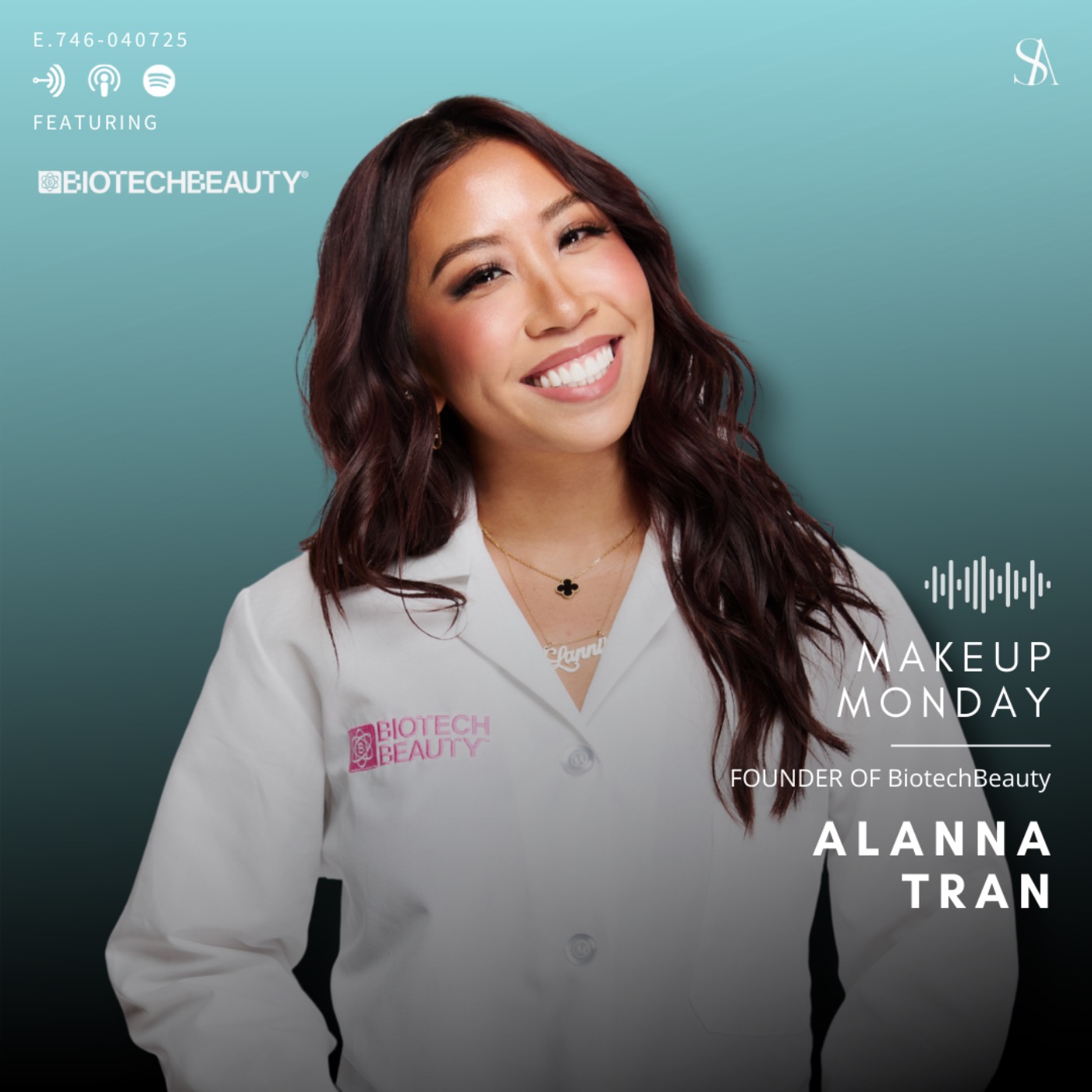
Hey, guys. Welcome back to Skin Anarchy. I am so excited about the brand I'm introducing you guys to today because I have been anticipating the launch of this brand for quite a while now. And also it's so innovative because it's fine. It's finally a brand that's bringing us truly efficacious products, not only in the space of skin care, but also makeup and beauty. And it's combining both worlds in the most beautiful scientifically backed way. And I just. I'm just so excited about it. So without me ranting too much, I would love to introduce you guys to the founder of Biotech Beauty, Alana Tran. Welcome, Alana. I'm so excited to host you.
- [00:37]
Alana Tran
Thank you, Dr. Ekta. It's such a thrill to be here. I've been a fan of you and the Skin Anarchy podcast, actually back when it was Skincare Anarchy. So I've been following for a very long time. So it's an honor to be here.
- [00:49]
Dr. Ekta
Oh my gosh, that. It makes me so happy to hear that. Thank you. And, you know, I. I'm so excited to host you. I can't believe the brand is out now and you've launched and it's huge. I'm so excited to dive into it. But I want to learn all about you, Alana. Like, tell us about your background, because you have such a fascinating background and I know you are pre med to begin with, so walk us down memory lane, if you don't mind.
- [01:10]
Alana Tran
Absolutely. Well, the story kind of goes back to me trying to solve a problem for myself, which was in middle and high school. I struggle, struggled with really bad acne and relied on the popular solutions at the time, which were salicylic acid face washes, witch hazel, benzoyl peroxide treatments, all these really harsh stuff stripping formulas that left my skin red and inflamed. And in high school, I discovered how makeup could cover my redness and irritation. So I began wearing it daily and it boosted my confidence. But at the time, makeup wasn't really designed for sensitive and acne prone skin. So almost immediately after applying foundation, I'd feel those really painful bumps forming under my skin. And I felt stuck in a cycle. I was covering breakouts with my makeup that worsened my skin during the day and then trying to undo that damage at night with harsh skin care. So, so frustrated and exhausted, I wondered why makeup couldn't support my skin instead of hurting it. So in college, while on the premed track at UC Berkeley, I studied human biology and biochemistry. And during courses on skin Physiology and topical drug delivery. I kept thinking, what if we could do something here where we create makeup that doesn't just sit on the surface and it improves skin health. So by my final year, my experience as a chemistry lab TA and a biology lab research assistant had taught me to approach challenges, challenges methodically. And that's when I decided to pivot from medicine to create science backed makeup that's good for our skin. So after graduation, I joined Biossance as a cosmetic chemist where I learned how biotech can power sustainable beauty. And this was an eye opener for me because I realized how innovation could replace harmful practices with environmentally responsible solutions. And then I went to business school at USC Marshall and earned my master's in marketing while working full time at L'Oreal as a global product marketer for NYX cosmetics. And at Nyx, I learned how to take a product from concept to launch and connect with diverse consumer needs. So all of these seemingly disparate experiences helped give me the confidence and clarity to create something new. And biotech beauty was born to bridge this gap between high performance makeup and skin health. So using biotech powered ingredients, our formulas are clinically shown to support the microbiome and skin barrier. And our goal is to create makeup that not only looks amazing, but also improves your skin as you wear it.
- [03:33]
Dr. Ekta
That's so cool. And I love that you are doing this from this science backed foundation. And I love that you're not somebody who's just been in the beauty space, you know what I mean, for like 30 years and you're like, oh, I'm gonna start my own brand. You're really somebody who's, you're like, you know. No, I, I studied the science and I, and I want to do something here with that. You know, that's beautiful to me. I love that, you know. Yeah, truly hats off to you for just simply for that. Because I, I, as you know, a scientist myself, I love seeing when people take their education, their knowledge, right. Especially from something like a biochem course or like, you know, I took medical botany, I remember back, like way back, you know, and I wrote like a, I ended up writing like a natural product paper about it, you know, because medical botany inspired me. So I know these courses, they leave such a lasting impact and when you can bring that forward, right, in a way that you have, it's such a beautiful thing and it really is reflecting in your products. But I want to talk about that a little bit, you know, how, how did your background really influence the way built your products? And position your brand as a founder.
- [04:35]
Alana Tran
With a scientific background. My approach to product development starts with research and clinical testing rather than just following trends. So at Biotech Beauty, we prioritize science and data to ensure our products not only perform beautifully, but are safe and beneficial for the skin. So we test our final formulas through rigorous science backed clinical trials using advanced methods like trans epidermal water loss measurements and microbiome sequencing to ensure our claims are supported by objective and measurable data.
- [05:07]
Dr. Ekta
That makes sense. Fundamental that I think a lot of brands kind of miss the mark on, you know, from what I've noticed is that, you know, it has to be data first. Right. It has to be like backed by an actual idea. Hypothesis has to be there. You know, that's a scientific method. So, you know, and I feel like if we go towards that and we follow that scientific method, it always leads us down a road of like true discovery. You know, that's my genuine belief, you know, in my heart. So I think that that really reflects in what you're doing. So that's very cool. You know, I see, I want to talk about actually, you know, we see a lot of brands that are labeling their products as like good for skin or like it's infused with really good skin care ingredients, you know, but a lot of them don't really test for like the efficacy of those ingredients. And I would love to break down what's really happening behind the scenes when this kind of situation arises.
- [05:59]
Alana Tran
Yeah, well, did you know that most beauty brands don't perform objective clinical testing to validate their claims? This is something that consumers often overlook because you assume as a consumer, if something is being printed on a box and shown to you that it surely had to have been tested objectively. Right. But that's not how the industry standard is at the moment. And brands are not required to conduct these tests. If they do, it's often through consumer perception surveys, which are subjective opinions that don't provide the same level of measurable data needed to back up a product's performance. So when we see claims like 97% of users agree that their skin feels smoother after one week, it sounds impressive, but these are based on personal impressions and not scientific evidence. So it makes it difficult for consumers to know if the products they're using are truly effective. So at Biotech Beauty, we take a different approach. We go beyond the subjective surveys by conducting objective instrument based clinical trials that provide real, statistically significant data to back every claim. And we believe that transparency and science backed validation are the only Way to ensure products are working to deliver what they promise. So you can trust that what's in the bottle is truly effective for your skin.
- [07:19]
Dr. Ekta
I really love that you said statistically valid. I, I love that, you know, like the inner, like, you know, geek in me just like lit up because honest to God, one of my biggest things, Alana, with when it comes to these claims that brands often make and you know, I have, I have a whole like regulatory seal that I'm working on and stuff. And you know, one of the big things I have on there is statistics, because statistics is the thing. And I want everyone to hear this. You know, that's tuning in when you guys are learning about statistics, statistics or you're reading about it, about a brand saying, you know, 98 or 99, something, something, there's a way to analyze stats, okay? And the analysis of statistics is everything because you can technically make anything look great if you want it to. That's how, that's how biostats works. You know what I mean? So at the end of the day, when you're looking at any kind of epidemiology like numbers and like reporting, you need to really understand that statistics is a very complex field. It can be skewed in a lot of ways. And so when brands openly like telling you like, we actually did this, right? We went, you know, here is how we did it, here's what we're claiming. That's what you want to look for. You want to look for real, you know, just, I guess you can kind of tell, right? You can tell the fake from the, the real because the people who are going to tell you about their stats are going to show you the papers or they'll show you the actual data versus, you know, the more, more qualitative stuff that you see a lot of. I want to talk about something very important though, Lana, because I know that a lot of times brands rely on suppliers and supplier driven claims rather than testing their actual final formula. What, what do you think consumers should look out for when they're evaluating whether a product truly delivers?
- [09:03]
Alana Tran
So brands that extrapolate supplier driven ingredient claims can be misleading. So an ingredient supplier might show research proving an ingredient reduces redness or boosts hydration at a specific concentration. But in the brand's final product, the ingredient might be present in much lower amounts, so too low to achieve those results. And these claims often don't reflect the true performance of the product you're buying. So when evaluating whether a product truly delivers results, consumers should prioritize brands that Test the final formula rather than relying solely on supplier driven claims. So some brands go the extra mile by disclosing the exact percentage of key ingredients in their formulas. Kind of like the Paula's choice to present BHA liquid exfoliant, for example. And this can help consumers assess whether those ingredients are present in in sufficient quantities to achieve the desired effects. But my main tip is to look for transparency and clinical testing to ensure that the product's performance is validated by measurable data.
- [10:04]
Dr. Ekta
That makes sense. I like that. Now I want you know you've talked before about the whole the margarita with the one piece of spinach analogy when it comes to ingredient marketing. Can you explain what you mean by that? And how does biotech beauty do things differently?
- [10:20]
Alana Tran
Yeah, so here's how I like to explain it to my friends. Imagine if one of your friends is making a margarita and then they throw in the blender a single leaf of spinach and now they're like, this is a healthy margarita. That's what is happening with makeup right now. Most makeup products aren't designed to be good for you, but brands will add a tiny amount of skincare ingredients, slap it on the label and market it as something that improves your skin. I call that science washing. I'm not here for it. And biotech beauty does things completely differently. We test our final formulas through the clinical trials, as I mentioned, and we ensure our claims are supported by that statistically significant data. For example, third party clinical studies showed that our formulas are microbiome friendly and they support an increase in skin barrier function in 14 days. And our blushes and moisturizers are also clinically shown to improve skin clarity and minimize the appearance of blemishes. So this is so beyond what you see in a typical blush. We saw that participants experienced a 30% reduction in the appearance of ComJonny's after 28 days of using our Biome blush. That's the kind of proof consumers deserve when they're evaluating marketing for skin care makeup hybrids.
- [11:35]
Dr. Ekta
Yeah, I couldn't agree with you more. You know when you were telling me about how like in the beginning when you were saying like, you know, you store makeup and then you kind of like feel like it was starting to break you out. That's exactly the experience I had. I was never like a huge makeup person. Like especially I'm in my late 30s now, in my, in my 20s. And you know what? Not that's when I really started experimenting with makeup. And I remember having that same feeling. And then, you know, now even like you know, evolving with the market, right? Involve evolving with the industry and seeing these products come up that are like, okay, we've got skin care, you know, we've got the, we've got these ingredients in here. But then you still experience that, right? You, and you go, and as a consumer, you put your trust in these brands. You're like, okay, finally makeup I can actually use because I'm not going to take this off and break out 15 times. You know, it's, it was something that you put your trust in that and then it never happens. And it always makes you, you know, wonder, like, what are you putting in there? Like, if you're actually putting skincare ingredients, like, what's the concentration? How do they work with the makeup ingredients, right, like the pigments and all of that. How does this even translate? That's always been a huge question mark for me. So I love that you said the science washing bit because I think it's extremely important, especially in this niche category, you know, when it comes, because you have skincare and makeup here. You know what I mean? This is a hybrid. So very, very interesting. I want to talk a little bit about clean beauty because I know it's a very big topic, you know, and I like that you're not kind of like marketing yourself as this, like, yeah, we're this clean brand, you know, not because I, I don't know, it's, it's nothing that's clean, but it's just, I think it's outdated. I much rather prefer, you know, biotech powered, you know, that's very important. I love that you've said that, that you're biote. Your, your products are really high performing. So, you know, I would love for you to talk about, you know, what kind of consumers are you speaking to when you say this?
- [13:31]
Alana Tran
Well, as you mentioned, coming to market as a clean brand is no longer a novelty. I believe that it's table stakes for entry. So that was not a really exciting differentiating point for us. That was just standard. So the consumers we're speaking to is, if you love makeup, but you also care about your skin health, Biotech Beauty was made for you. We lovingly refer to our audience as healthy hotties. And being a healthy hottie is about more than looking good on the outside. It's about caring for your health internally, mentally and even at the cellular level. So our products nourish the skin microbiome and support the barrier, enhancing your natural beauty instead of masking and covering it up.
- [14:12]
Dr. Ekta
That makes sense. Yeah, that makes sense. I Like that. I like that because, you know, I think it's the masking that makes us break out.
- [14:19]
Alana Tran
Right. You know, instead of supporting over time.
- [14:22]
Dr. Ekta
Exactly, yeah. I think it's the. It's the pounds of makeup, you know, that we're kind of told to put on by social media and whatnot. But I love that, and I think that that's one of the, you know, one of the big topics that comes to my mind is, like, the microbiome right now, you know, everyone's really kind of buzzing about it. I've been, you know, studying the microbiome for many, many years, and one thing that I've noticed is that, you know, makeup is a huge disruptor actually, of the microbiome. And that's something that a lot of skincare brands are not really even talking about, even though they might be, you know, leaning in that direction. Consumers are not being educated on the idea that, you know, when you wear makeup, you have to be very conscious of what kind of makeup it is, the quality of it, you know, what kind of ingredients have gone in. Because the microbiome, it's very stable, actually. It's a very robust, you know, environment. However, there is. There are certain chemicals that will quickly disrupt that, and a lot of them are found in makeup up. So that's something that I think consumers should be aware of, you know, especially when they're approaching it.
- [15:22]
Alana Tran
Yeah, yeah. Well, I don't know if some of our listeners know what the microbiome is. I think you and I are so excited about it that we sometimes forget to deepen, to dive deeper in. So, yeah, I would love to kind of chat about it a bit with our audience and then talk about.
- [15:38]
Dr. Ekta
Yeah, yeah, please.
- [15:40]
Alana Tran
Yeah. So many of our skin concerns, such as acne, eczema, psoriasis, atopic dermatitis, these can be partially attributed to an imbalance in the microbiome. So that's why it's so important to maintain a healthy balance on your skin. So for those of us who are listening, who are new to this topic, the skin microbiome is an ecosystem of trillions of bacteria, fungi and viruses living on our skin, working together to protect us. And when it's disrupted, it leads to dryness, sensitivity and acne, since it weakens the skin's defenses. So for those of us with acne, that can mean an overgrowth. Overgrowth of certain phylotypes of C. Acnes, which can trigger inflammation and clog pores. And an imbalanced microbiome makes us worse by reducing beneficial Bacteria that help control the harmful bacteria. And on the other hand, a balanced microbiome helps us maintain hydrated, calm, resilient skin by producing molecules that contribute to a strong and healthy barrier. So that's why creating microbiome friendly makeup that supports the skin barrier was so important to me as someone with acne prone and sensitive skin. So our products enhance the skin health rather than disrupting it. Promoting that long term balance and resilience that you were talking about.
- [16:58]
Dr. Ekta
I love that, I love that so much. Like, and I think the microbiome is, it's such an important player here because you know, you're, you're putting ingredients in that are very tried and true. Right. And I think one of the biggest things is like people forget that the microbiome feeds off of whatever is around it. You know, it's micro environment. And so like those, anything, you know, lipids, you know, lipids, when they're broken down, their byproducts, everything is feeding that microbiome. So it becomes even more important when we think about makeup because you know, makeup, we wear makeup throughout the day. It's like a 12 hour situation sometimes, you know, where you're just, you have this on your face and so you. For consumers, I think it's increasingly important to understand that, you know, whatever is in there, one, what's it doing to your normal natural lipids on the surface of your skin and then also the other proteins that are found there and other cellular signaling molecules, because that's going to really determine the longevity of your skin barrier as it pertains to the microbiome, you know, because that's really what it is. It's not even, it's not so much a fact of like, oh, something is killing bacteria, right. It's not like a bactericidal thing that we're talking more concerned about are the bacteria being, you know, it's like dumping like, you know, your fish in like a dirty pond. You know what I mean? That's, that's like analogy.
- [18:19]
Alana Tran
How are we affecting the living environment of all these little guys that we're hoping to take care of.
- [18:25]
Dr. Ekta
Exactly, exactly. Now I want to go back a little bit because, you know, when you had first mentioned about how, you know, you were struggling with this, some of the traditional makeup formulas that you, you know, that made you realize that they were actually worsening your acne.
- [18:40]
Alana Tran
This research for me started before we had all of these ingredient libraries and pork logging checkers. So I was deep in the weeds of skincare blogs, Reddit rabbit holes, Trying to see what people say might be causing their acne as acne prone consumers. Because there were formulas that I would look on what are kind of the commonly known comedogenic, commonly known as the comedogenic ingredients, and nothing was on there. So I'm like, what are we missing here? So I realized that many traditional formul formulas, especially designed for long lasting wear, rely heavily on silica or silicones like dimethicone, cyclopentasiloxane, trimethicone, all of, all of the versions. And these ingredients are popular in makeup for their ability to create that smooth, flawless finish and provide long lasting wear. They act as skin barrier protectants, lock in moisture and give formulas a really silky feel. But for those of us with acne prone skin, these silicones can be really problematic. So while they create a great texture, they can also lead to clogged pores and breakouts. And the reason they're so common in makeup and even in skin care is that it helps products glide on smoothly, provide water resistance and it gives you that kind of blurred filter like effect that so many people love. And they can be really beneficial for those with dry skin because it offers hydration and that occlusive barrier. But for those of us with more acne prone skin, it creates a huge challenge of finding products that perform without causing breakouts or irritation. So that insight was one of the driving factors behind Biotech Beauty's commitment to creating formulas that are truly non comedogenic, which means free from those poor clogging ingredients while still delivering the same high performance color payoff and long wear. So we wanted to create options that don't compromise on quality or results for those of us who have to be extra cautious about what we put on our skin.
- [20:36]
Dr. Ekta
Yeah, that makes sense actually. And you know, I think the, the comedogenic ingredient ingredients that I'm aware of, you know, they're, they're still being used, you know, and, and that's what bothers me is that we've gotten so far and unfortunately we as an industry are not kind of getting rid of them. You know, we're not like progressively trying to be like, okay, let's just get this out of the, you know, the whole equation. We don't need to have like, you know, coconut oil and everything or like, you know, you know what I'm saying, like, we don't need it. So that's where I, I think I, as a consumer, I get quite frustrated because, you know, when you pick up formulations, it's 2025 now. Right. And when you're picking up a formulation, you should be, you should feel confident that the ingredient list is going to have very obvious comedogenic, you know, components in there. But you know, unfortunately, makeup has, I think makeup has to catch up. Yeah, yeah, yes, exactly. You know, and I think, you know, I want to talk about this actually a little bit more because not everything, you know, whenever, if somebody labeling an ingredient as non comedogenic, it doesn't mean that it can't still clog your pores. Right. So I want to talk about that with you. How does Biotech Beauty ensure that its products are truly acne safe even if.
- [21:49]
Alana Tran
Individual ingredients are non comedogenic? The combination of some can clog pores. So it was really important for me as an acne prone consumer to take our finished formulas through clinical trials to test for comedogenicity. And so we sent our formulas to an independent lab to be tested on 25 subjects for 28 days under the supervision of a dermatologist. And we showed that these are truly non comedogenic. And we also conducted dermal sensitization assessments for 39 days on 50 subjects on sensitive and acne prone skin. And the data shows that our products are truly safe for sensitive skin as well. So this commitment to transparency and integrity is really rare in the beauty industry, but essential for building trust. So we go the extra mile to ensure our products truly deliver on their acne safe promises. Because everyone deserves makeup they can count on.
- [22:45]
Dr. Ekta
Yeah, no, I love that, I love that because, you know, I think that's the bottom line is that you have to build that trust with consumers. You know, you have to be able to say that this is, this is really what I'm saying it is. You know, it's not going to make you break out. Science is not saying that there's a chance of you breaking out from this. That's very important. You know, I want to actually go into this a little bit with you in terms of formula because I know that right now the, you know, the world we're living in, the usually ingredient lists are like, I mean, the entire back of the packaging, right? It's like it's an entire panel.
- [23:18]
Alana Tran
You know, sometimes even the fold out one, you have to.
- [23:21]
Dr. Ekta
Oh my God. Oh God. Yeah, I've definitely had those, you know, running with those because it's, it's crazy. And when you look at it as a consumer, it's crazy because you're like, I don't even know how to decipher this, you know, even if you have like an organic chem background, even if you understand the words, you're just like, like why in here? And so a lot of those are fillers, right? Filler ingredients. Let's talk about filler ingredients. I would love for you to explain this because I know with Biotech Beauty you guys have zero fillers in your formulas. Can you explain what are filler ingredients and why are they so commonly used in makeup especially?
- [23:56]
Alana Tran
Right. So like I mentioned, we take a really unique approach to product development. We design custom formulas and that means every ingredient directly benefits our skin or the stability of the formula. So for consumers who have ever felt frustrated by trying beauty products that all seem pretty similar, you're not alone. There's a reason for this. And it's because many brands rely on kind of pre made stock formulas from manufacturers. And these stock formulas are kind of like ready made recipes that brands can pull from the library and they slightly tweak it to suit their needs. They'll adjust the texture, maybe the color, the fragrance, put it in their own pack. But the core formula often stays the same across all these products, which is why sometimes you go into Sephora and you see five brands just launched the exact same kind of thing and you're wondering what's going on. So it's a really quick way to launch something to market, but it doesn't necessarily mean the product is unique or customized for your specific skin needs. So instead of using these pre made formulas, Biotech Beauty creates everything from scratch with a focus on ingredients that are safe, stable and high performing. So our approach is a bit more labor intensive and costly, but it allows us to truly offer innovative skin supporting makeup products that stand out in the market.
- [25:17]
Dr. Ekta
How is it by the way, formulating with less ingredients?
- [25:21]
Alana Tran
I don't think I would say it's gets harder. What is interesting is sometimes brands will say, you know, formulated with 20, you know, 20 different botanicals or all these things and it's like so all of those basically had to be reduced so that you can have a tiny bit of each one of them when you could have the same efficacy if you just chose one really good one. So for me it was this intentionality of choosing what ingredient do we need need for this function in terms of either supporting the skin or promoting the product stability. And I tried to make the inky as concise as possible in that way. So it was a challenge in the beginning because of course when we start we maybe have a bunch of different waxes we need to get the perfect hardness, or we have different actives that we're trying to incorporate and make sure that they're still working compatibly together. But I don't think it was as big of a challenge as people think. So while it might. Might seem hard to, like, get a concise formula, I actually think it's more exciting because when you see those longer lists, it's typically for marketing reasons, so that they can say there's these 50 plant extracts or all these different types of, you know, whatever, but in reality, you can achieve it with just one or two types of that functional ingredient.
- [26:38]
Dr. Ekta
Yeah. I love that you. You have said this, because now I was always wondering about this, because I was like, why do we need, like, 15 different esters and stuff? What is the purpose? They're serving molecularly? And it's like, you know, that's one of the biggest things. And also, people often say. I think you had brought this point up earlier was the feel, right? People are like, oh, well, you know, the feel of something or the texture, the way it goes on, the way it makes your skin feel. But every single product I've tried by your brand, every blush, it. I was going to tell you this. It has the most beautiful feeling. It's so smoothing. It's so nice when you put it on because your skin feels so soft, and it's not like. You know, I've noticed this a lot with, like, previously clean makeup brands. You know, like, brands that were claiming, like, we're clean and we don't use a lot of ingredients. A lot of the makeup that I had tried in that category was very patchy. Like, you couldn't put it on. You know what I mean? Like, you put it on, and it was very hard to blend or, like, something, you know, something was up. And it just used to make me think, like, is it because they're using less ingredients but yours, I mean, you've done such a fantastic job.
- [27:42]
Alana Tran
Thank you so much. That means a lot. I'm happy to hear that you like it. And so the challenge really wasn't necessarily in having concise ingredient lists. It was actually finding that balance of something that performs as a truly effective skincare product and a truly high performance makeup product. For me, I knew if it performed just as one or the other, then it's not exciting. Nobody wants to buy a blush that's great for your skin, but looks patchy or fades in an hour. So the challenge really was going through all these iterations to make sure that we had enough skincare levels. Of skincare ingredients to get the claims that we need and show the improvements in skin health over time, and then also to have the same performance and be up to par as any other non skincare makeup hybrid product that you would find at Sephora. So that was really what took the bulk of the two years, which is much longer than what it would take if you were to kind of take one of these stock formulas from a manufacturer library. But for me, that was crucial. I knew that I wanted to create something that was very new to the market and not just something that was a little bit better and call it a skincare makeup hybrid. So that was the most challenging part. But, you know, once we were able to achieve it, that's what makes me so proud and so excited, is when people like you who have experienced and tried so many of these different formulas tell me that it really is performing 100% in both categories.
- [29:11]
Dr. Ekta
Yeah, it's, it's beautiful. You've really nailed it. Yeah, no, honestly. And you know, I think for everyone listening out there, you guys, you got, you have to experience the brand. I mean, you've really nailed it. And you know, my favorite part is how much the science has impacted all of the components that we look for in a great product. I mean, you know, let's talk about, for example, like you've used sugar cane squalene and vegan collagen. Right. In your formulations. And you know, the best part about this is that you're supporting the sustainability aspect through your biotechnology. How do you think biotechnology really helps reduce the environmental impact of the beauty industry?
- [29:51]
Alana Tran
Right, yeah. I mean, biotech plays a crucial role in reducing our environmental impact by offering sustainable alternatives to ingredients and processes that traditionally are bad for the environment or detrimental to animals. So at Biotech Beauty, our biotech powered ingredients, Ingredients are formulated with your skin in mind, so they deliver that unparalleled purity and efficacy. And we use advanced techniques like protein engineering and precision fermentation to offer consistent, potent results free from the variability that we often find if we're sourcing from nature. So this ensures that every product is as effective as it is safe, providing the highest quality care for your skin. But beyond performance, the ingredients are better for the planet. By producing high performing ingredients in controlled, resource efficient environments, we eliminate the need for resource intensive farming and animal derived inputs. And this radically reduces the land, water and energy footprint associated with sourcing traditional beauty ingredients. So biotechnology's scalability and efficiency also help protect vulnerable ecosystems, making our products both ethical and environmentally friendly. So sustainability truly is embedded in our brand's DNA. So for example, like you mentioned, the sugar cane squalane, it's a fermentation derived alternative to shark or olive derived squalene and it's made from highly renewable sugarcane that's solely watered by rainfall. And we also use jellyfish inspired vegan collagen produced via precision fermentation, which gives us bioidentical collagen to what your skin naturally produces. And it's effective and entirely animal free. And we also exclusively use lab made micia to avoid the unethical labor practices, including child labor tied to traditional mica mining. So our lab made Micia is 100% ethically sourced and free from exploitation because it's been created in a lab. So with biotech beauty, you're not just choosing products that are good for your skin, you're supporting a sustainable future. And our approach to biotechnology proves that you don't have to compromise between product performance and responsibility. You can have the best of both worlds. Balance.
- [32:07]
Dr. Ekta
That's so freaking cool. I love that. I love that. No, I really do. You know, it's like, it's really a dream come true for, you know, anyone who's been in any kind of a wet lab environment. You know, when you start seeing that there is so much that you can eliminate. There are so many of these things that are impacting our environment that we can just get rid of, you know, if we just rely on actual good science. I mean, there's no need to be killing jellyfish. You know, just make the, make the protein yourself, you know, assemble it yourself. I mean, it's such a, it's such a beautiful thing what biotechnology is bringing to, you know, the wellness, the beauty, the skin care, all of these industries. I mean, I really, really wish and I hope in the next like, you know, decade maybe that we start seeing the shift more and more. Because I think that the amount of like, you know, work we can do from the sustainability, especially that, that, you know, angle is going to be profound. You know, we're going to get rid of so many of these harmful chemicals. Because you, you made a very good point earlier. When you're using ingredients that are sourced from like these random places, right? You're, you're not guaranteeing that there's a certain concentration there. You know, there's a variability in the concentration which will lead to a variability in, you know, the bioavailability of that. You know, whether you're talking about skin care or supplement, it doesn't matter and everything, it applies. So why not make your products more actually focused and potent in a way, you know, they're actually going to do what they promise to do. And so it, this is huge. I mean, this is huge. I, I love that you did this and I love that you didn't take shortcuts. You know, that's the biggest thing about this biotech approach that you've really kind of done is that you, it doesn't allow for shortcuts. Everything is novel in its own way because you, you're really creating something from scratch and you' it in a way that it doesn't already exist. So that's, that's beautiful. I love it.
- [34:05]
Alana Tran
Thank you. Thank you so much. And I, I, I agree. I think it is so exciting and promising to see the shift of brands towards more sustainable sourcing powered by biotechnology. And I listened recently, I know you had Josh Britton from Debut on the podcast and I really look up to him. We actually are partnering on a project for 2026 and he was really inspiring to me when I, I started Biotech Beauty because his mission at Debut is the same with Biotech Beauty, which is to increase the sustainability of the beauty industry through science by creating these ingredients that are the same or better purity and potency and efficacy of what you would find in nature and being able to create these for makeup and skincare and other consumer goods, but in a much more sustainable way for the planet. So I think the work that he's doing is so essential to power smaller brands like mine. So I think we're creating a really great ecosystem within beauty to drive a sustainable future.
- [35:10]
Dr. Ekta
Absolutely. No, it's beautiful. And I think that there's so much potential here. And you know, what I'm really excited about, Alana, is how much we're going to discover, you know, how many options we're going to discover. Especially when I think about, like, for example, example, there are people out there who struggle with serious, you know, skin pathologies. You know, like someone who has very eczematic skin, someone who has psoriasis, someone who has, you know, like a congenital issue going on. You know, they're, they can't use certain products, they can't use certain makeup products or, you know, and, and the reason for that is because they're people who are claiming that, okay, well, we have this like, clean, quote, unquote clean brand. Unfortunately, a lot of those, those ingredients that are there because you haven't gone through the filtration method, you haven't gone through the, you know what I mean? Like the, the Real kind of pinning it down to what's actually needed. You're actually putting more allergens in that product. You're putting more things that are going to exacerbate those situations and those different skin conditions. And so it's a very, very terrible cycle for those kind of consumers, you know what I'm saying? And it's, it, it's very heartbreaking to see that there are, aren't more options for them. So I'm really excited about what you're doing because of also those demographics because they're able to, you know, this is going to create solutions is the point. You know, it's going to create real solutions and it's going to create ways for people to say, okay, I can look at an ingredient and I know this is made in a lab, it's been tested on whatever tissue to make sure that it doesn't react with my skin condition, you know, those kind of things. So that is very exciting.
- [36:43]
Alana Tran
Yeah, thank you. Well, that is one of the trends in beauty innovation that I am the most excited about right now is the fact that the industry is shifting toward true diversity and inclusion, not just with the shade ranges, but in the testing and development of formulas across skin tones and types. So did you know that the standard clinical testing protocol in beauty has historically been limited to fair skinned females with normal skin tone types? So we're not accounting for everybody if we say, you know, this is a universal moisturizer or you know, works for everybody, but we only tested it on one skin tone and type. You know, as people who come from science backgrounds, I think we would agree that that's ridiculous. So at Biotech Beauty we've been working hard to change the status quo. And so diversity and inclusion are central to our formulations. We test our products on men and women A across all six Fitzpatrick skin types, which is the gold standard scale dermatologists use to classify skin based on its response to UV light. So this scale ranges from very fair skin, which is type one, to very deep skin, type six. And our testing populations include sensitive and acne prone skin types. So this is how we ensure our products meet the diverse needs of our community. And on top of that, of course we prioritize shade inclusivity, designing formulas that are flattering across the full spectrum of skin tones. So I don't know if you've seen online there's the ashy blush pandemic trending on social.
- [38:13]
Dr. Ekta
God, yes, it's awful.
- [38:15]
Alana Tran
I'm like, how are we in 2025? And we're still releasing things that don't work for the majority of the population.
- [38:23]
Dr. Ekta
I have no idea how that's a thing crazy.
- [38:26]
Alana Tran
But I mean, I think, again, this is table stakes, but we are proud to have worked with models of all skin tones to create rich, beautiful shades that complement all shade ranges. And so we're not just designing for lighter skin or doing the clinical trials on lighter skin, which is historically what's been happening. So this move toward truly inclusive beauty testing and formulation, it's way overdue for the industry, and I'm proud that it's the standard at Biotech Beauty.
- [38:52]
Dr. Ekta
I love that. I actually recently interviewed Gloria George, and she was. She's amazing. And we spoke about this, and I think that's the first time I had seen, like, someone, you know, when they were swatching those, like, ridiculous blushes with, like, the white chalk undertone. Like, it was like, God, I was like, what is going on on the product development side? And like, who is this made for? You know what I mean? Like, it's kind of crazy. And so, you know, huge. Shout out to Gloria if you're listening, you know, because this would be a great brand for you to get behind because your. Your blushes are beautiful. I've been using them, you know, pretty consistently. I don't wear a lot of makeup, but I use them very much for, obviously the blusher, but I also put a little on my lips, a little bit on top of my eyelids. You know, it makes the whole look come together very quickly. So they're great for, like, putting in your bag, you know, if you're, you know, super busy, you running out the door at 5am or something. I mean, they're really, really effective and whatever look you're trying to achieve. And so I think that's huge and, and absolutely wonderful for any consumer out there. So anyone tuning in that's, you know, in the market for a great blush, this is. This is it. So check it out. I would love to round out the interview and actually ask you, you know, in terms of, you know, if you could change one thing about how people perceive and understand makeup and skin care, what do you think that would be?
- [40:11]
Alana Tran
Yeah, well, I think I would want to eliminate the burden of having to research ingredient safety and sourcing. As a consumer, you don't have to settle for the status quo. I think maybe you and I, acta are among the very few who find joy in reading every detail of product labels and learning about every ingredient. But I understand that most people don't have the time or inclination to do this and they shouldn't have to. It shouldn't require downloading multiple apps and cross referencing countless lists from government and private safety standards just to decide if a product is safe to use. So consumers deserve product products that meet high safety and clean standards and they should demand this by voting with their dollars. So I think we make this a priority at Biotech Beauty and we earn our customers trust by providing clear, accessible information and third party certifications like EWG Verified, PETA Vegan and cruelty free Leaping Bunny certified. And these certifications ensure that our products meet the highest safety and ethical standards so consumers don't have to do the legwork themselves. And I'm genuinely excited to see how the industry is evolving to take on this responsibility and making it easier for consumers to make informed choices without the added stress.
- [41:27]
Dr. Ekta
I love that, I love that. And I'm going to do a shameless plug here for my seal because I've created a safe seal just for this exact reason is that everything should be science backed. You know, and that's why, you know, when you're looking at products and you're everything that we've talked about here, you know, these are things that I think, I completely agree with you. Consumers have to be able to quickly access this information and be able to say, okay, this product makes sense for me, you know, for whatever they're concerned about. And I think that we're, we're headed there. I think we're finally turning that corner now, right, where we're like, okay, people are more educated, they're asking the right questions, they're actually getting some answers. But then to then see this movement come through for the entire industry at large emerge, that would be phenomenal. To see that, you know, where everything is really backed by facts and we're not just saying things, you know, for the sake of things. Yeah, yeah. But this has been so great, Alana. I'm. And congratulations on the launch. I mean, it's such a beautiful brand. I'm a huge fan and you know, I literally recommend this, like I said to anybody. I mean, everybody, all skin tones. You guys can use the blushes. They look beautiful. I was going to tell you, actually, my favorite one, one is chiral coral. I love that you used the word chiral for, you know, they all have science names. Yeah, I noticed there. It's, it's so cool. I, I totally geeked out when I saw the names on everything. But I love this one. I actually, this took me back to college because I used to have this coral Blush by Buxom that I used to use back then they discontinued it. And the color, the color was perfect. You know what I mean? And so you like. That's one thing that really stood out to me about your brand is you didn't just make great products from a scientific angle. You made great makeup products. Like, they're really great, you know, and so the colors and the way that you've thought about it, it really comes through. And, you know, I can see the thought that you've put into your brand. It's beautiful.
- [43:23]
Alana Tran
Thank you so much. That means so much to me. And thank you for having me on the podcast. I've loved our conversation and really excited for everyone to get a chance to try our biotech powered product products.
- [43:35]
Dr. Ekta
Absolutely. And everyone listening, please check out the show notes for this episode. Everything is linked, including the website where you can go shop the brand and all the details. Thank you for tuning in. Hey guys. So I hope you love that episode. Please make sure to hit subscribe if you're tuning in to us on any podcast platform. We are available on so many different platforms, so wherever it is that you're tuning in, just go hit subscribe. You will be immediately notified when we publish new, new episodes. This way you're able to tune in to amazing insights from experts, brand founders, industry leaders, authors, all the wonderful people that we host. And that's very important for me because I love to hear from you guys and really understand what you love and what you want to hear more of. Also, make sure to give us a follow on all of our social media outlets. We're available on Instagram, TikTok X, you name it, we're there. We also have a blog on Medium, so if you're a reader and you love Medium blogs, check us out on Medium. We publish some really great articles on there that do deeper dives than just what's available on the podcast. And it's really a great place for all of you science geeks out there that want to learn a little bit more. We go above and beyond with our research and making sure we're bringing you information that you usually probably won't hear about in other outlets. So check us out, leave us a comment, leave us a review, and we'll be back next time with another episode. Thank you.