← Skin Anarchy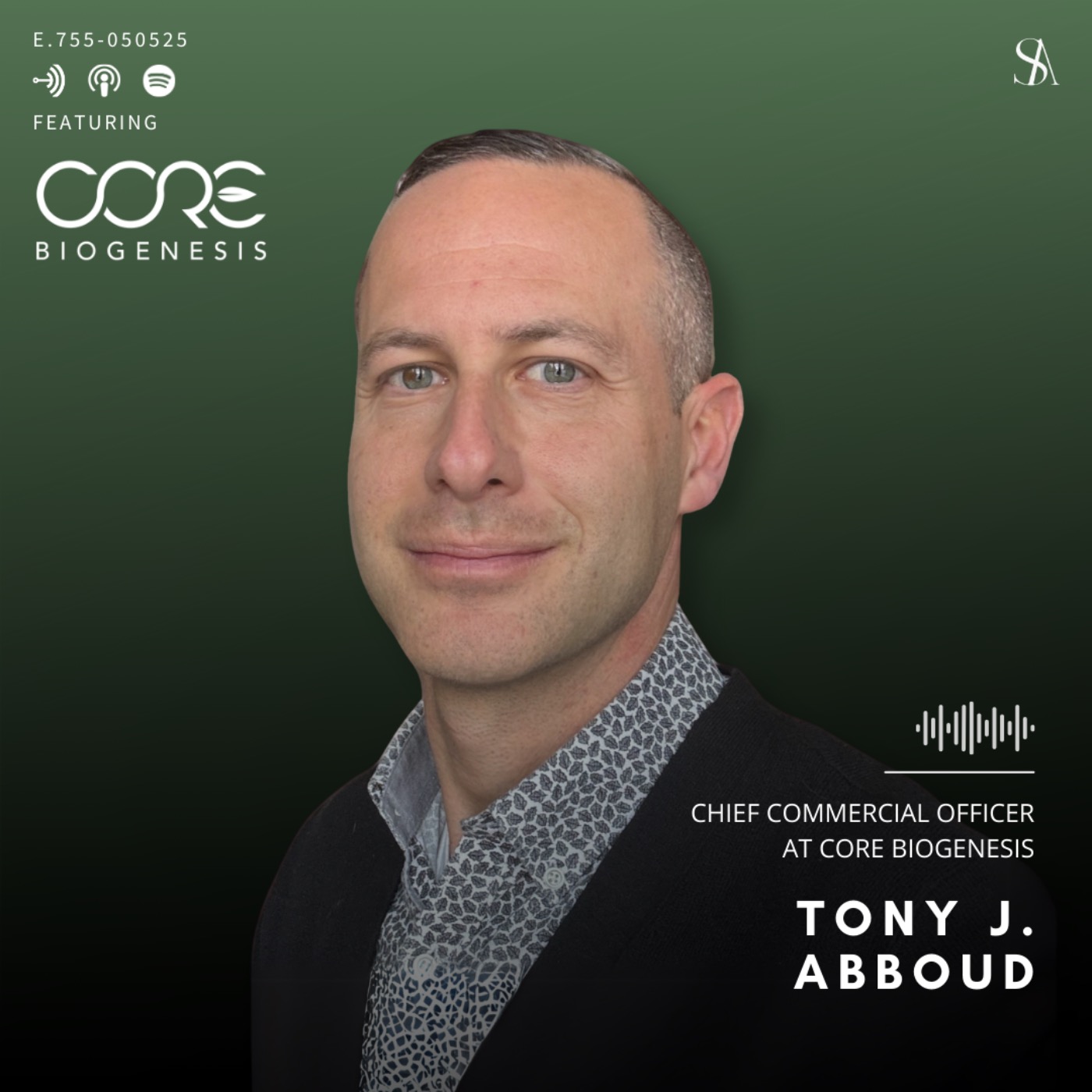
Loading summary
Transcript85 lines
- [00:00]
Dr. Ekta
Hey guys, welcome back to Skin Anarchy. This is a very special episode because we're going to be talking about more behind the scenes stuff. Today we're interviewing a brand that is really involved more on the ingredient side and the technology side of things when we're talking about new and emerging things in skincare. I know a lot of you love to learn more about what goes behind some of the very powerful brands, the cutting edge brands, and a lot of that has to do with the technologies that come out from wonderful biotechnology company. So without further ado, I would love to introduce you guys to the chief Commercial officer at Core Biogenesis, Tony Abode. Welcome, Tony. I'm so excited to host you.
- [00:41]
Tony Abode
Thank you so much and thanks for having me. Dr. Ekta, pleasure to be here.
- [00:44]
Dr. Ekta
No, it's exciting to have you on the show because of all the things we're going to talk about. I think it's very rare for consumers to get this look behind the scenes right instead of just looking at a full formed brand to understand what goes into the technology behind truly efficacious products. And I think what you guys are doing at Core Biogenesis is, is so innov, you know, it's so amazing to see and for our listeners to be able to understand. So with that said, Tony, I'd love for you to talk about your background because you come from a deep biotech background. So can you walk us down memory lane a little bit and tell us how did you get involved with innovation and skin care from the biotech perspective and all that good stuff?
- [01:21]
Tony Abode
Yeah, yeah, I'd love to. Thank you so much and pleasure to be here with your listeners. So as, as Dr. Ekta mentioned, I've. I've always been very passionate about the technologies behind the brands. The intel inside or the Splenda inside, the Diet Coke. Like, what is that ingredient that sort of powers the innovation and that delivers the claims? So my journey started in the early 2000s. I knew I loved the sciences. I was deep into research, clinical research, and I walked through a biotech company in Canada and just kind of fell in love with it. I couldn't believe that I could sort of leverage this wonderful scientific principles into the business world and making a difference to human lives. So got really passionate about the industry called biotechnology in the early 2000s, graduated with a degree called the Master's in Biomedical at the University of Calgary and just sort of dove into biotech. And I actually sort of fell into the skincare and personal care world a little bit early in my career when the Biotech company I was working for decided to form a subsidiary in skincare. So they were already in drug development and pharmaceuticals and they, they sort of wanted to explore this other industry. And I guess I happened to be the guy who was maybe the most sales oriented in the bunch. And it's like, Tony, you want to go try to work this, this subsidiary? And I had no idea what I was doing at the time. But what I loved when I started it, Dr. Ekta, was the ability to translate scientific principles and findings into consumer products in a very quick timeframe. So we're not talking about seven to 10 years and billions of dollars of investment for, for drug development. We're talking about six to 18 months and some formative in vitro and in vivo studies. And you can be in front of the L'Oreals and Estee Lauders of the world with a new ingredient innovation. So I think I was just floored by that. And then, you know, in another six to 18 months you could have a product on the she at Sephora or Ulta that includes your active ingredient. So I love the speed of market adoption, but also the science behind the personal care industry.
- [03:21]
Dr. Ekta
Yeah, that's really, really cool that you, you mentioned that. Because I think that's where the missing link is oftentimes is understanding. You know, people say I've spent four years creating a product, right? They'll say that if you're talking to a brand and then you always wonder, it's like, well, where, what was that four years? You know what I mean? Like, what went behind that four years. And so when you talk about the technologies and then really understanding what product efficacious, I mean that stuff is really for me as well as, even as a consumer, I've always been intrigued by that. You know, it's like, how long does it take? Because as you articulated very well was this idea that, you know, things can take a long time, but to be able to do it quickly with studies and, and really proof that this works and then bring it, I mean, that's huge. And I think that that's something that oftentimes it never gets talked about. You know, that's why I think there's so much interest from consumers in this realm of like innovation and technology. So that's very cool. So Core Biogenesis focuses on making like high purity proteins from plants. Right? So why was this such a crucial shift compared to like traditional ingredient manufacturing?
- [04:25]
Tony Abode
Yeah, yeah, great question. So we actually focus on, on proteins and peptides as a class of active ingredients that really, we felt Needed dramatic improvement in the way that they were manufactured. I'm sure your listeners are quite familiar with peptides. I mean, peptides are sort of a booming class of active ingredients. These are typically short chains, you know, 2, 3, 4amino acid. They lack three dimensional structure and they sort of penetrate through the skin and have a desired effect. But they're largely foreign to the body. These are not materials that the body naturally produces. Whereas proteins are the building blocks of the body. Those are the master builders that are responsible for all of our mechanisms and literally build our bodies from scratch. So we, we always felt that proteins and peptides needed new ways to be manufactured. The classic ways of getting recombinant proteins or longer chain peptides are there's really only two ways you can isolate them from human stem cells, or you can use precision fermentation, like bacteria or yeast in bioreactors. And we felt both those ways had flaws. I mean, isolating proteins from human cells is, it can be risky. It can be. It's slightly controversial. And there are safety implications of taking prot. Human cells and then, you know, putting them in formulations for other people to use. And there's certain countries that prohibit the use of human derived proteins. So the industry in general doesn't love that approach to getting proteins. So they've relied on fermentation. And fermentation involves these large capital, extensive facility builds. It involves large bioreactors and a lot of carbon output. And there's also extensive purification required to purify their protein away from the cells and removing endotoxins, removing all these other components of the cells. So we, we kind of felt like, listen, there's gotta be other ways to make proteins. There's gotta be other ways to make biomimetic proteins or proteins that are human identical. So Core Biogenesis was formed on the basis of using plants as the organism of choice instead of yeast or bacteria. And using plants, really we get all these wonderful advantages, which I'll touch on in a few minutes. But that's why the company was formed. And really Alex Alexandra Reber, the CEO of Core, had been going for a couple of years in the pharma industry, actually making proteins for the pharmaceutical industry and stem cell research. And I came across the company and I was just like, wow, these guys have got to get into skincare. I said, there's such a need for high quality biomimetic proteins. And knowing some of the challenges, I approached Alex and it was sort of like the meeting of the minds. I understood the cosmetic skincare industry. He Understood his wonderful plant platform and we just sort of hit it off and kind of started this journey. So that's sort of where it all started, was really making sort of these actives more sustainable, more scalable and really just more effective as I'll talk about in a few minutes, how we do that. So that's really cool.
- [07:29]
Dr. Ekta
No, I like that actually, because I think that plant derived is often misunderstood. I mean, at the end of the day, if you look at any medical advancements before modern allopathic medicine took over and big pharma came into play, we were getting everything from botanicals. It's been a long tradition in human history to tap into the power of plant based medicine, you know, in some way or other. So it, for me, when I look at it as scientists, it makes complete sense. Right. Because sometimes people really do assume that if you don't have something coming directly from human based models. Right. It's not going to be biocompatible. With us, it's not the case for everyone listening. I mean, when things react and they work, it's really just kind of like a lock and key mechanism. And that can be engineered or it can be extracted from other sources like plants. It doesn't have to come from humans. So it's very interesting actually that you brought that concept up. And I think for listeners it's important to understand that there is true viability behind these options. It's not going to be less efficacious than something coming from a stem cell, you know, so that's really important. Yeah, yeah.
- [08:34]
Tony Abode
And I think using biotechnology, we can actually transform the plant to make the biomimetic protein. So it makes the protein that is 100% equivalent to the protein that your body makes, right down to the amino acid. So that's why we're so excited about using plants as our vehicle to produce these proteins instead of like to your point, extracting it from human cells, which could cause a lot of downstream irritation or issues with the host. But I think it's very elegant how our CEO has created some little short videos which hopefully we can share with some of your listener. But I just love some of the words he's saying, like forget machine bioreactors and chemical synthesis. Our factory is alive and vibrant. Instead of extracting resources, we cultivate them. And the future isn't made in a factory, it's grown with nature. So it's using mother nature to really look at what's next. So we're excited about the company and the potential and see it as a platform for 100 years of proteins and peptides and skin care and beyond.
- [09:34]
Dr. Ekta
I love that. It's beautiful what he said. Actually that's really, I think at the heart of true innovation is understanding the role that nature actually plays and understanding the intricacies of processes that occur in nature. When people talk about plant derived anything, I'm just always like, yeah, because you know, what do you know how many centuries it took for that plant to get to where it is to be able to do this process and to create this? I mean it's a very, it's a very intricate set of mechanisms that have been at play here. So I think that it actually makes a lot of sense and it's really great for the sustainability side of things, I think. Because nobody really talks about sustainability in the sense of getting down to the root cause of what is sustainable versus non. Right. And that's a whole different topic. But I think that's very relevant here, especially because we're talking about biotech. And so people always say there's got to be some sort of downfall to biotechnology because it's become a buzzword now in the skincare industry. Right. And speaking of buzzwords, I think things like, you know, you were talking about peptides versus proteins and everybody has heard of them at this point. I think everyone owns a serum or a, or something that has peptides written on it. Right. But like they're not buzzwords, they're real things. And also with proteins like epidermal growth factor or fibroblast growth factor, they're not trends, they're actual biological molecules that aid your cells and doing what they need to do, differentiating them, helping them do the normal mechanisms that are involved in the vitality of the skin. Right. So this is very, very important stuff. So I want to ask you, why do you think bioidentical proteins are such a natural match for skin compared to the synthetic actives that we also hear about?
- [11:12]
Tony Abode
Yeah, yeah, great question. So I think our industry has relied on synthetic small molecule type active ingredients for a long, long time. I mean, if you think of the niacinamides, the retinols, the vitamins, those are all small molecule synthesized. They are very small, they penetrate through the body and they're foreign to the body. They don't exist naturally within our body. Peptides are an evol. You know, they're getting closer to things that our body naturally makes, but still again, not generally made by the human body. What does the body naturally make? It's proteins. And we're talking about These wonderful three dimensional structures, multi amino acids, large molecules, large biomolecules. But there's so many good examples of proteins that literally run our body. I mean, you have things like lactoferrin, which is a wonderful antimicrobial protein in milk. You have heat shock proteins that really protect the body against inflammation and attack. You have collagen and elastin, like the building blocks of the skin. You have superoxide dismutase, which helps with reactive oxygen species. These are all proteins that are just critical to the function of the body. And some of these proteins, as we get older, as we age, they start to diminish in our body. So the proteins that we are really interested in exploring are this class of protein called growth factors, which you alluded to already. This is epidermal growth factor, EGF, or fibroblast growth factor 2. And there's many, many others. And those are proteins that are literally critical for repair, regeneration, wound healing. They stimulate collagen, elastin production inside the body. As we get old, we just stop making them. And when we stop making them, this is why we age. This is a root cause of aging. So we were always fascinated by like, okay, in the industry, we're always putting these foreign molecules that may or may not stimulate different cascading mechanisms, but also can have irritation consequences because the body's just never seen these things before. Yeah, why don't we replenish the proteins that the body naturally made and starts to diminish. Let's put it back topically on the skin in a really stable way. And then you can do some fundamental wonderful things to the body. So we believe that the bioidentical protein revolution is coming. It's not here yet. It's actually very rare to see a lot of proteins being used in skin care just because it's hard to manufacture them. You know, it's again, like I alluded to before, it's like human cells or precision fermentation with bacteria, which is cost constrained and capacity constraint. So now that we have this plant system where we just literally plant our Camelina sativa plants and greenhouses with some water and some earth and some sunlight, we can make any biomimetic protein. And so I think we're hopefully a catalyst to this whole movement of replenishing the proteins that the body naturally made, but is stopping to make. So that's why we're so passionate about this area and growth factors specifically.
- [14:13]
Dr. Ekta
I love that. And I think that that's such a critical point that you've Brought up is this decline with age. I think this is something that we've only seen discussed in relevance to collagen. Right. Or elastin or something like that. We've talk about growth factors in that way where we're trying to explain. I mean, people need to understand that your body, with age, it goes into this catabolic state. You're starting to destroy more than you're building, you know, so there's like catabolism, there's anabolic and catabolic, and the anabolic processes kind of decline with age overall. So you're absolutely right in what you said. And I think for our listeners, it's really important to understand that there's a lot of stuff out here that is claiming that, okay, this is. Is what you need. But you have to really get down to the root cause of why your body is showing signs of aging. And it really does come down to what Tony was saying, where when you don't have essential signaling molecules or growth factors or stuff, that is a direct link between how your cells are responding to the environmental stressors that you're experiencing and what they're doing to combat that, you know, and that goes deep. That goes way beyond even just the topical appearance of how your skin looks. It goes into things like inflammation and how your body handles it and what cells can do to combat that. Right. It's like the defense response that they have towards it. So these are all very, very complex, I think, mechanisms tied in, but they are all a part of aging. So when people say anti aging, I'm always kind of irked by that because it's like there's so much more to unpack here. You know, it's like, it's really about the biochemistry of the body at this point. You know, when you're experiencing the aging side effects that people notice right in the mirror on the skin, it's. It's a very complex thing going on. So I love that. And I think bioidentical proteins are defin the future. I just want to say, because when I think. Yeah, well, you know, when you think about. Even Tony, like, think about precision medicine, right? It's on the rise right now. Everyone's talking about precision translational medicine. And what is that? That's exactly this. You have to find bioidentical options that can then be used to supplement where we're lacking. And so I think you guys are really on the cutting edge with what you're doing. It's so fascinating. Very cool.
- [16:21]
Tony Abode
Thank you so much.
- [16:22]
Dr. Ekta
Yeah.
- [16:23]
Tony Abode
And I Think growth, growth factors in general. When we became really into this whole field because we wonderful platform with plants producing proteins and we thought, okay, so what are the first proteins we really want to dramatically improve in the industry?
- [16:36]
Dr. Ekta
Yeah.
- [16:36]
Tony Abode
And we came around. I mean, growth factors are not new. They've been used since the 1990s by Dr. Brown, who I had the pleasure of meeting, who founded Raviv in New York. He was putting, yeah, wonderful man. And he was, he was telling me he put EGF on wounds to try to heal wounds in the 90s. So. But what I was so intrigued by was, okay, they've been around since the 90s. They're like the holy grail of aging. And, and our body naturally depletes them, so reintroducing them should have wonderful effects. However, when you look at the research from the 90s to today, the data is mixed. And I think the reason that the data is mixed is because these proteins are quite unstable. And sometimes you get the formulation right and you're stabilizing them and you get good results. Sometimes you get the formulation wrong, the protein denatures and you don't have any efficacy.
- [17:26]
Dr. Ekta
Legacy.
- [17:27]
Tony Abode
So we identified this wonderful sort of legacy class of molecules that had a lot of potential. But really when you think of it, there's less than a hundred brands in the world that use growth factors in skin care. That's not a lot for something being around for 30 years. So we're like, oh, there's got to be some reasons why. So we identified two major issues with growth factors. One, they're unstable. So again, in our industry in skincare, formulations have to go through a very rigorous stability process. They got to go through oven stability, freeze, thaw testing. We're talking about months and months of testing. So if the protein falls apart in the first month and then hits the shelf at Sephora or Ulta, and then that person doesn't even get the benefit of the growth factor. But they have no real idea. I guess that's a flawed active. Right. It's just, it's just not, not stable. And then second of all, they're large proteins, they're 20, 30 kilodalton proteins that will not penetrate very well through the stratum corneum. So they're not going to have a wonderful sort of downstream effect. Effect and act in the epidermis and dermis where they need to be to stimulate collagen elastin. So we felt, okay, look cool class, lots of potential big problems right now. So that's where we kind of got Excited about this. Like listen, we're going to use our plant biofactory process to just dramatically improve this. And this is really the heart of our technology is actually having the plant produce growth factors on the surface of a natural delivery system in plants called oleosomes. And this is what sets us apart I think from any other production system is we can use mother Nature's machinery to our advantage. These oleosomes are, are found in every oil seed. So whether it be sunflower, safflower, camelina, anything that has oil plants. And Mother Nature has derived these structures to protect the oil in the, these phospholipid spheres. And these phospholipid spheres actually include natural vitamin E from the plant. And this prevents the oil from getting rancid, from oxidizing because mother Nature needs her oil to sort of fuel the germination process. So these oleosomes are these beautiful little micron sized droplets of oil with lipids. And we found in our studies that when we fuse proteins like growth factors to the surface of oleosomes, we have dramatically better stability. We can improve stability of growth factors by 10x.
- [19:52]
Dr. Ekta
Wow.
- [19:53]
Tony Abode
So suddenly we have a protein that's again a miracle, sort of anti aging hero that now is finally stabilized. We're not having to worry about them falling apart in the serum or cream on the way to the store. So this was what really got us excited about sort of fixing some of the problems of growth factors in the industry. Industry.
- [20:11]
Dr. Ekta
So I wanna, I want you to like explain that for our listeners in terms of what that means practically for their formulations and the products they buy. Because this is huge. I mean I, I'm like floored by that. That's very interesting because stability is the big, big question mark. A lot of times with when I'm buying products, I'm like, I know this contains this, but have you done the stability? Is it gonna last? Is it really something my skin is going to utilize? Right. So I would love for you to break it down for our listeners so they can understand why this matters so much when it comes to formulas.
- [20:42]
Tony Abode
Yeah, yeah. There are a lot of actives in skin care and personal care that are prone to stability challenges. I mean probably the one that most people are aware of is retinol. I mean retinol is highly unstable and it does require a lot of delivery systems and different modifications to make it more stable. Growth factor proteins are just, you have to keep them in their biomimetic state, meaning you have to keep the human identical sequence. Because the second you start to modify amino acids. You no longer have the biomimetic protein, so you're kind of stuck with the protein as is. But if you have ways to deliver it or to stabilize it with delivery systems, then that's really important. Like you said before, we're like the technology inside the brand. So our customers are not the consumer. Our customers are the formulation scientists and the product developers around the world. And we're really quite proud of a head to head study we've conducted on oleosome EGF versus we call it naked egf, which is the EGF that everybody else sort of offers from bacteria or yeast cells or human cells. And we did a 12 week oven stability and every week we took a sample and looked at the relative protein concentration remaining and we found that after 12 weeks in the oven, the oleosome EGF we retained 93% of the protein, whereas the naked EGF we're only able to recover 8%. So that's sort of why I think growth factors have been stalled, is because the biggest companies in the world are, they put it through their stability and then they notice that the naked EGFs just fall apart. So they just don't move forward. I think finally we're able to sort of withstand the rigors of the stability process and most importantly, get the product in the final serum to the customer. Because, Dr. Ekta, I read an interesting stat the other day and that is that 90% of female consumers are frustrated with the performance of their skincare products. 90%?
- [22:34]
Dr. Ekta
Yeah. That's insane. That's crazy.
- [22:36]
Tony Abode
Yeah, that's a bad. That means our industry is not doing a good job right Now. Now if 90 of our consumers are unhappy, because the reality is a lot of the legacy actives take 30 to 60 days to work. And why can't we make Actives that work in 14 or 30 days?
- [22:52]
Dr. Ekta
Exactly.
- [22:53]
Tony Abode
Thank you.
- [22:54]
Dr. Ekta
Yeah, that's.
- [22:55]
Tony Abode
And give, give the consumer hope. Give the consumer hope that when she or he is looking in the mirror, they start to see that dark spot fading or they start to see that, that crow's feet starting to retreat a little bit. I mean, that's the hope that they need.
- [23:09]
Dr. Ekta
Right? Exactly. And that's why people spend thousands of dollars. Like it's not a. You know, and that's what really gets me is brands will say this, right? And they'll, they'll disclose it. They're like, oh well, you have to give it 90 days for it to work. I'm like, who the hell has 90 days?
- [23:24]
Tony Abode
Like, yeah, no way. No way, I'm gonna give you two weeks. Like, I had a brief stint on the B2C side. I worked with a direct to consumer skincare brand. Brand. I quickly found Dr. Ecker that that was not my home. I'm not a D2C guy. I got to get back in the technology. But the one thing, I was at these beauty conferences with the retailers and things and they were talking about what's the repurchase rate for consumers? And they said, oh, best in class is like 30%. If you can get your consumer to come back 30% of the time to buy a second time, you're winning. And I'm like, what?
- [23:58]
Dr. Ekta
That's not winning.
- [23:59]
Tony Abode
So hard to buy. Get that customer to buy that one time they try my product. Product. Nothing's working for them. And they're, they're promiscuous. They're going and finding another skincare brand that's going to give them a big promise. They open up their TikTok and they see another ad with an influencer and they, they migrate. It's because the product doesn't work quick enough. That's really why it's a 30. Rebuy rate is the industry standard. If you've got something that works in seven or 14 days, trust me, that consumer is buying for life. They're not migrating to the next shiny object that they see. So.
- [24:30]
Dr. Ekta
No, that's really the truth though. I mean, I can tell you, you know, even from my own own experience, the things I have in my arsenal, right? It's like my true skincare arsenal. These are products I will buy for the rest of my life. You know what I mean? They're not, it's not a 30 repurchase thing, it's a lifetime repurchase thing for me, you know, and I think a lot of, especially women are like that because it's so hard when you finally find something. And so when you find it, you're like, I will never let this go. That's like a real thing that happens. So I, I just, just don't believe that. I don't believe that we should even be. There should be no happiness. When you, when you read that there's only a 30% repurchase rate, that's bad, you know, that is bad.
- [25:11]
Tony Abode
That is bad. Yeah. So it all comes to us. It all comes down to the active ingredients. It all comes down to the next generation of bioidentical proteins and growth factors that are stable. And I didn't mention this either, but one other thing we noticed with the Oleosome growth factor fusion is that they penetrate through the stratum cord. So not only do you have a stable protein, you have a protein that it can actually reach the epidermis and dermis, which is where you want it to go, which that's where the growth factor stimulates collagen and elastin production. It builds up the extracellular matrix, it does all the wonderful things that you want it to do. Because if it sits on the surface, it's not doing what it needs to do. That's not where the receptors are. So we were floored when we found that this oleosome, which is micron in size, it basically sort of collapses on the top layers of the skin by the phospholipids, in poliosomes, interact with the lipids on your skin and sort of shuttle the protein through. So it's very cool. We've done a lot of studies with epiderm ft and sort of skin explant models to sort of visualize this penetration. It is important to note though that the protein stops in the dermis. It does not go any deeper. Which you don't want.
- [26:19]
Dr. Ekta
Yeah, you don't want that. Yeah, that's interesting.
- [26:21]
Tony Abode
It's getting to the dermis, it's getting to the epidermis, where it needs to be. And really that's why we think it's just a platform. We have a platform to produce any biomolecule, any protein, not just growth factors factors. But we happened to start with what we thought needed the most innovation and the most improvement with growth factors.
- [26:37]
Dr. Ekta
So I would love to dive deeper into your clinical studies because you did like actually really good clinical studies on this. And so I want to know what were some of the most surprising or really exciting results that you saw from the 60 person placebo controlled trial that you did?
- [26:52]
Tony Abode
Yeah. Thank you. Thank you for saying that. So we kind of knew early on, again, being rooted in a biotech environment, we knew we had to do sound, effective science. Because I think you know, one thing for your listeners too, because I know a lot of them are brand owners and skincare founders.
- [27:07]
Dr. Ekta
Yeah.
- [27:08]
Tony Abode
Really scrutinize on a deep level the ingredient suppliers you work with. Because in my experience I've found that, you know, and I go to the, in cosmetics shows and all the large sort of ingredient shows, not all science is created the same, not all suppliers will deliver the same science science. So typical in the ingredient world is a lot of in vitro work. Okay. A lot of sort of cell based assays and then when they get into human trials, they're not placebo controlled, they're not large panels. It's typically like 10 volunteers applying it to their skin and then seeing what happens. That is not science. And then I also, what my biggest pet peeve as a, as a biotech guy too is they cherry pick the results. So they'll say like, this active is up to 40% improvement in X. And then you read the asterisks, it's like panels number seven had a 40 improvement. It's like, that's not science. You can't cherry pick the one person who worked in your trial.
- [28:03]
Dr. Ekta
Yeah, exactly.
- [28:05]
Tony Abode
That's not how it works. Or they kind of find this one amazing before and after out of a hundred and then that's all they're showing.
- [28:12]
Dr. Ekta
And that's it. Like that's on the website.
- [28:13]
Tony Abode
It's like, yeah, hold on, hold on. So, so we always felt like, listen, if we're going to be taken seriously, if we want to work with the biggest scientifically founded sort of dermal cosmetic brands in the world, we got to do good science. And again, we went back to our roots and we said, listen, we're doing a placebo controlled double blinded study with 60 people. And I mean this is the biggest stress test because we have a placebo group, 20 people using the cream morning and night. We then have a test group using 1% of the oleosome EGF active, which we call POVE Beta. Same exact base as the placebo, just adding 1% of the active. And then the next group is 20 people using 1% Pophoria, which is oleosome FGF2, another growth factor. So really the only difference between the three groups is the inclusion of the active. And we're doing instrumentation, we're doing a lot of quantitative testing. Not like, not this subjective stuff is like, my skin feels better, right?
- [29:13]
Dr. Ekta
Oh my God.
- [29:13]
Tony Abode
Like again, that's again, when we, when we look at the D2C landscape, a lot of them is, is like 99% of people feel their skin looks right, like yawn. It's like that's not science.
- [29:24]
Dr. Ekta
Or like a hundred percent of people felt that they enjoyed putting on this product. What does that mean, man?
- [29:31]
Tony Abode
Yeah, it's like, you know why? Because those are easy studies to run. It's like send them a survey, they check some boxes and you're done running instrumentation. And statistical analysis is not easy and it's expensive. So that's why people don't do it. But anyway, so going back to this, we designed a study over 28 days with these three groups. And we knew growth factors had worked. We knew, we kind of saw that they were, had mixed results in the community over the last 30 years. So we were like, you know what? We have a more stable, better delivering growth factor. We're going to go for a home run here. We're going to look at every sign of aging. So what are the four primary signs of aging that every human being sort of deals with? It's fine lines and wrinkles, sagging skin. So loss of collagen. So their skin gets unfirm, the skin tone changes. So that's age spots, dark spots, hyperpigmentation, and your barrier starts to weaken. So you start to get irritation and redness. So those are. We identified as like four sort of pillars of aging. So we said, you know what, we're going to test all four of those pillars of aging and let's see if Poforia and Povita are active, impact those four signs. And we were pretty excited to see that we did impact all those signs in 14 days. So we had statistical, significant benefit of our test creams over the placebo in 14 days. We reduced fine lines and wrinkles, statistically significant. We reduced melanin in areas of hyperpigmentation in 14 days. So literally, spots are fading in 14 days, which, that's a tricky thing. Hyperpigmentation is a tricky condition to deal with.
- [31:03]
Dr. Ekta
Oh, yeah, yeah.
- [31:04]
Tony Abode
If you're able to fade spots in 14 days, I think you've got something great. This was, to me, the most impressive thing we saw was a 21% increase in firming of the skin in 14 days. 20% firming in 14 days. Face. Yeah, again, not surgery. We're not talking about a facelift. We're talking about a cream that's applied topically. And then lastly, we reduce trans epidermal water loss by 15 in 14 days. So that's really a function of your barrier, improving the water retention on your barrier.
- [31:36]
Dr. Ekta
Now imagine if you're using that and you're talking about 14 days. Now imagine if you apply this for 90 days. This is where the 90 days matters. Because it's like you can tell people use our product for 90 days, but if, if it takes 90 days to see the 14 day result. You know what I mean? That's the problem. This is, that's huge. That's amazing. Yeah.
- [31:56]
Tony Abode
I have a slide in my presentation that always gets a chuckle because I, I go through the clinicals, I go through all of our statistical significant data. We have multiple before and Afters, by the way. So I always challenge the industry, and I say, you know, it's not just the one person. Don't worry, there's multiple people who had this effect. But then the last slide I have is literally a picture of my before and after. After.
- [32:17]
Dr. Ekta
Oh, wow.
- [32:18]
Tony Abode
You know, I'm. I'm mid-40s. I. I was like, you know what? If I'm going to talk about this all day long, if I'm going to get on a podcast here with you and your listeners, I better believe in this stuff, right? So I did a little investigation myself. It's an anecdotal test. I applied the cream morning and night for four weeks. I took before and afters with my cell phone right in my living room at the same time of day. And it was a dramatic improvement. I mean, my jawline came back. I didn't have a jawline for a while. I. I just had sort of a chubby face. But all of a sudden, after four weeks, I had a defined jawline. And my skin has never seen growth factors, but it had never seen ome growth factors, right? So I'm like, the proof is in the pudding now. Like, I've. I've done it, I've shown it, and it always gets a laugh. But then people are always like, yeah, that's a dramatic improvement, and I've never stopped using it. Doctor.
- [33:07]
Dr. Ekta
Like.
- [33:08]
Tony Abode
Like, to your point, when you find something that works, you hold on to it.
- [33:11]
Dr. Ekta
Yeah.
- [33:12]
Tony Abode
Yeah.
- [33:13]
Dr. Ekta
No, this is so, so cool, Tony. I'm so excited. Honestly. I have watched consumers, I mean, long before I started this podcast. I've always been the consumer, right? It's like watching your money just go down a drain, and people are looking for options. I mean, not everybody wants surgery. Not everybody wants to go and get the aesthetic procedures. Some people really want their skin care to work. And so this has been such a struggle for consumers. And I think sometimes we convince ourselves that our product is working, but it's just not, you know? And so to. When you do see those kind of results that you're describing, that is a home run. And so if there are any brands out there, you know, they're listening. This is what you should be investing in, is your technologies, okay? Instead of all of the marketing hype that people pour millions of dollars into, instead of doing that, invest in your technology, please, because that's going to be your marketing for the rest of forever. That's going to make your brand what you want it to be. I can't say that enough to brands because it's like, we get it. You know, everybody wants the pretty packaging and all these frills and feathers, but if your product simp it doesn't work, there's gonna be nothing that you can stand on, you know, in terms of like a long term brand. Yeah. And it's a real thing. And so I think that, you know, at the end of the day, solution oriented skincare is what we need. And you know, another thing, Tony, that comes to mind, and I've been really advocating for this on the podcast too, is the idea that I really believe, like wholeheartedly as a trained allopathic physician, that our pharmaceutical options in dermatology are an outdoor outdated. They're simply outdated. And one of them is retinol. Okay, Tretinoin. Retinol. I want. I don't like this. I. I don't like it. You know what I mean? And it's like, because everybody I know, including myself, when you start using it, your skin freaks out. It absolutely damages your skin barrier. It destroys everything. And then, you know, doctors are like, oh yeah, we'll wait for like 60 days. You'll stabilize. Well, yeah, I mean, if I applied something extremely caustic to my skin, I'd stabilize after six. That's human physiology. You know what I mean? Like, so I want to talk about that with you because retinol is a big one. So like, in comparison to retinol, how did the puvita and the porphyria compare?
- [35:29]
Tony Abode
Thank you for asking that. Yeah, so we've been sort of interested in this as well. It's like, okay, we're delivering 14 day anti aging claims and we've got a placebo controlled. So naturally we want to look at what is the, the industry standard for aging. And, and retinol happens to be that. But to your point, Dr. Ektad and I personally cannot use retinol. I mean, my skin freaks and I don't want to use it. Like, to your point, I don't want to wait 60 days with freak out skin. I want to get results with something that works and then doesn't irritate my skin barrier. So when we completed the first trial, we kind of looked at the data and we spoke to some experts and they said, you know, you have a really good alternative to retinol here because you're impacting hyperpigmentation, you're impacting fine lines and wrinkles, and you're actually replenishing the skin barrier. You're not irritating the skin barrier. You're literally boosting the skin barrier by Reducing trans epidermal water loss. So we became very passionate about sort of being that next generation retinol replacement. Because to your point as well, retinol eventually works after 60, 90 days, but it does take a long time to get there and it does cause a lot of irritation. And you know, Europe is changing its regulations with retinol. They're limiting the concentration. So I do think that there's a lot of room for improvement. And you know, there's Bakuchiol and other actives that are being touted as retinol replacements but those often take even longer to work than.
- [36:49]
Dr. Ekta
Oh my God. Yeah, but who shell doesn't work now.
- [36:52]
Tony Abode
We'Re waiting 120 days for something to work like oh my goodness gracious. So we've always felt like, okay, listen, we're gonna go after retinol, but we're gonna do it with a study as we speak. Right now we are undergoing a head to head study. So again, a placebo controlled double blinded study. 0.3% ret retinol in his serum versus right in a battle, in a duel to the death. 1% poforia povita in a serum. And we are taking statistical and instrumentative endpoints at 14 days, 30 days and 60 days. And so I just got the 14 day results and I'm gonna sneak preview it for your listeners. Nobody's heard this before but we, I don't know how to say it gently, but we are beating retinol on almost every single, single criteria from wrinkles to firming to tewl, transeptor water loss to ITA value, which is hyperpigmentation. We are in a statistically significant way at 14 days doing much, much better than retinol. So I'm excited we saw the result and Alex and I did a little happy dance because we were like, this is, we were kind of expecting, we were like, if we get equivalents that would be good to start because retinol being so powerful. Powerful. But the fact that we're beating retinol, it's like, wow, this is amazing.
- [38:08]
Dr. Ekta
It's huge. That's huge. Congratulations. Wow, that's so cool.
- [38:12]
Tony Abode
Thank you. For your listeners only. So we got to keep that. Yeah, hundreds and thousands of people. But so we're going to be doing a VIP webinar to release this data to the industry. So if your listeners are interested, please have them reach out to me. It'll be middle of June by the time we have all the results of the 60 day trial, but we're going to release it Sort of live on this webinar to everybody who's interested. So love to. And hopefully you can join as well, Dr. Ekta, because we're excited to get you on that, if you're available.
- [38:41]
Dr. Ekta
Absolutely. I'll be there for sure. That's exciting. That's so exciting. And I love that you said it's statistically significant. That's a big thing because as we discussed earlier, there's a lot of people doing studies, but, hey, stats can go either way, you know? But that's really exciting stuff. I mean, I'm so excited to see that you are doing this and that you guys took on this challenge because, honestly, it will be a wonderful day when we don't have everybody going into a dermatology office and walking out with the same prescription, regardless of what they're dealing with. I think that model needs to go. It's outdated. It's damaging people more than it's helping them. You know what I mean? I really do believe that those are my thoughts, and it's genuinely my opinion. I think, for me, you mentioned you can't do retinol. I can't do benzoyl. Probably peroxide. As soon as benzoyl peroxide touches my skin, I turn into a lobster. So it's like, these are real things that are happening to patients every day. And so we have to find other options. And this is so freaking exciting. I would love to see your technology and the skin care brands coming up or the ones that already exist. If you guys. You know, they're brand founders. I know you guys are listening out there. If you're formulating right now and you're looking for something that's really going to. To knock your consumers off their feet, you need to invest in the stuff that works, like these pharmaceutical options that are being given to patients every day. And this is huge, Tony. This is absolutely huge. Yeah.
- [40:06]
Tony Abode
Yeah. Thank you. Yeah. Thank you. And again, if they want to. I know how hard it is to acquire a customer. Right. A new customer for these brands. And, you know, no. Not settling for a 30% repurchase rate. Let's get to 90% repurchasing rate, because it works so well.
- [40:19]
Dr. Ekta
Yeah. Hell, yeah.
- [40:20]
Tony Abode
Yeah. No. And I think these types of things. And rest. Retinol. Again. If I see another retinol serum, I'm gonna. I'm gonna throw up because.
- [40:27]
Dr. Ekta
Oh, my God. And you mentioned Bakuchiol or earlier, and I was, like, rolling my eyes in the back of my head, because Bakuchiol is the biggest scam in the Skincare industry, like, it's, it doesn't work, you know? No, no, I can't even. I've used Bakuchiol for like six months regularly and I haven't seen anything happen. You know what I mean? So it's, it's a scam. And I mean, at the end of the day here it comes down to one thing and that's as efficacy. I mean, I think we all know this at this point. If you can't show the results, if you can't speak to your consumers with real visuals and say, listen, this is what's going to happen to your skin, you're wasting your time. The skincare industry is saturated. We've got more products than we know what to do with. We've got brands popping up every day from someone's kitchen. I mean, it's time to make a shift. And also, at the end of the day, I always say this, Tony and I, I don't know if you agree, but I think that we are in such a, a golden age for this industry right now because we're finally blurring the line between dermatology, what used to be behind gates and locks, and now the skincare industry is kind of infiltrating that space and saying, hey, listen, we can create options too. OTC stuff. And not everybody needs to spend ridiculous amounts of money going to a derm every single month or whatever it is that you do. And you should always go to a derm. But my point is there's options now. And so since we're in this era and we're doing, doing this, why not do it even better? That's the goal. And I think if I were a brand founder, like I said, my first priority would be where's the technology? How can I get this to your dermal layer? How can I actually improve the amount of proteins that you have that are supporting the whole system and the whole structure of what we call our skin? It's a huge, huge conversation. So I'm very excited. I think this is huge.
- [42:11]
Tony Abode
Yeah, wonderful. Thank you. Yeah. So one other thing, one other point I want to make. So we challenged the status quo anti aging ingredient, which is retinol. But we also wanted to challenge the up and coming sort of shiny object. And I just came back from in cosmetics global in Amsterdam, and everywhere I looked was this word that is called exosomes.
- [42:31]
Dr. Ekta
Oh my gosh.
- [42:32]
Tony Abode
Yeah, exosome. Exosome. Exosome was like the buzzword that everybody was talking about. And as we've sort of researched exosomes We're a little puzzled by the scientific backing of this word. I mean, it's, it's a sexy word, it kind of sounds cool. But when you really get down to what it is and what it could deliver, there's still a lot of work to be done on the exosome category. So we've always felt like our technology is a safer, more scalable, more scientifically founded alternative to exosomes. They're nano in size and I was always taught in my training and everything that you want to avoid nanotechnology and skin care because there's the potential for it to go too deep and get systemically into the body.
- [43:19]
Dr. Ekta
Yeah.
- [43:19]
Tony Abode
So. So to me, that's a very big safety challenge. Whereas the oleosome is a micron sized particle and will only deliver protein to the top layers of the skin, which is where you want it to stop. Then to me, the exosome thing, it's such a generic category. Like you have exosomes in your body, in your brain, in your liver and all your organs. Every exosome is different. It's got different payload, it's got different signaling, molecul. It's a cluster of all bunch of different things.
- [43:48]
Dr. Ekta
Right.
- [43:49]
Tony Abode
So to me, it, it just doesn't seem like all that it's cracked out to be. So we really talk about how we're an alternative to exosomes. We're also delivering biomimetic growth factors, which often the exosome people say is one of the benefits of exosomes is, oh, you get growth factors but you also get this other soup of stuff that we can't talk about or nor do we know what it is.
- [44:10]
Dr. Ekta
I agree with you. I think exosomes. Exosomes are an incredibly. I think if you were to use them correctly, it could be a very powerful technology. If we were there. We're not there though. I mean, we're just not. I think I've seen maybe one brand do it in a way, and that's because that brand went to Japan and engineered. You have to have a lot of money. And even for consumers, this is important to understand. People are using exosomes as a buzzword. It's important for you to understand that. Exactly what Tony said, because it's on a nano scale scale. The amount of technology that goes into stabilizing and really being precise with what's being targeted by exosomes is very difficult. You have to really modify the surface markers, you have to modify where they're ending up. And that requires a lot more research than what we have right now. I mean, the literature is just not there in the scientific community. So I agree with you. I think honestly, oliozones are going to be, in my honest opinion, the next big thing. It just makes sense because at the end of the day when it comes to delivery, like you said, you have to know exactly what, where the ingredient is going to end up. And like you said, you guys have noticed it doesn't go further than the dermis. That's what we want. You know, you're going to where it needs to go. And so that's the very fundamental thing. I think when you look at biotechnology, the different options that are available, it's very important to talk about, you know. Yeah, it's one thing to get past the skin barrier, right. Everyone's like, well, you can't get past. Yeah, it's one thing to get past it, but it's another thing to then talk about what's going to happen if I, I go too far. I'm going to have systemic inflammation and I'm going to cause a cascade of processes that is going to result in the opposite of what I'm looking for. So that's very important. And I think that what you're doing and the results you have and the clinical data and I mean all of this stuff is, is really going to fuel the future. I, I can see it. It's just a matter of time.
- [45:58]
Tony Abode
Yeah, thank you so much, we really appreciate that. Yeah, absolutely, absolutely.
- [46:02]
Dr. Ekta
But I want to. In closing, Tony, I want you to offer some advice to beauty brands or any consumers who want to really future proof their skin care. I mean, what would that be if you had any advice for that?
- [46:13]
Tony Abode
Yeah. So I think it's sort of touching on a lot of the things we spoke about for the last hour here, which is really heavily for the brand owner who is really the person that I get the pleasure of talking to every day. It's really scrutinizing the technology or the ingredients inside. Not from a marketing or storytelling perspective, but really from a data oriented scientific perspective. Obviously you can build probably a story around anything that would appeal to your consumer, consumer, but really making sure that it fundamentally works, that it's safe and that it delivers results in a precise and an efficient manner and doesn't sort of take too long or cause any undue effect on the skin barrier at the same time. So that would be my advice for the brand owner. Whatever technology you look at and don't. So people sometimes are creatures of habit, right. They go to the same suppliers that they've been using for the last hundred years. But give us little companies a chance to give the next generation of biotech companies a chance to show you our technology. And we often don't have the same distribution network as the other big companies do. We don't have the same booth size at the supplier shows. But we do have amazing technology. I mean, I think that when people do give me the time and I'm typically the one who gives the presentation, me or my small team, we only work with brands direct. We have the passion and the enthusiasm and the science to back up what we're doing. So I would tell the brand owner to give us sort of emerging companies a chance. Chance because we can really deliver something that really changes the game for you in your formulations and for the consumers, as there's probably a bunch of consumers on here as well. Don't settle for results that take too long, right? 90% of you are frustrated with your skin care. Don't make that a norm for the future of your skincare purchasing. Look to these brands that conduct clinically proven placebo controlled studies. Look for the science. Don't look for the subjective sort of qualitative research. Look for the quantitative research research and hold the brands accountable when they don't work. Right? Try the product, take pictures, take notes, and if they don't work, return that 200 serum. That's sort of my advice for both those segments.
- [48:17]
Dr. Ekta
I love that. I really, really resonate with what you said and I think for any brands that are listening, I really urge you guys, elevate your products. The whole idea here is that when I look at skin care, and I'm talking both as a consumer and also from the science side, when I look at skincare, I see so much potential. There is so much that you can do for people who don't have the means to go and get like celebrities. They go get an aesthetic procedure every day. They don't have that. So when you look at skincare, consumers are coming from it with this idea of this is going to help me. If it's someone dealing with acne, this is going to help clear their acne or you know, they're looking for hope when they buy your products. It's genuinely a beautiful space because of that reason. It's set apart because of that, because it offers people options outside of what they've already tried and what they've already seen fail for them. So give them something that works. And, and when it comes down to it, I said this earlier, And I really mean it. If you don't invest in the right technology, you're never going to be able to offer that to your consumers and you're never going to go beyond that 30% repurchase rate. It's never going to change. You know, so at the end of the day, I think this really matters when people are budgeting for things. Right? It's like you got to figure out where is it that I'm going to put my dollars. And it needs to be on the tech side, especially now when, like you said, Tony, I mean, the technology is phenomenal. You're literally creating solutions here, so why not take advantage of that? So with that said, how can someone get a hold of you and your team, Tony, if they want to reach out from the brand side to work with you guys?
- [49:47]
Tony Abode
Yeah. Thank you. So my founder and I are very active on LinkedIn, so we'd love to have you reach out. So Alexandra Reber is the founder and CEO and then Tony Abood is. You could just search us on LinkedIn, LinkedIn to find us or corebiogenesis.com is our company website. Or if you go, poforia.com is more of our ingredient website. But we'd love to get samples out to you or to your contract manufacturers and and work to develop what's next in anti aging with you.
- [50:16]
Dr. Ekta
Thank you so much, Tony. And I will link everything in the show notes as well. For anyone listening, you can scroll down right now into the show notes and you can find the website right there. And so that, that's a great place for you to start to reach out. And if you guys have any questions or any problems finding Tony or Alex on LinkedIn, just email us directly. We will get you the information that you need. But I really, really urge all the brands out there, you guys gotta check out this technology. You know, this is really revolutionary. So really hats off to you and Alex. Tony, this is gonna be huge. Yeah.
- [50:46]
Tony Abode
Yeah. Thank you and thanks for your support, Doctor. Nice to speak to all the listeners and hope to hear from them soon.
- [50:50]
Dr. Ekta
Hey, guys. So I hope you love that episode. Please make sure to hit subscribe if you're tuning in to us on any podcast platform. We are available on so many different platforms. So wherever it is that you're tuning in, just go hit subscribe. You'll be immediately notified when we publish new episodes. This way you're able to tune in to amazing insights from experts, brand founders, industry leaders, authors, all the wonderful people that we host. And that's very important for me because I love to hear from you guys and really understand what you love and what you want to hear more of. Also, make sure to give us a follow on all of our social media outlets. We're available on Instagram, TikTok X, you name it, we're there. We also have a blog on Medium, so if you're a reader and you love Medium blogs, check us out on Medium. We publish some really great articles on there that do deeper dives than just what's available on the podcast, and it's really a great place for all of you science geeks out there that want to learn a little bit more. We go above and beyond with our resources, search and making sure we're bringing you information that you usually probably won't hear about in other outlets. So check us out, leave us a comment, leave us a review, and we'll be back next time with another episode. Thank you.