Loading summary
Transcript33 lines
- [00:02]
A
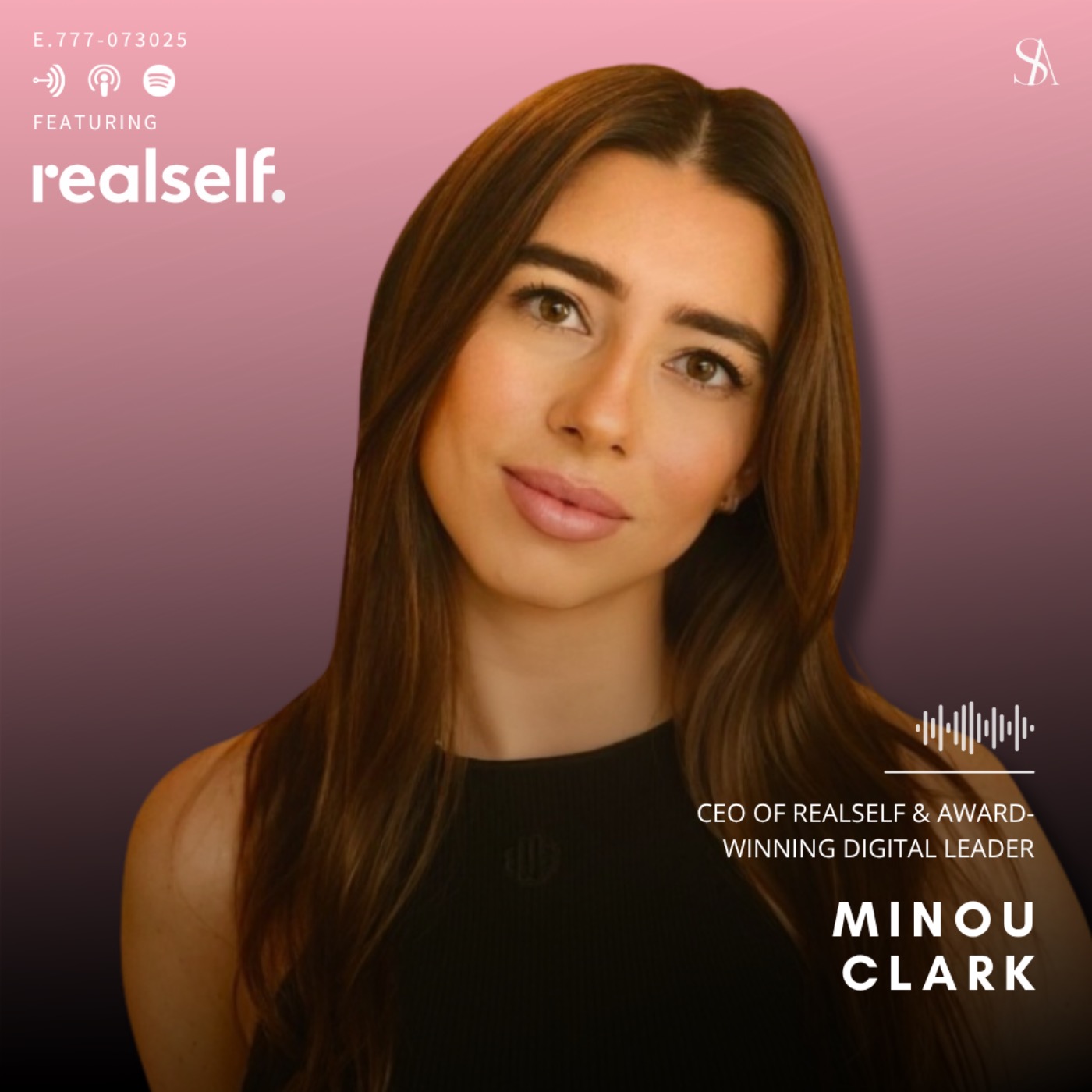
Hey, guys. Welcome back to another episode of Spin Anarchy. I'm so thrilled about our guest today. She is truly a powerhouse and she has been, you know, in such amazing roles over the years. Right now she is serving as the CEO of Real Self. She's an award winning digital leader, Adweek's top 50 business leaders, and she was also the senior vice president at Paris Hilton's 1111 media. So without further ado, please welcome Manu Clark to Skin Anarchy. Welcome, Manu. I'm so excited to host you, to ch with you.
- [00:32]
B
Thank you. I'm. I'm thrilled to be here. It's going to be a fun conversation.
- [00:36]
A
Yeah, no, it's going to be awesome. I can't wait to learn more about you. You have such an impressive career already, you know, and I'd love to learn, like, where did you get started? Like, what led you into the world of beauty and media and all those wonderful things?
- [00:50]
B
So my career first really started as a social media assistant for the Maury Show Player with Maury Povich and like, family drama. But that is kind of where I first found a little bit of an opportunity to d my toes into just digital and social and media. And that pretty much immediately made me obsessed with what makes people care about content, what makes the Internet culture kind of tick. And I leveraged that role to eventually go work at buzzfeed. And it kind of went from there. Then I went into audience development roles and growth strategy roles and became just more and more enamored with Internet culture, how data can inform content and strategy and marketing. And really, you know, how do you mobilize an audience at scale to do something you care about, whether it's a brand partnership or a purchase or just a specific behavior that builds fandom. So a lot of my career through line is audience development and growth strategy. I'd say topically, it's always touched some aspect of pop culture. I've either been in an entertainment media company or in like a news company. Most recently, prior to Real Self, I was working for Paris Hilton at her Media Company, 1111 Media. So there's always been like a bit of a pop culture connective tissue in my career. And I think now Real Self, you know, we're the leading destination for all things beauty and cosmetic treatments and esthetics. And I think the conversation around getting work done or taking care of yourself has become so much more open. It's pretty much an extension of pop culture at this point. Even, you know, just the other week, Kylie Jenner shared all the details around her breast implants. And so it's become a bigger and bigger piece of the conversation. So the pop culture pattern kind of is continuing on in my career.
- [02:39]
A
I love that. And I love that you brought up how pop culture is merging kind of, you know, in a way with this world of aesthetics and like what people are actually going and, you know, doing for themselves. Like, people label a lot of things as self care, but I think when it comes to like how many consumers are gravitating towards things like fillers, lasers, you know, all of these wonderful procedures, like, it really makes you wonder like, what's the role of media in all of this? Right? In the, in the education for consumers. So I would love for you to talk about this, you know, with your work, you know, and now being at Real Self. What are your views on what's out there currently in terms of education and what we could be doing better as media outlets to bring it, bring more attention to the facts and the science.
- [03:24]
B
Yeah, I'd say it's, there's a lot of pros and cons to the conversation becoming more open. Right. Everybody is largely taking to social media to share their firsthand accounts and lived experiences. But with that also comes a lot of miseducation and confusion and sometimes like lack of science. And so I view the open conversation as ultimately a huge positive. But brands like Real Self and our doctor Community are the ones who can really provide the true science and expertise so that we're empowering our audience to make really safe, educated, data driven decisions, blindly following like their favorite influencers anecdote that may not be the safest or maybe missing some critical information around recovery or around whether or not you're a candidate for that procedure to begin with. So I do think when the culture continues to open up about aesthetics and cosmetic procedures, doctors and brands like Realself that have that true expertise and medical backing, they almost have like a mission to really myth bust and you know, science first and fact first. Because ultimately we want to empower our audience to make a confident decision without any safety issues or any fear or any question marks. So it's kind of hit or miss, right? We, we do a lot of busting with our content. We'll tap our doctor community to weigh on, on any trend or any pop culture moment. And I think that's like where we're able to really bring value as a, as a company.
- [04:53]
A
Absolutely. No, I love that you guys have this approach towards like, like the myth busting, but then also like facts first. You know, I know that Real Self has historically been a destination for before and afters, really honest, you know, reviews about procedures and all of the wonderful things that we want to learn about. You know, especially if it can be a scary world, right? Like, if you've never gotten something done and then you don't have the knowledge or you don't have the understanding, like, that can be difficult. So to have that as a resource, to have Real Self as this resour of, like, the resource of, like, it's a hub, you know, of information that's very valuable, I think, to everybody, you know, even if you are like a doctor or scientist, it's still valuable.
- [05:31]
B
Yeah, no, it's incredible. And I think what's so special about Real Self and what I view really as the heartbeat of Real Self is how open and transparent and authentic our audience is willing to be. I mean, to your point, it's very personal to make a decision that alters your appearance, whether it's temporary or permanent. And we really do have the luxury of this beautiful, scalable audience that cares deeply about sharing that honesty to empower each other and educate each other. And that is what I think really sets us apart. Like, we play a big role in keeping it real and, like, being super upfront about what our audience thinks is worth it or not worth it. And yeah, it's really exciting and it's honestly incredibly insightful to work here. Like, the data that we have available to us is fascinating. Like, we learn so much about the beauty landscape through Real Self's audience and what they gravitate towards, what they don't gravitate towards. We can almost like predict trends in the industry based off of those behaviors. So it's a really unique and interesting place to kind of get a peek under the hood of, okay, what is making one of the biggest audiences and aesthetics really care?
- [06:41]
A
Right, Exactly. No, I think that's the real. That's the real intriguing part for me, you know, because I think that right now, the way that the scene is with, especially with social media and the way that people are receiving the con, receiving the information and consuming content, it becomes very interesting to see how you can add to that conversation. Right? Like, that's a very big question mark, I'm not gonna lie. For me, you know, I think that everyone's always trying to figure out, like, what's the best social media strategy? You know, like, you have all those people on. On Instagram and stuff talking about this, but I think it really comes down to, like, how can you really connect with people in A meaningful way. And so I guess my question is like, you know, now that you are at Real Self and having your real self already has this back, right, of doing this, of wanting to provide the facts and the information, how do you see or envision the future of where the outlet is going in terms of like, what you want to bring in and like, what you want to work on or like add to?
- [07:33]
B
Yeah, I think, you know, historically Real Self has really been dedicated specifically to board certified plastic surgeons. We haven't really played in the med spa space. We haven't necessarily done a ton of brand partnerships in the skin care space or broader beauty lifestyle space. I think what will be really interesting for Real Cell's future is anyone who's getting Botox or considering a facelift or considering lipo. Those are probably people who also still care about their skincare routine. Those are probably people who also probably frequent a med spa. So I think Real Self, in order to really continue being that curator for our audience and educator where we bring them quality, we need to almost like apply the same rigor and care to embracing how the industry's evolved. You know, really embracing spas, really embracing skin care, embracing those different opportunities that enhance everyone's unique beauty journey. So, you know, a lot of what we're doing right now is we're exploring partnerships with brands that are in the skincare space, in the supplement space, the lifestyle space. We're kind of thinking a little bit further outside the box from just metastatics because we know those things actually complement each other. And the more we embrace what the modern beauty consumer is doing, the more everyone wins, especially our board certified plastic surgeons. You know, we want to bring scale and quality, so we're really interested in just meeting consumers where they are and finding those missing links that really enhance what they're looking for. And I think on the med Spa point, you know, it can be the wild west. There's a lot of fantastic med spas out there and then there's a lot of noise and choice paralysis. Like, there's so many places to go to now. They're popping up everywhere. How do you know where safe? How do you know what quality looks like in that setting? So I think realself, you know, has a future where we should really explore what is our vetting process to bring education to that space. Because our audience is probably also frequenting it and we want to really help, you know, guide them on their beauty journey. So I think that'll be really exciting for us as a brand to explore how do we, how do we juggle that while still prioritizing and uplifting our board certified plastic surgeons? You know, how do we strike that balance where it's a value add and everyone wins?
- [09:49]
A
Absolutely. That's really fascinating because, you know, you brought up a very good point and that there is this like merger happening. You know, the lines are blurring a little bit now because before it used to be, okay, plastic surgery, reconstructive surgery, that's there. You know what I mean? They're in their lane. And then you've got this crazy world of like, you know, beauty, skin care, whatever, wellness, all of that stuff. And it rarely crossed over. Right. But now I see surgeons all the time on social media where they're like, well, yeah, you know, I would do this or I would incorporate this skincare routine, you know, as part of your journey of wanting to get what you want. And I, it just makes me wonder about, you know, when we look at, we have such weird standards. I feel like, you know, as consumers, we have standards for what we consider to be great in terms of the surgery aspect. But then when we look at the world of like, you know, OTC products, it's like those standards aren't there anymore or they're blurred or, you know, just not the same. So what are your thoughts around all of that? You know, especially with right now how the beauty industry, the skincare industry are super saturated with all these products and new launches.
- [10:54]
B
I think a lot of the skincare and beauty industry are trying to understand how to leverage the esthetics industry. You know, a lot of brands are hungry to position their product as procedure safe or like post treatment safe. You know, you're seeing a lot of companies like l' Oreal and Estee Lauder and the likes of them really eyeing that clinician sort of like stamp of approval, that derm stamp of approval. They're being very ingredient first and granted, like they really always have been. But I think because the esthetics industry is booming, all of these skin care brands are trying to understand how to really penetrate that growth opportunity and leverage the doctor expertise to their advantage so that they feel like their product is positioned in a more academic, prestigious way. So I think that's going to be an increasingly big marketing sort of angle that we're going to see from these products and brands that we've all known and loved for years. And I think it's smart. You want to spend your hard earned cash where you get a result. If a doctor who's really reputable says, use this instead of that. Chances are the audience feels convinced and more empowered to make that choice. So I think we're going to see a lot more of that in the future.
- [12:09]
A
That makes sense. Yeah, that makes a lot of sense. And I, you know, also one thing I wanted to touch upon is because RealSoft has like a massive amount of data that you guys have access to and I love that. I mean you have over 7 million users, massive behavioral data. I mean, what insights have surprised you about how people are actually researching and choosing procedures?
- [12:29]
B
They're unbelievably educated and willing to continue to be educated. Our audience will put in the work. Their time spent on site is astronomical. Our newsletter open rates are unreal. We had a newsletter go out the other week with an over 50% open rate. We had one go out this week with like a 75% open rate. We have a very captive intentional audience. So what's interesting is because we have a lot of registered users on our site and a lot of email subscribers, we have the luxury of first party data on a huge segment of high intent consumers who are kind of at that key decision making point in their beauty journey. I do see a future where we're really leveraging those insights for, for brands, for doctors, creating like competitive insight packages for people, allowing our clients and partners to really have more of a peak under the hood so they can be strategic. So I think that's going to be interesting. But I think for us a lot of what makes our audience tick is really facts and authenticity. Super no filter reviews and before and afters. That's what they come to us for. They really come to us to pulse check fact versus fiction and really understand what the real deal is around a treatment or procedure they're exploring. So that continues to kind of be our through line. It's what we are kind of continuing to emphasize and how we position all of our content, whether it's on social media, on the site, on our newsletter. They are very science first, education first through and through.
- [13:56]
A
Yeah, that's. I like that because, you know, it's interesting, you know, when I look at the way that people are kind of gravitating towards certain procedures at any given time. A lot of it has to do with, I don't want to say misinformation. I just think that people look for this feeling of like I connect with this creator or what, whoever they're watching, you know, whether it's a media outlet, whether it's a creator or a doctor, they want to have that feeling of this person gets it and they get what I need. So I want to go do the same thing, you know what I mean? And so that's where I find it to be very intriguing, like how any media outlet can approach this space because, you know, I want to get your insight on that. Is that where do you think that balance is between having this type of content, having all of this information, and then actually forming a connection with people where they want to, you know, keep coming back versus going to their favorite influencer?
- [14:47]
B
I think we need to embrace the influencer, essentially. Like pull the pop culture plot line into what you're educating them on. You know, use that hook that has been making them gravitate towards that creator or influencer or cultural event or met gala or award season. Use that hook to your advantage. We certainly do it real self. It's what's growing our social media exponentially. It's what's pushing people to open our newsletters. We will leverage an influencer or celebrity moment in pop culture that got a lot of traction as an opener for a doctor to educate or an opener for a brand to myth bust or push a product forward. That might be really effective. So I would say embrace it. Like, instead of feeling like those things need to be at odds with each other, leverage it.
- [15:33]
A
That makes sense. That makes a lot of sense. I, it's, it's very interesting because I think that, you know, a lot of times we see, you know, like a celebrity gets like, for example, like that deep, deep plane facelift that's trending right now. You know, everybody wants to learn about it and it's very, very difficult to get real good information on that, you know, and I think that it's very interesting because people are still, I, I don't know, I go on TikTok and I just see a bunch of people that are still confused. That's the point I'm trying to make. You know, although we know that this is trending, although we know everybody's curious about Kris Jenner's facelift and, you know, all of these things. I wonder, you know, what's going to make people gravitate towards more credible outlets, you know what I mean? Versus, like Sally down the street who got a lip filler the other day, something like that.
- [16:19]
B
Absolutely. And I think, I think humanity will always be a little flawed and look at the viral trend and not go those extra steps to get the world's best education. But as self scales and as the sort of cultural conversation around aesthetics continues to open up, I do think People will care more and more and more and more about quality in education. It kind of reminds me of the skincare industry and how everyone knows what a retinol is or a hyaluronic acid is, but I don't think that was always the case, but that those are things to care about and we've learned what their properties are. And so suddenly people start talking more and more about it. I do feel like eventually similar patterns will happen in aesthetics in an even more mass appealing way. You know, people are going to start saying oh yeah, deep clean facelift. Like I completely understand the difference between that and a regular facelift and I actually know that real self has an article about it. And I also know the best doctor in my city to get it coming. More part of your day to day colloquial, like beauty jargon.
- [17:14]
A
Yeah, no, I, I really hope that you know, soon people will really start to gravitate towards like okay, this is the resource for me. You know what I mean? I don't need to keep looking around and I don't need to keep searching. Like I have to go to the credible sources that. Exactly what you said, you know, here's what it is and here's who can do it. That's actually board certified. You know, that's a big thing. Like right now when I look at the Internet and I see all of these like self proclaimed experts, you know, it makes me really go, what the hell, you know, what are we living in? What kind of time is this? Because that's, it's scary, right? It's scary when you have people claiming to know what they're talking about, but they are just spreading misinformation. So I think outlets like RealSolve are just so needed right now. You know, with just how the landscape.
- [17:56]
B
Escape is and the stakes are high. Like we're talking about your body, your face, spending a lot of money.
- [18:03]
A
Yeah, exactly.
- [18:04]
B
Recovery, like a pain threshold. These are not things to be taken lightly. And I think the more real self embraces the pop culture conversation and the more we tap into the zeitgeist, I think the more discoverable all that education and our doctor network and our brand network will become to your mass beauty consumer. So it's why like if you look at our social media and how it's transformed even just this year here, it's very pop culture first, it's very celebrity first. We're finding our unique entry point for every trend where we have expertise, a doctor weighing in, an expert breaking it down, quality brands participating. I think the more we ride that cultural zeitgeist wave, the more discoverability we'll get and then the more we'll kind of bridge the gap between, you know, misinformation and true education.
- [18:53]
A
Absolutely. Now, I'm curious what your thoughts are on this, you know, new revolution of AI, you know, in medicine, especially in terms of, like, how we're getting information now compared to before, you know, how. What do you feel about that? I mean, how do you feel about that in terms of the future and how AI is going to play a role in the way that people receive their information and also, like, maybe shop for doctors or look around more, you know, for what's best for them.
- [19:17]
B
I mean, I think it's really exciting. Realself has a ton of search authority because we've been around for 20 years on the Internet, so we surface a lot through AI, you know, chatbots and LLMs. We're finding that to become a growing traffic referral source for our site, for our expertise. So as of right now, it's almost like an opportunity area for growth for us as a company. I think what could be really interesting too is just, you know, real self exploring its own iteration of an AI powered product. You know, how do we leverage the massive hundreds of thousands of pages of like, archival, encyclopedic information on our site and make it even more accessible at your fingertips when you land on a real self property? Like, what is our AI tool that kind of streamlines that navigation experience for our users and really customizes it to them? So that's something we've been having a lot of internal conversations around. But ultimately I view AI as another flavor of a search tool which comes with good and bad. But I do think it's something again to kind of embrace and capitalize on and just ensure that we're playing with the right guardrails. Since aesthetics has a lot of safety and education attached to it, but we also use it, I mean, our team, for just internal workflow purposes. AI powers a lot of how we think through things, or brainstorm things, or fact check things, or consolidate things. It's a big tool just for us to even move with velocity. So we embrace it. I think we just need to kind of explore how do we leverage it for product.
- [20:46]
A
That's really interesting. And you know what it makes me think of? I know that like, for a long time the Metaverse was like this trendy word everybody was using. You know, like people are talking about the Metaverse and using it for like, brands were using it as Like a experience, you know, modality for their consumers to go and, like, feel what it feels like to be inside of the brand in a way. And I'm just wondering, like, you know, if this could apply to the world of aesthetics, you know, where you. You're leveraging something like a metaverse, you know, scenario, right, that you've created, where somebody can experience what it feels like to even, like, go into, like, an aesthetics, you know, space. Because a lot of people haven't, you know, a lot of people have never experienced going into a genuinely great clin clinical setting where you're gonna be greeted by the nurses, you're gonna deal with all of this stuff. And so I'm just wondering how that's gonna play in, because I think that experience itself can be a little scary for a lot of, you know, patients.
- [21:42]
B
Yeah, I mean, I've definitely done a lot of Metaverse work with the Paris Hilton team. Yeah. You know, she loves all things metaverse and web3 and those interactive kind of brand activation experiences. And I think there's certainly a lot to learn from. How does the aesthetics industry really embrace that? How do we allow our audience to really walk in the shoes of the consumer in a way that feels lower stakes, more playful, more gamified? How do we leverage brands to be participants within that universe? So I still kind of really love the Metaverse and how it allows you to experience a brand in a different, tangible way at scale too, because you can really throw an event or an experience that doesn't have the. The capacity limitations of an event space if it were a physical event. And so the Metaverse kind of democratizes your ability to tap into a brand and experiencing it. It could definitely be something interesting. I mean, we love all of those different opportunities to just deepen audience engagement. And the Metaverse is really good at that. It's a different layer of engagement. It's a different consumer experience, and it can be really fun. Beauty and aesthetics are fun. At the end of the day, no one is getting a treatment done or a procedure done if they're not excited about the outcome and if they don't find it aspirational. So I. I do think there's a lot of just emotional synergy there with what the Metaverse can represent and what aesthetics can represent.
- [23:05]
A
Absolutely. Yeah. It's very exciting. I'm. I'm very curious to see how things evolve, you know, in the next, like, 50 years and how the whole process and the experience is going to be, you know, if you want to get a treatment, if you want to get a surgery done, what that's going to feel like, you know, as a patient, very, very exciting times. But, you know, I' excited that you're at Real Self. Like, this is so cool, you know, that you, you're doing this and you're, you know, spearheading this wave of like, you know, information and, and putting that first before anything. That's wonderful.
- [23:34]
B
I, I love it. It's. I feel super lucky to get to do this job. Honestly, every day is super exciting and the team is unbelievably talented and so passionate about the space and so knowledgeable about the space. I feel like I've personally learned a ton from them. So. So it's really fun. And I think Real Self is at its own sort of exciting inflection point. You know, we're rebranding Real Self this year. We're finessing some of our products. Our website's gonna look totally different in September. Our social media is already totally evolved, same with our newsletter. So we're kind of refining and finessing this legacy playbook into a new shiny toy and well oiled machine. And it's really fun to get to be at a company when it's at that sort of crossroads where you can really re. Optimize and retool something. You know, we have the, the luxury of legacy and the luxury of scale and then just nothing but opportunity and potential ahead. So it's been a blast to, to do this and I'm approaching a year. It feels like I blinked and the year. But it's really, it's a really cool gig and I feel ridiculously lucky to have it. So.
- [24:39]
A
Yeah, no, that's, that's really, really cool. And I'm excited to see all the wonderful, you know, things that you bring, you know, to the outlet. And I, I can't wait to see. I'm a hu. Real self, actually. I have been for a long time and I think the outlet provides so much more information than I see conventionally, you know, through most media initiatives. And it's very, very exciting. So. But. But yeah, thank you so much, Manu. This has been great. I, I would love to end the episode with some advice, if you could offer some advice to people, because I think that, you know, it's a very cluttered world. So any advice you can offer to maybe even the business executives out there that are trying to make a difference in their roles, you know, whether that's in a skincare brand that they're working with or if they're working in the aesthetics industry. You can provide as like, kind of insight into how we should be thinking if we're in these roles.
- [25:27]
B
First thing that comes to mind is just being really intellectually honest and data driven. You know, allowing your audience and metrics for success to guide you versus a personal bias or an individual board member or an individual investor or a legacy employee or a new employee. You really want to make sure you're making measured decisions based off of truly what your audience behavior is telling you. You know, really read the tea leaves that are in the numbers that'll become, I think, a really reliable North Star. It's a lot of what's guiding the new direction of Real Self. It's not just me coming in with my personal tastes and my background in media. It's heavily reliant on what will really serve the real self users. So I think executives should feel really comfortable almost putting their ego aside and allowing data and numbers to help them prioritize a path forward for growth. And then I think the other thing is a little bit more on the personal company culture side. But I really believe in virtually flat organizations. No one is more than a degree removed from me at Real Self. Almost everyone reports actually directly into me. I find that really helps remove silos. It really helps remove territorial hierarchy. It's super collaborative. So I would also encourage leaders to again, like, kind of set the ego aside and allow everyone who has a great idea to have a seat at the table, from your intern to your fellow C suite member. Because good ideas come from everywhere and everyone's a consumer. So you might as well diversify where you're tapping around for insights and inspo. And that's been a lot of how we retooled the team. And I found it really fun. People are collaborating and talking more than ever and getting along more than ever. And it's allowing us to just really move forward as a sort of unified, cohesive unit rallied behind common goals. And it feels. It feels right and makes me feel like we're making informed decisions versus making decisions in a silo at the leadership level.
- [27:31]
A
So, yeah, that also allows for things like, you know, like genuine inclusivity. I feel like as well, when you do that, that's very, very brilliant for you to say that. Yeah, I completely agree, but no, this has been so wonderful. Talk to Manu. Thank you so much for the opportunity. I've learned so much from you, so.
- [27:47]
B
Than you for having me.
- [27:48]
A
Hey, guys. So I hope you love that episode. Please make sure to hit subscribe if you're tuning in to us on any podcast platform. We are available on so many different platforms. So wherever it is that you're tuning in, just go hit subscribe. You will be immediately notified when we publish new episodes. This way you're able to tune in to amazing insights from experts, brand founders, industry leaders, authors, all the wonderful people that we host. And that's very important for me because I love to hear from you guys and really understand what you love and what you want to hear more of. Also, make sure to give us a follow on all of our social media outlets. We're available on Instagram, TikTok X, you name it, we're there. We also have a blog on Medium, so if you're a reader and you love Medium blogs, check us out on Medium. We publish some really great articles on there that do deeper dives than just what's available on the podcast. And it's really a great place for all of you science geeks out there that want to learn a little bit more. We go above and beyond with our research and making sure we're bringing you information that you usually probably won't hear about in other outlets. So check us out, leave us a comment, leave us a review, and we'll be back next time with another episode. Thank you.