← Skin Anarchy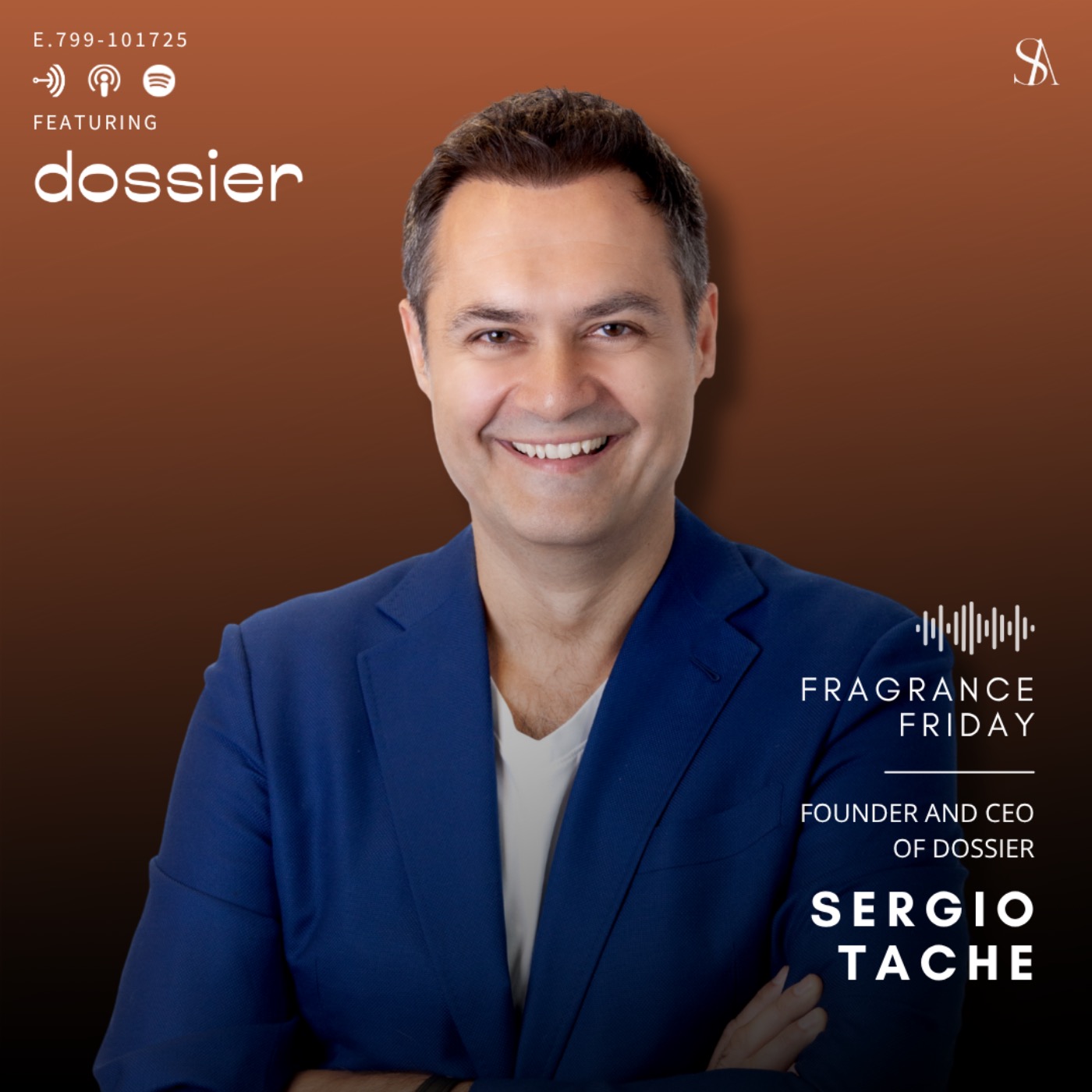
Skin Anarchy
Discovering Dossier: Turning Dupe Culture Into a Luxury Fragrance Movement
00:41:22
Fragrance Friday
Loading summary
Transcript83 lines
- [00:01]
A
Hey, guys. Welcome back to Skin Anarchy. This is Fragrance Friday, and I have such an amazing guest with me today. I am a huge fan of this brand. I think a lot of us are. You've probably seen them all over social media. I know they're TikTok famous. Everybody loves all their fragrances. So without further ado, please welcome the founder and CEO of Dossier, Sergio Tac. Welcome, Sergio. I'm so excited to interview you.
- [00:23]
B
Thank you for having me. I'm really excited about this too.
- [00:26]
A
Yeah, no, I want to kind of dive in because you have such a unique background. You come from the world of finance, right? And now here you are in fragrance and beauty. What made you pivot?
- [00:35]
B
I think a lot of things in life, it's a little bit of coincidence, luck and opportunity and seizing at the moment. Like you were saying. I was in finance for a long time and then caught the entrepreneurship bug years ago. So I started working on a haircare company, specifically hair extensions. That's how it started. After that, I had a skincare company, and Dossier is now my third venture.
- [01:01]
A
Oh, wow. I didn't know you had a skincare line. Did you stop? Did you stop doing it or you just got bored or something? Why did you stop?
- [01:08]
B
The skincare line definitely did not get bored. Not all my ventures were hit. The first one, the haircare company, we made something out of nothing. So that was considering the very small capital we had to start with. We really build a nice little company. The skinky company, went nowhere. After a couple years, decided to stop that. Then while thinking about what else I could be doing again, luck of the draw. I just had an amazing conversation with the person that ultimately became our first, first financial backer. And the topic of perfume came up. And it was an aha moment. It started from a simple observation. There's gotta be a better way of doing this. The way of selling amazing fragrance and making this great industry available to everybody and not have people pay $150 plus to smell nice on a date. We want to make these fantastic perfumes, these fantastic products, available and accessible for the 99% and not just the lucky few who can fork out those kind of dollars at Sephora.
- [02:17]
A
Yeah, I love that what you've created and what Dossier is doing is completely disrupting the system. And I, in the best way possible, because I know so many of us can relate to this, where you fall in love with the fragrance. It's $300, and you're like, okay, do I do rent or do I buy the Fragrance like, it's like that. And to have beauty accessible is the number one for a lot of consumers. It's like the number one thing that we're looking for. So it's a phenomenal what you've been able to accomplish in that area.
- [02:45]
B
Thank you for saying that. I relate to everything you say because consumers are looking for now is really they're trying to find high quality products at an affordable price. It's not happening just. It's happening in perfume, but it's not happening just in perfume. Look at the success that Elf has had, Zara has had, Quince is having right now. That's what people are looking for and that's what we're trying to build in the fragrance industry. When we launched Dossier, we thought value was the ultimate goal, but our customers were saying something very different. And for them, value was a means to an end. And that end was discovery. A lot of people who love fragrance want to discover new fragrances and have different scents for different occasions. It's really hard to do when if you want to buy three perfumes, you're down 500 bucks if you want to have high quality perfumes. And that's really what Dossier has enabled for them, is to discover this fantastic industry and wear different scents in different circumstances. View point, they don't have to choose between rent and smelling nice anymore. They can do both.
- [03:55]
A
Yeah. And you know what's interesting? I want you to break this down for us because I've never been able to wrap my head around the price tags. I'm not saying anything about the master perfumers because I know the amount of craft that goes into creating fragrance is just next level. I completely respect that. The art, the creativity, the chemistry. It's a beautiful world. It's a lot of hard work. But no matter what I do, I can't get my head around a fifteen hundred dollar perfume. It doesn't make sense. Can you explain what makes these prices go up? What drives that price up for brands?
- [04:33]
B
I don't have the answer honestly. I think the simple answer is because they can. These brands have created incredible ecosystems that people aspire to be part of. The Chanel's, the Diors, the Tom Ford's of the world. What they've created is as a brand is incredibly special and unique. And people want to be part of that universe. And to be part of that universe. One of the easy way to do that is to buy the fragrance because you don't have to buy a $6,000 handbag, you can buy a Perfume. The reason why that fragrance costs 300 and not lower, I don't know. The simple reason is because they can charge those prices. That's what we try to do is really reverse that and make fantastic fragrance affordable for everybody. That's that. And at a high quality price, at a high quality point. That was important for us. Absolutely.
- [05:31]
A
One thing I find intriguing about Dossier is that some of your most beloved fragrances are the originals. Like it factor is viral and amazing. I want you to speak on this because it's hard for consumers to grasp. What does it mean when you say the DNA of a fragrance is inspired by another? What does that truly mean? Is it a few Accords or notes you're picking out and crafting something new around it? How does that work in the lab?
- [05:56]
B
A couple of answers. Our Impressions collection got us known. And those are perfumes that are inspired by the luxury scents that you know and love. And that's how we really got known. But now some of our most popular perfumes are part of our originals collection, our own creations. We're trying to create the perfume house for the next generation. We felt it was important to have is strong Impressions collection because that's what we're known for. People love us for that, but also have that other strong leg which is the originals. And what I want people to think about when they want to buy a perfume is I want to think. I want people to think of Dossier as the one stop shop for all things fragrance. And what I mean by that is when people think of Dossier, they know that one, they're going to get a super high quality fragrance at an affordable price. Number two, they're gonna get access to a very deep collection of perfumes. We have over 160 perfumes. We will have something for you. It doesn't matter what kind of perfumes, what kind of notes, what kind of olfactive families you like. We will have something for you. We also want you to explore other things you might not have thought of because the price point and return policies are favorable. Ultimately, I want people to feel empowered, more educated and like they made a smart decision. That's really important to me and that's what we're trying to offer to all our customers.
- [07:28]
A
Yeah, that makes sense. I think at the end of the day, the customer experience has to for a long time, like perfume. Like I think I saw a video. There was a girl, she had something gifted $500 perfume and she accidentally dropped it in her dorm room. Oh no. And she was in tears. Bawling and she made a video on TikTok. It went viral. You should never feel like that, right? It's like, oh, my God, I had an accident. Now my money is gone and I'm a college student, you know what I mean? And that was my most beloved fragrance. That's crazy to me that people go through.
- [08:00]
B
Back in the day, when I had fragrance before, before Dossier, it was oftentimes a gift. And the question that would always go in my mind is, is this moment or is this occasion special enough for my special perfume? What I want people to feel is that, you know what, I'm going to bodega and if I want to smell nice, I can do it because it's a no brain decision. I want people to indulge and use these fantastic fragrances at all times and not just for that special moment. That's super important for me.
- [08:33]
A
Yeah, no, I really resonate with that. I think that's what it's supposed to be, right? Beauty, fragrance, all these industries, they're supposed to be things that make us feel good in our day. There are moments, especially with fragrance. Right. Because you have so much tied to it. Like it's memory, it's feeling like it's so much so. I agree. I completely agree with you. One thing I would love to ask you, what is something, maybe a counterintuitive lesson you learned when launching Dossier? Maybe especially because it's a DTC disrupt. What were some counterintuitive lessons you can think of?
- [09:02]
B
There's a bunch of them that come to mind. Number one, I think I mentioned this to you in the beginning. In the very beginning, we thought that value was it. That was the reason of Darcy. But our customers told us value is a means to an end. And that end is discovery. That end is building that wardrobe of scents that I've always wanted. And that end is me being me, the customer. Being able to wear different perfumes or different moments of my day in function of how I feel. Maybe I want to lay a different sense to create my own perfume. That was something that we discovered quickly, which we didn't necessarily think about in the beginning when we created Dossier. The other one that comes to mind is that my initial intuition was American men don't use perfume. Boy, was I wrong. Our customer base skews female, but some of our most engaged customers are mentioning and same thing. They are very passionate about their fragrances and very passionate about the quality and what they wear. And having been able to have that variety in their collection, which I thought was interesting. The final thing that comes to mind, the kind of customers we have are among the most knowledgeable people I've interacted with in the fragrance industry. They are super into it. They will think about the industry, they will research it. They will spend a lot of time trying to figure out what they want to buy and how their wardrobe or collection of perfumes interact and what it says about them. That was fascinating to me. I was not expecting that Darcy would have this kind of sophistication among its customer base. It was really cool when we realized that.
- [10:53]
A
Yeah, that sounds really cool. I've noticed as well, especially, like, on perfume talk, you see a lot of men are there, and it's a lot, Very predominantly a lot of young men.
- [11:02]
B
Young men or teenagers.
- [11:03]
A
Yes. They dive into it with the chemistry and understanding, helping educate people. I love it. I'm really here for it because I just feel like the beauty industry and the fragrance, all of these industries have been not very welcoming before for, like, to the male audience. So that's beautiful to hear that you guys, like, do provide that, like, safe space for everyone to come and explore and find something they love. That's wonderful.
- [11:25]
B
I'm happy you say that because we want to create a brand that is much more welcoming. The traditional luxury perfume industry has been very aspirational. Obviously, the price points were high. We want something different. We wanted to create a brand that is both very knowledgeable and very educational, but also very welcoming, and it's okay to ask questions and explore different things. That's really the universe we're trying to create. I'm really happy when you say that you're noticing that too.
- [11:55]
A
Yeah, absolutely, I've noticed. One thing I was going to mention, and it's one of my favorite parts of the brand, is that you have not. I feel like a lot of fragrance brands focus so heavily on packaging and the fluff around, but the scent is not there. The fragrance experience is not there. And I feel like I love your packaging, by the way. So this, don't get me wrong, but I think it's because it's minimalistic side. It really. It's not drawing attention away from the actual thing that matters, which is the fragrance. You open it, experience the fragrance, and make up your mind. Transparency on a different level, maybe that's me as a consumer, but I value that in a brand. When I'm not distracted by extra fluff and I can get right to it, like down to it, and then make my mind up, do I really spread or do I Not like this brand. I think that's huge. Can you speak to that? Packaging is a huge component in the fragrance world. Sometimes I think that's what drives up prices.
- [12:45]
B
I think you absolutely nailed it. We took all the elements that make a great perfume, super high quality ingredients, great craftsmanship, made in France, and removed the unnecessary fluff. We have a simple, elegant packaging. We don't have a super fancy packaging. We don't have a super fancy bottle. We have a simple, elegant bottle. And we really try to go back to what perfume should be about, which is the actual liquor and the ingredients and the craftsmanship and the exploration. What you say resonates with me and with what we're trying to do at Dossier. It's not because we have affordable prices that the product is cheap. We spend money on choosing the best ingredients with our perfumer. We want the best of the best, but that doesn't mean we need to spend a ton of money on packaging. That doesn't mean we spend a ton of money on bottle. On the bottle. If the perfume inside, that's important to us.
- [13:45]
A
I love that. This brings me to my next question. I'm very curious about how you guys go about explaining to the perfumer the feeling that you're trying to evoke with a new scent and the vision you have. I know with a lot. For example, a lot of celebrity brands, right? There's a lot of celebrity Fragran. They're usually crafted around the Persona of the celebrity, and it's like really catering to that. So you can come to a perfumer with something like that and be like, okay, you need to craft something that's going to fit this or fit the personality or whatever that is for a brand. You're really trying to relay that. How do you go about doing that? What's the process like, if you can walk us through it?
- [14:23]
B
Yeah, absolutely. So when we talk about originals, it's really what we're trying to do is really create something that we think will be fun, we think will be interesting and will resonate with the audience. Take our color collection, for example. Our chief operating officer, Ines, and she's also in charge of all the product creation, really, one day woke up and said, wouldn't it be cool to do a collection that centered around colors? And then for one color, we only use ingredients from that color. For black, we're only going to use vanilla, pepper, etc. So it was a mix of. We think this is really going to resonate with the audience, but more importantly, we think it's a really cool idea and want to explore this, and we want our customers to. We want to take our customers through that exploration and through that process.
- [15:22]
A
So.
- [15:22]
B
So then once that idea comes through, and the ideas can come from many places, it can come from our perfumers, it can come from our nose, it can come from our team here in the us but once that idea starts developing, then it really becomes this great collaboration between the PD team over here, the nose in Paris, the perfume and grass. And after a couple backs and force, that's really how we start developing those scents.
- [15:54]
A
That's very interesting. I'm curious about that, because when it comes to a large collection, you have over 150 fragrances. Right. That's quite a lot. So then going through and finding a way to create, to maintain uniqueness Right. In every fragrance and maintain that newness with everything that you launch, I can't imagine that being easy. So that's why I asked you, like, how do you approach that with. Ever since?
- [16:16]
B
Yeah, I think people want newness. I think people aspire to discovering new scents all the time, and that's what we're trying to provide. But it's not easy. The Impressions collection is about releasing perfumes that we feel the. The. Our customers are going to love and they'll be in demand, and that's fine. On the original side, it's about how can we organize the new releases around collections that we feel good about. I was mentioning to you the color collection. That was an interesting one. We have a genderless collection. We organize these new ideas around themes we love, whether it's the seasons, color, et cetera, and then obviously coming with something different and original every time. It's not easy, but the team does an amazing job. There's so much variety you can create in perfumery. It never ceases to amaze me what people come up with. And by the way, there are some perfumes that we release. When I'm thinking, that's not really for me, I don't like that, but I know that some other people out there will love that perfume. And it's all about, we're not going to release all the perfumes that I think are going to be amazing, but how can discover and explore.
- [17:29]
A
That's wonderful. This makes me think of a question I've had for a long time. And you brought this up in terms of the genderless thing, creating something for everybody. What is your opinion on a unisex fragrance? I can't wrap my head around it because there's some that I'VE I've smelled and I'm like, this is very. I would say it leans more feminine, according to me. But then people say, no, this is unisex. So what is that? How do you define that?
- [17:54]
B
The unisex trend was interesting and happy years ago. That was an interesting moment in the perfume industry that helped create some really cool perfumes. One of my favorite perfumes is, I feel that's one of the few truly unisex perfumes. But now that trend has gone so far, where you smell some perfumes that are labeled as unisex and you wonder, that's not really unisex, is it? That is quite feminine or quite masculine. Sometimes the trend goes too far, but it's subjective. Some perfumes might be too traditionally female for me, and some other people are saying, no. I actually really enjoy that. So I think it's a bit personal too. But, yes, that trend has been going off a long time and gone quite deep. Some perfumes really trending male.
- [18:46]
A
I find it fascinating because I feel like sometimes, like brands have used that almost now, like nowadays, it just becomes like a selling point. I don't necessarily agree. When things are labeled unisex, I would love for everyone to enjoy this fragrance, but don't do that for marketing. That's mistaken.
- [19:02]
B
That's exactly it.
- [19:03]
A
I want to talk about luxury and the whole luxury experience with you because it's a very fascinating shift. Luxury is just more accessible, especially with brands like Dossier, when you're bringing true accessibility to an industry that shifts the entire focus of what luxury means. So I'd love your insight on where you think the true luxury fragrance industry is headed, and how do you see Dossier's role in all of that?
- [19:30]
B
Oh, that's a tough question. I go back to the same one I was mentioning before. These luxury companies have created an incredible universe and fantastic brands that people want to be part of. I don't see that trend stopping anytime soon. The luxury industry is. Obviously, there's been a bit of a slowdown, and I think the economy is showing signs of slowing down. So I think luxury has taken a little bit of a hit, but ultimately people are still going to aspire to be part of something great. I think where we sit in there is that, and I think it's a trend that's really strong now in the industry where people want high quality at a more affordable price. And that might be driven by economy, but it's also a deeply entrenched trend. Again, I go back to these brands that have managed to do that elf quiz. That's what they do. And the customers, beyond having a good or bad economy, are really looking towards that. Where do we fit in there? Look, with a small brand compared to big brands and these amazing luxury brands, they've created the universe. We've managed to carve ourselves a little niche in that industry which we're super proud of. And our niche is really to make high quality fragrances affordable for everybody. And we're just going to continue growing that. So that's the space.
- [21:01]
A
Yeah, that's why I'm asking you. Because this whole component of quality, right, that's to me, for consumers, when they think about luxury, quality is somehow embedded in that. Right? So quality is something we expect. If you're buying something luxury, you are not going to compromise on that.
- [21:19]
B
It's better for the money, it better be good.
- [21:22]
A
There's a placebo effect right, where you're seeing a $600. I'm going to convince myself that's quality. It's not, sometimes it's not. Let's be real. Like I've spent. I blind bought perfumes that were like six, $700 and I'm like, I'm miserable. I'm like miserable. I don't like them. It makes you think as a consumer, wait a minute, what is luxury? What does that mean for me? Is it just the packaging, the label on the bottle? How do I define that? How do I hold brands to my level of quality? The reason I'm even bringing this up is because for a brand like Dossier, you guys are very consumer facing. People have more access to use, so people are buying more readily. Right? You're getting sales from more people because they can afford your products. The criticism also comes there when you have a brand selling for $700. People are not going to comment as heavily on that brand. They're just not. Because they're still living in that placebo mindset of no, I love this because I spent so much money on it. I've convinced myself I love this. What are your thoughts?
- [22:18]
B
I could not agree more. When you pay a lot of money for something, it's hard to say, what have I just done? People don't pay money just for the product, obviously, but they pay to be part of that universe that has certain value for people.
- [22:31]
A
That's great.
- [22:32]
B
People who want to be part of that universe, that's fantastic. But the bigger trend now is the question, what is luxury for me? What does that mean? Is it the price point, the quality of the perfume or the product? What does that mean. Exactly. And I think consumers are starting to redefine luxury. As you know what, I want high quality and I'm not going to compromise on quality. And the price point will be what the price will be. If I can get that for a great price, fantastic. If I have to fork out more, I'll do that. They are much more critical and focused on sheer quality and they're much more knowledgeable, especially in the perfume industry, and focus on that. The question is, okay, I've paid 200, 300 or 29, it doesn't matter. But is this high quality perfume? I think that's really important. Yes, there is some placebo effect to your point. And it's hard consumers to say, I've paid so much money and feel silly. But I think more importantly, when it comes to luxury, you're buying to the universe as much as you buy for the product.
- [23:42]
A
Yeah, I think you're right in that things are shifting now. They are shifting. I think people, because they're talking more. And the fragrance industry used to be this big gray area. I feel like no one knew what was going on.
- [23:53]
B
Opaque, very opaque, very opaque.
- [23:56]
A
It was hard to figure out like who's behind this and what were they thinking when they made that kind of stuff. So I think with that opening up more, the conversation has expanded. You guys have been very strategic with the retailers you've chosen. I'd love for you to speak on that. What was that decision making process like when you were figuring out where you want to be available in the grand scheme with your accessibility?
- [24:16]
B
Yeah, we started building this brand online. Selling perfume online is not the easiest thing. So we started perfume the hard way, which is to sell online. And we had quite a bit of success. But ultimately people want to interact with perfumes, smell them, feel the bottle, test them. So when we are looking for retail partners, one of the questions that came out is, okay, who would be a good partner and why? We felt we have two main partners, Walmart with Target and we also have cbs. We started with Walmart and felt it was a great fit between us and them. They have this focus on high quality at a low price. Walmart has shifted a ton in terms of how they position themselves. I feel it's not the Walmart. Walmart is not like it was 10 years ago where it could have that connotation of maybe cheap. I think now Walmart are really focused on how can we provide quality for a great price. And we felt that the alignment was really good. And when you start conversations with the Biggest retail in the world. You get really excited because you know you're going to be putting these great products in the hands of many more people than just the people you can reach out to online. We felt that was a great partnership. We just launched Target. The products are flying off the shelf. It's been a great launch. All I keep getting is photos of empty shelves. A problem, but a good problem. That launch has been fantastic. Super happy. The typical Target customer just with Walmart, we're reaching new people. People shopping at Target are the kind of people who'd be shopping with us online. So that was a really good alignment. Ultimately, it comes down to what partners can we work with to put these great products in the hands of as many people as possible. We felt that CVS was that partner, Walmart was that partner, and Target was that partner.
- [26:12]
A
I love the retailers you've partnered with. The accessibility component is next level for me. It speaks volumes when a brand is available. Availability is the biggest problem beauty has faced for so long. I talk a lot about skincare on this podcast and I've said this before. If your innovations are not access, what impact are you really making? It becomes important to have that conversation across the board. Fragrance is a very therapeutic for many of us.
- [26:37]
B
Absolutely.
- [26:37]
A
It's huge. Right. Neuroscience is coming together now in the fragrance world and we're realizing that people are using fragrance for so many reasons beyond just, oh, this is a nice scent. You know what I mean?
- [26:48]
B
No.
- [26:48]
A
It's therapy for people like anxiety, depression. When you make great fragrance accessible, you provide a service that goes far beyond consumer good. I'm a huge fan of what you're doing. I think it's.
- [27:01]
B
Thank you. I think we all remember the dark days of COVID stuck in our rooms.
- [27:05]
A
Yeah.
- [27:05]
B
And I remember for myself. At least. I was by myself in this room working. And one of the nice moments for me was to wear perfume and just spray it on. It was pleasant. It made me feel better. It made me feel better about myself. And that was a huge aha moment for even for me, where I was thinking, when I'm not just spraying perfume for other people so that other people can notice me, I'm doing this for myself. I'm doing this because I want to explore scents. It helps my physical and emotional well being. A super interesting trend was born. I don't know how much I was born out of COVID but I think Covid enhanced it. The smell is associated with memories and emotions. Incredible.
- [27:44]
A
It's huge. I can tell you my own example. I've suffered from anxiety my entire life. So for me, fragrance has always been a part of the therapy for my anxiety. You know what I mean? If I'm used, I lean very heavily towards, like more citrusy scents, more fruit, because they uplift me. So through my day, I'm using fragrance as a therapeutic tool to have that accessibility and to know I can go to Target and get my favorite fragrance and always stock up when I need to. That's a safety blanket for a lot of us. It's a real conversation. Gen Z is experiencing this in astronomical ways. They're a generation flooded with hyper exposure to everything, and the anxiety rates and stuff has gone up astronomically for them. So, like, things like this are therapeutic tools that we have to acknowledge that as industries.
- [28:28]
B
This interesting story.
- [28:29]
A
Yeah.
- [28:30]
B
I was talking to this mom and she had this fragrance that she was. It was a signature scent. So by the way, I think that concept has gone away with the young generation. But anyhow, so she would always wear the same perfume. And she had a young toddler, and what she noticed is that the toddler could not go to sleep or had a hard time falling asleep if he did not feel his mom's scent and perfume. So what she did was that she would take a perfume and she would spray it on the swaddle and would give the swaddle to the toddler to fall asleep. That was his way of falling asleep, which I thought was beautiful and crazy at the same time. And by the way, that scent got discontinued, so it was difficult for her. An incredible story of the power of fragrance and smell where this young human being was able to fall asleep only thanks to that specific smell.
- [29:34]
A
That's beautiful. That's cool. I love that. It makes sense. You get used to people's fragrance, especially if you have a newborn, newborn smell a certain way. You get used to the smell of the baby and vice versa. That's amazing. I love that you brought up a point, though, just now, like, briefly, and you mentioned how it's no longer about that, like, signature scent anymore. Can you elaborate a little bit more on that?
- [29:55]
B
Oh, it's a huge trend. I think people like my mom, she has a bunch of perfumes, but her go to perfume has always been and will probably always be Galantra. That is her perfume. That's great. I think Genevieve is. And millennials, they aspire to different things. They want to have that collection of perfumes. They want to try different scents and wear different scents in different circumstances. Mix and match. I was mentioning this to you earlier, but that's something that we've enabled with the quality and the price point that we're offering. It's much easier for them now to buy a bunch of perfumes to see what they like, how they'll mix and match. And we're noticing that through our sales. When people come to a website, they tend to buy two to three perfumes in one go. Some buy five, some buy seven. And when they come back a couple months later, they buy two to three perfumes, maybe ones that can be the same, but you're going to see people trying different things. That's something that's really ingrained for Gen Z and Millennials. This concept of exploration and discovering scent and building your own wardrobe of scent versus just having that go to perfume that you know, for which I think is a fascinating trend.
- [31:17]
A
No, I really that you said this because I feel like that is the new signature is like to play around and find your own mixing and matching and figuring out with my skin ph what really what works for me and what are the three scents I can mix together. I love this new age where people are really getting into things like layering and figuring out, like, what do I like rather than the old fragrances. Right. But There were like 15 notes in one fragrance and you were like, this is the medley. This no need to layer. Yeah. It's a fascinating world. It's a great point. That accessibility component, making things available for people. It's fun that way.
- [31:53]
B
That word is so underrated. It's fun. It's fun to explore these things. I come to the office every day and we have this wall of perfumes. One of the best moments of my day is to try something new. I have my go tos and my rotation of perfumes, but it's so much fun to try something new. When the team comes in and we start smelling the new things we're going to release, it's fun. It's a very underrated word in the perfume world.
- [32:20]
A
Absolutely. One of the questions I have for you, and I love that you guys have expanded internationally. Congratulations on that.
- [32:26]
B
Thank you.
- [32:27]
A
I think that fragrance should be a global phenomena. I think every it can really bring people together. So I'd love for you to speak on how being a global brand, how does culture play a role in the way you craft your fragrances and bring newness to the brand?
- [32:44]
B
It's an interesting question. There are trends in what some countries or continents might like and not, but ultimately perfume has become so universal that you are starting to see this conversion. And our best Seller is Abery Saffron. It's the best seller in the us it's the best seller in Mexico, it's the best seller in Europe. So perfume has started to transcend borders. Trends go beyond borders. We were expecting more variety in terms of the what people would like. Bear in mind, we're not present in Asia, so that might be a continent that views perfume. They view perfume in a different way than the US and Europe might or the Americas in Europe might. So I don't have a strong view on the Asian continent. But it's interesting to see these trends go beyond borders. In the US people love more bold and more bolder perfumes. And in Europe, there's still this affection for these traditional, more discreet scents to some extent. But ultimately, at least in my view, these trends are going beyond borders.
- [34:03]
A
Yeah, that's the interesting part because you guys are such a universal brand. There's something here for everyone. Honestly, there's enough in your collection where somebody can find themselves in one of the scents. I would love to see you enter a market like India where fragrance is at the heart of that culture. I'm Indian myself and I remember growing up, fragrances everywhere in my house. The incense, the flowers, everything. I was surrounded by it my entire life. So when you. I would love to see you expand into a culture where that is because I think they'd love you and India, honestly, I think they'd fall in love with dossier.
- [34:36]
B
But look, I hope so. We're always looking to expand and India and Middle east are part of our roadmap and we'll see how we do there. But to your point, these are cultures where scent is everything. The spices, the incense in India and you same for the Middle East. They are so knowledgeable and it's deeply ingrained in their day to day life. Those are two parts of the world where I'll be very curious to see how our collection plays and what is going to resonate. That's going to be a fascinating discovery for us because right now, our strong markets, really, the Americas at large and Europe, I'll be curious to see how those markets respond to our products. One last strength is that we have that breadth of collection. We will find something you like no matter where you are. That's one of our strengths. We're really trying to continue on that trend.
- [35:31]
A
Absolutely. Yeah. That's why I brought it up because you guys have so many options. It's not just accessibility by price point, it's accessibility by the breadth of options that reflects people's Preferences, I think that's phenomenal. Just to see that expand into different cultures that are focused, central to their day to day. I think that would be a phenomenal to watch Dossier expand. Like India. I know India. I would love you to.
- [35:51]
B
I hope so.
- [35:52]
A
Yeah, it's really cool. But how do you see the future? What's in the future for Dossier? What about AI? I know AI is taking over every industry. Do you see that playing into your future or what's ahead?
- [36:05]
B
So if you talk about what's the future, the company is six years old, we're still super young, and yet I think we've managed to achieve something quite special in those six years. So despite all the success we've had, I still think this is early days for us and I would love for us to be considered the elf, the Zara, the quince of perfume. That's what we're trying to build. We're trying to build that strong perfume house for the next generation that is known for super high quality, affordable price and very deep collection of perfumes. That's what I aspire to for this brand. We can talk about channels like online, offline, Amazon International, but ultimately that's the vision I have for this brand, specifically related to AI. This justified excitement around AI in the perfume world. It's still very early days. I'll be curious to see in what direction it goes. Some solutions are starting to pop up. I'm not sure whether it has reached any commercial significance or whether it's just more marketing than actual rollout. Hard for me to say, especially in an industry where craft function plays such a big role. That's going to be. It's going to be interesting, but you can think about AI in different ways. For example, one of the things that we're thinking of, for example, is how to make a perfume for the people. I would love our customers to reach out and say, this is the kind of perfume I'd like you to develop and be part of that creative process. Then use AI to analyze these inputs that we get and try to craft a perfume out of that and try to understand what people want. I think that could be a really cool experience. That's something we're thinking of, but in terms of having the proverbial robot mix and match the ingredients, I don't think we're quite there yet.
- [38:00]
A
Hey, guys. It's a hazy world right now. I was going on, I think it was ChatGPT or one of these, and I was like, hey, this fragrance gave me a recommendation. I trusted It. I ended up blind buying a $400 fragrance, and I was miserable. This is not it.
- [38:16]
B
Yeah.
- [38:17]
A
So I think with fragrance, that's why I asked you. I'm like, I think it's going to be one of those industries where it's what you said, like, the craftsmanship and like, just everything that goes into creating a fragrance. It's such a personal experience. I'm curious to see where AI fits into the consumer experience with discovering new scents.
- [38:33]
B
A couple of things that are interesting to me is you're mentioning you ask for recommendation. Yeah, I do. I use a. I use ChatGPT every single day. I barely Google anymore. I use ChatGPT for everything because it makes my life easier. But one of the things I still use Google for is, for example, okay, find me. I live in New York City. I live in Manhattan. And I asked him, okay, find me the best restaurants under 14th Street. And Chachi PT is not very good at that. The recommendations are super generic, like, very underwhelming. So then I have to. I go to the experts. I go to ETA and infatuation. I go to these places which where I trust their opinion. There's still some things in terms of recommendation that it's not perfect at. What we have done, though, is that we're starting to implement. We have a new on our website, which is a tool, an AI tool that helps you. We recommend perfumes for you and it does a decent job. We're perfecting it and we have some other cool releases coming out soon around recommendation AI. But the good news is, best job possible for you to find something that you will love in function of the inputs you're giving me or giving the tool. But the great thing is the Puma is affordable. If you don't like it, you can return. Even if you open it and use half of it, you can return it to us, no questions asked. So it's about the recommendation, but it's also about all the things we try to do to make the consumer's life as easy as possible in terms of discovery.
- [40:12]
A
I love that your return policy. I'm so glad you did this because remember when Sephora first became big and that's what Sephora was known for. If you don't like something, you would come back and return it. And makeup, they never let you do that. And make. If you went to the counter and like Saks, you weren't doing that. You were.
- [40:28]
B
Yeah. You said unlike. That's not happening.
- [40:31]
A
Yeah, exactly. I think that's absolutely huge. That's amazing. I love that so much. Hats off to you for doing your homework there, honestly. Yeah.
- [40:39]
B
Thank you for saying that.
- [40:41]
A
No, but Sergio, this has been so amazing chatting. I could literally talk to you for hours. I feel like we need three more parts to this interview.
- [40:48]
B
I've learned so we do them.
- [40:49]
A
I would love to have you back anytime. I know for all of our listeners, I hope you guys have learned as much as I have. I hope you are loving Dossier as much as I am. I have fall in love with the brand long before Sergio and I even connected and I really encourage all of you. Vote with your dollars. Vote for the brands bringing accessibility forward and not focused on the fluff. They're focused on the experience that we all have. I really urge all of you to do that. Thank you so much for tuning in. Sergio, thank you so much for your time. It's been so wonderful chatting with you.
- [41:16]
B
Absolutely. I had a fantastic conversation and I'd love to do it again. Thank you for having me.
- [41:20]
A
Thank you. Hey, guys. So I hope you love that episode. Please make sure to hit subscribe if you're tuning in to us on any PODC platform. We are available on so many different platforms, so wherever it is that you're tuning in, just go hit subscribe. You'll be immediately notified when we publish new episodes. This way you're able to tune in to amazing insights from experts, brand founders, industry leaders, authors, all the wonderful people that we host. And that's very important for me because I love to hear from you guys and really understand what you love and what you want to hear more of. Also, make sure to give us a follow on all of our media social social media outlets. We're available on Instagram, TikTok X, you name it, we're there. We also have a blog on Medium, so if you're a reader and you love Medium blogs, check us out on Medium. We publish some really great articles on there that do deeper dives than just what's available on the podcast. And it's really a great place for all of you science geeks out there that want to learn a little bit more. We go above and beyond with our research and making sure we're bringing you information that you usually actually probably won't hear about in other outlets. So check us out, leave us a comment, leave us a review, and we'll be back next time with another episode. Thank you.