Loading summary
Transcript45 lines
- [00:02]
A
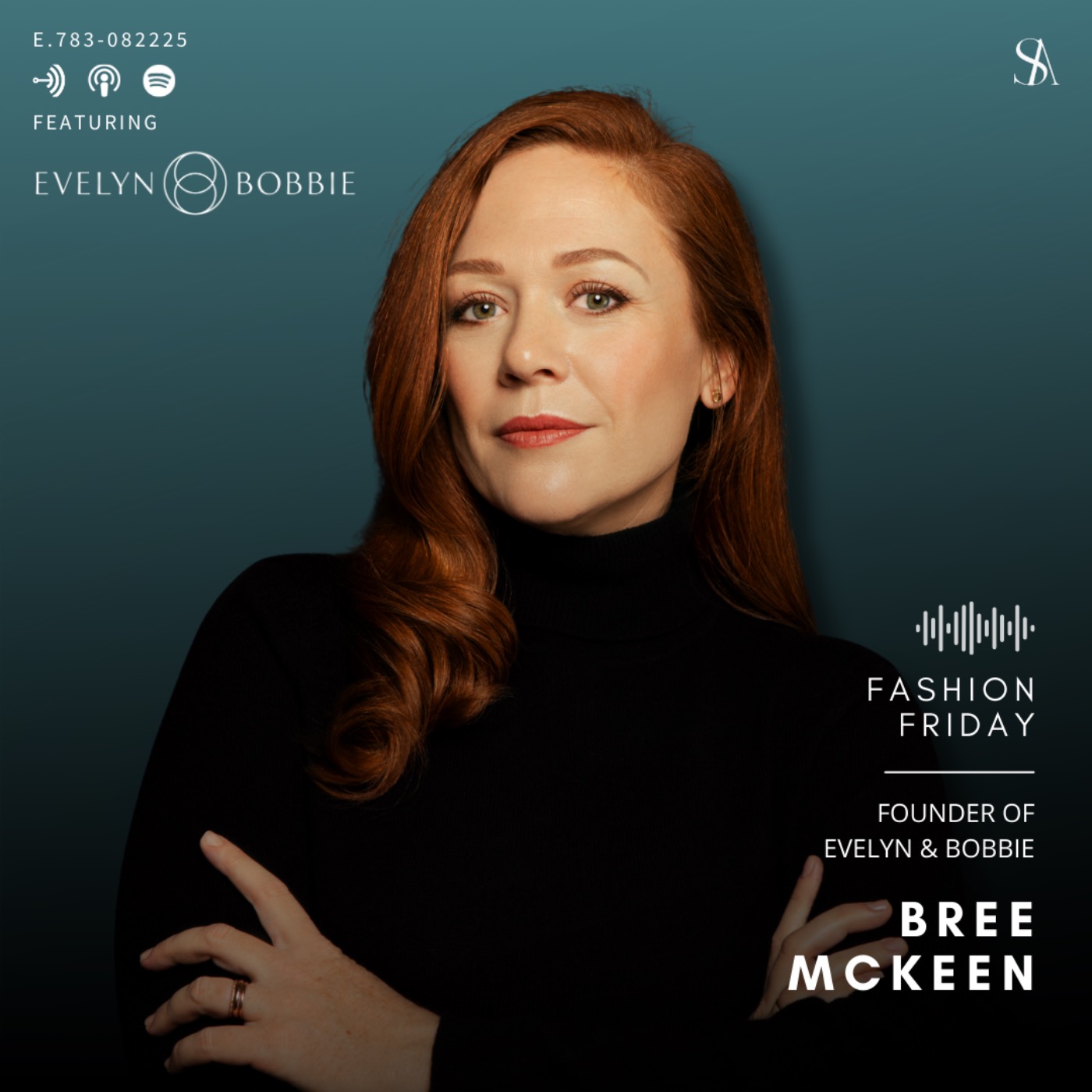
Hey, guys. Welcome back to Skin Anarchy. This is a very special episode because we're going to be diving into the world of fashion today. I think it's very exciting when we get to have fashion brands on because, you know, we live in the world of fast fashion right now, where I feel like everybody is just buying something and then throwing it away the next day. And it's not so much anymore about these tried and true articles that we have in our collection. It's more so about like, well, what can I get for like five bucks? Which I, I absolutely just don't like that mentality. So whenever I get a chance to interview a brand that I really believe in that's doing something wonderful in the realm of fashion, I get very excited. So, without further ado, please welcome Bri McKean, who's the visionary founder of Evelyn and Bobby. Welcome, Bri. I'm so excited to host you.
- [00:49]
B
I'm so happy to be here. Thanks for having me.
- [00:52]
A
Yeah, no, I, I'm excited to chat with you and, and learn all about what led to the creation of Evelyn and Bobby. I, I love your brand. Um, if you could kind of walk us down memory lane, you know, tell us about your background and the spark that led to the creation of your brand.
- [01:07]
B
Yeah, well, my journey is not a straight line into fashion. And it's funny because, you know, people ask me how long I've been in fashion and, and I say, well, I'm still not. I'm in engineering because I think about what I do as making, making gear for real women in our real lives. Because that's really where my journey began. So, so I was working in finance. I had a really unique opportunity to work for boutique venture firm. And my job was to due diligence and evaluate early stage consumer healthcare companies. Actually, my undergrad was in medical anthropology. And I've always been really interested in health and culture, the intersection of health and culture. And I had what for many people would be a dream job. But I'm also a 34G. I've always had a lot of heavy breast tissue, you know, since a very early age. And I found myself working long days in finance. And I honestly just wanted to rest the weight of my bust on the desk. By 2pm I always took my bra off in the car on the way home. And, you know, here I am looking kind of at the forefront of, of innovation and I can't find a damn comfortable bra. I mean, it was ridiculous. Yeah, so that was the beginning. I mean, I really came into this as an outsider.
- [02:36]
A
Well, I mean, what a great, you know, mission to have. Because I tell you right now, you know, not to. Not TMI, but I, you know, I have double Ds, and it's very difficult, you know, to have, like, the weight and the back pain and the. You know, that's a whole thing. And I don't think people ever. You don't realize that. You know, I see a lot of young women nowadays. I think for a long time, it's been like this. Everybody wants to go get breast implants, but it's like, you know, when you. When you have to deal with it as an actual, like, medical hurdle through your day, you know what I mean? It's a whole different story, you know, on that. On the flip side of things. So I feel your pain. Literally.
- [03:11]
B
Literally feel my pain. And that was part of this aha moment, because, you know, I was having posture issues, tension headaches, all these issues. And. And Dr. Echta, you're not alone. The average bra size in this country is a 34F. So you're. You're an E. A 34F. Like, this is a substantial load that women are carrying around. And I, in the beginning, was worried that it was my posture. You know, I was sitting in a chair looking at a computer too much. I've just got to build my core strength. And I started working with this physiologist, and I was standing in his office one day, and this was, like, one of the big moments that impacted me. I was standing in his office. He said, bri, this is after six months of doing bar method, like, really four to five times a week. I made a concerted effort to improve my core strength. I even considered a breast reduction, which I bet has crossed your mind, given, you know, thinking about carrying that load, doing surgery, all the things that you do and in your career. And I was standing there. He said, your posture looks great. And I just kind of blurted out. I said, I've got these two pressure points when I stand up straight, right where my underwire digs into my ribs. And he explained to me that that's called a neuromuscular feedback loop. It's kind of like when you get a. And you probably can explain this better than I can, but it's. It's. When you get a pebble in your shoe, you don't have to tell your foot to curl around the pain. It just does within a step or two. And so I realized. He said, go down to the mall. Get a bra that feels great when you stand up. Straight. Okay, well, that bra didn't exist. I've been looking for it for decades, and I just kind of had this lightning strike. I was like, hold on. All of these powerful women walking into boardrooms, into the surgery room, into the classroom. All of these women average 34F in this country. And we're all wearing something that's actually hurting our posture and us like this. What's going on? How did we get here? And then when I really looked into the design of the bra, and I saw that the underwire and the conventional bra design was patented in 1931, and it hadn't been updated.
- [05:27]
A
That's crazy. That's crazy. Yeah. I mean, you know, what's. What's the most. You know, I think the saddest part about this is that I remember going into, like, a Victoria Secret, right? And I was like, in my early 20s, and, you know, I was in the best shape of my life. You know, I was an athlete. I was doing great. But, I mean, you can't. Breaths don't go away for anyone listening, by the way. Like, I know there's, like, a myth out there that when you lose weight and you're in. You're in shape, they don't just go away, you know? I know it's fat, fatty tissue, but that's still there, you know? So you could be in the best shape of your life, and you still have this problem, you know? And it's like when you're going into a Victoria's Secret, you. They're going to show you sizes that are like. I don't know, they mark them as, like, D, and it's like a B or something crazy. Like, I was having such issues finding my right size, and I was almost feeling like, am I crazy? You know? Like, am I just, like, am I bigger than what I realize or, like, you know what I mean? Like, something's wrong, right? Like, it didn't feel normal to me. And if it's like the. I think this is like, the classic story when it comes to fashion, right? Where it's like you feel like you're a large, but then you end up buying an extra large or whatever. And it's like, that's what was happening in the bra world, especially in the bra world, you know? And so it made you feel like. I know it's great for women who don't have to really worry about, like, you know, you really need to find the right size, especially cup size and stuff. But for women who don't, like, we don't need A boost. We just need something that's going to work like it's a nightmare trying to navigate that, you know, because everything's got padding in it, everything's got boosting in it, everything's got the underwire that just like, it doesn't help. I mean, it's a lot. So I hear you. You know, it's, I'm, I'm like over.
- [07:10]
B
Here furiously scribbling down quotes of what you just said because I don't think you could have more perfectly encapsulated the experience that we're all having. And, and this was what blew my mind. Yeah. Millions of us are having this experience quietly in dressing rooms. You said, is this normal? Yeah. Something must be wrong. What's my right size? Right. So this feeling that there must be something wrong with my body, that my size must be uniquely like this is what the industry created through the structures. Right. And it was like, this is what, that was my experience. Everything you just said, literally walking into the Victoria's Secret, getting measured and all of a sudden you've got, you know, this measurement, which by the way, you might get measured by two different girls and they'll tell you two different sizes.
- [07:58]
A
Yes.
- [07:59]
B
I've been there sizing and, and this, this feeling that because the garment doesn't fit, perhaps there's something wrong with our bodies. That was the thing. I was like, whoa, whoa, whoa, let's, let's really dig into that. Right. Because the idea, first of all, a lot of people don't realize I'm just going to give you a quick couple of bullet points on the history of the bra. So if you go grab one of those underwire bras from your drawer, snip the underwire casement and pull it out, it will sit flat on the table. Show me a place on your body that is flat like that. Right. So we're taking this piece of metal that does not conform to the natural anatomy and physiology. We're pairing it with these narrow straps that sit in an ergonomically incorrect place, usually on the trapezius muscle. That's why you see people with these deep indentations. And then you take tissue, you take delicate endocrine tissue that is expanding and contracting based on the natural cycles, right up to 25% of fluctuation in the volume of the bus. You have one in five women that have a full cup size between the breasts. So we have these, these, these very ever changing bodies that we're trying to stuff into a size that is, has a little band and cup size on the tag. Oh, and by the way, there's no standardization. So you think this is your size, and you go into Victoria's Secret and the bra that you're putting on with that label maybe, and I've done the work up to 2 inches different from another brand. So we think that this is an us problem, but it's not. It's the way that this garment has been, has been designed for so long. And so, you know, the whole. I get so passionate about this. I can't.
- [09:53]
A
I love it. I feel like you're the first person in my life that is explaining this the way it needs to be explained. I love it. Please keep going. Yeah.
- [10:02]
B
It turns out our bodies work differently than the design of the bra. And so, you know, for me, the holy grail of bras, which was truly unattainable for decades, the bar was pretty low. I want it to look good under my clothes. I want it to not hurt at the end of the day. Like, really, that was it. That was the criteria. And I got to tell you, you know, my whole life, my boobs were a problem. They were a problem for me. They were a problem. I felt like, you know, I'm stuffed into these bras where they're. I've got bubbling under my shirt. It's like these, you know, the boobs. My boobs walk into the room before me.
- [10:42]
A
The muffin tops. The muffin tops. Like the. Yeah. It's crazy. Yeah.
- [10:47]
B
Or you get the white. The wire free bras. And this isn't true for my wire free bras because we, we took on the challenge of replacing the underwire with something better. But, you know, a conventional underwire bra is great for comfort, but you can't wear it into the boardroom. You can't wear it in a professional setting. You get one big boob that kind of sits in the middle. It's not flattering. So, you know, I will tell you that this morning. So I'm wearing the Evelyn mesh. The Evelyn and Bobby Evelyn mesh. This morning, I opened my bra drawer. I have, I, I, I know a lady in the bra business, so I have a lot of them, but I had, like, I have 40 bras in my drawer. Every single one of those bras moves with my body throughout the day. Every single one of them is perfectly smoothing under my clothes. Every single one of them. I gain and lose £5 up and down throughout the month. It's just, that's just how my body is. And sometimes it's more than that. My bra still Fits no matter what's going on, because the bra adapts to my body and it's got these built in structures that are very soft, they don't feel like hard parts like conventional bra bras, but there's these built in layered structures that together with four way stretch that creates like a true second skin. So I don't think about my bra anymore. I don't have anything working against my posture. And you know, that was for so long and I think still today for so many women, impossible. And you know, that's why I was like, okay, this has to change. We've got to throw out all the old ideas of how a bra should be made strong, start from scratch. And it's been a long journey, but that's what we did. And I'm here to tell you it is possible to have a bra that looks great under your clothes and is truly comfortable all day long.
- [12:34]
A
Absolutely. I love it. I think this is so brilliant because honestly, there's so many things I want to talk about. You know, I think that at some point, and I want to talk about this honestly because skin anarchy, you know, I decided to, to change our focus from just skincare because of this exact reason. And that is because we don't get to talk about much body dysmorphia we have created in this world because of shitty products. Okay? Like, nobody wants to talk about that. And I'm getting sick of it, you know, because when it comes to, we're talking about bras and we're talking about, you know, a real problem women face every single day. And unfortunately we've had to wait this long for, you know, like founders like you to come along and be like, enough, enough, enough of the bs. I'm not doing this anymore. And before that happened though, we went through, we've gone through this whole thing and you know, medicine calls it body dysmorphia because eventually, especially at a young age, if you get exposed to, and I'm no shade to Victoria's Secret, by the way. This is to all of the retail stores out there that are doing it wrong. But if you expose a young woman right at an early stage to this kind of a scenario where she is not finding her fit, she's in shape, she's an athlete, whatever, you know, she's, she's good everywhere. It's not obesity right at all involved. It's just that she has certain needs when it comes to her breast size. And you expose her to an environment, a retail store that cannot cater to her, no matter What? Even if they find her the right quote, unquote size, the strap is going to dig into her back. She's going to look ridiculous. You're going to look like, you know, like you belong in a Playboy shoot rather than, you know, I just need something that's good for me. Clothing. Right. My real life. You're going to create this feeling in that young woman that is like, I feel like something in me and my body is just not, you know, I'm never going to fit into certain groups and people aren't going to take me seriously or whatever. All those thoughts that go through your head and it's all induced by somebody else. It's not because you don't like your own body. I mean, on one side, we're telling women a healthy breast size is the standard of beauty, and on the other side, we're creating products that are literally. They're contradictory and oxymoronic to that same principle that's been rooted in our biology since the beginning of time. Right.
- [14:54]
B
Truly rooted in our biology. Yes. Yeah.
- [14:57]
A
It's insane. To me, That's. That's literally insanity. And I see these women every day, young women. I. I worry for them because I'm like, you have, honestly, the beginning stages of body dysmorphia because they're all trying to cover it up. The sports bra thing you were talking about, we all did that, right? Like, we were wearing sports. I remember wearing a sports bra under my. What do you call it, like, my business attire and feeling like. You know what I mean? Like, okay, well, this is the only thing that's not going to make me look ridiculous, you know, Like, I don't want to look like I'm going on a date. I want to look professional, you know, And. And that's not it. That's just not it. That's just. It can't be it. That can't be our approach. So I think what you're doing, it goes so far beyond, like, apparel and fashion, and it's really about this, like, need that we have as women, you know, to. To have products that are met for us. They're designed for us. They're. They're thought about, you know, in a way that, like, it's easing our lives, you know, so that's. That's my point. I know I ranted a lot there, but, oh, my God.
- [15:58]
B
I just. Every. Every single point that you made is so aligned with our philosophy. We have up on the wall in our headquarters this little mini manifesto written up on the wall.
- [16:10]
A
Yeah.
- [16:10]
B
And it says, it turns out your body's perfect. It's bras that are the problem. We're bringing the bra into this century. No underwires, no body shaming, no bullshit. That's literally what it says on the wall. And it's. You know, I think the thing that we've done that is different is we've simply been empirical, right? We look at the body demographics of the population that we're serving. You know, one of the things that was so mind blowing to me, Dr. Ekta, was when I first started, and this has slowly changed, but very little. Most of the major retailers, the biggest size that they would have is a 38 triple D. There are so many women that come into my office that think they're a 38 triple D because that's what they were sold. But they're actually, you know, a 34i or, you know, all these, Our bodies are the same, but they're all so unique. And, you know, I think we have been reflecting ourselves in the products that are available to us. And we at Evelyn And Bobby have 270 fit models. I was. It blew my mind. Most bra companies are designing. If they make a new bra style, they're designing on 1, 2, 3 professional fit models, which are not even real bodies. I mean, they're real bodies. Of course they're real people. I just mean they're. They are professionals who are paid to maintain a static weight, which is also not typical for people. But we have 270 real non professional fit models that are coming into our offices on a daily basis because we are making changes to each size. And by the way, there's only seven. It's extra small through three xl. Like our, Our sizing is so simple because I don't want you to have to be stressed out about what your bra size is. You're just a medium. And if you gain five pounds or lose five pounds, guess what? You're still a medium. The. The garment expands and contracts to fit you, given your. Your volume on any given day. And so, yeah, I mean, I, I think that it is possible to be empirical, to be scientific about product design. What are, what is the population I'm serving? What is the job that this garment is doing? And then how do we actually design it? With that in mind, I am designing a. We're on the final stages of a busty bra right now, which I'm really excited about. So the busty bra is specifically designed for people that have a really high ratio, so they'll have like a tiny rib Cage and really full volume.
- [18:48]
A
Yeah.
- [18:49]
B
And you know, that product has, it's on its second wear test. It's going into a two week wear test with every single size being tested on three different people. I mean, it's so rigorous what we do. We're texting with every single tester every day to get specific areas of drill down. So, you know, we really obsess over the design because it's not about how it looks, it's how it performs.
- [19:12]
A
I love that. I love that. I love that you're putting that much thought into it. Because honestly, another thing about, like, you know, just breast morphology is that there are so many changes that happen in the female body. I mean, I know right now the world is buzzing about menopause, right? And I am all about it. I am here for it. I just think one of the things that we don't, you know, we're not really talking about much is that there needs to be a shift also in fashion. And there needs to be a shift that happens on this level of fashion where you're now designing products that are maybe meant for women who've had, you know, mastectomies or like, you know, maybe not a, you know, not a bilateral one. Maybe it's only one side, right? There's, there are special cases for everything. So like, you know, you have to understand that the female body, it will change. And when it comes to laxity of, you know, the ligaments and, you know, the volume of the actual breast itself and what that means for the overlying skin changes that happen, bras are simply not designed to complement those changes. So a lot of times that lumpy look that you get is just because you're naturally aging, you know, you're losing certain volume, you're, you're, your body shifting and your, your products that you use, like the apparel that you use to, you know, kind of enhance those features, it has to be flexible enough. Right. Both, you know, you know, if actually like physical, literally, but also figuratively because. And compliment you. So you shouldn't have to fight that battle on top of the battles you're already fighting, you know, in your daily life. I think that's where this really, for me hits home because it impacts women, you know, that are not necessarily like, okay, I'm in my 20s, I have perfect perky breasts, you know what I mean? I could wear a towel to work and I'll look great, that kind of thing. So I think it's very innovative and it's very well thought out. What you've Created here because it's. It's just been so needed, you know, for so long.
- [21:09]
B
Thanks. And I have to throw this in there that there isn't a better post surgical bra than Evelyn and Bobbi. So I work with my medical advisor, who is an aesthetic breast surgeon out of New York. She does a lot of breast reductions, a lot of other sort of, you know, she does augmentations and. And a number of corrective surgeries. And she gives every single one of her patients an Evelyn and Bobby bra after they're out of their, you know, the immediate post surgical garment. Because there's nothing in my bras to irritate scars. There's nothing to restrict swelling, lymphedema, the natural healing process. And, you know, you can even put up to a size 7 prosthesis right in the cup, so there's a little pocket because we have optional modesty pads. You don't need the pads. I take mine out because I'm like, free the nipple. Guess what? I got nipples. And. But a lot of people like that modesty, you know, if you're in a professional environment, but you can put a prosthesis right in there. And, you know, if you have one natural breast and one reconstructed breast, it does amazing things for realigning symmetry. I am. I will tell you the best part of my day. We have a customer voice Slack channel. And I'm not kidding, I cry once a week because I thought that making a better bra was going to be valuable. Hey, we can reflect women in our real women in our advertising. We can do some really positive things with the bra company. I was not prepared for these letters that we get from customers who, you know, one of them, Michelle, who has gone through three emergency heart surgeries, these are the only bras that she can wear. You know, I got. We had this love letter that came from a woman who had had a series of falls and, you know, had been going through a bunch, and she was just reaching out, talking about how. How valuable these. These comfortable garments were for her. So those are the things that really touch my heart, honestly, you know, because I think that we don't realize there's a lot of our identity and a lot of. A lot of pain and discomfort that's kind of accumulated around the topic of breast and bras. And when you find something that gives you just easy relief, it can be really impactful.
- [23:40]
A
Yeah, no, I. I think that this is a very, very, like, you know, multifaceted kind of conversation because it impacts everybody. And I. I think also, you know, One of the big things, I'm glad you have the, the, you know, you can remove the modesty pads and I mean, if you can, if. I don't know if you have this or not, where you can, like, maybe if you want to add in more padding, you could do that. Is that available for people? Like, where, if they want to add in more cups or something, they can.
- [24:06]
B
Yeah. Well, if you have, if you have something like some people who've had lumpectomy have these little, like, we call them cutlets. These little cutlets. But yes, you can put those right in the cup. I had one woman who would take, she had a little bit of asymmetry because of a lumpectomy, and she took the pad out of the left side and doubled up the pads on the right to make everything look just right. But yes, they're there. I mean, the thing, we call it the magical moldable bra because it just flexes with your body. And in fact, when you get it, we have, for those of you that decide you want to try this, we have this little phrase, too tight, probably just right. So we, I, when I quit my job in the Bay Area and I moved to Portland because I was like, hey, we're making gear. So I partnered with the most advanced performance athletic apparel manufacturers in the world. So think of all the big athletic apparel giants. That's who I share my supply chain with. So we took, it took me like 18 months to develop the two fabrics that we use in all of our bras because I wanted something that was going to be really powerful, but also incredibly buttery, soft and feels like a second skin, not something that's dry and thick and, you know, feels like a sports bra. And that is actually very difficult to do. The, the yarn that goes into our bras is, is almost a hundredth of a human hair. It's like spider webs. It's so fine. And what that does is it creates this really powerful four way stretch that's incredibly adaptive. So you get the bra, follow the size chart. It should be snug when you first get it. And by the way, step into them. That's something people aren't used to. You slide it up over your hips, catch that lift on the way up, and wear it for three days. And you truly have a custom bra in three days. It will use the heat and sustained pressure from your body to stretch only where it's needed. And it's really, it's really amazing because sometimes people are like, oh man, this is, this is a powerful bra. And then on day three, they forget they're wearing it.
- [26:16]
A
Yeah, no, that's really cool. I mean, I think that that's the. I asked you also because I think a lot of women out there, young women, like I said, I worry about them, right? Because it's, yeah, it's fine. Like you guys want to go get breast surgery and you want to get implants. I mean, it's your body, you know, you do what you want. But at the same time, if you're somebody who's just doing it because you think, yeah, you know, this is going to help me out in my dating life or my, you know, whatever it might be for you, my business life, whatever, you know, the impression that you're trying to create. Maybe start somewhere like this where you can have like interchangeable, you know, sizing that you can do with like, you know, inserting like, like you said the cutlets or like you just have options for yourself right before you go and get an invasive procedure done that you might not know what's going to. A lot of times these surgeries are not done by the best people. And I'm not trying to hate on anybody again, but being in medicine myself, I've seen a lot of, you know, whack wacko surgeons out there that are charging next to nothing and they're giving everybody, you know, a size F. So like, you know, just be careful because when you're young and when you're in your 20s or younger, you don't know, right? You don't know about what looks natural, what doesn't look natural. A lot of times people opt in for procedures that are not meant for them. And so when you create options through a parent barrel and you create options that can help you figure out, you know, what is actually going to look good on me. I think that's just going to help make, you know, help people make more informed decisions. So I think it also plays in, in that angle, you know, from that angle of like helping customers and, and everyday people figure out, like women figure out, like, this is what my body should look like, you know, according to my normal proportions, like this is what I'm supposed to look like. I think that's huge.
- [28:00]
B
Yeah. And it goes on the other side too. There's been a significant increase in breast reductions. And Dr. Naidu, my medical advisor, actually has on her website, if you're considering a breast reduction but you're not quite there yet, try the defibrilla. It's our most ergonomic bra. It's the Best if you have any kind of bra pain, that's the one that I, I wear almost every day. And you know, but yeah, I mean surgery is not small. There is risk of complication. There are risks anytime we cut the body open. And so, you know, I love the idea of a non surgical first stop to see if you can find a solution there. Because if you can, that's terrific.
- [28:44]
A
Absolutely, absolutely. And also I think one thing I want to bring up from the more scientific medical side is, and it's very important because I spent a, I spent a good, actually chunk of my career doing breast cancer research. And what I realized very quickly when I dove into breast cancer was that calcium, calcium plays a big role in breast cancer. So you know, one thing that we can take away from that is this understanding that the breast tissue itself is very easy to induce traumatic changes to. So even if you have something like where you're playing contact sports and say like a soccer ball hits you at like X speed right in the breast area, there's a high possibility that that is going to induce some sort of, you know, tissue level changes in your breasts. And this can actually become precon, like pre cancerous, like later down in your life. And people don't really understand, you know, patients don't know much about that because of, we don't want to do fear mongering.
- [29:42]
B
Right.
- [29:42]
A
And that's not my purpose in telling anybody this, but it's a reality. This is rooted in science. That's how medicine, you know, what medicine knows. So I think when you're thinking it from that angle as well, like you want to use bras that are actually like going to support the normal, you know, like the anatomy. Right, the normal anatomy. Because your body is made to protect itself. So every single thing that the body, like the way things sit on your body, the way that they are positioned, like all of it serves a purpose, right? Anatomy serves a purpose. And so you can't just look at it like, okay, I'm going to push my boobs together and that's the. I, that's fine. If you're going on, you know, you're going out, you want to like accentuate your cleavage, that's cool. But like you need something that's going to be not also like an everyday practical solution because there's environmental things that happen. Right. And all of this is linked in some way to how you are going to experience your health later down in life. So I think that's also an important, you know, thing to keep in mind for us as women, is that, you know, breasts aren't just part of our body. They actually serve extremely complex, you know, physiological roles. And the tissue is very fragile. You know, that's inside some of the.
- [30:56]
B
Most delicate and sensitive lymphatic and endocrine tissue in your body. And, you know, this is the other thing I will say. And I, again, nobody wants fear mongering. And, and I'm not saying. I'm not drawing any conclusions, but here's, here's one of the things that I've learned along this journey that is puzzling to me, and I think we probably can go quickly to some of the root causes of, of, of why this is the case. But, but I, my medical director and I have found no studies evaluating the impact of underwire bras on our breast health. We're not even looking at it, you know, and so I think this is my conclusion. This is what I am comfortable saying. If after any kind of breast surgery, the first thing your surgeon tells you is no more underwire for the rest of your life, maybe we should all just move to healthier bras.
- [31:53]
A
Yeah, absolutely. Absolutely. There's a reason they're telling you that.
- [31:59]
B
And the same thing is so, you know, I've seen so many women that come in with the size bra that they were told they were when they were 17. Well, now they're 59. And it's sitting on breast tissue. You can see the wire sitting on breast tissue. A lot of women have breast tissue that extends to the underarm area. You know, it's. Yeah. So, hey, ergonomic bras. Oh, and then the toxicity. I got it. I got to talk about the toxicity.
- [32:25]
A
Oh, yeah.
- [32:25]
B
I think that people in the United States in particular have a false perception of the regulatory controls for toxicity and products. It is not the same as other developed countries. And so I have followed European Union toxicity standards since the beginning. I am testing constantly every, every shipment for BPAs, known PFAs. There are so many toxins. CNN had an article that came out that looked at some of the big brands. You can look it up showing that you could absorb up to 22 times the quote, unquote, safe amount of BPA in a single day of use for some of these polyester bras.
- [33:09]
A
Wow.
- [33:10]
B
Yeah. I mean, here you are avoiding plastic water bottles, trying to, you know, listening to a podcast about clean products and how you can make smarter decisions. And then you're going to put on a garment and. And without any knowledge, you're absorbing BPAs through your skin. I mean, there's you know, yeah, get products. I believe in fewer, better things. You talked about fast fashion at the beginning. Like, I don't have a thousand styles. I have eight beautiful styles that really allow you to be wire free through your entire wardrobe. And they are not the cheapest bras on the market. I'll own it. But they are the highest quality and they are the bra that you're going to reach for day after day after day because it's safe, it's non toxic, it looks good under your clothes. It's just gear. You can put it on and go. And that's what I wanted it do.
- [34:02]
A
I love that. I love what you're creating and I think that it's so needed, it's been needed for so long. And I really applaud you for, you know, having the guts to say I'm going to do this the right way. And you know, even if it's not. Because, you know, a lot of times what I see with entrepreneurs is they keep, you know, hopping on bandwagons or products that they know are going to sell on easily on Tick Tock or easily somewhere else. I think it's a very different thing when you create something out of true purpose and you create your own category. And I think what you're doing is just, just, it's very, very impressive and truly hats off to you, you know, for, for having the guts to do it. So thank you.
- [34:40]
B
Oh, thank you. You know, it, honestly, it's been, it's been a really amazing journey and I've learned so much along the way and I think there's still so much we can do. We're going to launch Maternity next year.
- [34:54]
A
Oh, wow, that's exciting. That's really exciting. Maturity needs. Yeah, we need stuff from maternity. There's like nothing out there. People are wearing like potato sacks. Like it's.
- [35:06]
B
Yeah, we need, we need products that do the job, you know, and products that respect you.
- [35:11]
A
Absolutely. Absolutely. Well, I love it. I love it so much. And I think that everybody, you know, if you're, if you're actually like debating, you know, like, hey, I need to go get new bras or something's going on where your current bras are not working for you. I really urge you to like, think a little deeper than just, you know, this is, you know, garments and apparel. I want you to really think about what that means for your breast tissue. You know, we do have to start thinking. I really believe in the power of like integrating science into almost everything you do in life. Like that's Maybe I'm just a nerd, but, like, I think that when you lead with science and you lead with understanding and knowledge about the body and our tissues, like, you just make better decisions even as a consumer, you know, you buy better products.
- [35:50]
B
Absolutely.
- [35:50]
A
And you vote with the. You vote with your dollars when you do that. So I really encourage everybody that's check out the brand. We'll be linking it all in the show notes. Definitely scroll down if you're listening right now. And yeah, we'll be back next time. Thank you so much. Hey, guys. So I hope you love that episode. Please make sure to hit subscribe if you're tuning in to us on any podcast platform. We are available on so many different platforms, so wherever it is that you're tuning in, just go, hit subscribe. You will be immediately notified when we publish new episodes. This way, you're able to tune in to amazing insights from experts, brand founders, industry leaders, authors, all the wonderful people that we host. And that's very important for me because I love to hear from you guys and really understand what you love and what you want to hear more of. Also, make sure to give us a follow on all of our social media outlets. We're available on Instagram, TikTok X, you name it, we're there. We also have a blog on Medium. So if you're a reader and you love Medium blogs, check us out on Medium. We publish some really great articles on there that do deeper dives than just what's available on the podcast. And it's really a great place, place for all of you science geeks out there that want to learn a little bit more. We go above and beyond with our research and making sure we're bringing you information that you usually probably won't hear about in other outlets. So check us out, leave us a comment, leave us a review, and we'll be back next time with another episode. Thank you.