Loading summary
Transcript35 lines
- [00:00]
A
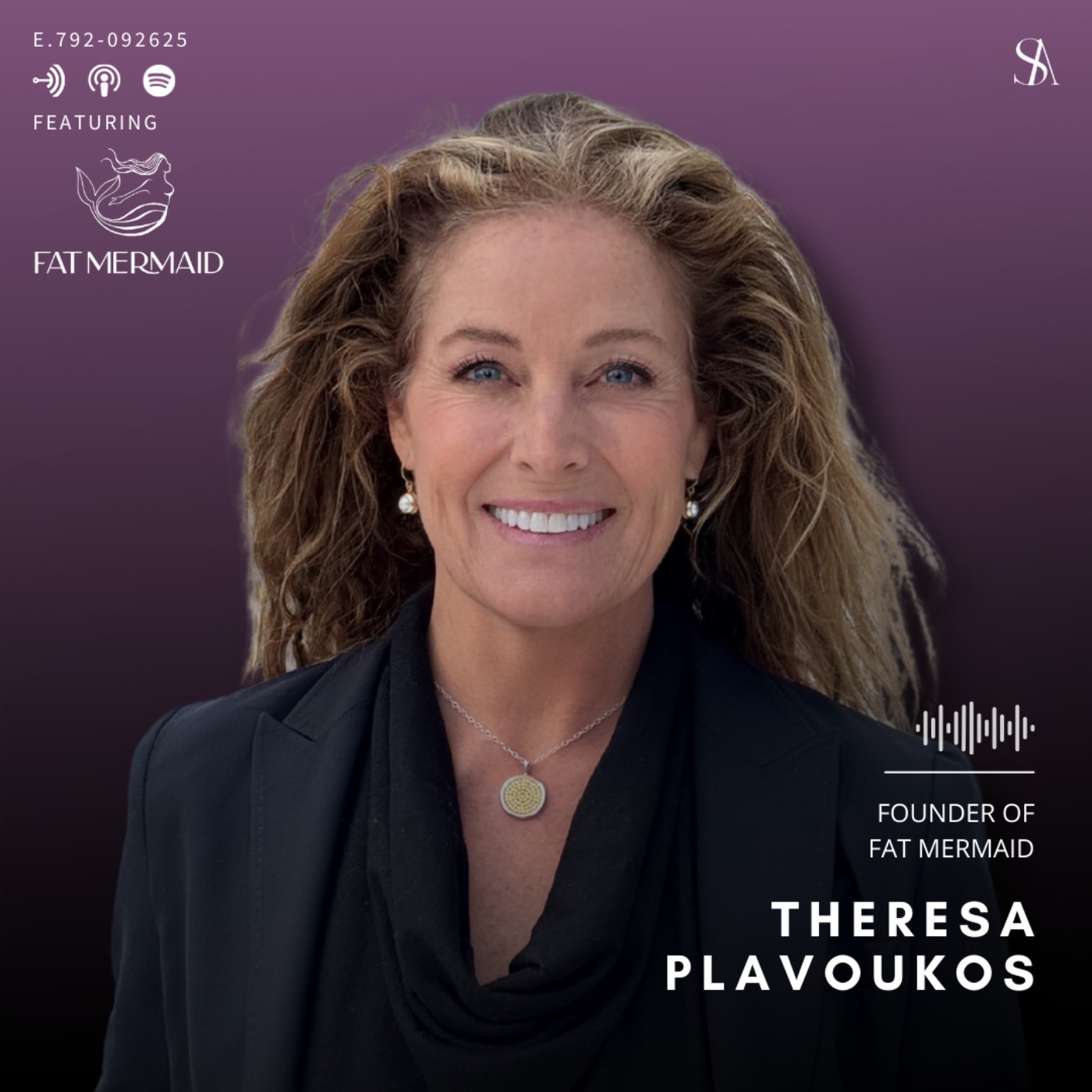
Hey, guys. Welcome back to Skin Anarchy. Today's episode is going to be so special because I am hosting a brand that I have absolutely fallen in love with. I think when it comes to the supplement world, I am extremely picky with what I choose for myself as a consumer. And so I've really fallen in love with this brand. And I think a lot of you, if you have tried it, you can relate. But without further ado, I want to introduce you guys the founder of Fat Mermaid, Teresa Pavukas. Welcome, Teresa. I'm so excited to host you.
- [00:28]
B
Hi, Ekta. Nice to meet you. Glad to be with you.
- [00:31]
A
I'm excited to host you, Teresa, because I've literally been using Fat Mermaid now for, I think, more than a month, and I've absolutely fallen in love with what you've created, and I can't wait to learn more about you, if you don't mind walking us down memory lane. And you have such a phenomenal background, and it's so impressive, the work you've done in the beauty industry with 25 over 25 years of experience. So walk us down memory lane. How did you get involved with wanting to create your own thing?
- [00:58]
B
So nice. Thank you. All right. I won't spend too much time. My history, because it does go back quite a bit, but I started in advertising, working on the l' Oreal account, which got me really into beauty and just the whole beauty space. And other than about one year in my career, I never left beauty. So beauty is my thing. I love it. I think it's so fun and developing products that make people feel better. So started in advertising, but the big chunks of my career, or really a big strategic companies like l' Oreal and Estee Lauder, that's where I learned how to do beauty. I still say, what would l' Oreal do in certain situations? Because they really created the playbook, as did Lauder. So at l', Oreal, I was working on Maybelline and I ran the global eye business. So that was great. Lash, pinky green, mascara, liners, shadows, brow. That was for a few years. So that was literally working with the lab, coming up with all the new products, and then flying around to all the markets in the world and saying, this is what we're launching. Here's how it works. So working hand in hand with our own chemists was what really lit me up. So then the same for Lauder. I actually, I went over there and I was working in the beauty bank division, which was, I don't know if you remember, we were building out the Kohl's beauty department. I started with Internet, but then I ended up working on brands. I worked on a brand called Flirt and a brand called American Beauty, which is very traditional color lines, and they were beautiful. And the formulas were amazing. Again, working hand in hand with the Lauder chemist. Then I went into fragrance for almost 10 years. So luxury fragrance, so marketing, distribution, and then developing. And I developed the Judith Lieber fragrance and Lily Pulitzer collection really was one of my favorites. And then I worked with the Neck, Utah brand luxury small line out of Paris with a really core specialty distribution. And that was amazing. Again working with the fragrance developer, who was Camille Gutal and daughter. So I love working with the core. And then after that, I went into indie beauty. And that's been really almost 10 years. And this has been sort of a love affair working with very small brands and trying to, you know, make their dreams happen. So I help very small brands scale. And it when I say small, a founder will come to me and say, I have an idea and I have a trademark, and that's it. So they have no product, no nothing, but this is the space they want to occupy. So I love doing that and just building out, what does this look like? What is this? Positioning the brand strategy down to hiring the contract manufacturer, coming up with the new products, the ingredients, writing the brief, doing pricing, then getting distribution. So all the way. I really love doing that. So the way I started with Fat Mermaid is I did that basically for myself. I was working on an organic skincare line, which was just absolutely beautiful formulas. We had a nice little business, and we wanted to get into tinctures, which, as you may know, they look like little serum bottles, little dropper bottles, and they're an intense, potent supplement that you put under your tongue and let it sort of absorb into your body. And it was a liquid form. And I'm like, this is a very efficient way to get your supplements versus popping all the pills and the capsules and pouring all the powders. And at the time, I been taking a brand which I still very much like, called Vital Proteins. They're absolutely huge in the market. Anyone who knows collagen will know them. And I've been taking that for years. And I. Hair was getting nails thicker and stronger now. Skin was glowy. And I'm like, why can't this be easier? Why can't I solve my own pain point here? So I put my expertise with product development and my own personal pain point of I like supplements and the benefits, but I want the Experience to be easier, better, more fun and the whole thing. So I put those two together and I just started researching the heck out of it. For about a year and a half. I read PubMed, I read clinical trials, I read very basic, what is collagen? What does it do for you? And then I got into what is a better kind of is bovine, the best kind is plant based, is marine. And then I just were putting the pieces together of what has become Fat Mermaid. No.
- [05:23]
A
This is so fascinating. I love that. I love how much experience you're coming into that with, because I kid you not, when it comes to. When I started the interview, I said this. I'm very picky with supplements because often, oftentimes my experience as a consumer has been that I could never get behind a lot of the supplements that went viral because I never felt like the people behind them did the homework, if that makes sense. And so that was, for me, as a consumer, that was the differentiating factor. So when you're telling me you've seen this world inside out, you've done that homework, I'm just like, it makes sense because I used your product and then I'm seeing how much I love it. I'm seeing how well it fits into my routine and it's like it all cohesively makes sense, sense. And I feel like it's so beautiful to see that entrepreneurship come to life. I love seeing that as a consumer. So huge fan of that.
- [06:15]
B
That's nice. Thank you so much.
- [06:17]
A
You know, I want to talk about the name. I love the name Fat Mermaid. Where did you come up with the name?
- [06:21]
B
I'm so glad you like it because it's supposed to be fun and that's where it came from. So just looking at the category, beauty is so vast, and skin care has traditionally been so serious, and the more clinical you were, the more seriously you were taking, and then you were perceived better benefits. Right? But then in recent years, there have been some fun brands that have introduced Drunk Elephant. They took clinical skincare and they added poppy color, but they had very serious ingredients but a fun name. And there's just a lot of fun and beauty. So I wanted to apply that because I think the best combination is fun, enticing, interesting, colorful. You've got my attention with your packaging in your name. And then you hit them with the clinicals and you hit them with a really serious, highly efficacious formula. So because the name was so fun, this has to be very serious ingredients. But as it relates to how I came up with the name specifically with my deep dive research in collagen and comparing bovine, which is from a cow, plant based botanical, and then marine collagen. As it turns out, marine collagen is the most efficacious because it's more bioavailable. And I can get into that in a second. So I had decided on a marine collagen. This is going to be a marine collagen based formula and it's going to be liquid, which is also more bioavailable. So with that, I thought, I want to come up with a fun name. What lives in the sea? What's marine based? What's beautiful? And then it's like, is it fish? Is it sardine? What are these things? Is it related to shells? Is it plant life? And then I'm like, well, merma live in the ocean. And the image of a mermaid came up and she had all the look and feel that the benefits of product would provide. Long, gorgeous, flowy hair, long lashes and thick nails. And she would be robust and big and healthy. This is not like skinny, tiny little mermaid. This is a mermaid that lives in the ocean that has a lifetime supply of collagen because there are fish skins all around her. So I was thinking that that would be really fun and funny if she looked big and robust and she was fat mermaid. Fat hair, fat lashes, you know, thick nails, glowy skin and luptuous and just beaming with health. That was the idea behind the Fat Mermaid.
- [08:50]
A
And so that's really neat. I like that a lot. I can definitely see that. And that's so cool because the ocean, it's such a rich source of nutrients and it just makes so sense when you explain it. I love it. I love the messaging of it so much.
- [09:03]
B
Thank you.
- [09:03]
A
Let's talk about. You said you wanted to dive into this. Let's talk about the bioavailability aspect because that is a big point that you guys make, right, in your messaging to consumers, is that it's a more bioavailable form of collagen. Can you talk to us a little bit about that?
- [09:17]
B
Absolutely. It's such an important word that I put it in the name Fat mermaid bioavailable liquid marine collagen. And at first I'm like, gosh, that's a really long name. And then, no, it's. It is really important. It's a very important word because it's the differentiator between liquid and powder and marine and bovine and plant. And so I'm like, this descriptor is critical. And needs to be talked about. So I'm doing all of my research. So liquid and marine are more bioavailable than powder and bovine. And here's why. And again, this is all of the research that I've conducted over a couple of years. And clarifying point here. I am not a doctor, I'm not a scientist, but I am a longtime beauty developer and I love my research and I will not launch something unless it is very well researched and I have the facts to communicate so that. I just want that to be said right now. And by the way, compliance and regulatory is critical in every product that I develop. And I've been working with some of the best regulatory people in the business for years and I trust them implicitly so they validate everything I do. So bioavailable. So liquid versus powder, it's pretty straightforward. Liquid is already in blood form there. It's liquid to liquid. So it does not have to be broken down the way a powder does. When you. Let's start with powder. When you put two, three scoops of a powdered collagen in your coffee, in your water, you have to stir it up. It has to dissolve. It does not dissolve all of the way. And sometimes you're drinking sort of a sediment tasting, powdery thing and get it in there. Because beauty can be pain, although it doesn't have to. It hits your stomach and you're like, okay, I'm going to look better, but my stomach's upset. This doesn't feel right. That is because powder is not as bioavailable. The enzymes in your stomach cannot break all of it down. And so you're not using all of it. You're using actually less than half of it. Whereas liquid, it's like drinking water. Liquid is already in liquid form. So it gets, you ingest it and it goes through the digestion, digestive tract and out into your bloodstream. And it's like sliding through on a water slide because it's water going into liquid, so it absorbs, it's almost completely bioavailable. So liquid is more bioavailable than powder then as it relates to marine versus bovine, it is almost twice as bioavailable because marine collagen peptides have a lower molecular weight than bovine collagen peptides. They simply can be broken down into tinier particles and pieces and peptides and more easily absorbed into the digestive tract and into the bloodstream and out to the places where you need it the most. And so further to that, speak to A little bit about types of. Absolutely.
- [12:19]
A
Please do.
- [12:20]
B
So now that we know that liquid and marine are more bioavailable than powder and bovine, there's the matter of what type of collagen. You know, there's many types of collagen. What's the best type of collagen for what I'm looking for? So because Fat Mermaid is, in essence, it's a beauty product, this is for hair, skin and nails, lashes, eyebrows, it's very much for that, not so much joint support, although it does also help joint support, but secondarily so if you want thicker hair, thicker lashes and brows glow your skin with fewer lines and wrinkles and nice strong nails. The primary collagen that is found in all of those things is type 1. So you need to take type 1 collagen to replace lost type 1 collagen. And marine collagen is primarily type 1. So when you ingest marine, it again gets into your system bloodstream and it goes out to where you are deficient in type one. So it's type one to type one. And that's a real critical factor when you're deciding which kind to take.
- [13:28]
A
Right.
- [13:29]
B
So that's why this position as a beauty product, because lashes, brows, hair, skin, nails, all type one.
- [13:37]
A
Yeah, that's actually, I'm so glad you brought that up because no one talks about type 1 and type 3 and all these different. And there's such a fundamental role that they play in the human body. And that's something that you never hear about. And it's really interesting to me because of what you said, because when you said liquid to liquid, it's very cohesive. And I think there's a lot of misunderstanding in the supplement world about this. And it's a point that I'm so glad you brought up where people think that it doesn't matter how your supplement comes, as long as it's like, now people have those vegan capsules and stuff, that kind of thing. And it's like you. The less point is that you've already made it. But just to reiterate, the less steps you give your body in the digestion process, the more likely your body is going to say, I'm going to take this in and use it. You're not flooding it with noise that way. You keep putting things and said like that powder form and you put it in a capsule and it's like your body eventually is going to be like, I did my breaking down stuff, now I'm done. You know what I mean? And it's just going to get rid of it. So it's almost like your body has like threshold limit of how much it's willing to put up with before it says, I've decided that this is waste, you know what I mean? And then it gets rid of it. And so I think that is such a critical point in, in your explanation because it would supplements, we as consumers don't think about that. We're not sitting there scrutinizing, oh, we need to make sure that the human body is going to want this and it's gonna want to actually process it instead of putting all its energy into breaking down whatever it's coming in the packaging form. So that's absolutely huge. And I love what you said. I think bioavailability is the number one component we should be thinking about, honestly, when it comes to anything ingestible, because if it's not bioavailable. People talk a lot right now about peptides and there's a lot of buzz, I think, in the industry in general about peptides right now. But big thing about peptides is what you said is you can get them into your system and absorbed, then they will go to where they need to go and do their job. But until then, it's not going to work. It's not going to actually do anything. So I, I'm a huge believer in that. I think that for me, the proof has been in the pudding, though, with Fat Mermaid, because, and I want you to speak to this a little bit because for me, the biggest pain point with supplements was always especially collagen, was I could never easily incorporate it into my life. It was always like, for example, with Fat Mermaid, I can put it into my smoothie and I don't taste it, it doesn't have a flavor. So I don't feel like making a bunch of extra stuff. And I think psychologically that really matters, right? From the consumer perspective, why did you decide to make it unflavored product? But what was that whole decision process for you?
- [16:08]
B
I'm so glad you asked that because it was another pain point for me have been supplement stacking. You probably know that term for years, right? I take the creatine, I take the collagen, I take magnesium, and then I take some more magnesium at night and all of that. And these supplements. And if you've ever walked into a retailer that sells lots of vitamins and supplements, there's a smell, there's this sort of functional ingredient smell, sort of an herbal kind of thing, and you're like, it's not completely palatable. So it was another issue I wanted to address, which is like, this should be beauty, should be fun. It shouldn't be a pain. I should be able to take this and feel good about it and actually look forward to it, rather than, oh, my gosh, I have to take my five supplements today, and I have to wash them down with water because they're these big, chunky horse pills. This should be an easy experience, and it should taste good. So we had spent about a year and a half working with a chemist on the flavor, and the objective was to create something that was unflavored for two reasons. One, so you can combine it with anything. You can add it to water, you can add it to your coffee, your smoothie, you can pour it into your yogurt, you can put it into a cocktail, a mocktail, anything, and it wouldn't disrupt the enjoyment that you get from drinking that thing. So that's one way to use it. And the other way to use it is drink it like a shot. And why can't I do a little shot of something that has maybe a light, sweet taste, but doesn't have that very fake, heavy, mango, raspberry, blueberry, whatever, heavy sort of fake fruit flavor on there? It doesn't have to have that to make it taste good. And then also those flavors will disrupt your coffee. People love their coffee, and you don't want to have raspberry in your coffee. So I wanted it to be highly versatile so the customer can decide how she wants to take it. She can drink it like a shot. That's how I do it. I pour it into the dosing cup that we put right on the bottle. One ounce, it's cold. I drink it like a shot, put it down, rinse back on the bottle, or I pour it right into my yogurt. I peel the top off, pour it in, stir it up, and eat the whole thing. And all I taste is the yogurt. So the unflavored piece was important for versatility and to make it just easier and more pleasant to take. And that really combines with the usability of the dosing cup that is provided. And there are very few collagens that have a dosing cup. And we really had to work with regulatory to make sure that we could include that on the top, because I just wanted the customer experience to be so super easy, super fun, and not a pain.
- [18:53]
A
I think you really nailed it, though. You really nailed. Because I love the dosing. I was going to say, yeah, I really Love it. No, I think what's interesting for me is that I think for people who are very health conscious and you brought up supplement stacking and that's why I say this. When you're really health conscious, you start thinking about what can I pair with my supplements. And I think for me, I've been very critical about, for example, cofactors that should go with collagen, right? Because collagen needs certain co factors reform and just to support it. And so with me, I love putting it in my smoothie because I can add my vitamin C in there, which is like major factor as in the formation of collagen. You can put zinc in there, you can put whatever you need in there with it. So when you're taking it feels like you've made your own cocktail that is actually a blend of what you will need to make sure that you get the most out of this. And I think that flexibility allows for, you know, a better, obviously user experience, but then also more so on the science side. It allows for you to actually get the full benefits of the supplement at the end of the day. I think that also falls on the brands, right, to have that option there for consumers because a lot of us, we want that flexibility. I don't want to only take a pill and then I can't pair it with my favorite vitamin C or my whatever I'm adding in that I need on top of antioxidants or whatever it might be. So I think that that really is a deal breaker maker or deal breaker, right. For. For supplements.
- [20:17]
B
For me personally, no, I totally agree. And it, it really was created this way for consumers to just take it how they want to. Just that versatility was so important to me as a customer and I'm like, this should be easy and fun and not a pain. And just like a quick little anecdote when I used to take my powdered collagen, which I really took religiously because as I mentioned, I saw the benefits. But first it was recommended one scoop in your coffee, then it went up to recommended two scoops, then it was up to three scoops, and now they're recommending four on some of the canisters. And that's first of all, 20 grams of collagen, which according to clinical studies that I've read, your body cannot absorb more than 10 in a day. You're wasting, it's what, you're wasting a lot of things. You're wasting collagen in your coffee, you're disrupting the enjoyment of your coffee. You're wasting money because you're using twice as much as your body can even absorb. So it should just be quicker and easier, which is again, why the liquid and the dosing cup. But I would put it into my coffee and I was sort of stuck with this cup of coffee and I must drink this entire thing or I will not get all of this collagen that I just paid for. So I'm sitting there waiting to finish. But you can't drink half of it because I've invested money in this cup of coffee with my college. Right. So I want it to be quick and easy, fun, and let's go.
- [21:43]
A
I love it. I think the concept really resonates. Really. It hits so many pain points, honestly, in the supplement world. Now, I want to talk a little bit about this in terms of what were some of the, I guess more of the scientific details that went into the, you know, creating this product in terms of validating it, clinical data or the feedback that you utilize. Tell us a little bit more about that.
- [22:05]
B
I will. Yes. So we had to look, I'm going to say, far and wide for the right manufacturer and the right chemist. You have to have chemistry with your chemist and you have to be aligned in terms of how efficacious you want the product to be. And we had worked with one lab before the one we ended up with, and they were a very legit lab and they were just dipping their toe into wellness and the supplement space. And so we were a little bit of a test for them and we thought, oh gosh, is this going to work? And we tried it and it wasn't quite there. And they also didn't have a third party testing. That was really important to me in terms of heavy metals toxicity and all of the very basic regulatory testing that you have to go to, even for a skincare product like ript, I'm sure you're very familiar with. There are just certain tests that have to be conducted. And when you're dealing with an ingestible heavy metals and toxicity is critical because people are there eating this. I went from topical to ingestible. And that was a whole new set of regulatory. And I really dove deep and made sure that we worked with a GMP certified facility. I wanted certified non GMO ingredients and an FDA inspected facility which most, as I've learned, are not yet. So you can say we for Mokra first for topicals you have to submit through Mocra and a lot of brands are claiming FDA certified or whatever. But to have an FDA inspected Facility where they come in and they check everything that's going on, your whole production line, your tooling, your kettles and every, the entire process, the cleanliness and then to give it that stamp of approval from the FDA is a really big deal. So we only wanted to work with facilities like that and that's who we're working with. And then all of the third party testing was key, as I mentioned. So we evaluated many submissions over about a year and a half. And then there are base formulas that exist, although we have a custom formula because we are the only unflavored formula right now out there. And they put it through the rigors. So again, FDA toxicity, heavy metal trace, anything in there. So they tested it a few times because we have a new formula and we passed on everything. And I have my own regulatory consultant who reviewed all of the ingredient list and everything to make sure that it was compliant for the US market. But it is globally as well. And that's how we launched. There is vitamin C as well in the formula and hyaluronic acid and as you mentioned, vitamin C, that is the collagen synthesizer. So when you see a collagen without vitamin C, you are not getting the most out of your collagen.
- [24:58]
A
I'm glad you said that. That's huge actually, the vitamin C. But that's really cool though that you went to great lengths from the very beginning though. That means a lot, I think for consumers. You don't. I think the big thing that happens, and I've seen this a lot supplement companies that you don't get transparency. So half the time you're just like blind buying. I can't tell you how many times I've been in an aisle and I've just been like, you figure out I need a supplement and whatever that might be. And then you're standing in the aisle and you're trying to figure all this stuff out. Where was this made? How did you make this? That's why I am asking you all this so that our listeners can learn, because that happens. The real process we go through where we're like, I don't know any of this, right?
- [25:36]
B
If you're used to reading skincare, color cosmetics, hair care labels, your supplement label is going to look really different. It's going to have all sorts of new things on it, like an amino acid profile. That's another item that I just insisted we put in our artwork is the amino acid profile because other collagens don't include it. Which makes me wonder, why are you not Listing all of the amino acids in your collagen. Those are all. They provide added benefits as you. So let's list it. Let's get serious. That's what I was saying. We want to be really clinical. We want to be taken very seriously, even though we have a fun name, because we want to have every box checked in that way. And in terms of transparency, we do say where the fish that we use is a question we get a lot. It's like, what kind of fish are you using? And some of the misperceptions, which is completely understandable, is you think that marine collagen, that the peptides are coming from the fish flesh, you're killing fish and you're chopping up the fish flesh and that's what becomes the collagen peptides. That is not the case. And this is why marine collagen is actually more sustainable because we're using the parts of the fish that would otherwise be discarded. We're actually using the fish skin or the fish scales which are dense in collagen. So we're using sort of what's left, which is why it's sustainable. And then we do source our fish from certified fisheries, open water farms in European water. So we're not taking from the wildlife and the ocean floor. We're taking from fish that have been created to, you know, for this reason. And we take the fish skins and they're, they're hydrolyzed, so water is basically pumped into them and they're pulverized and they're turned into peptides. And that's how they worked. And one of the fish that we work with is tilapia.
- [27:33]
A
Oh, wow.
- [27:34]
B
But again, it's the skin. It matters. Does it matter? I mean, everyone knows tilapia and that's a healthy fish, but it's really the fish skin. And the point is we taking the part of the fish that is most rich and dense in collagen to provide those benefits for you.
- [27:48]
A
Sense. That makes a lot of sense. You want that for sure, because that's where all the good amino acids are, so.
- [27:53]
B
Exactly.
- [27:54]
A
Very cool. I love it. I love your whole whole way that you've approached this product and just the way that it performs. I think that's, for me, the main thing is that and you, anyone listening out there, if you guys are looking for products that perform, that's the number one thing, is you can feel that there's a difference. I'll tell you my personal little story. And this is where I knew it was working for me, was I Broke. Well, I had a really bad fracture a couple years ago in my right leg and under my knee was a tibial plateau fracture. So if anyone knows what those are, they're terrible because they literally severed the top of your long bone. And those are hard to heal. So when they heal, you get symptom of osteoporosis and just hurts. Knee hurts a lot. And I've been struggling with that for a long time. And so for me, supplements have become a very important part of my life because it's something I've needed functionality. And so with collagen, I'm not gonna lie to you, before I tried Fat Mermaid, I had kind of stopped collagen because I didn't feel like anything was really working in my past experiences. And I was just done with it, right. And then I started, I, I found you guys and I started trying it and literally I did it consecutively. You know, I didn't skip a day. And I kid you not, I have not had that same knee pain since then. I haven't had it. I'm not even exaggerated. Not a single day have I had it. And that's where I was like, I know this is where they did something so right what they did, because nothing was working and nothing was helping me. So when you think about collagen, I think people love talking about hair, skin and nails, which is wonderful. But then we also never really touch upon how much it does for your joints, how much it does for all of the other parts of your body that requires that kind of connective tissue. And so I just want to point out to people is we're going to be able to tell the difference between supplement, they're working when they're not. And you should always look for that as proof. And so.
- [29:41]
B
Exactly. And lack of pain, of course, is the best proof ever, I can tell you. So I've had two hip replacements in my life so far and I'll tell you, my surgeon recommended collagen is like you should really take. You know, I'm thinking it's going to be other than pain medication. It's going to be like just heavier things. He's like, nope, just use collagen. And have been pain free. And honestly, thicker hair and nails and younger looking skin. I have people asking me if I'm using Botox and I'm like, it's not this, like it works. But we, the clinical results that we reference again after reading all of PubMed and I would say about 100 clinical trials from top to bottom, there is One clinical trial that was conducted in India recently, just a couple years ago, on daily marine Collagen with only 5 grams a day. Now we've got 6 grams in our collagen, so you're going to get a little bit more out of us. But after 60 days, it's a 42% reduction in wrinkles, 23% increase in skin hydration, 25% increase in hair thickness, 10% improvement in skin elasticity, which we know is that bounciness you feel in your skin. And then visibly thicker, stronger nails. And we were just testing with small group of friends. I have a group of friends here in town. Over the years, I tried all of my new products. They're my sort of test girls. After one month, I have five different photos sent via text of nails of people's hands. And they're saying things like, oh, my God, this is actually going to cost me more money because now I have to get manicures more frequently. And they're like, my nails are so thick, I had to buy a different emery board. And my manicurist notice and the reactions are all the same. Stuff actually works. And I said, I told you so. But people have to try it for themselves. And I have a couple other friends who are noticing it in their hair. And honestly, I've seen them. Your hair is longer. We get texts and DMs all the time to our socials on FatMory. These are people who, I don't know, who are texting and saying, I've been using it for two months. My hair grew 2 inches, so I'm going to decrease my dose. Yeah, working too much, working too fast. And I'm like, oh, my God. Well, don't do that. Keep going. And then I have another friend who she. She does get Botox. And by the way, no, judgment's great. Awesome. You look better, feel better, do it. I love it. She has decreased how many times she goes and gets Botox. She's like, I actually don't need to spend the money because my skin's looking really good right now. And so I'm hearing it. You make this product and you put your. All your efforts into it and it's a passion project. And you're like, I think this is good. Everything's lining up and it should be really good. And then you put it out there and you hold your breath, say, God, I hope this stuff works. And when you start getting the feedback and the photos and then now from complete strangers on our socials, we're like, oh, my God. You breathe a sigh of relief and then you're like, nope, let's keep going. Let's keep bringing this to more people because you will feel better, you will look better and you will feel better and you will have longer eyelashes and thicker eyebrows and thicker hair with consistent use. And that's another thing that we always say, this is not an overnight fix. It's not about it. Marine does clinically perform faster than bovine, but that is not something we really talk about much. Because the point is, this is a healthy supplement for you, which can make you feel better, make your hair healthier, your skin healthier, but use it consistently and make it part of your daily routine. You brush your teeth, you take your collagen, you brush your hair and you go out the door. Just what you do. It's part of your day.
- [33:35]
A
I love that so much. And I think that consistency is the key. But you've made it so easy to become, to be consistent. That's a huge pain point. I think for a lot of people, it's hard to take supplements because of the way they are and you forget. So if you don't do it consistently, it becomes where people start thinking, oh, my supplement's not working. No, you're just not taking it. You're not, you're staying true to it. So, no, I love it so much. I love what you've created and I'm so excited to see the future. Can you give us a peek into anything that's coming up for Fat Mermaid? Any new evolutions, anything new brand new products or anything?
- [34:05]
B
Sure. So I'm going to say customer centric. So we are on a listening tour these first few months. What are they saying? And we are not offended by. I don't like the taste. It's not what I expected. It's this and that. You know, we have been pleasantly surprised by how much people do like the taste and the flavor and they're really working into their routine. Two things I would say have come up that on the horizon that we're like, you know what, let's look into that. One is travel size. So this is a 17 ounce bottle, 16.9 ounce. It is not TSA friendly and it's liquid. So the plan was, let's get it out there, let's see if people even like it. And then if they do, we're going to make our travel set. We're going to make a smaller, portable, disposable form for them to take with them. So you keep your full bottle in the fridge at home. And then when you go away for the week, you take your travel size with you. So that's one area we're looking at. And then another is we love our unflavored sweet taste because again, it's a unique selling proposition. No one else has that right now. We may explore other flavors because if you look at healthy beverage market out there, if you look at, like what Poppy's done, flavor is winning. So people love a flavored, healthy beverage, and that is fat. Marine is essentially in that category. So we may be looking at new, very fun and palatable flavors. But first, travel size.
- [35:29]
A
That's very exciting. Well, I'm looking forward to seeing all the newness and I can't wait to see what you guys evolve into as the years go by. I, I really genuinely, for my heart, I love your brand and I love what you're creating. And for all of our listeners out there, I do not host. You guys know this. I don't host supplement brands very much because I really am very picky myself. And so I really urge you guys, if you're in the market for a new collagen supplement or something's not working for you, this is the brand for you. Please go check them out. Leave us your feedback, let us know what you think. And thank you so much. This has been so lovely chatting with you, Theresa.
- [36:06]
B
Thank you, Ekta. Pleasure.
- [36:07]
A
Hey, guys. So I hope you love that episode. Please make sure to hit subscribe if you're tuning in to us on any podcast platform. We are available on so many different platforms, so wherever it is that you're tuning in, just go hit subscribe. You'll be immediately notified when we publish new episodes. This way you're able to tune in to amazing insights from experts, brand founders, industry leaders, authors, all the wonderful people, people that we host. And that's very important for me because I love to hear from you guys and really understand what you love and what you want to hear more of. Also, make sure to give us a follow on all of our social media outlets. We're available on Instagram, TikTok X, you name it, we're there. We also have a blog on Medium. So if you're a reader and you love Medium blogs, check us out on Medium. We publish some really great articles on there that do deeper dives than just what's available on the podcast. And it's really a great place for all of you science geeks out there that want to learn a little bit more. We go above and beyond with our research and making sure we're bringing you information that you usually probably won't hear about in other outlets. So check us out, leave us a comment, leave us a review, and we'll be back next time with another episode. Thank you.