← Skin Anarchy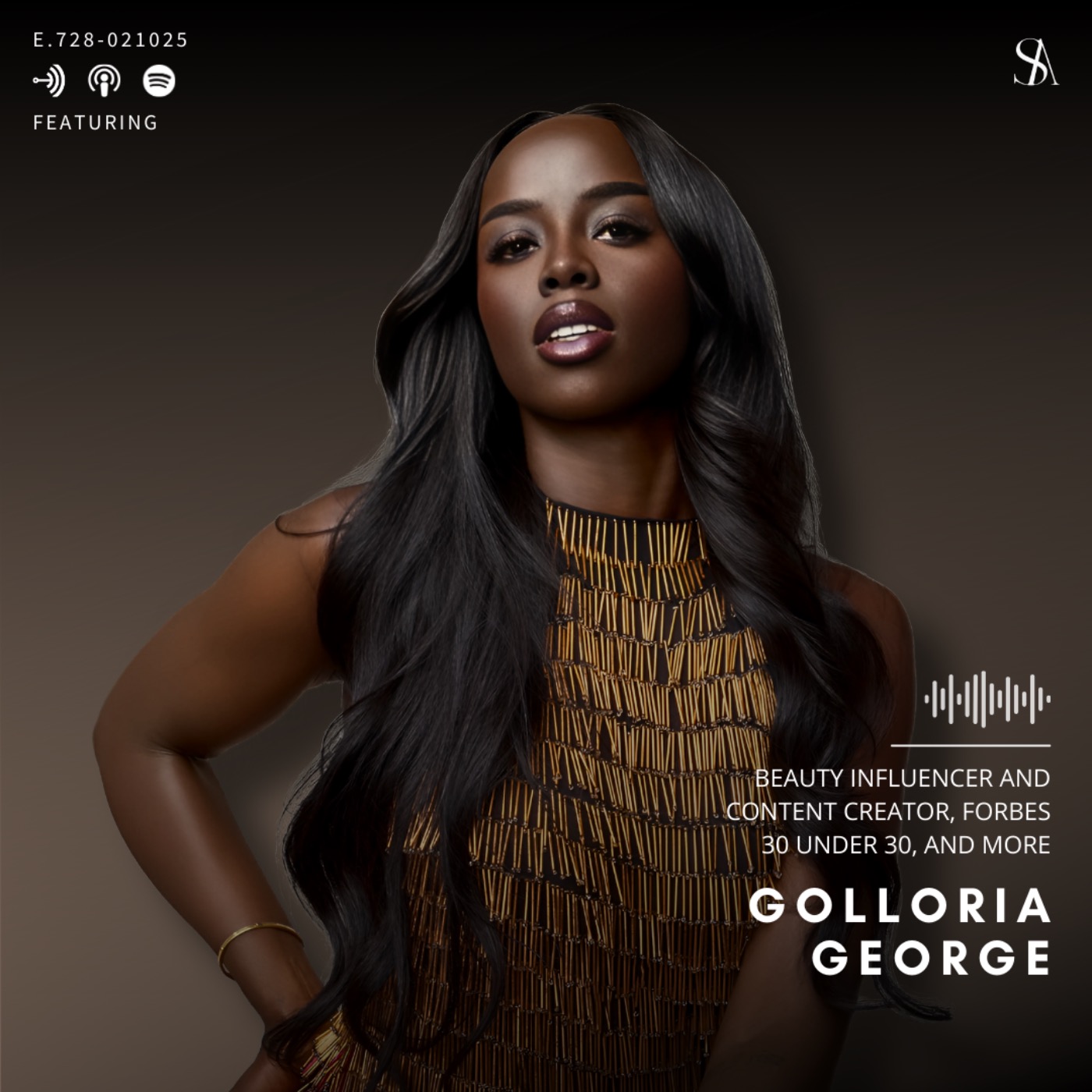
Loading summary
Transcript53 lines
- [00:00]
A
Hey, guys. Welcome back to another episode of Skin Anarchy. Our guest today is very, very special for me because I have been following her work for quite some time now. She's truly making a name for herself and also propelling the beauty industry forward when it comes to inclusion, diversity, true representation. And a lot of you might have seen her on social media and are probably following her. So without further ado, I'm going to introduce you guys to Gloria George. Welcome, Gloria. I'm so honored to host you.
- [00:28]
B
Hi. Thank you guys so much for having me. I am so excited to be here.
- [00:33]
A
It's such an honor. Such an honor. I really love your work. I'm. Like, I said we were talking before, I. I'm such a fan, you know, and since I saw your first video, I was like, she's really going to do something huge here. I knew immediately, so. And you have. All that being said, I want to learn more about you, and I know you have such an incredible background and your journey into the beauty space. Kind of walk us down memory lane, if you don't mind.
- [00:56]
B
Genuinely, it was just the. The lack of access. I just constantly rem going to, like, the grocery store with my mom, and, like, while she'd be shopping, I would be in the beauty section. I'd be like, nothing actually works for me. And obviously, I was young, so I couldn't really conceptualize the reason fully as to why until I actually probably end of year, end of, like, my senior year, and then early college, when I realized, okay, the girls are putting on makeup and I don't have anything. And it's not that I don't have anything. It's also just the fact that they're not making anything for people that look like me. And so it was a really hard pill to swallow. I feel like just because being excluded to such lengths, whenever it comes to something as simple as, like, blush or concealer or foundation, it's such an abnormal experience that it's. If you've never experienced it, you would never see an issue with it. And that's why I get, like, the hundreds of comments of being like, well, just try another product. Just try another brand. But if we don't even have access to other brands because they're not even making the product, that's where the issue lies at hand. Don't see us. They don't want to see us. And, you know, something had to shake. The darkest shade came about.
- [02:01]
A
Yeah, no, I mean, I. I love what you said because I feel like, so I'm a millennial. I'm 38 years old, and I remember even my. I guess my skin tone is in the medium range. And I remember growing up going to, like, Walgreens, right? And I couldn't even find brown shade in my range. And I definitely did not see darker shades. Hearing that from you and seeing, like, that this is still not fixed at all. I mean, it's insane to me. And I want to learn about. I know you've spoken about this before from South Sudan and being a refugee. Can you tell us a little bit about that? I mean, I feel like you have so much wisdom.
- [02:32]
B
Yes, of course. It's just, like, there's a lot of trauma that I just obviously will not get into. But the effects of being displaced, honestly, are. It's the reason why I am the way I am today and why I'm so outspoken and why I lead the way that I do. Just because when you have no little, like, no access to, like, basic things and basic necessities, you just see the world a little bit differently. And not only do you see the world a little bit differently, but you also just are grateful for the fact that mercy is a beautiful thing. I never thought that I would be here. I never thought that I could do the things that I'm doing in this space and live the life that I'm living and travel the way that I'm traveling, it was not obtainable to me because everyone that I grew up around unfortunately became a product of their circumstances. And to see those peers not do as well as me, it really just, like, it makes you sit down and be like, wow, the things that we went through were definitely not normal, and it'll either make you or break you. And I think the strength that it took from me and my family to do what we did, and especially like my mom, I give her props all the time because the lady. The lady has worked hard to get her kids to this space. It just. My view on life is just not black and white. There's a lot of gray. And I feel like conceptualizing it at a larger scale of. This is bigger than beauty. This is like access. This is bigger than just, you know, let me put on some makeup. This is also about, like, human rights. It's also a part of me that I do share relatively frequently on social media. But also, we love the beauty stuff, but I'm also. I'm an activist at heart, and I think that's why I'm able to channel so much of that. This is the darkest shade. We need more inclusion in this space. Because I've already experienced oppressive things in my life. So.
- [04:18]
A
Yeah, yeah, I feel you. You know, this perspective is, is unique. I think a lot of times people talk about, you know, shade ranges and they'll talk about, yeah, you know, we need more diversity, we need more inclusivity. But it's like those words fall on deaf ears because there's not enough punch behind them. It's a lifestyle. It's not just a, okay, you made three shades. It's about, did you put thought into it what those people actually feel when they don't see their colors represented?
- [04:44]
B
Exactly. And those are just, you know, unless you've lived those experiences, you're never going to be able to be like, I wonder how a dark skinned girl feels going into Sephora and not being able to find a shade that works for her. Right. And I think people think that, you know, the content that I make is like fun content to make, but it's quite traumatizing to constantly try shades that don't work for you and constantly be reminded that you are not included in this space and you're not seen in this space and that these spaces were not built for you. It's a constant fight of systemic issues that are bigger than beauty. It's industry wide and not just in beauty. We see it in acting, we see it in music, we see it in everything that we do. I just feel like dark skinned people are underrepresented and it is really sad. But I feel like with the work that I do, I'm making room and making headway to be seen. You guys will see me.
- [05:32]
A
Yeah, I think you're doing a phenomenal job of that, honestly. Because I watched one of your videos, it was so unique because you were talking about representation isn't enough. You have to really support black brands and black people and you have to actually understand. And I want you to speak a little bit on that.
- [05:48]
B
Yes. Because you can make a product. Right. But when the inclusion and the DEI work is not being reflected on the brand trips and the people in the rooms, on the teams, that is why we have these little mishaps. That's why we have our shades not being made. I guarantee you, if we had dark skinned women in the room, if we had black women in the room that were like, hey, before we launch this, maybe we should add a few more shades, maybe we should do this, maybe we should change this up, a lot of these discrepancies would not be happening. But again, I think in our current political environment as well, DEI is not something that not important. And it's very apparent, however, that is how these changes happen, and that's how these things and these movements continue and make markers in this world. Especially with just like black creators, you can sit there and make shades for us, but to amplify a black voice is to make sure that there are black creators on these trips. Make sure that you're also paying them not only just equal wages, but you're actually just letting them be on these paid partnerships as well. I've seen so many partnerships throughout my time creating this industry where there's just no black people. I've been on brand trips where there have been no black people. And it's so dystopian to see that exclusion goes beyond the product. I have been around teams from certain brands that don't even have a singular black person on their team. Right. And if you don't even have a singular black person on the team, you never experience the things that we have experienced. So how are you to know? And whenever we allow for black voices to infiltrate these spaces, that's when these productive conversations could be had and these productive changes could be made.
- [07:23]
A
It's kind of shocking that this day and age we don't have behind the scenes. In the very beginning of product development, there's not an actual voice that represents the product you're going to eventually sell to the masses. I've watched you really kind of review brands and review all the shades. Every time. I'm left baffled because I'm like, how can you say this is the deepest shade you have?
- [07:45]
B
It's just. It's very dystopian, too, because I think that they all think that we're like one shade. For example, like the medium shade range, a lot of those shades lean a little bit more yellow, and in the dark shade range, a lot of them lean a little bit more orange. They quite actually just see us as like one color with no undertone, no depth. There's never any versatility. And inclusion is not just creating one or two shades in each category and calling it quits. You have to do the work. Like, you have to do the research. You have to realize that this work world is filled with billions of people, billions of people with billions of skin tones, billions of undertones. And at minimum, the least you can do is make sure that there is a product for everyone. But beyond complexion, I mean, I should be able to pick up a blush and it not be ashy on me. I should be able to get a bronzer, a contour that would work for my skin tone, there are complexities and there are layers here that I think people kind of just like, misstep, and they just kind of dismiss. My number one comment is, well, why do you need bronzer? Why do you need contour? Why do you need bronzer? And why do you need contour?
- [08:48]
A
Right, right.
- [08:49]
B
You know?
- [08:50]
A
Yeah.
- [08:51]
B
So it's. It's crazy to see, but all you could do is pray that with time.
- [08:56]
A
Yes, with time, yes. There's this level of. I think sometimes I've seen this and I'm not going to name any names because I honestly don't remember them off the top of my head. But, like, there have been brands that just simply just. They're just not going to do it. And. And I want to ask you about that because I know that you've worked with brands, you've guided them, you've helped them. Tell me about the first time this happened.
- [09:15]
B
I don't remember the first brand that I Shade consulted with. Oh, my God. I've consulted with so many. But I do remember the initial, like, moment of it happening and just doing the work to make sure that the shade was working. Recently, though, I can talk about a recent shade collaboration with Rhode with the new lip liners or the lip smudges that came out. That was definitely a process. There's a lot that goes into shade consulting. There's a lot that goes into making shades. It's not an easy task. However, if you're committed to doing it as a brand, which I genuinely believe that Hailey and Team Road are, it can be done. It's not impossible, it's not out of reach. It can be done. It's just going to take a little bit more work and you just have to listen to the consumer. I think that that is the number one takeaway that I think brands could just take off of, is listen to the consumer. Because what you think might be enough typically isn't enough, and there could always be more done. We've seen it with, like, a ton of these launches. Like, in the past New Year, like, a lot of brands have been coming out with complexion launches that are just like, okay, so we really were not in the lab, guys. That's very interesting. Also, it's not that surprising just considering that their other products on the range are not up to par either. And a lot of those issues, if you hire a consultant, if you make sure that you're hiring black chemists, if you make sure you're hiring black product developers, we could literally get rid of so many of Those issues. I think that the biggest tell of this period is that there are brands that are actually doing it. For example, Danessa Myricks. She is a dark skinned woman herself. Every product, every launch, anything that she drops will work for me, guaranteed. I don't even have to worry because she would never. I think she's just, she's so passionate about what she does and she's also experienced that type of exclusion not only as a dark skinned black woman, but also in this, this space of beauty and being a CEO and leading and creating change and being one of the only black brands in Sephora. Like that is not an easy task. It's not an easy task to constantly have to, you know, be reminded that your gondola space is like this big talk about Danessa.
- [11:19]
A
And I swear to God, she is such, such an inspiration for me. I remember I interviewed her and I, we both were like crying on that interview. I literally was just thanking her the whole time.
- [11:29]
B
Thank you for everything that you do. Every time I have a conversation with her, I literally just end up crying because it's just, it's not only to be seen, but to be seen is to be loved. And to be loved is also just like reflected in all of her products. All of her products are made with so much love and that's why they look so beautiful on black and dark skin. And it's just like you just can't. That type of work ethic, that type of love for curation and your, and your craft, we don't see in a lot of these beauty brands. I feel like sometimes beauty brands just kind of like push out stuff and then continue to push, continue push. Creativity gets lost in the wind somehow. And when that laziness sparks, obviously the products are not always going to hit. And I think that with Danessa, she just carefully curates everything and unless it's perfect and unless it works for everybody, she's not going to drop it. She makes it known that we should be included the first time and we're not an afterthought. And I think that goes a long way in this industry and in this space.
- [12:26]
A
Absolutely. I love that you said that. And I, I want to ask you this question because I feel like this is always on my mind is this idea of all of these brands. We have these amazing thought leaders such as yourself advocating for all of these wonderful things. But then I feel like there are some brands that treat it like a tre, they'll do it and then it kind of gets lost eventually, you know, in their Lineup. And what are your thoughts on that in terms of making this not a trend and making it an actual integration into your brand voice?
- [12:54]
B
Honestly, my initial thought is that inclusivity is not at the forefront of your marketing, the forefront of your products. It's just like an easy tell. You know, I think some of these brands think that they're getting away with it, but the consumer is not stupid. And I think when they realize that, they're going to start actually being serious about more of the product that they release. However, I do think that the initial. I'll just drop one product, make sure that it works for dark skin, and then they'll drop like a few products down the line and there will be like one shade, one shade that works for dark skin. It's just an easy tell. You're not actually trying. You actually don't want to be inclusive. You just want. Don't want to be used to. Want the smoke. That's what it is, you know, so you're just like, I'm just going to add it in here because I'd rather avoid all of the accusations and everything else. So we'll have one shade, but it's a lazily done shade, you know, so it's not any better. And we see it and it's reflected. And if inclusivity is just not at the forefront for you as a brand, then I think that maybe we should reevaluate.
- [13:56]
A
Yeah, like, what are you doing? Really?
- [13:58]
B
Right.
- [13:59]
A
What are your ethos? I hear. I hear you on that and I agree because I think that a lot of times it gets to the point where the people that are making the decisions are. I mean, I'm not gonna lie, they're very intelligent. They're intelligent business mind. And I think that that really does play into why it's like, okay, we'll do this for now and we'll quiet the masses and then eventually we'll just go back to whatever is like, cost efficient for us. The conversation I would love to get your insight on this is that I hear this all the time. If we make the darker shades and we make like a truly inclusive range, how many of those products are actually going to sell at the end of the day?
- [14:32]
B
The thing is, a lot. I hear this argument all the time, but the number one consumer of beauty products, the number one race, is black people, Black women. Once people actually look at the science, look at the statistics, at the end of the day, the black dollar is a very exp dollar. And I think that, you know, in this world and in this life of how black people have just been oppressed and seen and viewed that these brands really just think that we're not worth anything. Right. But statistics show that we are. And until they actually see that, that's when. That's when I think the brands will actually be like, okay, maybe we're going to leave the shades here. I know the shades are. It's more expensive to make. If you're adding more to a range, regardless of the shade, it's going to be more expensive to make. But if the black dollar is the most spent dollar in beauty, why not make the shades? Come on.
- [15:22]
A
Yeah, yeah, no, I hear you. I mean, honestly, I've never understood that argument either, because it's like, you're making a lot of these lighter shades. I mean, if you look at some of the lightest shades in some of these ranges, they're, like, almost porcelain white. I mean, it's kind of crazy. And then you're making the argument of like, no, we can't go darker. Why can't you go darker? Just understand.
- [15:43]
B
Exactly. And I feel like sometimes people forget that. The same way that I advocate for the darkest shade, the lightest shade is also being advocated for as well. I have some content creator friends. Ocean. She's literally, like, such a beautiful person, and she typically wears the lightest shades and everything. And like I said prior, a lot of them lean, like, yellow on her or abnormally pink. And she's literally advocating for the exact same thing. But even though she's advocating for the exact same thing, I will say that there's always going to be a more influx of those lighter shades than there are those darker shades. I think I can name all of the brands in Sephora that actually carry my shades on six fingers. Yeah, like, maybe six fingers. And there's, like, over 200 brands in Sephora. And that discrepancy right there, it just. I think it goes to show that, you know, white people are very catered to in society, and it's a little disheartening, and it's a little. It's a hard conversation to have because it's just. Well, we see it. It's obviously being done, and what can you do about it besides use your voice? And I think that's why I continue to scream at the top of my lungs that this is not good enough. Like, this is not good enough, and I just don't care. People take it as complaining because we see them doing it with the lighter shades. We see them working 10 times harder on the lighter Shades, we see them, you know, catering to certain markets, except for black markets, and that is, it's just a pill. And it's a really thick systemic pill that is just so hard to swallow, literally.
- [17:17]
A
Yeah, no, it really is a poison. And you know what's crazy is like, I often think about everybody that kind of falls in between because at the end of the day, you're very, very accurate in what you said. You know, the black dollar is a very explicit, expensive dollar. You have to pay attention to that, the economics of it all. But more importantly, I mean, what's your message for everybody that falls in between? Because I won't lie, I am one of those consumers. I will not buy a brand if you don't include people. I don't give a crap if you have my shade. Cool, you got my shade. All right, well, what about my friend? You don't got her shade, so I'm not going to buy your brand. Sorry. What's your message? What's your message to that to the rest of us?
- [17:56]
B
Yeah, honestly, I, like you said, like, I feel like it's, this is unity is so important. You do not have to experience the exact same things that I experienced. For you to have empathy, for you to literally just be like, you know what, this is just something that I don't want to support and this is just not something that I want to spend my money on. Especially because I know that it's, it's always going to be at the cost of my peers and the people that I care about. It's definitely hard to do that to redirect your spending to more ethos wise brands that are just more ethically, you know, just those girls, it's just a little harder for sure. But once you have actually, like separated the difficultness from it and are just like, you know what, this is what I believe in. And I'm actually just going to support the brands that support people that not only like, look like me, but the people in my life that I know don't look like me too. To take a step back and like, understand the privilege and being able to go into a store and get your shades or any product that you want to try, new launch and get your shades and to still sit there and look at the darker shades, because that's what you have to do. You can look at your shades and be like, oh, they have my shade. I'm going to grab it. Right? But it takes another type of strength for you to be like, okay, they have my shade, but let me move my Eyes this way. And let me look at the darker shades, right? And the second that you sit there and you look at the darker shades and you're like, you know, maybe this isn't. This. This isn't going to work. I feel like I have darker friends than this, or I have friends with more complex skin tones than this. I think that should be enough. And it's very telling of a person, of the person that you are. And a lot of this work cannot be done without that type of. Of unity.
- [19:31]
A
I love that. Yeah, I'm with you on that. You know, all about unity, because my name actually means unity. I love, really believe in it, though. I think that people need to get behind what's right at the end of the day. Like you said, you know, it's the ethos, the ethical stuff. I mean, you have to have that moral compass inside of you. And it's one thing to support. Brand might have a great formula at the end of the day, if that formula isn't serving. I mean, the beauty industry to me is about serving like you're serving people. You're allowing them to feel creative and to feel something inside themselves. And I'd love for you to speak on this because I think the idea of beauty is obviously so different for all of us. But what do you think this all does for especially young girls? You know, because I worry about the younger generation a lot. What do you think this does for their perception of beauty?
- [20:19]
B
I get this question a lot, but my content, it's hard content to make. It's really hard content to make. But I was also a kid experiencing colorism and racism and experiencing a world where how I looked was not the beauty standard and how I was perceived was always in a negative light. That is a very, very uncomfortable feeling to sit with at such a young age and to understand at such a young age. And that's why I create the content that I create, because we should be able to redefine beauty on our own terms. And. And that is always going to start with advocating for yourself, advocating for people that look like you, and advocating for communities and voices that may have not had the voice to do so in years prior. And it's a very big responsibility, and it's a very hard one, too, because, you know, the same way that these girls are experiencing the same things that I experience, again, I experience them, and I'm also healing in my own way. The only thing that I can say is, is that your beauty, once you. You finally stop wanting to be the status quo and Start challenging it and you start existing for yourself and doing it unapologetically. That is whenever you're able to redefine not only your own beauty standards but the beauty standards of how you perceive other people as well. Because I think that's what people don't think about growing up is that whenever you're making fun of a dark skinned girl, not only are they thinking internally oh, I'm not good enough, but they're also thinking, oh, so if they think this way about me. So I think all of these other dark skinned girls probably just, they're just not beautiful either. Right. Because that's how the world views us. Right. And so they continue to have these perceptions of what beauty looks like based on societal expectations and just, societal perceptions just starts bleeding in everything that they do. You're not as confident. There were so many things that I just remember growing up that I just, just, I wish that I could tell my little self, you are beautiful in your own way. And that is a decision for you to make, not for society to make. And yeah, I think my platform is a really good space for dark skinned girls to learn to just talk your truth. If, if it bothers them, it bothers them. But if it's the truth, it's the truth. Your experiences are your experiences to validate your beauty is your beauty to validate. And until you're able to do that unapologetically, you're never going to be able to live in a world where you're, you're fully comfortable with yourself, fully comfortable with your blackness. And it's hard, it's hard to live like that. It's hard to live like that. And I lived like that for so long and until I started challenging that status quo, I think that's when I felt that freedom. It's a beautiful form of liberation. It's a beautiful form of just existing unapologetically. And I hope that all the dark skinned girls who have experienced that type of trauma and hurt that I experience are living in a world and continue to live in a world where, hey, you see me, you may not like it, whatever, but I know who I am and that's all that matters.
- [23:19]
A
Oh my God, I love that. Gosh, you are such a courageous human being. I just want to say no, thank you for being the way that you are because literally like we can't get enough of you, you know, all of your, we love you so much because of this. And I, and I feel like everything you just described, it takes so much courage to live like that and to face the odds and to never just give up on who you are. And that is just something that is so, so, so deeply beautiful. And I hope that the young women out there right now that are growing up, Even though it's 20, 25, and I, when I, when I was 18, I was hoping then that we would not, you know, be a lot further along. Now, fortunately, we're still here and, and it's like, you know, I just hope that they, they realize that this industry not, Is not always going to represent you in the best way, you know, but you have to represent yourself. So I love what you said.
- [24:08]
B
Exactly, exactly. Thank you.
- [24:10]
A
You, you create such candid, honest content, and I love that that you do that. But I know that you also get pushback. How has that been dealing with the critiques and all that?
- [24:21]
B
I know this is like, really? No, I, if you're white and you've never experienced the things that I've experienced, your critiques do not matter to me. Hello. Goodbye. And that's just that in terms of the other critiques, I'm just like, at the end of the day, like, if you are not a person of a darker complexion, I really don't care what you have to say because you haven't experienced the things that I've experienced. And on top of that, because you haven't experienced the things that I've experienced, you don't understand the frustration. Right. And so a lot of people think that it's just like, misdirected or I get tone police, like, literally all the time, like, oh, well, you need to be nicer and da, da, da. But why? Yeah, why, why should I be nicer? And why are you viewing me honestly saying that this isn't working as a negative thing? Why are you tone policing me and just automatically assuming that I'm just being angry or I'm just finding, finding a reason to be upset. Right. And that again, that again, just ties back to the systemic racism and colorism that black people face in the United States and everywhere else around the world. Like, and it's not even just black people, but specifically black women. When we speak, it's really, really difficult for people to actually just listen. We've seen it throughout history. We've seen Rosa Parks, we've seen, for example, Jackie Aina. We've seen Nima Tang. They have done it at such lengths and they have continued to receive pushbacks and they do it anyway, despite it. Right. Because whatever you have to tell me is not bigger than my end goal. It's not bigger than what I want to see in this world. And the shift that I want to see in this world for the people that look like me and for myself. And until people actually get that into their head, the hate is never going to bother me. Because I know that my divine purpose in this world is bigger than me. And that's why I create the content that I create. Because I know that there is a dark skinned girl watching my content, being like, wow, she looks just like me. If she could do it, I can do it too. So keep the hate coming at the end of the day, keep the hate coming. It's quite okay. My content is not for everybody. You can scroll, you can block, you can unfollow. But again, I make my content for dark skinned women. And if you are not dark skinned women, you can either absorb it, love that you do, or you cannot. And that's okay.
- [26:28]
A
Yes. Oh My gosh, yes. 100. I love that. I love that you brought up Jackie. Especially because I remember when I was in medical school, I was watching Jackie. I remember just, yes, thank you. You know, like, she was so grateful about it. And I mean, it's the best thing about, I think, black women, when you guys raise your voice, this is my favorite part, is that it's always graceful, it's always hard hitting, and it's the freaking truth. You can leave the building, you know, it doesn't even matter. There are people here who do get it, you know, and those of us who get it, we're like, yeah, okay, please keep talking.
- [27:01]
B
Right?
- [27:02]
A
Because you're not just representing yourselves, you're representing the rest of us, you know, the rest of the shades, the rest of the individuals. I mean, I just remember, you know, even at a younger age, I was, you know, I came here, I mean my, I come from an immigrant family and I was very young when I came here, like four or five. And the first people, the first kids that embraced me personally were African American young women. They were the ones who taught me about makeup. They were the ones who told me about my hair. I didn't even know about my own hair. And they were able to help me and like feel comfortable in my skin in this brand new country that I landed in. It's so deeply rooted in our, our culture to like listen to black women and to understand that they're coming from the most genuine place that you can come from. And I just want society to get to that point.
- [27:48]
B
I mean, black women are like the most educated, we are the most strong willed, we And I think it just comes from a place of anything that we want done because the world has constantly told us that we can't, we're going to get done. And the world has constantly silenced our voices and silenced human decency, literally. And to be treated like a human that. I think we're in a day and age where black women were just like, no, I'm calling shits. I'm calling shits. You will hear me or you will not. But at the end of the day, this is my life to live. I'm black as fuck and it's quite okay. And I'm also smart and I'm beautiful and I'm a doctor and I'm an influencer and I'm a lawyer. And you guys are going to see me alhamdulillah. And that's all you can say.
- [28:30]
A
Exactly. Yes, I completely agree. I, I want to shift gears a little bit because I know you were recently on the Forbes third under 30 congratulation, by the way. So well deserved. How has that been, I mean, in terms of getting that recognition? And you know, you're. You're 23 years old, so.
- [28:46]
B
Yes.
- [28:46]
A
Must be amazing.
- [28:47]
B
Yes, it is. Wow. Like, I, I work so hard. Like, I genuinely work so hard. And I never thought this would be attainable for me just because of the life we lived and just not coming from money and experiencing like, the worst of worst, like not having heat, not having electricity, not having basic access to things. And I think that people are like, oh, you know, you're 23, you're so young. Like, how did you do this? How did you do this? Well, it was by force. It was by force. When your circumstances are so bad, and I mean so bad to the point where you really just don't even know if life is worth living. You either will push through it and you will work through it, or you will either break and you will, you will let your circumstances break you. And that's like the worst of the worst. I've seen it happen to so many people that I care about. And to know that I had the strength to, like, push through and continue to use my voice and amplify the voices of black creators and do it at such maths and just like lenses, it literally almost makes me want to cry because it's just like, this was not supposed to happen for you. These were not supposed to be in these cards for you. A lot of people just do not make it out of poverty and living a life without basic necessities and just even being a Refugee. And having parents that don't even speak English is one of the hardest things that you will experience in this life. Like, no one can convince me otherwise. And to be able to say that. That I did it, and at such a young age, I'm so, so thankful that I was able to do it, but also, like, I'm now at a place where I'm like, okay, you did it, and now you can rest. You can rest for a second.
- [30:20]
A
Yeah. You're so. Lies beyond your years, though, you know? Like, I know I've said your age a few times, you know, but really, I mean, I feel like you're just so wise and, you know, so much more than that. I did, you know, 23. I was. I was lost, you know, and so I. I love that you're getting this recognition. I. I want you to get all the. All the freaking recognition out there, because, I mean, it's literally what changes the world is what you're doing, and I love it and I'm here for it. And I. My last question for you, Gloria, is if you were to give any advice and words of wisdom to all of the young women, all the young creators out there that are listening, what would that be?
- [31:00]
B
Probably to not pay attention to the distractions of this world. It's very easy, distracted. It's very easy to fall into things that, you know, may not be super productive for you. It is really hard to submit, right? Submit to a higher purpose. Submit to just a higher version of yourself and higher principles. It's hard, it's difficult, and sometimes it's really tiring and it's really exhausting. But the second you are able to do that, I think that's when you're going to be able to see your wings just like. Like, just fly. Right? Takes a lot of trust. You have to trust yourself. You have to trust that there is a divine purpose for you. You may not see it right now. You may not know what it is. You may feel like, dang, the world is just like a really cruel place. And I'm sure a lot of us feel that way. But you have to have hope, and you have to have hope that your voice and who you are and the strength that you carry and the purpose that you carry in this life is going to turn into something beautiful and abundant.
- [32:01]
A
I love that so much. Thank you so much for offering those words because it's. It's just so important. I love that you're putting your content out there, but I just hope that there are going to be more people that follow in your footsteps in that way and really kind of voice themselves, you know, and their concerns. And I feel like that's how this industry, every industry is going to grow like that.
- [32:19]
B
We pray. We pray, guys.
- [32:21]
A
Every day. Every day. This has been such an honor.
- [32:25]
B
And so thank you for having me.
- [32:27]
A
Best part of this year so far for me, so thank you.
- [32:30]
B
Thank you. I cannot wait to see it in full form.
- [32:32]
A
I hope you guys loved that episode with Gloria. It was so amazing to chat with her about everything related to the beauty industry. I just want to remind you guys before we go to make sure you follow and subscribe to us anywhere that you're tuning in. Whether that's Spotify, Apple Podcasts, Google Podcasts, Amazon, we are everywhere. And we would love for you to follow along for all of our episodes. Also, do not forget to check out our shop, My Shelf, which is where you can find all the products related to the brands that we host. And this is a great place for you to look at our curated lists of products and find something that really fits you. So thank you so much for tuning in and we will be back with another episode.