← Skin Anarchy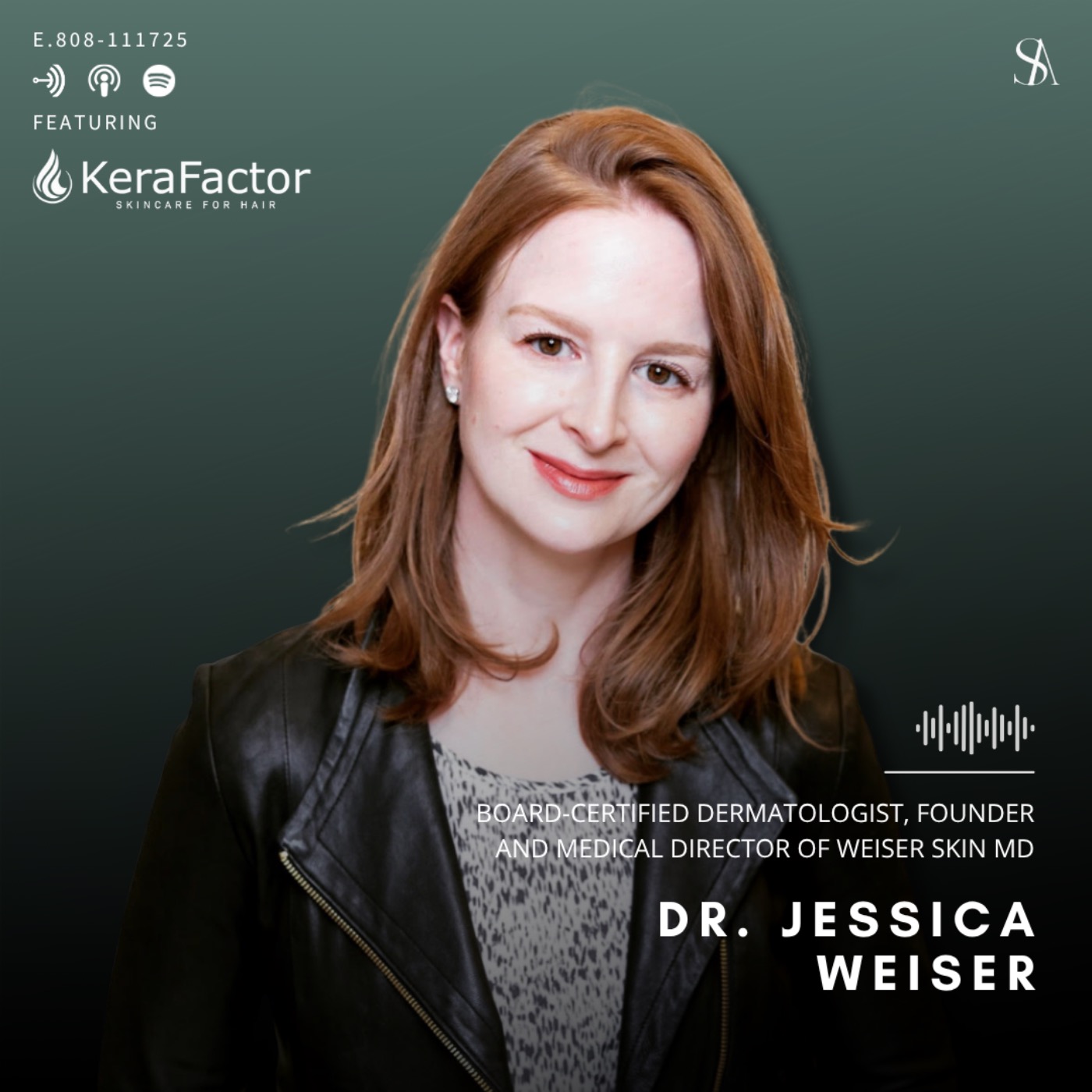
Loading summary
Transcript53 lines
- [00:02]
A
Hey, guys. Welcome back to Skin Anarchy. Today we're diving into the topic that I think a lot of us are always wondering about and it never gets enough attention, which is the scalp. We always talk about skin health, aging, wrinkles, when it comes to facial skin, but when it comes to where your hair actually grows out of the hair that we take care of on the routine, the scalp, we never get to discuss that. So joining us today is someone who is truly bridging the gap between dermatologic science and true Real World Innovations, Dr. Jessica Weiser. She's a board certified dermatologist and founder of Weiser Skin MD welcome, Dr. Weiser. I'm so excited to host you.
- [00:39]
B
Thank you so much for having me. I'm really excited to be here and finally get to address the scalp and all the attention that it really deserves. I think that we really don't think of it enough as its own sort of skin component.
- [00:51]
A
Yeah, no, we really don't. And I'm excited to actually dive in and unpack the science behind Cura Factor and the Cure Flex Duo system, because it's a wonderful set of products and I can't wait for our audience to discover them. But I want to actually start with you telling us a little bit about yourself. Walk us down memory lane, if you don't mind, and give us a background on what got you into dermatology and all the good stuff.
- [01:12]
B
So I am originally Canadian born and has a background in biochemistry and economics. I did my undergraduate training at the University of Pennsylvania. I did medical school at the Montefiore Einstein Medical center up in the Bronx in New York. And then I trained in dermatology at Columbia University on faculty there as well. And I really became interested in dermatology because I felt that the skin was really this very interesting portal to what was happening inside the body. So much of what happens internally has external manifestations, and I think that's often overlooked. And really understanding the skin and how it works as its own organ system I think is really crucial to the understanding of both the physiologic function of the skin when it's normal and when it's healthy, and then also to the pathologic function of the skin. And so I love that interplay of inside and outside. Since practicing dermatology, I've been 15 years out of my residency training program. What I have really decided as my focus and my specialty is how to optimize skin and both hair and nails as components of the skin organ system. And so my practice is very largely Energy based devices and lasers and really working on restoration as opposed to enhancement or changing.
- [02:32]
A
Interesting. Yeah, that's very interesting to me. This area of scalp health. I really want to get us started with the basics. And yeah, people often forget that scalp is actually skin. We never really discuss it in that context. Why is the scalp so important when we talk about overall hair health?
- [02:50]
B
So the scalp is really its own actual skin ecosystem. It has all of the different components that we have on the skin as well. But then we have this really dense hair follicle network. And so the scalp is really thicker skin, more vascular skin and more glandular skin. Within that ecosystem we have the scalp microbiome, which is really a community of microorganisms containing different bacteria and yeast predominantly. And the function of those healthy bacteria and yeast is really to protect the scalp against pathogens or disease causing bacteria and yeast. This microbiome also helps us regulate our sebum or sort of our oil production. And it also helps to support a healthy barrier function so that we're not getting irritation and cracking and dryness. The really rich vascular network of the scalp is also quite interesting because it brings oxygen and glucose or sugar molecules and nutrients. And these nutrients really help to support hair growth by maintaining a really excellent follicle, sort of metabolic environment. Circulation also helps us regulate temperature. And the circulation is what brings our immune cells to and from really every part of the body. But that surveillance, that immune surveillance of the scalp, another really important component of that sort of microbiome, and then sebum balance. So sebum is the oil that we have on the skin. And because we have such dense hair follicle network on the scalp, we have a lot of sebum there as well. And this is really helpful for lubrication and to help us create a more water resistant barrier. But these lipids help us nourish our healthy bacteria and they help maintain an antioxidant, anti inflammatory environment. If we have too much sebum, we can run into problems. And if we have too little sebum, we can run into problems. So all of these components really help us maintain a healthy environment in which the hair really deserves and needs to grow properly and healthfully.
- [04:47]
A
It's really fascinating and I love how you framed it as an ecosystem. That is something that I think is such an accurate way to describe biology and just how physiology functions. I just want to ask what are some of the earliest or most common signs that you see when your scalp isn't functioning optimally before patients, patients even realize that there's an issue going on.
- [05:08]
B
So I think that probably the first thing that happens is we start to develop too much inflammation. And so inflammation, or we typically say we want to have a little bit of inflammation to act as a healthy immune system, but when we get too much inflammation, we can start to experience a little bit of itching or a little bit of scalp tenderness. And those would be signs and symptoms if you had dry skin on your body, that you would feel similar symptoms and that early sort of flaking, dryness, sensitivity are the first things that we notice as that inflammation worsens. Sometimes we can notice either a slowing in hair growth or actually increased shed or hair loss as well. And so our goal is really to try and maintain a much more balanced microbial diversity and to sort of balance the sebum production with the scalp needs as well, to try and prevent that sort of tipping over the edge into more clinical inflammation as opposed to that very healthy micro inflammation that we like to see in the scalp.
- [06:05]
A
Now, do you find that patients pay more attention to skin care than actual scalp care? Why do you think that disconnect exists if you do think that way?
- [06:14]
B
I do think that we all think that way. Right. I think even as dermatologists, people come in and all they want to do is talk about a skincare regimen. And only if somebody mentions a problem with their scalp do we really go, oh, we should really identify scalp issues here as well. And I think hair loss has become such a big concern that we're identifying a lot more scalp issues, were treating a lot more scalp issues, but I don't think that was the intuitive way that we were all trained. And so I really do believe that patients do pay so much more attention. I also think that there is a massive number of products available for skin health. We talk about sensitive skin, we talk about oily skin, we talk about dry skin, we talk about anti aging of the skin. We don't really talk about these issues with the scalp. And they exist in exactly the same way. And so I do think that the idea of proper actives, proper routine and regimen, how to cleanse, how often to cleanse, what kind of cleanser for the scalp is so important, just like it is with the face. We just don't talk about it quite as much. And I think it's really important to delve deeper into that.
- [07:18]
A
I could not agree more like, honestly, I don't understand why there isn't as much conversation because also, even when it comes to something like UV, we never talk about UV's impact on the scalp, even though it's like racist susceptible. So I couldn't agree with you more. I'm really curious, like, how do you see these ingredients, like the rise of things like growth factors, peptides, how do you see those when it comes to hair and helping bridge that awareness gap?
- [07:45]
B
So I think that there's a lot of opportunity with hair and with scalp. I think that if we start to think about the scalp as a biologically active tissue or another sort of almost an extrapolation of what we're doing with the skin, we start to realize that there's a lot of role for things like growth factors and peptides. The idea is that because these products are such small molecules, they can actually often penetrate down the hair follicles and act directly on that sort of growth area of the hair follicle and the dermal papilla. And so I think that we do have so many opportunities here to optimize the environment in which the hair grows in order to maintain hair growth, to minimize hair loss. And so using these little biologically active molecules like peptides, we're really going to find that you can really change the environment in which the hair grows. And so I think that we are right at this sort of tipping point where people are starting to think about these things. And I think that again, we need to start to come up with a more preventative approach as opposed to I have a problem that I want to fix because that's where we are with skin. We're so preventative with our skin scalp. We're still only reactive or responsive to problems.
- [08:55]
A
Absolutely. And I think this is the perfect segue to really dive into curo factor. I, by the way, I've been using it and I've been loving my results personally. And I really want to ask you what made you want to go into it and start with cure factor? Like, what was the initial spark?
- [09:13]
B
So I'll give you a quick sort of history of what I was doing beforehand so you can understand why I was looking for something more optimal. So I started injecting PRP into the scalp, I would probably say now, 12 plus years ago. And we were literally taking an old school serum separator tube, which was just something we used to draw blood and separating out the serum. We weren't concentrating platelets, we weren't doing any of that at the very beginning. And then even as the tubes became more and more sophisticated, what I found in GRP practice was that about one third of patients got a good result, one third got Maybe a moderate or mild result, and one third got absolutely no results at all. And so we were taking a procedure where we had about a 33% odd of getting a great outcome and we were injecting tons and tons of needles into the scalp. And I don't think there's anything wrong with PRP if that's your only option. But I felt that because we had no control over what growth factors and peptides and cytokines were circulating in our serum, that we really didn't have a way to quantify or explain to patients when we could predict if there would be a good result or a bad result. So it was always very hit or miss. And so when Carifactor came into my life, which is probably, I was going to say probably spring of 2020, so I was a very early adopter. So it's been about five years. And I have essentially transitioned my entire hair loss practice and hair restoration practice over to care factor, both in office and at home. And the reason is that they have essentially created seven perfect biomimetic growth factors. So they are replicating growth factors that we normally have in our circulation, and every single one of us has them in different concentrations. And so if, let's say I have very high levels of a certain growth factor and you have very low levels of a certain growth factor, where our response to our own plasma is going to be very different. But Carifactor has managed to optimize and put really high concentrations of all of the necessary growth factors to really stimulate and restore hair follicle function to an optimal point. And so what that's doing is it's allowing us to target follicle stimulation. It's allowing us to target angiogenesis or development of new blood vessels in order to increase that circulation back to the scalp. And it's also independently stimulating the stem cells and the bulge of the hair follicle. And so we're getting a healthier environment, better hair growth, and we're getting just a better nutrient rich system in which to help nourish and maintain that hair. And so CareFactor really provided so many things that I was missing prior to incorporating it into my practice, as I said, both in office procedures and for at home scalp care.
- [11:52]
A
Now that's so interesting because the approach, it's basically mimicking natural growth signals, which is literally like biohacking for your hair. That's amazing. For listeners who aren't maybe familiar with the molecular side of things, can you really break down what's happening at the follicle level when these peptides are applied.
- [12:10]
B
Okay, so first I always like to start by saying what's happening that's causing us to lose hair? I'm just going to give you a quick example of a couple of things that happen that caused the hair loss. So you can understand why these peptides really help regrow or restore some of that healthier hair growth. So for example, the most common kind of hair loss that we treat with care factor is something called androgenetic alopecia. And this can happen. This is hormonal hair loss in men and women. And what we find here is that we're getting a hormone called DHT or dihydrotestosterone that binds a receptor and essentially reduces the growth phase and increases the shedding phase by changing up a whole bunch of what's supposed to be happening. And so we're getting a fibrosis response in the hair follicle and we're getting less blood flow and we're getting some what we would consider negative cytokines or negative signaling. And so peptides are essentially doing exactly the opposite. They're reactivating the dormant hair follicles. They're helping to stimulate re entry into the antigen or growth phase of the hair cycle. And what that's allowing is it's allowing a whole regenerative process. We're ess taking a dormant follicle, we're reawakening it and we're making it produce a healthier hair.
- [13:19]
A
That's really interesting because it's very targeted. It's become so hyper targeted at this point that I think that's the most fascinating part to me. You're not, it's not just about people used to just say apply this serum. It's not about that. It's more about really orchestrating real cellular behavior and having it behave a certain way to get the results you want. So I find that to be very unique. So when you combine the scalp stimulating solution with the in office procedures like microneedling or laser therapy, how does that synergy work?
- [13:49]
B
So the idea behind the treatment where we're doing an in office carrefactor treatment, what we're doing is we're using typically either a non ablative laser or a microneedling system to create micro channels in the scalp. And they're actually shown with studies that just enhancing the circulation and creating these little open micro channels starts the process of also stimulating healthier hair follicles. And we're taking it two steps further. We're then introducing the care factor Serum. And so the care factor MD is the serum that we use in office. And in addition to the seven biomimetic peptides, it contains three other sort of remarkable ingredients. One is a product called follistatin. And what it does is it essentially is a binding signaling protein. And what it does is help us to control the hair life cycle. So we're really helping to stimulate those follicles in a much more positive way. It also contains polydeoxyribonucleotide, which is very hot ticket ingredient. And this was contained this product long before it became the trendy thing to talk about. And PDRN works by increasing cellular activity and cell turnover. And so you're getting enhanced regenerative, healing, reparative process. And then the third thing is the nanofluorosome. And that's really where the third step of the in office procedure is. So lasers to enhance absorption. The nanofluorosome is the active ingredient that has both anti inflammatory, so reducing excess redness, swelling, inflammation, some of those negative cytokines and antiandrogens. We're actually locally inhibiting or reducing the impact of androgens or male type hormones on the hair follicle. And so the third step to activate this is that we put a red light in office on and then we also have the ability to do that at home. And that's going to enhance the efficacy by activating this nanofluorosome. So the idea in office is that patients come in and it's a 10, 15 minute procedure. It's very quick. But because we have this ability to package these peptides and active ingredients in what's called a nanoliposome, which is a tiny particle, we're increasing the absorption to the hair follicle bulge where the stem cells are. And we're getting those peptides right to the local level where we want them to act and where we want them to do their stimulation. So they work so so much better than if they weren't packaged in this little liposomal particle.
- [16:07]
A
That's so fascinating. We talked about microenvironment earlier. This is basically like building a microenvironment for the regrowth of the hair.
- [16:14]
B
Exactly.
- [16:15]
A
Very similar to how we do skin rejuvenation. Very interesting. So let's talk about the new Curiflex duo system because this really seems like the future of at home hair wellness at large. I haven't really seen anything else like it. What exactly is it and how does it work?
- [16:33]
B
So the Cariflux duo is the newest product from Carifactor. And it is their sort of new sort of red light cap. And so they had their original one, which to me was also already cutting edge. It had a really high bulb count. But the Caraflex duo is taking it a step further. So it has 312 medical grade laser diodes and so I think is the highest count on the market. And it's a cap that can be used at home. It has two different wavelengths. So it has the 650 nanometer, which is the classic red light that a lot of the different products have. But it also has an 808 nanometer wavelength light that allows for deeper penetration. The Caraflux duo sits really close to the scalp. A lot of products have this big separation. When you go and put your cap on at home, the light is like 4 inches over your head. You're like, is it even getting there? Is this actually doing anything for me? What we find with the Caraflex duo is it gives you really full coverage and it's really close to the the scalp. Plus you're getting dual wavelengths. You're getting more superficial activation and deeper stimulation at the same time from this low level light therapy. It's pretty remarkable. I've actually never seen anything like it. And honestly I have five or six different red LED caps at home. And not that any of them are bad per se, but if you're going to do it, you really want to do it in an optimal way. And I think that the Cariflex is really optimizing the delivery of red light, red laser light to the scalp.
- [17:57]
A
Yeah, I actually love it. So you wear the little baseball cap and you're walking around the red halo. I love it. I love it. I think it's really neat. And I, I've been really enjoying using it myself. Like I said, I've been loving the products. And I think for anyone out there, like that's the thing is like one of the biggest things with hair. I'm just like adding my two cents here. But like the biggest thing with hair is you want it to be convenient because that's the number one thing. And I feel like that's where this really stands out to me, this device. It's very convenient. You can literally pop it on. You don't even for that you're wearing it totally.
- [18:29]
B
It's comfortable. It doesn't have really cumbersome like cords or strange suction cup. Like some of them just feel really uncomfortable and you know, you're so more unlikely to use it. I think it's also, I believe six minutes is a treatment. It's so easy to do and so easy to be consistent with it.
- [18:45]
A
Yeah, you can do anything. Like, you can, like, vacuum, do your dishes, like you're good. You know what I mean?
- [18:50]
B
Just, yeah. I have a lot of patients who say that it's essentially as much time as it takes them to brush their floss and brush their teeth. So it can really become part of your evening routine without even actually adding any time to it.
- [19:00]
A
Yeah, I really enjoy it now. I love this idea of using energy therapeutics to actually reprogram the scalp environment. I'm a huge believer in, like, the power of light therapy. Can you walk us through how these benefits, like, for example, like the improved circulation, oxygenation, and also like follicle recovery, how do they translate into visible results for patients?
- [19:23]
B
So I think that the most important thing to know is how exactly red light works on the scalp and just understanding the process of what we call photobiomodulation, which is exactly what everyone says. Oh, I love light therapy. And you're like, yeah, totally. This is a really cool scientific concept, but the idea is that this light is stimulating your mitochondria. And yes, if you go back to seventh grade science, we all remember the powerhouse of the cell and the reason that we all called it that is because that's where energy or ATP molecules are made. And so this idea that we can put light onto the surface of the scalp and we can stimulate the body to make more energy molecules is essentially creating an entirely new casc. So we're increasing the turnover, we're reactivating those dormant follicles by putting in sort of a new surge of energy, which is increasing that growth phase and reducing our inflammation. So if we add energy, that circulation is going to improve. We're going to see better nutrient and oxygen transport to the scalp and to the hair follicles. We're going to see reduction in inflammation, and we're going to see overall improvement of scalp health. And so, as we talked about at the very beginning, what we're doing is we're essentially resetting that scalp ecosystem. We want the healthiest, most supported environment in which hair can grow efficiently and healthfully. Because you can have hair growth and you look at the hair and it goes, oh, it's frizzy and it's dry and it's brittle. This is actually growing thicker, healthier, silkier hair because we are improving that environment. We often refer to this as like a seeding the grass kind of concept. If you take A lawn and you just put seeds in one little spot. Yeah. Maybe you get a little bit of growth there. But if you actually see the entire lawn and you properly water it and nourish it with the right blend, the entire grass grows greener. And so what we say about the scalp is that by using this light, you're improving the quality of the entire scalp and all of the hair. Not just in focal areas where you're bothered, you're having a problem, you want to actually nourish and improve that entire environment.
- [21:24]
A
Yeah, no, I really love this concept and I think that is the real power right behind incorporating photobiomodulation into any kind of health routine, wherever it is that you really are exactly what you said. It's not just one dimension anymore. Now you're acting like an actual system and you're mimicking the system of growth. And that's beautiful. And that is real physiology at play. That's amazing. And I love that. Again, it's six, six minutes. That's it. Six minutes a day. Yeah. It's like you, you can't get better than that. And I feel like there are so many people out there that think that hair growth is this long, cumbersome, like at home routine. But this is, this is huge. For any of you out there that are using 20 products, this could be a huge replacement for you and save a lot of time. So that's amazing.
- [22:10]
B
Yes. Simplification is key. I think that with everything. The same way that if you give someone a 17 step skincare routine, they're probably doing nothing, but if you give them three steps, they're going to do it every single time.
- [22:20]
A
Yeah. And that's as I'm sure, just for our listeners, that's everything. Because compliance is everything. In a field like dermatology, you have, you have to really be consistent. You can have the best treatment plan, but if it's not sustainable, if you're not using it, it's not going to work long term. So that's absolutely huge. One of the things that I think really excites me and this idea of like multimodal care, combining topicals, light therapy peptides with nutrition and lifestyle factors, like all of that together, that's most exciting part, I think. Why is this kind of comprehensive approach so important in treating hair loss specifically?
- [22:54]
B
So I think that we often think of hair loss as one problem, one, one result. But hair loss is so multifactorial. What we find is that there are obvious factors like if you look at your parents or your aunts and uncles and they all have really thin hair. Probably not going to have crazy thick hair of your own. And so genetics certainly is one of the key components. But we also have to look at things like our hormonal environment. And when people talk about hormones, they think about things like, oh, my androgens are controlled, I'm fine. But think about cortisol. Cortisol is your stress hormone and that is a hormone like any other. And it has a huge impact on the hair follicles. And so what we say is that sometimes people say, oh, I haven't had any surgeries and I haven't had any major medical procedures, so I should be fine. But when then we start to think about psychological impact and just day to day sort of stressors and that can be very pro inflammatory and that can actually cause hair loss in and of itself. And then we also can think about internal components. And so with hair, oftentimes I say to patients, when was the last time you had a full panel of blood work done? What does your iron level look like? What is your thyroid function look like? And it's not necessarily that they have to be perfect, but they have to be within a normal range because the hair depends on so many cofactors to grow properly, that if we're not maximizing our internal health, our nutritional health, our antioxidant intake, even just fluid and hydration in the body, all of these things are going to somehow negatively impact the environment in which our skin exists, but even more so in which our hair grows. And it's easy to see when you're having a problem with your skin, right? Your skin, you get pimples or you get a rosacea flare and you get all red and inflamed or you get very dry and cracked. We ignore our scalp so much longer because it's covered by our hair that oftentimes we're approaching the scalp very late and we're not considering so many different factors that are contributing to its health or its lack thereof.
- [24:56]
A
No, I think this is such a huge topic and I love that you brought up all of those components because I think oftentimes, and I've seen this a lot with skin, right, because people are starting to finally have this conversation with skin, which I am here for, I am cheerleading this along. Because if you don't know your gut health, if you don't know your blood work and your biomarker results, you don't know any of that, then you can't understand what is it that you actually need. And then you have these customers that are patients and consumers buying 50 products and then they're saying, hey, listen, I'm allergic to this. You're not allergic to it. No, you're just, you're just using too much. So I think, yeah, everything you said really resonates with me. I think it's just so important to have that level of understanding when you're approaching this type of, of health concern at large. Let's talk about though, timelines, because I think that's where everyone really gets locked in is this understanding of like, how long is something going to take. So for someone who is just starting their hair wellness journey, what is realistic in terms of what they might start to notice when they start to notice the actual changes and the results they're looking for?
- [25:56]
B
So what I always tell my patients is that slow and steady truly wins the race here. Because the most important thing we want to do is we want to turn off the triggers that are causing us to shed, shed. And so the decreased shedding is actually the first miracle when you start to feel like you're losing less hair. We're winning. That decreased shed for me typically happens around the four to six week mark. And that idea that you're not seeing hair on every jacket, on every pillowcase, you're not getting a massive handful in the shower, it's normal, we say, to lose about 100 hairs a day, some people say 150. And so if you only wash your hair twice a week, you're going to have a lot of hair loss in the shower. But the idea that you don't have constant, just profuse shedding is the first key step. Once we get past that decreased shed, that's when we are going to start to see regrowth. The key with me, with something like a care factor system or using peptizing growth factors is that oftentimes around that same time, that six week mark, you start to see an improvement in the quality of the hair. Because we've nourished the scalp, the hair starts to feel silkier, it starts to feel, feels smoother, it starts to feel a little less of that sort of frizzy, dry, irritated strands. And then it starts to really thicken mostly around that sort of three to four month mark. And so we start to feel like the individual strands feel a little thicker three to four months in. And the overall density on the scalp, it takes about six months. You also have to remember that hair follicles are inside the scalp and so you're going to feel more density at the scalp Surface this, but you're not going to have a thicker ponytail yet. That is the hardest part. I always say to women who have 12, 15 inches of hair, your hair grows so incredibly slowly that in order to get that thicker ponytail, I tell patients you're going to, it's going to be 12 to 18 months, sometimes even longer than that. And so understanding that the density starts under the scalp and then to the scalp surface is really an important part of the journey. But seeing that improved scalp coverage or less, less scalp show is really a wonderful thing to start to notice on patients.
- [28:00]
A
That's really helpful to know that. And I love that you broke it down in terms of exactly what you can expect at what time frame because I think that setting expectations component is absolutely key when it comes to anything topical based people. Genuinely, that's human nature. We all want overnight results and miracles. Hair biology or I think really any biology. Right. It's just, it works in cycles, there's phases. It's important to keep that in mind. Mind, yeah.
- [28:23]
B
Yes, absolutely. I think that being consistent with anything is ultimately what's going to yield the best results. And I think that patients see this with everything. We have patients who are really consistent with their hair products, really consistent with their red caps or and they're the happiest patients. But I do think that it takes effort and consistency to really achieve the results that you're looking for in anything. You know, I joke, you say that to kindergarten or when they're trying to learn to read, but you also say it to a 40 year old woman when they're trying to regrow hair. And so being consistent, really showing up, doing your homework, using your products at home, doing those treatments on your own is really crucial now, Dr. Reiser.
- [29:02]
A
So say I'm on this journey and I start seeing like I'm somebody who starts achieving these initial results. What does maintenance look like to keep this going? What is that maintenance phase?
- [29:13]
B
So I will break it down into at home maintenance and in office maintenance because I do both in my practice and I do. Some patients don't come in for in office treatments ever. But a lot of our patients do the in office chiropractor MD treatments and supplement at home. Some obviously just do at home, some obviously just do in office. When we talk about at home therapy, we do want to see some ongoing peptide use. And so we do say once you've achieved the thickness or the density that you're really looking for, we do want to see you continuing to use those at home peptides. I would Say at least three times a week, week. And the reason for that is that we want to continue to support that scalp microenvironment. That's like the idea of going to the gym, achieving the body that you want and then never working out again. It's going to go away. The scalp is very reactive to things like that. And so that very minimal maintenance two, three times a week is pretty easy to do. The light therapy can become a little bit more periodic. We do have patients who will do two to three times a week with their peptides and just once or twice a week with their light and find that they maintain their results really beautifully. We do find that some patients do shed more with the change of seasons. So as it goes from hot to cold, or sometimes also as it goes from cold all the way back to hot. So if you live in a seasonal climate, expecting some increased shed at those periods of time is normal. And you can certainly compensate by increasing the frequency with which you're using both peptides and light therapy in office treatments. Typically when we're doing our care factor MD treatments, we're treating once every four weeks for six sessions up front. And these are for patients who have really significant decreases in density or for patients who have noticed some loss and are really trying to regrow. And what we do with most of those patients is they end up doing a maintenance session anywhere between once every three and six months. So it depends. Some of my patients really want to maintain all the time and they're obsessed with their results. And some patients find that if they're coming in twice a year, they're really happy and they're finding that their results are maintaining beautifully without always trying to go for the 100% at every single point. But we do find that six month maintenance does work quite nicely as well.
- [31:17]
A
That's really good to know. It sounds, all of this sounds very doable. It's very doable. I think I've had a lot of conversations where, you know, because hair loss, I feel like around Covid is when people really started talking more and more about it. And since then I've had all these conversations and there has been so much confusion about out this exact piece where it's like, how much do I need to do, you know, and how often do I do it? Is it the same as skin care? Is it all these questions? So I think that really clarifies that this is a very doable thing. It's easy to stick to. It's something you can incorporate in your normal daily routine, your Normal lifestyle. It doesn't have to be daunting. That's my point. That's.
- [31:54]
B
Yeah, this is very approachable and manageable. I completely agree. I say for most people it becomes rote. The same way that you brush your teeth.
- [32:00]
A
Yeah, exactly, exactly. It's like part of your routine. Now I want to really discuss this whole full circle moment because I think science is amazing and I love geeking out about science. I think all of us are like that here. And. But there's also a human side to all of this. How have you seen improvements in scalp health, hair health, affect patients confidence levels, their emotional well being? How has that been in your practice?
- [32:24]
B
It's pretty wonderful, actually. I have to say that, that patients who struggle with hair generally struggle with pretty significant confidence issues. I think that particularly for patients who are used to having fuller or thicker hair and go through a period where they shed or lose that hair, what we find is that they really start to lose their self confidence. They don't want to style their hair, they don't want to do anything to their hair. They're wearing a ponytail every day. They're trying to comb it to the side to cover it. But when you help them regrow hair, it really changes their entire outward sort of personality. I have a couple pretty wonderful stories. I have a young woman who's in her 20s and she wasn't really sure what caused it, but she went through a phase where she lost a ton of hair. And she's very dark hair and a very fair scalp. And it was really obvious and it really affected her. And actually we were taking care of her for something else completely. And one random day I said to her, anything else you want to talk about? She said, yeah, I'd really like to talk about my hair. And so she has been through an entire care factor journey with me. We've probably started her monthly treatments, I'd probably say maybe three years ago. And she's 28. And we have the nicest relationship because we have completely changed how she functions. She's. She's funny and outgoing and so confident and she just puts out a very different energy than she did before her hair loss journey. And she always jokes that even her mother says to her, I don't know what you did, but this is the most miraculous hair change we've seen. And I think that it really affected her for so many years that finally now, with three years under her belt, I see her probably every four to six months for maintenance. She literally feels like a different person. She had a major dental procedure about a year ago and had some telogen effluvium shed about three or four months after her procedure. And she looked at me, she goes, can I come in every month again? She was like, I was so excited by the progress that we made. I really don't want it to backtrack. And so we did three sessions once a month for three months. And she's completely back. Just her peak hair density, her hair is smoother and shinier. She just has this very youthful, fresh, full head of hair. So I think that's pretty remarkable. But I have tons of these stories. I probably treated a couple hundred patients at this point and each and every one of them has a completely different perspective on how they put themselves out there. And I think it's really amazing to help patients support dreams and goals of their own. But it's also really amazing and gratifying as a physician to enable patients to restore that kind of confidence and that self love as well.
- [35:01]
A
Absolutely. I love that story so much. I have a huge smile on my face thinking about this because I think this is the, the most magical part about science driven aesthetics. Science driven. Anything that has to do with cosmetic enhancement or fixing something, like when it comes to your health, it's the most beautiful thing to watch somebody come back to baseline and then see that, okay, you feel normal again, you feel like yourself again. That is the most amazing thing, I think. And I'm sure having that experience as a physician and watching that, that's beautiful.
- [35:32]
B
Yes, it's amazing over and over again too. I would say that it's one of the nicest thing about it is this idea of consistency, whether it's a 28 year old or a 63 year old. And so we've had experience really across the age and gender spectrum and it's pretty remarkable every single time. And I would say that, you know, as a derm in general, really helping people change their lives makes a big difference. But there is something about hair that is so game changing for so many patients. They really feel like different people afterwards. This idea that, that they're not trying to cover something up or compensate for something really changes how they put themselves out.
- [36:07]
A
Absolutely. And also, you know what? Never. No one actually goes into this. But even when you go into the world of aesthetics, no one discusses hair in the framing of your face, you know what I mean? And your whole body. We talk about so many things, oh, chin implants and Botox and that's all good and fine, but when you just think about something as simple as, as how does your hair lay on your shoulders or where, however you style it, like how does it fit with your overall face? That is a huge component of your look. And so I think when you lose that, I think that's when people start to understand how important hair really is for that overall look that they're trying to maintain with anti aging and all that stuff.
- [36:48]
B
Yeah, yes, I totally agree. You can eliminate all the lines in your forehead, but. But if you don't have the hair and the hairline that you're confident in, it doesn't really change all that much. So it is part of a more comprehensive picture that we need to pay more attention to.
- [37:03]
A
Absolutely. Now, looking ahead, because we are in the world of biotechnology right now, which I am, I'm here for, I love it so much. I think the cellular health, this thing we're going down, this rabbit hole we're going down is amazing. And, but looking ahead, what excites you most about the future of hair rejuvenation and scalp science at large?
- [37:24]
B
So I think that there's a bunch of different things to look at here and I think some of them will go back to again, basic science kind of concept, but just the way that we look at the scalp. So the idea that we are now moving into this sort of AI driven world and the concept that we can look at the scalp through an AI based imaging system, I think that it's helpful and interesting to patients to take photographs and to look at their scalp along the journey because they see the difference. You can see the difference in the density of each individual hair, meaning like the actual thickness of the strands changes, then the density on the scalp changes. So all of these different components and being able to monitor them in a really sophisticated way I think is very exciting. I also think that even though CareFactor is so cutting edge, I feel like they are constantly innovating. I think that's one of the things about the company that I respect and appreciate the most most, is that they have these seven biomimetic peptides. And I actually started doing care factor treatments back when it was just the seven biomimetic peptides. And now we've moved into polysatin and PDRN and nanofluorosomes. And I imagine that there's just more and more of that, whether it's stem cell derived peptides down or other regenerative complexes that we're going to be seeing as even further boosting this sort of hair restoration complex. I think that there's a lot of potential in the marketplace to continue to elaborate on this. I also think that in addition to quote unquote treatments for the scalp that we're also looking at differences in how we just care for our scalp on a daily basis in order to help maintain and continue to grow that hair, even in between treatment sessions. So yes, using that low level light therapy certainly is helpful at home, adding those peptides at home. But what else, what other longevity driven hair care options are there going to be as we continue down this road?
- [39:16]
A
Yeah, I love that. I love the longevity conversation around hair. I think that I recently was sharing my thoughts in substack about this, how longevity is when it comes to the hair. That is one of the biggest ways to tell you know, how just like what your age is. That kind of. So I think that it's a very exciting field from the longevity perspective. But this has been such an enlightening conversation. Dr. Weiser, thank you so much for really breaking down the science, really helping us think about the scallop as a living, dynamic skin and organ in itself. It's like a mini organ, like a subset of what we always think about the skin to be. I mean it is skin, but for our listeners, if you want to learn more about Cure Factor or Curaflex Duo, you can go to shop.mycarefactor.com if you enjoyed this episode. Don't forget to subscribe to Skin Anarchy. Share it with somebody. Definitely pass it along. Science is nothing if we don't. Don't spread awareness and share it with those that need it. So thank you again Dr. Reiser. This was phenomenal.
- [40:12]
B
Thank you so much for having me. It was truly my pleasure. Thank you.
- [40:18]
A
Hey guys.
- [40:19]
C
So I hope you love that episode. Please make sure to hit subscribe if you're tuning in to us on any podcast platform. We are available on so many different platforms. So wherever it is that you're tuning in, just go hit subscribe. You will be immediately notified notified when we publish new episodes. This way you're able to tune in to amazing insights from experts, brand founders, industry leaders, authors, all the wonderful people that we host. And that's very important for me because I love to hear from you guys and really understand what you love and what you want to hear more of. Also make sure to give us a follow on all of our social media outlets. We're available on Instagram, TikTok X, you name it, we're there. We are also have a blog on Medium. So if you're a reader and you love Medium blogs. Check us out on Medium. We publish some really great articles on there that do deeper dives than just what's available on the podcast. And it's really a great place for all of you science geeks out there that want to learn a little bit more. We go above and beyond with our research and making sure we're bringing you information that you usually probably won't hear about in other outlets. So check us out, leave us a comment, leave us a review, and we'll be back next time with another episode.
- [41:25]
A
Thank you.