Loading summary
Transcript55 lines
- [00:02]
A
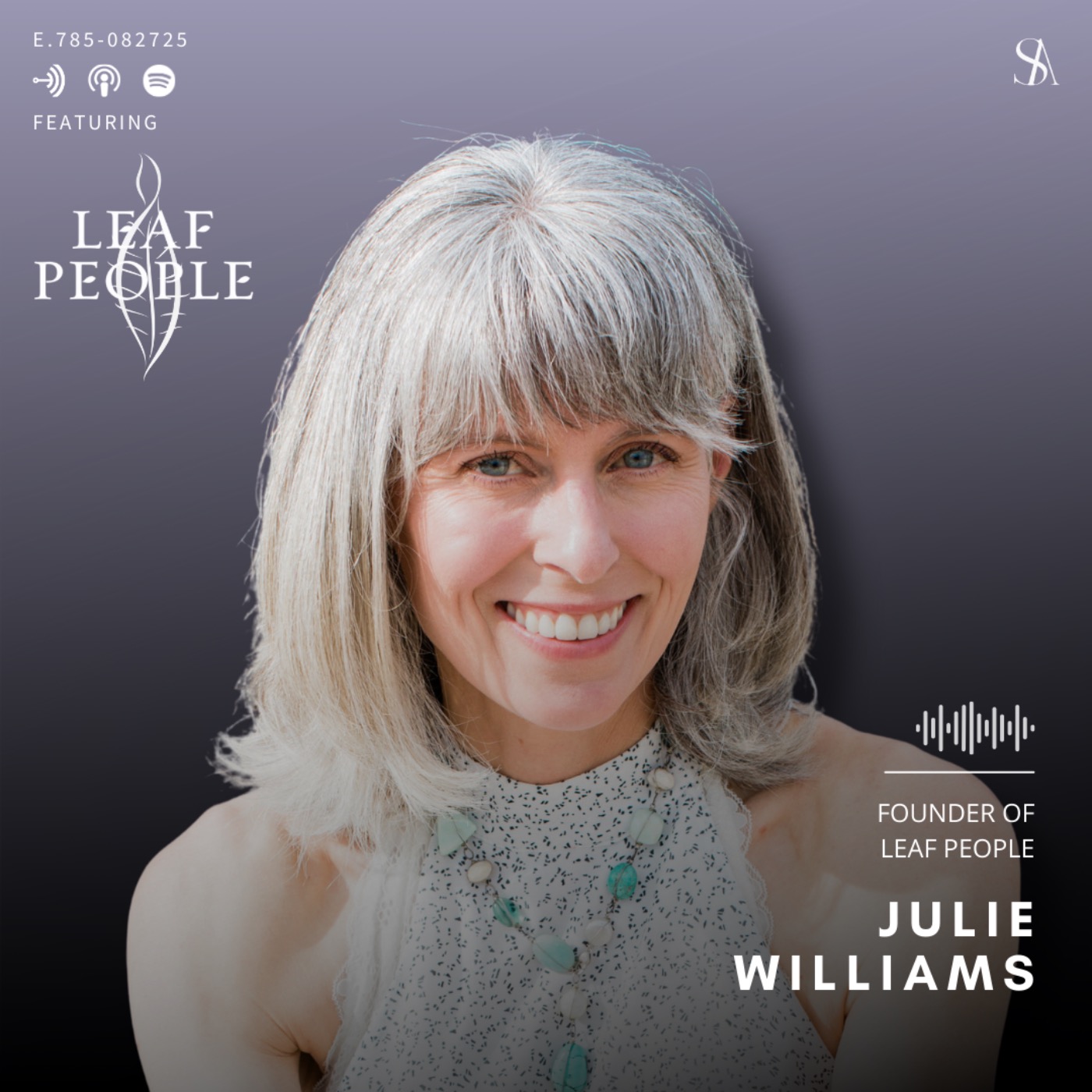
Hey, guys, welcome back to Spin Anarchy. Today's guest is going to be talking to us about a wonderful brand that she's created that is really founded in the principles of herbalism. A lot of botany. I know a lot of you love plant based ingredients and plant based products because a lot of times they just resonate better with us right as consumers. I know with the clean beauty movement, many, many of us kind of gravitated towards this idea that there's a lot of answers to some skin health questions in botany and, you know, herbalism. So with that in mind, I would love to introduce you guys to Julie Williams, who is the founder of Leaf People. Welcome, Julie. I'm so excited to host you.
- [00:40]
B
Thank you so much. I'm so excited to be here.
- [00:42]
A
Yeah. I want to kind of have you walk us down memory lane. You know, what got you involved in just, I guess, the skincare space, but also going down this route of, like, herbalism and, you know, wanting to dive deeper into, like, plant based ingredients and solutions.
- [00:59]
B
Well, I think it started really early in life for me. I grew up in rural Alaska and so surrounded by the forests and all kinds of wild plants, most of which were medicinal. And so from an early age, I had that influence in my life. And then additionally, I grew up in a sustainable household. So we also cut and processed a lot of our own food. And so just utilizing nature to survive was commonplace for me growing up. And then after leaving home, after finishing college, I ended up going on an extended trip around the world. And that was where I was formally introduced to botanical medicine. And the first stop was Australia. And I met some fantastic herbalists down there. That really helped me with my own health. And that was a real eye opener and understanding that you could actually utilize these medicinal plants on a more grand scale and for really specific purposes. And so I decided to turn the theme of my trip into studying botanical medicine everywhere that I went. So whatever continent I was on, I tried to find some plant medicine teachers, herbalists, even. At times, I would just be working with farmers, you know, and what they were growing locally for food, because what they were growing was very different from what we grew up here in the United States, just trying to learn and gather information as much as possible everywhere I went. And I had a beautiful opportunity to study under some amazing herbalists from South America and in Hong Kong and in Europe and Australia. And then when I returned home, I decided to go to school formally and a more broad education here. And so in the United States, I went to school for western herbalism and then I also have studied under a master herbalist, Lillian McCracken, for decades. She unfortunately left us two years ago, but I spent, you know, at least 20 years studying under her as her primary student. So it, it was a beautiful weaving between both having education in the old world style where, you know, it's passed from teacher to student and you spend a lot of time together and you're out in the forest together and in the wild together and kind of just really absorbing all of the information from nature itself and from your teacher and from like their ancestral lineage of teaching. And then also being in, you know, a proper classroom and with books and studying chemical constituents and blending and the more practical aspects.
- [03:32]
A
Right now that's fascinating because I think that's one of the most intriguing parts about anything that has to do with botany or understanding, like how, you know, plants and herbs fit into the overall. Our overall understanding of health and wellness is like, it takes such a long time to truly understand. Right. I mean, that must have been quite a journey for you because most of us don't get that opportunity where we can really like study how do plants, how do they fit in right. With normal human biology. And I know a lot of times we hear things like, you know, there's like Eastern medicine. I mean, I'm Indian, so I grew up in a culture where it was very, very normalized to talk about, you know, like, I guess, plant based remedies for various things, you know, across the board. And. But the, the biggest part was always like you'd hear about an herb or you'd hear about something, but you never really understood like, how does this work? How is there an ability for nature to have these healing properties so readily? And so that's, I think one of my big questions for you is like, what was the first, I guess point in your journey and your education when you realized like there is a lot more here than what even you might have considered in the beginning of discovering botany and herbalism.
- [04:42]
B
Yeah, I mean it's so complex and you can go so many places with it. I mean, it's amazing, truly. So, yeah, my first introduction was really more of like the nuts and bolts side of it. You know, these tinctures, these, from these plants will help restore your liver and you know, this will cleanse your digestive tract or whatever. You know, more herbalism like that, but not really getting into the energetics of the herbs. And then when I came back to the United States and started studying under my teacher, my master herbalist teacher, that's when we really started getting into the. And I did this in South America too, actually quite a bit. But, you know, where you'd go out into the forest and you'd be meditating with the plants and, you know, learning how to talk to them and really blend almost like your own soul essence or your own energetic essence with their energetic essence and receive those messages. And so that is. I mean, that is such a beautiful and complex layer to the botanical medicine, you know, that's available. And then. And then also in those apps, you start learning about their other energetic properties and qualities. You know, are they warming? Are they cooling, are they drying, Are they astringent? Are they. Do they like to be solo in a formula? Do they like to be with other particular plants and if so, which ones? And, you know, you can you start getting to this whole, like, fabric of these different properties that they have.
- [06:16]
A
That's very fascinating. Yeah, I think it's a very, very, like, I think deep science, you know, and that's. That was like the whole idea of what I was saying earlier was that the. There's so much here that people don't. We don't even know where to begin. I mean, I know. I feel like that I have a very strong biomedical background, but I look at botany and I, you know, I took a medical botany course. I remember in college, and I remember feeling very overwhel. Well, even in that moment, because I was like, there's just so much we don't know when you look at, really, like, what do plants create? Right. And like, normal, everyday, like, the compounds that are being created, like, all of the different ways that you can utilize this. I mean, it's really. It's huge. You know, it's like a whole world. It's a whole different world. I want to talk to you about Clean Beauty because you really created your brand before Clean Beauty, like, became a thing, you know, before it became a trend. And, like, everybody was buzzing about it. What was your approach to the initial phases of this? I guess, Clean Beauty movement? I mean, what were your thought around that?
- [07:10]
B
Well, you know, the Clean Beauty movement was kind of part of what I wanted to encompass. My main goal with creating leaf people was to have an accessible line of skincare products or various topical products that would really showcase a wider variety of the medicinal plants that are out there. At the time that I started Leaf people, you know, it was very limited, and most people were using, you know, chamomile and calendula and maybe lavender and, you know, but probably like up to five to 10 herbs were commonly found, you know, here in the U.S. in, like, brands that were readily available. And those are all beautiful medicinal plants. But I wanted to offer something that was, like, a lot more complex and interesting. And working with reishi and rhodiola and ginkgo and gotu kola and burdock root and some of the wild trees and things that you didn't typically see in the common skincare plants and start bringing that information and their properties forward to our customers. And it was really interesting. A part of leaf people has always been a connection to the community. Just as plants grow in community, and they really need both each other in community to grow, they need us also as a part of their community. So we mimicked that aspect of community with the company. And I've always done, like, local farmers markets. I've always been available to the community. So to bring forth the medicinal plants into the community in a more profound way was. Was very important to me. And I remember when I first started the farmer's markets, you know, people would pick up the box and look at the ingredients, and they're like, like, what is ashwagandha? You know, like, what is burdock root? Like, they were always questioning, like, what the different things in the formula were, because they weren't really familiar with them. And so I would explain, you know, this plant does this and it does that, and you can take it internally or you can use topically, and it has this effect when you take it inside, and that effect when you use it on your skin and so on. And then over, you know, a period of probably about 10 years, I started getting people in that would be like, oh, my gosh, this has ashwagandha. You know, I take that in a capsule every day, you know, and they started, like, recognizing the plants they were. They were starting to use them in other ways in their own life. And that was a really beautiful evolution to see. And kind of the goal that I had with the people was to, you know, bring these plants forward, get them more integrated into people's daily lives, whether it be through our skin care or through their own supplementation, but just get. Get some more energy and information about them out to the world.
- [09:51]
A
Yeah, no, it makes a lot of sense. I mean, I think that's kind of how we all discovered a lot of the. The natural remedies that we've loved. Like, I know with ashwagandha, that's a great example that you brought up, because it was kind of a big flood of, you know, knowledge that came in when people started discovering that specific one. It's like everybody starts to understand that there are these big, big hallmarks right in the realm of botany, where it's like, they have a lot of potential and there's a lot of therapeutic potential there. And I feel like when I look at clean beauty, a lot of times you keep seeing the same things come up over and over and over again. So, like, what are your thoughts around that? I mean, I know that there's endless potential, but, like, when it comes formulating with plants in your journey, what did you find to be, like, the most beneficial plant species that you worked with?
- [10:36]
B
Well, I have definitely my own handful that are found frequently in formulas for a variety of different reasons. Burdock root is one, which is a great skin balancer and helps balance the oil production in the skin. So if you're too dry, it'll. You'll produce a little bit more oil. If you're too oily, you'll produce less oil. So it really helps balance that for people. And I'm typically coming across one of those conditions. Either people's skin is too dry, they've got combination skin, or it's too oily, and it's. It's a great herb. When it's applied topically, that will handle all three of those. Of course, we love, you know, the big hallmarks, you know, like a green tea, ashwagandha, ginkgo, gotu, kola, calendula, those types of plants. Another one I like, though, that you don't see as often is horsetail, which grows wild up here. And horsetail is really amazing. It helps feed and support the collagen and elastin in the skin. But then as a part of horsetail's innate intelligence and how it functions, it also helps keep those fibrils aligned. And so your collagen fibrils and elastin fibrils will stay more aligned in your skin, which will just give you a more smooth appearance. And, of course, both of these herbs I'm talking about are pretty much everything I've mentioned. You can drink as a tea as well, and you can take internally as well. The effect is not always exactly the same, but they do work from inside to out and outside to in. But those are a few of my favorites. I also use a lot of Stellaria, which I love, and that's for its nutritional components. But also Stellaria is called the great communicator. And so it helps the plants communicate to each other in the formula, but also it helps the plants communicate to your body. So it helps that transition from the serum that you've got in the bottle to the serum being completely absorbed into your body. And those medicinal properties and nutritional components actually being able to cross membranes and cell walls and go into your system and do what they're meant to do.
- [12:44]
A
Yeah, and that's really interesting. So I want to ask you, you use the phrase plant to bottle quite often for someone who's completely unfamiliar with that. What makes your version of this process different from like farm to lab or like lab to label brands?
- [12:58]
B
So plant to bottle, you know, we really focus on exactly that. You know, at our lab we've got tons of, you know, fresh plant material, dried plant material, and everything starts from the plant forward. So we do all of our own extractions. I do about three different types of extraction processes that, you know, I layer into each other so that we can get increased potency in the end product. And then we blend that with the high grade oils and different hydrosols and other ingredients and then we finish with our essential oils for each product. But it's really that starting from, you know, it's kind of like cooking from scratch. Starting from that whole plant and it's all of its beautiful chemical constituents and nutrients as well as its energetic properties, you know, being really transferred into the bottle. I find, you know, when you have say lab to bottle, perhaps they're, they rarely depending on what lab you're working with. But I mean, they rarely have like the whole plant material in the lab. You know, they're, they've, they've have all the extracts and the different ingredients that have already been processed and then they're blending that together into a product. So you're missing that like that vitality and that energy and this more subtle qualities and nutrients that are found from that original plant.
- [14:18]
A
Yeah, that's actually fascinating. I like that take because it's, I've always wondered too. Right. Because when you use a plant in terms of like different parts of the plant, like the difference between that and like using the whole thing at once, I mean, there's got to be a difference there. So that's very interesting what you said.
- [14:36]
B
Yeah. And western herbalism and I'm sure it's similar in other herbal traditions around the world. It's all the constituents in the plant are like in harmony, Right?
- [14:46]
A
Yeah.
- [14:47]
B
And plants have very complex types of chemicals that are in them and they're all like in the right ratio to each other in the right proportion and they serve different purposes. And so that's Also why we work from the whole plant so that we're getting that like that harmonic presentation into the extraction which then you know, comes into you. And, and that's kind of the difference when you're working with say a plant extract that's just only taking certain components out of the plant. You know, like they only want the certain actives out of the plant. They're not taking the whole plant extract as a whole.
- [15:25]
A
Right.
- [15:26]
B
And, and what we discuss a lot, especially when I was back in botanical school is, you know, how does that affect like the absorption? How does that affect your body understanding what to do with that plant extract? When the plant extract comes in with showcasing like all the components of the plant together, then you, your body like understands that better because some of those constituents are to help other constituents like absorb into your system or stay in balance. You know, like they all play a part. And that's, that is partially why we stay whole plant based versus taking just, you know, what is deemed the active part out. And a lot of times I don't think that even botanists necessarily or even scientists know like how active is this particular part, you know, that they might be leaving out or putting in. They don't always know what each little piece is going to do. It's just that a particular part of the plant has been recognized as, oh, this is the active piece. That's what we'll use. But all the other little pieces could be a part of what is making that active or making that being able to be absorbed.
- [16:39]
A
Right. Right. Now that's really fascinating because like even when we think about it, even outside of like skin care and like say like fragrance. Right? Something like fragrance. When you think about what makes something fragrant, it's like multiple molecules reacting to create that synergy that's going to lead to a certain fragrance. And the same with like a lot of I think so remedies or whatever people want to refer to as there's. It is the synergy that's taking place molecularly that's causing, you know, this interaction to occur that's going to lead to that end result. So I think that's a really kind of non discussed part of botany in general. Like no one really wants to talk about that for some reason, which I, I really get confused there as a consumer because I'm like, yeah, what you're saying actually makes way more sense to me than you know, someone saying, well, we only took the seed or we only took this part of the leaf or whatever it might be like, because there's no way to figure out, like, where. Where was the study done? You know, where was the. Where's the relevance of that? So. Yeah, because, you know, even when you look at, like, ancient knowledge, right. Like, a lot of these ancient texts, like in, you know, I was mentioning, like, the east, they talk a lot about these herbs. Like, they're almost like, indexed, right? All of the different herbs are indexed. And like, there's, you know, you'll see, like, the benefits written right next to them. And. And. But they're talking about the whole plant when in all of those texts, they're not talking about certain parts, you know, like one leaf or one seed or whatever. This is usually not the. It does make sense from, like, the. The, I guess, science part of it also, that we should be bringing it forward in that way.
- [18:14]
B
Right?
- [18:15]
A
That's very, very interesting. Yeah.
- [18:16]
B
Well, it's like, you know, turmeric is one that comes to mind right now, you know, and the level of the curcumins or. Or certain supplements or skincare will only have specific curcumins in it. And it's not like the whole. Everything that the turmeric is offering. And so that's. That's the difference that we're trying to be. It's always, if we're working with turmeric, it's. It's. Everything that the turmeric is offering is not just this specific curcumin.
- [18:43]
A
Right. So what does it actually take to preserve the therapeutic intelligence of a plant? Like, what is. What does therapeutic intelligence mean to you when you think about.
- [18:53]
B
Well, the therapeutic intelligence of the plant to me, is expressed on a more energetic level. It's the innate intelligence of the plant. How do you explain that?
- [19:04]
A
I know it's tough. Yeah.
- [19:07]
B
It's something you kind of learn when you do a lot of meditation with plants. You know, I mean, they're very. They are very smart. They're very strong communicators. And. And they. They've been around for so long, you know, they know so much. And so for. For me, for leaf people, when I'm working with them, you know, there's several steps. I mean, one, I do a lot of supportive Reiki energy work on the plant to support its own innate intelligence, its own energetic system so that nothing is damaged during the picking or the drying or the processing of that plant. I also have studied extensively the Medicine Buddha and Medicine Buddha practices and Medicine Buddha medicine making processes. And so there's a lot of guidance and steps in those processes as well as to how to Care for and keep that energy in the plant that holds that intelligence intact from when it's actually growing in the ground to when we're actually using it in the lab. And then we keep little things, like, I have little, you know, medicine pouches all through the cupboards where the medicinal plants are kept. And I meditate regularly in the lab to keep that energy up. We have Tibetan Buddhist monks who come to the lab every year, and they bless everything. You know, the building, the bottles, the ingredients, the staff, you know, all of it every year, again, is as a way to keep harmony in the. The energy of the botanicals that are being used. And, you know, so those are some of the ways my. My own care, you know, like keeping my own energy field clean and, you know, so that I'm not bringing any, you know, lower energies or dimmer energies into the process.
- [20:54]
A
That's interesting. That's really interesting. So I'm. I'm very intrigued because of this meditation aspect, you know, with the plants. I love this because I remember when I was first introduced to, like, the crystallization studies with water with, like, monks, and that was just such a fascinating phenomena. And like, understanding how, you know, like actual, like, the formation of. Of matter and the form, the crystallization of something like water. Right. Is so dictated by energy fields and like, the energy fields that we're constantly, you know, kind of sending out and. And what we're receiving as well. I mean, I just would love for you to speak about this a little bit more, you know, to just educate our audience, because I just don't think this topic gets enough attention, you know, understanding energy and how it really works with, you know, our environment and why it's important to be in nature. A lot of people say that, right? They're like, you need to spend time in nature. You need to go out there and, like, actually sit down and, like, experience nature. But then we never discuss that from an energetic standpoint. So I'd love for you to talk a little bit about that.
- [21:54]
B
Yeah, so it's, you know, bringing your own energy field more closely in connection to you and allowing it to merge with the energy field of either the plants or the earth. And I agree with you. People talk about you go grounding, go ground walk on the grass. They don't really say why, but that the purpose is that so that there can be the merging of your energy fields with whatever plants you're surrounding yourself with, or if it's wild water, you know, like a river or the ocean, the ground itself, and. And allowing, like, that energy field of the botanicals, the earth, whatever, whatever it is that you're putting, the situation you're putting yourself into is going to be therapeutic and, and restorative to your own energy fields. And so that's why you do it, right? It's healing your own energy field, it's balancing your own energy field, is clearing your own energy field. You can use plants to clear negative energy. You can also, like, if you have a place that you can go to often, or even if it's your own yard, you have like a particular tree in your yard or, or your own flower garden, and this includes plants in your own house. You know, if you have plants that you can communicate with, often you can start building a relationship with them and then utilizing them for specific purposes. Like I'm, when I'm in my flower garden with my flowers, I'm going to use that to cultivate my happiness, just like the flowers are expressing their happiness of the plant, you know, and, and you can set your intentions as to what that interaction, what you, what you want out of that interaction and set that intention into the plant. So then that plant is there then supporting you all the time with that. Um, and it's, it's funny, it's like I recently, I moved into where I live now about three years ago, and I got some nocturnal plants for the first time because I always lived places that were like a little bit too sunny and it didn't really work for them. And, and it's so much fun because I feel like during the nighttime some of my other plants are kind of, you know, their energy is going down, they're resting. But then my nocturnal plants come to life and they're like buzzing, you know, they're on cloud nine because it's their time of the day. And so I get this more 24 hour support from the botanicals that are in my own home, which is really fun and it's really fun to see them, you know, kind of come active like that. And when you have a plant like that around in your home or in your garden, I think it becomes more apparent like their energy systems and what they can do because you can see them kind of go to sleep and then come back, you know, each evening. And that is a nice way to. Or flowers that only open in the daylight and then they close in the evening. Like, that's another plan if you kind of want to start tapping more directly into the energy the plant in a more obvious way, because they give you cues that you can actually see and, and Then it's easier to imagine or feel or connect your energy to their energy because, you know, like, when they're active and awake and when they're kind of resting back and, you know, like, when to connect with them, when to, you know, come back into yourself. So those are some. Some fun cues from the natural world that can help people be more aware of how we can interact with the botanicals.
- [25:33]
A
I love that. I really love that. I think there's so much potential in, like, understanding these kind of, like this neurophysiological effect that you're getting from just being in nature. I think there's just. There's just so much there that most people, we don't get to explore. I mean, I know I'm guilty of it. I don't spend nearly enough time just, you know, being more present in nature. You know, I love meditation personally. And, you know, I think a lot of times with trying to be mindful, we can forget. Like, you know, you need to actually be mindful in the presence of other life. You know, there is a benefit there, and there's actual, like, you know, physiological benefits there. So I think it's just very fascinating overall, you know, and I think.
- [26:15]
B
Yeah, I think also it's often forgotten how important they are for our existence, like our actual physical existence.
- [26:23]
A
Yeah.
- [26:24]
B
If we. There were no plants, we would not be alive. Right. Like, period, you know.
- [26:28]
A
Right. Oxygen comes to mind.
- [26:30]
B
Exactly. Right. You know, like 100. We would not be alive. And just even sitting back and contemplating that a little bit, even once a week, can have a profound impact.
- [26:44]
A
Yeah, absolutely. I agree. Now, I want to talk to you a little bit about, and you've mentioned this before, where it's called ally pairing. It's a good method of ally pairing. What is that and what does that mean in terms of formulation?
- [26:58]
B
So that was something that we brought in, or I brought in to leaf people again as to, you know, mimic nature to bring about the how plants grow in nature and that reality into the company. So plants grow in communities, you know, they have that certain plants like to be around other plants or particular trees. Arnica comes to mind, for instance, which I harvest wild up here in the mountains. It will only grow with certain other plants under certain trees, and that's it. Like, it won't. It won't grow anywhere else. Like, it has a very specific environment that it wants to be in with its friends, period. And so I brought that concept into leaf people and into the formulating, because these allied plant pears, Ginkgo gotu, Kola is a great allied plant pair that comes to mind that we use. They just, it brings harmony to the formula. They help each other be stronger, they give great energetic support to each other. And, and it's also a beautiful representation of what actually happens in nature. And so again with, with lead people, you know, bringing this education forth and trying to get our consumers and our clients to be more familiar with the medicinal plants that are out there. We also want them to become more familiar with their behavior and, and how they are, how they are in the world. And so by bringing them into the formula in that similar way, it kind of helps push that information forward too.
- [28:33]
A
Oh, wow, that's really cool. I like that a lot. I mean, I think it's really very fascinating how you can approach like plant based formulation very like holistically, you know, in a way. I mean, I think lately we've had a lot of focus on like, okay, here are the benefits, here are the actives, you know, derived from plants. Now they're talking about like plant stem cells a lot, right, with like all of different biotech technologies. But I still, I feel like we need to come back to this core understanding of like truly what is herbal medicine? You know, like, what does that really mean and like how does this work in formulation? And I think that's really what your brand represents to me as a consumer. I love that. You know, it's, it's more, it feels more grounding in this context. And because a lot of times, I'm not going to lie to you, like when I hear a lot about the biotech, the real biotech side of it, I mean there's nothing wrong with that. I'm, I'm, I'm excited that we're deriving things right, like from like plants and herbs. But you miss, you miss something there. You know, it's like it misses the essence of like what, what we're trying to accomplish here and like the synergy of like the human body and plants and their, their physiology, right? So it's really, really, I don't know, it's very fascinating.
- [29:41]
B
It's all communities, right? It's all communities. Like we live in community between ourselves as humans. Our body itself is this very complex community with all the different organs and the different chemicals that we create just in our physical body and how all of that interacts. And then you've got the natural world which is all in community. You know, plants like to grow in particular communities. Animals like to be around certain other animals. It's all these different levels of community.
- [30:13]
A
Right.
- [30:13]
B
And you can utilize plant, plant based medicine, plant based formulations, you know, herbalism. All of this type of study is just another extension of community of us.
- [30:27]
A
Right.
- [30:27]
B
And we are that, you know, and so it's, I really feel it's important to keep mingling that in and out through the brand, through our philosophy, through our mission, etc, because it's so important.
- [30:42]
A
Absolutely. Yeah. And a lot also like coming back to like just the amount of like ancient wisdom that is around plants and just nature and like natural products. Like a lot of the things that were, I think discovered were because people spent so much time with plants, you know, it wasn't like they just randomly came across an herb and said, okay, well you know, I'm going to figure this out. No, they were in nature. Like they were walking around, they were sitting there and they were like observing and you know, like participating and figuring out like exactly what you said. This community mindset of like, this is an ecosystem, you are part of that system. You know, it's not like humans are entering it and then we're just picking something out and we're saying, okay, I'm going to figure out what's in this, you know, and how this works. It's more of like, that's not how they approached it. So for us to now in like modern day come at it with that mindset doesn't feel right to me. You know, it's like you're missing a huge chunk when you do that. So, yeah, I, I really resonate with what you've explained here. You know, it makes a lot more sense. I want to talk a little bit about like this whole trend chasing that I'm seeing a lot right now.
- [31:44]
B
I know.
- [31:45]
A
You know, I'm sure you've definitely probably seen it way more than me. You know, with you, you don't do that. Your brand's not doing that. I love that. What are your thoughts around this? You know, especially now with, like we said, clean beauty is everywhere, you know, and people love natural, the word natural beauty or whatever it is. Now what are your thoughts?
- [32:03]
B
Yeah, I've tried to avoid the trends. Not necessarily that I've actively tried to avoid them. I just, you know, I've always been led by the plants. So that's, you know, they lead, I follow. I'll do a lot of meditation, I'll think about a formula I want to make. I'll do a lot of meditation. I'll let whoever wants to be a part of that come forward and you know, and then I'll do some research, you know, always back up the meditation with some research. And, you know, does this make sense? Is that fitting? Is it not? I'll go back into meditation, I'll listen some more, and, you know, and then a formula is developed and. And I just go with what comes to me that way. And definitely, like, I mean, I. I gotta say, you know, like, when we started using reishi and ashwagandha and those herbs, I mean, I was probably 10 years before the trend. And then, you know, you started seeing it in skincare much, much later. So my. My trend timing is. Is often off because I'm utilizing a different method. But, yeah, I mean, I get it that we live in a culture in a society where there's like, what's the next thing? What's the new thing? What's the new hot thing? You know, and so there's always got to be like, okay, well, this year it's going to be this ingredient, and it's going to be seabuckthorn or whatever it is. And there's gotta be like this hot kind of selling point. And I've just tried to really, again, stay. Stay grounded in myself, stay grounded in the herbalism, stay grounded in the plants and just let them inform the decisions and move forward with that. And now sometimes we do sink on a trend at times, you know, that might be trending, but a lot of time we're kind of doing our own thing while the trends are happening around us. But the products have great results. You know, people really respond to them. And so I just keep moving forward in this way.
- [33:58]
A
Yeah, I love that. I think that's really. That's how it should be, you know, regardless of what someone's approaches to the products they're creating, I think in general, like, trends are not the way to go.
- [34:07]
B
No.
- [34:07]
A
Like, I'm sick of it. I'm sick of seeing all the trendy skincare lines popping up everywhere. They're rarely do you get outcomes, you know, with those actual efficacy and stuff. So, you know, it's good to see.
- [34:18]
B
And another, like, side thing that comes to mind right now while we're talking is that it can also put, you know, if you want to go to, like, a little bit of an environmental side, the trends can also put a lot of stress on a particular plant, you know, or a particular group of botanicals, because now all of a sudden, you've got this ingredient trending. Every single person wants to have it in their line, and. And you can. You can do some serious damage to the botanical Population if something like that hits where regardless of what's trending, there's still going to be probably five other plants that do something very similar that have a very similar impact and similar efficacy that you could use. And I think that's important with formulating. And something that I've thought about deeply is also the sustainability side of the formulating so that we don't get into using plants that end up becoming not available or their population becomes stressed or too minimized. And, and that is, I do think, one detriment to the, you know, when a certain botanical starts trending.
- [35:22]
A
No, I agree, I agree. I've, I've seen that a lot. I'm glad you brought up sustainability, you know, because that's a really big, that's a really big concern with something like that is. And I think brands like to push the narrative of like, well, no, we're still sustainable. And it's like, how can you be sustainable when you're working with something that takes time to grow back? Like, it's, it doesn't make sense, you know, if you're going to. In these extreme levels. I know, like, for example, like, mushrooms were everywhere. I think a year ago is a year ago or two years ago, everybody was talking about mushrooms and I was just like, why are you. I mean, there's definitely healing properties here, but at the same time, it's also the application. Right. It's like you can't always use the same kind of like, say you're working with mushrooms, they might have benefit for like one specific purpose, but then when you're using that as just like a buzzword, you're creating products that do absolutely nothing. So it gives plant based medicine, plant based solutions a bad rep because then people are using them out of context and then you're not seeing people, consumers aren't seeing results. And then, you know, you start getting these like, you know, narratives about, oh, well, it doesn't work. Naturally doesn't work. Plant based beauty doesn't work. That's not true. You're just not using it in the right way, you know, so, yeah, yeah. Now I want to ask what's next for the brand? I mean, do you have anything coming up that you could share with us?
- [36:39]
B
Well, one thing I'm working on that will be launched towards the end of the year is, is I'm starting a podcast as well that is going to be focused more on, you know, communication with plants. And again, another layer to help people really understand, you know, the, the plants, their messaging, their energy, why they're here, what they think their purpose is, how we can interact with them better, all those types of concepts. That's really cool. Yeah, I'm, I'm really excited about that. And hopefully we'll start recording in the next couple of months and, and have some content out by fall.
- [37:17]
A
That's very exciting. Well, definitely for everyone listening, stay tuned for the podcast and, you know, I hope all of you go check out, you know, the brand. We'll be linking everything in the show notes, but this has been so, so awesome and so refreshing. Julie, thank you so much for this conversation. I don't get to have these very often, so I learned a lot, so I appreciate your time.
- [37:35]
B
Well, thank you so much for having us on.
- [37:37]
A
Hey, guys. So I hope you love that episode. Please make sure to hit subscribe if you're tuning in to us on any podcast platform. We are available on so many different platforms, so wherever it is that you're tuning in, just go, hit subscribe. You'll be immediately notified when we publish new episodes. This way you're able to tune in to amazing insights from experts, brand founders, industry leaders, authors, all the wonderful people that we host. And that's very important for me because I love to hear from you guys and really understand what you love and what you want to hear more of. Also, make sure to give us a follow on all of our social media outlets. We're available on Instagram, TikTok X, you name it, we're there. We also have a blog on Medium, so if you're a reader and you love Medium blogs, check us out on Medium. We published some really great articles on there that do deeper dives than just what's available on the podcast. And it's really a great place for all of you science geeks out there that want to learn a little bit more. We go above and beyond with our research and making sure we're bringing you information that you usually probably won't hear about in other outlets. So check us out, leave us a comment, leave us a review, and we'll be back next time with another episode. Thank you.