← Skin Anarchy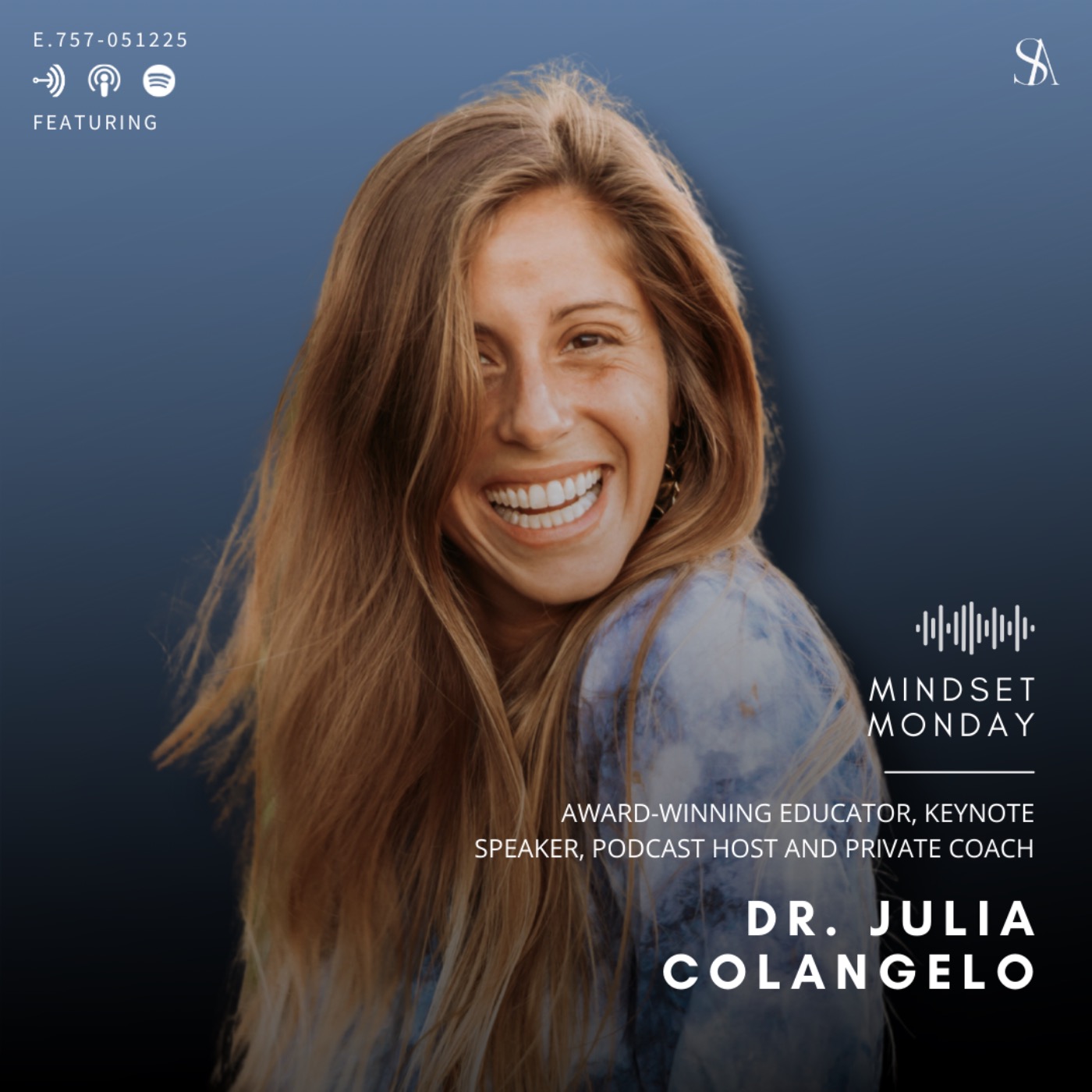
Skin Anarchy
How Regenerative Focus Starts With Self Compassion Ft. Dr. Julia Colangelo
00:48:57
Mindset Monday
Loading summary
Transcript29 lines
- [00:00]
A
Foreign. Hey guys, welcome back to Skin Anarchy. This is a Mindset Monday feature and I'm very excited because today we're going to be talking about the concept of flow and what it really means. And we have with us Dr. Julia Colangelo. And she's an award winning educator, she's a keynote speaker, podcast host, private coach, and she has over 14 years of experience as a therapist and clinical researcher in the science and psychology of flow and what it really means. So welcome, Dr. Julia. I'm so excited to host you and learn from you.
- [00:37]
B
It's so great to be here. I'm excited to dive into flow state.
- [00:40]
A
Yeah, I'm really excited to learn more about it, actually, because it's a topic I, I don't see discussed at all, you know, in the mainstream media. And I think that we really all need to be educated on it. So before we dive in, I'd love to learn about your background. It's truly impressive. I mean, you've really, you know, you've, you have the education to back up everything that, you know, you want to put out here. And I want to learn more about you. You know, what was your journey like in terms of your education and what led you down this road of wanting to understand flow state and do research in this area?
- [01:11]
B
Flow feels really personal to me because it was one of those things that most children, we're born naturally entering this creative flow state. And a flow state, if you don't know what it is, it's a state of consciousness where things happen really organically, naturally, and you're able to experience a very present moment and also as a result, your self doubt any criticism that your internal thought patterns have slips away. And so as children, we are naturally in this state. We enter a flow state through play, exploration, creativity, coloring, curiosity, understanding, you know, human interactions, and facial recognition. Then as we get older, we are forced out of a flow state because we have to kind of adapt to our environments. Maybe we experience trauma or developmental challenges and we get sort of boxed in sometimes within maybe school systems or education training. And we. And, and getting into a flow state becomes very difficult. That was the case for me. And I as an adult entered into and sort of zeroed in on flow research because as an adult, I was experiencing burnout. I was stressed out even being in the industry and in the fields of psychology, clinical social work and research. And I needed to find a new solution to tend to my inner mind and inner self. And flow state was this solution. And so I just want to preface this discussion with flow state is not something that's easy for me. It's not natural, it's become second nature. But that's after practice, different rituals, devotion, mindset work that we're going to be talking about today, but that if you're someone who struggles with attention focus, if you've experienced burnout or exhaustion, then flow is going to be this sweet spot, this experience for your nervous system, for your creativity to gently but very intentionally kind of create a reset and a refresh in your brain.
- [03:27]
A
Wow, I love that. I was, by the way, I was raising my hand every time you were listening. It's like, you know, like you're in school. Like, literally I've experienced all those things. I mean, this is such a fascinating concept, right? Because people talk so much about like, you know, they talk about the meditative state, you know, what happens to you when you meditate and that feeling of whatever feeling it is for you individually, I think it's different for everybody. But really very rarely do we talk about this concept of you're walking through your life, living your life and you are in the state of, you know, what you just just described. I mean, that's a very rare thing to see someone say, you know, this is how I try to experience my day to day. So I'd love for you to dive a little bit deeper into that. I mean, what is the real, like, I guess from your perspective, what is the difference between something like a meditative state and the flow state?
- [04:17]
B
This is a great question and I love the distinction between the two. I like to say that a mindful state of awareness is the foundation for a flow state. So this doesn't necessarily mean you have to be able to be present in the moment, but if you have an awareness of how you can be in the moment, even just that appreciation for. Okay, right now I'm recording a podcast in an hour. I'm aware that I'll be in a separate meeting. That awareness creates a strong enough foundation for your flow state to be born out of and flourish from. So. So whereas mindfulness means being with what is just as it is, ideally non judgmentally, but we gotta give ourselves a break then. Flow state is the state of consciousness that allows us to take that mindful presence that we have and sort of this essence of being very attuned to our environment, to our emotions, kind of this definitely this emotional intelligence foundation that mindfulness gives us and, and flow helps us do something with that. And so some mindfulness researchers might say that's against flow state is in conflict with mindfulness because it's about doing or crafting or creating. I think it's a compliment. It's sort of like the graduating state of being in a mindful state. Because what do you get to do when you do something or create something? You're doing good, right? And that comes back to those foundational principles of mindfulness. And so flow state allows you to again perform at your highest level. That's when we're able to do something that might take us a week, but we achieve it in 90 minutes, or we close the loop on a theory or an area of our research or work that's more complicated, and we do it more not only efficiently, but, but in a really creative, innovative way. And I think in a time where technology is sort of, again, supporting us, but we're also kind of understanding the hybrid relationships we have with all of the digital information and systems that are supporting our growth and innovation. But also sometimes I think we're feeling in competition with it. It helps create our flow state, helps that humanized element of innovation. So what technology gets 99% of the time, we're that final step when we're in a flow state. It's when there's that human element to an awesome idea or this. Again, this problem is solved to the final point because we've thought through to that final step. And entering a flow state is something that you can build towards. You can really cultivate a practice. Again, I was something, someone who experienced it at first, like a lightning bolt moment, but then I'd usually have that happen at a really inconvenient time. Like, okay, two hours after I should have already been asleep for the day. And I'm like, do I really want to start a new idea or business at, you know, midnight? Well, maybe because I finally have my flow state. You know, my brain is in it, in the zone. And I just want to reassure you that you can cultivate a lifestyle that positions your flow state to be something that you can tap into and appreciate, but also tap out of and know that it will be waiting for you. Instead of this whole, like, highs and lows, high contrast experience of chasing a flow state, which I think is the old way of experiencing flow. The new way is more holistic, is more integrated, more based in the natural elements, where it's maybe less extreme, but it's really profoundly satisfying. And that's, that's sort of the research that I've ended up at, having been through all of the different realms within.
- [08:26]
A
Flow research that's so interesting and it's, it's very powerful what you said, because I think that all of us, at some point we do experience this, the state. Right. When you gave a great example of, you know, the midnight. For me, it's 3:00am, you know.
- [08:41]
B
Yeah.
- [08:41]
A
Of like, oh God, you know, I have the next like billion dollar idea. You know, let me put this. I mean, but, you know, being able to then bring that into your. The hours that are most, you know, valuable for us. Right. That's a very powerful thing because it makes me actually think of, you know, back in the day, people used to talk about things like lucid dreaming and stuff. Right. And they used to talk about being able to control these, you know, states of mind that we can go into that we can enter and, and then really access our true power and our, you know, our true potential through these states. And I would love for your, you know, your insight into like, what do you think is a great starting step for people who, you know, they are experiencing flow? Like, you know, it might be at those late hours, it might be, you know, at inconvenient times, but they do value the. What, what is going on right in that time. But they want to bring this into like a more mainstream like main time frame level for themselves. Or what's your, what's your advice on like kind of taking that first step in this direction?
- [09:44]
B
Yeah. This is a great way to invite you to tend to your relationship with those creative ideas with your flow state. There are two things that I want to recommend right away. The first is radical self compassion. Be gentle with yourself. We want to be the navigators of our brain and our processes and our inner workings. But sometimes creativity, creativity just happens. That new idea, that fresh start in our brain, it just unfolds synchronistically or very inconveniently. So be really compassionate to yourself. The second is to zoom out to the bigger picture. So that means that if you were to zoom out and you get your great idea at 3:00am and you're saying this is really inconvenient, I should really be asleep or I should do something else. Zoom out and really assess if you can lean into it. Because even though you can hack your flow state and create all of these conditions that we'll talk about to position your flow state to happen at more convenient times, what you also want to do is optimize it when it shows up. So for me that meant a couple nights ago when I got that great idea at, you know, 10:30, but I was waking up very early the next day. I zoomed out and I said, you know what, I, I'm actually going to lean into this for a couple hours. It turned out to be about like 1:07 in the morning. I went to bed, I woke up a few hours later. But I zoomed out knowing that if I looked at the whole week, I would have a chance to catch up on my sleep, I would have a chance to regroup and rest. I had the opportunity to communicate with the, you know, the key players in my life to say, hey, can we, you know, can we do a trade off this afternoon so that I can reset and kind of like, you know, work on these other things because I'm in a flow state. And I would say that that's unorthodox advice because most people will tell you, nope, you've got to get the sleep first or you, you know, you'll suffer for days. But when you zoom out and you're compassionate to yourself, you see that you will recalibrate within a couple of days. You will have your nervous system reset within that same 24 hour block. But your flow state when you're having that fresh idea is like a gift and it's an invitation from your inner world and it's probably healing a part of you, of your past self, of an inner child wound. It's tending to something. And so if you have the moment to pause, be kind to yourself and then evaluate, well, will I have time to kind of recalibrate in the not so distant future? Then I lovingly encourage you to lean into it. Not for too long, but for enough. That gives you that peace of mind to say, wow, I don't have to wake up the next day regretting that I forgot what I thought. I didn't write the note about it. Like, lean into it and look at that bigger picture. Because the two of us, we've been in our industries for a long time. We see the long game, we see the bigger vision, we see all the ripples from all of those midnight ideas and 3am ideas and thoughts, and we see the outcomes that they've produced. The beautiful successes, the dramatic fails, perhaps the lessons learned. And I think that some people are, are too, are prescribing too closely to the all or nothing. And an actual integrated and sustainable flow state is really meant to be friendly and welcoming. And that means that yes, when it shows up at an inconvenient time, it's not, it doesn't necessarily make us happy right away, but the long term outcome can be really rewarding. I want you to Think about that the next time you have one of those inconvenient experiences. And also a key last step is communication. If you have responsibilities or meetings or people, just lovingly let them know, hey, I'm in a flow state, or I'm. I've got to reprioritize this so that I can enjoy this experience. So that, that looks like to my partner, I'll say something like, I'll send a note because I don't even want to talk if I'm in a flow state. I just want to stay there. And I'll just send a quick note saying, hey, like, 30 more minutes, 60 more minutes. I'm in flow and my partner understands. Okay, let's. Let's position the, you know, the different activities that, like, I'll take on cooking lunch for the kids or I'll do this or I'll do that, like. But a lot of people become resentful if they don't communicate and they just expect others to read their minds. Low is something to be shared. And usually if you've expressed, wow, when I get this creative idea, it would really mean a lot to me if you supported me in it. People appreciate that a lot. And it creates just a more harmonious dynamic with anyone that's in a bigger picture, sort of invested in your ability to be creative.
- [14:54]
A
I love that you said that because I think we're all surrounded by so many people in our lives, you know, whether it's loved ones, colleagues, like, whoever it is. And I think it's very, very difficult sometimes for us to say, like, listen, I'm in a really good place right now, you know, and you are in that state of, like, whether you're writing something down or you're thinking about. I mean, it's hard sometimes, I think, to articul that and to like, let people know, because people will, I think oftentimes other people can't understand. Right? So not everybody's going to be able to understand. Like, this is a very powerful state that you're in. You know, it's a very important moment for this person. I don't need to interject and like, you know, ruin that for them. And I think that's something that it can become difficult because I know that when, for me personally, like, when I was first, like, playing around with the idea of, like, being more mindful in my life, that support system thing, it was a big hurdle because you try, you know, you. I think all of us are always trying to, you know, some people call it, you know, being in our happy place or like trying to get our energy right or something like that. And you're all, I think we're all as human beings striving for this feeling of like, okay, I'm in a better place now than I was before, right. And I'm now in this moment, I want to get into a better place. And eventually you'll end up in this place of where you're referring to as the flow state, right? But then when you're getting there, the people around you make a big impact and the, your surroundings, your environment. And I would love for you to really kind of speak on this because I think setting the scene for like this kind of experience for ourselves is so crucial. And I think most of us, I mean, I know women especially, we struggle a lot with taking time for ourselves, you know, and like not feeling guilty about it, not feeling like we're missing out on like the kids or like the life or whatever we're trying to do. Right. So I would love for you to speak on this a little bit about why it's so important to make that time to set yourself up, up so that you can experience flow state more often and in a more profound way.
- [16:53]
B
And I, I want to normalize that. I too feel like it's impossible to, to be able to say yes to everything that I want to, all at the same time. And I appreciate that you and I are in alignment with that because I think it is a myth that you can have it all, all at the same time. And I'm a very positive, optimistic, abundant minded person. But I'm also someone who is a truth teller. And so far in my work with the most successful, well known public figures, with global leaders changing the world in, in every client interaction there still comes to this. Everyone comes to this point of decision that they have to make the difficult choices of which is the priority. But you can have a very fulfilling life and a life that embodies flow state. But it does take just those very intentional choices, which is why like to create a stronger foundation and checking in with your energy is, is one of the first steps that I recommend is to audit your energy when it's an, in a flow state, like when you're, you know, expressing yourself, when you're feeling heard, when you're feeling creative versus when you're not and noticing how you can bring elements of that positivity, enthusiasm, creativity into your daily life, sort of sprinkling it in and when you recognize that your energy is sort of like this battery charger within you and to your point, it attracts. It's sort of magnetic. It attracts the right company, it attracts new opportunities, relationships, success. Then you can also have that as the foundation for your daily life. And that will magnetize more flow states. And if you're saying, well, how do I even start to. If you've ever experienced a flow state, then you know that your brain is familiar with that. And we both understand how the brain works. And so if there's that pattern, that wiring of that thought process, you have the opportunity to replicate that. Usually it comes down to setting up those conditions. So energetic auditing is a great step. Who and what. What media? What social media? What information are you inputting and consuming? And how is that affecting your energy? It's why people joke with me. They say, oh, you post on social media so late at night. I said, yes, because I don't want it to zap all my energy. My energy goes to my clients, my family, my interviews, collaborations, and creative project first. And then the end of the day, thoughts ripple out to the rest of the world on social media or in a newsletter and being in acceptance of that. And I think one of the things that's been a cornerstone of my own journey and for many of my clients is being in acceptance, compassionate acceptance about any of our quirkiness or offbeat routines or lifestyle choices. Whether it's that we, you know, travel a lot or our home bodies or work at these seemingly odd hours of the night, being in true acceptance of that not only enhances your positioning for flow state because you're not judging yourself. You have that mindful presence and foundation, but it also creates this surge of magnetic energy in your own, like, frequency of your own essence, of how you carry yourself, of how you connect with others. And the more that I think we all peel back these layers and talk about supports our bigger ecosystems of, you know, to your point, like women founders, women doctors who are saying, wow, I'm not. I need to kind of preserve my energy. But also I simultaneously want to have these dynamic relationships with other people that encourage me, that inspire me, that rev up my engine to create a new project and that aren't saying, well, you really should be doing XYZ offbeat. Right? It's kind of. It's kind of a little out there.
- [21:22]
A
Yeah, no, but I mean, it's a. It's really interesting, you know, everything that you're sharing, because I think that a long time ago, I had heard a quote, and it stuck with me for such a long time because it really, it resonated with what I was experiencing in my day to day busyness and you know, all of that. And that was that, you know, the quote was basically you want to make sure first you need to align yourself, you know, your energy and what you're feeling and then comes the action, you know, so it's energy first and then action. So like that's something that I think is very in sync with what you're sharing because you know a lot of times we find ourselves kind of fumbling through life and like it's like one thing after another and the calendar is completely filled up, right? It's like you've got back to back meetings or whatever it is you're doing and in that whole state we forget that, you know, you never took time to align your energy. So then things start going wrong and then we start wondering why is this going wrong? You know, and then it just for me that's when I, that's what all of this is really reminding me of is that to become more aware means that you become aware of your energetic state, you know, in that moment of like where is my vibration right now, where am I? You know, fully. And then like then I conduct my actions out of that state. So you know, with that in mind, like I would love to talk about your work because it's very different in this in the way that you've really differentiated your research, you know, by integrating nature, neuroscience and all of these really hard hitting, you know, facts and concepts that aren't make this a more viable thing for people to understand. Right. And kind of wrap their minds around. I'd love for you to share more about, you know, that aspect like, especially with like neuroscience for example, like how does that really speak to what we understand, what we know so far about flow state and what do we not know from the neuro perspective?
- [23:19]
B
This is where I get really excited because to your point when you just explain that fumbling and the missteps we make and we've all. I've certainly done it many times where I've taken action without sinking my energy to making that more conscious, aware choice, then we fumble, then we have regret or resentment or frustration or burnout or experience burnout even faster than we would have otherwise. And so in, in my research I'm specifically focused on not only sustainable flow states that can be experienced more often and more regularly, but a regenerative flow state that plants seeds. Every flow state you have plants a seed for the next flow state that you're going to experience. And it's more enriching and life giving. And what I mean by this is that it begins with energy, but it aligns with your specific strengths, your specific any shadows or challenges that might be from developmental stages or just are in your wiring that you're working through throughout adulthood, in your emotional maturity, in your potential growth mindset versus having a fixed mindset. And this is distinct because what I see a lot of people chase and misunderstand about flow is they aim for what your favorite pro athlete aims for, which is an extreme and necessary for their industry outcome of a flow state. But that is contingent on, you know, a cold plunge, a deep sauna every, every day or twice a day with these not sustainable elements in their routine that tend to be two hours to five hours a day to enter a flow state. And if you don't align your energy before really prioritizing this exploration into your own flow state, you might get swayed into this peak performance. Picture that again, I work with some of the most successful individuals and leaders in the world, and even they can't carve out sustainably day after day for their lifetime. You know, three to five hours of biohacking routines in hopes and just hoping and sort of praying that it would result in a flow state that is not sustainable. And also from a neuroscience perspective, some people think, oh, I found flow. I want to be in a flow state 24 7. But your brain is not designed for that. Your brain is designed and requires a recovery window after a flow state. My research answers how to have that recovery state be more sustainable and more integrated in your daily life. So what I mean by that is that when you're in a flow state, you get to stay in that flow state and enjoy it. But then when you're exiting it, you don't crash and burn. And when you are aware, okay, my mind is sort of starting to wander. I'm starting to be aware that I've got to do these other things. Then you gently decompress. You have perhaps a flavorful shake or something to activate your senses. You listen to a specific soundtrack or playlist. You decompress, you enter, you say to your brain, wow, kind of good job. You did it. You were in a flow state for 90 minutes or three hours. Now we're coming out of it. I'm not trying to push you longer. I'm just saying it's time. I'm recovering. And then what you'll see is instead of that extreme high and low, your brain, because it recovers and has a natural cycle of a flow experience, you're Looping back into a flow state the next day. Or if you had a flow state in the morning, maybe that same night, because you recovered in the middle of the day, you're in a flow state by the evening again. And that's how you start to make sure that it is to, say, sustainable. It's positioning yourself for this regenerative flow state time after time. And then, sure, you're going to have these extreme amazing flow states that feel like peak performance, but it's not going to be forced. And that's a really important element that you don't force. There's no frenetic energy, and instead there is that sinking of your energy alignment to prevent any of this fumbling or resentment or regret or burnout. And then it's just like nature. There's always a season and a cycle, and the more awareness you have, that's where this mindfulness piece comes into. You get to experience this more often.
- [28:16]
A
Yeah, that makes sense. That's actually really. It's really interesting that your mind does have to take like a minute or like, you know, some time to like recoup from this because I think that's another. It's kind of a misconception that people do have. We, we think oftentimes that we're superhuman and that we can exist in this, you know, constant state of like, you know, just, I don't know, whatever we want to label it. I mean, we're, we're talking about, you know, specifically flow state. But even when I look back on, like, you know, when I was first learning about mindfulness, people would speak very often about, you know, you become almost enlightened at one point in your life where you start observing yourself as a third person. And they would speak about how, you know, you are constantly in this, in the state of being, and it's like, you can't always be right. I mean, that's just not. It doesn't make sense. You're. It's a dynamic existence that you're living. So it's not very logical to assume that you're always going to be at your peak performance levels, you know, in that way. So that's very interesting to me, I think, because I think a lot of high achievers can, you know, kind of understand this because I know a lot of you are out there listening and, you know, it's. It's hard when you can't kind of get to that place when you want to immediately and then stay there for like, if not hours, days, you know, it's like that's not normal and we should understand that that's physiology doesn't support that. And, you know, just, it's important to have that kind of reality check for ourselves, you know, So I, I found that to be very intriguing what you said. Now I want to, I want to talk about your, your company. I mean, you caught, you named it hello Flow, which I love and I'd love to learn the story behind this name and also the inception. You know, I know it's located in beautiful Maui, so could you tell us a little bit more about hello Flow?
- [30:03]
B
So hello Flow was founded again when I myself knew that I was talking and researching and having more and more conversations around Flow State that were offbeat and different and didn't fit into the mold of, you know, all or nothing peak performance. Although those are the clientele that I work with that have to publicly often perform at a very high level and have a lot of private pressures as well. I wanted it to be a friendly experience to learn about Flow and I felt like having worked with the rich and famous and supported them in entering a Flow state and optimizing those states of being, that bringing flow to everyone and making this information more accessible would have that larger impact. And that was part of my motivation to creating hello Flow. To make it sort of this friendly welcoming to break down the barriers and provide cutting access to cutting edge research to anyone who was curious and especially those that were like a former version of myself who had. You know, I've struggled with self esteem, I've struggled with, with serious self doubt around my own education journey, getting my master's, getting my doctorate, starting one business, working in different companies, working in different positions where I was trying to understand my place of belonging. And I wanted to break down the barriers and create access. Much like you do with this podcast where you're allowing sort of this peek behind the scenes to some of these just. Just really interesting concepts and making it accessible. I think that's part of our duty as professionals within various industries to just provide that access to information without. Without any barriers. It just felt so aligned. And so in my work, I do a lot of education. I create these Flow playlists for your nervous system. They're free for life is my saying. I just create them every season around different things in astrolog and in the world. It's very fulfilling and fun for me. And I also do a lot of hosting of clients here on Maui. They come for Flow retreats. We do different excursions and adventures and I work with people all over the globe and you know, part of my fascination with understanding flow state was not only as a personal experience, but in a group context. And that happened actually when I was at NYU as an undergrad. I did a lot of nannying in New York City. And that was, you know, I'm so grateful for those jobs. And I got to be known as the, you know, I was, this was, this was pre, pre smartphones and all of that. But I, I started to just look at human behavior within these family ecosystems. And you know, being a nanny, you see a lot of secrets. You see, you hear a lot of the stress that's happening within families. And these were again, similarly celebrity families, you know, wonderful families, but that kept getting out of flow with each other, out of sync. And so I took that as part of my sense of, you know, being able to be this secret holder and sort of confidential space holder for these high level, high power families. And that's when, then again, as I continued into grad school, became a licensed therapist, I started working with similar individuals, of course, not the same exact families, but in this similar level of affluence and influence and being, helping them navigate how to create more of a flow state within their, their group, which was their family and their ecosystem. And then that sort of led to this, this, this ongoing work with coaching and consulting for leaders and doctors and celebrities, some Hollywood stars, where they have this, they need to be in their flow state publicly and privately. They have a deep desire to cultivate this aligned energy that creates sustainable flow states that decreases their stress. After having to perform at such a high level and because of that journey that started very humbly as this, you know, I would bike uptown from West Village, from NYU's campus on my bike. They'd give me an extra 20 bucks to take a taxi home and I'd pocket it to bike home. These very humble beginnings of being a nanny in these beautiful homes that had some conflict where I was able to just be an extra positive presence and support in the role of a nanny. It sort of led to this deeper appreciation for the positive impact flow has in this larger concept within groups and families and households. And I, I just also want to be transparent that I'm, I'm not always in flow. I'm often out of flow. And I think it's really important being in a profession that can seem shiny or like everything's going in the right direction to just be transparent about. I know what it's like to be out of flow. I know what it's like for my household and family. To be out of flow, for sure. But being honest and in integrity about where, like, your relationship with the flow state allows you to break through those barriers and come to the resolution or the peace and harmony that's waiting on the other side.
- [35:45]
A
I love that, I love that so much. I love how you brought up our families and our, the, you know, the people that were around in this, like, kind of a collective, this idea of like being in collective flow, you know, like you're all in a flow state together that's so powerful. And I, you know, it's. I listen very heavily, you know, in my early understanding of, like, mindfulness to Abraham Hicks. And they would always say, if you, you are more powerful when you're in state of alignment than 500 people who are not, you know, and that really always stuck with me. And that reminded me of that when you said that, because I think when we're around people that we love so dearly, we want to be in the state right with them. We want people around us to experience that same, you know, feeling. And so I think it's really important for, you know, if you are, someone's listening, then you're surrounded by somebody, whether it's your spouse, your kids, whoever it is, to kind of encourage this, you know, ability to go into this together, you know, and to give each other the space that's needed to then have this moment, you know, because it's an independent experience. It's not like, you know, you can't force someone else, right, to go into the flow state or to experience that, but you can become, I think, supportive in a supportive role for them to then experience it. I think sometimes that's all it takes is to know that somebody is, is giving you that space to exist and to just be present and then, you know, allow that to be your experience. I think that's a very, very powerful tool that we all can provide to our loved ones. So I love that you brought that up, actually.
- [37:21]
B
I agree. And, and don't, don't get frustrated when they do put it in your face. My 6 year old regularly says, mom, I'm in flow. And she'll like, hand, hold up her hand. And I'm like, oh, oh, but don't you want to hang out? No, I'm in flow. Okay. Okay. And of course we want, we want, we want kids to stay there longer in their developmental stages. I think our generation, we, you know, no one knew any differently or better, but we were rushed out of it because it was about getting from one activity to the Next it was 30 minute classes, 12 classes within a day. There was such a structure that was designed for a certain era that brought kids out of flow. For example, even recently, there was a class that I signed up for with my youngest, who's 2, and the teacher was structuring it and asking, should we have. Have three 30 minute transitions? And I was like, well, the kid. Once they're in flow, you kind of don't want to disrupt them.
- [38:27]
A
Yeah.
- [38:27]
B
You know, you want to let them stay there. But if kids are not in flow, then maybe they can move on to the next activity. And it's. It's like that. That flexibility is not set, is not how our world is set up. And so it is finding, I like to say, this middle path where you're honoring the structure. For example, great, we have a call for an hour or we have 30 minutes to. To complete this task. And finding a way that if you have some opportunity to widen the spaces, the open space on your calendar in between, you do that. And for listeners, I would say if you're. If you're curious about flow in your own life, that's an immediate shift you can make in your calendar is if you notice that you have a dynamic, you know, conversation, typically every Tuesday with. With a certain friend or colleague that gets you into sort of this micro flow state, then open up the hour right after it for your own mind to enjoy that moment and make that a practice looking at your structure, your calendar, your schedule, and saying, how can I make more open space after the moments? For me, it's like after a workout or after walking, I tend to want 30 minutes to jot down some ideas to, you know, think or noodle on something, to meditate, to just like, eat something flavorful. That always activates my senses and gets me into a flow state. And so just evaluating with some gentleness and some honesty, how can I create some more flow within my structure as a new foundation.
- [40:05]
A
Yeah, that's. That's actually really powerful what you said. I think that we kind of forget, you know, like, when you're having that really great conversation, like you said, you know, it's like you forget to then say, wait a minute, this is a really good place I'm in. You know, let me take some time. That's very, very cool. I'm gonna start implementing that, actually, because I'm very guilty of it myself. You know, I'll have a great conversation. And it really puts you in this mindset of like, you're ev. All the wheels are turning, you know, in the best way. And then it just kind of fizzles out because you've now, you've, you know, taken a turn and you're doing something else now during your day. And so I, I mean, I, I could definitely employ that in my own life. Interesting.
- [40:44]
B
And I don't think you'll ever regret that. Open space.
- [40:48]
A
Yeah.
- [40:49]
B
Worst case, you just meditate, move your body or, or nourish your body in another way. You know what I mean? Like, yeah, if you're like, oh, I have this open space now, but I don't know what to do with it. Don't make it for nine hours, make it for 30 minutes, make it for an hour. Make it for something that isn't going to derail you completely, but that will create enough space to do something positive for your nervous system, for your creativity. And those are all the ways to activate a flow state. Whereas a lot of people I interact with, they might have back to back meetings or they're kind of structured from, let's say 8 to 6, and then by the time they want to get into flow, they're just so exhausted that it's, it's harder for their mind and body to catch up.
- [41:32]
A
Yeah, no, it makes sense. And you know, it's interesting because right now we're experiencing and you know, this, this kind of like off the path of what we're talking about. But it's very related in the sense that there's a lot of people reporting right now that they're feeling like, you know, stuck in life or they're feeling lonely or whatever that negative emotion is for them. Right. That's kind of preventing them to go into this, this, you know, the space that we've been talking about here. And I would love for you to offer some advice for someone who might be listening in that does feel stuck or they feel out of sync with their life. Any advice, you know, or any techniques that can, that you can share, that they can implement to start experiencing flow and like get this going in their own life.
- [42:19]
B
The first thing is to be ultra gentle with yourself and compassionate. Usually we are so much more critical on ourselves than an outsider would be who would normally say, oh yeah, I can relate to. That's, that's what's going to happen. So be gentle with yourself. Then as we kind of touched on, do this energy audit or a flow audit where you're saying, where am I in flow, where am I not? Where can I turn up the volume on those flow experiences? So for many of us, it's foundational from movement to nourishing ourselves. Like if I have a certain protein shake and if I have a couple hard boiled eggs, then I'm already sort of in a better position for the day than when I skip nourishing myself or don't nourish myself in a predictable way. So it creates some structure if you're feeling lonely. One of the things that I do are voice notes and like letters that are schedule sent to the future to myself. And those are really helpful to remind myself when I am in flow or when I'm feeling particularly reflective. To just like take note of what you're going through. Not necessarily for motivation but just for recognition of the different parts of the journey. Because what you'll find when you're on the other side, inevitably of your loneliness or of your frustration or feeling like you're not having the success that you desire is going to be a wave of abundance, of positivity, of, of new novel ideas and this refreshed state in your nervous system and in your heart and essence. And so remembering and kind of honoring parts of the journey, those pain points might actually create a foundation to change the world and create something new. So you do want to recognize them. And so you can do this on, you know, on Gmail you can schedule, send an email to a week out of any inspiration or any thoughts or deep reflections and you just send it to yourself. That's a practice that I do. I also use this, it's a free website, futureme.org and I have in my teaching at Columbia University and at with my clients, we do a lot of future me letters. I've been actually writing letters to my future self digitally for I think 12 years now. So it's a practice I do a couple times a year and then you know, more often when I remember. But just to recognize and sort of create some benchmarks. I would also look at what you can remove from your schedule. What are the flow blockers? It could be that you're managing a team and you realize that the zoom meetings are just a drain for more often than not. So maybe you can cut some of those out and find a different way to manage and communicate that aren't sort of this, this creating this sluggish block to innovation and to a flow state. So being radically, compassionately honest with yourself is going to support your growth and sort of change your relationship to flow makes sense. Those are, those are some good places to start.
- [45:34]
A
Yeah, no, that makes a lot of sense. I think that's really great advice and I think Oftentimes when we're stuck, I know I've experienced this. When you feel stuck, it's very hard to get started, right? I mean, it feels almost as if this is it, you know, like it sometimes, especially if you're going through something more extreme, you sometimes feel like this is, you know, very rock bottom kind of place for me, you know, I don't know how I'm gonna get, get back to feeling better or feeling like I can function again, you know, in the way that I want. And it's. That is a reality for so many people right now. I know that even, you know, in my colleagues, you know, we talk about this all the time where it's like you get into these slumps. And so that's very interesting what you said, because I think we underestimate the power of our own self talk. You know, I really think we underestimate that. And, and it's because, you know, I, I don't know why it is, but you, you never hear about, you know, for example, like you mentioned writing yourself, your future self a letter. Like it might sound like to somebody who's in a very disconnected, connected state, in a very low energy vibration, right? They might not resonate with that and they might not understand the value of that. But then when you do it, you immediately can start feeling yourself coming into a higher vibration, you know, and, and getting lifted because you're actively trying to raise yourself. And sometimes all that really means is taking your attention away from everything that's not working out in your life and putting it on anything. It could be a neutral thing, right? Like something like what you, what you said, which is writing a letter, you know, writing something down, you know, take your mind away from that. And so I think that's so powerful, you know, your advice that you gave and anyone listening, if you're experiencing that or if you're not feeling like, you know, hey, I'm having a hard time right now, you know, really, please pay heed to that advice because, you know, it's, it's so hard sometimes, I think when we go into these slumps to then come out of them, you know, in a productive way. So it's very, very good advice. But Dr. Julia, thank you so much. This has been such a lovely experience and the conversation was so wonderful. I know that I learned a lot and I'm sure our listeners did as well. So thank you so much for your time and all the insights.
- [47:47]
B
Thank you so much for having me. And if you're looking to learn more about flow you can always reach out. What I really appreciate about you also is that we're here, we're humans, we're in our industry to help you, to support you, to make this information accessible and to just be a helping hand stepping stone in your journey of healing, of growth, of potential, of flow. And so don't hesitate to reach out. You can find me at drjuliacolangelo.com, you can listen to the Flow podcast to learn more about flow and neuroscience and tuning into your natural rhythms and aligning your energetic frequency. I am so thankful for this time and I wish you all a day of flow.
- [48:40]
A
Thank you so much. And for everyone listening, I will be linking everything that Dr. Julia mentioned, all of her like her podcasts, and the links will be in the show notes. If you're listening right now, please feel free to scroll down and you'll find everything right there and go check it out. But thank you so much and I'll be back next time. Hey guys. So I hope you love that episode. Please make sure to hit subscribe if you're tuning in to us on any podcast platform. We are available on so many different platforms, so wherever it is that you're tuning in, just go hit subscribe. You'll be immediately notified when we publish new episodes. This way you're able to tune in to amazing insights from experts, brand facts, founders, industry leaders, authors, all the wonderful people that we host. And that's very important for me because I love to hear from you guys and really understand what you love and what you want to hear more of. Also, make sure to give us a follow on all of our social media outlets. We're available on Instagram, TikTok, X, you name it, we're there. We also have a blog on Medium, so if you're a reader and you love Medium blogs, check us out. On Medium. We publish some really great articles, articles on there that do deeper dives than just what's available on the podcast. And it's really a great place for all of you science geeks out there that want to learn a little bit more. We go above and beyond with our research and making sure we're bringing you information that you usually probably won't hear about in other outlets. So check us out, leave us a comment, leave us a review, and we'll be back next time with another episode. Thank you.