Loading summary
Transcript57 lines
- [00:02]
A
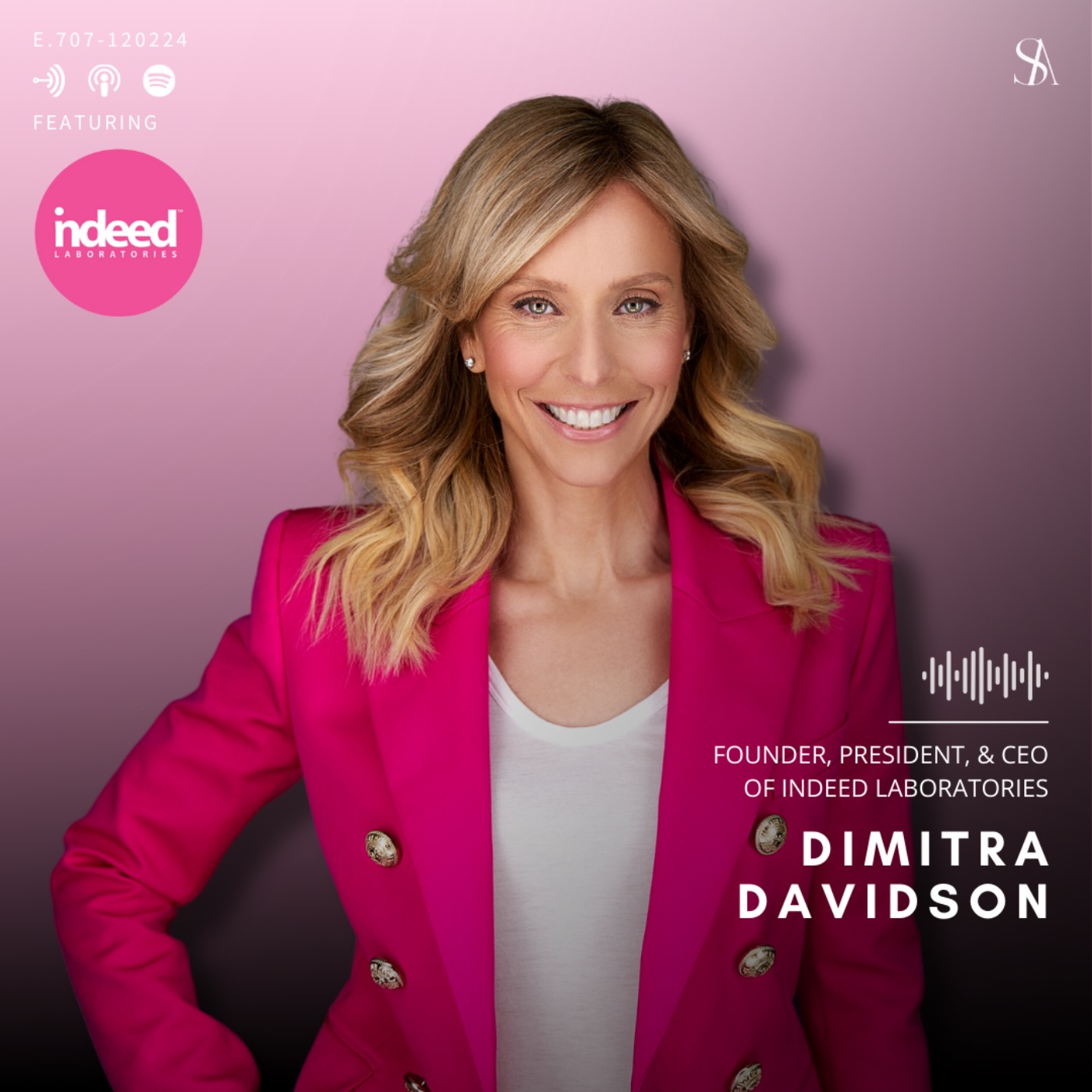
Hey, guys, welcome back to Skincare Anarchy. This is your host, Ekta. And I'm so excited about the brand we're hosting today because I really believe in, you know, just tried and true brands that have been around, they've seen the industry grow, they've grown with it, and their products are a reflection of that. And I think this brand that we're hosting today is truly, you know, a testament to that statement, because I. I really think that, you know, great products are more worthwhile than all of the ones that are coming out, that are experimental and we don't know if they're going to work. And I think the lineup that we looking at with Indeed Labs, which is the brand we're hosting today, they're really great. So without further ado, I want to introduce you guys to the founder of the brand, Demetra Davidson. Welcome to the show. Dimitri. I'm so excited to host you.
- [00:46]
B
Thank you so much. It's a pleasure to be here. I'm excited to speak to you today.
- [00:50]
A
Yeah, I'd love to get started because, you know, I know you come from a very unique background. You did some shifting in your career focus, and I'd love to learn what got you interested in the beauty industry and what made you want to come on over and. And kind of innovate in the space.
- [01:05]
B
Yeah, that's a great question. Thank you. I did start off my early career in finance. I have a background, studied Bachelor of Commerce here at U of T in Toronto. And I thought I was going to be a stock worker. Early on I came, I was trying to put myself through school and I was working in the banking world and I loved it. I was always pretty strong with numbers, thought I was going to stay in that industry. But sadly, when I came out, and this is a long time ago, I'm going to age myself here. But there was a recession and it was very difficult to find work in that field. So as you know, lots of student debt. I needed to pay my debts off and I was just going to accept a job to get myself, my career going. I started working in luxury goods. I ran corporate sales for Tiffany Co. Canada. Actually, that was one of their first stores outside of the US and it was a unbelievable company to work for at the time. So I had a background in finance, shifted to retail, and then at some point I went back to school and I studied for an HR specialist. And at that time, I was a young mom, I have three daughters, and I was trying to figure out what's the next thing for Me, and I love that I had a passion to help people and help grow teams of people and help to inspire people in business. And so I started consulting, doing some consulting work. And through that journey, I met my initial founding partner. And together I had a need. And together we launched Indeed Labs.
- [02:44]
A
Wow. I love that you came from that, because I think that, you know, in terms of, like, beauty, it's very unique to see, like, how different people approach it. And I feel like when you come from a different field, it's like you're not in the industry your whole life. So, like, you have this new outlook, you know, And I love seeing that. Some of the best brands I've tried and I fell in love with are from people who come from. I mean, a lot of them do come from a finance background, believe it or not, because I don't know. I don't know what it is, but, you know, that's really cool. I wanted to ask you, you know, in terms of, like, the beauty industry at large. Right. Like, I feel like everybody looks at it differently. We just discussed, but what was the. Really, the white space that you saw, you know, when you wanted to enter the space, especially with the skincare industry, that made you want to innovate and make products here?
- [03:31]
B
Yeah, I mean, definitely in my wildest dreams, I never would have imagined that I would be in the skincare business. If you could think back 2008, when we were conceptualizing this brand, you know, indie, smaller brands, independent brands, were not coming into the industry, especially not in mass market, the way we did. I was a young mom, my youngest daughter at the time, she was really little, six months old. I had some melasma hyperpigmentation. I went to my dermatologist. He prescribed hydroquinone. I had started really paying attention to my health in a holistic way. Being a young mom, I was looking at what I was eating, how I was living. And so I was very intrigued by this ingredient. I didn't want to use it, not knowing if, you know, if it's going to be too strong, is it safe to use? So I started looking it up, and I realized that hydroquinone didn't sound as safe as it presented itself when my dermatologist said, here, just use this. And so naturally, as a young mom, I was afraid to use it because I was maybe still nursing at the time. And so I thought, there has to be a different solution. So I went to the drugstore where I bought my children's formula diapers, and I said, do you have something that can help with this. And the beauty advisors at the time, they hadn't been trained on ingredients. What became very obvious to me at the time was that really if you weren't a dermatologist and you were a regular consumer or anybody with working in the field, it was really hard to know what ingredients actually did what. And I just wanted results. And so when I was asking questions that I was being asked when I was looking for product to help me was, what's your skin type? Is it combination? Is it dry? Do you want to use this three step system? But I could never really get an answer as to how I was going to treat this problem I had. And it was very serendipitous because I was a young mom with a need. And I met somebody at the time who actually had started doing a deep dive themselves from a different perspective and said, well, why don't consumers know what ingredients are in products and are they safe to use? And also I had bought products that were $200. And as a young mom, that was a lot of money for me to spend as well as products that were $30. And none of them seemed to work. So I felt like I, I didn't think, I honestly never thought, let's start a skincare brand. I was just a consumer. When I met this individual. I said, well, can we kind of mix something up? For me, all I cared about was can I fix this problem? Was making me feel really bad about myself. And so together the idea. So my needs and this vision were kind of married. And indeed labs was born and all of those different elements factored into the ethos of the brand. I was a real person. I wanted real results. That was our caption. Real people, real results. I wanted to know what ingredients were in my products because none of the products I was buying really led with an ingredient. I wanted those ingredients to work. So it wasn't enough to actually have an ingredient in there. I wanted to know, did that ingredient meet my need, my specific needs? And I started to realize, even in just serving different people, asking them how can I fix this? That everybody's needs were different and everybody's skin was different. So we launched this brand, which was very much a problem solution brand because everybody's skin was different. And it was difficult. At the beginning when we launched, I couldn't convince people to use hyaluronic acid because the word acid was so scary to them.
- [07:25]
A
Yeah, yeah, I remember that.
- [07:27]
B
I remember right. They were like, ah, but I'm not using that right. And, and then, and, and I can't tell you how many years it took for us to evolve from that same question that everybody asked me. Well, like, what steps? Like, you know, what's the moisturizer? What's the it? And to this day, and in fairness, of course, people want ease. They don't want a complicated daily routine. But everybody's skin is different and it'll always be different and our needs are different. And in fact, as you know, our own individual needs change from day to day. So my communication to our consumers now is trust yourself to tell you what your needs are. Your skin will talk to you. You just need to listen and trust your own intuition.
- [08:18]
A
Absolutely. And I'm, you know, I'm really kind of glad we're having this conversation because you brought up hydroquinone. You know, you mentioned it and it's so interesting you bring that up because I trained in allopathic medicine as well, and I understand the role that, you know, prescriptions play in our lives and, and all that stuff. Right. But here's what I don't understand is, like, when it comes to skin health, there's just so many, like, they're the drugs that are out there, like, FDA approved, like, options are genuinely not safe in pregnancy. Like, they're just really not like hydroquinone. I mean, it's, for anyone listening, it's category C, you know, and it's not, it's very heavily absorbed, you know, in your skin. Like, it's really, like, it's not safe. And so the idea is that if we have these, like, and it's a very old drug, mind you, you know, it's very old, like the actual drug itself. So what that leads me to just kind of, you know, think is, well, why aren't we adopting these, like, you know, newer, like, ways of treatment, I guess you could say, you know, and that's where the skincare industry is so fascinating. And I mean, indeed, labs when you founded it. Nobody was really doing much with skincare back then, right? I mean, I'm sure you didn't see it a lot. I mean, I, I know I wasn't into it that much, like, as a consumer. So it just makes me think, like, you know, that's really, I mean, the, in just the evolution, right. Of this space must have been so interesting for you to watch, you know, from that perspective of like, here's something that's not safe for you, and here you are trying to create something that is safe, you know, and bring it.
- [09:52]
B
Right?
- [09:52]
A
Yeah.
- [09:53]
B
And I was scared, let me tell you. I was scared. I the, I think that number one question that I was asked very early on was that used to scare me was are you a chemist? Like how do you know? How can you be doing this? People were suspicious. Well, I don't need to be the chemist. We have, you know, unlike, you know, in some indie brands, again, budgets are restricted. As a new brand owner, we built a lab and hired scientists right away. So we've always known that the science of our products would be important for us. We had our own in house scientist from the get go. He's still here to this day. The science of the products and those ingredients and that integrity of the ingredients was so important to me because like I said, I was afraid to use this, you know, hydroquinone. I was afraid to use that. I didn't want to put products in market ever unless really understanding. But that's the point is the evolution in this industry. There were. There's so much more information that is available to us today. You probably know this though as well that a lot of it still gets swept under the carpet.
- [11:02]
A
Yeah, a lot, a lot of it.
- [11:05]
B
Gets swept under the carpet. You know, my latest is benzoyl peroxide, but I can talk to you about my journey with that in a minute. And we still keep going and there's better solutions out there.
- [11:17]
A
It's crazy.
- [11:17]
B
There's better solutions. We are. Yes. And we are here to change that. I'm here to change that. I want to change that. So I think, you know, that we just launched our acne system which doesn't use any harmful ingredients. And the clinicals on it are just as strong as anything else in the market in this category. And it doesn't use benzoyl peroxide or salicylic acid. It doesn't break down your skin's microbiome. So it can be done. The question is why are we not being held accountable? That's the question. Right, so exactly. We launched to do it. We launched to make a difference. We really did. And I have never. I was, I obviously took pride in my parents cared for my skin. I really wanted to feel good always as a young consumer. I was a fashion girl. I came from luxury goods retail. I wanted jewelry and fashion. I thought that that was if I was ever going to leave the finance world and be my own boss, I was going to do it in fashion. I never ever expected to be in beauty. But I do realize today that this was my calling. I was meant to be here.
- [12:34]
A
Yeah.
- [12:35]
B
61 awards later, right? All the signs in the Universe. So, yeah, thank you.
- [12:40]
A
No, I mean, honestly, it's, It's. It's a beautiful thing that you've made this brand from such a genuine place. Like, I really want to say that because the thing is that when we go into the skincare industry now, I mean, I know that, you know, we were talking about before, there was almost nothing here, and then all of a sudden I feel like we've exploded, you know, and there are so many products and so many brands, and a lot of it is redundancy. Let's be real, you know, it's a lot of it is redundancy. So to find your footing in that kind of a market, one, it's very difficult. Another thing is that to find true innovation in that kind of space is very difficult as well. So, you know, I really applaud what you've created with indeed labs, because I think that when you create something from the beginning, from this understanding of there is a real need here, and then I'm going to try to find Sol, you know, as I go. That's what it to me does. True innovation, you know, science is done that way, you know, and I think that at the end of the day, the way that medicine is and the way that it's now integrating with OTC products, now is the best time to introduce these kind of options to consumers, because at the end of the day, you have to take your health in your own hands at some point, but you also have to have clear options available to you. So, you know, you mentioned your acne system. I would love to talk about that for a little bit because I think acne is one of the biggest driving forces behind consumers coming to the skin care industry and looking for options and looking for products. I know it was for me, you know, back when I had acne. For me, it was proactive, you know, back in the day. And it was like proactive changed my life. Literally. Like, it was like I come from a family that had acne, you know, so I was predisposed to it. And I remember finding a product that worked for me. And I know a lot of people out here are like that. So, you know, what is that? Like, how does that fit in in terms of, like, your entrepreneurship goals, you know, and your journey, right, as. As a founder in creating products is like that personal connection with consumers.
- [14:39]
B
Definitely. Okay, so like you mentioned, proactive. And I have a story around my, again, my own personal journey with my, you know, my acne and I. And it's such an emotional journey as, you know, Having had acne yourself. So our products are definitely born out of an idea that I have. We talked about sustainability, we talked about flooding the market with a lot of products that mimic another product. My answer to sustainability is always having a point of difference and that's where the innovation comes in as it relates to an acne product. So what I mean by that is I don't want to ever launch a product in the market if it doesn't have a point of difference, whether it's a different application in a different component, whether it's tweaking a formula, whether it's making it more accessible in its price point. If something currently exists in the market, I'm not going to do it because I don't want to do that to consumers. And I just don't think it's fair to. It's not, not fair, but it doesn't make a lot of sense in our world where there's just too much to begin with. So as it relates to acne, being in this industry, as I mentioned earlier, has always been obviously a journey for me and a very twisted winding road where I've learned so much along the way alongside my chemists about ingredients, formulations. Consumers have taught me so much. One of the things that is the driving force behind my brand is consumers and consumer needs. And always, of course, I'm going to factor in my experiences in that as well. And so when I was a young girl, again, I had acne. I used this three step system that promised me results. I bought it on an infomercial. I was again, at that time, I couldn't find solutions that would work. And I was successful. It was very good for me. Eighteen months later I found myself in my dermatologist's office and he was trying to, firstly, this was a long time ago. We were again, we're not talking about ingredients back then. I started to look at my face and I thought, is my face a different color than the rest of my body? Is it lighter than my. My skin was being bleached by the actus in these products.
- [17:14]
A
Oh my God, that's true.
- [17:16]
B
That is true. And I'm very fair to begin with. And so I thought I was imagining it, went to my dermatologist, he tried to sell me a cleanser that in his office and he, I didn't, I didn't really have an acne issue at that time anymore because, you know, it was at bay. Right? Yeah. And so he asked me, what are you using? I said, oh, I've been using proactive. I Can't stop using this product. I'm not changing because I will break out if I stop. Right. An emotional journey. You're emotionally now connected to these products because if I stop, I'm going to go back to that place that I was really sad. I don't want to do that anymore. So he said to me, well, how long have you been using? I said 18 months. And he said, what? You can't be using this product for 18 months. I said, why not? They send it to me every 30 days. And he said, well, there's benzoyl peroxide in it. Okay. So that was when I was younger. I came off of it. Thankfully I had only gone through. It was a hormonal acne at the time. So my skin had cleared up and I only had, you know, acne breakouts after that. But now fast forward. I launched a skincare brand. I'm traveling the world. I'm trying to bring products to market to help consumers. The number one concern is acne. I don't have an acne product. I can't bring a product to market because I know that I don't want to use benzoyl peroxide.
- [18:39]
A
Yeah.
- [18:40]
B
So for years I would task our scientists to find something that's going to help treat acne and something that is actually clinically proven. I don't want to over promise this is. This is a very emotional problem for people. And so I started to read about microbiome and how our skin functions and started talking to our scientists and they started doing their own research and their deeper dive and we learned about not what triggers acne as you said. It could be genetic. For me it was hormonal, it could be stress, it could be anything. That's not the point. The point is acne is formed the same way. It's no overproduction of an oil gland that's there to protect our skin. Overproduction of sebum. This acne causing strain of bacteria called C. Acnes thrives off of that overproduction of sebum. It multiplies. That overproduction of this bad bacteria we call it gets stuck in the hair follicle along with the excess sebum and that's how acne is formed. The treatments are the same. They're killing all bacteria. But do we not know today what breaking down our skin's microbiome does in the long term? I think we do. I think we know that killing all bacteria in this community is not a good thing. And we allow it to happen. And people perpetuate month after month after month after month and expose our skin to that which is the biggest organ in our body. It protects us. Our skin is there to protect us.
- [20:25]
A
Exactly.
- [20:25]
B
And we're allowing it. Right. So are there studies that are now tying down your skin's microbiome, the weakening of your skin's microbiome to bigger problems? In theory, yeah, there are. And so I, you know, again, I don't, I don't want to be alarmist, but it's true. And you know that, and we know that. And the science is there to back it up.
- [20:52]
A
The science definitely is. And I'm glad you brought up benzoyl peroxide, because, you know, one thing, and this is also something that I realized later, unfortunately, later on in my life, was because I mentioned, you know, I was on proactive as a teenager, Right. Trying to clear this acne. But one thing that benzoyl peroxide also does, and it's never discussed, is it sensitizes your skin for future hypersensitivity reactions. So, like, people can use it and, like, they think that it's going to be tolerated. And this is one ingredient we're talking about, benzoyl peroxide. But a lot of ingredients do this, mind you. You. And no one's discussing it for some reason that you can use this stuff. Yes, but what's it going to do to you five years later? You know, like, you talked about the microbiome. Right. So, like, in that context, of course, absolutely. I agree with everything you said. You know, we don't want to destroy our normal microflora. But also I find it to be actually even more interesting when you look at the angle of not only do we not destroy it, but I don't want to predispose myself skin to being like, populated by the wrong new flora. You know what I mean? You're literally cleaning out everything and making it susceptible to species that are not going to be good for you, you know, and then to rebalance that, I mean, that's like. I don't know, it. It's crazy to me to even think about that we're, you know, kind of putting ourselves out there for that kind of a reaction later on in life. And so why I'm saying all this, because now, like, literally now, if I were to put even like a drop of benzoyl peroxide on my skin, it turns like, beet red. Like, I'm not exactly. It's crazy. Exactly. And that's where I feel like it's so important to have this conversation, because it's like, you know, yes, you've created a safe acne system. I think your three, three step system is awesome, by the way. It's really.
- [22:42]
B
Thank you.
- [22:42]
A
It works, it's so good. It works on adult acne. It works on everything.
- [22:47]
B
So it's a PH balancing system, which means that you don't just have to have acne to use this. It's a microbiome skin strengthening system. It is the only, it's the only thing that is clinically proven, microbiome certified and dermatologists recommended we put it through three rounds of clinicals because once we found out how to actually treat acne and we put it through the first round of clinicals and I got the results back personally looking at the results going, wow, okay, this is too good to be. Can we put it through a second round? Get me another 30, 40 subjects, whatever, and put it again. I want to hear what they have to say. 100% of the participants saw no irritation. How many people can say that, that you are clearing up acne without irritation? 100% of the participants said their skin look brighter. Why is that? Because we're protecting the skin's micro biome. We're having. Your skin is doing what it's supposed to naturally do itself. We're just giving it the tools to do that. So I couldn't believe it. We also did a third round of clinicals under the direction of a board certified dermatologist as well as our scientists. We brought people in house. I did not meet these people until the study was over. We are about to launch the brand. I brought them in here and we had a consumer focus group and I said, guys, tell me everything I need to know about this brand. It is about to go into the market. Acne is such an emotional journey for people. Tell me about your experiences. I want to hear. And almost unanimously, they had nothing bad to say. The only thing they said is, where can we get more now that the system, now that We've completed our 30 days, where can we get more? They were again, they were afraid to not be on this system. The testimonials have changed people's lives. Question is, the question is, when we know that ingredients that are harmful are out there, why are we not doing anything about it? But one thing I will say, when I launched this, when we launched it, I thought it was no brainer. The science was there to back it up. We had a dermatologist working alongside. We got the microbiome certification. That's unheard of for an acne. Treatment. There's nothing out there that doesn't break down your skin's barrier other than this brand. And I thought, oh, for sure. What I didn't realize is the emotional connection that people. Like I said when I went to my dermatologist and he said, you got to stop that. I was like, oh my God. Oh my God, what am I going to do if I stop this? My acne is going to come back.
- [25:31]
A
Exactly, exactly. It's fear. It's literal fear. Like, I don't want to go through this again. Yeah, exactly. I mean, that's the thing is like, what, what really gets me is the testimonials. I'm glad you pointed that out because for anyone listening, if you guys go on to Indeed Labs.com and you look at the PH and healthy skin system, that's the one we're talking about, the three step routine for acne. The, oh my God, like the before and afters are phenomenal. Like, it's awesome to see that. You know what I mean? Like, I really love seeing that people are treating severe cases of acne. Like, it's really helping. And it's not just getting rid of the, the blemishes and the lesions. It's really helping with that post inflammatory hyperpigmentation, that process, you know, and, and I, you can see it clearly in the pictures. I love that you have testimonials from people of color on there because that's one of our biggest pain points when it comes to skin health is this idea of like, I'm scared to have a breakout, not because I'm scared of the breakout, because I know it's going to leave a mark, you know, and getting rid of that mark is going to take me months, if not years to get rid of it, you know, years. I got terrible, you know, so I love that you, you guys have really thought about this, you know, in the sense of like, it's not just another thing that just quickly clears up, you know what I mean? It's really treating your skin. It's like you said, it's balancing the pH and it's really priming you for long term skin health. I think that should be the goal at the end of the day, you know, for every product that we use.
- [26:56]
B
So absolutely, absolutely, you know, do what you say you're going to do, which is that is the foundation of Indeed Labs. But also people ask me all the time, what are you most proud of through this journey? And I will say this brand, Finn, because in terms of next generation, in terms of understanding the way our bodies function in terms of what it can actually prevent down the road. Epidermal water loss, fine lines and wrinkles, even things like rosacea, eczema, a lot of them have been tied. And I'm not suggesting, by all means, I haven't studied this brand with those particular issues. But while I will say, as we've studied what breaking down your skin's barrier can do, as you said, long term barrier strengthening system is a ph balancing system. It's a smart system that only goes after that overgrowth of bacteria and leaves all the other bacteria intact. And that's key. Also, we, we do know that the brain, gut and skin axis are connected. And so your overall health, this is a bigger issue, right?
- [28:15]
A
It's a much bigger issue.
- [28:16]
B
I'm super proud of it. Yeah, I'm super, super proud of it.
- [28:18]
A
So you should be. It's really cool and I really love that you're doing it. It really just, you know, I think we need to see actual innovation and solutions in the space. I really believe that. I think that, you know, having a way to treat acne that's not going to cause long term damage for me, that's like, I mean, that's groundbreaking at the end of the day because it changes lives. I had a conversation with someone, Demetra, a while ago and we were talking about like patients I've seen, right. And I was like, you know, what really alarmed me in my life was in my career was people would ask me about some serious cases, you know, like, like they had internal problem problems and they were more concerned about their outer, like, you know, like a bruise or like something, some sort of thing on their skin. And that really speaks volumes, right, at the end of the day because it is the largest organ of our body, but it's also the most influential part of our body on our mind. And that's something that it's, it's huge, you know, and it really ties in. So, yeah, we have the gut, skin, brain, all that stuff going on, but we have a mental connection to our journey with our skin and that has to matter, you know, and brands have to care about that and, and create products that are going to make a difference in people's lives. I mean, people say, you know, it might sound idealistic and cheesy, I'm sorry, but it's true. You know, if I didn't clear my acne when I was a teenager, it would have, it would have been terrible. You know, I would have felt terrible about myself. And that's just the truth. And so to know that, you know, there's so many people out there that are still struggling with even adult acne, you know, to me, that's unacceptable. As a physician, I look at that and I'm like, it's 2024, almost 2025. We need to clear this up, you know, and, and find problems, solution to these problems. So, yeah, it's pay attention.
- [30:03]
B
Yeah, pay attention. When someone says there's high levels of benzene and we know that's harmful, pay attention. And I, you know, I think I will say that as a, you know, as a brand and I'm very accessible to consumers. That's the other thing. So maybe just being so connected to consumers everywhere and maybe you don't see that with, you know, maybe brands that are bigger and have more layers and. But me being connected on the ground with consumers, hearing their pain points and knowing, you know, in good conscience, I can't bring products to market. Like, what's the end game? Do you know what I mean? Like, isn't the end game really to help people? Isn't that the end game? And for me, you know, it's really crazy. And this might sound unusual to a lot of people, but maybe because I lived a little bit long, I've lived a little bit longer. I always say that. I think that we think that taking care of our skin and our exterior appearance might be vanity, but I believe it's Mother Nature's way of protecting us. From the beginning of times, you will see people with rosy cheeks and plump cheeks. That was a sign of good health.
- [31:15]
A
Yeah.
- [31:15]
B
And I do believe that our skin tells us so much about our overall health and that's why we pay attention to it. When your skin is sallow, when your skin is sunken, when you're. And I'm not. Again, I, I don't want to suggest here for, you know, we're not, I'm not trying to fear monger. I do not want to suggest here to people that are listening that there's something wrong with their health because, you know, they have acne. I'm not suggesting that. What I am suggesting is that healthy habits and understanding your overall body and it's speaking to is important. And I do believe that it is mother Nature's way of us taking care of ourselves because it's the first thing we see when we look at ourselves and it's the first thing that people see when we go out into the world. And yes, it may have evolved into vanity. And yes, I agree that there are Very unrealistic expectations or standards. First person to say that beauty isn't about the way you look. Beauty is how you feel. And it doesn't matter. When you look in that mirror and that person is looking back at you, it doesn't matter. That person doesn't feel good, then that's not beautiful to them. Right? So. But I do believe it's Mother Nature's way of protecting us. I really do.
- [32:36]
A
I love that. And, you know, it's really well said that you brought that up, because I. I agree. I totally agree. I mean, I think it is and it always has been. You know, our body, like, it's. You know, you ask anybody who studied the human body, and they'll say it's the best. It's the most sophisticated machine to ever exist. We literally mimic our technologies off of it. You know, like, when it comes to, like, engineering and stuff, like, you'll see they're mimicked. You know, the technology is a mimicry of what's happening inside your body. So, yeah, it is. I completely agree with you. It is nature's way of, like, kind of your skin is indicating to you what's going on. And. And at the end of the day, if you don't like what's going on, it shouldn't have to be classified as vanity. You should be able to say, I don't like that. I'm breaking out right now. I don't like that I'm going through this because it is affecting my health. At the end of the day, mental health is health. All of it is health, really, if you think about it. So, you know, we should be able to say that and then not feel, you know, shy or whatever when it comes to finding solutions. So I completely.
- [33:37]
B
And also giving each other a break also, you know, for those people that are struggling and this is their own personal journey, understanding the impact of the way that we see them in society. It's not about the way we see people. It's about the way they see themselves, which is what I try to do through our brand is empower. And I was just actually recognized recently for my role in empowering people, and I. That was the.
- [34:00]
A
Yeah. I want to say congratulations on your Businesswoman of the Year award.
- [34:03]
B
Yes, thank you. That was the biggest honor. It was Businesswoman of the Year, Women empowerment. And that was the biggest honor for me because through this journey, I've realized that that's what I was intended to do. And, yes, I'm selling skincare products through that.
- [34:22]
A
And.
- [34:22]
B
But if I can help people If I can aspire people, whether that is to aspire a young entrepreneur, or whether that is to help somebody on their professional journey, or whether it is to help a consumer find solutions for themselves that are going to help them, whatever it is, empowering people is the greatest honor in business. And I love that I was happier than I've ever been in my career. I will.
- [34:51]
A
No, genuinely congratulations on that. And I. And I love that you're able to really use this in such a positive way. You know, that's so huge. And I want to ask you for advice because we do have so many young professionals that tune in and I would love to get your, like, words of wisdom about entrepreneurship. It's hard, you know, it's a hard journey. So anything you can offer, you know, to give some guidance here for them, anyone who's embarking on it or is currently a new business founder, you know.
- [35:20]
B
I will say that I always envisioned myself being in control of my own, whatever that looks like business. My ideas, they teach entrepreneurship in school now.
- [35:38]
A
Yeah.
- [35:38]
B
And I, although I've never been through any of the programs myself or even review the curriculum, I will say that to define an entrepreneur is difficult. I think that everybody's journey is their own. And I think that young, up and coming business professionals see people like myself and say, I want to be that. I want to be an entrepreneur. At the end of the day, you have to have a dream, you have to have a goal. And where I ended up and where I thought I was going to end up, I told you at the beginning of this podcast, are two very different places. If you had said to me as a young girl, where do you you're going to run a business one day? What is that going to look like? I would have said it was something very different than where I am today. So I think that we put a lot of pressure on ourselves. What I do want to say to young professionals is this. Give yourself a break. Learn as you go along. Work for somebody that you can learn from and align yourself with a mentor that's going to really push you out of your comfort zone and give you the knowledge foundation and the tools that are going to help you later. And when the timing is right, you will know it. Whether you know it in that moment or whether you follow that course like I did, and then stop one day and look back and go, oh, my God, I'm doing it. I didn't know that I was going to end up here. And in fact, I was just so worried that it wasn't going to work out that I spent so much time trying to make it work, from educating myself to growing to surrounding myself with people that could help me, to endless nights of planning that. I didn't realize that I even was an entrepreneur until people started calling me and I started getting interviewed for podcasts and. And I thought. And I still had imposter, imposter syndrome at the beginning. I still thought I couldn't do it. And I remember being on a plane one time about to take off, called my assistant and I said, I don't know. I don't even know what I'm doing. You know, I was so questioning my capabilities in this industry because it's competitive. It's the most difficult industry to be in. There's so many things to know and so many layers. And my assistant said, what are you talking about? You already are doing it. You're listed on shelf in the biggest retailers around the world. You've won so many awards. You speak about science, of product like you are a scientist. What are you so worried about? And it was that moment that I realized that's the moment that was so pivotal to me because everybody has their own moments that are. That aha moment. That's when I realized, yeah, I am doing this. But before that, I couldn't define what an entrepreneur was. But what I will say is for me, that tenacity, that drive, that grit. You hear that word all the time. Entrepreneurs, that grit, that wanting to be successful and that not stopping. I started off my early career there, I will say, working in the bank, working for a huge. One of the biggest and most successful retailers in the world. Strength of a brand, every little bit of experience that I picked up along the way got me to be to where I was, where it got me to where I am today. It wasn't what I learned in school necessarily gave me a good foundation. I will say financial literacy, guys, also very important if you want to run a business. Without my BCom, I would have had a very different world in front of me. Financial literacy is important. You don't have to study it in school, but you need to understand the basics of finance if you're going to run a business. But that's what I would recommend. 100%.
- [39:42]
A
No, I'm really glad that you mentioned the finance part that I was going to say because we. I still don't know why we're not teaching that in school. Like, I really. Yeah, I don't understand it. Why are kids not learning? But that's. That's amazing though. And such good advice, truly. I mean, I think that a lot of people, from what I've noticed from. I'm not, you know, I didn't start a skincare brand and I'm haven't started a brand, but I do see a lot of people who are kind of hopping on this bandwagon now more than ever. Right. And they want to get into beauty and they want to get into the space. But everything you said is so such gold, you know, in terms of just a guiding light. And I really hope that anyone listening out there that is contemplating, you know, getting into space. Yeah, you should pay heed to that advice because it's. It's a really hard industry. Like it said, it's hard. There's a lot of people here and there's a lot of stuff that's. I've said it before and I'll say it again, there's a lot of redundancy. You know, it just is what it is. You know, every day I come across a brand and I'm like, oh, God, new packaging. Okay. You know, like, nothing new, it's just new packaging, so.
- [40:42]
B
Exactly. So I fully immersed in this world and there's many brands that I have never heard of, and I live and breathe my business in this industry seven days a week, 24 hours a day. I don't suggest everybody needs to do that, but, you know, that's just who I am. Yes, there's a lot of noise. Standing out is very difficult. But like I said, a point of difference is incredibly important. Really. Knowing what your purpose is is also incredibly important. But also, as I said, financial literacy, you said it yourself, should be taught in school. I agree. We need to revamp the curriculum and we need to teach people in general the basics. The very basics.
- [41:19]
A
Absolutely, absolutely. And I want to ask, though, as my. My final question for. For Liz, I really want to know what you're working on next to be sure what is up. Coming up for indeed labs. If there's anything you can share with us.
- [41:34]
B
Yeah, I am actually off to New York tomorrow to do some press. My new innovation is still under embargo. We've seen some really interesting movements in the industry in the past year and a bit, and that trend is here to stay. I've always, always, you know, really tried to nurture and foster healthy habits in. In daily routine with taking care of your skin with my daughters especially. So I think that teaching younger consumers healthy habits and supporting that in a way that they can find products for their skin is really important. That's definitely something on my radar. I think that now that there's this movement of younger consumers having fun with skincare, I think it's really not. We would do them a huge disservice if we decided to scare fear monger that, you know, younger consumers shouldn't be using products. I think it's important, just like we teach healthy habits with brushing your teeth, I think it's important that we continue to nurture healthy habits with younger consumers, but give them the right tools to. To do it in a way that is responsible, in a way that helps them evolve, in a way that they can have fun in a way that doesn't break the bank for mom and dad. So that's one of the things that's definitely on my radar. Without saying too much, I just talk in circles.
- [43:07]
A
No, I mean, it sounds exciting and I really love the brand. I think you guys have just really kind of knocked it out of the park with your products. You know, we didn't get to talk too much about the ones I've been testing, but I really, really love the moisture intense products, the hydration intense products in your line as well. I wanted to say that before we go because there's a lot of listeners out there. I know you guys all have different skin needs, but indeed, labs is a really great place. Find something that works for you. I mean, I. I can't stress the importance of tr Just sticking to tried and true. And when I say that, I. I really believe. I mean, I'm a scientist, I'm a doctor. I believe in the power of science and data driven technologies. I don't think that we can talk our way into better health. I think we have to, you know, really utilize the tools that are given to us that have the most data behind them. And so I believe in finding options that have been around, that have been tested, as many people as possible have tried them and they've worked for them, you know, so I really. That on that basis, I really recommend you guys check out the brand, find something that works for you and something that resonates with you because it's. It's a beautiful thing when you do, you know, it's wonderful to transform, you know, and really the way you want it to look. So with that note, I want to thank you so much, Demetra. It's been such an honor to host you and so lovely chatting with you today.
- [44:26]
B
Thank you so much for having me. And I know we ran out of time, unfortunately. However, what I will say is it can be so overwhelming for consumers. And the final little message I just want to leave people with is, yes, trust your own instinct, but there's a lot of information out there. So if you ever need to know ingredients, products, how they work, we have tons of information on our website. Follow us on our socials, follow me, send me a DM if you have any questions. And we can definitely find products to help consumers in any, you know, concern that they have, because there's a lot of good science here. And we should be we should be nurturing that and educating people. We do all the work on the back end so that you don't have to do the guesswork. We'll give you guys the answers in a condensed way.
- [45:12]
A
Awesome. That's awesome. Thank you so much.
- [45:14]
B
Thank you so much. I love chatting with you.
- [45:18]
A
Likewise.