Loading summary
Transcript51 lines
- [00:00]
A
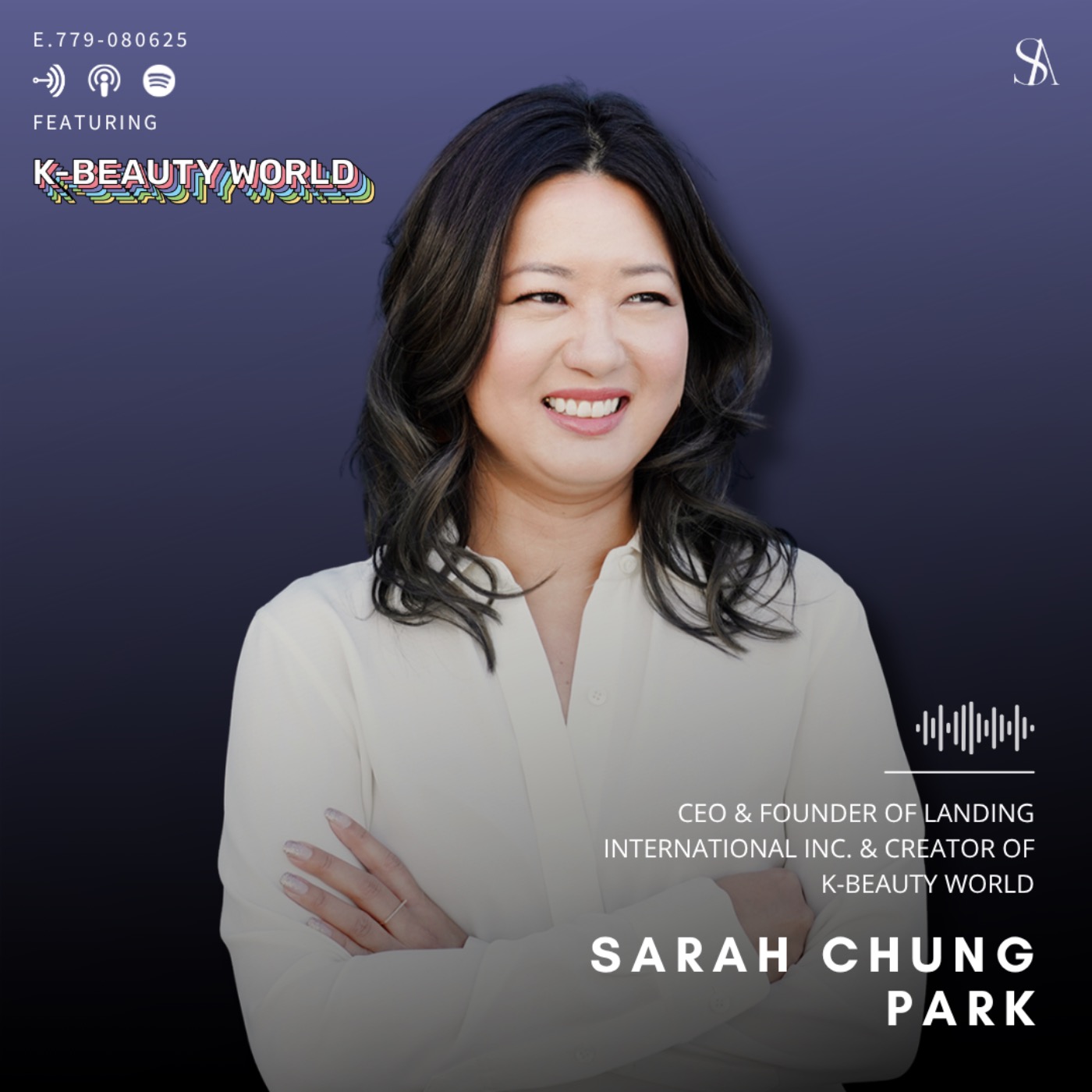
Foreign welcome back to Skin Anarchy. Today is a very, very special episode because we have a true icon with us today. She is the CEO and founder of Landing International Incorporated and the creator of K Beauty World, which a lot of you might have heard about because comes to K Beauty and knowing the leading brands, I mean, I think K Beauty World is doing a fantastic job of bringing them to the forefront and really it's integrating them and introducing them into the US market. And so I'm very, very excited. So without further ado, please welcome Sarah Chung. Welcome, Sarah. I'm so honored to host you.
- [00:39]
B
I'm so excited to be here. Thank you for having me.
- [00:42]
A
Yeah, no, it's, it's truly an honor and I can't wait to learn about your journey because you've truly, I mean, what you've done is remarkable right in the beauty space. And I, I would love to learn about where it all started for you from the business side. I mean, what made you go into this space and wanting to work with brands and do all the wonderful things you've accomplished?
- [01:01]
B
Ye. I started my career, wow. Over 25 years ago in beauty. And I, you know, I, I started out helping brands expand. US Brands expand in the US market, like writing business plans and doing market research. And so I think that learning about new markets, you know, and incubating brands was always part of my journey. And really how I came to beauty K Beauty was through technology. So I developed the idea for Landing international as a match.com between brands and retailers. And at the time, I didn't build it around K Beauty, but I launched it in 2015 and that's really where the interest was. And you might be surprised that even though I'm Korean, I didn't know a lot about K Beauty. So it really was an interesting point for me to source from a place that I grew up and really learning about what was popular. And I think that my journey with K Beauty started there. But it's all, it's obviously taking like many turn twists and turns over the years, right?
- [02:12]
A
No, it's really fascinating to me because you've launched over 180 brands into US retail. I mean, that's phenomenal. And you know, just to see like the way K Beauty came in. I remember the first time I was introduced to it as a US consumer, it was the seven skin method. You know, I remember seeing that and being like, this is phenomenal. You know, like, this is such an interesting take on skin care. And the products were so different. Right. Than what we were used to. I think in the U.S. you know, it wasn't so much like cleanser and a cream that you would buy at the drugstore. It was a way more integrated approach. So, I mean, what were some of the, I guess, initial phases of K Beauty that you remember in terms of how consumers were perceiving it or like, you know, just kind of interacting with the space.
- [02:59]
B
The first week wave of K Beauty was a lot about kind of gimmicky and kind of, you know, ingredients that people had never heard of. And it was like more, I think, sensationalist, if that makes sense. So, yeah, obviously today snail mucin is a very, you know, well known ingredient. But at the time people were like, snail, like, you know, we're getting mucin from snails now and you know, there was like bee venom serums and there was a lot of like, I think it was more shock and curiosity around, you know, sheet masks, like what they were. And I don't know if you remember all the animal sheet masks.
- [03:41]
A
Yeah, yeah.
- [03:43]
B
It seemed more, I think about that sense of, oh my gosh, that's so silly or crazy. I can't even believe they have things like that. And perhaps not so much about true adoption by the US Consumer.
- [03:59]
A
No, that makes sense. It makes sense because it was kind of like gimmicking. I see what you see what you're saying. Sorry. Because I think for the more advanced skin care consumer, it's more like, you know, you didn't see that same level because, you know, we talk a lot about like clinical grade or medical grade skin care these days. A lot. Right. And, and efficacy and data is always like leading in that space. But so this time around, you know, to take the question further, this time around, what do you see that's happening from that angle where like these kind of things are being catered to?
- [04:31]
B
Yeah, I mean, I, I think in the past 10 years there's been a, I would say a growing respect for K Beauty skincare technology. When we ask regular consumers if they've ever tried K Beauty, you, you'd be surprised to know that seven out of 10 consumers say they haven't. But I'm not sure that they realize that a lot of the best selling US and European brands are actually made in Korea. So I think that even within the industry there's just an acknowledgment of the technology that exists in Korea as it relates to beauty and then by the consumers as well. So I think this time it's really more about, oh, what are the ingredients in this product that I might not get from the brands that I'm aware of. And really a curiosity that is related to true retail conversion rather than just something that you might think is funny and interesting, but not something that you would put, you know, on your shelf.
- [05:37]
A
No. What. When it comes to like gaps or any kind of patterns, what do you see across the brands you helped launch that ultimately inspired you to create Landing International and now K Beauty World?
- [05:48]
B
Part of our sourcing methodology and philosophy is that it has to bring something unique to the table. And so we definitely look for products that are brands and products that are offering something that other brands or products aren't. We also try not to have overlap between the brands that we work with. So I think the different gaps, I mean, there's so many new innovations and ingredients and formulations and delivery mechanisms that there's, you know, we're really tapping into all of that. So whether that's like Spico, whether it's PDRN exosomes, we're really tapping into brands that are offering the best in category products.
- [06:30]
A
Yeah, that's. I love that. I think that's such a. It's such an important thing now because, you know, for me as a consumer, I'll tell you, you know, I think innovation is something that I always saw, like, very lacking in the space. A long time ago, it was almost like you wanted, like, I remember the first time I tried a spicule product, right. And I was just like, oh my God, what is this? You know, and it was like this mind blowing experience as a consumer. And now to see, see that come through so robustly is wonderful because it kind of makes the consumer now step back and say, wait a minute. I think I've been approaching beauty a little differently than I should be. Right. It's more of this intersection between true skin health versus just here's a pretty product when you put it on my face, you know, that kind of thing. So I think that's very fascinating to watch, you know, for me as a consumer.
- [07:20]
B
Yeah. And then just from personal experience, like my, my skincare routine, my beauty routine in my 20s and 30s or like, is completely different than it is in my 40s. So part of that is aging, but part of it, I think is that I would over. I think a lot of us suffer from this where we would just rely on one cream or like one toner to like, solve all your problems. And really, I think the approach today is about layering and rebuilding, you know, the moisture barrier. That's a really big theme in Korea. Like, not to only address the signs of, you know, dehydration or dry skin, but to address the root, which is, you know, a depletion of your moisture barrier. So we talk a lot about that. And I think that now, I mean, I'm. I probably do use about like 10 steps and I feel all unnecessary.
- [08:16]
A
Yeah, no, it is, though.
- [08:17]
B
It is. I was like, I feel weird, like if I'm only doing like a serum and a mist and I'm like, I really need an ampoule in there.
- [08:23]
A
Yeah, yeah, exactly. I'm the same way. I completely, completely resonate with that. I think it's. It becomes very, very, I think, obvious, especially the older you get. Right. About the hydration component. And this is where I find community to be very fascinating because I think a long time, for a long time, consumers kind of overlooked hydration. I mean, I know we all wanted like a great moisturizer and like, you know, we want something for the night or the day. But then when you really think about, like, skin health, it's like a lot of it is just hydration. It's just if you, if you don't hydrate your skin properly, you're going to experience maybe even the lines you think are aging lines, but they're really just dehydration lines, you know, something like that. So, yeah, yeah, I'm all about the ten step routine, to be honest. I love it. So one thing I want to talk about, you know, I think K Beauty is actually, you know, it's very synonymous with skin care. I know it was and I think it still is. But now we're seeing things like color product, sun care, even like intimate wellness and, you know, that are. That's entering the space. Do you think is driving this kind of expansion?
- [09:28]
B
Yeah, I mean, there, there's definitely interest across many categories for K Beauty beyond just skin care. And I think one is when it comes to things like color that you mentioned and even, you know, fragrance, there's a lot of indie K Beauty fragrance brands that are becoming quite popular. It has more to do with culture and, and I think what we're seeing just in, in general, like with, you know, K Pop Demon Hunter I think is like the number one show on Netflix and there's so many movies and shows that us consumers have really resonated with that. I think there's more openness to, to Korean styles and preferences when it comes to like, fragrance or even Korean makeup. Because, you know, we were launching two color brands at Ulta, Ramond and Unleasha and, and you can get this, you can get a similar US look, but actually there's different styles of makeup. And so key beauty makeup is, is really best used for sort of a more natural look. And so I think there's more of a. An openness to that.
- [10:41]
A
Right. No, I completely hear what you're saying because there were so many products. Like, you know, when I'm, I'm always scrolling through social media for, like, you know, my own, my own knowledge and trying to understand. And there's been some products where I've seen them, like, oh, this is, you know, Korean specific launch. You know, it's exclusive to Korea. It's not going to be available anywhere else. And some of those products, I'm like, God, I wish I could get my hands on them, you know, because they're so good, you know, and it's exactly what you said where it's like, I feel like the approach that maybe, you know, consumers are taking in Korea, it would resonate, I think, with U.S. consumers. Right. Like, I mean, I think there's a lot of overlap there. I just don't know why we don't see a lot of those products come over. So I want to ask you about, you know, because the Western consumer, I think, is just getting more sophisticated. I mean, that's what I'm noticing at least. And how do you see that changing what Korean brands need to bring to the table now versus before?
- [11:38]
B
Yeah, I, I think that you're right that people are asking, you know, really in depth questions about ingredients and, and also, like, skin types. Like, is this, is this good for melanate? Is skin. Is this good for fair skin, sensitive skin? So I think that Korean brands definitely have to do a lot more testing and product education around all of the different, you know, consumer profiles. So. Because if you can imagine, in Korea, it's just one type of skin, really, you know, it's. It's an Asian customer. And in the US you have, like, many shades and also differing, I would say, concerns. And I think that Korean brands are really showing up in that way of reaching out to different ethnicities, different age groups to, to test their product and to make sure that it's something that's resonating.
- [12:38]
A
Right, right. No, I remember tier, Tier. The foundation, they were, I think they did such a great job because they immediately responded right to this idea of like, hey, listen, you guys need to expand your shade range immediately came through and were like, okay, here you go, you know, like, here's every possible shade you can imagine. And I Was like, I remember seeing that, and I was blown away with, like, just the execution and the time and you know what I mean? Like, just how quickly they adapted to that. I think there's so much we can learn from that approach, you know, where it's like, yeah, this. These are products coming from a completely different part of the world, a different culture, but they're willing to say, we are here to work with you. You know, we're here to make something that's really, truly inclusive. You know, what are your thoughts around that? Like, in terms bringing over something that does come from a different culture and then also incorporating inclusivity, you know, in the way that Western consumers want to see it.
- [13:31]
B
I think it's really important. And, you know, I. I am actually a pretty dark in. In Korea, and the basic shades for a foundation would be like 21, 23, and I'm probably a 27. And so when I would meet with brands, I would say, why don't you make darker shades? Like, even. Just. Just like for. For. For my personal use, I. I can't use any Korean foundations. And they would respond that there's no market for it in Korea. Actually, it's interesting too, because when I see tier. Tier in Korea, there's no domestic market for most of the shades that they offer. So it really does take, like, a leap of faith of creating these products. And so one of the color brands that I mentioned, Alicia, also has a cushion compact that be sold on Ulta, and they have about 30 shades. And I, you know, speaking with the founder, I was, you know, there is a definite conscious effort to expand shade ranges so that more people can participate in the technology of the cushion compact, which, you know, had largely not been available. So I think it's a shift in mindset and in. And it's an important, you know, time because, you know, like, previous to the last couple of years, most, you know, consumers weren't able to use cushion compacts. And so I do wonder if it will become a more popular format, because I think right now, still liquid foundation is. Is preferred by a lot of Western consumers. So I'm. I'm also interested to see if that will change now that more shades are available.
- [15:07]
A
Absolutely. Now let's talk more about K Beauty World. This is such a cool, cool initiative. I mean, at Ulta, I mean, you're bringing it to Ulta. It's so access. How is this different from, like a traditional retail rollout?
- [15:19]
B
I think we. We really wanted Key Beauty World to be a platform where when they see K Beauty World. They know that it is all the things that we talked about. It's innovative, it's inclusive. We really want to tell stories. We want to bring, you know, a good combination of viral products with, you know, products that we think are going to become the, you know, the mainstays of the next 10 years. And I think there's a lot of. It's definitely deeply curated and also translated for all of the different groups that we really want to reach. So it will be available at all ultas, I think this starting next week. And you'll see even from the visuals that we are, you know, we've included people of all age ranges and different skin tones and really appealing to this idea that K Beauty is for everyone. And so I think that's like a big differentiation point of connecting with, with different consumers.
- [16:30]
A
Yeah, absolutely. That's really, that's really cool that, you know, there is so much representation here. I mean, I think that that's so, so important when you're introducing, I think especially a new culture. Right. To consumers is like, you have to have this inclusivity built in and like, you know. Yeah, you have to have that, that flexibility of where everybody can relate in some way and understand. Because I feel like the first time K Beauty came around, I'm not gonna lie to you, it was kind of hard to find. You know, it was like, yeah, we heard about it, but it was like, where do we shop the brands? Like, you know, what are the good brands? What are they standing for? That kind of thing. So this is very exciting to me when I see what you're doing with K Beauty World as a consumer, because it gives you access, you know, it really gives you true access to these, these wonderful brands.
- [17:12]
B
Yes. And I, I think like, like, you know, this was a personal pet peeve of mine. When you would see K Beauty brands, it would always be like a young Asian model, an easy model. And I'm like, that doesn't really reflect most of the American consumer. And so we really wanted it to one ref, you know, for consumers to be able to see themselves. And also the subconscious message of, you know, we're expanding what we believe is, is the beauty ideal and that everyone is included in our definition of what is beautiful. And I think that that's also something that is maybe not in the K Beauty DNA, but we want to change that.
- [17:56]
A
Yeah, that's really. I love that. I really love that. And you know, speaking of that, I want to talk a little bit about this because you've mentioned educational ecosystems Before. And I want to understand how does K Beauty world turn passive shopping into active cultural learning for U.S. consumers?
- [18:13]
B
Yes. Well, I think the key beauty world in, in all of its different, like, facets, whether it's like eventing or education, we really try to focus on making it fit for your lifestyle. And so I think one, we, you know, we have different. We have these kits that we thought would be fun as an introduction. We have like K Beauty beginner and advanced, and we have like a viral kit so that people can kind of test the things that are, you know, are popular on TikTok. And so we're trying to bring key beauty to the consumer in a way that it's digestible and that it's relatable. And so I think in that way, you know, we. We try to reinforce education and meeting consumers where they are. The other thing, you know, we, we do like to have fun with it. We have a lot of, you know, activations in the pipe pipeline where we were kind of, you know, a nod to Korean culture but also American culture and really like blending those two things. For example, one of our brands has. This is very popular in Korea to do photo cards of K pop stars. And so they're like collectibles. And so we'll be doing. Seongwen editor will be doing a photo card giveaway, an Ulta. And so that I think is kind of like a fun, culturally Korean aspect of beauty and marketing that we're bringing to the US and we want to do that with a lot of the fun merch merchandise that K Beauty is known for. So I don't know, you probably have seen on social that like, every brand has like a keychain. And so we want to bring some of that funness, the experience of K Beauty in the US as well.
- [20:00]
A
I love that. That's really, really cool. I think it gives people a feeling of this is what, you know, this is what it feels like if you're going to shop in Korea and you're going to really experience the beauty culture there. That's really. That's really neat. I like that a lot. So, you know, I want to actually talk about glass skin with you for a minute because I think that's the big buzzy word everybody kind of associates with K Beauty. And I mean, I'm all for it, right? I love a great, like, glass skin product. But in terms of, you know, you had mentioned this where it's like, it's for, I think, more people now, like, we're trying to be a lot more Broad. Right. So when you're with your work in terms of spotlighting broader age groups, deeper skin tones, just more accessible price points, how intentional is this shift and, you know, understanding, like basically going beyond glass skin? That's what I'm asking.
- [20:51]
B
I have a. I have a love hate with the word glass skin. I think also the way that it was, was shown to us initially. It. It felt very. The ideal felt like very young and very fair skinned. And I think glass skin, the true definition is really, you know, hydrated, poreless look, but it also kind of speaks to a, like a very high beauty ideal. It's almost like perfection, right? Glass skin is, is the standard, is.
- [21:25]
A
Is.
- [21:25]
B
Is really perfect skin. What we really strive for is healthy skin and being a better version of yourself, which is, you know, like we talked about hydration and it's about protection. Sunscreen is so important and also like calming the skin. So we really want to expand the definition of what is. Is the ideal for a beautiful skin.
- [21:51]
A
Right. Like, instead of just like, hey, this is just perfect, flawless skin, like, you know, let's talk about what does good skin actually mean? Yeah, that makes a lot more sense, I think. I mean, it's really interesting, right, because in the west and I spoke to Michelle Lee recently and she was talking about, you know, how allure at one point they kind of strayed away from that whole anti aging narrative. Right?
- [22:15]
B
Yeah.
- [22:15]
A
And she made a really good point there about how that was just like we. They had to do that because it was like trying to get consumers away from this idea of like, listen, anti aging isn't the goal. You know, beautiful aging is the goal. And I feel like with. Especially with K Beauty now coming in so strongly, what you said really resonates in the same way where it's like, you know, listen, guys, like, we get it. You know, glass skin is great, but what does healthy skin really look like? So I think, you know, I don't know. I'm really excited to see the role KBD is going to play in that, you know, in terms of like that cultural shift for consumers. You know, I think it's going to be very exciting.
- [22:54]
B
Yeah. And it's interesting. It's interesting because, you know, I mentioned that for our visuals we decided to have people from all ages. It was a bit controversial with the brands because in this way, you know, I think some of the brands might think, okay, well, we don't want to show mature skin because the ideal is this like, very young look. But, you know, I think, think from the Response that we've had to date really seeing, you know, beautiful aging, it's so important. Someone asked, you know, can, can, can people over 40 use K Beauty? And I thought that was such an interesting question because I, I think this idea of like layering essences and hydration, it's more important for mature skin. And we need to have more conversation about how, when as you age, you know, we need to do more in order to maintain healthy skin. And so I, I think that a lot of conversation moving forward will be about, okay, like, what does K Beauty look like for mature skin? What does it look like for melanated skin for sensitive skin and really, you know, diving deeper into like, different conditions and different, like, skin types.
- [24:14]
A
Right. No, I think that, that, that's, that's going to be really fascinating to see because, you know, one of the biggest, I think, you know, sticking points for me, especially as a scientist, is that everybody talks about how, you know, Korea is like living in like 20, you know, 75 or something like that. Right? And we see that all the time. And I'm like, yeah, you know, I hear you. I think that the innovation is off the charts. But I think more importantly, I'm very curious and, and I'd love to hear your thoughts on this about what you think this is going to do for the benchmark, right. That is set for innovation in the skin space. You know, in terms of any kind of product that wants to launch in the U.S. whether it's what, you know, Western or coming from Europe or anywhere. I mean, what do you think K Beauty's role is going to be in that?
- [25:03]
B
I, I definitely think that K Beauty pushes the, the envelope when it comes to new ingredients. And I, you know, I mentioned some of them like spicules, PDR and Exosomes, and I think that, well, it would be interesting to see, but I think that the sort of like, table stakes for launching our brand have gotten high. The, the standard has gotten higher to really offer something that's differentiated that really, that is efficacious and not just another me too product. So I, I think that with all of these innovations and the US consumer becoming more aware of that, you know, I should have higher expectations for how my products perform. I think it's going to just raise the bar for everyone.
- [25:53]
A
Right, right. No, I agree. I think it, and I think it's, it's well needed at this point. Right. The bar needs to be raised because we do look at, you know, we do look at K Beauty products and, and you know, even before, like what? The initiatives that you're working on with KBD World, like, even before that, I think all of us were looking in that direction of, like. Like, okay, you know, what are we missing here? You know, because they've got something figured out, we don't. And so I think that natural curiosity, I don't know, I think it might push consumers to. To think a little bit deeper, you know, into what does it really mean to invest in good skin care, you know, rather than just buying, like, 20 products that are the same, you know, which we've been doing for a long time. So, yeah, I want to talk a little bit about, you know, with you, about the role of food and, like, just true Korean beauty culture and rituals. If you could speak to us a little bit about that. I mean, do you think that's also going to come over in terms of the whole, you know, understanding nutrition and how that plays a role in skin health and, you know, especially how it's embedded into the culture of, you know, of Korean beauty, Effy.
- [27:02]
B
Wellness as it relates to, you know, skin health and beauty is huge in Korea. And there's. There's always, like, you know, ingestible food and then plus, you know, beauty products that people would recommend when, you know, for, like, a skin condition. So I don't know if it's gonna come over. I. I hope that it will. I. And I think that, you know, us consumers also are getting more curious about wellness. I had a bunch of people come to Korea last month, and when we're beauty shopping, there's so many, you know, also supplements that people buy that aren't available here, like probiotics and, you know, collagen. And so I. I know there's like, a huge interest and. And I would. I'm also curious if that's going to translate.
- [27:52]
A
Yeah, no, I'm very, very excited to see if it does, because I think that would be very neat to have that kind of integrated into our wellness world over here, you know, because we're kind of stuck in that area as well. I'm not gonna lie. You know, as a consumer, when I look into, you know, just ingestion, ingestible supplements, all that, there is kind of a wall that we keep hitting, you know, and I think there's a lot of room for innovation and growth and learning from other cultures.
- [28:16]
B
And I think it's also a price point issue.
- [28:19]
A
Yeah, yeah.
- [28:21]
B
It's a lot of things feel out of reach, you know, like, do I really need this? Is it a necessity? And I think that the, you know, even with like beauty products or wellness products in Korea, the price points are very accessible and so it feels more attainable and more, you know, that you would be able to incorporate into your daily routine.
- [28:41]
A
Yeah, no, that's absolutely huge. Absolutely. Especially like now because I know a lot of brands, like for example, the Ordinary, you know, or like the Inkey List. I think a big reason people keep gravitating is that price point. You know, they just want something that they can use and it's going to work. And yeah, I can definitely see that now in terms of K Beauty World, I mean, what does success, success truly look, look and feel like for you personally? I mean, I'm not just talking like professionally, but true success for you?
- [29:09]
B
Yeah, I mean, I think it's been, it's been hugely satisfying to see the response of K Beauty World that people are like really interested in it, very interested in, you know, learning more about the Korean culture and where does, you know, these like, like beauty routines stem from. And I think that, you know, what would be an amazing moment for me is to see like a mom and a teen shopping key beauty at Ulta and you know, having that, that moment where people are just, you know, experiencing the K beauty brands. And I think, you know, as somebody who is Korean and who has been in the beauty industry for 25 years, it feels like a, you know, true 360 moment that I'm, you know, that I'm able to bring this collaboration into Ulta and that, you know, I'm able to work with brands that, you know, I, I hugely admire. And so I think that's been the, the payoff for me.
- [30:14]
A
I love that, I love that so much. And I, you know, just to close off, you know, Sarah, I would love to talk about, because you are such a celebrated entrepreneur and a true thought leader in the beauty space, I for you to offer some advice and words of wisdom for anybody who's currently on their entrepreneurial journey or they're thinking about it, you know, especially in the realm of beauty, any advice you can offer for them.
- [30:38]
B
The biggest learning I've had is that opportunities always present themselves, but you have to be on the path. Meaning I think some of the biggest opportunities or things that I've accomplished professionally like, like I could never have imagined or planned out. But you know, I was always going to that conference or asking for the meeting and just taking the steps that I could to, to reach that next opportunity. And so I think that for any entrepreneur or business owner and you know, We've all been there and I experienced it as well, of feeling, you know, okay, when is, like, when's it going to get easier or, you know, what's next for me, maybe feeling stuck. I think that I truly believe if you keep yourself in the, your next opportunity will present itself and maybe even better and bigger than you could have imagined. So I think that just like a word of encouragement that maybe you don't see the end goal today, but that, that it will be there.
- [31:40]
A
I love that. Thank you so much for, for that wonderful advice. And I think it's very difficult right now, especially because people, you know, you don't see immediate success, you want to give up, you know, that kind of thing. Right? So, yeah, yeah, that's very wise words. But thank you so much, Sarah. This has been such an honor to chat with you and to learn from you. It's been so wonderful. Thank you.
- [31:59]
B
Thank you for giving me this opportunity to, you know, speak to your audience and to meet you and thank you so much for your thoughtful questions and this conversation.
- [32:07]
A
Hey, guys. So I hope you love that episode. Please make sure to hit subscribe if you're tuning in to us on any podcast platform. We are available on so many different platforms, so wherever it is that you're tuning in, just go, hit subscribe. You'll be immediately notified when we publish new episodes. This way you're able to tune in to amazing insights from experts, brand founders, industry leaders, authors, all the wonderful people that we host. And that's very important for me because I love to hear from you guys and really understand what you love and what you want to hear more of. Also, make sure to give us a follow on all of our social media outlets. We're available on Instagram, TikTok X, you name it, we're there. We also have a blog on Medium, so if you're a reader and you love Medium blogs, check us out on Medium. We publish some really great articles on there that do deeper dives than just what's available on the podcast. And it's really a great place for all of you science geeks out there that want to learn a little bit more. We go above and beyond with our research and making sure we're bringing you information that you usually probably won't hear about in other outlets. So check us out, leave us a comment, leave us a review, and we'll be back next time with another episode. Thank you.