← Skin Anarchy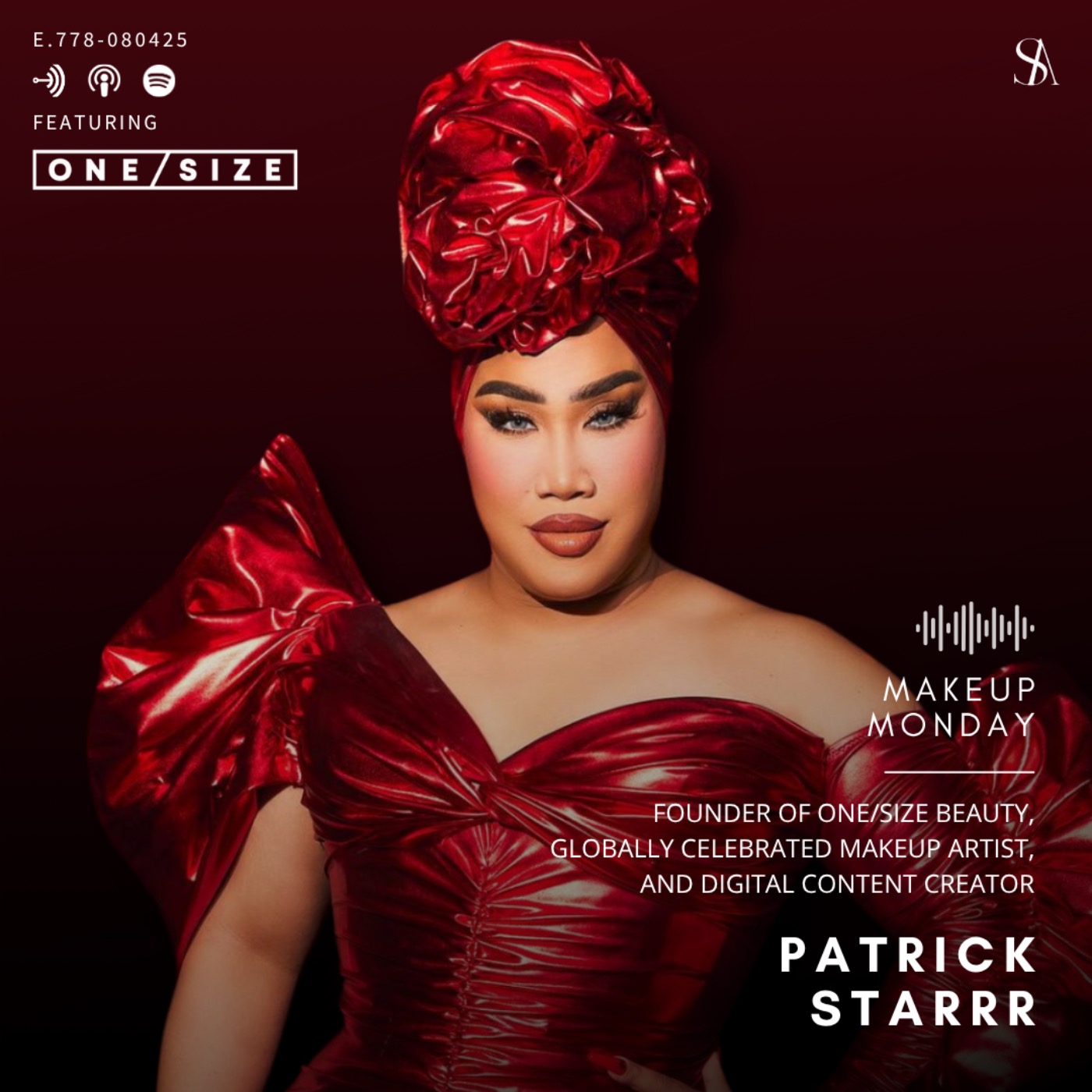
Loading summary
Transcript43 lines
- [00:01]
A
Hey, guys. Welcome back to another episode of Skin Anarchy. I'm sure by the title, you can tell exactly who's going to be on today. I'm very excited because it's rare that I get to interview people who are not only absolutely killing it in the space of makeup, but they are creating categories, they're redefining categories and making products that are going to really kind of raise the bar when it comes to innovation. What we should be expecting from the brands that we love. So without me ranting too much, please welcome the founder of One Size Beauty, Patrick Star. Welcome, Patrick. It is such an honor to host you.
- [00:35]
B
Thank you. Thank you so much for having me. I was just mentioning, like, as an influencer, I come from the era where we were pigeonholed into a corner of, I guess, entertainment that wasn't taken as serious. So to be on this podcast is, like, really such an honor for me. And you never think that you'll learn, but I'm always positioned myself as a student, always. So thank you for having me.
- [01:01]
A
No, it's an honor. And I love what you said already, you know, and I. That's kind of like where I want to start, you know, the conversation, because you are so. You stand out so much to me in this space because your background is so multifaceted. You know, you come from this background of you were an esthetician, you learned the skin, and then you entered the beauty space with the makeup side. So can you kind of walk us down memory lane and tell us about the years of, you know, when you're becoming an esthetician? Like, what made you want to go into that before? Everything.
- [01:31]
B
Oh, my gosh, it was crazy. So, like, this is, like, the business. The business t. I guess. So I had launched One Size, and I had started working on one size of 2019, and we launched one size in 2020. And it was the craziest of times to launch a business. And what I didn't realize, from coming from being an influencer to being a founder, I was slowly become exempt from the influencer endorsements and the influencer opportunities, being with other brands and kind of start to feel the tides turn because I'm an older influencer, I'm an og, as some would say. And so I started to feel this sense of exemption from being partnered with other brands just because my brand started to grow really, really fast. And so I said, oh, my gosh, I wanna. I'm not getting invited on these brand trips. I'm not getting products. But I. For some. Some reason, in Me, I wanna feel this continued continued education in the beauty space. And being an influencer allowed that for me. Being an influencer allowed me to understand newness, to understand trends, to understand innovation. And I said, well, where can I kind of get that? And I remember it was 2023. I, I have had had the brand buy, you know, for two years now, and it was the beginning of 23, and I was like, you know what? I see skincare becoming a trend. And I had struggled with acne myself. So you can see in the brand, I started with a lot of like blurring products. And te products we have secure the blur, our primer and then our ultimate setting powder to blur the skin. So it came from a place of a problem meet solution. And I, I realized the trends in beauty, where brands started to come out with like trendy names, you know, back like maybe 10 years ago, was a lot of trendy, kitschy names with the branding. Then it came with since the 2000 and twenties with efficacious first type of names. And I was like, well, where does efficacy come from? And that comes from like skin care. So I realized that there was a lot of. And I was like, I don't know. And then you see the rise of celebrities, skincare brands, and I'm like, I don't know. You know who I would trust? I would trust it either a doctor or a licensed esthetician. And I, and I had been a fan of estheticians and getting treatments and facials myself. So I said, you know what, maybe there's a world where I can become one. So that's like my long answer. Like being excluded from the beauty community, being a beauty influencer, plus like wanting to learn more, seeing the trends of efficacy being first, that kind of tickled my brain. If I actually learned the skin, the layers of the skin, the way that the skin being our largest organ. So I signed up for esthetician school. I went to night school in 2023. So I would do one size from like maybe like 9 to 4. And then I would take an hour break and I would go to school Monday through Friday from 5 to 10 at the Academy of Beauty in Culver City. So I loved it. It changed my life.
- [04:51]
A
I love that. And you know, I mean, knowledge is power, right? I mean, that really embodies that when I hear you say that, because I think I see this a lot in this space with skincare, where a lot of times people don't want to do that homework, that deep dive. And like you said, I feel like, skincare is such a space that we lump it up with, like, beauty, but it's so technical. It's so like, you know what I mean? It's focused. Like, you have to understand the skin, like you said, layer by layer.
- [05:16]
B
So.
- [05:16]
A
So that's very fascinating to me. So I want to actually kind of pivot into one size, because one size, like, I'll be honest with you, it's one of the only makeup brands for me that I really resonate with. And it's because of some of the things that you mentioned. Like, texture has always been a problem for me as a consumer. I felt like, for me in the beauty space, my problem was like, I felt like nobody was addressing texture. Like, you'd make. Get all these glowy foundations and like, super thin, like water thin. And I'm like, I need something to cover up, you know, my, my dents and my acne scarring. And know, it almost like made you feel worse after you put on makeup like that. Right. So, like, I want to talk to you a little bit about this whole idea of, like, you know, when you are creating one size and considering the idea of inclusivity, what did that, like, what did the, like, the first moments of that look like for you in your own mind when you're building that framework?
- [06:10]
B
When it comes to inclusivity, I, I think of the word acceptance. It's not to let people in, it's just to let people show who you are. In our packaging, there's like a lot of, like red reflex and what we call back metal, but this is actually symbolism in the brand is it's adorned in red and pink. So you see the idea of love every day. I. I choose to invest in our packaging to be metal, so that way you can see yourself in the brand. You can see yourself in love also with our. Our packaging. My. My logo, Let me, let me pull it out for you. The. The logo here, it's like this bubble Os. When dining it, I was like, you know what? For as long as this brand lives, I want the design to be in my silhouette. So I asked my design team, when I launched or was developing the brand, to come up with something chubby, fierce and gay. And so they had this like, plump type of plus size logo that is kind of like our primary logo with our box logo in the one size. And so I'm like, you know what? For as long as I'm here, it'll be in the silhouette of me. And also they get to see themselves in the love. And so subliminal I think design choices that I was able to come up with to highlight this idea of acceptance quite literally in our packaging. And so when. When we start there, we're able to then have a foundation of this message, of what it means to be inclusive in all types of way through product. And I believe as a founder and as an entrepreneur, I love personific. So if I'm able to personify my product, you know, then that is the way that I've been able to champion inclusivity and acceptance through the brand.
- [07:56]
A
I love that. I love that so much. Like, that really, like, it actually resonates, you know, because I feel like I asked you that because I feel like inclusivity, like, it's thrown around every day, you know, every single person out there is like, you got to be inclusive. You got to be inclusive. And I'm like, yeah, you do. But you gotta understand what that means, you know, like, we have to sit down and actually we do the homework to understand, like. And I feel like just by calling your brand one Size in itself, it resonates, you know, it doesn't matter, like, what your background is, where you come from. It's one size. And I feel like for the longest time, makeup was anything but. You know, I remember, like, for me, like, I'm Indian, so, like, I'm not even, like, on the darker, like, the deeper shade spectrum of Indian people. And I remember even going into, like, a Walgreens right in early 2000s and feeling like you literally didn't even think about anybody, you know, like, that's what it felt like. The foundation that was like, not only was it not for, like, darker skinned people, but it was, like, not even for ethnic features, you know, and, like, trying to, like, bring anything about ourselves out. It was almost like people were trying to make you mold into something, right? So the name, One Size, it hits so deep, you know, I love it. I love it so much. But, you know, I want to talk about, because I know, like, a lot of times when it comes to understanding makeup, it's very difficult for consumers because we kind of try to say, like, you know, everything's kind of the same. What were some of the moments during the formulation process for you with the, you know, the foundation, for example? I love your foundation. What, like, when did you or what did you do to make sure that, like, I'm going to do my very best to make sure this complexion product is, like, the best formula I can put out, right? Rather than just, like, I have a foundation, like, from the skincare Perspective as well.
- [09:38]
B
I think for me, you know, I had to take an introspective, like, look at myself and say, like, okay, how have I gotten this far with being online for 10 plus years at that time and now it's like 13 years being online and it's through the idea of communication. I remember Mikayla had came over to drop off her PR for her collaboration for Glam Light and she, she says, I have a question. Well, she, she came and dropped it off outside my, my old place and she's like, can I use the restroom? And I was like, yeah. And then she used the restroom and she said, I have a question. Has, has anything. Has social media changed in this whole time? And you know what I said? I said no. And she goes, really? And I said no. Because it's always communication. Communication has been the baseline of every single type of platform and application and institution that has come out in, you know, the years. Whether it's, you know, Noah's Ark and there's a dove or it's, you know, the telephone or message, mail, email, paper, pen. Communication is, is at the forefront always. So that's where I started. I said, how can I communicate similar to, like the way I've been able to. Let's, let's turn up the base. That's, that's our franchise name. And people were like, how does it sound like that? And I was like, you know, if it was, if I was to just explain it in kind of like a tutorial way, I can do the same through highlighting efficacy and creating marketing funnels that are actually truthful and honest to the best of my abilities and layering that with social media, layering that with influencer marketing became such a vibe and became such, you know, a way of speaking to beauty that guided us in the way that we were able to come up with these formulas. We're able to look at competitive. We were able to look at innovation, raw materials with my product development team, visit different labs and manufacturers just to challenge them on different types of innovation and what that meant to us. So I think when you think about how am I going to speak to this? Because half the time when a new buzzword ingredient comes out, you can't even pronounce it. But in the way that I'm able to, you know, highlight the, the definition of these buzzword ingredients, that, that gives me more confidence to instill confidence in the consumer and also in the viewer, to aspire to, to beauty a little bit more in their routine.
- [12:29]
A
That makes sense. I love that. Yeah. No I think that there's a lot of. I don't know, I think people just assume that formula formulations just happen, you know, like with magic. But it's like, no, everything is thought about, you know, every ingredient. And I love, you know, that you said that a lot of times you can't pronounce the ingredients. We don't even know what they are. So to then be able to understand a purpose, that's like, way, you know, above for most consumers. But I like that you bring that forward in your brand. You know, you make it something that's digestible and you people can understand it. That's like the number one thing. And, you know, with that, I want to talk about the way you've kind of, I think, I don't know, like, push your brand out, because I think it's so organic. I mean, you've really partnered up with some great influencers, some great voices, you know, in the beauty space. Like, how was that for you? Like, did you. When did you realize you wanted to do that? Where you were going to tap into certain people that were maybe also they have a presence online and, like, keeping it authentic, right? Where it doesn't feel like they're pushing a brand or something, because everything I've seen from, they're just raving, which they should because they're amazing products. But how did you. How did you design that? Like, that collaboration, it's.
- [13:34]
B
It's through just relationship building. I think I went and had the reputation that I had today with, you know, influencers to consumers, to viewers, to even celebrities, if it wasn't just being upfront and authentic and developing that relationship. The other day, I had just filmed with Keke Palmer and she was my first ever celebrity nine years ago. And I was like, oh, she's not going to remember me. And then she comes in and she's like, patrick, what's going on? Congratulations. And I'm like, we filmed in 2016. Entrepreneurial celebrity, right? It's. It's really cool to see. And I don't think that would have been as. I wouldn't have been as relevant for her in her eyes, had I not had that relationship. So I think also too, with. With my YouTube and with social media, we're able to garner these relationships where we're kind of able to see how influencers present themselves and, you know, uplift their own voice and. And their reputation, too, because you can find anything on the Internet nowadays. So I think it was really cool for me to kind of make sure that the way that you know, I'm investing in these influencers too. It is, you know, at value and I love that me being on the founder side that I'm able to spread this, you know, money around to make sure that I'm still investing in the very economy that I was able to come up and being the influencer economy too. And that just makes me feel so proud to highlight them, to support them and to show them.
- [15:19]
A
I love that because I feel like the OG YouTuber days, like this is something I think was a maybe like just misrepresentation for us. It's like, you know what, like we were watching the audience and it felt like a lot of the OG YouTubers, like there was a lot of competition going on. There was a lot of like, you know what I mean? Like bad blood at one point with certain people. Like, how was that for you? Like, because I didn't really see any drama about. I remember like never seeing you involved with drama. Like you were kind of just doing your own thing and like, really. But I like, I can't imagine that being easy, right? Being in a space where influence. Yeah. How was that?
- [15:53]
B
Yeah, you know what? I have, I have an amazing team. I think one thing about me, if you really were to take employees that are, that are honest that, that keep me grounded and before I'm able to pick up my phone and vent about it, you know, in a TikTok or a story, like I'm able to have my, my board members or my team to kind of, you know, ven too. And I think I've always had this idea of like a personal brand and to stick by it and not deter from it. So, you know, I think it's, it's all about putting yourself first and not putting other people, you know, at risk. And I, I know that, that my brand as Patrick Star was going to take me to bigger places. I didn't know at the time what it was going to be and now looking at it, it's one size and more, you know, it's becoming one of the fastest growing brands in Sephora. My face is everywhere right now with our Ansel dawn spf. I shot that campaign in my house in my pool and it's just crazy to see the people that I've been able to employ and give net new opportunities to because I know what that feels like. So I always not just think about like my reputation and what that means to me. I'm always thinking about the people that work with me, you know, that are traveling the with me for the first time and going back to the influencers, you're never going to get that first time Cinderella moment. And so if I can be a fairy, gay mother, fairy godmother to these influencers, I'm so. I'm so honored that I get to witness their first campaign and how they're able to react and then close out the day. And so even for my team, if I'm able to do that, I know I have more things to protect than just me and my identity. So I'm always thinking about my family, my brothers, the people that are with me. And so that allows me to stay grounded before putting myself and inserting in. Inserting myself into any drama.
- [17:52]
A
I love that. Yeah, I feel like it's. You know, I always just think it must be so hard being in an ecosystem where, like, it almost like drama was driving views, you know, I think it still does, right. Where it's like people just find themselves involved in something, but then to be able to separate yourself, I think takes immense strength to do that, you know, especially, like, I know I'm terrible at the. Don't write the comment. Stay away from the comments.
- [18:15]
B
It's hard, it's not easy, but you just have to know, like, what's reality and. And finding that. That balance between, like, living your life in real life and also living your life for. For the camera and the phone.
- [18:28]
A
Yeah, absolutely. I want to talk about the viral product. I mean, this is like, game changing. This is literally. You're creating a new category. I mean, how did you come up with this?
- [18:38]
B
You know, I.
- [18:39]
A
When I first saw it, I was like, this is. Why aren't we doing. Where have we been, you know, with sunscreen? Because it's like the one thing in skincare that everybody needs. Dermatologists talking about it every day. That's the one product. And then we didn't have any options, you know, especially for makeup wearers, you know, it runs out, what, within like, 15 minutes? If you put on your sunscreen, you're. You're done. You need to reapply it. So this is game changing. Where was the first inspiration for you? When did that happen? When you first.
- [19:10]
B
Well, until dawn was such a game changer for me. And I also, like, have extreme, like, freckles and hyperpigmentation. And, you know, I'm 35 now, so I'm trying to keep the beauty. Beauty, you know, as much as I can, while also trying to protect my skin from, like, sun damage, you know, as I am climbing to 40. But because even if you put it underneath and you have makeup on top, like you have to reapply. And there wasn't necessarily a product that I could think of when I was spraying all types of different brands and brands and sunscreens, my eyes would really, really sting and start watering. And on top of that, it wouldn't be as matte. So we went through so many iterations of different SPFs to make sure that we were able to still keep it in the category of Ansel dawn, to stay mattify efficacious and to still be cleared through legally that we're able to call it sunscreen. And so that, like, once we had it, we even tried SPF 29, SPF 30. The more sunscreen products that we put in terms of level, it became instantly that kind of wet, greasy kind of a look. And we then disqualified ourselves and exempted ourselves from being in the onset on modifying category. And we're like, we can't call it Ansel Dawn. But I was like, I needed to be on till dawn mattifying on top. And with a lot of testing and a lot of back and forth, SPF 28 was that magic number. That's why I think a lot of people are confused. Why not 30 girl, try a 30 and come back and ask me if your makeup is going to be mad. So it's really cool that we were able to challenge, you know, the PD team and also our marketing team to make sure that comes through. But I'm really proud of what we've been able to build with Ansel dawn category. Ansel dawn, the iconic waterproof setting spray is the number one selling product in all Sephora. It's the fastest selling product. One every seven seconds. It's waterproof. So I love just layering the both of these so you can spray this on waterproof. This is water resistant, but you can definitely reapply it all day. I was at Universal Studios, you know, last weekend, and I was just spraying and, you know, every day, and my makeup stayed on. So I, I love that we're able to, able to extend, extend that into spf. Yeah.
- [21:46]
A
And, you know, I think that's what's so fascinating to me about it, because I've interviewed so many like, like skincare brands that are super, you know, like into the science stuff. And I love that. I mean, I'm a total geek here for it, you know, but one of the biggest things that I, like, I'm so confused about is, like, why sometimes I think you can get too deep into the skin science that you forget what the goal is right, like you are trying to create a product everybody can use. That in itself is like the hardest part. So, so for you, what was the most challenging thing about like trying to explain what you're trying to do to your team or like to your formulators, like, you know, bringing your vision to actual life scientifically? I mean, did you have moments where you were frustrated, like, I guys, like, we're not getting it, you know, that kind of thing?
- [22:29]
B
Yeah, yeah. I think that the biggest fear, I think for me when you start to grow a portfolio of product or like a, you know, a brand is that when you come out with more products, you start, you, you might step on your own toes and you might cannibalize certain products. So you have to really find out your pod, like, what's your point of difference? What are your key differentiators that, that make them totally different? You know, so because with influencers, you know, you're able to have like collaborations, like different colors and different lipsticks, but you know, as a brand and you want to have a certain product be evergreen, you have to make sure that, that there is true innovation and efficacy and points of difference that, that don't infringe on even other brands. Otherwise it's just another dupe. So I think for, for me, I had to really position like, hey, what is a product that I want to have? How can I make it super, super different? How can I even challenge Sephora to kind of understand what that means to us and have everybody on the same page? So you do a lot of like introspective, you know, work and dialogue with yourself to make sure that you're not being influenced. And you know, there, there was a time where I think receiving PR as an influencer kind of like flooded my brain a little bit. And I was like, oh wait, I maybe I shouldn't look at PR for a month. That's why I'm so late on posting like collaborations or my friends PR products or with other brands because I have to protect that side of my brain. It's almost like being in the recording studio studio. I have to have no lyrics, no music. I just need me, my soul, my thoughts, the writers in the room, so we can come up with something truly original relative to today and meeting the consumer where they are and making sure that it is super respectful to the way that they digest information. Because on social media on average we're probably scrolling through 500 or a thousand tiktoks a day and it's over consumption of the brain. So you want to have something different, but you want it still to be digested, but you want it to be different. And you want to not step on your own toes because you might launch something that may look like another product you already launched or look like a product that someone else launched. So it's a lot of work. And, you know, when we look at, like, a business, there are two types of currencies that, that mean a lot and that should be respected. That's your time, and that's your money. And when I think about money, the. The minimum order of these quantities of products, you know, they become such heavy investments. But also, I had to tell my team, you know what, What? The way that we use the word time is the same way that we use the word money. You invest money, you invest time, you take time, you take money, you spend money, you spend time. We had to spend a lot of time before we spent a lot of money in order to invest in the right way and to feel proud of that. So although it may seem like we're launching a lot of products, I'm already approaching the beginning of 2027, end of 2026 right now. And so I'm really proud that I'm able to have. Have a, you know, a baseline of communication, like how I mentioned in the past to invest the time and the money appropriately. So that way I'm not make a lip product.
- [25:51]
A
You know what I mean? I. I used to hate that whole thing of like, oh, this is foundation season, so every brand has a foundation now. You know what I mean? Like, that. I used to hate that as a consumer. And so that's very refreshing to hear that you're really here to spend that time, that thought process and put that in, because it does, like, for consumers. Like, I've said this so many times, like, on the podcast, where it's like, I am the kind of consumer personally, and I know a lot of people listening are where it matters, who the founder is and, like, what they stand for and what they do to create their products. You know, it's not just about, oh, yeah, I love this foundation. It's like, who made this? What were they thinking? What did they think of me when I would experience, like, that matters? You know, it goes a long way. So I. I love what you said. I want to. I want to talk to you a little bit about this whole, like, phenomena we're seeing right now. I'm sure you've seen, like, all the Sephora kids and stuff, and everybody's getting into makeup and beauty At a way younger age, I feel like now more than ever. And I think there's a lot of responsibility that's been put on the influencer community, especially to be, you know, to be truthful and to like, kind of put real information out there. Right, that's going to help. How do you feel about that? Like, what are your, what are your thoughts around, like, that responsibility aspect, especially as a brand founder? Like, you know, I'm sure you're, you think about things before your campaigns go out. Like what? You know, I just want to. What's your take on all of that?
- [27:33]
B
You know, my, one of my best friends, he, he told me, you know, you're a design thinker. And so I had to look at that diagram. If, if anybody listening wants to look up design thinker, you might be a design thinker. And it's, it looks like an infinity, and it starts with empathy and then, and then it goes into an idea, and then you test the idea, then you prototype the idea, and then you validate the idea, and then you see if it satisfies your empathy. So when I thought about me as a, as a design thinker, it started from a feeling. So when I think about like a feeling towards a product, I'm like, hey, could this be waterproof? Could this be spf? Let's test it, let's try it, let's prototype it, let's validate it. Did it meet, did it satisfy my needs? So when I think about like the consumers or the kids out there, I, I don't just think about satisfying their needs. I kind of recognize them where they are. It's not about product. It's like, how do they personify with that? And I think being an entertainer slash influencer, slash, you know, actor, you know, I'm, I'm in the Screen Actors Guild. You know, you kind of have to see with the consumer what do they actually want that's beyond makeup? Do they want to feel a part of a group? Do they want to feel this idea of acceptance? Do, do they want to channel their creativity somewhere? Because there's a lot of millions of views and billions of views in the, the multi billion dollar industry that we call beauty that people want to be a part of, regardless of what that is. And some may, may, may want it for other reasons than just product. So I think, you know, for me, through our idea of content, through our idea of entertainment, through the way that I'm able to conduct myself and speak to beauty, it's not just through product, but it's through Identity. So I. I recognize it's. It's almost like music. You know, I was a classical pianist, you know, when I was 10, and I studied at the University of Central Florida up until I was 16. So I look at. At makeup, like music, like, what do people actually want from it? And is it confidence? Is it just to. To channel things? Like, we were coloring books. Now we're coloring faces. So it is a huge responsibility. But the way that you're able to approach beauty is as many different ways, as long as it satisfies or scratches an itch that you need. And whether that makes you feel confident, that makes you feel accepted into a group. Like, are these kids able to resonate with. With. With their. Their peers in their space, in their age group? And so I recognize that beauty is just bigger than just. Than just the dollar, than just the industry, and. And it really means a lot more than meets the eye.
- [30:16]
A
Absolutely. Yeah. No, I. I feel you there. I didn't know you're in. In the music world like that. That's really cool. Well, explains a lot.
- [30:23]
B
Yeah.
- [30:23]
A
Yeah.
- [30:23]
B
I studied classical piano when I. Well, I started piano when I was 4, and then I studied classical piano when I was 10, and then I. I went to the university when I was 15, the UCF for private study, and then I started my influencer journey at 22, 23. So when I approached makeup and I was a piano teacher between 16 and 22, so I had taught these young students 88 keys, black and white. And so I think I was able to teach makeup and deconstruct the idea of makeup or demystify what it meant to participate in beau through my studies as a. As a teacher teacher. So being able to take that and put it on a medium and video allowed me to have, like, an edge where I can really teach to these viewers. And so I. I still think I. I apply that today in my brain when. When building this brand.
- [31:25]
A
That's beautiful. I love that. That's so cool. I. I love meeting people like that, that you guys, you have so many talents, and you're so artistic side of life. That's like. It all blends together. That's amazing. I. I want to ask you for advice because I feel like, I mean, there's never enough good advice in the world for all of the people out there right now. I think we're in an interesting time because everybody looks at, like, being an entrepreneur, and they think, okay, this is my gateway, right? Like, this is where I'm gonna become my own boss or I'M going to have financial freedom if I do this. What is your advice for somebody who feels like I need to do something like create, create on my own to have financial freedom? You know, they're coming at from that standpoint, like, what's your advice for young budding entrepreneurs in that way?
- [32:11]
B
Building authentic relationships. Because if you look at, you know, the millions of people that are on this earth and how these big cities and these big institutions, it's, it's through people. And so when you think about people, everybody has something to offer. And I get a lot of questions, you know, and comments from aspiring influencers or budding entrepreneurs, like, how do I get started? Or how do I get viral? It's not about being viral. You have to look at the digital space and the, the algorithm almost like a room. When you walk into a room, the algorithm of the room is not just going to turn and give you that Cinderella moment. You have to go back into that room, meet some people, build relationships, and then when you leave and then you come back, you post another video, you come back, back, more people have gotten to know you. So when you leave and then you come back, it's not. You've built. So you have to engage, you have to build a relationship. I think it's also building a relationship with yourself because that's what will give you the most important point of difference is you, Your identity, your authenticity, your individuality. And so once you're able to position that and stay true to who you are, eventually people will get to know you and, and what you, you independently have to offer. Now when you apply that to business and you have this exercise, tone of voice and this confidence and this point of difference, you're able to kind of.
- [33:37]
A
It'S like behind a screen or like a phone, and no one's going outside and like, you know what I mean, meeting people and stuff. So, yeah, that, that makes a lot of sense what you're saying. And I, for, I don't know, the younger, I'm a millennial, so, you know, younger generation, Gen Z, I look at them and I'm like, you guys have so much potential. You're living in like, literally the age of like advanced technology. You know, AI is here and like, you can do so much with that. But then oftentimes with Gen Z, I also see like, they want to kind of jump ahead. You know, it's like, and I get that being young, like being young in your 20s, I remember that, you know, you want to just jump ahead where you're like super Successful life is great. I want to, I want you to speak on this component of like, hard work, because I think people need to hear from influential figures such as yourself about the power of what it takes to get to where you want to be in life, life and like what that actually looks like versus what we see on social media.
- [34:31]
B
I think.
- [34:51]
A
Sam.
- [35:38]
B
A word that's been in my brain personally and also for the business is like, sustainability. You know, what are you going to be able to do over a long period of time and what are you going to enjoy doing? Because a lot of people can just throw themselves into one video or into one project or into one launch. But is it really sustainable for your mind, your soul, your body to do that over and over and over again? So I get a lot of inspiration from like Beyonce and Lady Gaga and how they've been able to be in multiple genres of music, to have different genres of, of, of their, their eras. And it's admirable. And so I think like, even me being, having been in beauty for like, I would say like nine years at that time, and just beauty and just influencing just social media to then go into, physically go into school and learn, it shook my world like totally crazy. I was reading the Milady books. I was doing 300 hours of operations. I was wax, waxing armpits, waxing backs and doing facials and also building that. So you have to think about like, hard work, like, how is it going to be sustainable? How does it align to you? And also continuing to be a student too. Always, always learning. Like you can never learn too much. Like the world is moving so fast, Digital is moving so fast. Even if it's just having a conversation with ChatGPT on different topics to help break it down, like utilize these innovations and these technologies to your advantage or just have a conversation with a friend, friend. You know, I think you have to balance that, that psychology too, because your body is always going to want, want to have psychological safety with yourself. And I feel like with, with, you know, social media and digital being so much, I feel like, you know, I get this kind of like overwhelming sense of anxiety because I'm like, I have to do that, I have to do that. I have to do this, I have to do the awkward, I have to do this thing. And so you have to say, hey, what's going to work for me? And it's, it's not just about working hard, it's about working smart. So for me, when I approach my content, I, I've come up with these systems for me, that allow me to do four or five videos in one sitting that I just came up with. Like, the other day, I called it this makeup matrix. And I have this context map that helps make sure that my tone, my takeaway for the audience is there. I'm gonna have it in my book one day. I'm working on it and testing it. But, yeah, I've come up with this. With this system, this social media matrix, this context map that allows me to stay true to me because this works for me. I looked at it the other day and I was like, I. This. I think this can help millions of people and entrepreneurs create content and pursue, you know, their own identity and be able to share it with the world. So I think, you know, just. Just doing what works for you and make sure. Making sure that it's sustainable because you don't want to burn out these kids. Like, when I'm meeting them at, like, 21, 22, they're like, I'm so tired. I'm tired. I'm like, girl, I'm 35. Like, yeah, y' all got. Y' all got a long way to go.
- [38:44]
A
Y' all got a long. I know. I, like, I don't understand it. And I'm like, okay. Tired from what? Like, what are we doing here? You know, unless you're running a marathon every day, I don't want to hear it. Yeah, no, I. I think that's. I mean, that's so valid. I think it's very important to have that message out there, though, for them, because I feel like it is. So we, you know, social media just keeps getting worse and worse about this. You know, people are posting the best parts of their lives and, you know, it makes you think, like, success should happen overnight. I should be a multimillionaire by the age of 30. LeBron James did it. What the hell am I doing? You know, that kind of thing. So it's like no one I feel like, is grabbing them and being like, you're fine, you know, just keep going, keep doing what you're doing. So, yeah, I just. I don't know. I worry about them, you know, a little bit. But I want to ask you what's coming up next. I don't know if you can share anything with us, but one side is like, is there anything on the horizon right now? Any launches or anything you can share?
- [39:38]
B
We're working on a brand new launch in September. It's. I will. I will tease it as a complexion launch. It's exciting. And then next year, you'll start to see a little bit of my esthetician practices and ideologies come to life. So it's, it's exciting. It's still a beauty centric. It's straightforward, but, you know, without, without jumping in too, too fast and too far. I think just a product at a time. So that way I'm able to have a sustainable relationship with, with our, our fans and our consumers of one size to understand my founder ideology and our brand ideology of what it means to be in beauty, whether that be makeup.
- [40:22]
A
You've created what you're creating right now. And I think, just honestly from my heart, I want to thank you for being such a genuine person, like, for real, like, you know, since the beginning of this influencer era, like, it's so hard to be a consistent human being. You know what I mean? And I feel like every time I've watched your content, I've listened to you speak, I've seen you create. I'm just, just like, he's always showing up, you know, and it's the same Patrick and you, you can expect something great every time. So I, I really value that as a consumer.
- [40:53]
B
Thank you. It means, it means more than you know, because I'm always, I'm always questioning myself, doubting myself, and, you know, I always pray at night. I'm like, okay, like, I hope I get to have a little bit of a sign. And whether that's meeting you or hearing from you or meeting a fan or seeing my window and my face and Sephora, it's just like these little, you know, heavenly signs that remind me to continue doing what I'm doing. So I'm really, really honored and thankful that I had this conversation with you today.
- [41:20]
A
Honor is truly mine. Thank you so much. And I will be back next time. For everyone listening, thank you so much.
- [41:25]
B
Thank you.
- [41:27]
A
Let me stop.
- [41:38]
B
Foreign.
- [41:44]
A
Hey, guys. So I hope you love that episode. Please make sure to hit subscribe if you're tuning in to us on any podcast platform. We are available on so many different platforms, so wherever it is that you're tuning in, just go hit subscribe. You will be immediately notified when we publish new episodes. This way you're able to tune in to amazing insights from experts, brand founders, industry leaders, authors, all the wonderful people that we host. And that's very important for me because I love to hear from you guys and really understand what you love and what you want to hear more of. Also, make sure to give us a follow on all of our social media outlets. We're available on Instagram TikTok X, you name it, we're there. We also have a blog on Medium, so if you're a reader and you love Medium blogs, check us out on Medium. We publish some really great articles on there that do deeper dives than just what's available on the podcast, and it's really a great place for all of you, you science geeks out there that want to learn a little bit more. We go above and beyond with our research and making sure we're bringing you information that you usually probably won't hear about in other outlets. So check us out, leave us a comment, leave us a review, and we'll be back next time with another episode. Thank you.