← Skin Anarchy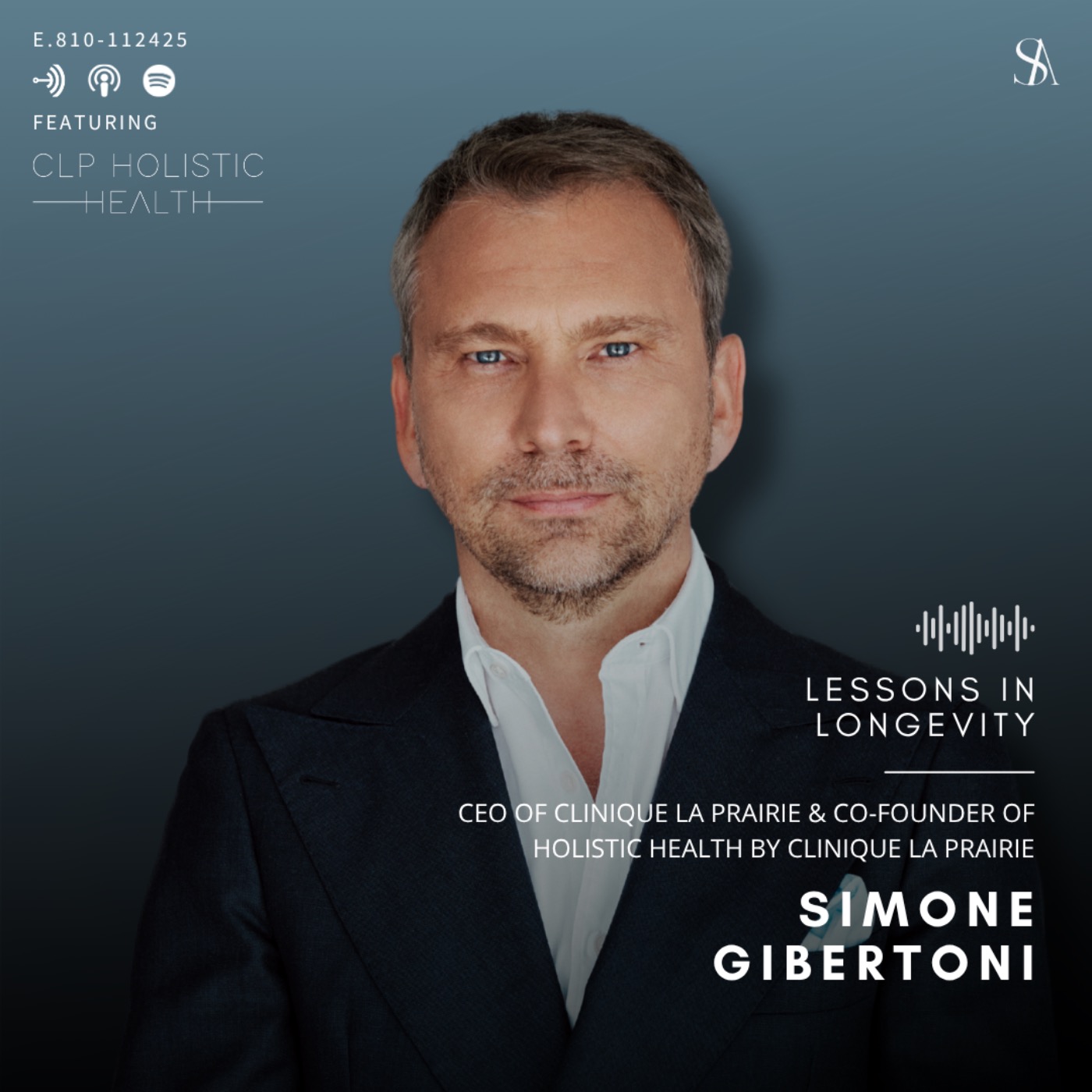
Skin Anarchy
Lessons In Longevity: Epigenetics & The Future of Healthspan with Simone Gibertoni of Clinique La Prairie Holistic Health
00:30:43
Loading summary
Transcript43 lines
- [00:02]
A
Hey, guys. Welcome back to Skin Anarchy. Today's a very special episode. We're talking about a topic that I think is on the horizon in front of a lot of people right now, and rightfully so, because it's at the center of health at large and the longevity. We have so much to unpack. And I can't wait to introduce our guest. He is the CEO of Clinique La Prairie and also is, you know, spearheading a longevity movement, I think, that has been grounded in years of research. Please welcome Simone Gibbertoni. Welcome, Simone. I'm thrilled to be hosting you.
- [00:34]
B
Same for me and thank you for having me. Pleasure to be with you.
- [00:38]
A
No, it's truly an honor and I can't wait to dive in. I really am a fan of what you've been putting out in terms of education around longevity. I follow you on LinkedIn, very your newsletter, and just all of the wonderful insights that you have. And I want to actually start by asking you, where did longevity start for you? When was the first time that you felt this was a topic that needed to be discussed more or you wanted to dive in further? If you can walk us down memory.
- [01:04]
B
Lane, I need to go back almost 11 years ago when I started here at the clinic and when I came here, I, of course, the first thing I started to do was to start meeting clients. Me, I, Mr. Gilbertoni. It's amazing. I spent an amazing week a clinic La Prairie. The reason I come to the clinic is that I come once a year to clinic La Prix so I can do whatever I want the rest of the year. So how can I create an ecosystem around my clients impacting their life? That's why we start to say that really the core of our mission is really be life changers. And at that time, we were talking a lot about anti age. I wanted to have a process which we can deep dive created here at the clinic. We, whoever is approaching longevity should look at this process. We decided to put together a very complete process of. Of longevity. And we decided that the right word to call what we were doing at the time was longevity. I start to register a lot of name related to longevity supplement. I thought this was the future. Everybody is talking about longevity. We were right 10 years ago.
- [02:09]
A
Yeah. I think that is the conversation that I wish we were having even 50 years ago. You know what I mean? I think this is something that finally I feel like it is shining a light on health and the root of health. That's my most exciting aspect for me as a person watching this Movement is that. But how do you think this has evolved over the last decade concept of longevity? How has this really evolved?
- [02:33]
B
I think that's a super interesting question because in fact I think it's today is the right time to talk about longevity. There are things happening in the last 10 years, first of all, in term of technology, we have invested a lot, especially in the diagnostic part and now we start to get also a lot of new interesting stuff coming out in the phase of which I call intervention. Then there has been for me when they asked me which has been the most incredible discovery in the field of longevity. I'm not talking about the discovery, but I'm talking about the mindset shift what, which is this idea that we can have an impact on our, on our health. I did an interview 10 years ago with the genetist and I was asking her listen, tell me how can I live a longer life? And the lady was telling me, Simone, there's not much you can do. If you have been lucky and your parents gave to you good gen, lucky you, you can live a longer life. Otherwise there is not so much that you can do now with the epigenetic. We know that is exactly the contrary. And recently I also published this research which, which has been published in the uk half a million people, which is confirming to us that it's exactly reverse. 20% of what we are is our gene, 80% is our epigenetics. Our epigenetic is influenced by our lifestyle. So there is a lot that we can do to live not longer, but first to live better and disease. If you want the roots of what we do, then we add to right we have the COVID camera and also Covid has been bad for many reasons, but has made people understand that they could do something, they could do something on their health. We were seeing people start to talk about the immune system in clinic rappery before nobody really knew what was the immune system. So everybody start to get into this type of concept up until today, where again we are at the point which it's much more than just the selected few people doing biohacking. But now everybody wants to have this experience of longevity. Moving from the simple experience of a traditional holiday to an experience of something which is much more and is able to influence their. Their life and their health.
- [04:44]
A
I love that and I love that you brought up the immune component because immunology, you mentioned genetics, which I agree with you. I think this epigenetic component is extremely important and I would love for you to tell us more because epigenetics has become a buzzword. You guys were doing this long before now people are picking up on these words. And this is something I worry about as a scientist. Certain words shouldn't be used in wrong context. So tell us about what is your view? What should we know about epigenetics? How should we be thinking about epigenetics in terms of just a normal consumer trying to figure this stuff out?
- [05:21]
B
Yeah. First understanding the difference between genetic and epigenetic. It's a concept which is quite, quite complicated which I like to simplifying saying that your genetic is. If I take a genetic test of you today and in 20 years that is exactly the same because your genetic doesn't change. Epigenetic is the way you express your gene through your lifestyles. And I always make example my I have twins myself. So they have the same genetic right. But if one of the two is eating french fries every day and the other one is eating salad, one is not sleeping well, the other one is exercising despite is the same genetic they are gonna end of course in 10, 15, 20 years into a very different type of vitality and in general health. So basically is the base of our philosophy and we have been the first to introduce to all our guests the epigenetic test. Which I believe is a great conversation opener. No, because now there are some controversy about the epigenetic test and biological chronological age. Are the tests precise or not? I don't think what is important is to look if these tests are precise. But these tests are fantastic conversation opener with our clients to make them understand that is what they do every day. That can change the trajectory of their health in the long term. And we have been the first to introduce genetic tests. Let me go back to what I was mentioning to you. Process of longevity. Serious process of longevity. Again, I'm always trying to simplify is made of three very simple steps. The first step is the agnostic, not the assessment. So understanding the way your body works. Because superficially we are all the same, but in reality we are very different. The second step is the intervention. So what are we doing in terms of intervention with what we learn in the first phase. Then there is the follow up understanding if our intervention is working in the right direction. In the first phase, the assessment we have sophisticated tests including genetic epigenetic glycans metabolomics. We have a precise understanding of the way your body works. Because the intervention must be customized on you cannot be a general kind of guidelines or general intervention. And this is what we do in Clinique la Paris. Try to personalize as much as we can. The agnostic phase and the intervention phase.
- [07:49]
A
Yeah, no, this makes a lot of sense because it's interesting to me because we, in the recent years we have seen the rise of biomarker tracking and I think that's very interesting. Right, because everybody's tracking so many of these already existing obvious markers that you can get from blood from just normal tests that we do routinely in medicine. But this is obviously epigenetics is a whole different level. It goes much deeper. What are your thoughts around these devices that are just testing the blood, these biomarkers, but there's no context to that data. There's nothing tracking what that means. What are your thoughts on that?
- [08:27]
B
I think it's a very interesting question. I need to come back to our philosophy because I believe we should move from information to transformation. So the question is how many of these tools that we have are really able to transform our life? I still believe you need a human to change a human. Human contact is very important. We want to create this identity change and this transformation. So coming back to your question, I think that all these tools are interesting despite we know that a lot of these tools are not working in the long term and not really changing people in the long term. But what I think is important is to have this routine about measuring, doing an intervention and can be a different level. Can be, of course, a clinical, can be much more simple level and then doing the follow up. Because in the long term we can improve our health. It's all about the routine we introduce in our life. Right. Because at the end it's a game, which is a long game. And consistency is the key to long term change in our health.
- [09:31]
A
Absolutely, I agree with you. It's interesting because we've seen breakthroughs in cellular reprogramming, senescence research, mitochondrial science, but most people are still struggling with things. Inflammation is very important, the immune system is very important. Things like chronic fatigue, people are still dealing with this every day. And unfortunately, I don't think this is my opinion right where I just don't think if you track your normal biomarkers consistently, that's not going to get to the root cause of what's actually making your life better or not. I think at the root right of longevity is like really understanding what is going to optimize your life and the way your day to day these things are very hard to track, like baseline inflammation. What do you think in terms of research? We're putting the money into the science, we're doing the research but there's a real gap here between translating that to real life. Why do you think there's such a wide gap between the research we know about and what we translate?
- [10:29]
B
Listen, it's. That's our everyday life, right? Because clients are coming to us talking about beautiful research on mice. We have to do here is change the life of our clients today, not in the future, where maybe we're going to have the magic pill, right Ag, which I don't believe by the way. Maybe we'll be able to live 150, which I also doubt. Here we are focusing on something that people can impact the life of the people. Because you see in a place like Nic La Prairie, there is something which is very funny happening, which is our key measurement is the how many of our clients are coming back to our place, right? You can give them a wonderful stay, a wonderful view on the lake, a wonderful room. But at the end, people are coming back to places like Clinic Pri only if there is this life changing experience that was mentioned to you at the beginning, only if there is efficacy, only if there is a real transformation. So this is what we have to do every day. We have this philosophy which call it four pillar because we still believe that the transformation that you are talking about, the roots of the problem must be approached in a holistic way. Medical, nutrition, well being and movement. Well being is super important. As you were talking about inflammation. Stress is one of the main driver of inflammation and we believe the approach should be holistic. Have the best doctor. The best way to live longer is not to die of what we call the Horstman neurodegenerative disease. Cancer, cardiovascular disease, metabolic disease. You need doctors helping you this and then all the other pillar are complementing to go. What you were saying are the roots of the problem. In fact, the assessment is just a phase. We serve to customize the intervention phase. And is the intervention phase that has to go to the root of the problem?
- [12:23]
A
Absolutely. More physicians are shifting their mindset. They are going towards this idea of listen, I am a longevity expert. I want to work in longevity as a physician. And I'm seeing that more, which is amazing because I think we've been needing this for a long time. A holistic understanding of how to approach patients. Do you think medicine needs a new infrastructure or do you think how should doctors or professionals be approaching longevity if you still.
- [12:49]
B
Unfortunately, almost 100% of the people goes to the doctor when they are sick, not before we invest. I'm. I'm sitting now in Switzerland where there is our headquarter I think Switzerland is around 3.5% investment in preventive medicine. So the majority of our investment and money we spend in treating the disease. We are going to have 1 billion people more in the next 15 years. Over 60. Over 50% of people over 60 years old, they, they have at least one disease. In some countries this percentage is even much, much higher than this. So we need to have a completely different approach to medicine. What we need to change is having modern medicine with what I call a pro longevity lifestyle. The problem today is that we have the modern medicine which is becoming better and better in treating disease with. Let me again say what you said, pro inflammatory lifestyle. This mix is catastrophic because we live more, but not in the way we want. This gap between lifespan and healthspan is becoming bigger. It's in average 12 years long. We live in average 12 years, the last 12 years of our life with the incapacity to live full life like we would like to have. So I think also from this point of view, before thinking about living 150, let's try to close this gap.
- [14:16]
A
Yes, yes, I agree. It's interesting because we try to control it, right? We are trying to control. And this is my. This kind of goes back to that point I was asking about earlier about biomarkers, because I think we have this need to control what our body is doing and there's no way to do that. The body is the most intelligent machine to ever exist and there's no way that we can completely control it. But it's also like coming to terms with that. And on the mental health side as well, there are things that are out of your control. The immune system is very hard to regulate. There's no way to fully regulate your immune response to things. But we have to get to a point like you were talking about preventative medicine, where the understanding is there scientifically. But then how do you translate that into daily habits and daily things that are going to eventually lead to reprogramming the body? It's a fascinating area.
- [15:07]
B
You mentioned mental health. Let's imagine that now I give you 50 years more. What do you do in this 50 year? If you are happy, you are super happy to get 50 years. If you are depressed, I'm not sure that you are happy to live 50 years more. So I think there is a lot to do. We just launched a program which is called Life Reset because we went into this journey from very sophisticated product program, but very functional, focusing on the immune system, focusing on the brain. But then we said to ourselves we also need to help our clients from a mental state point of view. So I think this is also a very important subject that I don't think we touch enough in the longevity space, which is not only having a longer life, but a life filled with purpose, with joy, with love. Because by the way, these are also components which are making us living longer.
- [15:56]
A
Yeah. What is the point? If you're living 30 years more and you're not happier, what is the point? Exactly. What are your thoughts? I think you had written this in your newsletter. You had spoken about one of the interesting articles that had come out. I think it was about lithium. I forget what it was, but it was about a drug. And I've seen this a lot about drug repurposing in longevity. I have my own thoughts on that. I've seen this a lot with allopathic medicine. They're going back to old drugs and using them again, saying they have benefits for longevity. There are hidden benefits, like metformin is a great example. I know Ivermectin has been brought up. So what are your thoughts around this concept of drug repurposing for longevity? Do you think it's good? Should we be doing this? Any thoughts you have?
- [16:38]
B
Yeah. Listen, the reason I publish a newsletter on this is because this idea of label. I just wanted to make some precision on what does it mean of label, which of course this. The doctor can do it, but for something which must be doctor supervision. Very again, specific for the clients and specific for a certain clients in exceptional cases. My point is that that's one of the reason why our doctor are there. My point was that again, we cannot, if you have a doctor is prescribing off label drugs to everybody, is not of label anymore. Right. It's not an exception anymore. So we always like to be very careful in clinical and always remembering that a lot of these drugs, first of all, a lot of them, a lot of people are talking about drugs which are still working with mice. Like they are perfect for human. That's not true as There are only 10% in general of the drugs working with the mice which are working in. Working as well in human. But my point is always this idea of having doctors following you and personalize whatever is the therapy, personalize the therapies on you. Now we have all these fantastic tests which are like glycans, which are measuring quite fast the result of the different treatment. And we know that each treatment is working for a group of people and is not working for another group of people. So you cannot give general Advice. But personalization is important.
- [18:13]
A
Yeah, I think that's the right approach. You have to personalize. And I think that's something that longevity is not talking about yet. We're trying to find these cure all things, but that's not how it is. Human biology doesn't work like that. There was a book written a long time ago by Bruce Lipton. I don't know if you've read any of us. Bruce Lipton, Bruce.
- [18:31]
B
I love Bruce.
- [18:32]
A
I love Bruce Lipton. Biology of Belief is one of the best books ever written. He talked about so many of the things now that we're dealing with in this longevity space. And one of them was this idea of how your body thinks. Like what the body is thinking all the time. And it's. And I think that's when we don't really talk about this idea of, okay, we're individuals. Everybody's genome is different, everybody's biology is different. But also our energy is different, our energetic fields are different. So the way our body communicates with the environment is also changing constantly. This is where I get fascinated because it has to evolve to the point of, okay, we can do a lot of things, but there are many factors that are going to require new professionals to be trained. Like a whole new group of people need to come in to understand the body at this point. So I have many thoughts on this. It's fascinating to see.
- [19:23]
B
You are right. I agree with you and with Jay. No, do fasting, do cold plunge, do this, do that. We cannot. Maybe it's working for 70% of the people, but maybe you are in the 30% that is not working. And now we have the tool to know what is working for your body. Because all these tests that we were mentioning, epigenetic genetic glycans, metabolomics done to customize the intervention.
- [19:45]
A
I like that customization part. It has to be customized. Now I want to talk about epinom. Let's talk about epinone because it's very unique. You describe it as the next leap. What exactly makes it different for most supplements that are marketed for aging?
- [19:58]
B
Yes. So let me go back one second to explain why we decided to do holistic health, which is our brand of supplement. So when we start, we were starting to design our ecosystem. We said we need to make other clinics. At the time, 10 years ago, we had only Montreux. We need to follow up our clients physically because as I told you, I really strongly believe the human component and like you said, also the competence of the people is so important in longevity Journey we start to build the urban center. We call it Longevity up by Clinic La Prix. We have five, the last one in Dubai. We open in Dubai is amazing. So our client, they can stay one week here in Montreal and they can go in our app where they find the same philosophy, the same people following them. And then we send technology we can give to our guests and to our clients. And we decided to create holistic ads, which is our line of supplement which is putting together if you want a lot of our heritage, our the science and the experience of clb. A complex which is called holistic ads, which is quite unique in the supplement space. Produced in Switzerland. Focus on longevity, unique distribution. We have a programming clinical focus on holistic health. We created a new type of supplement in the market and we decided recently to launch a product which was exactly what you were mentioning, which is called Apiloma. With the idea of putting together ingredient able to, let me say, recalibrate the gene expression. So in some way activate protective pathways that grows. That goes from our. What we were saying before, from our genetic to our epigenetic. So in kind of way to help us to manage epigenetic expression, which as we said is so important for our overall length.
- [21:52]
A
Yeah, this is interesting because I think that the supplement is very interesting because you guys are doing a one month. It's one month and two months off, right? It's a protocol. Why is that?
- [22:03]
B
Yeah, because we see we have different pro product in. In holistic health. They're focused on immunity, resilience, inflammation, cell protection, rejuvenation. So we see it as kind of really overall program. And we have another program focus on detox tested better. Every two months we build this routine, always testing what is working, testing the weight working, testing in combination of all the other supplement. So the. We don't want just to sell for the sake of selling, but really to have a routine which is working for our clients.
- [22:40]
A
Yeah, no, I love that though. I think that's. That's always been. When I as a consumer look at Clinique Library, that's the ethos, I think in the brand. You guys never create something redundant. It's always a new take on whatever it is that you're creating. And I think that's wonderful because the longevity space, when I'm looking at it, I see a lot of people jumping quickly. I get the excitement, new papers, new research. You get excited, you launch a brand. But I don't think that's fair to consumers. I like that you guys are rooted in decades of research. So much behind you before you've come out with something for consumers, with how biohacking is buzzing everywhere. Everyone's talking about this topic. It's important to find things that are actually going to be rooted in real science and they have actual data behind it.
- [23:24]
B
We started to work on it. When we start to deliver epigenetic tests with our clients. We have been probably the first clinic in the world to do it. We immediately thought, can we develop with this company, which is not far from us in the University of Lausanne, also a product imagine it was a journey that lasted almost five years.
- [23:44]
A
You have to have time to develop something the right way. And it goes back to what we were talking about, where that it's a dynamic thing. Longevity is very dynamic. It's not vanity, it's much deeper. For anyone interested, I always tell our audience to look at the science. You have to follow the real science and look deep. Because there's a lot of pseudoscience these days. There's a lot of people saying things vaguely grounded, you know, in the research and the data that actually translates. I think that's one of the big things I wanted to ask you about, translating science for the general population. What do you think are some of the most important things for us to focus on when it comes to things like supplements or anything that we're taking routinely every day?
- [24:25]
B
You are totally right. There is a big risk. Today we started our conversation talking about world longevity. And I believe there is a big risk now that this world longevity is losing credibility. When they ask, what do you think is the biggest risk of longevity is exactly this is that there is too much pseudo science hyper claim. Longevity must be rooted in science. That's so important. Coming back to your question, the most important part, as you are saying, is consistencies and creating a routine, right? Whatever we decide to do. We mentioned, I mentioned the four pillar of Clinique library. I mentioned all the sophisticated tests. But I think there are simple things that we can start doing in our daily life. What is important is to be consistent. Personally, I have one hour every morning that I dedicate to, let's say, longevity routine. And what again, what I think is important that we build this space in our life and we keep this space as a sacred space where we take care of ourselves and our health.
- [25:27]
A
I completely agree. Culture is at the root of a lot of this. When I look at history, I'm sure you've noticed this, right? Different cultures around the world, blue zones. Where are these locations? A lot of it is like Mediterranean area. I'm From India and I know my grandparents both lived to be centennials in rural North India on a basic diet. What is your thought about culture and what culture means and this whole longevity.
- [25:50]
B
That's a very interesting question because now we are opening a clinic. We just opened a clinic in China. We are now opening another clinic in the Middle East. We have next year two clinics that we're going to open. One is going to be in Saudi and one in Thailand in Phuket. How should we just apply 100% the program and the philosophy that we do in Switzerland or should be so wise to take what is each culture can bring us in term of longevity and introduce a little bit of this element in this program. And this is what we decided to do. 80% when you are in China is what we do here in Switzerland. But 20% is related to the culture which in China is very ancient about longevity. And we are going to do the same in Saudi. Also in Middle east there is incredible culture and now we call it longevity. There is a lot we can learn. One thing I do since many years that has been a life changer for me is Transcendental meditation. And you are familiar so you know the science and study around Transcendental Meditation. I don't know how many thousand years is all the right meditation. I always say people would pay million to buy the pills which is doing the effect of 20 minutes twice a day of Transcendental meditation. And we have hundreds of studies.
- [27:13]
A
Yeah, I know it's interesting because I remember being a student in medical school and my father brought this up to me where he was showing me a paper and also some more information about how their are serious studies out there about people reversing serious mental health states. Anxiety, some schizophrenic symptoms using meditation, breathing and proper yoga. It's very well documented.
- [27:36]
B
There's a lot of cardiovascular disease, hospitalization.
- [27:40]
A
It's incredible. And there's so many benefits to this. And we are not even. We had the whole yoga movement in the west, but then it wasn't focused in this longevity framework. So I think we need to bring that back. We need to bring that back and talk more about this stuff. Yoga, meditation, all these things. There's a lot of difference.
- [27:58]
B
And then you are absolutely true and right talking about culture. We also need to say that now everybody is talking about longevity, but the world unfortunately is going in a different direction. Lifespan is not getting longer. Unfortunately in the last year we are living little bit less. This gap within lifespan. Aspen is becoming bigger drugs. If you take even GLP1 is telling us that unfortunately we need to spread a lot the idea and the philosophy behind longevity because the world is going in a different direction.
- [28:31]
A
I agree. It's a very important time and we have to be mindful of what this word means. When I think of Gen Z or Gen Alpha, I'm just always wondering what are. What is their thought going to be about the word longevity? How are they going to perceive it? What are your thoughts on that? How do you think the field is evolving to cater to these next generations?
- [28:50]
B
I think the risk is that we have a hyper claim and a lot of things which are not rooted in science and people are losing credibility in their longevity. You were asking me for example about supplement. As you probably know, a lot of studies are showing that almost 50% of the supplement in the market are not containing what they claim. This is where credibility is important, where people like you, I was telling you before our call, you are doing an excellent work in spreading all this information rooted in science. It's incredible. This is the right way. We are very niche in what we do. We have very small number of clients but maybe one day we will come with the brand which is more accessible. We try to talk about longevity as much as we can and spread as much culture if you want as possible. In terms of longevity, there is a lot to do rooted in science. I think this is the starting point or a serious longevity.
- [29:51]
A
Thank you so much for your kind words. I love everything you're doing and what Clinque La Prairie stands for. You guys are pioneers and we can learn a lot from that. You have to be a pioneer in this space because there's a lot of room to make redundant stuff. I don't say that in a mean way to anybody out there. I just think that be a little thoughtful when I look at a brand like Clinique Lar. I think this is the most forward thinking approach you can look up to. Something like that. I think there's a lot to learn from that kind of approach. Thank you for sticking to that science forward thing. That's very important. Thank you so much. Simone. This has been amazing talking to you. You have so much knowledge and I love your newsletters. I read almost every single one. I love that you educate in this space. Thank you for everyone listening. If you have any thoughts, feel free to chime in. Let us know what you think about longevity. Thank you so much, Suan, this has been wonderful.
- [30:40]
B
Thank you very much.
- [30:41]
A
Thank you. Hey guys.
- [30:45]
C
So I hope you love that episode. Please make sure to hit subscribe if you're tuning in to us on any podcast platform, we are available on so many different platforms, so wherever it is that you're tuning in, just go hit subscribe. You will be immediately notified when we publish new episodes. This way you're able to tune in to amazing insights from experts, brand founders, industry leaders, authors, all the wonderful people that we host. And that's very important for me because I love to hear from you guys and really understand what you love and what you want to hear more of. Also, make sure to give us a follow on all of our social media outlets. We're available on Instagram, TikTok X, you name it, we're there. We also have a blog on Medium, so if you you're a reader and you love Medium blogs, check us out on Medium. We publish some really great articles on there that do deeper dives than just what's available on the podcast, and it's really a great place for all of you science geeks out there that want to learn a little bit more. We go above and beyond with our research and making sure we're bringing you information that you usually probably won't hear about in other outlets. So check us out, leave us a comment, leave us a review, and we'll be back next time with another episode.
- [31:51]
A
Thank you.