← Skin Anarchy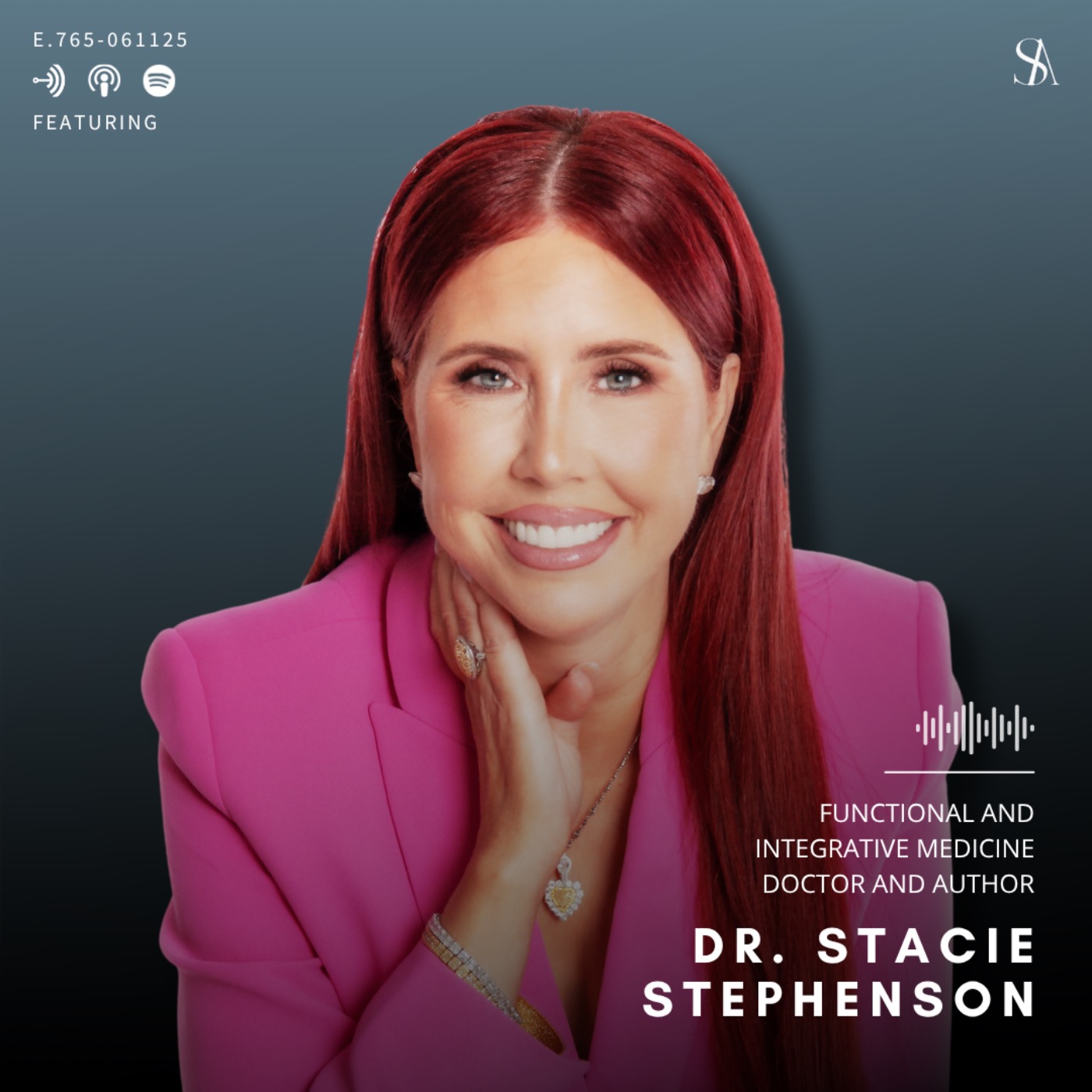
Skin Anarchy
Longevity Starts With Your Immune System, Not Your Serum Ft. Dr. Stacie Stephenson
00:46:50
Loading summary
Transcript115 lines
- [00:00]
Marc Maron
Hey, it's Marc Maron from WTF here to let you know that this podcast is brought to you by Progressive Insurance. And I'm sure the reason you're listening to this podcast right now is because you chose it well. Choose progressives Name your price tool and you could find insurance options that fit your budget so you can pick the best one for your situation. Who doesn't like choice? Try it@progressive.com and now some legal info. Progressive Casualty Insurance Company and affiliates price and coverage match limited by state law. Not available in all states.
- [00:34]
Unknown Speaker
Are you still quoting 30 year old movies? Have you said cool beans in the past 90 days? Do you still think Discover isn't widely accepted? If this sounds like you, you're stuck in the past. Discover is accepted at 99% of places that take credit cards nationwide. And every time you make a purchase with your card, you automatically earn cash back. Welcome to the now it pays to Discover. Learn more@discover.com credit card based on the February 2024 Nielsen report.
- [01:03]
Now at Verizon, we have some big news for your peace of mind for all our customers, existing and new. We're locking in low prices for three years guaranteed on MyPlan and my home. That's future you peace of mind and everyone can save on a brand new phone on MyPlan. When you trade in any phone from one of our top brands, that's new phone peace of mind. Because at Verizon, whether you're already a customer or you're just joining us, we got you. Visit Verizon today. Price guarantee applies to then current base monthly rate. Additional terms and conditions apply for all offers.
- [01:38]
Hey guys, welcome back to Skin Anarchy. Today's a very special episode because we're going to be talking about, I think a few topics that are now emerging more and more when you look at healthcare overall, but especially when we're talking about skin health. There's a lot of buzz right now around integrative medicine, functional medicine, what is all mean, especially when you're, you know, trying to figure out your skin and you know, there's all these products out there and how to incorporate. So I think it's just a, it's a great set of topics to discuss and really get professional, you know, experience and insight on all of this. So without further ado, I want to introduce you guys to Dr. Stacy Stevenson. She's a leading lifestyle medicine doctor and a true pioneer in functional and integrative medicine. So welcome Dr. Stevenson. I'm so excited to host it.
- [02:25]
Dr. Stacy Stevenson
Thank you. And Stacy, or Dr. Stacy is more fun, I think.
- [02:30]
Unknown Speaker
Awesome. Well, we'll. We'll roll with that. You know, I want to actually figure out how you got into this. I mean, it's such a. For us, it's such a new field, right? Functional medicine, translational medicine is now coming up in the, you know, the mainstream kind of thing. So how did you get involved with it and kind of pioneer the space?
- [02:49]
Dr. Stacy Stevenson
Well, it's kind of funny. Whenever I hear people say new, it really cracks me up. Yeah, no, and I mean that. I love that you said that, because, with all due respect.
- [02:59]
Unknown Speaker
Well, I don't think it's new. I know it's not new because I'm in medicine, so.
- [03:03]
Dr. Stacy Stevenson
Yeah, but. But you make a very good point.
- [03:08]
Unknown Speaker
A.
- [03:08]
Dr. Stacy Stevenson
It's sort of. What. What is integrative medicine? What is functional medicine? There are all these terms that. That get thrown. Is it alternative? Is it integrative? Is it functional? Is it nutritional? Is it clinical? Is it. We could do 14 episodes just talking about understanding the entire healthcare terrain, candidly, which is a big interest in mine. But to be very, very simple, I was an athlete. I was a competitive figure skater. I had the world's worst year you could ever imagine, which would have been my Olympic year. So I had three significant physical injuries on the ice in one year. And concurrently, I had a series of three or four really yucky illnesses that I'd never experienced in my life, from. From mono to. I got. I got rheumatic fever. I know you going to have to, like, go to medical school to think what that is. Like, nobody gets that anymore. I mean, I was like. I was just this kind of infectious, broken mess. And I'm convinced it was stressful overtraining, A. A whole lot of stress for a very young person. But just imagine you're looking at somebody that's totally fit, you know, an elite athlete, and I'm sick as hell. But I. That wasn't my. I wasn't that girl. You know, I didn't have allergies. I didn't tend to have sicknesses. But I just had this horrible year. So that began to really make me think about. And no one would help me, right, because you're too young. They're going to work. Physical injuries, of course. Right. But the rest is like, oh, oh, she'll be fine. Right? Oh, she'll get better. Well, you do sort of get better, sort of, but all you use is time, essentially, and rest. And so that got me thinking very early on because I was very interested in health, nutrition, obviously, Physical training. And that actually moved me into clinical nutrition in public health and clinical nutrition as an undergraduate and ended up, I have a feeling a little. Some of our stories might be in bits of ways similar traditional medicine first for me and also very frustrating and thought, what the hell? Like, honestly, aren't we here to help people? And I didn't. I was really learning to help people in my vision. And you're young and you know, you've got. I had a vision of health and wellness and fitness and longevity. And how I got there, I have no clue other than I think my athletic career made me really think about that. And then I just kept searching and searching and searching and searching. And I began going to the Institute for Functional Medicine when it was essentially in people's living rooms. Dr. Jeffrey Bland, who is truly the father of functional medicine in the United States, I met as a very young woman and he, I think, chose my career essentially. I lucked out with several, which is just getting boring, but I lucked out with several mentors that another one in naturopathy who founded the first accredited naturopathic school in the United States, which is best year college of Naturopathy. They were the first licensed accredited, proper program. Their founder is amazing. His name is Dr. Joe Pizzarno, well known lecture internationally. And then I had an acupuncturist mentor. But it was just like all these signals. I was on a traditional path and. And I kept meeting these wonderful people that were much beyond my years. You know, 30, 40 years beyond my years, but ensconced in this fabulous world of functional and integrative medicine. It just kept pointing me in the right direction. And I always knew I had. I had interest in clinical nutrition and performance as an athlete. So that was a little bit natural. I always had a natural inclination to entrepreneurship too. And I hated medicine.
- [07:08]
Unknown Speaker
Oh yeah? Yeah. I mean, I think it's a big game at this point too. You know, that's like a whole conversation on its own, though. I'm not gonna go down that rabbit hole.
- [07:18]
Dr. Stacy Stevenson
And I don't mean insurance and all that. I didn't love. I should maybe say institutional. Yeah, I had a hard time in institutional world and it wasn't because I was completely off, off the ranch. It's just there isn't much room for your personal view as. As a doc.
- [07:37]
Unknown Speaker
Yeah.
- [07:38]
Dr. Stacy Stevenson
Working super personally and individualized with your patients. And I had dreamed of that. I really thought that's what healthcare was. I was so naive.
- [07:48]
Unknown Speaker
No, I mean, you know, what's. It's crazy because I recently saw this. I don't know if you caught it, but it was a big yout video that went viral of a neurosurgeon, and he was out in the middle of nowhere, and he literally was saying all of this. Right. Because you think that in certain fields, you think once you're there, you're just. You're good. You know, you have the control over your career.
- [08:08]
You're.
- [08:09]
You're doing what you want to do, and, you know, you're treating patients the way you always envisioned yourself treating patients. It's just not. It. You know, that's. It's not what it is anymore. So.
- [08:19]
Dr. Stacy Stevenson
Yeah, so it goes back a long way for me, and I became dedicated immediately to functional medicine. And that was before there were national certifications and things like that, but took a few blows along the way, as most early adopters do. That, you know, kind of how it is.
- [08:39]
Unknown Speaker
You.
- [08:39]
Dr. Stacy Stevenson
We always. I have a term that says, I don't want to be on the bleeding edge anymore. I want to be on the leading edge.
- [08:46]
Unknown Speaker
Yeah, I like that.
- [08:47]
Dr. Stacy Stevenson
I don't want to take the arrows as much anymore, but if I could boil it down, I just call it good medicine.
- [08:55]
Unknown Speaker
Yeah, no, it makes sense. I think that it's interesting now because I think a lot of people are getting to that place now. Like, especially when I look at, you know, Gen Z, there are so many of them. And I've said this before on the podcast, where it's like, why haven't we figured out acne yet? You know, like, genuine, genuinely, like, why the hell are we still confused about a bacterial disease? Like, it's insane. And. And so people are really turning towards what they're now thinking is a new buzzword. Right. Translational medicine. Functional medicine. Individualized individual. Right, Exactly. You really hit the nail on the head of that. That whole experience of frustration with the, you know, the medical system, where it's like, no matter what I do, I don't get the treatment I need, you know, and that's where it really, really is so crucial, what you're doing and the message you're putting out there. Because I think people are looking for guidance here. There's no blueprint right now for functional medicine. When you look at it as just a layman, everyday person, you know, you don't. You don't see it. I want to ask you about that. Like, you know, what are your. What are the pillars in your mind, like, when you think about functional medicine? Like, what are the big pillars about how we should be thinking about It. And what it really means.
- [10:13]
Dr. Stacy Stevenson
Well, I think my, my guiding force in functional has always been. Which might sound simplistic, but it's, it's a good statement that I have to attribute to Dr. Kellogg of get death begins in the colon. I think that, you know, really, that was, that was the, the foundational functional medicine world, which it is the work in gut health, the microbiome. Now the microbiome thing, in a funny way, it all sounds sexy now, right?
- [10:40]
Unknown Speaker
Yeah.
- [10:40]
Dr. Stacy Stevenson
I'm thinking, why wasn't all this fun 20 years ago? But, you know, we have core principles in functional medicine. Gut being very critical, detoxification being extremely critical. The immune system, we basically break down just the systems that you, we all learn in medical school. What, what does our GI do? What does our skin do? What is our, what's the neurologic system? What's the orthopedic system? And we try to basically preserve and repair using principles based in food movement and, and supplementation as well. Not necessarily using supplementation as drugs, although it can be. Herbs are drugs. I really enjoy speaking about herbs. I've had a, A, a wonderful relationship with, with herbs for decades. At the core, if I just had to say something very simplistic to consumers, functional medicine, we just seek to really find the closest pause and wipe it. And we know how to cover symptoms. Like if someone came to me, oh my God, Doc, I got a cold. What's your best natural medicine? Well, you know what? How miserable are you? Do you have to get on an airplane? Because if you need to get on an airplane in two hours, I'm not going to give you. I could give you an iv, vitamin C, which would boost your immune system, and you're going to probably feel a whole hell of a lot better in a couple days. But it's not going to get you through that airplane flight.
- [12:11]
Unknown Speaker
Yeah.
- [12:12]
Dr. Stacy Stevenson
By the way, you need to take the antihistamine if you're willing.
- [12:15]
Unknown Speaker
Right.
- [12:15]
Dr. Stacy Stevenson
So I also think it's blending the best of everything on the spectrum of functional docs because I go so far back. But my core belief personally in function functional and integrative is just helping a patient learn and select the best for them for their needs and basically being that filter for them if they. Doc, I never want to take a medicine. I never want to do this. Okay. I'll do my best. Great. That's your philosophy. I like to follow the patient's philosophy. I like that, you know, I don't need to fit them in my, you know, exact peg. But what I Know is what you just said, people come to integrated doctors, whatever it is, that people maybe are even gifted healers. I mean, that's not a function. We don't, that's not functional medicine. But using the best of everything we have in our arsenal is what I believe it is. And that's actually quite difficult if you really want to get results. It's principles that you have to follow. Your fitness being extremely critical, what you put in your mouth being extremely critical. And currently these days you have to supplement. I don't make any bones about that anymore. I can't see how many people love to say to me, well, doc, I mean, get all your nutrients from your food, good luck.
- [13:48]
Unknown Speaker
Yeah, that's not how it works.
- [13:51]
Dr. Stacy Stevenson
Yeah, there was maybe our like my parents generation, people growing up Maybe in the 50s, 40s, obviously prior to some extent before the pesticides, herbicides were so prevalent, before the soil was in, you know, it wasn't in such poor shape as it is now. Let's not even get into genetic modification of food, which was already beginning in the 50s and 60s, but it is intensely rampant now.
- [14:19]
Unknown Speaker
Yeah, it's almost unavoidable at this point. I mean, there's, you know, one of the, the most interesting things to me that I've seen over the last, I think five years or even probably in the last decade, we've seen this overall in the medical community. Autoimmune diseases, they're a huge testament. The rise of autoimmune disease is a huge testament to how poor the quality of food that we're eating is and how poor the quality of the water and everything that we're being exposed to. I mean, a lot of the diseases that, you know, are kind of having this uptick. Things like Hashimoto's thyroiditis. There's no, it's not a genetically predispos, you know, predisposed condition. You're. It's not happening only in women. You know, men are getting it more. You know, people always love to say, like, oh, autoimmunity, it's in women mostly. Right. And that's just, it's not true anymore.
- [15:08]
Dr. Stacy Stevenson
20 years ago you were right or they would be correct. It was traditionally right. A middle aged, kind of Perry, postmenopausal lady, usually, mom, autoimmune, those formulas that you and I learned in school don't exist anymore.
- [15:23]
Unknown Speaker
It doesn't exist anymore. Yeah, I want to learn a little bit about this from you because I think when I think about skin health, I mean, I've looked at almost Every major brand in the industry at this point, you know, currently, as of today. And it's, there's a lot of great innovation here. But at the end of the day, you know what we were saying earlier about acne, right? Something like acne, where is that balance between what we need to do for our overall body versus this very targeted approach where people are still going to the derm and they're getting things like, you know, Accutane and really strong retinoid, you know, prescriptions that are just, in my opinion, okay, I don't think we need it. It's like, what are, what are your thoughts on that in terms of overall health and skin health tied in?
- [16:12]
Dr. Stacy Stevenson
You make a very good point. Targeted might sound good to a consumer. Oh, I want a targeted treatment for a, you know, a problem. But I take care of a lot of acne anyway as well. Because to your point, Accutane has its substantial issues and the retinoids have their substantial issues. And at the end of the day, the person still has the. Whatever milieu of environment physiologically still exists, no matter what we use. Right. If we give them antibiotics, if we give them topicals, all of your arsenal essentially is either oral biochemistry through pharmaceuticals. Like you said, you've got some fabulous products. Accutane was a game changer at the time for cystic acne. But we were asking ourselves the question, how the heck did the person get there? And if we knew how they got there, maybe we can backtrack. Yeah, that's functional medicine. So acne, I have to tell you, the first thing I think of with acne is what the heck are you putting in your mouth? It's almost not so much about what they don't eat, though. What you'll often find in acne cases, stubborn especially, is you really have to look at the gi. They have probably. I can't tell you enough. They probably destroyed their microbiomic environment. It might have gone back to toddlerhood. It might not have happened two years ago. It could have happened when they were three. And they've just been kind of hobbling along and now they're 13 or 14. And now the, the negative consequences of the leaky gut, the maybe their gluten sensitive spectrum. Remember, there's a huge spectrum of gluten and celiac. There's actually quite a spectrum of dairy. Dairy can pretty easily be linked to a good 40 to 50% of acne. Not cystic. I know, that's. That's really another difficult story. You need to understand if they're eating anything that is triggering that acne response. So you have to do food sensitivity testing or you can do elimination. You don't have to do blood testing. You can just work on elimination. It's slower, it's harder. You could do very detailed diet diary and begin to do the four day type challenge. Like the, you know, you remove this food for four days, you, you journal it, you remove another one. It's, it's hard. It's not hard. It just takes discipline. It's hard for a teenager to do.
- [18:39]
Unknown Speaker
I mean, I couldn't do that. I'll be honest.
- [18:41]
Dr. Stacy Stevenson
You know how it help? You know, if somebody brings me a three day diet diary, you know what, it really helps me see what their go to foods are.
- [18:50]
Unknown Speaker
Yeah.
- [18:50]
Dr. Stacy Stevenson
And that helps a ton because then I can see if they're eating the same things every day. Doesn't mean they're allergic or sensitive. But it also could, can give me clues on, on their overall nutritional status. But I'm with you on the bacterial acne. It's, it's, it's sad. And that also we continue using topicals, right?
- [19:11]
Unknown Speaker
Yeah, topicals that exacerbate the situation. You know, they're not meant to be. I mean, I think this is my biggest pet peeve in the, in the skincare industry is that we know so much about acne. And I'm not, I'm not only trying to talk about acne. I just, I feel like this is the most obvious, you know, path that we can discuss with skin health. But like, I just see it everywhere where it's like, okay, we understand there's fungal acne, there's bacterial acne, there's, you know, hormonal acne. But then you still see products that are literally only geared towards bacterial acne everywhere. You know, you got the acids, you got all this stuff going on and it's like, we know it, but we're still not applying it. And that's why I'm like so interested in this translational medicine route because I think we need to understand that, you know, there's a lot of knowledge out here, but we're not applying it and we're not seeking like the true opinions of experts that understand how to apply it, like yourself. You know, somebody who comes to you for acne, I'm guarantee they're gonna have a whole different experience than going to a standard dermatologist. You know what I mean? It's going to be a very different night and day kind of difference.
- [20:16]
Dr. Stacy Stevenson
Yeah, I'm looking at their whole I'm going to look all over their skin. And you want to get a really good understanding of their diet. I want to get a really good understanding of their stress. I know it sounds obvious, but it's not because it takes time. Yeah, I want to get a really good understanding of not just when that started, but I want to get an understanding going pretty far back. Like. Tell me about your ear infections. Call your mom. Did you have. Did you have them? How many did you have strep? How many? How was it treated? Tell me about your allergies. Do you have them? Do you not have them? What are they like, nasal allergies and outer allergies and that sort of thing. I want to know all that. People are so terrified about cancer, and one way that I've always found is easy to ease their minds a little bit is. Is I'll say, hey, guess what? Like, the easiest one to keep up on and eliminate and everything is skin cancer, because. Jesus, we can see it.
- [21:16]
Unknown Speaker
Yeah, exactly.
- [21:17]
Dr. Stacy Stevenson
That's cool. Every other cancer we can't see, we have. That's why you die from them. They're. They're too late. I mean, take pain. Yeah. Now, I digress. I would just close on acne by saying it's incredibly. It's this battle of. Of what you put in, which is your food, what other substances you've put in that are generally antibiotics. Antibiotics essentially reduce. Not essentially. I'm just going to say it. As you well know, general antibiotics disrupt the normal bacterial balance from the tip of your nose to the other end.
- [21:56]
Unknown Speaker
Yeah.
- [21:57]
Dr. Stacy Stevenson
Even though we do have more and more targeted antibiotics, and that's helpful if you don't balance and replenish when you take an antibiotic. You must replenish and balance with probiotics. There's no way around it. You just have to. I work my behind off, even for myself, and have to be very focused if I do choose to go a route like that. So a lot of it's in prevention. When we give out a medication, like any general antibiotic, let's just beat up on amoxicillin. If they were concurrently prescribing or giving information on how to restore, which isn't that hard. It's really not that hard.
- [22:43]
Unknown Speaker
Yeah.
- [22:43]
Dr. Stacy Stevenson
We might not be facing the things later down the road. Same with autoimmune.
- [22:47]
Unknown Speaker
Exactly. Yeah. No, I agree. I think that it's really about understanding what preventative means to an individual as well. I mean, I think that preventative medicine is. Has so much potential, but at the end of the Day you have to understand your own body. And I think for patients, it's very critical for us to do that homework. You know, I'm, I'm a huge advocate for that. Is this idea of, you know, really knowledge really is power. You know, the more you can learn about what you, what your normal physiological state is, where you're feeling your best, the more you can learn about that, the better you can inform whatever practitioner you're going to and try to kind of guide them in a way. You know, it's like I, I really believe that, that when it comes to preventative medicine, like, people need to be involved with their own health. You know, you got to pay attention to what works, what doesn't work for you, whether that's food, whether that's topical treatments, you're using, new supplements, you're trying, you know, all of that really matters, and to keep a, you know, an account for that so that you can tell your doctor. I mean, if you go to like an endocrinologist these days, I mean, let's talk about the GLP1 fad, right? That everyone's kind of hopping on board with this. And I'm, I'm all for it, honestly, because I really do think that the obesity crisis that we've been facing for so many years, it needed to be, it needed to be controlled. At the end of the day, that's the bottom line. But again, you know, there's a lot more here to unpack than just that. So I think it's really helpful when people have an understanding of their own body and then they can go to somebody like an endocrinologist and say, this is what my baseline is. Now tell me what I should do if I want to get on a GLP one, you know, something like that. So. But I would love to learn about, you know, what you think about the GLP1 drugs. Actually. What is your opinion on those?
- [24:29]
Dr. Stacy Stevenson
I, I'm a bit mixed from a just a gross numbers perspective of the obesity true epidemic in country, and we track obesity worldwide, as you can well imagine. You've probably read the charts.
- [24:46]
Unknown Speaker
Yeah.
- [24:47]
Dr. Stacy Stevenson
And in 30 years, it has gone up and up and up, which means diabetes is up and up and up. Cardiac disease is up and up and up, stroke up and up and up. And yet we have all this prevention. So it's really kind of twisted, but as far as the medications, the GLP1 inhibitor, what I like is that it provides motivation. And when people begin to get going and move into their weight loss, generally, you will notice that they will naturally begin to make behavioral changes because they're excited almost an emotional drug to some extent because they get the dial moving. And of course it's working better on people that have, that really have glucose and insulin dysregulation. So you will see that it isn't a quote, one size fits all and works for everybody. But when you look at the people that have been the especially sort of the people battling various levels of overweight and obesity since childhood, chances are they are glucose dysregulated, pre diabetic have been their whole life. And this thing is magic to them. Yeah, it's a magic wand. And I, the, the lift psychologically that that would provide for a large group of people is transformational and that makes me happy. I do worry about the long term use because we don't have good clarity. I do worry a little bit about how it severely limits hunger to where people begin kind of having disordered eating, in other words. Oh, I just live on a few crackers and I, I had a coffee and, and they can, it can take away your appetite like crazy.
- [26:42]
Unknown Speaker
Yeah. Like completely taken away.
- [26:44]
Dr. Stacy Stevenson
Yeah, completely taken away. And that I could, that's okay. If you supplement appropriately.
- [26:54]
Unknown Speaker
Yeah.
- [26:55]
Dr. Stacy Stevenson
With your, you could, you could counteract the nutritional loss if you were just really crummy at your diet and you're the one that's eating 10 crackers and a half a sandwich and coffee and you're, you know, you're like, this is fabulous. I'm losing weight all the time. It's wonderful. All I'd really have to do for you is give you a really fabulous drink twice a day. I don't care how it tastes. I just want you to get, I just want you to get better. I'm a little mean that way. When people would say to me like, oh my God, this, this is terrible. I can't drink it. I'm like, you're a grown up.
- [27:34]
Unknown Speaker
Close your nose and chug it down.
- [27:36]
Dr. Stacy Stevenson
Chuck it down. And I, I literally, I'm like, watch it. I, I do it. And I'm a big baby too, but, and there's ways to make things a little more palatable. And I have lots of tricks, but you know, at the end of the day you just have to do what's best for you. I don't like exercise that much either, but you know, you, you grin and bear it. I'm, I'm overall supportive like you. I'm cautiously supportive. I worry a little bit from a nutritional perspective and I worry a little bit from A long term use. Because when they, when they remove the medication support, the physiological factors are going to return.
- [28:16]
Unknown Speaker
Yeah, yeah.
- [28:17]
Dr. Stacy Stevenson
That's tough. The expense. So I'm not quite sure. I think the gap, this in the space, I'm thinking. And we're not doing it. I'm thinking we have to work at the education with those patients in the gap space. Okay. You start them at the glp. You're doing fabulous. It's so exciting. You have your life back. It makes me cry almost. Right.
- [28:39]
Unknown Speaker
Yeah.
- [28:40]
Dr. Stacy Stevenson
How about. Well, but then we need to use that time, whether it's six months that you're using it or nine months or a year, maybe it's longer. Maybe it's a year and a half because you had to go so gradually. Let's figure out in that time so you can calm down and feel confident. How are we going to work with your food and nutrition and fitness in the long term of your life? I don't think these are realistic. Long term, maybe if, if only for expense. I mean, are you seeing that, that people are choosing their various dosages they're buying online? Odd. Who knows?
- [29:18]
Unknown Speaker
Yeah, it's gone, it's gone kind of haywire. Like it's, it's really scary in that way. I know what you mean. And you know, especially when like, you know, like a pharmacy is quoting you $1300 for a month for your drug, you know, and then you're going to like, you know, weird sources to get it. I mean, yeah, there's definitely that and it's, it's scary, you know, to think that people are going to these crazy lengths to get it. But I, I mean, I love what you said though about the diet component. I would love for you to educate us a little bit there because I think a lot of, I think, I do think a lot of people are on it or they know somebody who is. And to understand that would be really crucial, I think, you know, to help educate. Right. I'm all about that. If you know somebody that's doing something, educate them, you know. So what are your like recommendations, you know, for nutrition? I guess, you know, that you should.
- [30:10]
Dr. Stacy Stevenson
Be mindful of if you're on the glp especially. Yeah, I'd say because I see that it so intensely suppresses appetite and wonderfully so. It suppresses carbohydrate appetite very nicely, which I think is fabulous. It has an interesting. More it reduces your alcohol desire really, which has been a neat side effect. So a lot of times, you know, that's just empty calories. That's an easy one, but so that's all wonderful. But during taking the medication, I would say number one is your fats or your fatty fish. You got to. To eat it or you've got to take the EPA dha. You've got to continue with your healthful oils like your avocado, for example, your kind of the good old Mediterranean, you know, olive and, and olives and the fatty fish and the avocado. If I could put you on kind of the perfect diet, you don't need a lot of carb. You're going to get a little bit of carb in, in some of that stuff anyway. I would be very careful with the essential oils.
- [31:22]
Unknown Speaker
Okay.
- [31:23]
Dr. Stacy Stevenson
Not going to eat it the way you're feeling. You're not going to eat a lot of carb, which is fine. You really need a lot less than you realize. And then prioritizing your protein. So fats and proteins, you just really have to focus on lean fats. If it's animal, that is, you know, your chickens, your, your lamb, things like that. If you're going to focus in fish as your protein, which I would recommend very much, I would focus in your healthful, fatty fishes. The easiest one that, that people tend to. To like is salmon because it's highest in omega 6. I know I makes it sound like I'm going to turn into a salmon sometimes I think I am, but I think it's most perfect food for her brain. Well, because a lot of the fatty fishes are. People don't like them.
- [32:11]
Unknown Speaker
Yeah.
- [32:12]
Dr. Stacy Stevenson
Like mackerel has actually higher than salmon. All of your, your sardines and all the tiny little fishies, those are super fabulous. If you can eat them, go for it. I can do it. I had to teach myself how to do it. It's not an Amer traditional American palette, but they are cold water, fresh water, very much more clean, high in omegas. You know, you tend to add olive oil. So some of the. Some. But that's again, not a traditional typical diet in America. But you need to be and prioritize your protein and your fats, period. I don't know what to do with the. What I also don't love is the irregularity of where the losses happen. The actual fat losses are completely erratic. And I know you're seeing a lot of that. Yeah, we're never. I don't see how we're going to figure out how to control that.
- [33:05]
Unknown Speaker
Yeah, it's, it's a really. I don't know what the body is doing. Honestly, I'm gonna be honest, like I, when I see people's like results from this drug, I'm just kind of like baffled, you know, because it's exactly what you said. The fat loss doesn't make sense. There's no like, I don't know, it's not predictive. You could say, you know, everyone, everyone looks different.
- [33:29]
Dr. Stacy Stevenson
Everyone looks different and there's a substantial amount of muscle loss. So you have to prioritize, you have to prioritize protein and fat in the food that you do eat while you're taking it.
- [33:39]
Unknown Speaker
Yeah.
- [33:40]
Dr. Stacy Stevenson
Step, you have to work on strength training. You must. That is partly why you're seeing people look so weird from a shape perspective. I mean naturally if someone was 3 or 400 pounds and they lose 100 or 150 pounds, their skin is not, it's not going to be elastic. They're probably going to decide whether they might need some surgeries down the line or something like that. I mean, but those are huge. You know, those are the actual more morbid obesity. That's a whole different long term treatment perspective. If you're talking about someone at 40 pounds overweight or 30 or 40 or 50, those sorts of things. You are right. The fat, it's not just fat loss, it's muscle loss. And that's why they look strange and it's regular and unpredictable. I have to say they're so excited about the weight loss, which I celebrate that they're not prioritizing the fitness because it feels like you don't have to do it.
- [34:46]
Unknown Speaker
Yeah, yeah. That was one of my questions actually was that because I think right now we've definitely, you know, created this culture. Now I think this, these drugs have created the culture of like, well, you don't need exercise after all. But you do, but you do though.
- [35:03]
Dr. Stacy Stevenson
Well, but I, I don't know whether maybe the campaign is like, here's the goal and that this is what I think the positions in the field are teaching. Some are, some are teaching this, maintaining muscle mass and losing the fat. So if you choose to use the drug to lose the fat, there is, there are only a really two ways to maintain your protein status and that is, that's resistance exercise and ingesting protein. That's the only way it's going to happen. Otherwise you are going to degrade the muscle mass and your weight loss is going to look even weirder. You know, it's a fair statement to say irregular. What I would say is, hey, think of it this way, you don't have to do two Hours of cardio. We don't have to go back to the Jane Fonda years and Olivia Newton John and get physical in the gym for three hours a day. You don't have, we know you don't have to do that. You don't have to do that for cardiac health, you don't need to do that for weight loss, you don't need to do that anymore, period. However, you must do resistance work. And it can be at home, it doesn't have to be in the gym. I'm here to tell you actually, you know, moderate to aggressive yoga is resistance work.
- [36:16]
Unknown Speaker
Yeah.
- [36:17]
Dr. Stacy Stevenson
Hoisting your body in a down dog, you're lifting up three quarters of your weight.
- [36:23]
Unknown Speaker
Yeah, that's actually, that's a great point. I mean for anyone that's out there and you don't have time to like quote workout, you know, which means go to the gym and, and do this, like, you know, incorporate it. You could definitely do this anywhere. Like the resistance bands with you at all times. You could, you know, use something like that.
- [36:40]
Dr. Stacy Stevenson
And also I, another sort of myth to bust is that you have to, to do your resistance training all in one sitting. Like, okay, I have to get my 20 minutes, my 25. Guess what you could have done 7 minutes and 10 minutes and 5 minutes and 12 minutes. It's the same.
- [36:56]
Unknown Speaker
That's a good point. Yeah.
- [36:58]
Dr. Stacy Stevenson
A lot of ladies are finding that that's very nice in between meetings or you've got the 10 minutes or you, you do. You're listening to a podcast stuff.
- [37:08]
Unknown Speaker
Yeah. While you're listening to us right now. While you're go lift something.
- [37:14]
Dr. Stacy Stevenson
Yeah. I mean, you know, get, get creative. I, I agree that it's hard for me. I have three little, I have three Littles twin boys that are three and a half years old and a little girl who's 16 months old. And you want to spend your time, you want to spend that extra time with them. I'm an evening, I like to work out in the evening, 6 o' clock, 7 o' clock. For whatever reason, I, I'm not an early morning exercise. I, I like later in the day. But that's like perfect, perfect family kid time. So I'm like, darn, I gotta choose or I have to change or I need to bring them in the, bring them with me with my exercise, which I've tried doing yoga with toddlers is interesting.
- [37:53]
Unknown Speaker
I was gonna say, like, how, how is that?
- [37:56]
Dr. Stacy Stevenson
I have, I mean, you know, first of all, it's a five minute attention span and they just Think it's a big, hilarious game. You could do it. I mean, if. When there's a will, there's a way. Right.
- [38:08]
Unknown Speaker
I want to talk a little bit about your book because you have such great insights in the book. You know, it's called Glow for everyone listening. And there's a lot of key information. I mean, I know you've spoken about inflammation in there. You've highlighted foods that are, you know, very key in improving, you know, inflammation. I'd love for you to speak on that a little bit, because right now, as you, I'm sure you've seen it. Inflamma. Aging is everywhere. I just published a paper on inflammatory aging, you know, and so huge topic coming up, but nobody's talking about nutrition when it comes to inflammation. So any insight you could provide?
- [38:40]
Dr. Stacy Stevenson
How is that possible? Because we are directly creating the inflammation through what we put in our mouth. Yeah, obviously there's environmental. There are environmental cues, too, but at the end of the day, what do you do? You, you breathe, you consume liquids and you eat. And that is triggering the inflammatory process at its core. Inflammatory foods, as you well know, which we love, includes dairy. It includes the proteins. It, you know, it is the red meats, sugar. I, I'd love to wipe. I, hey, I love sugar just like everybody else, but I'd love to wipe it off the face of the earth.
- [39:16]
Unknown Speaker
Yeah, yeah. It does a lot of damage, much more than we realize.
- [39:21]
Dr. Stacy Stevenson
More than we realize. And alcohol does a lot more than we realize.
- [39:25]
Unknown Speaker
Yeah.
- [39:26]
Dr. Stacy Stevenson
And so on. I, I'd love to look at your paper on inflammation. And it's real. I don't know if you worked more in the neurologic capacity because it's inflaming the brain as well. And with increasing our rates of neurologic diseases, it's triggering the autoimmune cascade as well. Because inflammation, aging of which you speak, is inflammation over a lifetime.
- [39:50]
Unknown Speaker
Right.
- [39:51]
Dr. Stacy Stevenson
You're. You're going, you know, we want the anti aging and we want the Fountain of youth, but it's killing it. It's making us go in the reverse direction. In your skin, in your gut, in your thinking, in your hormone dysregulation, how you go through menopause. I could actually. We haven't even gotten there. I could almost puke. Every symptom I'm noticing these days that a woman has from the age of 35 to 55 is just, quote, menopause. Well, guess. Yeah, it's not. And it's a combination. But the inflammation, they're just finally Paying the price. You're going to start paying the price of an inflammatory lifestyle in your 30s, approximately. Now if you were highly, highly exposed as a child and had other immune factors and, you know, different histories, you, you could have high inflammatory disease easily in your 20s. But if, if you're living kind of an average American standard diet, standard stress, standard life, you're probably going to begin really experiencing that inflammation in your mid-30s to early 40s. And that's where you see puffy faces, the, the belly gain, the, the Hashimoto's like you were talking about.
- [41:05]
Unknown Speaker
Yeah. And like the, the Cushingoid like symptoms like people with, you know, we used to learn this in medical school, moon faces. Well, everybody's got a moon face now. You know, they're all, we're all walking around with a moon face at the end of the day, you know, and that's inflammation because, you know, that's, I think one of the biggest, biggest misconceptions I've seen personally, like out there, whether it's social media or just in general, is that people think inflammation just happens overnight. You know, it's like one day you wake up and you're super inflamed everywhere your body, like your joints, your gut, you know, and that's just not it. And I love what you said where it's like, well, this is a lifetime thing that's built up, you know, and when you start seeing those symptoms, that means there's a lot of stuff that has happened that's led you down this road. So now how do you reverse it? You know, that's the question is like, how do you come back to this baseline, the Basil Stake? That's a very complex question, I think, you know, in terms of how do you manage somebody who has all of these symptoms now that are really very, you know, dependent on their inflammatory response? No practitioner is going to be able to answer that for you. I mean that's.
- [42:13]
Dr. Stacy Stevenson
Yeah, it's a step at a time and realistic goals. If you can't give something three to four months, like, let's just say I started, I gave you an anti inflammatory diet which would be absolutely step one.
- [42:28]
Unknown Speaker
Yeah.
- [42:29]
Dr. Stacy Stevenson
Hands down. And then you say to somebody, okay, I need you. We, we need you. Let's give you a month to get used to. Let's give you a month to clean out your pantry, clean out your cupboards, stop buying all that junk. I want you to throw it. I mean, it's terrifying for people. I want you to throw it all or give it away. Let's say maybe you can give away the food. People hoard food. So it kind of depends what their, you need to learn what their style was with food. They need to learn how to shop again, that takes a little bit of time. They may need to be provided recipes, shopping lists. That takes a little bit of time. So I kind, there's sort of a preparatory part right where. Okay, let's get you organized. I'm not going to send you home with this diet today because you're going to, it's going to blow your mind. Start working. Here's the diet. But really I know that you have to buy food, you have to clean your pantry, you have to understand some things. You might even start shopping somewhere else. That takes a little bit of time. Everybody's busy, they're working, they feel like crap. And then after that if basically you make a deal, can you will you, with our support maintain this anti inflammatory diet for three months? Would be amazed what your body can do in three months. Don't judge it until then. Yes. Ask questions. Yes. If you have some, you know, seek support, guidance. You've got to hold, hold hands. You're definitely, you know, you're in it together. There has to be supportive help with questions and food ideas and recipe ideas and all of those sorts of things. But they will see changes. And so with inflammation, I find that as long as a human being can begin to see the changes that mean most of the time they, they have a few ideas in their head that's going to mean something to them like oh God, doc, if I were sleeping better that that would be. Well, it is linked to inflammation because the cortisol spikes, right?
- [44:15]
Unknown Speaker
Yeah.
- [44:16]
Dr. Stacy Stevenson
Blood glucose up, up and down. Or if they might say, oh, if I even had a half an inch or an inch off my waistline that would feel like success to me. Or if I had, you know what the number one response is? Not weight loss, it's energy.
- [44:31]
Unknown Speaker
Yeah.
- [44:32]
Dr. Stacy Stevenson
If people feel more energetic through working in their anti inflammatory diet, they'll move mountains. Energy is how we go to work. Energy is how we take care of our families. Energy is how we get to enjoy life in any way. And inflammation robs us of that energy.
- [44:50]
Unknown Speaker
No, it absolutely does. I mean it's so taxing on like every cell in your body. You know, it's, it's very similar to what we were talking about earlier. I mean I think glucose contributes a lot, you know, your glycemic index, everything that you, you eat, how long sugar sits around in your body, all these things like they really, they impact every single cell and they lead to irreversible damage in the long run. And I think that a lot of times you're right, you know, energy differences, when you start noticing your body is, you know, just, I don't know, you're more awake, you're more alert, you're more energetic. Yeah, it is kind of empowering to start changing your life, you know, and, and doing things you didn't, you weren't doing before, which is kind of like it's going to feed into itself. Similar to how we were talking about how with GLP1s, if people start seeing that little bit of, you know, it's kind of like a mental response that they have that I'm motivated now, I want to do something. So, yeah, it's a really interesting conversation, honestly, because I think right now we're at a interesting juncture with, you know, how people are perceiving their own health and like what really matters to them versus, you know, what doesn't. And with all the longevity clinics now especially, that's another topic like, that's huge, is like people are able to now track like every biomarker known to modern.
- [46:08]
Dr. Stacy Stevenson
Medicine and what do they do with it? Right?
- [46:11]
Unknown Speaker
Yeah, it's everything. Like they're tracking everything and they're coming into like visits with like these 80 page, you know, like portfolios on their, on their last three months of life. And I mean, that's great, but you have to really figure out, you know, what is, what is it that's going to really change your quality of life at the end of the day, you know, And a lot of stuff is just noise.
- [46:35]
Dr. Stacy Stevenson
It's what you do every day, you know, a little bit of time. And if you've gotten yourself too far down a, a poor road to your point where you really are inflammatory, you've got to, you have to dig out of the hole. It's, it's really, you said it's hard and it's not that because I've been doing this for so long, but it's just like the GLPs, it's not that hard when they begin to feel better. So that critical phase is just getting someone to feel better. And then it naturally, psychologically it's like, ding, ding, ding, ding, ding. Oh, this is what I'm supposed to feel like. Well, I don't want to go back to what I used to feel like. They go out and have the pizza and the, and the big vodka night or whatever and then they feel like hell for three weeks. And they think, oh my God. Okay, yeah, I don't want this. I'm not this anymore. I'm only going to do it in a very tiny amount. Remember, I would, I would leave you with this thought that we have an immense capacity for regeneration. We really do. I know there you, you make the point of irreparable DNA damage and that's, that's there as well. And I don't want to get too dooms, doomsday and scare the heck out of people. I just love us not to get there and I'd love us to really respect our bodies and recognize that we have an enormous capacity for healing. We just have to give the machine what it really needs.
- [47:57]
Unknown Speaker
Makes sense. I Love it. Well, Dr. Stacy, thank you so, so much. This has been so lovely to learn from you and I hope, I hope everyone listening, you guys, you know, really picked up on some key insights here because, yeah, I mean, I completely resonate with what you said here towards the end. You know, we really do have to give the machine what it needs and figure out what it needs. So thank you so much.
- [48:19]
Dr. Stacy Stevenson
This is wonderful day and I hope everybody enjoys. Thanks so much.
- [48:24]
Unknown Speaker
Thank you.
- [48:24]
Dr. Stacy Stevenson
Bye bye.
- [48:28]
Adam Grant
Hi, I'm Adam Grant, host of the podcast Work Life. For over 20 years, Paylocity has been simplifying work with innovative solutions that teams love. Like on demand payment, which offers employees access to wages prior to payday, flexible time tracking features which enable staff to clock in and out through their mobile device and numerous other cutting edge solutions that simplify collaboration across hr, finance and it. Learn more about how Paylocity can help streamline work and enhance business outcomes for your organization@paylocity.com Simplified Aging is a natural.
- [49:02]
Unknown Speaker
Process, as we all know, and I for one don't mind embracing it. But I will tell you one part of aging that I don't care for. It's the symptoms that stem from changing hormones, especially as you get older to perimenopause and menopause. That's why we want to tell you about Happy Mammoths Hormone Harmony. Happy Mammoth, the company that created Hormone Harmony, is dedicated to making women's lives easier. And that means using only science backed ingredients that have been proven to work for women. They make no compromise when it comes to quality and it shows for a limited time, you can get 15% off on your entire first order. @happy mammoth.com, just use the code happyme at checkout.
- [49:36]
Marc Maron
Hey, it's Marc Maron from WTF here to let you know that this podcast is brought to you by Progressive Insurance. And I'm sure the reason you're listening to this podcast right now is because you chose it well. Choose Progressives Name your price tool and you could find insurance options that fit your budget so you can pick the best one for your situation. Who doesn't like choice? Try it@progressive.com and now some legal info. Progressive Casualty Insurance Company and affiliates price and coverage match limited by state law. Not available in all states.
- [50:12]
Unknown Speaker
Hey guys.
- [50:13]
So I hope you love that episode. Please make sure to hit subscribe if you're tuning in to us on any podcast platform. We are available on so many different platforms, so wherever it is that you're tuning in, just go hit subscribe. You'll be immediately notified when we publish new episodes. This way you're able to tune in to amazing insights from experts, brand founders, industry leaders, authors, all the wonderful people that we host. And that's very important for me because I love to hear from you guys and really understand what you love and what you want to hear more of. Also, make sure to give us a follow on all of our social media outlets. We're available on Instagram, TikTok X, you name it, we're there. We also have a blog on Medium, so if you're a reader and you love Medium blogs, check us out. On Medium. We publish some really great articles on the there that do deeper dives than just what's available on the podcast and it's really a great place for all of you science geeks out there that want to learn a little bit more. We go above and beyond with our research and making sure we're bringing you information that you usually probably won't hear about in other outlets. So check us out, leave us a comment, leave us a review, and we'll.
- [51:17]
Be back next time with another episode. Thank you.