← Skin Anarchy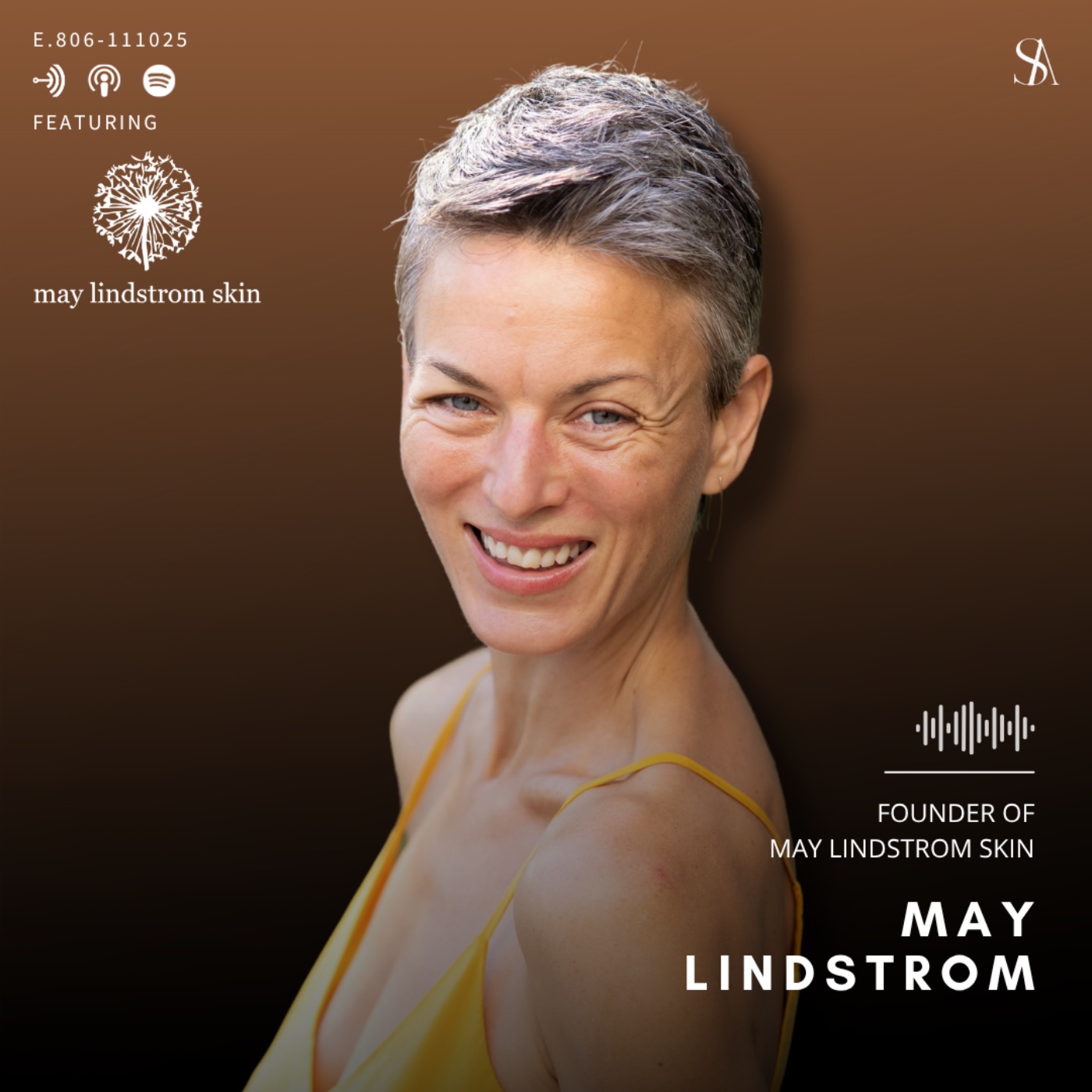
Skin Anarchy
May Lindstrom on Clean Beauty, Healing, and Self-Connection: How Sensitivity Sparked a Cult Skincare Brand
00:27:17
Loading summary
Transcript43 lines
- [00:02]
A
Hey, guys. Welcome back to Skin Anarchy. I'm thrilled about this episode because we have a phenomenal guest. She has been a leader in skin health for quite some time. Many of you might recognize her brand. It was a front runner when it came to truly clean skin care that was meant for almost everybody. You know, when I first discovered the brand, I remember just being so happy that there was something out there for people who like me. I had very sensitive skin. I still do, you know, and so it was a really great discovery for me when I discovered it. Excited to chat with her today. Today, please. Welcome ma'. Am. So excited to host you.
- [00:35]
B
Thank you so much for having me. I'm excited to be here. I was just thinking about sensitive skin. There's so. There actually is so much skin care out there for sensitive skin, and I'm in the process of a pretty bad flare up on my hands of dyshidrotic eczema right now, actually, for the first.
- [00:50]
C
Time in 15 years.
- [00:52]
B
And so I've been thinking about what sensitive skin actually means. It's so different for each of us, depending on what we're sensitive to. When I have a flare up, everyone's like, what do you put on it? What's your go to cream? My challenge has always been that even the most basic cream, the main ingredients are things I'm sensitive to. Basic preservatives that go in everything, the ubiquitous fillers that go in everything. It's the surfactants and soap that's in every bathroom, every kitchen. For me, my approach to sensitive skin has always just been about fundamentals. And I mean, really fundamentals, like down to the dirt. It's clay, it's earth, it's spice plants, it's flowers, honey, and oils and butters. And it's a different territory of sensitive skin. It's not the white unscented cream from the dermatologist. I mean, I really tried that method, but I was allergic to that very thing.
- [01:51]
A
Yeah. That's so interesting to me because this is exactly why I feel like the area of clean science or clean beauty. Right. It's kind of strayed a little bit, right, from this idea of what does that mean, you know, and what does it mean to formulate for sensitive skin? And I think you brought up such an important point here, is that it is the things that we don't even think about that are in these formulations that are the real culprits when it comes to reactions, especially if you are prone to redness, rosacea, eczema, anything atopic, I would love for you to walk us down memory lane a little bit, because I want to know where it began for you. I know you started formulating as a child because of your own skin conditions. Do you remember the moment you realized what was on the shelves wasn't working for you?
- [02:36]
B
Well, I'm 42 and I've been telling this story for 37 years. So when I was five is when I have my first real memory of my skin being a challenge. And it was exactly what I'm having today, actually. I'd gone to a friend's house for the first time without my parents for a sleepover, and I went to wash up my hands before dinner. And as soon as the soap touched my hands, I started just burning. And I'd never had this experience before. I was raised in northern Minnesota. I was the child of hippie parents, so I grew up with goat soap traded from the neighbors. Green, clean. Before those were catchy words. In the marketing beauty space, I never experienced anything like this. My friend, her parents were farmers, and the soap was harsh, strong fragrance. I never had anything like that on my skin before. I didn't realize I was allergic to basic soap surfactants because I hadn't used them before. They weren't in my household because my mother is also sensitive and her father is also sensitive. I come from a long family history of psoriasis, eczema, dermatitis, skin inflammation of that particular kind. So for me, it's genetic, it's chronic. And so it starts there as a five year old, learning that I can't even just use regular soap at a friend's house without being wary. That same year, I entered kindergarten, and every trip to the bathroom was scary, and public spaces are scary. And then I figured out all of the clothing that you could buy in stores was sprayed and things that would give me rashes to keep the bugs out in the warehouses, things like that. So all of the basic preservative and surfactant actions in everything we touch affected my body. It's not that skincare is bad. Most people can use most products. It's just not me.
- [04:31]
C
I can't.
- [04:32]
B
I touch the wrong thing and I have a body that breaks out in blistering rashes. When I was 18, my entire body was covered in blistering rashes. I would sleep with men's socks pulled up to my shoulders. Otherwise I would scratch until I bled and wake up with blood in my sheets. It was horrifically painful, and this has been a lifetime for me. But as a child, I was blessed to have the most incredible mother. She's a body worker, massage therapist, physical therapist, cranial, sacral, myofascial release, energy work. She's magical. As a kid, she would take me to the river and we would sit on the rocks in the sun and cover our bodies in clay. This took me out of being scared in a loud clay connection and time with my mom. It was also practical. It showed me that for me, clay helped with itch, it helped with heat. It was the first thing we would do when you would have a mosquito bite. I grew up in northern Minnesota, so there was a lot of that after a sunburn. What's better than a cool mineral on the skin? We've been doing this for millennia. Later, I learned plants from the garden. Green herbs would cool. Warming spices would activate energy. As a teenager, I started to study different plants, minerals, their effects on the skin. Learned about what women and people have been doing since the beginning of time. All across the world, whether you're from India, Africa, South America, Canada, California, or in Minnesota, where I was born, we have all always gathered clays and salts and herbs and oils, honey for everything.
- [06:12]
C
There's nothing new here.
- [06:13]
B
It's trendy in the last decade, but I'm not doing anything new. I have access to better, fresher materials and the world's harvest, but I'm doing the exact same thing my ancestors did.
- [06:25]
C
We know what to do.
- [06:27]
B
Modern skincare is literally modern. It's the last fifty hundred years that we're even making soaps and detergents. Specifically the skin in this particular way.
- [06:35]
A
Absolutely. I love everything you said. So much respect for having gone through this. It's one thing with something that develops later in life, but it's a whole different world when you deal with it as a child, when you grow up with it and the impact that has on you. It's very inspiring to hear that you really did take that experience and you built something from that. And I really applaud you because there's a lot of people suffering from serious skin conditions. We are creating a fear mongering environment sometimes that doesn't allow for them to speak up or come out into space and express like, hey, listen, I have serious concerns and like, I can't go and use what my derm is giving me, or I can't go and buy the next clinical grade skincare line because it doesn't work. And it doesn't work because I have severe reactions to this, you know, and so I think that there is a huge, huge unspoken truth out here in the industry when it comes to skin, you're absolutely right. I grew up, I'm Indian when I grew up in a household where this was very common. Right. Using turmeric, using oats, like this is part of my culture. But natural products don't get the attention the right way, in my opinion, because there's so much wisdom built into a plant that we never even talk about. Like, plants have evolved over centuries and the chemical reactions inside of them are so profound that we can't even mimic that in a lab if we tried. So for us to not go there and to not wonder and to not harvest, you know what I mean? And to like learn from that, it's kind of, to me, it's anti science. That really sparked a lot for me, resonated with what you said. We always hear this in the skincare space where everyone is saying the skin is an organ. You know, we have to approach it like an organization. What does formulating for the skin as an organ actually look for someone coming from your perspective of you want to make sure that whatever you're putting in your skincare products is. It's not going to create any kind of a reaction. Like, how does that work for you, that. That creative process before you formulate.
- [08:37]
B
When you talk about thinking about the skin like an organ, you're right. As an industry, we do talk about the skin being an organization, but do we not treat it like one?
- [08:47]
A
Yeah.
- [08:48]
B
Think about the other organs in our body. Imagine holding out your hands like you're going to hold something precious. If you were holding a lung, how would you cradle that? How soft would you be? If you had the opportunity to feed that lung, what would you feed it? Imagine opening your beauty cupboard wherever you store all your products, how would it feel to pour those products onto that lung?
- [09:15]
A
Yeah.
- [09:17]
B
In almost every case, I can't imagine that being the most delicious way to treat that delicate organ. But we behave so differently with the skin. We ask something different of the skin and throw all these stimulants at it and then it's in fight mode all the time. When I think of the skin as an organ, it's our largest, most precious public facing, vulnerable organ. I imagine holding that in my hands, precious like a baby. And I just want to coddle it and bathe it in warm herbs. I want to bathe it in waters. I want to feed it with fats and oils, give it a massage. That's my approach to skin. It's really simple. The most profound part of skincare happens when you show up over and over to your touch, in the water with your fingertips, to your skin. It doesn't matter much what product gets you there, as long as you're not allergic. For me, using clays, salts, herbs, spices, that works for my skin. You can choose whatever works for your skin, but the point is to make it to the bathroom, to the shower. Close your eyes, put your fingertips to your face, chest, breathe, be in the water. Massaging your skin brings blood flow, moves the lymph, moves the blood, so stimulates endorphins. It works outside, inside, neurologically, physiologically, it's less about product than it is about care. And we ask products to perform miracles when we're not willing to show up and just feed.
- [10:57]
A
Right? That makes a lot of sense. I love what you said. I think there's a lot of truth in this idea of a ritual right for anything that we do when it comes to our well being. Skin is one of the biggest things because you have such a profound relationship with your skin, it's literally your biggest offender. It keeps everything out. I like your analogy with the lung. I've done lung research for a long time and when I see people burning a candle, I'm always thinking on that level as well, like, what are you doing? Your organs are very resilient. That's the biggest trick the human body has played on us psychologically. Every organ we look at, lung, pancreas, skin, liver is so resilient. Medical science tells us you can cause dysfunction up to 90% and it will still be functional for a long time. We as consumers think, okay, nothing's happening. Then all of a sudden you're what, 50 years old and you see all the wrinkles come in, you see all the damage come in, all the spots, like, and then we wonder what happened? Where did this come from? It's this over time load manifesting. It really resonates with me the way you've described it, where you do have to cradle yourself in that self care ritual, whatever that means for you. It's very powerful. I want to talk more about this idea of what ingredients, because I know you brought up, for example, surfactants in the beginning. Give us some examples of ingredients that were not working well or that you noticed off the bat that you were like, no, I'm not formulating. Would they react with my skin? And they might just be exacerbating my condition. I loved your analogy with the lung because it's so, so profound how much damage our organs can endure. It makes you think, what am I Doing long term, you know, what is this burden that I'm creating over a period of time? Because that's where I think, consumers, we get so lost and we think, oh, well, you know, I'm in my 20s. It's not showing up. I'm fine. I don't have any wrinkles, I don't have any spots. I'm good. But then when you hit the later decades, 40, 50, 60 years old, all of these problems come up. Right. Where you get wrinkled spots, skin laxity. And I think that's where a lot of confusion is, because when I look at organ systems, 90% can be damaged. Lung, pancreas, skin, liver. Very resilient. If you can damage something to that degree before it gives you manifested signs of actual disease, it's like the greatest trick the body can ever play because it's so resilient that it never complains. Understand that from your view where you said even something like surfactants were causing a problem, what were those initial ingredients, maybe when you were formulating the brand that you were like, you know, these are absolutely not going in my formulations. Like, we don't need them or anything. I mean, can you share with us maybe like a short list of things you noticed that maybe were just not needed in a brand?
- [13:48]
B
Everything?
- [13:49]
A
Yeah.
- [13:51]
C
Like the base formulas for 99.999% of skincare on the market. Base filler ingredients hold the active ingredients that do the work. Stabilizers and fillers allow the product to remain on a shelf for years at a time or allow it to be a consistent color or texture so that it can look like what you expect it to look like. Based on the world of beauty for the last several decades, there's an expectation of what skincare products should look like. If I say cleanser, there's a particular puddle you can picture in your hand. If I say moisturizer, there's this ubiquitous white cream that you can picture in your mind, right?
- [14:33]
A
Yeah.
- [14:34]
C
When my fingertips touch my forehead, if I can feel that there is oil, I know that what my skin needs is clay. It needs something to balance that oil. When I reach for my skin and it feels dry, what it needs is moisture. It needs some fat. When I reach for my skin and there's heat. When it needs something green, it needs something cooling, it needs something herbal. When I reach my skin, it feels stuck, it feels congested. There's no life. It needs to be stimulation. Maybe some kind of herb, some kind of spice. Also the attention of my fingertips, it needs massage, my breath, my participation My jaw feels tight because I have TMJ and I clench my teeth and I stress. My face needs to be in the shower. It needs the heat of the shower, my muscles to melt, my fingertips to meet my jaw and my breath to slow me down. And so it's not, oh, you should avoid parabens, you should avoid surfactants. It's I'm allergic to surfactants, so I don't have a choice. It's not about the most eco friendly choice. I didn't come into this for these reasons. I came into it because there's five things that work on my body and they're all made of plants or minerals. I can balance my skin with clay, salt, oils, honey, herbs, spices, and I don't get rashes. It's that simple. I operated from that place. That's how I came into formulation. It's how I came into my particular kind of skincare chemistry and formulation. What came after me was green beauty. Green beauty was literal about plants. Once that became not a joke and became something that the Sephora's of the world were trying to emulate. It became clean beauty because they couldn't do green beauty, which requires plants which cost money and expertise. And there is impeccable sourcing that is required for green beauty, plant based beauty to be powerful, for it to be truly efficacious and not just, you know, crunchy granola, but truly organ oriented, pleasure oriented, efficacious formulas. And I come from that place where it has to do both. For decades I have worked with a clientele who has true skin issues. My focus is on the organ, getting real, true results so you can actually feel comfortable in your skin, functional in your skin way before I think about the esthetic component of it. But the thing is, when your skin is healthy, when your cup is full, you overflow. And that is where the glow comes, that's where the vibrance comes from. But we don't get there until your tissues are fed, hydrated and cleansed and awakened in a way that works for your body. That's your own participation, showing up with consistency, not relying on something to slap on and rinse off.
- [17:42]
A
I want to ask you about this because I find this so wonderful about your brand and perspective. You have nine products in the range, you haven't created 50 products. You're not chasing trends. Speak on this May, because I see brands coming out with a new SKU every year. I get very frustrated, you know what I mean? As a consumer, a scientist, and I don't know why you have these trends like glass skin, which is just oily skin right now. They're just lathering a bunch of oil on our skin. What you're speaking of and what you've been saying during this interview, I mean, you're talking about genuine health, true health, sensorial health. Please speak to us about that from the perspective of a founder who has not gone with the flow of friends. And you've really stuck to your ethos. What does this mean to you to create like a truly great brand in today's age?
- [18:31]
C
What if I wasn't aiming for glass skin? What if I wasn't aiming for glazed donut skin? What if I wasn't aiming for someone else's skin? What if I just wanted to feel good in this skin? I spent decades of trying to leave my body because it didn't feel good in here. My skin always hurt. I had so much discomfort in my body and self esteem. It took this whole lifetime, it's going to continue to take this whole lifetime for me to be in this body because it's mine, because I like it in here. And so when I get in the shower and bring the attention back to the water hitting my scalp, the water on the tile, bring the sensation back, not to what is this product going to do for that redness, for that wrinkle? And bring it to, wow, that smells really good and feels really nice. When I massage this particular part of my job, it goes from this outside conversation where my organ, this precious thing I can imagine holding like a lung in my hands and I ask it to parade for the world to shine, something out to do for me. And when I get in the shower, close my eyes and go inside and I'm smelling and I'm breathing, I give back to my body and my body gives back to me. I am grateful to be here and in it. And that was just not true for so long. Everything I can do to bring myself back to that place is beneficial. And for many in our community, many clients I've worked with, that is the challenge. When you have had real skin challenges, particularly sensitive conditions and those that affect the nervous system, so many inflammatory rashes run up to the nerve line and make you feel literally nervous. And so that happens for me when my skin is in a eczema flare up or a baridermatitis just flare up. The levels of self consciousness that come not just from what I look like, but the physical sensation is intensely uncomfortable and consuming. I forget when I'm not in it. And then because these conditions are Chronic. It will come back. And the reminder is always just incredibly humbling.
- [21:06]
A
Yeah, I love that. I love that so much, because I think that's where see the difference between the trend and the true, like creating from a true need and a purpose. I can't applaud you enough for that. When we were speaking before the interview, when I discovered your brand, I was truly like, you know, just infatuated with, you know, I love the concept. I immediately saw the products and I was like, this makes sense to me. I come from a heavy science background. That's my training, that's my brain. It made sense because it wasn't selling me a gimmick. It was just a genuine brand. One of the best products that encapsulates that in your line is the Blue Cocoon. Can we talk about that product and how it really captured the attention of a lot of people? I mean, what about this do you think was so universally appealing? Can you speak about that one?
- [21:54]
C
It really is magical. For those who don't know the Blue Cocoon, imagine holding your own little blue lake. It's a pretty little pot of blue balmy concentrate. Most balms are made of wax, fragrance, and color. The Blue Cocoon has no wax. It's intentionally waxless formula. So it's all just beautiful, fresh, pure.
- [22:16]
B
Plant butters and oils.
- [22:18]
C
The color comes from Blue Tansy. That also is where its power comes from. Blue Tansy is used for its ability to work with the vascular system. Really helpful for red sensitive, inflamed skin. So years and years ago, I was using it for my own hand rashes and also for just clients with excessively sensitive skin. I was working at the time with many women who are going through cancer. It was very replenishing during chemotherapy and radiation treatments. Also wonderful for my clients with psoriasis, eczema, dermatitis, all of the inflammatory conditions. Wonderfully soothing for acne. It's just a beautiful formula. And so it's known for its incredible efficacy. But most people today discover it just as the perfect daily moisturizer. And so for just even the most beautiful, healthy angel skin, it's the most lovely, nourishing, replenishing body resonant moisturizer for.
- [23:25]
B
Face, neck, chest, everywhere. I love it for the eye area, for the lips.
- [23:29]
C
So soothing.
- [23:30]
B
At night, I double up.
- [23:32]
C
It's like a treatment while you sleep. It's my favorite. This is the one I use twice a day, every day, for all time. I keep it right in the shower and melt it directly into wet skin. Every time, every time. I cleanse right there in the shower. While skin is soft and warm and receptive, it's feels and smells like a spa day in 30 seconds.
- [23:56]
A
Yeah, no, I love it. It's one of my favorite products when I first tried it. First of all, the sensorial experience is phenomenal. It's out of this world. You literally feel like you're in the most luxe spa and you're, you have it right at home. It's very soothing and nourishing to the skin. So no matter where you put it on, you can layer it. That's the best part, I think for me. I love to layer my skincare like throughout the day. I'm one of those like skincare consumers that I don't just put on a cream and just call it a day. I usually go in back in, you know what I mean? If my skin needs more, I'll touching it up. And I think this product is so wonderful that for anyone out there that likes that kind of experience, because you can add as much as you want on, it's not, it's going to always be the way it is. So it's not going to clog your pores, it's not going to make you greasy. You're just always going to get the benefits. And I really love that because a lot of the bombs that I've experienced on the market, they either get too greasy or don't layer. Well, once you put it on, like that's it, like you can't really keep doing it because then you're just going to be a grease ball. I really love it. It's very multipurpose. The best part is there's not a lot of products out there. We need products that are multi purpose. There are so many needs. My elbows, my face needs product, everything the whole body does. We need to kind of normalize this idea of skincare as body care. You know, it's for your whole body, not just your face. This product encompasses that. It's meant for everybody.
- [25:10]
C
I love it being a little bit more literal about the organ piece and really allowing ourselves to think that way. And what would it mean to feed to really take tender care?
- [25:21]
A
It's a really good concept. I think nourishment. I've said this before on the podcast, when I look at the skin, even from the perspective of science and biology, it's not one layer, it's multiple layers. But think of it like the layer and whatever you're putting on top is feeding it. Your cells are being fed, not just sitting there. They're literally being fed. In biology, we call it media. We put media on top of a cell plate and we say, this is the food for the cells. This is what's gonna help them grow. It's gonna help them regenerate turnover. And to not approach our skincare in that same way, to me, is just doesn't make sense. You know what I mean? It really doesn't add up scientifically. As a consumer, I'm looking for nourishment, and I'm looking for what product is gonna make my. My cells feel like they're being bathed in just nourishing ingredients that are supporting them and their growth and their turnover and everything they physiologically do. You know, there's a lot of skeptics about sensitive skin. Skin care is not the same as clinical grade. This conversation has become convoluted because it doesn't make sense. If you want to help your skin, you need to nourish it, period. There's a full stop. And that's where the science is. I think it's a bigger conversation than what we're seeing right now in the industry.
- [26:36]
C
I think there's just different purposes. If somebody's looking for clinical skincare, the real question is, what are you hoping they clinically address?
- [26:44]
B
Yeah.
- [26:44]
C
And if there's something clinically to address, then that's a really good time to develop a relationship with a dermatologist.
- [26:51]
A
Thank you so much, May. This has been a lovely chat and I've learned a lot from you. And like I said, I'm a huge fan of your brand, what you stand for. I think for 14 years, you've been doing something meaningful in this space for a reason. I can't recommend your line enough to anyone listening. If you guys are looking for something new that's going to actually heal your skin, I really recommend check out the brand. Thank you so much. It's been lovely chatting with you.
- [27:13]
C
Thank you again for having me.
- [27:14]
A
Thanks. Hey, guys. So I hope you love that episode. Please make sure to hit subscribe if you're tuning in to us on any podcast platform. We are available on so many different platforms, so wherever it is that you're tuning in, just go hit subscribe. You'll be immediately notified when we publish new episodes. This way you're able to tune in to to amazing insights from experts, brand founders, industry leaders, authors, all the wonderful people that we host. And that's very important for me because I love to hear from you guys and really understand what you love and what you want to hear more of. Also make sure to give us a follow on all of our social media outlets. We're available on Instagram, TikTok X, you name it, we're there. We also have a blog on Medium, so if you're a reader and you love Medium Blue blogs, check us out on Medium. We publish some really great articles on there that do deeper dives than just what's available on the podcast, and it's really a great place for all of you science geeks out there that want to learn a little bit more. We go above and beyond with our research and making sure we're bringing you information that you usually probably won't hear about in other outlets. So check us out, leave us a comment, leave us a review, and we'll be back next time with another episode. Thank you.