← Skin Anarchy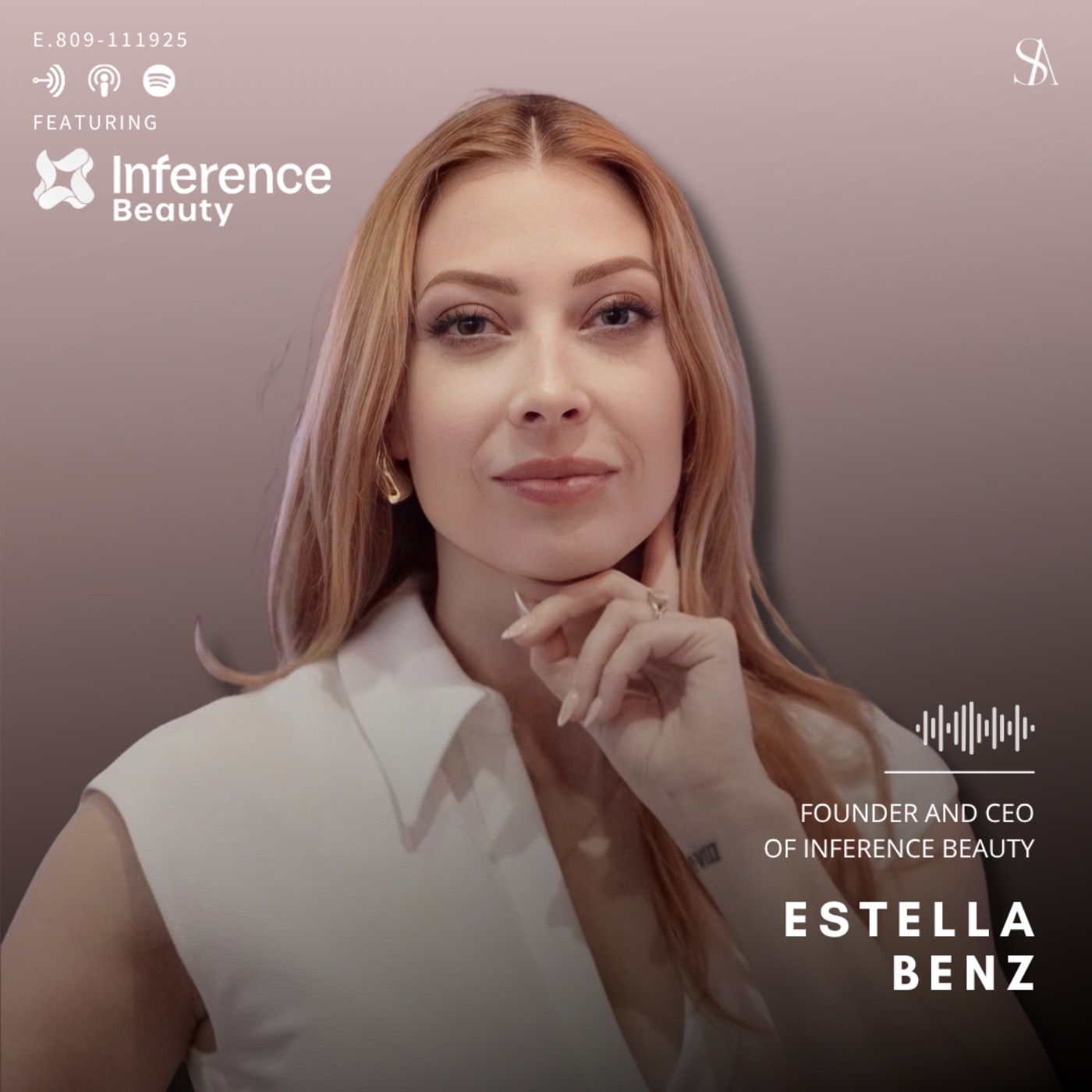
Skin Anarchy
Personalized and Data Driven Beauty Intelligence with Estella Benz of Inference Beauty
00:47:15
Loading summary
Transcript59 lines
- [00:00]
A
Hey, guys, welcome back to another episode of Skin Anarchy. Today's very cool episode because we're going to be talking about the data behind the skincare industry and understanding the wonderful companies that are kind of helping us organize this information and really lead the way when it comes to how new formulations are thought about. And so, without further ado, I would like to introduce you guys to Estella Benz, who is the founder and CEO of Inference Beauty. Welcome, Estella. I'm so excited to host you.
- [00:27]
B
Thank you so much for having me. I was so excited to record this episode with you.
- [00:30]
A
Yeah, no, I'm excited to dive in and kind of pick your brain because I love learning more about the data side of things and I love seeing what we know so far about the beauty industry. I know there's so many things out there when it comes to ingredients now there's like so much biotech floating around. I think for consumers, we never really get to see that side. And it's a very exciting world. So I want to dive into that later. But first, I would love to learn more about you and Inference Beauty. Like what made you go into this area of technology? Tell us more about what started everything.
- [01:01]
B
Yeah, absolutely. And I would like to go a few years back when I studied at FIT in New York and I always wanted to work in beauty. I think it's a fascinating field because there's so many brands out there, but the market is still not saturated, which I always found super interesting. But then I also was like, oh, I don't want to just create another e commerce store like everyone else. And so I started talking to the fellow students and did some mystery shopping. And most of them said, well, I have sensitive skin or I have an allergy or I'm vegan and I also want that in my products. And this was like almost 10 years ago. So people already then were looking for more information. And I think that has really transformed in the beauty industry now. And now everyone knows that the consumer wants this. For me it was really like, okay, then let's just build a database where all of the product information is stored and then the consumer basically only in the shop has to see what is relevant to them. Because my idea was targeting women that are business oriented, successful or hard working moms. They don't have time to watch video blogs about 10 different moisturizers. They want answers now. They want them clearly and they want it in front of them. So this is how it all started. I first created an e commerce business and then was approached by a retailer Saying, hey, I really love the tech that you're using. What is this? And then, together with my developer, decided to build Inference Beauty, formerly Skin match technology, to kind of provide this as a B2B solution. And that's how I got into tech, and that's how we got to Inference Beauty today.
- [02:46]
A
Wow, that's really cool. I love what you said about how a lot of women and a lot of people. Yeah, you don't have time. You don't have time to watch the videos and the. And the crazy reviews and stuff. And, you know, honestly, they're misleading a lot of times, so you never can figure out what is good for me and what is the best option for me. And I think many of us relate to that. I know I definitely do. Even before I started this podcast. Such an uphill battle, trying to figure out, like, what product is actually going to fit me and my needs and trying to sift through that entire clutter. So definitely a huge white space. I think it still exists, you know, in the industry. That's very interesting.
- [03:21]
B
Absolutely. And you know what the funny thing was, like, when I started the company and I was looking for investment, as you can imagine, like, most of the investors were mid-40s white males.
- [03:34]
A
Yeah.
- [03:35]
B
And they're often. Often their answer to me was like, but women like shopping for beauty and looking through all of these different products, that just showed me because they are also in the workforce for a lot of beauty brands and just show me such a big gap of, hey, yes, we want the right products and yes, we love the products, but we don't want to spend our time researching and trying to find the perfect one in all of these options.
- [04:04]
A
Right, right. You know what that reminds me of? You remember in the 60s, they used to do the market research and they'd ask women if they liked cook, then men would be like, but women love being in the kitchen. No, we don't. No, we don't. Yeah, that's funny. No, but there is a gap, though, right? I mean, there is this, like, misunderstanding that. I mean, I love shopping like any other person, but at the same time, I think when it comes to beauty products, sometimes you just need what works. You just want to figure out, like, is this going to work for me? Why should I buy this versus the other one? Many times, I don't know how many times I've been in Sephora and I've just been looking at product aimlessly, you know, like, trying to figure out, where am I going to go with this? Do I need. And. And so I think that's very interesting that you bring that up because many times that is a misconception. For sure. Across the board people feel that way.
- [04:49]
B
Yes, absolutely. And I think what also is quite interesting about the beauty industry is the decisions for a beauty product are so multifaceted.
- [04:57]
A
Yeah.
- [04:58]
B
Because one is like my skin needs, the other one is ethical topics. Like as I mentioned before, the person who said they're vegan or maybe they're super into protecting the ocean. So no microplastics, no sun protection that can cause Marilyn life any harm. Then you also have pricing and overall aesthetic. So we have seen in the data that some people really fancy the more luxury gold looking stuff and then others more the, we call it explanatory pharmacy kind of like the Kiehl's and Marling Goetz kind of packaging design. So it's so many things that come in into making a decision for beauty and it's not just, oh, you have that problem, this is your solution.
- [05:44]
A
Yeah, no, that's really fascinating that you mentioned that. Now what are some of the parameters that you track just so we can get an idea of how are you looking at the data?
- [05:51]
B
We have both aspects of. One is the customer. The customer has obviously skin needs. They might also have allergies and sensitivities that they just have to deal with. And there we look at it from an ingredient level. This can also be stuff like scalp health causing dandruff and stuff like that. Then the ethical preferences such as certain clean beauty topics or as I said, nutritional values that also go into the decision for beauty. And then also what can have an influence on your hair and skincare specifically is your surrounding like pollution, humidity, sun exposure. So that's kind of like the situation from the customer's perspective. And then on the other hand we have the products where we look at the formulation, like what ingredients are in here and what is the effect, utility and source of these ingredients. And all of these give us then a decision making understanding of whether or not this product fits that specific consumer. And those brands also have then the certifications such as Leaping Bunny Pito that are good for us to know as well as some more lightweight factors such as for what age is this product usually good for? Is there something like specifically made for menopause? So it's only for women generally we treat especially skincare and hair care products quite unisex, but if there is an element to it that is specifically for gender, then we would highlight that as well. It's interesting. Yeah. Many, many different Things.
- [07:29]
A
Yeah, no, I like that a lot. That's really comprehensive and I think that's very much needed in today's world. Especially because like you said, menopause is a great, I think, category to use as an example here because there's so much now information coming out from the science side where we're realizing that even conventional products like say, skin care, there are so many skin care products that are simply not meant for menopausal skin. They were formulated in a way that I think works really well for everybody between maybe say like in their 20s up to 50s. And then you see that there is a decline in their efficacy in their use after a certain point because it's very different. The skin changes that you experience in menopause creates a very different environment. So I think it's very important now more than ever to give consumers this understanding that, listen, it's not that there's nothing here for you that you, you might just not be looking in the right place. So like kind of follow the data, that kind of thing. That's very interesting.
- [08:22]
B
Yeah, absolutely. And I think also in terms of pregnancy, first time moms maybe are a bit unsure. They don't know yet. Okay, can I still use my retinol product that I've used for, for the last three years? The same for teens, like, should I already use a retinol product? All of these things we can answer. And then also allergies and sensitivity. So sensitivities is one thing. So if you have eczema rosacea or something, but then allergies can be quite interesting, but also tricky because you might have a nut allergy, but you only think of it when consuming nuts. But what about products that contain knots? Is that causing your redness? And it might be just a fraction within that formulation. So providing kind of really transparent information and guidance around these topics is what we, we aim for.
- [09:14]
A
Yeah, that makes a lot of sense. I actually have my own regulatory seal that I've started at skin anarchy. And we look at things, all of the things you're talking about, we, we look at them from a very different lens as well. And I know exactly what you're talking about. Where you have to be, you have to be able to educate people in a way that isn't fear mongering. And I think we've done that a lot in the past in the industry where a lot of these ingredient checks, like I have a, I have a personal problem with them because I don't think that's how you educate consumers. I think with the clean beauty movement, for example, for a long time it was like, these ingredients should be banned and this should be banned. That's. I understand the purpose of that, but I don't think consumers walk away with like a comprehensive understanding when you have something like that. So I think what you're explaining makes more sense to me logically. Kind of adds up in my brain where if I'm able to then sift through all these different data points and understand like, this is why this fits in my lifestyle and my age group and my individualized needs, then you're able to make a decision based off that data rather than just thinking, well, this is meant for me. It's not like a no, is what I'm trying to say, like an X or something on the product. It's more like, this is why it fits. That's very interesting.
- [10:23]
B
Yeah, I love that you brought this up because for us in the industry working with different brands, those are the third party apps and the brands have zero control over the content there. And often those apps are successful because they're shocking. You scan your product that you've used for years and suddenly it says, oh, this ingredient is cancerous. But what the consumer doesn't understand is, yes, it is cancerous if you drink it, if you drink like a full glass of it, but by it containing just less than 1% in a formulation that you put on your skin, there's zero harm. But still they will flag it as red and cancerous. And it's really misleading and it's really bad for some of these formulations for the brands because they're actually really good product. So here we also help our clients with our ingredient transparency features. We want to keep the traffic on the brand's website and give the consumer super transparent in depth information, including images of these ingredients. Tell them, why is this ingredient in the product? Like, is it there to make it more liquid, is it there to make it more thick, where was it sourced from? And does it have an effect on the skin or is it just for texture of the product so people and consumers do not have to consult these misleading apps?
- [11:48]
A
Yeah, no, I love that. I think that's brilliant and I think that is a big challenge for a lot of people, is that you don't know what these ingredients do. If it is there for what you mentioned, like thickening the texture, or if it's there for just making things more soluble, you don't understand that. So half the time someone sees like an alcohol in an ingredient list and there goes, oh, My God, I don't want any alcohols in my product. And it's like you to understand the role, you have to understand the role in the overall formulation. I think that's where people are, are really missing the mark and they have been. You mentioned a very good example, which is like a dye. I agree with you. I think if you see a dye at this point, you shouldn't really be using those products. Another one is like fragrant fragrance isn't really needed in cosmetic products. So maybe avoid it if you have allergies. But I think when it comes to other ingredients, we really kind of jump the gun and we just say this is terrible for you across the board, doesn't matter. And it's just not true because no one talks about concentrations, no one talks about the relevance in a formula. What does this do for all the other ingredients? That's the, that's the missing link. So it's very fascinating how you're bringing this kind of to the consumers directly rather than going through a middleman instead of going through them for the interpretation.
- [13:03]
B
Yeah. And I think it even starts a step earlier. So in Europe, not everyone does it, but it's mandatory to show the ingredient list before you purchase a product online, similar as kind of like at Ikea, you need to show what materials are used for a table, which obviously should make sense to list the ingredient list. But then the ingredients use a specific convention of naming. And in there, for instance, shea butter, as the common people know it is called Perki butter. So nobody understands this. And what we have introduced there is a translated common name. So in any language we will translate Perky butter for the consumer to shea butter to something that they actually understand. But in the packaging on the back of the product, you will always see Perki butter instead of shea butter. So this again is keeping the consumer to really understand what's in the product and therefore even more so an important topic to take over as a brand.
- [14:10]
A
Yeah, that's. I completely agree, agree with you. And I think with E Commerce, the way that it's kind of the trajectory the way it's been, I don't think anything is just a transaction anymore. There is a big decision making component that comes in. Right. And I would love for you to speak on this a little bit in the sense of like, what are the biggest gaps that you've seen between what digital beauty shoppers need and what most websites are actually offering?
- [14:35]
B
Yes, I think currently as also many brands use templates like Shopify and others, which are great in terms of checkout and work really seamlessly. They still approach the consumer as a mass. And I found it really interesting. L' Oreal published their new mission in terms of digital and they said digital should focus on beauty for each instead of beauty for everyone. And that's exactly what is needed in E commerce. It's understanding the person as an individual instead of just going for the mass. And here it boils down to personalization where a lot of brands are focusing more on ads and community and like, stuff like that rather than creating their first party data, understanding your consumers and providing content for them. And if you think of Today's world where LLMs are everywhere, we still have generic product descriptions, even though with the data and the setups that for instance, we provide, you can already personalize the product description. So when you browse a brand's website, for instance, rather than reading oh, this product is great for xyz, it would say this product works great for you because of your dry skin allergy and so on and so on. Kind of like really highlighting what you need, but also maybe telling you hey, this product is not for you. Maybe go for this product and really guiding you as a consumer.
- [16:15]
A
It's very interesting because there's what, over 80% of beauty sales are happening online. So I mean the amount of education that we need now I think is just exponentially higher. I would love for you to talk on this because in terms of what you said, I agree with you where it is an individual thing. Every time you buy something online, you make a decision as an individual. You're not making it based on what the mass wants. It's every single person has their own desire and their own needs and, and what they consider to be meaningful information versus non meaningful. So I'd love for you to speak about this in terms of like, how should we be approaching things for the education front? What should we be doing as an industry for that component?
- [16:56]
B
So here's really understanding the path of how you make decision to buy. And that is not just beauty. That goes for almost everything. So the first part is discover. Let's say you're a young brand. The customer comes up with your website. They have maybe heard of you on Instagram or seen one product review. They are on your website. But you have, let's say 50 products. So you need to help the customer find a starting point, discover the product in a personal way and help them understand that what we provide here is really like guided shopping quizzes as we've seen many brands do, that can entail like an AI face scan, adding some additional information such as personal preferences or allergies, and then providing a tailored routine to give them a place to start. And always explain why this recommendation was made. Because we really want to build confidence to buy, which also entails the second step, which is understanding your product. If you just give a recommendation, a blunt, naked recommendation, say, hey, this product is great for you. If you don't understand why, you don't trust the recommendation, you want to understand why is this for me? Are they just trying to sell me something, or is this really targeted towards my needs and how does it help me complete my routine? And here the next step comes in, which is comparison. So you might already have a product that helps you with your blemishes or oil control, but now this product, if you explain it correctly in the recommendation, also has additional benefits such as sun protection, hyperpigmentation, or even like is vegan and yours is not. So here, providing transparent, clear information that is personalized is key because then, and that comes to the second or the last step is validation. It validates that all my needs are covered and I can make a confident purchasing decision.
- [19:01]
A
Yeah, that makes sense. It's interesting because I think that comfort part of it, I think there's a lot that goes into that in terms of, like, when do you reach that point as a, as a consumer where you say, I really feel comfortable with this product. And I think that's where I get very lost in this world of regulation and all of these things. Because when it comes to, for me, I can tell you about myself when I'm shopping for something and I don't. It's not even so much like, do I understand the ingredients? It's more so like, how do I know if the way this formulation was made is going to actually work together? Is this formula good? And I think that's the gray area in this industry. No one's addressing that. I don't think there's a single app or program or anything out there that can explain to consumers this is how formulation in real time interacts together to give you the results that you need. What are your thoughts on that?
- [19:56]
B
You're absolutely right. There is quite a big blind spot in that industry, and I don't think it will change soon. The reason is brands have to disclose ingredients. The only thing to protect their formulation is not disclosing the percentages and to be able to see if something works, even like layering products or also the product itself. Even for us, we have no idea on the mixture and the percentages, because no brand will ever disclose that. That is trade secret. So I don't see the possibility to fix this anytime soon. Obviously you can say clearly, very harsh ingredients, layering them on a top level, we can do it, but not in a way that it would have to be done. The only entity that can fix this is the brand itself. When they provide layering products for their own formulations. I don't see any other way of, of this being solved anytime soon.
- [21:05]
A
Yeah, no, I think it's a, it's really a quite an interesting place where we are now because I'll tell you, with skincare, it really baffles me because I see every day that we're creating brands that are more. They're like kind of blurring that line more and more between over the counter and medical grade. And it becomes very hard for consumers. I think when you're shopping for something like a retinol product and you don't know, brands will say, yeah, okay, this is retinal, not retinol. They'll tell you like, okay, you're one step closer to tretinoin. Cool. But where does the information come in about how this reacts with my actual skin? And so this is where I am very curious as a consumer, because when you're shopping for any product online, you want data that's going to tell you, how is my skin going to react to this? Especially if there are actives inside, you know, that's why I asked you that question, because so many people, like, if you look at retinol, look at that one ingredient, so many people are now reporting adverse reactions. They have terrible skin purging, they have skin barrier issues. So much is going on in that space. And how do you regulate that?
- [22:12]
B
Yeah, yeah, it's really hard. We also have a client that recently launched in the UK and they have some quite harsh products in their inventory. It's a retailer with multiple brands and we've done some testing. And the issue with just tech tools, without having here the human touch comes back into it. With just tech tools, you need to rely on the responses from the consumer. And those responses may not always be truthful and accurate. I'm not saying they're strictly lying. I'm just saying sometimes we have the tendency to think differently about ourselves than what is actual reality.
- [22:59]
A
Right.
- [23:00]
B
And here if it comes to these harsher products, the way we were solving it for that client is they still recommend it, but we try in the recommendation to start them off on a lesser intense product and then if they get one of the harsher products recommended because it really looks like that's what they need at this point. They have advisors that will, before they ship it, quickly have a back and forth with the client. Like a personal touch. Because as you said, if it comes to nearly medical grade products, there's a reason and a legal reason why those products are usually being handed out by estheticians, dermatologists and doctors because they're is an analysis needed where you can also see or maybe even ask some questions back before making a recommendation. And yeah, when we developed our algorithm like we worked with dermatologists and ingredient specialists back in the day and one of the biggest thing that we had to figure out, and it comes back to why the human touch for medical grade products is still necessary, is certain things you can't detect over a photo or a screen you need to touch see the skin in detail with special tools and also have multiple questions. How does your skin feel in the morning? How does it feel in the evening? How does it feel after cleansing to fully understand your skin type and your issues. So 100. Yeah, I would say we can solve a lot. We can't solve everything.
- [24:42]
A
Yeah, no, I love your, I love your response. I love your comments on this because that's very true. And I'll even take it a step further. You remember when you would walk into a beauty store like a Sephora or something, and then you'd get a consultation, even if it was just for a blush or a foundation match or something like that and that exactly what you're saying, where that human touch helped you figure out what's good for you, it helped you make that decision. It's this bridge between do I think this is good for me? This might be 80%, I might be 80% there, right? To like going and buying it. But then that person that comes in is going to make you, is going to make that decision, that 20% where they really kind of reinsure you, reassure you, make you confident in your purchasing. I think that's very important to consider when it comes to especially where we're headed with AI and all of the integration that's happening right now. I'd love for you to speak on that. What are your thoughts about this in terms of do you think AI will eventually be able to replace that for consumers or do you think that there needs to be a coexistence of the individual personalization of having an actual human touch there? Plus the AI?
- [25:51]
B
I think it can replace it to almost 80, 90%. And I think coming A bit back to what you said in the beginning. A lot of brands open up a website to sell their products, but they treated it more as a business card and a place where you can buy buy it also rather than another point of sale. Because when we walk into a store we expect someone knowledgeable to be there to help us out. But if I come to a website more often than not I'm being left there just having to figure it out myself or again consult another third party app or recommendation engine or something. So really first off having to use e commerce or like digital tools the same as you would a point of sale with educated service is key. But then think also everyone who's listening like we've always had, everyone has had this annoying AI phone call trying to help you with that specific need that really doesn't go into any of the pre recorded options from customer service. And that is super annoying. So I think even though we're now getting AI to help us with a lot of the service needs, at one point we will require the human touch as well. That's also maybe even though I very much in the section of pushing brands to use more AI and pushing brands to use more digital services, I also think from a personal perspective there's a limit to it on what we can handle in terms of like what we at one point we just also want to talk to someone because we need a specific answer. So also if it comes to in store, I think the best world would be a combination of the two because we did a lot of mystery shopping and especially like in retail stores where one sales like Sephora, let's say one salesperson has so many products to handle and know about and this test wasn't done at Sephora. But what we've seen generally is that you can give them three things that matter to you. Let's say I have dry skin allergy to silicone and I want a vegan product and they already struggling so why not provide them with an iPad or some digital device so they can scan through the inventory but then put the personal touch on top of it and kind of like is there anything else that is important to you? Because then I can quickly go through the inventory and then you can look at five products that match you together. So I think the best worlds is a combination of using the efficiency of AI with the human touch that makes shopping just a bit better.
- [28:50]
A
Yeah, no, I think I agree with you for sure on that because it is really nice to have an AI powered kind of assistant there. That's Going to show you what you five products. Right. Rather than just you trying to figure out where do I find even one product. I mean, there's a huge, huge shift happening right now where I think shopping is for me personally as a consumer, when I look at the shopping experience now, yeah, it's very different because you have these multiple parameters that you can search for at the same time in a way. And I think that's where I, I find where it very unique what you guys are doing, where your platform can be used in so many different ways. I mean, obviously it's great for consumers, but yeah, like you said, if you're like a Sephora employee or if you're an even like a personal shopper, there's so many personal shoppers out now can really utilize this kind of data in a way that is going to obviously make it easier, but then also help you refine your eye as well. Right. And understanding people and understanding behaviors. I think that's where it becomes very interesting because when you are. You have access to data, you start learning about why do people behave the way they do. So if you have clients, especially on the luxury side now, the luxury side, it's very hard sometimes to figure out why do people buy what they buy. There are so many luxury companies where I see like a specific launch. For example, Louis Vuitton just had that launch of the makeup and there's everybody so split down the middle about it. Some people are like, I love this, love the luxury lipsticks. I mean, Pat McGrath designed this. She created. So everyone's. There's a lot of people on that side, but then there's other people that are like, I don't even understand why you would spend $160 on a lipstick. So these kind of, I think case studies show you how important it is to be able to get into the mind and understand what makes you buy a luxury product at the end of the day. So, yeah, it's very fascinating to see what you guys are doing and what that means for that kind of data.
- [30:36]
B
Yeah. And by providing guidance and collecting consumer data to provide that guidance in E commerce, you, as you mentioned, you get data back. Yeah. You can learn about your customer. And there's a few different things that influence whether or not I'm going to buy the new Louis Vuitton line. And it's first of packaging, I think if I recall correctly, they're mostly gold ornaments, very similar to Yves Saint Laurent. And we, we call that packaging design the gold digger. That's not something we, we share Outside it's just how we clustered the different packaging designs. Right. And we've done initial research and we've seen that really people similar to books or like decor or, or jewelry, you always go for a bit the same because you trust in its quality and what it means for you. And so yeah, the packaging design, does it appeal to you? Then the price obviously like how price sensitive are you? And here we see a very distinct behavior for different categories. Whereas let's say you as an individual might be super price sensitive if it comes to mascara, but not at all for fragrance. But that doesn't have to apply for me. I might be super price sensitive for fragrance, but not at all for foundations. So that, that's quite interesting to understand. And then obviously the value and that the, the actual product, like how good is the product? Fenty, I think if you think of the initial drop when it came out, everyone was excited, oh, this is the first brand who's so inclusive. Let me try it. But then the products are really good as well.
- [32:20]
A
Yeah.
- [32:21]
B
And I think they live or die also by can they deliver what they promise. So I think also in terms of our technology and the recommendations we recommend and provide information of what the brand promises and the formulation promises and the ingredients entail. But does it actually work for you at the end is then really up to, to how good is this product?
- [32:46]
A
Absolutely. Yeah. No, it's very. I like what your example that you gave and I agree with you. I think that it's very interesting to watch what people feel is worth more money and what's not. It's very, very interesting. One question I do have for you is this whole back to the AI thing where it's like now AI is recommending products. We're, we're now approaching that era of AI is recommending personalizing, predicting what consumers would want. Where do you think the ethical line needs to be drawn when it comes to personalization versus manipulation of a consumer's mindset when they're purchasing.
- [33:20]
B
So I can only talk about our perspective of how we approach it. And when we started one of our biggest thing was sales is good, but we believe in loyalty more than initial one time sales. What that means is the recommendation needs to work so people come back and seek it again because for us as a subscription model for our brands and retailers, if we can only help them with the initial sales, they will not use a subscription model for a long time. What brings me back to the ethical approach to AI and just manipulating customers that for us doesn't work and so we from the very beginning that transparency is one of our single most important factors on how we provide recommendation. To just give you an example, if you have a range, if you're a beauty brand, you work with our recommendation algorithm and there comes a customer and this customer has very bad sensitivity and also allergies or whatever. If you don't have a product for this customer, we will straight out tell this customer we don't have a product for you. And a lot of brands at first when they see this, they're like, oh, but we can't do this. We can't tell a customer they shouldn't use it. And I'm like, do you know what happens when the customer buys it has an allergic reaction, they will never buy from you again. And they will tell everyone. So you're better off with like, don't be afraid to be honest because they will appreciate that. And I think a lot of brands are still afraid of the honesty and transparency. That's why we talk a lot about greenwashing because they're trying to to cover half of it, but then are not fully honest. And we know the consumer. We know.
- [35:20]
A
Yeah.
- [35:22]
B
So yes, it can happen that certain AIs and tools will manipulate people into it. But for us, we want to build tools that work long term, that customers trust and are transparent enough so you know you're not just being sold the most expensive product.
- [35:41]
A
I love that. I love what you said. I couldn't agree more. I think that is so, so important. Probably the best advice I've received. Honestly, like I 100% resonated with what you said. And I recently had this experience with AI. I was asking for like a perfume and I, and I gave it favorite, my top favorites. So I was thinking, oh, it's going to analyze based on the notes and that stuff, right? And it gave me a recommendation and I was like, the brand was great. It's a trusted brand. Loved it. But the recommendation, I blind bought that perfume. Now this was like upwards of 300 that I spent bought that perfume. I hated it. I hated it. And it because it didn't match the description that AI gave me. When I tried it myself, I was like, you didn't even mention, you know, it had a note in there that I personally don't like. AI never told me that. It never told me. And so you're so on point with what you said where it's like if you don't have this level of transparency and really you haven't done the homework to where you've refined the AI model to a point where it's actually accurate in what it's recommending, then consumers are going to lose interest. We don't want to lose out on $300. At the end of the day, that's not something anybody wants. And So I completely 100% resonate with that. And I think a lot of people are experiencing this now and I see this a lot with a lot of individuals. Like when you look at something like TikTok shop, right. And you look at how consumer behavior is fueling that versus an AI based model, you start seeing like there is this need of somebody to say this actually is what you're thinking it is and it's not just going to be a lie and it's not something where you're just blindly believing AI. So I think you're, what you're saying is so relevant and for anyone building in that space, you really have to keep that in mind. And brands, especially, like you said, brands have to realize that the way you depict your product and the way you describe them on your websites, it has to match the consumer's experience. It has to definitely match that. Because if we don't trust you once. Yeah. We're never going to come back. Why would I?
- [37:46]
B
And I think that the simple, like, I really don't understand this fear of the, of honesty. Because like, yeah, I think we all had this situation when we were in a shop. We were alone, but we needed advice. We asked the salesperson like, hey, does this suit me? If the person says no and then you show them another item and they say, I love this, you trust them.
- [38:07]
A
Right.
- [38:07]
B
But if they say yes to everything, you're like, okay, you're just trying to sell me something.
- [38:12]
A
Right? Exactly. Yeah.
- [38:14]
B
And that's, I think, really understanding. And LLMs in general, like let's say the generic LLMs are trained to always have a positive answer.
- [38:24]
A
Yeah.
- [38:24]
B
And that's the biggest problem. Yeah. And saying I don't know or saying this does not suit you. We rather recommend X will do wonders. So, yeah, if any brand listening, even if you don't look into AI tools, don't be afraid of giving customers clarity. Or if you're, I think, I don't remember who it was. One of the bigger players, they knew they had an issue with sustainability and they knew they couldn't fix it in like a month. So what they did instead, and I thought that was a great play, was they pledged to fix it by date X and told the consumer, hey, yes, we're not there yet. But we are a big corporation, like we just can't. But we pledge to do these in these years and then finalize it by X and giving a really transparent timeline on how they fix it. And I think that again builds trust rather than saying, oh we're super clean and then this is what clean means to us and then it, it doesn't mean anything.
- [39:28]
A
Right? No, I, I love what. You love the example a lot because I think that's, you know, half the time and I don't know if others feel this way, but I, I'm on that boat of like, if you as a brand can reassure me that you're going to do everything you can to fix the problem, I'm gonna believe you. I'm gonna, as a consumer, I'm gonna give you the benefit of the doubt and I'm gonna say, yeah, at least you're trying. At least you're trying. At least you're not completely ignoring it. So I agree it's better than nothing and it's better than just pretending like you're gonna get it done by a certain date. I've seen this a lot. Right. Especially in the beauty industry. Like there have been so many cases where something's gone bad and, and then brands over promise and they under deliver and it just becomes this like cycle and then you lose so much trust in them and it makes you really question everybody else. At the same time. I think it's more of like a community mindset that gets created when that happens. Like, okay, well this brand did this to me, so how do I know the other brand is going to do that as well? So yeah, I think across the board, like as an industry we just have to get better about this. There's no, I understand. You don't want your ingredients and your formulas or whatever stolen and all that and whatever. Right. But like at the end of the day, who are you here to serve? You're here to serve your consumers or your customers. And if you can't be honest with us, why should we come back and give you so much of our hard earned money and why should we trust you with our everyday decisions? It really is kind of like weighing the pros and cons at the end of the day for a brand.
- [40:51]
B
Yeah. And I think that's also one of the reasons why a lot of the niche brands were so successful.
- [40:56]
A
Yeah.
- [40:56]
B
Because they took a risk in being very blunt and have a very clear focus and standpoint, whereas the bigger brands are still a bit for everyone and being edgy in today's world will resonate so much more with consumers than than trying to do everything correct and right and be for everyone.
- [41:18]
A
Fully agree. Now I want you to just tell us in terms of what you guys do, how, how does Inference Beauty serve as a, an infrastructure layer rather than just a plugin, just so everybody can understand that component.
- [41:29]
B
Yes. So I always say we're a bit of a boutique software company. At the end of the day we are software as a service subscription model for different solutions that as you said you can plug in and use on your website. Maybe like the AI Skincare Advisor Foundation, Finder, Fragrance Finder, depending on your category. That's kind of like the simple starting point. We, by plugging in one of our solutions, we help you in one specific need. So it may be product discovery or product validation, understanding transparency and then it's really up to the brand to work with us in terms of okay, what do we do with the data that we collect here? And that's something that is often still a bit lacking. They still, they see the benefit of the tools in terms of higher conversion, higher average basket and really seeing the success of E Commerce. But we're also collecting all of that data. And I think what I'm missing from a lot of brand is then integrated usage of then collecting the data, saving that data and then also integrating what I've mentioned before, like the personalized product description rather than the generic description or using indicators for each product. How good of a fit is it for you? Specifically with you, I mean the person browsing the site and all of these things, also using the data for loyalty programs, email and so on. So there's a lot that can be built on top of the basic plugin. So also why we are a boutique software company, we have always one direct product manager that works with the brand and really assesses their needs and also helps them grow and develop the solution for them specifically.
- [43:20]
A
I love that. No, I think that's what you're doing is so needed and I really, really applaud you. And I, I'm rooting for what you guys are doing. I think that this is something that we really need in the industry. We need to see this level of personalization and also just being able to interpret data in a meaningful way. I think that's the bottom line. And with the way that things are moving now and the pace at which they're moving, I think consumers need a trusted source and I think brands need to invest in software and programs that can help you get to that point. So I really Believe in what you're doing. And I really hats off to to you and your whole team for creating such a wonderful platform.
- [43:56]
B
Thank you so much. That's great to hear.
- [43:59]
A
Yeah. Well, everyone listening. If you guys found this interview insightful, which I I learned so much. Definitely leave us your comments and your insights. If you're curious about inference beauty and you want to learn more from the brand side, please don't hesitate to email us. We will definitely pass along that information to Estella and her team, but thank you for tuning in.
- [44:17]
B
Thank you everyone.
- [47:16]
A
Hey guys. So I hope you love that episode. Please make sure to hit subscribe if you're tuning in to us on any podcast platform. We are available on on so many different platforms. So wherever it is that you're tuning in, just go hit subscribe. You'll be immediately notified when we publish new episodes. This way you're able to tune in to amazing insights from experts, brand founders, industry leaders, authors, all the wonderful people that we host. And that's very important for me because I love to hear from you guys and really understand what you love and what you want to hear more of. Also, make sure to give us a follow on all of our social media outlets. We're available on Instagram, TikTok X, you name it, we're there. We also have a blog on Medium, so if you're a reader and you love Medium blogs, check us out on Medium. We publish some really great articles on there that do deeper dives than just what's available on the podcast. And it's really a great place for all of you science geeks out there that want to learn a little bit more. We go above and beyond with our research and making sure we're bringing you information that you usually probably won't hear about in other outlets. So check us out, leave us a comment, leave us a review, and we'll be back next week time with another episode. Thank you.