← Skin Anarchy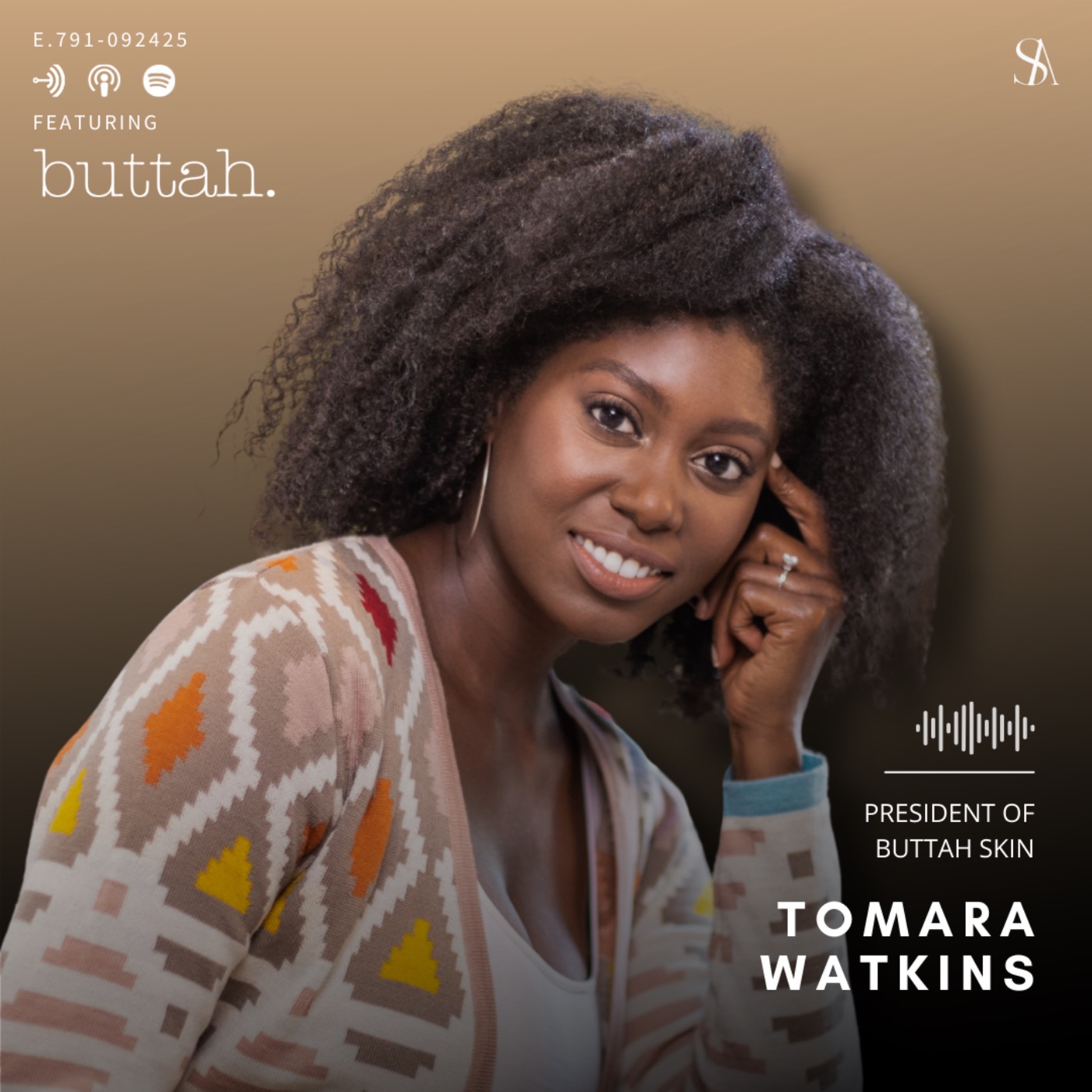
Loading summary
Transcript53 lines
- [00:02]
A
Hey, guys. Welcome back to Skin Anarchy. This is your host, Ekta. I'm very excited about the brand we're interviewing today, because I think there's very few brands out there that are really kind of approaching skin care with this inclusivity mindset of it's for everybody. They're targeting concerns that might be very specific to more melanated rich skin and also for all of us. Right. So I think that's very unique whenever I find a brand like that. So without further ado, and I introduce you guys to the president of Butter Skin, Tamara Watkins. Welcome. I'm so excited to host you.
- [00:34]
B
Thank you. Thank you for having me. I'm excited to be here too.
- [00:37]
A
Yeah, I'm excited to learn all about you. You have such an amazing background. It's very unique in terms of where you've worked, your experience. I'd love for you to walk us kind of down memory lane, if you don't mind, and, and tell us about, you know, what got you into the beauty industry. Like, what led you here with your career.
- [00:54]
B
So funny. Like, if we want to go all the way back.
- [00:58]
A
Yeah.
- [00:59]
B
When I was in high school, I used to spend a lot of time at the libraries, the public libraries in Tallahassee, Florida, panhandle area of Florida. And I remember stumbling upon this book by Kevin Aucoi, the makeup artist who has, you know, who unrecentately, unfortunately, he passed. But seeing the images in his books just really, just inspired me when it came to beauty. And so I went off to college, studied chemistry with the hopes of becoming a cosmetic formulator. That didn't happen. However, I started while I was in college, I started working for Mac and for Bobby Brown and just really thrust myself into the world of beauty. And after working as a makeup artist, it was just a. It was a. It was a grind. As a. A 20 something year old, I lived in D.C. most of the work was. Was in New York at the time. Like, if you wanted to do like magazine work, you know, fashion type of work, like, you had to go back and forth to New York. And that just kind of, it was a grind on me. And then I kind of realized, like, the makeup artists that are really making the money, you know, they typically, you know, they own brands or they have some ownership in brands. And so I set out to understand how to market myself really as a makeup artist to these agencies that were making all these hiring decisions. And I just stumbled into marketing and I had a really great boss who at the time digital marketing was still the wild, wild west and because he didn't want to be bothered, you know, with the digital space. And I was really interested in the Internet and how to market the business on the Internet. Like, I remember he just like, gave me a. Was it a Google Ads book for dummies? And he was like, here, read this book and figure out, you know, how we can increase, how we can get, like, on Google Ads. And so that experience. And I remember being a little frustrated at it because there was no, no guidebook, in a way. Like, he was my boss, but he didn't even know how to guide me other than here's some resources that you can leverage in how to do your job better. But fortunately for me, I'm the type of person like, once I'm interested in something, I'm just naturally curious. And I, I took that opportunity and just really went ten toes down into the world of digital marketing. So I started digital marketing for a magazine. Then from there I worked with some really cool brands. Like, I led the digital marketing for Bevel right before they were acquired by Procter and Gamble. I work with some pretty cool haircare brands, Hyperskin and now Butter Skin. I actually started with them as the digital marketing lead as a contractor about five years ago. And I just ran all the background digital marketing stuff. But I always had questions about, you know, every, every part of the business. Because with marketing, you need to know what drives the business, like, what levers, whether it's operationally or inventory wise or whether it's your direct marketing channels that you control, like, what is driving the business. And so that's how I ultimately became president of the brand, because I was just asking all the right questions. I was a business owner myself, so I understood, like, the pain points of business owners and founders. And when Dorian stepped away, who's actually the original founder of the brand, I was tapped to step into the role just because they're like, you've been running it, you know, for five years anyway, so you just, you know, step in and manage some additional channels, right?
- [04:31]
A
No, that's so fascinating to me that you bring up how you started in digital marketing, because I feel like, yeah, like now it's a whole different world. But I mean, that's. That's huge for you to step in and try to figure that out on your own. You know, in the beginning, that must have been really tough.
- [04:45]
B
Yeah, it. Well, it was. It was tough in that I didn't have anyone that I could directly reach out to because we were like, AI now, right? Like, there is no real Experts in AI right now, like there's people who have more experience using the tools, but even they are experts because it's changing so rapidly. So what you think, you know, today might not even be true in two months. So that's how it was back then, you know, like there were people who could, you know, help guide you just because maybe they've been using some of the tools longer. But digital marketing was changing so rapidly. There wasn't, there weren't a lot of people that I could reach out to and say, hey, can you help to guide me and mentor me? There were people in the business space. Right. But not specifically in the digital space. And you know, business is the same. You know, you're selling a service or a product so you could get people to guide you on the business, but just not on the specific tools that were being used.
- [05:42]
A
Yeah, no, I mean, that's, it's a lot to take on, I think, when you're entering any field. But I mean, especially, you know, I, when I look at social marketing now today, even especially for skin care, I feel like it's, it's still a huge learning curve. Right. Because I mean, everybody's got different needs and I feel like every time I go on to tick tock, especially like I see, you know, there's brands out there that are doing things in a way that's very cookie cutter and it doesn't resonate. So I mean, just navigating that world in general and trying to find a way to resonate with people, I mean, that's tough. That's all, all. I feel like that's always an uphill battle, you know, So I have a, a lot of respect for anyone from the marketing world because I can't imagine how difficult it is to build out a brand and then, you know, get it in front of people in a meaningful way. So that's very, very interesting.
- [06:26]
B
Thank you.
- [06:27]
A
Yeah. No, I want to learn more about obviously butter skin because I love the brand. I love that it stands for what it stands for in the space that we're in. And I'd love for you to speak about, I guess maybe the roots of the brand because I think, you know, for me as a consumer, when I'm shopping, I'm looking for brand, you know, obviously inclusive. But it's more than that, right? It's more, it's like they're solving problems that are maybe just not spoken about a lot. And I feel like this brand really does that. So can you tell us a little bit about just the origins of the brand. Like, where did it start? Like, what was the starting story for it?
- [07:00]
B
So Butter was started back in 2018. It was started by Dorian Renaud, who. He is an actor. He is an actor, and he actually. His father owned a barbershop in Beaumont, Texas. And so he grew up around seeing grooming practices. And he always says, you know, like, growing up in a barbershop, he could see how when a man got out of his father's chair after getting, you know, this complete grooming service, how it really helped to elevate his confidence. So he understood how important grooming and taking care of your skin and your personal appearance is to people. However, he also grew up having problematic skin challenges. Like, you know, he had acne and blemishes. And as a result of having acne and blemishes, most people of color tend to hyperpigment or get dark spots after the actual, like, inflammation has taken its course. And he would go to drugstores, and he just wouldn't see drugstores, department stores, and he wouldn't see, you know, people reflected on. On. On the ads that look like him and that looked like his mother's and his sisters and his friends. And so as he completely, like, immersed himself in the world of acting and modeling, you know, the pressure is. Was really high in that industry to always look amazing. Now, luckily, you know, you have talented makeup artists that can make your skin look great while you're on set, but when you go home, you have to wash the makeup off. And his challenge came from when he washed the makeup off. He did not like how his skin looked. And so he did a lot of the treatments, but nothing really worked. And in the black and, like, African communities, like, there's a. A miracle ingredient. I guess I'll call it. Call Shea Butterfly. And after having tried, you know, pretty much a lot of different treatments, he was in New York one day in Harlem. And if you've ever walked the streets of Harlem, like, there's. The commerce that's taking place in Harlem is just completely amazing. Even, you know, without brick and mortar stores. There's people on the street selling all type of things. And so he purchased some shea butter, and he was like, I've tried everything else. What else do I have to lose? And so he tried it, and it worked. And he paired that with vitamin C. And one day he happened to run into someone who owned a lab, and he was just telling them, you know, just really. Just dreaming out loud about what he wanted to do, which was bring a skincare brand to life for people of color that would help with the skincare challenges that he had recently learned how to solve by using pairing vitamin C and shea butter together. And so he was just, you know, it was his lucky day because they were able to like partner up and bring, put, bring butter to the market.
- [09:43]
A
That's so cool though that he really kind of went deep into what is going to actually work for my skin. Because I think a lot of times, and I've seen this happen quite a bit, you know, in the industry lately where when a brand is made for, I guess melanin rich skin or especially with something like hyperpigmentation, like I deal with hyperpigmentation myself, I know a lot of people do. And when it, when you have products geared towards that, they're not really going down to the root of like, okay, this is just skin that's more prone to hyperpigmentation. You know what I mean? So like that's where I feel like there's, we're missing the mark a lot in the industry where it's like it shouldn't be a afterthought, you know, it should be something that's really designed for the type of skin that's going to eventually experience that as a concern. So I like what you said where it's like, like he was seeing this right in his, in his own circle and he was seeing it in his own skin where he was like, now I need to design something that's going to be from the get go, you know, for this concern and it's going to target it from the beginning. That's, that's huge, I think, you know, for skin care line.
- [10:42]
B
Thank you. And we, we actually work with a dermatologist named Dr. Ron Bosley and I, I actually went to Howard University with him and he has a skincare clinic in down in Dallas, the Dallas Fort Worth area. And he was saying like as a dermatologist of color, like the number one skin issue that patients come in, you know, seeking solutions for is for hyperpigmentation and dark spots. The number one. So I agree with you in that, you know, you do need to formulate with those type of concerns in mind and not make them an afterthought and for, but like they're not an afterthought.
- [11:18]
A
Right? No, I mean that's so true though, because I don't know, I don't think I know many people that, that's not a concern now that I'm thinking about it through my own friends, family and like people I know. Like, that's like, hyperpigmentation is, like, at the very, very top of the list with skin concerns. And, you know, even now, when you look out into the space, there's not much out there. I mean, even the ingredients and the. The technologies, we're not really thinking about how can we prevent rather than, I guess, make it an afterthought. So that's pretty cool. Now, you know, I'll tell you. I'll tell you one thing. Where there's one product in the range that really stands out to me. I don't know if you like it as much as I do. The. The Tea tree and Aloe exfoliating scrub is absolutely amazing. Like, I use this religiously at this point. I would love to learn if you could tell us, like, a maybe the story behind this one. I know this is a really great product. I've seen it on social media, too. A lot of people rave about it.
- [12:11]
B
Yeah, so that was actually a brainchild of Dorian. He. Because he's a. He's a bald guy. And so, you know, in order to maintain that flawless bald look that he always. He's pretty much known for, you know, you want to make sure that you are exfoliating the skin, and so if you're shaving your head, you're also exfoliating the skin on your head. And so he'd been using some scrubs, but, you know, he wanted to really perfect, and so he went back and forth with our formulators to make sure that the final product was perfect. And it's funny that you said it, because my husband also loves that product, and I. I like to use that product when I'm wearing makeup. So after this interview, I'm gonna go and wash my face, because I didn't wake up like this, but I'm gonna go and wash my face. And that's always the first product that I use. And then I'll follow up with our whipped butter just to, like, break down the makeup even more. And then I use our gentle cleanser. But, yeah, it was. It's Dorian's brain job.
- [13:11]
A
Yeah, I know. It's amazing. I love it because I use it, like, at night and especially in the morning, if, you know, you need to go somewhere and, like, you know, do a quick makeup look and then get out the door kind of deal. Like, this is an amazing product. Like, it's really game changing in that way, because you can use it as, like, your nightly routine, and then you're good to go in the morning. So it's Absolutely brilliant. I mean, I think the whole ranges, though, honestly, like, there's not a lot of products that, you know, that I've seen or not a lot of brands I've seen where every single product, like, it kind of hits home. I know when I first tried, you guys have this beautiful eye cream applicator.
- [13:45]
B
I was like, this is amazing.
- [13:49]
A
That little machine is like, my favorite thing in the world, is literally on my nightstand. Like, I love it. When did you guys come up with that again?
- [13:58]
B
That's Dorian's brainchild. The guy is brilliant, you know, very intelligent. I don't even know, to be honest, how he came up with that. Yeah, I don't know, like, where his mind was, but I remember when he showed me the products, like the. The sterling silver line, and I was like, you know, what is that? Like, what, What? You know, he was just like, oh, this is gonna really help it to penetrate into the skin. But I like it in that. It's because, you know, the under eye area is very delicate, you know, so the amount of pressure that you use when you apply your under eye products, you. You really want to be mindful of it. And so that product, that tool, applies just the right amount of pressure, but it's also so relaxing. So you almost feel like you're having a little mini spa moment when you're applying your eye cream.
- [14:48]
A
Yes, that's exactly. I mean, you've described it perfectly. That's how I feel, because I'm like, this is, like my special routine. You know, it's just. It's just for me. And, you know, what's crazy is it made me think of. I don't know if you remember, like, few years ago, all the influencers were going crazy about using your ring finger to apply your eye cream. And I had a derm on. On the podcast, and I was like, can you please just debunk this for me? That we don't have to use our ring finger to apply the eye cream? And he was like, no, you don't, but you should probably have something that's going to help with the penetration. So it is actually very brilliant that he came up with this. You know, for all of us who don't want to, like, figure out which finger to be using when we're putting our eye cream on, it's very, very nice to have that. Yeah, no, I want to actually, I want to pick your brain a little bit, because this has been actually on my mind recently. I know there's been a lot of buzz in the media in the beauty media. Because a lot of brands have been kind of going through it right now, you know, especially from. I think from the marketing angle, too. Like, it's kind of disheartening to see. And I. I'm just curious, like, how do you guys, like, how do you approach staying, like, obviously relevant, but then also staying authentic when it comes to your marketing and, you know, kind of giving that out to your consumers? Like, how do you work with that in your brand DNA?
- [16:06]
B
So we start. I know this sounds a little cliche, but we really do keep the customer at our core, and we have customer Personas. So when we're coming up with any type of social campaigns or visuals, we always go, okay, which customer Persona would this resonate with? And if it won't resonate with any of them? Because I. It's funny because in my head, I talk to these people, so I go back and forth, and I'll say, okay, what would she say about this? What would he say about this? And if he. If the response, you know, in my. In my head is like, they say, oh, it's cheesy, then I say, no, it's cheesy. We need to make some alterations or just completely scrap it and go back to the. The drawing board. But also, I would say that Dorian had a. In terms of setting the visual in the soul of the brand, he was responsible for that because he was very much about flawless execution of the campaign. There was pretty much zero room for error when it came to that. So I know when I was putting things together for him, it had to be presented to reflect our customers and what resonates with them. And so he basically trained me in that way. And so that's how I think about it now. I'm always having this dialogue with our customers.
- [17:24]
A
Yeah, that makes a lot of sense, because I think, like I was telling you earlier, there's just too many campaigns I feel like nowadays that just missed the mark. I mean, for me, I can only speak for myself, you know, and I Sometimes, even though a brand might be, like, maybe culturally, for me, you could think, like, at first glance, sometimes the marketing won't land. And it just feels like they didn't think about me, you know, me as a customer. So, like, that's. That's why I'm wondering, because I really like the way you guys are. Have put yourself out there, and you continue to. Because it's. It's authentic, you know, it really resonates. And I think with that, also, I'm curious, like, how do you deal with the aspect of, like, I guess, you know, the cultural relevance too. Right. Because you're a brand that's made for melanated rich skin. You're addressing like a group of, you know, people that want to see themselves reflected in the skincare market. I mean, how do you stay true to that and stay true to the cultural aspect?
- [18:17]
B
Well, everyone on Butter's team is of the culture. Like, our team is pretty diverse. And even one of the things that I wanted to task our team with at the beginning of the year was how can we be even more inclusive? And so, like, for example, like, our creative director, Anna, she's of. She's Latina. And so it's just like, Ana, how can we lean more into the Latin community? We have other people on our team. Like, they're like, of Arabic background, so they're like, we have Egyptians. And then, like, I always try to stay. I just observe and I talk to people. So, for example, like, I feel like the brand is really, like, the roots is. Is deep in the black community and the African American community, but I wanted to expand that. So, for example, how do we celebrate other cultures? Like, for example, Eid. Yeah, there's black people that celebrate Eid, and there's other people of color that celebrate Eid. Like, my neighbors are from Sudan. And just even being going to a lot of their cultural events and their family events, like, I realized, like, hey, we're not as. We're not even as diverse and exclusive inclusive as we thought we were being. So how do we continue to inform our community that, hey, you can come and sit at this table. You're welcome here. We celebrate your culture too.
- [19:39]
A
Yeah, it's really great to hear you say that, because the time we're living in right now, I think everyone feels like. I don't know, it just feels like the world's trying to pull and tug a lot more than usual. And I feel like with inclusivity, I mean, I've had this own internal converse, this internal conversation with myself. Right. A lot with, like. It feels like people are looking at each other differently these days, you know, because everyone's trying to figure out, are you truly someone who believes in an inclusivity? Are you someone who doesn't? And I think there's been a lot of question marks. And so when you see brands being able to bring people together, I think that's really powerful, you know, because I've always seen beauty, like, as a consumer myself, like, you know, for me, beauty has always been that safe space where we don't think about politics and all the other crap that's always floating around. It's more like, no, you just. Either you love some products or you don't. You know, it's kind of like that. So I don't know. I think from that standpoint, it really does matter more right now than ever before, in my opinion, you know, to have that inclusivity built in to a brand.
- [20:42]
B
I agree. I agree. Beauty is supposed to be the safe space. It's supposed to be inviting to, you know, as many people that. That want to come and sit and hang out and bring positive energy.
- [20:53]
A
Yeah, I agree. You know, I'm just curious, what are some of the things that you guys go through? Like, maybe your. Your research, like, when you're trying to come up with, like, product. Right. What is some of the. The homework that you do before you launch something?
- [21:08]
B
Oh, man, this is. You know, it's funny. So you. I don't know if you're in my inbox, but, like, we're trying to launch this new product. Originally, this product was supposed to launch. Our board was pushing me to launch in March.
- [21:21]
A
Yeah.
- [21:21]
B
And I can't tell you what the product is, but I can give you, you know, some. I'll drop some. Some seeds here. But we were supposed to launch it in March just because seasonality. Seasonally, it was the best time to launch it. And as we were testing out the product, like, I tested on my friends, I have a group of customers that I test products out with as well. And then, like I said, our team is pretty diverse, so we have a variety of skin tones and backgrounds to get that POV from. And, you know, everyone was saying, like, it's not ready yet. It's not ready yet. And sometimes I can push, you know, too hard. But I also try to encourage my team. Hey, you have to keep me honest, make sure not. I'm not living in the land of the Lulu, you know, like, is this product ready? Is it not ready? Like, we were down to the wire because we. We had to continue to push the timeline back. And I was just like, okay, now we're getting into fall and this back to school. It doesn't make sense to launch this type of product in the fall because it's a summer product. And so it was just like, is this product ready? Yay. Or no? And it's just like, no. And so I had to go to the board, and that's a hard thing to do.
- [22:34]
A
Yeah.
- [22:35]
B
Go to the board and say, it's not ready. And here are the reasons why, however we can, you know, wait another couple of months and launch it, you know, at the top of the spring. It sucks because, you know, you do your revenue forecast based on new product development, but it's just not ready. And I don't feel comfortable launching a product that's just, it's not ready because it's going to do more harm than good. Like you have one chance really to resonate with, with customers. It's, it's not a comeback later. Like, you know, when you go to a restaurant or some business, you see that sign, it says come back at 3:00'. Clock. Like, that's not how customers work in today's world. It's like, exactly. Another product that works for me.
- [23:17]
A
No, exactly, that's. But you know what though? I appreciate that you did that though, because as a consumer, I can't tell you how many times and I saw a lot in makeup. I remember before I started the podcast, I'd see this all the time. You know how makeup brands always launch. Like the foundation is at the same time. It got 20 brands launching 20 different foundations. And it's just like as a consumer, like I always used to wonder, I'm like, well, I wonder what would happen if a brand just said, screw it, I'm not doing it at this time and I'm going to wait and I'm going to do it the right, you know, like just kind of like filling a need rather than this timeline. And I, you know, so I think as a consumer, it does hit when, if it's a good product, it doesn't really matter the time frame because if I need it, I need it, you know, and I'm going to keep buying it all year.
- [24:01]
B
So yeah, and if it's, if it's transformative, which I do believe this product is like you are going to want to purchase it because everyone's, you'll see the results. But yeah, it is, it is difficult to do and I think much most of that decision to bring products to market when they're probably not ready yet, I would say is layered it. One is that there are revenue obligations tied to that new product release. But secondly, a lot of brands go, okay, don't let perfect get in the way of done. And so I, that hits with me and I say that to my team all the time. However, you have one chance. I think a lot of brands just think, you know, they can launch it, get feedback and then iterate from there. But you know, if a product sucks and you launch it like it's just basically going to die a slow or maybe a quick death.
- [24:52]
A
Yeah. And also it's going to. It probably will miss the mark. Right. And not serve the purpose it was supposed to serve. I mean, there's so many good products. Like, like even now when I'm like exploring, like maybe on like Sephora's website or anywhere I shop, like, I'm always finding things that were launched like four years ago and I'm like, why didn't I hear about this? You know what I mean? Like, where was I when this launched? And. And you sometimes you find like some of the best products and it just makes you wonder like what was off, you know, when they launched? Because I never even heard about them. So. Yeah. But no, I really like you guys line. I think Butter is really doing something that is unique in the sense of you're not flooding the scene. You know, you're not like out here making like 50 SKUs that are doing the same thing over and over again. Every product it hits and it, it really does land with the consumers. And I've loved everything I've tried, you know, in the line. And I think there's a lot of people out there that can definitely relate to that. You know, if you've checked out the brand already, but you're doing it right. So keep doing what you're doing because it's definitely landing with us.
- [25:50]
B
Thank you. Thank you so much.
- [25:51]
A
Yeah, so I mean, if you, when you look into the future, I know you just gave us a glimpse into what's coming up, but, you know, are there any, like, maybe new categories that you guys are exploring or anything new that you're kind of venturing into in the future?
- [26:05]
B
Yes, so we are venturing more. We're going deeper into body, but it's not what you think. It's not a lotion or a body wash. So yeah, we're going deeper into body, though.
- [26:18]
A
Oh, wow, that's really exciting. I'm thinking fragrance.
- [26:21]
B
No, not fragrance.
- [26:22]
A
Oh, wow. Okay, now see, now you got me thinking because I'm going to be thinking about this now.
- [26:27]
B
Well, actually we'll send it to you, like once we get. I want to do one more round of. I just got the most recent round and I tried it out. I'm actually down in Atlanta. Atlanta. And I forgot it in Atlanta because I really wanted to test it out in this southern Georgia heat and humidity. Left it. I mean, it's. I live in a D.C. area, so it's pretty hot and humid there as well. But I wanted to just Kind of do one more round of, like, out with my son on a hot summer, you know, day. As many days we have left in the summer to see, like, how does this product hold up, up, and if it holds up, then I'm gonna greenlight it. And then, you know, we basically shot all the marketing assets for it already because we thought we were gonna launch it sooner. But we'll send you once it gets closer to final. I would love to get your feedback on it.
- [27:14]
A
Yeah, yeah, it sounds really exciting. I'm super excited. That sounds wonderful. And, you know, I really love the line and I'm excited to see whatever you guys come out with. But, you know, as. As a final question, I do want to get your advice because I think you have so much wisdom from all of the experiences you've had in your career and what you told us in the beginning with, like, having to figure things out, you know, and like, kind of build your own, your space. And, you know, I'd love for you to give advice to the new generation, because I know a lot of people right now in Gen Z's space, they're kind of, I don't know, I don't want to say struggling, but I think they're trying to find their. Themselves in that professional way, you know, and, like, figure out what is that balance that you should have between showing up and then what kind of mindset to be successful. So any words of wisdom you could offer for them when it comes to professionalism or just paving your way in the beauty space or any kind of.
- [28:07]
B
Space, I guess with business, I would say too. And this also sounds cliche, but I'm gonna elaborate. Trust the process. When you're younger, like, that's the time to, like, be curious and learn as much as you can. Because if. If you constantly make strategic moves and. And know that everything you're lear doing professionally, it. You should be developing some type of transferable skills. So, for example, when I was in college, I worked in retail. Like, I worked at Mac. And I remember thinking, you know, like, I'm in college. This job is temporary. Like, I'm. This is just a stepping stone. And to be honest, I don't even know if I was thinking of it as a stepping stone when I was in it, but now that I, you know, can see the. The forest from the trees, I see that that was a stepping stone for me when it comes to now being president of Butter Running, you know, our retail. So I know I can speak from experience of how to speak to customers. We have a Field rep team that we've deployed across different Ulta location, ulta, Macy's and JCPenney locations. And so now, like, I know how to train our field team in order to sell. So that's what I mean. Like, just know that to trust the process, like, like, but also make strategic moves for where you want to go.
- [29:26]
A
That makes a lot of sense. I feel like that's also. It plays into, I think, hard work too, because I've seen a lot of kids nowadays, like in their 20s, and they're not really. I don't want to say they don't want to work hard. And I don't know if you've had this experience, but I. I get a lot of interns for the podcast and I'm just always like, you guys, you need to, like, put in the work, you know, like, you need to put in the work.
- [29:47]
B
It's not going to, like, run. You know, everyone wants to be CEO, and I was no exception either. Like, I remember, tell my friends, when I was in my 20s, I think I was like 23, 24, and I remember telling my friends I was like, you know, marketing manager at this company, and I was like, man, if the CEO can just get out of my way so I can, like, run it.
- [30:07]
A
Yeah.
- [30:09]
B
How arrogant for me to think, you know, with maybe one or two years of experience that I had the breadth of knowledge to run a multimillion dollar company. Now I do. But at 22, I didn't. So it was just like, yeah, you do need to put in the work. You need to be extremely curious. I find so many people aren't curious beyond the job that they do. And it's like, no, like, you need to be curious about. Go and talk to the person in finance. Go and talk to the person in operations. Go and talk to the person in customer service. Like, you need to know how all the different levers that run a business, that contribute to the business.
- [30:48]
A
Yeah, no, I love that. I love that. And that's such good advice because I think there's a lot of shyness in this generation, you know what I mean, in terms of that. So that's really, really, like truly gold nuggets right there. So, no, I. Thank you so much. This has been such a fun interview and I love butter and I love what you guys are doing. I can't wait to try the new product. I'm super excited to check it out.
- [31:07]
B
Yeah, me too. Thank you for having me. This is so great. I love what you're doing too.
- [31:11]
A
Thank you so much.
- [31:12]
B
Have a great day.
- [31:14]
A
You too. Hey guys. So I hope you love that episode. Please make sure to hit subscribe if you're tuning in to us on any podcast platform. We are available on so many different platforms, so wherever it is that you're tuning in, just go, hit subscribe. You'll be immediately notified when we publish new episodes. This way you're able to tune in to amazing insights from experts, brand founders, industry leaders, authors, all the wonderful people that we host. And that's very important for me because I love to hear from you guys and really understand what you love and what you want to hear more of. Also, make sure to give us a follow on all of our social media outlets. We're available on Instagram, TikTok X, you name it, we're there. We also have a blog on Medium, so if you're a reader and you love Medium blogs, check us out on Medium. We publish some really great articles on there that do deeper dives than just what's available on the podcast, and it's really a great place for all of you science geeks out there that want to learn a little bit more. We go above and beyond with our research and making sure we're bringing you information that you usually probably won't hear about in other outlets. So check us out, leave us a comment, leave us a review, and we'll be back next time with another episode. Thank you.