← Skin Anarchy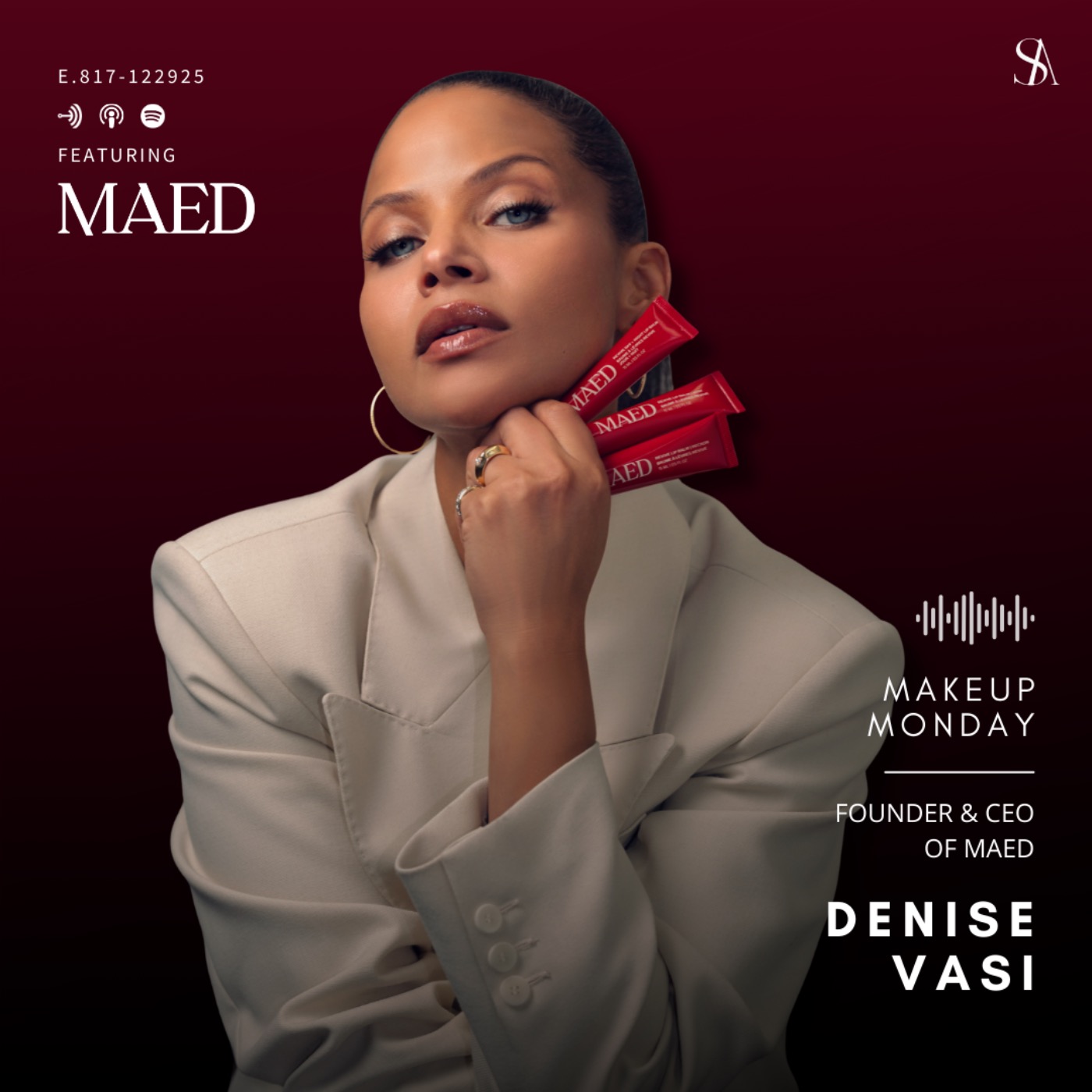
Loading summary
Transcript45 lines
- [00:02]
A
Hey, guys. Welcome back to skim Anarchy.
- [00:04]
B
This is Ekta.
- [00:05]
A
I'm so excited about her today because we have such a special guest with us. I've been trying to get her on the podcast for, I think, three or four years now. So I'm very excited that we're finally doing this. She is the creative genius behind the brand maid. She has had such a phenomenal career in the beauty industry, and I am just so excited to be hosting her. So please, without further ado, please welcome Denise Vasi. Welcome, Denise. I'm so honored to host you.
- [00:27]
C
That was such a sweet intro. I'm so happy to be here. I'm so glad we finally got to do this.
- [00:31]
A
Me too. I'm really excited, and I honestly, when I asked you to come on, I just want to learn more about you. I love watching you on socials and all the amazing progress you've made with just made and the brand and all the beautiful things. So if you could walk us down memory lane, tell us, where did your journey begin with, like, the beauty industry and everything, you know?
- [00:50]
C
Absolutely. Thank you. I started in beauty as a model very young. I was signed by Eileen Ford to Ford Models. At some point, they realized I wasn't going to get Runway height, and they pivoted my career into beauty. I grew up on set with some of the most incredible glam artists of our time. I did many beauty campaigns, from Bobby Brown to Kevin o'. Coins. I was touched by many legends and learned a lot of what I know and how I formulate through those years on set. Also, I grew up with a grandmother who just absolutely dies for beauty. She was an esthetician who left that career to raise her family. I spent a lot of my time in the kitchen with her, either cooking dinner or doing facials and running skincare routines. From there, I went on to be an actress. I got married and my first child and decided to stay home with my daughter. And I launched Made Co, which was kind of editorial plus blog platform. I had a byline of myself that, you know, I spoke and wrote about, wrote to, and then my writers, who also, you know, had their own bylines. And we spoke about everything from clean living, health and wellness, intentional living. I focused on clean beauty and motherhood. All that time, I was growing a community on Soulful. This was before we addressed social media as a community, but I was talking to mostly women all the time, just a little bit about everything, like why I chose certain products over others or why I was eating a certain way or if there was a New exercise craze, but all played into the lifestyle I was curating for our community. I've always loved beauty. I think growing up as a little girl, you're like, wow, I'd love to have a beauty brand, but how is it possible, possible now? We live in a world where information is at our fingertips and you can reach out to anyone and ask for advice, understand how things are made so much easier than we did before. Not that it makes it any easier, but at least the information is more accessible. In 2019, I just had my son and I went into my agency that was managing my career at the time, and I said, this is what I want to do. April, who was the head of my team at the time, was like, okay, let's do it. And so that kind of was the start of a very long journey to developing the ritual and the collection that you see now at Sephora.
- [03:20]
A
That's so cool. And I love that you started from like this genuine editorial place of this, like, community building. Because I feel like now, and I don't know if you agree with me, but I look at this on social media where there's maybe a space blowing up in the skincare and beauty industry and somebody just hops on that bandwagon and is like, I'm going to make a product because everybody's buying this right now. It irks me so much as a consumer. So when I see brands like, like your brand story, like, that really resonates because that's where I feel like products become like staples versus just another thing that you're buying, you know? So what are your thoughts on that? Like, what are your thoughts on this? Like, super high paced, like ever evolving beauty industry that I feel like every day we have like 50 brands that are coming out.
- [04:06]
C
Constant newness. Yeah, for some brands it works. I'm more of the turtle wins the race. People typically ask me, why lip? Well, I always wore a red lip. I was very well known for wearing this bold, matte liquid lipstick red lip that I was mixing that really was the beginning into formulating the whole care system. And for me, I go, what is true? Can I solve a problem that I'm experiencing? When I bring that problem to my community, do they also feel like they experience it? It's less about trend and newness and more about building out core products and what we can create better. Can we make this better? Can we make something innovative and new versus chasing the trend? Because as we know, trends go in and out and evergreen lasts forever. Right. And I always love look at it as functionality. Is this a functional product that people can use at any point in time, at any age of their lifespan? It's not the trajectory we choose to take, but we know it has been successful for some brands, so, you know, you've got to respect their strategy. We just choose to. We just choose to formulate different. You know, as you know, we're now at Sephora, and so my conversation with them is always like, okay, we don't want to do something that someone else already does well. If that brand makes that product really well and there's no innovation we can bring to that category, then let's let that brand shine and do something different. It's only worth the investment as a brand and the time and energy it takes to introduce it to the consumer if we're actually making something better, changing or innovating.
- [05:49]
A
Yeah, I really love everything you said on so many different fronts, but because when I look at what you guys are doing, the red lip, for example, let's talk about that a little bit more, because I'm obsessed with it. And I think for a long time, so many women couldn't find a red lipstick. I remember when Mac had Ruby Woo and everybody was obsessed. We were struggling to find a shade that you would think has been around for decades. You know, women in their 50s, in the 50s, 60s, like, forever, have worn a red lip. But for some reason, the beauty industry kept missing that mark. If you have a darker skin tone you can't wear, it doesn't sit well, you know. So what was your approach when you were coming out with the red shade and kind of like recreating this for the modern world? Where was that brainstorming for you that took place to bring this to life?
- [06:37]
C
Great question. First and foremost, I would say my biggest concern was comfortable wear, because I think you need to start there, making sure we could reach a formula that felt comfortable on the lip. Because we are in the liquidity matte, liquid lipstick format, which can be intimidating for a lot of people and looking at what we consider clean formulation. So that's first and foremost where it started, nailing down that formula and then testing, testing, testing. Besides that, we had a very extensive PD team. I think we had every shade of skin tone we had, every person on our team had a different hair color, a lip color, really looking also to liptone color, because that is something that I also think needs to be considered as a lip brand. But then going one step further, going into specifically looking for students that were in beauty school who understood product and understood color theory and bringing them into the testing process and AB testing formulas and undertones. And so we really spent a long time. My PD team wanted to fire me. No one takes this long and live. And I was like, that's my point. That's the void that I was trying to fill because I started this journey before we had to live. Boom. Make is so interesting because I saw it happening before my eyes and going, oh, my gosh. Like, this is what I've been talking about while I've been working on these formulas for two years. And you can imagine that for a moment, that gets frightening. And then you realize you always have your point of difference. You're talking to this person this way, and other brands are doing it differently. But it was very interesting to see the lip boom happen. While I was rejecting formula after formula, because I really looked at each formula and said, if I have to sit on 20,000 tubes for the rest of my life, I'm going to stand by this formula. I would not budge. Lots of aggressive testing and taking in feedback and looking at every skin tone. My family is very mixed. And so I look at it and go, if I'm going to make something, it's got to look good on Grandma, mom, my cousins. It was really important to me that we knocked out a shade that everyone could put on and feel confident in.
- [09:05]
A
Yeah. No, I feel like you really did nail it, though. Like, I just want to say that you really did, because when I first tried the product, I was very skeptical because red never looks right on me. I don't know what it is. I can't get it to look right, and I always pick the wrong shade. When I tried, I was just blown away. She really put thought into this, and she really thought about, like, what actually makes you feel beautiful when you have a red lip. You know, that's like a whole conversation. Because there are so many makeup artists nowadays, YouTube artists or professional makeup artists, and sometimes they're dodging the red lip because it's a hard topic and not one size fits all. When you're able to create a product that is universal and is fundamentally inclusive, hats off to you because it's amazing. I love what you did. Thank you.
- [09:47]
C
That means a lot to me.
- [09:48]
A
I really want to talk about this in the sense of, where do you feel like? Because I know right now inclusivity is really buzzing. You know what I mean? I feel like we kind of shifted the last five years. I think five years ago, we were talking about inclusivity, but it wasn't in your face. Now it's like everybody's talking about inclusivity. What are your thoughts on that? What is truly the definition of inclusivity for you? What does that mean?
- [10:11]
C
Yeah, great question. You're right. We were talking about it for too long. Then we've seen some action, and some of it has been really genuine because we're in the business of making and selling products. Some of it, unfortunately, is performative. True inclusivity comes from a very intentional and genuine space. It is not only putting every shade of human in your beauty campaign or your fashion campaign, but it is solving for those problems. It is formulating for those problems. It is testing for those individuals. When it comes to lips, we've consistently seen products that didn't focus on people of colors. Lips, right. There are just different concerns. The same way we have different hair textures. Right. Your hair texture and my hair texture. We're going to have different hair concerns. We need brands to solve for those. We don't just need a brand to put us both in a campaign and say, we're speaking to her and speaking to her. We need that actually in formulation. For me, I'm very mixed, taking that into consideration from my own life experiences in my own pov. And so I look at it and go, okay, everything about this needs to be inclusive. Not only our shade range, but also our applicators. How do I feel when I am using a lip product and the applicator is smaller than my lip size? I have a fuller lip. So imagine individuals who have even larger, fuller lips than mine. Right. They're not being considered. So when you look at our applicators and the way our liquid pigment wraps the lip, it holds the full size of the lips, you get that one swipe coverage, which makes it so easy. When you look at our revive balm, we have a very different applicator that is full enough to cover the entire lip surface. So that, for me, is how I approach inclusivity. It's not just what you see in a marketing campaign or the creators that we bring on to make content creators. It is in our formulas, solving the problems that all people have, specifically starting with people of color. Because in the lip category, those problems were not being formulated to solve for. And then it is through line all the way to our packaging. Real inclusivity is A to Z, not just what's in front of the camera, not just what's in the caption or the tagline. It's genuine, it's intentional, and it starts at the beginning and goes through the entire scope of what it takes to bring a product to market.
- [12:57]
A
Absolutely. I could not agree more with you. And beautifully said. I think that is truly lessons a lot of entrepreneurs can learn from. It's one thing to create products in a category, but it's another thing to really think about who is this category serving and what are all of those needs and how do we really figure that out in one model? That's really hard to do. I can see why you spent so much time in the R and D phase trying to nail this down. Now I want to talk to you about. Obviously, skin care is big here, right? Because the lip category has been ignored in skin care. It still is in a lot of ways. And there's a specific need medically and physiologically for the lips. What was some of that research for you when you were looking into the health of the lips and trying to incorporate that into your products?
- [13:37]
C
For me, like you said, it is about the health of lips, right. I think for so long we've been sold what was going to give our lips comfort. Whether that's comfort in a feeling or aesthetic comfort, what's going to make me look cute or what's going to immediately take care of a dry lip. But the reality is you need something deeper to care for the lips. There is research and information to know about the lips. The lips don't have oil glands. They cannot self produce oil to rehydrate themselves. Right. And so hydration and moisturization being two different things. When you put something that feels cushiony or comforting on the lip, you might have that immediate good feeling. But are you actually treating the problem? Right. Is there a micro tear in the lip area that needs to be restored? The reason the formulas took so long was focusing on the lip barrier and what would make it resilient over time. Yes, our products give you that immediate great feeling. Especially let's say our serum, right? That's our clinically backed formula. And so you get that instant surge of hydration which makes you feel good. But with extended use regularly, you actually retain more hydration and moisture to the lip. So you're in a better place than when you started. So it's the long term benefit. For me it was like, how do we make products that actually help the lip long term? How do we help products that go beyond just the esthetic? How do we make products that don't just live on top of the lip, but deeply penetrate and help the lip become stronger? I remember this conversation about how many times people will go through a tube and how much you want them to keep reapplying. I said nothing would drive me more insane. This really came out of COVID and all the zooms right. Where I would put something on, and you're on a zoom. You get thirsty, sip of your water, usually my coffee. Right. And you immediately feel like the product is gone. It's a professional zoom. I don't feel comfortable to pull out a lip hydrator and put it on. I want something that when you take that drink of water, you actually still have your product. I want something where I put it on at night because it's supposed to be a night mask, and when I wake up, it's still there. So a lot of what I was looking for were issues that I felt like I was experiencing and that we could do better. But really, we start at the barrier and look at repairing the barrier and restoring the barrier.
- [16:22]
A
I love that because, honestly, for so many years, lip care care was literally just chapstick. And it was like chapstick that.
- [16:31]
C
Because when I originally started to reach out to different teams, trying to understand the business, how would I do this? Who would I bring on to help me? You probably know, if not, you could go to these kind of companies that do everything for you to create product, and you slap your name on things. Yeah. And I was like, that's absolutely not what I want to do. However, when I first started the process, people literally said to me, well, it's like, chapstick. Why would anybody need anything more than a $6 ChapStick? And I'm like, ChapStick's not what it is. Versus elevated. This is self care. This is a moment. This is ritual. But also, there's no formulation there. Right. So it's funny now looking back, I mean, this was 2019 when I started having those meetings, I think looking back and going, can you give me the stats on what the lip category is now? To watch it boom and explode like that? But, yeah, people didn't believe it, and no one was formulating for that. I mean, what are some of your, like.
- [17:34]
A
Honestly, for me, lip has been the most annoying when it comes to skin care. I could never use chapstick, because every time I'd use it, my lips were more chapped than I think I've ever experienced in my life. You know, like, I had problems. I never had problems before, but then I used chemicals, Chapstick, and I was like, cracked lips. You know, corners of my mouth were. And then, not to mention, as you age, you get those fine lines. And so Your vermilion border, like, you start getting that leaking of the lipstick or the lip color into these lines. So all of that is like this aging process that takes place. And I, for the longest time, I know for me as a consumer, I couldn't find products that were truly barrier supportive for lip care. They weren't even addressing a concern. I don't even think there was something on the label or the packaging that said, hey, this is going to help with trans epidermal water loss or whatever. There was nothing there. And that's why I asked you, because I was like, it's just been ignored. It's like we don't even talk about lip care. And it's absolutely fundamental, you know. So, yeah, I want to ask you though, because I feel like you've created a line that is so interesting because you're combining both philosophies, right? Like you're giving us the colored product, you're giving us the cosmetics, but you're giving us actual nourishing skin care benefits. How is that for you when it comes to like the marketing or the messaging around this? Because I know right now on social media a lot of people are talking about, I don't know if I believe in makeup infused with skincare. I don't know if I believe. There's a lot of conversations. What is your take on that?
- [19:02]
C
Good question. I would say we differ because we are really rooted in the mission of care before color. We have our ritual red, which is our signature lip pigment. In order to wear a bold, beautiful color, you need to have taken care of your lips because there's nothing worse than a red lip, whether it's a bullet or a liquid formula, then red untapped or, or, you know, flaky lips. So it's undeniably necessary. When I looked at the market, there was no start to finish and no ritual. There was no routine that could build upon. Right. So it was clear to me that we could interject in this space. We always start with care being the foundation. Everything about me is about bridging self care with self expression. Beautiful, bold, colorful cosmetics is where you get to be self expressive. You get to try different things. You get to, you know, focus on your lip or focus on your eye through color. At the core of that is, and this is something I've learned from being on set with amazing glam artists, especially when I was modeling in the 90s, the consumer never saw the final beautiful cosmetic beauty campaign, but didn't know that. We sat in the chair for 45 minutes the makeup artists hydrated the face. Some gave manual face stimulation massages, polished your lips, they put on all these skincare ingredients to the face before applying color. And so it was at that time, it wasn't about being infused. It was these are separate steps, and you take them so that you can actually have this beautiful final appearance of your color. Your makeup is always going to lay better if you care for your skin, including your lips. That is our approach. It's always care before color, and we bridge self care with self expression. When I take time for myself, whether it's my five minute lip care ritual, yoga class, or cardio striptease class, I go out into the world more confident, I am more rooted. And so Maid really stands to bring those dualities together for our community and consumers, both from a product and emotional stance.
- [21:23]
A
I love that. I love that a lot. And I really like what you said about the artistry when you're actually behind the scenes in the professional setting, how much goes into that? I think that's the part where consumers. We don't really see that. We don't know that there are so many steps involved, whether it's makeup application or any kind of. There's a whole thing that's really interesting that you brought that up. I want to talk to you about the cultural significance of a red lip, because I hate that we don't talk about it. I remember being young and there were women I really looked up to, and they always had this beautiful red lip, and it was so powerful and it's stunning on them. I remember as a little girl looking at that and being like, I love that I'm gonna wear that one day when I'm allowed to wear makeup. What's your take on the cultural side of what a red lip means?
- [22:08]
C
You literally give me goosebumps when you say that. The red lip is so powerful and has been in our. Even our American culture has been the statement for so many different, different movements. Especially for women, it's been very empowering. We've been able to take ownership of it. It's sometimes been our shield. It's like, been our veil in moments when we needed to stand up. Red is a very powerful color. There's something in almost everyone's past where they remember that woman in their family putting on that red lip and how all of a sudden her personality or confidence shifted. And for me personally, it is always been a statement of power. I'm in this room, I own this space. When you are in my presence, know that I am confident even in the moments when I wasn't. So many times it's been my secret weapon to feeling that. And I think culturally, we've seen that, especially in the Latina culture. You may have seen that I had the iconic Latina collaboration for Hispanic Heritage Month. This is something that women put on, and it was proof of their power. It was, I am here. Look at me. I deserve to be seen. Even moments where I might feel overwhelmed or vulnerable, I have a little piece of armor.
- [23:36]
A
I love that. I love how you explain that. It's so beautiful. Because makeup and I've had kind of a bone to pick with the makeup industry lately. I feel like we've kind of shamed what makeup can do for women and what it can really bring. Like, there's a lot of times where I see if someone is trying a more bold lip or they're trying that, like, that whole thing that's going to give them that confidence. Society likes to break that down. And that's also a part of why I wanted you to speak on this topic. Specifically, the red lip, like, you just beautifully articulated. It is. It's been like an armor for women for so many decades and across cultures. I'm Indian. I saw this in my culture growing up. I was raised by a lot of amazing black women in my life. That taught me a lot of what I know now. I would see them wearing a red lip, and that was their confidence statement. You know, everybody, across race, across cultures. This is where makeup transforms from cosmetics to a tool that women have for our own self, something for us. I just love the messaging of that. I really feel like we need to hone in on that and focus on what are the psychological benefits of feeling like you do have something that you can put on. It's going to give you that pep in your step. At the end of the day, if you're walking into a meeting or whatever you're doing, that's huge.
- [24:54]
C
Red lipstick has been on the front lines of so many protests, so many civil movements, so many. You know, it is really a cultural statement. I think why people call it out is because it makes people feel uncomfortable.
- [25:09]
A
Yes.
- [25:10]
C
It stands for something, and it makes you look at somebody out, like it makes that person stand out. And not everybody's comfortable with that. And so, unfortunately, as humans, some people who haven't evolved and done the work, when they're uncomfortable, instead of sitting with themselves, it's easier to critique others, unfortunately.
- [25:30]
A
Yeah, I absolutely agree with you 100%. I think it's really cool to see that we've carried certain things over. I think there are just staples, especially for women. Obviously, everyone enjoys makeup, but as a woman, I feel like there are things in our arsenal that should never be messed with. Leave our red lipstick alone, you know what I mean? Leave those little tools alone that we rely on day in and day out. I feel like social media needs to still focus on that because there's a lot of shaming out here.
- [25:56]
C
Room for that.
- [25:57]
A
I never properly congratulated you, by the way, for Sephora.
- [26:00]
C
That's huge.
- [26:00]
A
Congratulations for that. Well deserved. How's that been for you in terms of your business strategy and growing the brand?
- [26:06]
C
Yeah, well, you know, it's been overwhelming.
- [26:10]
A
I bet.
- [26:10]
C
I bet in all the best possible ways. Thank you so much for seeing that. It has been literally a dream come true. I remember the first Sephora to open in Soho and walking in and being like, it'd be so cool to have something here, you know, like to have product here. What is this? You know, we didn't even know that idea of going from when you went with your grandmother to Macy's, let's say, and buying cosmetics into a concept like Sephora. So it was foreign. And then as I grew up, that changed to, one day I'm gonna have something here, you know, so it's literally been a true dream come true. I am a self funded business, so we have a small team, so it is indeed a lot of work. There's a lot of grit and heart that we put into our partnership with Sephora. But honestly, we have the best team on the other side. I attribute our success to their partnership as well. There's a lot of learning lessons. I mean, they have a glossary of acronyms that you're literally in meetings like, hold on, pick that up. What does that mean? Got it. Fsci, you know, they're a huge organization with their. With that's fully running and you're jumping in. I'm learning every single day. But I'm so grateful for their transparency and availability. The team is always ready to jump on a call and help me work through something if I'm not fully understanding. I am so grateful to them and to the Accelerate program. I went through Sephora Accelerate Program. I completed that in 2024 and I think that was a great learning lesson. So if anybody who's listening has a brand and their goal is to be at Sephora, completing the program doesn't guarantee entry into the retailer. However, I don't think there's any other way to learn what it really will Take without this accelerator, offer the advice of anybody who wants to be at Sephora to apply for that program. It's literally like your MBA at Sephora. As a retailer, we've been received so well by their customer. I think there's lots of learning lessons. The way we speak to our community, which I already had in place, is different than how we educate their consumer because of the way that they've been educated by the brands because they're seeing so many brands at once. Everything is on a learning experience. Honestly, it's been super successful so far.
- [28:43]
A
I'm so glad. That's awesome. I'm just so excited that you're in Sephora and that you're available. The accessibility component alone is huge and I feel like everyone needs to get their hands on maid and try the products themselves. They're absolutely stunning products. For anyone listening out there, if you guys love genuinely good lip care, this is a really great brand. So I really urge everybody to check it out. Denise, I want to get your words of wisdom for a lot of the people that tune in because we have a really great audience of budding entrepreneurs. Maybe they don't really know how to navigate their space or any advice that you can offer that would help someone who wants to take this journey, make something for themselves, create a brand, anything you can offer.
- [29:23]
C
Yeah, I've got a couple of things I think the, the 101 of it is definitely don't be afraid to reach out and ask people for help. This was something I had to learn from for myself just because that's something that's personally hard for me to do. But the more I reached out to others, other founders looking for, just looking for advice, you'll be surprised at how many people actually want to help you and actually want to guide you in a way that means you won't make the mistakes that they did. So don't be afraid to reach out to people. And the age old statement of there is no stupid question is the truth. I would just say put your head down and do the work. People did not know what I was working on for years. You would see that she must be really busy. She's on social. Because I started taking meetings. You know, I was in places, I was researching, I was testing things, I was traveling to, you know, for different aspects of the business. I didn't talk about it until the accelerate program, until I had something really concrete to put in front of everybody. And I think that there is this beautiful time in between, like building in front of everyone, but also Making people wait too long. So if I had started talking about it two years earlier, people would have been like, you've been talking about this for two years, girl. When is it going to come? So put your head down, do the work. Keep it close, keep it tight. Not necessarily to be secretive, but so that you can work in a silo where you're only putting the options in front of the people who you trust, versus everybody's opinion. There's something about too many chefs in the kitchen that I really believe in. And there's an aspect that we really bring the community in. We put shades in front of them and say, what do you like? What do you don't like? But that's already based on a formula that we stand by. And there is no shortcut to doing the work. If you want to create something great, something that's going to last, something that's going to be different, and that's really what you need now. Especially in the beauty space, you need differentiated, whether that's your shade tone, your textures, your innovation. You really have to put the work and do the research. Don't cut it short, because you feel like you need to get there faster. I was in development and saw what was happening for my counterparts in this space and the boom in lip care. I could have made a choice to go to market with a formula I was not happy with. But we had already been in development for a year, and my PD team, the head of PD for me, came and said, you have a choice. You can rush to meet this boom, or you scrap a year. We don't lose everything because you have some learnings, but we start again, and we take what we've learned elsewhere for development. It was a hard decision because you get nervous. You think you're going to miss the moment, but the reality is, if you're making something good, you're not going to miss the moment. You're not. It's gonna be the right time if you're gonna have something that you can fully stand by. And so I chose to scrap the first year of development and start again. And even though everyone wanted to kill me at the moment, every single person on that team has come back to me and said, I'm so glad we did that, because what you have is different and special. I can wholeheartedly stand by. And no one can take away doing the work, putting the time, doing the research. Don't rush for anyone else's timeline. You come out with something when you feel good about it, when it feels good in your heart. If I need to live with 40,000 tubes of lip products for the rest of my life, I can stand by them.
- [33:17]
A
I love that. I love everything you said. Honestly, my favorite part of what you just said is putting in the work. That is my favorite, because I feel like that's not said enough. I feel like we don't put that out there enough to. For people, especially the younger generation, the women in their early 20s, like, the idea of, like, hard work isn't really relayed as much as it was. I remember growing up, we were like, people shove that down our throat. Like, you have to work hard for everything that you get in life. And, like, I feel like nowadays it's just not said enough. So I thank you for saying that and putting that out there.
- [33:49]
C
It's also not shown enough. I think also we have glamorized what. What it is to be a founder and what it is to bring any idea into fruition. It seems quick. You know, I was listening to Amy Liu, who's the founder of Tower 28, that she was saying people are like, oh, what is it? To have this overnight sensation, you know, with her business? And she's like, overnight? We've been building this business for six years. I've been in the beauty business for 10. But it's like, you don't see. See it. You have Instagram one day, and even for someone like me, you're like, oh, she has a brand. But you didn't see. Or what you still don't see is I'm up 18, 20 hours a day working because of my children. You know, go to sleep for a couple hours and then wake up to speak to Asia, and then go back to sleep for a couple hours and wake up to speak to Italy. And then part of my team's in New York and part of my team's in la. You don't see the late nights struggling. You can't figure out an Excel sheet will drive me crazy. The things that are not so glamorous, you don't always see. And I think social media has diminished the idea of what hard work is because it just makes things look instant. I grew up like you, I think, with parents who were like, you've got to put in the work and be ready to have an amazing answer if somebody turns around to you and asks, do something in that room. And you always gotta be prepared.
- [35:16]
A
Absolutely. And also, like, plan B, you know, whatever that is. Like, another, like, no one talks about that either. You gotta have your plan B. And it doesn't always have to deviate from plan A. But you gotta have something to back up. So, yeah, it's just really good career advice, what you're sharing. No matter what industry you're in and no matter what your path is, you can't get around hard work. Exactly what you said about social media. People are putting in 15 years before they even get on social media to showcase their product or any part of their life, and then it feels like it's all together, but it's not. I completely agree with everything you said.
- [35:50]
C
Yeah.
- [35:50]
A
Denise, thank you so much for coming on the show. I'm a huge fan of what you're building. I feel like the world needs brands that are more thoughtful, especially with makeup. My personal relationship with makeup. I have my products. These are my tried and trues. You cannot pry them out of my cold, dead hands. You know, that's what I rely on. When you make something like that, which you clearly have, like, that's where it's like, it's going to resonate for years and years and years to come. Huge hats off to you for everything you've built.
- [36:19]
C
Thank you so much for saying I'm such a fan of you and the POD listened for so long and so to hear that from you means so much to me. Thank you so much.
- [36:29]
A
Thank you so much. That's so sweet. And everyone, for everyone tuning in, please scroll down wherever you're tuning in right now. Spotify, Apple, doesn't matter. Go to the show notes. The link for maid is right there. Click on the link, shop the brand. I promise you're going to fall in love with it. Thank you so much for tuning in.
- [36:46]
B
Hey guys, so I hope you love that episode. Please make sure to hit subscribe if you're tuning in to us on any podcast platform. We are available on so many different platforms, so wherever it is that you're tuning in, just go hit subscribe. You will be immediately notified when we publish new episodes. This, this way you're able to tune in to amazing insights from experts, brand founders, industry leaders, authors, all the wonderful people that we host. And that's very important for me because I love to hear from you guys and really understand what you love and what you want to hear more of. Also make sure to give us a follow on all of our social media outlets. We're available on Instagram, TikTok X, you name it, we're there. We also have a blog on Medium. So if you you're a reader and you love Medium blogs, check us out on Medium. We publish some really great articles on there that do deeper dives than just what's available on the podcast. And it's really a great place for all of you science geeks out there that want to learn a little bit more. We go above and beyond with our research and making sure we're bringing you information that you usually probably won't hear about in other outlets. So check us out, leave us a comment, leave us a review, and we'll be back next time with another episode.
- [37:53]
A
Thank you.