← Skin Anarchy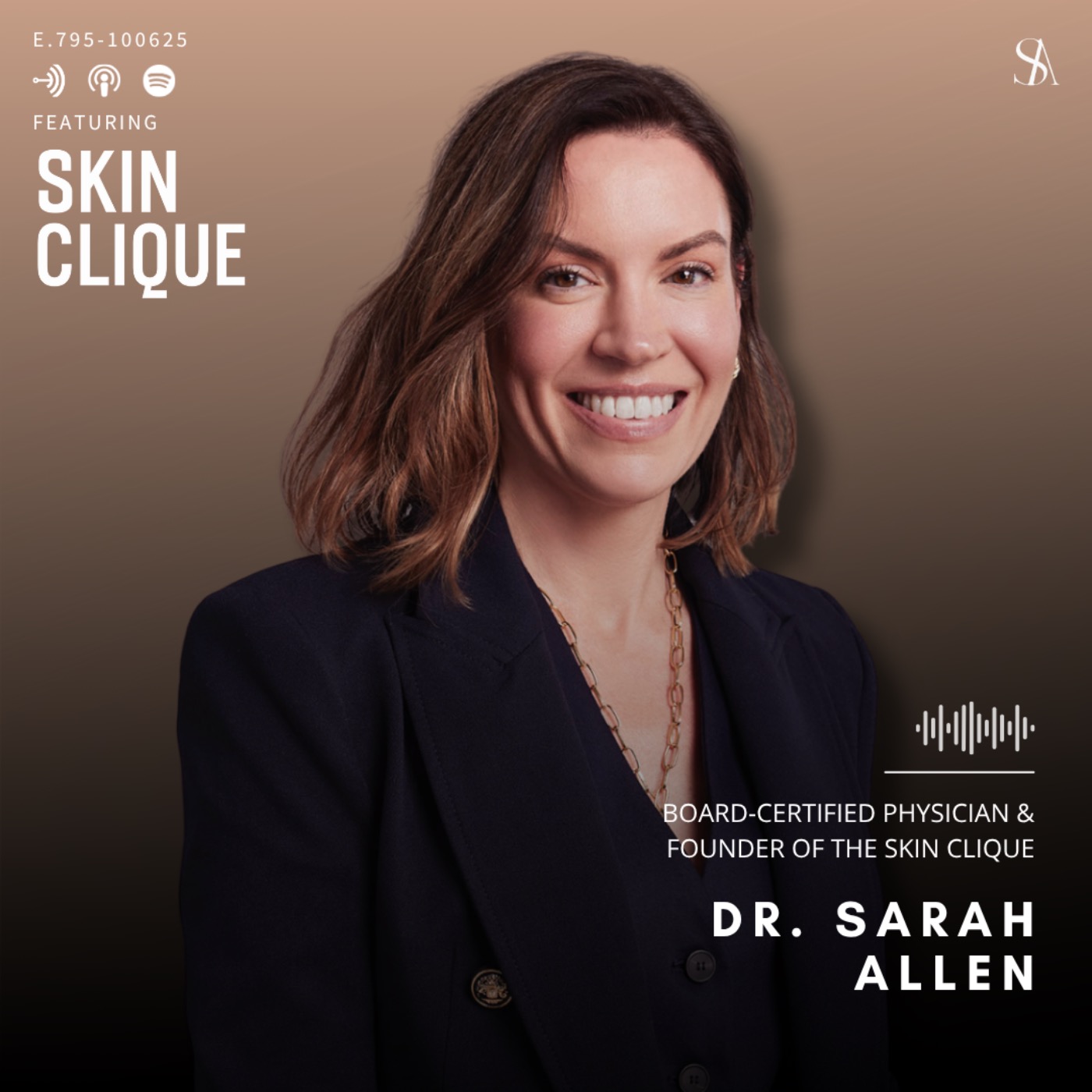
Loading summary
Transcript61 lines
- [00:02]
A
Hey, guys. Welcome back to Skin and Ricky. Today's episode is very special, and it's very aesthetics world focused. I know a lot of you are diving into the world of aesthetic, get a lot of feedback from you guys about wanting to learn more about practices and how it works in terms of finding a practice that fits for you. And so this episode, I think, is really perfect for people like that because this is literally bringing certified protocols into your home and bring it into the comfort of your home. So without further ado, please welcome Dr. Sarah Allen, who is double board certified practitioner. She's also the founder of the skin click. Welcome, Dr. Allen. I'm so excited to host you.
- [00:36]
B
Thank you. Thank you, Dr. Ekta. I appreciate it.
- [00:39]
A
Yeah, no, I'm really, really thrilled to be chatting with you. I. I think what you've created is absolutely brilliant. Before I discovered your company, I was always, how does this work? You know, I wish somebody could come to my home and just, you know, kind of help me and guide me through, like, any aesthetic treatments that I want. But I can't wait to learn more about you. Could you kind of walk us down memory lane and tell us what got you into medicine? Like, what made you want to go into the field to begin with?
- [01:02]
B
Oh, gosh, yes. So, great question. You know, I used to want to be Matlock. I wanted to be an attorney. I wanted to be in a courtroom and say I object and wear a suit and all the things. But I really found probably my sophomore year of college that my passion was helping people and contributing to patients overall health and well being, taking care of them better than anybody else. I really had a pivotal experience once I was in practice that I myself went to seek aesthetic treatments. I had thought about it for five years. I was so excited. You know, you amp yourself up because you've never had it done before. And I finally worked up the courage to talk to my. My physician about it at the time. Just felt very dismissed. And I got in the car that day and I left knowing I never wanted another patient to feel that way. And that really has served as the basis of our practice. Skin Click. Wow.
- [01:59]
A
A lot of people can relate with that. You know, that's really, I think a big thing that we deal with in the medical field is patients get left in this gray zone, you know, of. Of not understanding. That's fascinating. So, I mean, it's interesting, the model you've created. You know, I'm sure it was difficult, right? I mean, to have to overcome a lot of hurdles to bring like a Mobile care model to the space. Tell us more about that.
- [02:21]
B
It was, you know, so what I really think about traditional brick and mortar models, they may leave a lot of patients out because of geography, their busy schedule. You and I are very busy. You know, I used to tell people I didn't have time to go and take care of myself when I was in clinic all day, every day, and even access. And so Skinclick has really worked to make this care accessible to everyone, whether that's in home virtual or in one of our 50 plus plus brick and mortar locations across the country. But our model is really built to meet people where they are physically and figuratively, I would say making a shift so that everyday wellness is part of their life and not just a luxury. And I think about for our patients, the biggest barrier we had to overcome is this perception that in home care is less safe. I'll give you an example. So I knew when we started this practice that we could make this as safer. Safer than a doctor's office. That was always our goal. I was inspired with that through my academic medicine clinic and just some experiences that happened there. And so I knew resources that were available in a traditional clinic and I knew which resources we needed to make available in our mobile office, I call it. So our bag is our office. And I think largely we've overcome that with patients because we are so professional. When we show up, we all have emergency protocols, emergency equipment, everything we would need in the event of an incident. I'll say. But then for our providers, the biggest mindset shift that we had to overcome, and I know you and I have talked a little bit about this, is that flexibility and autonomy within healthcare for a healthcare provider can actually elevate their career and not diminish it.
- [04:12]
A
Yeah, no, that's such a profound point. I think the best doctors are the ones that are giving in that time and flexibility. I absolutely hear what you're saying there. You know, this is such an interesting model for me because when I think about esthetics treatments and just that care in general, I think it's very personalized and it's very. Got to have that time with your provider and you got to be able to ask as many questions as your heart desires, you know, that kind of thing. Right. And that relationship. And I think this allows for that because I mean, how many times, I'm sure a lot of you listening, how many times do you feel rushed, you know, when you go into clinic? Right.
- [04:47]
B
Even like average encounter. Right. Is what, seven minutes? Is that right?
- [04:51]
A
Yeah, it's crazy.
- [04:53]
B
And of the seven minutes, you actually spend two to three with your provider, your practitioner, your physician. Yeah, yeah.
- [05:00]
A
And then you don't get to ask any questions. And when you're new, I mean, I'll tell you, for me, the first time I got anything, like starting Botox, right, I was. I was confused. And I come from medicine.
- [05:11]
B
I was terrified because I was gonna get needles in my face.
- [05:14]
A
I was like, what's going to happen to me? Is my face gonna fall off? Like, what are you working with here? And am I gonna look wonky?
- [05:20]
B
Yeah.
- [05:21]
A
And there's no such thing. You know how they say, like, there's no such thing as a stupid question? And I'm like, I'm a firm believer in that because I asked a lot of stupid questions. So, you know, I want that time with my provider, you know, and to be able to kind of pick their brain and feel comfortable. And so I think it's brilliant that you've created this, you know?
- [05:37]
B
You know, it's so funny. You never know where life is going to take you. I know. Love to hear other entrepreneurial journeys. But in 2010, I read that was called Finding Joy in Medicine. The number one factor for healthcare providers, satisfaction in their work is autonomy over their own schedule. And I believe that's because we all want to practice the kind of medicine that we want to practice, which is to take care of people, to spend time with them, and to be able to get to the heart of what is really going on with them. And so think like was founded. It was very much founded on that principle. Our providers can practice medicine in a way that is the way the reason that they got into medicine in the first place.
- [06:21]
A
Right. No, that's. I love that. And I think that's thing is that people are living this world. I think we're all living this world of, okay, everything's got to be fast, you know, like, let's get things done. But it's like, medicine can't be rushed. I mean, and I'd love for you to dive into, like, more scientific principles, but I know I've spoken to doctors in the past on the show where we've kind of dove into how much care goes into aesthetics, you know, when you're considering things like geometry of the face, personalization of dosing. And so I would love for you to speak on this topic, like, at large, in terms of how much planning does it really take, would you say, per patient, before you even get there to the treatment options?
- [06:58]
B
You know, that is a great Question. I could say different times for different patients. Right, because it's personalized care. But we know that no two faces are alike and we know that what works for one patient is not going to work for the next. And for everybody listening, if I could tell you, if you go into a clinic with standardized treatment for every patient, that's probably not the place for you. So, you know, for us, we're very grounded in the fact that everyone receives a tailored plan that's rooted to their goals. Their care is still delivered within strict medical guardrails that ensure safety and efficacy. So our balance has always been we want to give you personalized results delivered with consistent quality nationwide. Now, with that said, when I look at a patient, it typically takes me two visits with that patient, two to three to really get to the heart of what their long term goals are. So it is not just one visit, but it's subsequent visits and then it's subsequent discussions about what products are going to benefit you the most. I know you and I have both seen the hyaluronic acid. Boom. Everyone now is getting their fillers dissolved, or lots of people are. But the truth is hyaluronic acid, when done right, can certainly accentuate beautiful features of your face that you have. When we're able to tailor all of that together with biostimulators, toxin, as we call it, we call it tox for short and medical or clinical grade skin care, you know, we know that patients have optimal results when they combine all of that together. And that's a treatment plan delivered over time.
- [08:41]
A
That's. Yeah, I see. I really like that. I like what you said, where it's like, one thing might not work for somebody else, but if you do it in a certain way, it could be amazing. And I think that's again, it feeds into this idea of like, we need the time to talk about this stuff and the providers have to feel comfortable. I can't imagine any provider. And this is across specialties, right? Where it's like you feel fully comfortable with your patient after the first time you see them. There's no way, you know, I think this model, it's just letting people explore aesthetics much deeper level. Like that's what it feels like.
- [09:15]
B
Well, thank you. I do love that. And I. It's certainly what we work to achieve with our patients. And, and we know that it is all is so comprehensive. Everything works together. And you're exactly right. The first time you meet your provider, you often forget to tell them something. And so it does take those subsequen visits to really establish that relationship. And what we find is the relationship that we're able to develop with our patients as a result of the time that we have to spend is so much deeper. And that builds a trust that is pretty incredible. That trust then leads to consistency. And it's that consistency that gives you results over time and optimal outcomes.
- [09:58]
A
Right.
- [09:58]
B
And so that that for us has been very impactful.
- [10:02]
A
I want to dive into some of the treatments that are available through skin. Click. If you could go through some of them for me. I know that you mentioned the neuromodulators. Walk through some of these with us so we can understand what really available.
- [10:14]
B
Yeah. So we offer talks as we talked about clinical grade skin care, because I know 80% of your results are what you do at home every day and the consistency that you deliver at home. And so we know how important that foundational routine is. We offer micro needling, which I love as a way to boost collagen, improve fine lines and wrinkles, and under eye dark circles and all the things. And then we offer dermal filler bio stimulators. And we have recently recognized that there are so many things that contribute to your overall skin health. You and I know your skin is your largest organ in your body. And so we've really extended beyond what I call beauty, for lack of a better term, beauty medicine, into confidence medicine, which really addresses overall health and wellness. So weight loss, hair loss, prescription skin care soon, women's health. So we're very excited about what I call Medicine 3.0, which is taking care of the whole person, spending time with them and optimizing their everyday life.
- [11:27]
A
Oh, I love that. I love that. You know, I think in the world of that we're living in, longevity medicine has now been, you know, it's a big buzzword. I really believe in skin longevity. You know, medicine that is a field I can get behind because I really think this is the future as well. And holistic aspect. Exactly. You know, such a believer in that, because for the longest time, and I'm sure you saw this as well through your practice, was we separated skin care from all the other stuff. Right. And so esthetics and skin care were almost like these two pillars. And we were kind of as consumers at least standing in the middle, you know, looking left and right and figuring out where do I go, you know, what do I need to do? I think I remember, I'll tell you one of my examples for my myself, I remember I was getting a little bit of that scarring it's not like pitting scars, but my family's prone to them, you know, like post, you know, inflammatory scarring. And I remember reaching out to one of my derm friends and I was like, listen, I hate putting on makeup because of this. What do I do? And because I had never gotten anything done, I'd never gone into an aesthetics practice. And even she was like. I ended up like. It was kind of like almost like a telehealth visit, you know, with her. I, like, showed her. And I. And I went through this motion. Even at that time, I was like, God, wouldn't it be nice if I could call somebody, come to my home and they help me figure this out? You know, it's just a different world. And so when I'm bringing this up is because skin care is kind of treated like that. If you think about it, we're buying products every single day. I mean, the skincare industry, I think, sells us these claims that are almost aesthetic level claims. They're saying, oh, this is microneedling in a bottle. No, it's not. It's not microneedling in a bottle. Microneedling is microneedling, you know, but you need access to microneed needling. And so that's the thing. So it's very fascinating for me when I look at it from that lens of like, this kind of next step. Because I think consumers, we want that accessibility. We want to be able to call someone and say, I don't know what I need, but I definitely don't feel like going out of my way and coming into an aesthetics clinic right now. You know, that kind of thing. So.
- [13:22]
B
Right. And one thing that I love about our practice is you can take us out of the clinic, figure physically, right. We get with our patients when we combine different treatment methods and we review their full history, social, family, personal, medical history, put all of the pieces together. The results that our patients get are incredible. Obviously biased, but I'm willing to say unmatched. And I think for us, it's so important, because I get overwhelmed when I go into these stores. I'm a physician, I don't know what to buy.
- [13:57]
A
Right.
- [13:58]
B
Because there's just so many choices. And I think to be able to have a guide who can walk you through all of the different pieces, all of the different treatments and say, this, in my opinion, is what is going to deliver the best results for you. I think that is something that is greatly needed in aesthetic medicine.
- [14:16]
A
I completely agree. You know, and I think one of my big questions is because you had mentioned this earlier that you guys are very much stick to the rules, you're very regulatory compliant. There's a lot of things that go into play to make this happen. Right. I'd love for you to talk about that because what is the process like? Like if I call and I. A home visit, is there like a check of like my living arrangement or like anything like that or how does that work? Like the whole process?
- [14:40]
B
Yeah, good question. So don't check your living arrangement. We certainly have performed background checks on all of our providers to ensure that they are safe going into our patients homes. And then for us, our standardized protocols and clinical guardrails are very tight within our practice. So I certainly believe in the art of medicine and give our providers the ability to practice that art. But we also give very safe confines in which to practice. Our rigorous training program with ongoing virtual and in person mentorship is so important. One of my favorite things, and I'm sure you felt this way, but in residency and in academic medicine, you have colleagues that are right down the hall that you can discuss complex cases with all the time.
- [15:30]
A
Yeah.
- [15:31]
B
When you go into private practice, you miss that, right? I miss that. And so another pillar that Skinclick was founded on is this idea that you have a community of medical experts and caring providers that collaborate based, consistent standards of care and they're available anytime to discuss complex cases. Because I believe two heads are better than one medicine and outcomes for patients are better when we all collaborate and work together. And so that's how we ensure that our patients are receiving the highest standard of care, no matter where they're receiving it.
- [16:09]
A
I love that. Yeah, because that's said where that collaborative nature, you know, in a hospital, I mean, I think that I've asked more nurses about what to do. You know, I'm not even gonna lie. Like, there have been times where I was like, I don't know what I'm doing. Like, I don't know. Like, you know, and so you go to your, your colleagues and a lot of times they're like, they have to kind of help you out there. And so I think it's great that you guys hire and you empower a lot of nurse pract pas. You know, what is their training like in terms of like getting their, you know, constant education? Because I know in the aesthetics world that is critical, right? Like constant education. What's that like?
- [16:46]
B
Yeah, so I am an educator at heart. I love to teach and always have. And we. One of the other reasons, I know I keep saying well, this is why. This is why there were so many whys, right? And everything kind of comes together very beautifully. But I think we recognized early on that an emphasis on training and education was lacking in aesthetic medicine. And so hear stories. You know, you go to a training program, you inject one injection of 30 on a patient and somebody says you're certified. Well, you and I both know that's not the case. And so we wanted to create a comprehensive training program where our providers are able to treat full faces from start to finish. And every injection that we do, at least with tox and I can tell you so forehead, frown lines, crow's feet, bunny lines, masseters, platysma, your downturn, corners of your mouth and your chin and the tip of your nose, there's so many injections you can do, right? And so we wanted to ensure that they are able to do full face treatment subsequently before they are able to practice independently on their own. We also have evaluation processes that are similar to residency evaluations so that we can ensure that our providers are safe when they practice. And that's been so important to us. And as far as ongoing training, we really are a medical practice in every sense of the word. So we have monthly meetings where we do educational teaching points and we provide enduring continuing medical education credits for our providers so that we can ensure that they are always up to date on the latest, most cutting edge techniques that that's able to be done in a safe way.
- [18:33]
A
Wow, I love that. I really love that. I, for me, I think anything that really kind of propagates this ability to easily, you know, in your education, to learn constantly, really kind of refine your practice. Like, I am such a firm believer in that. I know a lot of doctors and there's a lot of them in our audience, you know, that tune in that when you, you went through medical training many years ago, this was very difficult to come by. It was very difficult to find ways to. Because I've, I've heard the stories, you know, from like my father generation, where they talk about how no, you know, if you wanted to get more education, you went on a sabbatical, you know, you went to these random conferences you had to figure out on your own, right? It was never something streamlined. It was never like, okay, now this is an easy way. I can still do my job and I'm still earning some knowledge and, you know, kind of breaking ground in the next direction I want to go. And so I think that's absolutely, it's phenomenal to have that yeah, thank you.
- [19:23]
B
And I mean, you and I both know you mentioned longevity medicine and we both know that this portion of medicine is changing and evolving so rapidly. There are so many people out there who may not be rooted in science through evidence based techniques, looking just to sell there. It is so important to us that we thoroughly vet every technology, product, procedure, service, everything that we bring on that is of the utmost important to us as we're medically founded.
- [19:56]
A
I love that. And I think that's such a core point you hit on. Because just to give a little frustration of my own, I'm. I'm just gonna say, you know, I cannot stand it. Sometimes I go on LinkedIn and I'm just like, every other person has like longevity expert in their bio now and I'm like, yeah, I don't know what that means, guys. You know, like, let's, let's be real here. We don't even have the educational infrastructure to be just saying that, you know, like, it's kind of crazy. So I think longevity is a field where I'm seeing that the more you can get your hands on these days, like if you can learn as much as you possibly can, that is going to prime you to become a true longevity expert. The fact that you guys are offering this to your providers from the beginning, it sets that stage for them because this field is gonna. I really think it's going to. I don't know if you think it's going to be. Yes, I think it's definitely going in that direction where we're going to see residency programs pop up, you know, for longevity medicine.
- [20:44]
B
Agreed.
- [20:45]
A
Yeah. Like, I think it's inevitable kind of at this point. And so for us, those of us who are out of that system, how do you get training? It's like, how do you even approach this whole.
- [20:53]
B
So much to learn.
- [20:55]
A
Yeah, so much to learn.
- [20:56]
B
Yeah. You know, it's so interesting to me when I think about this portion of medicine and how quickly it's evolving. And all of this is also in some ways going back to basics. I'm like, y' all heard it here first. You can't discount the power of eating, well, exercising, community, the simple basics that contribute to your overall, in our case, skin health and wellness. And I would just encourage everybody who's listening before you delve into longevity, make sure you're doing the basics.
- [21:30]
A
No, that is longevity though, right?
- [21:32]
B
Like, it's.
- [21:33]
A
Yeah, it is. Like if you don't have a good skincare routine, and I'm not saying buy every product and you know, not that, but, like, if you don't have something that on routine level keeps your skin nice and healthy, you're not practicing longevity.
- [21:46]
B
I don't care how many antioxidant, a retinol and some SPF and.
- [21:49]
A
Yes, yes, exactly, exactly. You know, people have these crazy. Have you seen the crazy supplement stacks everyone has now?
- [21:58]
B
And like, just eat. Well, eat the rainbow.
- [22:00]
A
Yes, please, eat the freaking rainbow. And also your kidneys will thank you, your liver will thank you, your gut.
- [22:08]
B
Will thank you, Your brain. Yes. Yeah, thanks.
- [22:12]
A
Yeah, No, I think it's such a critical time to discuss this kind of stuff because that is the. It does worry me because, you know, with aesthetics, this is the real slippery slope. Because I think physicians, even when you're primed with the tools and the knowledge, getting that information to patients can be very difficult. Because I think we saw that era right, where everybody was getting lip filler, everybody was getting, you know, like whatever the fad at the time was. But then now it's more like, well, now I need to get healthy. And it's like, it's the same thing. You're just filling yourself up with supplements now. So I think when you're looking at the world of aesthetics, you need, again, you need the flexibility to be, obviously, from the practitioner side, you need to be like, I know what I'm doing and I can guide people. Right. But then also for. For patient care, as a patient, you need to be like, does this person even understand where I'm trying to go with this whole wellness fad that I'm on and to guide you on it?
- [23:08]
B
Yes. And I think that's the most important thing is you need a guide. We are thrilled to offer that to our patients and take care of them in that way. And I. I think we need more providers and physicians leading the way and taking control of this. This part of medicine, because without practices that are medically based, it. It can be a scary place. I mean, I hope you see it.
- [23:37]
A
Yeah, absolutely. No, I mean, we have a lot of med spots, you know, and I think that that's something that. I've talked about this, like, a little bit on the show before where it's like, you got to be careful when you, you know, as a cons, as a patient, you got to be careful when you shop, you know, for a med spot. Because exactly what you've said here, you know, it's like, what are some of the things. I mean, I'd love for you to give advice right on this. What should you be looking for? As a patient in a practice, for any reason, when you're approaching them for any aesthetic procedure.
- [24:05]
B
Yeah, I love this question. Okay, so. And I want to hear what. What you would have to add, because I'm sure I'm going to leave some things out. I would say, first, make sure that your provider is thoroughly vetted. Look at their credentials. Ask them what professional associations they are a part of. Ask them about their practice, the backup that they have. That is very important. Ask them about their continuing education and how much they invest in themselves or how much is invested in them by their practice. I would also encourage patients to look for a provider. I tell our providers all the time, when you care more about your patient's outcome than they do, you will be successful and you will treat them appropriately. And so find a provider that cares so much about your outcomes that they may care about it a little bit more than you do. And I think that's the mark of a great healthcare provider and also somebody who's willing to tell you no, y'. All. If a healthcare provider tells you no, that is the best gift they can give you because that means that they have your best interest at heart and they are really trying to take care of you.
- [25:13]
A
Absolutely. Oh, my God. Yeah. You really hit it on the head with that because. I agree. I totally agree. I think that's really, really great advice. And, you know, I think you guys should be doing this for anyone listening. You literally, every time you go anywhere, whether, even if it's family practice, like, just question everything, guys, like, in this world, question everything. You know, I couldn't agree with everything you said more. I think that that's the biggest for me. I'm not gonna lie. I never. I've never been to a med spa. Yeah, I. I'll never. I've never been to one. And it's not because I'm hating on med spots. No, I think there are some great ones out there. But I personally would rather know these are their credentials. This is where they trained, you know, all those things. Like. And oftentimes, you know, you end up landing in de offices, you know, when you do that. But I'm not saying you close yourself off. It's just. Just ask more questions, you know?
- [26:02]
B
Yeah, yeah, agreed, agreed. So important you had to be your own advocate in today's day and age.
- [26:08]
A
Yeah, absolutely. Now, I would love for you to talk about seeing this a lot, especially with, like, spas. Like, this is not in the world of spas. Right. So it's, like, very different what you've created spas. You see a lot of people kind of doing this, like, quick spa approach now, which I'm like, that's great for them. But what is the biggest, I think, differentiating factor just for our listeners to understand that, you know, this is not that same experience. You're completely different. Just to educate them more.
- [26:34]
B
Yeah, I think that is a great question. And I would say you're right that there are, there are med spas on every corner. Right. But truly, we are a medical practice. I mean, we are physician founded, medically led. Every service is vetted for your safety and for clinical efficacy. Our providers are thoroughly trained with a program that is pretty similar to an ACGME residency with the same evaluation metrics that are used for plastic surgery residents. And so we just care. We go above and beyond. We believe in attention to detail. We believe in taking the best and safest care of our patients that we can. And that is. Is so important to us.
- [27:20]
A
I love that. I really love that. Well, I'm a huge fan. I think what you're, you're doing is really something we need more of in medicine. I. I really believe that, Dr. Allen. I think that this is the kind of direction we should be going in. Accessible care, care guided by knowledge. It's grounded in knowledge and just true training. And I think that's something like, it's a whole different world of accessibility that you unlock when you have that, you know. So, yeah, this is amazing. And for all of our listeners, you guys gotta check it out. You know, definitely, if you're kind of shy or if you're looking for a more personalized approach to aesthetics, I think Skin Click is going to really be a great fit for you. You know, you got to check it out. But no, this has been great. Dr. Allen, thank you so much.
- [27:59]
B
Thank you. It's such a pleasure, always. So thank you so much for having me.
- [28:04]
A
No, it's been a pleasure. Thank you so much. Hey, guys. So I hope you love that episode. Please make sure to hit subscribe if you're tuning in to us on any podcast platform. We are available on, on so many different platforms. So wherever it is that you're tuning in, just go, hit subscribe. You'll be immediately notified when we publish new episodes. This way you're able to tune in to amazing insights from experts, brand founders, industry leaders, authors, all the wonderful people that we host. And that's very important for me because I love to hear from you guys and really understand what you love and what you want to hear more of. Also make sure to give us a follow on all of our our social media outlets. We're available on Instagram, TikTok, X, you name it, we're there. We also have a blog on Medium, so if you're a reader and you love Medium blogs, check us out on Medium. We publish some really great articles on there that do deeper dives than just what's available on the podcast, and it's really a great place for all of you science geeks out there that want to learn a little bit more. We go above and beyond with our research and making sure we're bringing you information that you usually probably won't hear about in other outlets. So check us out, leave us a comment, leave us a review, and we'll be back next time with another episode. Thank you.