← Skin Anarchy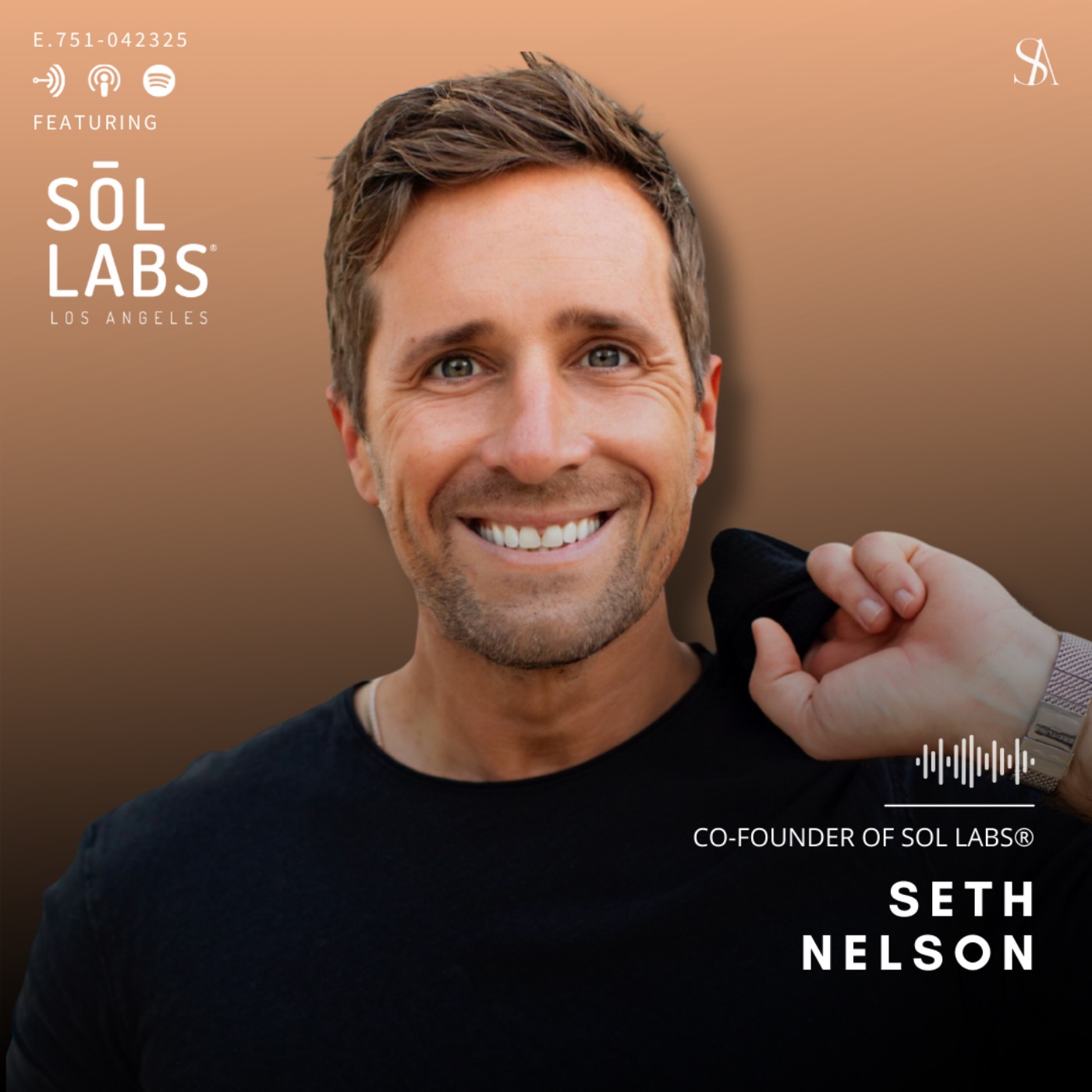
Loading summary
Transcript27 lines
- [00:02]
Dr. Jenny
Hey, guys. Welcome back to skin anarchy. I'm really excited to introduce a brand to you all today that I have been loving for quite a while now. Actually, when it comes to sun protection, I'm very serious about sun protection. I think all of us are here. You know, we love skin care, but as all of you know, you know, protecting your skin is the most important step in any routine. Even if you don't have a routine, the one thing you should be doing is protecting your skin and using spf. So, you know, the brand that I'm introducing you guys today is truly leading the way, way in creating better options for sun production. And so, without further ado, please welcome Seth Nelson, who is the co founder for Soul Labs. Welcome, Seth. I'm so excited to host you.
- [00:42]
Seth Nelson
Doctor. Thank you so much for having me on. Any chance we get to tell our story is a blessing and we're honored to be here. So, yeah, let's. Let's kick into it and.
- [00:53]
Dr. Jenny
Yeah, no, I'm excited. I'm excited to chat. And like we were saying, or you know, before the interview started, it's been. This has been a long time in the making because I've been a huge fan of your brand for a while now, you know, and I'm very picky with what I use for sun protection and spf. Like, it's very hard for me, you know, both as a woman of color. It's been hard because people always used to create these products that had these terrible white casts, you know, and then it became this thing of, like, it just didn't feel good, you know, on a day to day basis. Even though I was using SPF very regularly, it was like, God, why can't I find those products that just feel great, you know, on the skin? So I think you've really nailed it with what you've created. But I want to, I want to talk about you first. I want to talk about your journey, because I know it's truly, you know, phenomenal. Phenomenal what you've been through and very extraordinary. You know, you're. You were diagnosed with melanoma, right, at 27. I'd love to learn more about that if you could kind of walk us down memory lane.
- [01:46]
Seth Nelson
Yeah, of course. Well, I think, you know, there's so many brands whose, whose tale and story starts with some kind of personal experience. And that was the case with Solabs and for, for me. And so, you know, growing up a child of the 80s and the 90s, sun care was just never a really prevalent thing. And in my life. You know, I remember tanning bed usage, going on family vacations, and, you know, neglecting sunscreen on purpose to try to get burned and, you know, have that turn into a hopeful tan. And it was just terrible practices of skincare and, you know, being a naive child, you know, it's. It is what it is. But. But of course, I succumbed to those. Those terrible practices. And when I was 27 years old, yeah, it was discovered I had melanoma. And it was by a complete happen chance like serendipity, that I even discovered it. I tell this story often. The average human being makes 35,000 decisions every single day. And it's funny how those decisions shape your entire life. And I look back at that time, and I went with my wife to her dermatology appointment. It wasn't even for me. I just went along for support. And so I look back, I'm like, oh, my gosh, what if I never met my wife? What if I didn't go that day? And so I was sitting there at her appointment, and I'm sitting there and I said, you know what, Doctor? I'm here. I have this mole on my calf. It's a little bit irregular. Maybe just take a look at it. And he said, sure thing, Seth. And he took a look and said, yeah, it's a little abnormal in shape, and why don't we just remove it, since you're here, and kill two birds with one stone? I said, sure, let's do it. He took it off. And I get the call maybe not even two weeks later, and he says, seth, I hate to tell you this, but you have melanoma. And we're very fortunate that it's in early stages. We think we can mitigate this through a Mohs procedure, but I'm going to have to have you schedule time to come back in immediately, and we're going to have to do. Do that procedure. And they ended up removing 4 inches of skin from my calf. And again, like, I look back at the blessing, right, because we all know the stories of melanoma and how deadly it is and how fast it can spread, you know, if not caught early. And so we were lucky enough to catch it early, and it was a really big aha moment for me at 27 years old, who. You think you're invincible? You know, it was definitely one of those aha moments for me.
- [04:04]
Dr. Jenny
Yeah. No, I can only imagine. And, you know, I'm so happy to see that you're. You're well and you know that you. You came out of that. I mean, it's a very scary thing to think about that there is one of the most aggressive cancers that we know of. It's discovered like, you know, on routine visits. It's very common for this to happen where patients don't even know that they have it, you know, and. And they go in and it just, you know, happens to be that there's checkup and do finds it. So that's. I mean, it's insane. But I'm very happy that everything worked out, you know, in that way. What, what was that moment, though, when you decided, like, no, I'm. I'm gonna now take action here and create something for this purpose, you know, What. What was that moment where you wanted to create Soul Labs?
- [04:46]
Seth Nelson
Yeah. So I remember the moment vividly, and it didn't come until later on, many, many years later. So what that did when I, when I got melanoma at 27 is, of course, it opened up my eyes to just better sun care practices. And from that point on, sun care became more of a religion for. For me, it had to be. And so I just became more aware of sun care. I started doing more research and looking into things. But it wasn't even until further down the road, until 2019, where I started to do a real deep dive. And I looked at the sun care products that my family had in our own home, and we were getting ready to go to a pool. And I remember specifically in the bathroom, we were sitting there, and I was taking all of our sun care players that we had in our basket and just looking at them and then going, I don't recognize or can hardly pronounce any of these ingredients. Oxybenzone, avobenzone, homo, tinisate, all these different ingredients. And I just thought, okay, well, this is odd. And so then, of course, it sparked my. A deep, deep journey for me to really look into, into the sun care industry. The products that exist, consumer trends that exist, and why people. I thought it was really peculiar that people, like, loved their skincare, love their moisturizers, rave about skincare products, but nobody ever talks about sun care products. And really, two glaring statistics that I came across in my research. The first being that the average person can mitigate their risk of skin cancer by up to 50% when using SPF daily. And the second was that 80% of all signs of aging are caused by sun damage. And so I thought to myself, if these statistics really are true, then why don't more people adopt these sun care practices? If it can really have that kind of impact on somebody's skin. And then what I came to the realization, Doctor, was you know what, there is a disconnect between human beings and their relationship with sun protection. The industry, in my opinion, had failed the consumers. The products developed had failed the consumers, and the messaging had failed the consumers. That it was something that you just use at the beach or the pool. And there was a tale of two stories. Chemical or mineral. People love the more user friendly nature of chemical sunscreens, but preferred more of mineral for the healthier aspect. And so that's what really started the journey for us, for Solabs and saying, how can we create products that people love as much as they love their skincare products, as much as they love their moisturizer or their setting sprays or whatever it may be? How can we create those products so we can make a better relationship between the consumer and sun care? Because if we can do that and we can get the consumer to adopt a better SPF routine will help humanity fight the fight against skin cancer. And so that, that was the inspiration behind the formation of this brand.
- [07:46]
Dr. Jenny
I mean, I love that and I love that you actually thought about it in that much depth, because I think that's something that I know all of us have struggled with is this idea of like, you want to do what's right. We know what's right. You have to use sun protection, you have to reapply during the day. But then it's always the struggle of like, God, my face just feels like a big pile of grease. You know, there's so many products that just, I feel like even though, you know, sunscreen and, and spf, it's so important, right? And it's medically validated how important it is, there's still this terrible, you know, habit formation that's going on, which is just, okay, I'm going to use these like bare minimum products, right? A lot of people do that with, for example, makeup. Like, they'll put something very bare minimum under their makeup. And they think, oh, I'm good, you know, I can go out in the sun now and stand there for like two hours and I'll be fine. And it's just not the case. And it really comes down to exactly what you said, because I've experienced that as a consumer, you know, that it's like you kind of dread it sometimes when your products aren't doing what you want them to do in terms of like how they feel and how they make you feel, you know, and the experience of it. So I want to talk a little bit about that because I know that you and Jenny both, you know, you come from a branding background. And I'm just curious, you know, how did that really influence you when you approached this very difficult category when it came to appealing to consumers and trying to make them understand the relevance of this?
- [09:12]
Seth Nelson
Yeah, yeah, exactly. Thank you. And, yeah, so we're fortunate that in my wife and I, we consider ourselves the left and right brain cohesively, like we complement each other and our skill sets. But when we both grew up going to school and studying branding, marketing and design, and so we took that to when we developed this brand, we said, okay, first of all is formulas, right? Like, we have to lean on innovation and formulas. But second nature is we have to understand that in order to get someone to love and believe us and give us a try as a brand, we have to attract the consumer to want to pick us up off the shelf. We have to convey messaging and branding that resonates with the consumer. And we also want to be universal in our messaging in that so many of the beautiful sun care or skincare products really are kind of female centric in their design. And, you know, I'm a male, obviously, and we wanted to create products that could be, you know, both a male or a female could be proud to have in their presence. And so when we did our design work, it was important for us to be, you know, unisex and appeal. And our kind of our motto was sophisticated but playful. And so when we took a branding edge to it, we thought, okay, well, let's make sure our packaging does exude science, sophistication, innovation, but at the same time doesn't feel clinical and has a playful edge to it. So the side of our box is having kind of a tropical pattern on the side that's more playful. And it really was for us, it was creating that feeling and then the brand tone as well. And we somewhat have a more rebellious tone in our brand messaging. We've been dubbed the anti ordinary sunscreen. People would constantly tell us, oh, my gosh, your products don't feel like sunscreen. And that was the idea behind it. And so we thought we, we need to lean into this, and we are the anti ordinary sunscreen. We aren't the status quo. We aren't the negative stigmas that people oftentimes associate with sun care products. And so it all kind of fit together just perfect. You know, it's a journey when it comes to branding and finding your identity. We were very fortunate to land on A really great brand and a look and products that the consumer really tends to really associate with and love having with them, whether it be at the pool or just even on their bathroom vanity as a part of their daily routine.
- [11:38]
Dr. Jenny
Yeah, no, this is. I think it's really brilliant that you. You put so much thought into the branding because it is so much part of why we pick the products that we pick. I mean, I won't lie. You know, I'm definitely guilty of this, right? So it's like I have my few products I put right by my bed or like, right on the, you know, vanity or in the bathroom. And it's like, if. If they don't make it there, most likely I'm never going to use them, you know, so it's like, it's a very, very hard thing to get there to. To get in that space on most people's shells, you know, and so that's why I asked you that about the branding, because I think it's sometimes also with. What I've noticed in the SPF space is that the branding can either be way too, like, clinical and like, you know, just very almost where you're just like, God, this belongs in a hospital setting, you know, or it's just too playful. It's just. It doesn't fit right. It's like, it just doesn't feel natural.
- [12:32]
Seth Nelson
Yeah, that's exactly right. And that's where you hit the nail on the head. When we were. When we were ideating our designs, we thought that exact same thing. We thought, okay, you have some really spectacular brands. Elta, mds, La Roche, Posay. Like, they're really great, you know, and coveted brands. The consumers love them, but they certainly feel more clinical. And then on the other end, you have brands like Sunbum and Vacation Inc. And again, I'm an advocate for our industry altogether. I will never, ever put down anyone that's trying to help mitigate skin cancer. I'm a fan of. And all of us working together to do it, whether it is Sun Bum or ELTA md, we all play just in our different. Our lanes. But we felt there was a white space. Space in the middle between those two of saying, how can we create like a. A community of people that love our branding and messaging and also be backed by just phenomenal formulas? And so you hit it. You hit it exactly right. We. We went in the middle.
- [13:34]
Dr. Jenny
Yeah. No, that's really, really fascinating. And, you know, I know you guys spent a lot of time in South Korea for the R and D process. Talk Us, you know, kind of walk us through that. How was that? And why did you choose to go to South Korea when it comes to formulating?
- [13:48]
Seth Nelson
Yeah, yeah. So great question. It's funny because it's almost twofold. So when my wife, she used to work for General Mills corporate in marketing and branding for General Mills. And she also was a vice president of a large packaging firm here in Orange County, California, whose printing facility was in Seoul, South Korea. And so we naturally, I'd go with her on some of those trips for client meetings there at printing press. And so we learned a lot about, for one, about just their culture and how hardworking they are and how they, you know, the respect and their innovation. And part of our journey in formulating and the education process around it, the research around it, of course, we came to find through that process that the Koreans really are the world leader when it comes to fine skincare. And it's just because of their skincare philosophies that they adopt, you know, their K beauty per se. Pillars of innovation are centered around prevention over correction. Right. And so here in America, unfortunately, we're always trying to chase correcting the problem. Whether it be Botox or procedures, we're trying to fix the problem once it's happened. And their philosophies are different, they're about prevention. So it's how do they protect their skin, care for their skin, keep it looking youthful for so long. And so those philosophies fascinated us. And so we were having conversations and just trying to find the right person that could help us create these products because we did have a really rigorous set of standards when we went out to go create these that we wanted to adhere to. And so we, we needed to find who the best in the world was when it came to formulating fine skincare products. And I think we can all or many of us can agree that the Koreans, they know what they're doing over there when it comes to skincare innovation. And so we went to them and it was, like I said, a very strict set of parameters. We said, look, we will only ever do mineral based products. That's just going to be one of our standards as a brand in perpetuity. So only mineral. We also want to incorporate very high level skincare ingredients because not just protection, we also want to rejuvenate and hydrate the skin as well. So we want things like niacinamide and hyaluronic acid and astaxanthin, centella asiatica, like awesome, great, real, great botanicals. And the third Was. And the most difficult was it has to have the best efficacy. It cannot perform like a traditional mineral sunscreen where it is thicker, greasier, white. It has to perform like fine skincare, otherwise people won't adopt it. And so that's how we landed on this, was finding the right person and creating these formulas together with them.
- [16:32]
Dr. Jenny
Yeah, that's really fascinating that you have the skincare ingredients, because I'm a huge fan actually of all of those ingredients that you mentioned. I think that, you know, with the antioxidant potential that's there, I mean, especially I want to talk about astaxanthin a little bit. If you could kind of go into this, you know, what, what made this such a game changing ingredient, you know, for what you were trying to create.
- [16:53]
Seth Nelson
Yeah, yeah. So it's actually a funny story behind astaxanthin. Astaxanthin was a last minute add to the formula. We pretty much had nailed our entire formul. We got it down. And right around that time, this was a few years ago, when AI and ChatGPT were really coming onto the scene. And just for fun, I took our formula and I basically input it into ChatGPT and I said, you know, I'd be curious to get your thoughts on this formula. Clean ingredients, you know, just what, you know, what do you think? As well as if you have any additional thoughts as to one hero ingredient we could add to it that nobody else has in their sun care products that has incredible skincare benefits. Please make that suggestion. And sure enough, it for one, it said, your formulas are incredible. The ingredients are incredible. And it didn't make a suggestion of astaxanthin as an additional ingredient. And I had never heard of that ingredient. So of course I then started looking into it, asking questions, and of course found out its incredible antioxidant potential in terms of its potency over vitamin C and over vitamin E and its ability to rejuvenate skin cells at the molecular level. And so I was just intrigued and like blown away. And I thought, oh my gosh, this ingredient, if we could add this in, would be kind of a signature, proprietary like, ingredient for our products. And so I went back to the lab and I said, have you guys heard of astaxanthin? And they said, well, of course we have. It's a phenomenal ingredient. Said, perfect. Can we add it into the formula? And they said, well, Seth, you know what it is right where it comes from? And I said, yeah, it's red algae. Okay, well, do you mind if your Sunscreen is pink. Like, well, that's not going to work. So we had a laugh about it and we said we got to figure out a way that we can incorporate this without it being pink. And so we ended up coming up with an encapsulated version of astaxanthin that we were able to efficaciously integrate into, intersperse into the formula. And so we, we. It's now a ingredient that is in every single one of our skus. And I just think it's a, I think it's a spectacular ingredient. I, I really do. The more I've learned about it, it really is our, our superhero that's behind our formulas.
- [19:10]
Dr. Jenny
Yeah, no, I love astaxanthin. It's such a cool ingredient and I, I love that you have it because, you know, people don't know much about it actually, which really shocks me because we're so into antioxidants and we're so into like understanding like how free radicals damage our skin and all these things. Right. But then astaxanthin also has like these amazing anti inflammatory effects too, which are so crucial for like just healthy skin. There's so many things it does, you know what I mean? It's not just like an antioxidant, it's. And you know, the seth, but just for our listeners, like, it's, it's literally a powerhouse ingredient, you know, and it's, it's something that actually has been dubbed as like almost like sunscreen from the inside. If you were to take astaxanthin, like you would have sun protection. And it makes sense because it's an, it's found in algae, it's found in flamingos, you know, it's found in organisms that are exposed to excessive levels of UV rays, you know, and, and so it makes sense and I, I find it to be very fascinating, you know, that you were able to incorporate this into a sunscreen formulation. That's really cool.
- [20:11]
Seth Nelson
Thank you. Thank you. Yeah, I appreciate it. Game changer ingredient for us.
- [20:16]
Dr. Jenny
Yeah, absolutely. Very cool. And I love that you're, you went mineral. You know, I'm a huge, huge fan of mineral sunscreens. I just can't get behind chemical. I'm all about sun protection at the end of the day, you know, that's the bottom line. Like if you, if you love chemical cool, do it, do whatever it takes, protect your skin. But for me, mineral has always been, it just, just, I don't know, it just makes more sense to me. Right. Even when I look at things like, you know, there is this phenomenon of like, you know, chemicals getting into your bloodstream and it does actually happen, you know. And so when I look at mineral sunscreens, they make more sense to me scientifically. What was your rationale for wanting to stick to the mineral side of things and not go into the other category?
- [20:55]
Seth Nelson
Yeah, well, you know, as I mentioned before, really the, one of the impetus and you know, the defining moments of this journey was that, that discovery of the current products that we had in our household and looking at those ingredients and you know, when you, which is fine if you can't pronounce them or understand them, but when you go and do a deep dive into them and you start seeing things like hormone disruption, endocrine disruption, cancer, you know, you're like, wait, hold on one second here. And I'm putting this on to prevent cancer and you're saying there's a potential for alternative health deficiencies. And so it was like, okay, I get it. I understand that chemical typically is a more user friendly type of product, but that's where my thought went into, I think the general consumer, if you gave them a choice, if you said, look, there's chemical and mineral and they both perform the exact same way on the skin, they both lay down nicely, which would you prefer? I think nine out of 10 people, maybe 10 out of 10 would say, well, of course, mineral, it lays on top of the skin versus absorbing into the skin. But the problem has always been that the, the consumers can't necessarily integrate mineral into their daily life because of the things we discuss. Greasy, it's white cast, it's just not a user friendly. And so, so we just thought, okay, if we could create mineral that we know that people would appreciate because of its healthier nature and because of the FDA's, you know, standards of recognizing, you know, the only two ingredients are the only two UV filters that the FDA recognizes as safe and effective, which I think is hilarious. If we can make those products into something that performs like chemical, I think we have a home run. And so, so that, that really was the, the defining aspect of it for us was it just was a healthier version. And so, you know, and again, like when the fda, when they come out with their monograph, they start talking about how, you know, 14 of the 16 UV filters they can't categorize as safe and effective. You're scratching your head and you're going, oh my gosh, well, why do you even have these in existence then? So that was the reason.
- [23:03]
Dr. Jenny
No, the FDA always They perplex me with picking and choosing of what's safe and what's not. You know, I'm just going to put that out there because, yeah, I always get confused as well. But, I mean, it's very fascinating. And I'm glad that you went with the mineral side of things, because I have the literature that I've read, and just from personal experience, I think it is, you know, it's a safer bet, in my honest opinion. You know, and obviously, like I said, people can choose what they like, but I find it to be better. I want to actually ask you about in terms of, like, that experience. Right. We talked about this in the beginning of the interview where, you know, for me, as a consumer, I know a lot of people feel like this, that feel of a sunscreen is the. It's like that thing, you know, that's going to determine whether they're going to actually utilize it or not, you know, and especially as a daily thing in their lives. So when it comes to that, I mean, what were some things that you had to kind of take into account when coming up with that formula that wasn't going to feel heavy or greasy or, you know, just kind of weigh you down throughout the day?
- [24:07]
Seth Nelson
Yeah, I mean, well, it. It was those exact things. Right. And so we thought, we knew that people's relationship with mineral was fractured and it was because it wasn't friendly for their use. And so definitely not for daily use. And, you know, forget the beach in the pool, which, you know, at the end of the day, if you're at the beach in the pool, so if you're a little greasy or white, it's not the end of the world. It's still not desired. But when it comes to daily use, which we are trying to create products that integrate into daily use, we knew, like, it was not even a question that we had to create formulas that were very, very lightweight and immediate absorption. And as I mentioned earlier, that was one of our key standards and protocols. We went to the lab and started working with them, was that we have to create this. And it took many, many tries. It took years and tries to get it right. I mean, we ultimately landed on a proprietary kind of dispersion and emulsification process that allowed us to get the. The mineral very nicely dispersed and with the proper techniques that allow it to be integrated into the botanicals and the emulsification process so it would lay down nicely. And it went through, like I said, we went through 39 iterations over the course of four years to get our Hero product formula. Right. To get it to where it was to a point where we were really satisfied with. And of course, it was testing with my wife. And, you know, every time she would make sure that it applies beautifully under her makeup and her skincare routine, because we knew for females to adopt it as a part of their daily routine, it would have to play well with their makeup and not be greasy, not be oily. And so it was. Yeah, we had a really strict set of standards for it.
- [25:52]
Dr. Jenny
Yeah, no, absolutely. I think that's. I'm so glad that you guys did that extra bit of homework into that, because I think that is a big, big component as to why, especially, like, for all of the younger audiences. Right. I mean, if they're. They do a lot more makeup, I think, than. Than I do now. You know, I'm in my late 30s now, so now I'm, like, just throwing on stuff in the morning. But I remember when I was in my 20s, I would do, like, actual makeup and sit down. It was so hard to figure out, even with, like, primers, you know, it was like, what primer should I use? Because it's going to pill under my, you know, foundation. And this was a whole thing. And so when it comes to sunscreen, especially when you're applying it underneath your makeup, it has to play nice, you know, with all the different products. And, I mean, I think if it doesn't, that's like kind of a decision making moment for a lot of consumers, you know, right there, where it's like, no, I'm not going to do it. I'm not going to use this anymore, you know, because it's like they're valuing their makeup more than this. And that's exactly the kind of culture that, you know, we want to shift and we want to see that change. So, you know, on that note, I would love to ask you about your advocacy work around this space, because I think that that's actually equally important, right. In terms of really kind of educating people and talking about why sun Care really matters. Any words of wisdom you could offer here?
- [27:06]
Seth Nelson
Yeah, yeah. Well, we knew that if we create products that people would actually want to use and we could re. We call it rewriting the rules of Sun Care. So, you know, the Sun Care space is been really kind of status quo since the 1980s. And so we thought if we can rewrite the rules of sun care and have something to talk about, it makes it a very easy message for us to go out to our community and talk about and be at events And I think the conversation around sun care gets better when you have better products, because people want to use them and then they want to integrate them and they want to talk about them more. Because in the past, we feel that sun care was just one of those ancillary second nature kind of a products that you would grab, oh, you know what? I'm going to the pool, I'm going to the beach, I'm going on vacation, I better go grab my sunscreen. Whereas when it becomes more of a part of your daily routine, it becomes more in the line of conversation, such as people talking about their skincare products and a friend talking to her friend about her favorite new moisturizer that she just got. Or even males, right? So we're very excited for the education of sun care and products for use for males as a part of their daily routine, as a nice, lightweight moisturizer that we can apply on our face. And as a part of that journey, we were so blessed last year. We were contacted by the Melanoma Research alliance, which is the largest nonprofit organizations for the eradication, education, innovation around melanoma. And they had reached out to us and they had proposed a potential partnership with them to help with the awareness and innovation around the industry. And honestly, in my journey so far with Solabs and we've had amazing milestones, awards that we've won talks with major, major retail. I mean, all these are great things. But one of the best moments of our journey so far was going into a partnership with mra, because as a melanoma survivor, of course, our mission is to create more advocacy, education and innovation around melanoma. And there was no one better than MRA to get in partnership with, to help spread the word and work together to create the next wave of products. And so, like, for us, we have three new SKUs this year we want to launch, and we have a. We have a queue, a lineup of 31 new, very innovative SPF products that we want to roll out over the next five years. And they're all very, very different. And they're all very engineered and designed for daily life for people, and they're just beautiful products. And so, again, going back to the. How do we build awareness? It starts with creating products that people want to talk about.
- [29:48]
Dr. Jenny
Yeah, yeah, no, I love that. I love that so much. And I truly congratulate you and hats off to you and Jenny both because we need this innovation, right? I mean, this is a. This is a category of products in skincare that it should be the number one category. You know, and that's genuinely. I mean, I think every single person will agree to this, is that sun care is just not something that we can compromise with. And we have been doing that for so many years. We've been doing it for too long. You have to protect yourself and, you know, it's just something that I think needs to become even a bigger movement. And I feel like you guys are really, really adding to that in such a beautiful way. So, you know, really hats off to you and your team for, for creating Soul Labs.
- [30:34]
Seth Nelson
Yeah. Thank you. We're. Thank you very much. We're fortunate to have a 15 year old son that is on the front lines of the new movement and we're. I do think, I do think, doctor, that we are in a good place in society, that people are becoming more aware and cognizant of SPF into, into their life more. I see it in the. The new. The younger generations coming up and their talks about it on TikTok and in a month or among their social spheres, they are talking about skin care and sun care and we see it firsthand from our son and so it's pretty cool to see. And I think, I think we're on the precipice of a new movement and we're excited to be at the forefront of it.
- [31:12]
Dr. Jenny
That's awesome. Yeah, No, I love it. And for everyone listening, you guys got to check out the brand. You can go to Seoul Labs Co and check out all the products. The range is beautiful. I love the original formula. I'm still using that. You know, I use it quite often and I really, really enjoy it. And I think it's a beautiful addition, especially if you are somebody who just does not like that feeling of like a tacky sunscreen. Anything greasy. It's so beautiful. It goes on beautifully and you don't even feel like you're wearing sunscreen. Honestly, it doesn't even feel like you're. You have it on. So it's very beautifully formulated. I encourage everybody to check it out. But Seth, thank you so much for your time and for all the knowledge. It's been such a pleasure chatting with you.
- [31:52]
Seth Nelson
Oh my gosh. Thank you. It's been an honor to be on your show and having this discussion. So thanks for. Thanks for allowing us to be here and look forward to future conversations and you let us know when you need a refresh on your product, okay?
- [32:04]
Dr. Jenny
Oh, yeah, I will. Don't worry. I definitely will. Thank you so much though. This has been great. Hey, guys. So I hope you love that episode. Please make sure to hit subscribe if you're tuning in to us on any podcast platform. We are available on so many different platforms, so wherever it is that you're tuning in, just go, hit subscribe. You'll be immediately notified when we publish new episodes. This way you're able to tune in to amazing insights from experts, brand founders, industry leaders, authors, all the wonderful people that we host. And that's very important for me because I love to hear from you guys and really understand what you love and what you want to hear more of. Also, make sure to give us a follow on all of our social media media outlets. We're available on Instagram, Tick Tock X, you name it, we're there. We also have a blog on Medium, so if you're a reader and you love Medium blogs, check us out on Medium. We publish some really great articles on there that do deeper dives than just what's available on the podcast, and it's really a great place for all of you science geeks out there that want to learn a little bit more. We go above and beyond with our research and making sure we're bringing you information that you usually probably won't hear about in other outlets. So check us out, leave us a comment, leave us a review, and we'll be back next time with another episode. Thank you.