← Skin Anarchy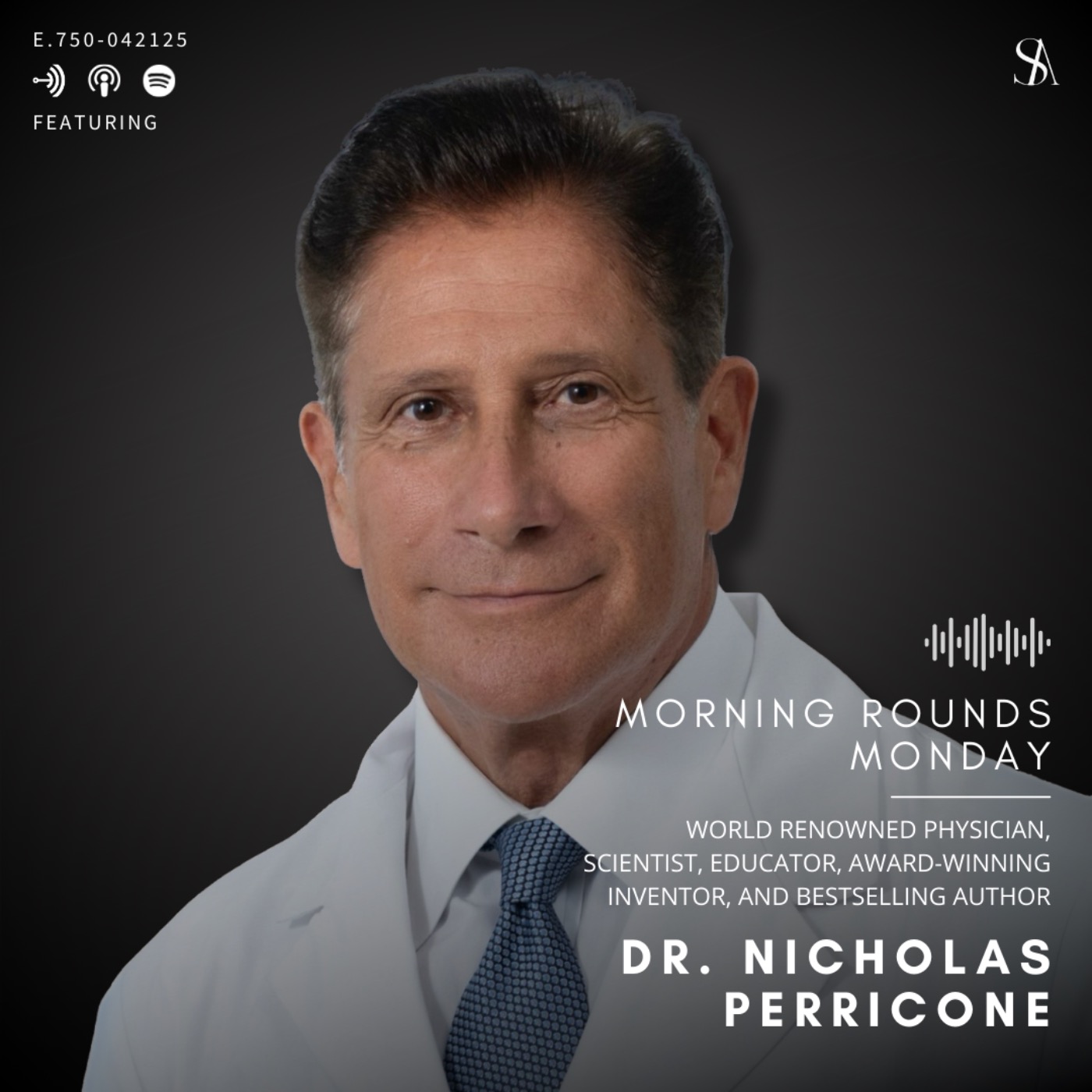
Skin Anarchy
The Beauty Molecule That Is Changing Everything Featuring Renowned Dr. Perricone
00:44:38
Morning Rounds Monday
Loading summary
Transcript39 lines
- [00:01]
Ekta
Hey, guys. Welcome back to Skin Anarchy. This is Ekta. And I have such a remarkable guest with me today. I am truly honored and humbled to be hosting him. He has been such a visionary and a leader in the space of skin health for so many years. And we're gonna be talking about his new book that's coming out now. So without me ranting too much, please, I would love to introduce you guys to Dr. Nicholas Perricone. Welcome, Dr. Perricone. It's such an honor to host you.
- [00:27]
Dr. Nicholas Perricone
Thank you. And it's a pleasure getting to talk with you today and our audience. I'm very excited about the new books. It's just a lot of fun to get to talk about it.
- [00:37]
Ekta
Yeah, I'm really excited that you're coming out with. You came out with a new book, and I would love to learn about it. And I really want to talk about you because you've led that beauty and wellness world through so many scientific evolutions. And for me, your brand was one of the first professional brands that I got my hands on when I was learning about skin health. And it's so inspiring to see this, you know, kind of come full circle for myself. So I want to ask you, you know, what really inspired the Beauty Molecule, which is the name of the book for everyone listening, why was it. Why is right now the right time for this message?
- [01:11]
Dr. Nicholas Perricone
Well, it's. It's a perfect time because I. My last book was 10 years ago, and people asked me, why this long break. I said, because, really, my research, I didn't see anything that was really different from what I. My initial ideas about inflammation, aging, and disease and all the information I have and skin. But with my research over the past 10 years, I was. It was kind of really enlightening to see what happened in terms of my studies. So I have an unusual background, certainly a medical doctor, but I'm also a nutritionist, and I've done original research in nutrition. But this really all started back in medical school when I was doing my histopathology and looking at different pieces of pathology under the microscope and looking at a squamous cell cancer, and it was surrounded by inflammation. And. And then universally, as I kept on going with my career and did my dermatology residency, a lot of time spent in the microscope, and everything was associated with visible inflammation. And so at that time, I really came up with the inflammation, aging disease theory. But that was, like, almost 25 years ago. But it was. It was not well received, as, you know, in medicine and science. New ideas Are, are not met with curiosity or met with rejection. And so it seems to me that at least my experience, I don't mean to offend anybody, but science seems to be more like a religion than, than science because there's a set of ideas and, and very much if you fall outside of the belief system, instead of getting open mindedness and people looking at it, we have an emotional response. And so it was very, it was really pretty bad time back then in terms of what I was getting from the medical community, scientific community, it was just rejection and a lot of criticism. Now that it's mainstream, of course it's accepted and so it's a lot easier to talk about this. But, but science keeps on moving forward and there's always going to be new ideas. So what we need to do is probably change our attitude and start being scientists where we want curiosity, we want to look at the data and we don't just reject it on an emotional basis. So that's where we're coming from. So I'm really excited about this book because with the fact that we now know that inflammation is at the basis of all western diseases, including the disease of aging. And when I first talked about aging as a disease, very, very negative response. So here we are. That's the downside. But there's 99% bright light and a lot of good things to talk about today.
- [03:51]
Ekta
Yeah, no, this is, everything you said hits home for me. I've, I've never understood this either. You know, people, not only do they reject it, but it's almost looked at as like pseudoscience. You know, when you introduce something truly novel in the scientific community and it's really kind of jarring in that way for I think many scientists because you don't ever get to truly explore that idea in a, in a timely manner 20 years down the road, you see now it's become a buzzword and I feel like inflammation. Exactly what you said. Now I, you know, I'm looking at the, and everyone's talking about inflamma, aging and unfortunately even now some of the conversations that take place that I've noticed, at least I don't know if you've experienced this, but some of those conversations are actually poorly rooted in the science they're referencing. Talking about inflammation in a very isolated way rather than what you were talking about, where aging can be referred to as a disease. Inflammation can be talked about in a more broader scope where it's impacting every organ. We still don't see that enough, but here we are With a buzzword that people are using now.
- [04:52]
Dr. Nicholas Perricone
Yeah, one of the things too is of inflamed aging theory came up quite a while ago. But what I was looking at was yes, we know that the, the immune system certainly changes as we get older and that inflammation starts popping up. But I, because of my background of being a medical doctor and a nutritionist, I found that it was that basically inflammation is tied very closely to the metabolic system and if the metabolism metabolic system is awry, then you need a lot more inflammation. And that's what I've been talking about all these years. And so I, when I developed the first anti inflammat diet, once again it was easy for me being a nutritionist and then actually testing it and then looking in the old days it said rates changing. And then the newer days we're using C reactive protein, we can see some really miraculous things. And I get emails and letters from physicians or friend of mine and people who have been on the anti inflammatory diet and they talk about. In fact, one of my colleagues that I was in my residency with just sent me a really nice note. He said he was thrilled his C reactive protein was up around 7 or 8. He did the anti inflammatory diet and he said my latest number is 0.73. And so this is another physician and someone I did my residency with. So I'm really happy that this is now getting to be mainstream because we've got to focus on inflammation at the basis of all diseases, including the disease of aging. Then of course being a dermatologist, looking into the microscope and seeing inflammation, I then said, well, I've got to set my sights on creating topicals that will have anti inflammatories that have to be benign. What happened too is I had a lot of, I think fortuitous things happening. When I was an intern in pediatrics at Yale, there was a study going on in another pediatric center and they were looking at asthma. And what they did is they did an interesting study, a double blind placebo control study. But they gave the children vitamin C in form of chewables, about 500 milligrams twice a day, which was a huge dose for children. When they broke the code, they had a reduction 50% of the inflammatory airway attacks. And so that burned in my memory that so vitamin C, antioxidant, anti inflammatory. Then started looking at all the other categories over the years. And so I came up with a really nice group of categories to use as I started formulating my topicals and things like ascorbyl Palmitate, which is vitamin C in a fat soluble form. Alpha lipoic acid was an incredible find. It's a universal antioxidant, both water soluble and fat soluble. And so these went into my products. But also at the same time, I had to come up with ways to basically deliver this into the skin. Because you're putting on creams that just sit on top, it does nothing. And so I came up with certain formulas and if I change the ratio, I could actually basically target the depth of penetration. And so I wanted to get into skin and dermas. I did not want to get into dermal vasculature. And so I created this. But what happened is I started the second company called transdermal Biotechnology because I found that I can get most biological, biologically active products, especially peptides, into the dermal vasculars, which then circulates. And it's a liquid crystal that doesn't break down until it gets to the cell membrane. And so what we could do, it would circulate, it wouldn't be broken down by the enzymatic systems. And we also get the blood brain barrier. So transdermal has been enormous. I have several, probably 25 or 30 patents in this area. And so I look upon this as a. As an evolution of not just treating skin, but then systemic and then as a nutritionist and the things that we can do. So very exciting. Still exc. Exciting time for me. There's so much more to be done in terms of using basically peptides that have biologic activity, but there's no way to deliver them. But with the transdermal system, we can do that. So it just opens up a whole new field for me.
- [08:50]
Ekta
I'm really excited to hear about that because I feel like when it comes to topical application, there are so many redundancies right now when I look at the world with all the products and all the devices and all that. But I think there needs to be this shift that occurs where we start looking at. For me, I hate hearing the word. For example, everyone says peptides and no one talks about the. The role that they play, right? And like, where they. What does a peptide actually do? You know, how does that molecularly enhance the, you know, the actual biology? And so there's a lot of question marks still, even though we're evolving. And so it's very, very exciting. Now I want to ask you about, you know, in the book, it feels like a true shift that's taking place because you're talking about, you know, from treating signs of aging to now truly understanding what fuels aging? How did mitochondrial health become your new frontier?
- [09:38]
Dr. Nicholas Perricone
Very interested in the mitochondrial function. And my last book many years ago came to the conclusion that we age in the mitochondria. So the mitochondria of course is our organelle that produces energy, but it also has so many other functions. It releases certain chemicals and other ingredients that actually then do things such as creating basically if we have cells that are dormant, we to get rid of those because many of those cells, they may be dormant, but they're constantly producing these pro inflammatory chemicals. And so, and so if you start looking at total body burden of inflammation, you realize that a lot of this is coming from these so called cells that are supposed to be just kind of sitting there, but they're not, they're active. And so it's very important we get into autophagy and mitophagy. So I became very interested in mitophagy and started looking at substances that could enhance mitophagy because we have rid of those mitochondria. But the thing is the body is so efficient, it breaks up mitochondria, but using those, those parts that in all of those various aspects, it then makes new mitochondria, then also gets rid of these sedentary cells that are still active. So this is why I got so interested in the mitochondria, because we age in the mitochondria. And so it's been this whole thing I've been doing. And so this, this research I've done over the past 10 years, it all came down to inflammation of course, but one molecule in the body. And so I had to name the book the beauty molecule because it's just one molecule, which is acetylcholine. We're all aware of that as physicians. It's a neurotransmitter. But what I found is it's also tremendously active as an anti inflammatory because when it locks onto things like the alpha receptors on central nervous system, it turns off inflammation centrally. We want to do that. And so in this book I want to talk about acetylcholine and different ways that we can elevate in our body through diet, through supplements, and something as simple as doing something like meditation. And also there are also pharmacologic chemicals that can be also very helpful too. So what really intrigued me was an excellent article. It was an animal study and basically they looked at these animal models. They were using mice, but they would give them basically heart disease by giving them a high thyroid fat diet. And then looking under the electron microscope we can look at the mitochondria and those beautiful little footballs with those vertical lines. The football is now distorted into almost a circular or a sphere. And all of those lines where the electron transport is taking place are now blurred. Then what they did is they elevated acetylcholine by giving these animals a drug. It's called pyridostigmine, it's used for myasthenia gravis. And they gave them a dose and followed it for four months. And then if you look at the electron microscopy at this point, all of those mitochondria are now the perfect little footballs with the vertical lines. So it was so impressive to see that just by elevating this molecule, acetylcholine, by using an acetylcholinesterase inhibitor, can repair the mitochondria. This brought me down a road that was just amazing. So things that we can do, for example, when we meditate, and we don't have to meditate for long periods of time, we upregulate the release of acetylcholine in just about every cell in our body. And so by doing that, we can meditate our way to repairing the mitochondria. It's just phenomenal to think about it, because if you look at people who discover meditation and then they're doing it and then you see them a year later, they look like different people, they're younger, they're more vibrant. And so there's a real physiologic reason for this. In the real world, they're repairing their mitochondria. So we have this in this book, we have all of these strategies, food supplements, meditation and other pharmacologic agents we could use. And so I think this is going to be hugely helpful to people when they see this because it's all new. And of course, it's interesting that many years ago when I chose the topicals, I used precursors of acetylcholine. And so it acts as a penetration enhancer, but it also elevates levels of acetylcholine. So we've been there for many years and that's why my products have been so successful. But now, when we truly know the mechanism that's here, we can now pinpoint this. So if we can normalize metabolism, we shut down inflammation, because inflammation is always at the basis of aging in all age related diseases. And so I'm excited about that because now we have different methods of approaching this. We don't just have the anti inflammatory diet, but we have certain supplements we have certain way of eating and we could even use some pharmacologics that are pretty much benign to do this. And of course I think the biggest issue I'm always looking at is obviously neurologic decline. And this all takes place in central nervous system, the brain and inflammatory reactions. And so things that we eat cause a cascade of inflammation. But in the brain, of course, this goes on all of the time. So by using these strategies, we can rapidly reduce inflammation systemically, especially in the central nervous system, and maintain our clearness and cognitive function right to the last few days of our life. And so that's probably one of the most important things I'm looking at.
- [15:09]
Ekta
That's so fascinating that you've tied so much together with acetylcholine. That's so brilliant. Because we never, never even talk about it. You know, I mean I think about, I think back to like medical school, right. And training and we, we barely learn about acetylcholine. You know, it's, it's like kind of mentioned and then we just forget about it. But the immense role that it plays, like you, you explained, I mean, you know, in every part of the system, it's basically the parasympathetic nervous system that's being activated here and then releases it. So when you think about that, we, people always kind of brush it off as like rust or digest. But really, I mean if you, you, if you really dig deeper into that concept, it is kind of trying to, you know, I guess dampen the inflammation throughout the body. Right. Is that, would that be a correct way to think about it?
- [15:54]
Dr. Nicholas Perricone
Exactly, that's exactly the way we should think about it because it just puts it in the right direction and it doesn't have to be sophisticated and it's not complicated. So. And we, we looked at so many different examples. We know that when we have moderate exercise, of course it elevates levels of acetylcholine because it's where muscles contract. Yeah. And then so many other things that we do. And of course rest is also very important and getting a good night's sleep. So we have all of these very, very simple, non toxic, inexpensive ways of approaching this. And so I was so successful with my anti inflammatory approach to life, the anti inflammatory diet, what it can do for people. And then my anti inflammatory supplements and the topicals. I said, well, what more can we do? Now we have to elucidate what is the mechanism here. And this is what this book is all about. But interesting and it's fun because there's so many ways of elevating acetylcholine. And so if you just think about those alpha 7 receptors in the brain and when you lock onto that with acetylcholine, it turns off inflammation. But at the same thing, there are other things that do this. And so I have a pretty good amount of time spent talking about nicotine because we have the so called nicotinic receptors, but those are the ones that we want to activate because it turns off inflammation. So obviously the problem is most of people are getting nicotine or through smoking, but there's so many other ways to get it. And there's so much data that's popping up now with all kinds of diseases, a full spectrum of people using the nicotine patch prevents cognitive decline, helps with Parkinson's disease, helps with normalizing your metabolism, and we keep on going down the road. So they're all here in the book. These are all different ways we go about it. And I certainly would love to see everybody stop smoking, but we don't want to give up nicotine 19 and so we have different things. And what I do is when I have work to do, I get some Nicorette gum and I, you know, chew a little bit and put it up on my cheeks and just leave it there. I forget about it. You get incredible clarity and energy. And this should be done every day. And I think the patches are probably a better way. I haven't tried them myself yet, but I think I'm going to move to that. So we have all of these wonderful ways of doing this that are non toxic, inexpensive, and we can change things. And the other thing was inflammation was everything. So I was said, someday I would like to discover what I call the magic bullet. And it would have to read three criteria. It would have to be non toxic, have to be inexpensive, easy to use and readily available. So about 10 years ago, I was reading an article in a very prestigious journal, Nature Medicine, and they were talking about hydrogen water and the fact that it acts as an antioxidant. And I thought, this doesn't sound right to me. I mean, H2 is a nonpolar molecule. It doesn't interact. But I forgot about some things, like we have dehydrogenases in our body. So it was coming out of Japan. So I took a trip to Tokyo. I met with the scientists, I met with the manufacturers, had been there for like 20 or 30 years and never left the country. And I was still skeptical. I came back and I did my own study. And what I wanted to do was I Talked to a partner of mine, unfortunately passed away. Dr. Peter Puglasi. Brilliant guy, should have had a Nobel Prize, by the way. And I said, look, Peter, I'm looking for a way to quantify something about hydrogen water. And one of the things they're touting is, is that it gives them, gives you energy. So I said, what can we do with this? He said, well, Nick, the good news is he said the only molecule that fluoresces in the skin under a certain frequency is nad. Well, that's the molecule, right, to look at for energy. So we went ahead and we had the, the LEDs made up at the right frequencies. And we then brought people into the study with double blind placebo controlled. We just took a little strap, a leather strap with the LED and we had had the, basically looking at the fluorescence and then we have the computer figure this out. So I was there and we said it was double blind. So we had just plain cans of water, we didn't know what they were and handed them out to the, the group. It wasn't a huge, what it was just, you know, like 50 people. But it. So I'm sitting there and say, it's going to be a long day. You've got to drink the water, you know, has to go in the mouth, esophagus, stomach, get into the bloodstream, circulate, get into the skin cells and get into the mitochondria. So I'm putting my feet up and looking at the computer and the first person, I don't know whether drinking plain water or hydrogen water. And I'm looking at the computer and in 2 1/2 minutes I'm seeing a movement. And I just kept on watching it and in 15 minutes it was up 12 and a half percent. I said, this is phenomenal. And so once I saw that, I said, well, hydrogen water is real and I've got to do it correctly. So I went ahead and started putting this together. I wanted to make sure that we could get hydrogen in the water at what we thought were therapeutic levels, which came out of Japan. It had to be above 1 part per million and it had to be stable. And it's very, you know, it's a tiny molecule. You can't put it in glass or plastic. It's got to be in a sealed can. It's got to be aluminum. It's got to have a polymer to protect the aluminum. And we had several weeks at universities with 100% hydrogen on these plain pieces of aluminum with a polymer to see if it leaked. And so we got the cans right and then we, I bought the machines from Japan. This was a very big, big expense. So this was a capital equipment and we went ahead and spent the money and we produced our own hydrogen and we now have retains of those cans that are six and a half years old and we haven't lost one molecule of hydrogen. So the hydrogen water company which I started is now out there. We're just ramping up now. It's great to be ahead of your time in science. Well, it's a two edged sword, as we both know. But when you're talking about a product that we now so far invested $12 million in and you have no sales, the world hasn't caught up. Now it's caught up and so you're going to see things changing out there. And probably one of the most impressive studies I've seen, it came out of India and it was done by the Hydrogen foundation. And they basically took these people with metabolic syndrome and they were told, listen, we don't want you to change anything. You're not exercising, don't start, don't change your diet, just be you. And I don't think there's much of a chance of people changing their diet if you have Metabolic syndrome, by the way. And we gave them hydrogen water twice a day and, but it was also double blind, placebo controlled. At the end of 24 weeks when that code was broken, 100% of those people with metabolic syndrome who were drinking the hydrogen water were completely, no longer could be basically classified as Metabolic syndrome. And all those who did not have Metabolic syndrome. So I said, that's it. This is so important, you know, that Metabolic syndrome, all of the western diseases are downstream extreme and we can interrupt this by drinking water twice a day. I mean, how many patients do you see and you say, look, you have Metabolic syndrome. Diet, exercise, it never happens. I mean, it's difficult for people, but they can drink two cans of hydrogen water a day and we can change that. So my belief is, you know, the back of the envelope. You know, looking at the numbers, I think in, in three years, if we get the population drinking hydrogen water twice a day, we could drop the healthcare costs by a third in this country in five years, probably by 50% percent.
- [23:13]
Ekta
Wow, that is remarkable. That's really, I mean, that's so fascinating to me. And then, you know, I'm, I'm curious what your thoughts are then on this idea or the, the way that hydration is perceived in our, you know, in our world, both on the medical side, as well, as you know, consumers like, you know, because I feel like with hy hydration is talked about so much. Right. Overall, I think in health and wellness especially when we come to the realm of, of like trying to have you know, mass education for people, everyone talks about hydration but what do you think there some misconceptions are that are out there about it?
- [23:47]
Dr. Nicholas Perricone
Well, certainly hydration is critical and you know, everybody and the problem is the thirst mechanism doesn't work very well until we're dehydrated by about 1 or 2%. And, and that's, that's not, not acceptable. So since all chemical reactions take place, including metabolic ones, it's important to get enough water. And so I always advocated, you know, if eight, you know, eight, eight ounce glasses of kind of spring water every day as part of the anti inflammatory diet. And so now that we have hydrogen water, which is just an amplified effect of this and then that becomes critical. But yes, hydrating is critically important. But now that it's catching on here with hydrogen water, it's going to change things for us very rapidly. And you know, it's not just a metabolic syndrome. Mom. And I don't know did we ever send you a case of the water? Because I wanted you to experience it. But it's interesting. I've given out so many cases over the seven or eight years and everybody had a certain deficit and they come back to me and it seemed to help. So I don't want to start talking about it. It sounds like snake oil because it works on everything but it's real. And so I'm just so happy that this is going to happen now. It's going to happen. I'm talking to major distributors here in the country getting hydrogen water out to everybody. It's going to be the new drink. It's so clean, it's non toxic and it's not expensive. So this is going to be a game changer and it all comes down to reducing inflammation. But I want to focus right now once again on metabolics and inflammation. They're so closely tied. And so when you can, when you can normalize metabolism through the various receptors, the GIPS, GLP1s, all the others, you actually have this change on a cellular level. And so, and everybody was always skeptical about this. So are you sure it's the metabolism, are you sure it's not just the nutrients and what you're giving in the anti inflammatory diet? So then comes up these new peptides and like tirzepatide. And so I'm looking at this and I'm looking at patients and I'm looking at data and it is without a doubt the best anti inflammatory I've seen in my entire career. Why is that? Because it normalizes metabolism. It hits all of the receptor groups that happen when you're eating the right food, foods only it does it in a pharmacological manner. So it's very powerful. So I wrote a letter to Lily about two years ago. I said you've got to start extending your patent. You've got to talk about this is going to reduce cognitive decline. It's going to be cardio protective hepatoprotective, it's going to be anti cancer, it's going to do everything. And they have all those patents now filed and you're going to see them coming out with new products every day. And it's just, it is phenomenal. So when I see patients on these, these, on these various things like tirzapatide, yes, they lose weight and it's important that they eat enough protein because you see a lot of protein wasting and they look, because you just lose your appetite. But if you have adequate protein, what you see is yes, you're impressed, they lose weight, but they all look 10 years younger. Their skin is now rejuvenated. They're, you know, they're just different people. And it also has some kind of effect on the central nervous system because it gets rid of of all kinds of issues in terms of addictions. But it's not just chemical addictions. They also works on things like gambling addictions. I mean it's just incredible. And so all these new theories about what's going on in the central nervous system and I've studied this over and over again. As inflammation goes up in the brain, all the neurotransmitters are not in the right ratio, ratio. And so what you see is just other problems. There's anxiety, there's depression, there's just a number of things happening and of course cognitive climb. And that's the biggest thing we're facing in our healthcare system. We have, you know, the baby boomers born in the late 40s and early 50s. I mean they're a huge population and if they move at the standard way, it's going to break the healthcare system and this can be, this can be stopped. Anti inflammatory diet, drinking hydrogen water every day. There's so many things. And so what I'm saying is that my whole theory of validation came through these, these peptides because they're the magic. They hit those receptors and Then it turns off inflammation. And if you're ever interested in anti aging, you want to be on this.
- [28:08]
Ekta
Yeah. You know, this is very, very fascinating for me because I am hearing a, you know, when we talk about anti aging, especially in the context of, you know, like, you know, prolonging lifespan, you know, all this longevity talk, there's a lot of buzz around epigenetics right now, for example. However, for me, I've, I'm still stuck, you know, I think in what everything that you're speaking of with this antioxidant potential. Right. Of, of different molecules. I am still stuck there because I feel like that is really the, the crux of it. I mean, people talk about epigenetics and it's tied to inflammation. What are your thoughts on that?
- [28:45]
Dr. Nicholas Perricone
Just obviously obvious. It's really obvious. And yes, you get genetic changes and you get epigenetic changes, but if we take the anti inflammatory diet, just doing that in a fairly long period of time, we're going to slow the aging process down by a third. And not only that, and of course the pathology that goes with it is skewed even more in the direction of helping us here. So yes, I think they were there. And now with the fact that we know that these certain peptides that affect metabolism, that's the button we're pressing. And so what I'm hoping to see is instead of injectables, I spent a lot of time with my transdermal company because I like to use biologically active peptides, but they have to get into the system. So if we took these peptides and they're small enough to get into the blood system, instead of giving a bolus once a week with an injection, you have smaller doses using on a daily basis. I'm also doing a study right now to see if, if there's very low amounts like 0.01 or 0.05 for a topical to see if it rejuvenates skin. And it looks like it's happening. Wow. So we're there and we have this, the other thing is this business of muscle wasting. Yes, you see it a lot. And whether it was ozempic, I actually like atirzepatide better because it hits two of the receptors. But all you have to do is make sure you get adequate protein. And when you do, what you see is this. You actually get increased muscle mass from little exercise. And that makes sense because you're normalizing your metabolism. And so everything's working better. The endocrine system's working better. The central Nervous system's working better now. As far as antioxidants go, I'm a big fan. But you know, the problem is people are taking too much. And so we know about oxidative stress but very few people know about, about this stress that you get from antioxidants. And so we've got to curtail that to a great extent. And if we do this correctly, use the diet and sub supplements with anti inflammatory activity but not, not huge amounts that people are taking out. And so there's reductive stress is as real and as damaging as oxidative stress. So we need to know this and if we balance this, we're doing well. And I can tell you from all the people I work with when I'm, you know, in any way. So I think the answer right now is like hydrogen water. Water. I would like to see these peptides like tirzepatide and others utilized but not in such a powerful way where they're getting these boluses now it's great for weight loss. I agree, and it's good. But we want to maintain muscle mass and we want to be able to do this in a physiologic manner. But this is the future. And I'm telling you that when I say that if we can get the country drinking hydrogen water, which is a real mild way of doing this, but if you also had other people with obesity problems in that and they're using that as well, well, you know, we are going to just change, change the world in terms of how we approach medicine.
- [31:35]
Ekta
No, absolutely. I'm, I'm, you know, very much, trust me, I'm very much convinced of it because I think that there is, there's so much tied to this, not just about, you know, obviously with aging, but then also understanding very, very critical diseases that we still don't have answers to. You know, and it's a lot of it has to do with catabolic events that are taking place in the body. And it really makes you wonder about what truly is catabolism, you know, what is what trigger in certain states. I mean you spoke about protein and how there's protein breakdown that's happening and protein wasting in people who are not supplementing. But then it, that takes my brain to like, well there's a lot of different disorders that I think you could also apply the same concept to. You know, so I think if we do apply this approach, it could be very revolutionary for medicine at large. You know, not just, you know, from the lens of yeah, we're looking at longevity and we're looking at aging. But I think across the board this could be pretty huge.
- [32:32]
Dr. Nicholas Perricone
It is. I spent a lot of time in the book translating this science so it's understandable to the average person. And so I talk a lot about AMPK and mtor and so those things sit at the opposite end of this, of the seesaw. And of course you need MTOR because it's anabolic, but you also need to have AMK activated. And we know now that if you can really inhibit MTOR to a great deal, but not to the point where it becomes pathologic, you change everything in the bone body. And so here's this seesaw. Ampk, when it goes up, inflammation goes down. Mtor, anabolic, when that goes up, so does inflammation to a certain extent. But we have to have a balance. We need to have mtor. But any drug that's going to come up, that's going to control MTOR is going to be a life extender, I'd say by decades. And so I think we're almost there and there's some things happening but they're still in early stages. But if you just go ahead and you go ahead and follow the book and if you, if you do need to lose some weight and you go to your under physician's care and you start on tirzepatide, something like that, you're going to notice a huge difference too. It accelerates that. But the point is it all comes down to metabolism. You can press that button with lifestyle, moderate exercise, anti inflammatory diet in ways that are natural and inexpensive. Hydrogen water, amazing anti inflammatory upregulates amk, suppresses MT and has and because of its size it gets in the body central nervous system instantly, twice a day, it should be done every day. Helps normalize your metabolism. In fact in Japan they actually have hydrogen water for the pets because the life extension on pets is amazing, having hydrogen water but it's all anti inflammatory. So that was the magic bullet. I found it, I was very skeptical, I didn't think it was possible. But it does work. And so it's getting out there. We're right now manufacturing thousands and thousands of cases of hydrogen for the release of this. And it has to be therapeutic levels, it has to be stable. I checked a lot of the people with hydrogen waters on the shelves. You take them out, they're sub therapeutic. After a couple months they have the wrong packaging and we have six and a half years of stability. So I want to make sure they.
- [34:42]
Ekta
Get the right thing that is so exciting. Wow. I mean, what a breakthrough. I mean at the end of the day I, I, I always wonder, you know, do you think that this is going to be something. Well, I hope it is adapted into like, you know, the medical world easily because I would love to see, start seeing patients, you know, being given this option and being told like, listen, there is a way for you to combat a lot of the issues you're dealing with. You know, go, you can drink hydrogen water. It has real, you know, impact. What, what are your thoughts around that with this whole translation of, you know, discovering this and then bringing this to like, like the mass medical fields.
- [35:17]
Dr. Nicholas Perricone
Yeah. So it's been my experience, unfortunately that the change is going to come from the population, not from the medical people.
- [35:25]
Ekta
Yeah.
- [35:25]
Dr. Nicholas Perricone
And so when I wrote my first book on inflammation, aging, disease and, and the publisher changed it to what I thought was trivializing the contents, but I still sold millions of books. It was called A Wrinkle Cure and I talked about metabolism and anti inflammatory diet. So then once that came, then the scientists and medical community had to look at this and that's why it's mainstream now because they did look and they said, okay, wow, but if you could just see the animosity of 20, 25 years ago. I don't want to get into it. It's just, just a very unex, it's just a very unpleasant time to do this. And I'm interested right now in science in general and I've always been interested in physics because I feel a lot of these therapeutics can come from physics by using certain frequencies. I think that's the future of medicine, medicine. But I sent a paper into a prestigious physics journal about some of the work I'm doing. And now this is a, I said it's very prestigious. And this went to the senior editor and it was rejected of course because it's all new. And so I, I, he sent, I sent him an email. First of all, I thanked him for getting to me right away so I can then get this to another journal. But then I asked if you have any, any comments on my paper would, might be helpful. So they're talking about, we're talking about a scientist senior editor, been there forever, physicist, obviously high iq. This is what he responded. The title offended me, the content offended me and you offended me.
- [36:53]
Ekta
Oh my God.
- [36:54]
Dr. Nicholas Perricone
Yes, yes, yes.
- [36:57]
Ekta
Wow.
- [36:58]
Dr. Nicholas Perricone
Now all the others I sent in, they still get rejected, but they're polite. But this is a great way to start. And that was, that was just such an example of what I've been through in the past, past. And, and all we're trying to do is we're trying to move forward with science because, look, science is everything. You know, science is going to change this world. We've got to, we've got to rescue our, our environment. We've got to teach people how to take care of themselves. And we have to have, and we want to have long, healthy lives that are productive. And so my theory, and actually my philosophy is this. Everybody on this planet has a mission. I don't care what you're doing. If you think it's trivial, it's not trivial. Whatever you're doing is a mission. And we need that. This, we're part of society. We're just gears in this huge, huge, massive amount of people. And so, so, and you know when you're on your mission because you feel it every day. And so to implement that mission, you have to have a sound body and you have to have a sound mind. So you've got to be healthy to do this. So this is so important to you on an individual. And I talk to people all the time and they say, gee, you know, you're so accomplished. And I think, and they tell me what they do and they feel, for some reason, they feel like what they're doing is not enough. Everybody has a spot here, and this is critical, just as critical as the work you and I are doing. So let's get everybody to realize your mission. Once you realize your mission, things change, and it changes the way you approach things. So all I'm here for to do is, look, I want to make sure that you have a body and a mind that's going to help you implement your mission. And human suffering is going on all the time. And then you have naysayers in the medical community, in the scientific community. It delays things for decades. And so how many people have we lost, you know, over the decades while we're waiting people to catch up? So that's what's bothering me as far as the physics community goes. They are at a dead end. They know they're at a dead end. They don't know what they're doing.
- [38:44]
Ekta
Yeah.
- [38:45]
Dr. Nicholas Perricone
You know, they had to have the particle zoo. There's 25 particles. And. And there's just evidence against that. It doesn't. There are no particles. Everything is energy. And so, and they have so much proof. And they send these in day after day and, you know, all the data and, and I'm not a mathematician, but now, now with the help of artificial intelligence, the Math can be done for you. And so you're just a theoretical physicist. Anybody could be. By the way, Einstein was not a mathematician. His wife was brilliant. She was Lithuanian.
- [39:13]
Ekta
Yes, exactly. I know people always credit, I know they always give him credit, but that's the biggest thing about physics. I think that at the end of the day, one of the biggest things I'm seeing specifically in that discipline is that no one's talking about biophysics. I mean, everything you've spoken to me about today, I have a master's in medical physiology, biophysics. And for me, biophysics is the understanding of how exactly these molecules are going and altering our machinery, you know, and enhancing it. And I think that if we started looking at things from that lens more and started speaking about the topics that you've touched on here today, we would be in a totally different place now. You know, when it comes to not only our individual health, for our healthcare system, the way that we approach science, the way we analyze science, I mean, at the end of the day, yeah, you can talk about, you know, like you said, particles and all of this stuff all day long, but if you don't translate that into something that's meaningful and it's actually propelling science in a forward direction. Right. I mean, there is absolutely no use for it. So, you know, I really do. I'm also perplexed, you know, in, in my own way, when I look at how the scientific community approaches solution oriented, you know, research. It's very, very hard now to get a paper published where, you know, even if you have, have, you might not have every single piece of data yet, but you're still putting out these concepts. I mean, if you can have theoretical physics, why can't you have theoretical genetics, theoretical epigenetics, theoretical longevity science? Why can't we do that? I mean, they get equal, you know what I mean? They get so much respect in the physics world for theoretical physics. You know, let's do that in biology and physiology, you know, I'd love to see that. So, I mean, I'm with you. I think in that way very much much.
- [40:57]
Dr. Nicholas Perricone
I think you're so right on. And I have a suspicion that good mathematicians don't make very good theoretical physicists. Except for Niels Bohr. Neils Bohr was the, was the one who elucidated the hydrogen atom. He was one of those, I guess, unicorns that was a great mathematician and also a great theoretical physicist. So if we get away from, in fact, there's this physicist, her name is Sabina Hassenfelder. She just wrote a book called Lost in Math. It's fantastic. And then, you know, Michael Faraday said that math obscures reality. Well, we're not going to worry about me obscuring it. Don't know much math, but I sure know I'm a pretty good theorist.
- [41:38]
Ekta
Yeah, no, I, I love what you're doing and I love that you're putting this, you know, science out there. This is so fascinating to me. And you know, for everyone listening, I really encourage you guys. You gotta read the book. It's called the Beauty Molecule. And really, you know, kind of try to, to understand that the. When it comes to aging, you know, everything Dr. Peron has spoken about today, there's, this is a very complex thing that we're looking at in the sense of, you know, you have to look at it from a different way. You know, it can't just be about, I'm putting this on my skin. And that's going to slow down all of my concerns. When it comes to wrinkles or not, it has to be very systemic. It has to be very integrated medicine, if, you know, for lack of a better term, I guess. But Dr. Per, I'd love for you to share. If there is one message that you hope people take away from the Beauty Molecule, what do you hope that is?
- [42:28]
Dr. Nicholas Perricone
Well, you're going to find out that everything is fairly simple. Nature is simple and it was made by a brilliant scientist. Some people call it God, some people call the universe, you call it whatever you want, but it's simple. And if you follow these things, anti inflammatory diet, moderate exercise, get some rest, rest and try to do things that elevate the beauty molecule, acetylcholine. And so all of these strategies I put in there are life changers. And you don't have to do anything radical at all. And just remember that you're on a mission. Once you think about that and you'll know what your mission is, we all know what it is. And you go ahead and you follow that. It's going to change your life in a real positive way. Just follow this road.
- [43:10]
Ekta
Thank you so much, Dr. Perakarn. It has been such an honor to host you and I'm so, so excited that you wrote this book and the wonderful research you're doing. It's so meaningful. So thank, thank you for pushing ahead and pushing science and the boundaries of our understanding. It's, I mean, truly, it's amazing to see someone do that, especially in today's landscape and the way that academia is, you know, it's kind of become a big game these days from what I've seen, you know, in just my short time in medicine. And it's just so refreshing to see somebody who's really out here and trying to discover what is the next thing, you know, what. What is that simplicity that ties everything together? It's. That's a beautiful thing to see. So thank you for your work.
- [43:50]
Dr. Nicholas Perricone
Well, thank you for contacting me. It's great to know you and know that you're one of us and we've got this huge mountain ahead of us and it's all based on education of the right kind. And unfortunately, the higher up you go in the academic area, the more difficult it gets. So we have to change that so we have the leaders on, on all levels, not just on one level. So welcome to the team and please stay in touch with me.
- [44:21]
Ekta
Thank you. Yes, sir. I. I definitely will. Thank you so much for your time. This has been such a. It's very surreal for me. You know, I'm. I've been such a fan of yours for so long. So thank you for the opportunity and for everyone tuning in. I. I hope you will chime in with your thoughts, you know, after you read the book. Let us know what you think and I'd love to hear from you. Thank you so much. Hey guys. So I hope you love that episode.
- [44:41]
Unknown
Please make sure to hit subscribe if you're tuning in to us on any podcast platform. We are available on so many different platforms, so wherever it is that you're tuning in, just go hit subscribe. You will be immediately notified when we publish new episodes. This way you're able to tune in to amazing insights from experts, brand founders, industry leaders, authors, all the wonderful people that we host. And that's very important for me because I love to hear from you guys and really understand what you love and what you want to hear more of. Also make sure to give us a follow on all of our social media outlets. We're available on Instagram, TikTok X, you name it, we're there. We also have a blog on Medium, so if you're a reader and you love Medium blogs, check us out. On Medium. We publish some really great articles on there that do deeper dives than just what's available on the podcast. And it's really a great place for.
- [45:31]
Ekta
All of you science geeks out there.
- [45:33]
Unknown
That want to learn a little bit more. We go above and beyond with our research and making sure we're bringing you information that you usually probably won't hear about. In other outlets.
- [45:41]
Ekta
So check us out, leave us a.
- [45:42]
Unknown
Comment, leave us a review, and we'll.
- [45:44]
Ekta
Be back next time with another episode. Thank you.