Loading summary
Transcript65 lines
- [00:03]
Ekta
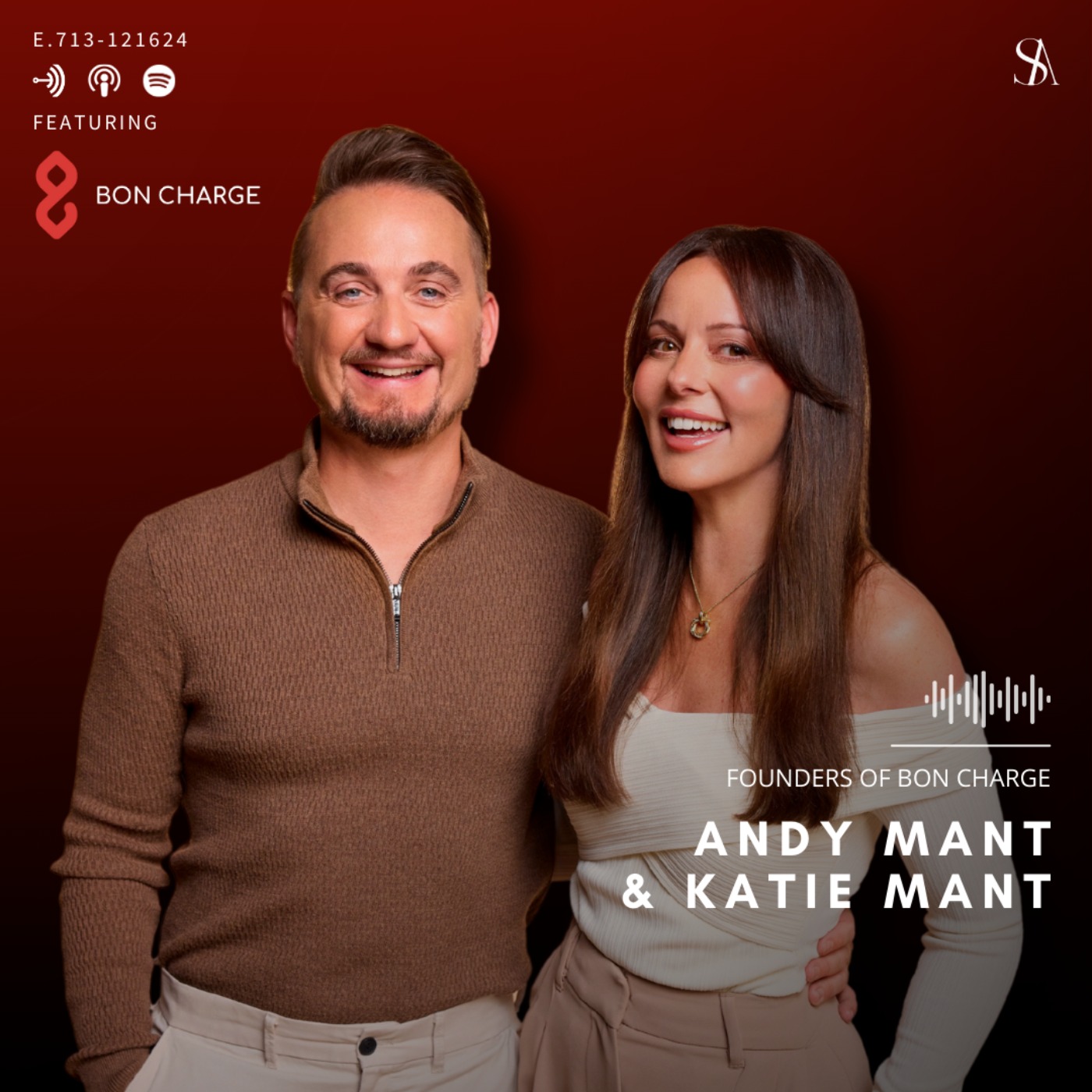
Hey guys, welcome back to Skin Anarchy. This is your host, Ekta and I'm really excited about the brand that we're using today because I know a lot of you chime in about LED light therapy and wanting to understand more about it, learning about the best products out there and I feel like this is such a heavy hitting brand. Their products are so wonderful and I've been really, really loving their red light therapy mask in particular. So without further ado, I would love to introduce you guys to the founders of Boncharge, Andy and Katie. Man the show. India and Katie. I'm so excited to host both of you.
- [00:35]
Katie
Thank you so much for having us on. We're delighted to be chatting with you all today.
- [00:39]
Andy
Yeah, thank you so much. Can't wait to dive into to all the science behind red light therapy with you.
- [00:44]
Ekta
Absolutely. No, I'm so excited to learn from you guys, but I really want to learn where the vision started for Bon Charge. If you could tell us a little bit about the brand and yourselves and walk us down memory lane for a little bit.
- [00:57]
Katie
Yeah, absolutely. Well, it started about seven years ago now. Andy and I were getting in shape for our wedding as any sort of bride and groom do really. We were kind of watching what we were eating, trying to exercise more and then we kind of discovered that that only took us so far. It was actually Andy that started delving deep into sleep at the point because he wasn't sleeping that well and lots of studies were indicating that sleep really impacts your well being. And he was delving deep into the science to understand how do you optimize sleep and then stumbled across blue light, the effects of artificial blue light after dark on your sleep, and then discovered that these things called BL light blocking glasses could be used to block the blue light after dark. So he hopped on Amazon, ordered these ridiculous looking safety goggles that were supposed to block the blue light out and started wearing them every evening while we were watching tv. And you did notice a bit of improvement in your sleep, didn't you? To start with?
- [01:55]
Andy
Yeah, it wasn't, wasn't too bad and it just wasn't in line with the science. So I just, I'm a sciencey guy. So I decided to create a pair of blue light glasses that blocked in line with the peer reviewed studies and the whole sort of biohacking and wellness community love these glasses. So that's how one charge was born. But to fast forward a few years, we basically are always entrenched in the science in the studies that support light therapies and then we just led on to build a lot of different products utilizing light. One of those being Higher Radiance Red Light Therapy. And to this day that where we, I guess wanted to go as, as a company and our community has really grown with us because they want that science backed, high efficacy based products and red light therapy and specifically the mask that you've been using as well, Hector, has become and fast become one of our best sellers.
- [02:51]
Ekta
Yeah, I mean, it's a wonderful, wonderful product. And that's very fascinating that you guys started with this understanding of blue light because I feel like there's definitely a lot of fear mongering out there, but there's not enough data and just information, you know, for consumers to understand, like what light really does to our bodies. You know, I think that's, for me, that's the most fascinating part about light therapy is that it has so many benefits, but we're not talking about it nearly enough, you know, so.
- [03:17]
Andy
Yeah, I know, I know. It's. It's so true. Right, And I'm glad you said that because, you know, there is so much fear mongering and dogma out there about specific frequencies of light. And you know, blue light in particular, before we come on to the red light, is one that's unfairly demonized. I think you've got to look at context in every situation because blue light is fantastic during the day, the sky is blue and makes us feel great and it keeps us alert and awake. But if we're watching TV and blasting artificial light from digital devices into our eyes after dark, that's not so good because it's tricking our brain into thinking it's nighttime, suppressing melatonin and disrupting our sleep. So context always has to be applied in any situation when it comes to light.
- [04:00]
Ekta
Absolutely. No, absolutely. And I think, you know, this is one of my biggest questions because I know that everything that you guys create is really backed by science. It's very, you know, science forward. And I want to start there because, you know, the red light mask that we're, you know, that I love so much, I mean, I want to understand what was the story behind that. Where did the research and the digging really start for you guys when you wanted to create any red light product? I mean, what were the, if you can walk us through that, the R and D behind that?
- [04:29]
Andy
Absolutely. Well, every product that we launch, Katie and I personally test for at least six months. And typically all of our products go round for about four or five different revisions. So the engineers we Use absolutely hate us because they just create the product. And we're like, no, this EMF is not right, this irradiance is not right. So yeah, so what we do is the first thing we look at is first of all, we're not inventors of products. We like to take the philosophy a bit like James Dyson did with the vacuum cleaner. We take a product that is already in existence and we reverse engineer it to a point where we optimize it so much based on peer reviewed academic literature. So when you look at red light therapy, for instance, a lot of the panels and the face masks and other devices that are out there utilizing irradiances that are way, way below what could be deemed high efficacy when it comes to the treatments or sessions that you'd be using. So we get that information by reading a lot of peer reviewed studies. Katie and I are constantly in, in PubMed, reading these and research gates. And then we collate the data and we look at how we then can improve a product to make it the most optimal and the most powerful, I guess human sessions. So, so let me give you an example of the red light face mask. So I think that's a very important product at the moment. When you look at other brands that are out there, there's two distinct, three distinct issues, should I say that we found with those masks. The first one is a lot of them contain blue light. Now blue light is very good at treating certain skin conditions. So like acne, for example, blue light is used, but it is incredibly detrimental to skin aging. It will make you age faster. Blue light and it hydrates the skin as well.
- [06:20]
Katie
Severely dehydrated. So that was a key thing. When we were testing face masks on the market to perfect hours, we didn't want the blue light in it because it really dehydrates the skin. And when your skin loses moisture, fine lines and wrinkles are a lot more visible and actually accelerate the aging process. And also understand to not use the face mask if it has blue light after darks. They were disrupting their body clocks by using it when they get home from work, which is when most people are going to use them. So that was important for us.
- [06:51]
Andy
Yeah, that was super important because we're all about the overall, you know, we're not looking at creating a product that solved one problem if it causes another issue. And we found that that was an issue with the mask. So we removed blue light from us. The other issue was the irradiance of red light because a lot of people are using the correct frequencies like 630, 660 nm at the red and 850 nm at the invisible near infrared. But they weren't using it at a high enough irradiance. And what irradiance is is the, I guess the tightly packaged density of power that a red light therapy device can release in their LEDs. Higher the irradiance, up to around about that 100 to 150 is optimal. We found in the literature to reduce the treatment time but also increase the efficacy of that session. So we managed to use much more high powered LEDs than the other brands that are out there. And the third, and probably one of the most overlooked issues is we're very firm believers of the entire EMF spectrum. So not just light which sits at the lower end of it, but also 4G, 5G, Wi Fi, Bluetooth, dirty electric, things like that we've become specialist in. So we managed to put in engineering within the red light therapy devices, specifically the red light face mask to reduce down harmful EMF radiation levels in it. So when you're putting the device on your face, you're not exposing your brain or your skin to potentially harmful EMF radiation as well. So that's sort of a brief overview on that specific product of red light therapy in general and on our whole sort of R and D development process.
- [08:29]
Katie
Actually added another element on that. I was heavily involved, well, in all product development, but this face mask in particular was a passion project of mine. You know, as a woman, 39, going 40, my skin was dramatically changing. So I was really road testing this face mask. But the other thing that's important is the usability of the product. I've tried so many different beauty products on the market and devices that yes, might yield some results, but you can't be consistent with it because it's bulky so I can't take it away when I travel or it requires a lot of space for storage. So things like that, thinking beyond just the functionality of the product, but the usability as well. Can someone sustain this on an ongoing basis? Because it does have to fit into your part of your lifestyle. So it's important that we had a flat mask that could travel easily, that was lightweight, that wasn't rigid in its structure, and they all play into the design process as well as the technology.
- [09:23]
Ekta
I'm so glad you brought that up, Katie, because I, that's one of my favorite parts about the mask, honestly, because I've seen the hard shell ones, you know, and I mean there's, I mean, no hate towards anybody. You know, I know brands work very hard on their products, but I mean, the functionality has to be there, you know, to see results. And I, I love how lightweight the, the mask really is. And I would love for you to talk about the materials that went into that. I mean, what was the research that you had to do to find that ideal material, you know, that would really be great with the technology that you're providing here, the light technology, but then also practical, you know, to use.
- [10:02]
Andy
Yeah, absolutely. And we all know that the, the big topic at the moment on the environmentalist side is plastics. We wanted to use as minimal amount of plastic as possible, number one, from an environmental standpoint, but two from the microplastic standpoint. When you put something plastic around your face, you know, you can increase the incidences of microplastics entering your nasal passages, you know, even your pores as well. So we don't want to have any microplastics or any more than, you know, that the environment is giving into our body. I think I read somewhere recently that every year we get like a credit card's worth of microplastics in our bloodstream and body. Yeah, I'm drinking bottled water. So we wanted to limit that. Now when we looked at different materials, we found two very distinct types of silicone that we wanted to use or that we could use. One was a grade silicon, and we started our face mask with that one. And then we quickly learned, and this is where we come into changing and always improving our products, we found that even better silicon, which is medical grade silicon, much more lightweight, much more durable, flexible, breathable. Yeah, yeah, absolutely. So that was what. The direction we went with that rather than these hard shell plastic devices that we've all seen out there as well.
- [11:21]
Ekta
That's really smart because, you know, I feel like you brought up such a good point, Andy, about the plastics, because, you know, with any kind of even like cosmetics, like, I, I think I had, you know, a conversation about this a while ago, not on the POD podcast, but we were talking about how even cosmetic products that are bottled in, you know, plastic, even after like a month, you're really dealing with a lot of breakdown, like nanoplastic that you're literally putting on your skin. It's getting absorbed. I mean, it's a huge problem. And I, the whole industry, I feel like, needs to address this, you know, much less in a product that is utilizing some sort of energy, you know, and then interacting with that plastic. So it's very, it's a very Hot Topic. It's very important. I wish people would talk about that more. You know, it's really important.
- [12:03]
Katie
Yeah, I wholeheartedly agree. I'm currently going through the process of cleaning out my cosmetic cupboards to find things that are even more natural or even better in their packaging. It's an evolving process because as you, you know, read another study, you learn more. So it's a constantly evolving pace, really. And I agree with you that more needs to be done in the, in the beauty industry, for sure.
- [12:24]
Ekta
Absolutely. And, you know, I want to actually dive a little bit more into emf, if you guys don't mind, because I feel like, just for the listeners and their education, I mean, can we talk about emf? And I mean, I'm. You guys had to go through a pretty lengthy process to really minimize. Right. So I would love to learn more about that in terms of just educating the listeners on what is EMF and, you know, what goes into actually minimizing the levels.
- [12:48]
Andy
Yeah, absolutely. It's a really good question. It's one of those topics that blue light was maybe five or six years ago when not many people really understood it, but it started to gain some traction. What, what EMFs are, they're, they're electromagnetic fields, okay. And they all give off radiation. You get types, you get ionizing radiation like X rays, microwaves, gamma radiation. And we all know how bad they are. You know, they destroy cells and are very, very bad. But you also have something called non ionizing radiation. And this type of EMF is all around us. So it's things like cell phone towers, 5G and 4G, Bluetooth, Wi Fi and various other sort of like radio waves. Like if you're listening to your, your music on your iPhone or, or a, a radio, for instance. Now what happens is that we have cells in our body and our cells turn over a specific rate. And that's based on something called Schumann resonance, which is around about 8 megahertz. And that is the natural EMF that's given off by the planet, by the Earth. Now when we start surrounding ourselves with different types of electromagnetic field radiation, such as the white WI fi's, Bluetooth cellular radiation, this can, over time, speed the oscillation of your cells in your body up, which turns them over faster. Now that then becomes an issue because it's now not turning over at the rate that humans are designed to have it turnover. So we age faster or we make ourselves potentially susceptible to specific conditions over time. So what we're seeing is you probably see a lot of These sort of posts out there about how like all 5G is really bad and it's the end of the world, which is not really true. But when you look at 4G and 5G, for instance, this is where we've moved as a, on a cellular network side, 4G spins, it's a fourth generation, so it spins at a specific Hertz frequency which is a little bit more than, than 8 Hertz. When you look at 5G, that's 100 times faster spin rate than 4G. So we're not just going up like a little bit in terms of the power of this electromagnetic radiation, we are 100 timesing it. So there's a lot of unknown about it. And when you look at the studies that are out there, a lot of the studies on EMF radiation have been conducted in animals at the moment, not so much humans because it's still so new to us. But the results we're starting to see in the animal studies, you know, advanced accelerated aging and potential for other metabolic issues that happen as we age, happening sooner. Like when you look at unrelated studies to EMF radiation. I'm not pairing the two here because correlation isn't necessarily causation, but you see in the media that, you know, people that are getting Alzheimer's a lot younger, they're getting, you know, strokes and heart disease a lot younger, you know, there's something out there that's causing that and you know, it will probably be a plethora of different things, but you know, radiation and specific articles that have been written about it are looking at potential correlation, causation, links between the two. So it's, it's a fascinating topic and you know, one where people should probably be aware. It's one of those things right now where prevention and shielding of EMF radiation and being cognizant to it is probably the best way forward until more harder hitting evidence comes out that supports what we all believe in the biohacking and wellness communities, that it could potentially be harmful to wellbeing.
- [16:40]
Ekta
Absolutely. That's so thank you for educating us on that, Andy, because I feel like also I've heard a lot about it in the endocrine system as well. Just to add to what you said, like, I mean, I think endocrinology comes up a lot right now in the skincare community because everyone's talking about endocrine disruptors and whatnot. But this is really relevant, you know, to the endocrine system because I think they found some studies have been published about like cortisol and ACT levels, you know, being impacted by this. And it's very important because that's literally, you know, contributing to skin aging. You know, everyone talks about cortisol and all these things that are constantly flowing in our bodies, but they're, they're not even addressing this big one. You know, this is a big, big factor. And so I think it's just such a multifactorial topic and, and in terms of the whole body impact that EMFs have, I mean, there's so much there. So it's huge, you know. But thank you for educating us. That's very interesting.
- [17:37]
Andy
You're welcome. I think a good, a good little free tip for people is when you go to bed, turn the WI fi off in your house. It's a huge hack. People have reported that their sleep is increasing massively by having no WI fi on in the house. And the, their cell phone switch to airplane mode whilst they sleep. Just such a free and easy thing to do. And if you don't want to physically switch the, the modem or the router off every evening, you can have a timer set that, you know, if you go to bed at 10pm, at 10pm, the timer will switch the power off to your router and you'll start to see some very interesting changes to your sleep.
- [18:16]
Ekta
Yeah, I mean, I think, you know, I definitely don't practice that, but it's definitely something I should do. I think more often I've heard of that. And I wonder how many people actually go through with that because, I mean, at the end of the day, you have to really consider what's around you. You know, we have so much technology now that it's hard to even keep track of, you know, like, what's on, what's not. I know a lot of people talk about turning off their cell phones now at night completely. You know, they want to completely shut everything off. But yeah, definitely. Fascinating. I want to come back to the mask, though. I would love to learn a little bit more about, like, how many actual lights are in the mask and the exact wavelengths that you guys kind of ended up working with when you're creating this product.
- [18:55]
Katie
Yeah, so we actually, as part of the research, we're looking at, as Andy touched upon, obviously the irradiance and the frequencies, but the coverage was a big thing because you might have seen on social media that there are sometimes some criticism on face masks that are on the market because they don't offer the full coverage, and rightly so. There are masks on the market that don't have enough LEDs to offer complete full coverage. There'll be elements of the face that don't actually get targeted by any light whatsoever with the mask. So it was important for us to have as many as we could fit on the face mask to cover the whole face. So we have 256 LEDs, which is one of the highest on the market. Some only have about 120. And if you look at those, there are significant parts of the face that don't get the coverage. So the number of LEDs is really important to get that full face session. Otherwise you're missing out on some areas of the face that don't get the session.
- [19:53]
Ekta
Yeah, that makes sense. And how many times should we be doing this, Katie? Like how many times should we be doing the treatments?
- [20:00]
Katie
It all depends on the device that you've got. Obviously if it has lower irradiance, you're going to have to have longer sessions and more frequent sessions, hours. I use mine two, three times a week for 15 minutes a time. And that's really noticeable results. We have some people that love it so much that use it every single day. There's not an issue using it every single day, but there's certainly not a need in order to see results. So 10, 15 minutes, three times a week is, is a good sort of lifestyle modality to, to follow.
- [20:29]
Andy
And there's a really cool setting on there, so you can have either red or near infrared, both together, because both do very different things. And also you can select the intensity level so you can have one, two or three. So we always say to start with the lower intensity, see how your skin reacts and then build up over time. But if you have a lower frequency, a lower intensity, sorry, you would probably need a little bit longer. But on the higher setting, you know, you can probably get away with five or ten minutes, whereas Katie will probably have it on the second, the middle intensity, which is why she would do it for a little bit longer.
- [21:06]
Katie
Absolutely. To remember is the, the products that you're using with it. A lot of people ask us do, do they do this session before or after their skincare products? And we always recommend before on a clean bare face because you don't know how your skin's going to react with the ingredients of your skincare products and red light therapy. So always do a patch test if you are going to use it after. But products, but always on bare skin is better. It gives less for it to penetrate through. You know, some moisturizers are quite thick, even if they're natural, it's still, that extra layer that the red and the infrared has to penetrate through. So we always recommend to do it on bare skin and just be cognizant to the ingredients that you do apply afterwards in case there is some sort of reaction for yourself. And do a patch test first.
- [21:52]
Ekta
Yeah, that makes sense. Also, like, a lot of the ingredients, you know, unfortunately, we're not there yet. I think as an industry where we fully understand, like, breakdown products of certain ingredients, so it makes sense. Like, if you have a very heavy layer of skincare on, you know, you don't want to be exposing that to, like, light therapy because you don't know what the chemicals are that you put on your skin. So just. Yeah, I mean, that makes a lot of sense. Now, one thing I do want to ask Katie. I love this part of the mask. It's fully portable, so I'm very curious how much power goes into, like, actually, like, powering this mass, because the. The battery, I mean, it's. It lasts for a long time. So how was that in terms of crafting the product? I mean, how much energy do we need to be able to power it? If you guys could tell us a little bit about that part.
- [22:38]
Katie
Yeah, Andy actually was involved in the. In the development of the. The power supply. So maybe you can talk a bit about that. It was. It was an evolving process. The first model we had required charging sort of after four sessions. So we were kind of working with the manufacturer to optimize it. Without having a larger power pack.
- [22:57]
Andy
Yeah, exactly. No, we had to. We started off with various different elements. We actually started off the first face mask with it being mains powered, because that always yields a hell of a lot of extra power if it's coming from an AC current directly from the. The grid. But the EMF levels were so high because when it's plugged into the mains, EMF levels will exponentially rise because of the electricity, the dirty electricity that comes from those types of grid systems. So we moved quite quickly to utilize lithium batteries inside, so rechargeable, so you don't have to go down to the local supermarket and put in, you know, the double A batteries or anything like that. It's just a very small, compact, powerful lithium battery that can be recharged just by the standard sort of USB method that we would charge, say, our smartphones with. But we also wanted to get it to a point where it could be bought onto, you know, people's travel. So if they wanted to bring it on an airplane, they still could because the battery is no different to your cell phone. So we went through a couple of rounds of those where you know, we got the first, the second round after the, the mains powered testing during our trial phases was going to a battery, but it was too much lithium content to take on to say an aircraft. Whereas we then reduce the lithium content in there. So people are bringing it on that carry on baggage because we all know that skin dehydrates on flights. So people typically like to use the red light face mask that way. So that was, I guess the evolution to where we are now in terms of the power supply. But it is a difficult one because to achieve the irradiance we wanted to achieve and become one of the most powerful masks on the market was the power supply was, was a challenge to get the right level without compromising the EMF safety as well. So it was, it was a long journey, but we, we got there in the end.
- [24:54]
Ekta
Yeah, no, it's such a beautiful product. I mean, I know I'm asking a lot of like these technical questions, but it's just very fascinating, you know, for me because I, I love it. I really love this product because it's, I've literally tried, I think every LED mask that I've come across, you know, in the time that I've been into skincare and it's always the same story. It's e portable. You can't really, the functionality isn't there, you know, so you can't really develop a habit. And what happens then is that you're not getting the benefits, you know, the, the light therapy. And there's so many factors that contribute to just not being able to use these products. But yours is just so unique in that way, you know, and I, it really struck me as a consumer and I want to actually learn a little bit more about, you know, I, I know there's so many benefits to red light therapy and I would love for our listeners to gain a better understanding on a cellular level what's really happening, you know, to their skin when they're actually utilizing the mask in a consistent way, you know, over time. If you guys could share maybe some case studies with us or any feedback you've gotten from your research team.
- [25:57]
Andy
Yeah, absolutely. Maybe I'll talk a little bit about how red light therapy works. And it's. Yeah, I do caveat here that this is the simplified version of it and it still is a little bit complicated, but I'll break it down. So it all comes down to energy production. So what happens is when we create energy in Our cells, it is created through something called electron chain transport. Now, there's four phases during this energy production system to produce energy. And the most important one for us that we talk about in terms of red light therapy is at phase four. So there's a cytochrome that's located at the fourth phase called cytochrome C oxidase. Now what that does is that reacts with oxygen and it produces energy. Now what happens when the skin becomes stressed or when the muscles or the joints or whatever it may be become stress? So it could be through exercise, it could be from physical stress like cortisol levels increasing. Something called nitric oxide increases at the fourth phase of energy production. Now what nitric oxide does is it takes away some of the oxygen that cytochrome C oxidase is using to produce energy. So our energy production system becomes very inefficient. It doesn't become optimized. Now what happens is when you shine red light at higher radiances, at 630, 660 or 850 nanometers onto a body part that you want to target, the red light binds with cytochrome C oxidase and allows more oxygen to be utilized to produce more energy. Now when we produce more energy in a given region in a cell, that cell can use that energy for more growth, repair, restoration and metabolic processes. So if you're looking to use a red light face mask on your face, and you're looking to reduce the appearance of fine lines and wrinkles, or improve skin tone, or to make the skin look more anti aged, then the red light therapy will act on those cells through this energy production, more efficient energy production system to help repair and restore. So you see the increase in those types of processes. If you have sore muscles, it will help repair the, the muscles. If you have sore joints, will help repair sore joints and so on. And then what happens is the nitric oxide, because it then has no need to be in the cells that goes back into the bloodstream, which helps reduce inflammation further. And it also releases something called reactive oxygen species, which signal for more protein synthesis to happen within the body. And that then helps restore and repair cells as well. So that's how it works at a very, very basic level. And when, when people use it, for instance, on their face, it will, like using the red light face mask, it will actually increase the production of something called fibroblasts in the skin tissue, which are then the precursors to go on and help produce something called collagen, which we all know is very beneficial to to skin well being. So that's typically how red light therapy works as an overview and typically how it would work on the face for people looking for those types of skin care results.
- [29:23]
Katie
I also sort of like to, you know, if anyone does struggle with that scientific element, an easy way I like to understand it is the near infrared frequencies in red light therapy relax the muscles. So if you think about why we have wrinkles, it's because our muscles are getting very tight, contracted and it's pulling on the skin. And when it pulls on the skin, it creates the wrinkles in the skin. So near infrared relaxes those muscles. If you think about it penetrating into the muscles of your face, it's going to relax those muscles and with it the skin will smooth out and the appearance of those fine lines and wrinkles will also diminish with it. So that's just an easier way to understand that if you can't get around the full blown signs that Andy delivered.
- [30:08]
Ekta
I love that. No, I love both versions. It's, you know, it's really cool because, you know, you bring up a great point, Katie and I, I think, you know, a lot of times people think that the only way to relax muscles is something like, you know, treatments like they go get Botox or they go do these like, you know, injectable treatments. But this is very fascinating because if there's anyone out there who doesn't like invasive options, you know, and you're truly utilizing red light, you know, consistently and you know, in a very accurate way, this could be kind of like adject therapy sort of. Right? To, to getting something like Botox. Yeah, very cool.
- [30:43]
Katie
Consistency is the key, that having it as part of your lifestyle to release that tension that's in your face. Because, you know, as well as the aging process, we get tension just throughout our day, you know, our posture sat at a desk, that really affects how our face looks. The stress of being at work or talking all day at meetings or doing presentations or a lot of people hold a lot of tension in their jaw if that, if they're stressed. So red light in the infrared will help relax those muscles, which is not just beneficial from, you know, the ease and the comfort at the end of the day of having that relaxed jaw and face after the tension. But it's also working on those, those fine lines and wrinkles and complexion as well.
- [31:20]
Ekta
Right? No, that makes sense. Now I want to ask because I know there's always, there's always a few people that kind of like go in, you know, like they get a product and they want to just use it all the time. Is there any kind of a. A safety thing we should be, you know, aware of in general, you know, with red light therapy in terms of overdoing it or, you know, anything like that that you guys have come across, you know, in, in creating your products that, you know, maybe was kind of flagged for you, you know, that people should know about.
- [31:48]
Katie
Yeah, of course. And it's a great question and it's one our community ask us a lot as well, because they get excited by the results and then they think, oh, can I do it more and more and more and speed up the result?
- [31:57]
Ekta
So it.
- [32:00]
Katie
But no, there's been no studies that we have come across in our research to date that indicates any safety issues with the frequency of using red light therapy. So you can use it every single day and you can choose your session length to suit. The key thing is touching upon what I said earlier. There isn't actually a need. If the panel is, you know, super efficient or the face mask has the right irradiance and the right number of LEDs and the right wavelengths, there isn't a need. And that's the key thing. We're all so, so busy with work, with families, with our lifestyle, with our hobbies. We don't have an hour to spend in front of a panel or using the face mask. And that's key thing that we kind of worked into our products is that they can be done for 10 to 15 minutes and get the same results. So the results won't increase if you sit there for two hours with it versus 15 minutes. And that's the beauty of it. I feel that it is an efficient modality to have in, in your lifestyle.
- [32:52]
Ekta
That makes sense. That's really cool. And you know, I'm just curious, like, what are some of the feedback that you guys have gotten from your, your customers and people who've really been utilizing.
- [33:00]
Andy
Yeah, yeah, really, really good question. We've managed to get three or four before and afters on our website, so people should definitely go and check those out. You know, some amazing results with skin appearance with fine lines and wrinkles diminishing with blemishes.
- [33:16]
Katie
And the redness is the key. Gosh, that some customers that have transformed the redness of their skin by, by using it just two or three times.
- [33:23]
Andy
A week and the texture as well. Like people that have got like bumpy skin, they've utilized our red light therapy devices and then it's just smooth everything out over, you know, summer, two weeks, even just Using it every day for two weeks with, with more, you know, harder hitting issues that they might have. But you know, some people, maybe three months of use and the fine lines and wrinkles, the visibility of those are diminishing. So it's, it's, it's absolutely incredible what we're seeing. And we really do encourage anyone to check those before and afters out because when we saw them we would like literally fell off our chair. It's, it's crazy the difference. And obviously individual results will always vary. But you know, it's, it's just so nice to see some of these people that have used various protocols for many years and have not really seen much of a, an impact suddenly turn something as, you know, revolutionary and as simple and non invasive to you, such as red light therapy, and see incredible increases and improvements in skin appearance in just such a short period of time. It's fascinating.
- [34:35]
Katie
And a lot of customers have been able to discard their sort of, sort of quite, or what's the word, sort of advanced skin care routine that they had been maybe prescribed by a doctor for their skin. They're able to discard those which don't always have the best ingredients in them because the red light face mask has done a better job of transforming their skin, which for me that's the bit I love the most because the industry is a minefield to understand all the ingredients and the impact it has on our overall well being. So to be able to reduce the reliance on those cosmetics or have the option to turn to more natural ones because the face mask is doing the work that maybe the not so natural ones were doing previously, just provides more holistic overall well being for someone.
- [35:20]
Ekta
Absolutely. I love that point because, you know, with skincare, I don't know. Obviously skincare has a very special place in my heart. You know, I have a quite extensive skincare routine myself. But I mean, at the end of the day, you're still dealing with, with something that's a topical product, you know, and there's nothing wrong with that. But there are limitations and I think sometimes consumers can get very wrapped up, you know, in the expectations they have if they're not utilizing something that goes deeper beyond just that, you know, surface level. And I think that that's where, you know, products that are utilizing light therapy. For me as a consumer, they stand out so beautifully because they're something you can use at home. You know, you don't have to worry about going to a practitioner every time you want to get a treatment. I mean, this is A wonderful product for people who want results. You know, they're not just doing skin health efforts or skin care just to do it. You know, they really want the results. So this is very, very hard hitting for consumers like that. I mean it's, it's a beautiful product.
- [36:17]
Katie
Absolutely. And thanks so much for that kind feedback. And you're right, you know, to be consistent it has to be convenient. And booking is in to go to a salon once a week or once a month that eats into people's lifestyle. So they want something that they can do at home easily and cost effective. You know, salons. Booking for session at salon. Wow. You know, after three sessions the mosque has paid for itself. So yeah, it's all about consistency and being convenient and able to just follow it through.
- [36:45]
Ekta
That's one thing I wanted to ask you guys about because it's very affordable, especially given the ridiculous prices I've seen on some, some products that, you know, that are similar. And how was that in terms of keeping cost to at a point where it was affordable, you know, for the average consumer that's looking for a product like this? It must have been difficult. I mean, you guys have such great technology here.
- [37:07]
Katie
Yeah, it is difficult. Absolutely. And that was going through the rounds of revisions that we do to find the most optimal technology and the most portable design and the best material and the best battery power whilst making it cost effective to the consumer because it's, it's all, well, having a product that's got the, you know, the most, one of the most radiant, highest radiance on the market and one of the most LEDs on the market. And it's portable but it's so expensive no one can access it. So it is all about having something that we could produce that would be affordable to as many people as possible, which, which is key for all of our product lines, otherwise people can't access them. You know, it's finding the balance between having that premium product that people then can access as well.
- [37:48]
Andy
Yeah, we make sure that, you know, when we released the red light face mask we, we had hundreds of thousands of people in our community already. So we, we managed to, you know, survey a lot of those into what products they wanted and the red light face mask came up and we were very confident of how well it would do once we released it that we managed to order quite a large quantity of them and the more we order from our manufacturer, the cheaper the price as well. So that's how we got it down quite low. We tested our community in the market and we took the calculated risk that we knew this product would be revolutionary, would revolutionize the beauty industry and be better than everything else that's out there. That our community just went crazy for it. And we managed to get it at that affordable price because we could buy not just a few hundred, but, you know, thousands of these devices once we had our prototype approved and tested.
- [38:48]
Ekta
Yeah, I love, I love seeing products like this become accessible. You know, it's, it's really a passion area for me because I, I hate to see like ridiculous price like in the thousands, you know what I mean? And it's just like you see a product and you're like, gosh, I wish more people could get their hands on this, you know, and actually utilize it. So that's where I feel like you really stand out with what you're doing. I mean, it's a, it's a grade A product and it's affordable and it's accessible. And I just, I don't know, I love it. It's like the right formula. You guys have figured out the formula. But you know, I, I want to actually pick your brain a little bit more, Andy, if you don't mind, because there's a, there's a topic I feel like doesn't get talked about a lot and I feel like it's very relevant to some of the insights you've already given. And that's wound healing. You know, I feel like with wound healing we talk. There's this whole area of study, as I'm sure you know, you know, area of medicine, I guess that concentrates on light therapy for actual wound healing. And I know with skin care and just normal skin concerns, there's a lot of micro trauma on a day to day basis that we deal with. You know, whether that's UV light, whether that's physical trauma from like foliating too much or whatever we're doing to our skin. Is there anything you could share with us about the benefits of red light when it comes to micro trauma wounds and healing them? Whether that's like on a normal basis or maybe post procedure, anything?
- [40:10]
Andy
Yeah, absolutely. It's interesting because when certain procedures are carried out, typically red light therapy, red light panels is utilized as part of the recovery process as well. Even in mainstream medicine, which is, which is interesting. But yeah, in terms of the sort of micro trauma level and even up to, you know, sort of nicks and scratch scratches and things as well, red light therapy works very, very well. Again, as I mentioned earlier, that energy production optimization process through electron chain transport manages to produce more energy in those regions which will then fuel that restoration process of the cells and the skin in those areas. You know, obviously there, you know, something like that will take time. This isn't going to be like a put it on for a day and, and those, those sort of micro tears and lesions are fixed up. It will take, you know, a little bit of time. Now we have actually seen some customers that have said that it's ex. It basically accelerates that type of process. So, you know, the skin will naturally repair itself anyway over a given time. But if you're utilizing red light therapy for something like that, it will speed it up, up no end. So it can be factored in as part of someone's recovery process along with the other mainstream protocols that are utilized. And a good example of it. And you know, it's one where it gets you to stop and think when you, you know, I remember this from being, being a child. Whenever I used to play outside, I used to fall over all the time, like graze my knee and cut myself and you know, just that typical boy climbing trees and doing, do silly things. But you know, every time that I would cut myself, by the end of the day my wound would be scabbed up and healed. And that was because the, the red light in the sun, because red light therapy is in the sun. It just comes with the, the unfortunate aging and skin sort of skin cell mutation of UV radiation, whereas red light therapy doesn't. Whereas when in the winter months when I would be, you know, horse playing around in the living room and you know, knock my elbow on something and cut it, it would take, you know, many days, if not weeks to heal properly. It would be almost sort of a bit spongy rather than the sort of scab sort of healing out there. And that comes down to the red light. When you look into it more in the academic literature, the red light from the sun, the sun, the near infrared light from the sun is what's accelerating that, that wound healing process. So that's kind of how it works from an ancestral level. It's just in today's modern world, we become creatures of indoors, away from the sun and scared of the sun. That's why things like red light therapy are super important because it's harnessing the power of, of, you know, an ancient healing source which is the sun, but taking out the elements of the light like the blue that causes more aging and dehydration and cellular damage and the UV light and just leaving in those beneficial restorative frequencies of light that then go on to help with things like wound healing and micro tears in the skin.
- [43:24]
Ekta
That's so fascinating. That's so fascinating because I feel like that's something that kind of gets overlooked. I mean, we don't really consider the micro trauma on a day to day. And it's good to know that we can do something about it and we should. You know, especially now, I feel like you're right. Nobody, we're kind of scared of the sun. Nobody's really going outside like that. And if they do, they're just covered in sunscreen at this point. So, you know, it's good and bad. You know, I'm on the fence with all that, but that's a different topic.
- [43:52]
Andy
But yeah, that's a whole nother podcast.
- [43:55]
Ekta
Yeah, exactly. Yeah. But I mean, I, I would love to learn. You know, maybe Katie, you can speak to this a little bit. Is, you know, pairing the red light mask with the other products in the range. If you could tell us a little bit about what pairs really well with the mask.
- [44:11]
Katie
From a beauty standpoint, my favorite pair combination is the face mask with the red light face wand. So again, that's a common question we get asked by our customers is which one do they need? And ultimately I think there's benefit to having both because the red light face mask offers the full face coverage to target any skin concern that you might have have. Whereas the red light face wand, I always tell people to think of it like gua sha. It's. Yes, it has red light therapy in it, but it's constantly moving across your face. So it's very, very good for if you wake up in the morning, puffy face. Maybe there's a bit of water retention around the jaw. Maybe you've got bags under your eyes. This helps to mobilize that liquid to contour, sculpt and de puff. But it does have the red light in it as well. So whilst you're doing that, you are getting some targeted and moving red light session across your skin as well, which will help if you're doing it under your eyes with the dark circles or you can kind of move it across certain areas of your face if you've got a particular area that's got a blemish or something that you want to just cover off. So I find those two work really, really well. Get the full face coverage, but also the manual massage that offers that lifting and sculpting with the face wand. But from a wellness perspective, because it goes beyond just beauty, obviously, I think what Pairs really well if you want a full body red light session. Because sometimes people say that they want to target their skin elsewhere on their body. Maybe it's their neck and chest, which as we know is the first area of the body to age and that kind of can give our age away. So you compare the face mask with our neck and chest mask which is essentially the same product. This one just goes around your neck and drapes down onto your chest. Chest to cover that area if you're a side sleeper. Unfortunately I am. I get sort of wrinkles in the morning on my chest from being a side sleeper. So that can then cover from the top of your face right the way down to, to your chest. And if anybody wants to take it further, then you can pair it with a panel or our new release red light therapy blanket which offers 360 coverage for the whole body. And then you have your complete face and your whole body targeted with red light therapy. But looping back to the beauty angle, a product that doesn't get enough attention is our lighting collection. So we have a circadian friendly lighting collection which we've engineered to be free of blue lights. And having those on in the house after dark, switching out your standard bulbs, putting in the blue free lights means that if you are going about your house in the evening, cooking, working with your children and whatever it is you do, you're under blue free lighting which not only helps you sleep, which of course then is good for your well being and your beauty sleep as well. It prevents your skin from dehydrating like normal bulbs do with the blue element in there. So I think those are probably my key ones from wellness and beauty. Really?
- [47:03]
Ekta
That sounds awesome. Yeah, I feel like it's a very like holistic way to kind of incorporate the products into your everyday life. That's really cool. I'm curious though, you know, you guys have such great products already and I mean, what's on the horizon if you don't mind, I don't know how much you can share with us, but maybe in the next five years what can we expect to see from Bon Charge?
- [47:22]
Katie
Yeah, we have got some exciting products that are currently in development. One will launch pretty soon. We're probably looking at maybe February at this stage which is combining a lot of our core products and our fans favorites into one. So again coming back to that, that convenience element and cost effective factor, we are combining quite a few of our different technologies into one product. So can't say too too much but it's definitely going to be one that does the most out of everything we've launched so far because it spans quite a few different collections. And then I want to do more in that beauty space is something I'm really, really passionate about. You know, we've, we launched Red Light Therapy a few years ago now with the focus on recovery for well being. But I'm really passionate about that beauty industry because it is just overwhelming. It's saturated and there's not enough holistic practices in there. So I want to expand our collection in that space. There's a few products that we're working on still within Red Light Therapy because I still think that's crucial to holistic beauty and holistic ways to anti age. Probably focusing more on other areas of the body, maybe even looking at what it can do for, for hair. That's a topic that I'm struggling to find a natural way to take care of your hair. There's so many chemicals. Natural shampoos and conditioners don't do enough for the hair protection. So we're kind of researching exactly what can be done there. So there's a few different things that hopefully tickle the taste buds there without giving too much away.
- [48:58]
Ekta
That's very exciting. Yeah, no, I'm really excited to see what you guys call with next. And honestly, I mean, I, I would like to just say this because you guys are really coming from this really like true science, right? And I would love to see you guys even take on something like longevity science. I feel like it would be so cool to see you do, you know, venture into that space just based on all the knowledge you have and all the research you've done and, and you know, just the detail you've put into your brand and your products. It's such a cool brand. So thank, you know, I'm really rooting for it.
- [49:30]
Andy
Oh, thank you.
- [49:30]
Katie
And look, Bon Charge is just getting started. Really in our eyes, we have big, big plans. So who knows, maybe we will be in that space one day.
- [49:37]
Andy
That's so good and thank you so much for, for having us on. It's been, it's been so great to be able to talk to you and your amazing community as well. We, we love what, what you do and you know, it's so empowering to, to be part of that. So thank you.
- [49:51]
Katie
Yeah, thank you for hours, but thank you so much.
- [49:55]
Ekta
Thank you so much. It's been an honor. And for everyone listening, please go check out the brand. We will be linking everything in the show notes, so definitely check that out and let us know what you guys think. If you've tried the products, let us know. If not, I highly, highly suggest you go check out especially the red light therapy mask. It's absolutely phenomenal. But thank you so much, Andy and Katie, it's been truly an honor to host you.
- [50:17]
Katie
Amazing. Thank you so much.
- [50:19]
Andy
Thanks.