Loading summary
Transcript67 lines
- [00:00]
A
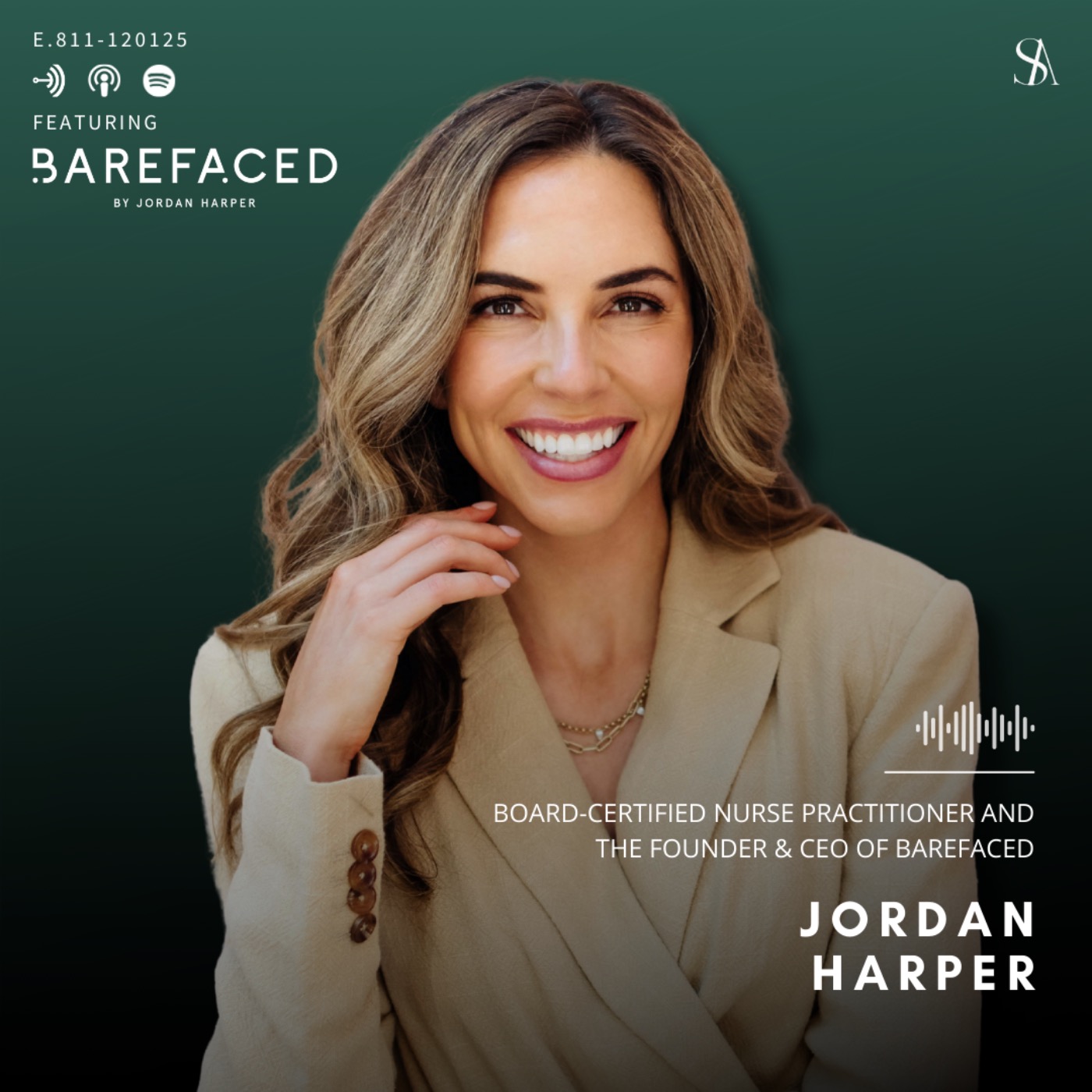
Hey, guys. Welcome back to Skin Anarchy. Today's episode is very special because we are going to be interviewing somebody who is the founder of a wonderful brand that I've been loving recently. And I think it's really important to talk about products that are truly efficacious, but more importantly, to kind of spotlight people who get it, that skincare is not one and done, and it needs to be made to be flexible and usable by everybody. So without further ado, I want to introduce you guys to Jordan Harper, who is a board certified nurse practitioner and she is the founder and CEO of Bare Faced. Welcome, Jordan. I'm so excited to host you.
- [00:31]
B
Thank you. Excited to be here.
- [00:33]
A
Yeah. I want to dive in. Start at the beginning, if you don't mind. I mean, you spent nearly a decade in esthetic medicine. What was that turning point that made you realize, you know, the skin care industry needed something simpler.
- [00:45]
B
So it's interesting, if I look back, I never planned on having a skincare line. That's something. It's so funny how life, if you just keep looking for opportunities, things evolve. And I'm so proud of, proud of what bareface is today. But before Bare Faced was ever anything, I was treating patients in office for injectables like fillers and Botox and laser treatments and skin concerns. And what I saw time and time again, let me just say this, before that, I was working in the ICU for several years. And I think that helped me to really become a good problem solver. Obviously, the problems were high pressure in the icu. Transition that into an office setting, treating skincare and skin issues, lot less pressure, but a lot of vulnerability that patients express. And they're coming in with some of the things that they're most uncomfortable with and sharing that with you. And I saw time and time again thousands of patients ready and willing to invest in office treatments, whether that be injectables, laser treatments, what have you, surgery even, but they weren't using consistent skincare. And what I compare that to is like going to the dentist. You can go to the dentist twice a year, but if you do not brush your teeth morning and night every single day, like, what do you think your, your oral health is going to be like? Not great. The same thing applies to the skin. And I approach, I. I would say I approach pretty much every aspect of my life in a way of get the basics down, get the foundation down, and skin care is the foundation of healthy skin. And then on top of that, building out a treatment plan. I'm a fan of Office treatments. And I always will be having that experience and knowing how powerful they are. But I really believe that 80% of the quality of the skin that you have is from your at home treatments and 20% is from the office treatments that you choose to get. But you have to properly prep the skin and take care of the skin with skin care first, even to get the biggest bang for your buck with an office treatment. So basically I saw that they were overwhelmed and confused, like they were ready and willing to invest in these office treatments, but didn't really know where to start with skincare and had either been underwhelmed with skincare in the past or just like, didn't think it worked. And so I really tried to take things down to the basics and started setting like realistic expectations of what they can expect from skincare, but also creating a realistic routine. And, and that's really where I got the concept. Less but better. Because people don't want to do like a ten step routine. They want to do something that they're. Everyone's busy, whether they're moms, everyone lives this busy life. They want to do something that they can do in a couple minutes, know that they're taking care of their skin, and good to go. So I just started doing very simplified routines, helping educate. Like we were talking earlier, educating them and explaining the why. And I saw that that was like so eye opening. And it really just started. I started to see that opportunity of like, oh, this could, this could be something bigger.
- [03:43]
A
That is, I love that because I think when it comes to skincare, I love what you said because you're like, less is better. Because it is, it is. It's really about. It's not even the 10 step that bothers me. It's about no one knows what order.
- [03:57]
B
To put things in or why they're using what. Yeah, they might be using 10 actives or 10, 10 different hydrating toners. It's like, what do you. What are we doing here?
- [04:06]
A
Yeah, like exactly what are you doing and why are you doing it? And it's really interesting. More Actives, more steps. But we both know, like, you know, clinically it doesn't. That's not always the case. More is not better. It gets more complicated. The pharma, the pharmacology gets very complicated. So what were some of the most common mistakes you saw patients making with their routines when you first were looking into this?
- [04:28]
B
So, so many. I would say one. Just thinking, oh, my friend uses that. I should use that. Layering so many Actives on Top of each other. I think about, I mean, just not knowing that like, oh, I just used three different exfoliating acids. And we are seeing, we're in a time now where I mean with the Sephoras and Tick tock and yes, it's really fun to apply product but what can happen is, is you can really start to disrupt the barrier because you are layering all of these products on top of each other that maybe like you're saying like they don't interact well or they're causing more irritation and sensitivity to the skin. So I would say not knowing common mistakes would be like using something because a friend is using it, but not easing into it or testing it out. Layering way too many actives over exfoliation and not understanding their own skin, which why would they. It's an organ. And I think we, because of social media and because of places like Sephora Ulta, you don't see people managing their diabetes without oversight. And really like with the skin, the same thing. It's our largest organ and there's so many skin issues and we're seeing just an increase in that every day with whether it's eczema or acne or melasma, you know, we're seeing all of that and people are expected to just manage that on their own. I saw they're not thinking, oh, this is something I should even ask a professional about. I should just know how to manage this on their own. And I mean that's simply not true. It's honestly should be a relief for people.
- [05:57]
A
Yeah, no, I mean it's really interesting because I think with skin care people think that it's. I'll figure it out. I'll just buy the products and I'll figure it out. And it's just, that's not how it works. Like you can't. And so. I know what you mean. I mean it's really kind of apparent these days. But it's amazing how something as simple as like just too much enthusiasm can really backfire. Right. I mean especially with health. Your skin is an organ, so.
- [06:22]
B
But I love to do the right thing. Yeah, yeah. You're just like, I don't know, I'm gonna do a lot, I'm going to do the most. And we think that doing the most is actually better and it's just not.
- [06:31]
A
Yeah. I mean, but I also love that with Bare Faced it's not just about stripping things down to be minimalist for the sake of aesthetics. It's about actually being strategic. Can you define what less but better really means from like a scientific point or a clinical point.
- [06:47]
B
So when I think about less but better, I would say for bare faced, I think about starting at the foundation. So we talk a lot about the core four and I want to make sure the skin is functioning optimally. So yes, we, we're treating concerns and maybe visible concerns, but we're also focusing on long term skin health, skin longevity. And so less but better to me means start with the foundation. All you really need to do is the core four. So you need an exfoliant, you need a vitamin C, you need a retinoid and you need an spf. I consider this to be the foundation of your skincare routine, your less but better routine. Obviously you need a cleanser and a moisturizer, but the core four are the transformative products in your routine. And then from there you can build out your routine further. Whether you're like, hey, you know what, I just like to use extra hydrating serums or I want to use a mask a couple times a week. That's great. That's not going to change the skin. So when we talk about less but better, we talk about stripping everything back, getting the skin healthy, getting the skin functioning optimally, and then building a routine based on skin type and concerns on top of that. So the first thing I see people want to treat, I think of skin as like a priority pyramid. So the bottom is like getting the skin to actually function properly. The top is treating concerns like anti aging or breakouts or hyperpigmentation the skin. But what happens is, is people go in and they just buy a brightening serum or it's like, well, yeah, that's, that can work. But if you're adding that in without the skin functioning properly, you're just not going to see the result that you want to get. And so really I would say it's about starting with the basics, knowing that we've got to get the skin functioning optimally to actually even see results from skincare at all.
- [08:32]
A
That's really, I really like that you said that. I think that's something that a lot of times we miss that point because it's easy to see something go wrong with your skin and then be like, I'm just going to keep trying and I'm going to keep adding stuff and I'm going to keep exfoliating. And it's like, oh my gosh. And then you end up with these like chronically destroyed barriers. And I like that you brought up longevity. I really, really like that point. Longevity, skincare this is something that I've seen a lot right now. It's buzzing. But really want to get to the root of this. When you say longevity skin care, what does that really mean in the context of health for the skin?
- [09:07]
B
Yeah. So I think of skincare in two buckets, longevity and anti aging. And I really think they go hand in hand. We have been in a season where anti aging you can't. I mean, you're going to hear that everywhere. And I think of anti aging as like, corrective, and I think of longevity as sustaining that cellular and barrier health for the long term. And so we need. This is the only skin we're going to get. And we're not about like blasting the skin, overwhelming it with a ridiculous amount of actives to make it look good tomorrow. We want to make it look good for years to come. And to do that, it all starts with that skin health and going back to the core. Four, getting the skin to function optimally. And I mean, you could apply that really to any aspect of the body. And we're entering in, thank goodness. Honestly, we're entering into a longevity phase. We want our skin and our bodies to. We want to live well. We want to look and feel our best for as long as possible and moving away from that quick fix mindset and really thinking about, okay, how am I, like, making my skin and helping my skin to function for the long term. And some of that, of course, is going to be skin care. And some of that is also the things that we consume, the lifestyle that we have. And so, yes, we have things to correct. And that won't change. And that's why I think anti aging and longevity do go hand in hand. But it's like, it's not all about correction. And I think sometimes too, longevity isn't as exciting because I think it's a buzzword. So it's like fun in that sense, but I think it's not as exciting because people want these quick results. They want these overnight treatments. And it's just like, well, sometimes you just gotta focus on prevention because prevention is so much more effective than correction.
- [10:43]
A
Well, that is longevity. I mean, that's the thing. It's like you and I talking about longevity is so different than what it's being projected right now into the space. You know, there's all these biohackers everywhere that they're talking about, like peptide injections. And so I hate this stuff. It's really, for anyone listening out there, you guys. Yeah, I feel very strongly about this because at the End of the day, it's exactly what Jordan is saying. That is longevity. That's true longevity. When you're preventative, when you're simplifying your routine, that is the core of it. And it's not a word that's not been around. It's been around for a long time. We've been in medicine, we've been talking about it for decades. It's just that now everyone's like, oh, longevity, everything. You know, let's hop on this bandwagon all of a sudden. Yeah. So it's interesting.
- [11:24]
B
Yeah, it's definitely, definitely a buzzword right now.
- [11:27]
A
Yeah, definitely. I want to move on to understanding medical grade. I think this is really, really interesting as well because talking about throwing words around, medical grade is one of the big ones. People love using that term and you've been very clear about what it actually means. Can you kind of break it down for our listeners? Like what qualifies a product as truly quote, medical grade?
- [11:48]
B
So this is, this is an interesting POV that I have and it's definitely a word just like clean and non toxic and medical grade. And I, I do, we, we refer to this, it's not an official regular regulated term.
- [12:01]
A
Yeah.
- [12:01]
B
But to me I think it represents a standard. So products that are thoughtfully formulated, clinically studied with effective gradient, effective ingredients that are at meaningful concentrations, that are really focused on supporting the skin's transformation, that are results driven. And a lot of times that means medically dispensed that you're getting from a medical office because having that medical oversight because they're results driven, you need that medical oversight to make sure, or you can benefit, excuse me, you will benefit from that medical oversight to make sure that you're using the products properly. And so I do consider our products at bareface, professional grade products, medical grade products. I almost hate to be a part of that conversation because it really boils down to being ethical. And so I think it's something. And the same thing applies with clean, with non toxic. There's a part of that where like I want to be associated with. And that's a standard that we, we abide by and we are a results driven brand. So yeah, we're not going to sell at a drugstore. That doesn't, that doesn't make sense because they do have to be, some of these products have to be at certain levels. So that way you're not having these like ridiculous reactions from them. So they're that way you're using them properly. So I think that formula integrity, we're getting to a place where everyone needs to be going to have formula integrity, everyone should have testing. I mean that should just be an absolute standard. And honestly we're getting to a point where everything should be clean. Now. Clean is obviously a buzzword too and also like a perception of different. Different people think different things. But I would say the sophistication and formulation delivery systems, there's ways that products are going to be more effective. And that's what we're really leaning into. Especially as we're moving into our next like phase two iteration of our products is really these really cool technologies that we're investing in for delivery systems and ingredients. And so I think there's ways that you maintain that medical grade standard. But I do also think it's important to know like yes, it's not a regulated term as so many terms are. But I think of that as that medical oversight is really impactful. And that's where we as a brand, we are direct to consumer. Right now we're not selling an office, but we offer so much direction. And I think this is what we have thousands of before and afters. And I think this is why time and time again people come back to our product line we have a 90% returning customer rate. And this is why, because we are so almost prescriptive on like this is how you start your routine, this is how you build your routine and this is how you every day do your routine step by step. Am, pm. And I think that's what people are looking for. They're looking for that one. Do you understand my skin? We just invested in this AI skin analysis because people think they understand their skin, but they don't. They have one breakout. They think they have cystic acne.
- [14:51]
A
Yeah.
- [14:52]
B
So we have an AI skin analysis that analyzes your skin. One teaches you about it and then also helps you helps to curate a routine, kind of build it appropriately. So that way you're building your routine in a way that serves your skin type. So there's that level of personalization and then along the way we have touch points with our patients around or I call them patients all the time with our customers is like I want to treat them how we did as closely to an in office experience where we're kind of hand holding them through using their products. So using our products so we connect with them over DM or text or email and doing things that are going to serve them in a way that they understand how to use the products, when to take breaks. And so anyways, long, long winded answer of medical grade. But that's really that oversight and that handholding with medical grade products and medically dispensed products, I think is that's where you see real change in the skin. Because you're using products for your skin type that are results driven and you're using them properly.
- [15:49]
A
Yeah, and I like that a lot. I think that's very, very, like, solid. And it's really commendable that you're doing this because it's very rare to see brands stick to this kind of discipline, especially when they're scaling. I mean, I think I've seen many cases of where a brand blows up and then ethics is out the door. And it's all about your sales. It's all about all of that stuff. So how does that work for you? I mean, how did you kind of resist the temptation to expand too quickly or chase these trends or like, fall into those traps that a lot of I think founders fall into?
- [16:22]
B
I think this is where truly having our why and having that less but better philosophy, yes, that applies to our products, but that also just applies across the board on what we do and what's. What's crazy is. And I'm sure you've experienced this too, but the larger you get, the more opportunities that you're exposed to and that you're offered. And I think, and this is something I probably should talk about more just to our community, but, like, the amount of stuff that we say no to, like, we're sifting through the noise so that we are offering a product line that we feel like is best in class, that is innovative and that's also tried and true. It's not trends and there's, there's things that, like, I want to make sure ultimately at the end of day, like, I want to live a life of peace and integrity and have good sleep every night. And I do that by doing things, only putting out things and doing things that I truly believe in. And so we have several products. Like, the amount of products that we haven't launched is. I think it would be like, shocking to some people. And some products have gotten really far along. We have an eye cream that was. Almost went to. Almost went into production. And I just, my gut, I was like, this isn't innovative enough. It's not trans. It was fine. I don't want to launch a fine product. I have to talk about these products. And if I'm not passionate about it and if I don't believe in it, I'm not launching it. And so you'll see like there's several different products that we don't have yet. Will we eventually? Yeah. When I feel like they meet the standard that we have. And we, we had these eye patches that we produced 50,000 of them. These are medical grade silicone eye patches and they were like a couple millimeters off. I wanted them to be like really comfortable. They're reusable eye patches. I wanted you to be able to wear them for like hours if you wanted to and not feel them. Anyways. They were say like 0.8 millimeters and they're supposed to be 0.4. That sounds like nothing, but it was annoying. I like would put them on. They were in production or they were produced, paid for them. And I was like, no, these are, these are not right. And we took, I mean that was a couple hundred thousand dollars, like hit that we took. But it's never worth the expense of our integrity as a brand. And I know our customers trust us and I don't take that lightly. I don't want to ever risk that trust for a quick win.
- [18:40]
A
Yeah. Because once that's gone, that's gone. Like, that's never. Yeah. I love that, I love that you're saying that because, I mean, honestly, so many people can learn from that statement alone is that I have had this same exact problem as a consumer. There's so many times where I've been in love with a brand. You fall in love, you're like, oh, this is amazing. And they do something and you're just like, okay, well, thanks for ruining that for me. Never again. It's just, it becomes, it's very, very tainting for the consumer. And I thought, I really, I like that a lot that you, you kind of stick to that ethos of no. Like, either I do it right or I'm not going to do it. It's not, there's no compromise. That's awesome. I want to talk about some of your cult favorite products. I know the toning pads are huge and I love them. I've been using them myself. I think I recommended them to somebody a couple weeks ago because they're really nice. They're not ridiculous. Some of the toning pads I've used before, they're just too harsh. They're doing too much, I feel like. But these are really, really great. So tell me the story behind the creation of a product like this.
- [19:39]
B
So as we bring any product into market. So toning pads were actually my first idea, very first idea. And I wanted so going back to less, but Better I try to. If I could get one product to do everything, I would, I want, I want to not think mindless activity. Like just get a habit and get it going. So toning pads, they're truly like a serum in a pad. So you're getting that toning benefit. But we also have exfoliating acids, hydrating ingredients, anti redness, ingredients, calming and soothing. And so when you're saying like, oh, I've used some, they're harsher. These were intended for daily use. And so I would say the majority of skin types can tolerate them daily or if you're more oily or depending on your skin type, could even do them twice a day, depending again, skin type. But I got this idea because people love. Okay, so I've said quick fixes, but people do really want a quick fix, right? And I think if you can start. So think about, I think about skincare like a workout. If you think about working out, it takes about six weeks to really start to see changes in your body. And once you start to see changes, you're motivated. Toning pads, they're a very simple step. One pad, take it out, swipe, full face, you can bring it down. Neck, chest, hands, whatever. You use them a couple times. And because they're taking off that layer of dead, dull skin cells on the surface and because they're helping to wash out the pores with the BHA is you start to see this result. So and you start to see like a glow in your skin that can be extremely motivating to be like, oh, huh, skin actually, this skincare actually works. I find that to be. And I have found for the past years, if you can't really see a result of something, I would say that's the same with like even taking supplements. If you can't see or feel a result, it's like, I mean, okay, kind of using this, but I don't really know why. And with toning pads, because they give you, I never say instant, but because they give you that quicker result, I knew that would be something that would be really motivating for. Well, at first I'm selling this to my patients, so I knew that they would be like, oh, I'm really motivated to keep using them because I'm seeing changes in my skin. And so that's really. I wanted to think of something that would be transformative, would be super simple, that they would see results quicker. And I would say with toning pads, depending on your skin type, depending on the your skin health, you're going to see Results in a couple uses because of that, like just getting the dead, dull skin cells off the surface.
- [22:03]
A
Right, right. No, these are really, really good, I think. And other products I've used, they're very like hyper focused on one acid. It's like you've got 10% glycolic up in this and it's completely going to destroy your barrier because that's too harsh. It's too much. And people who have sensitive skin can't use it. So it's like the formulation itself, I've noticed, is. Gets very tricky with toning pat. People go too crazy on one side. So that's. I like that yours are very balanced and each of the acids, there's. They're doing something different for everybody. So that's a very unique thing to see in a formulation like this. So I really like it.
- [22:36]
B
Yeah. And something with our. Whenever we do clinical testing, I'm always. I have an expectation of what these products should do. And something that really surprised me on the testing that we did was I expected them to like, make the skin look healthier, glowier, reduction in those visible fine lines. But what was shocked me was that how much they reduce visible redness. I was like, huh, that's interesting. Like, I didn't expect that.
- [22:59]
A
That's amazing. That's why I was like, I really like this for. Because that's for people who have like rosacea. Like, this is what irks me about a lot of these products because if you have sensitive skin, which literally it's reported 70 of people have sensitive skin at this point. It's reported. That's the data. And you are. Everybody's formulating with like I said, 10 glycolic. That's not it. That is not it, you guys. So, yeah, these are very well balanced.
- [23:24]
B
Beautiful products we sell to real people. We've never been like an influencer brand or I would say, like we're not a cool girl brand. We're just a real, A brand for like real people. And I don't know if that's. I mean, the brand started with me like just talking about it on social media. And I don't know if it's just because that's my approach. Like, I just show up who I am. And I think that me being the face of the business, either people connect with me or they don't. And obviously, you know, you're not going to connect with everyone and that's okay. I show up as I am. And I think it's interesting as I've started the business I've had four kids in, like, three and a half years. And so a lot of our. We found that our customer base has grown with me. And I think that because I have so much experience in treating patients, I also have a understanding of how people hear things and how people understand things. And so educating first, selling second, third, I don't know, like, and even our team, I tell them, if people reach out to us, like, our goal is not to sell to them, it's to serve them. And that approach, people want to buy things from people who serve them. We don't have. So if someone reaches out to us, they send us a picture of their skin. If we don't think we have a product or a routine that's going to work for them, we don't sell them something and that trust, because if we have something that we can't do or a limitation that we have, then we're going to either say, hey, you know what? This is something actually that you need to have managed by Derm, or you need to go see someone in person, or this product actually is not going to be great for your skin. I think we're just really transparent. And serving instead of selling, I think has actually built so much more loyalty because they know and sometimes we're wrong and we tell them, like, sometimes we're like, hey, we think this product might be good for you. If it's not, all right, we'll take it back. That's, you know, like, it's a learning skin is like one of those things where these days, and like, you're saying 70% have sensitive skin. I mean, there's so many sensitivities that you could build and create the cleanest formulation and someone still has a sensitivity to it. It's nothing wrong with the product itself. It's. It's your skin doesn't like that ingredient or whatever. So I think that that has probably made the biggest impact and serving our community instead of selling.
- [25:37]
A
I. Yeah, I couldn't agree more with everything you said. And I love that you're community focused and you're really focused on what do people actually want listening to their skin. That is so huge. And I think I've had this. Honestly, Jordan, I've had these conversations on the podcast where, like, I've been. I feel like preaching out there. I don't mean to. And it's like, I wish people would talk about this like you are, because it is about if consumers know what they want. We're living in 2025. Everybody knows at this point like if you have rosacea prone skin, you know, it's. Something has worked and something has not worked for you. So if you are able to go to a brand and say like, listen, this is what I need, this is what works for me, this is what I know I need, or help me figure it out based on my skin type, that's huge. That's taking it a whole step further. So I think that approach that you're taking is just so needed. Especially when I look out into the landscape and I see there are so many people. If you look at it from like the medical standpoint and patient care, I can't tell you how many people email us every day and say, my dermatologist did not explain to me how to use this product, how do I use this, what do I layer with this? What do I do?
- [26:42]
B
They're just trying to do the best they can, try to do the same.
- [26:46]
A
Yeah, no, but it's like, it's a real thing though where it's like they're not being listened to patients all the time.
- [26:52]
B
Yeah, like, well, how do I use this product? It's a prescription. Part of my story actually and what got me interested in skin care is going to see a provider and feeling like they had one hand on the door the whole time. And I was feeling so self conscious in my skin. I had acne, I think I was like 14 or 15 and feeling like they just had one hand on the door by didn't care. And I just felt so dismissed. And fast forward, I go see a different provider, actually was a nurse practitioner and complete opposite experience was felt, seen, felt heard. And what's interesting is now that I know they had the same appointment times, 10 minutes, 10 minute appointment time. But the way that she approached it, even just like mannerisms, sitting down, eye contact, just ask. And so it's just you can approach people in so many different ways and treating people with kindness and respect sounds very basic, but it's. People just want to feel seen and they want to feel heard. And I think that just goes such a long way. And I think I heard this statistic and you maybe know more than I do. For one dermatologist, there's like 30000 people. Like they don't have time. And so the system is like unfortunately. And they're, and they're, they're treating real concerns as far as cancers and skin conditions. And so it's like if you come in and ask skincare questions, like they're like, okay, yeah, I got to go.
- [28:08]
A
You know yeah, they're not trained for it. They're not trained for it either. In their training. There's no place where they can fit in a whole skin care class. You know what I mean? Like, there's no space, so. Yeah, I know what you mean. And that you're absolutely right. I think that's a big, big misconception as well, is like a lot of patients don't understand that, that, yeah, derms are they. They train to be focused on pathology. That is their goal.
- [28:31]
B
Their goal, really need them, so.
- [28:33]
A
Yeah, right, exactly. No, you know, I want to actually shift focus a little bit because I love the fact that one, I mean, it's a female founded brand that you've created and it's. You're killing it. And I really want to talk about this leadership component because I think it's very rare for us to get that perspective from women who are female leaders. And so can you talk to us a little bit about maybe the pivotal moments that shaped how you really lead your company, how you approach leadership at large?
- [28:59]
B
As a founder, I would say I am trained as a nurse practitioner. I have no, I mean, I do now, but I had no previous or prior experience as a, you know, a founder or a CEO. So I also think, yes, I mean, have I had a lot of like learning lessons along the way and made a lot of mistakes in that have been costly. Absolutely. But I think knowing, and I've talked about this a little bit briefly before, but really knowing, like, I know how to problem solve for people and I know how to serve people. And I think honestly, having the background as a nurse practitioner has been a huge advantage. And I also have never had funding. I, again, going back to having business experience, I don't know how to get funding at the time, so I just took out like 5, 0% credit cards. Like, I had no concept to even know, oh, I should get funding. However, coming through the lens of like, everything is figureoutable. And I would have probably, if you asked me like, oh, would I have taken funding back in like 2020? I probably would have said yes, but I am so thankful I didn't know a thing about it because we have no one else to answer to besides our customer. Like, we are so in tune with serving them first and foremost and they kind of like are guiding ship. And because I knew nothing about. We're. We're also D2C right now. We're not wholesale. And that's been very intentional because I want to know what questions our customers have. I want to know how we can better serve them. And if we. All of a sudden. And I'm not saying we won't be wholesale or we won't go into retail, because we probably will, but I wanted to give us plenty of time to figure out the way that we serve our customer. And the only way we know that is by we listen to them every step of the way. And that has been such a huge, I think, growth driver, because we're listening to them making changes, listening to them adapting. And so we also have complete creative control. And I just think, man, I'm so glad that the things that I potentially wished for didn't actually happen, because it's just. There's been no pressure internally from anyone because we're really our. We answer to our customer.
- [31:19]
A
Yeah, No, I love that, though. I mean, that's. It must have been tough in the early stages to, like, you know, every day's tough.
- [31:25]
B
We figure it out.
- [31:26]
A
Yeah, no, I know, I know, but it's still. I mean, it's very commendable, though. I. I do. I think we have a lot of entrepreneurs that tune in, and I think this is a big question that comes up a lot is like, how do you get to that? What do you do in the beginning? How do you get the money? How do you get this going? Where does the funding come from? I get these questions a lot. And so it's very interesting to hear your perspective on or, yeah, you did bootstrap it. And I think it's important for people to know, especially women, that you can do it. You can do it. Even if there's people out there on social media, the videos and stuff, like, oh, don't ever spend your own money doing. I've heard that. I don't know if you've seen those podcasts where they're like, don't ever use your own money to start a brand and.
- [32:01]
B
Disagree.
- [32:02]
A
Yeah, disagree. And so it's important, I think, that perspective to understand that you can do it.
- [32:07]
B
And I think too, like, I put everything into this business. Like, when we. When I started Bareface, my husband and I, he was in medical training. Like, we were half a million dollars in debt. This is like something that I think it so hard, like, with the. Don't use your own money. I mean, yeah, but like, you're. If you're on the line, like, you know, it's. It's very easy to keep the main thing. The main thing when it's like, every. All the risk you have taken. I've taken every risk. This is all on me. And I think it's so I take it very serious. And one other thing I would say, if there are any entrepreneurs, anyone wanting to start a company, I honestly, I feel like the credit card hack was like such a hack because you don't have to ask for money. We didn't have great credit at the time. So the reason I had to take out so many is because I could only get like $5,000. Yeah, I ended up paying those back without ever having to pay interest. So that's. They were like 18 months or whatever. And then the other thing I did was, and this is where I think utilizing and building a social community. I had spent years investing and building a community. So by the time I launched Barefaced, I took a pre order and that fueled everything. So I took a pre order. They trusted me enough, which also I do not take lightly. Like them trusting me enough to spend their hard earned money on something that they didn't even get for like I think six to eight weeks. Like it was a pre order. And so I think utilizing you don't have to like take out these huge million dollars or whatever to start a business. Test the concept. Was it like perfect and pretty? No, but I knew the products were solid and I knew they were solving a problem.
- [33:36]
A
Yeah, yeah, no, that's, that's so fascinating. I find that to be so interesting that you manage this so well. And I, it's really, I think it's a great case study for anyone who wants to go into entrepreneurship. It's really cool. No, but I want to ask you though, because I know you're a mom. Other than bareface being your baby, you have four babies. So how has that been? How did motherhood play a role in like the whole journey and everything?
- [34:00]
B
So I had my oldest who just turned seven. I had her and so she was about eight months. Eight months old. And I was pregnant with my second when I started Barefaced. And honestly, so my husband, I mentioned he was in a residency. We, it had moved us to a new city and I feel like really like bare faced saved me because I didn't know. So taking care of the kids or the child that I had, I was pregnant as well. And whereas so he was gone all the time working like 90 hour weeks. And so I poured all of my like free time outside of like momming into barefaced. And so I think entrepreneurship for so many people, they feel like it's so lonely. But to me it was like so life giving. I got to be creative. I got to, like, have an outlet. I got to also do what I love. I was still practicing as a nurse practitioner a couple days a week, and I really got focused on time management. And it, it challenged me in so many ways. But I also have. I don't know if I would have been as productive if I wasn't a mom, because it also helped me so clearly see what are the most important things, what are. And. And I don't. I'm like, I don't know what I was doing before I had kids, but I don't think I knew what was most important. And it also, like, sets the tone where, like, some things that would have felt so devastating, whether it was like, things not working out rightly or delays in. Delays in getting formulations. I don't know, like something about motherhood. It was like, you know what? That's just not. It's not like a life or death situation. I think it really helped frame things in a way that I really believe everything is figureoutable. And having kids, figuring out how to make my schedule so I can be a present mom and a present business owner. I really had to be psycho about time management, which is just life changing, because I think the hardest part about having kids and having a business is mentally all that mental load. And I feel like kind of figuring out how to manage that mental load in a way that I can be present where I am and be productive where I am, instead of trying to be answering emails while trying to watch my kids. Yes. Does that occasionally happen? Yes, but that's not every day. And it provides so much peace in my life. So I think, yeah. Time management has been huge. And I really feel like I probably only did that because I was a mom and seeing how I was being stretched so thin.
- [36:14]
A
Yeah, no, that's. That's amazing to me that you. You did this. I could not. I could not imagine.
- [36:20]
B
You could. Yes, you could.
- [36:21]
A
I mean, I'm sure if I was. I think that's the takeaway though, right?
- [36:24]
B
Back up against the wall and you got your family, you got to just do whatever it takes. Yeah, yeah.
- [36:29]
A
No, I mean, that's the real takeaway here. I mean, I think that's where it's like female entrepreneurship to me is the so freaking exciting. And there's just so much depth to it because of exactly what you just said. That is why. And that is why I'm like, out here. Like, why are we not funding females more? Why are we not propping up women founded brands even more? Because you're not it's not one dimensional. It's like so many things going on. You're doing so much, you have succeed. I mean, it's just a lot.
- [36:56]
B
So I also know how to connect with our consumer in a way that men in corporate companies like, they don't. I don't think there's going to be such a shift because we get our customer. Because we are the customer. Right? We get it.
- [37:09]
A
Yeah, exactly. And it's like the empathy, the empathy component comes in. You understand being a mother, I think that shifts something in you, your mind and your, in your body and your whole spirit. And I mean, you approach things differently at that point. As a founder, you're not looking, I mean, you've explained it in the interview. You don't look at your customers as customers. There. It's a community that you've built. So that's, I mean it's huge. I just love it. I just think that we need to do so much more for female founded brands. Like, I can literally rant about this for hours with you, but like I just, there needs to just be more out there for them. But no, I want to come back to skin longevity for a second because I think that this is the really, really interesting part about bare face. You're doing such a great job in this space. From the skin longevity perspective with skin care, where do you see the future of this category going? Where do you think we're evolving to?
- [37:55]
B
I think this is the future of skin care. And if we're, we're going to shift away from hearing all this. Anti aging. Anti aging. The. And I know some people and I go back and forth, I'm like, anti aging is so well understood. So it's hard to not want to use it to explain something. But I really believe that it is, it is the future. So targeting things like senescent cells, zombie cells, you know, there's another name for them doing things that are actually focused on getting the skin to function optimally for the long term. I mean, I think it is, there's no question to me that it's like the future of skin care, right?
- [38:30]
A
No, I agree with you. I think it's definitely, definitely the future. I think it's just a matter of stop the buzzwords. It's like, stop have these kind of the conversation. You and I are having half open conversations. Be real. Because a lot of brands I'm seeing in skin longevity, I'm like, what are you doing?
- [38:44]
B
Yeah, yeah.
- [38:45]
A
That science doesn't even make sense. I'm not going to rant about it right now, but there's a lot of. I have a lot of thoughts on that.
- [38:50]
B
And the fear mongering is also just like we're always. You're always fighting against fear mongering and social does so much good and it also does not so much good. So there's that balance there that it's all. I mean, that tension that's probably always to be there.
- [39:02]
A
Yeah, absolutely. And I think it's interesting because you like the brand that you've created because you have your background in medicine. It's really a blend and I think that's where I find it to be very unique. Because you want to have. If you're going to approach skin longevity, you have to have that multifactorial background because you have to blend dermatology, you have to blend the different sciences and the fundamentals of true skin biology has to come into play. What you were saying, preventative care, it has to be there. So that's very, very fascinating.
- [39:33]
B
Yeah. And like not chasing youth, but preserving vitality.
- [39:36]
A
Yeah, exactly. So I just want to like actually round out the interview and I want to ask you about what is. I mean, I guess if you were to give somebody advice, any aspiring founder, entrepreneur, what's one thing or one takeaway from your journey that you would want to share with them?
- [39:51]
B
Oh, man.
- [39:53]
A
I know it's like one thing, but I'm sure there's like a million.
- [39:56]
B
Every time I get asked this, I got to like change because it depends on the season I'm in. Keep the main thing, the main thing. I think that knowing that you are solving a problem for someone I think bareface for. I knew it was going to be successful because it wasn't an idea that I had, it was a problem I was solving that so many people expressed to me. And so I really. Going through the lens of like problems, there's really no problems. Problems are puzzle pieces and we can put them together and there can be solutions to those problems. Everything is figureoutable. And trusting your gut, those would be like the thing, the quick things I would say. And this is the. It's not too late. It's never too late. Everyone thinks it's too late to do something. This already exists. It already exists. Not really put your flare onto it. You know, what can be impactful for what, whatever industry that you're in. And I think that it's so important to lead with intention and know your why. Because it's never too late to bring something great and serve and you'll you will be surprised how many people I never thought we would be serving hundreds of thousands of people a year. I thought this was gonna be something I'd offer to my patients and things grow and you have to be open and see those opportunities. A lot of I. Turns out I have.
- [41:09]
A
Yeah, no, I love that. I feel like we should do like a masterclass on this because I'm sure you have so many takeaways. I mean, I love that though. It's great advice and I. It's really been refreshing chatting with you. Honestly, I. I don't get this chance a lot because again, like I said, it's just hits different female founded brands where when it comes from a place of like true, genuine passion and wanting to solve a problem and you know you've put your all into it, it just hits different at the end of the day. So I love it. I love what you're creating. I love what you've created already with Bareface. And for everyone listening, if you guys want to check out the brand, you can definitely Explore, go to www.bareface.com and you can also follow Jordan on Instagram. And we will be linking everything in our show notes for this episode. So scroll down if you're tuning in on Spotify or Apple podcast. You can see everything right there, but definitely check out the brand. You guys, I think you'll love it. Thank you so much, Jordan. This has been such an honor and pleasure chatting with you.
- [42:01]
B
Thank you. Right back at you. I love it.
- [42:02]
A
Hey guys. So I hope you love that episode. Please make sure to hit subscribe if you're tuning in to us on any podcast platform. We are available on so many different platforms. So wherever it is that you're tuning in, just go hit subscribe. You'll be immediately notified when we publish new, new episodes. This way you're able to tune in to amazing insights from experts, brand founders, industry leaders, authors, all the wonderful people that we host. And that's very important for me because I love to hear from you guys and really understand what you love and what you want to hear more of. Also make sure to give us a follow on all of our social media outlets. We're available on Instagram, TikTok X, you name it, we're there. We also have a blog on Medium. So if you're a reader reader and you love Medium blogs, check us out on Medium. We publish some really great articles on there that do deeper dives than just what's available on the podcast. And it's really a great place for all of you science geeks out there that want to learn a little bit more. We go above and beyond with our research and making sure we're bringing you information that you usually probably won't hear about in other outlets. So check us out, leave us a comment, leave us a review, and we'll be back next time with another episode. Thank you.