Loading summary
Transcript31 lines
- [00:03]
A
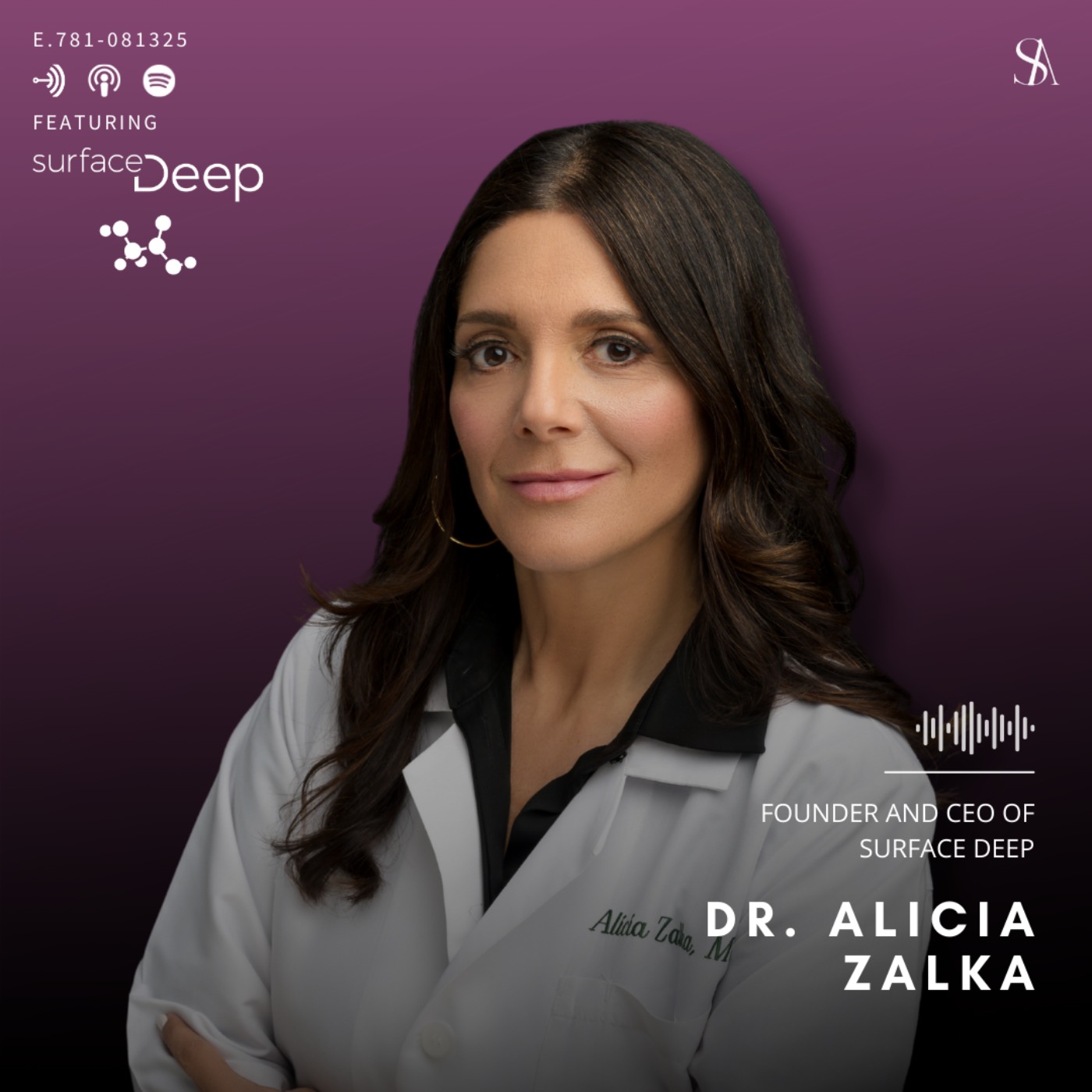
Hey, guys. Welcome back to Spin Anarchy. I am so excited about this episode because we're going to be talking about body care in the most meaningful way today. And I feel like a lot of body care right now, and I think a lot of you might have seen this. It's focused on kind of the same route that facial skin care was taking for a long time. So there's not really a lot of education and, like, you know, clinically based, efficacious products out there that we can rely on for our body, just. Just like we do for our face. So without further ado, I want to introduce you guys to the founder and CEO of Surface Deep, Dr. Alicia Zalka, which is a brand that is focused on body care, especially in the deodorant space. So welcome, Dr. Zalka. I'm so excited to host you.
- [00:44]
B
Oh, it's a privilege to be here speaking with you. Thank you.
- [00:47]
A
No, it's a wonderful opportunity for me because I get to learn from you and understand, you know, what we should be kind of focusing on, right. When it comes to, especially in the deodorant category and, you know, figuring out what actually works, what doesn't. So I want to kind of dive in. But first, I'd love to talk about you and your background. You have over 30 years of experience in medical dermatology. I mean, that's amazing. So if you could walk us down memory lane to tell us a little bit about your career and everything that led up to the creation of your brand.
- [01:16]
B
Oh, yes. It's been quite the journey. Yes. I. 30 years in clinical practice. I was in a. I recently retired, so I'm actually not in my clinical practice right this moment, although I have. I'm still working in dermatology. I do volunteer work through my affiliation with Yale. I volunteer and see patients at our local VA hospital, which brings me great joy. I teach residents. But for 30 years, I was in practice, and I learned so much. Medical school was training, but doing it face to face with patients was really the training. And I had such a fantastic practice, and I learned so much. And when. One of the things that I learned is that, you know, people have questions. And one of the things I love so much about your podcast is that you answer those questions in such a transparent, honest way. And it's about, you know, science. It's about getting answers from people you trust, and this is what it's all about. So thank you for this platform. But it. So what happened was I was in my practice for 30 years doing just beautifully. I love we had a great relationship with my patients. I did medical dermatology, surgical dermatology, cosmetic. I did it all. And, and I'm both a dermatologist, but I'm also a consumer. So here's what happened. And by the way, you know, through my career I've had people say, oh, you know, why don't you develop a skincare line? A skincare line. And it just never resonated with me. I have so many esteemed colleagues, several of which have been your guest. There's fantastic esteemed colleagues that have paved the way in skincare and, you know, have their own brands out on the market. So I really didn't feel like I had anything to add until one day I was in my very own bathroom getting ready for a trip, going away to see family. And in my haste to get ready, this was when I was in practice, I didn't have a lot of time to pack. So here I am rushing around and realized, oh, gosh, I forgot my deodorant. I ran out of it, I didn't purchase it again. And at the time I was using an aluminum free natural deodorant that had a lavender scent. It was a stick, a white sort of chalky stick. And I never really, really liked it. I always thought when I put that applicator on that it felt kind of sticky. And boy, that applicator, I used it yesterday. Is it clean? And I didn't really take time to clean that applicator. So as the consumer and it had failures, you know, I would go to work some days and by halfway through my day, the odor would come back. So that was the consumer side of me, but the dermatologist side of me. When realizing I didn't have that deodorant ready to pack, I come out of the shower and having been exposed to so many products, I'm sure you are too. I had glycolic acid sitting on my sink. And we know that in dermatology, glycolic acid is one of our favorite ingredients. We use it for chemical peels. We use it for a lot of different skincare. And I said, well, I know this glycolic acid will deep clean. It'll deep clean my face. So let's see, if I deep clean my underarms, I can get to my destination and buy my deodorant when I get there. Well, that was the last time I bought deodorant. I think there was some Freudian thing, cosmically, where I forgot it and I never really liked it. So it was that essence of using the glycolic acid. I get to my destination, and it just turned out that I never bought deodorant again. And it dawned on me when I got home, say, hey, you know, I'm going to keep using this glycolic. And one thing led to the other. And the first thing I did was have friends and families, you know, try. I kind of whipped up my own formulation. Now, of course, glycolic acid is not the most gentle of things, so. And you're putting it on very delicate skin. So I had to sort of formulate it. And I did, and sure enough, I gave it to friends and family, and they said, wow, you know, you really have something here and we'll dive in more. But a lot of it has to do with being clean and not layering on waxes and layering on perfumes. It's a very clean platform. So once I had the endorsement of friends and family, I started thinking about it further. And then I put together a team, one of which it was a chemist that helped me formulate it and did some testing to make sure. Now, the last thing I wanted was to put out a product that was going to irritate skin, because here I am, a dermatologist. I, you know, it would be mud on my face if I put out something that people were being irritated by, thankfully. And I think a lot has to do with maybe what we'll talk about with ph and microbiome. It did not cause irritation, and better yet, incredible odor prevention. All day. It's. And then, then what has happened is with my delving into the ph and microbiome, we have no other applications for surface deep. And so that's how it. How it all started. And I feel like it found me. I wasn't looking to make a product. It really jolted me in with like a lightning bolt in my own bathroom. So that's how it came about.
- [06:14]
A
That's pretty. That's pretty neat. I like that because I think that when you create something out of, like, true, like, you know, observation and the need for something, because that's when, you know, the products actually work. And I. I feel like with the deodorant category, you brought up an interesting point about the. The different waxes and all the layers and stuff, and this has always been a question of mine as well, is that, you know, when it comes to understanding the skin under the. In the underarm area, like, what do we need to know about, like, the thickness and, like, understanding that entire, like, you know, micro environment for that specifically there.
- [06:48]
B
Thank you for asking that, because it's. It's quite important. In fact, when I was getting working on. I have now two patents on the formulations and one of the patents has strongly to do with the fact that we're using these products on what medically is termed intertriginous skin. So intertriginous skin is skin that's a skin fold. So intertriginous skin you'll find in your underarms, in your thigh crease, private skin, belly button. And these are very unique areas. They're also considered the moist areas of our anatomy. And that those areas have a very, very distinct epidermis, they have a very distinct architecture. One has to do with end microbiome. And one of these things has to do with its stratum corneum, and how it's held together. And the stratum corneum is the top layer of skin that's sort of like the bricks and mortar. And it has very unique properties. And one of those unique properties, it happens to be very delicate skin. It's very delicate. The skin is quite, quite thin. It has its own resident bacteria, largely a species of bacteria called Staphylococcus hominis. And it lives very happily if you treat it nicely. But if things. And it's easily irritated, and here's a couple of reasons why. One of the reasons, other than it being a thin and delicate skin area, is if you think of it, these are folds. So if you put something on it, you. You're sort of doubling it, you're putting it on, but you're keeping it enclosed. So what other body parts are. Maybe your toes? There are certain body parts that are just closed in all day. So there's not a lot of airflow. There's a great deal of moisture that gets trapped. So that can throw off the balance of the skin. Now add to that things like waxes or baking soda or aluminum or things that potentially can be irritating, you're stirring up a cauldron of potential problems. But that skin, and this is scientific, this is anatomy. So this is a fact of our skin, that the underarm area in particular is a very delicate area. And if you think of all the things we do to it, we shave it, we wax it, we. People want to bleach it. So there's a lot of mean things we're doing to our underarms. And I want to shout from the rooftops, let's be gentle to that area.
- [09:00]
A
So, yeah, no, I love that. I love that you are able to Break this down because, you know, a lot of. For a long time, I think this, you know, this idea has been floating around where people assume that sweat equals odor. But, you know, modern science has proven that's not the case. Right. So I'd love for you to speak about this a little bit and make us understand, you know, what is it really that causes odor and all of the. The negative things. Right. That we're trying to combat with any antiperspirant, any anti deodorant product.
- [09:31]
B
Absolutely. Yep. And this is the key to understanding. And I want to make it clear because I want, I hope with your platform that we can educate both consumers, other doctors, and, you know, just get, get the, get the word out, because even very well trained physicians, I don't think maybe understand so what's happening with odor. Sweat is actually odorless and colorless. At its source, it is odorless and colorless. Sweat comes from two different types of glands. Eccrine. I won't. I won't get too terribly technical, but there are eccrine glands and apocrine glands, and they produce. They produce sweat. Eccrine glands are found on almost all parts of the body, very heavily concentrated on palms and soles and scalp and, of course, underarms. And apocrine glands are found in very specific places around the areola, the nipple, the underarm, and the peritoneum, the private, if you will, private skin. That's where apocrine glands are. So these two glands manufacture sweat, but it's not sweat. And let's not demonize sweat. Sweat. I think of it as your badge of honor. You work hard in the garden, you're sweating. You had a hard day, you're sweating. You had a great workout, you're sweating. You did yoga, you're sweating. So I think of. Yo, I think of sweat is in some cases, like, hey, I earned this sweat. Now, of course, let's just sidetrack for one moment. There is. I don't mean to minimize sweat because there are people that suffer very dearly. They suffer from hyperhidrosis, which is a medical condition. And hyperhidrosis is when patients sweat to an extreme, like where they can't hold onto their steering wheel, their hands. Sweat. So, and let's say you're giving a TED Talk and you don't want to show sweat. You're standing up in front of, you know, 20,000 people, and you don't want to show sweat. That's a whole different thing. So what we're really talking about is body odor. So one thing I like to say, physiologically speaking, is that sweat is intentional, but odor is preventable. So sweat is there to cool us off. It's physiologic, but odor we don't have to live with. So that's. So let's just kind of step back. And of course, if you have hyperhidrosis, please see your dermatologist. There are excellent treatments for that. And here's a case where aluminum products do work very well, and sometimes you need more than that. So hyperhidrosis lets. I don't want to minimize it. It's a very concerning condition. I had many patients in my practice that can have this condition. But the medical term for body odor is brome hydrosis. And brome hydrosis is when you detect odor on yourself. And it's how it occurs is sweat will get onto your skin and if it meets up with certain sort of circumstances, that will allow odor to form. And what those circumstances are, are very well, well studied. What they are is it's a breakdown product of certain bacteria. Now, I already said that the underarms, for example, house and have this sort of these resonant bacteria that are there and doing good job for us, for example, Staphylococcus hominis. Well, when they get crowded out by what are called pathogenic bacteria, they kind of move in and muscle out the good bacteria, so to speak. It' similar story is when you think about the gut, excuse me, the gut microbiome, where there's healthy bacteria, you want to eat probiotics to keep your gut in good health. Well, the skin is really the same. But however, if moisture lingers, that's why sweat happens in damp places when moisture lingers. That Staphylococcus hominis, that's doing a great job of actually preventing odor, gets nosed out by other bacteria and even yeast, and then odor happens. So there's actually a chemical breakdown product, it's called a thio alcohol, that creates this odor, and it's well studied. There was an excellent article in Nature Journal about this, and it's well established. Of course, there are other bacteria and yeast that can also lend themselves to body odor. But let's blame the bacteria and wait a minute, let's not blame all bacteria. We only just blame bacteria, certain bacteria. So I know I've seen, you know, in social media and, and I'm a fan of social media. I get some of my information from TikTok, not gonna lie, but I've seen things like, oh, just, you know, just put alcohol in your underarms or Just, Just wash every day with antibacterial cleanser. No, no, no, no. Because you don't want to eradicate all the bacteria. No, you don't want to eradicate all the oils. You want to. You're. So there's a whole bit. There's a balance, and that's, that's really something that I want to drive home, is that the skin comes to us in a beautiful, harmonious balance. And I want to educate people to really embrace that and do things for our skin that just lend itself to that beautiful balance that is doing that barrier function is doing so beautifully. Let's not mess it up, right?
- [14:19]
A
No, it makes a lot of sense, actually, because, you know, when people talk about the microbiome, it's a very, like, fuzzy discussion usually, you know, because there's not a lot of knowledge in terms of what is actually causing or what, what, what are the bacteria and what are they creating in terms of their breakdown products. Right. And I mean, you brought this up with the, you know, what was the alcohol that you mentioned? Right. I mean, this is very interesting because it doesn't really, it doesn't really make sense for us to be just wiping everything clean or just layering things on, like, I mean, the conventional deodorants for me never made sense because if I'm just masking it, right, If I'm just masking the odor, eventually that's going to lead to clogged pores, that's going to lead to, like, you know, all sorts of downstream problems. And I'd love for you to speak on this a little bit because I think when people talk about deodorants, it's not really that conversation. It's more focused on, well, you don't want this ingredient or that ingredient, like aluminum comes up a lot, Right. So it's more ingredient focused, whereas it's never focused on the overall concept of you're applying a thick layer of acrylic, you know, whatever it is, right on the skin and it's occluding the skin. So I'd love for you to speak about that a little bit.
- [15:29]
B
Indeed. And that's something I feel very strongly about, where we're layering things on the skin that throw off the. For example, ph. Let's talk about just in your shower, a typical soap, most soaps, especially bar soaps, that are made with surfactants, certain types of surfactants are. They can break down the barrier function of the skin. So I have two things just to share with people. So don't. When you come out of the shower, we're kind of used to feeling squeaky clean. Like squeaky clean skin, squeaky clean hair. Well, not so much. And I think now we're getting more accustomed to sulfate free products and getting away from that. So it can even just, you know, start in the shower. But we, if we, if we alter that, that ph and we throw off the balance of the skin and it's not that complicated, we can cause damage. And I really appreciate you speaking about clogging pores or blocking pores because blocked anything isn't good. We don't want blocked arteries, we don't want blocked pores, and we don't want blocked sweat glands. Sweat, sweat ducts. Again, if you have hyperhidrosis, that may be your only alternative. But for odor, you know, odor prevention purposes, we do not have to block anything and we don't have to layer stuff on. Now I'm a fan of, of fragrance. I have scented candles in my home. I, you know, but I also don't want to layer perfume on my skin for all day. It's one thing if you're going out and you want to smell nice and, but if you want to just be neutral, if you want to smell like you without body odor, you do not have to layer things on. I'm actually on exact opposite. I think it's better to keep the skin, you know, fresh and clean without layering. And that means when you come out of the shower, you, you use types of cleansers that are not stripping your skin. And similarly for the underarm area or wherever else you might be using deodorant or antiperspirant, you want to use products that block the odor. So the basis of how our surface deep, by the way, anti odorant works and I'll explain why. Also, it's called anti odorant because it relates to this. So I call it anti odorant because it's not really even a deodorant. Because deodorant, technically speaking, is an element that you put on your skin to mask body odor. It's something to throw off your nose into, just like the body is not there, just like you had mentioned. So it's not a deodorant and surface deep. And it's also not an antiperspirant because antiperspirants by definition have aluminum. And again, aluminum will block those sweat ducts from allowing sweat to get to the surface of the skin. So it's neither of those things. How it works is the, it has, it's balanced with both glycolic acid. It's an acidic, it has an acidic ph and it also is infused with postbiotic ferments. And the combination of those things basically just keep the skin, say, you know, give the skin a nice start to the day. It's not layering on stuff, it's not masking. So it neither layers on nor masks nor blocks. So what it's doing is it keeps that ph at its perfect set point. So there's something called the acid mantle. The acid mantle of the skin is, it's like built in security system. So your skin really wants to be at a PH of somewhere between about 5.5 to 5.7 and sometimes even lower than 5 neutral being 7. So when the skin is at this acid ph, all things are good. They've even done studies to show that people that have atopic dermatitis or have skin conditions, the ph goes off and intricately linked with the ph is the microbiome. We're going back to that because what happens is the ph gets thrown off and that that security system is broken down. Well, guess what? The invaders come in and the bacteria that is odor causing certain chorinibacterium come in and they take over and cause the odor. So that's the essence of it. And that. So if you can just keep the skin, it is beautiful balance, allow the ph to be acidic and not layer too much stuff on and. And again, perfume is, you know, some people like perfume. I don't want to be a bad, I don't want to badmouth perfumes but in certain parts of your skin. And dermatologists are very keen on things being unscented when they touch the skin because there are contact allergies that are very much related to fragrances. Fragrances are one of the highest risks of allergen allergenicity for the skin. So let's. So if you're going to, you know, pick up your antiperspirant deodorant first. Antiperspirant you don't need unless you sweat excessively. So take that one off your list. So you don't need the aluminum. And aluminum of course gets a bad rap. Deservedly or not, I don't know. But I do know from my standpoint it can be irritating. So I recommend looking for products that help maintain the skin ph that do not disrupt the barrier function. So keeping the ph about 5 or a little bit higher than 5 or 5.5. And you know, a lot of products don't say the ph on the label. If you delve into websites Sometimes it'll be revealed. But products that contain glycolic acid or lactic acid or salicylic acid, those tend to be ph acidic. So we're keeping that acid mantle happy. And by doing so, odor just doesn't have a chance. It doesn't have a chance. So what happened was we started by, started out by making Surface Deep. Its first launch was actually a wipe and we still have them. So instead of layering on stuff, you wipe your skin with a biodegradable pad and wipe and you wipe off and it's actually taking excess oils away, it's leaving the ph happy. What then happened is we then produced an actual ph balancing skin wash. Because if you come out of that shower and you just used an alkaline based soap, some of these soaps have an alkalinity of 10 and 11, so they're very high alkaline. If that soap residue is on your skin and even with using something that has an acidic property, it takes time for your body to go back to the ph of 5.5. It will correct itself, but it takes time. So we often say on our team that body odor prevention begins in the shower. Because if, and one of the biggest, we have a blog on our website and one of the ones that gets the most hits is why do I still stink after a shower? Because people wonder why they come out of the shower and three, two hours into their day, they smell, wait, I just took a shower. Because it's, it's all about what you did in that shower. And I like to say you don't want to sterilize your skin, you want to clean it, you don't need to sterilize it. And some of these products will sterile. I mean, you're taking away the barrier function and you're making it sterile. That's not what you need. You just want to keep it balanced.
- [22:19]
A
That makes sense. Yeah, I know, it's very interesting because, you know, I think when it comes to understanding like what is actually needed for the skin, it doesn't seem to be translating to body care. You know, you brought up the alkaline, you know, products out there and I've seen quite a bit actually, and it's, it's shocking to me because we don't ask body care brands about. Well, are you looking at the basics, right, that you would look for for a facial skin care line? We never discussed that and I, I never know why. So it's very interesting what you're talking about here. For me, you know, from, even from the Consumer standpoint and not knowing this stuff. I mean, most, you know, body care products aren't even labeled nowadays. Right. With like ph of this or whatever. They don't even mention it. So that's very good to know for consumers that you need to treat that the same way that you treat your facial skin. Yeah.
- [23:04]
B
And I see the tide turning. I do. Of course, I'm very aware of it. So I'm keenly looking for it. But I, I think that things are getting better. I really do. You're starting to see, you know, retinol, body lotions and things that, you know, where you're taking skin care to the rest of your skin, not just.
- [23:19]
A
Right, right. No, exactly. I want to actually ask you though, because I know that it's come up before the glycolic acid, you know, toner thing, it kind of went viral for a little bit, right. Where people were using like the ordinary glycolic toner and just like, you know, trying to use that for the, you know, as like anti, you know, whatever they were doing. And so I, I, I mean I saw the trend, but I never really, I feel like educated consumers. So I'd love for you to talk about specifically glycolic acid and like what it actually does for the skin, you know, and how it is valuable for body, you know, for body care.
- [23:56]
B
Glycolic acid is an amazing, is an amazing compound. It, Glycolic acid is one of many alpha hydroxy acids. It happens to have the smallest molecular makeup makeup and hence it can get into the skin and penetrate better than all other alpha hydroxy. You can look that up on Wikipedia. That's a known thing. For dermatologists. Glycolic acid is known and loved because it's inexpensive, it's readily available, it's relatively well tolerated. However, it could be not well tolerated if used in incorrect percentage or used incorrectly. So what it does for the skin is it acts as an exfoliator. Now exfoliation is very, you know, there's, I think if you lined up 12 dermatologists, I think eight of them would be against it and four, including me, would be for it. Exfoliation is actually a good thing. The skin naturally sheds and help it along is a good thing. But what happens is people tend to not do things in moderation. So, you know, so exfoliation gets a little bit overdone. But what glycolic acid done used correctly and that all determines, you know, determine on the type of skin you have. Glycolic acid helps gently slough dead skin cells and by doing so it leaves the skin sort of brighter, fresher. It's like dusting off a beautiful piece of furniture. And it does so very easily, very well. And it also has an acidic ph. So I was very keenly aware of glycolic. It was a very trending hashtag on social media, on TikTok, had millions and millions of view and views. And I agree that it's, it's. And I think what there again, what happened is I think it was being perhaps used to excess and perhaps not done correctly. And therein lies what all the studying I did and all the formulation we did to get our product right. Because, hey, it could be irritating. Let's face could be strong, it could be irritating. So it's all about the proprietary blend, if you will, to get it just right. So that. And especially used on what we talked earlier about the skin fold being so delicate, it has to be right. So it's all about balancing it with things like these postbiotic ferments. There's aloe in our formulation, so there's things in it to make it gentle. But yes, that was a big trending thing and I believe in it. And I ran with it because we were studying this actually before the trend came out. So I was so excited when I saw it. But I know that there were many dermatologists and I understand why there were many dermatologists that came out against it wholeheartedly. I understand because it's by itself and I love the ordinary. I have the ordinary products in my own bathroom. So I think it's a great brand. But it was never intended to be used as a deodorant. But mine is like. So our formulation has been tested both clinically and consumer perception testing and it does not cause irritation. So it's all about all things in moderation. Back to that whole concept that I love to shout about is the balance. It's all about balance. So by using that glycolic acid incorrectly, perhaps you're doing it too many times a day or it's not. Well, it's not meant. It was never meant for the underarm, the one that the ordinary put out. But if it's formulated correctly and you can build in some gentleness and keep the skin, as we said, the microbiome and the ph happy, you're good right now.
- [27:19]
A
That makes sense. Yeah, exactly. It wasn't never meant for, you know, to be used in that way. And I think that's very important to understand that it's not Just going to be one ingredient. I think deodorant, I'll be honest with you, I think it's gotten a bad reputation over time because people are not concentrating on all of the other stuff that's inside. You know what I mean? We're not talking about the fluffer ingredients, the things that I don't even know what they do, you know, other than like the texture or whatever it might be. You know, from the chemistry standpoint, there's no real ingredient in most deodorant products that's going to actually tackle odor. You know, it's not really aimed for that. So I think that's where it's just, it becomes a, a huge mess really when you look at this industry. You know, it's kind of crazy. But I want to talk about this, you know, in a little bit more depth because I think when it comes to understanding odor and like what really causes odor, there's still like a lot of misinformation out there. And like, you know, I know you've spoken about the Stinky seven, as you've called them, right. So I'd love for you to kind of dive into that and explain to us what those are.
- [28:20]
B
Yes, I applaud the, where the trend has been going with hold whole body deodorant. I applaud that because it's not just underarms. There, there are parts of our. And there are other parts of body other than underarm. So I love that trend. What I don't love is potentially using more chemicals on more parts of our body and more perfumes and more everything that I'm not so excited about being a dermatologist. I see a lot of contact dermatitis, I see a lot of dermatitis, you know, eczema type dermatitis. I see, oh gosh, you name it, I've seen it in those 30 years of my practice. So I love the idea that we're taking, you know, deodorant out of the closet, so to speak, and like, it's more mainstream and we can use deodorant in different places, but let's not overdo it. So I came up with this sort of little tag thing, tagline of Stinky seven, because there's really about seven places on the body that tend to produce odor and they do correlate with the microbiome. So there are these places where these odor producing bacteria tend to flourish when things go out of balance. So they would include the scalp. The scalp. And I sort of include in that the back of the Ears, that's one. The underarms, the area between and under breasts. And that's not just women, it could be men too. Then it also includes the belly button or the umbilicus as we call in medical terminology. It also involves the abdominal fold. So the abdominal fold and you know, where we, when the abdominal fold and the thigh fold are areas that we are covered all day long, they retain moisture. And lastly feet and between toes. So they're very distinct places. Now I don't think we need to put deodorant on our knees, our ankles, you know, because we just don't need to. These are not odor, you know, potential places. So I think this, the pendulum has swung from just underarms to let's do it all over the body. I'd like to bring the pendulum straight in the middle and advise people to just use these products in those areas. And again, it goes back to places on the body that tend to harbor moisture. And now I also said earlier that sweat's not the issue. So why am I harping on these places that tend to be moist? Because they tend to be moist, not just from sweat. They moist for other reasons such as like oils and sebum. But it's not just the moisture. When we sweat, the sweat, you know, tends to just evaporate off our skin. But in certain places of the skin, you know, if we're wearing gym wear, you have underwear and then you have some maybe occlusive spandex or some sort of yoga pants or tight bike shorts and you're wearing those for hours and hours, it occludes the moisture. So that moisture just sets up home, it stays warm and it invites those bacteria by when the PH starts to rise. So it, so I know, I'm talking about, I'm talking about things that sound like I'm contradicting. But moisture is one thing, but just free flowing sweat is entirely another. And it has to do. If you think about when you have a wet towel, you don't throw it in a pile on the floor typically because when you do in a couple hours or the next day, it's going to smell very musty. We hang up a towel. Same thing with body parts. When they're damp, they need to be aired out. And if you don't air them out, they tend to invite bacteria or yeast and other organs or other microbes. So that's where it's at. So those are the stinky seven. So but I again, I don't find elbows, knees, you know, places that are dry Skin areas, they don't need the whole body deodorant.
- [31:44]
A
That makes sense. Wow. I never even thought of it like that. That's fascinating. And you know, if we, if we really understand where odor comes from, I think a lot of times we can cut down on so much. You had brought up fragrance earlier and I loved what you said because with fragrance products, obviously we're trying to like, you know, smell very nice and whatever it might be. But a lot of times, yeah, we're masking odor. But at the same time I always, you know what I wonder is like all this fragrance, especially now with everybody being on like what perfume talk and stuff, you know, like perfume tick tock. We have like 80 fragrances that we're putting on, layering on. It just makes you wonder like what is that the actual chemicals and fragrance, like what are they actually doing to the microbiome right on the skin or wherever we're applying them? And how is that leading to downstream effects that might affect things like odor production? Right. I mean that's, that's a topic of, you know, interest for me in that way because everything, you know, reacts, no matter what you put on your skin, everything is going to have some sort of downstream effect. So what are your thoughts on that?
- [32:42]
B
Again? I love good smelling things. I, it's, I would be lying if I didn't, if I said I don't have fragrance. Fragrant candles or fragrant products. Yes. But what happens is they, most fragrances are, are in an alcohol solution. So things that you spray on or things that get added into products are solubilized in alcohol. Alcohol tends to be very, very drying. So that's problem number one with many fragrances. Problem number two is that there are, for example, there's this chemical called balsam of Peru and it's a base fragrance that's put into a lot of different products. And dermatologists know that term very well because we do what's called patch testing to see what people are allergic to when it comes to contact dermatitis and balsam of Peru. And there's also something called fragrance mix. And that's one of the panels that we test for when we do patch testing. And they can very easily come up positive. So not only does that alcohol dry the skin, but in some people it's not the majority, but a large, a large number of people will get fragrance allergy. Now add to that if you're, let's say you're shaving your underarms, you waxed your underarms, you had laser on your underarms. You just came back from a volleyball match and your underarms have been. And been rubbing. You're a baseball player, and there's a lot of friction. Well, you've got friction there, and then you go put on something that's got perfume on it. Ouch. You've broken down the skin barrier function by the friction, and now you're adding something with alcohol in it. Oh, my gosh. So, yeah, so that's where it comes from. But I think it's. I think it's fair game. I love fragrance. And you spray it on your. On perhaps your clothing or, you know, you just. I don't want it in direct contact on the skin all day, especially in those intertriginous areas. I find that it. And I've seen it in my own practice, that it can lead to irritation and allergy.
- [34:38]
A
Makes sense. That makes a lot of sense. You know, I'm. I'm always fascinated by how we treat, you know, when it comes to, like, how we treat our. Our body's skin, because it's very, very fascinating to see people talk about, you know, especially like, exfoliants and, and whatnot, because we're not talking about the same concentration. I'd love for you to talk about this a little bit is, you know, when it comes to certain, like, thinner areas of skin. Right. Whether it's the face or the eyes, we don't want to put things like, you know, any acids or actives around that area because we're, you know, worried about inflammation and all those things. But what are the things we should know about the actives and the ability of the skin to handle, you know, certain concentrations when it comes to, like, the body? Like the different areas of the body.
- [35:19]
B
Yeah. So different parts of the body, you name them, like eyelids or these thin skin areas, genital skin, it's. First of all, they're very vascular. So lips. I mean, the lips are pink because they're vascular. There's a lot of blood flow. So a lot of blood flow means that it can absorb things. These are also thinner skin areas. So the skin does an incredible job of being the perimeter and protecting us. It's the interface between us and the outside world. And it does an incredible job of fighting invasion of microbes. It does an incredible job of keeping moisture in and keeping dryness out. So it does all those things. But on thinner skin areas, you do have to be careful. And I myself, I'm a retinol person. I will use retinol or retinol versions of retinol on my skin at night, I never ever put it around my eye area. I don't put it on my neck either. Here's why. Because the skin. One of the. One of the things about the skin is that there are different levels of sebaceous glands. Sebaceous glands produce oils for the skin. We know sebum is not our friend. When we're teenagers and we have acne, we think of sebum as the bad guy. But sebum is actually quite lubricating and keeps the skin protected. There are places on the. On the face and body where there's like, for example, the neck. The neck does not have a high level, a high concentration of sebum. So when something drying gets put on the neck, the sebum doesn't. Cannot really help offset that. So these thinner skin areas like neck, underarms, breast skin, the eyelid skin, the lips, you just have to really think twice. And there are. You want to be careful. Like if you're using something acidic, the concentration has to be way lower. Like when we do chemical peels with glycolic acid, we do chemical peels at a. With 20%, but I wouldn't put anywhere near that around my eye area. So these are, you know, delicate areas. And the skin does do a beautiful job of protecting us, but there, it has its limits. The eyes also, if you think about eyes in particular, they get exposed to a lot, you know, smoke, sunlight, you know, they're. They're where. Like a sense of another sense of skin area, let's call it, you know, like our underarms, they're covered, but eyes are not covered. I mean, unless you're wearing goggles all day. They get smoke in there. You get smoke in your eyes. You can get moisture in your eyes. Something gets sprayed, it can. It can aerosolize and get in your eye area. So the eyes are terribly delicate. They've got. There. They have a mucosa. A mucosa means that there's a moist junction there. And that moist junction means that it can. It has lots of blood vessels and it can cause, you know, things can get into the body. So these are the areas that. So think of places where there's a moist interface and also areas where the skin is thin and also where the skin is more pink or more pigmented, because those are areas where usually there's more blood flow and that can spell sensitivity.
- [38:12]
A
That makes sense. Now I want to ask you about menopause, you know, because. And perimenopause because this, this isn't a topic that we're, we don't have enough information, you know, at all in general, but especially when it comes to like body odor and understanding how the skin changes with time and, and especially with all the hormonal fluctuations that are going on. Is there an impact on body odor and you know, the amount of like sweat that we're producing or anything that you can kind of educate us on there?
- [38:41]
B
Yes, there, there's definitely some learn, you know, learnings one can take from menopause and how it affects our body odor. So there's a couple of levels, one being that let's just start with hot flashes. So hot flashes, which are called vasomotor symptoms, hot flash, that's the medical term. But hot flashes, you know, are just the worst, you know, the worst, one of the worst symptoms that women experience going through menopause. Now those hot flashes mean that your body temperature is equivocating. And to offset that, our thermostat, it might be a little bit overactive in menopause, but it's, you're sweating. So there is a great deal sweating. But as we said earlier that the sweat itself is not the culprit. So hot flashes in and of themselves are not going to make body odor really a problem if you don't keep wet clothes on and maybe you need to change your night clothes and you sweat, you sweat at night. So it's a matter of again keeping the airflow good, wearing loose fitting clothing. So it's just not the sweat, but hot flashes. If you have the hot flashes and you're at work all day and you don't have time to change your clothing. Yeah, maybe if that sweat is retained and the moisture is retained and the skin folds, it could be odorous. So hot flashes are sort of a plus, minus. Could or maybe not. But one for sure change is as we age, both sexes, as we age, the PH tends to creep up. So we said earlier that the ph, the acid mantle of about 5.5, 5.7 is protective. But as we age, I don't think there's any real clear cut knowledge why, but the ph tends to creep up. So just by virtue of aging, our PH can rise with age. And that again means that with that higher ph that there is more potential for odor causing bacteria or yeast organisms to find their way onto the skin and go through chemical reactions that create an odor compound. So that, so we're back to that bacteria again. So ph is one aspect. Another interesting aspect is that with Age again, both men and women are. Believe this or not, our olfactory system can change. So we sometimes might think we're having odor, but actually we're not. We learned during COVID you know, people lost their sense of smell with COVID and then when they regained their sense of smell, they had these odd. They complained of smelling strange things. The olfactory system is a dynamic system and it goes through changes too. So with age, a person going through menopause may be afraid that they're having body. And they might not actually have body odor. So there's. There could be a little bit of a disconnect between what's actual and what you're perceiving. So that's an interesting characteristic. So these are some of the. But, but for sure, within menopause, if you go with those same principles, like, okay, I'm going to protect my skin. I'm not going to use alkaline products. I want my PH to be at a nice neutral. Well, neutral for skin being 5.5. That's. It's sort of happy set point. But by the way, I want to share something for those who are listening that many people adhere to an alkaline diet and have heard and learned and adhere to. Well, my insides need to be alkaline and people drink alkaline water. And that is not untrue. That is, that's a thing. Your insides tend to be a little bit higher ph, whereas the skin, the outsides are that 5.5. So I just wanted to make that clear that I'm very aware that it's sort of like the insides are one and the outsides are another and that. That balance. But yes. So if those going through hot flashes or going through menopause find that they are suffering from. And it can, there can be an uptick. There's no question it can. It can get worse because of the ph and perhaps even change in the microbiome if you just adhere to those principles of taking care of your skin, keeping it in balance, drinking plenty of water to offset, you know, if you're sweating a lot, you're losing a lot of fluids, drinking plenty of water and doing just those same principles. So whether you're a teenager going through hormonal changes, and when you're a teen and you go into puberty, those apocrine glands wake up. And so it's a. Another set of. There's another set of sweat glands that are producing. And apocrine glands tend to have more potential for causing odor by that bacteria. The bacteria love the Apocrine gland secretions even more than the eccrine gland secretions. So whether you're a teenager going through hormonal changes or you're a woman going through menopause, no matter what though, you can see some, some wackiness there where the hormones do have an impact. So you're not imagining it, but it's easy to tackle.
- [43:22]
A
Yeah, that's very fascinating. That's very fascinating. I, yeah, because it, it may, it makes no sense. Right. With understanding, like how it all changes in menopause, no one really discusses that. That's why I asked you because everyone's going through hot flashes. You're definitely sweating more and you know, just being able to understand what that's what that is and how to tackle that. I think so important for so many women out there. But I would love to talk more about, you know, the brand and understanding like the clinical studies, because you've done some great studies around this and I'd love for you to kind of dive into that and explain to us like what you saw and you know, some of the hallmark.
- [43:56]
B
Yeah, there's two things I'll shout out with regards to that. So we did, but when the product was launched, we did consumer testing. So consumer testing is when you, you, there's, there are companies that do these tests and they hire people and they, it's a, like a consumer perception test. Did you like this? What do you rate it? Like that sort of thing. That's one type of testing. And we did that and we had great, great results. Well into the.90% had no odor all day. This was when these wipes were first launched. 100% reported no odor. 100%, no, I'm sorry, 100% said no irritation. And back to the Glycolicus deodorant. And people were worried about. We had. None of, none of the participants had irritation. So we're so proud of that. An interesting finding in our consumer study was that people noticed that they didn't get yellow underarm stains in their clothing. Because one of the things, if you wear a white T shirt or you wear white shirts with using especially antiperspirant, the combination of antiperspirant and sweat can leave yellow marks on. I've thrown out many a white T shirt in my day because they get those yellow marks. So that was something we didn't realize and it was a nice little finding. What we then did just recently, we did a full blown clinical study, like a double blind, placebo controlled study of our, one of our other products which is our spray, which has the same formulation. The product is the same. The delivery system is a mist. It's not aerosol, it's a mist. And we did a study with that, again, with incredible results. The far majority of the participants, and this was a medical study, this was with not me. I would be biased, probably, but no, it wasn't me. It was an unbiased doctor who judged odor. I was happy that the results turned out how they did, but it was not me. But it was a medical study. And people should be aware of what's the difference between clinical study and consumer study. That's very important to be aware of. But this is a clinical study that did very well and also no irritation. And that no irritation thing is so, so enormous for me because again, I want to put out a great product and I want people to. I wanted to improve their lives, not worsen it with causing irritation. So that was that study. And then I did a study that I'm going to expand more on and do do in a different, more controlled way is a colleague of mine, female colleague, who, her specialty is mammography. And she. I went to her and I said, you know, here's the thing. We women are told when we get a mammogram that we're not supposed to wear deodorant, antiperspirant. In fact, don't even bother putting on body lotion. That's always driven home. Do not put these products on. And if you really understand why, the reason is that when it comes to mammography, they're looking for changes on the breast, in the breast tissue, but on the screen itself. If you are wearing, let's say, antiperspirant that has aluminum, which is a metal. It's a pulverized little metal. Metal spicules. Those metal spicules can leave what's called sort of like a variable. It's like it's a phantom thing. It's not supposed to be there, but it can leave these little residue particles on the mammogram, and that can be confusing. The radiologist might have to do more studies or ask you to come back and have it done again because it can be confusing. Because what they're looking for oftentimes when it comes to mammograms, are calcifications. So the aluminum crystals can mimic the appearance of calcifications. So that is why you're told not to wear those products. And you can find those things in powders. You can find them in some lotions, even like baking soda will do It. So if you wear a natural deodorant that has baking soda crystals, same problem. So what I did, out of curiosity, I said, gee, I wonder how surface deep measures up. So I went to. Now this was just. I went one. So I didn't do it. This is not a formal study. It's just an anecdotal observation. But I went to my friend's place of business where she does her radiological studies, and she. We applied the two, the different formulations of surface heat that, the mist, the wipes. We applied it to what's called the phantom. There's a phantom, which is a glass template that they use to calibrate the machines. And it sort of mimics breast tissue, but it's just, it's not. So I didn't do this on a human being. This was done on a, what's called a phantom. So we applied both products and they looked at it with the, through the mammography and there was absolutely nothing. You could not tell that any of the product was on there. There was not any residue or at all. So I felt very gratified by that, knowing that not only does the product not feel like it's leaving residue, not only does it not look like it's leaving residue, but microscopically it's also not. And radiologically it leaves no residue. So I really want to go and do that study to a more rigorous degree. So it's more anecdotal, but it does point to the fact that some of the things that we're putting on our skin, especially if you're going to have some testing done, you may want to think twice about what you're, what you're putting on your skin. It.
- [48:45]
A
That makes sense. Wow, that's really fascinating, though, that you were able to find that. And you know, and look at, and look at this from this perspective because I think that, you know, when it comes to understanding, like, you know, what leaves residue, we don't know what leaves the residue, in my opinion, you know, because we're putting on deodorant constantly. Like if you go day in and day out, right, Whether it's reapplying or like, even if you, after you take a shower, I mean, how much time do you really spend washing it off? Right? I mean, that's like a, a, it's a big thing. It's all. I've always been curious about that because when the whole buzz came out about, you know, anti aluminum, anti all of these ingredients, it made you wonder. It's like, well, how long Are you leaving this on your skin? Right. It's like, that's what came to mind for me. I mean, it wasn't so much like, let me do fear mongering around the ingredients. It was more like, okay, no, I don't understand. If people are leaving this on for 48 hours, that's going to have a reaction, you know, and it's going to cause downstream effects. What are your thoughts on aluminum specifically? I mean, I'd love to learn.
- [49:41]
B
Yeah, well, I've done a very, very deep dive on aluminum. I don't want to. So again, if you're suffering from hyperhidrosis, one of the first things that's the excessive sweating. One of the first things a dermatologist will suggest is prescription, is actually prescription antiperspirants. And prescription antiperspirants have higher concentrations of something, something called aluminum chloride. Aluminum chloride is in prescription strength antiperspirants. And that's, that's a thing. So, so it saves people. You know, it really, it changes people's lives. So that's one aspect. But aluminum in general, it's, it's. There is again, there's like two sides of this. I don't know even where I stand, I avoid it. And when I told you back at my origin story about finding the product and forgetting my original deodorant and that I was using this natural. I've given up aluminum decades ago because I just felt like it's an extra chemical. I don't need. The controversy is whether or not it can lead to such conditions as they've talked about Alzheimer's, they've talked about breast cancer. And I say they, there are reports. So what is out? And I've done a lot of study. I looked at this on, you know, American Cancer Society website. I've looked at it. So there's no cause and effect. It has not been a cause and effect link between applying aluminum containing products and things like breast cancer or Alzheimer's. What they have found is that they've noted that aluminum can accumulate in breast tissue. So it accumulates there. And that I think is well known, but there's just not a cause and effect. Like, did this aluminum lead to the breast cancer? It's not been proven. There is something to be said if you are, if you have kidney disease, if you have renal disease, it's advised that you do not. Because at the end of the day, what the aluminum will make it put on your skin, but when it gets absorbed into your bloodstream, into your tissues, it's actually metabolized and excreted through your renal system, through your kidneys and your urine. So if you have kidney disease, doctors will advise you to stay away from aluminum products. But other than that, I think of it as this, this is where I, so I gave you the medical and the scientific. But my personal is that I just avoid chemicals I don't need. So I just simply don't need it. I don't mind going to the gym and being, you know, damp when I leave the gym. So I stay, I've stayed away from it for decades. It's a lifesaver for some people. But if you can avoid it, hey, avoid it. I avoid sulfates in my shampoo. I avoid, you know, things I just don't need to have. I just stay away from them. So that's how. But there's no, there's not been a cause and effect link. I think of it back with that, with the talc. The talc story, you know, talc was, you know, for so long, it does it cause problem. And if I understand correctly, I think Johnson and Johnson paid an enormous lawsuit for. I, I'm, I'm really, I didn't study this very strongly, this talc, but I don't know. Again, I don't know if there's a cause and effect with that, but if it's a, if it's something I can avoid, hey, I'm going to avoid it if I don't need it, right?
- [52:39]
A
No, it makes sense. That makes a lot of sense. I mean, I think that, you know, it's, it's a lot of fear mongering too, right out here, like about every, every single ingredient nowadays. I mean, at the end of the day, it's important for consumers to understand if you have anything in excess, you're going to have reaction. That's just human physiology at work, you know, and it's really kind of annoying for me when brands use this for marketing, you know, and I've had this conversation before on the podcast where they're like, you know, it's like, okay, anti this. Well then that doesn't mean that it's safe for you. You know, it just, it just means that they've removed this and they're harping on this. So that's where I, I really want to educate our listeners that if you guys are looking, looking for products, like, don't look for those, like crazy, you know, like marketing claims that people have on their packaging or something where it's like, well, because we removed this, you're good to Go, you know, exactly. You should be asking, what did you replace it with? Because that's really what I want to know. So.
- [53:28]
B
Such a good comment. I could not agree more. Let's talk about things that are called natural. Yeah, you know, natural doesn't mean great. I mean, you know, poison ivy is natural and it gives you a rash. So natural is great. And we would love, we love, you know, our products are plant based. We try to stay away from chemicals as much as possible, but natural does not equate to always safe. You know, but that's, that's such a good point. I'm so glad you brought that up. So.
- [53:58]
A
No, absolutely. I think it's, it's just a matter of like, you know, consumers becoming educated and understanding. We have to understand that, like, you know, at the end of the day, people are trying to sell a product, so they're gonna sell it to you. Whatever is your fear, you know, they're gonna harp on that and we need to be aware of that. So. Yeah, I mean, it's very fascinating. But I love what you're doing, though. I really, really enjoy the products. I've been using them for a while since you sent them to me, and they're really good. And so, you know, if anyone's really looking for an option, like, this is the best option that I've come across for, you know, anti odorant product that's actually going to not feel like it's a maintenance thing because I, I won't lie. For me, deodorant is like a love hate relationship. You know, it's like I have to, to keep applying it. And then it's like in the back of my head, I'm always thinking, why keep reapplying it? You know, so that layering thing is there for me in terms of safety and it's just a headache right when you think about it. So, no, I think it's really great what you're doing. And all of the products hit very, you know, very strongly and they're very, very good. So I encourage everybody check them out if you guys haven't already. But Dr. Salo, thank you so much. This has been so wonderful to learn from you and I learned so much.
- [55:00]
B
So the privilege has been all mine. It's been great speaking with you and I learned so much from you. Right back at you. You.
- [55:06]
A
Thank you so much. Hey, guys. So I hope you love that episode. Please make sure to hit subscribe if you're tuning in to us on any podcast platform. We are available on so many different platforms. So wherever it is that you're tuning in, just go hit subscribe. You'll be immediately notified when we publish new episodes. This way you're able to tune in to amazing insights from experts, brand founders, industry leaders, authors, all the wonderful people that we host. And that's very important for me because I love to hear from you guys and really understand what you love and what you want to hear more of. Also, make sure to give us a follow on all of our social media outlets. We're available on Instagram, TikTok X, you name it, we're there. We also have a blog on Medium, so if you're a reader and you love Medium blogs, check us out on Medium. We publish some really great articles on there that do deeper dives than just what's available available on the podcast. And it's really a great place for all of you science geeks out there that want to learn a little bit more. We go above and beyond with our research and making sure we're bringing you information that you usually probably won't hear about in other outlets. So check us out, leave us a comment, leave us a review, and we'll be back next time with another episode. Thank you.