Loading summary
Transcript90 lines
- [00:00]
Progressive Insurance Ad
This episode is brought to you by Progressive Insurance. Do you ever think about switching insurance companies to see if you could save some cash? Progressive makes it easy to see if you could save when you bundle your home and auto policies. Try it@progressive.com Progressive Casualty Insurance Company and affiliates. Potential savings will vary. Not available in all states.
- [00:20]
Quince Ad
Ready to elevate your everyday Quinn's has the Lux Staples Insider swear by Minus the markup from 100% European linen styles and 14 karat gold jewelry to gorgeous leather bags and elevated home finds, Quint has it all. And by partnering directly with top artisans and ethical factories, Quince delivers premium quality at half the cost of similar brands. Discover everyday luxury without the markup at quince. Go to quince.comstyleupgrade for free shipping and 365 day returns. Quince.comstyleupgrade1 what makes a great pair of glasses? At Warby Parker, it's all the invisible extras without the extra cost. Their designer quality frames start at $95 including prescription lenses plus scratch resistant, smudge resistant and anti reflective coatings and UV protection and free adjustments for life. To find your next pair of glasses, sunglasses or contact lenses, or to find the Warby Parker store nearest you, head over to warbyparker.com that's warbyparker.com.
- [01:29]
Host
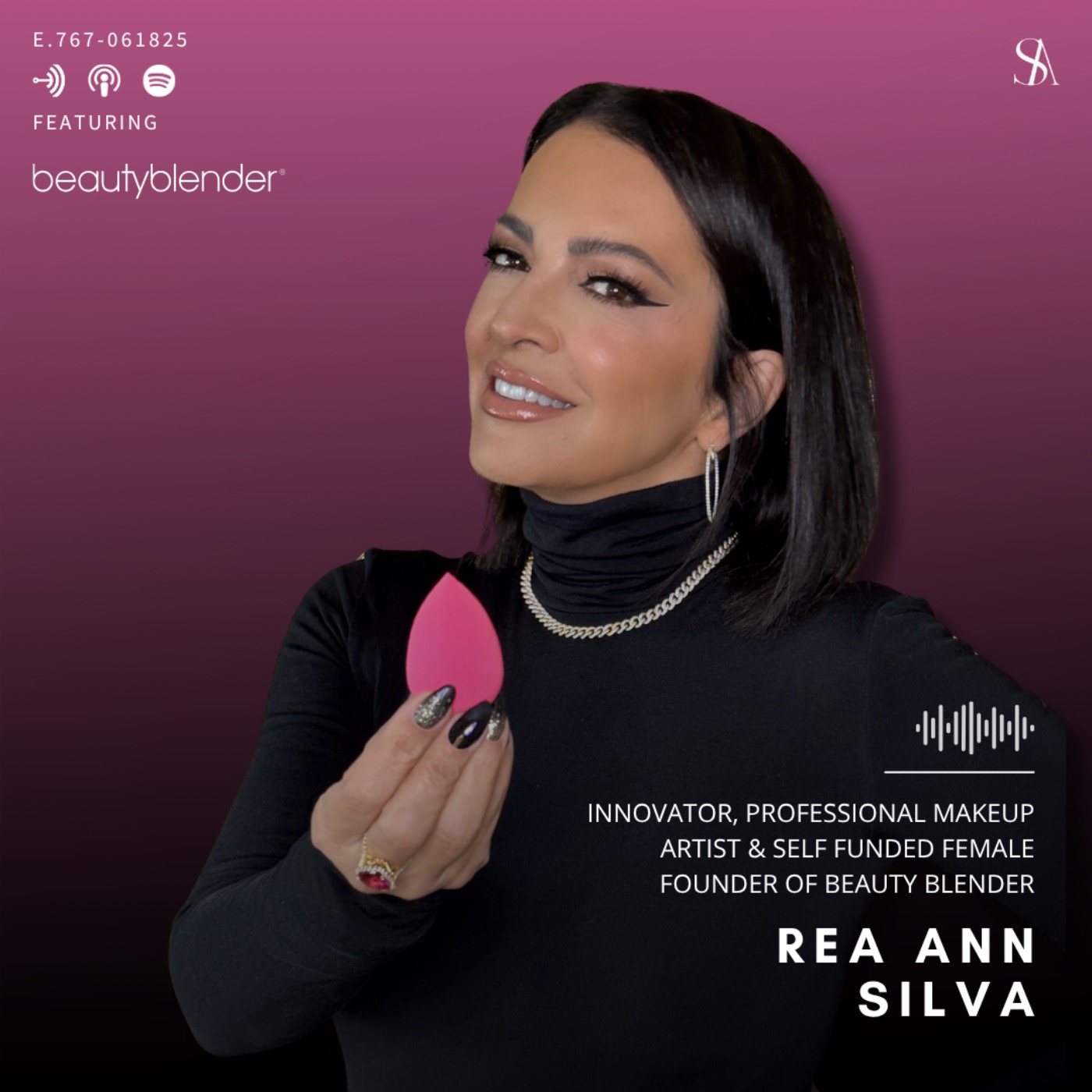
Hey guys, welcome back to Skin Anarchy. I have such an amazing guest for this space. She's truly an icon in the beauty space and has created probably the most beloved beauty item, beauty tool that we all have used at some point or are still using. So without further ado, please welcome the founder and the creative genius behind Beauty Blender, Rayan Silva. Welcome Ran, I'm so excited to host you.
- [01:53]
Rayan Silva
Wow, that's a great introduction. Thank you so much for having me.
- [01:57]
Host
No, it's such an honor to host you. I'm. I'm such a fan of what you've created, what you've built, and it's such an honor to host you. So I want to get started there and if you could walk us down memory lane. What was the spark? You know, like the moment where you came up with beautyblender? If you could tell us what got you into the beauty industry.
- [02:15]
Rayan Silva
Okay. Yeah. So what sparked my idea is that I am an actual professional makeup artist. Started out in music video, went into editorial advertising, soon into commercials, then TV and movie. And I discovered that I needed a tool that was going to be able to help me quickly democratize makeup application in the makeup trailer. So what that means is as a department head makeup artist like Myself. You hire other artists to come in and work with you, and we all interpret the project we're working on, but everybody has a different hand, Everybody has a different eye. Everybody has a different idea of whatever the job is. So whether it's beauty or character or fashion, you know, we all have our own idea in our minds about what looks good. But the one thing that we knew always needed to look flawless was skin. So, you know, your canvas is just that. It's like the canvas in which you paint all the details and all the designs onto the face. So, you know, you always want to start out with really beautiful, beautiful skin. And that was kind of what my reputation had become in the industry at that point, because I am Latina and I specialized in working with people of color. Because of course, we're talking over 20 years ago, there weren't the shade ranges of makeup that you now see on the shelves. So we had to be very, I would say, like, creative and a little bit MacGyvering of creating shades that looked natural and perfected your canvas. I would say that's the first step. But then secondly, I was hired to department head a show that was a little bit of an experiment, I like to say, because it was really. And again, we're talking 20 years ago. It was going to be the first show shot digitally in high definition and broadcast out to the world. It was a show called Girlfriend Friends. It's a very popular show for beautiful black women. And on that show, Beauty Blender was actually created because historically we would be shooting film and lighting the set a certain way, which evidently, like makeup artists were a little more heavy handed with makeup. And now with the digital world and seeing everything, every pore, every hair, every texture, every discoloration, I needed to find a way to make the skins look natural, but still do corrective makeup and still be able to make whatever you wanted to change, change or hide look natural. And again, when you get back to talking about democracy democratization in your trailer with everybody having a different hand, which, I mean, a different touch, a different pressure, different idea of what looks natural. When I created Beauty Blender, that was the tool that kind of just level set everybody in the trailer. You know, everybody had the same level of coverage and natural, flawless finish. And that, that is the long winded kind of story of how I created Beauty Blender, why I created Beauty Blender. But the actual process of creating it on set is we would literally sit on set in our set chairs and cut sponges and into teardrop shapes and. And use them for the next day. And I realized, like, okay, my sponges are disappearing. And. And honestly, you know, working in these environments is very hygienic, and you can't double dip. You can't share tools. So, you know, once I a hand cut sponge on a character or an actor, at the end of the day, I'd have to, you know, either throw it away or cut a new one or. And this is where the idea of blender cleanser, the partner to beautyblender, came about. I created the world's first sponge cleanser because I couldn't rationalize in my head why we could continue to just clean a brush and use it over and over again and that be hygienically acceptable when hairs have pores. I mean, synthetic hairs are different now, but we're talking in 20 years ago anyway, it just didn't make any sense how it was acceptable to clean a brush over and over again and use it. Why couldn't we do the same to a sponge? And it would certainly help me cutting the sponges every day. So that. That's pretty much it. That. That was the. The genesis of the idea, how it came about. It was really, really just MacGyvering onset in real life, problem solving and creating a tool that helped me do this television show that was really a bit of an experiment. And having all three of my makeup artists be able to achieve the same.
- [07:01]
Host
Kind of natural look, that's so, so fascinating. I mean, now we look back, right? Like, we all have a beauty blender. We've used one, and it's like the most natural thing to use, like, as a tool in makeup. I mean, when was that moment for you when you realized, you know what, I need to take this to market? Like, this is really something could revolutionize the beauty industry. I mean, did you have that moment where you, like, you thought to yourself, like, I'm gonna create a new category here?
- [07:26]
Rayan Silva
You know, I didn't dare to dream that big. I mean, I did dream big, don't get me wrong. But to. To think it was going to revolutionize the cosmetic industry or that one day it would be in the Smithsonian Museum of American History. Like, those things were never in at all. Even like a molecule in my brain of a thought. What I thought was happening was me problem solving in time to achieve my job, success at my job. And I also knew that, you know, high definition and the digital world was approaching, you know, rapidly, and there were going to be other makeup artists like myself that were going to be not working in film Anymore, but in, you know, digitally. So I thought, well, you know, maybe this is an opportunity for me to create a tool. I had always been kind of entrepreneurial. I had created, like, a brush roll before, and I had different ideas for different tools because, really, like, cosmet lipsticks themselves. When you think about formulas and you think about all the different products that are on the market, whether they're complexion, eyeshadow, lipstick, cheek, all those things constantly evolve. And they have trends, and they. They. They modernize. But the things that were not modernizing were the tools. Like, we were literally walking around set with gardening bags, these canvas kind of like gardening bags, where we would put all of what we needed for our actors on set. And we were, you know, using caboodles and little, like, pencil holders and all these, like, kind of crazy. Not products that weren't actually designed to help a makeup artist, a professional makeup artist on set work. So, you know, for me, I started thinking about, you know, how can I modernize the way we make up? And that's when I started thinking, like, okay, I can't just be sitting on the side of a set with my makeup artists and cuticle scissors and cutting these sponges for the next day, because they would literally, you know, I would either have to throw them away at the end of the day, or my actors would say, hey, can I have my sponge? And they would take it, and then they would show their friends or their mother, their sister, whatever, and then their friends would be like, where do I get one? And so then they would come in, say, another day on set, and say, hey, can you cut a couple more for me? I want to give one to my auntie or my sister or my bestie or something like that, you know? So I was like, okay, I really need to figure out how to make these things.
- [09:48]
Host
Yeah, no, it's so fascinating because when I look at what you've created, it's a mindset shift, right? Because, I mean, we all go through this on a daily basis. I'm not, like, the best with makeup or anything. You know, I'll be the first one to say, like, I'm not a big makeup person. I don't. I'm not trained in any way. But when I was even doing my makeup, I remember starting off, it was so hard to work with brushes. All of us go through this motion of, okay, this is very difficult, you know, and we need to simplify this. So you created something that literally bridged that gap for consumers, where it's like, feeling like this is not accomplishable by me versus, you know, I can do this. I can work with a sponge and actually make this look happen for myself. So, I mean, how's that been for you? And it's much more than business. Right. It's like a cultural shift that happened there.
- [10:33]
Rayan Silva
Yeah. That's why I say modernizing the way you make up, because I did have that moment where I realized there is a learning curve with brushes, and brushes make makeup application intimidating to someone just entering the makeup world. When you think about someone maybe like yourself, you say, you know, you're not a regular makeup world user, but, you know, you think about a makeup artist. We use brushes all the time. They're kind of extensions of our fingers. It's so natural for us, but for other people, I realized part of what's intimidating is getting the makeup on your face. It's not, oh, I can't find a product for myself. Oh, I can't find a tool that I've seen someone else use. It's actually getting the makeup on your face in a transformative way. Because we use makeup for transformation, Whether it's sheer or to look natural or to completely change the way you look is used for transformation. So the way you put it on your face and the way that the result happens, depending on what you're looking for, is the mark of success. But I understood that brushes could be intimidating because time and time again, my clients would make me walk them through what I did to them to achieve the look, and then they would go and try to duplicate it, and it wouldn't look the same. And it's because it's the application. It's the way you put it on your face. So what Beauty Blender did, was it democratized? Like I said earlier, if you can bounce this sponge on your face, you will get 20 years of makeup experience on at least perfecting your canvas, your. Your complexion.
- [12:02]
Host
Right. So true. I mean, it's like a night and day difference. I know. Like, when I was younger, I was using brushes, and I just. I ended up looking like a clown because either you put too much makeup on or you just don't know. You know, exactly what you said. We don't have that. Normal consumers don't have that feeling of it's an extension of our hands. We're just. Yeah.
- [12:19]
Rayan Silva
What do you do if you over apply? You know, oh, my God, I have too much makeup on. But then you try rubbing it off, then you're blotchy and you're smearing, and you're all these things with beauty Blender, you just keep bouncing, bouncing, bouncing, and it kind of just level sets everything. I can tell you like it was. It was a tool, really. Like I explained just a few minutes ago that I needed on set to democratize and make all of my artists be able to achieve the same kind of natural, flawless look. But at the same time, it was so easy to use. And it was the same thing that the consumer needed, too, to be able to feel good about their makeup use. But also, then the retailers also loved it because it became makeup's best friend. Like, literally, it was brand agnostic. You could use a beauty blender with any brand in any store, and it would make that makeup look good and sell that makeup. It would make it easy for the consumer to use. They would fall in love with the formula. The sponge became a little bit of a byproduct because they would see the result of the makeup application and be like, oh, my God. Okay, need one of these applicators, these beauty blenders. And I really love this makeup now. So it kind of worked on both ends. It was definitely nothing I planned, but it's definitely something that happened.
- [13:33]
Host
Yeah. No, that is really phenomenal, the way that this was taken on by everybody. I'm so excited that you, like, live in a world where, I mean, when people talk about inclusivity, it's not just shades. Right. It's also about the access people have to products or the use of products. And that's where it really stands out to me. What you've created is because you made people feel like you can do this. You know, this is something you can do. You can achieve these looks. You can look at your favorite magazine or something, and you can at least feel like, okay, I can somewhat accomplish that. My makeup won't look completely off anymore. And I think that's just so beyond just product.
- [14:08]
Rayan Silva
I mean, it gives someone confidence.
- [14:10]
Host
Yeah, it gives someone confidence. I want to ask you this because I think it's not just the beauty blender, right? I mean, the whole brand, the way every product fit into the brand. I mean, it's really remarkable how you just kept creating wonderful products. What is your mentality when you approach true innovation? When you want to launch a new product or you're like, I want to create something new. What is that process for you?
- [14:31]
Rayan Silva
Well, thank you for that, because really, everybody focuses on on the Queen beauty blender, as they should. But you're right. I've created so many other ancillary and unique products. I would like to to think that my tools are Very innovative, and I believe they are because people tend to copy them. So.
- [14:50]
Host
Yeah, I know.
- [14:51]
Rayan Silva
What did Coco Chanel say? You know, what is this saying? Imitation is the most form of flattery or something? Yeah, it's a little annoying, but it is true. If it. If they didn't work, then that wouldn't happen. Which, you know, is also something you said earlier when we first started talking. You said everybody at some point has come across a beauty blender. I don't know. I think because beauty blenders become so popular and we're in a place right now where dupe culture is popular, where it used to be shameful. I think people tend to think my fans, as I'd like to call them or the copycats or the dupes, are an actual beauty blender, but they're not. Beauty blender is a brand. It's totally different. So I hope to what you said, everybody has tried a beauty blender. But getting back to your question, the way I innovate, I can tell you this is. Is when I hear myself saying, I wish. When I say I wish I had a place to mix my makeup. I wish that I could see if what I'm mixing is actually going to match the skin that I'm putting it on without putting it on the skin. So I created, for example, my product called Surface, which is a clear mixing palette way ahead of its time. I created this product 15 years ago, and it was way before everybody started watching tutorials and watching makeup mixing and all these things. But it was really a pro product. But it was one of those products. I said, I wish I had a clear mixing palette that I could mix my foundation color that I'm trying to match on a client and just press it onto her skin where I could see her skin, and then I could see the mix and see if it's right without applying makeup. Because in. In filmmaking, sometimes you do these really, really, really, really close, tight shots. And even just the. The little bit of makeup really shows. And you're not trying to say makeup, you're trying to create a character's look. So, you know, if the overwhelming and someone says, hey, I see that makeup, then you haven't really done your job. You're supposed to be like, wow, look at. That's amazing. Look at that look, or whatever it is. So my innovation a lot of times always starts with me having a job to do and saying, damn, I wish I had this. And then that kind of leads me down the road of, like, I search to see if there is that, and if it's not there, then I make it it.
- [17:22]
Host
That makes sense. Yeah. It sounds easy you saying it, but, you know, it's a very difficult thing to do. It's the billion dollar question, right? At the end of the day, because there's so many. Like you said, dupe culture is everywhere. All I see, I'm not gonna lie, a lot of people out there, you guys know what I mean? Every time I go on TikTok, it's just a dupe. That's all I'm seeing all the time, especially in the.
- [17:41]
Rayan Silva
They're promoting it, which is funny because I come from a generation of artisans and, you know, where people create original ideas and make them in a way that unique and proprietary to them, and they own that discovery. They own that idea. And it used to be shameful if someone copied it and maybe did it with inferior materials or inferior production, but it was cheaper.
- [18:12]
Host
Right.
- [18:13]
Rayan Silva
You know, and it would be shameful if someone said, that's not a Dior, that's a Lior. You know, you would be. You wouldn't want to get caught dead because, of course, these are. These are products that are. And I'm talking about luxury, you know, luxury fashion, luxury accessories. Those kind of. These things are the kind of products that you work hard and aspire to, and they make you feel successful when you can finally get them and afford them and wear them and appreciate them. And then to have it kind of just cheapened in a way, I don't know.
- [18:42]
Host
Yeah, no, it is. It is cheapening a bit, but.
- [18:45]
Rayan Silva
But now it's. It's like the smart economic decision, you know, why shouldn't you be able to wear a cheap one? Or why is it wrong to like something so much that you'll just buy something that looks similar or, you know, I mean, and I get it. Like, I really do understand the whole concept of why and. And people feeling like we live in this culture now, where when you look at TikTok and you look at social media and you see everybody living their best lives, you don't see their struggles, right? You see everybody living their best lives and you think, well, God, I want to live my best life, too. I need to have this or I need to have that. Oh, look, I can go on Temu, or I can go here or there and get the same exact thing for a fraction of the cost, and then I'm going to feel really great about myself because I'm looking like them or I feel successful, you know, and I'm all about that feeling. People need to feel good about themselves and they need to do what. What they need to do to. To feel good about themselves. But there is this kind of shift in our culture that's happened.
- [19:44]
Host
Yeah, I completely agree. I think that's so spot on because, you know, it used to be. You're right, it used to be very looked down upon, you know, this whole dupe idea. And honestly, I still look down on it as a consumer because let's be real, I mean, I can't tell you how many times, and I'm not just saying this, I promise, whenever someone asked me, oh, this is the same thing as a beauty blender. Like, no, it's not. Like, no, it's not. I swear by the actual beauty blender. Like, it. I do not use the other sponges because I know, like, for me as a consumer, if I find something I love, I hold on to that. And it's not just about, oh, I got this product and let me find a cheaper version. It's more about, like, you kind of grow attached to that brand, you know, it becomes a staple in your life. And I think that whole experience for consumers, I don't know when we as an industry shifted away from promoting that. Right. It's like this connection you build with a brand, the connection you build with what the brand stands for, that should matter. And, And I think for a lot of us, it still does. I mean, it should, you know.
- [20:41]
Rayan Silva
Yeah, I hope so. I just think the cycle of marketing and newness is so fast now where. And you can see it even in fashion, everything always usually starts in fashion first. And you still have fashion weeks that have, you know, different seasons and different collections for different times of the year. But you also see now because of social media and because of E commerce and because, because, you know, the business of behind the craft requires that you sell, sell, sell. I mean, you. You have to be creating newness all the time. So technology and social media has had a big hand in, in all of it.
- [21:19]
Host
Right? No, I agree. I. I want to talk about your foundation, though, because I feel like everyone talks about your tools, but no one discusses. I mean, your, Your foundation was amazing. Like, I remember when it came out and I was so excited that you launched a foundation and I. Internet was lit up, you know, when it came out, and the design of the packaging was so, like, you put so much thought into everything. I feel like it shows, you know.
- [21:44]
Rayan Silva
Oh, my God. Thank you.
- [21:45]
Host
How was that, you know, launching your first foundation and how was that experience?
- [21:50]
Rayan Silva
Oh, my God, it was white Knuckle and shocking. But it was beautiful. You know, I mean, literally, I never expected to gain any success in my life by creating a sponge. Let's just be honest. I mean, that was not with, with the level of experience and the amount of work and the quality of work that I had done throughout my career, I saw my peers creating makeup lines. You know, you saw Francois Nars, you see Charlotte Tilbury, you saw Bobby Brown, you saw. I could go on and on with all the different artists that did the same thing that I did in one way or another. Some of them were fashion, some of them were film, some of them were celebrity like. But, you know, you would see these artists, artists get these deals where they would be creating makeup lines, like full makeup lines, right? And, or at least consulting and, and having some ownership in them. So I really thought that that was going to be what I was known for. So for me, and, and given my, my background being Latina, my husband is black, my children are mixed, they're Afro Latina. And. And then coming from the background of being a makeup artist that specializes in creating these shades that did not exist, I would be mixing lipsticks and eyeshad into my foundations in order to get the right skin tone sometimes. So for me, once beauty blender kind of took off. And I don't want to say it wasn't running itself because nothing runs itself, but, you know, I had gotten it off the ground. It had gotten notoriety. My main retailer at the time and still is is Sephora. They wanted to know what's next again. Here we go, right? Like creating products because people want newness and they want demand and they want to continue to sell product. It was a big opportunity for me and kind of made my heart, heart sing. Because like I said, I didn't think I would be known for creating a sponge. I thought I was going to be known because I'm such an expert in skin tones and complexion and really creating very natural look that were appreciated at the time because we weren't in the digital age. Now, you know, you have like Facetune and all these kind of digital apps that will perfect any bad makeup you do right in the click of a key. But back then you had to pay retouching people to correct things. So I became really popular. Popular because there was the least amount, if any correction ever needed in my skin tone, in my applications of complexion. So for me, I thought that that was going to be my big deal. So when Sephora said what's next? I said, well, I think what makes sense is to create the perfect partner for beautyblender. So beautyblender is now the best way and the easiest way and the most popular way to apply your complexion products. Products. Let me give you the complexion product that goes with it. It's like, I don't want to just sell you the hot dog bun. Let me also give you the hot dog. So let's do it. Let's. Let's do it. So that. That was, like, the idea behind creating the foundations. It was because I was an expert in that area, but it also made sense. It was a product that went with Beauty blender.
- [24:54]
Host
It really did match very well with it. I remember when I first bought it, and I absolutely fell in love with it after the first time I tried the foundation. I was like, this is brilliant. And that's why I was like, it just keep, you know, like, over and over again, the innovation.
- [25:07]
Rayan Silva
Thank you so much for acknowledging that, because I don't get much credit for my foundations, and they're really, really beautiful. I have two. My original one that you're talking about is called Bounce, and that's where I created the very unique palette on the bottle. So, okay, let's go back to when you said, how do you create products? And I told you about my product surface. Right. The palette, the mixing palette. Well, only makeup artists really understood that product. So that product was. Yeah, it was received kind of like, oh, it's interesting. I don't know if I need this. Right. But I did know that the consumer needed it because you needed a place to play. You know, like, when you go to work and you have a desk, you have all your things there. When you're a makeup artist and you set your setup up for a thing, you have all of your things there. When you're in your bathroom and you're getting ready to go somewhere, you have all your things there. And I would see people, like, mixing their makeup on the back of their hand or on top of a. A jar or something is because this is where the palette comes in. So when the palette was kind of, like, warmly kind of lukewarmly received, I was like, you know what? I know better. I'm going to put a palette on the bottle. So that's why I had that square unique bottle you're talking about that you would turn sideways and the makeup would pump into the side, the flat side of the bottle that had kind of the shape of a beauty blender. And that was. That was your palette. That was where you would go and you could convince, you know, a Concealer in there, you could mix a shimmer in there, you could. You have a place to play. And also the thing about the beauty of Bounce and the challenge of that foundation is that we launched right after Fenty launched. And When Fenty launched 40 Shades of Foundation, it seemed like it had never been done before, which is wrong. You know, Mac had 40 shades, Estee Lauder had four. There were many brands that, that had 40 shades. But what was different about it and really brilliant about it, it was done by Rihanna, who is a woman of color. So it was the first time somebody of color was actually promoting and creating all these in between shades. Right. And so when I went to create Bounce, I had to do 40 shades too. So it was a big undertaking. And it came with a little bit, I think you mentioned it, a little bit of scandal.
- [27:24]
Host
Yeah, yeah, I remember that.
- [27:26]
Rayan Silva
Yeah. But it was unnecessary. I found out that they were like 15 year olds in middle America. Just.
- [27:35]
Host
Yeah, it was a baby. I mean, I remember that, though, Ran. I remember when it was like the foundation came out and I absolutely fell in love with it. I saw the vision you had with the, you know, the indentation and the, the. The palette on the bottle. I used that palette. You know, I used the product. And when you used it and had the experience, it was actually the most innovative thing you had seen in foundation a very long time. And so if you actually went through and did the whole experience the way it was meant to be, I think the. Again, it was an entire category being created, you know, and it's like, I remember the scandal part. I remember when people were talking shit for no reason. And I, as a consumer, they called me a racist. Yeah, I know. And I was really pissed about it.
- [28:20]
Rayan Silva
I was really pissed. And my kids are black and all of my clients, like Brandy and Whitney and Eve, and I could go on and on. All women of color, I was like, wow, they didn't do their homework.
- [28:32]
Host
Yeah, no, it was, it was nonsense. I even remember as a consumer, I was like, that's crap. Like, you know what I mean? Because it was such a good foundation. Like, if you use the product and it looks beautiful and it does its job, why are you all about this other stuff? You know what I mean? Like, I just didn't understand it.
- [28:49]
Rayan Silva
Even as a consumer, still the best product. You know, you talk about it like it's not here anymore.
- [28:54]
Host
Oh, no, I know, it's amazing.
- [28:56]
Rayan Silva
And. And it's today still one of the most popular foundations used in film and television because it photographs so well, it absorbs the light, but still reflects, if you can understand. Like, and that's what gives you kind of like this corrective. When I say corrective, like we, we use makeup on our face because we're trying to change something or enhance something. And so that's where the word corrective comes in, because it, it changes and perfects everything, but at the same time looks really natural. And it's long wear and it's buildable. I mean, it's, it's an amazing formula.
- [29:32]
Host
No, I know. It's, it's really, really good. And I think, especially if you have textured skin. I, I know when I first discovered the foundation, I was dealing with skin texture a lot and it was like, I remember trying to. And I was like, oh, my God, everything's blurred.
- [29:47]
Rayan Silva
Everything. Yeah, because it absorbs the light, it doesn't reflect the light. A lot of, you know, these other foundations and there's all, there's amazing stuff out there. I'm not saying anything. There's some really, really beautiful formulations. But there is a certain type of finish that a lot of people like that's very radiant and shiny and almost wet looking. And that will enhance your texture. That will enhance any kind of. But if you don't have just like perfect flat skin, you're going to see texture. And if you're okay with it, that's fine. I mean, I don't think all of us want to hide our flaws all the time. And if you're fine with it, that's fine. But if you want to just really perfect and blur, you need something that absorbs light. And at the same time, you know, in the high points of your face, in the structure of the skull and the face, you want, you know, when light hits certain areas, areas you want it to still reflect, you don't want it to be dead and totally like matte. And that's what this, this thing does. It's just really, really beautiful.
- [30:48]
Host
Well, that's the. It also raises the conversation, right, where it's like, people scream from the top of their lungs about inclusivity and they want more inclusion in this industry. But it's like, why don't we ever acknowledge products that go beyond just shade range and they're truly inclusive? Because when you look at people of color in our skin and the way our skin behaves and the problems we face, right, like whether it's hyperpigmentation, texture, whatever it is, those are very specific problems for people of color. And so when you're, when you created Your products. Like even with the beauty blender, the foundation, all of it, you can see the inclusivity in every product because it's making you feel better about the way your skin looks overall. I mean, every single product product combats issues that are not discussed when it comes to colored skin. You know what I mean? At the end of the day, we're not talking about texture, we're, we're screaming about shade ranges, but we're not talking about, oh well, if you have melanated skin, here are the five things you're going to deal with, you know what I mean, on a day to day basis. And so when you have a product and multiple categories being expanded in this way that are tackling these other issues, it really baffles me, right, why we don't focus on, on those and the positives that have come from the innovations you've put out into the beauty industry in that regard. I don't understand it. I just think that the whole conversation around inclusivity is, it's kind of misdirected at this point. You know, everyone's just like, I need 80 shades. That's great. I would love to see people have 80 shades in every foundation launch in everything. But I also need like what you were saying. I don't want a shiny foundation because you know what, I got pores and my pores are going to come through in that shiny foundation. Maybe, maybe someone who doesn't have that skin type can do it, but I can't. So it's, yeah, it's like a much deeper conversation that we need to have as an entire beauty industry about, like, what does inclusivity really mean and who are the people who are actually addressing these true problems that we face on a day to day basis rather than just, I don't know, launching something that looks good in the marketing world and goes viral on TikTok. Because you have whatever if 70 shades of something. So yeah, I have my own thoughts on that. Sorry, I'm like ranting.
- [32:58]
Rayan Silva
But yeah, no, I get it. I mean, trust me, it's been the topic of conversation time and time again for me. But I will say I think that we've kind of moved away from needing to have so many shades because honestly, I feel like there's so much information out there on the Internet now that teach the makeup user how to tackle whatever that challenge is that they have, whether it's texture, color matching or allergies reactions, like there's so much out there now that there didn't used to be I think, I think one of the lessons about the 40, 50, 60 shades for a founder at least like me, who's, you know, still self funded, only out of 40 shades, maybe, maybe if you're lucky, 10 are productive. So then you're creating all these other in between shades that may kind of limp along. You know, there might be certain, certain, certain number of consumers that identify with some of these in between shades, but they're certainly not the most productive. Not all of them are productive. So you, you know, what we've seen in the industry is that they've kind of cut back from requiring to have that many shades anymore. If you see some of the smaller, more new brands that are coming out, you know, they may have 20 shade, there's no longer 40 shades shades because it's a financial decision, but it's also a waste decision because you create these shades, they don't sell. What do you think happens to them? And then we have, for me anyway, I mean, beauty Blender is also, it's not only the first high def tool, but it, when I made Blender cleanser, it became the world's first sustainable makeup sponge. Because for the first time I wasn't, we weren't saying use your sponge once and throw it away. And we also were not, we were not educated, hating with nothing. And what I mean by that is like we would all get, all of us. You would buy a powder, right? And you would get a sponge in the compact or you get a foundation. Sometimes they would give you like this kind of obligatory tool to put it on with. But they didn't tell you what to do with it, how to use it, if you can clean it, if you can wash it. They didn't give you a way to replace it. It was just kind of like this thing like here, this is better than using your fingers. So beauty blender, when I create a blender cleanser, bronzer became the first sustainable tool too. So for me, that waste, when we go back and talk about 40 shades and only like maybe let's, let's call it 15 or productive, you know, you still have all those other shades that what do you do with. You can try to sell them in the gray market or you can try to sell them out to another country or whatever. But a lot of times it's just waste. And it just seemed really sad. For me, I'm conscious of, of the environment. I'm not, you know, a total, like, I don't live my life every day in every single moment of my life. But, but there are certain things that, as a makeup artist, I saw how much waste there was, and it just didn't seem right.
- [35:57]
Host
Yeah. No. I wonder if they have ever done a study of, like, what happened with the amount of, you know, those little wedge sponges, like, how.
- [36:05]
Rayan Silva
Oh, my God.
- [36:06]
Host
Yeah. How much that decline mind since the launch of Beauty Blender. I mean, it's. It's crazy to think before we were using, like, what, 10 of those per makeup application? I mean, I was.
- [36:17]
Rayan Silva
And just throwing them away. You might use it. If it's just for yourself. You might use them a couple times, but you were always marketed and taught to throw them away and use another one. I mean, listen, it's a great replenishment story, right. For the companies that are making it, because, you know, a replenishable product, which means sales and replenishment for me, because I would run some big departments where sometimes I would have. Have 10 makeup artists. When we wrap at the end of the night, I would look at cleanup and how much. How many of those wedges would. Would be in our trash cans when we're trying to wrap the night up? And I'd be like, oh, where does all of this go? Like, the material itself doesn't necessarily. It's not like. And. And I. I. All of them, like, they. They take time to degrade in. In our environment, and it just seemed like. It just seemed like such a waste to me.
- [37:04]
Host
It is. It is a waste. You know, that's the bottom line. And it's amazing that you found, like, a truly. I mean, that's. I think one of the most sustainable launches of this industry's history, you know, is the sustainability aspect is through the roof. And again, it's. I mean, you're so remarkable because you've innovated entire categories, entire new mindsets of how we look at what we use in beauty, and it's just really remarkable.
- [37:27]
Rayan Silva
Thank you.
- [37:27]
Host
Yeah. But I would love to get your advice. Ran for all of the entrepreneurs out there, because I think this is becoming. Every day, the beauty industry is becoming more cluttered, you know, and everyone wants to be an entrepreneur.
- [37:38]
Rayan Silva
Crowded.
- [37:38]
Host
Yeah, it's very crowded. What. What is your advice to someone who might be a new entrepreneur thinking about.
- [37:44]
Rayan Silva
Launching a brand for themselves, a cosmetic brand or just.
- [37:47]
Host
I mean, anything in the beauty industry.
- [37:50]
Rayan Silva
Okay. I can be cheeky or it can be honest.
- [37:52]
Host
Let me see.
- [37:53]
Rayan Silva
It's not easy. Okay. It's more expensive than you think. I see that a lot of people even more experienced, like makeup artistry, friends and just different People that I come across, they. They think you need to have the whole line. Like, I'm gonna create a makeup line, right? I, I can only talk from my own experience, and I'm very grateful that I created one product because it's, it really truly, you know, in the beginning, because it really, truly is the only way I was able to survive and grow the brand. If, If I had to start, start my entrepreneurial journey with 40 shades of foundation, I wouldn't be able to do it. You know, if you have one good idea for a product, if it's one of those products where you say, I wish you can afford to make the prototype for that one product, you can educate your, Your, your future consumer about why, why you need this and what it's for. And then, then you have something to work with. I think it's really hard for, for anybody, entrepreneurs, especially, because of TikTok and Instagram. And I mean, there's ways to now sell your product without having to go to Sephora or Ulta or some of these stores. You can totally do D2C. And, you know, it's, it's more than just creating either a website or a link or something like that. I mean, digital marketing now has taken the place of traditional advertising and where, you know, you used to buy a page in Vogue magazine to advertise your product, and it would be like $250,000, but it would be a full page and you would be in Vogue, and people would sit and turn the pages and see our product. I mean, now that's the world we live in with D2C. You know, digital marketing is so expensive. You know, these are the things you have to consider. And then it's. And then it's beyond the expense of it. It's finding the right people to run it. And I can tell you I've made a lot of mistakes. Mistakes. I've found the wrong people time and time again. And that's why sometimes, you know, you've given me a lot of compliments, doctor, about all the, the products that I've created that are very, very true. And I'm so grateful that you said these things because they are truly innovative and different, and I created each one of them with love and intent. But, you know, sometimes I didn't have the right marketing person, or I didn't do the right D2C or I didn't spend enough in digital marketing, or I was listening to my retailer and I wasn't really following my heart. And, you know, there's all these lessons you learn on the way and. And everybody's going to learn a different set of lessons. For me, honestly, starting simple with. If you have an A1 idea, don't feel pressured to have to create a halo of products around that idea. If that's something you think is useful and people will resonate with it, just start there.
- [40:47]
Host
I think that's what we see a lot of is people trying to bite off more than they can chew.
- [40:51]
Rayan Silva
You know, they need to be more than. Than what they really need to be. We didn't talk about my other foundation, so I do have one of those glowy foundations, too, and it's called Always On Skin Tint. And it's. It's in a glass bottle with a dropper. It's a light to medium buildable coverage, where my original Bounce foundation is medium to full coverage. But they're both long wear. They all have really amazing natural ingredients in them. Naturally beautiful ingredients in them, I should say. But like, for example, my skin tint is only 20 shades, and the reason is, is that it's not full coverage. So there's a translucency there. You can blend it and thin it out and it doesn't look like a totally different shade on your face, but it has a really beautiful, radiant finish for those girls and guys that really like, you know, a glowy finish. Listen, I. I like it too. I just. I just know that if I'm trying to cover some texture or something, I got to use a little powder. I got to, like, matte it out a little bit, you know?
- [41:49]
Host
Right. No, but skin tints are perfect for summer, though, so it's very. It's a good time to buy one if you're in the.
- [41:54]
Rayan Silva
Yeah, and it's long wear. It's long wear, which is great. And I have my. Oh, speaking of summer, I have sun shade out right now. My. My cute little beauty blender that we're using for spf.
- [42:04]
Host
Yeah. We didn't even need to talk about sunshade. Yeah, yeah, yeah.
- [42:08]
Rayan Silva
So that's out on the market at Ulta right now. It's doing really well. It is a beauty blender, so. With little sunglasses debossed in it. And it's really, you know, what we're trying to do. There's no big secret here, but what we're trying to do is promote and let people understand that SPF application is super important all times of the year. Year. But of course, summer's, you know, the best time to really send that message. So it's about that even Flawless application you get with your foundation when you use a beauty blender, you also get when you apply your sunscreen. And why that's important is a lot of times when we're smearing the SPF around on our face, we're actually putting the SPF on, but then we're wiping it off, too.
- [42:54]
Host
Yes, that's so true. You know?
- [42:56]
Rayan Silva
Yeah. So when you apply it, like you would apply foundation with a beauty blender, you're getting that even application everywhere. So it's really giving you the protection that you need when you. You're out in the sun.
- [43:09]
Host
That's brilliant, actually. That's really brilliant.
- [43:12]
Rayan Silva
It's really just an educational story. It's not, you know, people are like, well, what's different about it? I'm like, it's. It's just understanding that it's about the application and the coverage and the protection. Protection.
- [43:23]
Host
Yeah, that's everything when it comes to spf. Like, if you don't have it, why is it. Right. Like, it doesn't even make sense how we. Yeah, we rub it all in and like, it. It's not there. After you do all that rubbing, you think it's you.
- [43:37]
Rayan Silva
It looks good because you don't see it. But that's because nine times out of 10, you've got such a thin layer now. You've wiped it all off.
- [43:45]
Host
Yeah, exactly. No, it's actually. That's brilliant because we need that, actually, that. I mean, people are screaming about. About SPF lately, but half the problem is because we're not applying it correctly.
- [43:54]
Rayan Silva
You know, and you have to apply it every three hours. Because it's uneven.
- [43:58]
Host
Yeah, exactly. And I mean, that's the thing is, like, you know, again, like, there's so much misinformation, I feel like out in this industry, but you're creating. Once again. Once again, you know, it's a category in itself. I mean, that's really brilliant, though. I love that. I think everyone needs one of those, honestly, because we're all rubbing our sunscreen with our hands, you know, and really not doing it right. So that's brilliant.
- [44:20]
Rayan Silva
Well, listen, I'm not saying you're not doing it right. I'm just saying it's not even. And you know how I have. We have a dermatologist that we worked with, and he did some of this kind of filming with some kind of weird camera that you can see. It's almost like an X ray.
- [44:40]
Host
Yeah, they have those, like, light. Like they're light. Yeah. And you can see exactly the color.
- [44:44]
Rayan Silva
Coverage where beauty blender, when used sunshade with SPF is a much more balanced and full coverage application of your sunscreen.
- [44:57]
Host
Right.
- [44:57]
Rayan Silva
And you can, and you can even use whatever your sunscreen is. I mean, I can't tell you the formula you're using, but there are many, many sunscreens that you can use after you've applied your makeup. Say you've used sunscreen under your makeup makeup, and then you want to reapply because you're in the sun. If you use sunshade or beauty blender to reapply that, that SPF on top of your makeup, simply because of the way beauty blender applies anything with the bouncing like, it won't interrupt your makeup. So you put it on top of your makeup.
- [45:29]
Host
No, it's like gentle enough to where you can use it to literally stamp.
- [45:32]
Rayan Silva
Well, it bounces and blends at the same time. So, you know, it's almost like remushing your makeup. I know. That's such a technical term, right?
- [45:42]
Host
Yeah, it's very descriptive. No, I mean, I, I agree. I think that's the, that's the best part about it is like it's doing so many things at once and that's what makes it so amazing for everybody. Well, this has been such an honor to host. You ran and thank you so much. This was amazing. And I hope for everyone listening, you guys loved it as much as I did and you know, go buy a beauty blender. A real one?
- [46:02]
Rayan Silva
Yeah, a real one.
- [46:05]
Host
There is a difference. I'm not lying. There's a real difference. Like I see it in my makeup. But no, this has been so great.
- [46:11]
Rayan Silva
Awesome. Thank you so much.
- [46:12]
Host
Thank you so much. Have a wonderful day.
- [46:14]
Rayan Silva
You two have a great weekend. Bye.
- [46:19]
Adam Grant
Hi, I'm Adam Grant, host of the podcast Work Life. For over 20 years, Paylocity has been simplifying work with innovative solutions that teams love. Like on demand payment, which offers employees access to wages prior to payment. Flexible time tracking features which enable staff to clock in and out through their mobile device. And numerous other cutting edge solutions that simplify collaboration across hr, finance and it. Learn more about how Paylocity can help streamline work and enhance business outcomes for your organization@paylocity.com Simplified.
- [46:52]
Progressive Insurance Ad
This episode is brought to you by Progressive Insurance. Do you ever think about switching insurance companies to see if you could save some cash? Cash Progressive makes it easy to see if you could save when you bundle your home and auto policies. Try it@progressive.com Progressive Casualty Insurance Company and affiliates. Potential savings will vary. Not available in all states.
- [47:12]
Happy Mammoth Ad
Aging is a natural process as we all know, and I for one don't mind embracing it. But I will tell you one part of aging that I don't care for. It's the symptoms that stem from changing hormones, especially as you get older to perimenopause and menopause. That's why we want to tell you about Happy Mammoth's Hormone Harmony Harmony. Happy Mammoth, the company that created Hormone Harmony, is dedicated to making women's lives easier and that means using only science backed ingredients that have been proven to work for women. They make no compromise when it comes to quality and it shows. For a limited time you can get 15 off on your entire first order@happy mammoth.com just use the code Happy Me at checkout.
- [47:49]
Host
Hey guys, so I hope you love that episode. Please make sure to hit subscribe if you're tuning in to us on any podcast platform. We are available on so many different platform, so wherever it is that you're tuning in, just go hit subscribe. You'll be immediately notified when we publish new episodes. This way you're able to tune in to amazing insights from experts, brand founders, industry leaders, authors, all the wonderful people that we host. And that's very important for me because I love to hear from you guys and really understand what you love and what you want to hear more of. Also make sure to give us a follow on all of our social media outlets. We're available on Instagram, TikTok X, you name it, we're there. We also have a blog on Medium, so if you're a reader and you love Medium blogs, check us out on Medium. We publish some really great articles on there that do deeper dives than just what's available on the podcast and it's really a great place for all of you science geeks out there that want to learn a little bit more. We go above and beyond with our research and making sure we're bringing you information that you usually probably won't hear care about in other outlets. So check us out, leave us a comment, leave us a review, and we'll be back next time with another episode. Thank you.